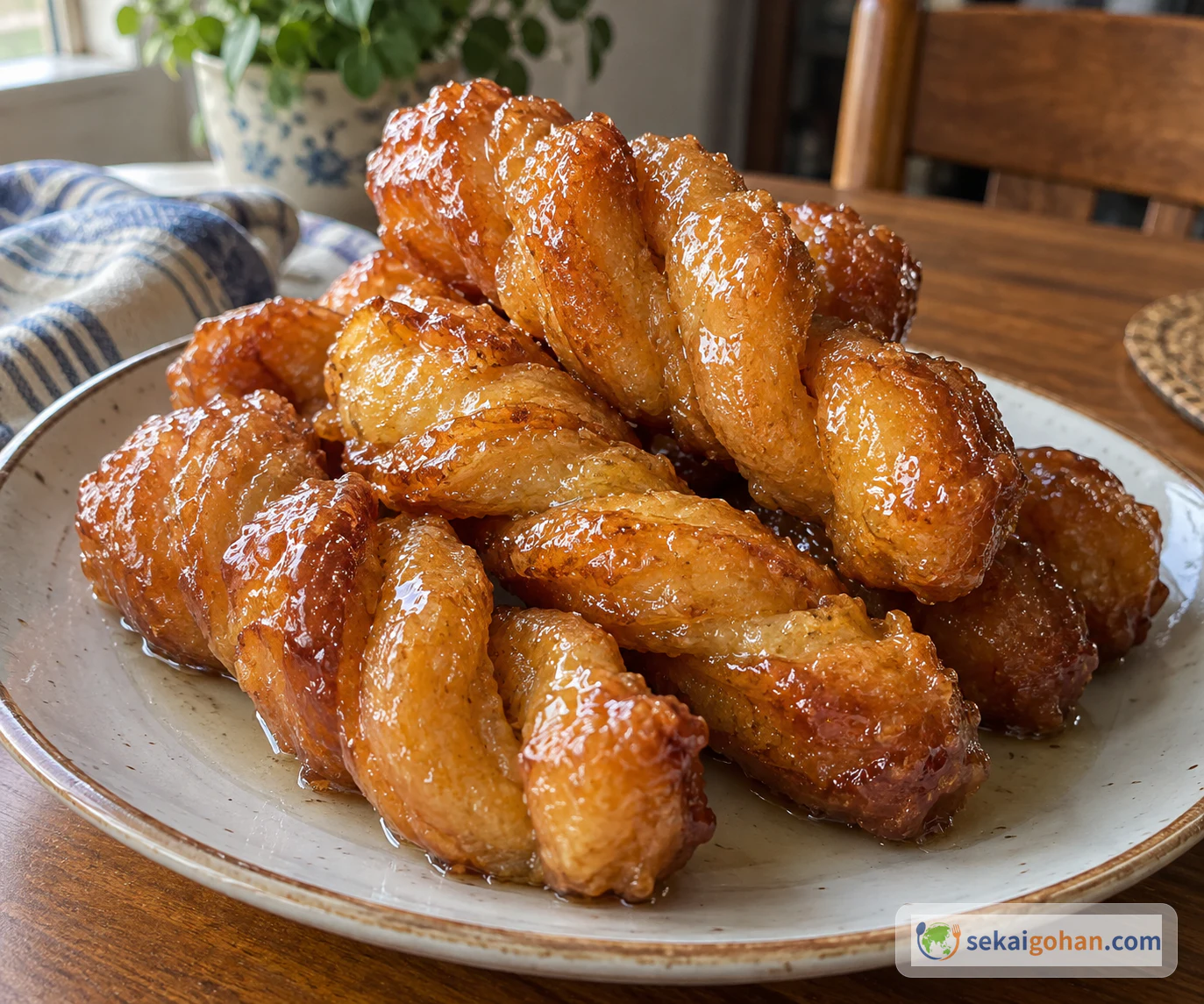
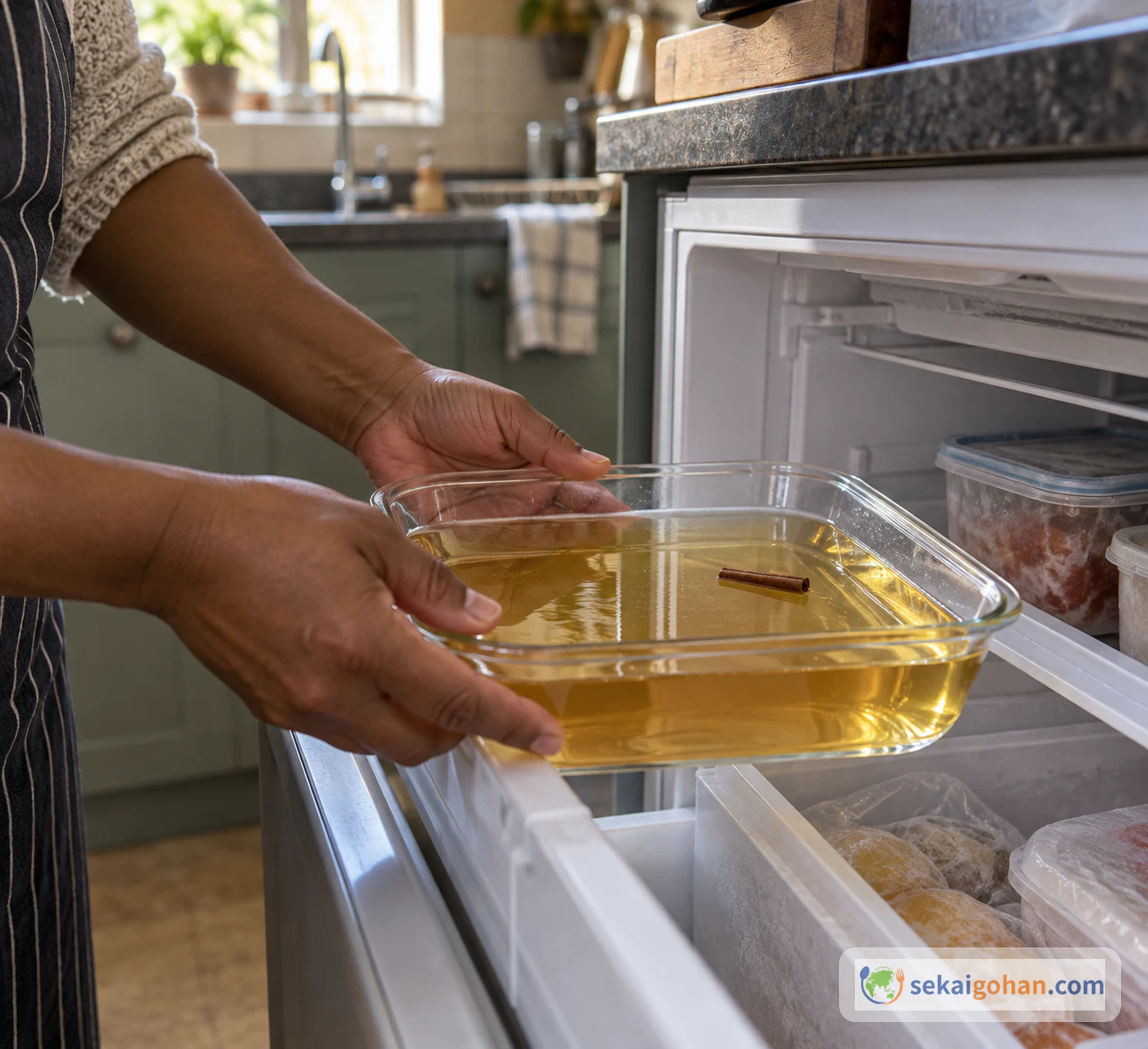
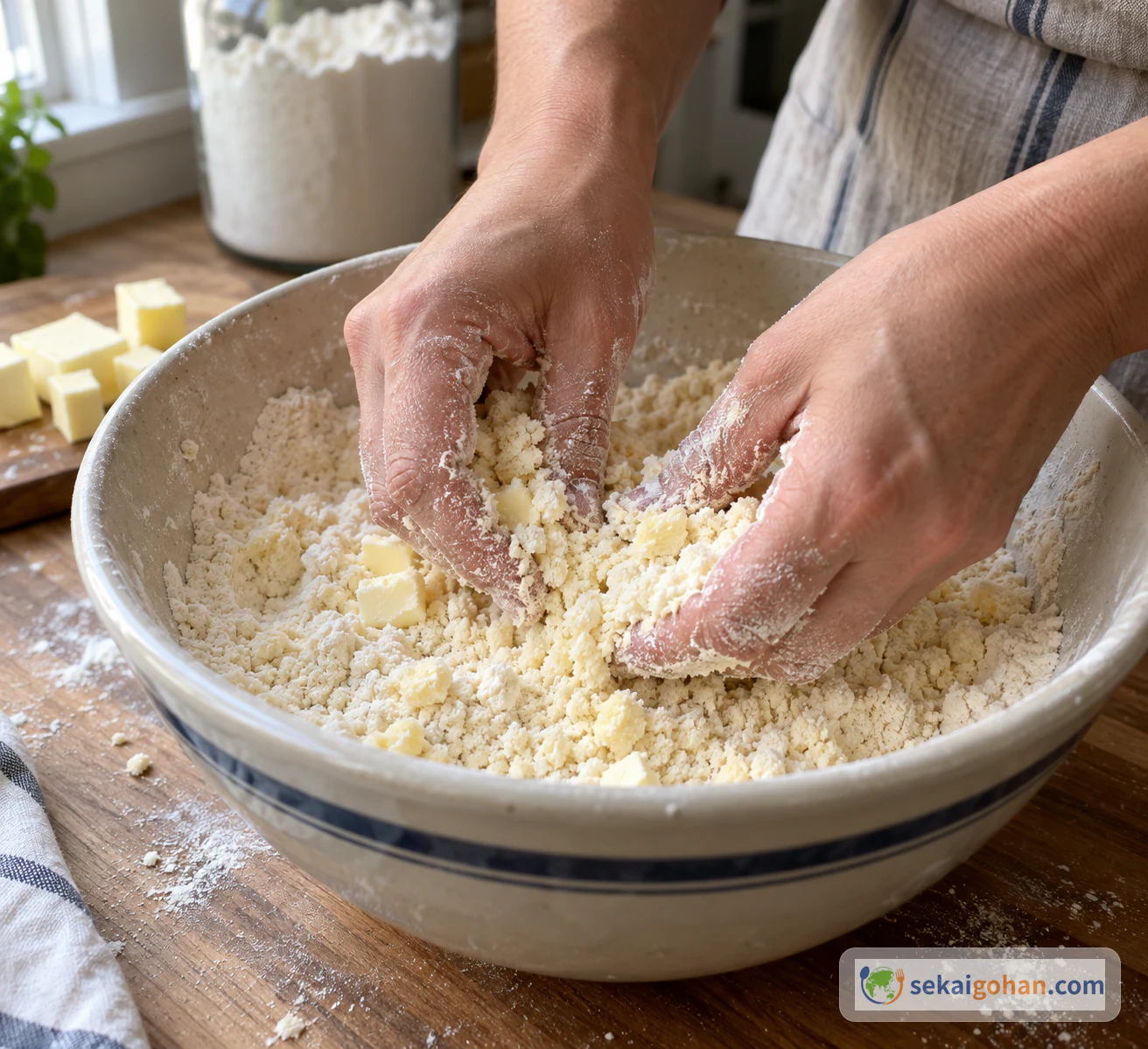
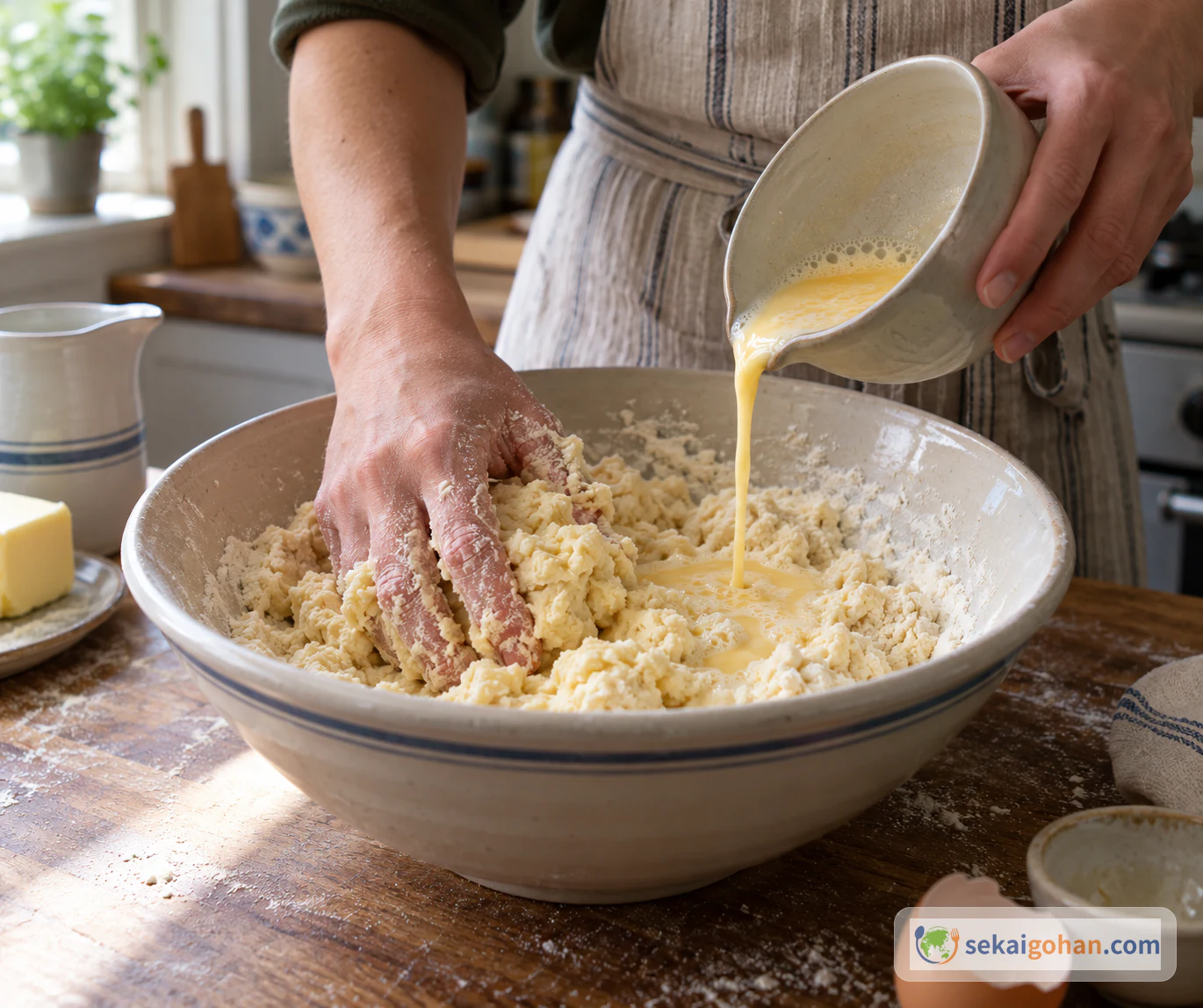
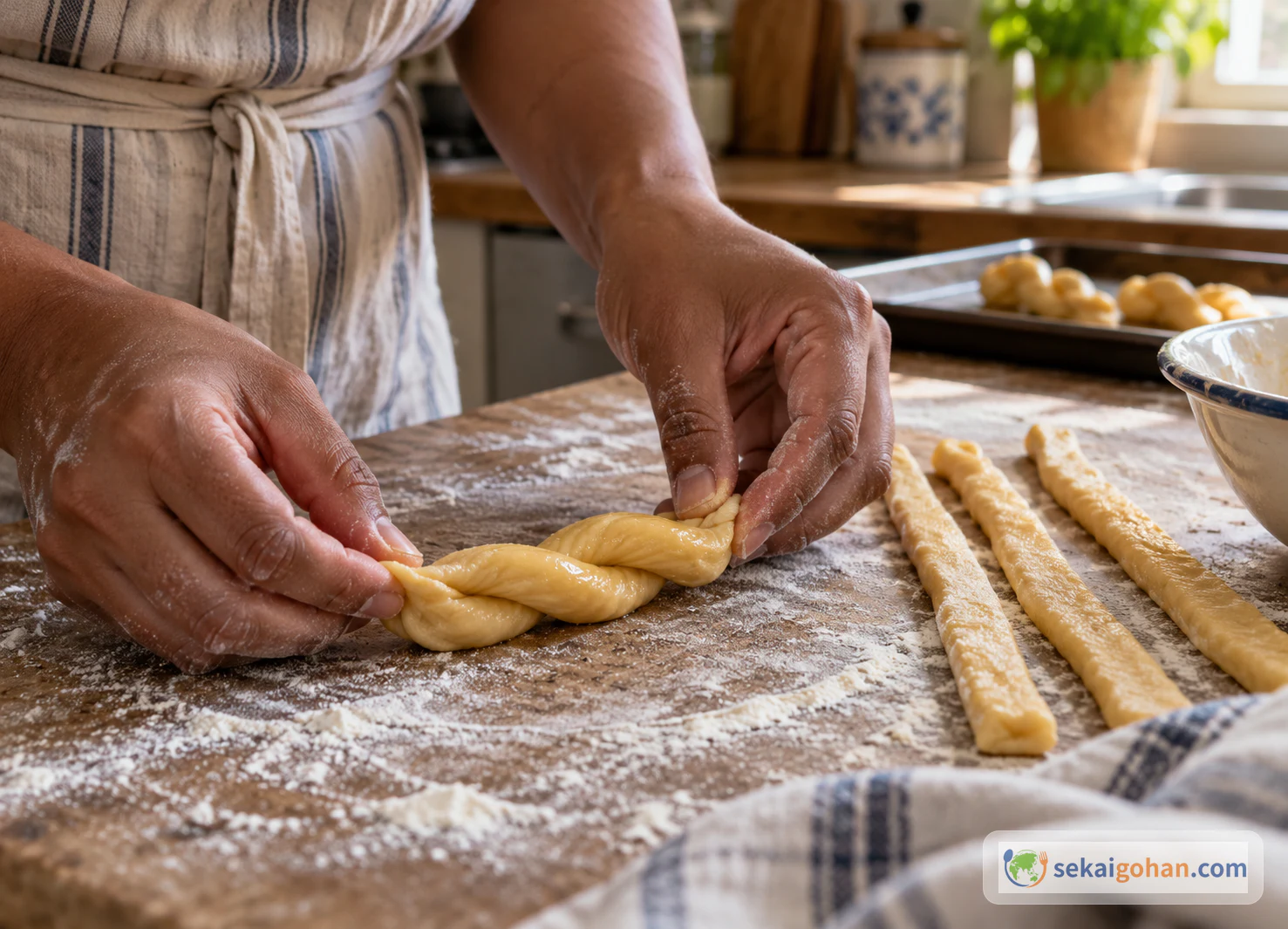
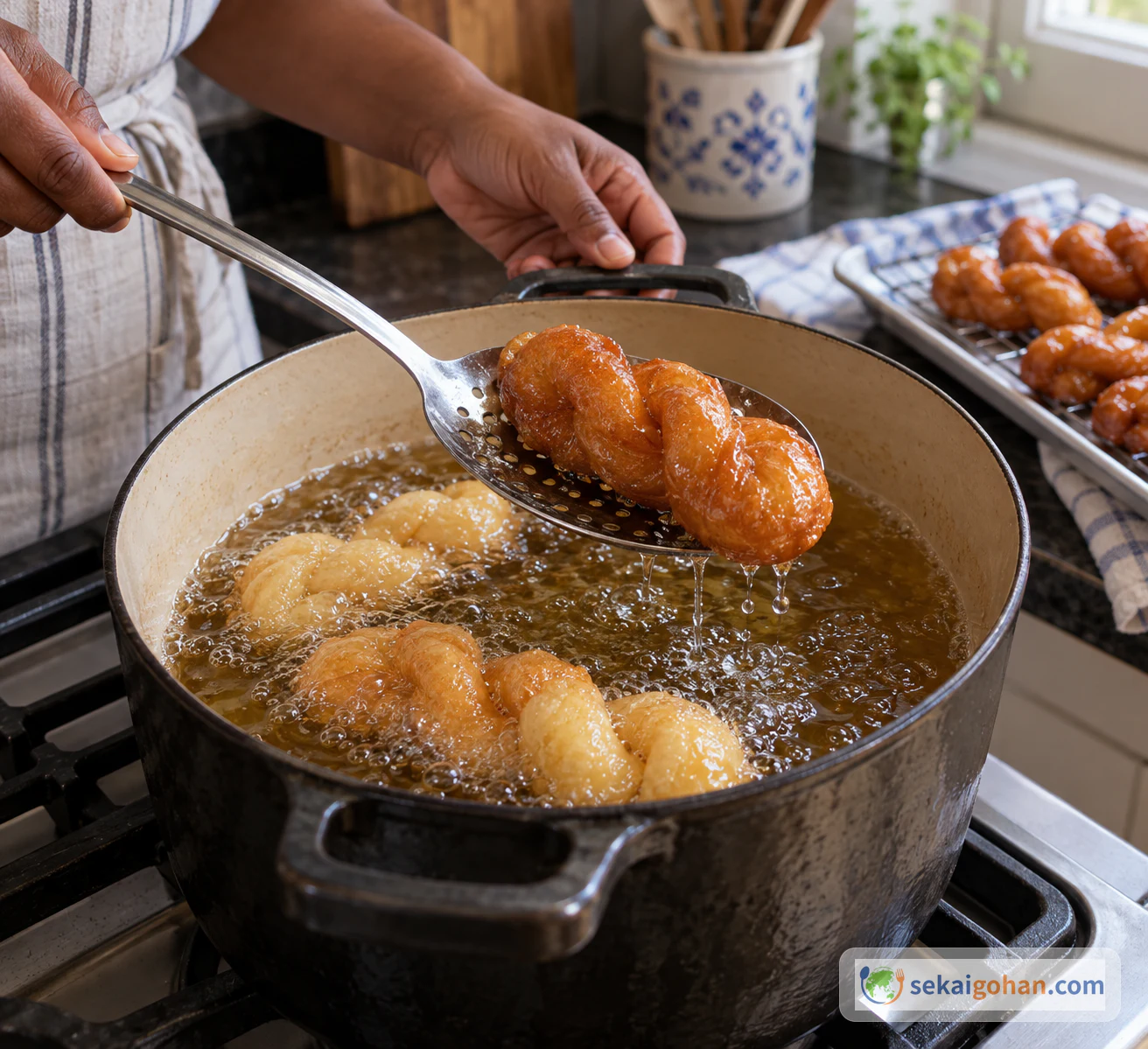
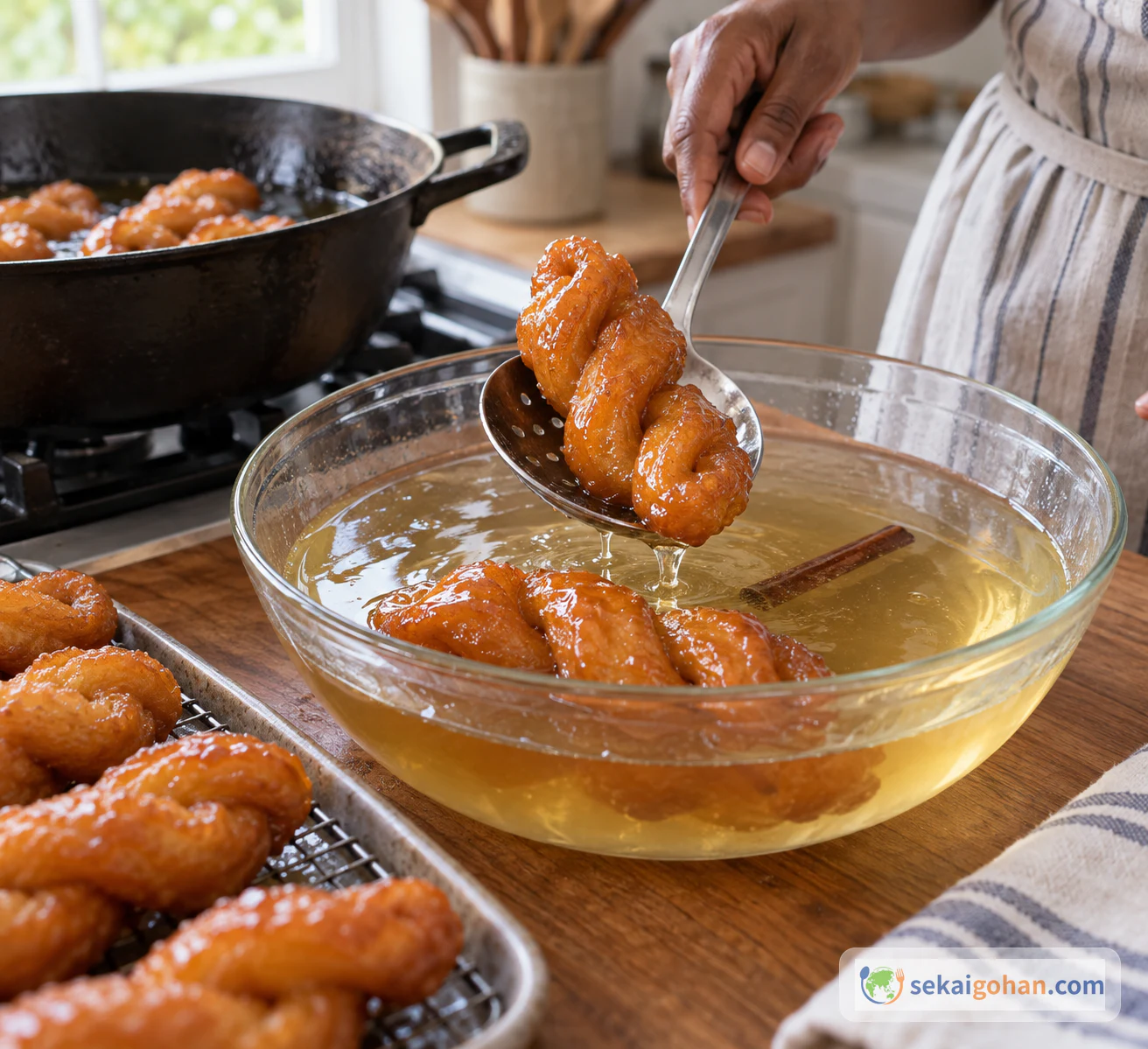
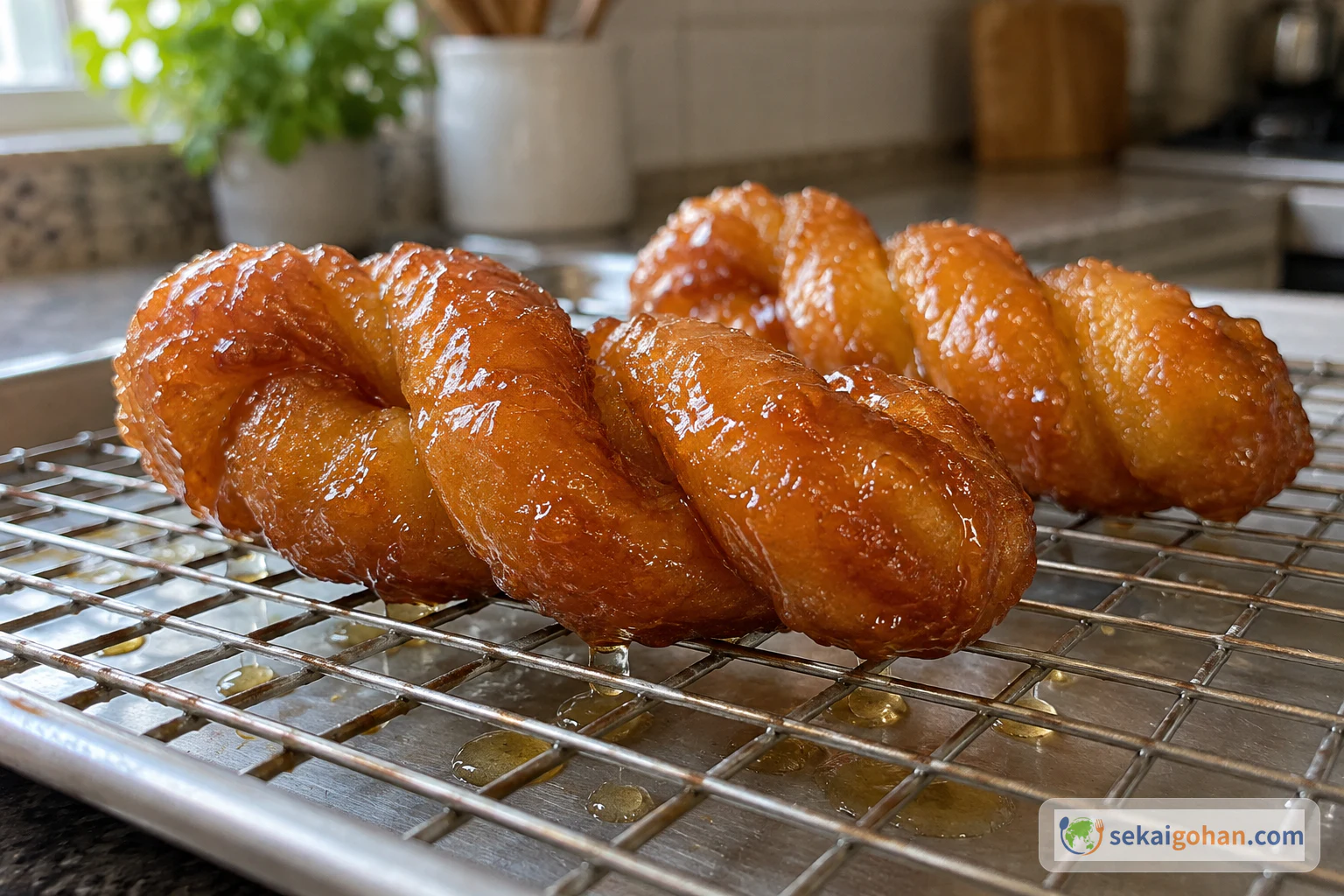
The best moment comes at the very end of frying. A loose twist of dough lifts out of the oil, golden all over, and goes straight into a bowl of syrup that has been sitting in the freezer. That plunge, hot pastry into cold syrup, is what makes a koeksister: a twisted or plaited piece of fried dough from South Africa, soaked through with sweet syrup the moment it leaves the pan.
Koeksister and the Cape Malay Koesister
A loose, hand-twisted shape with both ends sealed, and a hot pastry meeting syrup kept cold in the freezer.
The name trips people up. South Africa also has the Cape Malay koesister, which sounds almost the same but is a different sweet. It starts from a puffy, spiced, fermented dough, is shaped into ovals, and is finished with hot syrup and coconut. The two are separate traditions, so keep the recipes apart.
| Koeksister | Cape Malay koesister | |
|---|---|---|
| Shape | Twisted or plaited; two strips twisted loosely | Oval |
| Dough | Soft dough with butter and baking powder, no spices | Fermented, puffy and spiced |
| Syrup | Cold, with the pastry dipped right after frying | Hot |
| Finish | Coconut and dried rose petals, optional | Coconut |
The word itself turns up in several spellings, including koek sister, koeksuster and koesijster. Where it comes from is uncertain: both Dutch koek and Malay kuih have been suggested. Dictionaries also record a figurative use, in which koeksister stands for Afrikaner traditions or values.
Ingredients for the Dough, Syrup and Finish
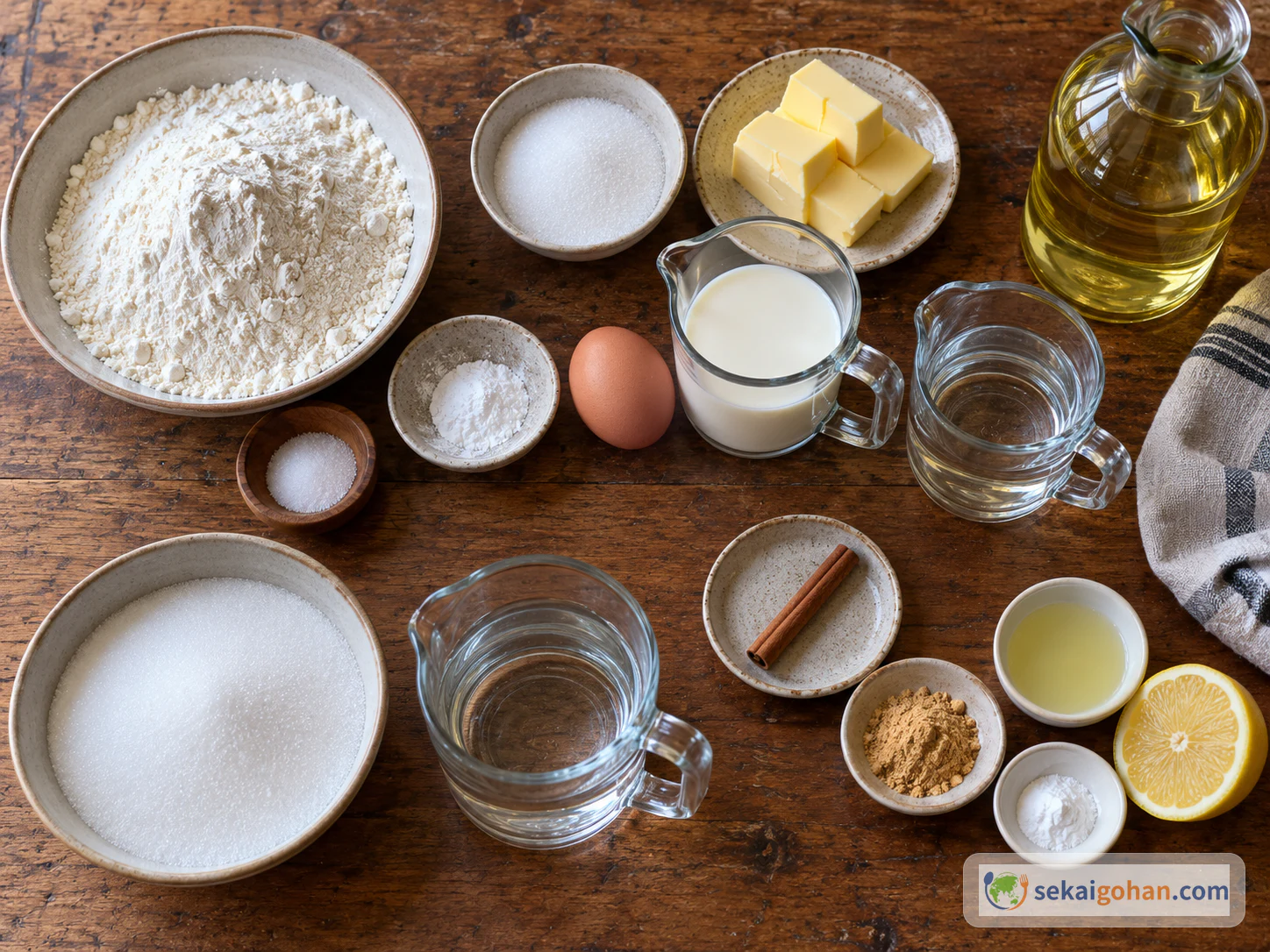
The dough and the syrup each use sugar and water, in very different amounts. Measure them separately.
Choosing Ingredients for Koeksister
Cream of tartar is the item you're most likely to have to hunt for. Baking-supply shops and online sellers carry it, and it belongs in the syrup, so don't treat it as optional. Cinnamon sticks, ginger powder and lemons are easy to find in any general store, and squeezing a fresh lemon is the simplest way to get the juice.
Flour is up to you, and the type you pick will change how firm the dough feels, so judge the water by the dough in front of you. Butters differ in salt, which means your choice can shift the seasoning of the dough a little. Coconut and rose petals are finishing touches and can be left out.
This recipe contains wheat (gluten), egg and milk. Check the label of your frying oil for allergens and possible cross-contact.
Equipment
- Saucepan
- Shallow freezer-safe container for the syrup
- Large mixing bowl and a cover for it
- Rolling pin and knife
- Deep pot for frying
- Slotted spoon
- Sugar or deep-frying thermometer to check the oil temperature
- Wire rack set over a tray
Method: Syrup First, Dough Second
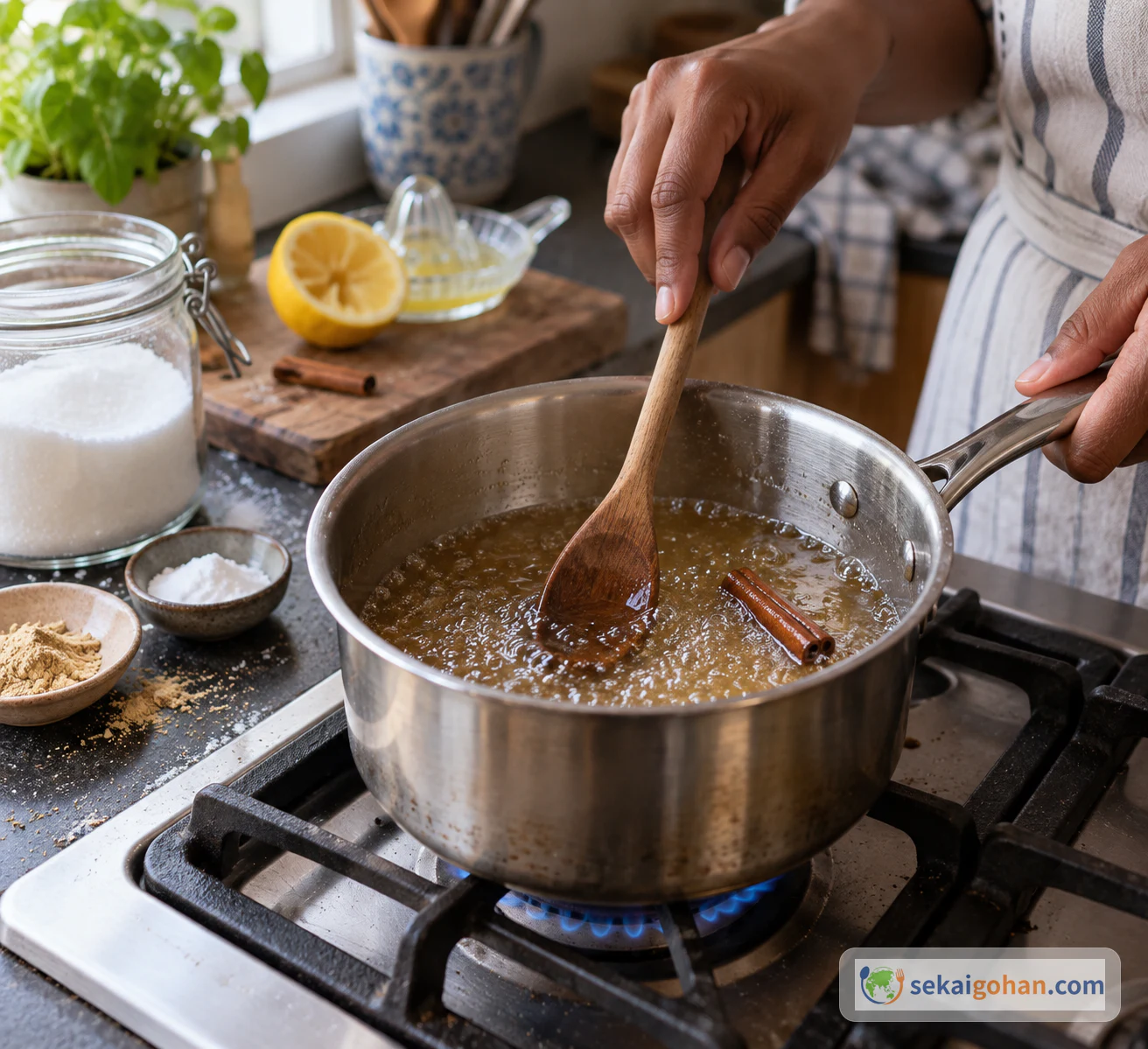
Make the syrup before anything else, because it has to be cold by the time the first pastry leaves the oil.
Koeksister Troubleshooting
Most problems come down to the oil. Keep it up to 350°F (160–170°C) and aim for golden brown all around. Fill no more than about half of the oil's surface, turn the pieces partway through, and split one open to check for raw dough.
| What you see | What to look at | What to do |
|---|---|---|
| The dough will not come together | Too little liquid | Add a little more water and knead until soft and smooth |
| The pastry is softer or crisper than you wanted | Dough thickness | Roll thinner for crisper or thicker for softer on the next batch |
| The twist opens in the oil | The pinched ends | Pinch both ends more firmly and keep the twist even |
| The outside colors too fast | Oil too hot | Lower the heat |
| The color stays pale | Not enough time yet | Wait, and judge by color rather than the clock |
| Color is uneven | Crowding or no turning | Fill only about half of the oil's surface and turn the pieces partway |
| Raw dough remains in the center | Frying not complete | Fry the others longer over slightly lower heat, then split another to check |
| The oil starts to smoke | Oil too hot | Lower the heat right away |
| The syrup no longer feels cold | Too many hot batches | Return it to the freezer before dipping more |
Koeksister Variations
Once you have the basic twist down, a few small changes are worth playing with.
| Change | What it affects | How to approach it |
|---|---|---|
| Three-strand braid instead of a two-strip twist | Look and texture | Treat it as a different version; the shaping here uses two strips |
| More cinnamon or ginger | Aroma of the syrup | Adjust to your own taste |
| Another citrus instead of lemon | Aroma and sourness | An option to try |
| No coconut | Overall impression of the finish | Fine to skip; it keeps the pastry visually distinct from the coconut-finished koesister |
| A specific flour type | Firmness of the dough | Watch the water as you bring the dough together |
Frequently Asked Questions
Why does the syrup have to be cold?
Hot pastry meeting cold syrup is the heart of the dish: each piece goes in right after frying. As the syrup warms between batches, put it back in the freezer.
Is a koeksister braided or twisted?
Both twisted and plaited forms exist. This recipe uses two strips twisted loosely with the ends sealed.
More From South Africa
To compare with the other sweet, read about the koesister. For savory dishes, try bobotie or the Gatsby, or browse everything from South Africa.