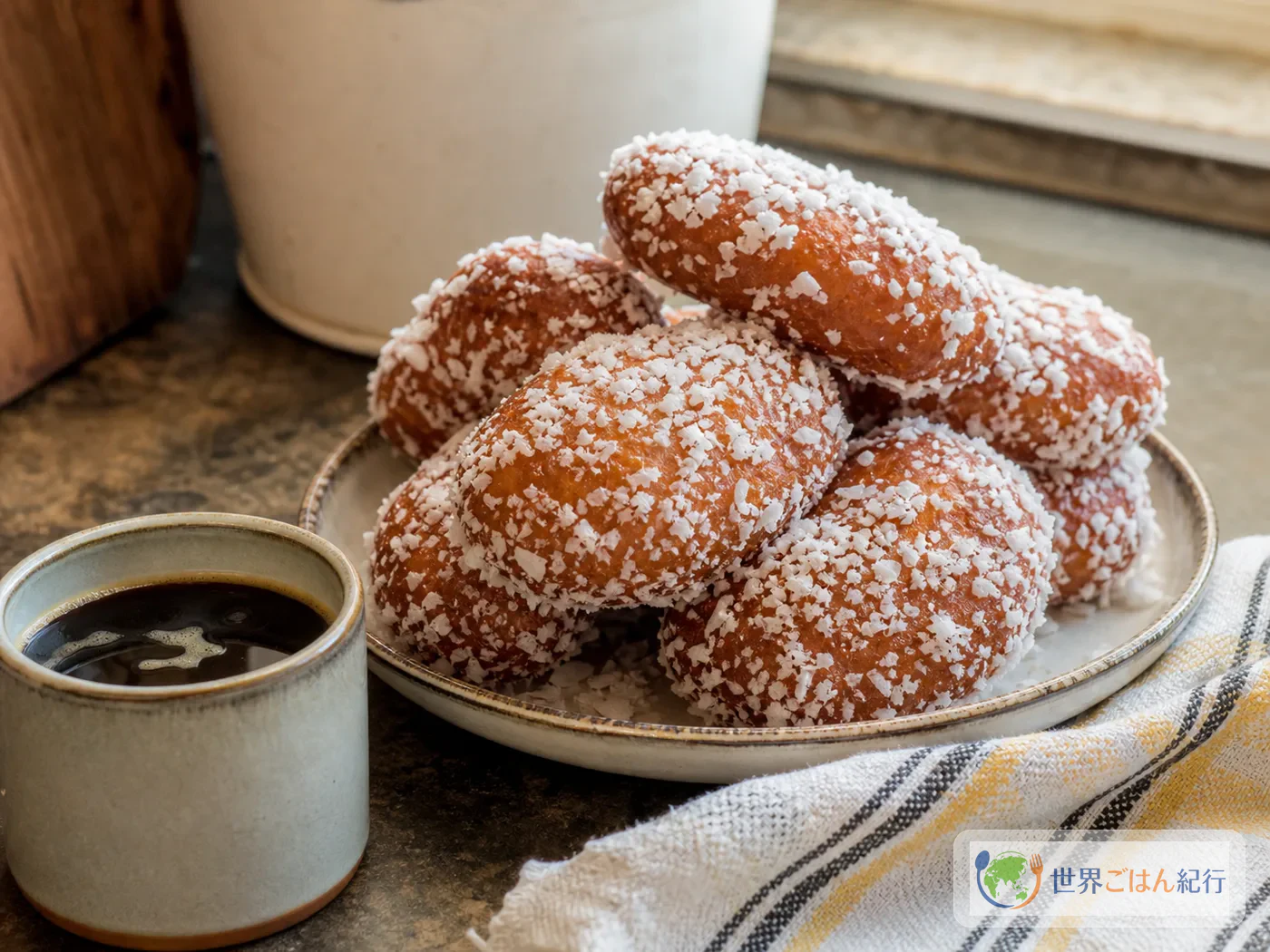
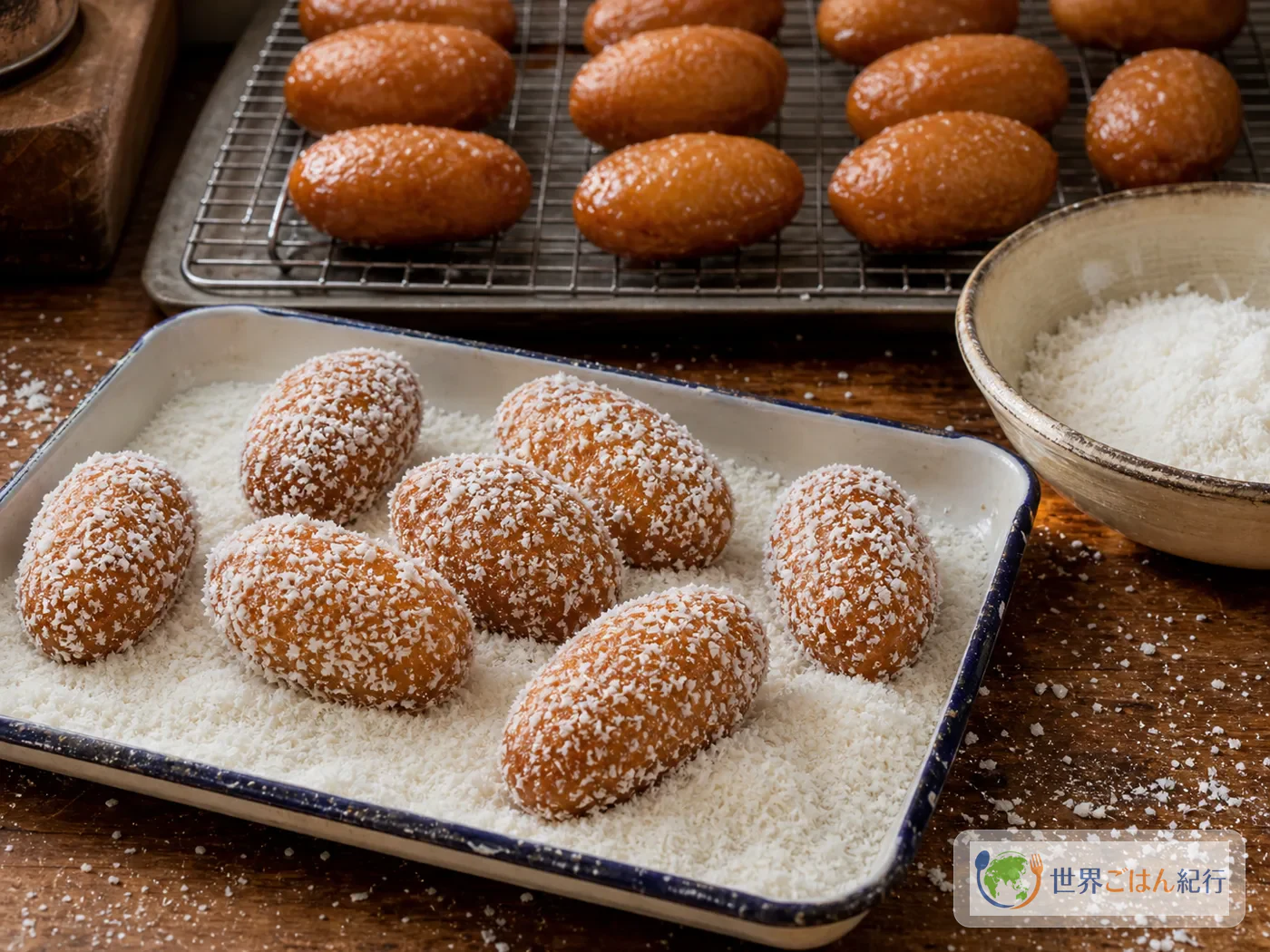
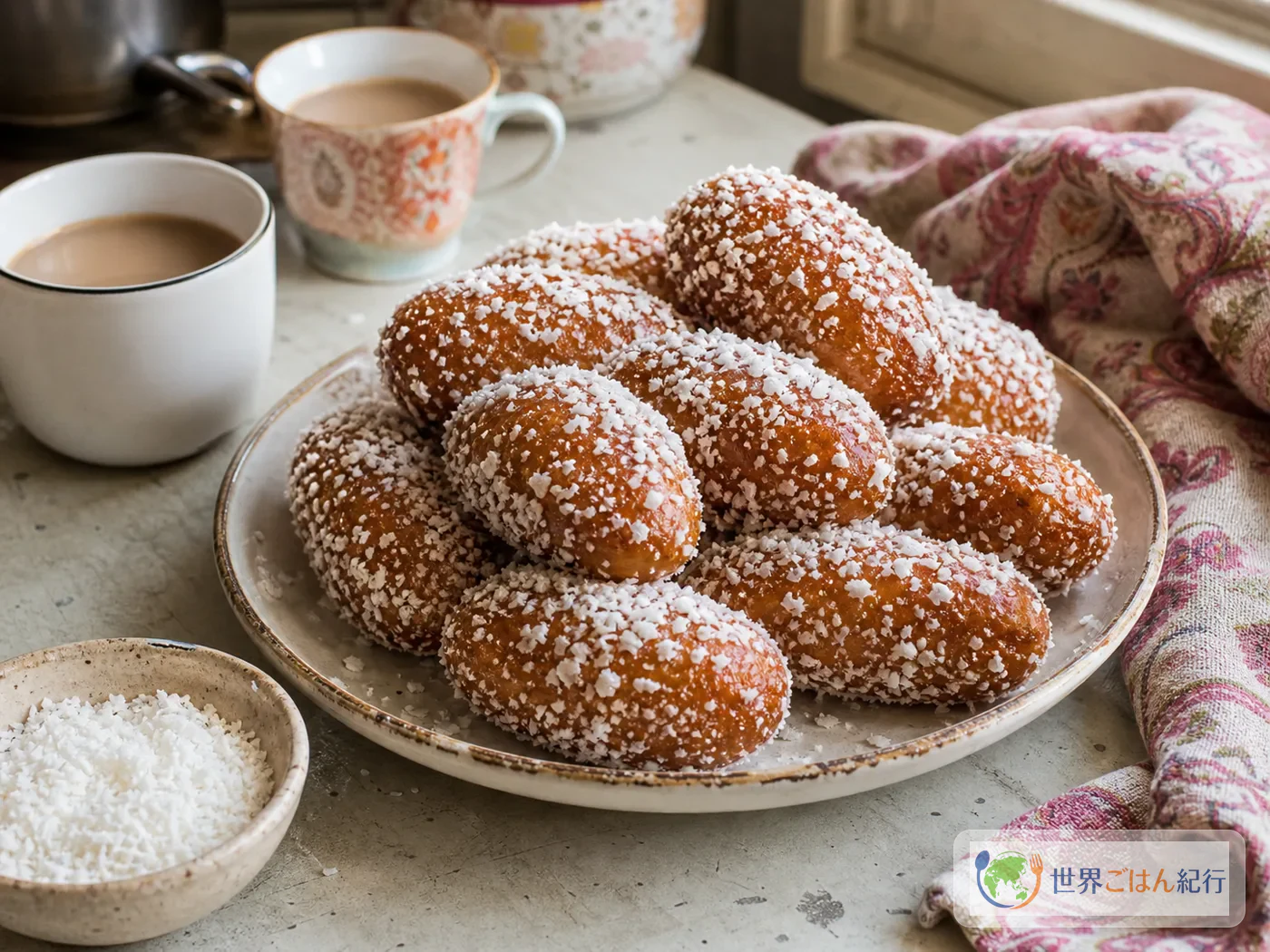
On a Sunday morning, the kitchen fills with cinnamon and cardamom as freshly fried dough goes into warm syrup. A final roll in coconut finishes them. Koesisters taste less like a sugary sweet than a small breakfast with spice that stays on the tongue. They're a favorite in Cape Malay homes in South Africa, and although they look a lot like doughnuts, their aroma comes together in a very different way.
Koesisters in Cape Malay food
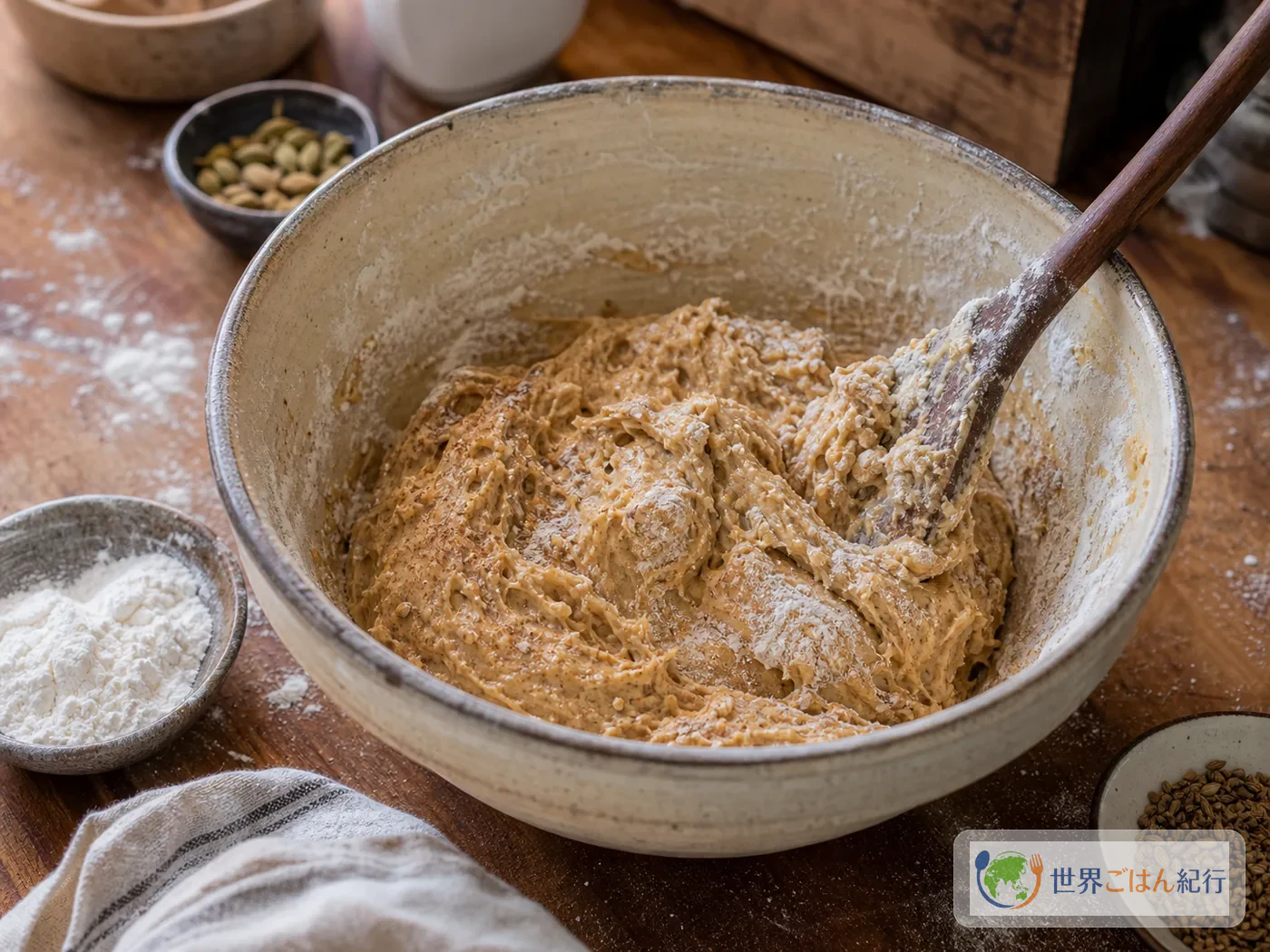
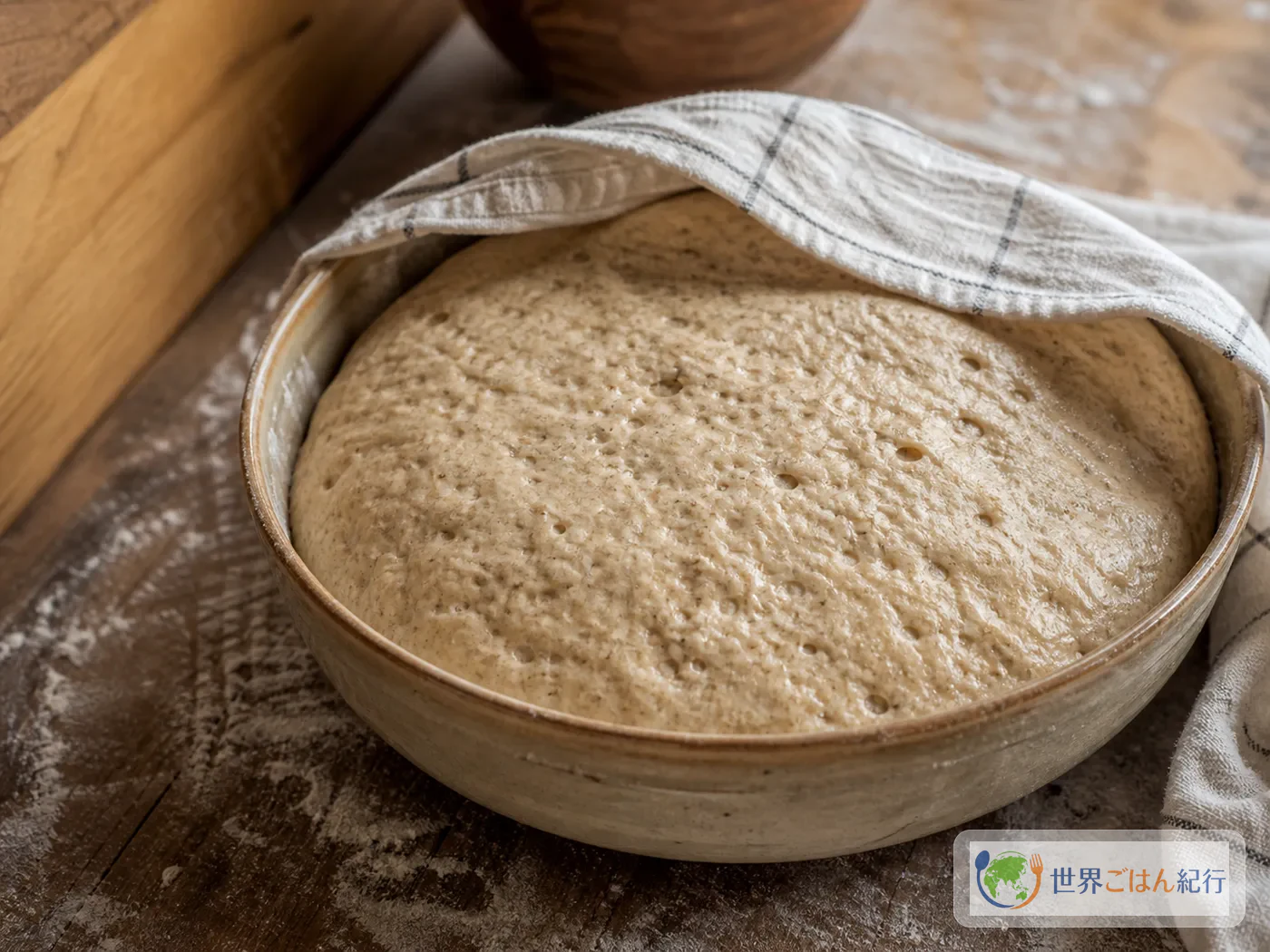
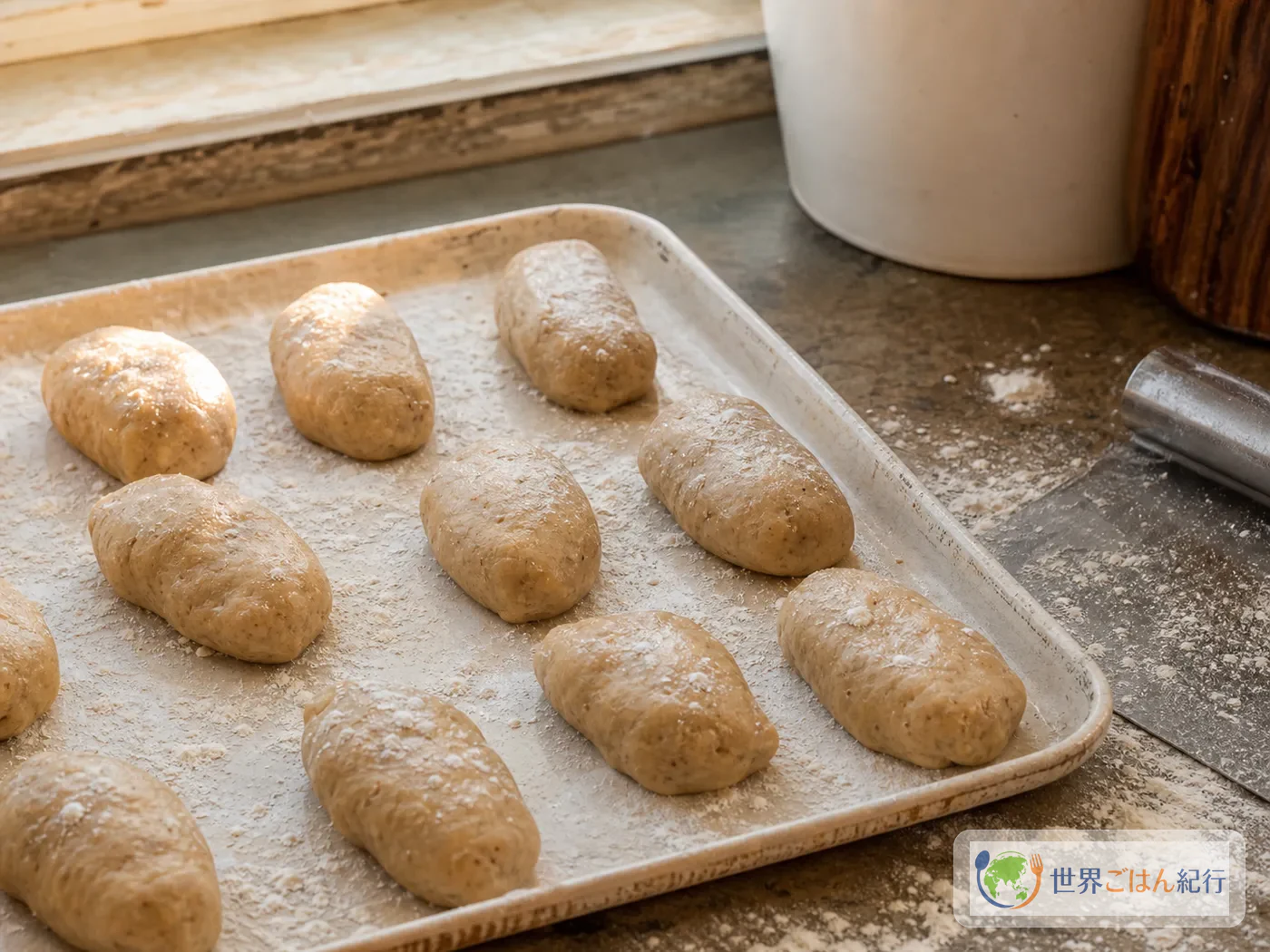
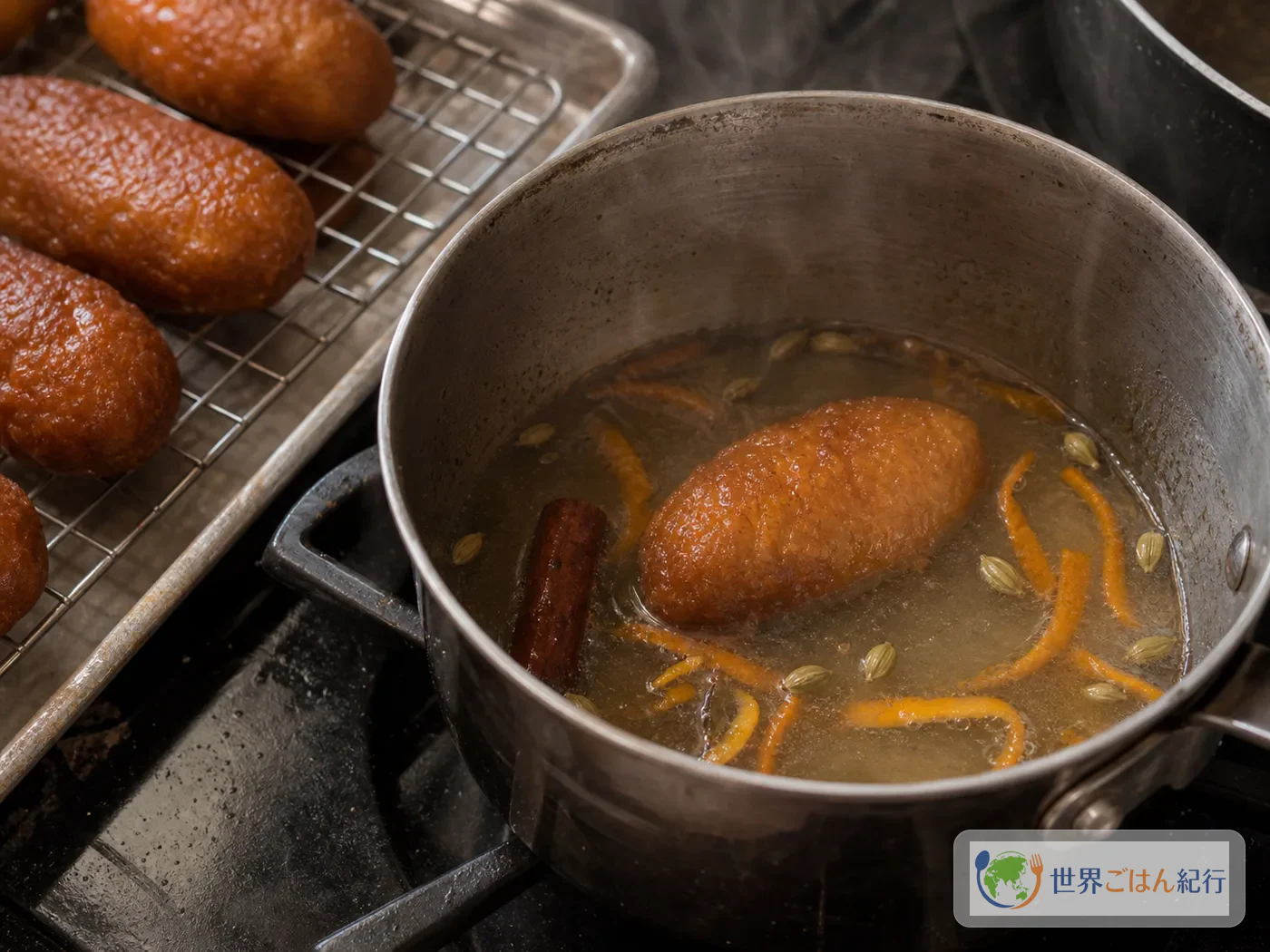
Koesisters are a fried yeast-dough sweet from the Cape Malay culture around Cape Town. The dough is flour, yeast, egg and milk, scented with cinnamon, cardamom, aniseed, ginger and citrus zest. It rises, gets shaped into small ovals and is fried, then dipped in warm spiced syrup and rolled in coconut. You'll see the name spelled several ways, including Koe'sister and Koesister.
| Point | Koesister characteristics |
|---|---|
| Local name | Koe'sister / Koesister |
| Region | South Africa, especially the Cape Malay culture around Cape Town |
| Dough | Soft fried dough with yeast |
| Aroma | Cinnamon, cardamom, aniseed, ginger, citrus |
| Finish | Warm syrup and coconut |
| How it is eaten | Often with breakfast or weekend tea, or with coffee |
People often mix them up with koeksisters, the Afrikaner sweet. Koeksisters are braided and dropped into cold syrup, which makes them firmer and sweeter. A koesister is spiced yeast dough with a plump oval shape, a warm syrup and a coconut finish.
Around Cape Town, koesisters belong to weekend mornings and tea time. They come heaped on a plate next to strong coffee or milk tea, and the drink cuts the syrup's sweetness, so it's easy to keep reaching for another. Bobotie is the savory Cape Malay dish at the center of the table, and koesisters take the same feel for spice in a sweet direction.
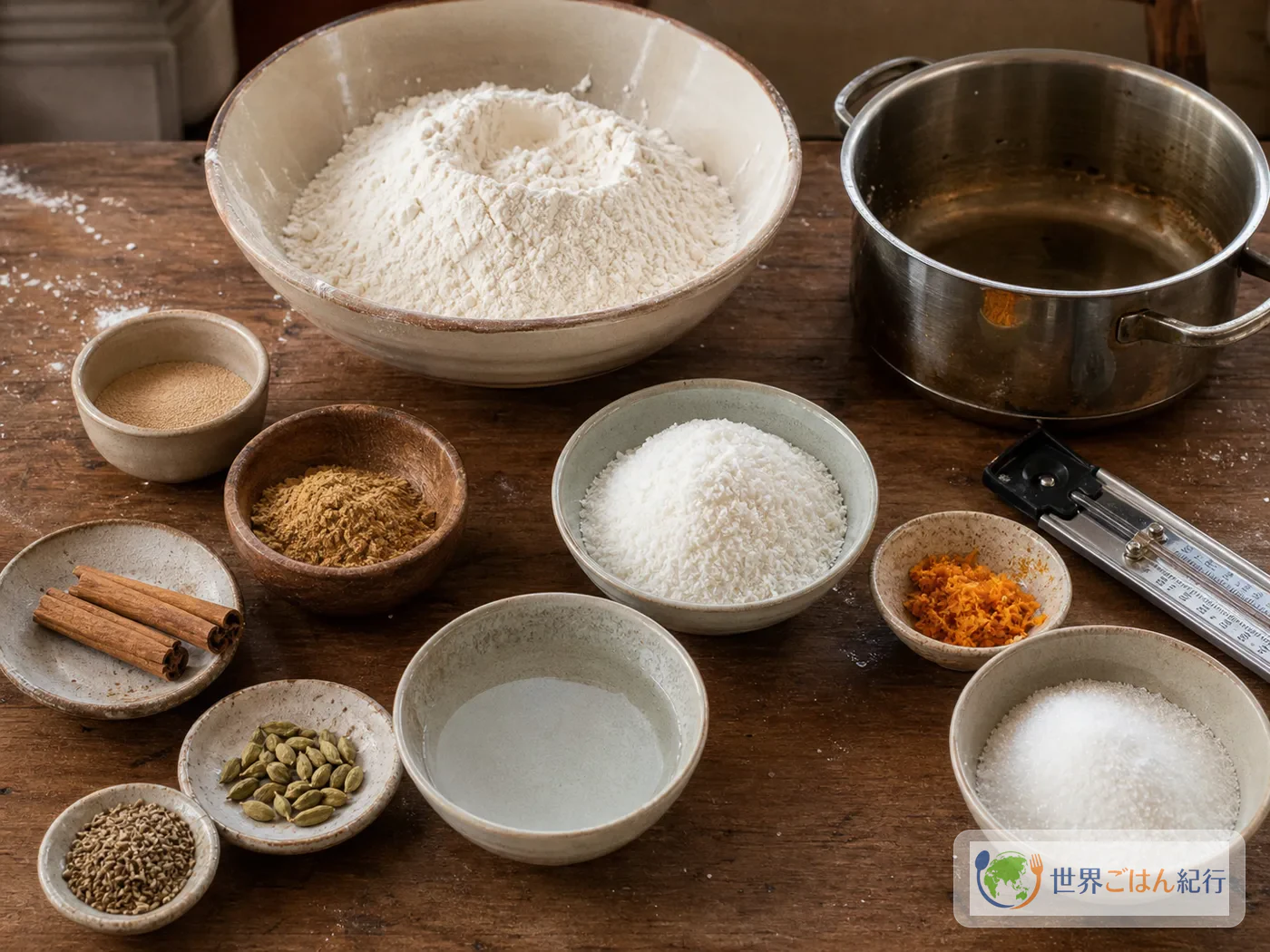
Ingredients (makes 12)
This recipe uses wheat, egg, milk, and coconut. If you are serving someone with an allergy, tell them in advance, since it is hard to tell by looking. The frying oil is around 1 quarts (1 L), so avoid times when small children are in the kitchen, and keep the pot at the back of the stove.
Ingredients and tools worth a closer look
Flour, sugar, eggs, milk, and frying oil are fine from an ordinary supermarket. What is usually worth buying extra is cardamom, the core of the aroma, cinnamon sticks for the syrup, and a thermometer to cut down on oil-temperature mistakes. A koesister is defined less by the sweetness of the dough than by the spice aroma that carries over after frying.
You can make it with ground cardamom, but cracking whole pods keeps the syrup's aroma from turning muddy. Cardamom also goes into Kabuli palaw and bibikkan, so if you keep cooking world dishes it is a spice that rarely goes to waste.
A cinnamon stick is not a substitute for ground cinnamon; it is there to pass aroma into the syrup. With powder alone the syrup tends to turn gritty, so even one stick settles the result.
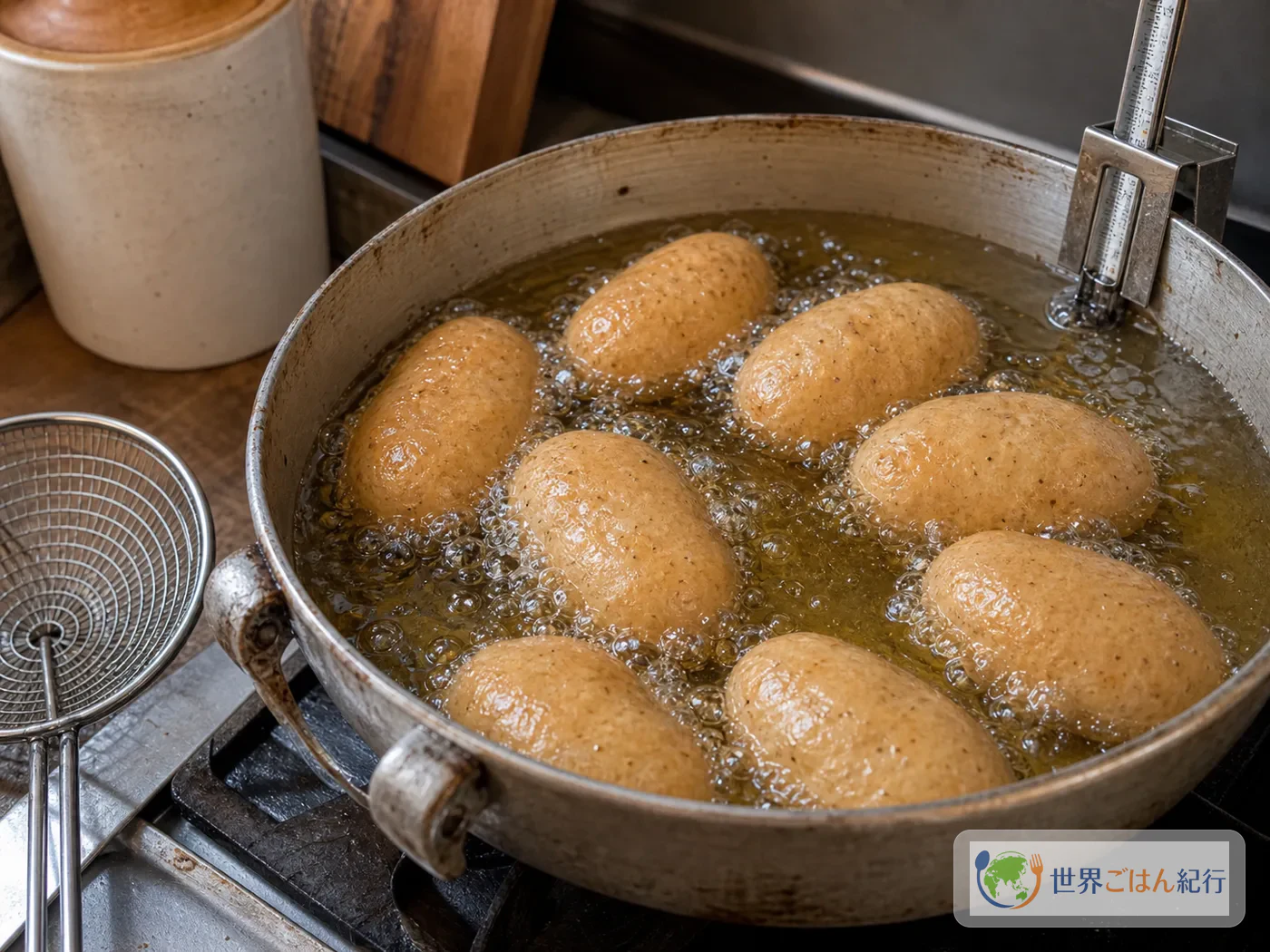
The failure of a fried sweet comes from oil temperature more than from seasoning. If it drops into the 160s°C the dough soaks up oil, and above 350°F (180°C) only the outside darkens while the center stays heavy. With a thermometer you don't have to sacrifice the first two.
Choosing spices for koesisters
Most of the flavor comes from the spices, so keep them fresh. Old ground spices give a flat aroma. Crack whole cardamom yourself, and use orange or tangerine zest for the citrus. If you go by doughnut instincts, you'll want to add sugar. Don't: the dough soaks up syrup later, so it can stay restrained. Bring out the cardamom and citrus and you'll get much closer to the real thing.
You can leave out the aniseed, but the aroma will be a little flatter. For something close, lightly crush 1/3 tsp fennel seed and add that instead. Star anise is too strong, so if you use it, use only a tiny amount.
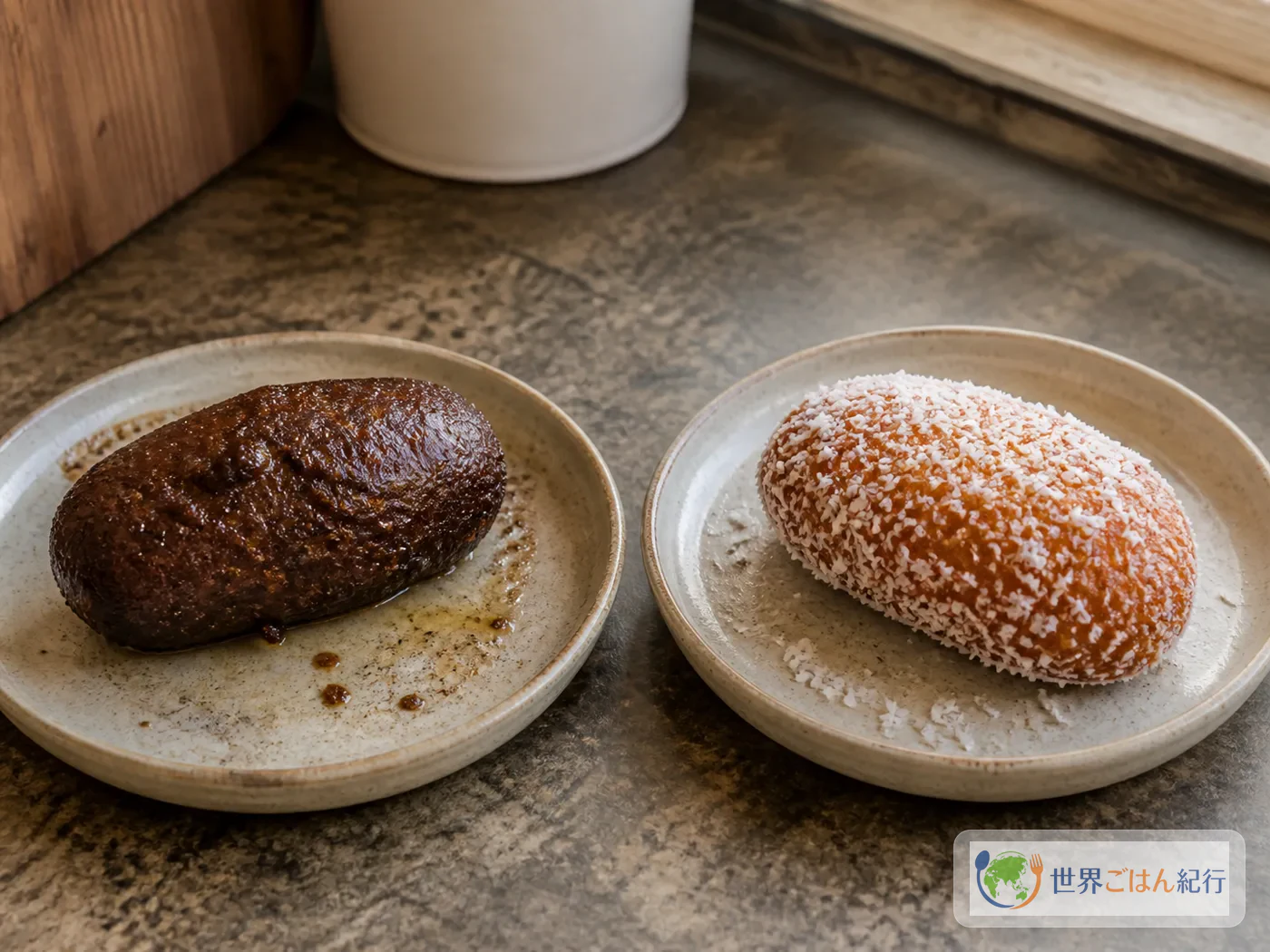
Common koesister problems and fixes
| Common failure | Cause | Fix |
|---|---|---|
| Greasy | Oil dropped into the 160s°C, or the pot was overcrowded | Bring it back to about 350°F (170°C) before adding the next batch. Fry 3–4 at a time |
| Dark outside, heavy center | Oil too hot, dough too thick | Lower to 165–170°C and even out the thickness to about 1 inches (2 cm) |
| Too much syrup absorbed | Left in the syrup too long | Lift out in 20–30 seconds and rest on a rack |
| Weak aroma | Old ground spices, or no citrus | Crack whole cardamom. Add orange or tangerine zest |
| Coconut falls off | The dough cooled and the surface dried | Return it to the syrup for just 5 seconds and roll while warm |
If you'd like them less sweet, shorten the time in the syrup and leave the sugar in the dough alone. Cutting the dough's sugar weakens the rise a lot and tends to make them heavy.
Serving, storing and making koesisters ahead
For a South African spread, serve bobotie as the main. Add bunny chow if you want something spicy, or a gatsby for something more like a snack. Austria's Apfelkuchle is another sweet fried pastry, and it handles oil temperature in much the same way.
Storage and reheating
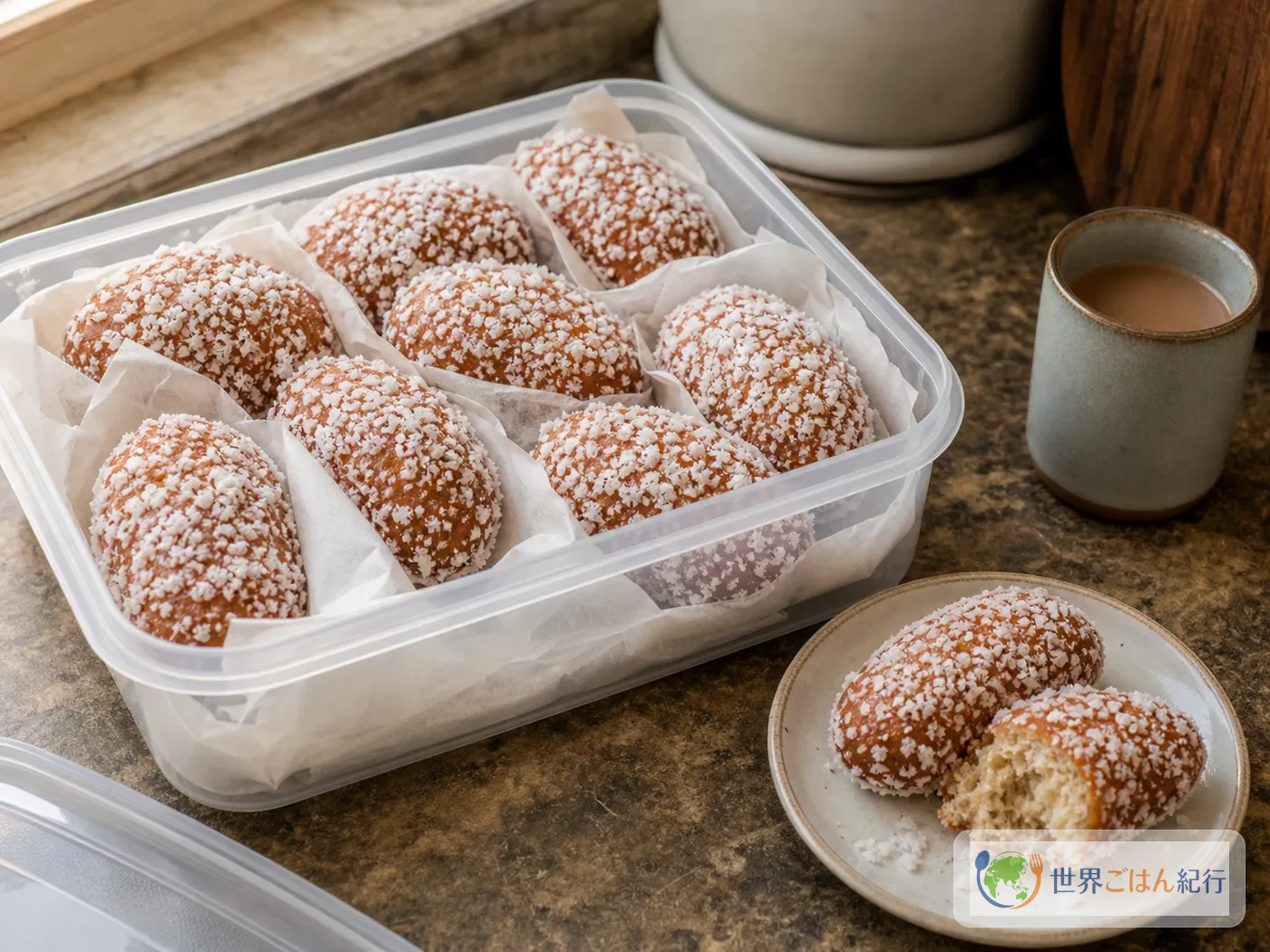
| Storage | Guide | Reheating |
|---|---|---|
| Room temperature | Same day | As is. If dried out, microwave at 600 W for 8–10 seconds |
| Refrigerator | 2 days | Lid slightly open, microwave at 600 W for 10–15 seconds |
| Freezer | 2 weeks | Wrap one at a time, thaw naturally, then 600 W for 15–20 seconds |
Koesisters are best the day they're made, because the coconut turns a little damp by the next day. If you're having guests, make the dough the day before. Knead it, let it rise once, shape it, and put it in a lightly oiled container in the refrigerator overnight. The next day, leave it at room temperature for 30–40 minutes, until a dent from your finger springs back slowly, then fry and dip it in the syrup. Frying the day before costs you the light surface.
Nutrition
| Per piece | Guide |
|---|---|
| Energy | about 260 kcal |
| Protein | about 4 g |
| Fat | about 9 g |
| Carbohydrate | about 1.5 oz (41 g) |
| Fiber | about 2 g |
| Salt equivalent | about 0.5 g |
They're fried and sweet, so treat them as a weekend breakfast or a tea-time treat rather than an everyday staple.
Frequently asked questions
Q1. What if I don't like coconut?
You can eat them without it, but they lose much of what makes them koesisters. A thin dusting of raw cane sugar also works. For the traditional feel, though, a light coat of unsweetened fine coconut is the way to go.
Q2. Can I bake instead of frying?
Yes, at 350°F (180°C) for 12–15 minutes. The surface tastes different, though, and the syrup soaks in differently, so the result is closer to bread. Fry them the first time to learn how oil temperature and syrup balance out, and then try a baked version.
Q3. Should the syrup be chilled?
No, use warm syrup. Putting just-fried dough into cold syrup is how koeksisters are made. A quick dip in warm syrup helps the coconut stick and keeps the yeast dough plump.