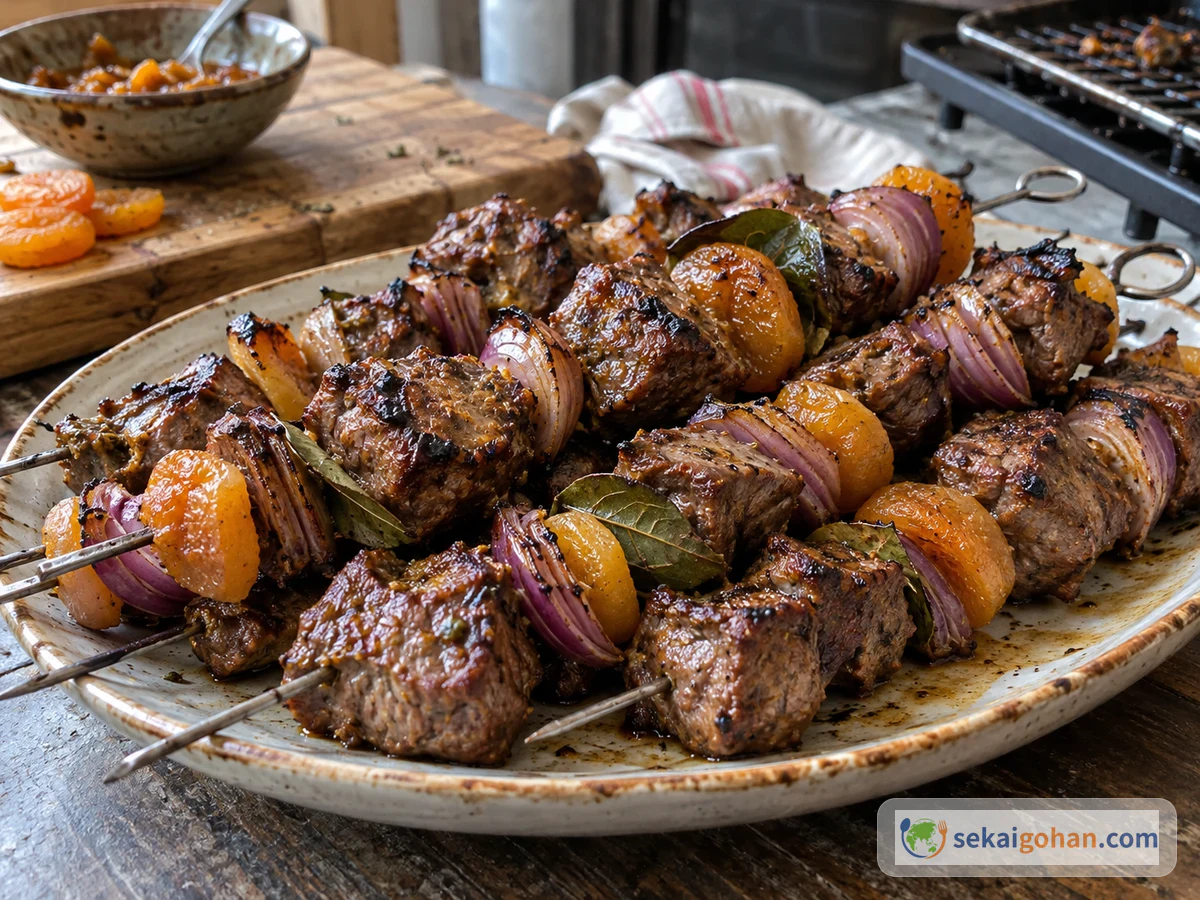
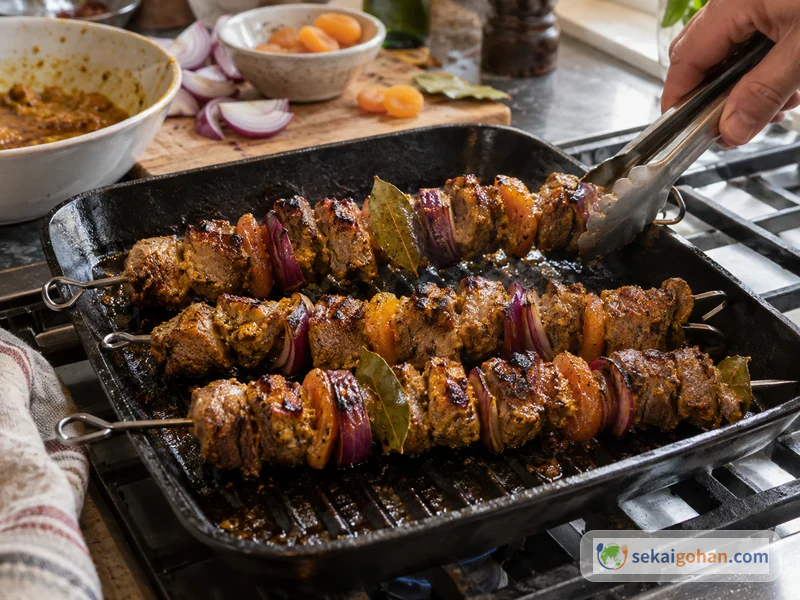
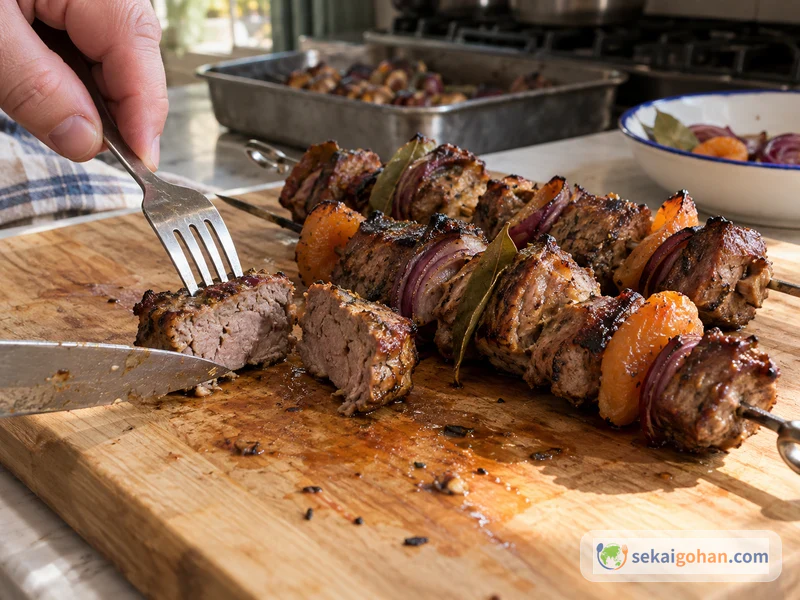
On a Sunday afternoon, charcoal smoke and the smell of grilling meat drift out of backyards all over the neighborhood. Family and friends gather around the fire, where skewers of meat, red onion, and dried apricot sizzle on the rack, coated in the yellow of curry powder and the gloss of jam. When the edges just start to char, it's time to eat. Sosaties (singular: sosatie) are these sweet, spicy skewers, a fixture of the South African braai. The first bite surprises most people: apricot, curry, and vinegar meet in a flavor somewhere between teriyaki and curry.
Sosaties and the South African Braai
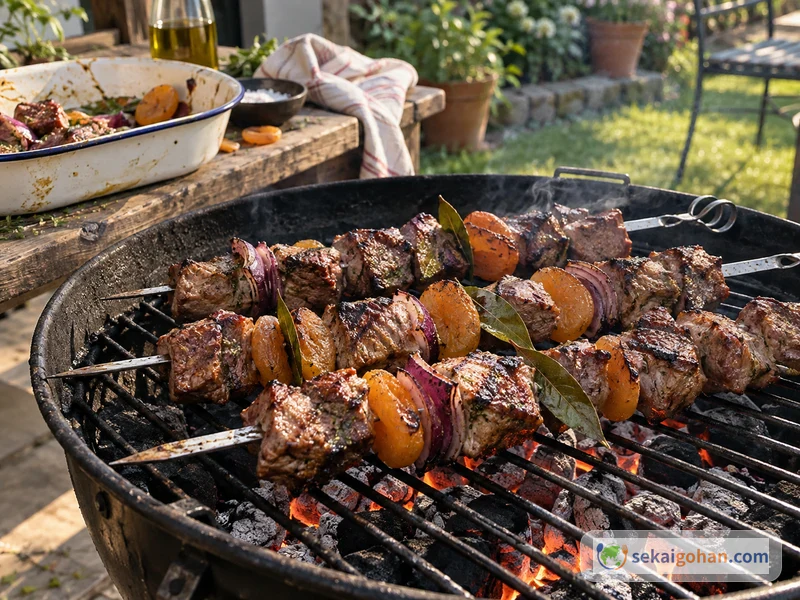
Braai is an Afrikaans word that means both grilling over a charcoal or wood fire and the gathering around that grilled meat. Alongside boerewors sausage and bone-in cuts, sosaties are regulars on the grill at a Sunday braai.
South African butchers and supermarkets commonly sell sosaties as ready-marinated skewers, made with pork, beef, lamb, or chicken. Some families grill the bought skewers as they are; others marinate and thread their own family blend.
What defines them is the balance: the tartness of apricot jam and dried apricots, the aroma of curry powder, and the acidity of vinegar. Sweet, sour, and spicy all at once is the character of sosaties.
From Javanese Sate to Cape Town Sosaties
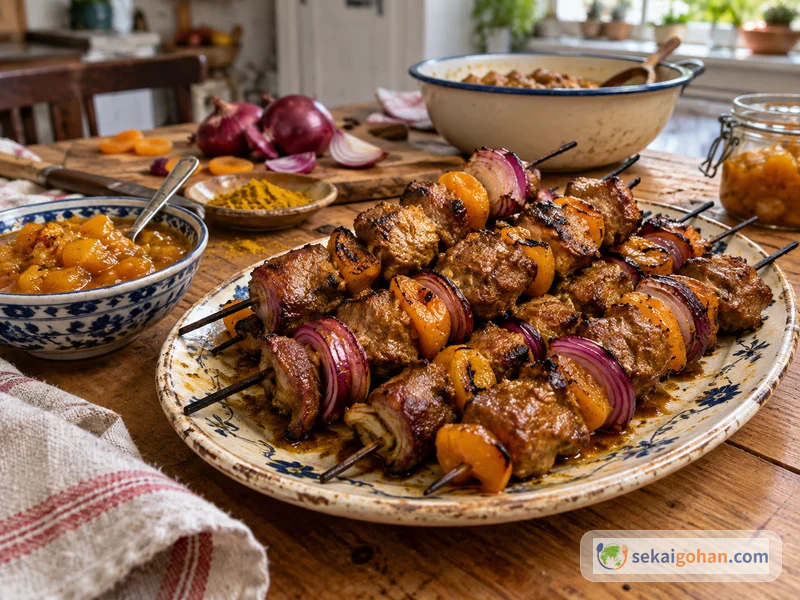
The name combines "sate," the Southeast Asian skewered meat, with the Afrikaans "saus," meaning "sauce." Sosaties are, quite literally, skewers coated in sauce.
The dish comes from the kitchens of the Cape Malay people of Cape Town, descendants of enslaved people and indentured laborers brought from Java and Malaysia between the 17th and 19th centuries to work in shipbuilding and farming. Sosaties took shape when the spices and skewer-grilling of their homeland met South African meat and fruit. Afrikaans is the main language of the Cape Malay people, and from there the word sosatie spread across South Africa.
Cape Malay cooking makes do with what is at hand. The apricot chutney passed down in District Six was made at home in place of expensive store-bought chutney, and the jam or chutney in a sosatie marinade comes from the same resourceful habit.
District Six was a multiethnic neighborhood near the center of Cape Town. Under racial segregation policy, its residents were driven from their homes and forcibly moved to other areas. The District Six Museum, which preserves the memory of the neighborhood, still stands in Cape Town.
Ingredients (serves 4, makes 12 skewers)
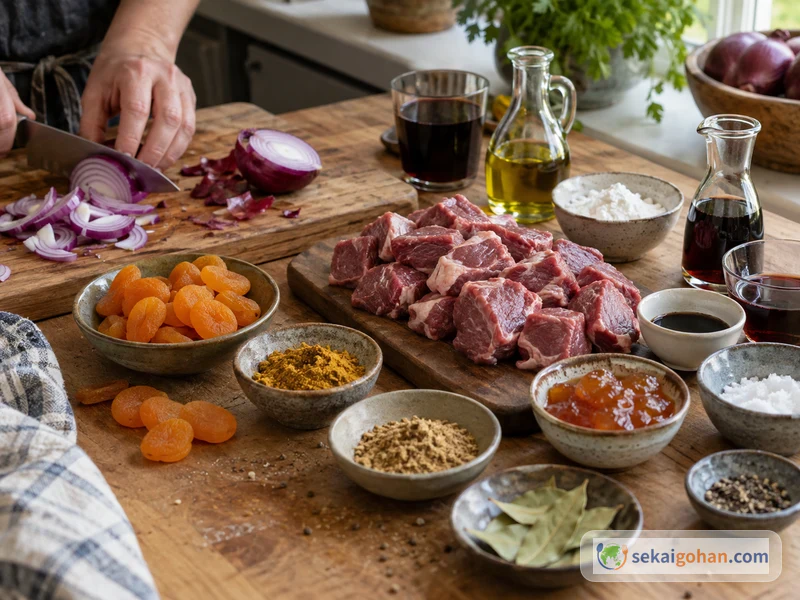
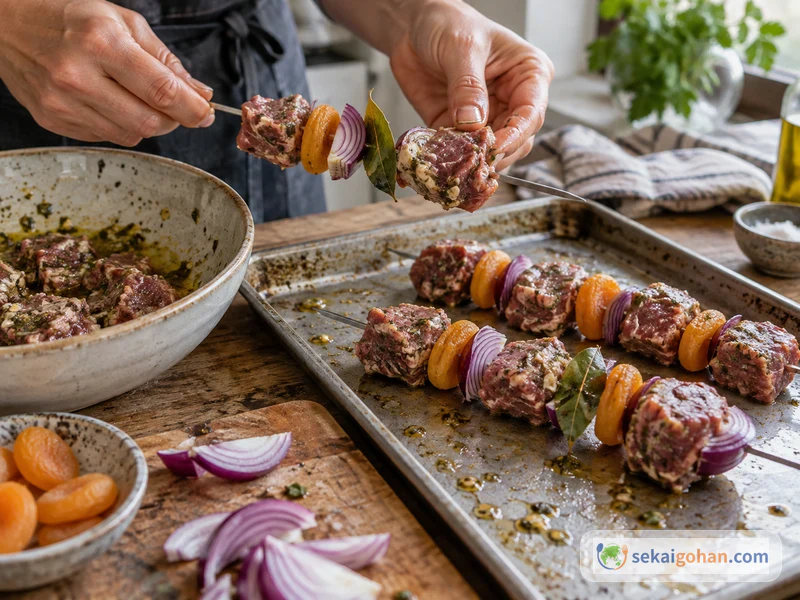
Find dried apricots in the dried-fruit aisle at the supermarket. Marinated together, they plump up as they soak in the meat juices and marinade, and on the grill, the easily scorched sweetness of the jam turns toasty. Dried bay leaves work too, but they crack easily, so thread them on slowly.
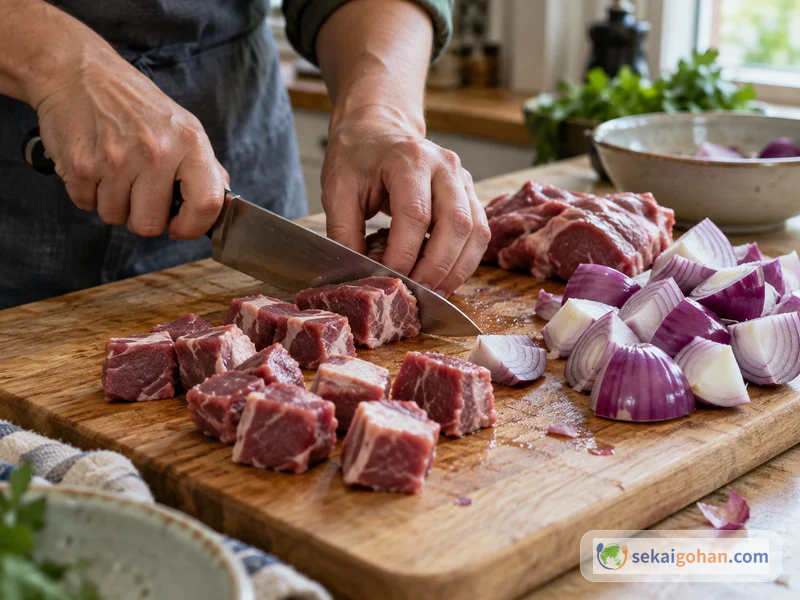
Cut the meat and onion to the same 1 inches (2.5 cm) size. It evens out the height on the skewer and makes them touch the grill pan uniformly, so they cook more evenly.
Choosing Meat, Marinade, and a Pan for Sosaties
The base is boneless leg of lamb, which you'll find at butchers, imported-meat counters, and online. Lamb shoulder is also a common cut for sosaties, and its moderate fat keeps it from drying out on the skewer. If you can't get lamb, beef round, pork shoulder, or chicken thighs all work. South Africans make sosaties with many kinds of meat, so feel free to try it with whatever meat you have.
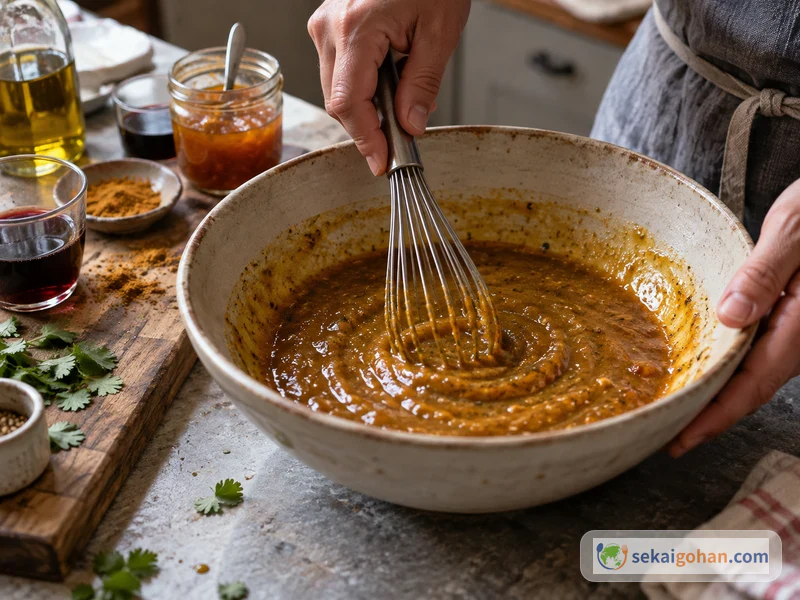
For the marinade, a mild curry powder is best, and an ordinary supermarket one is enough. Ground coriander adds depth of aroma. No port or dry sherry? Red wine with a little sugar dissolved in it can stand in.
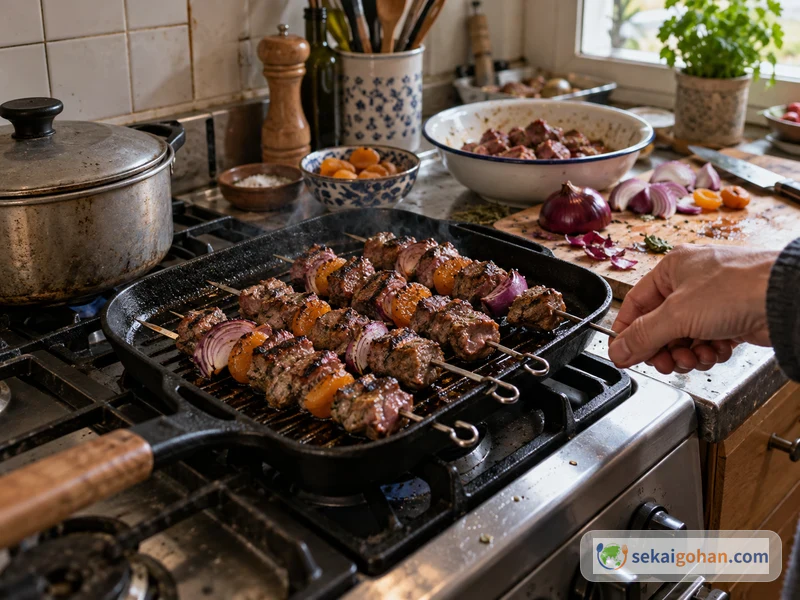
Sosaties are best over charcoal, but indoors a grill pan, frying pan, or broiler works well. For browning and a little char, a grill pan is the one to reach for: it gives you grill marks that look like they came off a braai.
Cook meat to at least 167°F (75°C) at the center for at least 1 minute. A dark outside from the marinade does not mean the inside is cooked; it can still be raw. Wash tongs, chopsticks, and cutting boards that touched raw meat before using them on cooked meat.
If you don't have a grill pan, a broiler also works. The jam drips and scorches easily, so lining the drip tray with aluminum foil makes cleanup easier. Don't forget to turn them before they burn too much.
Metal skewers get very hot when grilled. Use tongs to turn them, and after plating, tell people not to grab the base of the skewer with bare hands.
Serving Sosaties
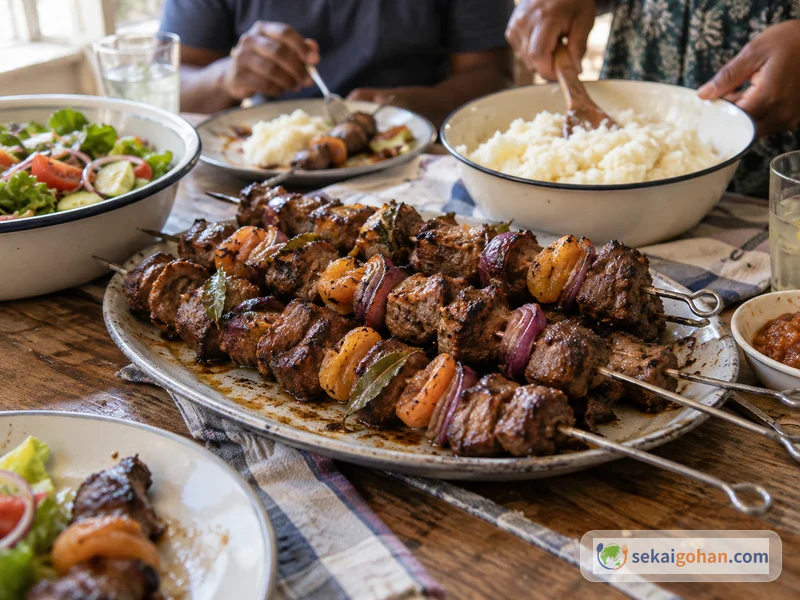
Sosaties are best eaten warm, straight off the grill. At a braai, pap (a cornmeal porridge), salads, and bread are laid out beside the meat, and everyone helps themselves. At home, white rice, buttered rice, or a green salad pairs well with the sweet-and-sour curry flavor.
To drink, try the peppermint liqueur known in South Africa as a "Springbokkie," a well-chilled beer, or a light red wine to match the sweetness of the apricot.
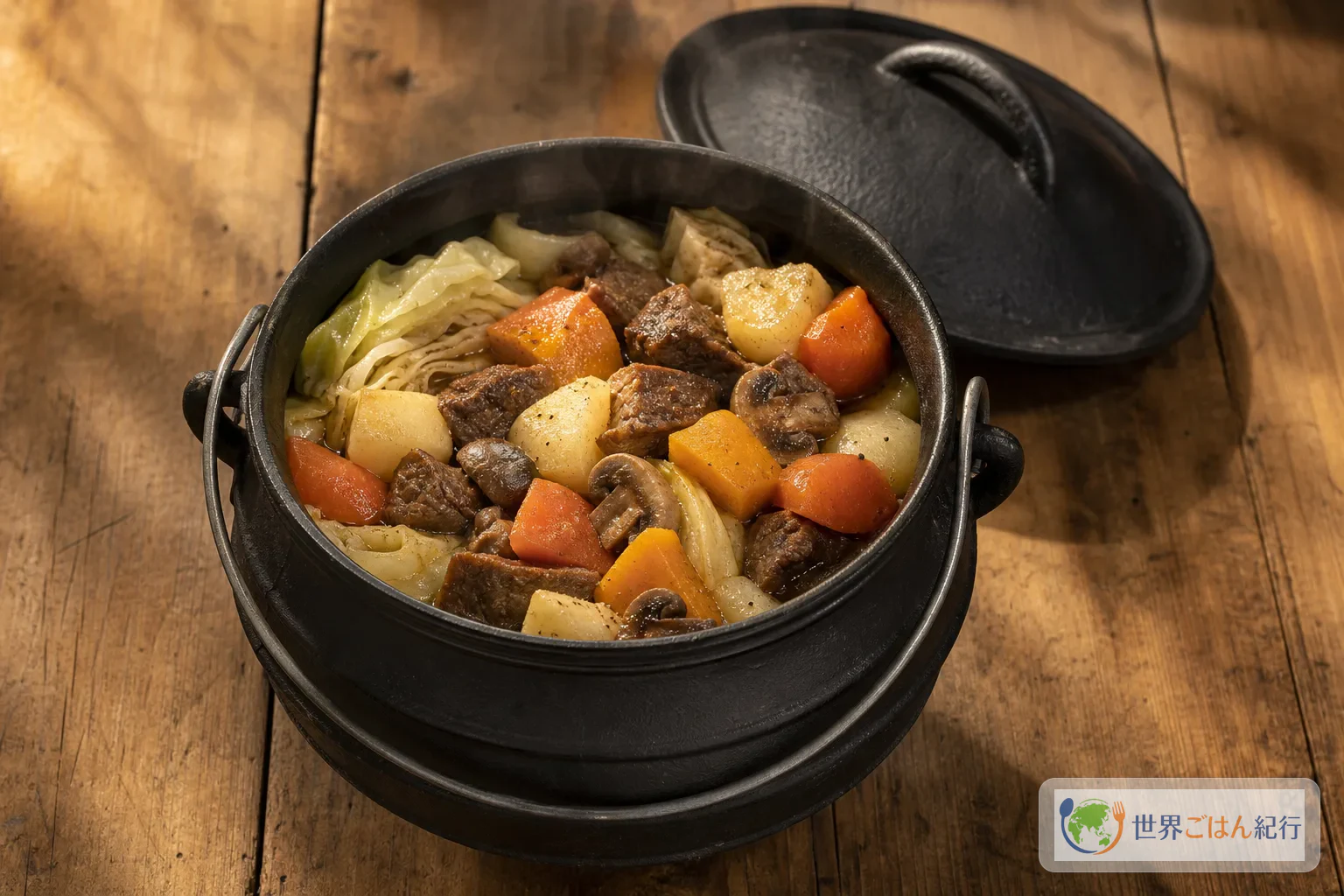
For a fuller South African spread, chakalaka, vegetables simmered with spices, is a braai staple. Bobotie, a curry-flavored baked dish from the same Cape Malay kitchen, shows how South African cooking pairs sweetness and spice. And potjiekos, stewed in a three-legged pot, is another dish cooked around an outdoor fire.
FAQ
Can I marinate for a shorter time?
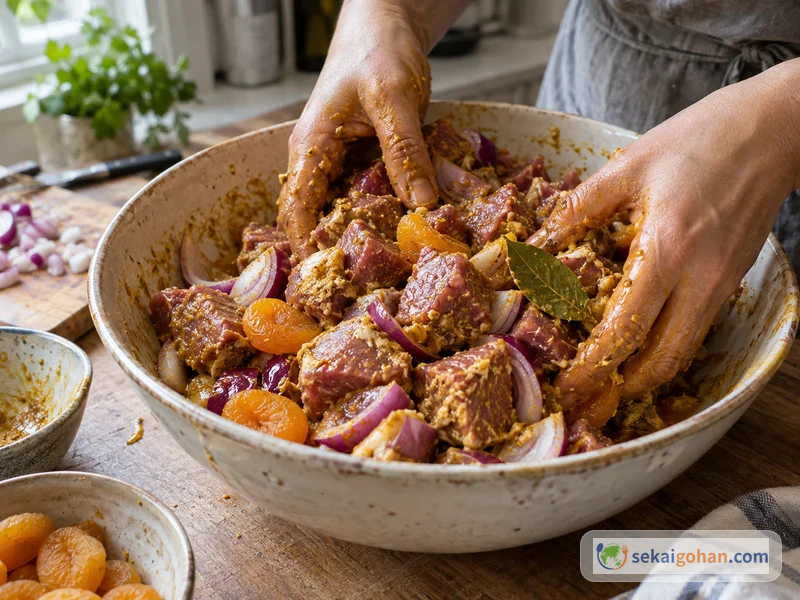
Marinate at least 3 hours. With less time, the flavor only reaches the surface of the meat, and the sweetness and spice don't blend well. The easiest approach is to marinate the night before and grill the next day.
I don't like the smell of lamb.
Use beef round, pork shoulder, or chicken thighs instead; pork and beef sosaties are common in South Africa. Heat reaches the center of chicken less easily, so be sure to confirm the center temperature with a thermometer.
Can I use bamboo skewers?
Yes. Soak them in water about 30 minutes first so they don't burn. Metal skewers conduct heat from the inside as well, so they cook a little faster than bamboo.
What if I want it spicy?
Classic sosaties are more about sweetness and aroma than heat. If you want heat, add a little chili flakes to the marinade or use a hot curry powder.
Can I store them marinated?
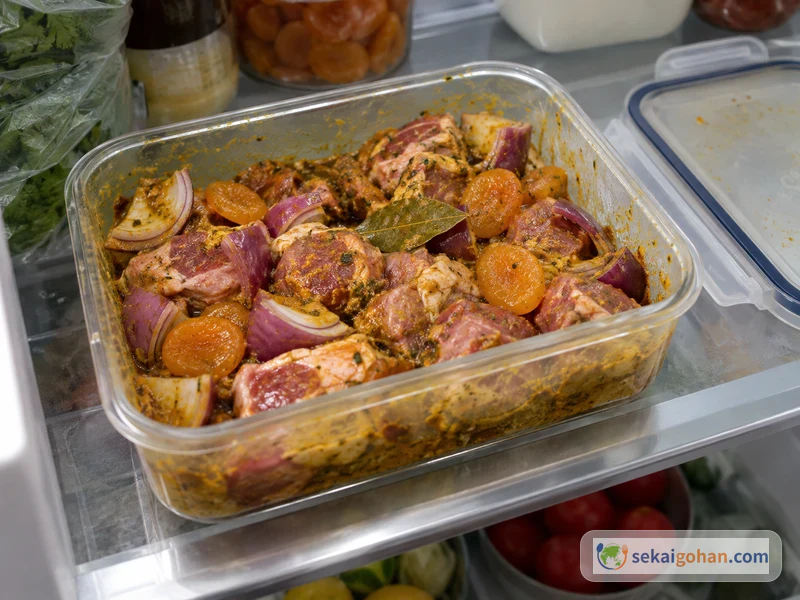
Keep the marinated ingredients in the refrigerator overnight and grill them the next day. Let grilled sosaties cool slightly, refrigerate them, and eat them soon. To reheat, warm them through in a frying pan.
Are there ingredients to watch for allergies?
Some Worcestershire sauces and curry powders use wheat or soy. If you have an allergy, check the ingredient labels before using them.