Banitsa: Bulgarian Rolled Phyllo Pie with White Cheese (Баница)

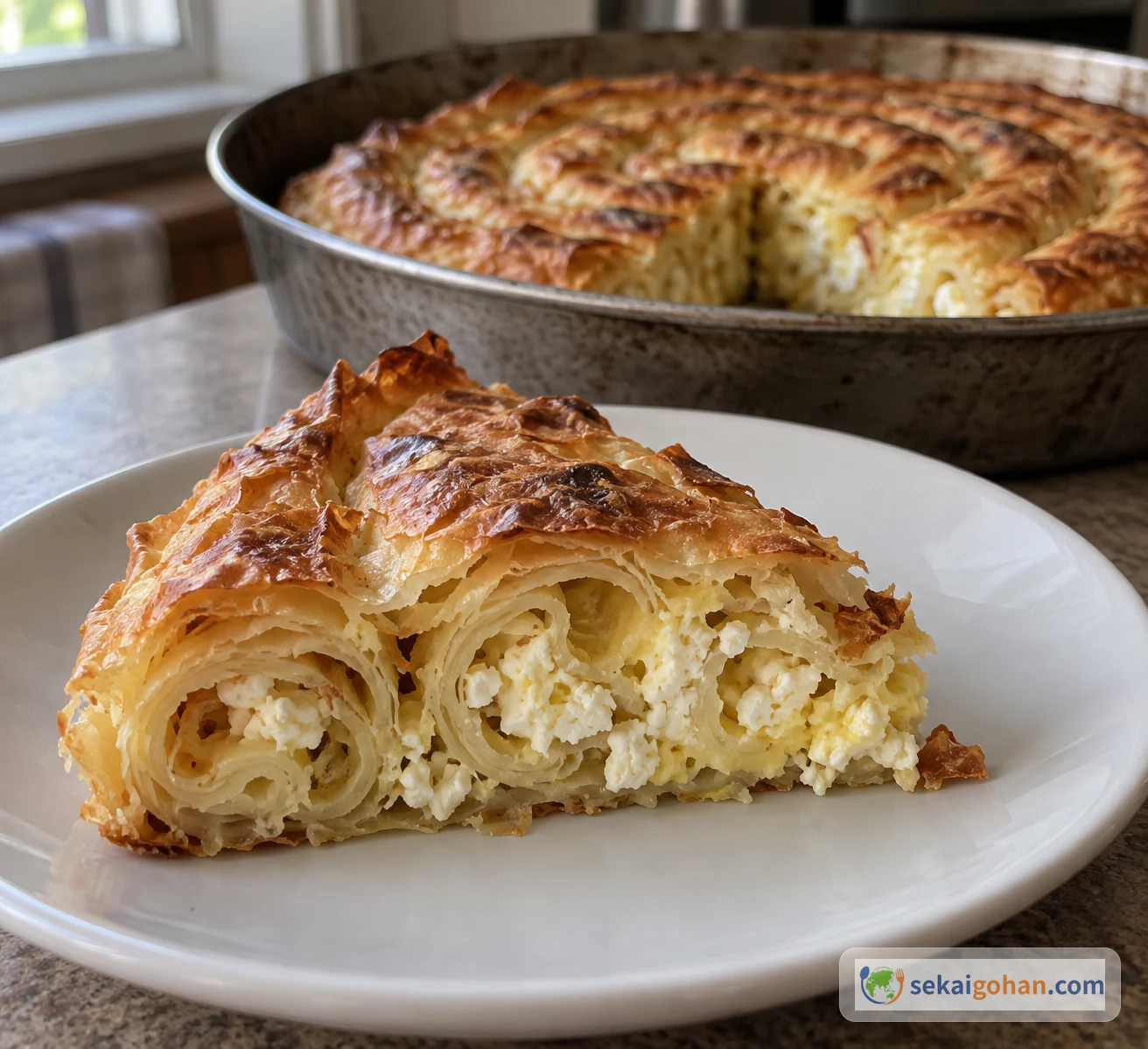
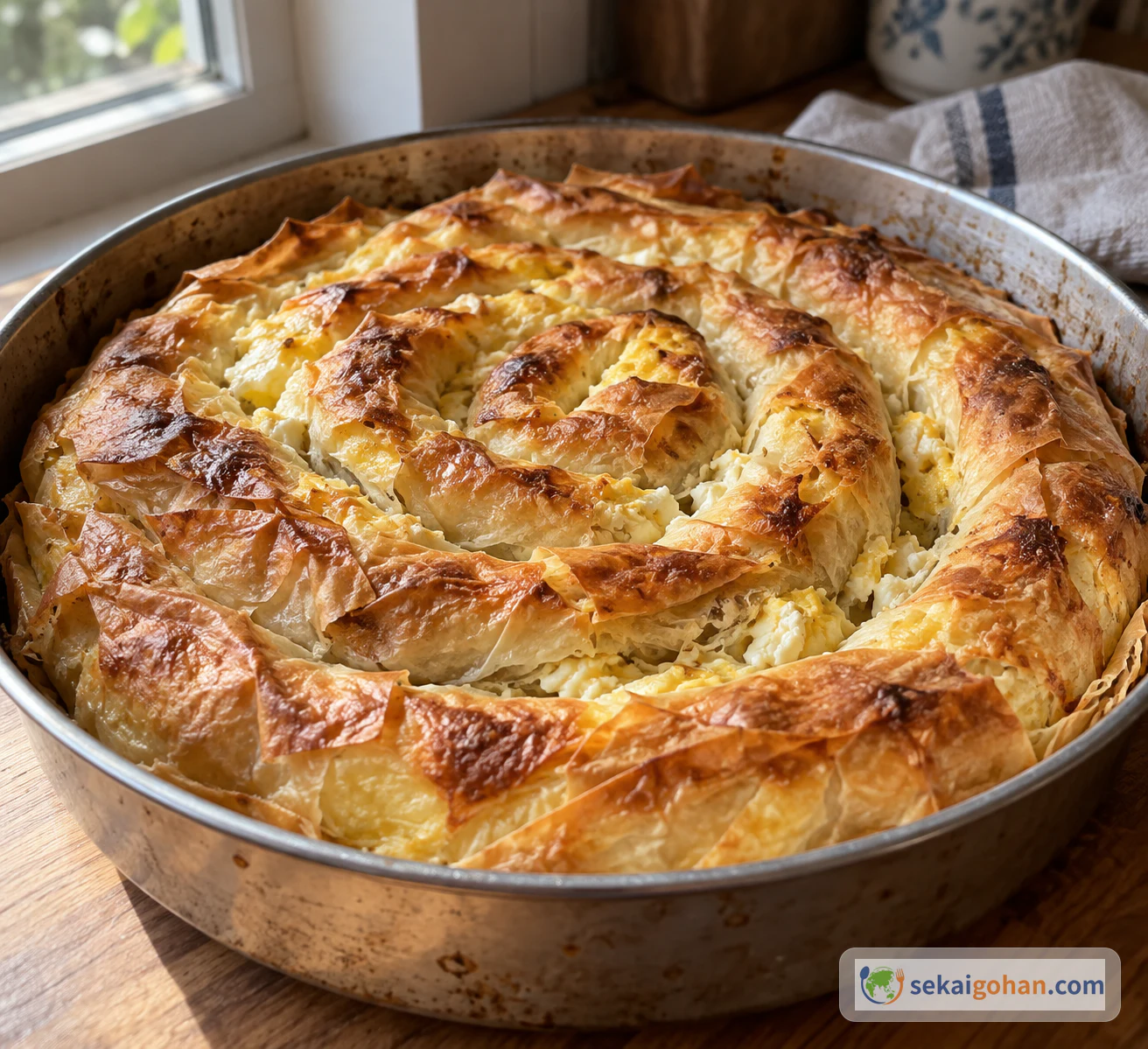
Rolled banitsa filled with white cheese
Cuisine
Bulgarian

How to make banitsa (баница), Bulgaria's well-known breakfast pastry, as a rolled home version: 400g of thin phyllo, each sheet spread with a yogurt, egg and white-cheese filling, rolled and baked. Covers choosing sirene versus feta, handling phyllo, keeping back filling for the top, checking that the egg filling is fully cooked, and how banitsa fits the Bulgarian breakfast table.

Cooking flow

Cooking steps

STEP11 / 7

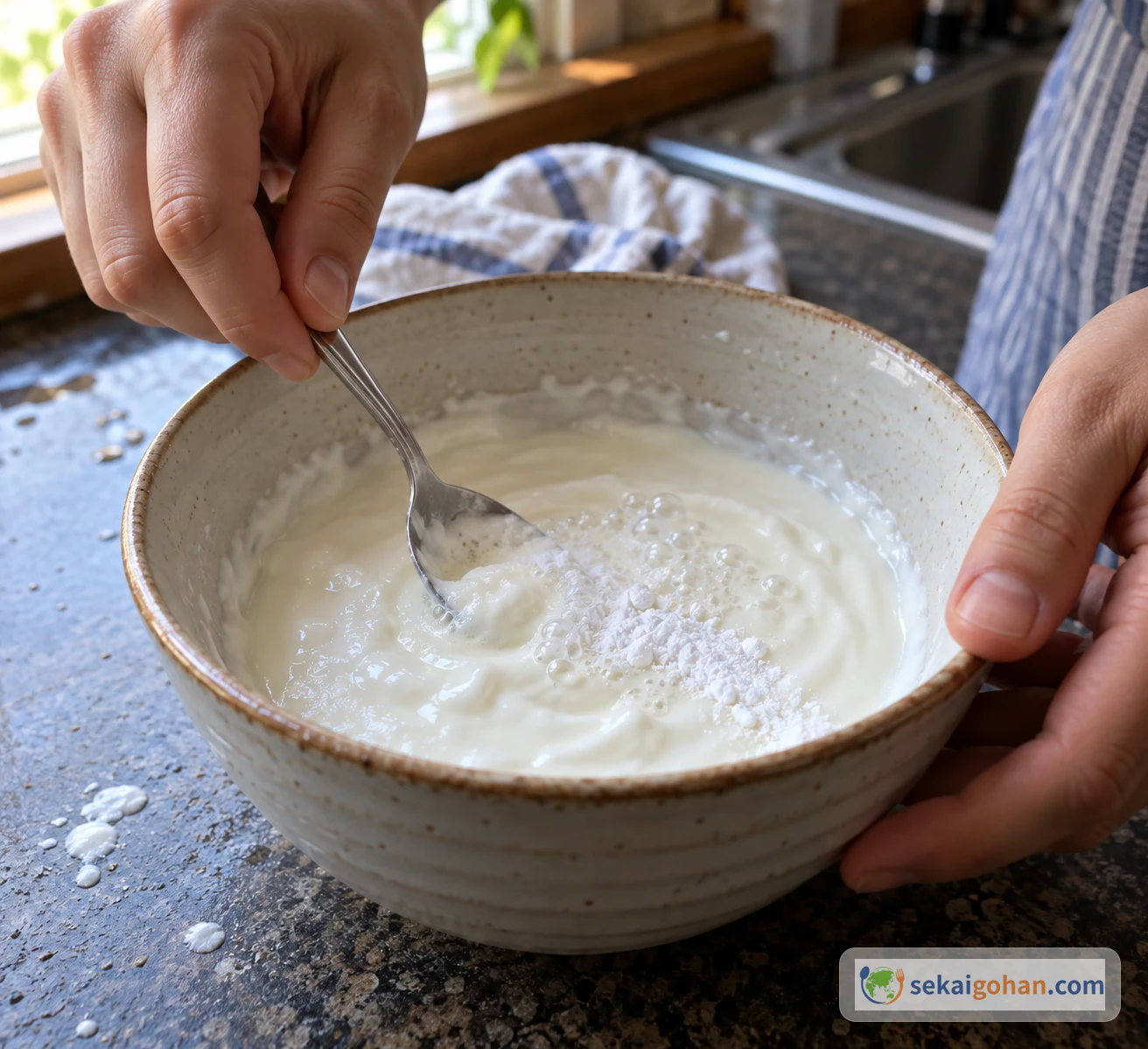
Preheat the oven, prepare the phyllo and stir baking soda into the yogurt

Stirring baking soda into yogurt
Mix the baking soda into the yogurt before adding anything else

Preheat the oven to 350°F (180°C). Prepare the phyllo as its package directs, keeping it covered so it doesn't dry out. In a bowl, stir the 1 tsp of baking soda into the 14 oz (400g) of yogurt and carry straight on.

STEP22 / 7

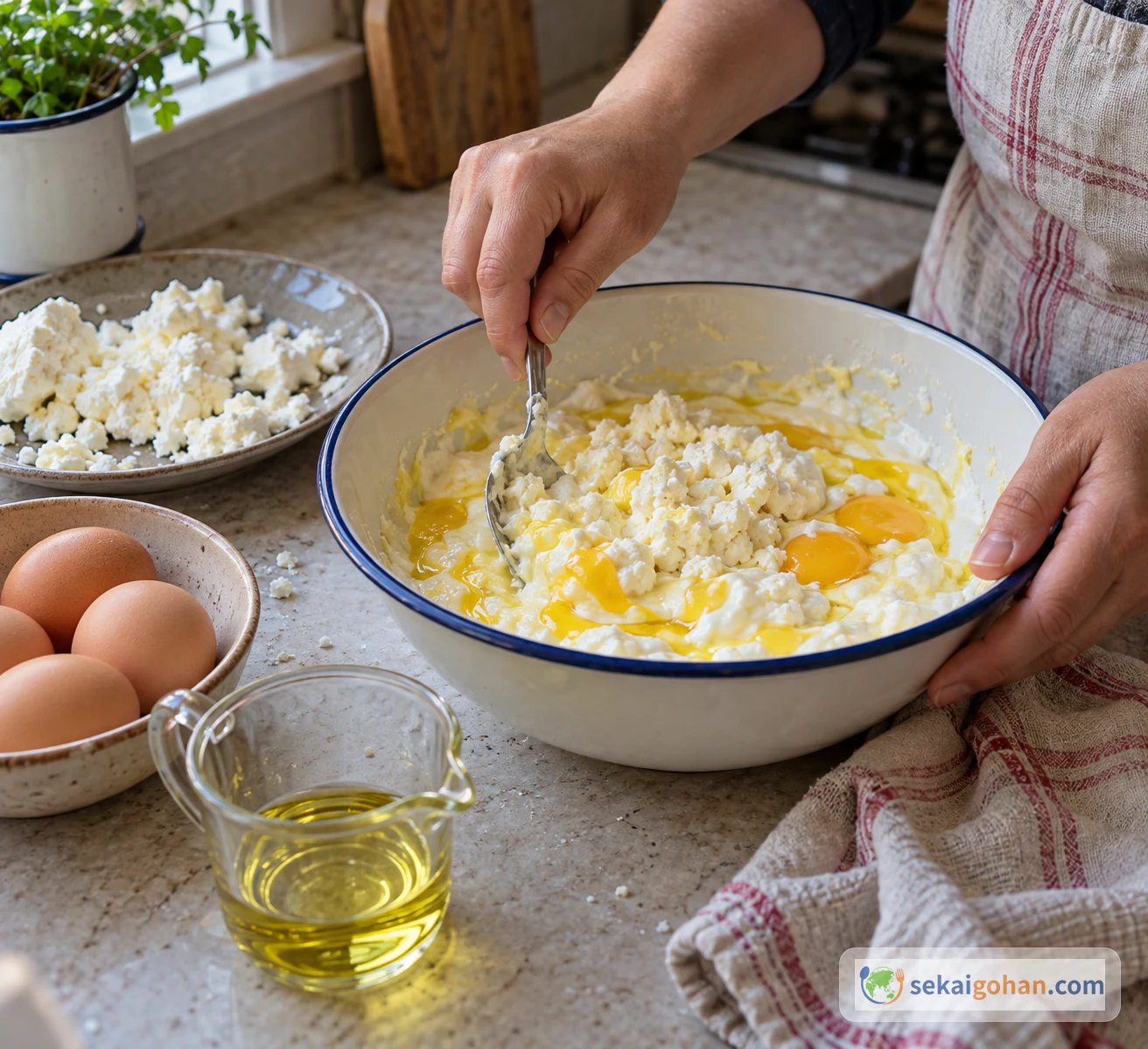
Add the eggs, sirene and oil

Adding eggs, white cheese and oil and mixing
Mix gently; small lumps of cheese are fine

Add the 4 eggs, the crumbled sirene and the 8 tbsp of oil to the yogurt, and mix. Small lumps of cheese can remain. All of the filling oil goes in at this point; the oil for the pan is separate. The filling contains raw egg, so don't taste it.

STEP33 / 7

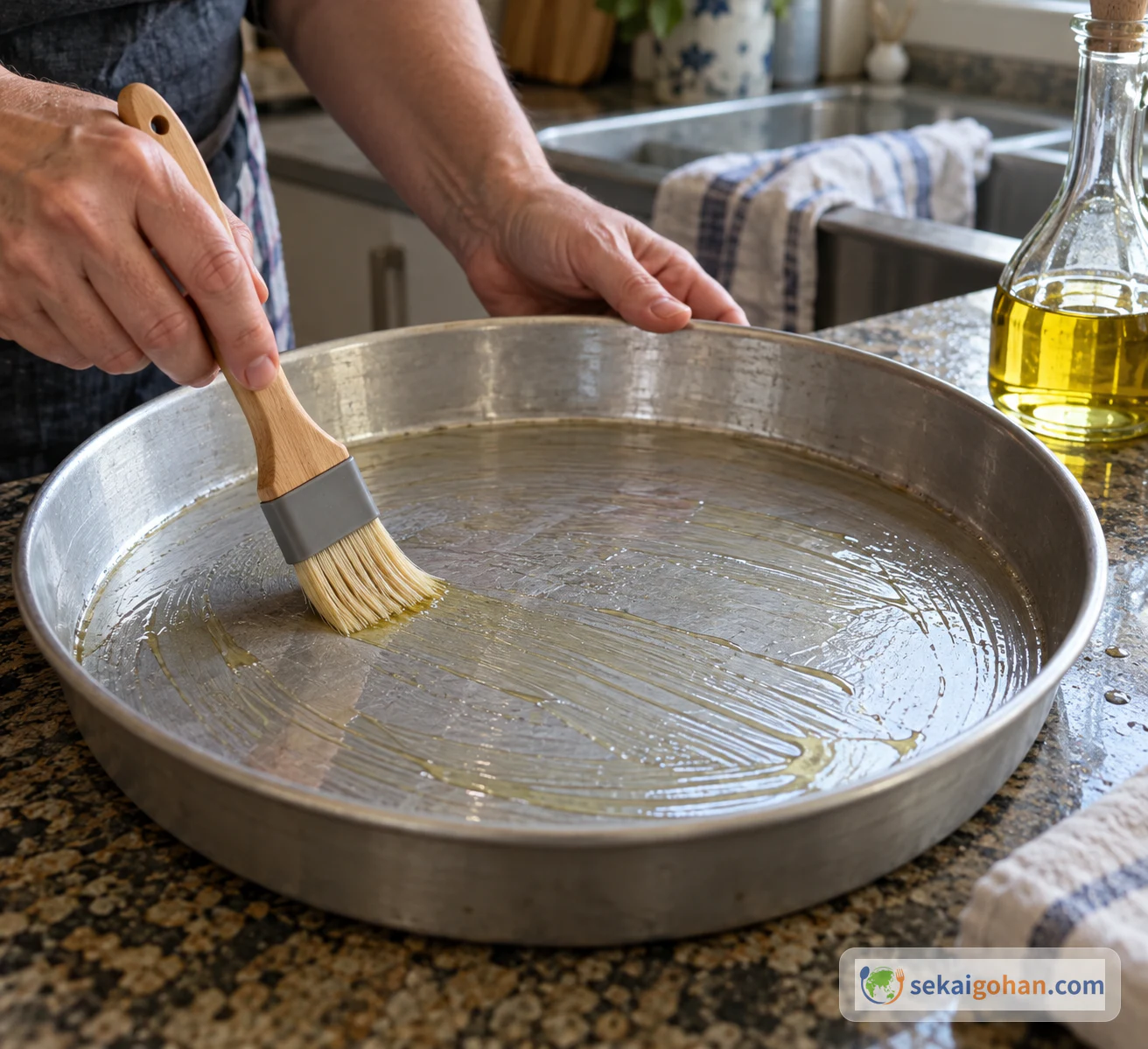
Oil the pan thinly

Brushing a thin layer of oil into a shallow pan
Use the separate pan oil, not the filling oil

Brush a thin layer of oil over the empty pan, using the separate oil set aside for greasing.

STEP44 / 7

Spread each sheet thinly, roll it and lay it in the pan

Rolling phyllo spread thinly with filling and arranging the rolls
A thin coat of filling keeps the sheets from tearing; leave some filling in the bowl

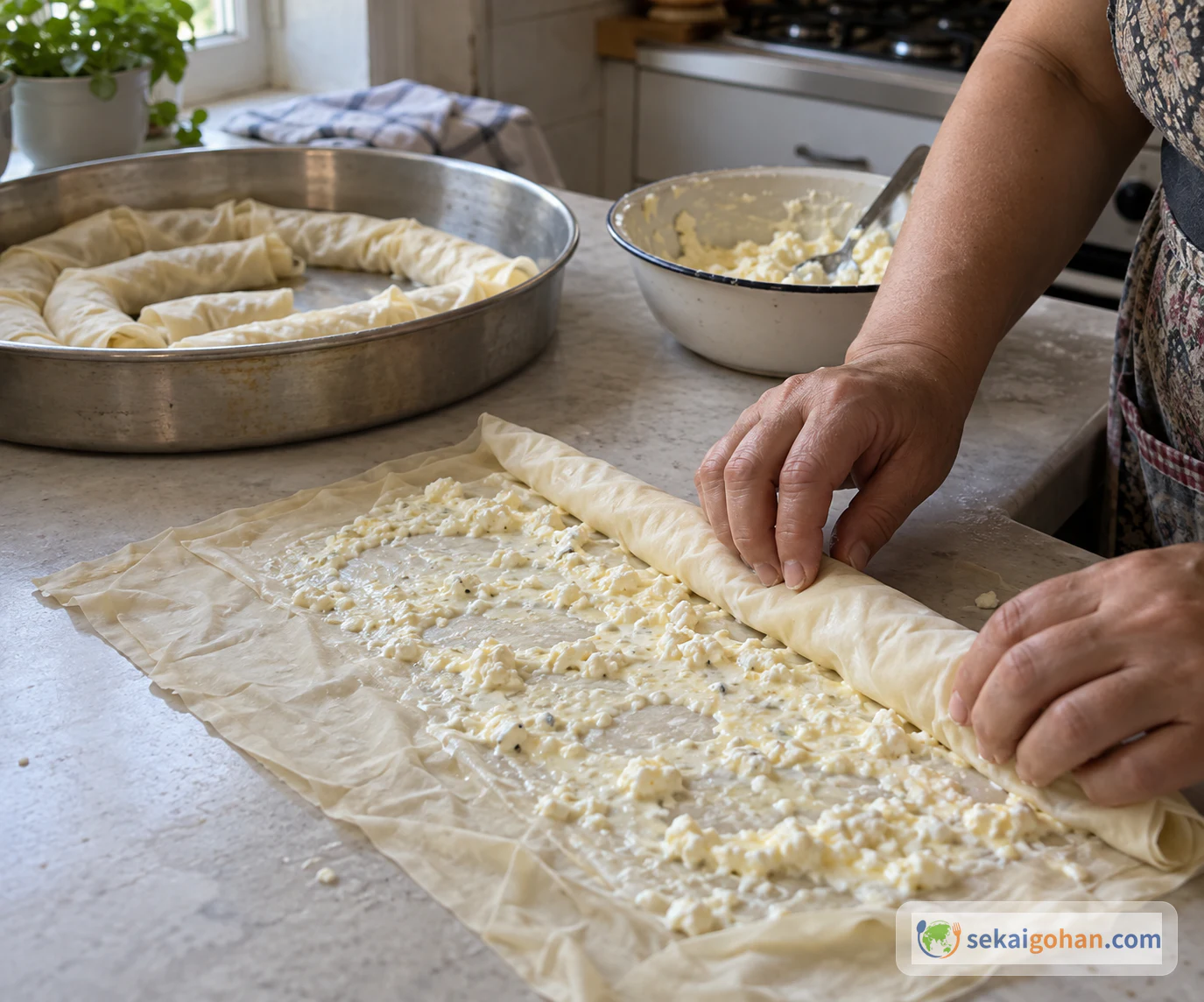
Take one phyllo sheet at a time and spread a thin layer of filling over it. Roll it up and place it in the pan. Repeat with the remaining sheets, fitting the rolls next to each other. Don't spread on too much filling, because that makes the sheets tear. In a round pan, arrange the rolls in a loose circle, as in the photo. Remember to leave some filling in the bowl.

STEP55 / 7

Pour the reserved filling over the top

Pouring the reserved filling over the rolled pastry
The kept-back filling goes over all the rolls before baking

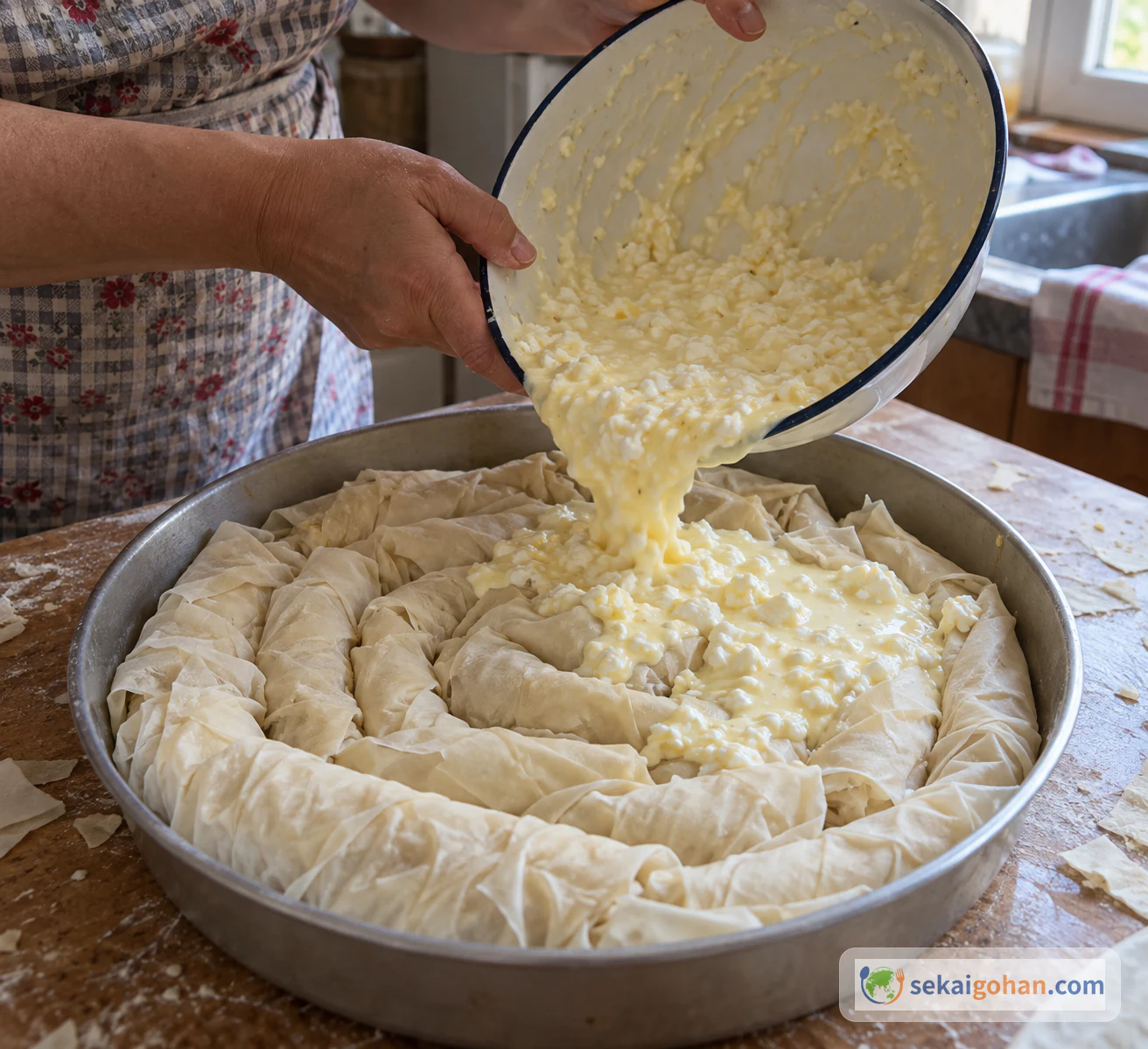
Once all the sheets are rolled and in the pan, pour the remaining filling over them. Use the filling you kept back. Don't make a separate topping mixture, and don't cut the pastry before baking.

STEP66 / 7

Bake on the lowest rack at 350°F (180°C)

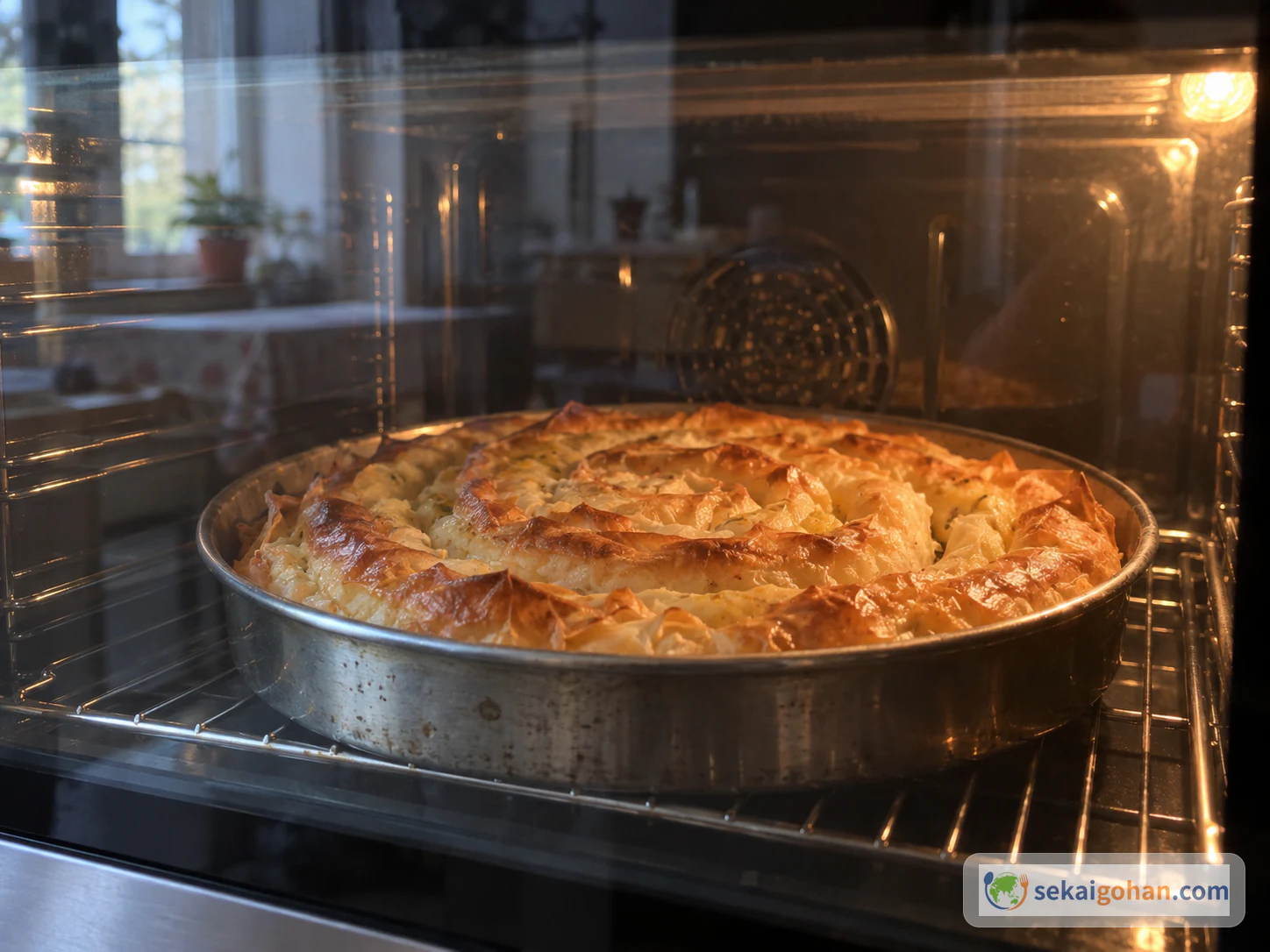
Banitsa baking on the lowest oven rack
Bake on the lowest rack, and judge doneness by the center as well as the color

Bake on the lowest rack at 350°F (180°C) for 30–40 minutes. Ovens and the thickness of the rolls vary, so a golden top alone doesn't prove the center is cooked. The egg filling must be fully cooked through to the middle: check that the center reaches 167°F (75°C) for at least 1 minute.

STEP77 / 7

Cool for 10 minutes, then cut

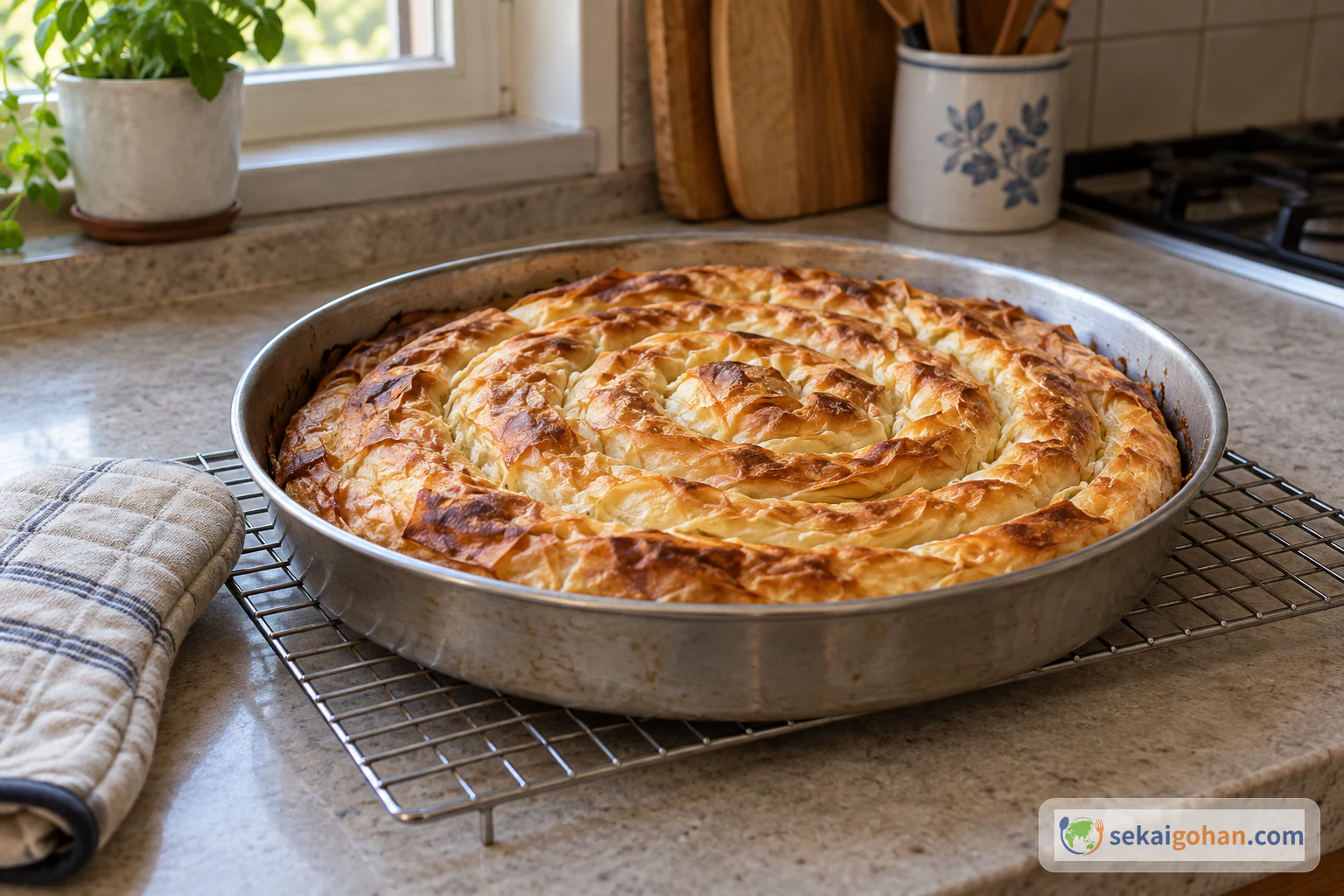
Leaving the baked banitsa to cool
Let it rest for 10 minutes before cutting

Take the banitsa out of the oven and let it cool for 10 minutes, then cut it into 12 portions.

0 / 0
Ingredients

Ingredients

1 / 1

Ingredients

Ingredient Amount Role
Thin phyllo for banitsa (кори за баница) 14 oz (400g) The pastry. Thaw it and keep it from drying out as the package directs.
Plain unsweetened yogurt (кисело мляко) 14 oz (400g) The tangy base of the filling. Use it as is, without straining.
Cow's-milk white cheese, sirene (краве сирене) 7–10.5 oz (200–300g) (9 oz/250g used here) The salty heart of the filling. Crumble it, and drain it from its brine as the product label directs.
Eggs 4 Bind the filling as it bakes.
Oil (олио) 8 tbsp Goes into the filling. A neutral cooking oil. At 1 tbsp (15 ml) per tablespoon this is ½ cup (120 ml).
Baking soda (сода бикарбонат) 1 tsp Stirred into the yogurt. Do not swap it for baking powder.
Oil for the pan As needed Only for greasing the pan. Keep it separate from the 8 tbsp in the filling.
0 / 0

Paper-thin sheets of phyllo, each brushed with a little yogurt, egg and white cheese, rolled up and packed into a pan: that's banitsa (баница), and in Bulgaria it's what many people eat for breakfast. The cheese does the seasoning. Its saltiness, along with the tang of yogurt, carries the whole pastry, so there's no extra salt, butter, milk or sugar here. It's one of the country's best-known dishes, and a good way into a cuisine where yogurt and white brined cheese turn up at nearly every meal.

About Banitsa

There isn't just one banitsa. Fillings range from cheese to spinach, rice and meat, and some versions stack the sheets flat while others roll them. This one is a rolled cheese banitsa. Each sheet gets a thin coat of filling made from yogurt, egg and cow's-milk sirene, then it's rolled and laid in the pan, and the filling you've held back is poured over the top before baking.

At Christmas and New Year, it's customary to tuck kismets, small tokens of good fortune, into the banitsa. For more dishes from the same table, see the Bulgaria country page.

Name and spelling

In Bulgarian the dish is written баница, and in English usually banitsa (banitza is also seen).

Ingredients: 14 oz (400g) Phyllo, Yogurt, Sirene and Eggs
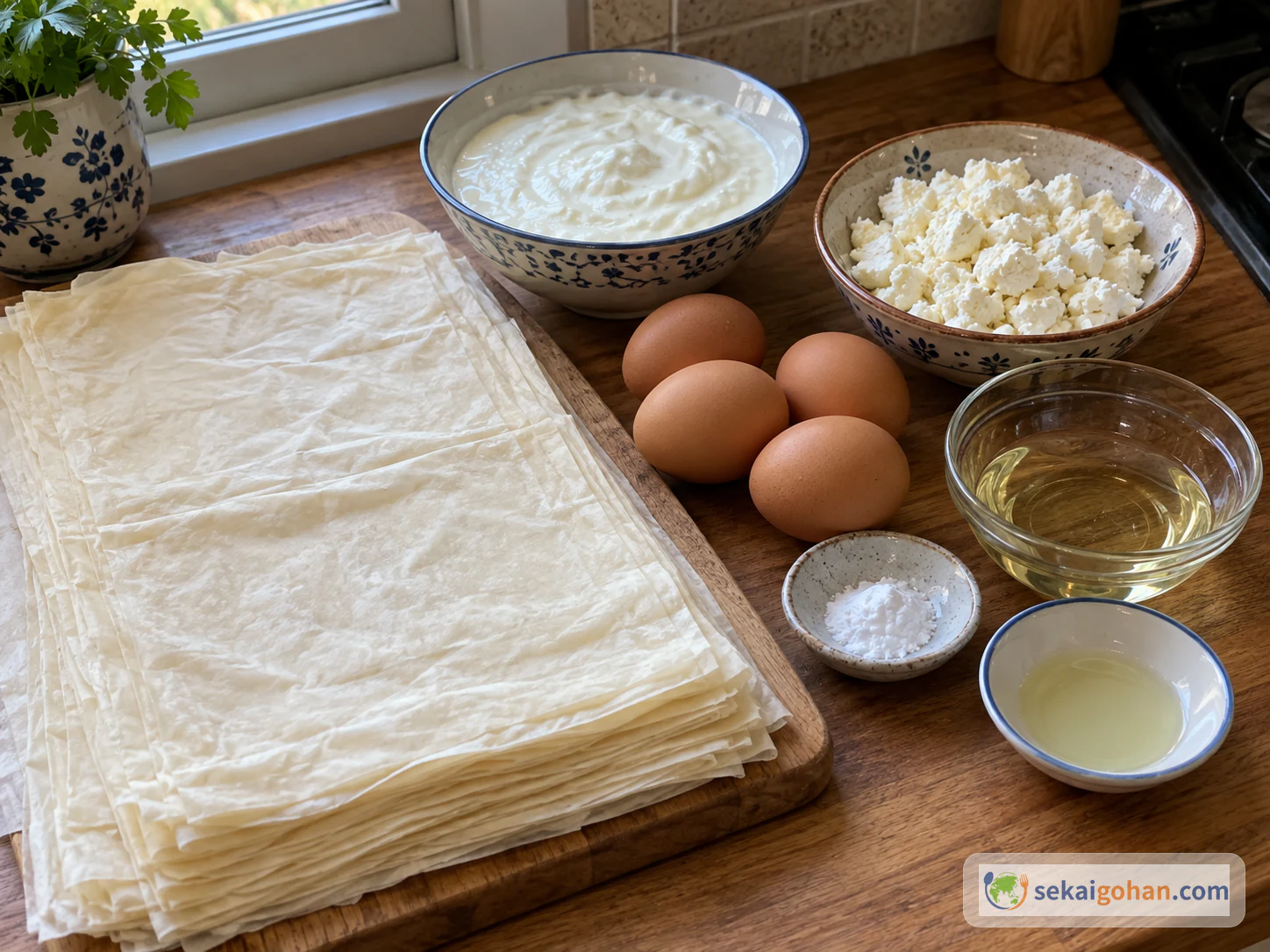
Phyllo, white cheese, eggs, yogurt, oil and baking soda laid out as ingredients
The whole recipe: phyllo, plain yogurt, white cheese, four eggs, oil and baking soda

Use 7–10.5 oz (200–300g) of cheese. The photos and steps here use 9 oz (250g). The recipe makes 12 portions.

Allergens and raw egg

This recipe contains egg, milk (yogurt and cheese) and wheat (in the phyllo). Check the labels on the phyllo and cheese for other allergens as well. The filling contains raw egg, so do not taste it before baking.

Equipment

  • Oven
  • Shallow baking pan. The photos show a shallow round metal pan of about 12 inches (30 cm), as one example.
  • Mixing bowl and spoon or whisk
  • Pastry brush for oiling the pan
  • Cooling rack
  • Knife for cutting

Choosing Sirene, Feta and Phyllo for Banitsa

Sirene is the Bulgarian white brined cheese, and this recipe uses the cow's-milk kind. Because its saltiness seasons everything, it matters which one you buy. Brined cheeses vary from product to product, so handle the brine and draining the way the label directs.

Feta works as a substitute, though it's a different cheese and the flavor will shift with it. Taste it for salt before you start.

Phyllo should be the thin sheets sold for banitsa or as filo; spring roll wrappers are a different product and won't work. How many sheets you get in 14 oz (400g) depends on the brand. Thaw the phyllo as the package directs, and keep the sheets you aren't using covered so they don't dry out and crack.

Method: Spread, Roll, Pour, Bake

Before you start

Steps 1–2 make one batch of filling. You will spread most of it on the sheets in step 4. Keep a share back in the bowl to pour over the rolls in step 5, so plan to have some left when the last sheet is rolled.

About the 40-minute label

Plan on 40 minutes: 30–40 minutes of baking plus 10 minutes of cooling. Mixing, rolling and preheating come on top.

Banitsa Troubleshooting

Condition Likely cause What to do
Sheets tear while rolling Too much filling on each sheet Spread it thinner. A thin coat is enough.
Sheets crack before you can roll them The phyllo dried out Keep unused sheets covered and work one sheet at a time.
No filling left for the top All of it went on the sheets Next time, set a share aside before you start rolling.
Top is golden but the center is underdone Color forms faster than the middle cooks Check that the egg filling is cooked through to the center (see step 6).
Too salty or not salty enough Saltiness varies between cheeses Adjust through your choice of cheese and how you drain it.

Serving and Variations

A cut piece of banitsa showing the cross-section
A cut piece shows the rolled phyllo and the cooked cheese and egg filling

In Bulgaria, banitsa comes to the breakfast table with a glass of ayran (a yogurt drink) or boza (a fermented grain drink). Cut into it and you'll see the spiral of rolled sheets in cross-section.

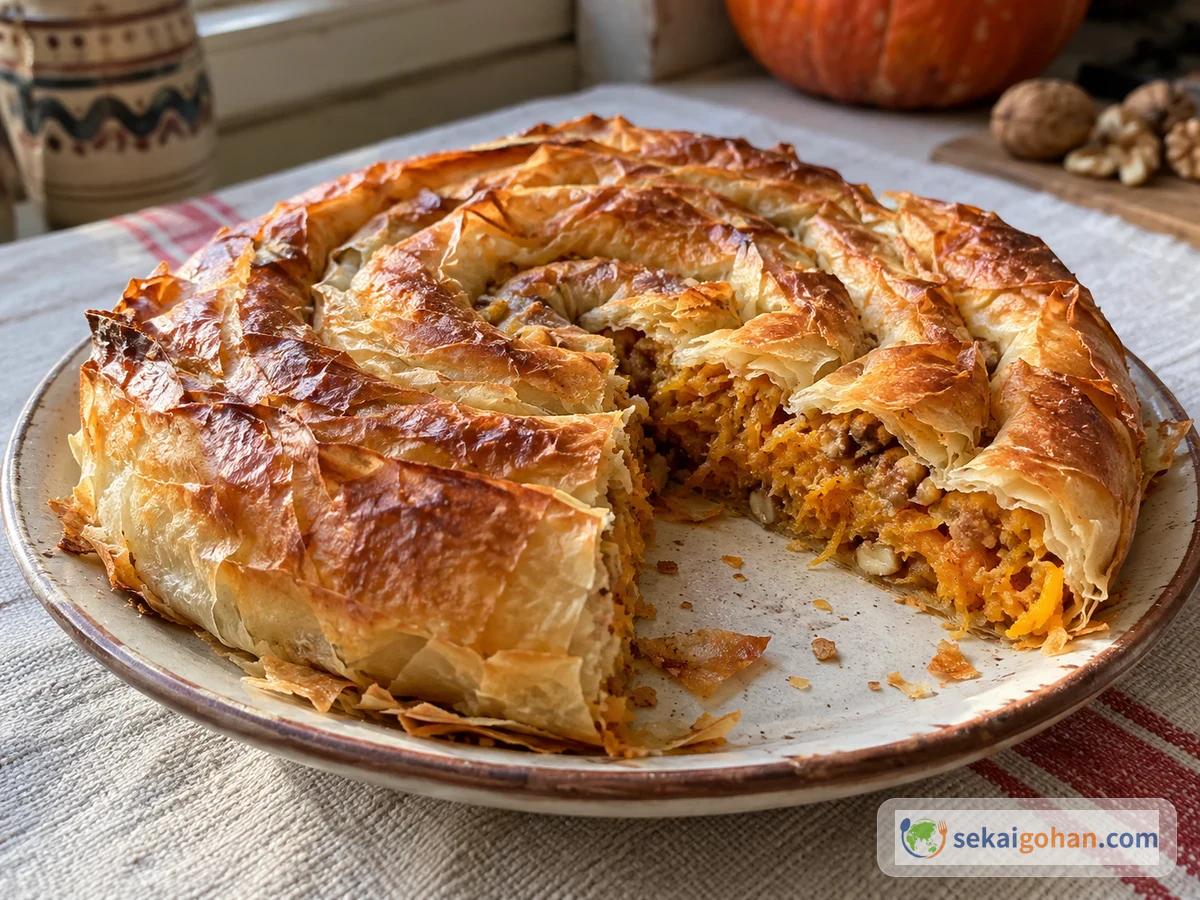
The cheese amount is yours to tune between 7–10.5 oz (200–300g) of sirene. Toward 10.5 oz (300g), the filling leans saltier and cheesier; toward 7 oz (200g), the yogurt comes forward. Beyond cheese, spinach, rice and meat all make good fillings, and tikvenik is a pumpkin variation.

Frequently Asked Questions

What is the difference between rolled and layered banitsa?

In this rolled version, every sheet gets a thin coat of filling and is rolled up, the rolls are packed into the pan, and the reserved filling goes over the top. In a layered banitsa, the sheets are stacked flat with cheese and egg between the layers. The ingredients and amounts differ, so follow one recipe all the way through rather than mixing the two.

How should I store leftovers?

Divide leftovers into shallow containers, cool them quickly and refrigerate them. When reheating, heat thoroughly to 167°F (75°C) or above.
Sources

  • Antonia Dimitrova (contributor), "Баница със сирене," Bon Apeti. The recipe followed here: 400g phyllo, 400g yogurt, 200–300g cow's-milk white cheese, 4 eggs, 8 tbsp oil and 1 tsp baking soda; spreading and rolling each sheet; pouring over the remaining filling; baking at 180°C on the lowest rack for 30–40 minutes; cooling for 10 minutes; and the "12 portions" and "40 minutes" labels. https://www.bonapeti.bg/recepti/banitsa-sas-sirene1466536217/
  • Ministry of Tourism of the Republic of Bulgaria / Bulgaria Travel, "Traditional Cuisine." Banitsa as a famous, popular breakfast dish; its range of fillings (cheese, spinach, rice, meat); yogurt and white brined cheese on the Bulgarian table. https://visitbulgaria.com/about-bulgaria/traditional-cuisine/
  • Bulgaria Travel, "What to eat in Bulgaria." Banitsa classified as a representative Bulgarian dish and breakfast. https://www.turismobulgaria.com/en/food-in-bulgaria
  • Balkan Bites, "Cook&Eat: Banitsa." Banitsa presented as a signature Bulgarian dish, and eaten for breakfast with ayran or boza. https://www.balkanbites.bg/cookeat-banitsa/
  • Find BG Food, "Banitza." A layered cheese banitsa for comparison, feta as a substitute, serving with ayran or boza, the custom of kismets at Christmas and New Year as described by this site, and other versions such as tikvenik. https://findbgfood.com/recipe-banitsa
  • Ministry of Health, Labour and Welfare (Japan), "家庭での食中毒予防" (Preventing food poisoning at home). General home guidance: cooking to a center temperature of 75°C for at least 1 minute, preventing cross-contamination, dividing leftovers into shallow containers to cool quickly, and reheating to around 75°C or above. https://www.mhlw.go.jp/stf/seisakunitsuite/bunya/kenkou_iryou/shokuhin/syokuchu/01_00008.html