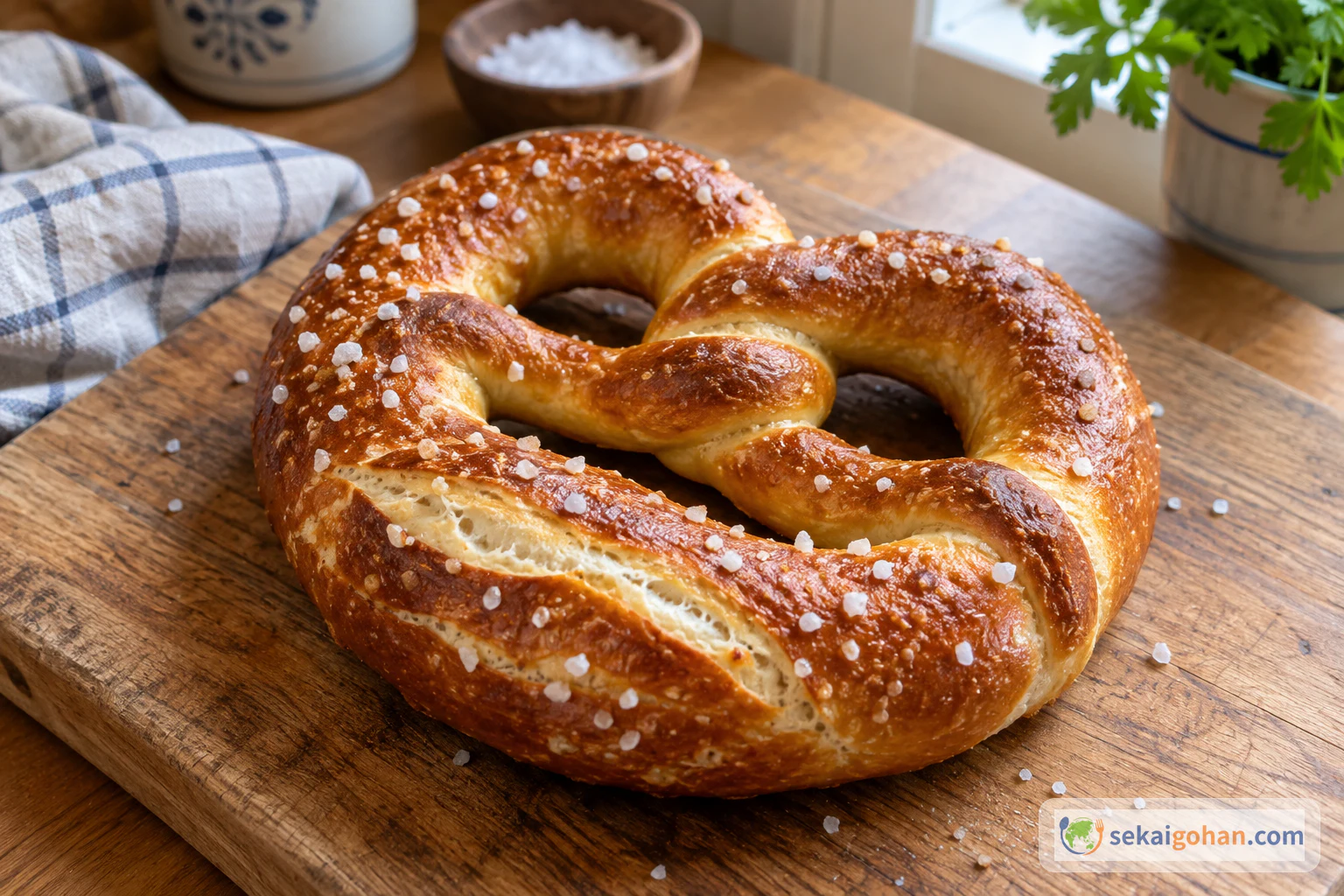
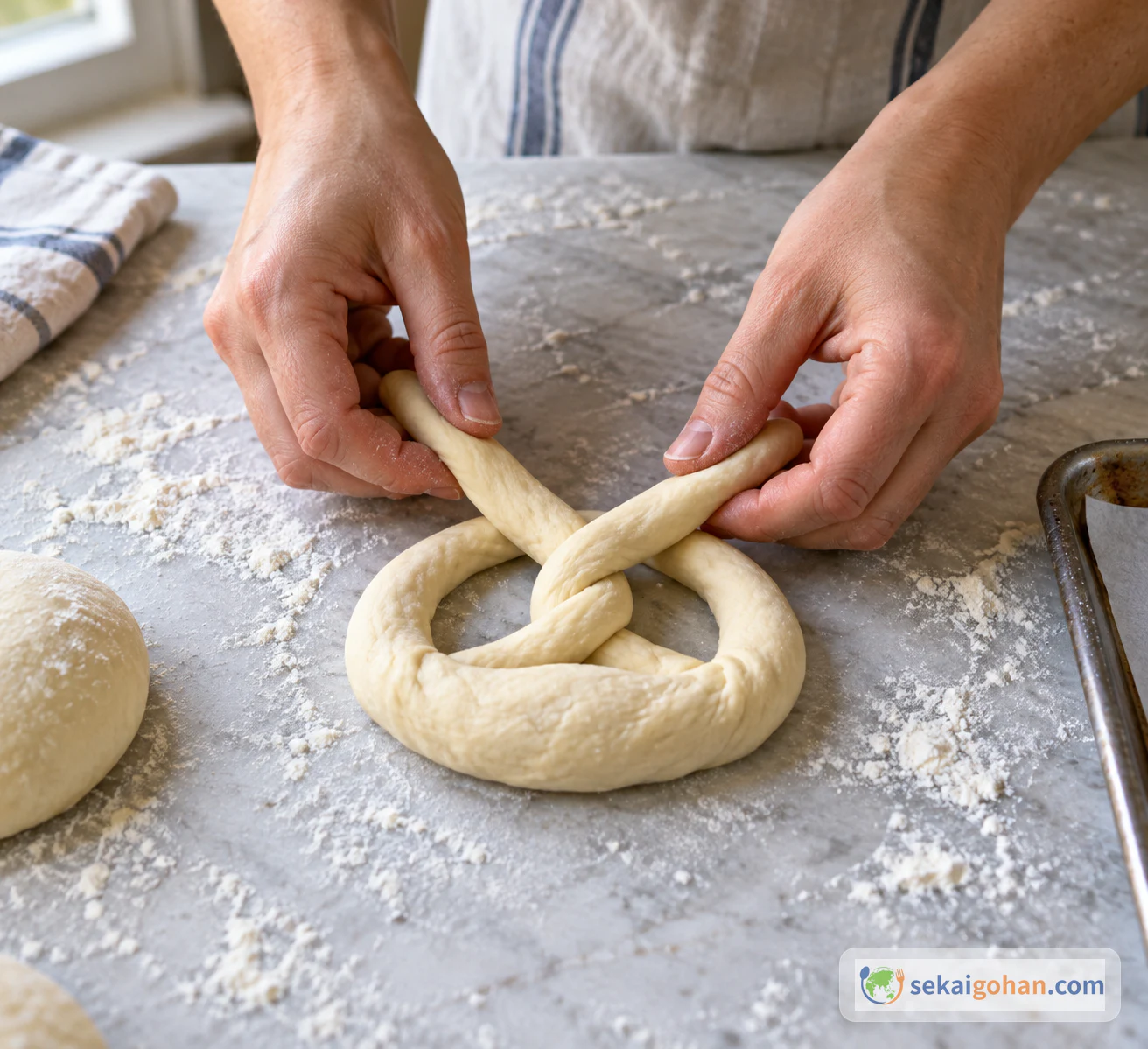
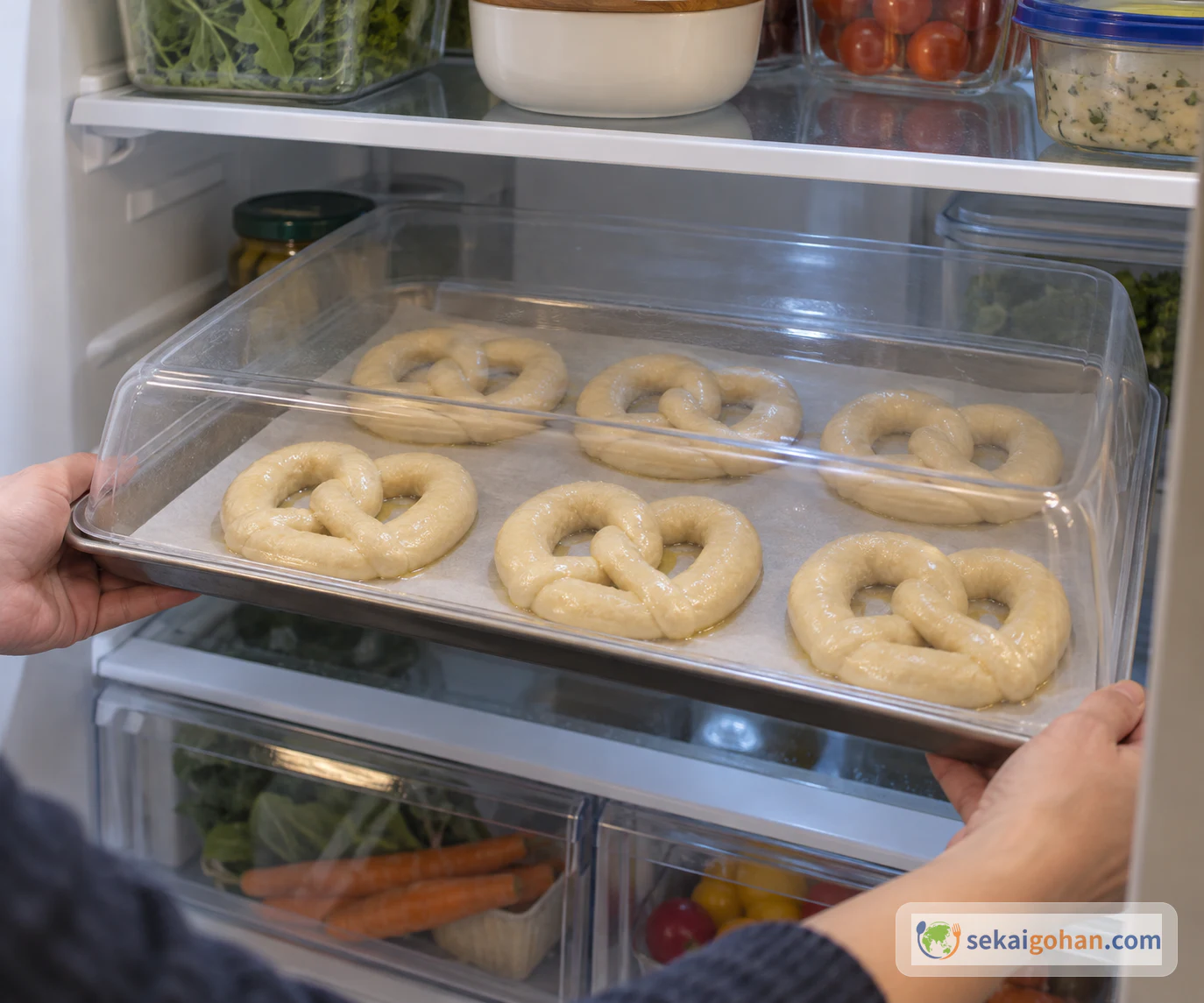
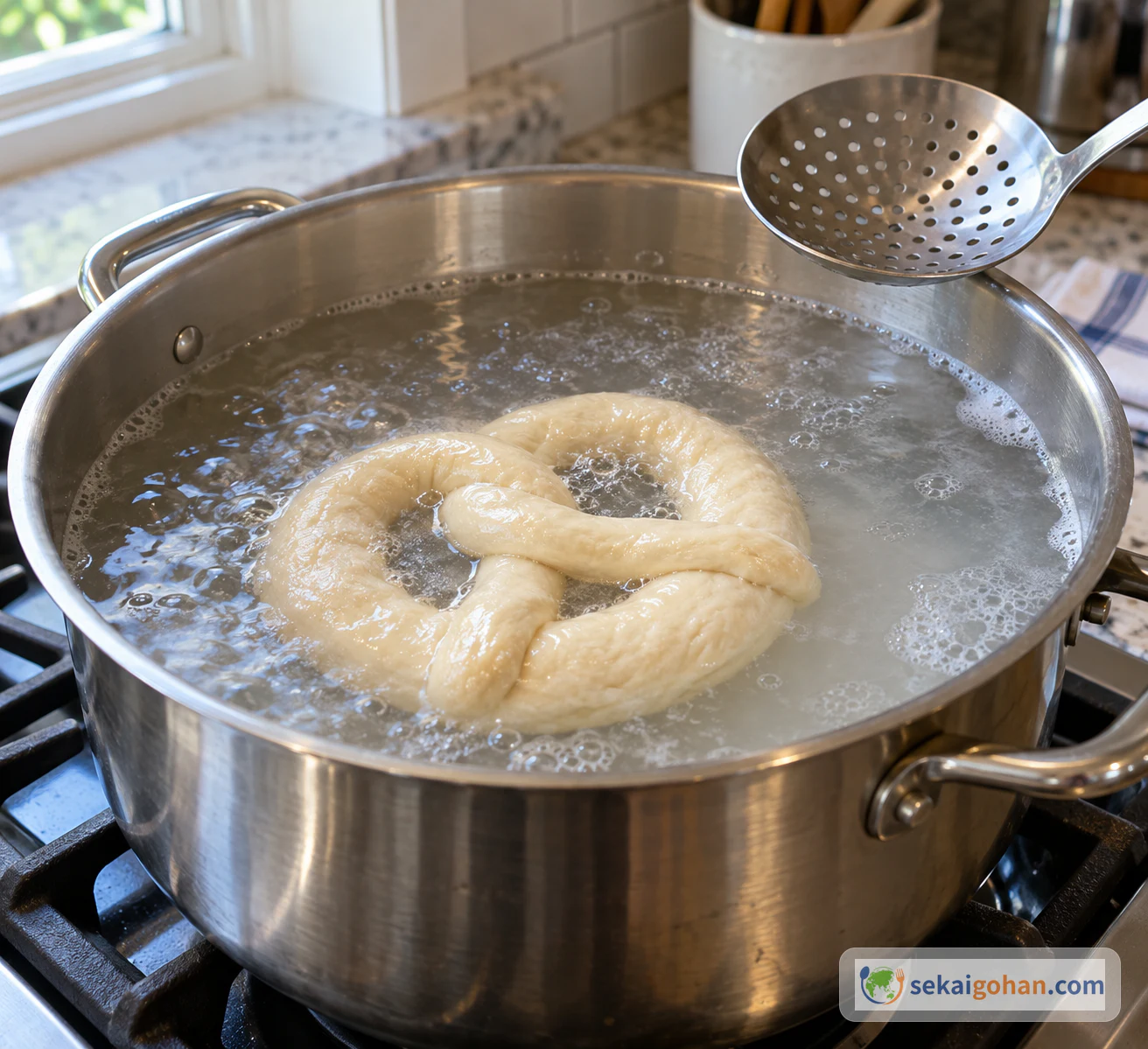
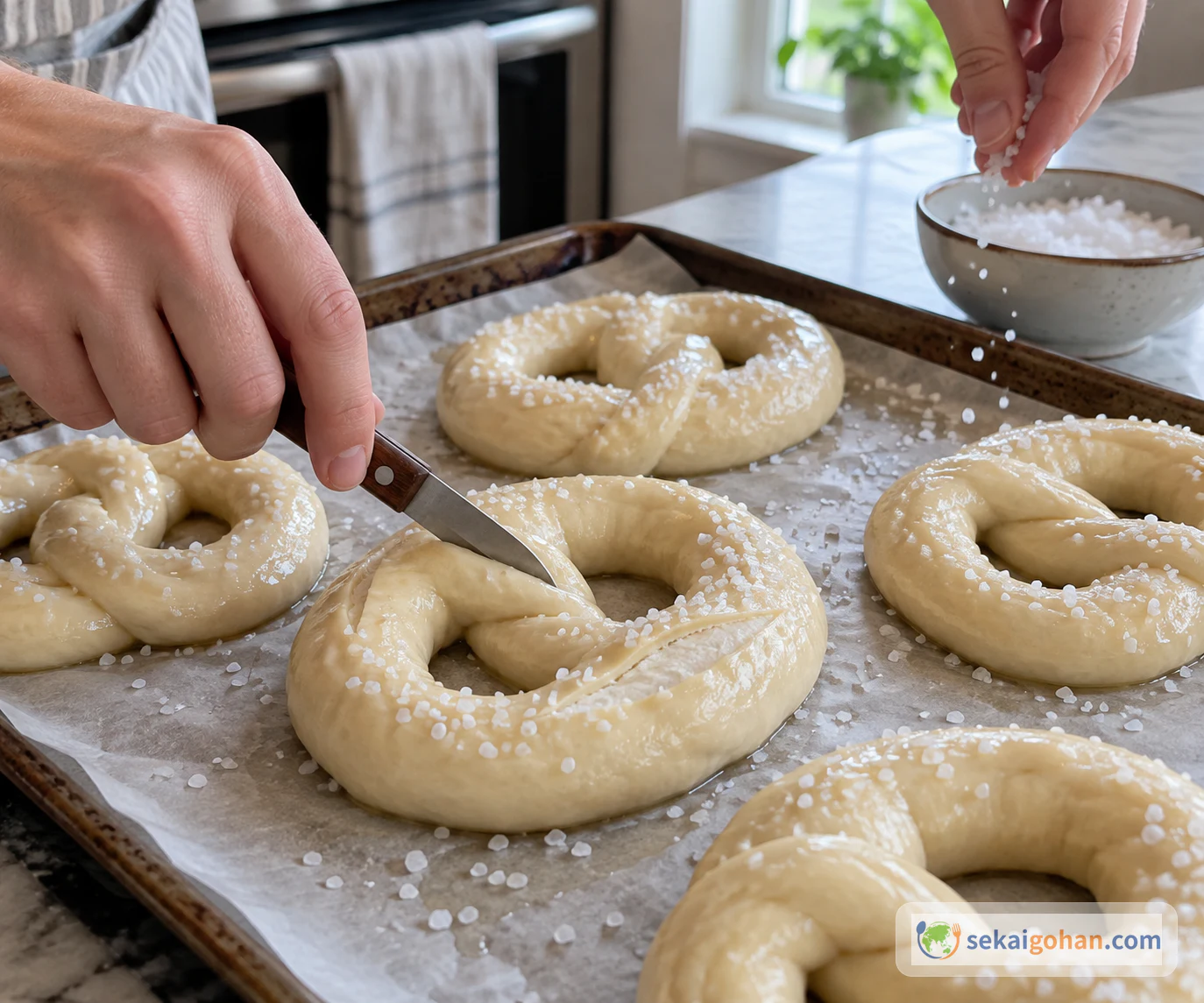
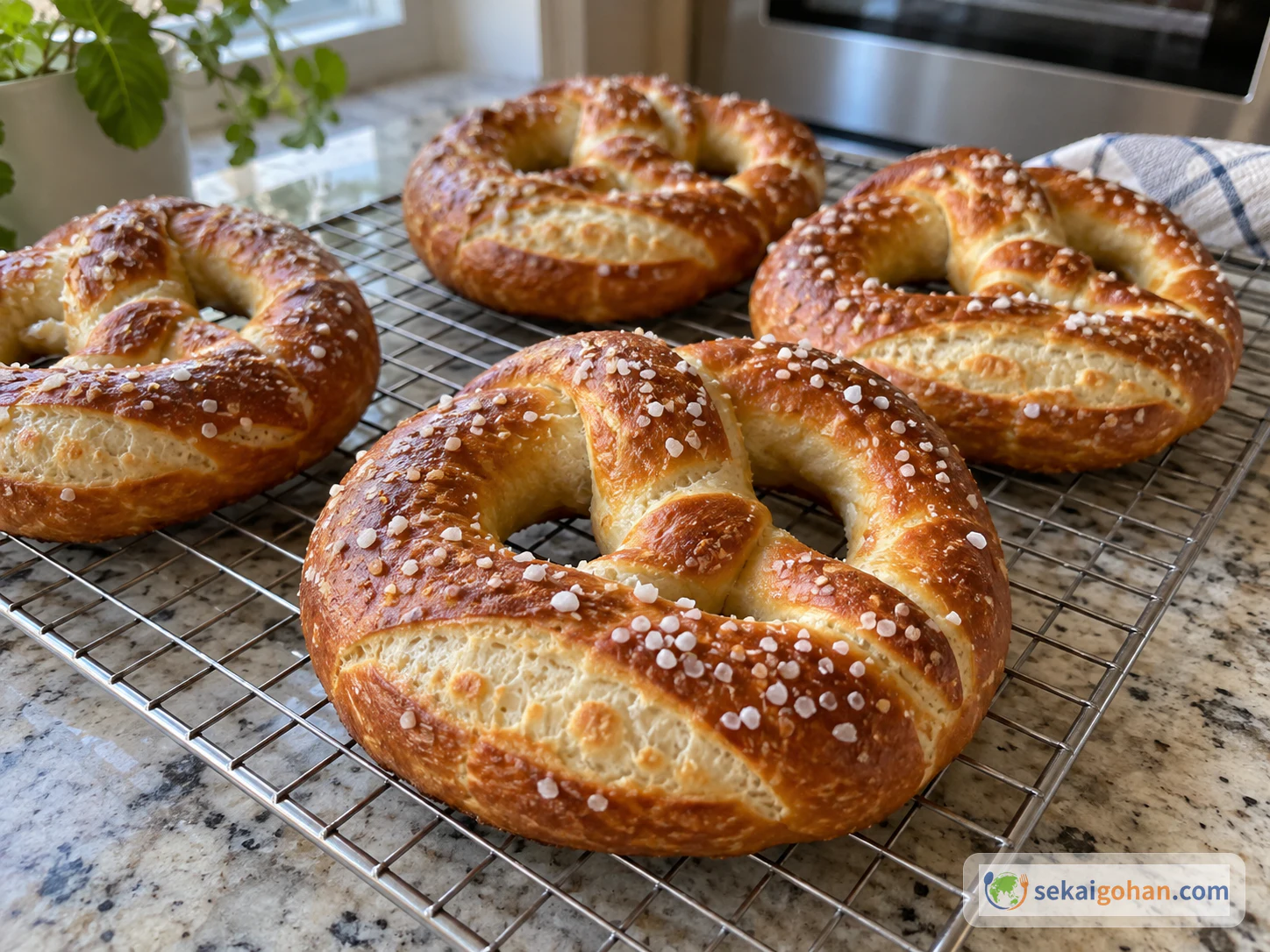
A pretzel comes out of the oven deeply browned, its salt crystals catching the light. Tear it open while it's still warm, spread it with butter and scatter chives on top. This is a home take on the German Laugenbrezel: a salted knot with chewy arms and a soft belly. Instead of the traditional lye dip, it is boiled in a baking soda bath, which gives a lighter color and a gentler flavor than a bakery pretzel.
German Pretzels: Names, Shapes and Origin
In German the bread is called Brezel, or Brezn in Bavaria, and the lye-dipped version is Laugenbrezel. Before baking, its surface is treated with an alkaline bath, traditionally lye (food-grade sodium hydroxide), and that bath is what gives a Laugenbrezel its dark color and distinctive surface. A baking soda bath gets you close at home, though the color, aroma and surface will differ from a lye-dipped pretzel.
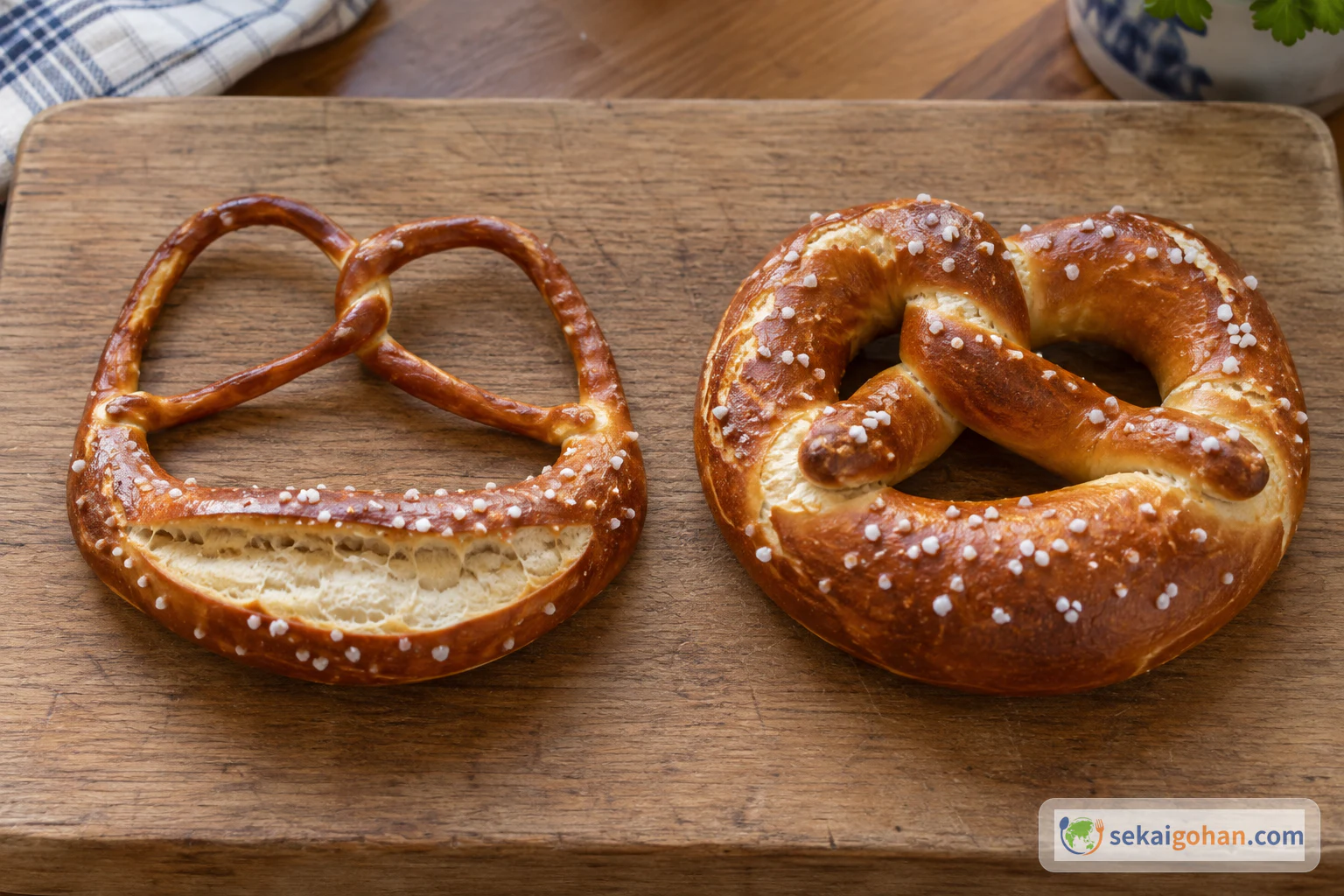
The two southern shapes are easy to tell apart:
| Shape | Arms | Belly |
|---|---|---|
| Swabian | Thin | Thick, with a cut that stays pale |
| Bavarian | Thicker | Usually not cut; the surface cracks open as it bakes |
Pretzels belong to more than one region. Northern Bavaria also has a salted pretzel made without Lauge. Nobody knows where the knot shape comes from, though there are several legends, including that it imitates arms crossed in prayer and the story of a baker named Frieder.
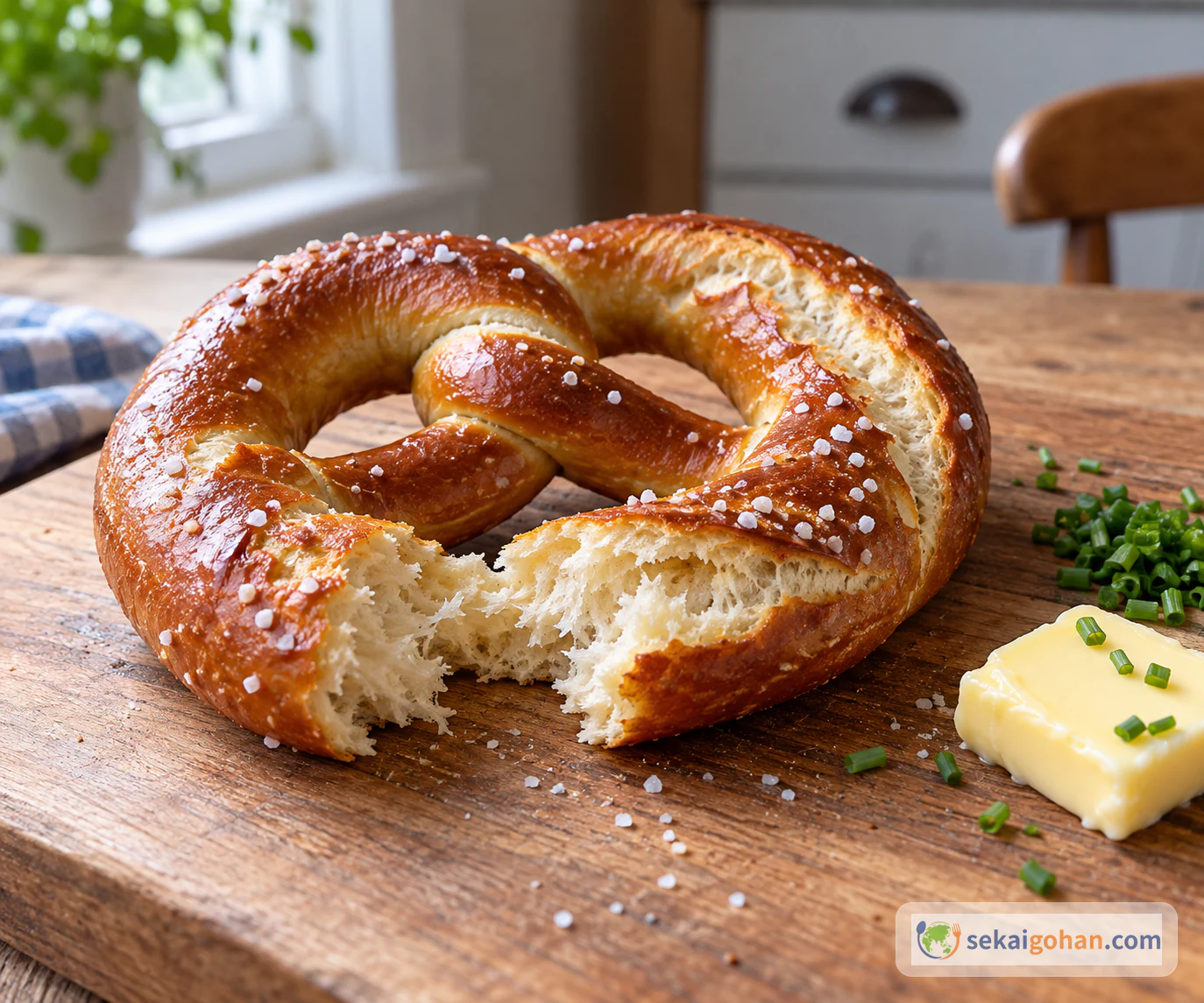
In Germany, pretzels are an everyday snack. Children take them home, and they show up at weekend breakfast, freshly baked and spread with butter, sometimes with chives on top.
Ingredients: 10 Pretzels from One Dough and One Baking Soda Bath
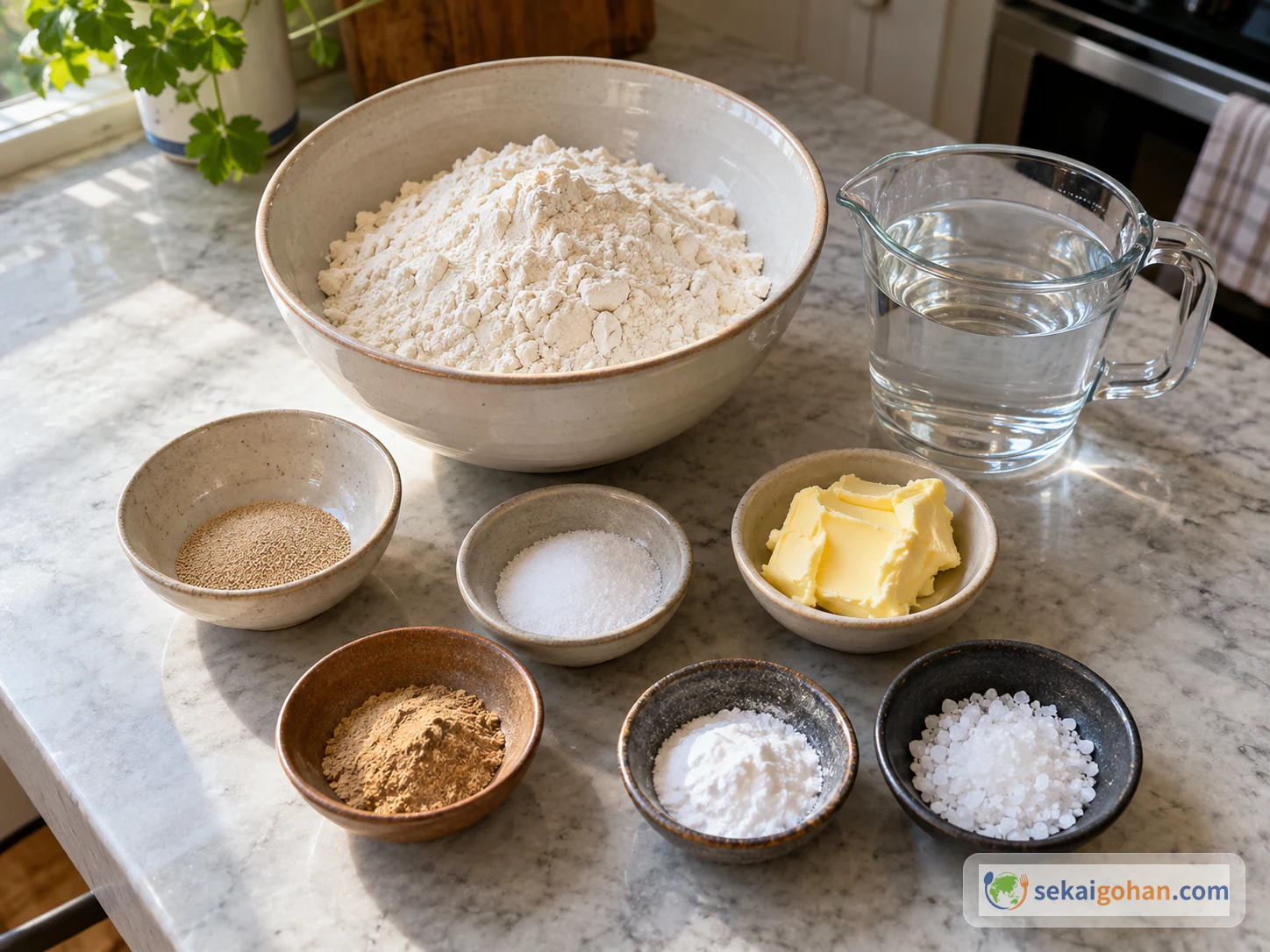
Add all the dough ingredients at the mixing step. The water and baking soda go into the pot for the bath, and coarse salt goes on top just before baking.
This recipe contains wheat (gluten) and milk (butter). Cross-contact depends on your own kitchen, so check every ingredient label if someone has an allergy. Use baking soda sold for food, not baking soda or other products sold for cleaning.
Choosing Flour, Butter, Malt and Baking Soda
- Flour: Use unbleached bread flour. Brands absorb water differently, so keep the amounts as written and watch how the dough looks and feels when you start kneading.
- Butter: Use unsalted butter.
- Malt powder: Optional. The pretzels are fine without it.
- Baking soda versus lye: The baking soda bath is the home method here. Food-grade lye also works, but it requires protective equipment and gives a different result.
Equipment
- Stand mixer (optional; the dough can also be kneaded by hand)
- Bowl for rising the dough
- Cover for the dough (such as plastic wrap), lightly oiled
- Baking sheet lined with parchment paper (check the parchment's heat-resistance limit for a 450°F oven)
- Wide pot for the baking soda bath
- Sharp knife or blade for slashing the belly
- Oven
- Cooling rack
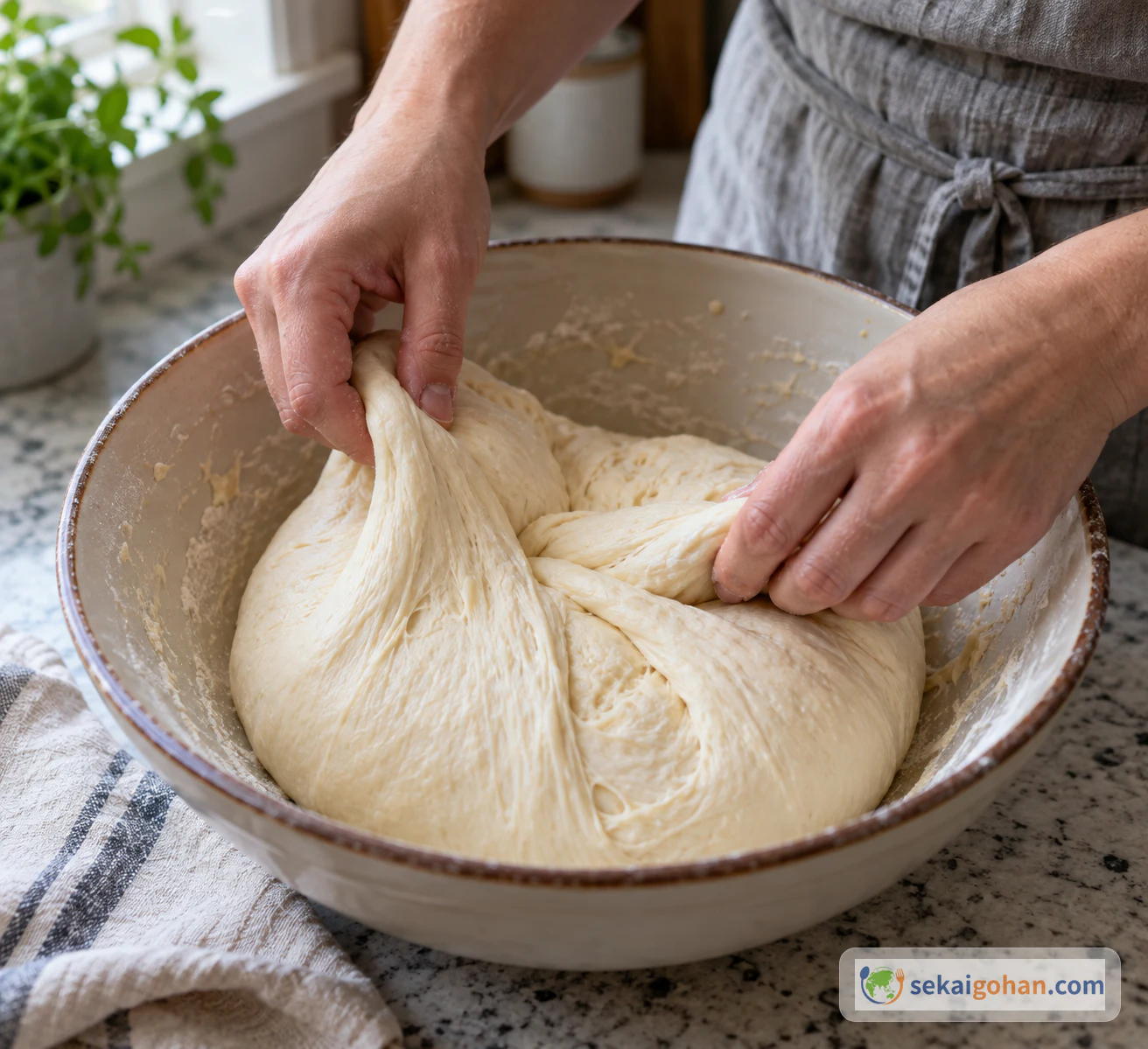
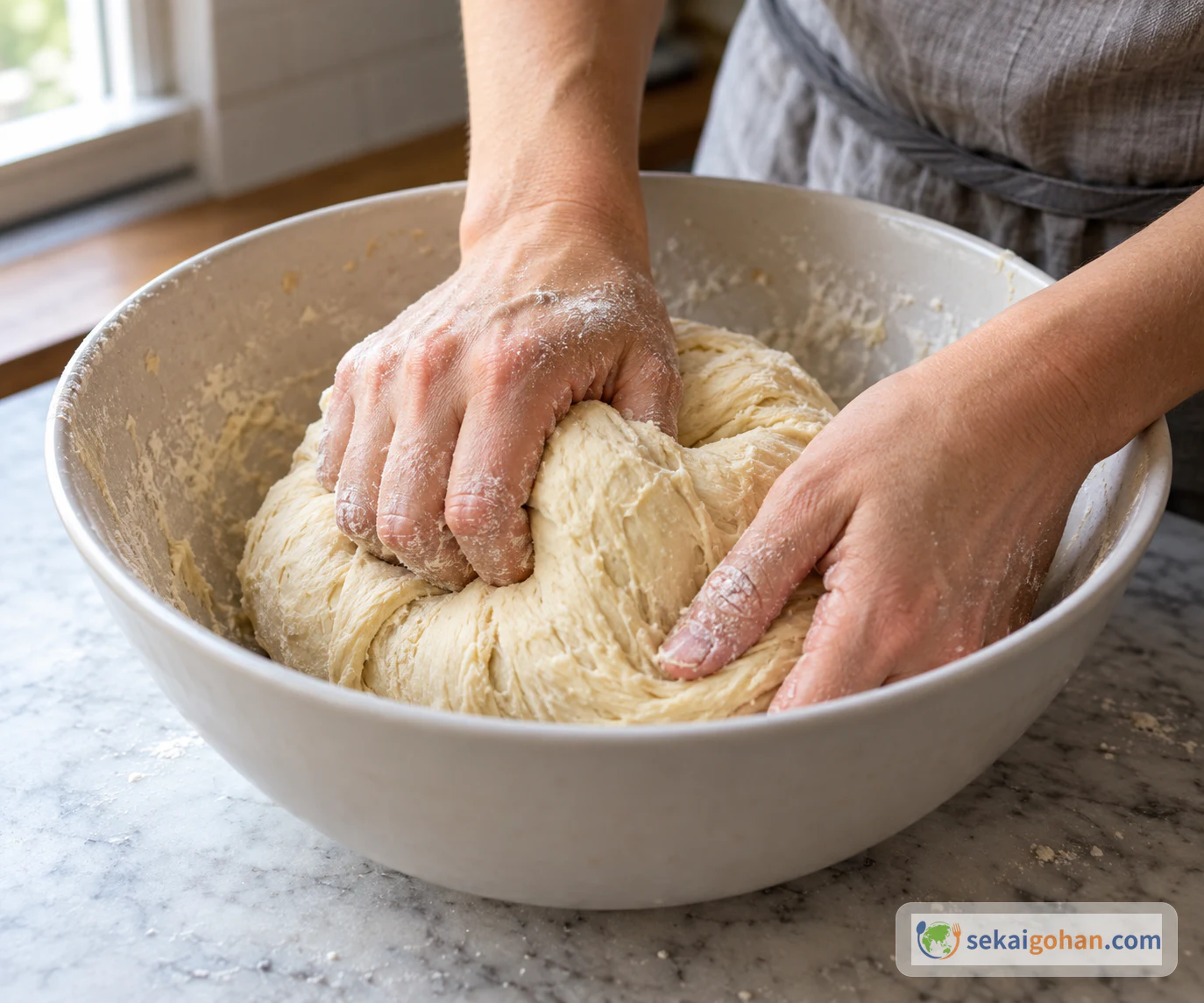
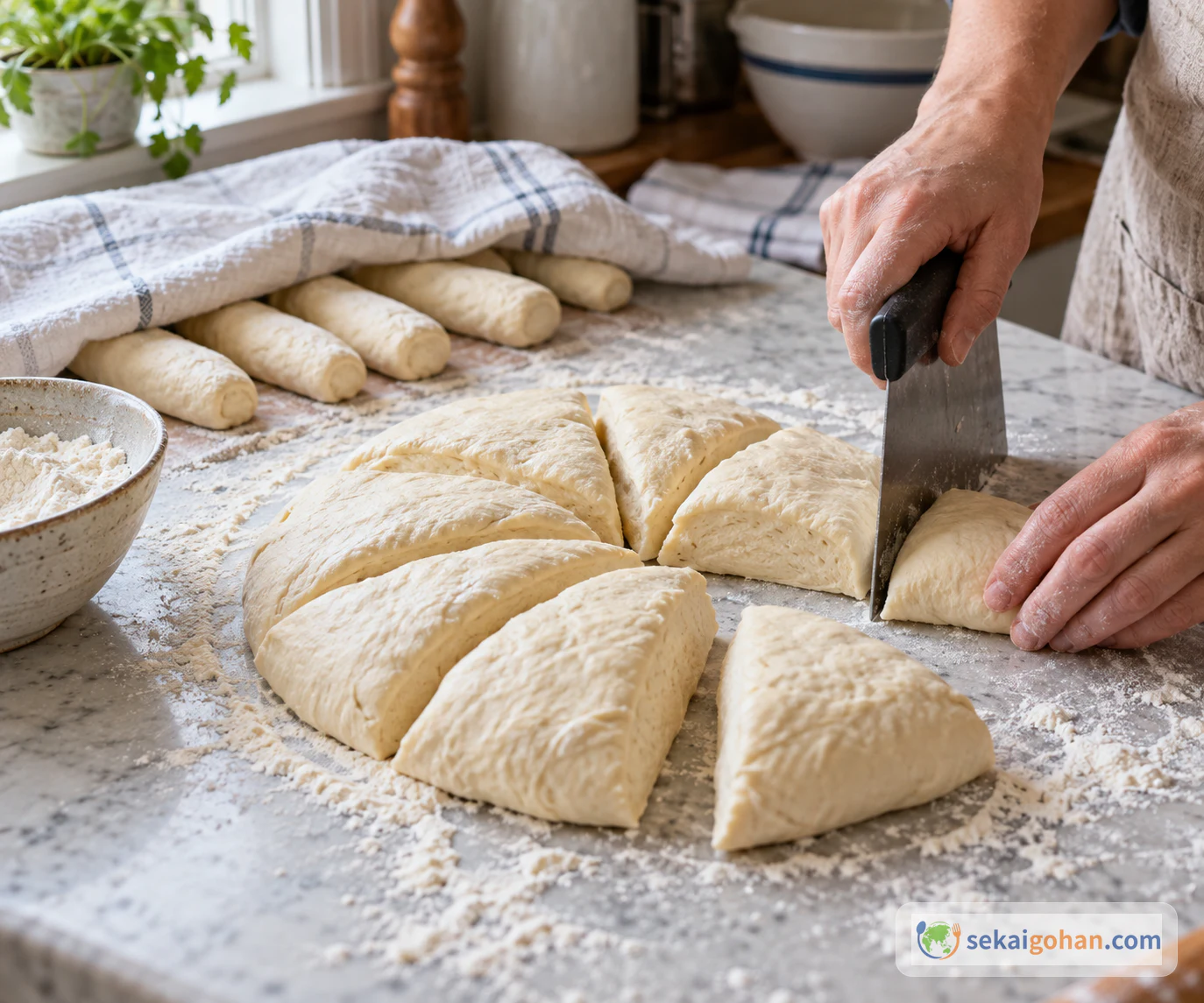
Method: Mix, Fold, Shape, Chill, Bathe and Bake
Bake at 450°F (about 232°C). If your oven uses Celsius, 230°C is a rounded setting. The baking time of 14–16 minutes is for one sheet; if all 10 do not fit without crowding, bake in batches, and there will be waiting time and extra baking.
Common Pretzel Problems and Fixes
Home kitchens vary, so judge the rises by the state of the dough as well as by the clock. If something goes wrong, check here:
| Problem | What to check | What to do |
|---|---|---|
| The rope shrinks back as you roll it | The dough is resisting | Don't pull hard. Cover it and let it rest a few minutes before rolling again |
| The knot comes undone | The ends were not pressed on firmly | Press the ends firmly onto the belly, and chill so the surface settles before the bath |
| The color is pale | A baking soda bath was used | Baking soda gives a lighter finish than a lye bath |
| The dough feels dry or stiff | A different flour was used | Brands absorb water differently. Observe the dough before changing the water amount |
Serving, Storing and Varying Pretzels
Serve pretzels with white sausage and sweet mustard, or simply warm with butter. If you prefer them milder, sprinkle on less coarse salt and serve with unsalted butter. The same dough also works for either regional shape: thicker arms and an unslashed belly for Bavarian, or thin arms and a slashed thick belly for Swabian. For more German dishes, see our Germany page.
Storage: Wrap the pretzels and keep them at room temperature for up to 3 days. For longer storage, freeze them.
Frequently Asked Questions
Can I make pretzels without lye?
Yes. This recipe uses a baking soda bath instead. Use baking soda labeled for food, and never substitute cleaning products. If you use lye, wear protective equipment.
Why slash the surface?
This recipe calls for a horizontal slash across the belly, as on a Swabian pretzel. Bavarian pretzels are usually left uncut.
Can I make the dough without butter?
Leaving out the butter makes this a different recipe; the texture and flavor would change.