Berliner Eisbein: Simmered Cured Pork Knuckle with Yellow Pea Purée and Sauerkraut

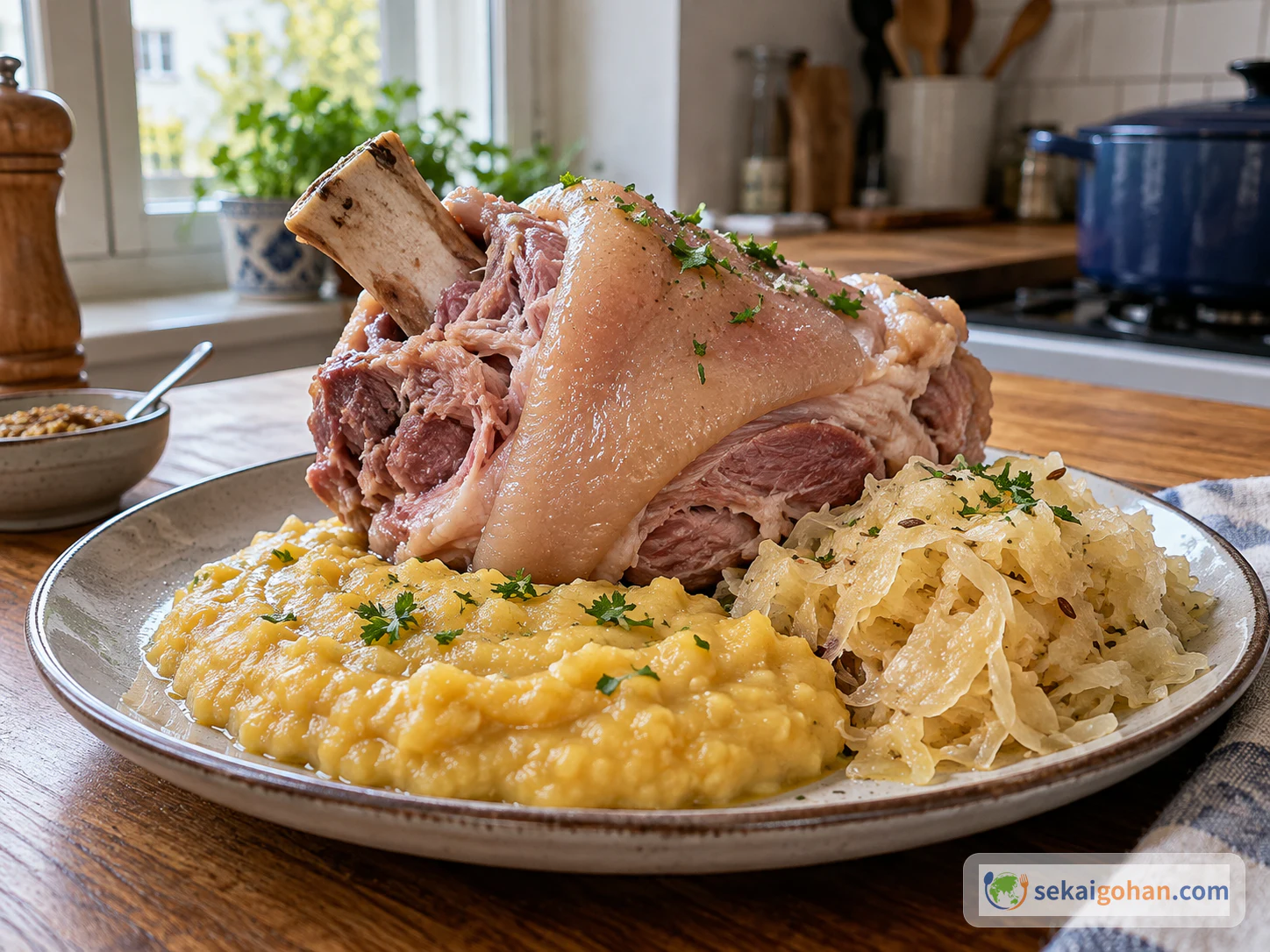
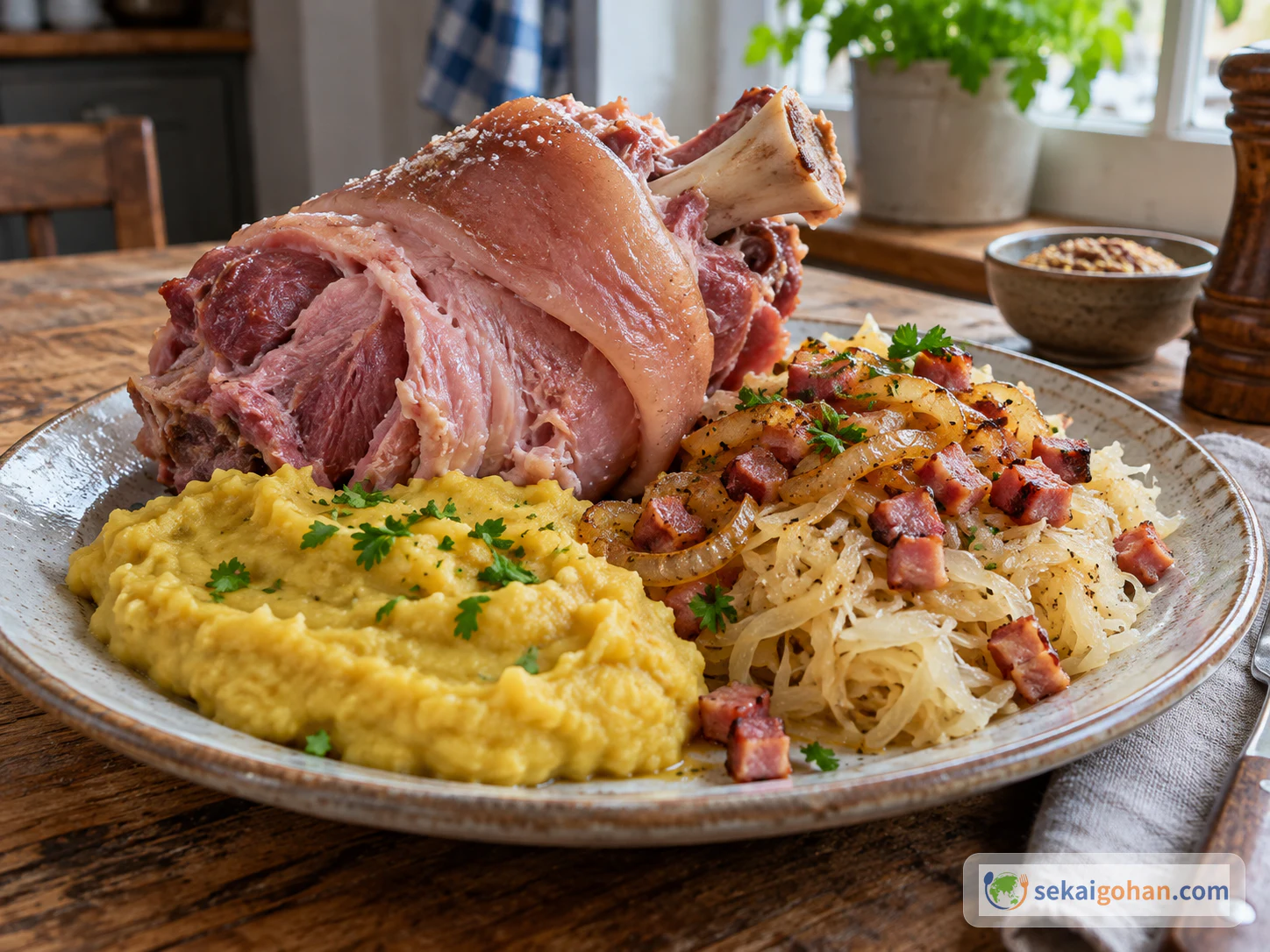
Berlin-style Eisbein served with yellow pea purée and sauerkraut
Serves
4 servings
Cuisine
German

How to make Berliner Eisbein, cured pork knuckle simmered slowly with soup vegetables and spices, served with yellow pea purée and braised sauerkraut. Covers how it differs from roasted Schweinshaxe, choosing cured knuckles, judging salt, checking doneness by the bone and the center temperature, and storing leftovers.

Cooking flow

Cooking steps

STEP11 / 8

Soak the yellow peas overnight

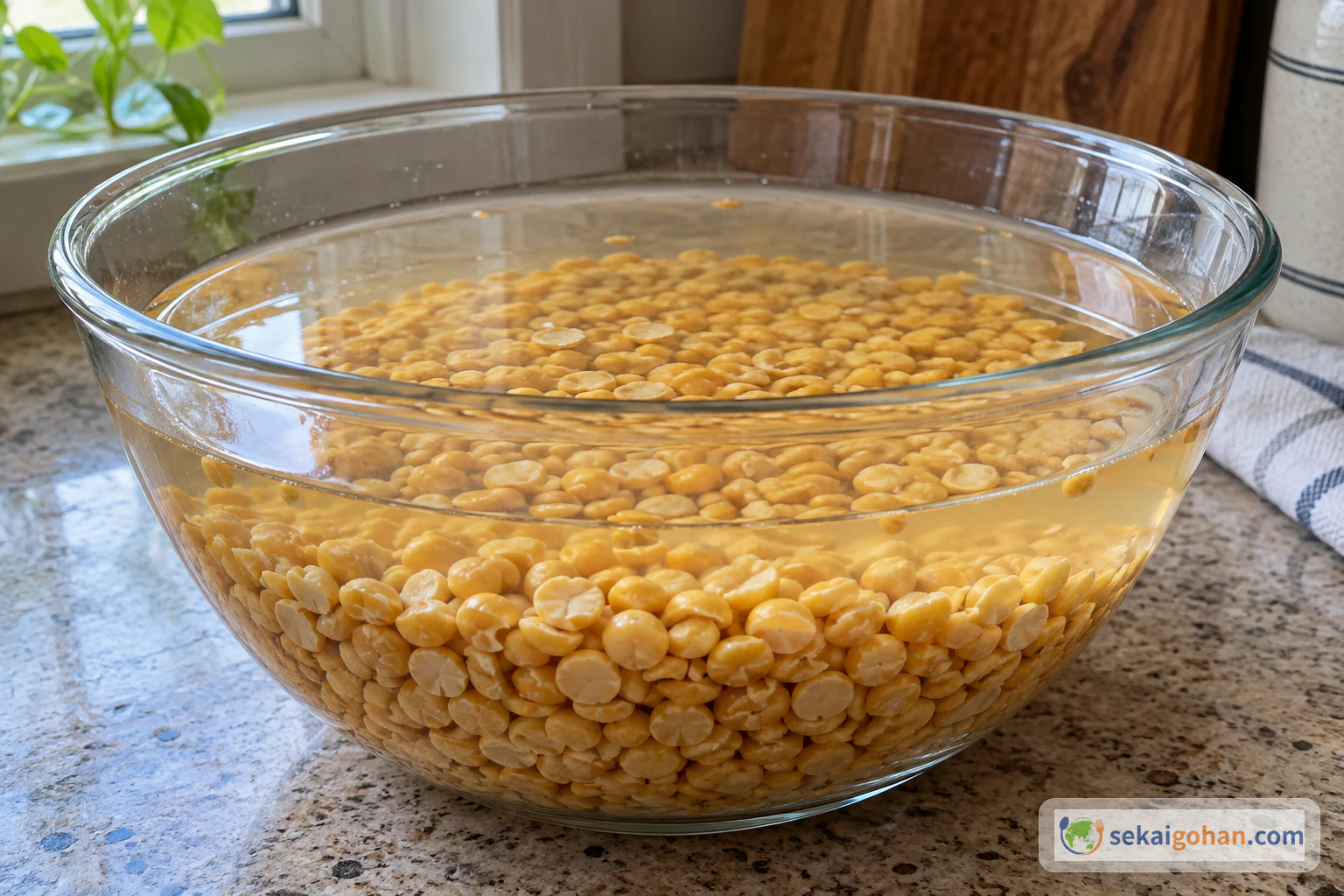
Dried yellow peas soaking overnight in a bowl of cold water
Soak the dried yellow peas in plenty of cold water overnight

Put 14 oz (400g) dried yellow peas in a bowl with plenty of cold water and soak them overnight. Don't skip the soak.

STEP22 / 8

Start the knuckles in cold water with vegetables and spices

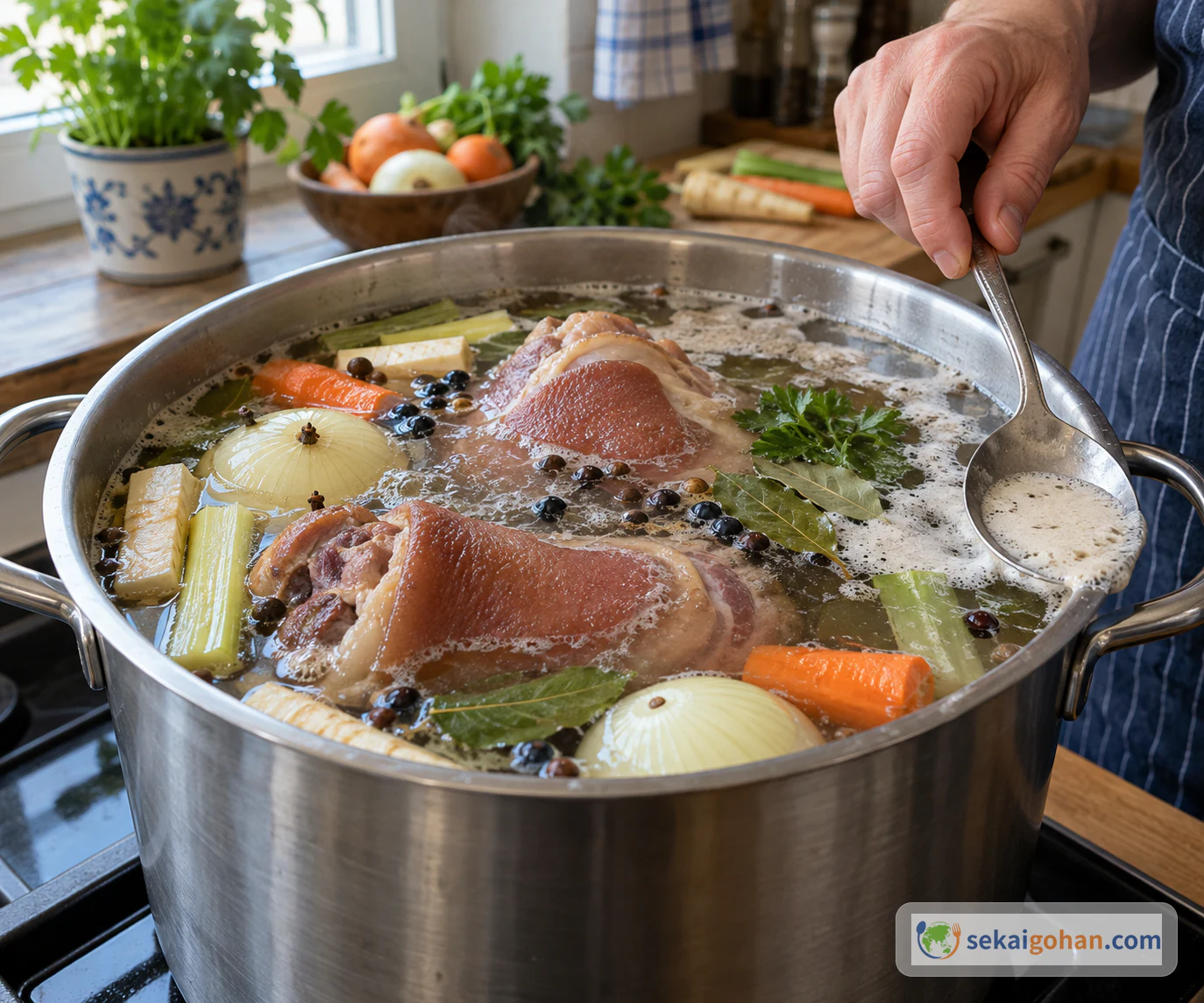
Cured pork knuckles simmering gently in a pot with soup vegetables and spices
Start from cold water and skim the foam as the pot heats

Cut the soup vegetables and quarter 2 onions, using a separate cutting board from the one for raw meat. Put the cured knuckles, soup vegetables, quartered onions, 3 bay leaves, 2 tsp allspice, 1 tsp juniper berries and 1 tsp peppercorns in a large pot, and add cold water until the meat is covered.

Hold back the 1 tbsp salt at this point, because cured meat varies so much in saltiness. Heat the pot slowly from cold, skimming off the foam that rises from time to time.

STEP33 / 8

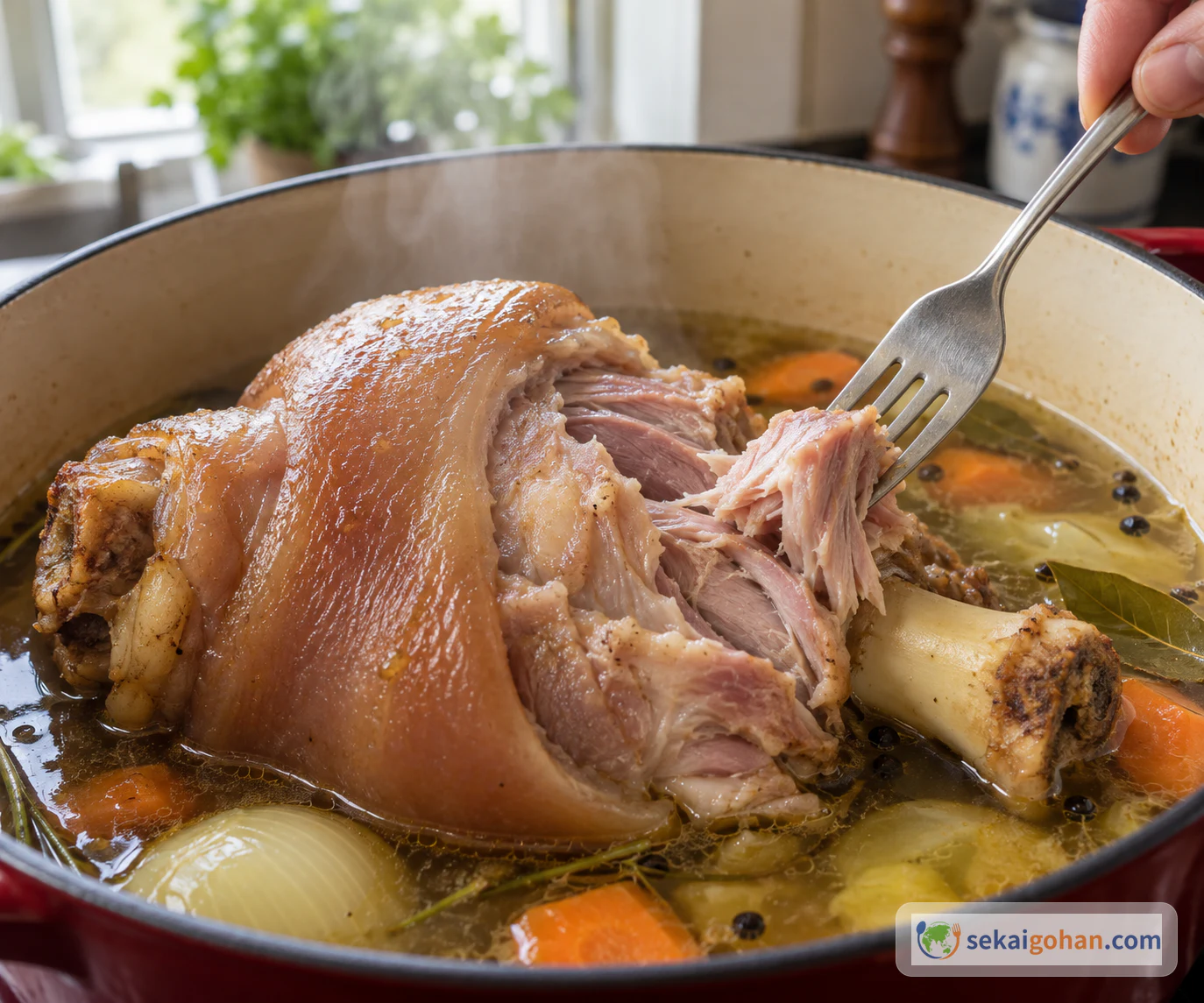
Simmer gently until the meat comes away from the bone

Checking that the simmered pork knuckle meat loosens from the bone
The meat should loosen beside the bone while the knuckle stays whole

Once the pot comes to a boil, turn the heat to low and simmer quietly for about 2 hours, keeping a steady stream of small bubbles. A hard boil makes the meat break apart and the broth turn cloudy. Depending on size, it can take up to 3 hours. The meat is ready when it comes away from the bone easily, so use that as your signal rather than the clock.

Loosening from the bone is a texture check, not a safety check. Heat the meat until the center reaches 167°F (75°C) and stays there for at least 1 minute. Taste the cooking liquid now, and add salt only if it needs it.

STEP44 / 8

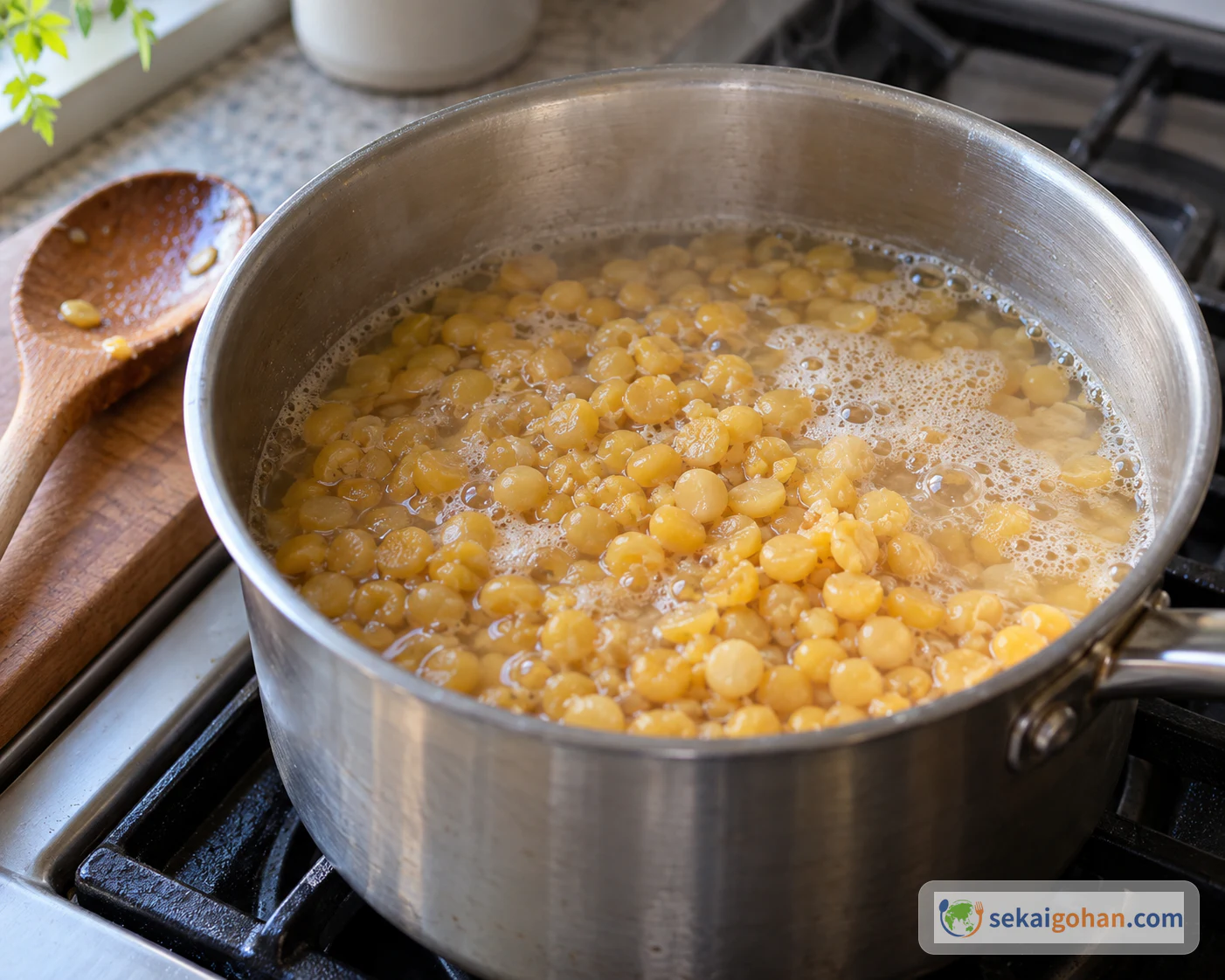
Cook the soaked peas until soft

Soaked yellow peas cooking until soft
Cook the rinsed peas in water until very soft

Drain and rinse the peas, put them in a saucepan with about 1 quarts (1L) water, and cook for about 1 hour until soft. Drain off the water.

STEP55 / 8

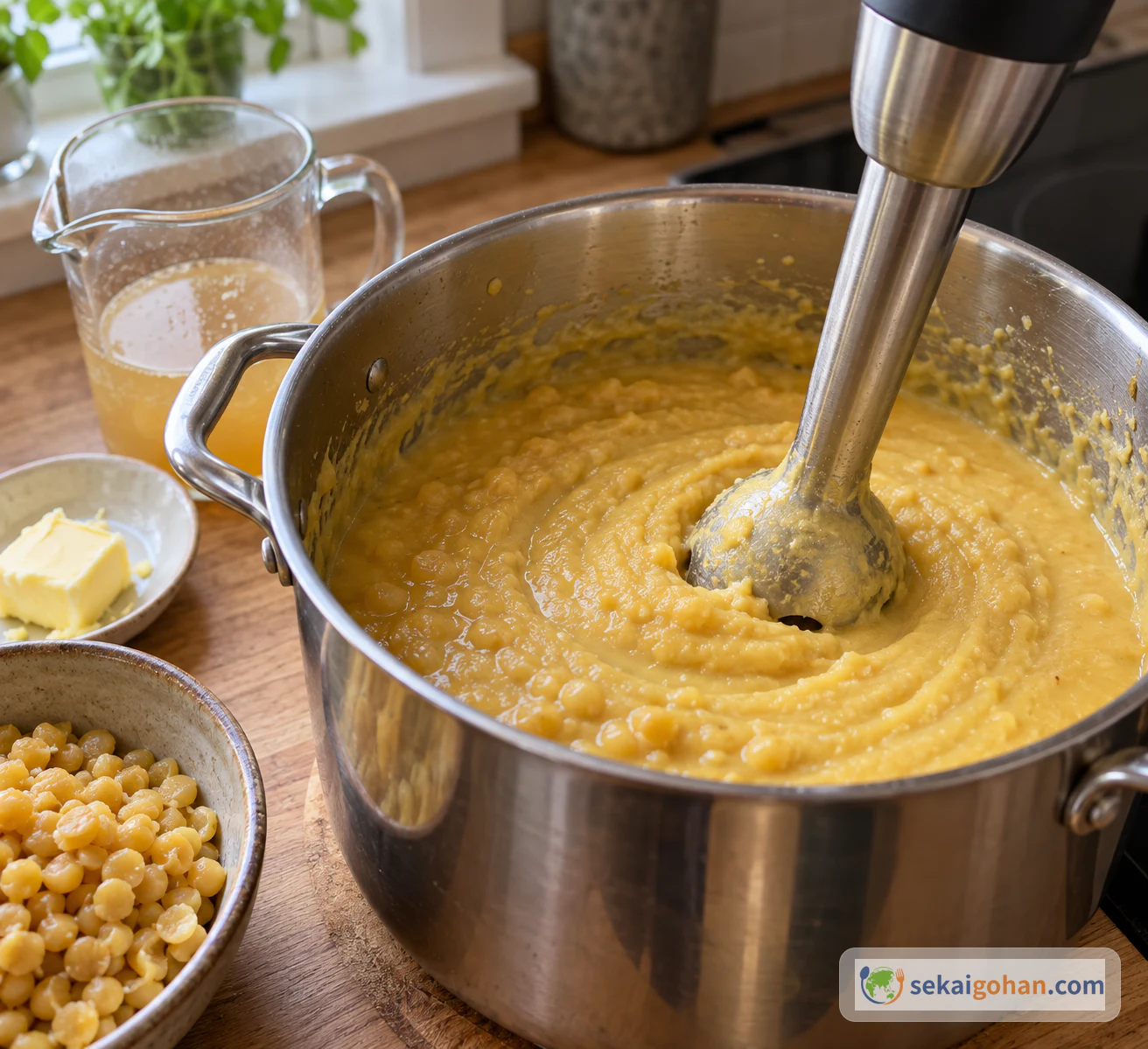
Blend the peas with cooking liquid and butter

Blending yellow peas with pork cooking liquid and butter into a purée
Blend the peas with a little cooking liquid and butter into a thick purée

Add about ½ cup (100ml) of the Eisbein cooking liquid and 1 tbsp butter to the peas and blend them into a purée. Cook it down to thicken, then season with pepper and, only if needed, salt. The cooking liquid is already salty from the cured meat, so taste before salting.

STEP66 / 8

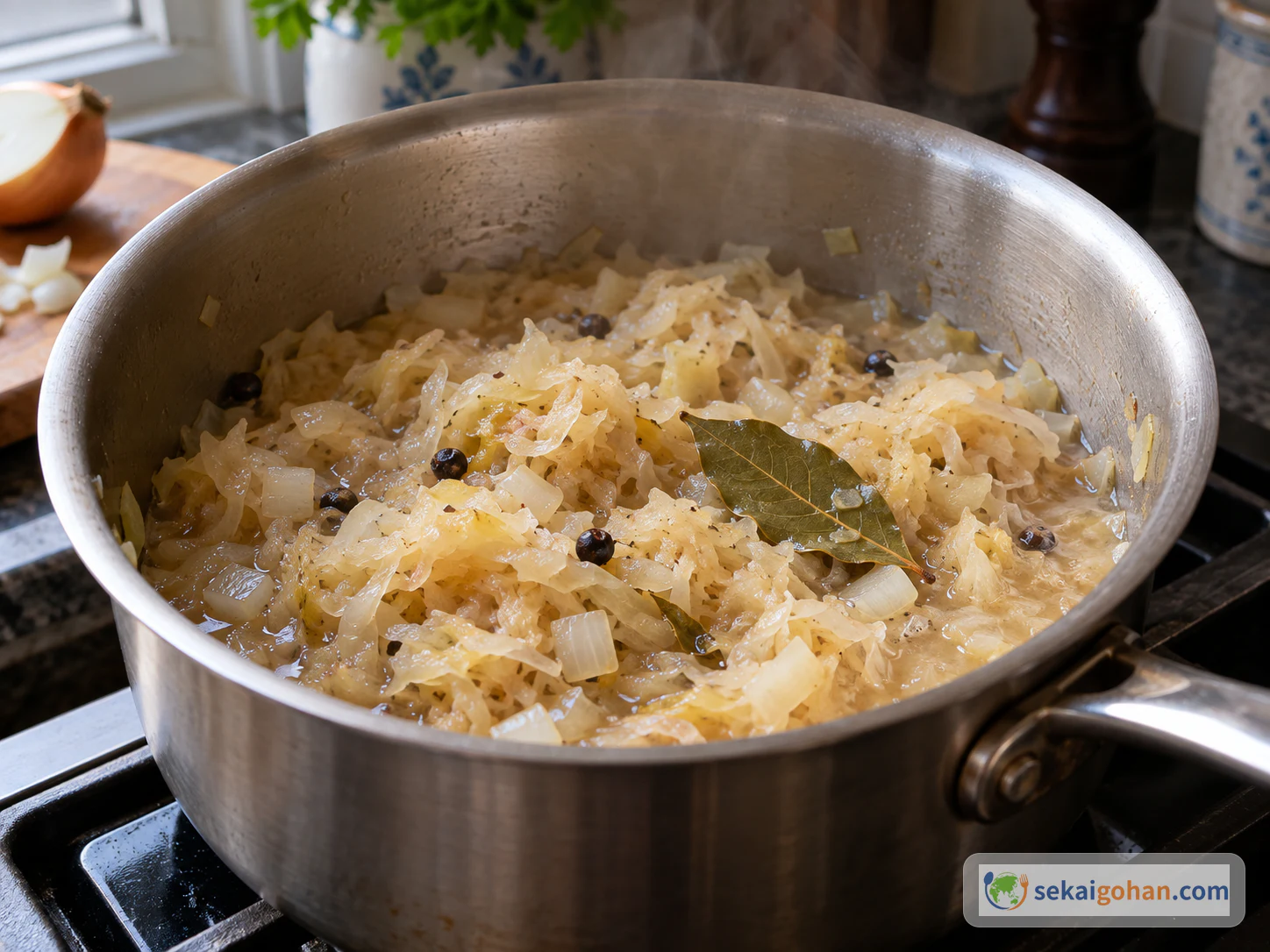
Braise the sauerkraut with cooking liquid and spices

Sauerkraut braising over low heat with cooking liquid and spices
Braise the sauerkraut gently with onion, bay leaf, juniper and a little cooking liquid

Chop the remaining 2 onions. Heat 1 tbsp lard, sauté half of the chopped onion, then add 1.75 lb (800g) sauerkraut and sauté it briefly. Add about ½ cup (150ml) of the cooking liquid, the remaining bay leaf and the remaining 1 tsp juniper berries, and cook over low heat for about 30 minutes. If it tastes too sour, add a little more cooking liquid and taste again.

STEP77 / 8

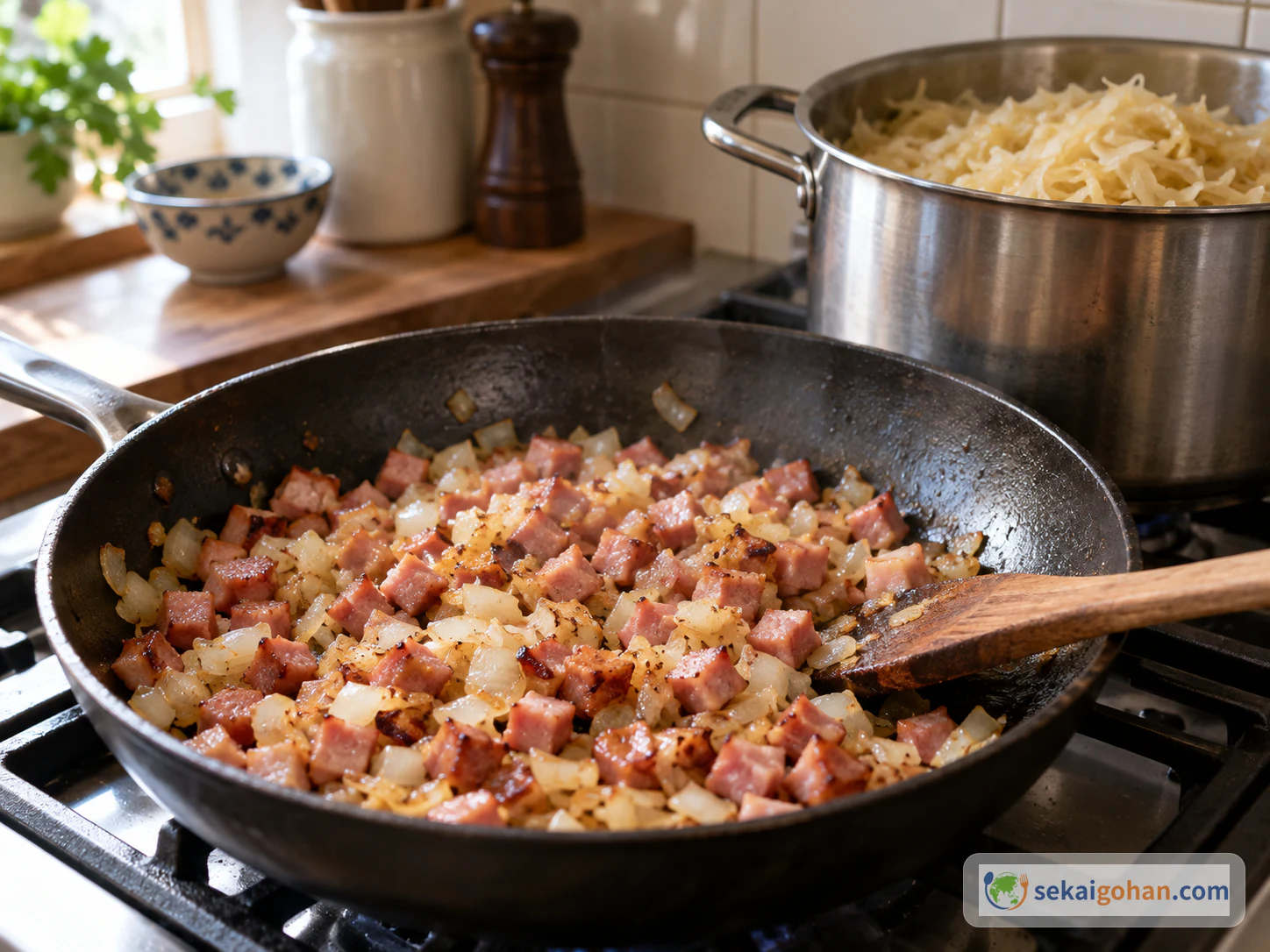
Sauté the diced ham and onion

Sautéing diced ham and onion in a skillet
Sauté the remaining ham and onion separately for the topping

Sauté half of the 4.5 oz (125g) diced ham in 1 tbsp oil and mix it into the sauerkraut. Then sauté the remaining onion and diced ham in the pan until lightly golden; this is the topping.

STEP88 / 8

Plate the knuckle with purée and sauerkraut

Eisbein, pea purée and sauerkraut served on one plate
One knuckle per plate, with pea purée and sauerkraut topped with ham and onion

On each plate, place sauerkraut, one knuckle and pea purée, and top with the sautéed onion and diced ham.

0 / 0
Ingredients

Ingredients

1 / 3

For the pot

Ingredient Amount Role and notes
Cured pork knuckles (gepökelte Eisbeine) 4 (about 1.6–2kg in total) The main ingredient. Uncured shank has a different saltiness and flavor
Soup vegetables (Suppengrün) 1 bunch A standard mix such as carrot, leek and celery
Onions 2 (of the 4) Quartered, for the pot
Bay leaves 3 (of the 4) Aroma for the cooking liquid
Allspice berries 2 tsp Warm spice aroma
Juniper berries 1 tsp (of the 2 tsp) Aroma for the meat
Black peppercorns 1 tsp For the cooking liquid
Salt 1 tbsp Don't add at the start. Add only if the cooking liquid needs it
Water Enough to cover the meat Start from cold water
2 / 3

For the pea purée

Ingredient Amount Role and notes
Dried yellow peas (gelbe, getrocknete Erbsen) 14 oz (400g) Soaked overnight in plenty of cold water
Water about 1 quarts (1L) For cooking the peas
Butter 1 tbsp Richness for the purée
Pepper and salt To taste Salt only if needed
3 / 3

For the sauerkraut and topping

Ingredient Amount Role and notes
Fresh sauerkraut (frisches Sauerkraut) 1.75 lb (800g) The sour side dish
Onions 2 (the remaining 2) Chopped; half for the sauerkraut, half for the topping
Lard (Schweineschmalz) 1 tbsp For sautéing the onion and sauerkraut
Bay leaf 1 (the remaining 1) For the sauerkraut
Juniper berries 1 tsp (the remaining 1 tsp) For the sauerkraut
Diced ham (Schinkenwürfel) 4.5 oz (125g) Half into the sauerkraut, half for the topping
Vegetable oil 1 tbsp For sautéing the diced ham
0 / 0

Steam rises slowly from a deep pot where bone-in pork knuckles sit under water with soup vegetables, bay leaves and whole spices. Beside it, yellow peas soften into a thick, pale golden purée, and sauerkraut braises with onion and juniper. This is Eisbein, cured pork shank simmered until tender, one of the classic dishes of Berlin, Germany. It's hearty, down-to-earth cooking.

Berliner Eisbein and Schweinshaxe

In Berlin, Eisbein comes with pea purée, and that pairing is still one of the city's kitchen classics. Across Germany, though, the same cut is cooked in different ways. In Berlin and the north, cured knuckle is simmered. In the south, the leg is more often roasted or grilled as Schweinshaxe. Both come from the pork leg, but they differ in cooking and texture, so if you want a crisp, roasted knuckle, you're after Schweinshaxe.

The name has more than one explanation. One idea is that the bone was once used for ice-skate runners; another derives it from Old High German isben. None of these is settled, so treat them as competing theories rather than history.

Ingredients: Serves 4, Built Around Cured Pork Knuckle
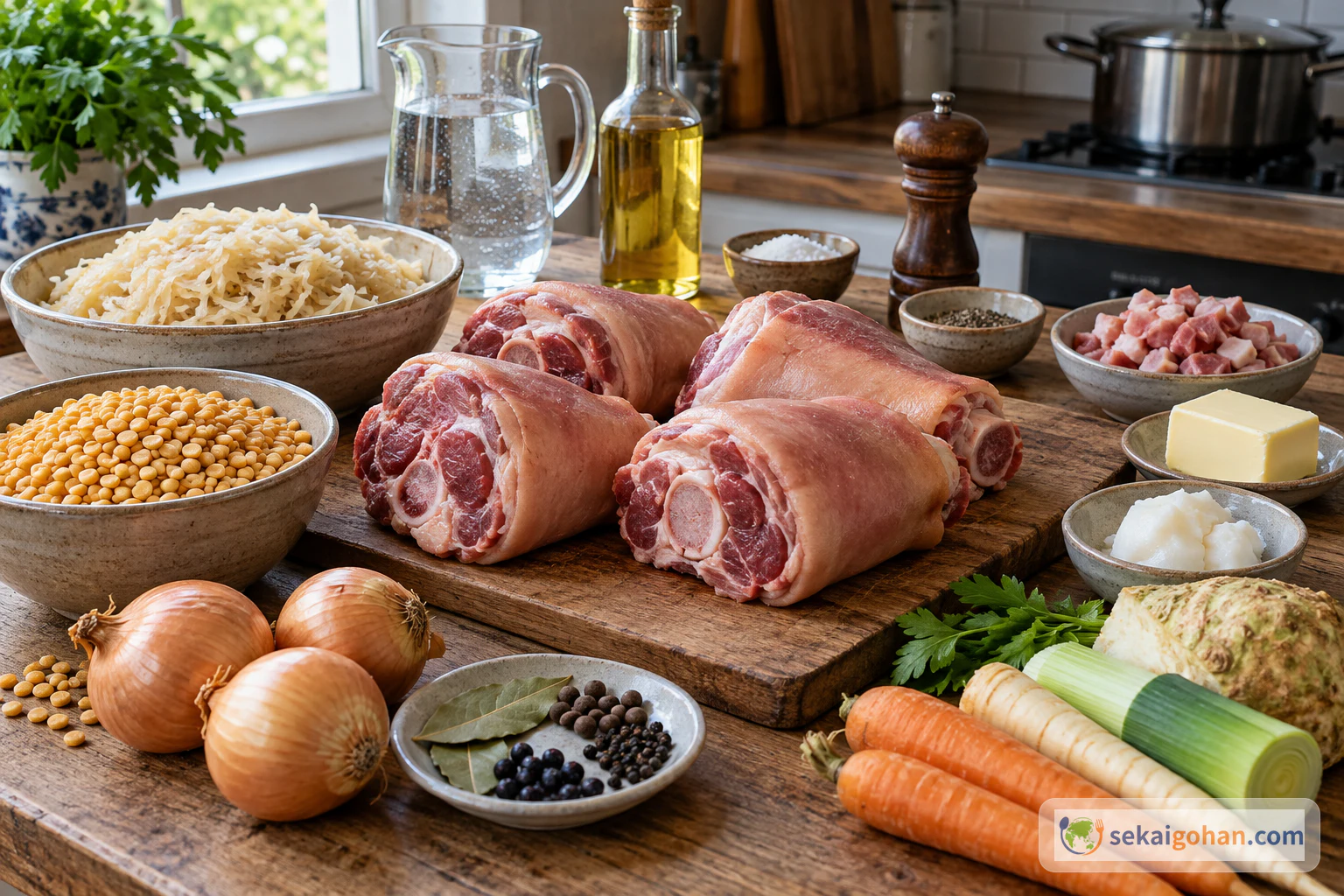
Cured pork knuckles, dried yellow peas, sauerkraut and soup vegetables
Cured knuckles, dried yellow peas, sauerkraut, onions, soup vegetables, spices, diced ham, butter, lard, salt, oil and water

Where an ingredient is divided between steps, the split follows the method.

The cooking liquid from the Eisbein pot is also used: about ½ cup (100ml) for the purée and about ½ cup (150ml) for the sauerkraut.

Allergies and food safety

This dish is built on pork, lard, ham and butter. The butter contains milk. Check the labels of processed products such as cured knuckles, diced ham and sauerkraut for any allergens that matter to you. Use a separate cutting board and utensils for raw meat to avoid cross-contamination.

Equipment

  • A large, heavy pot big enough to keep 4 knuckles covered with water
  • A slotted spoon or ladle for skimming foam
  • A bowl for soaking the peas
  • A saucepan for the peas
  • A hand blender
  • A saucepan for the sauerkraut
  • A skillet for the ham and onion
  • A separate cutting board and utensils for raw meat
  • A food thermometer for checking the center temperature

Choosing Ingredients for Eisbein

Cured pork knuckle comes first. When buying bone-in pork shank, ask the butcher whether it is cured (gepökelt) or uncured, because uncured shank tastes different and won't give you the same dish. Cured products also vary a great deal in saltiness, so hold back the 1 tbsp salt and taste the cooking liquid before you season it.

Dried yellow peas work whole or split. Frozen green peas have a different flavor and texture and make a different purée.

Diced ham (Schinkenwürfel) is diced ham, which is a different thing from bacon. If you use bacon instead, expect differences in smokiness, fat and salt.

Juniper berries can be left out if you can't find them, though the aroma of the meat and sauerkraut will change. Allspice and juniper are easiest to find under those general names. Lard can be replaced with vegetable oil, which gives a lighter aroma.

Method: Simmer Slowly, Then Build the Sides from the Pot

Doneness and salt

Judge the meat by how easily it comes away from the bone, not by the clock alone, and confirm the center is fully hot. Taste the cooking liquid before adding any salt.

Eisbein Troubleshooting

Key points

Simmer the cured knuckle gently, never at a rolling boil, until the meat comes away from the bone easily. Let the cooking liquid tie the plate together: a little goes into the pea purée, a little into the sauerkraut.

Problem Likely cause What to do
The meat is falling apart and the broth is cloudy The pot boiled too hard Lower the heat to a quiet simmer with small, steady bubbles
The meat still clings to the bone The knuckle is large, or it needs more time Keep simmering gently, up to 3 hours depending on size. Check the center is fully hot too
Everything tastes too salty The cured meat was salty, or salt went in early Taste the cooking liquid, purée and sauerkraut before adding any salt
The peas were not soaked The overnight soak was skipped Soak them overnight, as the recipe calls for
The sauerkraut is too sharp A strongly sour product Add a little more cooking liquid and taste as you go, rather than adding sugar
Jarred sauerkraut tastes off-balance It was already seasoned Check its salt and sourness and adjust how much cooking liquid you add

Serving, Storing and Varying Eisbein

Boiled potatoes go well alongside, and mustard can be offered at the table. For the purée, you can blend less so some peas stay whole, or stir in a little more cooking liquid to link it to the flavor of the meat.

Leftovers keep in the refrigerator for up to 2 days. Cool them quickly in shallow containers before refrigerating, and when reheating, heat the whole portion until it is thoroughly hot, with the center at 167°F (75°C) or more.

Frequently Asked Questions

Where can I buy cured pork knuckle?

Ask a butcher for cured pork knuckle (gepökeltes Eisbein) and confirm whether the bone-in shank they offer is cured or uncured. Uncured shank will give a different result.

How long should I simmer it?

Start from about 2 hours at a gentle simmer; depending on size, it can take up to 3 hours. It is ready when the meat comes away from the bone easily and the center is at 167°F (75°C) for at least 1 minute.
Sources