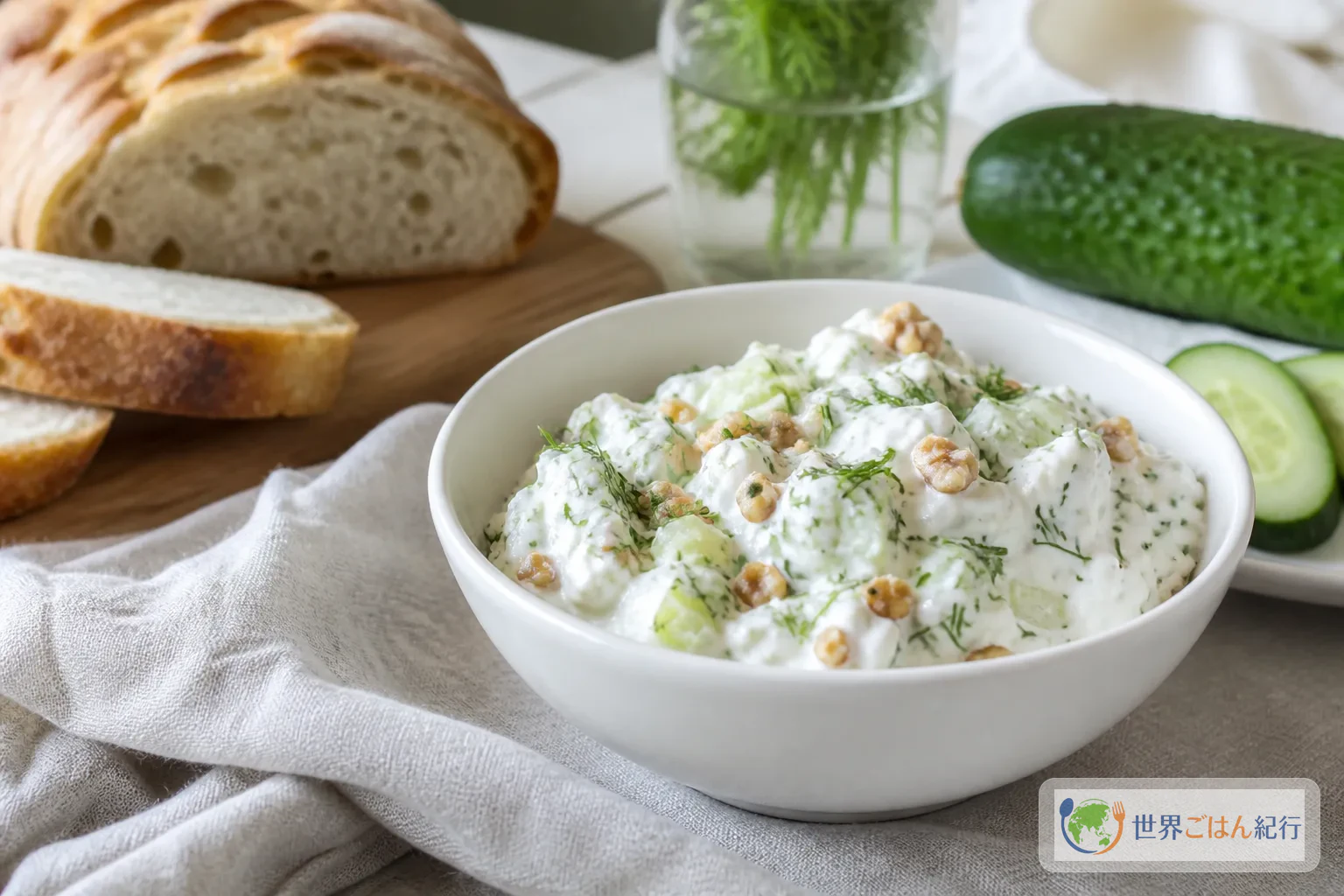
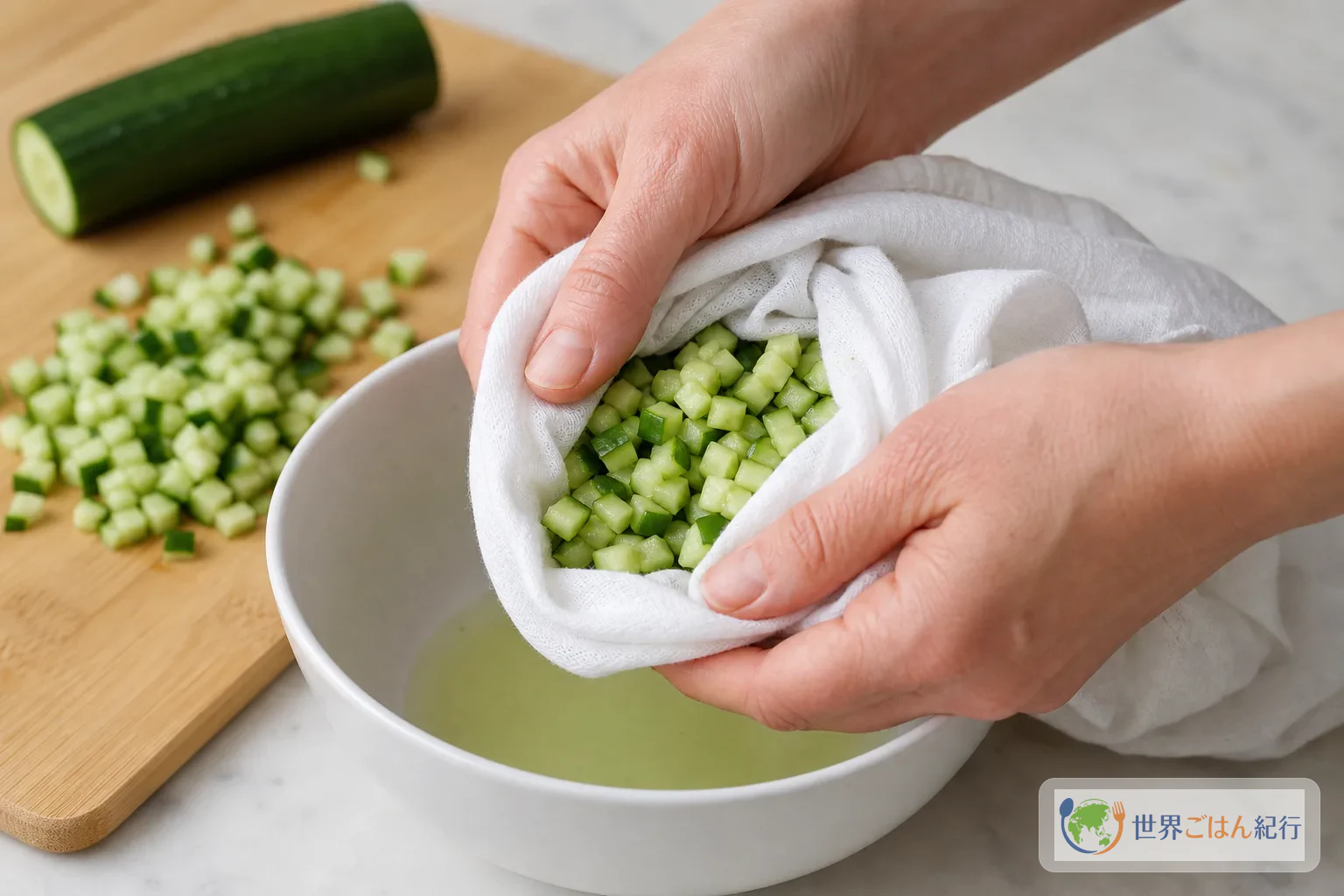
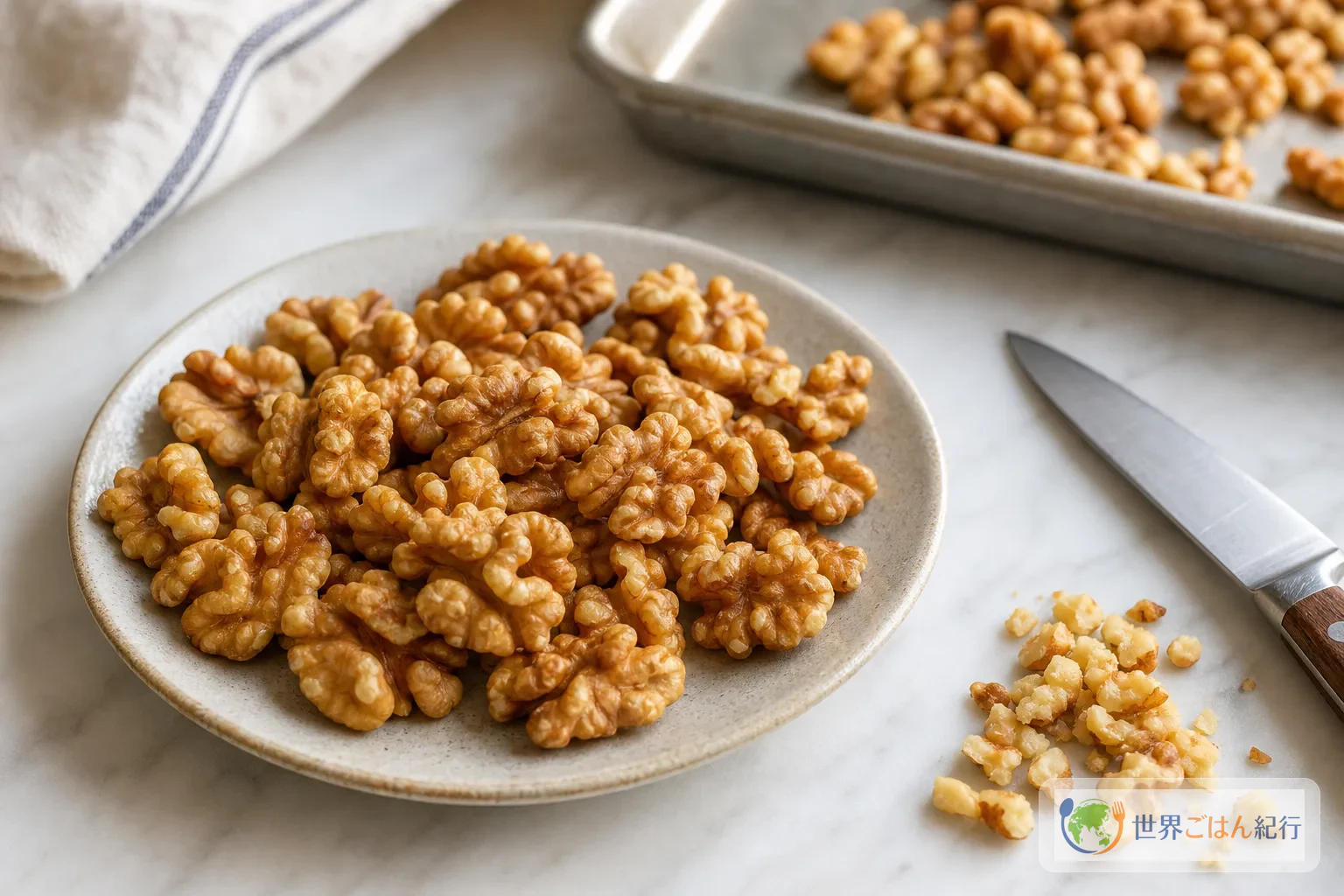
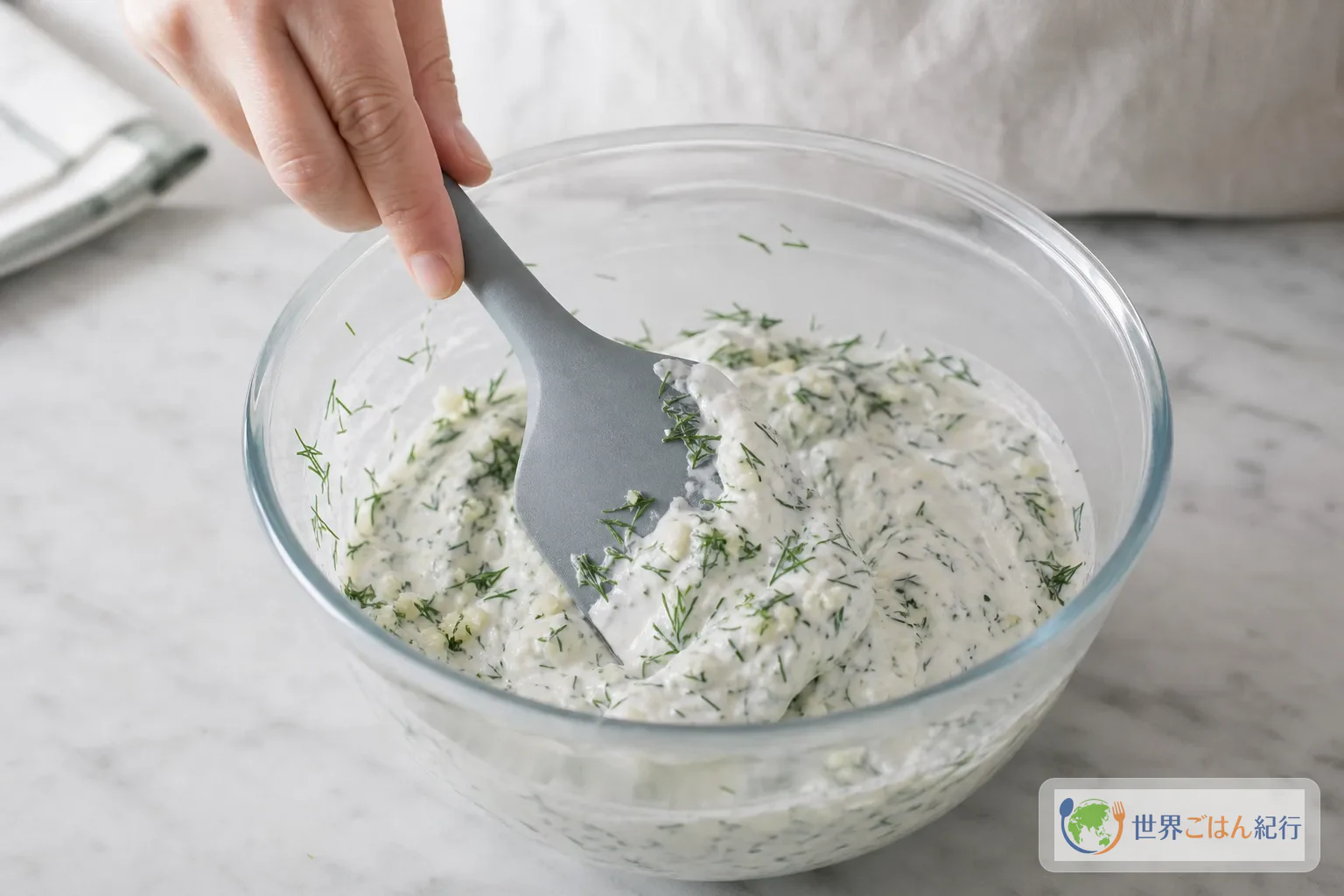
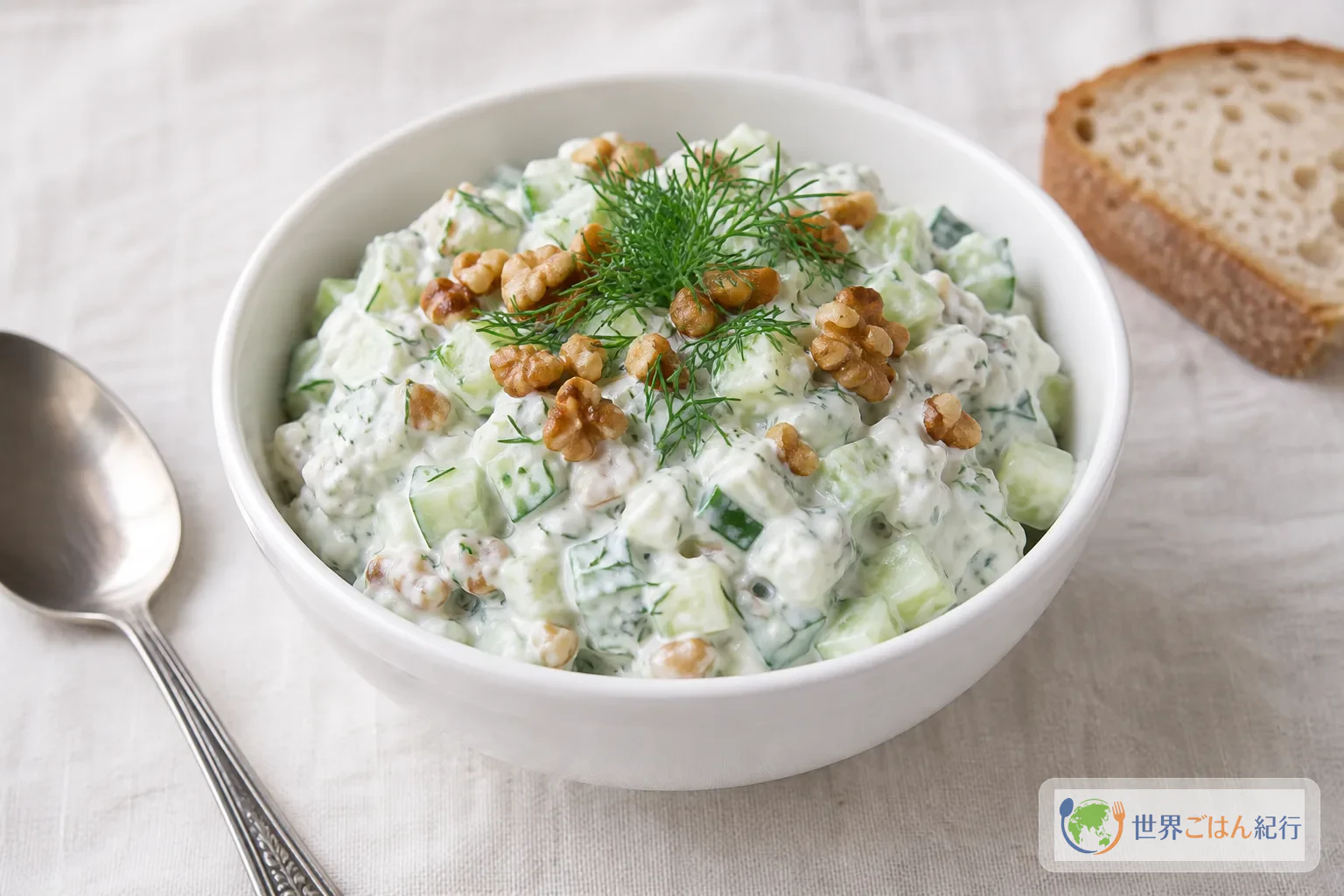
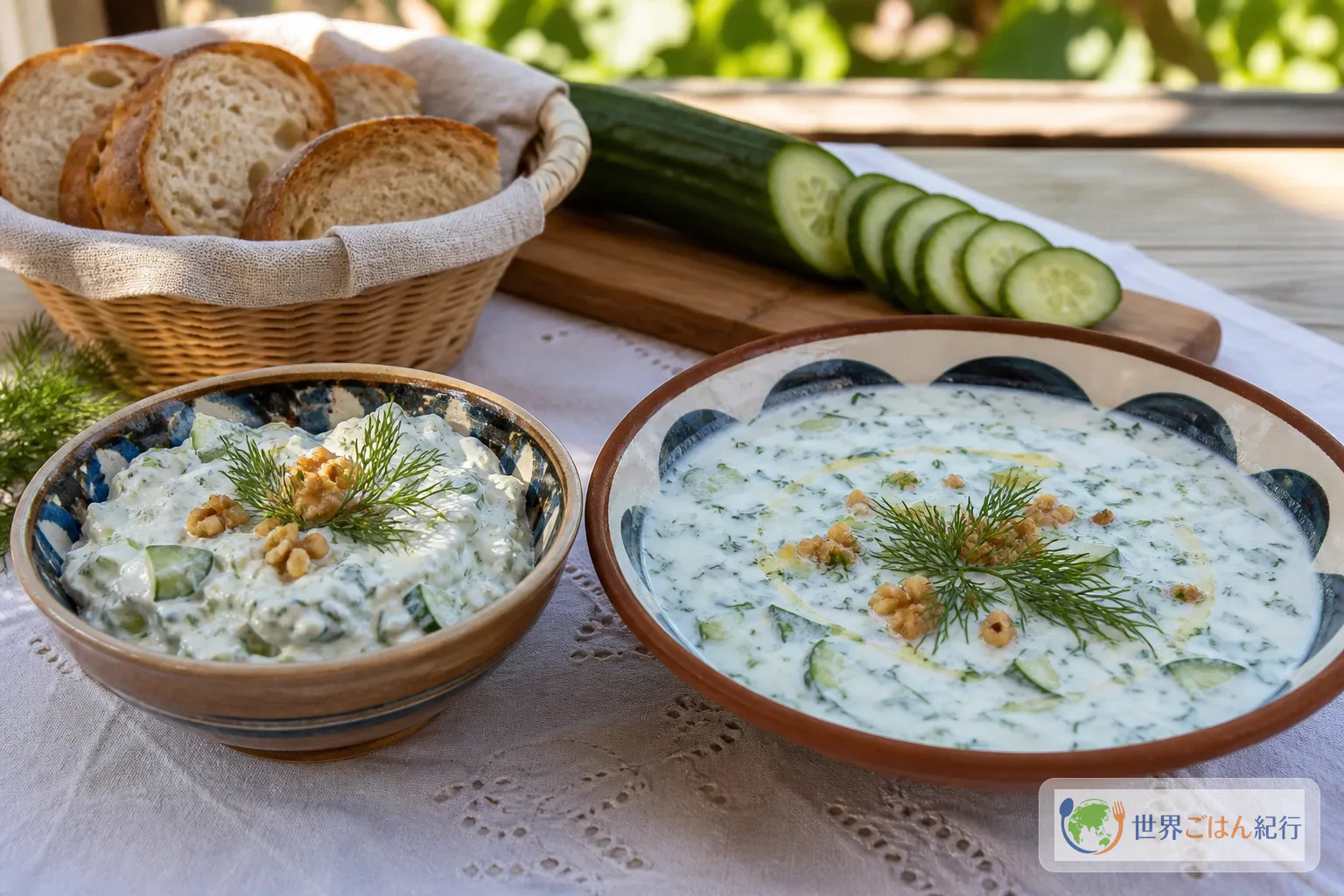
Squeeze the cucumber in both hands and listen to the water drip, plip, plip, until it stops. Then fold the green pieces into a bowl of thick white yogurt, with a little garlic, a pinch of dill, and a scattering of walnuts. No fire is involved, but the kitchen still feels like something is coming together. Snezhanka (Снежанка) is Bulgaria's cold salad of cucumber and strained yogurt. The flavor is delicate, but the texture is anything but vague: thick yogurt, crisp cucumber, the bite of garlic, the green scent of dill, and the faint bitterness of walnuts arrive one after another.
What snezhanka is and how it fits the Bulgarian table
Snezhanka is written in Cyrillic as Снежанка. In English it is also called Snow White salad, a name that refers to its white look.
Snezhanka and tarator
Snezhanka and tarator aren't the same dish, but they are close relatives. Tarator is a cold cucumber soup of yogurt, cucumber, dill, crushed walnuts, and spices, while snezhanka counts among Bulgarian salads. In kitchen terms, the difference is water. Tarator is thinned with water and eaten with a spoon; snezhanka strains the yogurt and squeezes the cucumber until it is thick enough to put on bread.
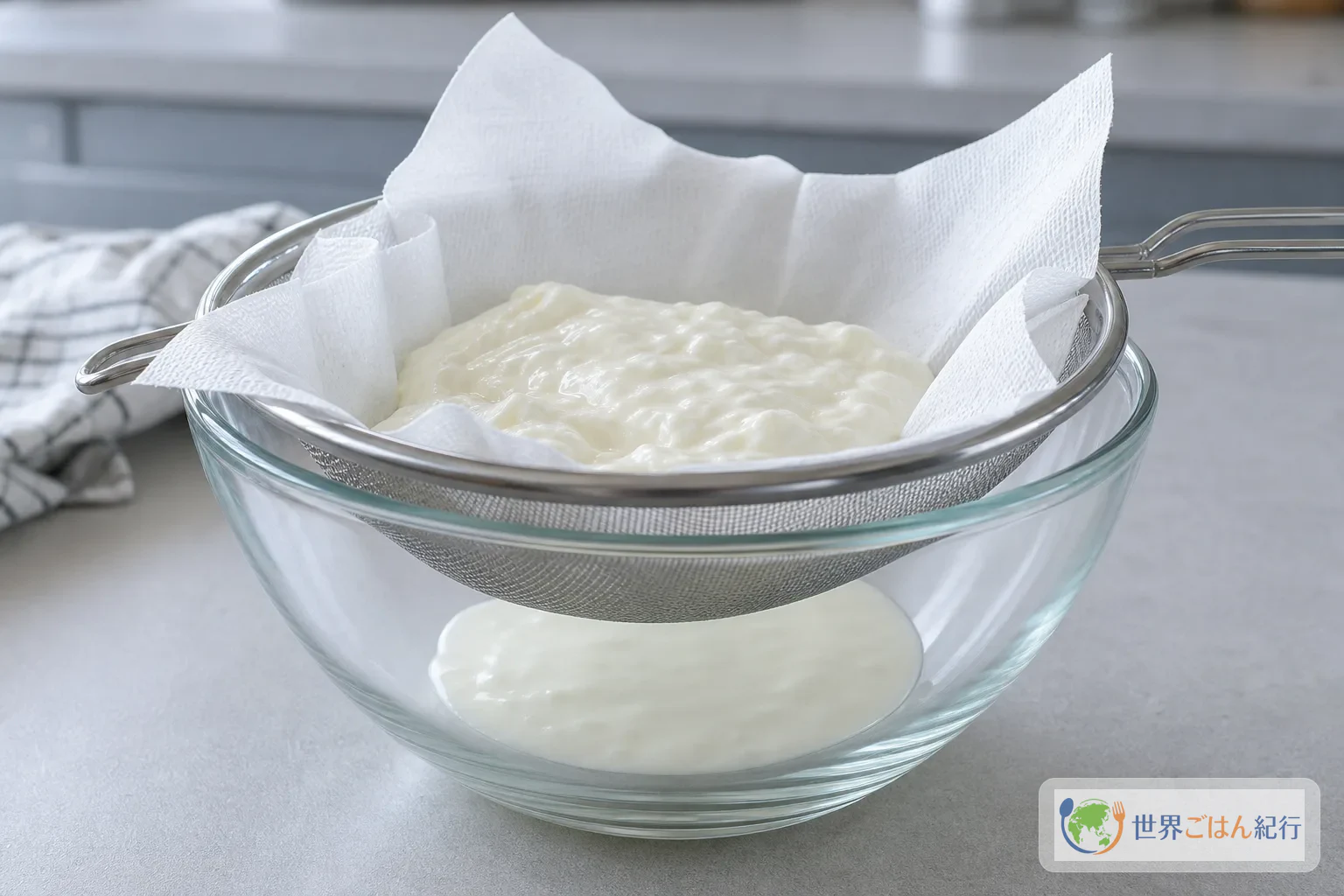
That makes water the whole challenge here. Mix ordinary plain yogurt as it is and the salad turns watery, and cucumber that goes in right after salting keeps shedding liquid in the refrigerator. So firm up the yogurt first and manage the cucumber's water afterward. When a spoon leaves a mark that doesn't vanish right away, the salad is thick enough to sit beside bread or grilled meat.
Origin and regional differences
Bulgarian cooking shares dishes with neighboring Balkan cuisines such as Turkish and Greek, and snezhanka sits alongside shopska and harvest salad on the country's salad list. Its form settled within a regional table built on dairy and vegetables rather than coming from one inventor or one year, and its present form is traced back to a dairy starter called katak.
Regional and household differences show up mostly in how water is handled. Some cooks use raw cucumber, others pickled; some toast the walnuts or add parsley, and the amount of walnuts varies too. For a first plate, make it with raw cucumber and strained yogurt to learn the balance of thickness and aroma, then try pickled cucumber. The regional differences will read as flavor.
Yogurt in the Bulgarian kitchen
Yogurt is often pictured as breakfast or dessert, but in Bulgaria it turns up in savory dishes all the time. Yogurt and white brined cheese are well-known Bulgarian foods, and yogurt is a basic part of a table that also eats a lot of vegetables. Bulgarians even start new yogurt on St. George's Day, a custom that shows how everyday dairy is there. Add summer cucumbers, fragrant dill, and walnuts that keep well, and even a cold salad carries the season and the circumstances of the kitchen.
Ingredients and amounts: a small bowl for 4
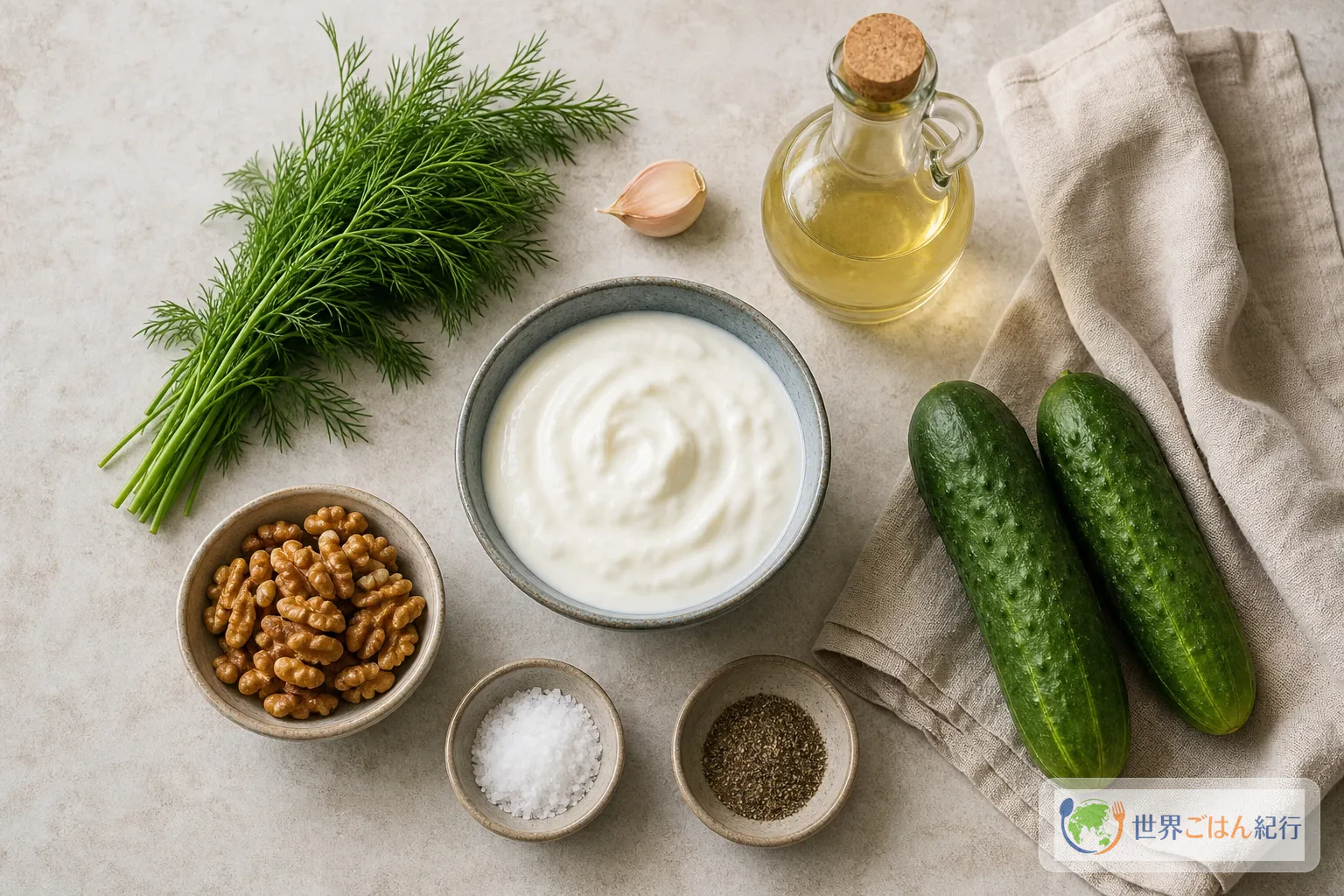
This amount makes four small bowls as a starter, or serves 2 to 3 people alongside bread. It is not a dish to eat like a main, so it is meant to sit beside grilled meat, bread, or a bean stew.
Choose yogurt with no added sugar or flavoring. A product with strong tang makes the garlic's bite feel stronger too. First, strain unsweetened plain yogurt, taste it, and then decide the salt.
It is better not to cut the cucumber too fine. Mince it to 1 to 2 mm and water comes out easily and the texture disappears once it is mixed into the yogurt. With 0.25 inch (5 mm) dice, the green crunch remains within the white.
Yogurt is a dairy ingredient and walnuts are tree nuts. If you avoid dairy or walnuts, treat it as a dish with substitute ingredients. Plant-based yogurts vary in thickness and ingredients by product, so adjust the amount by checking the texture after straining. Check the labels of processed dill and spices when you buy them.
Choosing ingredients for snezhanka
Cucumber, plain yogurt, and garlic are easy to find at any regular grocery store. What really makes a difference is dill, which changes the dish even in small amounts, and walnuts. For yogurt, Greek yogurt needs a shorter straining time, while ordinary yogurt can drain overnight. If your cucumbers are large and seedy, take out a little of the soft center.
The first priority is not an unusual dairy product but thickness, garlic, dill, and walnuts. Lemon juice or mayonnaise turns it into a different dip, so leave them out the first time. If it lacks tang, first check the brand of yogurt and how long you strained it.
Fresh dill gives the brightest aroma. It is worth buying if you'll also use it with fish, potatoes, or cold sauces; if it's just for this salad, a small amount of freeze-dried works, but check the package contents and ingredients. Parsley keeps the green color, though it takes the aroma in another direction.
Walnuts set a small crunch against the soft yogurt. Choose unsalted ones so you decide the salt yourself, and pass on salted or sugar-coated nuts, which add flavor before you've set the dish's own. For oil, any neutral oil works, such as sunflower or rice bran. Olive oil is optional, worth using only if you want to add aroma and will use the bottle for other salads and bread too.
Method: adjust the water separately, then combine
With snezhanka, how it turns out is decided almost entirely by managing the water before mixing, not by the mixing. If you put the yogurt and cucumber in the same bowl and then try to fix it, it is hard to draw the water out. Prepare each first and combine just once at the end.
Fixing a watery or unbalanced snezhanka
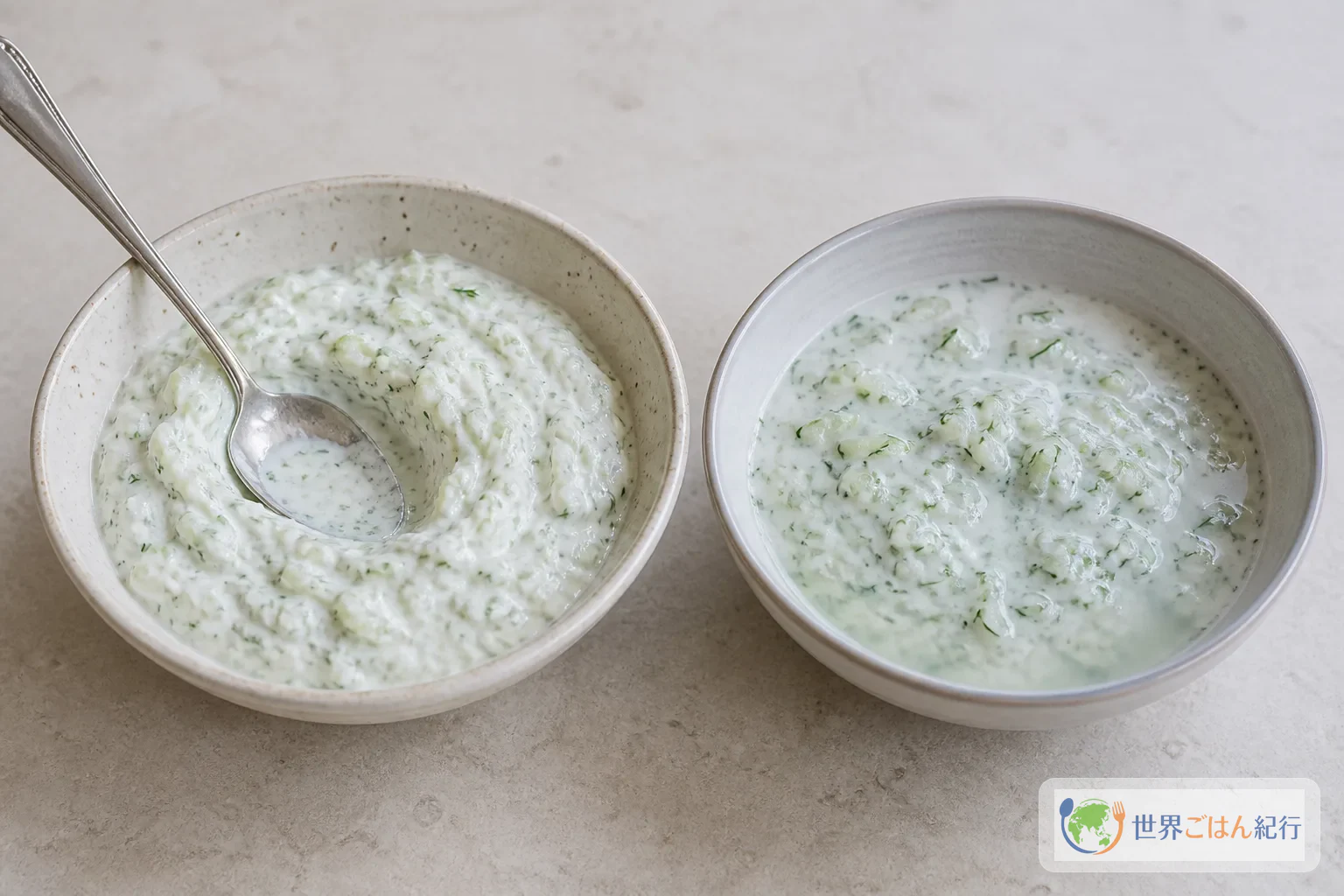
Water has collected at the bottom of the bowl
The cause is either the cucumber's water or yogurt that wasn't strained long enough. Move the snezhanka to a fine sieve and leave it in the refrigerator for 15 minutes, then discard the water and return the thick part to the bowl. If the flavor has thinned, add 2 tbsp of unsalted strained yogurt at a time. Don't try to set it with flour or potato starch; that changes the mouthfeel and the whole direction of the dish.
The cucumber is too salty
Before mixing, rinse it briefly in cold water and squeeze it again. If it's already in the yogurt, add unsalted yogurt 1.75 oz (50 g) at a time, and increase the walnuts and dill a little to spread the flavor. Stop adding salt, chill for 20 minutes, and taste again.
The garlic bite is too strong
The flavor comes together better after 20 to 30 minutes in the refrigerator than right after grating. If it's still strong, add 2 tbsp yogurt and 5 g walnuts. Rinsing garlic only adds water, so it's safer to start with half a clove.
The flavor is blurry
Usually the strained yogurt is too thin, the cucumber still holds water, or there's too little salt. Chill it first, then add just 0.5 g salt and a little more dill. Fix the thickness before reaching for lemon juice, because tang won't solve a water problem.
Tilt the plate slightly: if the salad moves slowly, it passes. If only water runs first and the white part stays on the plate, water remains in the cucumber or the yogurt. Rather than keep mixing, chill it for 15 minutes and then judge the thickness.
Serving snezhanka and variations
Serving and pairing
Serve snezhanka cold, not as a main but as a small bowl that takes up the saltiness of bread and grilled meat. Spread it thick on fresh bread and bite into a walnut; after the chill, the garlic lingers. At home it goes well with lightly salted grilled chicken, roasted potatoes, or a bean stew such as Greek fasolada, made by simmering white beans. Beside oily dishes, its tang and coolness clean the palate, but keep strongly vinegared pickles or lemon off the same plate, since they draw more water out of the cucumber.
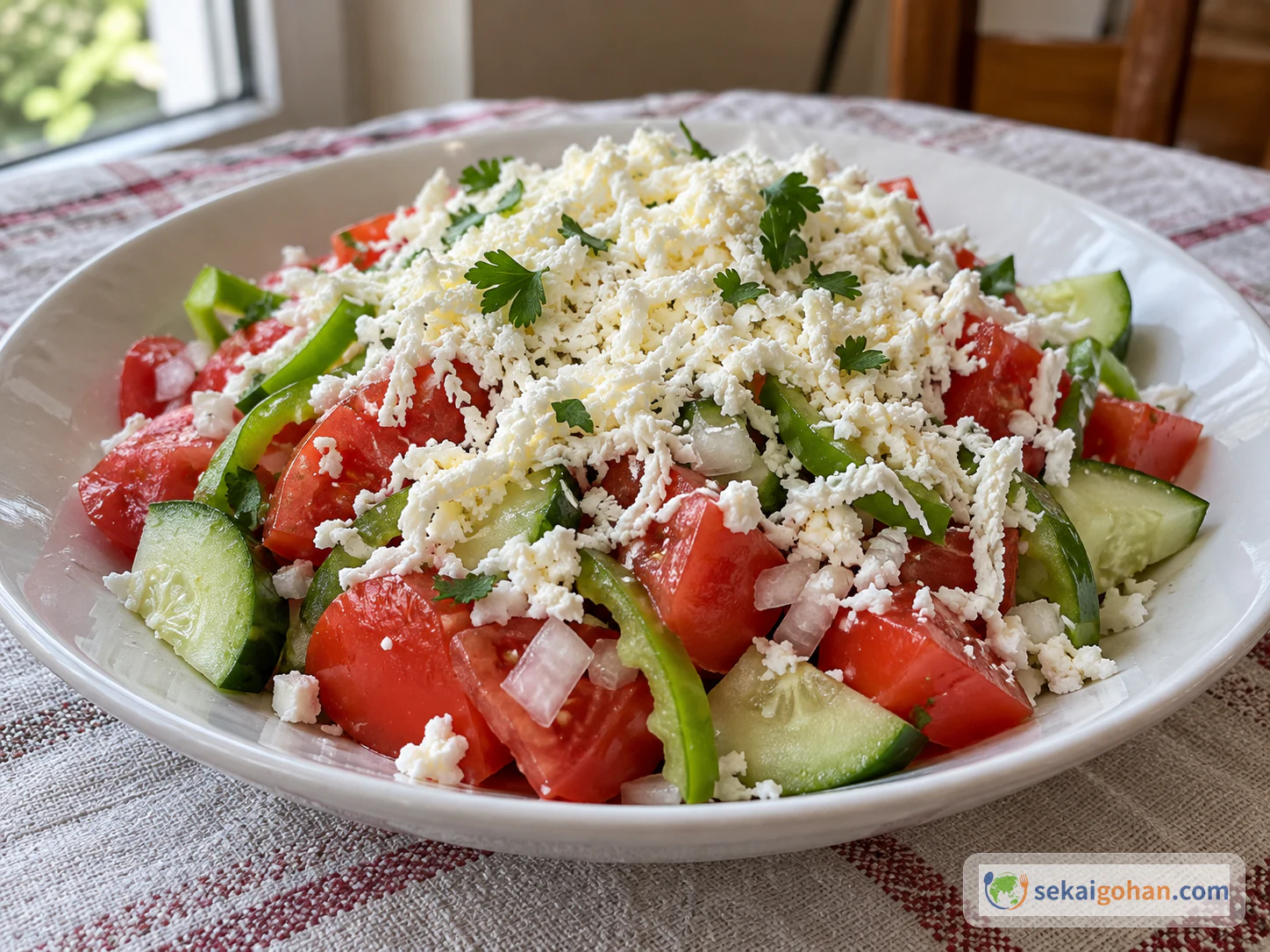
For a Balkan spread, set it next to Greek salad, with tomato and cheese in the lead, or dakos, which pairs baked bread and tomato. The contrast shows the difference between a dish that thickens yogurt and one that eats vegetables with their water.
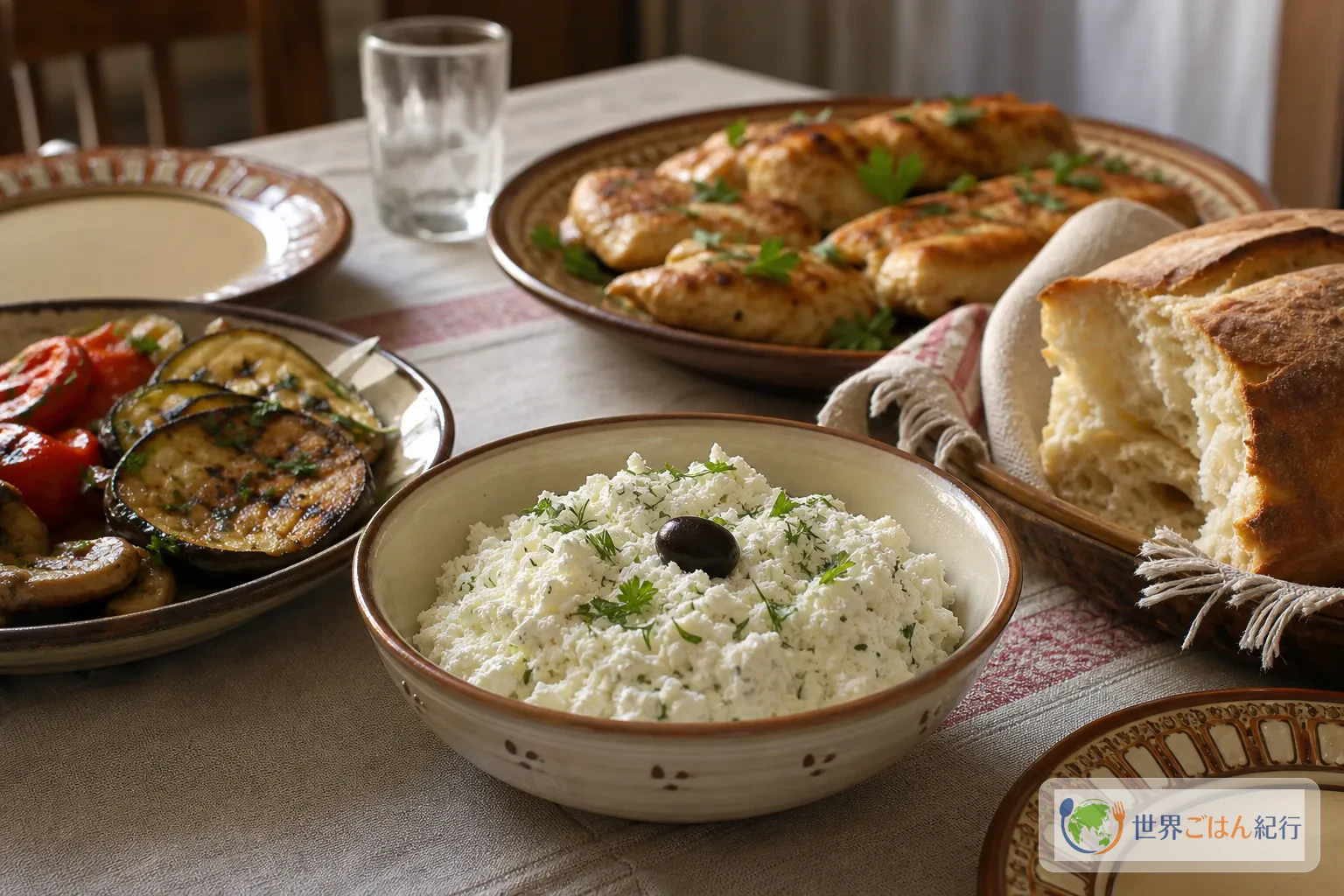
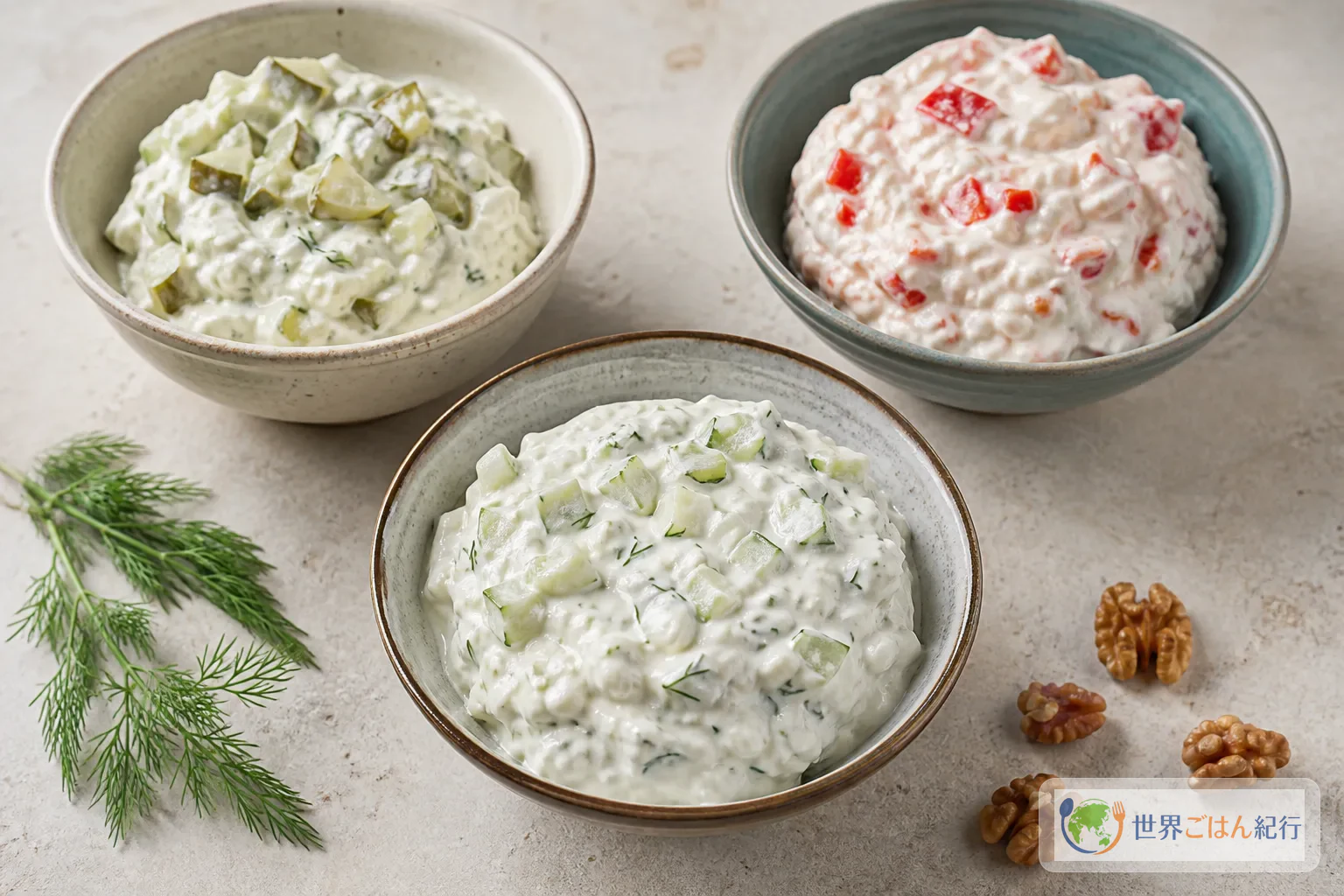
Pickled cucumber for winter
Use 5.5 oz (160 g) unsweetened dill pickles instead of raw cucumber. Press off the surface liquid with a paper towel, cut into 0.25 inch (5 mm) dice, and skip the salt at the start. The pickles already bring sourness and salt, so mix them into the yogurt, chill 20 minutes, and add 0.5 g salt only if needed. The texture is firmer than raw cucumber and suits a drink or bread nicely.
Roasted pepper
Cut 1 oz (30 g) red bell pepper into 0.25 inch (7 mm) pieces and grill under a broiler or in a toaster oven until lightly charred. Once cool, remove the skin, wipe off the released moisture, and mix in. It adds a sweet aroma and a streak of red to the white salad; serve it as a variation alongside the basic version.
Without walnuts
If you avoid tree nuts, toast 1 oz (30 g) pumpkin seeds at 325°F (160°C) for 4 minutes, cool, and chop. They bring a greener aroma, a different oiliness, and a slightly harder texture, so the result won't taste like the walnut version. Without any seeds at all, let the yogurt's thickness and the dill carry the dish. Extra cheese makes it too salty, so add nothing at first.
Plant-based yogurt
Choose an unsweetened, thick type and strain 14 oz (400 g) for 30 to 60 minutes. Soy-based yogurts can taste of beans, so use 1/2 small clove of garlic and a little more dill. Think of the result as a cold salad similar to snezhanka.
Toward tarator
Add 1 cup (250 ml) to 1½ cups (350 ml) cold water to the 4-person snezhanka a little at a time, adjusting the salt. If the yogurt wasn't strained, it already holds more water, so add less. It's handy on a day you want cold soup, though you lose the thickness for spreading on bread.
Storage and FAQ: if making ahead, leave the mixing for just before eating
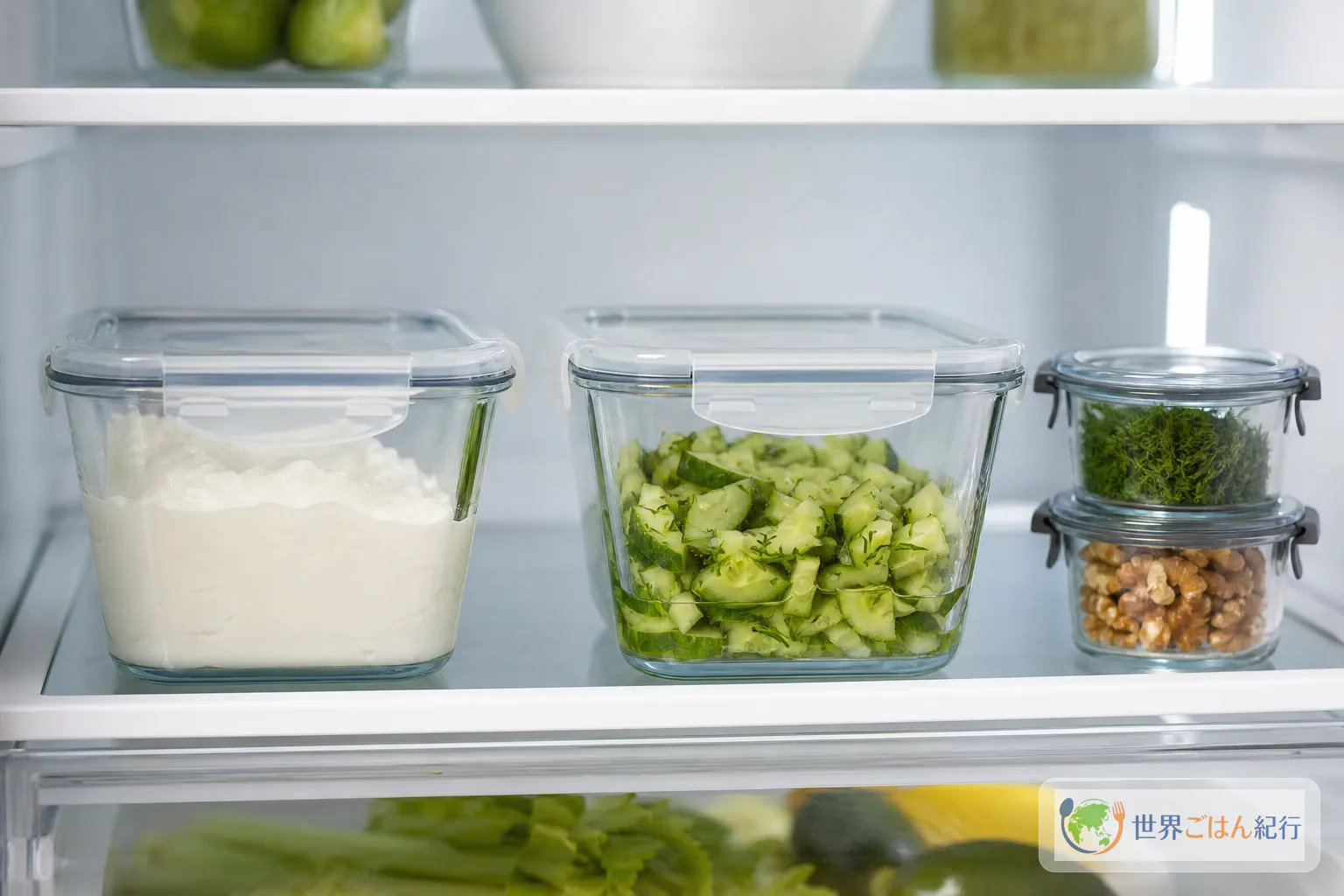
How long can it be kept?
Move it to a clean airtight container and finish it by the next day, kept in the refrigerator. Over time the cucumber releases water, the flavor thins, and the dill fades. Fold it once from the bottom before eating, and if there's a lot of water, use the fixes above. Don't freeze it: the yogurt separates and the cucumber loses its texture.
Is it all right to make it the day before?
Yes, up to a point. Strain the yogurt and cut and drain the cucumber the day before, refrigerating them in separate clean containers. Add the dill, garlic, and walnuts on the day to keep the aroma and crunch. Garlic added early grows stronger, so if you like it mild, add it last.
Which is better, ordinary yogurt or Greek yogurt?
Either works. Ordinary yogurt shrinks after straining, so start with 1 lb (500 g). For Greek yogurt, use 14 oz (400 g), and strain it for only 30 minutes if water shows on the surface. A very firm product pushes the heaviness of the dairy ahead of the cucumber's crunch, so an extremely thick one isn't the best choice.
What can I substitute if I have no dill?
Parsley alone works, but it moves away from the aroma of snezhanka. With dried dill, don't swap one for one for the 5 g fresh; start from 1.5 g. It absorbs water and its aroma strengthens, so mix, chill for 10 minutes, and add more if needed. Shiso or basil changes the aroma so much that you'd have a different herb salad.
I cannot eat raw garlic
The basic version uses raw garlic. If the bite bothers you, use half a clove and let it stand 10 minutes after grating before mixing. Cooking it until sweet is another option, though it pulls away from the aroma of a cold salad. You can also leave the garlic out and let dill and walnuts lead.