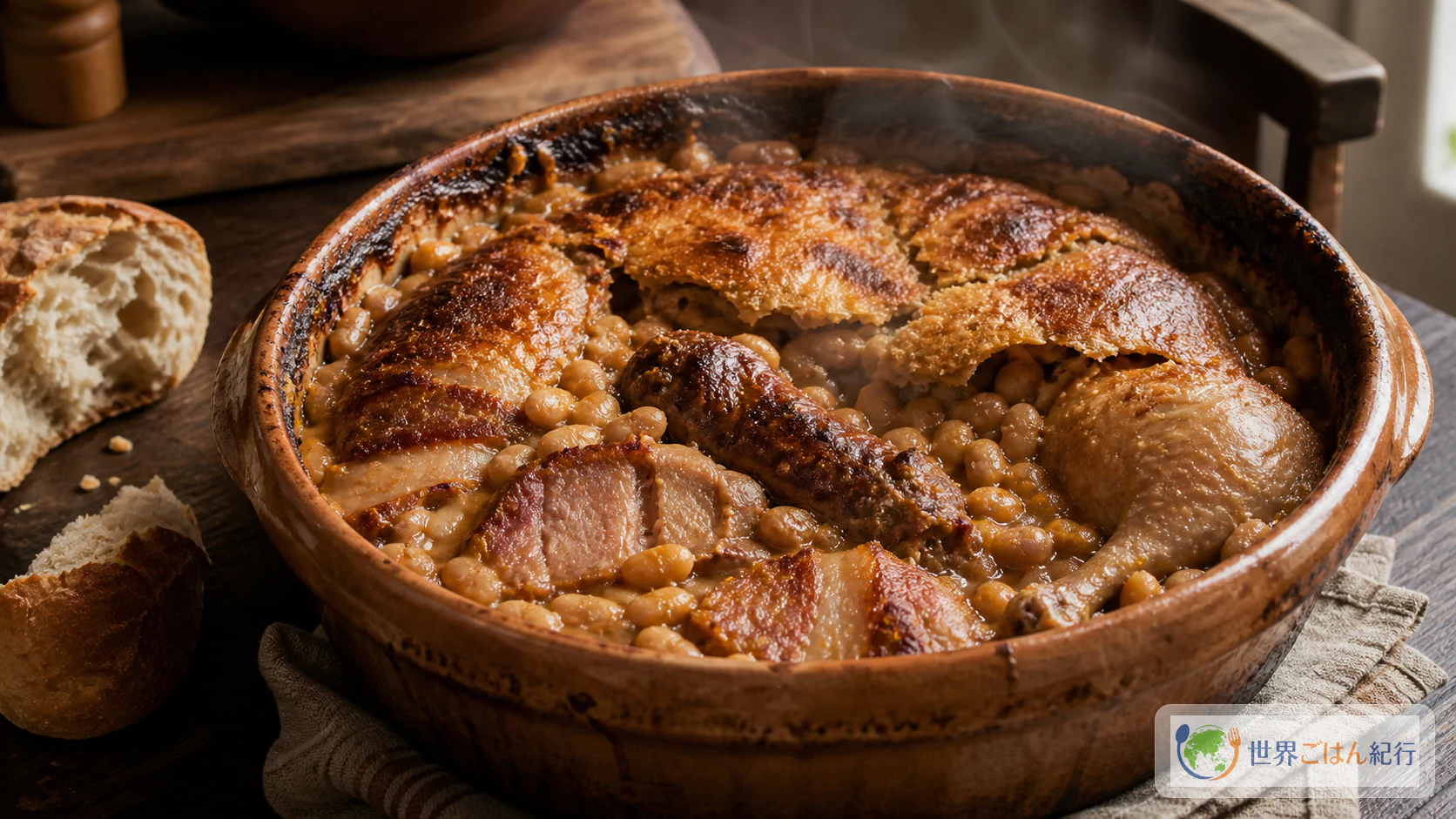
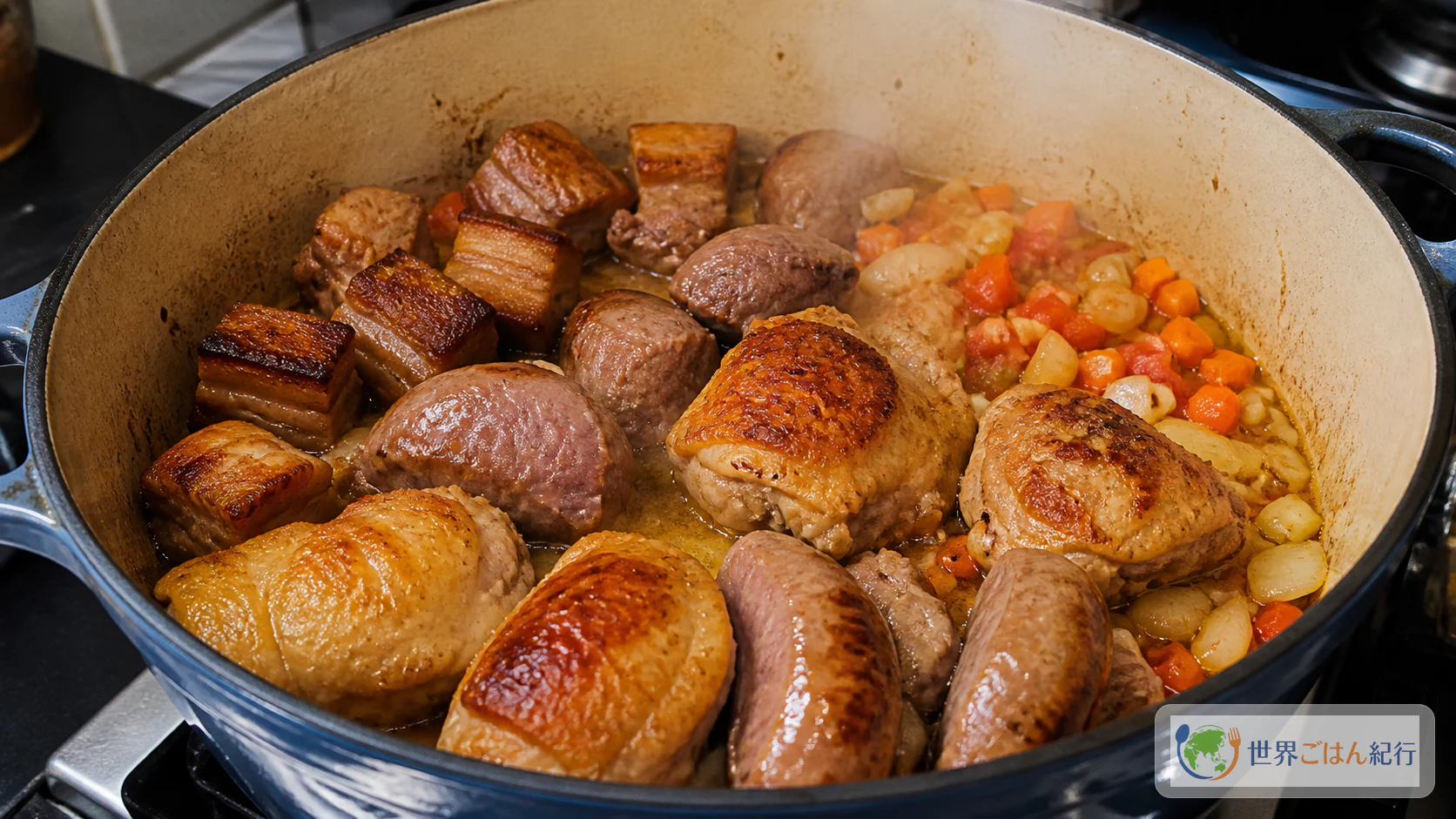
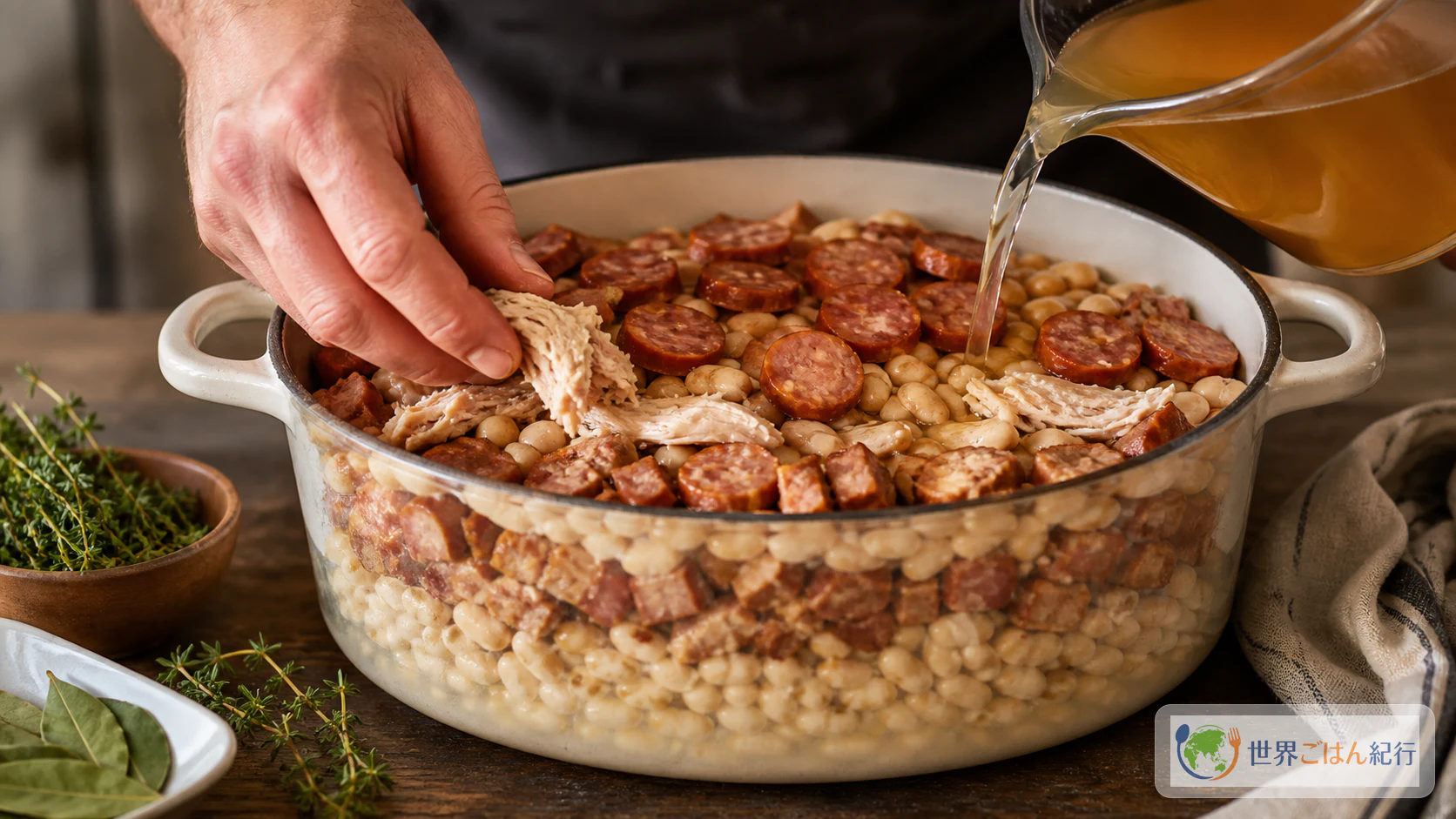
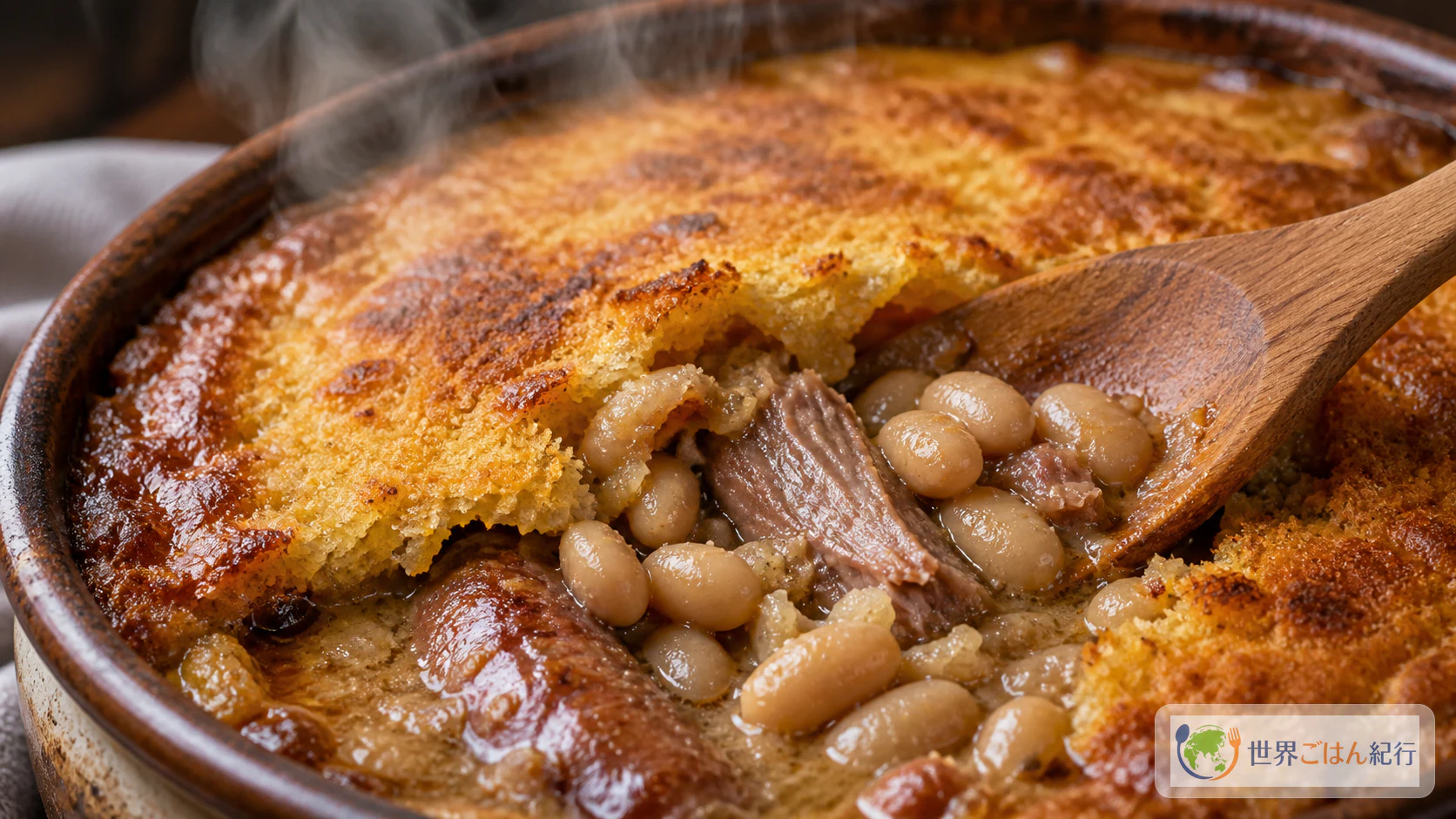
Pull the wide pot out of the oven and the beans on top have dried to a pale golden brown, with little bubbles of fat popping here and there. Slide in a spoon and the white beans and their liquid rise up from under the crust, carrying pork fat, spiced sausage and herbs in one aroma. This is cassoulet, the white bean stew of Occitanie in southwest France, tied to the towns of Castelnaudary, Toulouse and Carcassonne. What you're after is a browned top over a thick, rich liquid, with beans that stay whole.
The origins and local versions of cassoulet
A dish from Languedoc
Nobody is quite sure where the name or the dish comes from. A well-known story says that during a siege in the Hundred Years' War, townspeople pooled their remaining food in one pot, but the legend is hard to prove. What is certain is that long-simmered dishes of beans, pork or duck and sausage are still very much alive in the food culture and tourism of Languedoc.
The cassole
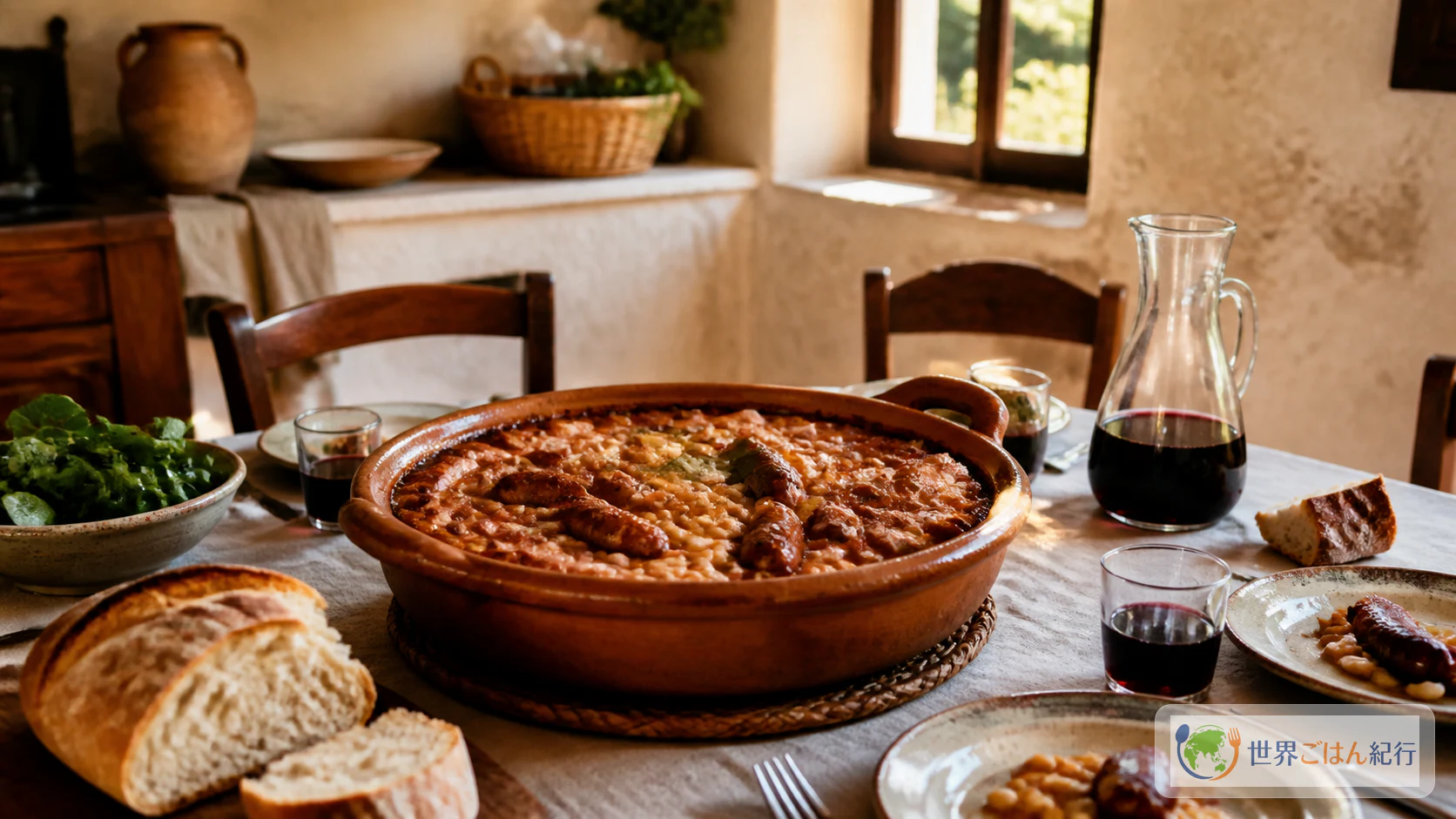
The dish takes its name from the cassole, an earthenware pot made around Castelnaudary. It has a wide base that narrows slightly toward the rim, which holds in the liquid while letting the top brown, and the terracotta spreads heat evenly.
Three towns, three sets of ingredients
White beans are the star everywhere, but the meats and sausages change from town to town. In Castelnaudary, the best-known version centers on white beans, pork and sausage. The town is the world destination for cassoulet, and its annual festival gathers producers, cooks, potters and winemakers. A pot of preserved foods eaten together grew from a home lunch into a dish that links the town's industries and its festival.
| Place | What stands out in the dish | How to read the flavor at home |
|---|---|---|
| Castelnaudary | Pork, sausage and white beans, baked in a cassole | Build it on the sweetness of the beans and pork fat; don't overload with meat |
| Toulouse | Toulouse sausage and preserved duck | Layer the meatiness of the sausage with the aroma of duck fat |
| Carcassonne | Pork and duck, and in traditional versions sometimes partridge | Skip the game birds; use bone-in meat to give the liquid body |
Together, these versions show what the name cassoulet holds: local beans, sausage made nearby, meat that keeps, and the region's earthenware. Other one-pot dishes of beans and preserved meats make a good comparison: garbure, the thick cabbage and root vegetable soup of southwest France, and fabada, the northern Spanish dish built on chorizo and white beans. What sets cassoulet apart is baking the top while keeping the bean liquid underneath.
Ingredients, and the flavor anchors to protect
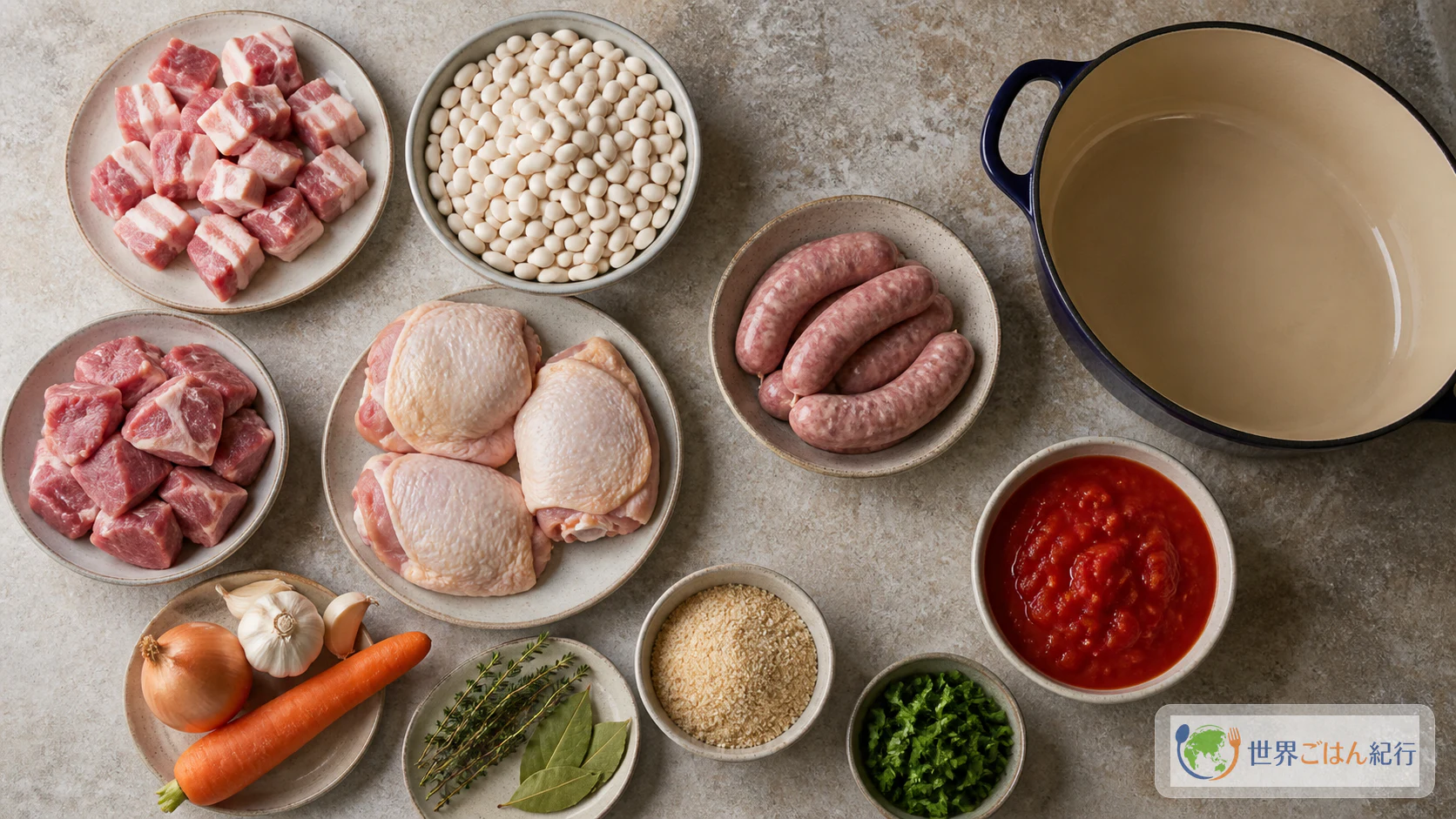
This serves 4. It's a main course, so bread and a simple green salad on the side are plenty. Dried beans need 8–12 hours of soaking plus time to parboil. On a weekend, soak the beans Friday night and cook them Saturday morning.
Weigh the beans dry: 10.5 oz (300 g). They grow heavier overnight as they absorb water, so don't re-weigh them after soaking. Sausages vary in saltiness, so season only the pork with 2 g of salt at first, and add the rest after tasting the liquid.
If you can get traditional preserved duck (confit), use 2 legs in place of the bone-in chicken. Since it's already cooked, don't simmer it from the start; tuck it between the beans just before the final bake. If the duck is very fatty, skip the oil in the pot and bake it skin-side up so only the top crisps. The chicken version is milder in aroma, but the pork belly and sausage still give fat and salt to the liquid, so it keeps its weight as a bean dish.
Dried beans or canned
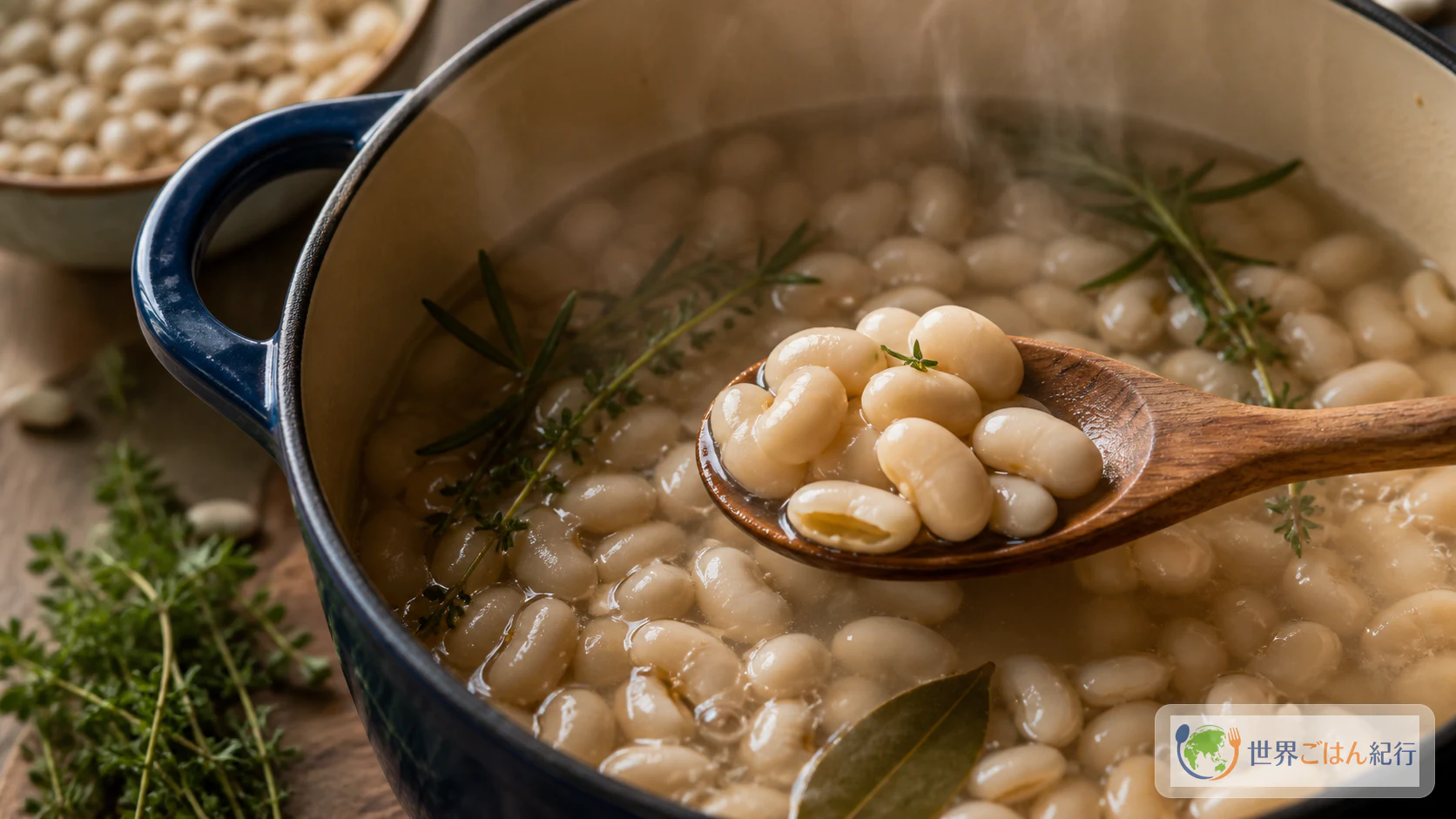
If you can't find small white beans nearby, or you want the same bean size every time, it's worth keeping a stock of dried beans from a well-stocked grocer or online. Canned beans are ready to use, but you can't return their cooking liquid to the pot during baking, and their skins break more easily. With dried beans, you save the parboiling liquid and add it back a little at a time when the oven reduces the pot.
This recipe uses 10.5 oz (300 g) for 4 servings, so seal the rest and keep it in a cool, dark place for your next bean dish.
Look at the base of the pot, not just its volume
If the beans and meat are stacked too high, only the top dries out while liquid stays at the bottom. For 4 servings, an ovenproof heavy pot about 8.5 inches (22 cm) across inside is easy to work with. If you already have a Dutch oven or earthenware pot of that kind, there's no need to buy another. Consider a cast-iron pot only if all you have is a thin pot that heats too fast at the bottom.
When choosing a pot, check its oven-safe temperature, the lid material, the inside diameter and its weight. A heavy pot holds heat well, but it's hard work to lift in and out and to wash, so make sure you can lift it safely from the shelf.
Choosing beans, meat and a pot for cassoulet
Rather than copying one town's pot exactly, think about what each ingredient you can buy needs to do. The white beans have a terroir of their own. The lingot bean, grown in the Lauragais, is a classic cassoulet ingredient, and some recipes use Tarbais beans from Tarbes. Changing the variety and origin changes the thickness of the liquid, how the skins hold up and the texture in the mouth.
A smaller white bean such as great northern or navy works well, because it does the job that matters: a dried white bean that rehydrates and cooks without splitting its skin. For the meat, preserved duck makes the aroma deeper, while chicken thighs make the meat flavor lighter. Which you choose changes how heavy the same pot of beans feels at the table.
Any heavy-bottomed, ovenproof pot in which the beans fit in about two layers gets you close to the heat of a cassole.
Method: keep the beans whole and grow the crust
Before the pot goes into the oven, check that its handles and lid can take high heat. Even cast-iron pots sometimes have plastic knobs; check the manufacturer's heat limit first. Save about 2 cups (500 ml) of the bean cooking liquid so you can add it to dry spots during the final bake.
Fixing hard beans, thin liquid or a burnt top
The two classic failures are beans still hard while the meat is overcooked, and a top that burns while the bottom stays watery. The rule to keep is simple: soften the beans first, and don't let the top dry out too much while it bakes. When something goes wrong, fix moisture and heat before adding more flavor, and check a bean, the top and the liquid at the bottom separately before you stir the pot hard.
Hard bean centers
If the beans were already hard after parboiling, raising the oven temperature won't make up for it. Add ½ cup (150 ml) of hot bean cooking liquid, cover, and extend at 275°F (140°C) in 30-minute increments, browning the top only after the centers are soft. Old beans don't rehydrate well even after soaking, so plan on 90 minutes or more of parboiling.
A burnt bottom
Take the pot out of the oven and, without stirring the burnt bottom, move just the beans and meat above it to another pot. If the burnt smell hasn't carried over, add ½ cup (100 ml) of warmed bean liquid and return to a 275°F (140°C) oven for 20 minutes. Scraping the burnt layer off and mixing it in spreads the bitterness, so discard the bottom.
Too much liquid and no crust
If the beans haven't broken down, bake uncovered at 325°F (160°C) for another 20–30 minutes. Reduce the liquid a little first and then scatter the breadcrumbs thinly rather than in a thick layer; more of the bean aroma survives that way. Leave a little liquid at the edges, even if you have time to spare before eating.
A blackened top
Thinly remove the black parts and pour 3.5 tbsp (50 ml) of hot bean liquid in from the edge of the pot. Next time, cut 10 minutes from the 425°F (220°C) stage and move the pot from the lower rack to the middle. The bitterness of black char can't be taken out of the meat and beans, and a dark crust tells you nothing about doneness.
Serving and storing cassoulet
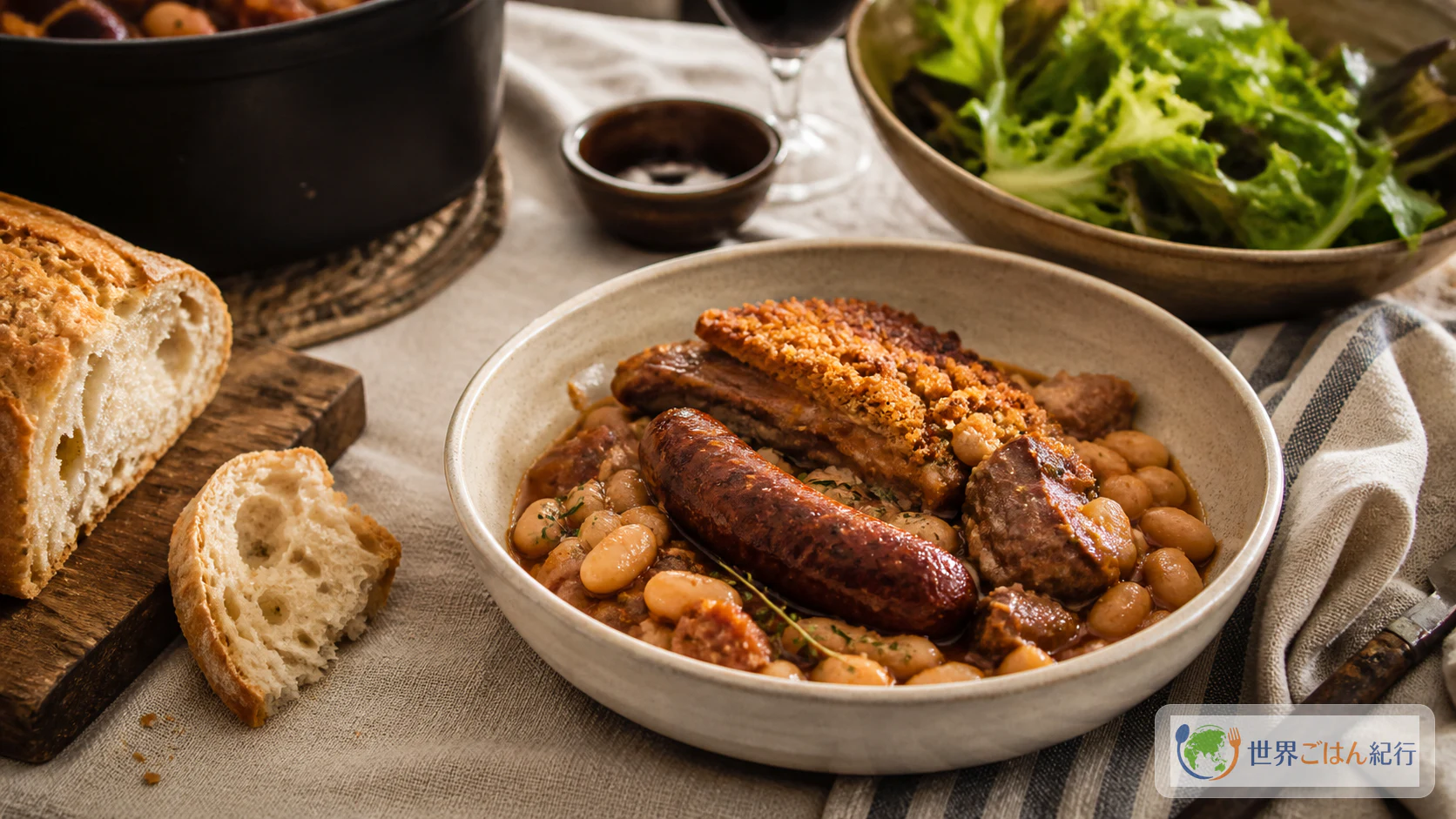
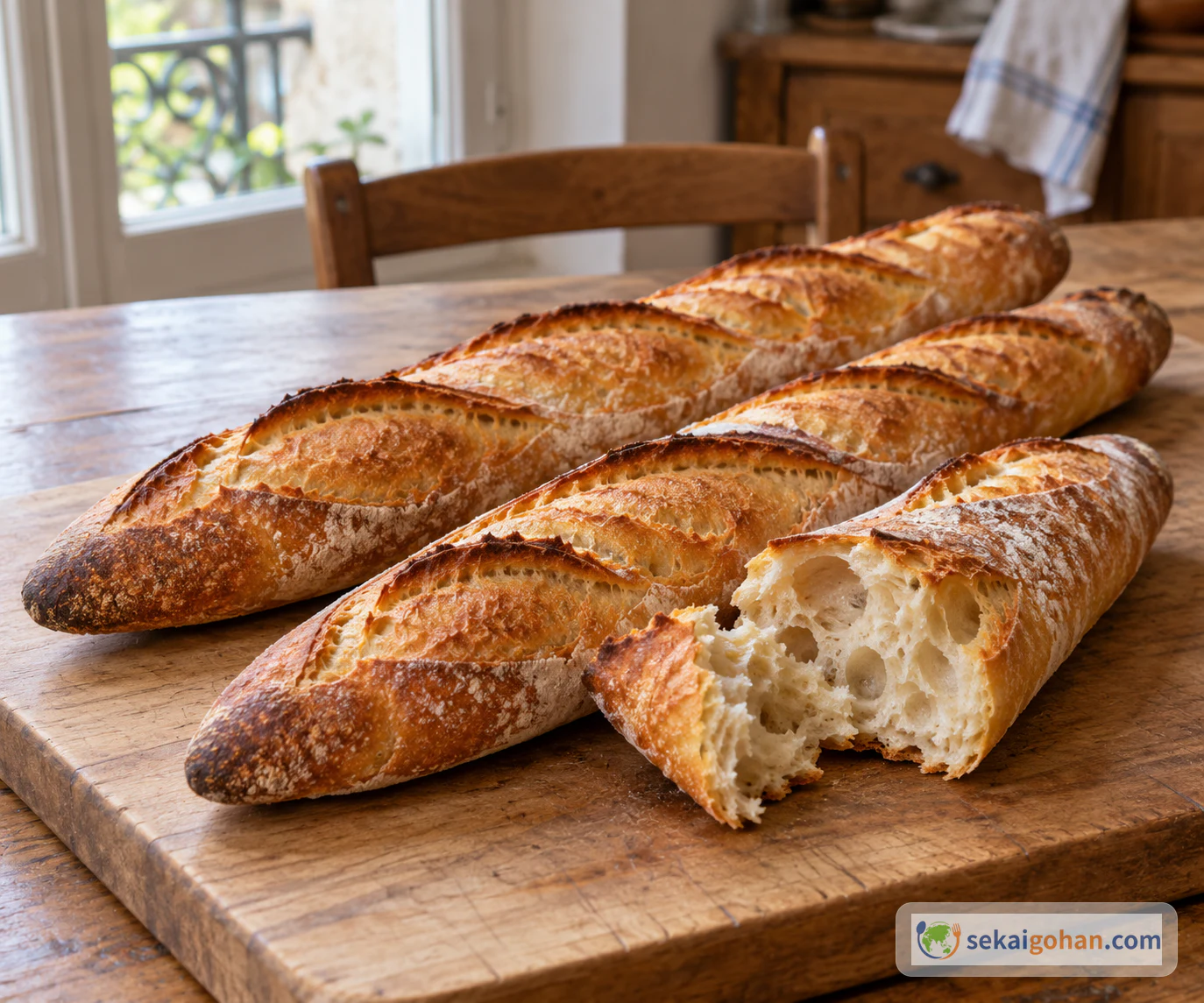
Right after resting, the gap in temperature between the crust and the liquid at the bottom is small, and the sweetness of the beans comes through clearly. Lightly toast country bread or a baguette and use it to scoop up the liquid. Set the bread beside the plate instead of mixing it into the pot, so you can enjoy the crust and the soft beans separately.
Languedoc red wine and country bread are the natural partners. A small side of tangy greens or unsweetened pickles keeps the pork fat and rich beans from becoming too much. Something sour on a separate plate resets your palate between bites far better than more spice, and the meal is less tiring to eat.
Cassoulet tastes more settled the next day. Once it has cooled slightly, divide it into shallow containers and refrigerate; at home, aim to eat it within 2 days, and don't leave it at room temperature for long. To freeze, freeze single portions before the crust stage, then after thawing add a little liquid and bake the top.
This dish contains white beans, so anyone with a bean or legume allergy should not eat it. Check the labels on the sausage, breadcrumbs and stock for wheat, dairy and other ingredients besides pork. Don't share cooking tools or serving tongs, even when making the chicken version.
Frequently asked questions
Can I use canned white beans?
Yes. In place of 10.5 oz (300 g) dried beans, use 700–800 g drained canned beans. Skip the parboiling step and use unsalted stock instead of bean cooking liquid. Since the beans are already soft, shorten the 325°F (160°C) bake to 60 minutes and check only the surface without stirring the beans. If the liquid isn't thick enough, mash just 3 tbsp of beans and stir them back in.
Does skipping the duck take it away from the real thing?
Even in Castelnaudary, Toulouse and Carcassonne, the combination of meats isn't fixed. Preserved duck adds fat and a cured aroma, but in this recipe the bone-in chicken thighs do the job of giving meaty stock to the beans. Make it with chicken first, then with duck, and the difference in aroma is easy to compare.
Can I bake it in an earthenware pot or a regular pot?
An oven-safe earthenware pot works. Vessels that don't handle sudden temperature changes should go into the oven cold and heat up with it, following the manufacturer's instructions. A stovetop-only pot stays out of the oven: simmer the beans and meat in it, then move everything to a baking dish to brown just the top. If you simmer for a long time in a thin-bottomed pot, keep the heat low and add bean liquid before the bottom dries out.
Should the crust be broken many times?
Breaking the crust repeatedly to push the liquid back up is one approach, but for a one-day home version, breaking it once when the top dries out is enough. The more you stir, the more the crust falls apart and the beans at the bottom get crushed. Decide by looking at the pale golden color, the bubbling edges and the shape of the beans together.
What should I watch for when reheating leftovers?
Take only what you'll eat into a shallow container and heat until hot to the center. If it has lost moisture, add unsalted stock or bean liquid 2 tbsp at a time, and cover before the top burns. To re-brown the top the next day, uncover only for the last 10–15 minutes. Avoid cooling and reheating it repeatedly; finish the portion you've taken in one sitting.