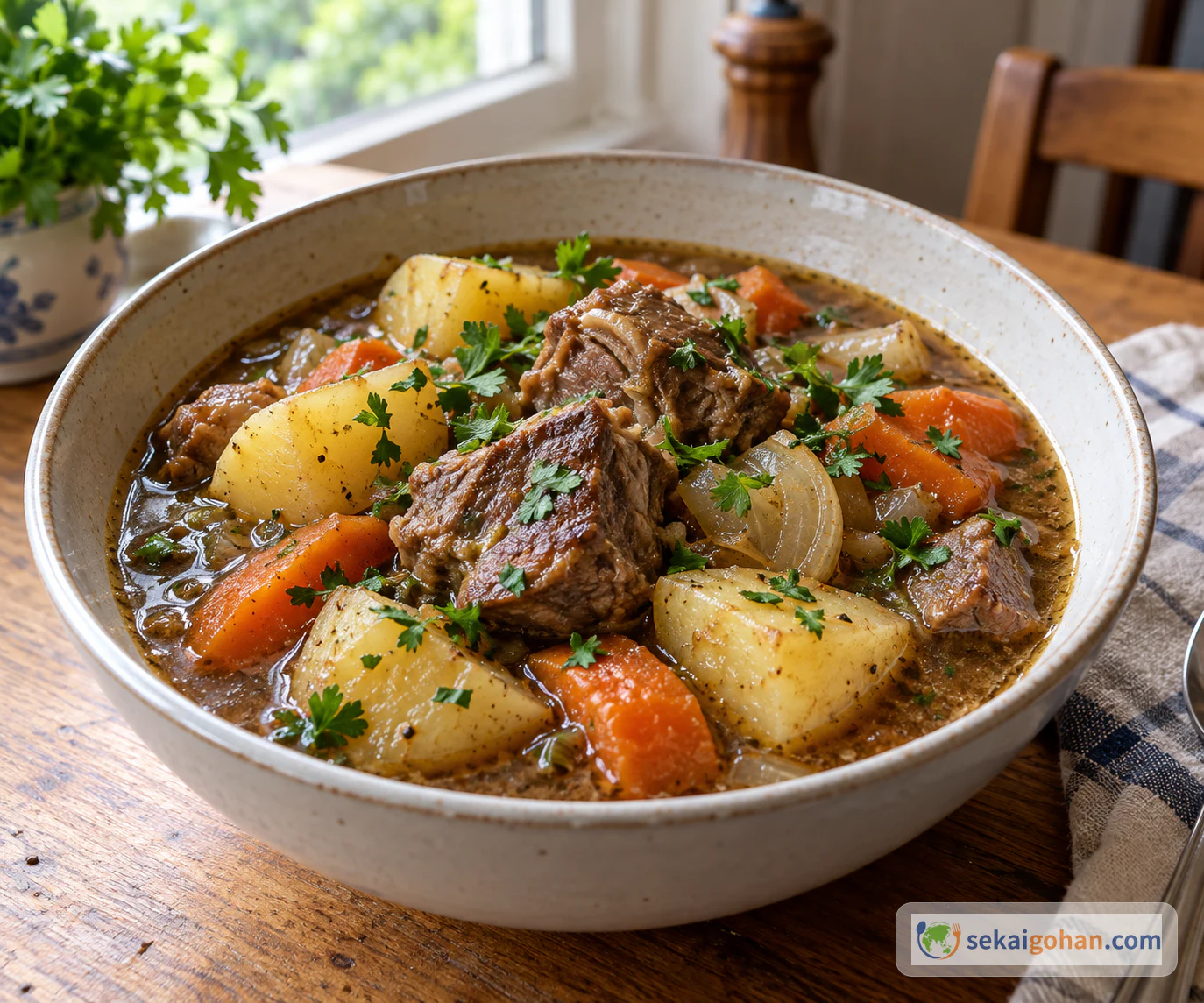
On a cold evening, nudge the lid of the pot aside and the first thing to rise is the sweet smell of cabbage, followed by duck fat and cured pork. It's too thick to call a soup and too brothy to call a stew. Garbure is the hearty cabbage and white bean soup of southwest France, eaten for generations in Gascony, Béarn and the surrounding country. Vegetables, beans and salty meat come together slowly in a single pot, and at the end you let bread soak up the broth.
Garbure, between soup and stew
Garbure comes from the mountain country running from the Pyrenean valleys to the border with the Spanish Basque Country, including the Pyrenean spa town of Bagnères-de-Bigorre. It is mountain food: preserved meat and garden vegetables gathered into a single pot in winter homes.
Garbure is a country dish of southwest France. In Occitan and Gascon spelling, it is also written garbura. The ingredients change across Béarn, the Landes and Bigorre: duck or goose confit, salt pork, ham ends and whatever root vegetables are in season.
Next to its neighbors, garbure has its own balance. Compared with pot-au-feu, the beans and cabbage take the lead. It leans less on beans than Spain's fabada asturiana, and it puts the meat less at center stage than cocido madrileño.
Ingredients differ from town to town, but cabbage is almost always there; leave it out and it becomes a different dish. The beans and meat build savoriness, and the cabbage brings sweetness and a sense of place. Hold on to that and you'll get close to the feel of southwest France.
The question that trips people up is how far to cook it down. Some beans stay whole, the potato edges round off, and the cabbage turns soft enough to cut with a spoon. Aim for a consistency where every ladleful brings up beans, cabbage, meat and broth together.
Ingredients (serves 4, hearty enough for a main course)

This serves 4. It's thick enough to be the main course at dinner, so a little salad or cheese on the side makes a complete meal. If you're using dried beans, start the night before. If you're using canned beans, skip the soaking in step 1 and shorten the simmer in step 3 by 30 minutes.
Bacon, ham and duck confit vary widely in salt from product to product. Keep the initial salt to 1/2 tsp, and taste the broth at the end before adding more. Mustard is made from mustard seed. Don't add it for anyone with a mustard allergy; serve it separately at the table.
Shopping questions
Dried white beans have deeper flavor; canned beans make this easy enough for a weeknight. With canned beans, the canning liquid can muddy the flavor if you pour it in, so drain them in a colander and give them a quick rinse. Dried beans need soaking time, but their skins split less and the longer they cook, the more rounded sweetness they give the broth.
A heavy pot works best. In a thin pot, the bottom tends to scorch before the beans are tender, and the cabbage doesn't release as much sweetness. For 4 servings, a cast-iron pot about 8.5 inches (22 cm) across, or a heavy pot of 4.25 quarts (4 L) or more, is easy to handle.
Duck confit instantly pulls the aroma toward southwest France, but it's not a must from the start. On days you can't get it, firm up a bone-in chicken leg with a little salt and simmer it with the bacon fat.
Choosing ingredients for garbure
Traditional recipes call for Tarbais white beans, ends of Bayonne ham, and duck or goose confit. Hunting all of that down can wear you out before you even start cooking, and even locally every pot is different. For your first pot, white beans, cabbage, bacon, a bone-in chicken leg and aromatics from an ordinary supermarket are perfectly fine; you'll have more success protecting the backbone of the flavor than trying to source every imported ingredient.
| The core to keep | Practical choices | What to watch when swapping |
|---|---|---|
| White beans | Large white beans, cannellini, canned white beans | Red kidney beans have a strong color and sweetness, and the dish loses its southwest French character |
| Cabbage | Winter cabbage, regular green cabbage | Spring cabbage falls apart quickly, so shorten the simmer by 10 minutes |
| Salt from cured meat | Slab bacon, ham ends, salt pork | Thin-sliced bacon alone gives a weak aroma; choose something thick |
| Duck or goose fat | Duck confit, or bone-in chicken leg plus bacon | Chicken alone is light, so use the bacon fat rather than discarding it |
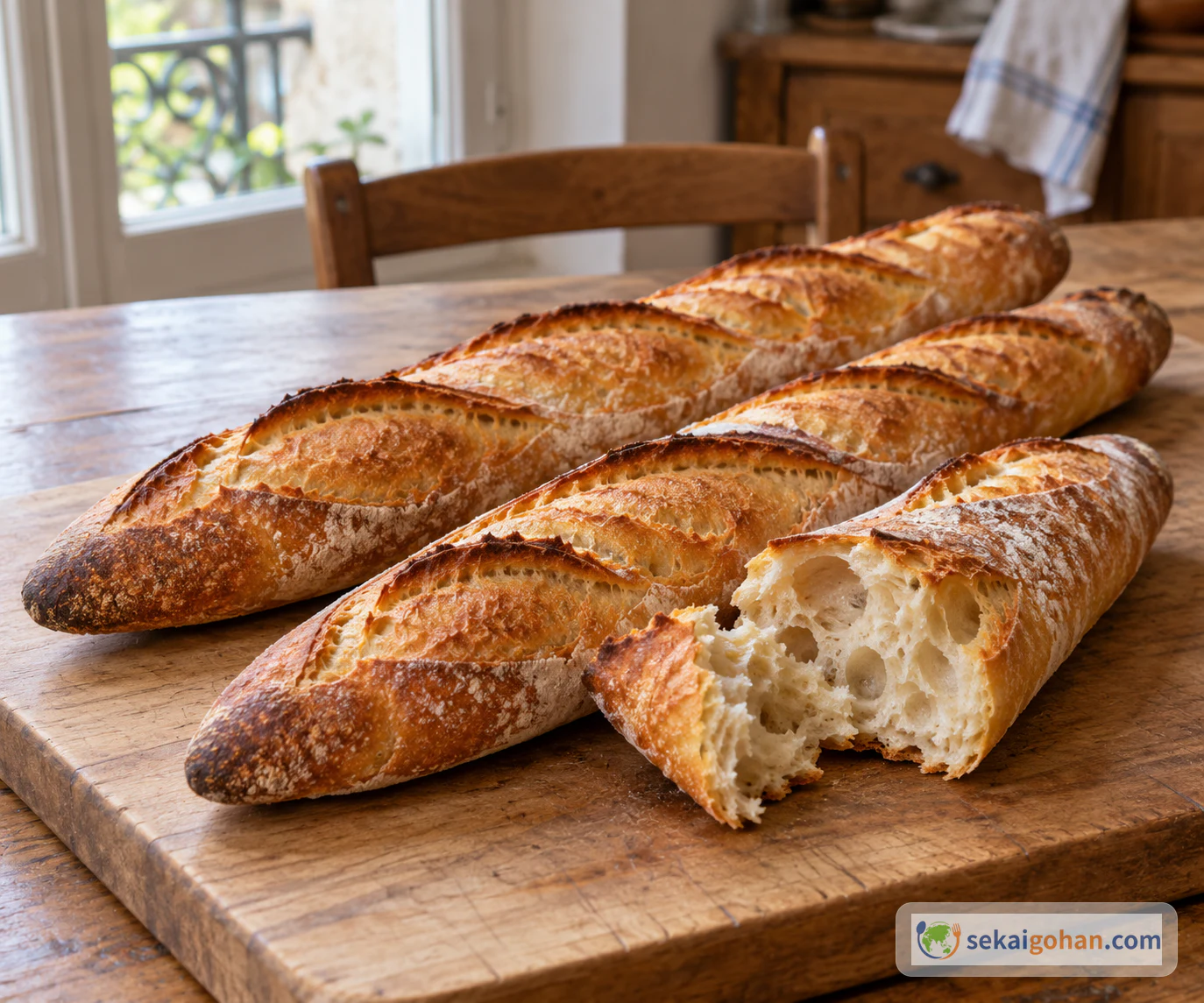
| Eating it soaked into bread | Country bread, baguette | Soft, sweet sandwich bread should be lightly toasted to dry it out |
On days you use duck confit, leave the duck out in step 3 and add it in step 5. Confit is already cooked, so if it simmers too long its aroma escapes into the broth and the meat falls into shreds. A bone-in chicken leg goes in from step 3; cook it through, then pull it apart.
Canned beans make the broth slower to thicken. Lightly mash some of the potato with a wooden spoon, or scoop out just 3 tbsp of beans, mash them with a fork and stir them back in. Skip flour or starch, though: thickening with flour or starch gives it the mouthfeel of a stew rather than a pot of simmered beans.
Method: bring the beans and cabbage together slowly over low heat
These are the basic steps using dried beans. If you're using canned beans, skip step 1, and in step 3 simmer only the meat and aromatics for 30 minutes, without the beans. Add the canned beans in step 4 and heat them through with the cabbage for about 20 minutes.
Decide on the salt at the end. The salt from the bacon and duck confit moves into the broth as it cooks, so adding salt midway tends to make the finished pot too salty. Taste once the beans are tender, and add only what's missing.
Common garbure problems and fixes
Most trouble comes from three habits: boiling it down fast over high heat, salting before the beans are tender, and stopping while the cabbage still tastes raw and grassy. Keep it at a gentle simmer, salt at the end, and cook the cabbage until it's soft and sweet.
The beans are hard
Old dried beans, too little soaking and too much salt are the usual culprits. Start cooking only once a soaked bean gives a little when pressed with your finger. The bacon and duck are already salty, so leave the salt for the end. If the beans still feel hard during the simmer, keep the water level up and extend the cooking by 20 minutes over low heat.
The cabbage smell is too strong
Boiling hard over high heat pushes the grassy smell of cabbage to the front, and so does cutting it too fine. In step 4, drop the heat to low and set the lid ajar to let steam escape, and cut the cabbage into 1 inch (3 cm) strips.
It's thin and lacks body
This happens most often with canned beans. Simmer until the potato edges start to break down a little, mash 3 tbsp of beans and stir them back in, then let it rest. Boiling off liquid over high heat only makes it salty.
It's too salty
Very salty bacon or duck confit is usually the cause. Rather than adding water, add 3.5 oz (100 g) potato or 3.5 oz (100 g) cabbage and simmer over low heat for 15 minutes to absorb the salt. Serving extra bread helps too.
It's greasy
Adding all the fat from the duck confit can make it heavy. Put just 2 tsp of the confit fat into the pot and save the rest. The next day, when white fat has set on the surface, spoon off about 1 tbsp before reheating and it will be easier to eat.
Serving and storing garbure
At the table
Garbure becomes a real dinner-table dish the moment you let bread soak up the broth. Put toasted bread in each bowl and ladle plenty of the solids over it, then dab just a little Dijon mustard on the meat. It isn't there for heat; it gives an edge to the sweetness of the simmered beans and cabbage.
Southwest France also has a custom called chabrot: at the end of the meal, you pour a little red wine into the bowl and drink it. At a table with children or people who don't drink, bread and mustard are all you need.
A salad of bitter greens, a little cheese and tangy pickles all go well alongside. If you want to follow it with the white stew of neighboring Belgium, try waterzooi; for a lighter, rustic bean soup, move on to Greek fasolada. Even among bean dishes, you'll see how differently fat, acidity and dairy are used.
Storing and reheating
To store, let it cool for about 30 minutes, divide it into shallow containers and refrigerate for up to 2 days. By the next day the beans and cabbage have melded and it's even better. The beans soak up broth as they cool, so add 50 to 100 ml (about 1/4 to 1/3 cup) water, then reheat over low heat until it's steaming all the way to the center. The duck fat and bacon aromas are strong, so a small pot over low heat works better than the microwave.
You can freeze it, but the potatoes turn mealy. If you plan to freeze, make a batch with fewer potatoes and portion it into single servings.
Leftovers for lunch
For a leftover lunch, scoop out a bit more of the solids and try a small amount of short pasta or pearl barley in place of the toasted bread. If it's short on broth, add ½ cup (100 ml) hot water and 1 tsp olive oil while watching the salt; the oil keeps the sweetness of the beans from going flat.
FAQ
Can I make it with canned beans only?
Yes. Use 1 lb (480 g) canned beans and skip step 1. In step 3, simmer the meat and aromatics for 30 minutes without the beans, then add the beans with the cabbage in step 4. Drain off the canning liquid and rinse the beans lightly to keep the flavor clean.
Can it be made vegetarian?
It's possible at home, but it moves away from the flavor of traditional garbure, so think of it as a different dish. Leave out the bacon and duck, and add body with 2 tbsp olive oil, the soaking liquid from 10 g dried shiitake mushrooms and 1/3 tsp smoked paprika.
Can I speed it up with a pressure cooker?
The easiest approach is to precook only the dried beans in the pressure cooker. Cook the soaked beans at high pressure for 8 to 10 minutes and let the pressure release naturally. Simmer them with the meat and aromatics in step 3 for about 20 minutes so the flavors meld, then go on to step 4. Cabbage and potatoes fall apart easily under pressure, so finish them in a regular pot over low heat.
Can I use napa cabbage instead of cabbage?
You can, but the sweetness is different. Napa cabbage holds a lot of water and thins the broth as it cooks, so reduce it to 9 oz (260 g) and use ½ cup (100 ml) less water in step 4. For the true garbure character, use regular cabbage.
Can I serve it with rice instead of bread?
At home, do what you like. With garbure, though, soaking the broth into bread tames the salt and fat. If you serve it with rice, leave a little more broth, skip the mustard and add a touch of black pepper instead.