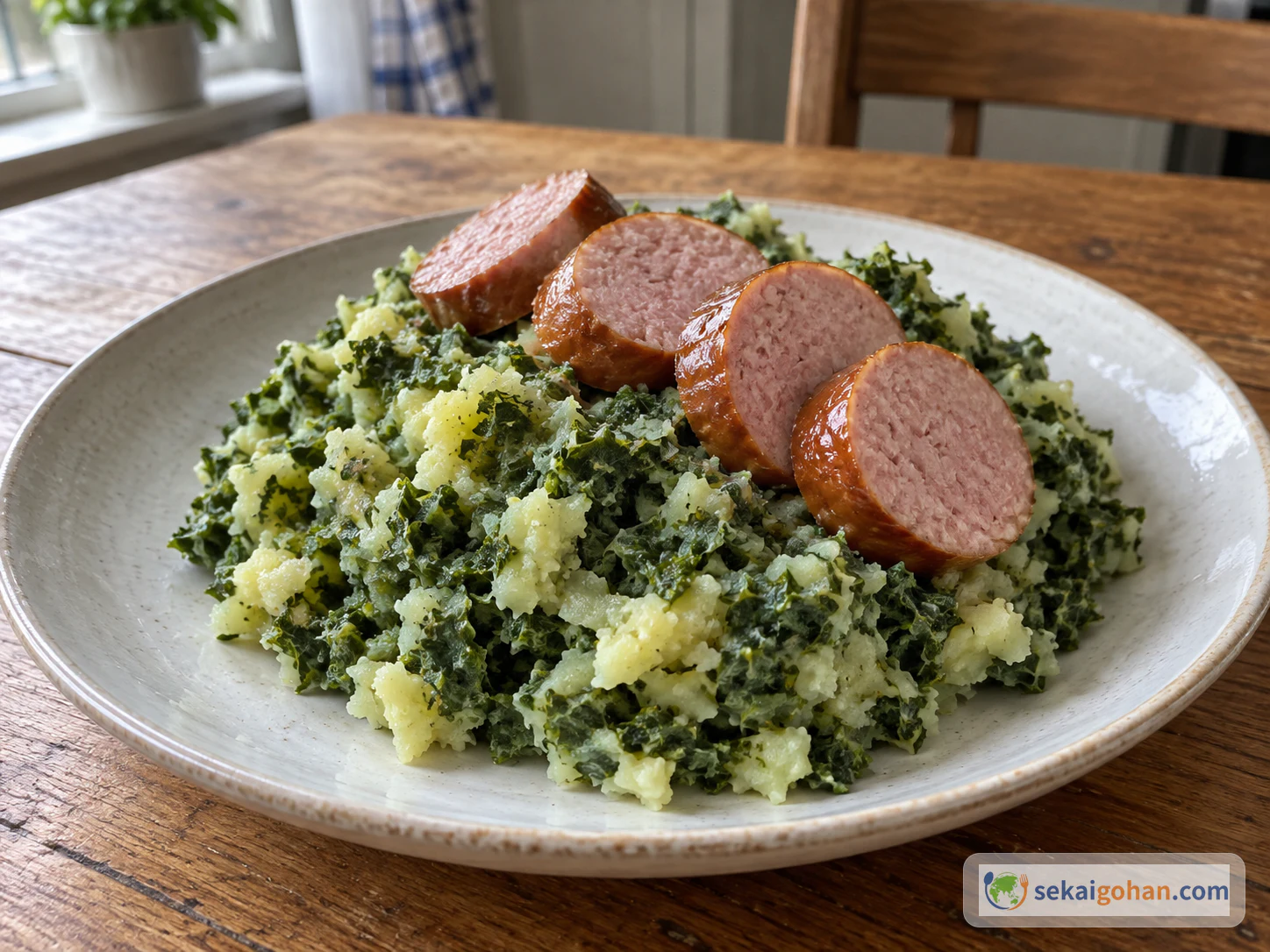
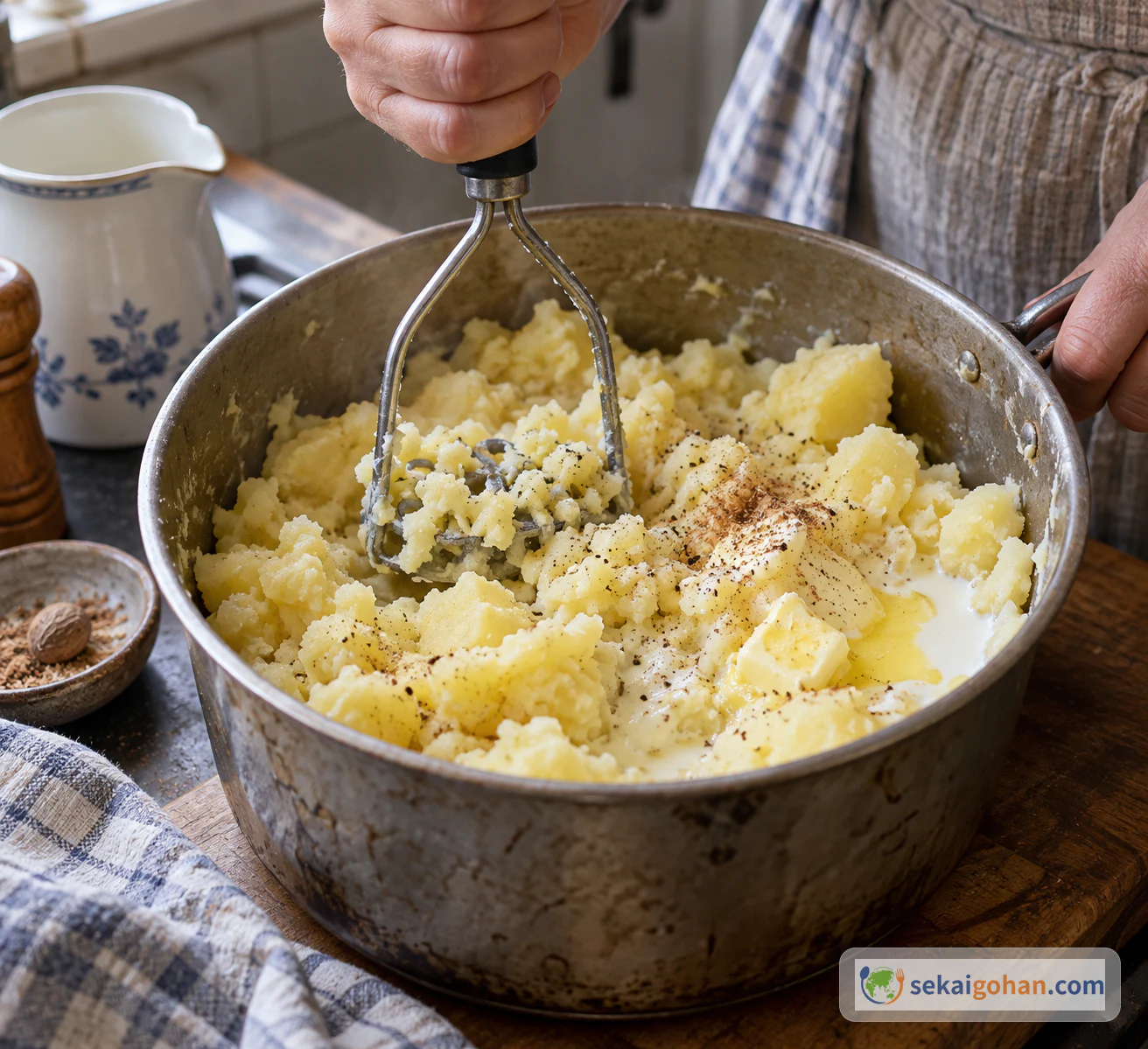
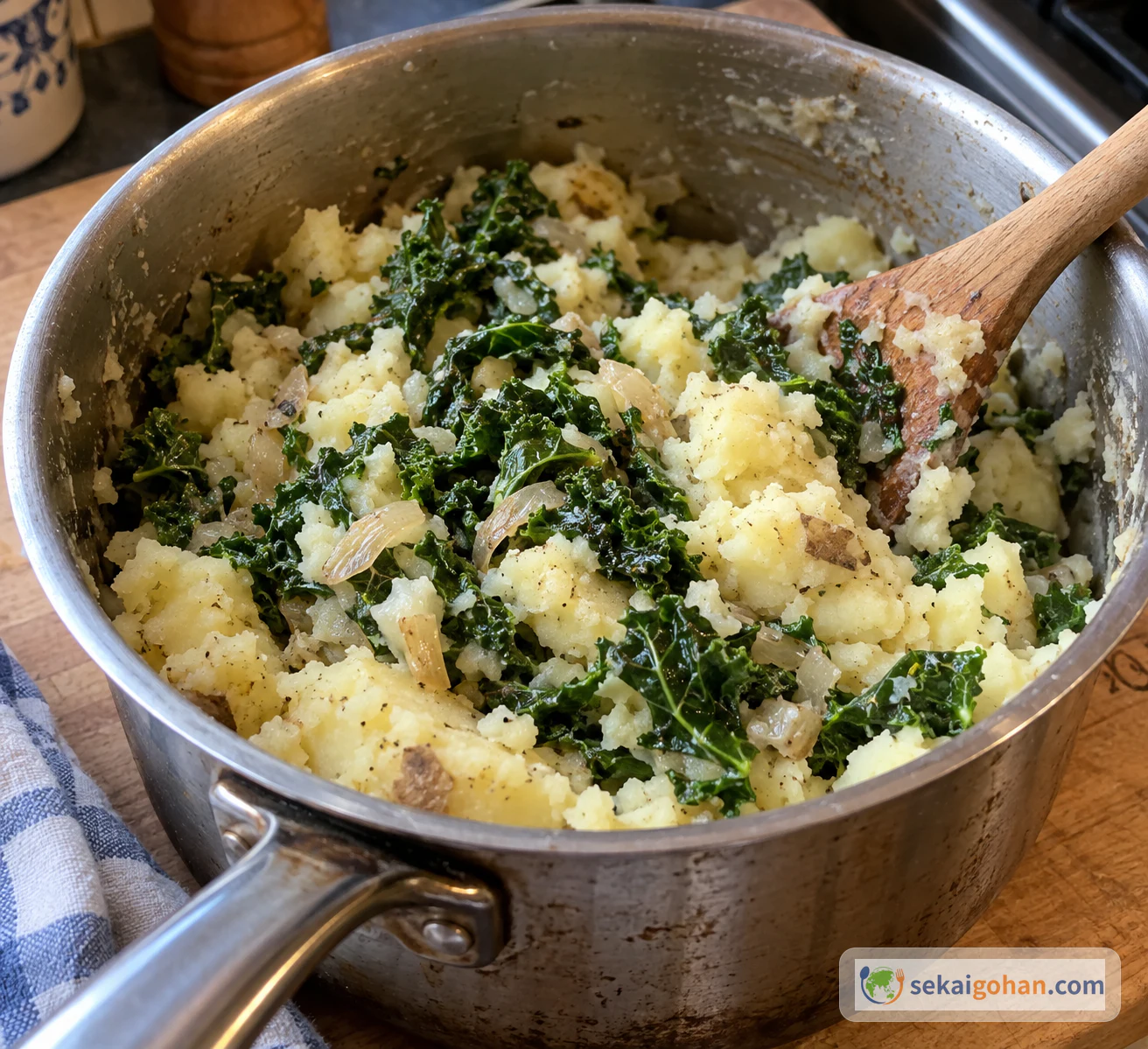
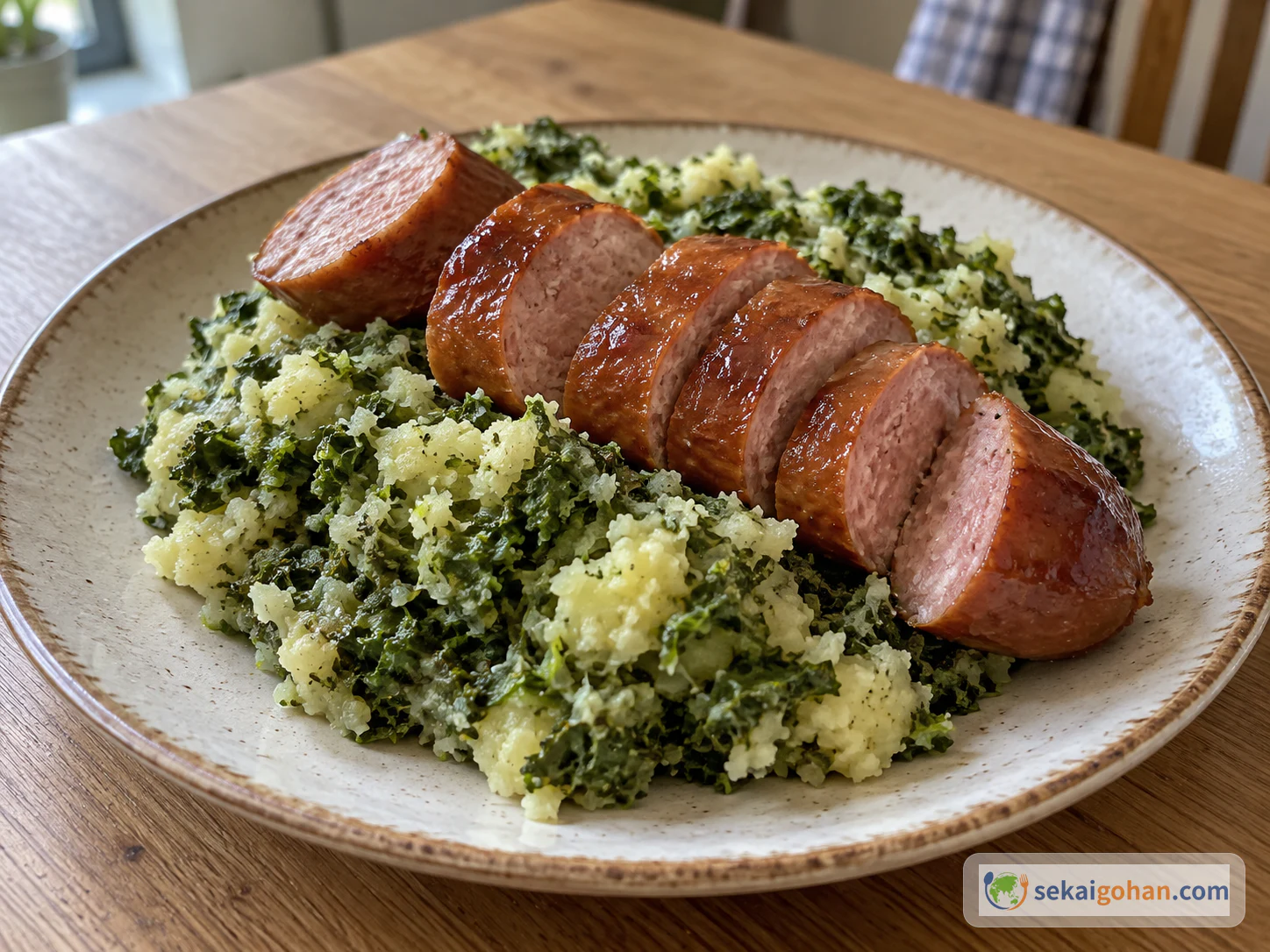
On a cold evening, a pot of potatoes comes off the heat still steaming. They're drained and mashed with warm milk and butter, and the kale softened beside them in a skillet gets folded in until tender green ribbons run all the way through. Slices of warmed smoked sausage go on top, and the whole thing comes to the table in one dish. Nothing more is needed on the plate. Stamppot is a family of comforting Dutch winter dishes, potatoes mashed together with a vegetable such as kale or sauerkraut, and the vegetable changes with the season, the region and the household. This one is boerenkoolstamppot: curly kale and floury potatoes, served with Dutch smoked sausage (rookworst).
About Boerenkoolstamppot
Stamppot means potatoes mashed together with a vegetable. Potato is the common thread, and the vegetable gives each version its name and character. Boerenkool is the Dutch name for curly kale, so boerenkoolstamppot is the kale version, and boerenkoolstamppot met rookworst is the kale version served with smoked sausage.
The Netherlands has no single national dish, and stamppot is one typical home dish among several. The Dutch evening hot meal is commonly built around potatoes, vegetables and meat, which is exactly the shape of this plate. Dutch cooking has its regional specialties and modern reinterpretations, and people still make contemporary versions of stamppot today.
Older one-pot dishes kept their ingredients recognizable; stamppot in its mashed form appeared in the twentieth century. Potatoes are paired with kale, sauerkraut, carrots, apples or pears, and in Zeeland the dish is also called prol. One kitchen explanation for mashing potatoes with kale is that potatoes were inexpensive. It's a good story, though not settled history.
Don't confuse the kale version with hutspot, a separate stamppot made with carrots and onions. Hutspot is tied to the memory of Leiden's relief on 3 October 1574, and that history belongs to hutspot alone. For more dishes from the same table, see our recipes from the Netherlands.
Ingredients: Serves 4
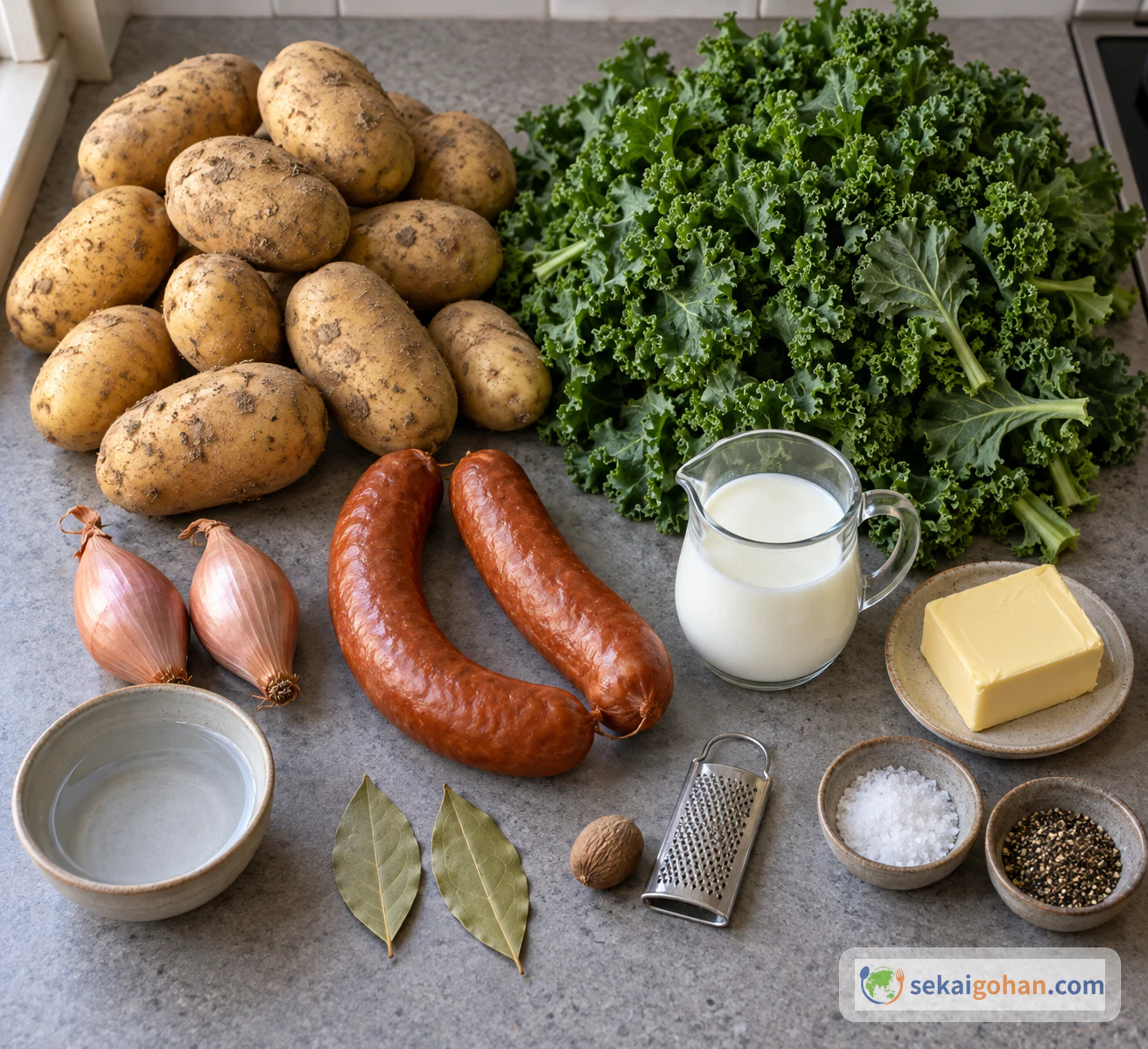
Milk and butter make this a dairy-containing dish. Ingredients and allergens in smoked sausage differ by product, so check the label. Check also whether your sausage is already cooked and warm it according to the package directions; do not treat raw sausage as safe just by warming it the same way.
Equipment
- Large pot for boiling the potatoes
- Colander
- Small saucepan for warming the milk
- Skillet for the shallots and kale
- Potato masher (a fork works, but a masher makes 3.25 lb (1.5 kg) of potatoes much less work)
- Wooden spoon
- Knife and cutting board
- Pan or other means of warming the sausage, as the package directs
Choosing Potatoes, Kale and Sausage for Stamppot
Potatoes. Use floury (starchy) potatoes, the kind that fall apart when mashed. Wetter potatoes can leave the mash loose once the milk goes in.
Kale. Curly kale is the vegetable of boerenkoolstamppot. Kale sold outside the Netherlands can differ in leaf thickness and curl, so adjust how thinly you cut it and how long you cook it until tender, but keep the full 1.75 lb (750 g). A different vegetable makes a different stamppot (see the variations below).
Shallots. If you can't find shallots, an onion can stand in, though its flavor differs.
Rookworst. Another smoked sausage will work on the plate if you can't find Dutch rookworst, but the meat, spicing, smokiness and saltiness will change the result. Whatever you buy, check whether it is pre-cooked and follow its package directions for heating.
How to Make Boerenkoolstamppot
The times below belong to individual steps. The kale and shallots can cook while the potatoes boil, and sausage warming depends on the product, so we do not give a single total time.
Stamppot Troubleshooting
| Problem | Likely cause | What to do |
|---|---|---|
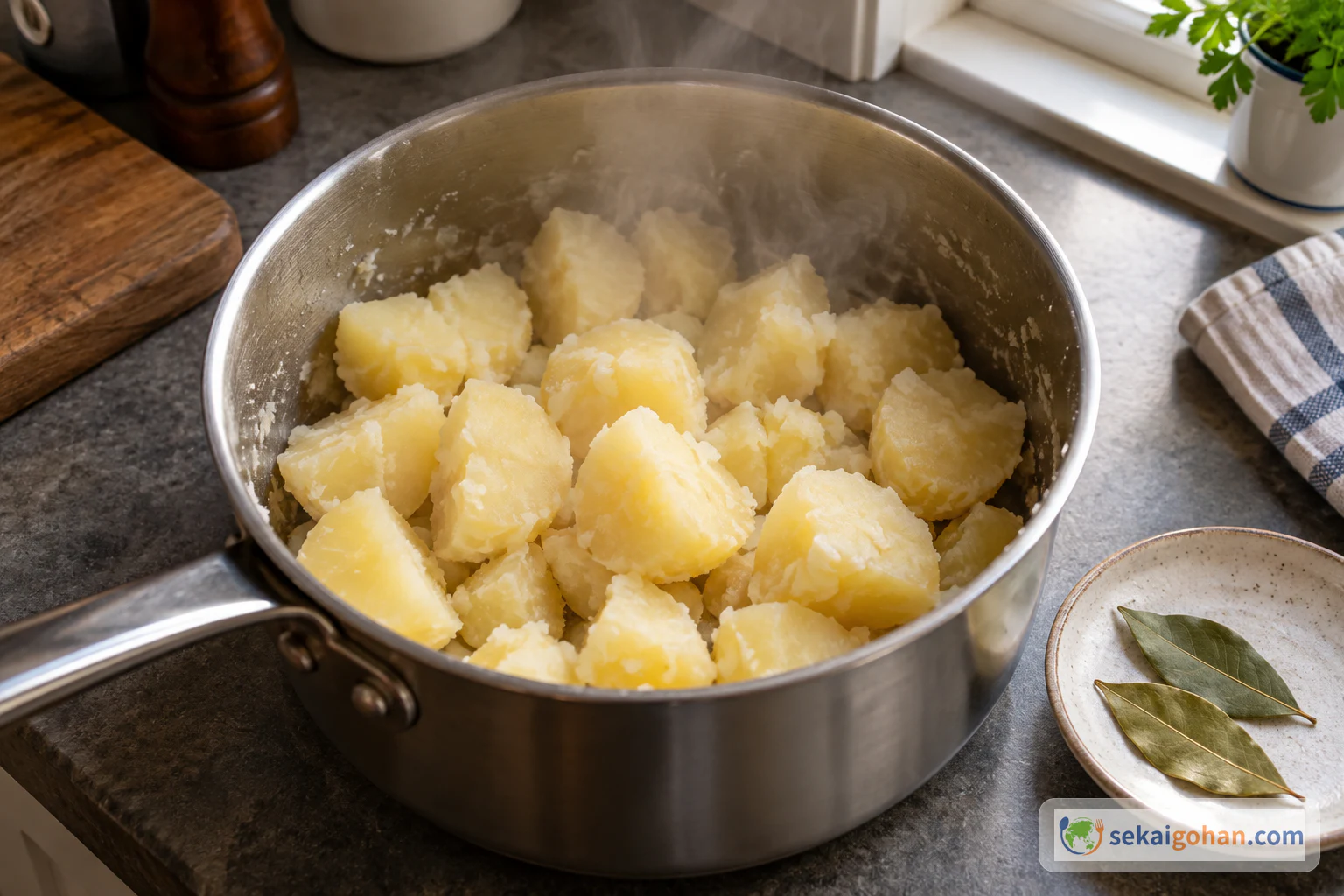
| The mash is loose or watery | Potatoes not drained and shaken dry, or a wetter potato variety | Drain thoroughly and shake the pot dry before adding milk |
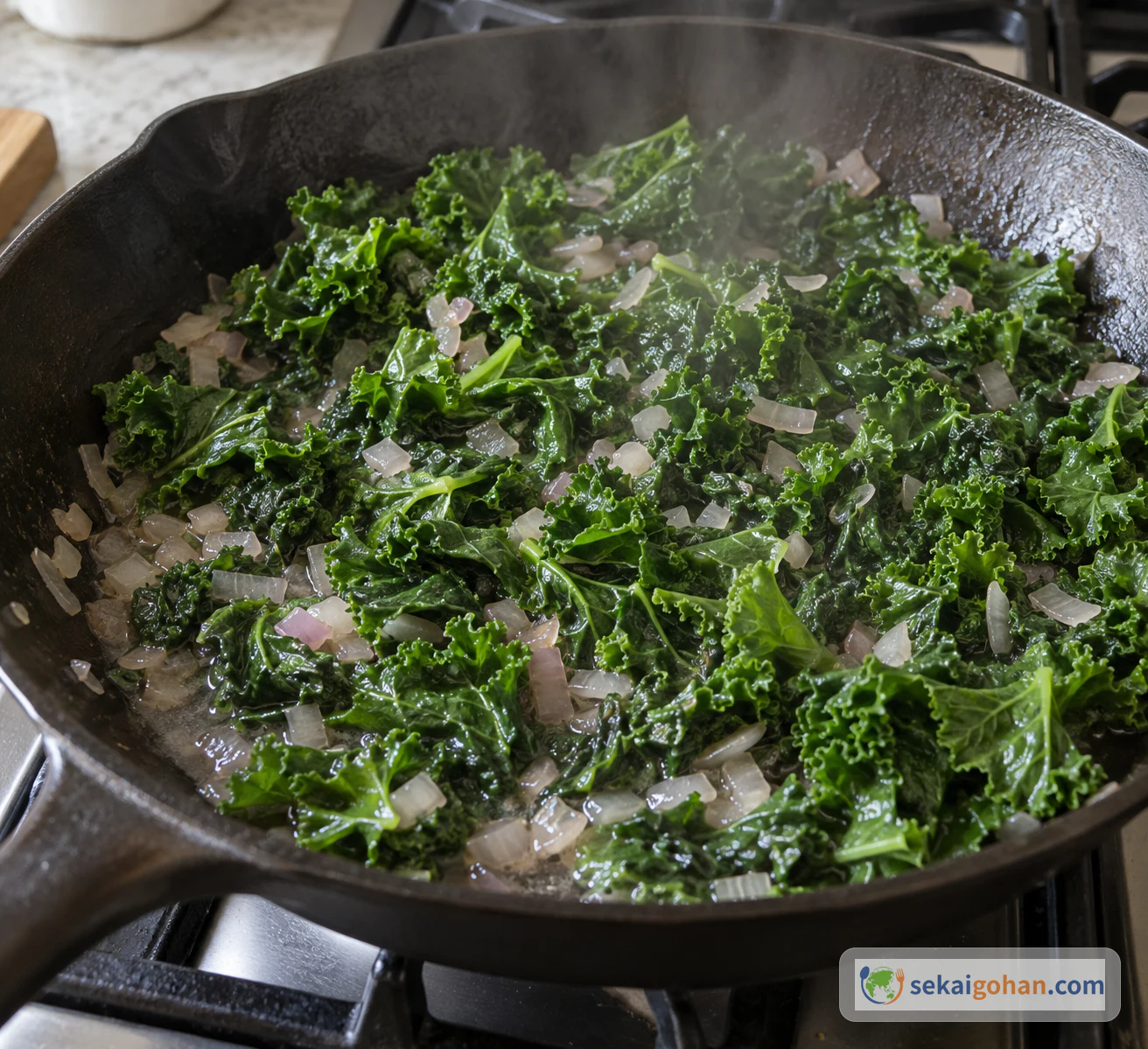
| The kale is still tough or coarse | Strips cut too wide | Cut the kale into thin strips; cook until tender before mixing it in |
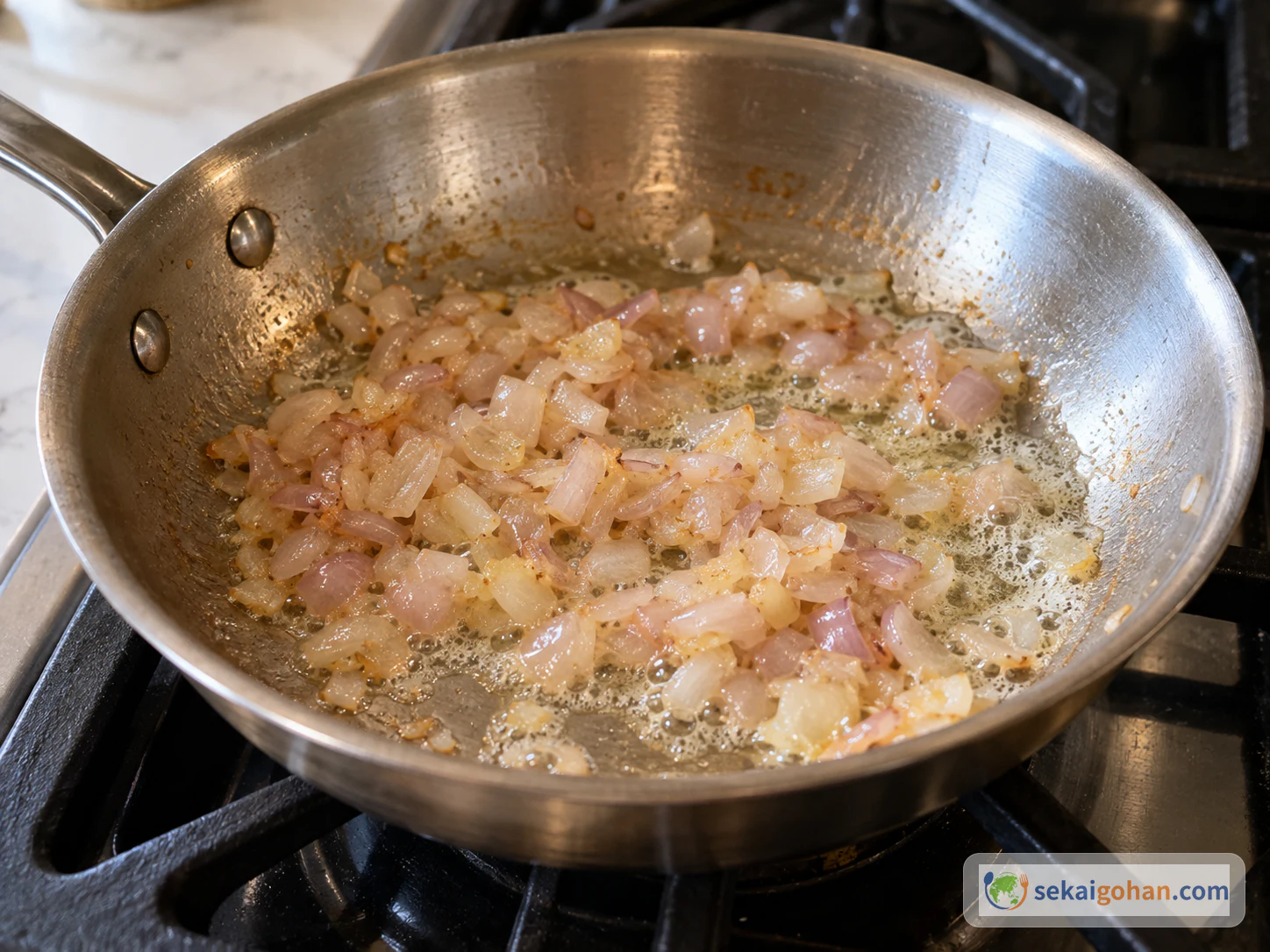
| The shallots taste bitter or burnt | Heat too high | Sauté gently for about 2 minutes, only until translucent and lightly golden |
| The green is patchy | Kale not folded through evenly | Keep folding until the kale is spread through the whole pot |
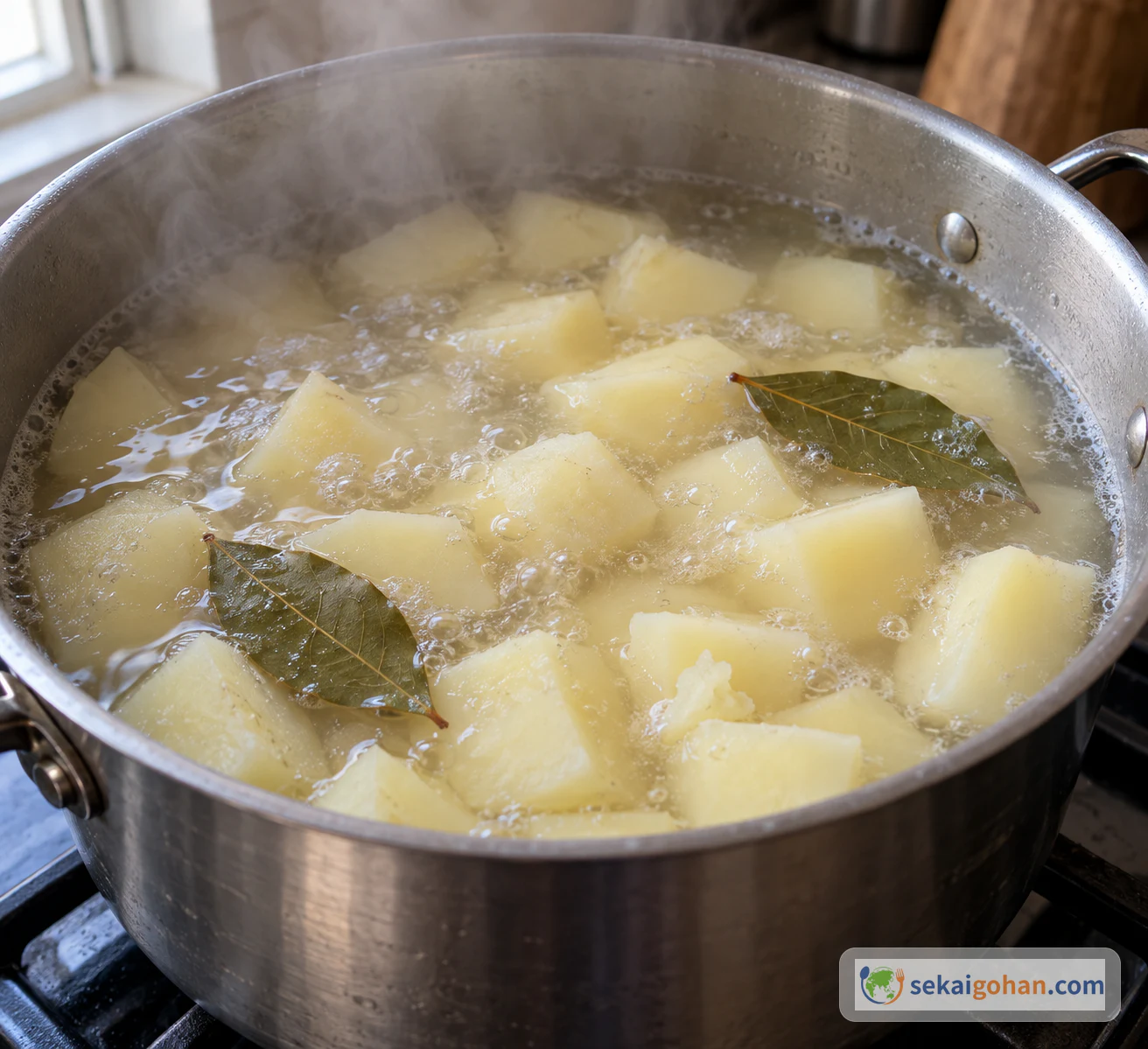
| A bay leaf turns up on the plate | Leaves not removed after draining | Remove both bay leaves in step 2 and check before mashing |
| Unsure whether the sausage is safe | Product differences | Check whether it is pre-cooked and follow the package's heating directions |
Seasoning builds up from several places: the salted boiling water, the mash, the kale and the sausage. Season in stages and taste near the end rather than salting heavily at any one point.
Stamppot Variations
- Cut the kale very fine. Even finer strips give a softer mouthfeel, while large pieces can stay tough in a short cook.
- Choose your mash texture. Leave some lumps with the masher, or mash more thoroughly. Skip the blender, though; it can make potatoes gluey.
- Add bacon. Boerenkoolstamppot is made with or without bacon. Bacon brings salt and fat, so adjust the seasoning if you add it.
- Change the vegetable, change the dish. Sauerkraut, carrots and onions (as in hutspot), and apples or pears make other kinds of stamppot. Treat them as separate dishes rather than kale substitutes.
Frequently Asked Questions
How should I store and reheat leftovers?
Refrigerate leftovers promptly and reheat them until steaming hot all the way through.
Is it dairy-free?
No. Milk and butter go into the mash and the shallots, and sausages vary in ingredients and allergens, so check labels if you're cooking for someone with allergies.