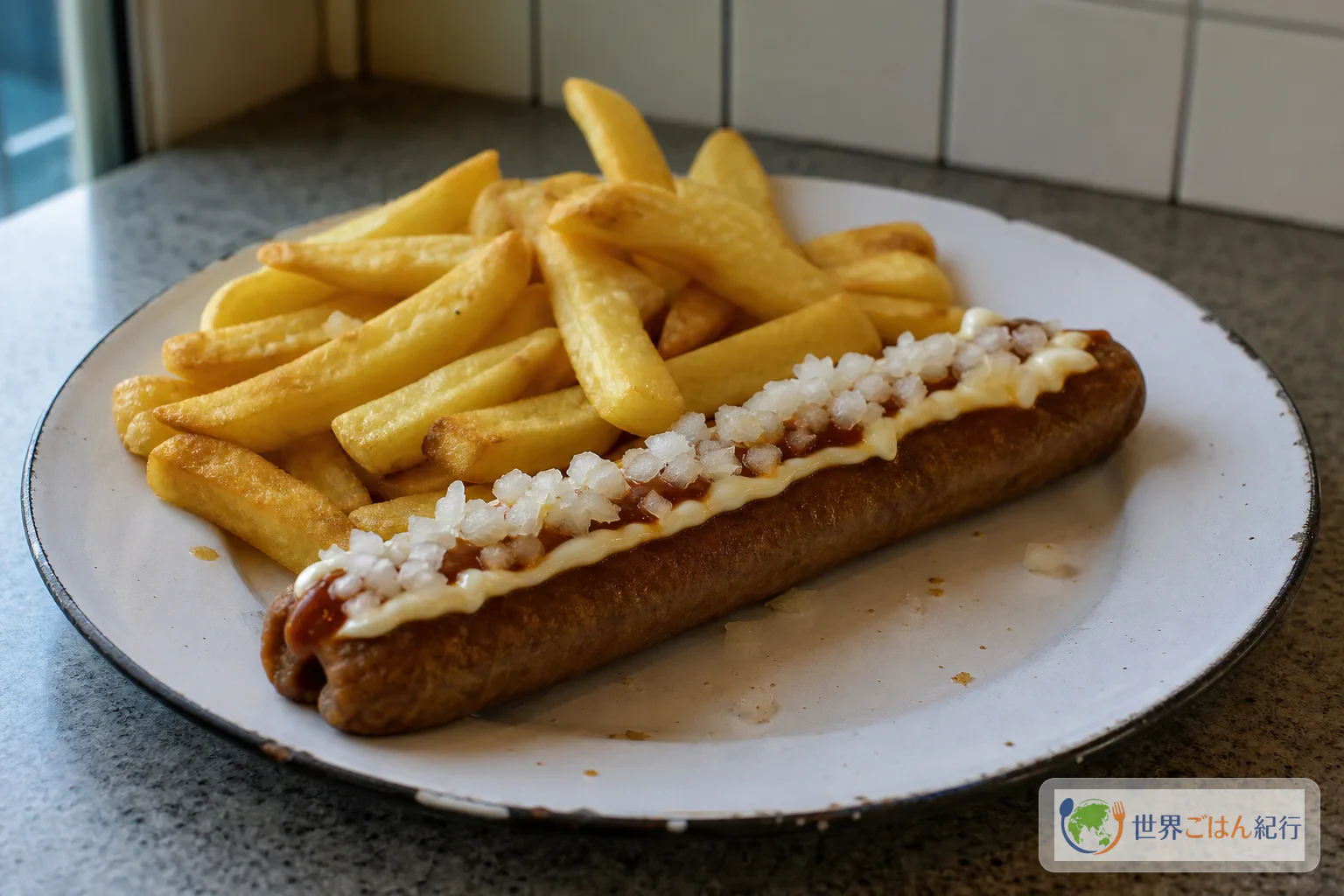
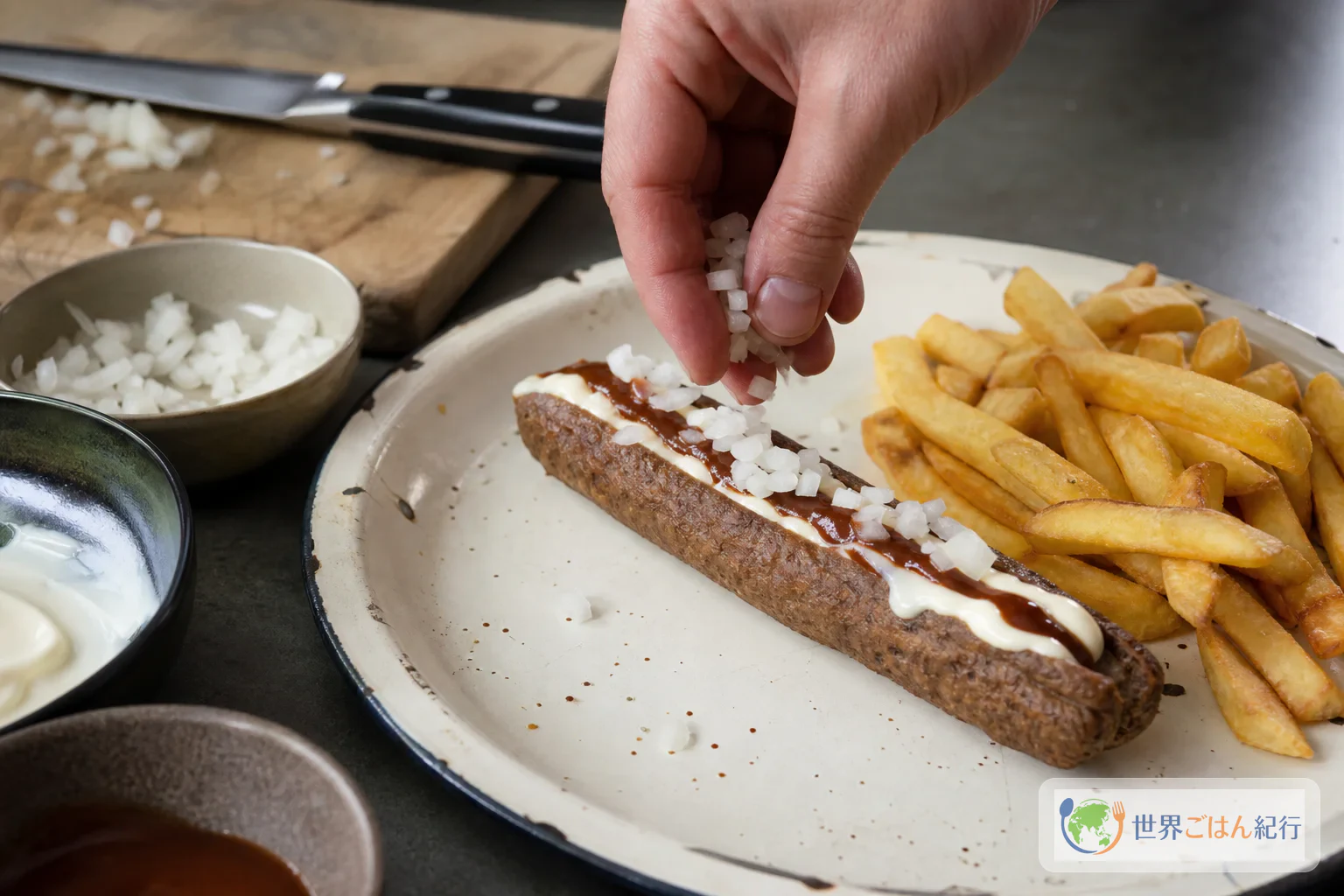
Order a frikandel speciaal at a Dutch snack bar and it arrives slit lengthwise, with white sauce, curry ketchup and chopped onion settled into the groove. The surface of the hot meat is toasty and the onion is cold and sharp, so eaten alongside french fries, that contrast tightens every bite. Frikandel itself is finely ground beef, pork, chicken and other meat, shaped into a rod without a casing, cooked through and then fried. It looks like a sausage, but the inside is smooth and finely bound rather than coarse, with a thin toasty layer only on the surface.
Frikandel and Dutch snack-bar culture
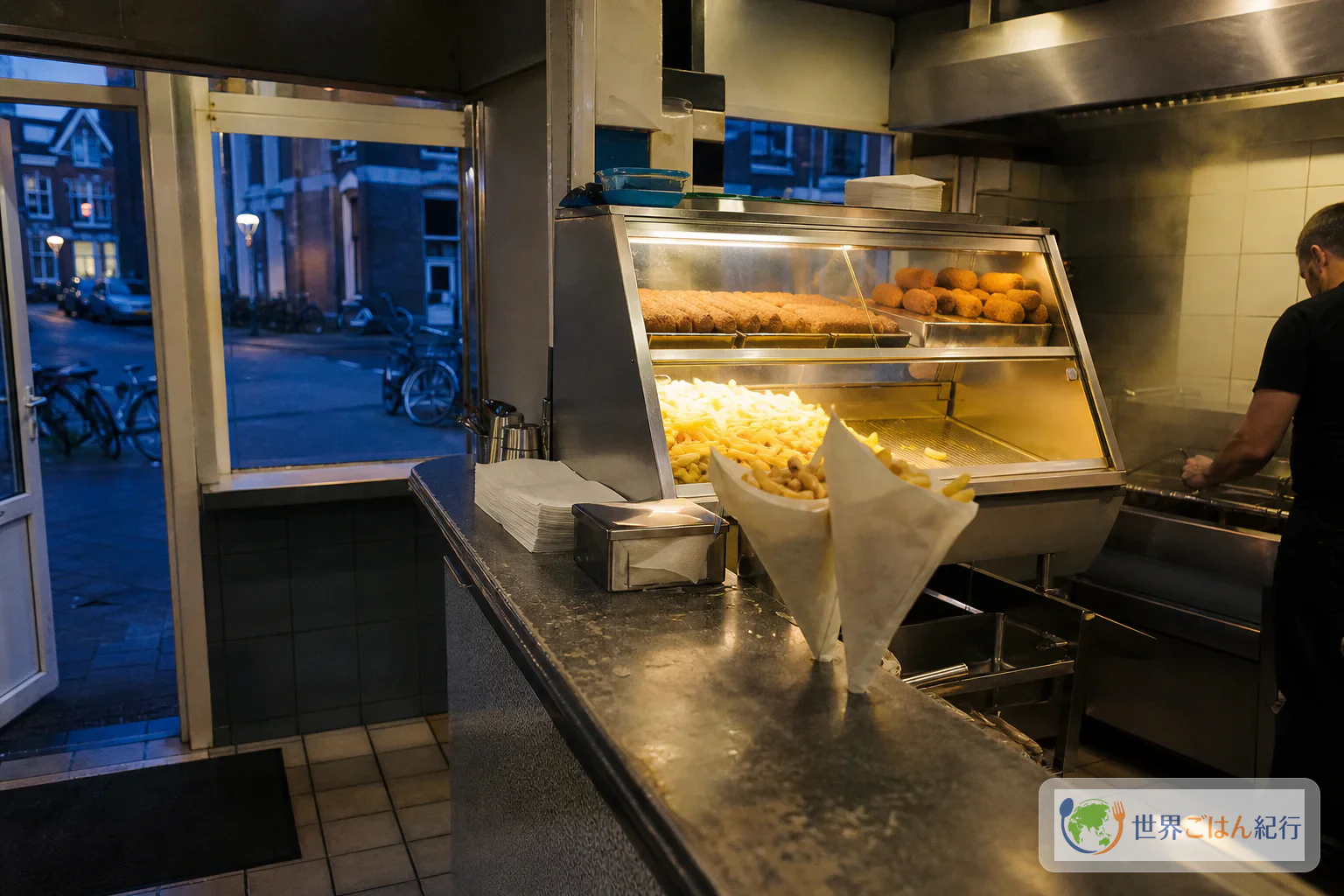
A young classic from the snack bar
Frikandel is a relatively new classic that grew up alongside the town's fried-food shops. In 1954, Gerrit de Vries of Dordrecht shaped meatballs into a rod, and in 1958 Jan Bekkers refined the rough rod into a smooth form. The name took shape in the late 1950s, and an effort to sell standard-sized meatballs is what led to today's long form.
It was never a dish for lingering in a restaurant. Taking fried food home from the neighborhood snack bar is a habit at least 70 years old, and takeaway makes up 70 to 80 percent of sales at some shops. You collect it in a paper bag on the way home from work and share it with fries at the table.
Ordering a frikandel speciaal
Order just frikandel and you get the fried rod. The speciaal spread in the mid-1970s, when the combination of fritessaus or mayonnaise, chopped onion and ketchup became standard; curry ketchup later became the norm. The lengthwise groove works as a small dish, so every piece of meat comes up with sauce and onion.
In Amsterdam, the automatiek is part of snack culture too: a vending wall where you take a hot snack from a small window. A frikandel speciaal there comes filled with mayonnaise, curry sauce or ketchup, and chopped onion.
Names and similar dishes
The long fried snack is spelled frikandel with an n. The older word for a meatball or meat patty is frikadel, without one, and in parts of Belgium the long fried meat is called curryworst. Knowing both spellings helps when you search for the product.
The curry in curryworst is tied to the finishing sauce; the meat mixture itself isn't yellow or curry-flavored. Romania's mititei sounds similar, but it is made of coarsely ground meat grilled over charcoal, so the texture and cooking are different.
Ingredients and shopping: adjust the meat blend for home
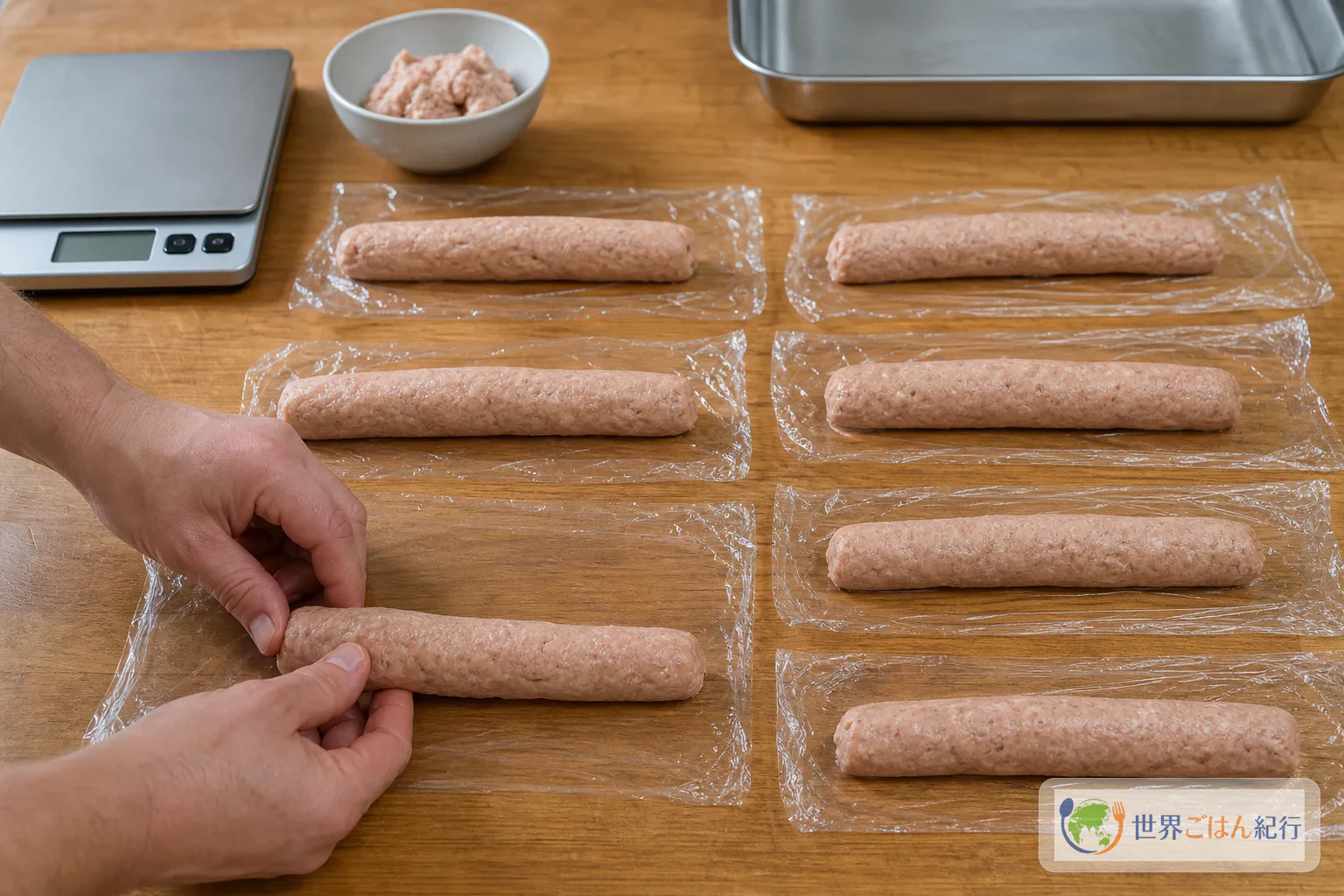
This quantity makes eight frikandel, each 7 inches (17 to 18 cm) long and about 3.25 oz (90 g). Two per person makes a main dish for 4. Served lightly with fries, one each would feed 8. They are slightly larger than the roughly 2.75 oz (75 g) in a typical home recipe, but the size is easy to divide as a main course at home.
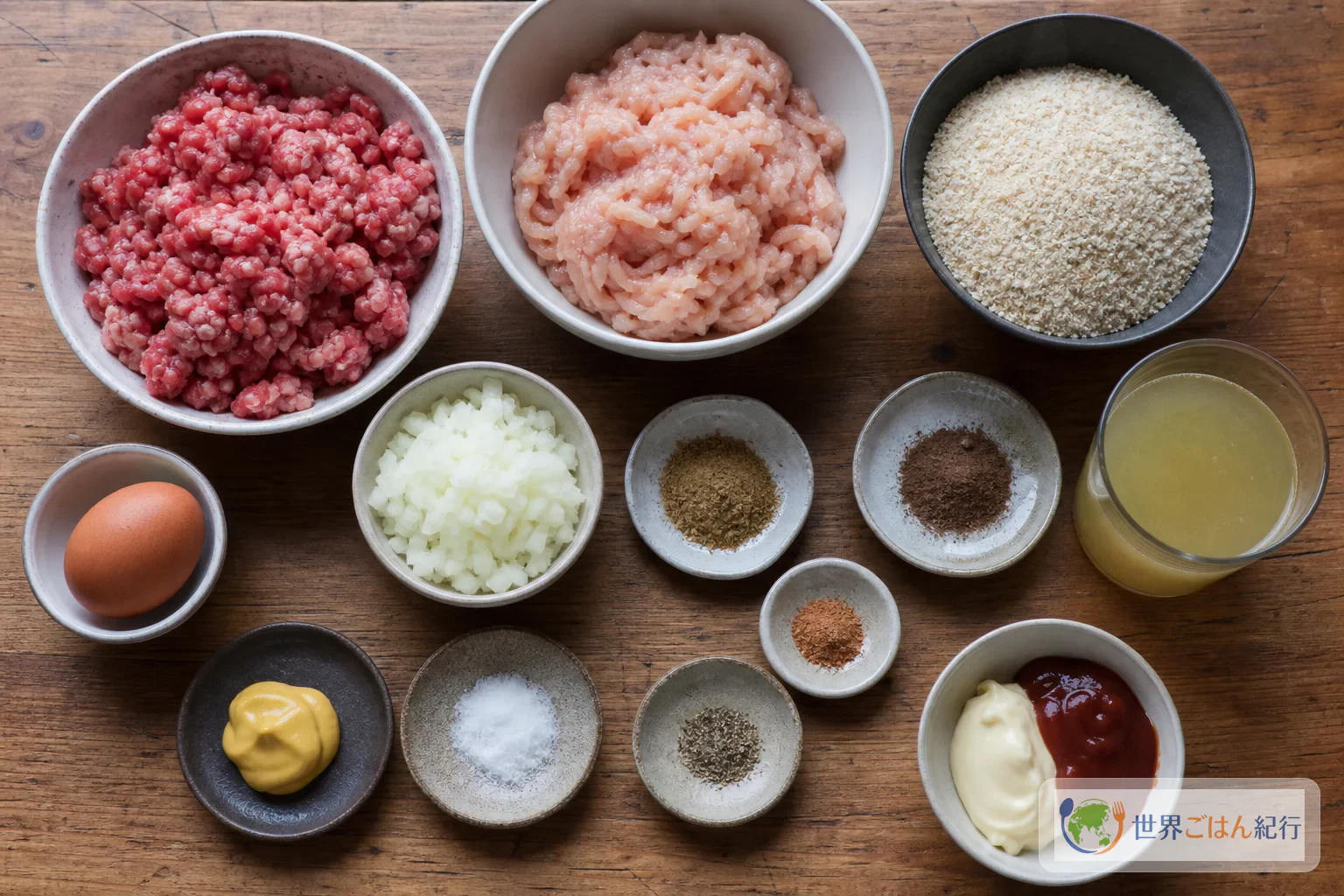
Contains egg, wheat, beef, pork, chicken, mustard and soy. Check the ingredients of the sauces as well. Check the wrap's labeling for heated use and its heat-resistance temperature. Do not use a product that prohibits heating with fatty foods or that isn't intended for poaching in a pot; switch to something suited to the purpose, such as a heat-safe bag or cooking film.
What to buy where
Meat, eggs, onions and breadcrumbs are easy to find at a neighborhood store. What's worth hunting for elsewhere, such as at a spice shop or online, are the spices that define the meat's aroma. A probe thermometer makes checking easier, but if you would be buying it only for this recipe, get the meat and spices first.
Ground coriander isn't a seasoning to make the meat taste of curry. Its role is to leave a small, dry, citrus-like scent and pull together the sweetness of the pork and chicken. It is worth buying if you plan to use it not just for these eight but also in hamburger patties, tsukune and bean dishes. If you already have a fragrant coriander at home, just measure 1 1/2 tsp and use it.
Allspice gives you the scent of nutmeg, cinnamon and cloves in one jar. This recipe uses only 1 g, so buy it for frikandel if you also make meatballs, meatloaf and stews. Skip it if you will make this dish only once and already have nutmeg, cinnamon and cloves: mixing small amounts of those three stands in for it, though the aroma is a little less round.
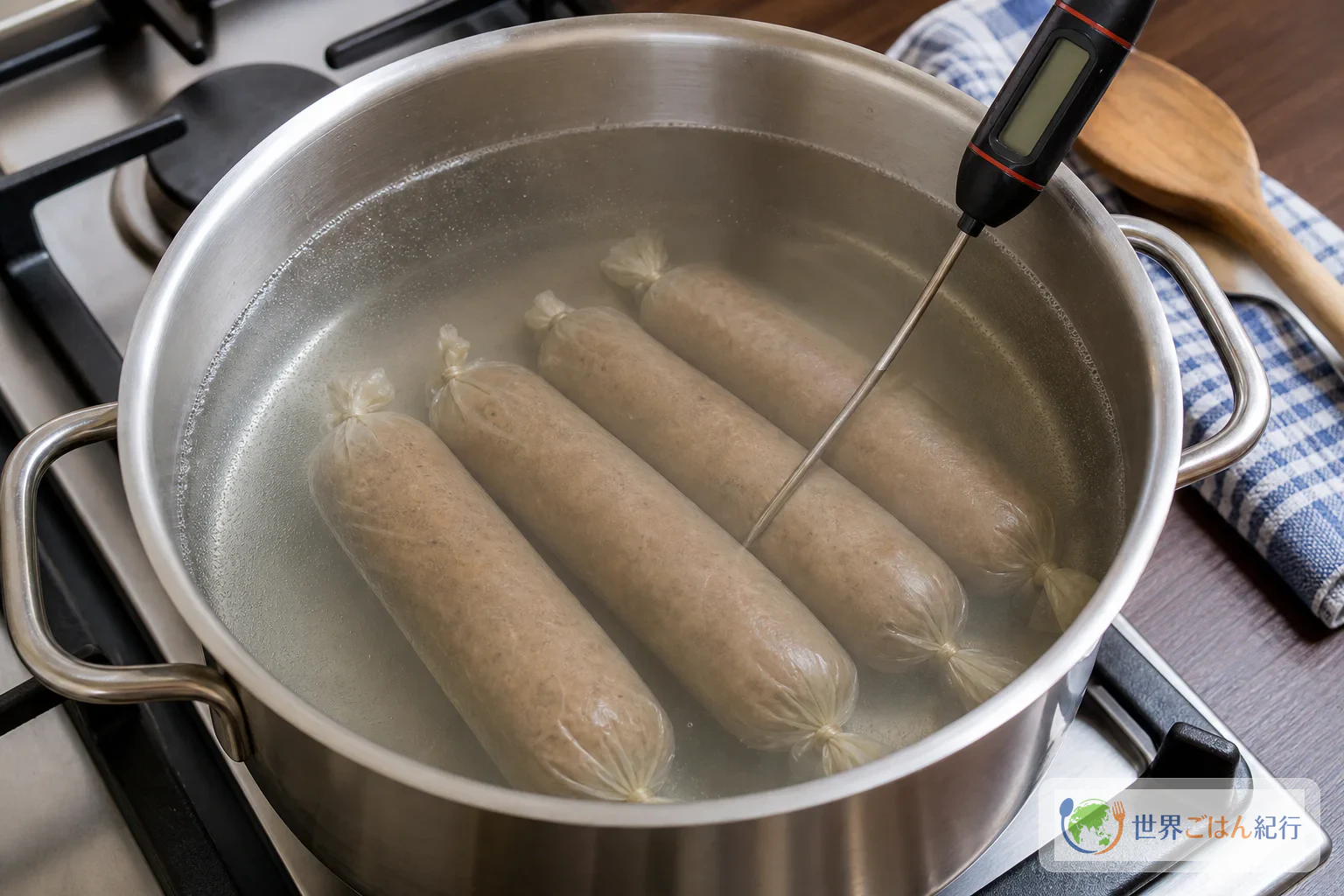
After poaching, the surface looks whitish, and you can't tell from appearance whether the center is cooked. Because it contains chicken and ground meat, the first time insert a thermometer into the center of one and confirm 167°F (75°C) or higher.
Choosing meat and spices for frikandel
Any mix of beef, pork and chicken works. The easiest to find is 10.5 oz (300 g) ground beef-pork blend and 9 oz (250 g) ground chicken thigh. Pork alone is tender and rich in fat, while chicken alone gives a mild, firm texture. Whichever meat you use, keep it cold and finely ground.
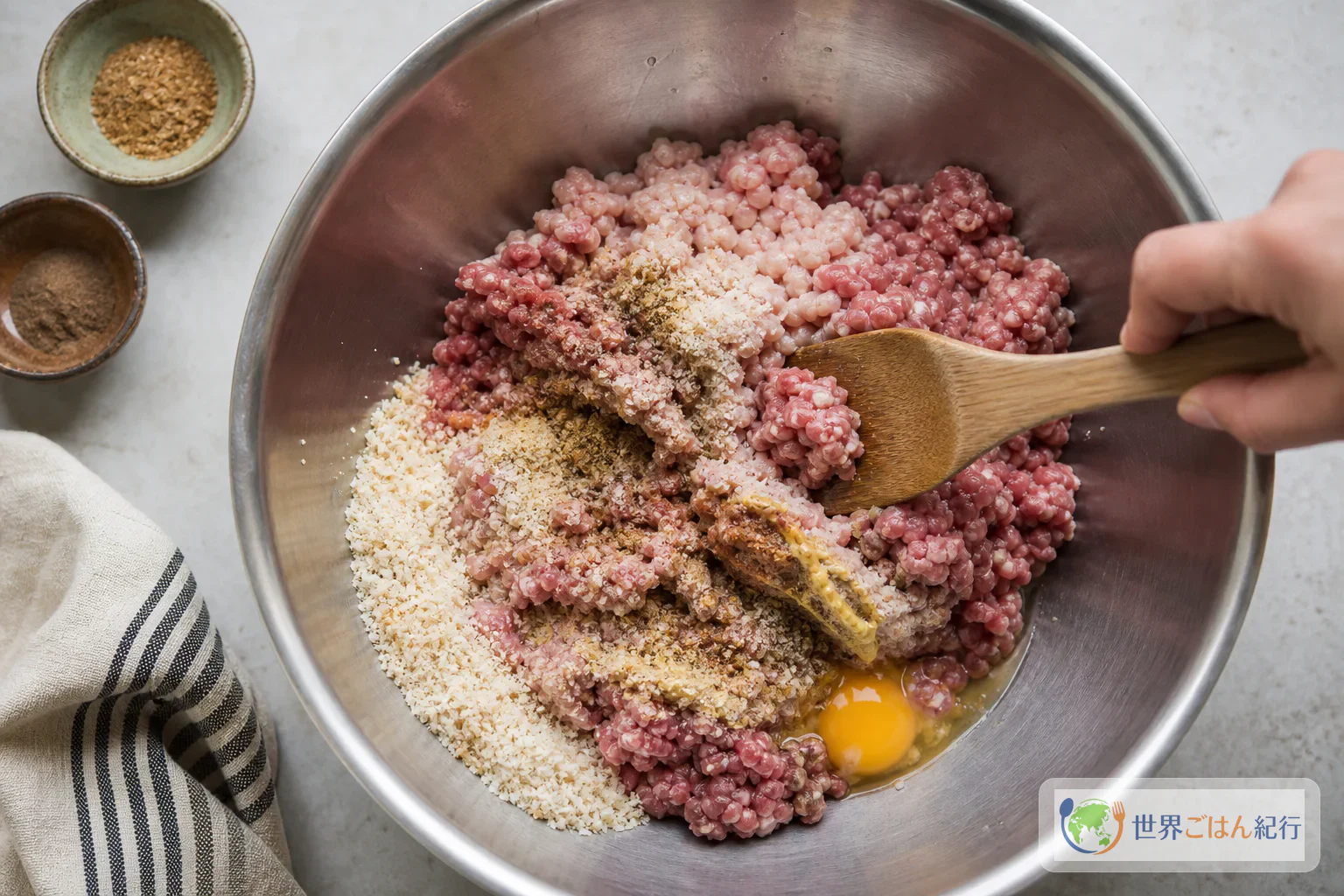
Build the meat's aroma with coriander, nutmeg and allspice, and put the curry powder in the ketchup. That is what tells the meat and the sauce apart, far more than a lot of curry powder in the mixture would.
Method: chill the meat, process it finely, and poach first
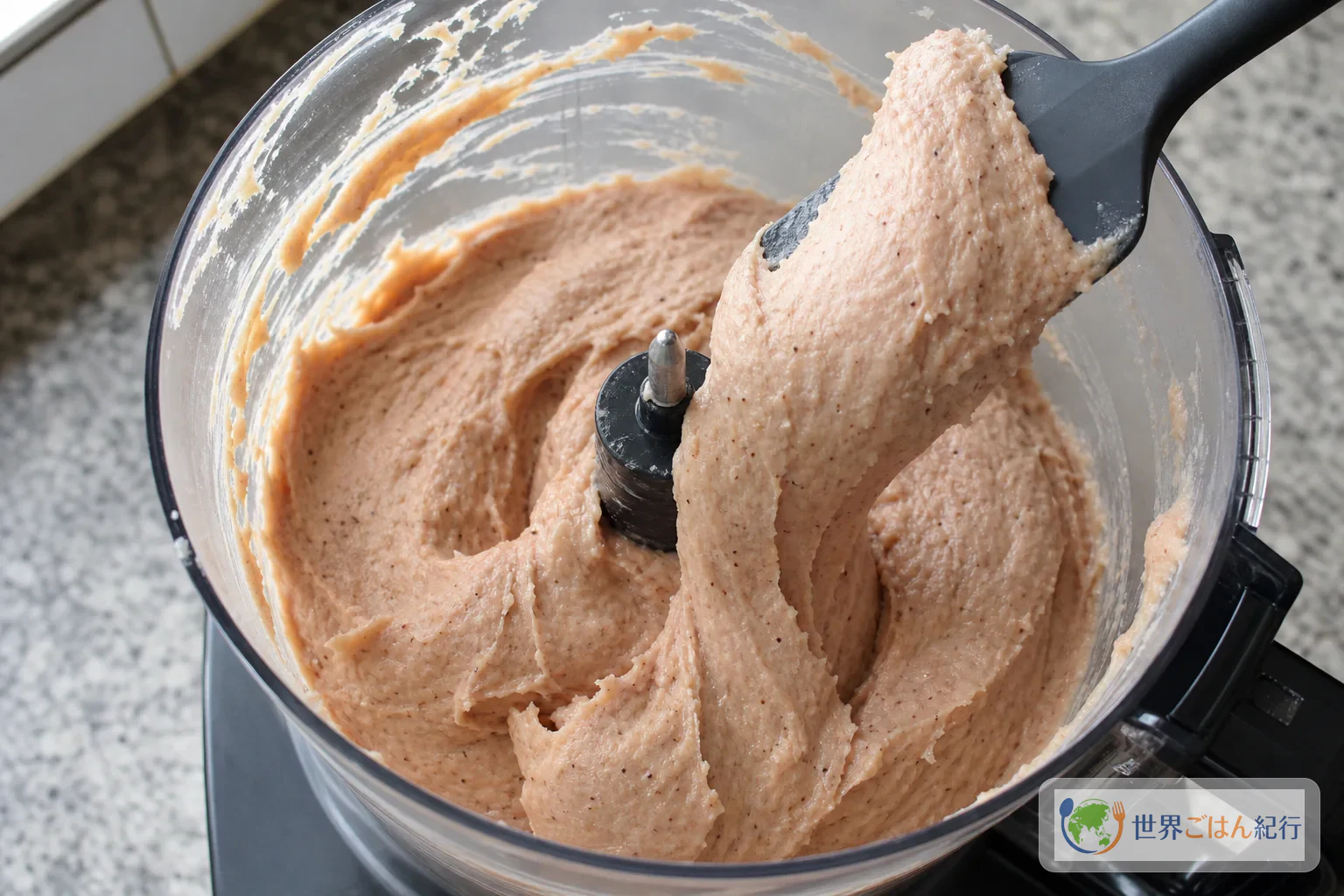
Process the mixture at room temperature and the fat loosens, leaving holes in the poached cross-section. Chill the food processor's blade, the bowl and the meat first, and keep the meat cold until step 4. That way it is less likely to split, even without a casing.
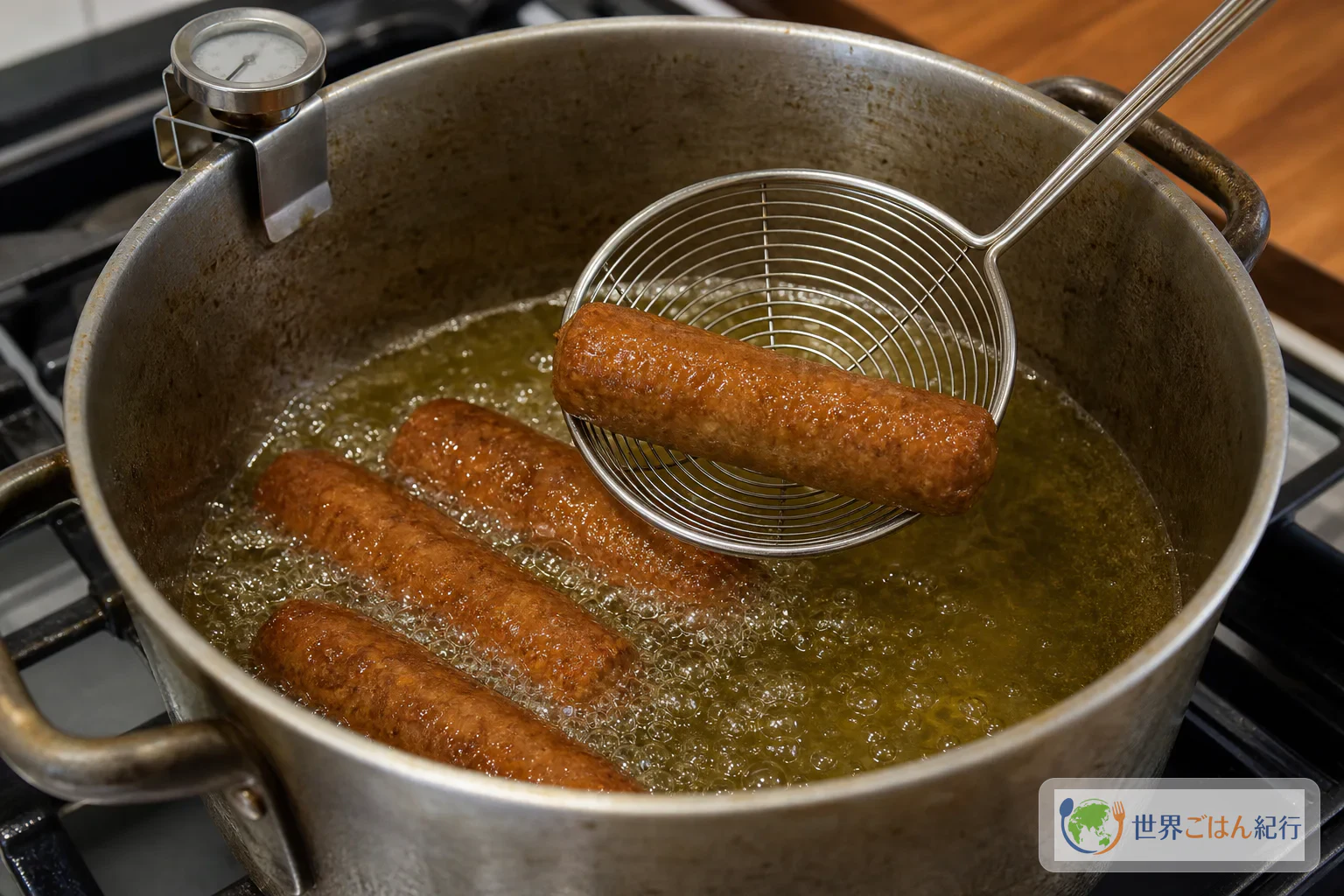
Keep the oil at 350°F (175°C) or less (frying guidance), and don't add too much at once. Don't fill the pot more than half with oil, blot moisture off the meat and fry 2 at a time. Because it contains ground chicken, confirm 167°F (75°C) or higher at the center. This is above the 165°F (74°C) safe minimum for poultry, so it is an easy standard to remember at home. Never pour water on a fire. Turn off the heat, cover with a lid if possible, don't try to move it, and use a fire extinguisher or similar.
Frikandel failures and fixes
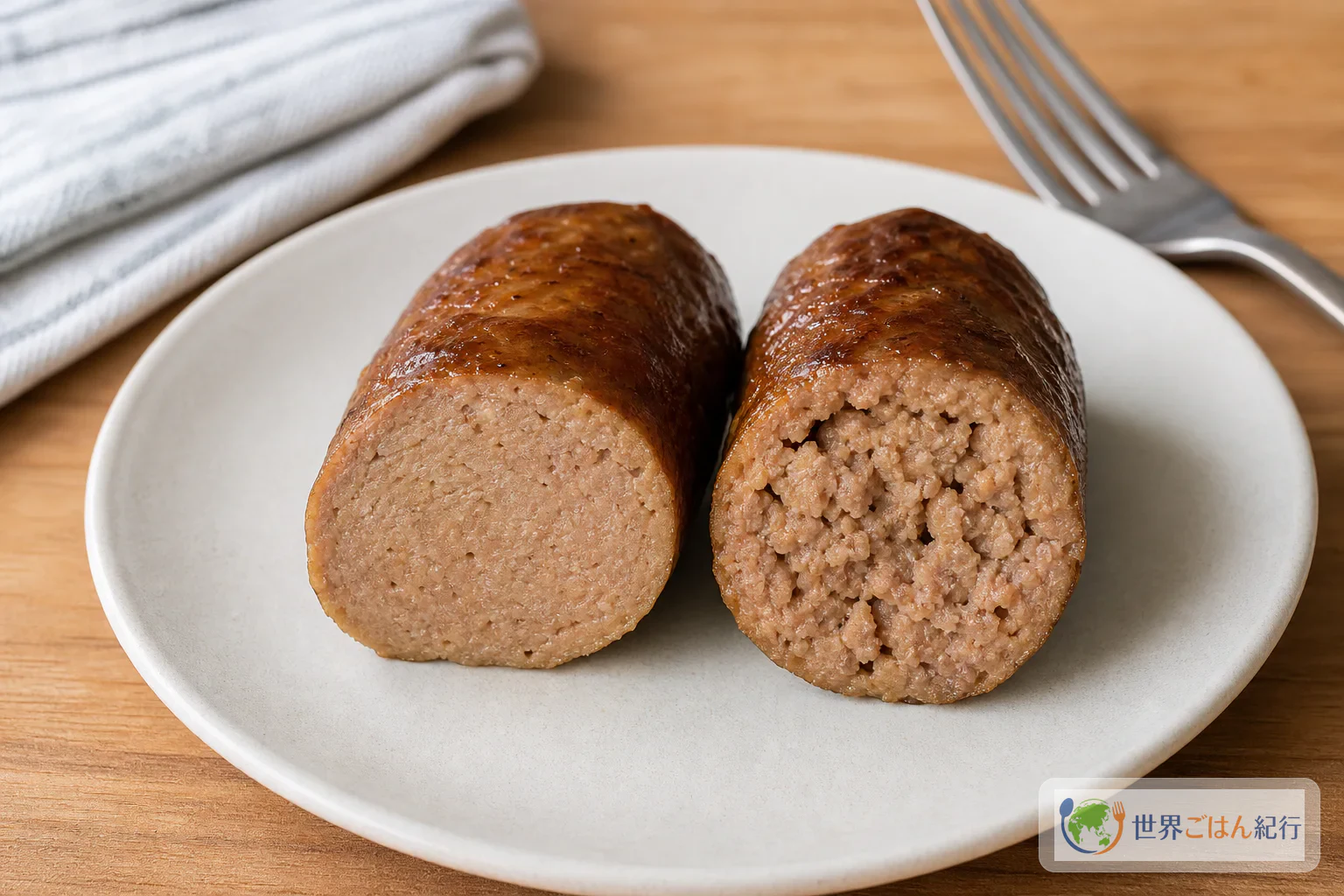
Most trouble comes from letting the meat mixture warm up. Fry shaped ground meat as is and the surface splits or the center lags behind, which is why the shape and doneness are set in the poach. After that, the final frying is a short step that adds color and aroma rather than cooking the meat.
Failures show in the cross-section more than in the meat blend. A coarse, crumbly cross-section means the meat wasn't processed long enough or cold enough, and a series of small cavities means air was trapped during shaping.
| What happened | Main cause | What to fix next |
|---|---|---|
| Cross-section is coarse like a hamburger patty | Not finely processed, meat is warm | Chill the meat and blade 10 minutes and process 10 seconds at a time |
| Long cracks on the surface | Air trapped in shaping, boiling poach | Wrap tightly and lower the water to 194°F (85 to 90°C) |
| Shrinks thin after poaching | Too lean, too little moisture | Use chicken thigh rather than breast and divide the 3 tbsp (45 ml) ice water into 3 additions |
| Greasy after frying | Oil too cool, too many at once | Bring back to 350°F (170°C) and fry 2 at a time |
| Dark outside, lukewarm inside | Under-poached, oil too hot | Confirm 167°F (75°C) at the center when poaching and keep oil at 350°F (175°C) or less |
| Spices smell sweet like pastry | Too much allspice or nutmeg | Cap at 1 g allspice and 0.5 g nutmeg |
If the mixture is too loose to shape into a rod, rest it in the refrigerator for 20 minutes first. Only if it still spreads, add 5 g breadcrumbs and mix for 30 seconds before shaping. More crumbs steady the shape, but they make the fried frikandel taste dry.
Serving and storing frikandel
Make-ahead and storage
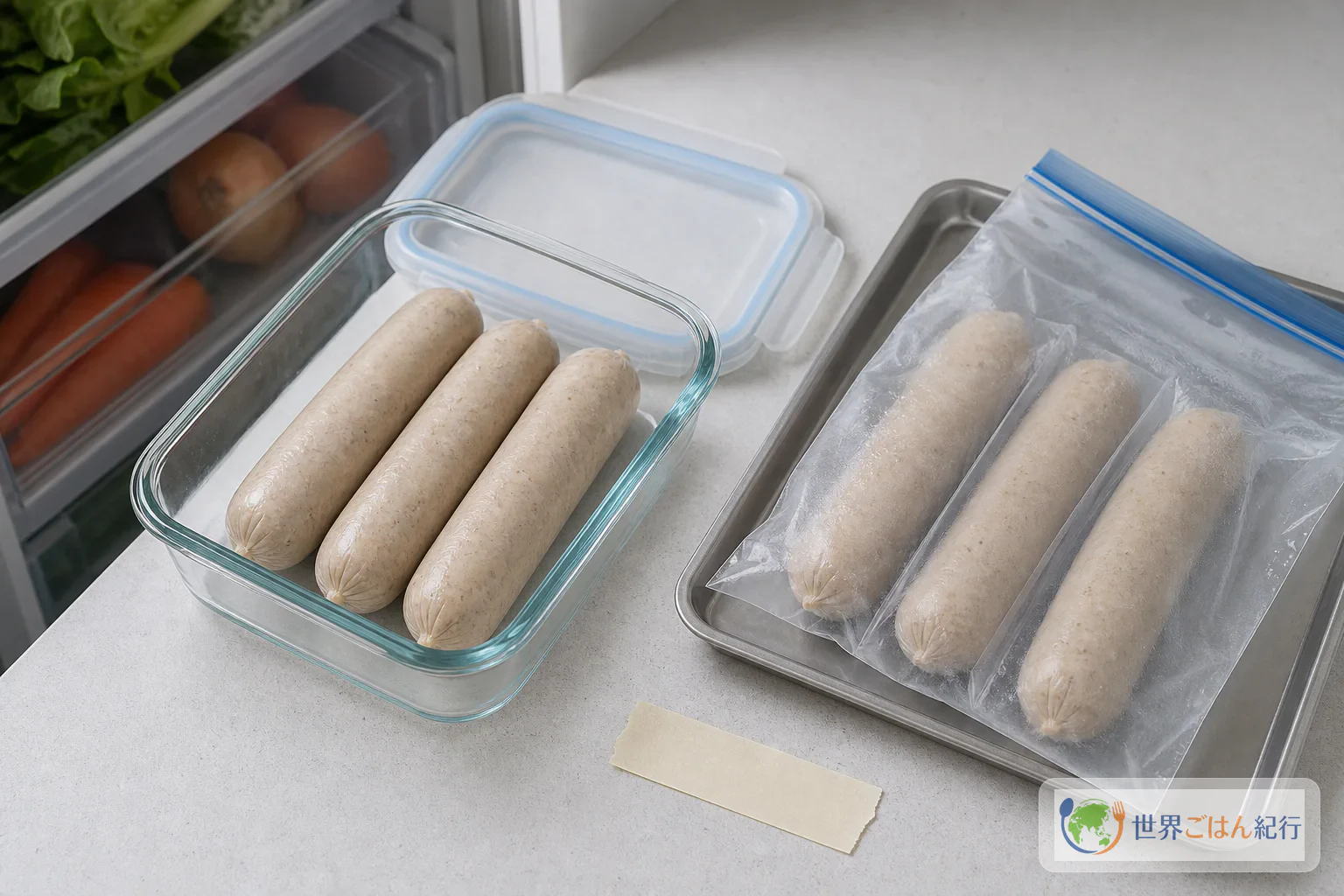
For make-ahead, stop after the poach in step 4. Once they are cool enough, remove the wrap and blot the surface dry. In a clean container they keep 2 days refrigerated. To freeze, freeze them one by one and separated, then bag them; they keep about 1 month, and no longer, because home freezers warm up each time the door opens. Thaw overnight in the refrigerator, never at room temperature, and fry at 350°F (170 to 175°C) for 3 minutes until hot in the center.
Speciaal at home
If the raw onion is too sharp for you, you can soak it in water. Start with half the amount, though, and keep a little cold sharpness so the sweetness of the hot meat and sauce doesn't blur.
Right after mixing, the curry powder's aroma is sharp. After 10 minutes it absorbs the ketchup's moisture and blends in. It keeps 3 days refrigerated, but don't mix in the onion; chop it just before eating.
Frikandelbroodje and a Low Countries dinner
Besides the speciaal, there is the frikandelbroodje, sandwiched in bread. To try it at home, cut frozen puff pastry sheets to 10 cm wide, wrap the poached rods, add just 2 tsp curry ketchup, and bake in a 200°C (400°F) oven for 20 to 25 minutes. Wrapping rods already poached to 75°C at the center, rather than the raw mixture, makes the cooking much easier to control.
For a Low Countries dinner, serve half a frikandel as a starter before Belgian carbonnade, beef braised in beer. A small Belgian waffle suits the end of the meal after fried food. With fries and sauce, frikandel puts potatoes, meat and sauce on one plate, much like Australia's halal snack pack.
FAQ
Can I make it without a food processor?
You can, but the cross-section will be a little coarser. Chop the ground meat with a knife for another 5 minutes, then work the ingredients with a wooden spatula for 3 to 4 minutes while pressing the bottom of a metal bowl into ice water. The heat of your hands melts the fat easily, so keep bare-hand kneading short. The mixture is ready to shape when it sticks to the spatula in one mass and leaves a thin film on the bottom of the bowl.
What if I don't want to put plastic wrap in the water?
You can use heat-safe sausage bags or cooking film, but check the temperature rating and use only a product designed for poaching. Alternatively, pipe the mixture into thin rods, firm them up in the freezer for 30 minutes, and steam them gently in a steamer lined with parchment. The surface gets a little flat, and a round rod is harder to keep.
Can I finish it in the oven or air fryer instead of frying?
Brush the poached rods thinly with 1 tsp oil each and cook in a 400°F (200°C) oven or air fryer for 8 to 10 minutes, turning once halfway. The surface takes color, but the thin crust and aroma you get from submerging in oil are weaker. Make sure the rods were poached to 167°F (75°C) at the center before finishing.
Can I sprinkle curry powder directly on the "speciaal"?
It would linger in your mouth as powder. Mix it with the ketchup, honey and Worcestershire sauce instead and let it sit. Japanese curry powders differ in heat, so start with 2 g. Plain ketchup works, but the sweet spice of curry ketchup brings it closer to a local snack bar.