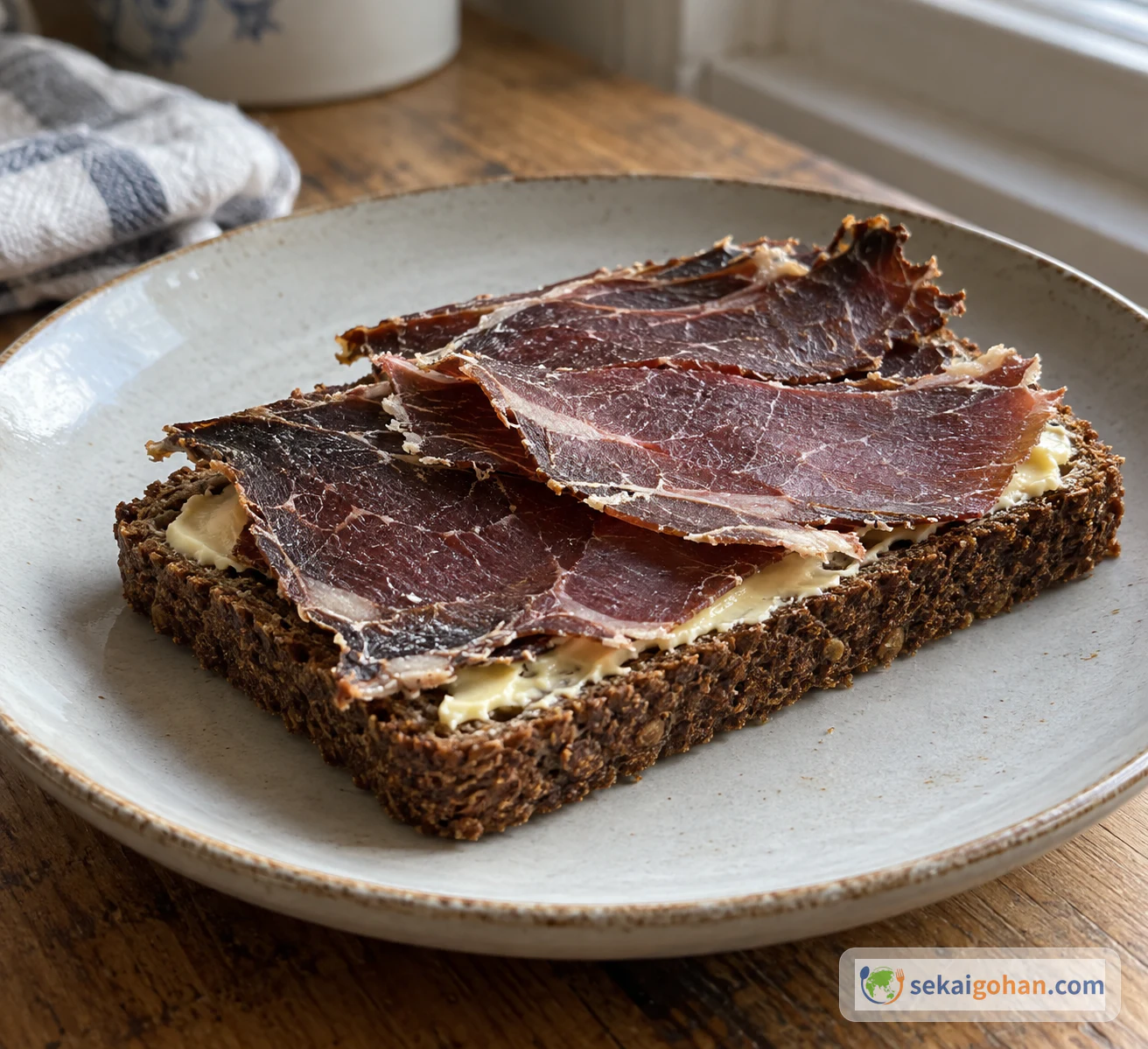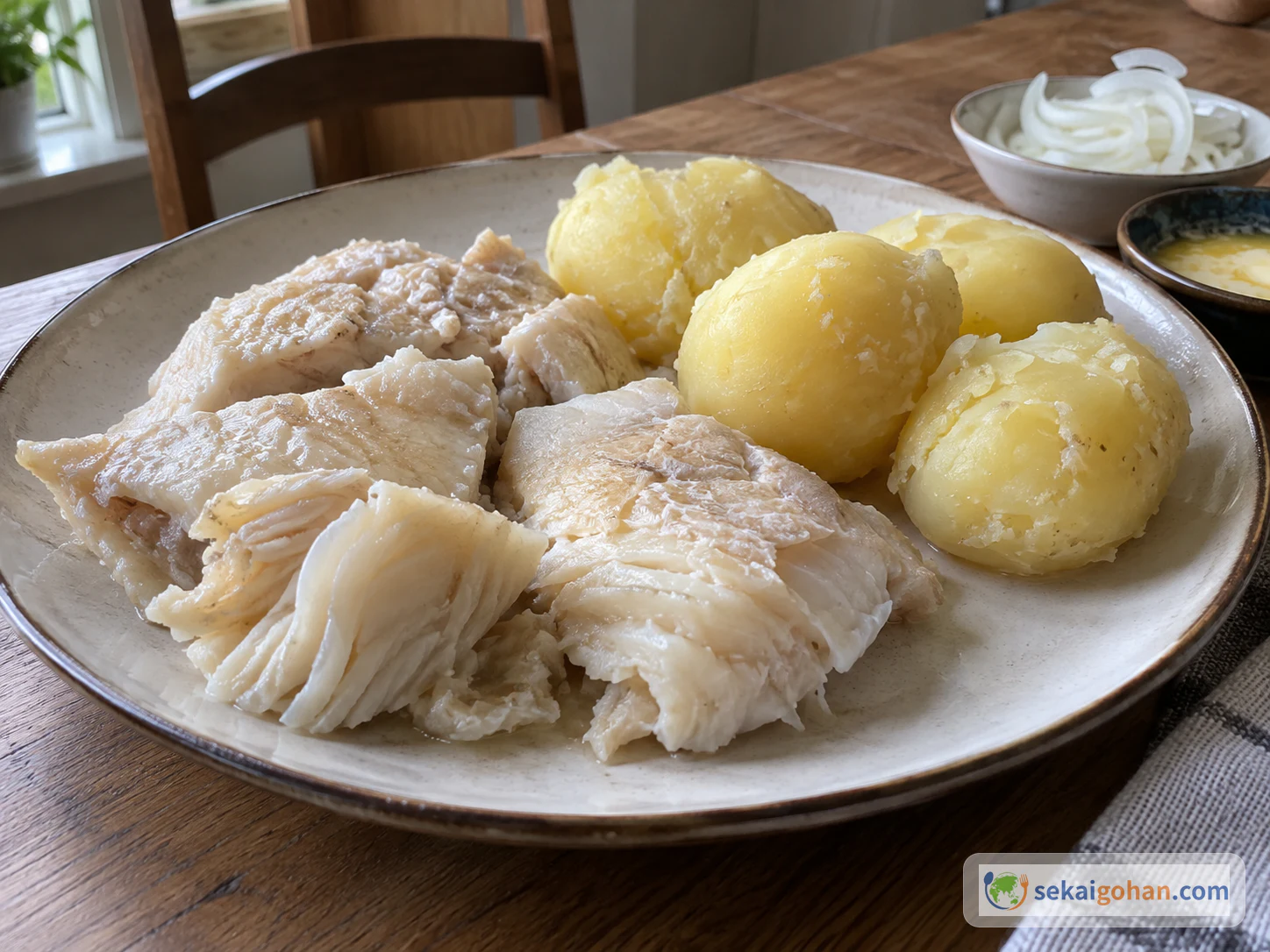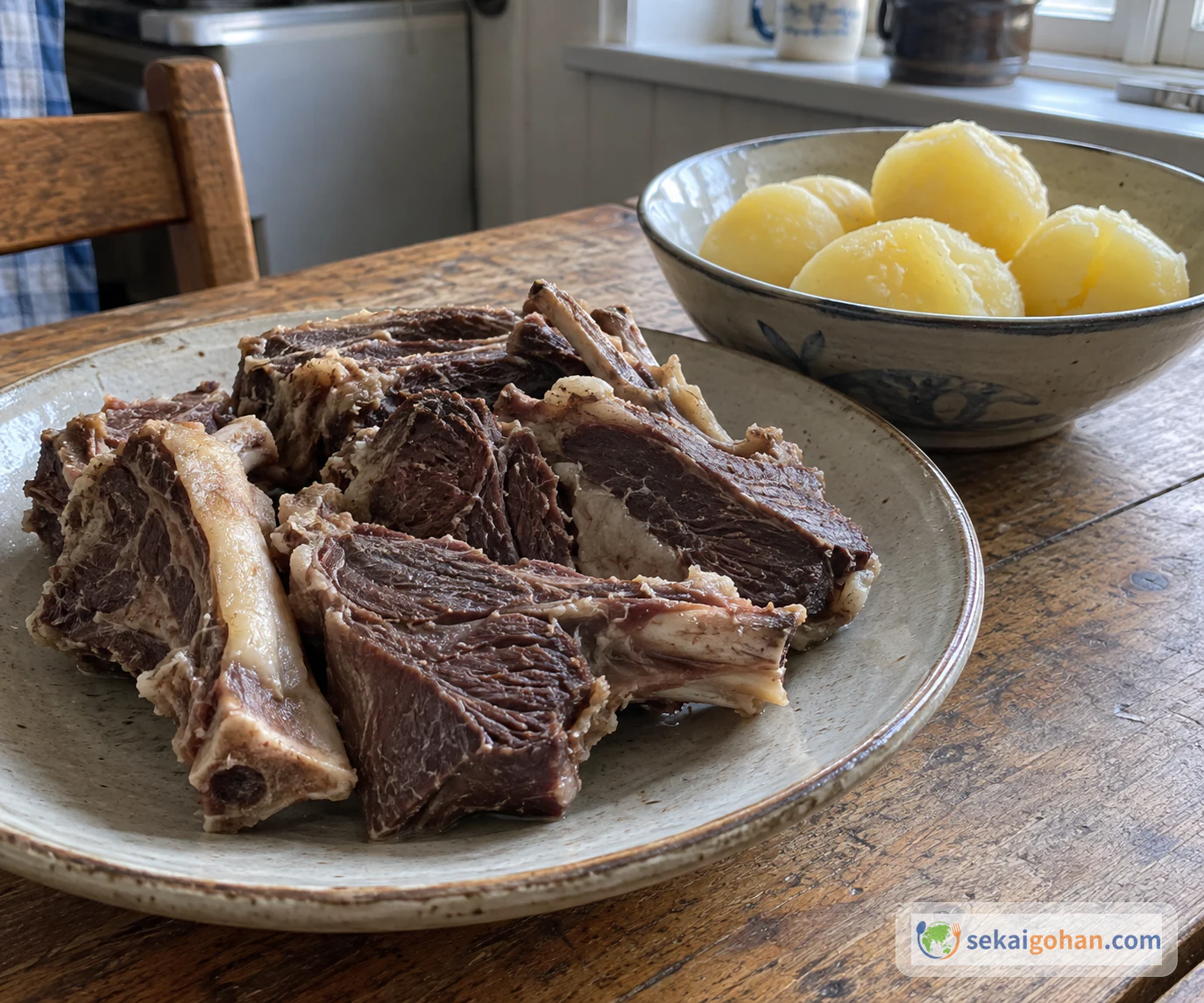
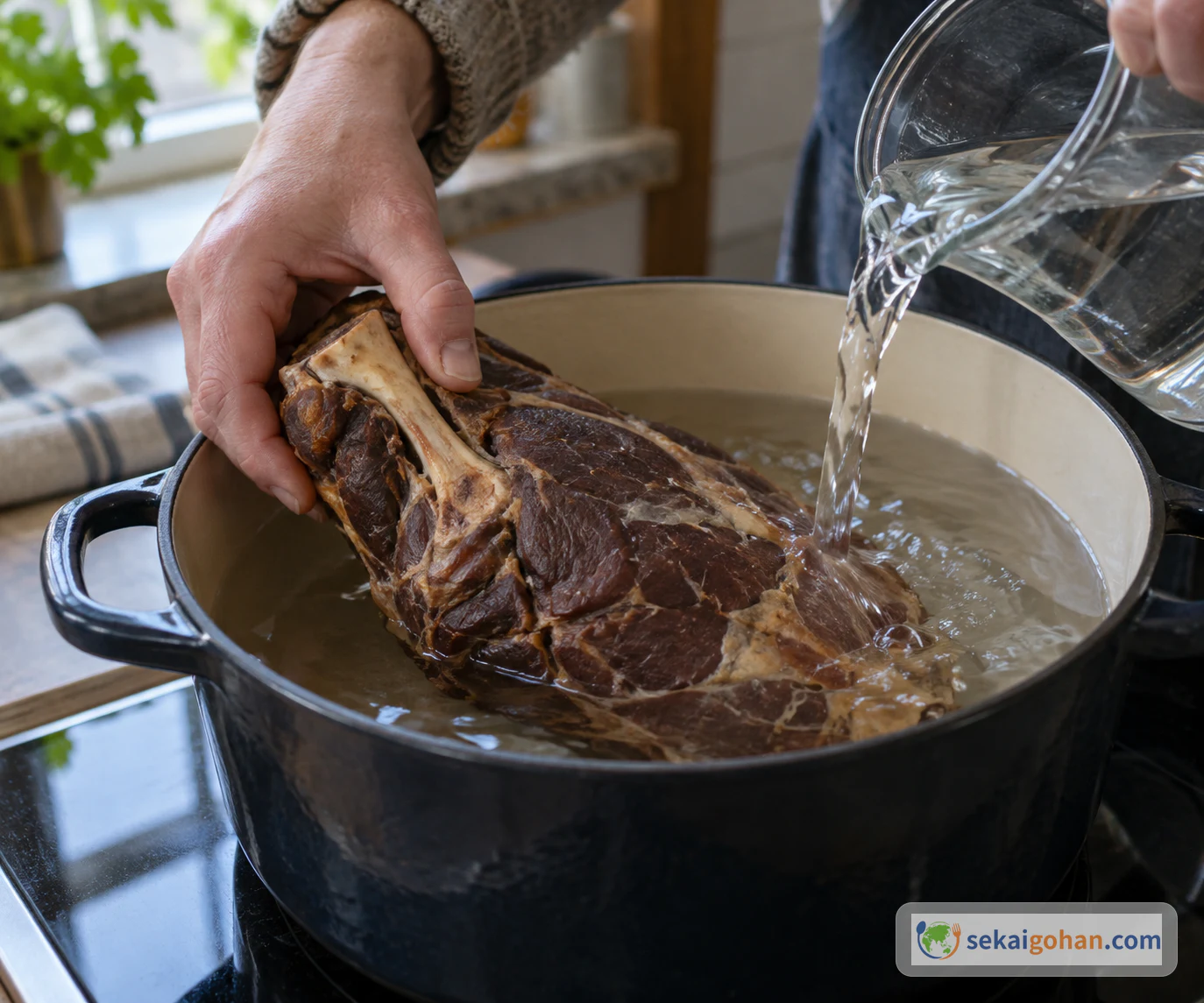
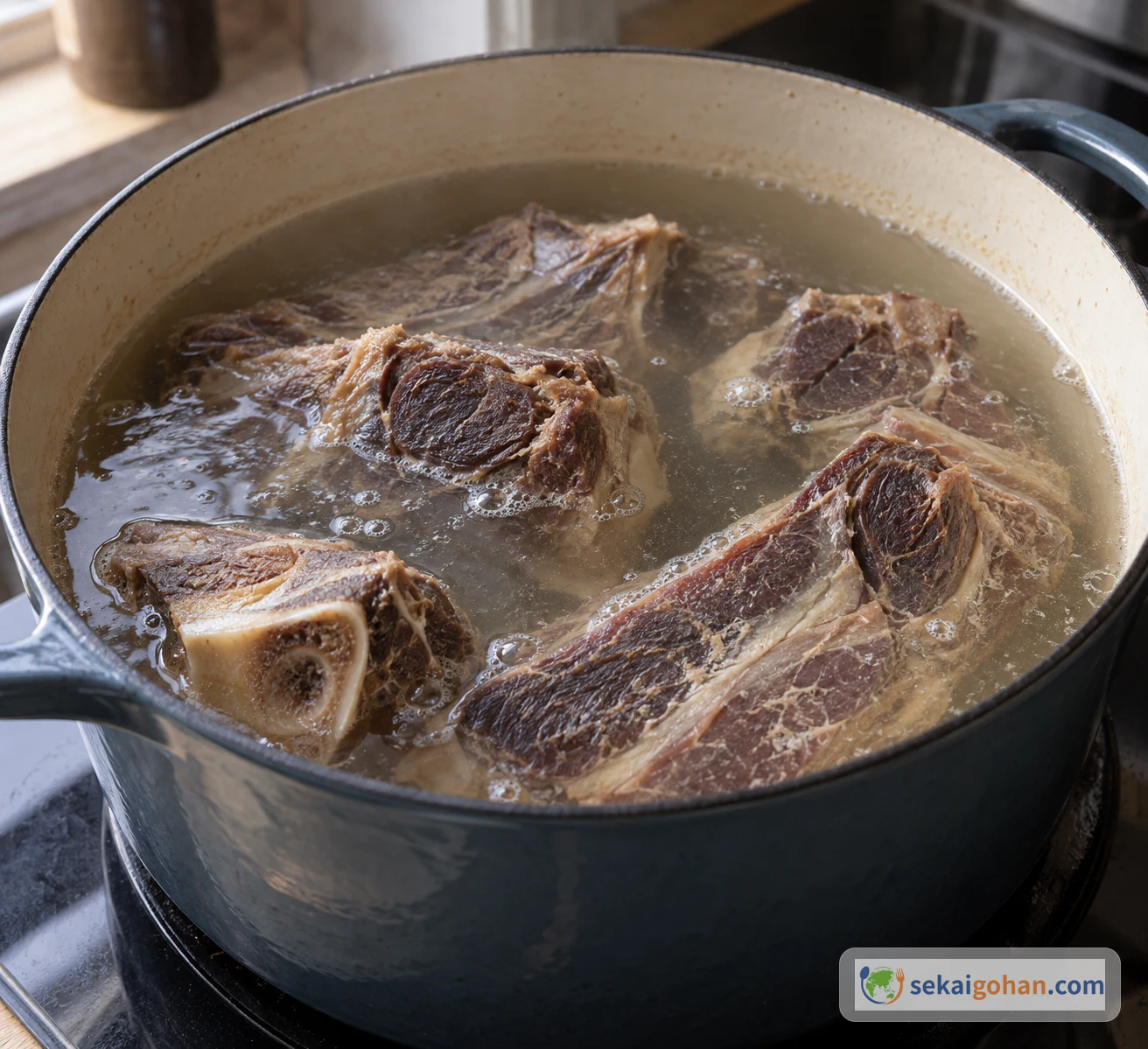

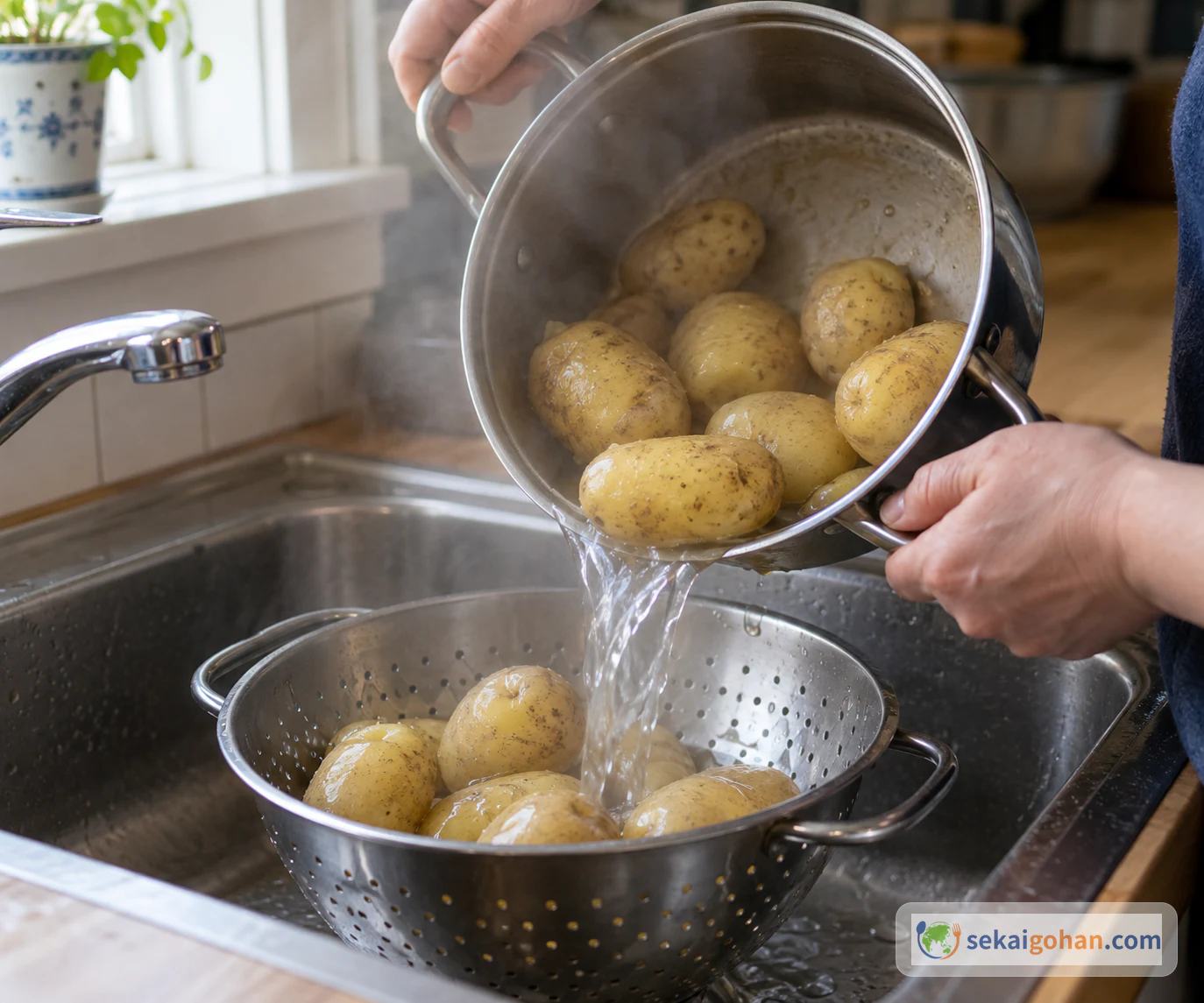
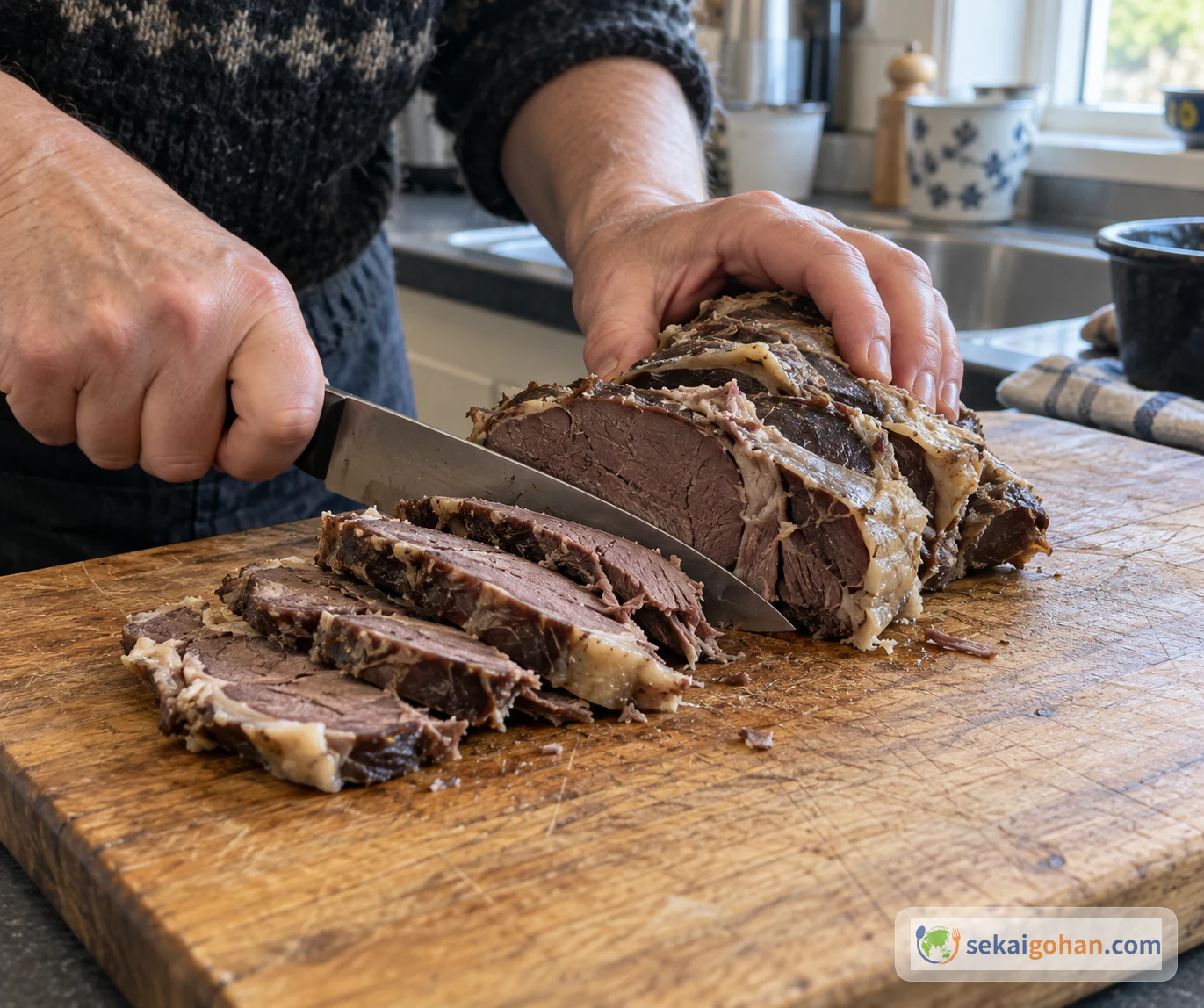
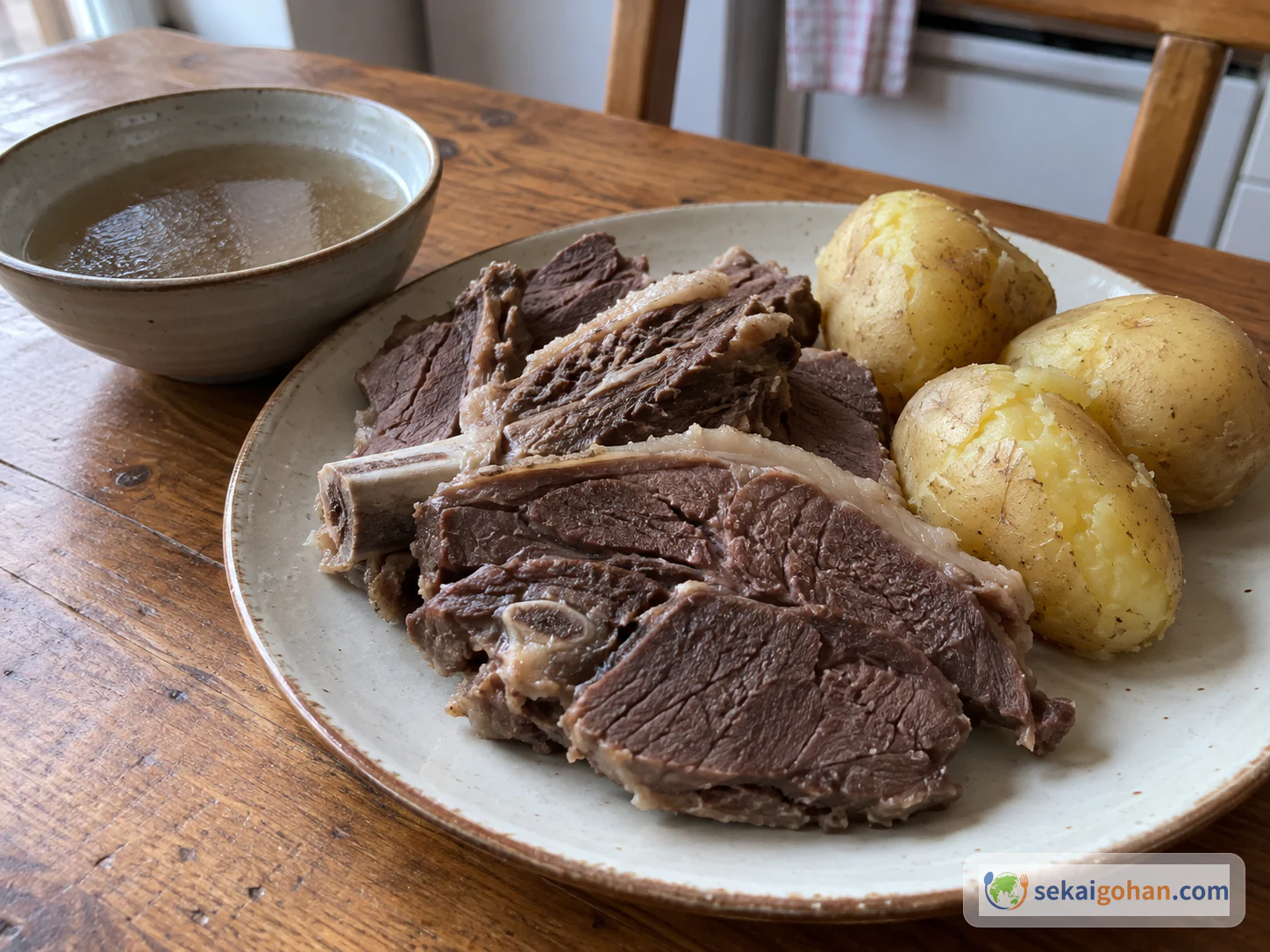
In the Faroe Islands, lamb is hung in a hjallur, a slatted wooden drying house where the sea air moves through, and left to dry and ferment in conditions shaped by the islands' climate. By the time it goes into a pot of cold water, most of the work is done. What comes out of the hjallur is ræst kjøt: slightly air-dried, fermented lamb with a strong, distinctive flavor. At home, all that is left is to boil it gently and bring it to the table with plain boiled potatoes.
About Ræst Kjøt
The name is written ræst kjøt, and you will also see it joined as ræstkjøt. Ræst refers to the fermentation stage and the tradition behind it. Use the Faroese spelling when you search; it is the clearest way to find the actual product rather than an ordinary lamb dish.
A Seasonal Faroese Food
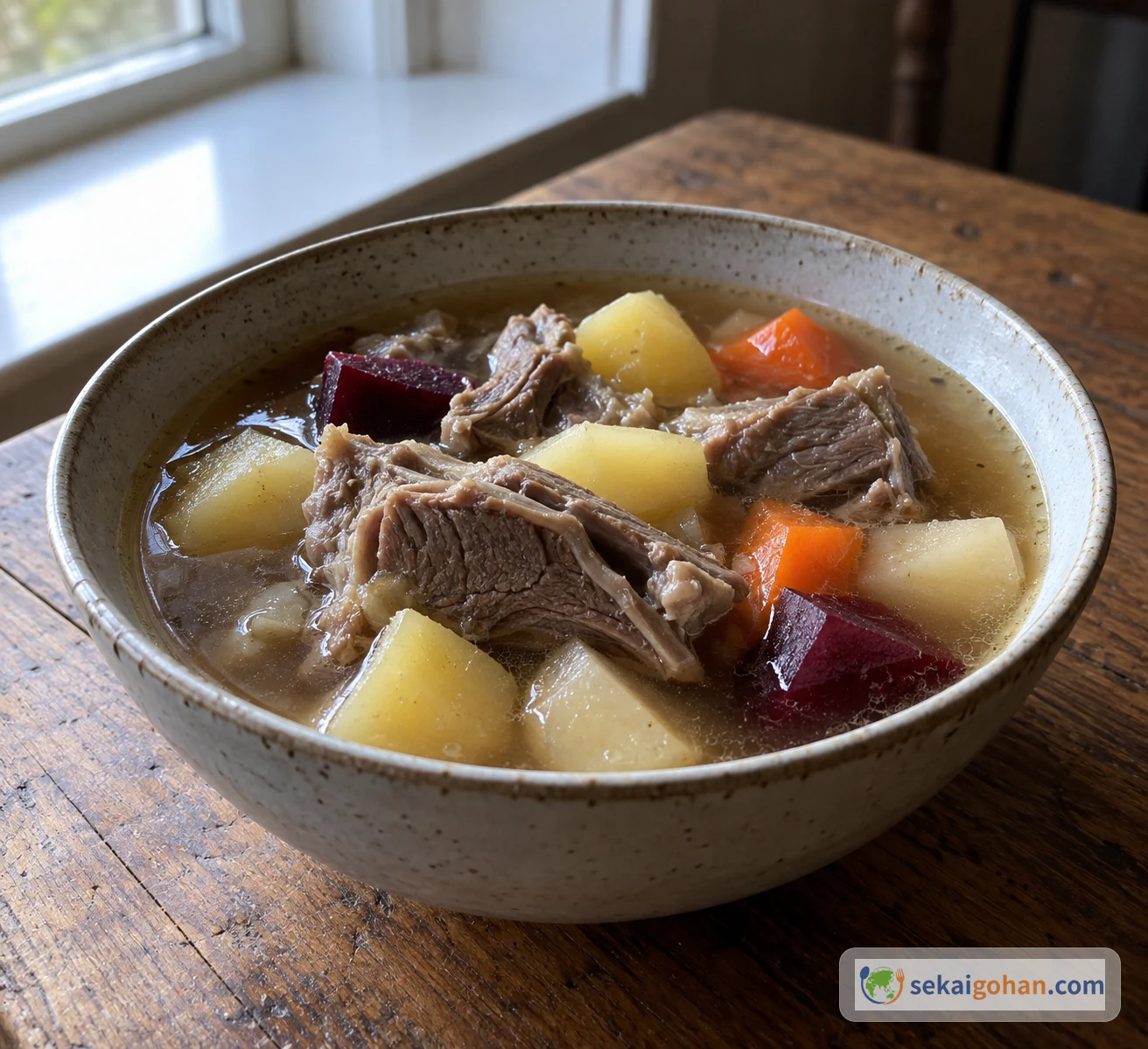
Ræst kjøt is a seasonal food, prepared and eaten a few weeks after the autumn slaughter. It belongs to a wider Faroese tradition of fermentation and outdoor drying shaped by the climate, and potatoes and root vegetables are part of the same food culture. The meat can be boiled or fried. Once boiled, it often goes on to make røst súpan, a soup with vegetables that often include beets, and ræst mutton soup is one of the recognized Faroese ways of serving it.
Ræst Kjøt and Skerpikjøt
The Faroes have two well-known preserved lamb preparations, and they are easy to mix up. Ræst kjøt is the semi-dried, fermented one that is cooked before serving; it is milder than skerpikjøt but still strong. Skerpikjøt is drier and is commonly served thinly sliced. Neither is simply "raw" or "cooked." They are different stages of drying and fermentation, eaten in different ways.
Ræst kjøt is also a separate dish from Shetland's reestit mutton.
Ingredients
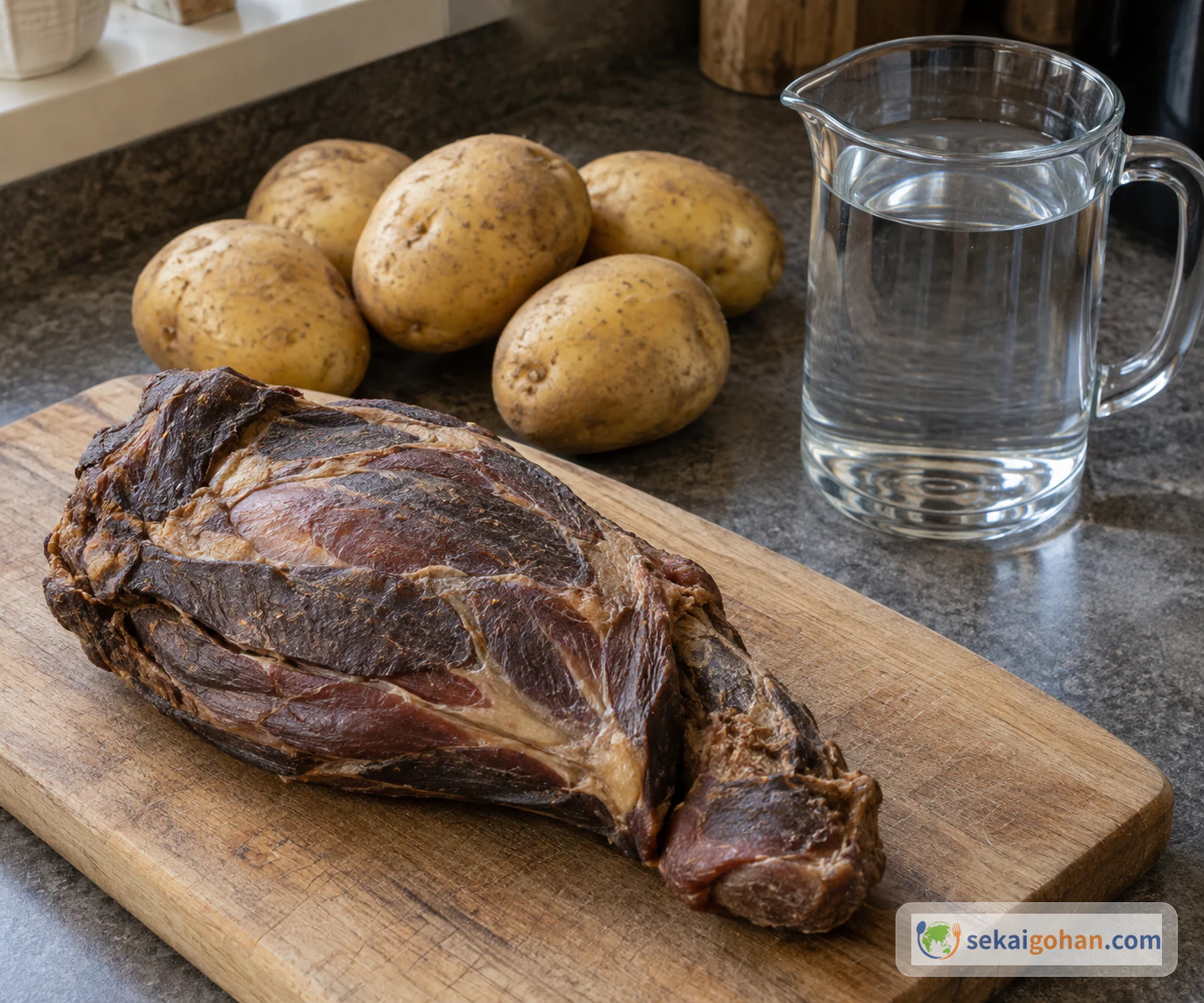
Equipment
- A medium or large heavy pot with a lid, for the meat
- A separate saucepan, for the potatoes
- Kitchen tongs
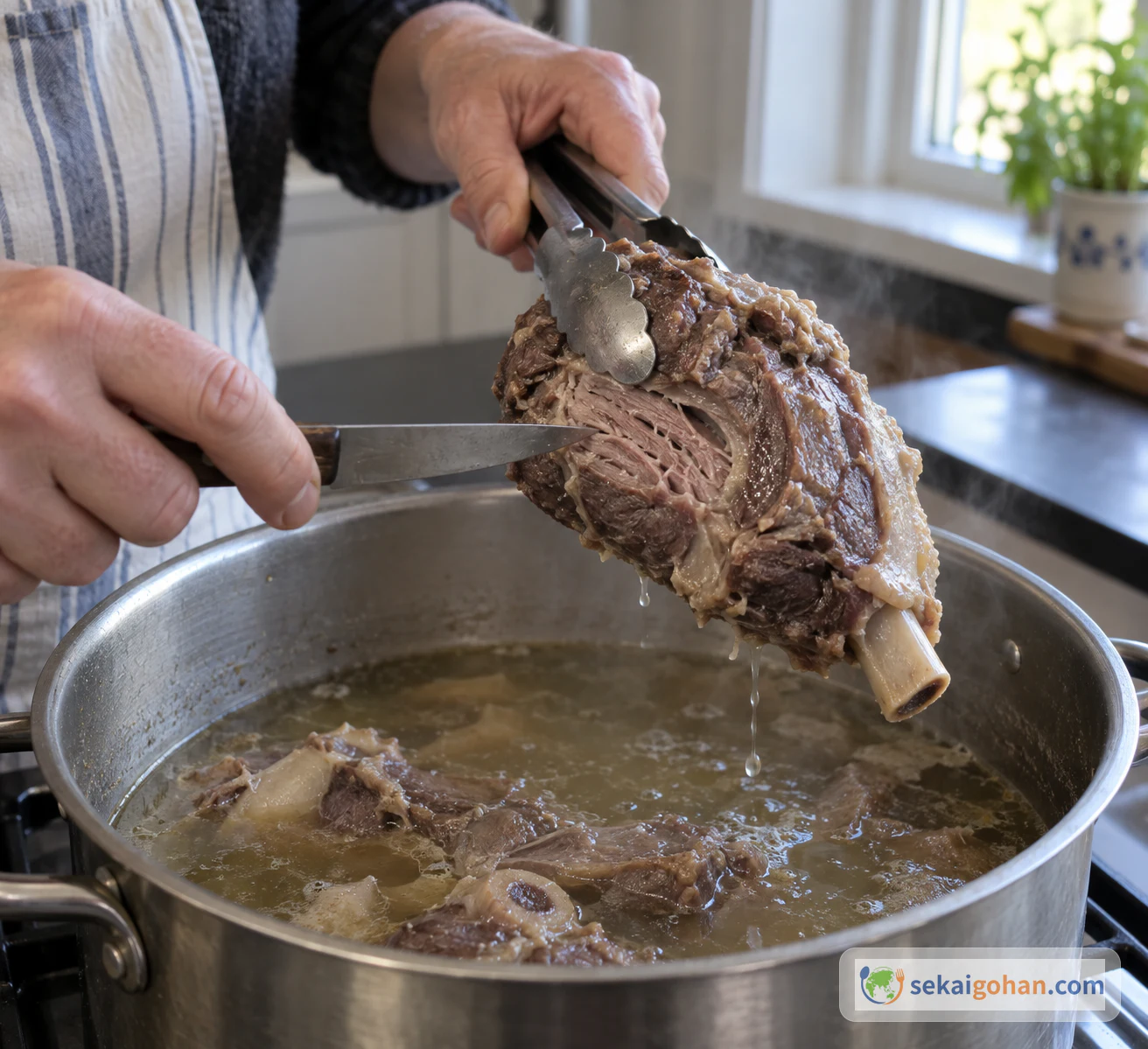
- A small knife and a fork, for checking tenderness
- A colander
- A cutting board and a plain knife
Choosing Ræst Kjøt and Potatoes
Look for ræst kjøt at specialty Faroese, Nordic or imported-food shops, under ræst kjøt, ræstkjøt or "Faroese fermented mutton," and buy it only where it is legally sold. Choose meat that is commercially prepared and sold ready for cooking, and check the label to make sure it says ræst kjøt for cooking, not skerpikjøt for slicing. Don't try to dry or ferment lamb at home: the traditional process depends on the local climate and drying-house conditions, and there is no safe home method.
Fresh lamb is not a substitute. Boiled with potatoes, it makes a pleasant lamb dish, but it won't taste of fermentation, and that flavor is the whole character of ræst kjøt. If you can't find the real thing, save this recipe for another time. For a boiled lamb dish from elsewhere in the North Atlantic, Norway's fårikål is a different dish with its own method.
Small waxy potatoes keep their shape when boiled. Floury ones work too, though they break down more easily.
The amounts below, 1.25 lb (600 g) of meat and 1 lb (500 g) of potatoes, serve 2–3. If the package gives cooking directions, follow them first. Time depends on the cut and how dry the meat is, so judge doneness by tenderness.
Method: A Quiet Simmer, Then Plain Potatoes
Cut and dryness vary, so there is no fixed cooking time. Keep the pot at a gentle simmer and check the meat with a knife until it is tender enough to serve.
Ræst Kjøt Troubleshooting
| Problem | Likely cause | What to do |
|---|---|---|
| Too salty or too intense | Salt added before tasting, or simply the strength of the meat | Taste before seasoning. Eat it with plenty of plain boiled potatoes |
| The meat is still tough | Not cooked long enough for this cut or degree of drying | Return it to a gentle simmer and check again with a knife |
| Potatoes falling apart | Floury potatoes, or boiled too hard | Use small waxy potatoes next time, and stop when a knife slides in easily |
| Unsure what you bought | Ræst kjøt and skerpikjøt look related | Check the label. This method is for ræst kjøt sold for cooking |
Serving Ræst Kjøt and Using Leftovers
Keep the seasoning minimal; plain potatoes let the fermented flavor come through clearly. Once you know the actual weight of your package, scale the potatoes to the meat. You can also serve the meat and potatoes separately, with the broth kept light and on the side, so everyone decides how much of that strong flavor they want.
Leftovers make a good small soup inspired by røst súpan: simmer the broth with the leftover meat and some root vegetables. Save turnip or beet for the soup rather than adding them to the boiled meat and potatoes. These ideas are for serving at home rather than traditional Faroese dishes.
Frequently Asked Questions
Is ræst kjøt a soup?
It can be. Boiled ræst meat is used for røst súpan, a soup with vegetables that often include beets. Boiled meat with potatoes is also a way of serving it in its own right.
Can I ferment lamb at home?
No. The traditional process depends on the Faroese climate and drying-house conditions, and there is no safe home method.
How long does it cook, and how should I store leftovers?
Cooking time depends on the cut and how dry the meat is, so cook gently and judge by tenderness, following the package directions where they are given. For storage, follow the instructions on the product label.