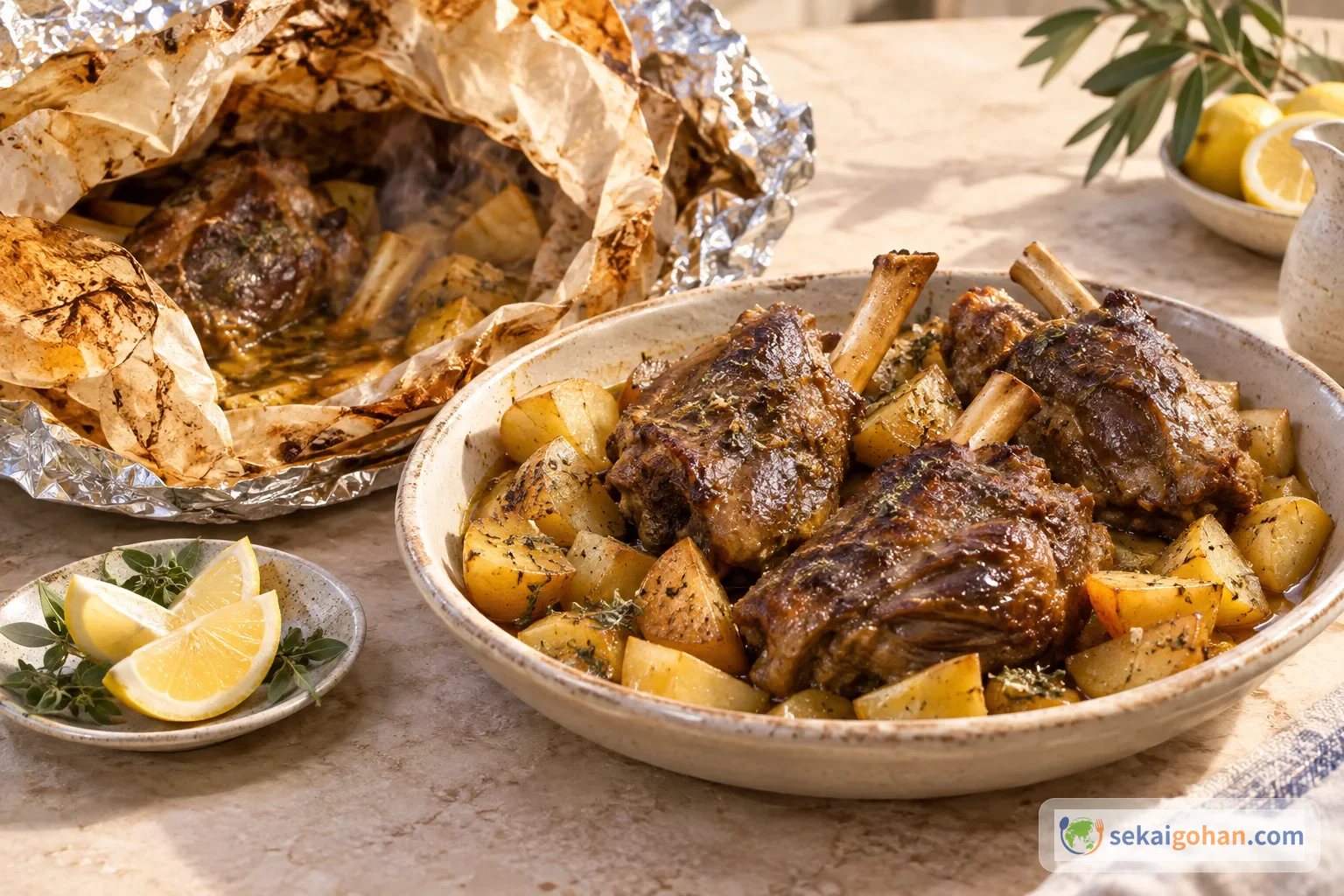
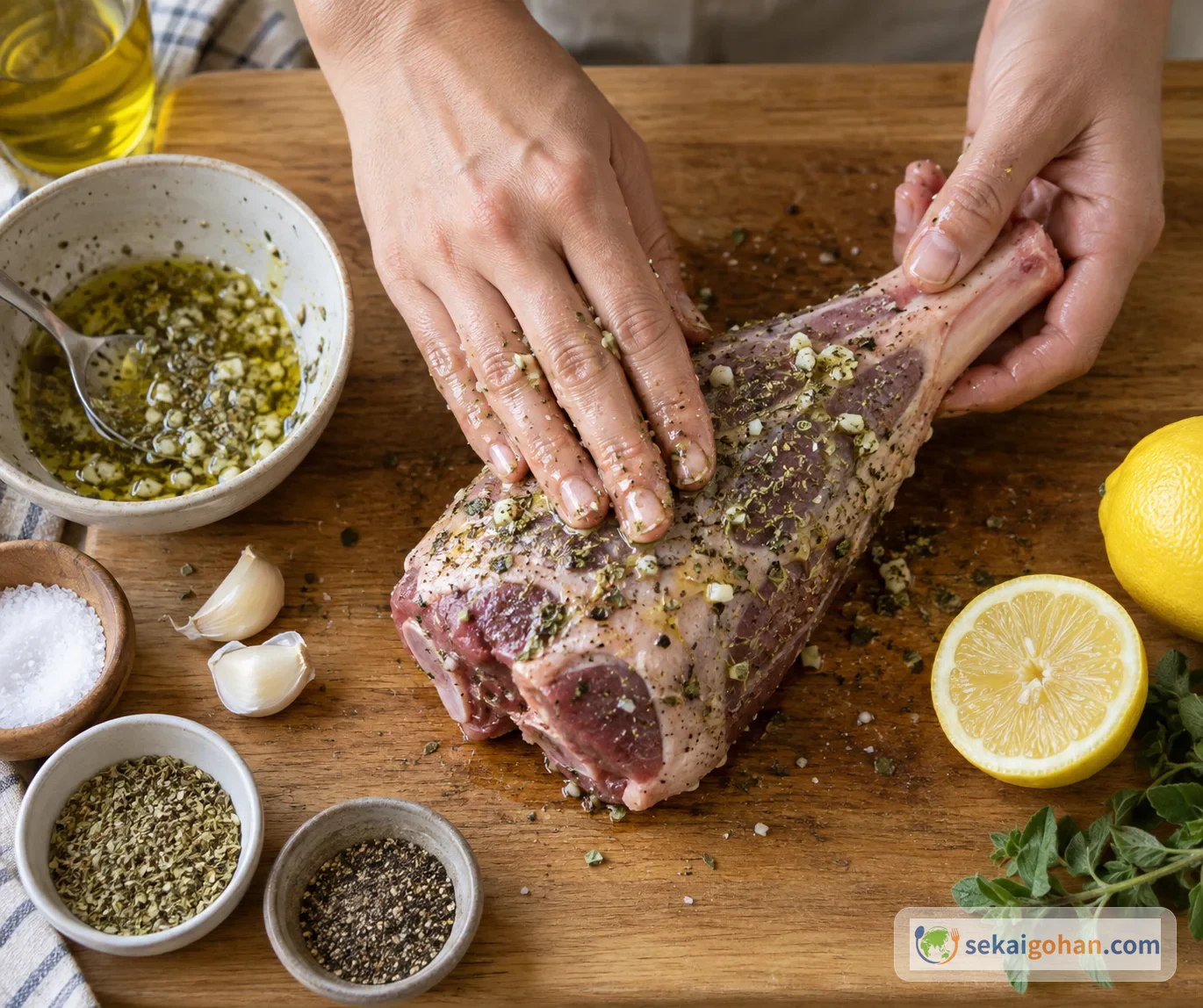
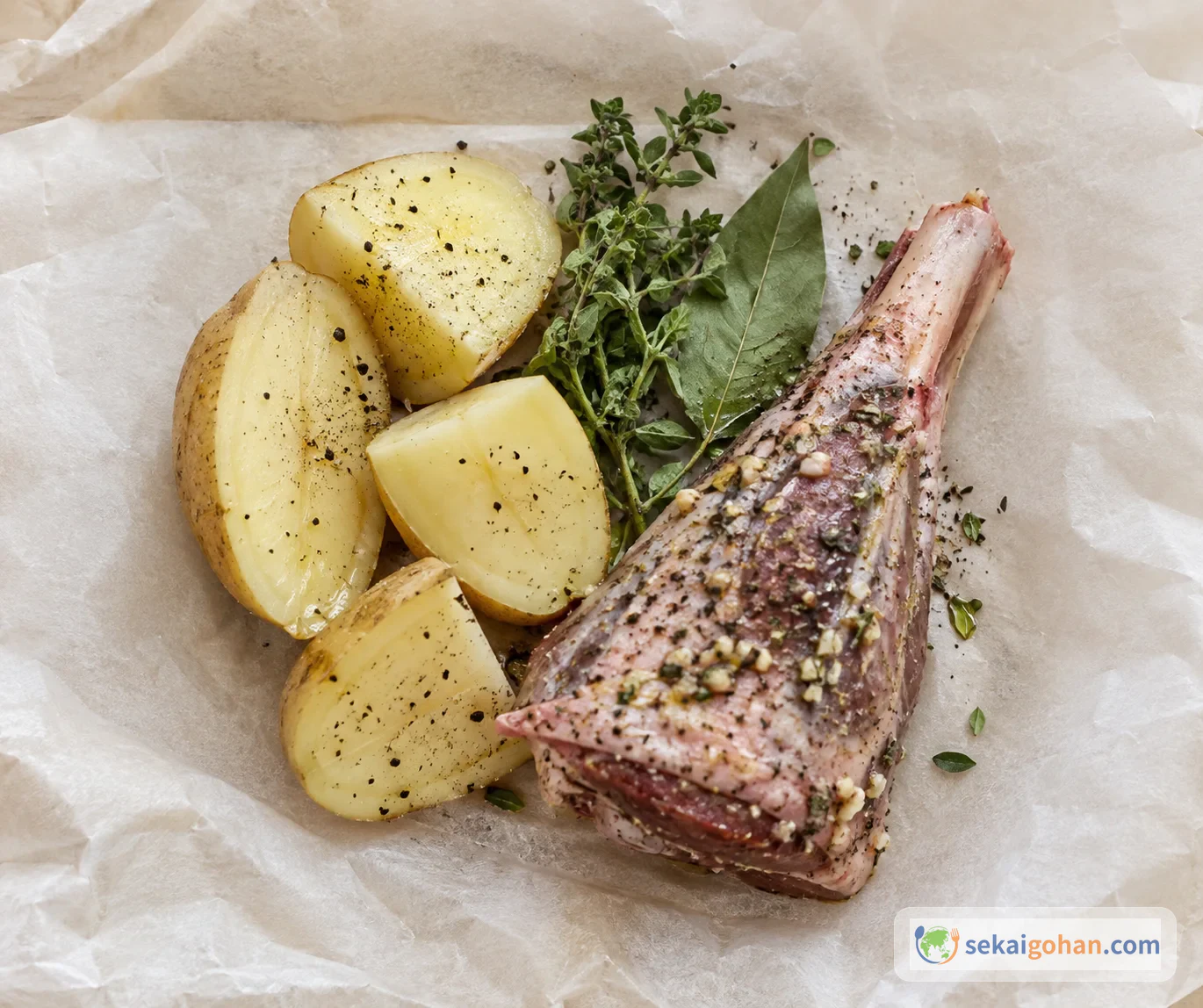
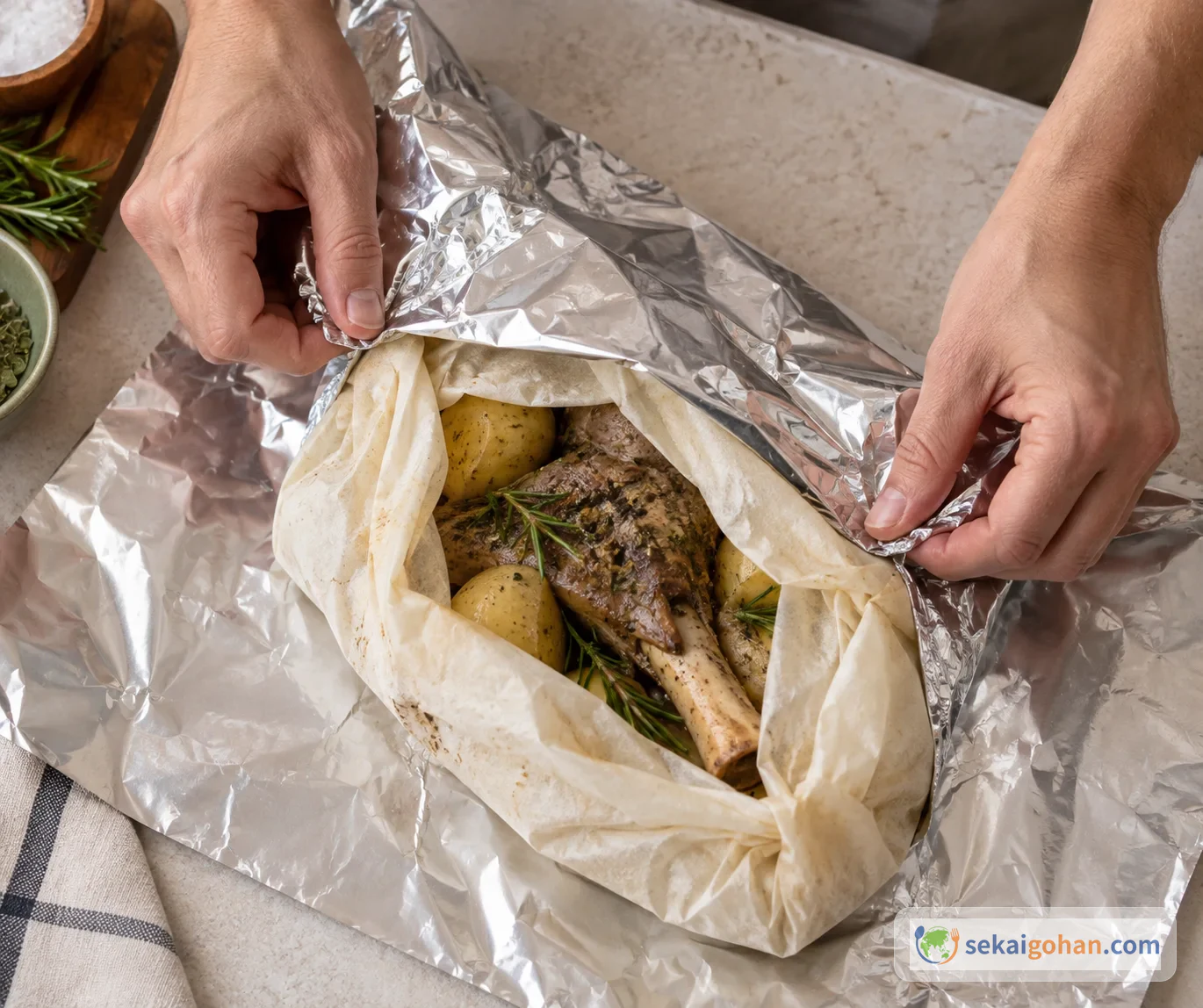
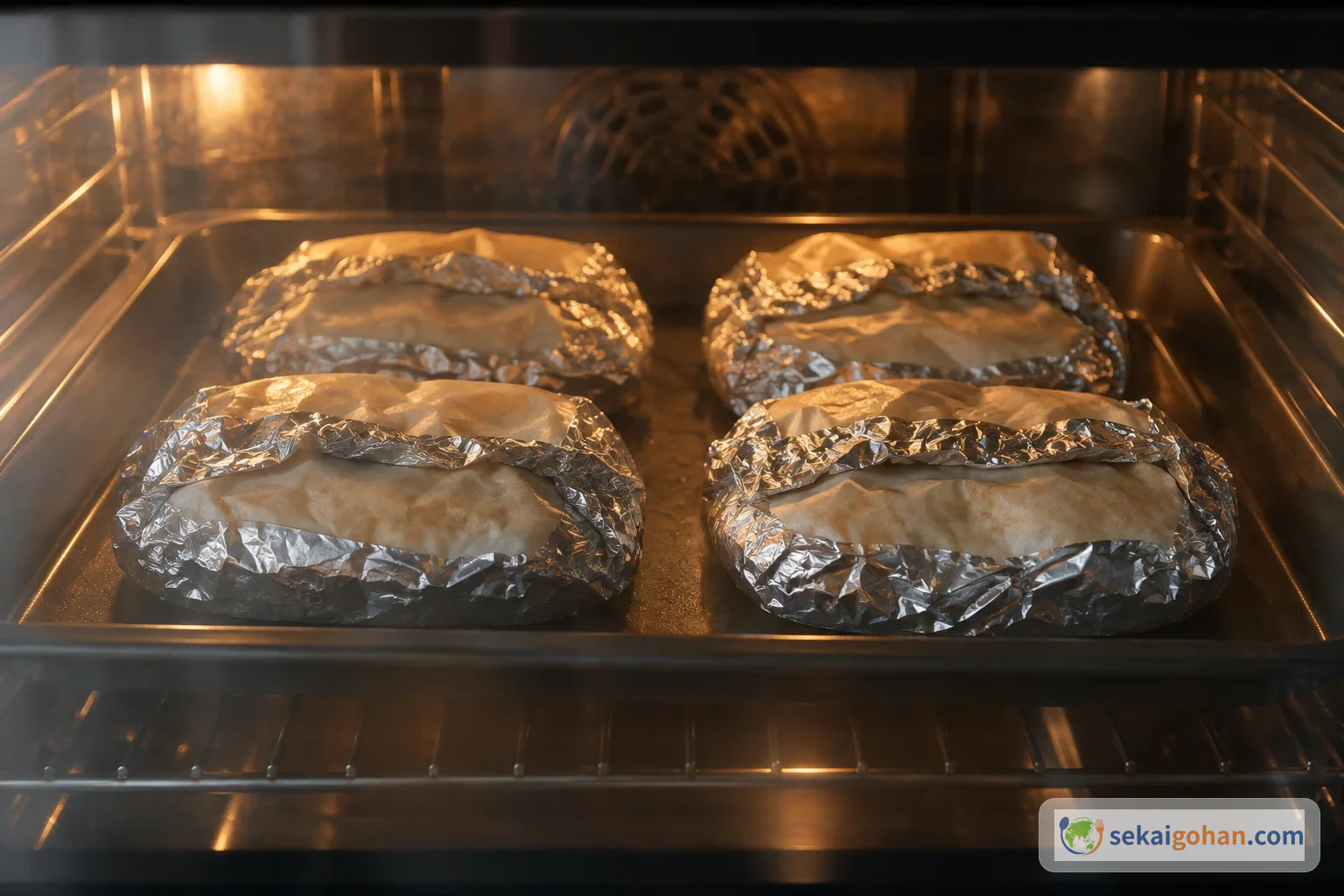
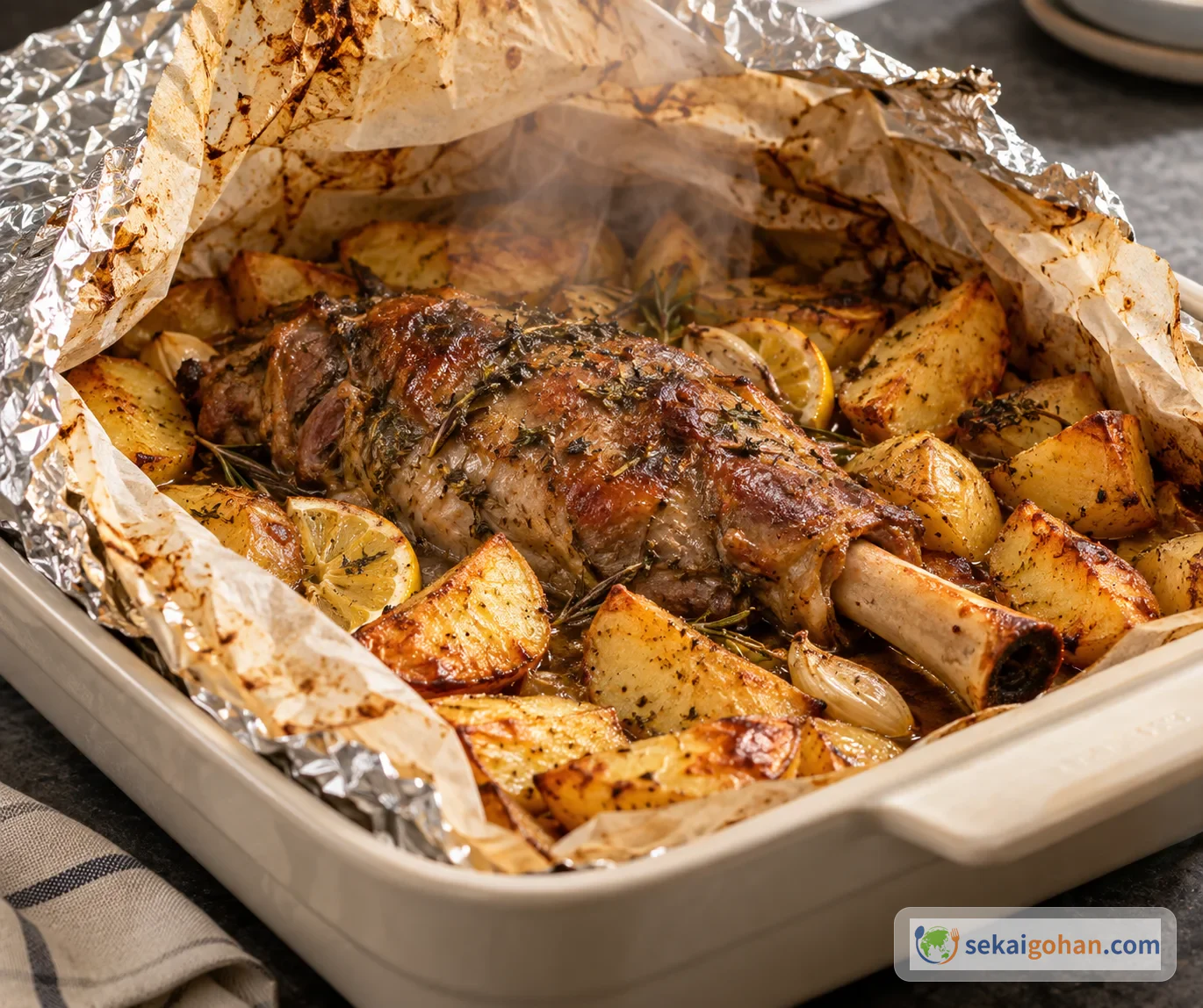
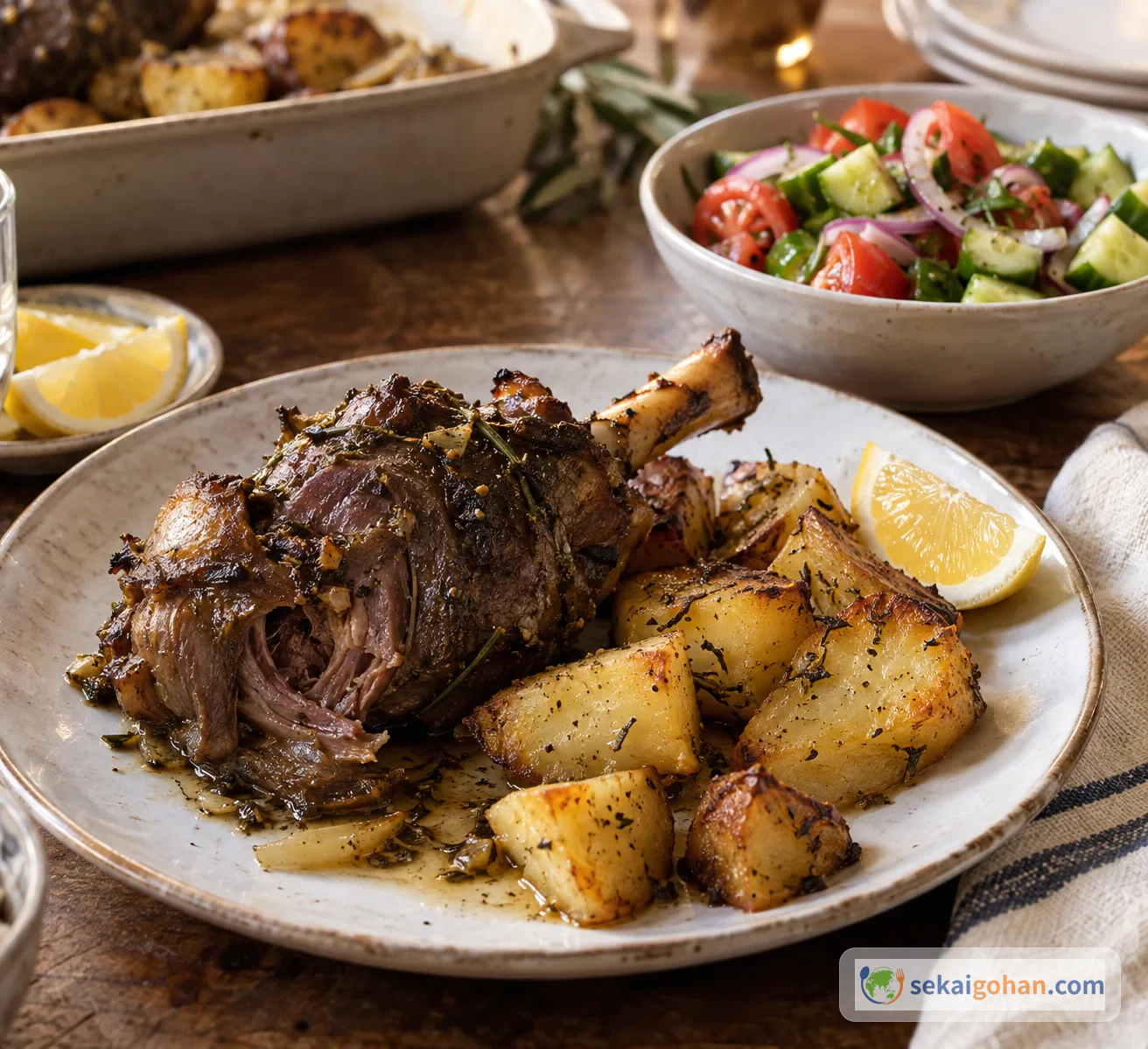
The edges of the paper turn brown, and the smell of meat juices rises from the seam of the foil. Hold off on opening the packet. Let the bone-in lamb fall apart inside, and only at the very end expose it to hot air; in that order, the potatoes soak up the juices while oregano and bay leaves keep the sweetness of the fat from getting too heavy. This is kleftiko (kleftiko, ofto kleftiko), the Cypriot way of sealing lamb or goat and cooking it for a long time. In a home oven, the method comes down to three things: seal in the steam with baking paper and foil, cook bone-in meat at low temperature, and brown the surface after opening.
Kleftiko in Cyprus
The name and the sealed pot
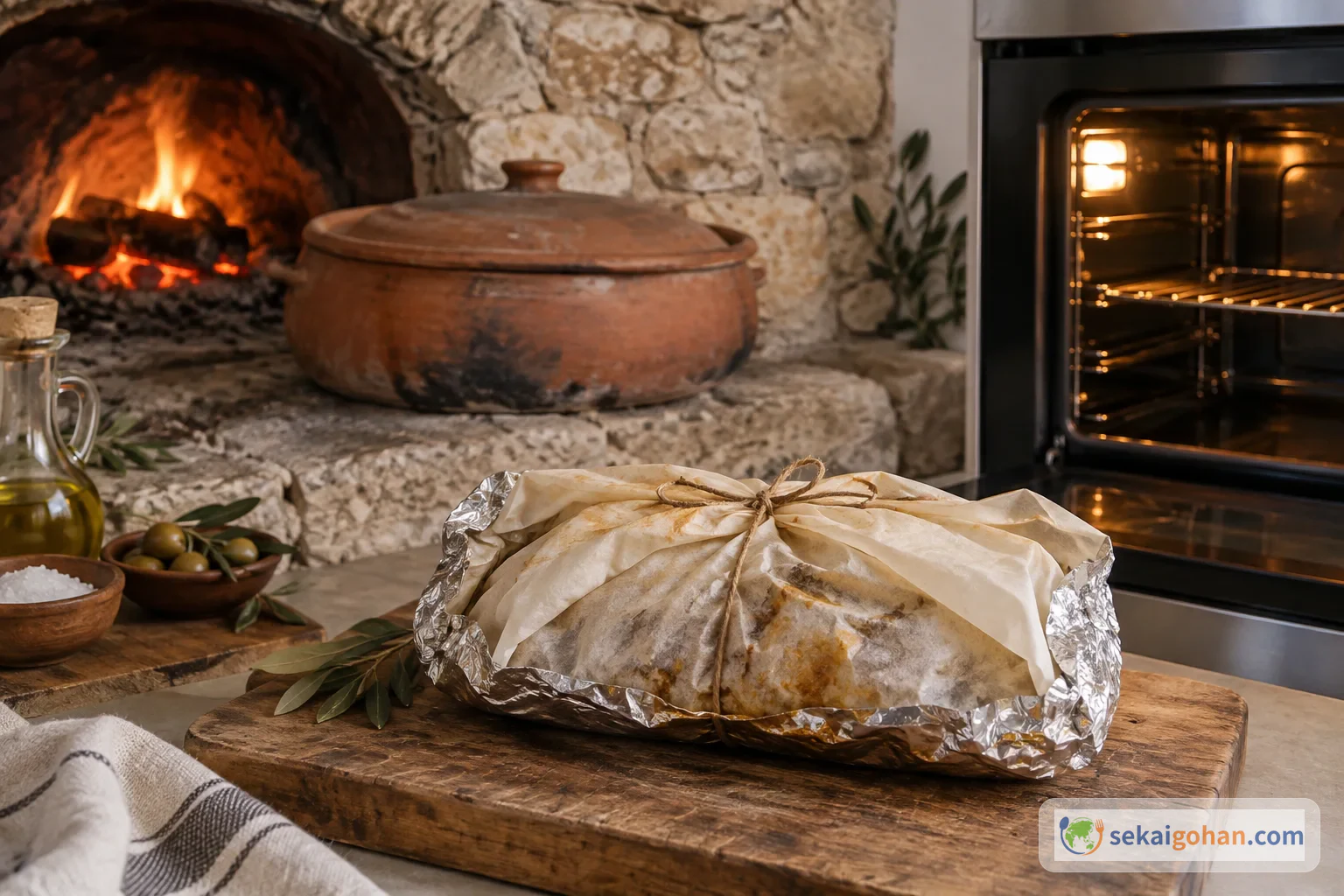
Even the name is a little mysterious. It is linked to the Greek word klevo, meaning "to steal," and to an old shepherds' custom. Traditionally, the dish was cooked over an outdoor wood fire, in clay pots, and in metal trays for large-scale cooking.
In a vessel that lets little heat escape, the meat turns tender because it keeps its moisture and fat inside, rather than browning hard on the surface. Modern home recipes lean on salt, olive oil and bay leaves to support the lamb, with potatoes underneath to catch the juices. Kleftiko stays far from a heavily spiced stew: when you open the packet, the first things you smell are the lamb fat, the potato and a bright note of acidity. Oregano fills in the outline, but it should never take the lead.
From the wedding platter to the home oven
Kleftiko is a main dish shared at gatherings of family and friends, and it has been central to wedding feasts for about 100 years. For a wedding platter, the meat is roasted on the bone and portioned in large pieces, so it sits at the center of the table. At home, choose lamb shanks that fit your oven and put the potatoes in the same packet. Because the meat stays sealed, the surface is unlikely to dry out even if you step away.
A local clay oven and a home oven don't give the same heat, and chasing a clay oven's heat storage or a clay pot's thickness with numbers alone only stretches the baking time until you lose track of the meat. Instead, handle your oven's swings by catching the juices in paper, sealing the outside with foil, and checking once in the second half.
Kleftiko by region and household
The name doesn't fix the ingredients. Traditional, home and modern versions all seal lamb or goat and bake it long, but the cut, herbs, vessel and finish change.
| Occasion / regional difference | Meat and vessel | Tendencies in flavor and steps | What to keep at home |
|---|---|---|---|
| Traditional ofto | Lamb; outdoor wood fire, clay pot, metal tray | Sealed and cooked long, shared at gatherings of family and friends | Sealing and long heat |
| Home ofto kleftiko | Lamb, potatoes; clay pot or baking tray | Wrapped in paper or foil, with the juices going to the potatoes | Keep the packet intact |
| Modern recipes | Lamb shanks, stock, vegetables | Covered bake, then opened and baked at high heat | Check by cut, brown at the end |
| Households using goat | Goat shoulder or leg, heavy pot | Strong aroma and tends to firm up | Keep the full waiting time even with substitutes |
Ingredients (serves 4)
For 4 servings, prepare 1.2–1.6 kg of bone-in lamb in total. If the shanks are not the same size, give priority to making each packet flat over matching the weight of meat. If you force a thick piece into one packet, only the center is late to cook and the potatoes collapse first.
Any fragrant olive oil used for Mediterranean cooking works here. Cypriot or Greek oil is worth looking for, but you don't need to open a new bottle for this one dish.
For a closer local fragrance, buy a better dried oregano. For one batch of kleftiko, the oregano you already have is enough. If you cook kleftiko, tomato sauce and bean dishes several times, buy whole-leaf oregano.
This uses lamb, garlic and citrus. If you use lamb stock, check the product label for wheat, soy, dairy and other ingredients. Follow the heat resistance and instructions of the baking paper and aluminum foil, and keep them from touching the heating element. Do not judge the safety of lamb by tenderness alone; measure the internal temperature of the thick part.
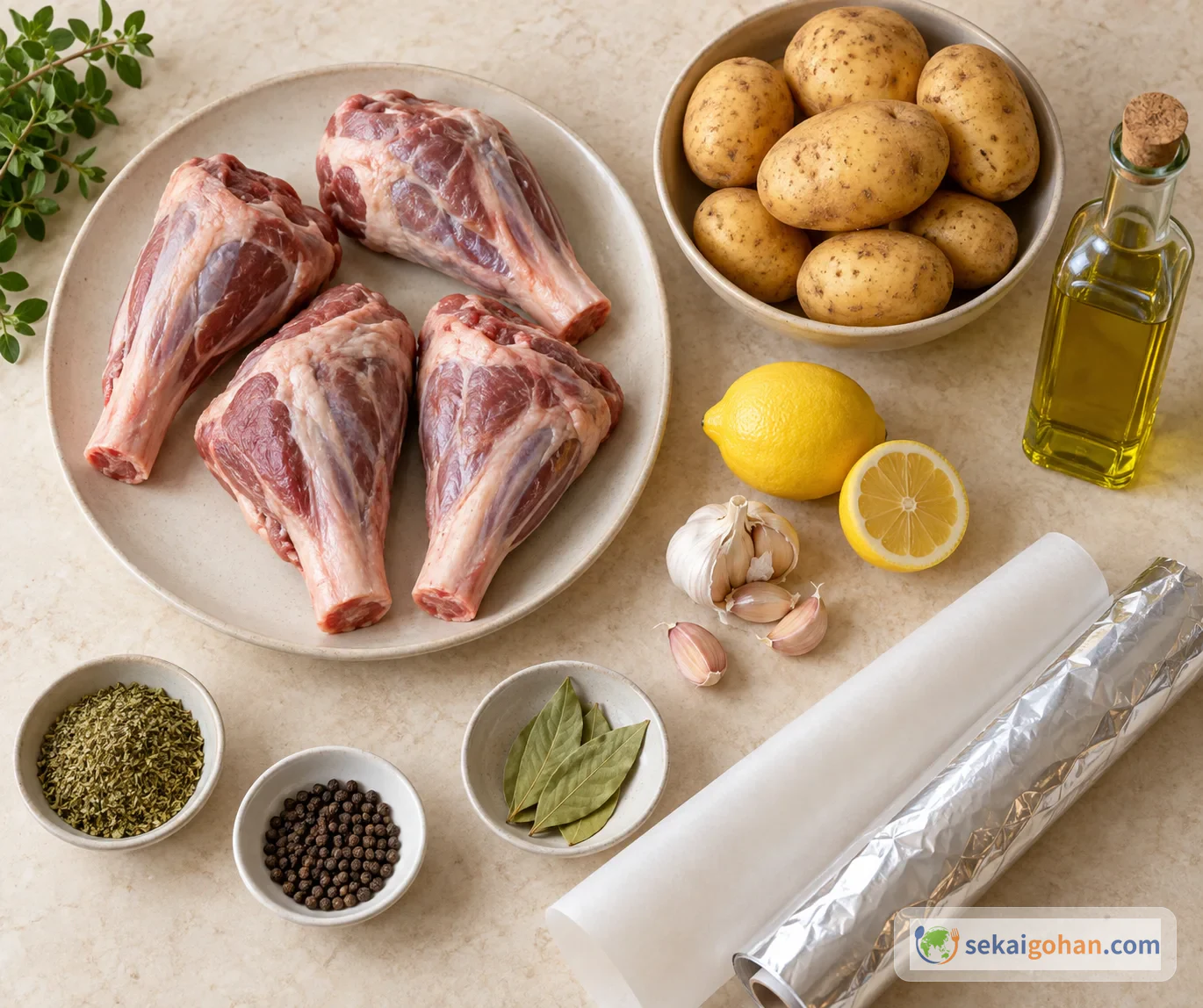
Choosing the Lamb and Potatoes for Kleftiko
The cut decides how the meat falls apart
Even with the same lamb, the cut changes the waiting time and how easy the meat is to eat. The traditional ofto of Athienou is made with meat from sheep over one year old, while a modern recipe uses four lamb shanks of about 14 oz (400 g) each. Since the dish slowly heats a tough cut in a sealed space, choose the meat to suit your oven and your household.
| Cut | Result | How to decide |
|---|---|---|
| Lamb shank | Meat falls apart around the bone, juices become concentrated | First choice if sold bone-in. 4 shanks of 300–400 g each |
| Bone-in shoulder | Fat runs through, easy to carve | A 1.2–1.4 kg piece suits 4 servings. Check where the bone is |
| Goat | Strong aroma, meat tends to be firm | If you can get it, cook it in the same packet as lamb, at the full time |
Bone-in lamb shank is the baseline: the meat and fat around the bone stay in place, which makes tenderness easy to check inside the packet. Boneless lamb works too, but it dries out more easily over the same baking time. For boneless shoulder, use about 2.25 lb (1 kg), test with a skewer after 2 hours 30 minutes, and if the meat still resists, extend by 30 minutes at a time.
Potatoes and other vegetables
The potatoes take in the juices inside the packet and become a bite carrying the lamb fat and the acidity of lemon. You can add carrots or zucchini, but the more vegetables you add, the more water they release and the more likely the corners of the potatoes are to collapse. Make it first with just meat and potatoes; if you want vegetables, bake them on a separate tray so you can keep an eye on the sealed packet.
Instructions: Keep the Juices Inside the Packet
Wrap in paper and foil and bake in a fan oven at 350°F (180°C) for 3–4 hours. Or cover and bake at 325°F (160°C) for 2 hours, then finish at 400°F (200°C) for 15 minutes, with the vegetables handled separately. For a home oven with potatoes and meat in the same packet, cook long at 325°F (160°C), then brown the surface at 425°F (220°C). The lamb shank size, how the oven's heat circulates and how well the packet is sealed all change the time, so after 3 hours, open just one and check.
Kleftiko Troubleshooting
If the meat is still tough, close the packet and wait
If the skewer stops partway and the meat doesn't come away from the bone, it needs more cooking. Extending the time with the packet open dries only the surface, so add 2–3 tbsp of juices, close it again and extend by 30 minutes at a time at 325°F (160°C). Boneless meat dries out especially easily, so check that liquid remains at the bottom of the packet before you carry on.
If the potatoes break down, finish them separately from the meat
If the potatoes have collapsed but the meat is still tough, rewrap the meat in new paper and foil. Crush the collapsed potatoes with the remaining juices to make a sauce. Next time, cut the potatoes larger, set them beside the meat instead of under it, and keep the high-heat browning after opening within 10 minutes.
If juice leaks onto the tray, catch it twice
Leaks usually come where a bone has poked through the foil; lay a new sheet of foil over the top and catch the tray. Keep the oven door shut and clean the tray once it has cooled after baking, since wiping it mid-cook lowers the temperature. If the packet has dried out from the leak, add 1–2 tbsp hot stock on opening and stir it into the juices before browning the surface.
If the aroma is weak, suspect freshness more than quantity
Before increasing oregano to 4 tsp, rub some in your palm to check whether it releases its scent. Old dried herbs only give a stronger green smell, however much you add. Too much lemon juice makes the lamb fat seem thin, so adjust the salt and the strength of the juices first.
Serving and Storing Kleftiko
Kleftiko suits being set out as bone-in meat, with each person taking potatoes and juices for themselves. The sourness of a salad, the wheat of bread and the fragrance of lemon take up the fat that has concentrated in the packet. If you serve yogurt, put it at the edge of the plate rather than stirring it into the meat sauce, so the contrast in temperature stays.
Take leftover meat off the bone and move it to a shallow storage container with the juices. Cool it promptly rather than leaving it at room temperature for long: leave the lid slightly ajar while it cools, then refrigerate. To eat it the next day, add a little juice to a pot or heatproof dish and warm it until the center reaches 165°F (74°C), so the middle is as hot as the surface. If freezing, portion only the meat with the juices, since the potatoes collapse easily.
For more Cypriot cooking, try the stuffed koupepia, with the sourness of grape leaves and a meat-and-rice filling, or flaouna, the festive bread of the Easter table. For lamb over charcoal in the neighboring Greek-speaking world, compare souvlaki; it shows how differently skewer-grilling and sealed roasting use fire.
Frequently Asked Questions
Can I make it with cuts other than lamb shank?
Yes, with bone-in shoulder or goat. The thickness of the meat and connective tissue differ, so judge by the meat rather than the clock; after 3 hours, check one large packet. Boneless lean meat dries out over the same time, so make the packets smaller and add a little more liquid.
Can I leave out the lemon and oregano?
Lemon is the acidity that tightens lamb fat and oregano supports the earthy aroma, so leaving out both makes the dish milder. You can halve the lemon juice, but keeping even just 1 tsp of dried oregano goes a long way toward the aroma of kleftiko.
Can I bake it in a lidded pot instead of paper and foil?
Yes, if you have a heavy oven-safe pot with a lid. Add enough liquid that a little remains at the bottom of the pot, and lay foil over the lid only if there is a large gap between lid and pot. Wrapping on a baking tray with paper and foil works just as well and is easier to clean up.
How do I check that the lamb is safely cooked?
Tenderness tells you the dish is done; the internal temperature tells you it is safe. Insert a food thermometer into the thick part, confirm 145°F (63°C) or higher and rest for 3 minutes. Dishes that wrap ground meat follow a different standard, so check the temperature for each dish.
What can I do with leftover kleftiko?
Put a little of the boneless meat on bread or salad the next day. Potatoes tend to collapse when reheated, so crush them into the juices and use the mixture as a lamb sauce.