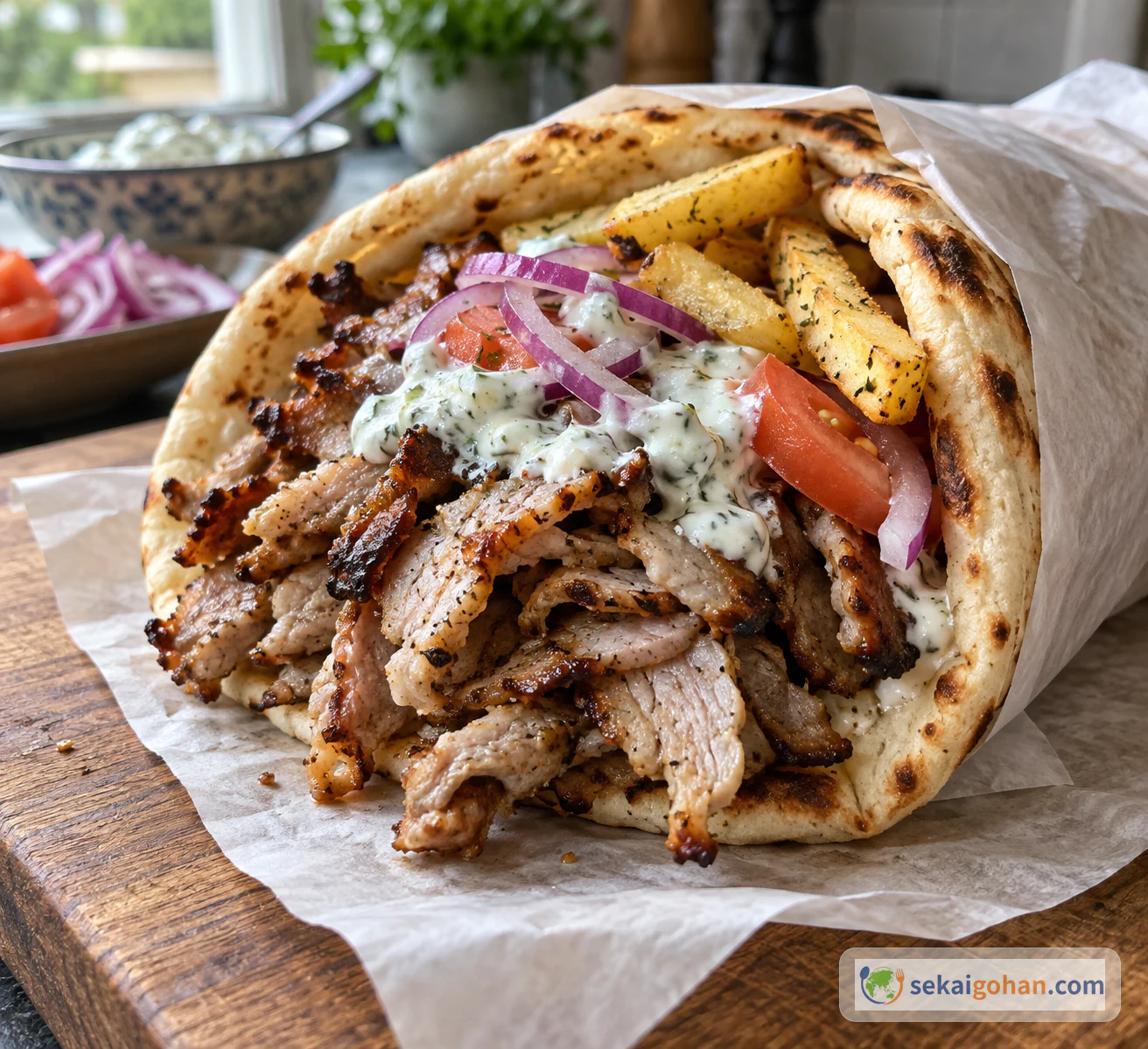
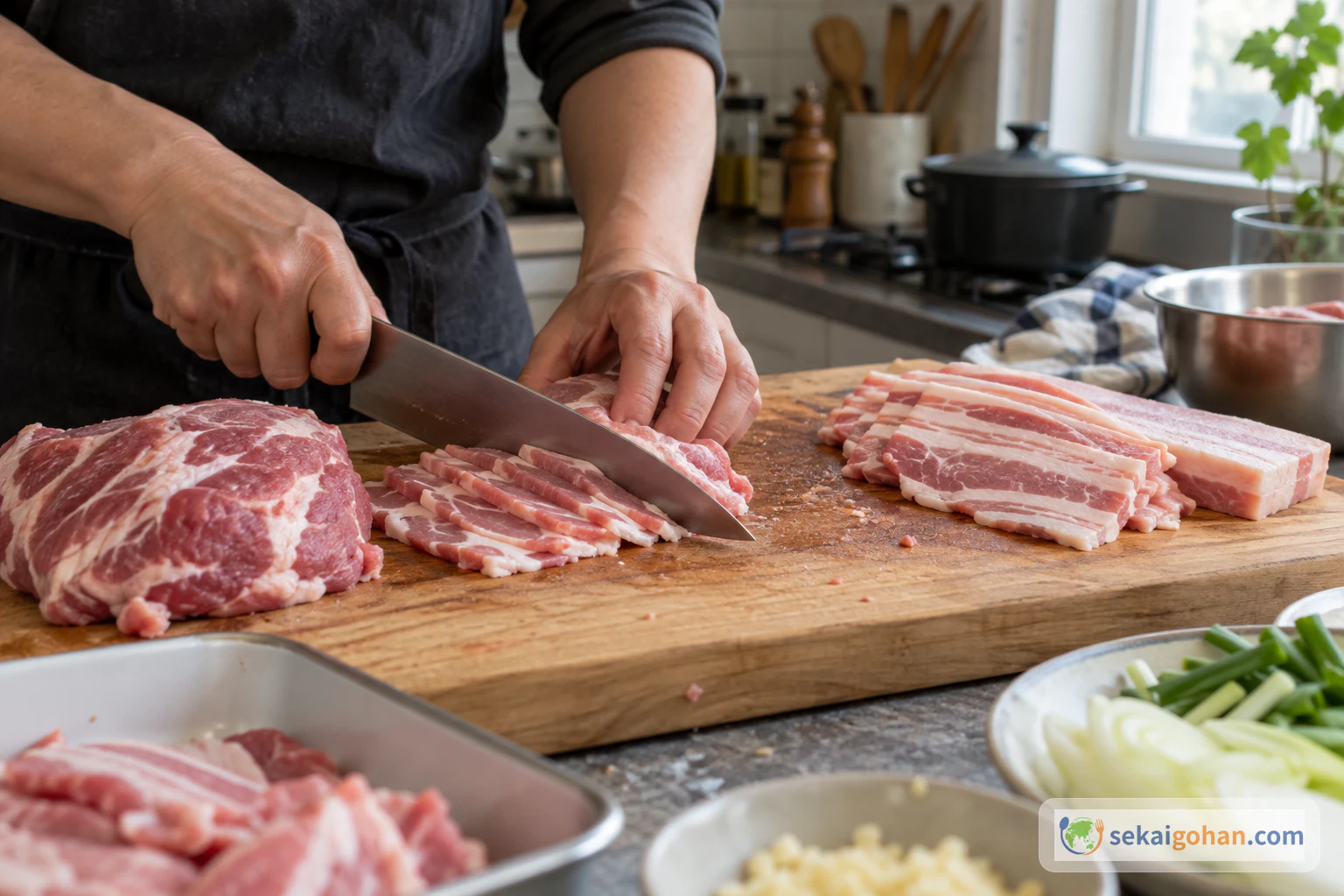
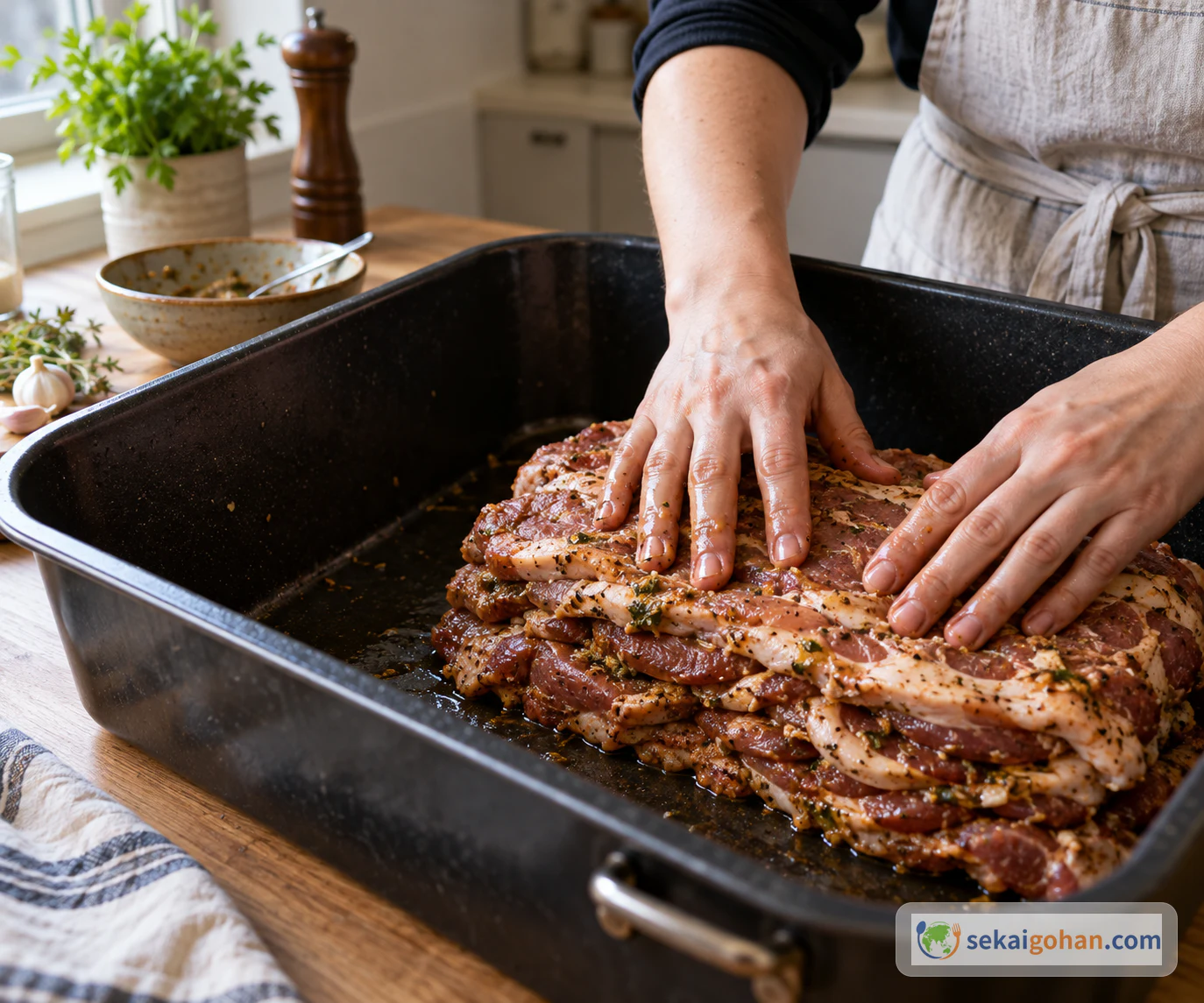
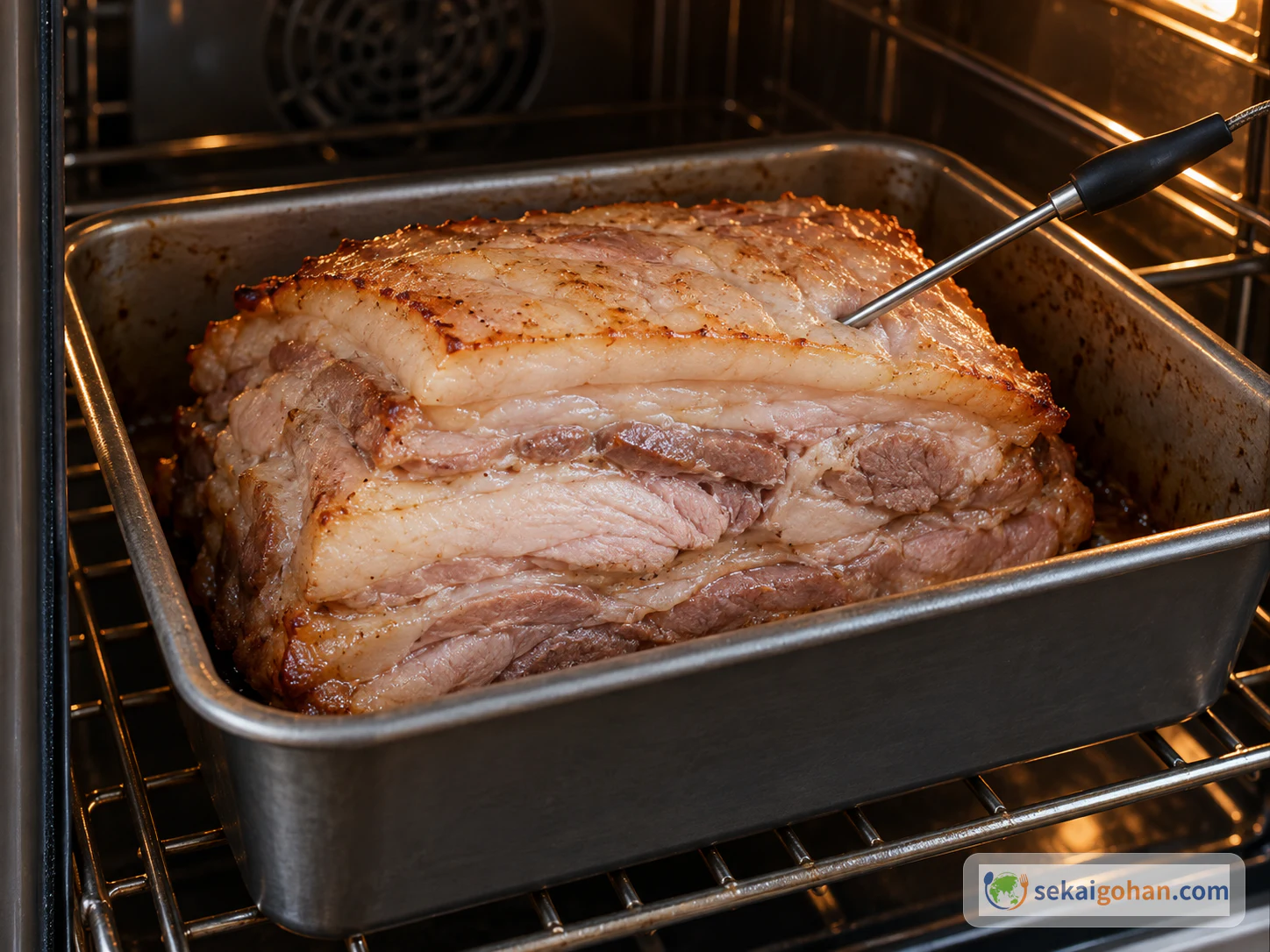
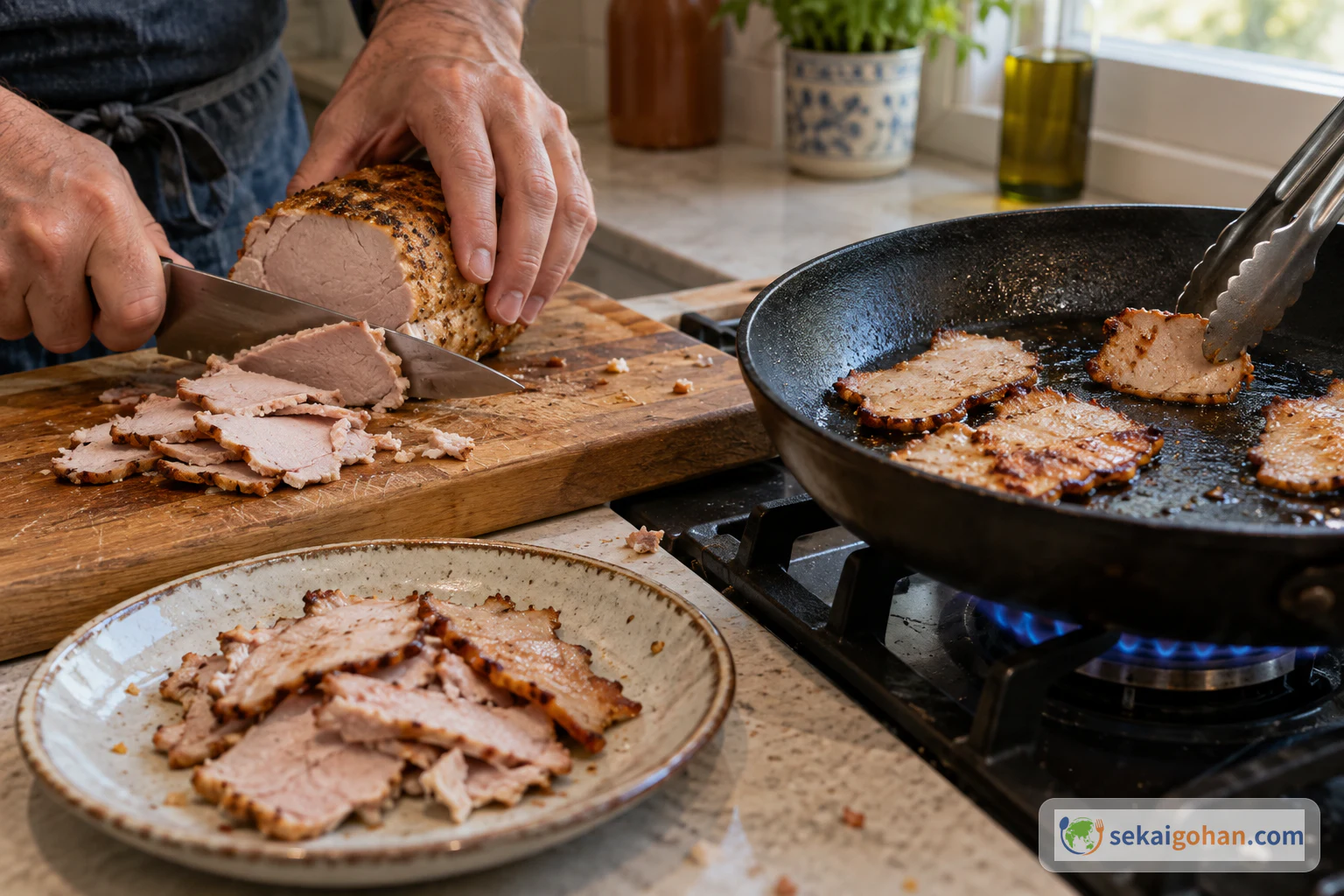
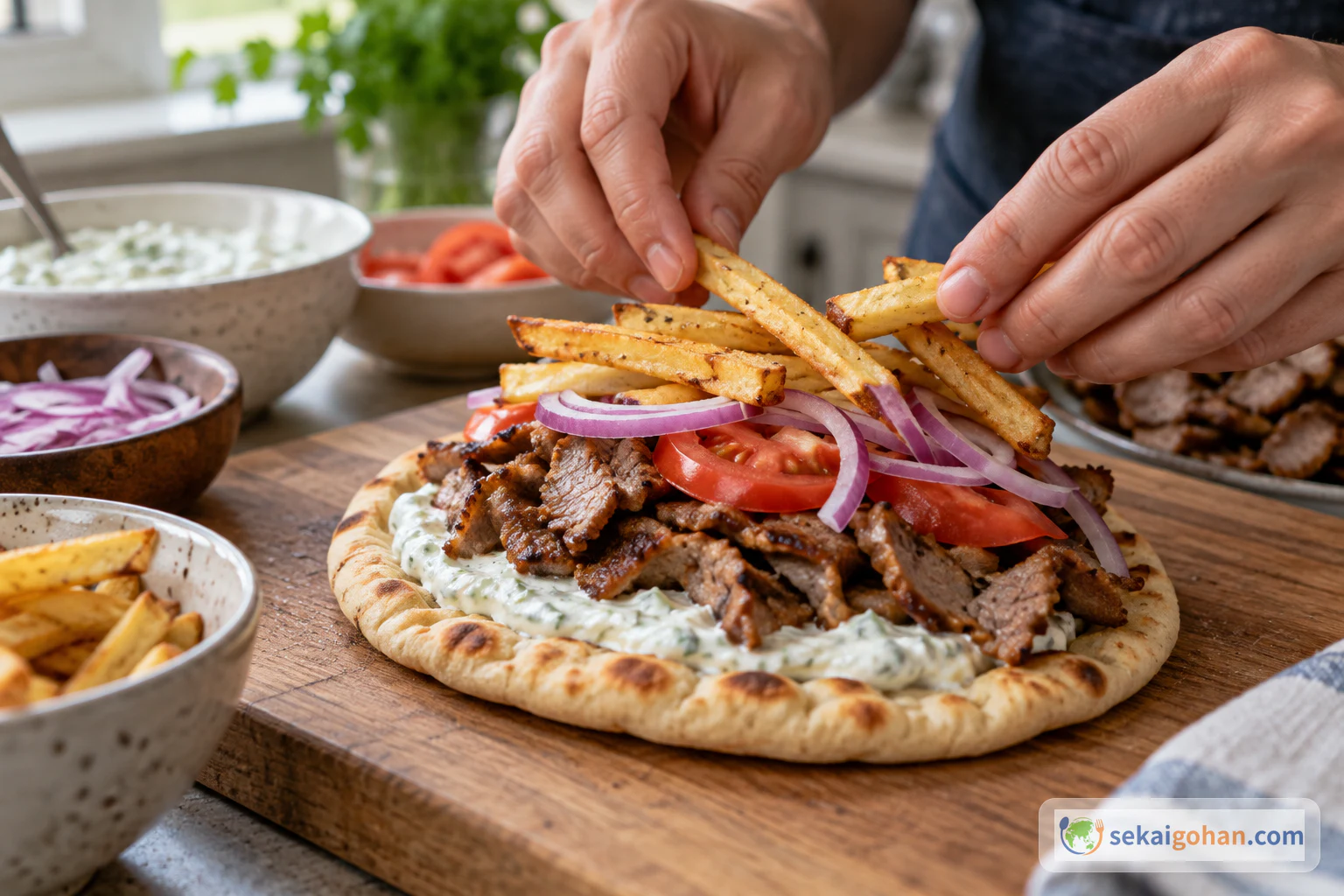
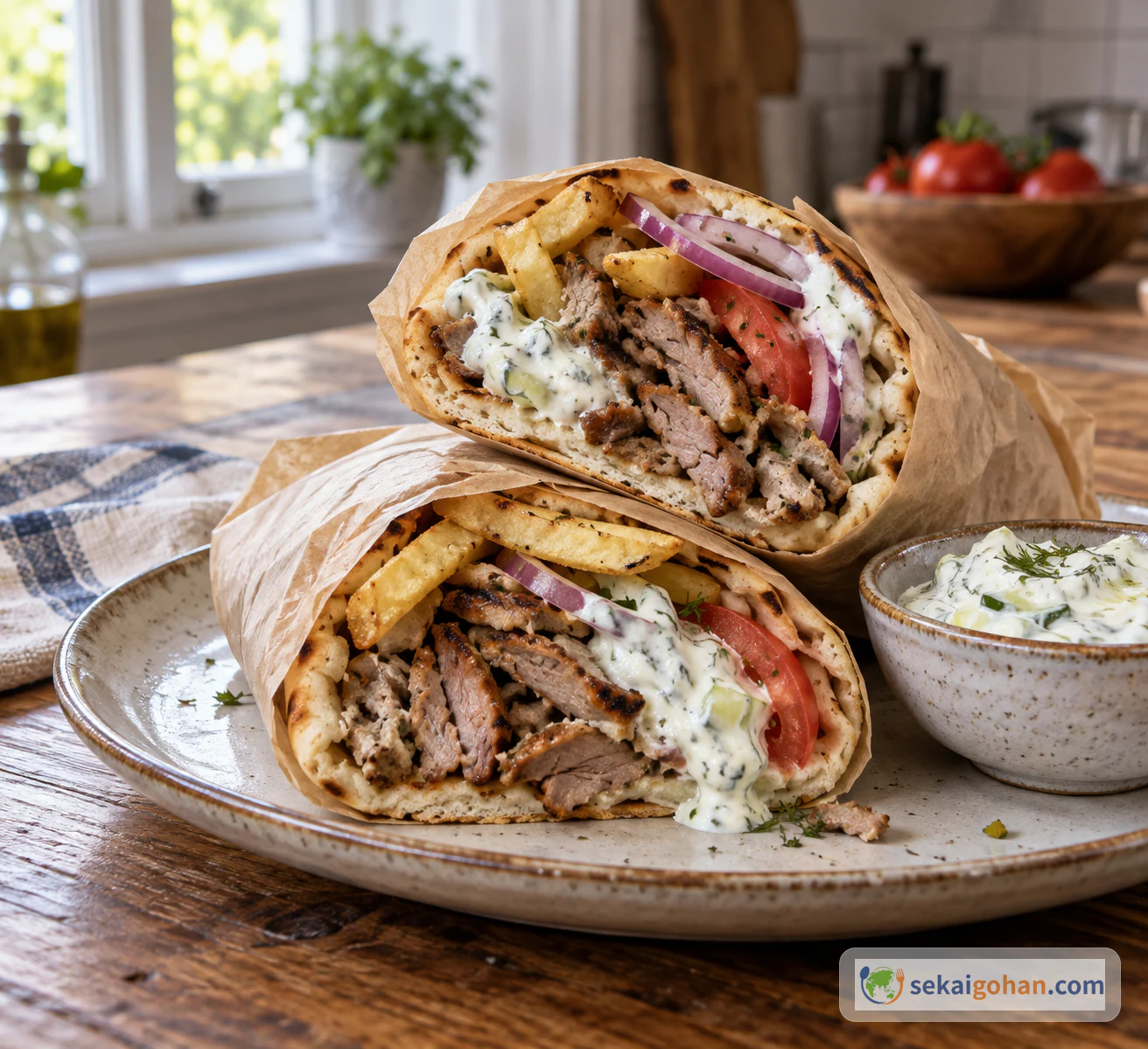
In Athens, Greece, gyros belongs to the street and to the evening. Meat stacked on a vertical spit turns slowly in front of the heat, and the browned outer layer is shaved off in thin strips, then folded into warm pita with tzatziki, tomato, onion and often a few fries. You eat it on the move, between stops on a night out or as a late snack while walking the city. Few home kitchens have a vertical rotisserie, so this version packs thin slices of marinated pork shoulder and belly into a deep tin, roasts them as one block, then slices and crisps the meat in a hot, dry pan. You still get the layered meat, the browned edges, and the contrast of hot, crisp pork against cold, creamy tzatziki.
What Gyros Is and How It's Eaten in Athens
In Greek the dish is γύρος, written gyros in English. The name refers to turning, after the rotating spit the meat is cooked on. Gyros and souvlaki often share the same menu boards in Athens, and both can go into a pita, but they are cooked differently.
| Gyros | Souvlaki | |
|---|---|---|
| How the meat is prepared | Meat is layered onto a vertical spit | Pieces of meat are threaded onto a skewer |
| How it cooks | The stack turns in front of the heat | The skewer is grilled |
| How it is served | The cooked outer layer is shaved off in thin slices | The pieces are served from the skewer |
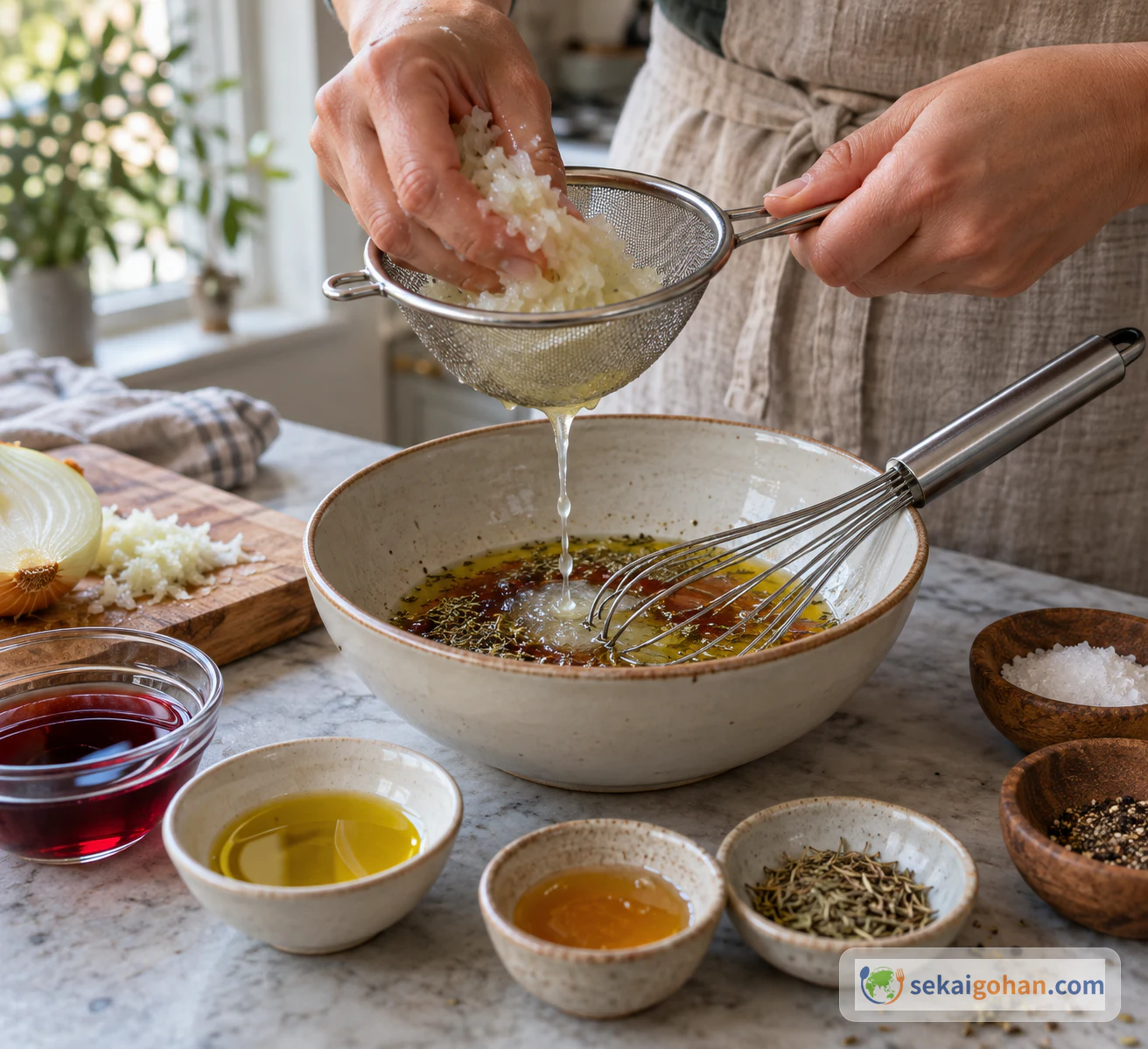
Gyros is made with pork or chicken, seasoned with salt, pepper, garlic and oregano, plus extra herbs and spices that vary from shop to shop, so there's no single blend used across Greece. This home version is built on onion juice, red wine vinegar, oregano and thyme, and leaves out garlic.
The typical wrap brings together warm pita, thin slices of meat, tzatziki, tomato, onion and fries. The meat brings salt, fat and browned edges; the tzatziki cools and binds; the tomato and onion add freshness and bite; the fries add softness and bulk inside the bread. Keep that in mind as you cook: the meat doesn't have to carry every flavor on its own, because the pita is meant to be eaten as one complete bite.
Ingredients: For 4.5 lb (2kg) of Pork
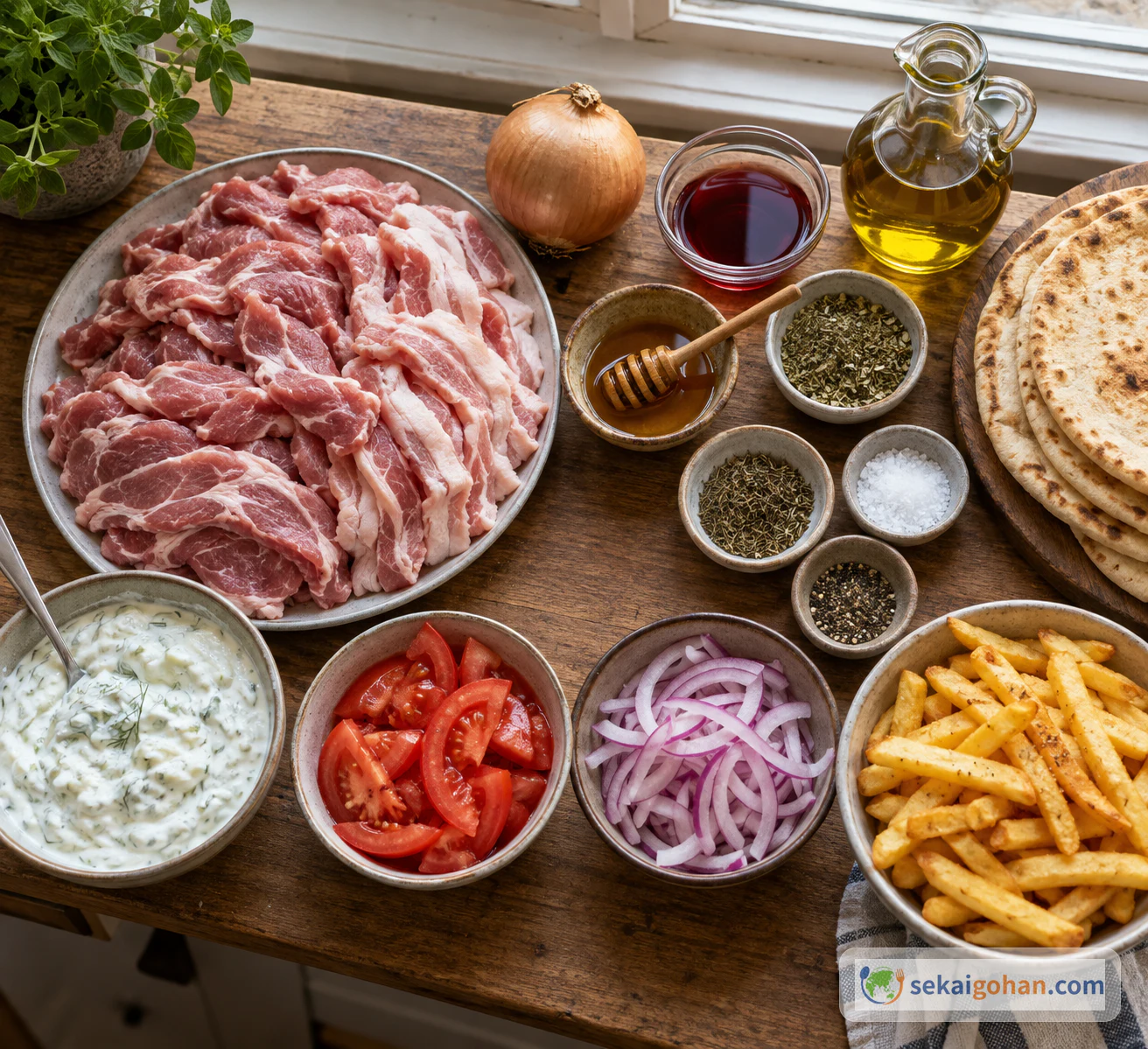
This recipe uses 4.5 lb (2kg) of pork shoulder and pork belly combined. Use both cuts; how much of each is up to you.
The pita, tzatziki and fries are ready-made accompaniments. Prepare as much of them, the tomato and the serving onion as you plan to eat.
Equipment
- A meat mallet or similar, for lightly pounding the slices
- A grater and a small sieve or cloth for squeezing the onion juice
- A deep loaf tin, or another deep tin, large enough to hold 4.5 lb (2kg) of meat with room left for the fat that renders out during roasting
- A flat weight or spatula for pressing the layers down as you pack them
- A probe thermometer, to check the internal temperature at the thickest center
- A heavy skillet for crisping the slices
- A separate cutting board, knife and tongs for raw meat, kept apart from those used for the vegetables, tzatziki and cooked meat
Choosing Pork Cuts and Substitutes for Gyros
Pork shoulder and belly. Shoulder (or shoulder loin) and belly are easy to find at ordinary supermarkets. The belly adds the fat that keeps the layers moist, so if you swap in other cuts, expect the texture to change; shoulder alone gives a leaner, drier block.
Red wine vinegar. Another vinegar, such as rice vinegar, will work but changes the flavor.
Pita. Warm, soft pita is what holds the wrap together. Naan or tortillas make for a different way of eating the meat.
Tzatziki. This recipe uses ready-made tzatziki. If you'd rather make your own, follow a complete tzatziki recipe.
Pita contains wheat, and tzatziki contains milk. Check the labels on the pita, tzatziki and fries you buy for allergens and any shared-facility statements.
Method: Layer, Roast, Shave and Crisp
The oven cooks the meat through as one packed block. The dry pan at the end gives the browned, crisp edges. Judge the first by internal temperature, and the second by the color of the edges.
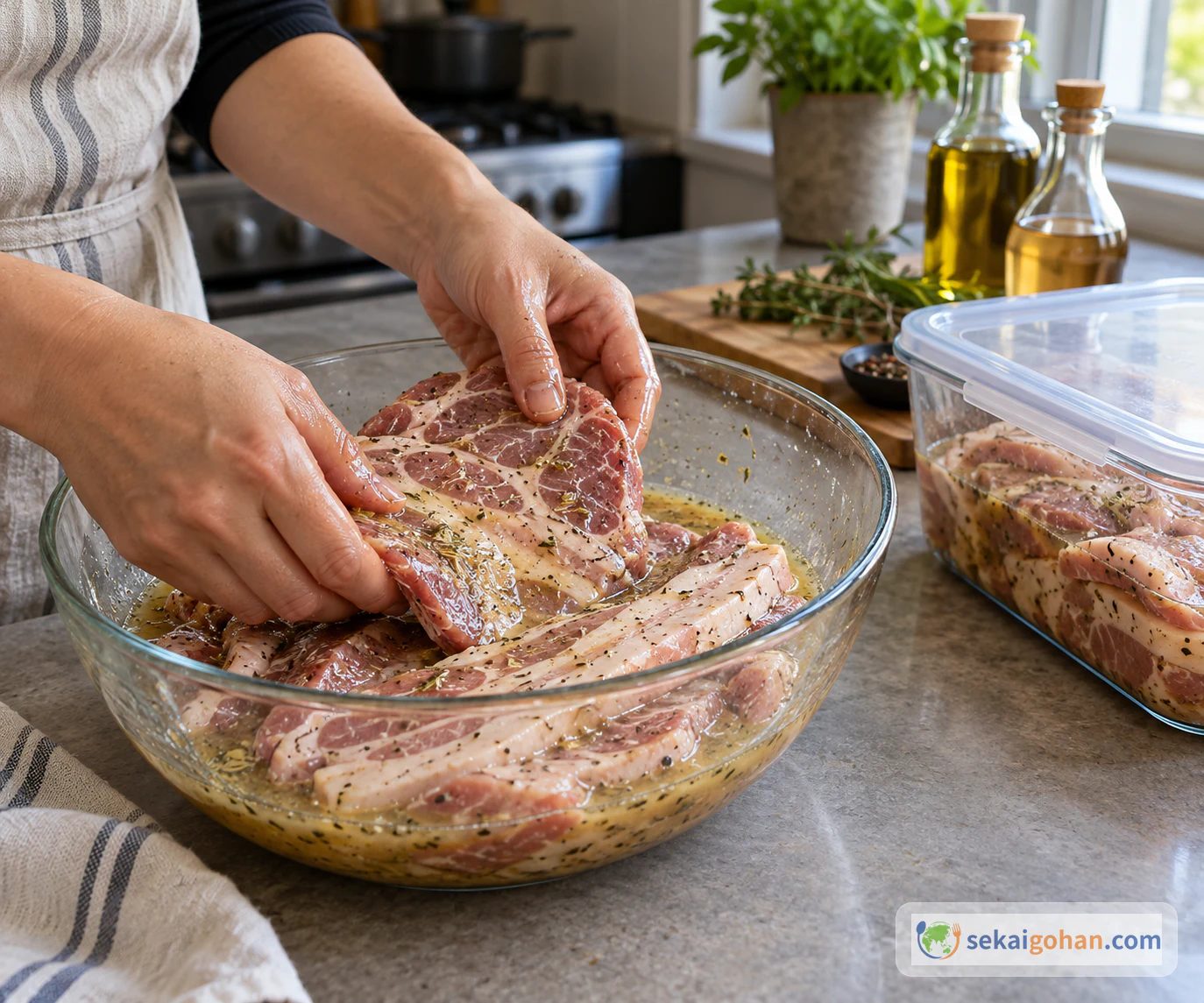
The marinade needs a night in the refrigerator, so start the day before you plan to eat.
Gyros Troubleshooting
| Condition | Likely cause | What to do |
|---|---|---|
| The outside is brown but the center is below 167°F (75°C) | The block is thick or the oven runs cool, so 1 hour was not enough | Return it to the oven and keep roasting until the thickest center reaches 167°F (75°C) for at least 1 minute |
| The block falls apart when sliced | The slices were not packed and pressed tightly | Next time, press each layer down firmly as you pack the tin |
| Some layers taste bland | The marinade was poured over the top instead of spread on each slice | Next time, coat every slice individually before packing |
| The slices taste flat and soft | They went straight from the oven into the pita | Crisp them in a hot, dry pan until the edges brown |
| The pan smokes and the meat scorches | The pan is too hot for the amount of fat coming out | Lower the heat and work in smaller batches |
| Fat is close to the rim of the tin | The tin is too small for 4.5 lb (2kg) of meat | Use a larger, deeper tin, or divide the meat and check each tin's center temperature |
Serving, Storing and Varying Gyros
Serving and variations
- Wrap or plate. Instead of folding everything into the pita, serve the crisp pork on a plate with pita, tzatziki, tomato and onion alongside.
- Fries inside or on the side. In Athens fries often go inside the pita. Serve them separately if you want a lighter wrap.
- Shoulder and belly balance. More belly means a fattier block; more shoulder, a leaner one. Choose the balance you like.
Food safety and leftovers
Keep raw pork and its tools apart from everything else. Use separate boards, knives and tongs for raw meat, and keep the onion you grate for the marinade separate from the onion you slice to serve. Cooked meat is safe to eat only once the thickest center has reached 167°F (75°C) for at least 1 minute; time and color alone are not enough.
Keep the marinating raw meat in the refrigerator. Cooked meat you aren't eating right away should be cooled quickly in shallow containers and refrigerated; when you reheat it, bring the center back to 167°F (75°C) or above. Store the pita, vegetables and tzatziki separately from the meat, and assemble each wrap just before eating.
Frequently Asked Questions
Do I need a vertical rotisserie?
No. Roasting the layered meat as a block in a deep tin, then slicing and crisping it in a hot, dry pan, gives you layered meat with browned edges at home.
What goes in the pita?
The typical combination is tzatziki, the meat, tomato, raw onion and fries. Layering them in that order, tzatziki first, keeps the wrap easy to hold.