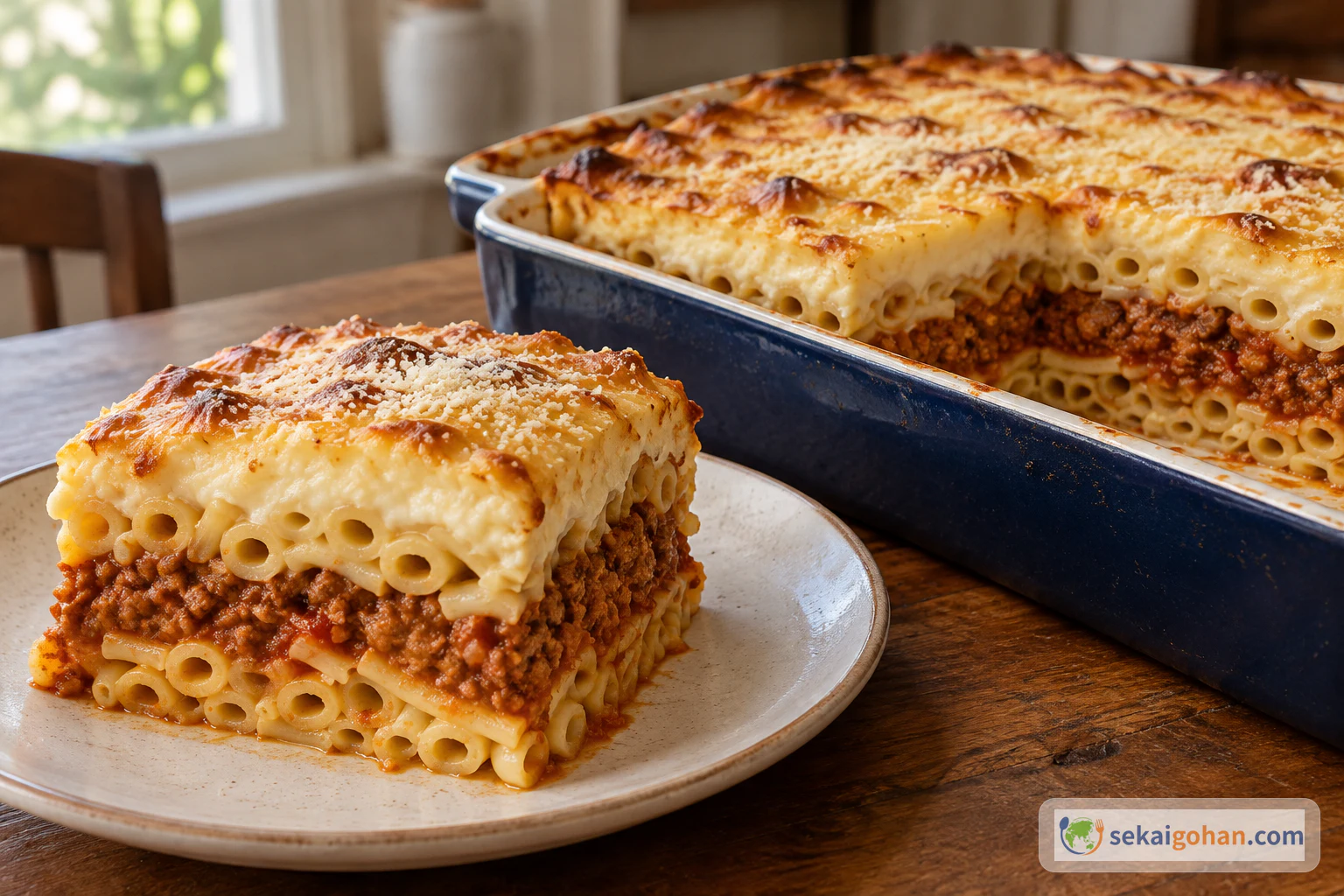
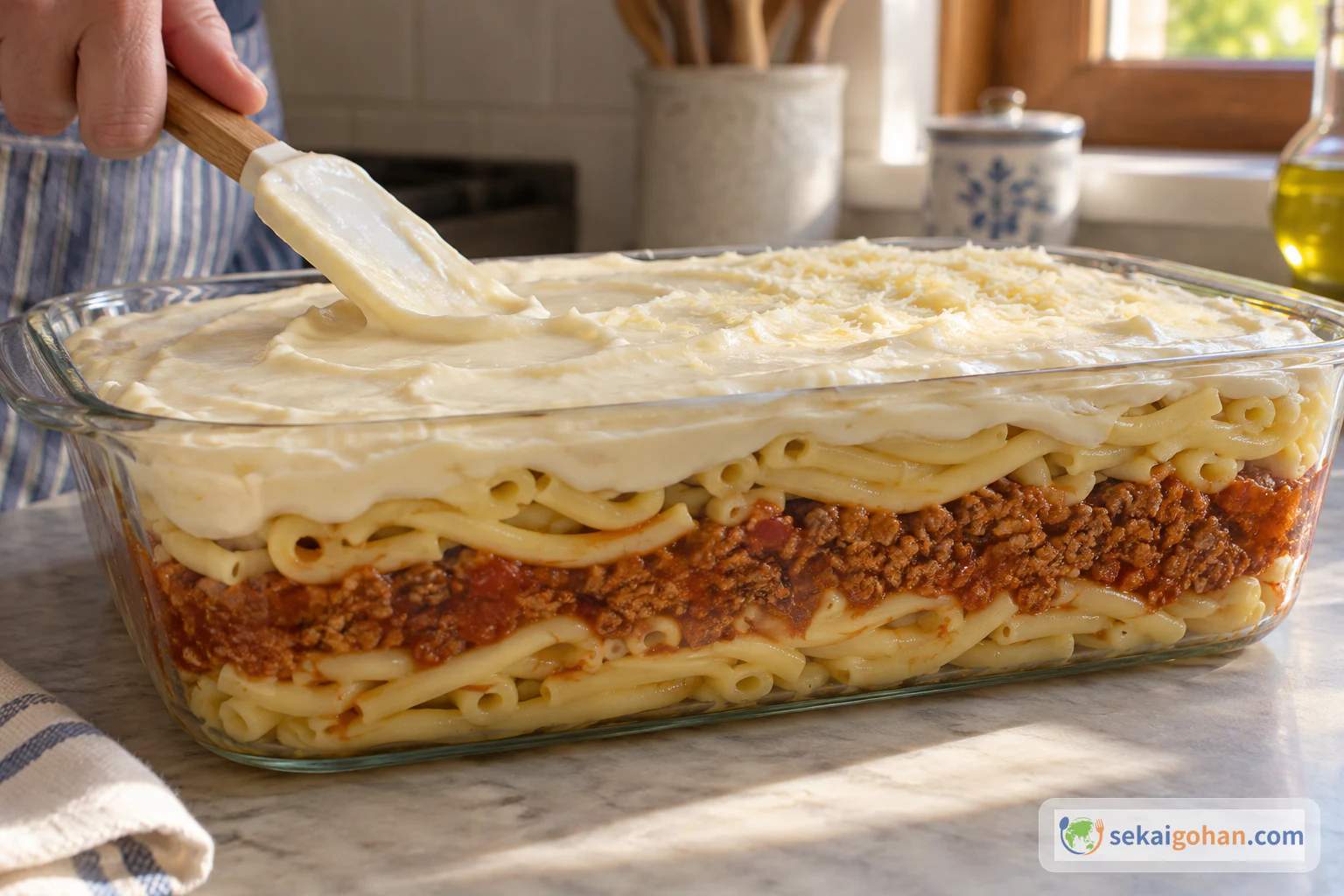
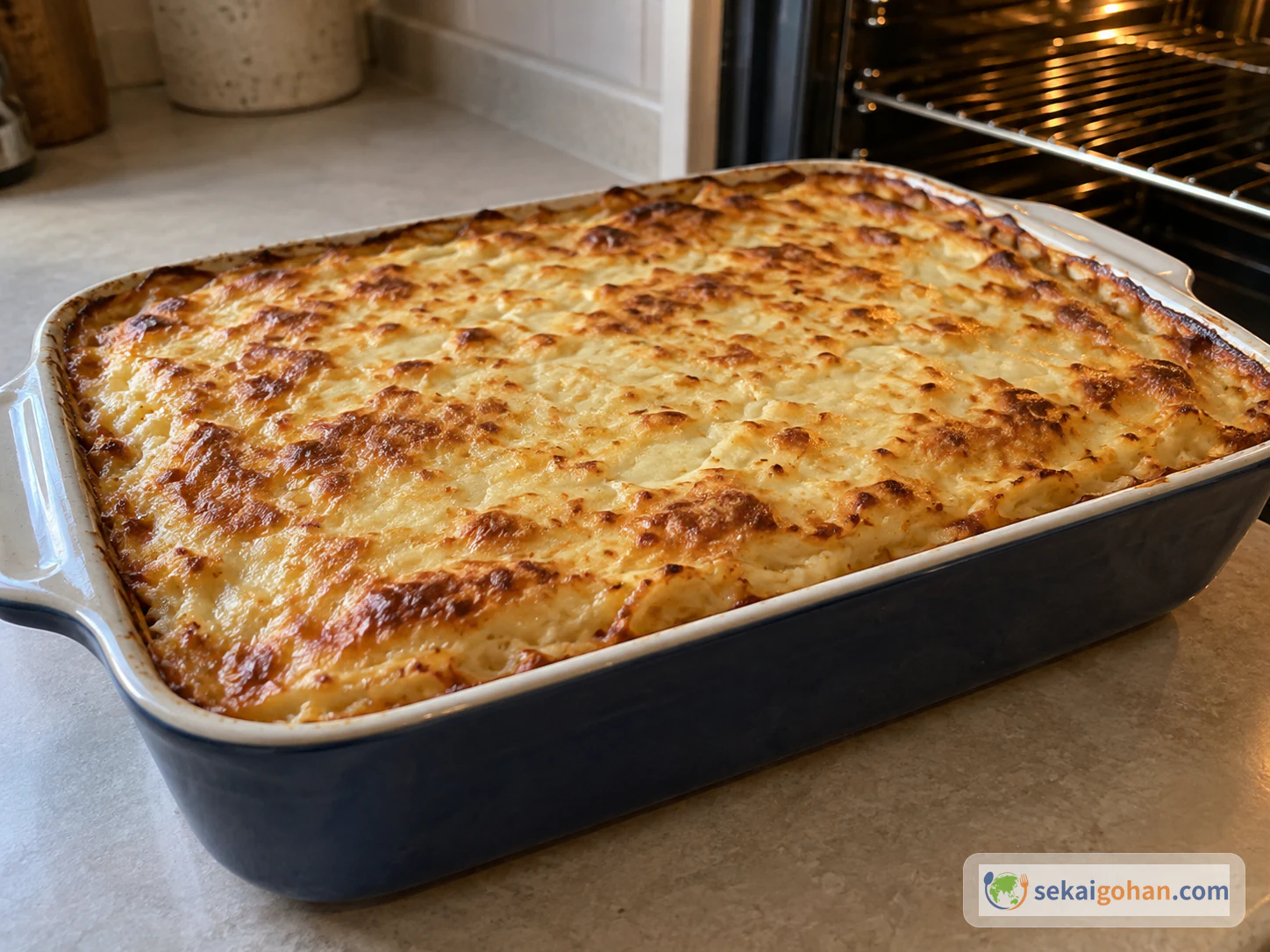
Cut into a pan of pastitsio and you see the whole dish at once. Thick, hollow pasta sits at the bottom, then a tomato sauce of meat, then more pasta, and on top a thick béchamel baked golden. It's Greek oven-baked pasta, and you'll find it in tavernas all over the country.
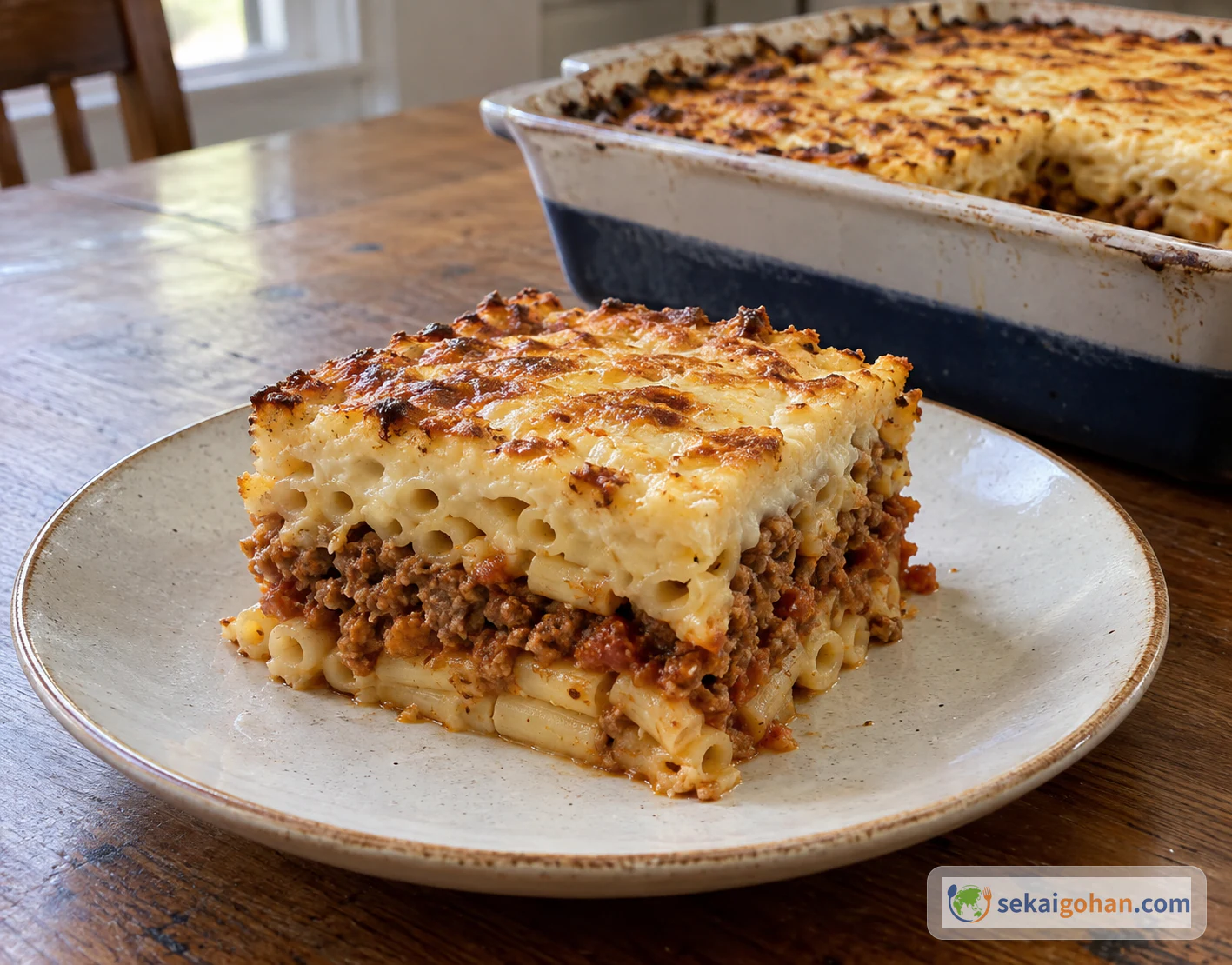
About Pastitsio
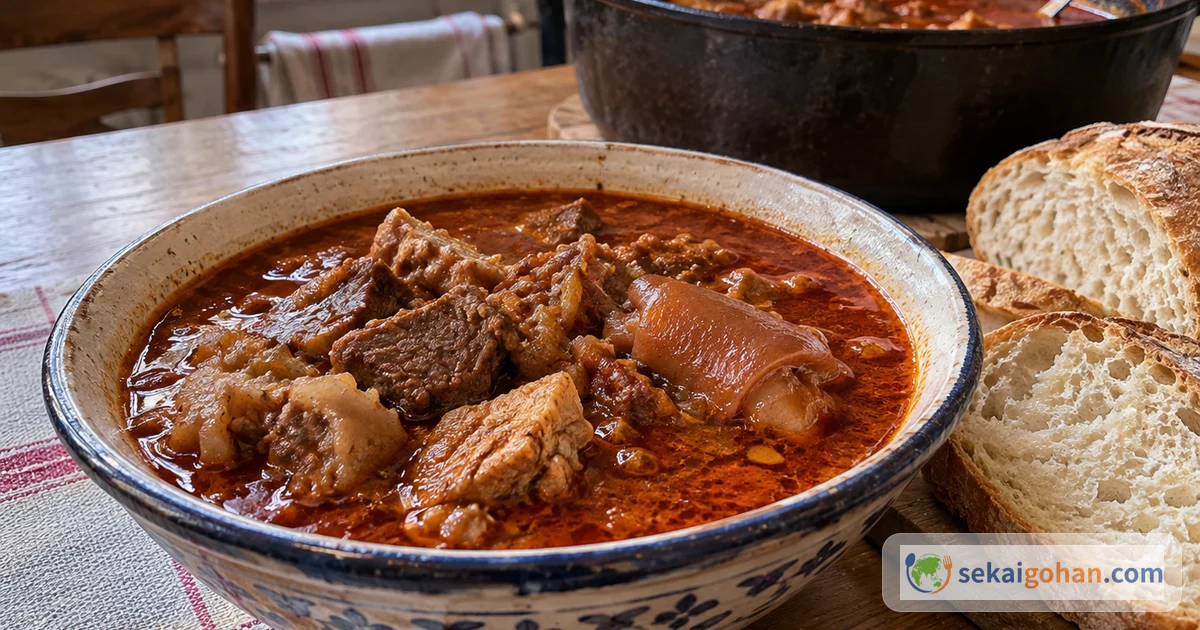
Pastitsio belongs to all of Greece rather than to any one region. It turns up in tavernas even on Crete, an island with its own pasta, skioufichta makarounia. Pastitsio is also easy to confuse with pastitsada, which has a similar name but is a different dish; see the FAQ below.
The dish developed over time and took many forms; nobody invented it at a single moment. Earlier regional versions were baked in a pastry crust. The béchamel topping came with French influence in the early 20th century and is associated with French techniques.
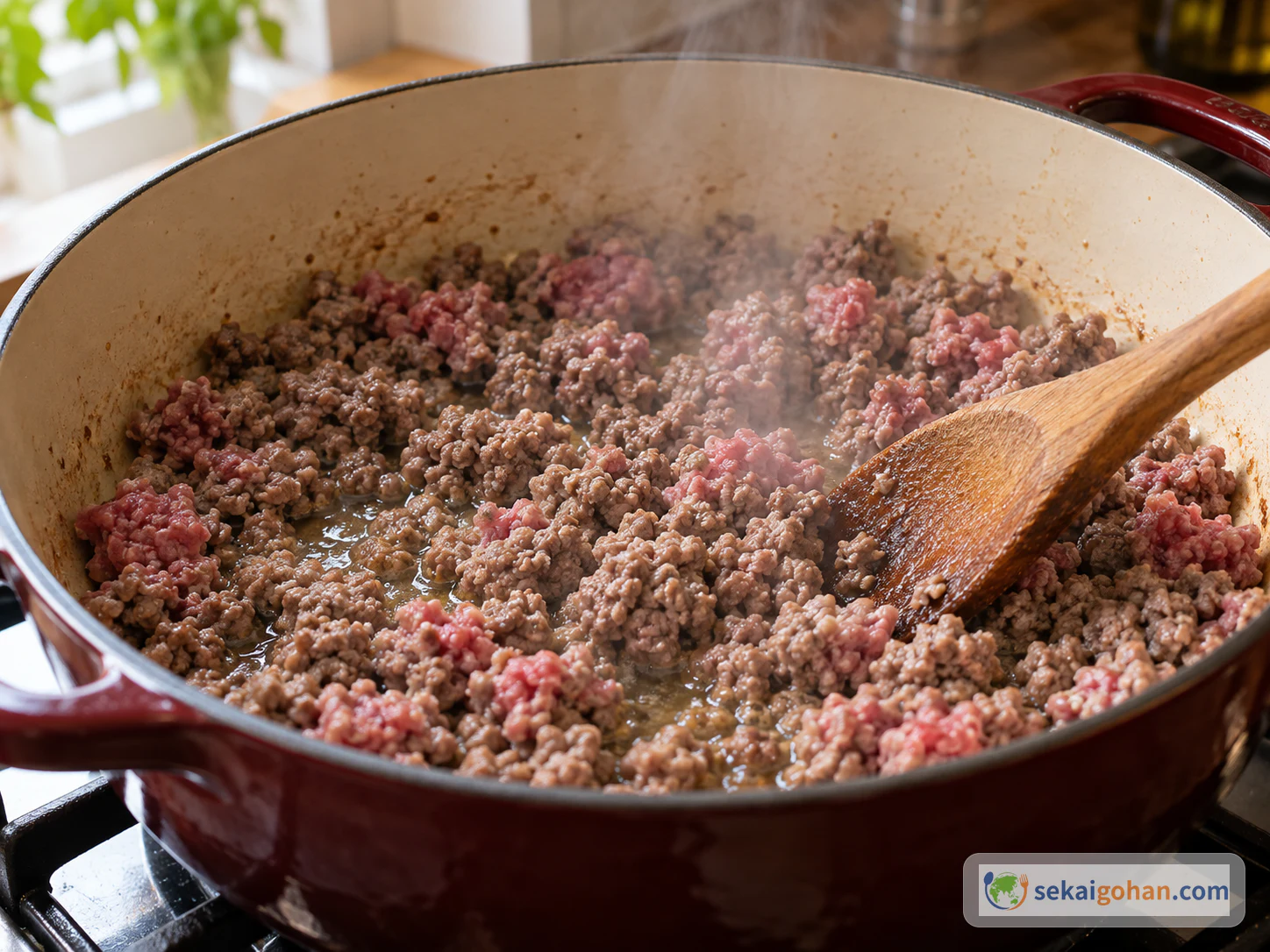
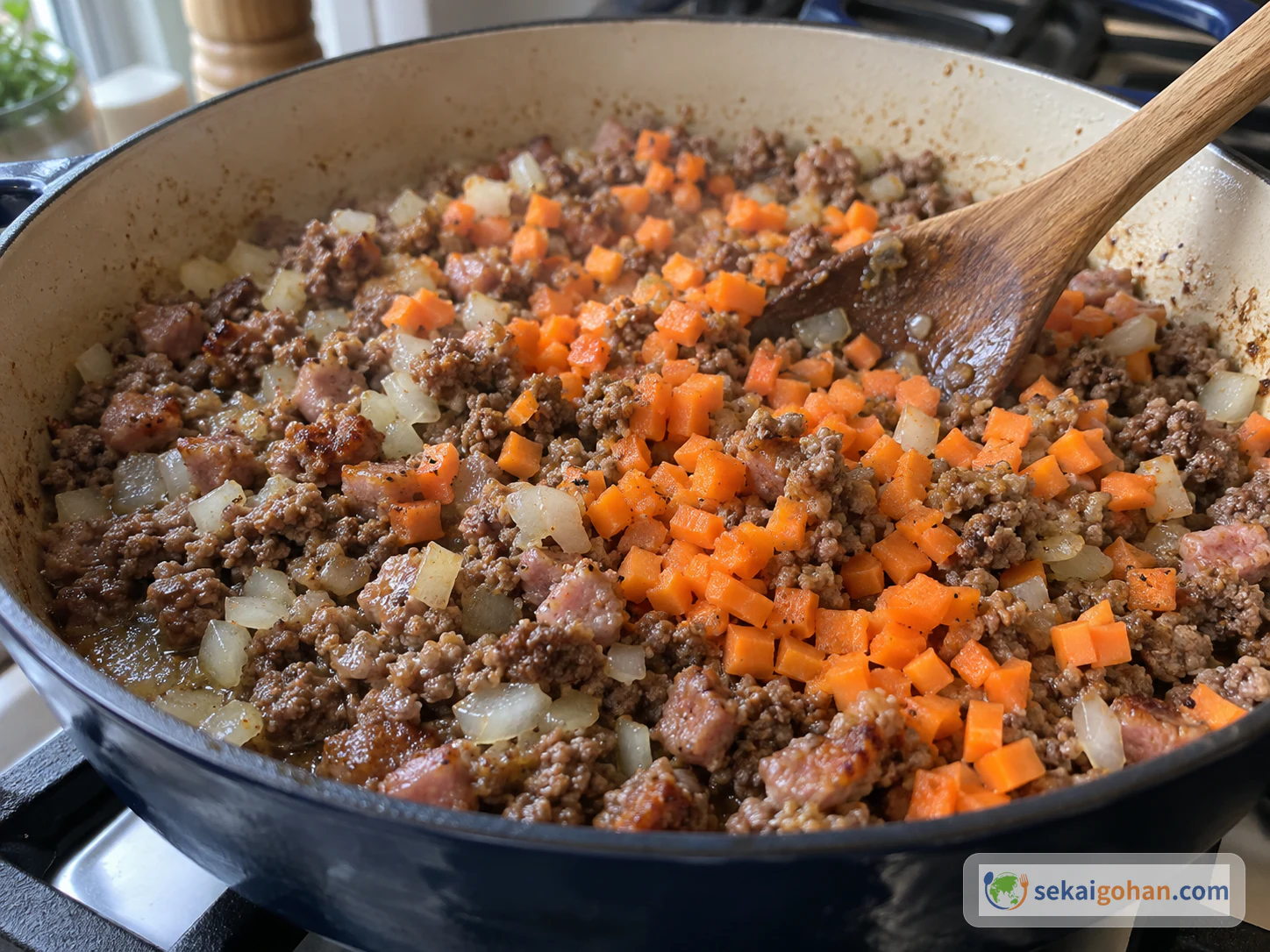
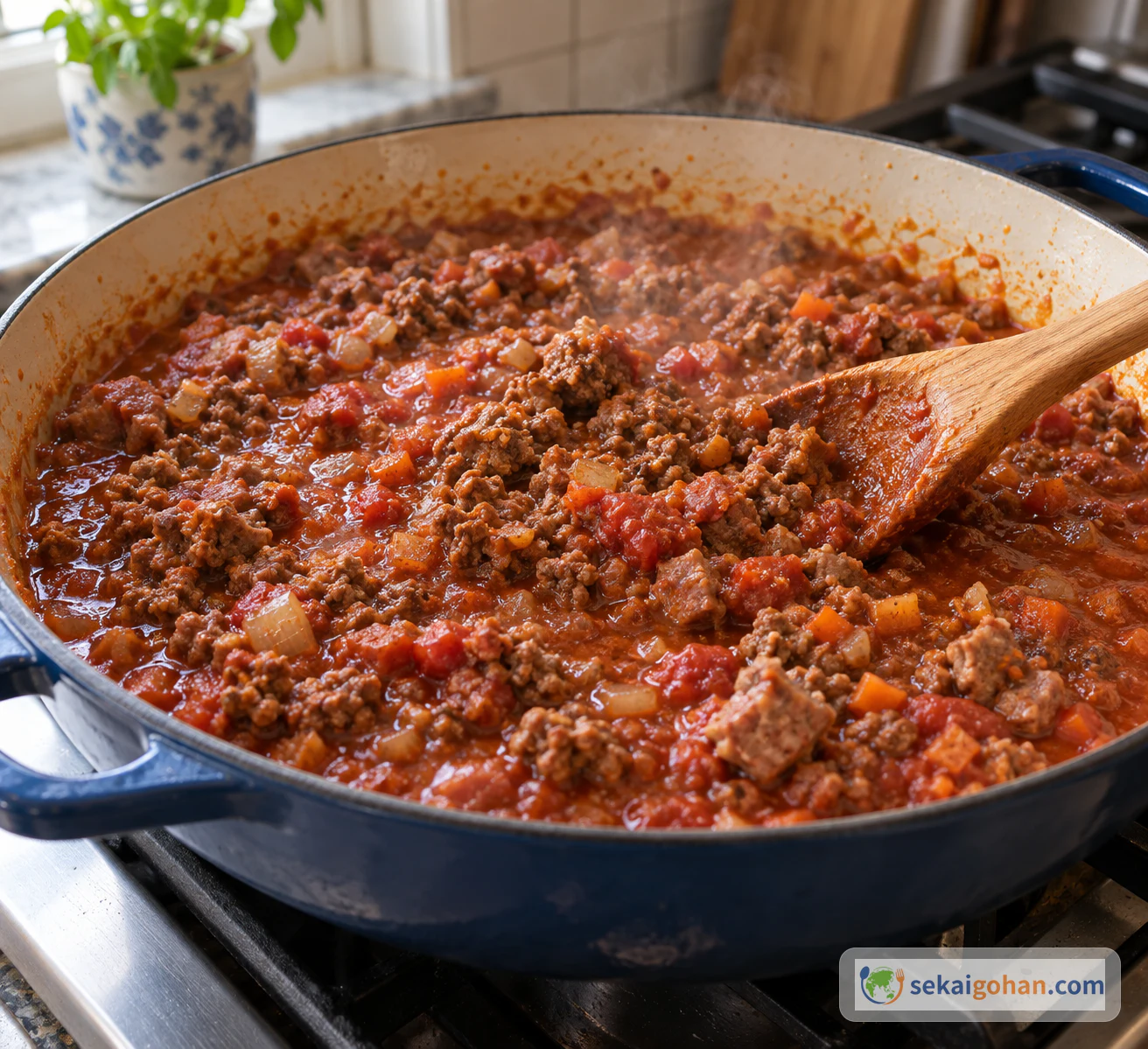
Pastitsio is still made differently from home to home, in its proportions and in how the layers go together. This version gives the meat sauce its own character: finely chopped sausage alongside the ground beef, plus carrot and a small amount of cumin. The work runs in three parallel parts, pasta, meat sauce and béchamel, that meet in the baking dish, so read all the steps before you start. For more dishes from the same country, see Greek recipes.
Ingredients (10 portions)
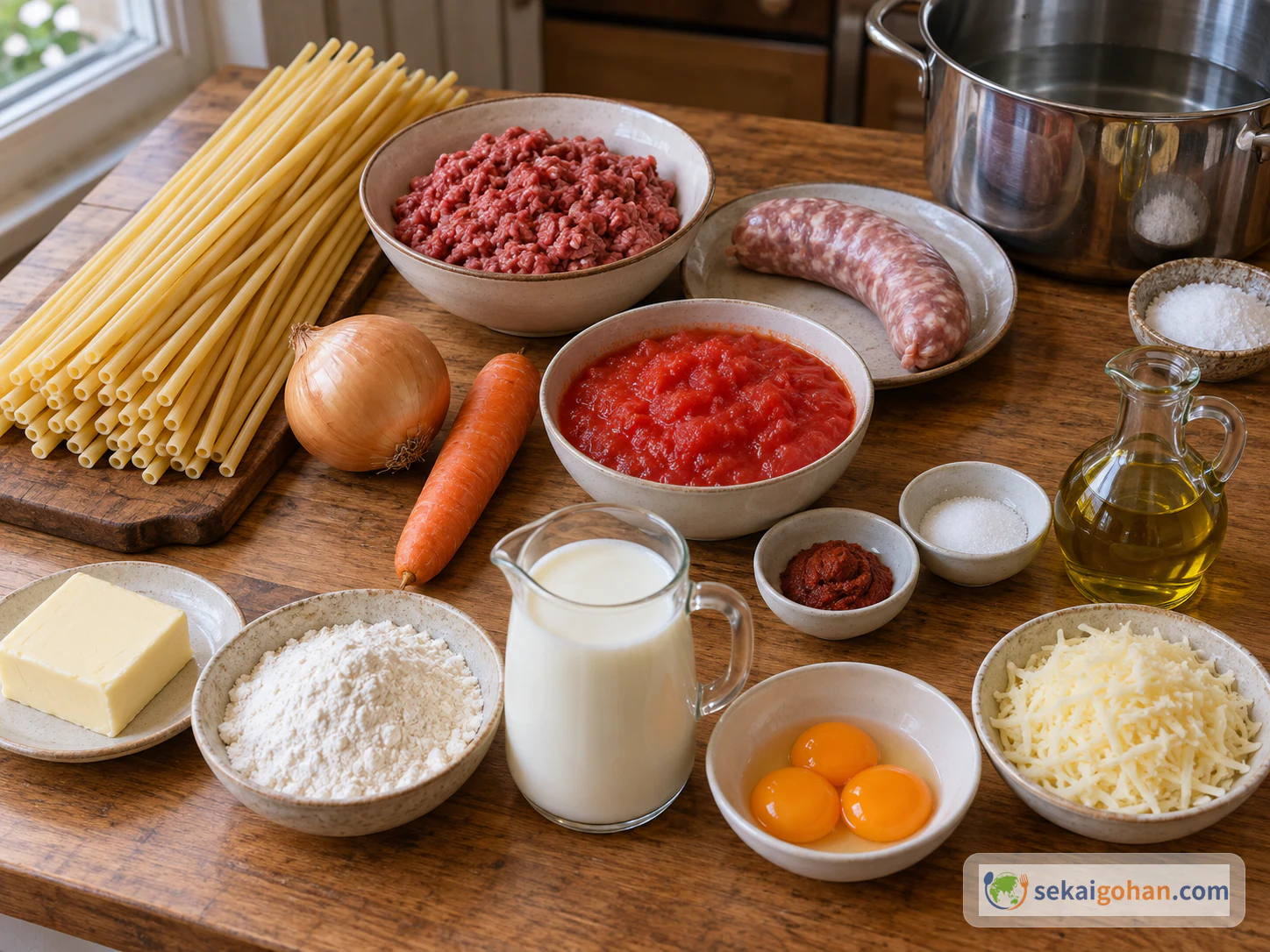
Where no amount is given (salt, pepper, nutmeg), the table says "to taste".
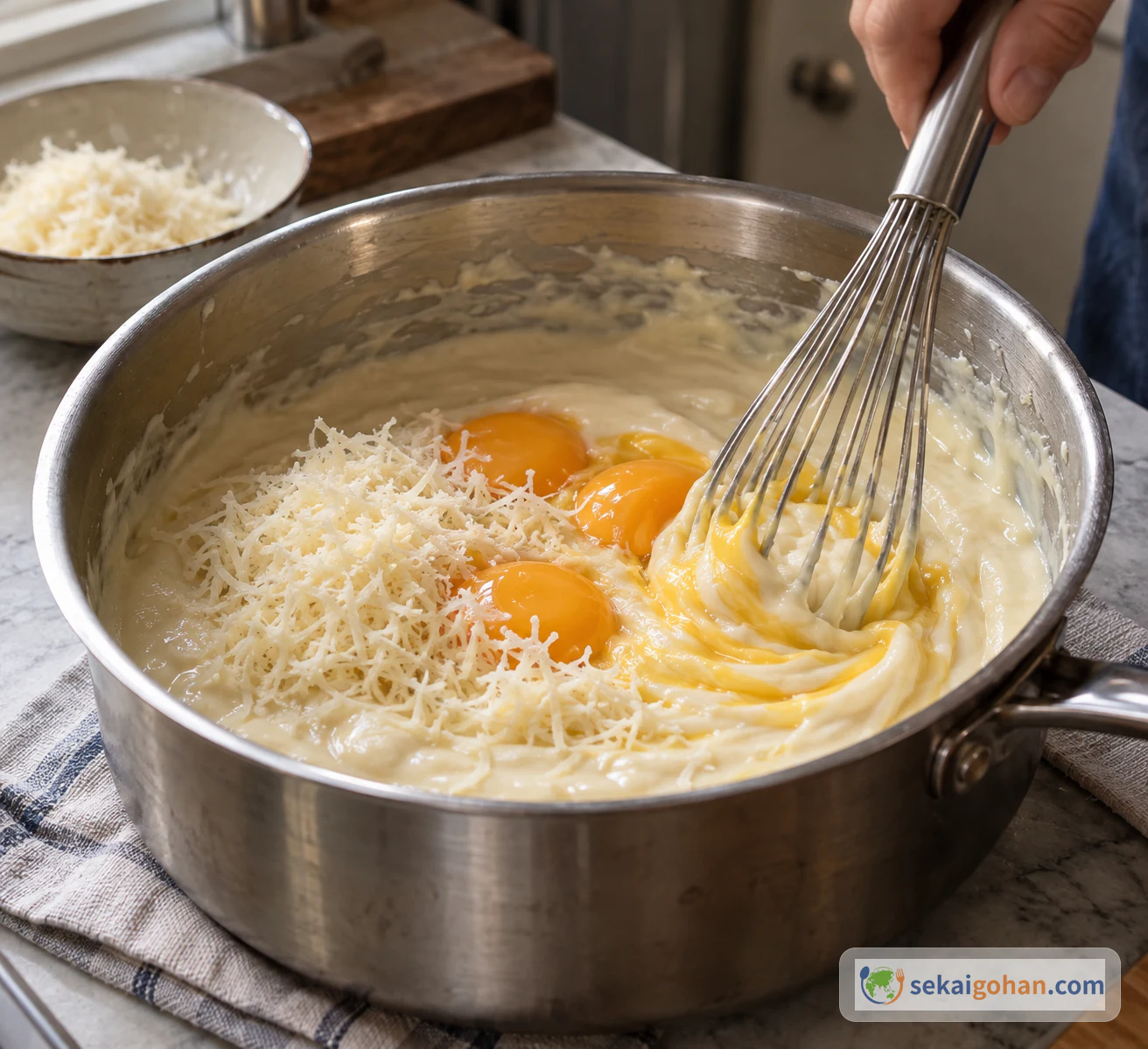
Kefalotyri appears twice: 3.5 oz (100 g) grated as a separate item, and 3.5 oz (100 g) within the béchamel. The béchamel's 3.5 oz (100 g) goes in together with the egg yolks, and kefalotyri is sprinkled over the top after assembling; use as much of the separate 3.5 oz (100 g) on top as you like.
This recipe contains wheat (pasta, flour), milk (butter, milk, cheese) and egg. Check the label of the sausage you buy for its ingredients and allergen information.
Equipment
- A large pot that holds 5 liters of water, plus a colander
- A shallow pan for the meat sauce
- A saucepan and a whisk for the béchamel
- A grater for the tomatoes and cheese
- An ovenproof baking dish
- An oven
Choosing Pasta and Cheese for Pastitsio
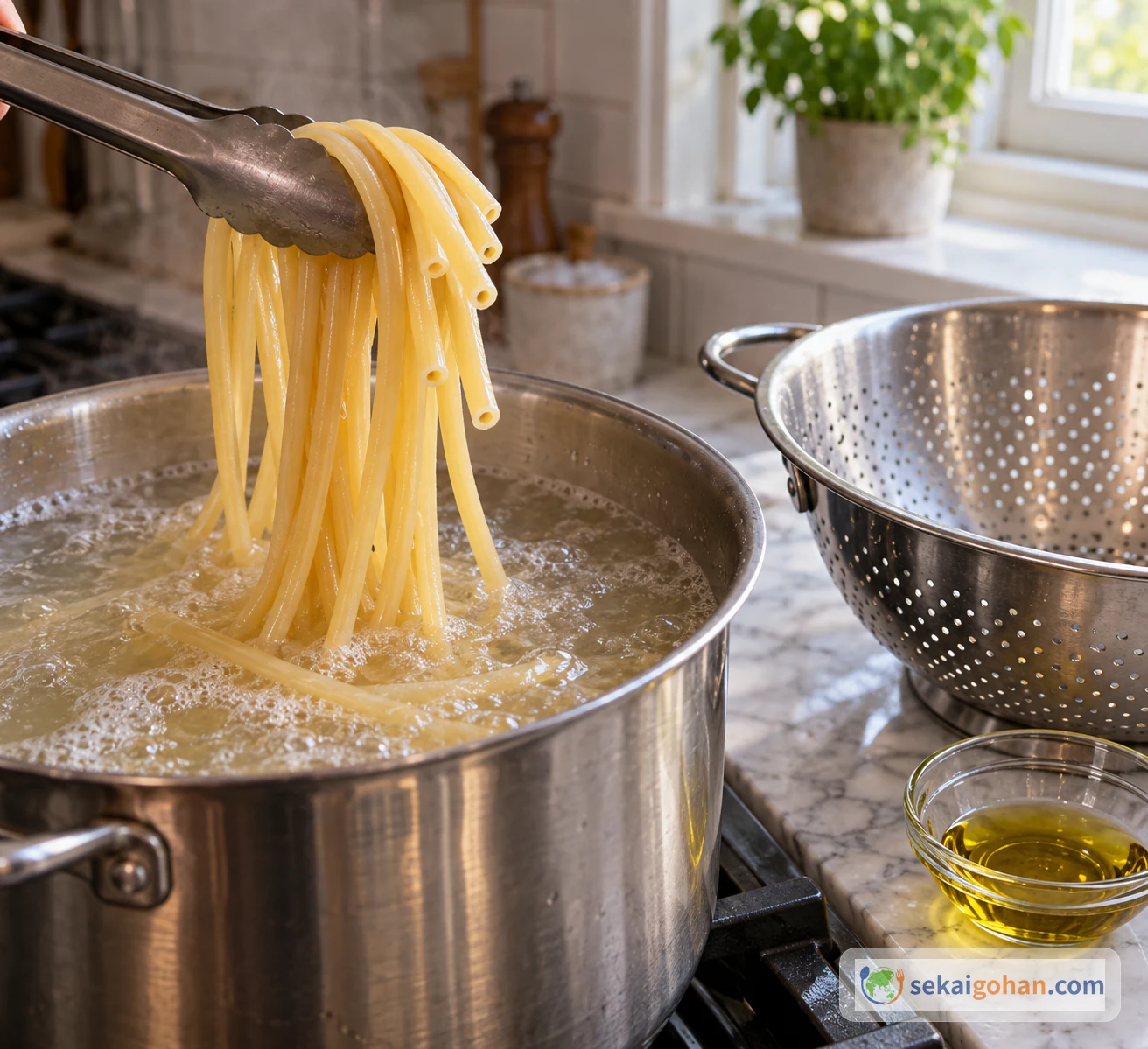
Pasta. MISKO's Pastitsio No2 is a thick tubular pasta made for this dish, but it can be hard to find outside Greece. Bucatini or ziti have a similar shape and thickness and work well in its place. The length will differ, though, and the layers may not hold together quite as neatly.
Cheese. Kefalotyri is a hard Greek cheese. Any other hard grating cheese can stand in, with some difference in saltiness, hardness and aroma. Allow for the cheese's saltiness when you season. Do any tasting before the raw egg yolks go into the béchamel, and don't taste it after they're added.
Method: Three Components, Then the Layers
Boil the pasta first and set it aside, then make the meat sauce, then the béchamel. Everything comes together in the baking dish in step 7.
Common Pastitsio Problems and Fixes
| Situation | What to check | What to do |
|---|---|---|
| The meat sauce is still watery | Whether it has simmered the full 15–20 minutes | Keep simmering over low heat until it has thickened before assembling |
| The flour is browning fast in the béchamel | The color of the butter-flour mixture | The flour should color only slightly; keep whisking constantly over medium heat |
| Lumps when adding milk | How fast the milk went in | Add the milk a little at a time and whisk quickly |
| Not sure when to add the yolks | Whether the pan is still on the heat | Take the béchamel off the heat first, then mix in the yolks and cheese |
| Portions fall apart when cut | Whether it rested | Rest 15 minutes after baking before cutting |
Frequently Asked Questions
Is pastitsio the same as pastitsada?
No. Pastitsada is meat stewed in tomato and served over pasta. Pastitsio is pasta, meat sauce and béchamel layered and baked in the oven.
Why boil the pasta for less time than the package says?
The pasta finishes cooking in the oven, so cook it 2–3 minutes short of the package time.