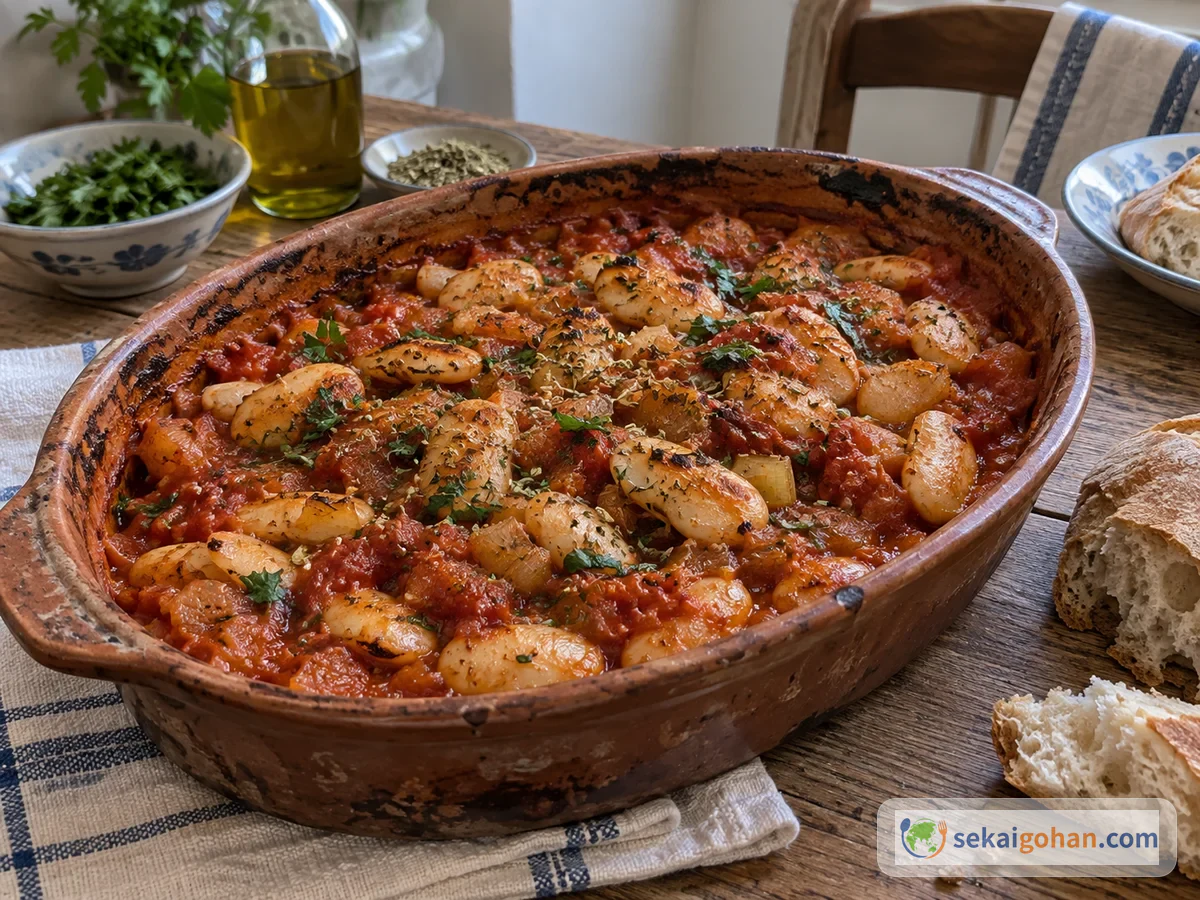
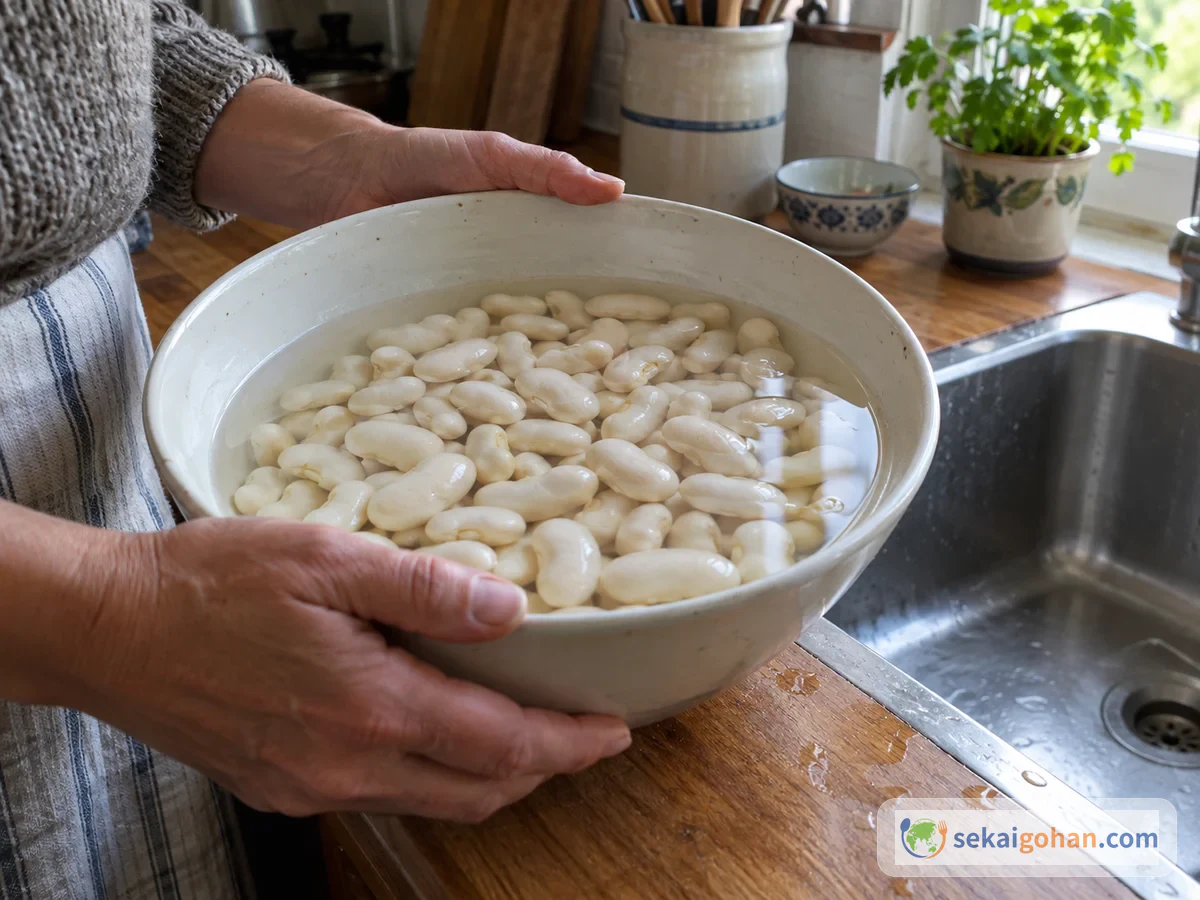
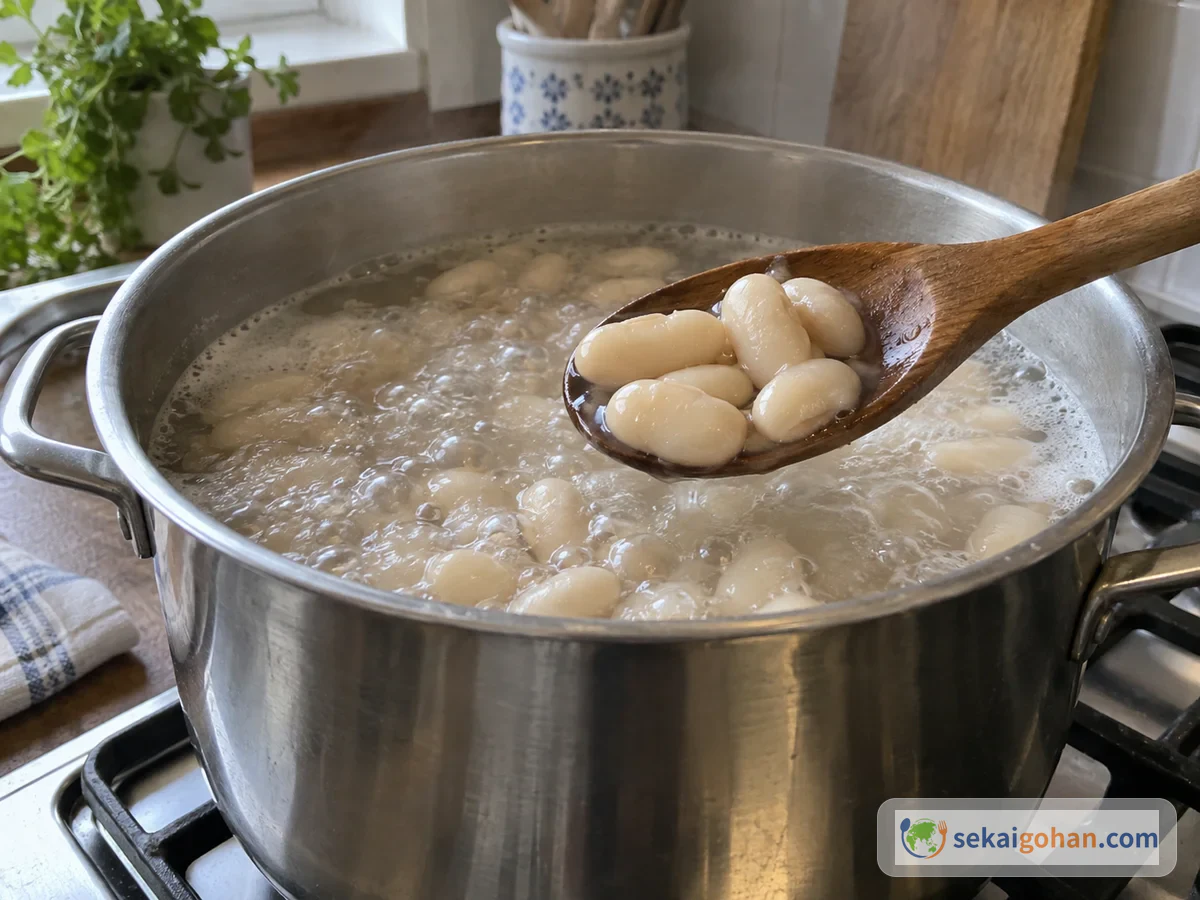
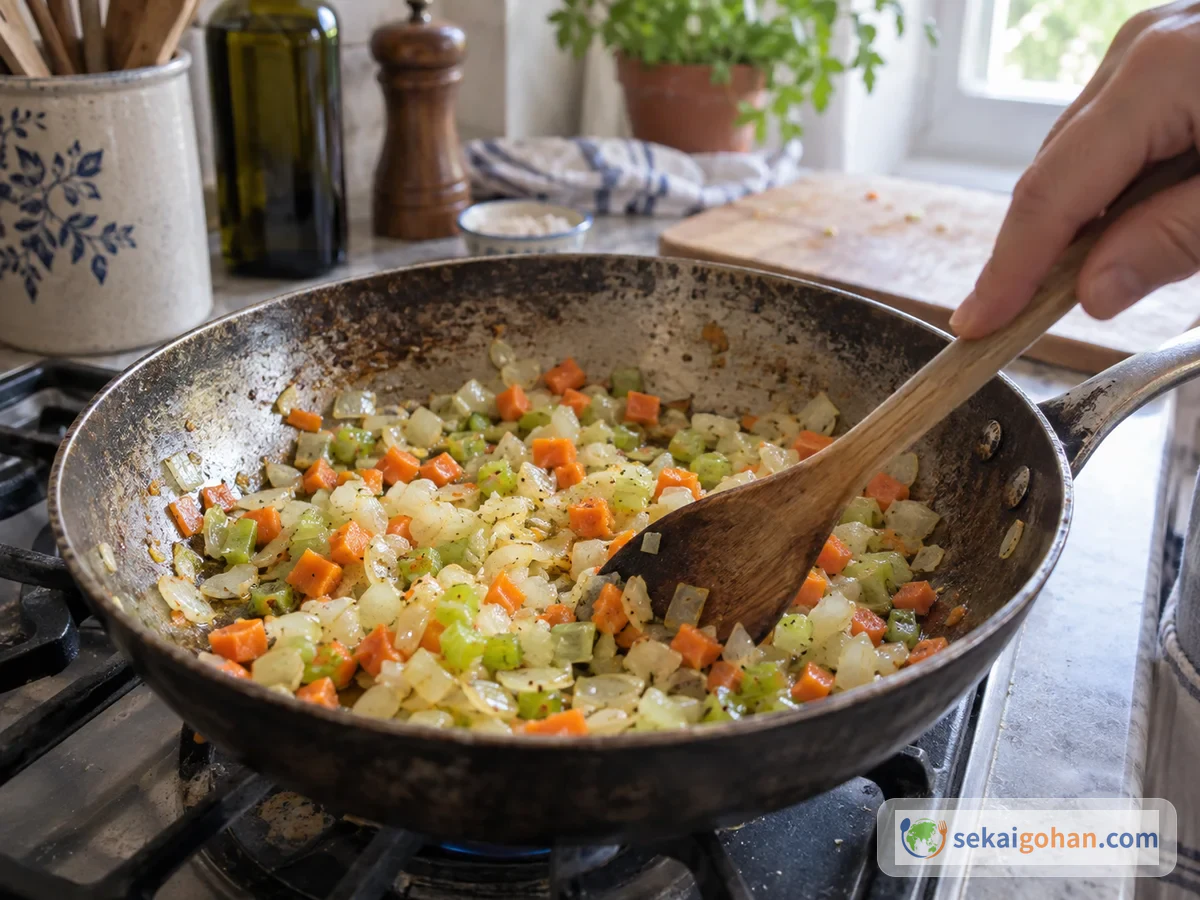
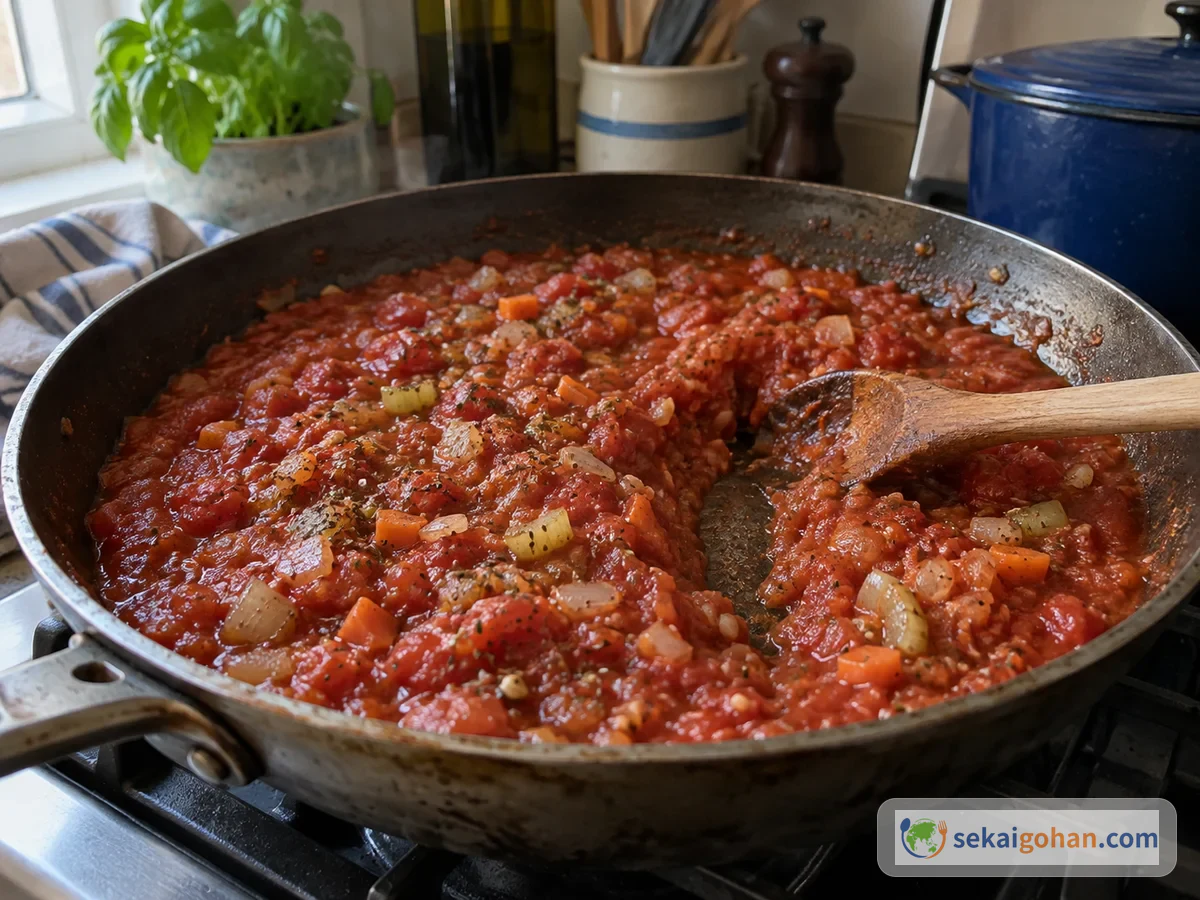
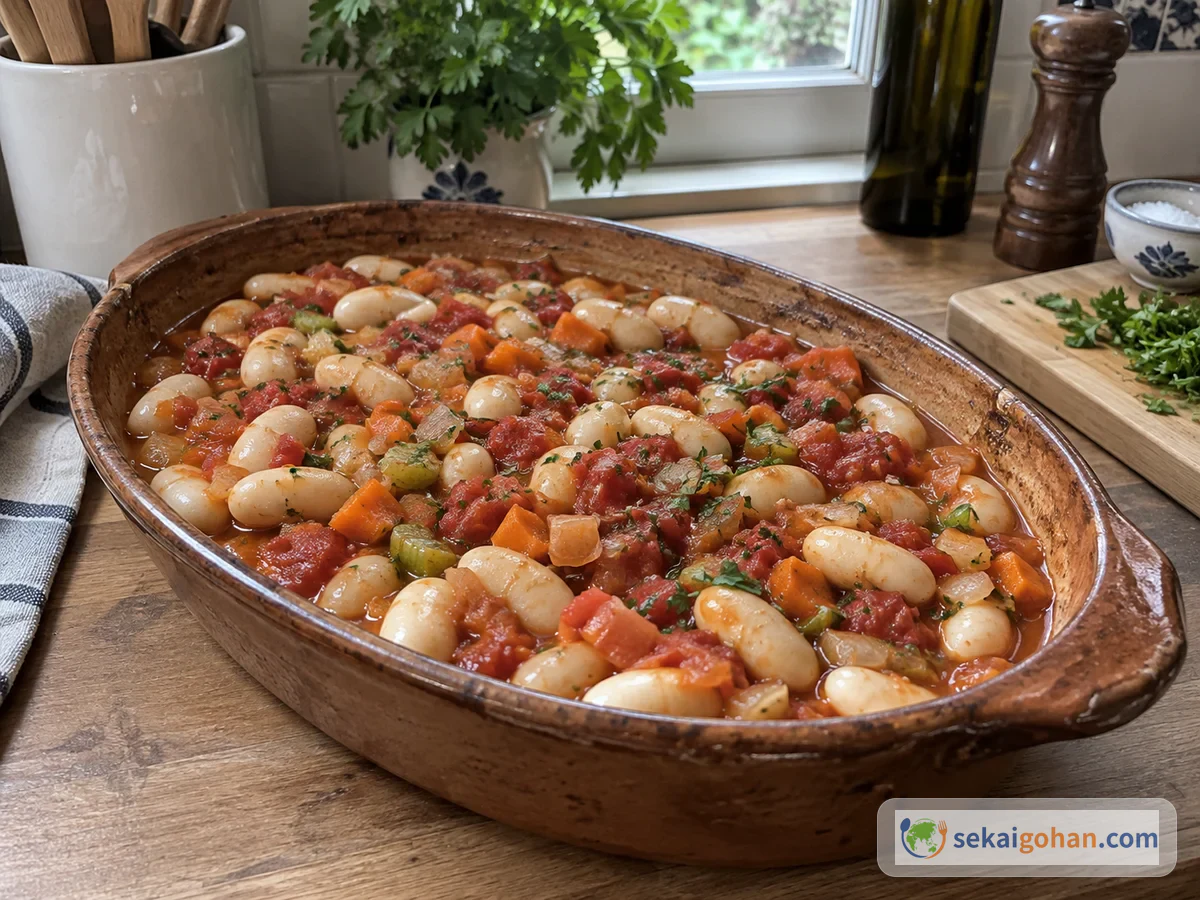
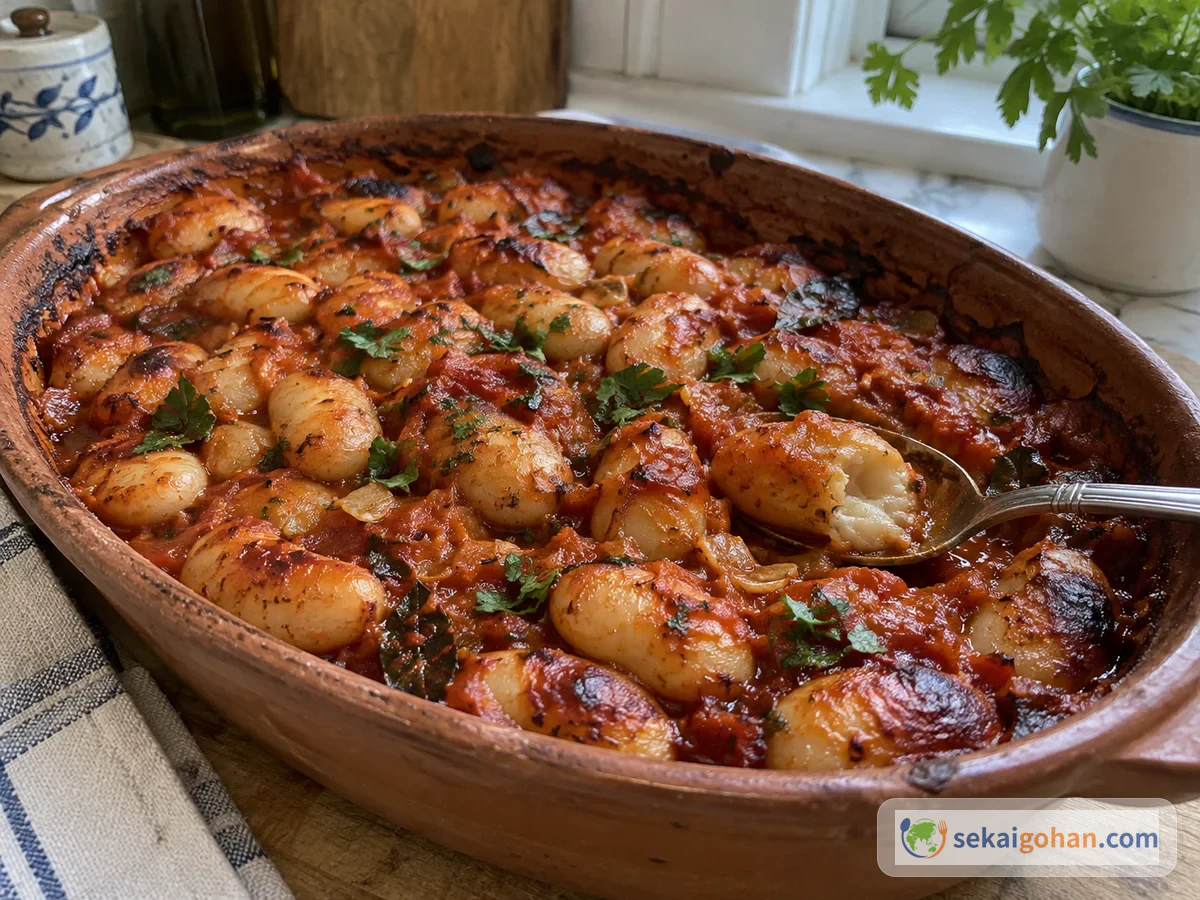
Picture a Greek table with a baking dish fresh from the oven, the red sauce still thick and glossy. Someone tears off the end of a loaf, wipes it through the sauce, and scoops up a few beans with it. Gigantes plaki (Γίγαντες πλακί / Gigantes plaki) is made for exactly that: large beans baked in tomato, pulled together with olive oil and herbs. You want beans that are creamy inside, a sauce that clings to them, and edges that have browned a little. You get there in two stages, boil first, then bake, after soaking the dried beans the night before.
Gigantes Plaki at the Prespa Table
In the Florina region of northern Greece lie the Prespa lakes. In the lakeside villages of Psarades and Agios Germanos, large beans, Florina red peppers, and carp are the local foods. Greece is usually pictured by the sea, but here lake fishing and farming sit side by side, and a bean-growing food culture by the lake feeds the table.
Prespa cooks keep bean soup and oven-baked large beans as separate dishes. One local version of the baked beans adds red pepper, carrot, parsley, and spearmint. Elsewhere the herbs change: some cooks use oregano and parsley, others dill and sweet paprika.
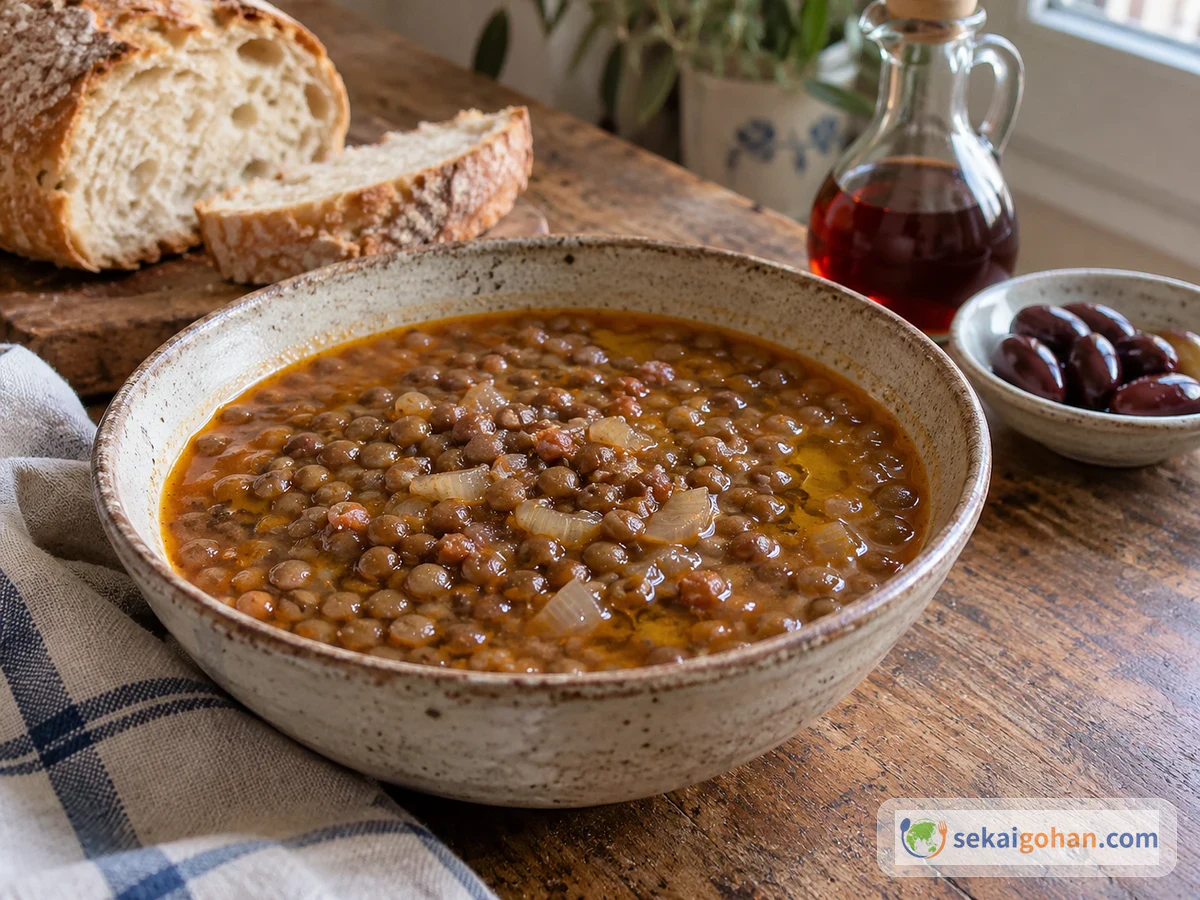
If you'd rather have your beans warm in their liquid, that's fasolada, another Greek dish. The soup and the baked dish differ in how much liquid they keep and how you eat them, so the same white beans give you two different pleasures.
Fasolada, white beans enjoyed as a soup
Ingredients (serves 4)
This recipe is scaled for home cooking, for 4 people with bread and salad. Start with 9 oz (250 g) dried beans. Soak them for 8–12 hours, not counting cooking time, so soak the dried beans the night before. If using canned beans, start with 1.25 lb (600 g) drained weight.
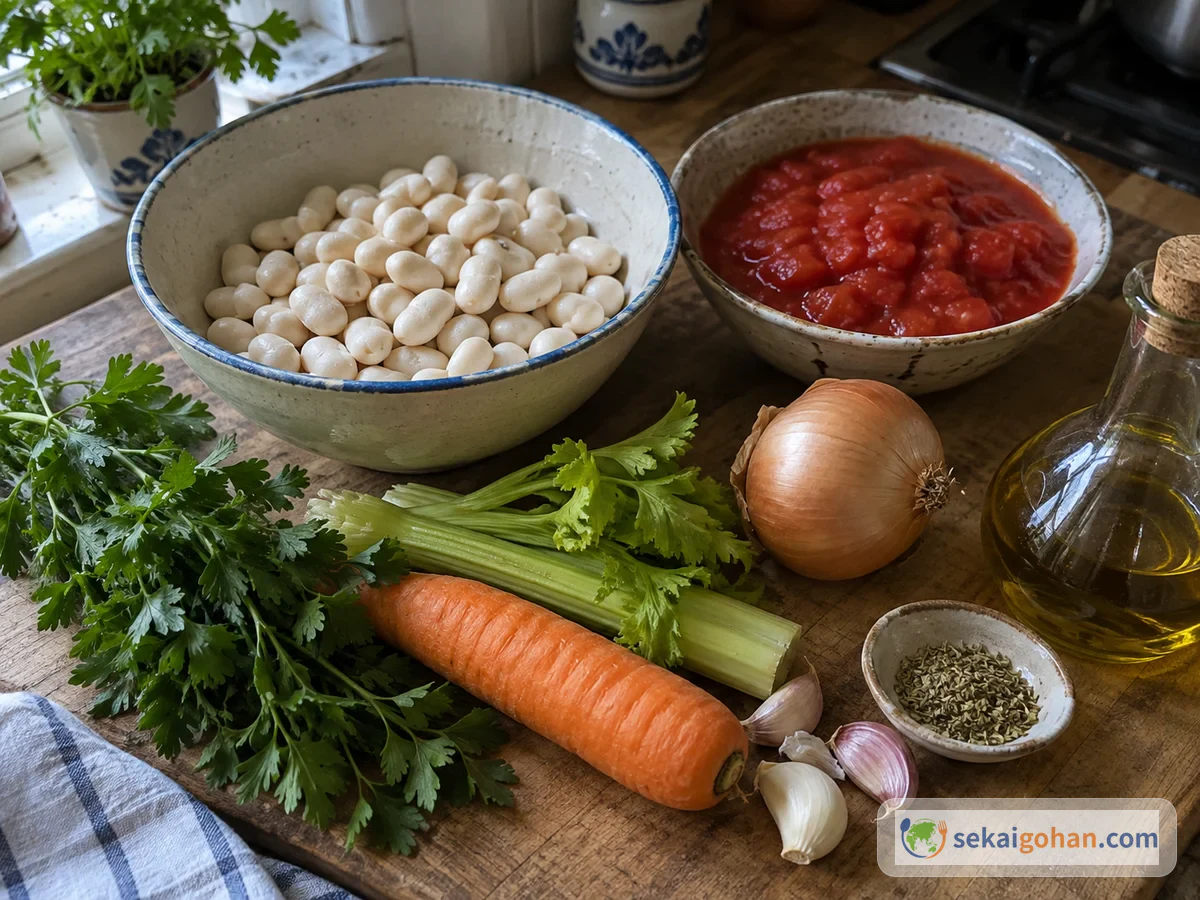
With canned white beans, you can skip the overnight soak. Check the drained weight, not the whole-can weight, since the two differ: look at the drained weight for canned beans. When buying dried beans online, check the label for edible, large, and suitable for stewing, and check the cooking method. Don't cook with beans sold for sowing. Choose dried oregano leaves, and don't swap them in the same amount as fresh. Also don't confuse seedlings for growing with seasonings.
Drain canned beans before using. Don't use seasoned or sweetened simmered beans. Even with canned beans, cook the sauce separately. Start checking the bake at 30–40 minutes, and finish before the beans break down. Don't mix dried and canned beans in one baking dish; they cook unevenly, so use one or the other.
You need a pot, a frying pan, a colander, and a shallow ovenproof dish. Use a dish about 24 × 18 cm and 4–5 cm deep. Beans piled deep won't let moisture cook off, so spread them thinly in a dish with a wide base. If they don't fit, split them between 2 dishes and check the baking time by how they look. Don't cook dried beans in a toaster oven alone. You don't need to buy a new pot or dish.
Choosing Beans and Herbs for Gigantes Plaki
If you can't find gigantes, large butter beans and similar varieties can stand in, though the size, skin, and inner texture will change. Ordinary canned white beans also work for the same dish. They aren't gigantes, and that's fine; just expect a different result. For the hearty bite of large beans, use dried. For an easy weeknight, use unsweetened canned beans.
With canned beans, drain off the can liquid and make the sauce with the water in the ingredient list, which keeps out the extra salt and thickness. Sweet-simmered white runner beans bring a sugary flavor and are no substitute. If you choose dried edible white runner beans, follow the soaking and cooking instructions on the bag rather than giving them a short boil.
Go easy on the oregano: too much and the herb aroma overpowers the beans. Not overdoing the herbs brings out their sweetness. Divide the parsley between the sauce and the finish; frozen parsley works in the same amount.
Raw or undercooked beans can make you ill because of lectins. Never eat them after soaking alone. Boil them in fresh water for at least 30 minutes, then cook until no hard core remains. Low-temperature cooking or a slow simmer cannot replace parboiling dried beans. Treat canned beans as already cooked, and follow the package instructions first. Use mitts for the hot dish, and avoid wet counters and sudden temperature changes. Also check that the label says ovenproof.
Start with liquid around the beans rather than over-reducing the sauce. If the surface of the beans turns wrinkled and dry during baking, it needs more moisture. If red water runs when you tilt the dish, there is still too much liquid. Don't stir hard right after baking. Rest it 10 minutes, then serve, keeping the beans' shape.
Fixing Hard Beans or a Watery Sauce
If the beans come out of the oven hard but only the surface is dry, pour 3.5 tbsp (50 ml) boiling water along the edge of the dish, cover with foil, and bake 10–15 minutes at a time at 400°F (200°C), checking the center for softness each time. If the beans were under-parboiled, or boiled for less than 30 minutes, don't eat them. Baking alone won't make them safe, so never skip the soaking and boiling. The basic rule: don't leave a hard core.
A watery sauce needs the foil off and more time at 400°F (200°C), in 10-minute increments; stir gently so the beans don't break. If the sauce tastes too sour, check whether the onion was cooked enough and the tomato simmered long enough. Rather than adding sugar, soften it with bread or cheese on the side. A burnt taste won't cook out, so leave any scorched bottom in the dish.
Serving and Varying Gigantes Plaki
With bread, gigantes plaki makes a meatless main; piled on bread, it's an appetizer. Feta is a natural partner, but the dish of beans and vegetables can carry the table on its own. What people love is the fluffy, hearty bite of the beans and a sauce you'll want to mop up. A salad of tomato and cucumber rounds out the meal.
Greek-style salad of tomato and cucumber
Herb and Vegetable Variations
Small changes in herbs and vegetables give the same baking dish a different character. Change one thing at a time.
| How to change it | Amount or action for 4 servings | Difference in result |
|---|---|---|
| Add red pepper | Cut 3.5 oz (100 g) into 0.5-inch (1 cm) cubes and sauté in step 3 | Adds the sweetness of the vegetable |
| Use dill | Leave out the oregano and add 5 g chopped fresh dill at the end of step 4 | A green aroma different from parsley |
| Use spearmint | Leave out the oregano and add 2 g chopped fresh leaves at the end of step 4 | A refreshing aroma |
| Use sweet paprika | Add 1 tsp mild paprika powder in step 4 | Deepens the color and aroma of the sauce |
| Serve with feta | 20 g per person, served separately after baking | Adds dairy flavor and saltiness |
When serving with feta, taste before salting the sauce further. Adjusting to the cheese's saltiness keeps the dish from turning too salty.
Feta doesn't need to go into the baking dish. If someone at the table avoids dairy, put the cheese on a separate plate with its own serving spoon.
Nutrition Estimate
One serving is roughly 360 kcal, 16 g protein, 16 g fat, and 48 g carbohydrate. That's based on 1.25 lb (600 g) cooked beans, about 2 oz (54 g) oil, and the vegetables in the ingredient list, divided into 4, using values for boiled kidney beans and leaving out the small amounts of herbs and pepper. Bread, feta, and other sides aren't included, and the numbers shift with the bean variety, the drained weight of canned beans, and how much oil stays in the dish.
FAQ
Is it spicy? What about allergies?
The basic blend has no chili, only black pepper; if you add paprika, choose a mild one. If you have allergies, check each ingredient, such as beans and celery. Bread contains wheat and feta contains milk, so even when they're served separately, keep them apart to avoid cross-contact. Using less of an ingredient doesn't make the dish safe for allergies; check package labels and shared equipment too.
Can I make it ahead?
Resting the dish 10 minutes before eating is fine, but don't leave it at room temperature for long. Divide leftovers into portions, cool them quickly, and refrigerate within 2 hours of cooking. Finish refrigerated portions within 48 hours. Freeze whatever you won't eat soon and thaw it in the refrigerator. Reheat only what you'll eat, once, until steam rises from the center; in a microwave, stir partway through and follow the appliance's instructions.
Can I make it the same way without an oven?
Yes. Combine the softly parboiled beans and the sauce in a pot and simmer 15–20 minutes over low heat with the lid slightly ajar, turning the beans now and then so the bottom doesn't burn. You'll miss the toasty edges of baking. Even for the pot version, soak the dried beans and boil them for 30 minutes or more.