Cut some pork in the evening kitchen, squeeze a lemon over it, add garlic, dried oregano and olive oil, and an everyday cut of meat starts to smell like somewhere else. Grill it, squeeze on more lemon, wrap it in pita with tzatziki and red onion, and the feel of a Greek street stall rises from the plate. Souvlaki (σουβλάκι) is Greece's grilled skewer of small pieces of pork or chicken, eaten with salt, oregano and lemon. It works a bit like Japanese yakitori, but instead of a sweet glaze, lemon and herbs brighten the savory, browned meat.
In Greek it's written σουβλάκι (souvlaki). Around Athens, the plain skewer is called kalamaki, and souvlaki can refer to the pita wrap.
Souvlaki in Greece: skewers, pita wraps and platters

Souvlaki began as quickly grilled street-corner meat and spread to stalls, tavernas and home lunches. It took hold in the refugee neighborhoods of Athens and Thessaloniki in the 1940s, and for travelers and locals alike it's still an easy way into Greek cooking. Kalamaki, as the skewer is often called in Athens and the south, is pork or chicken on a wooden skewer, seasoned with salt, oregano and sometimes pepper, and eaten with lemon and bread.
The north likes things more filling. In Thessaloniki, a pita wrap can have tomato, onion and tzatziki, as well as potatoes, mustard and ketchup. Souvlaki has no single final form, so at home it helps to decide first how you want to eat it.
| Style | How it's served in Greece | How easy it is at home |
|---|---|---|
| Skewers only | Grilled skewers with lemon and bread | Easiest. Pairs well with rice or salad |
| Pita wrap | Wrapped in pita with tomato, red onion and tzatziki | Feels like a street stall. Store-bought pita is fine |
| Platter | Skewers, pita, tzatziki, salad, fries | Easy to serve a whole family at once |
| Chicken version | Chicken thighs or breasts | Take extra care with doneness |
Nearby countries have their own skewers, such as Turkish kebab and Indonesian sate ayam. Souvlaki's character lies in keeping the clean outlines of meat, salt, oregano and lemon rather than layering spices. This version uses pork shoulder, and you can cook it on a ridged grill pan, under the broiler or in a skillet. In a home kitchen, rather than trying to recreate charcoal, focus on not cutting the meat too small, seasoning well with salt and oregano, and bringing the aroma back with lemon at the end.
Ingredients (serves 4)

For 4 people, this makes about 12 skewers. Plan on 2 per person for pita wraps, or 3 per person as a main course on a platter. Cutting the meat into even 1 inch (2.5 cm) cubes lets it cook quickly without drying out.
This dish uses pork, pita (which contains wheat) and tzatziki (which contains dairy). Discard any marinade that has touched raw meat; don't use it as a table sauce. Heating at 75°C (167°F) for at least 1 minute kills most pathogens. At home, cook until the center of the thickest piece reaches 75°C, the cut surface is white, and the juices run clear.
Ingredients and tools worth having
Because souvlaki has so few ingredients, the oregano, the skewers and the cooking surface change the result. Once you buy dried oregano, you can also use it in moussaka, fasolada and chimichurri. A grill pan earns its keep if you'll make more skewer recipes, and for checking doneness, use whatever thermometer you already have.
Choosing ingredients for souvlaki
Souvlaki has few ingredients, so rather than hunting down everything imported, decide which ones really matter; that's how you avoid failure. Ordinary pork shoulder is fine, and so are pork loin or loin chops. Dried oregano is the one thing you can't leave out; without it, the Greek character disappears.
Pita shapes how you eat it. You'll find it at Middle Eastern or Mediterranean grocers and online, and it's worth seeking out if you want to wrap souvlaki street-style. Thin naan or tortillas push it toward a different dish. For a first try, even skewers with lemon and tzatziki capture the heart of souvlaki.
| Element | Why keep it | Practical solution |
|---|---|---|
| Dried oregano | The aromatic pillar alongside lemon | A small jar is enough, but don't skip it |
| Lemon | Lightens the fat and defines the finish | Use a little zest as well as the juice |
| Pork shoulder | A good balance of fat and lean for skewers | Loin chops cut into 1 inch (2.5 cm) cubes also work |
| Pita | Creates the street-food way of eating | Optional for a platter. Look for store-bought pita to wrap |
| Tzatziki | Its tang and dairy richness balance the meat | Make a quick version with Greek yogurt and cucumber |
Method
Souvlaki doesn't get better the longer it marinates. If lemon acid firms up the surface of the meat too much, it turns dry and crumbly when grilled. At home, 30 minutes to 2 hours is plenty. Don't leave it at room temperature for long before cooking; thread the skewers within 10 minutes of taking the meat out of the fridge.
At home, a broiler comes closest to the aroma of a street stall. With a grill pan, leave the skewers alone at the start to build browning, then squeeze plenty of lemon at the end; even without charcoal, the aroma gets its definition. Using charcoal indoors is dangerous, so cook over charcoal only in a safe outdoor setting.
Troubleshooting souvlaki

The most common failures are a surface that blackens while the inside is still in doubt, or meat that dries out while you cook it through. Both come from a mismatch between the size of the meat and the heat. Pieces bigger than 1 inch (2.5 cm) take a long time to cook through on a home grill pan, so if you've cut them larger, build browning over medium-high at the start and then lower to medium rather than blasting them on high.
Flat flavor usually means too little salt or not enough lemon at the finish. With no sweet glaze to lean on, souvlaki that's weak on salt, acidity or herbs ends up close to plain grilled pork. A pinch of salt, a little dried oregano crushed between your fingers and one more lemon wedge after cooking will bring it back.
| Problem | Cause | Fix |
|---|---|---|
| Surface black and bitter | Heat too high, too much marinade | Shake off excess marinade and drop from medium-high to medium |
| Inside seems underdone | Pieces too large, skewers packed too tightly | Cut into even 1 inch (2.5 cm) cubes and leave small gaps when threading |
| Meat dries out | Overcooked, lean cut | Use shoulder. With loin, add 2 tsp more oil |
| Lemon too harsh | Marinated too long | Keep it to 30 minutes to 2 hours. For longer, halve the lemon juice |
| Not Greek enough | Too little oregano, not enough acidity at the end | Add a little oregano and lemon after cooking |
With pork or chicken skewers, the center can still be raw even when the surface looks done. Even if you want tender meat, don't hold it at low heat for a long time; check that the center reaches 167°F (75°C), then rest it. Relying on residual heat alone is risky.
Storage and FAQ: use up leftovers in salads, lunches and pita

Slide the grilled meat off the skewers and refrigerate it; aim to eat it within 2 days. Keep the pita, tzatziki and vegetables in separate containers, because in an assembled wrap the moisture from the tzatziki and tomatoes makes the pita tear easily. To freeze, wrap the meat in small portions in plastic wrap and use within 2 weeks.
To reheat, warm only the meat in a skillet over medium-low heat for 2–3 minutes, then add 1 tsp water and cover for 30 seconds. The microwave alone tends to toughen it; 30 seconds at 600 W followed by a quick crisp in the skillet works more reliably.

Can I make it with chicken?
Yes. Cut 1.5 lb (700 g) chicken thighs to the same size and use the same marinade. With chicken breast, add 1 tsp sugar and 1 tbsp olive oil to keep it from drying out. Cook chicken to 167°F (75°C) at the center as well.
Is lamb more authentic?
Lamb matters in Greek cooking, but pork and chicken are very common for souvlaki in Greece. Pork shoulder is easier to work with in terms of price, availability and fat balance.
What if I don't have pita?
Serving the skewers on their own is fine. If you want bread, a thicker flatbread or small naan comes close, but sweet sandwich bread doesn't suit it. Over rice, use more lemon, tomato and red onion than tzatziki so it doesn't feel heavy.
Is tzatziki essential?
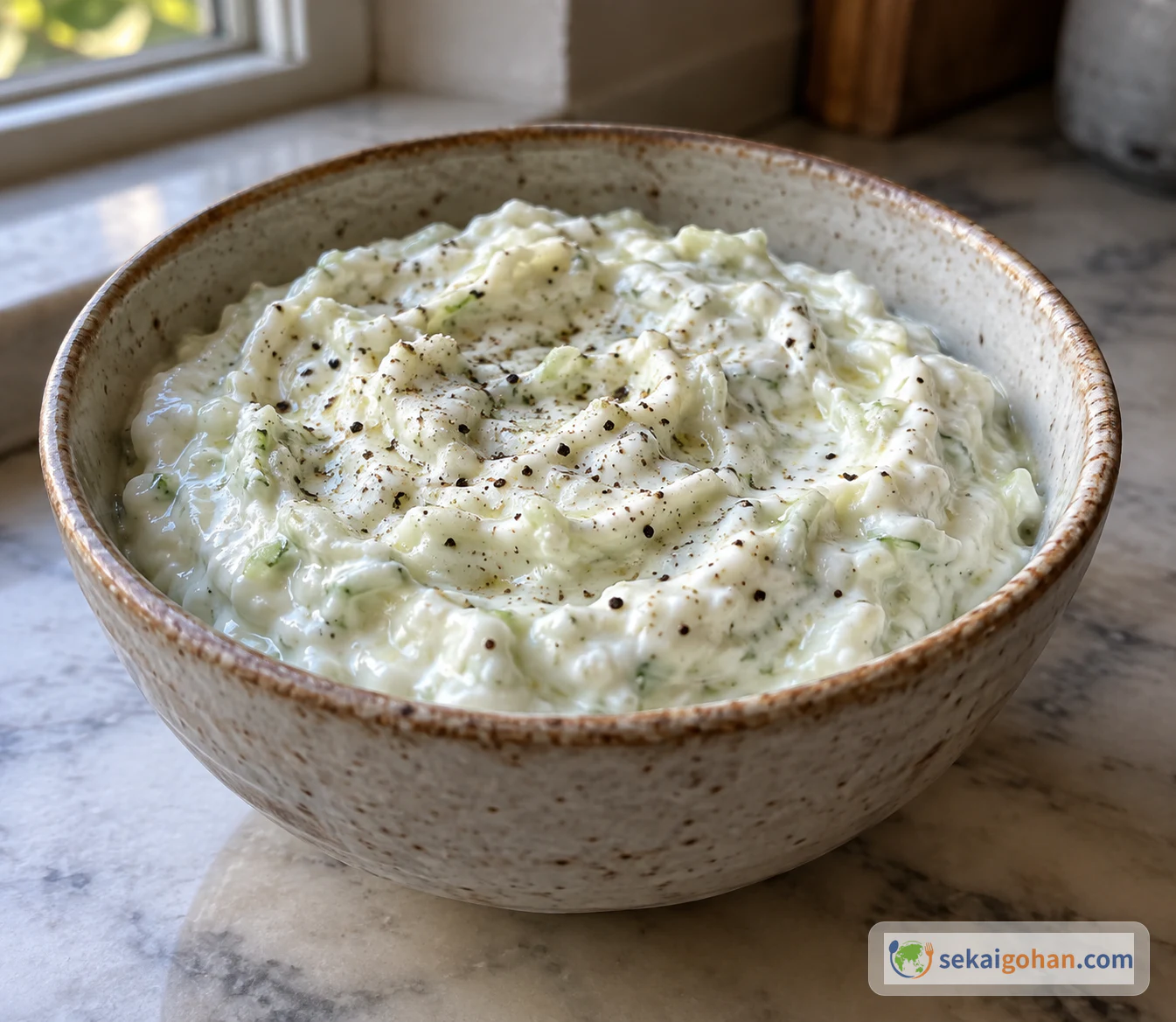
Not for skewers alone, but in a pita wrap it brings you closer to how souvlaki is eaten in Greece. For a quick version, mix 5.5 oz (150 g) Greek yogurt, 2 oz (60 g) grated cucumber squeezed of its liquid, 1/4 clove garlic, 2 tsp lemon juice, 1/4 tsp salt and 2 tsp olive oil.
Can I marinate it the day before?
Avoid leaving it overnight with the lemon juice in. Season the pork the day before with only salt, oregano, garlic and olive oil, then add the lemon juice and zest 30 minutes before cooking. This keeps the surface of the meat from firming up too much.