British Scones: Plain Buttermilk Scones for Teatime

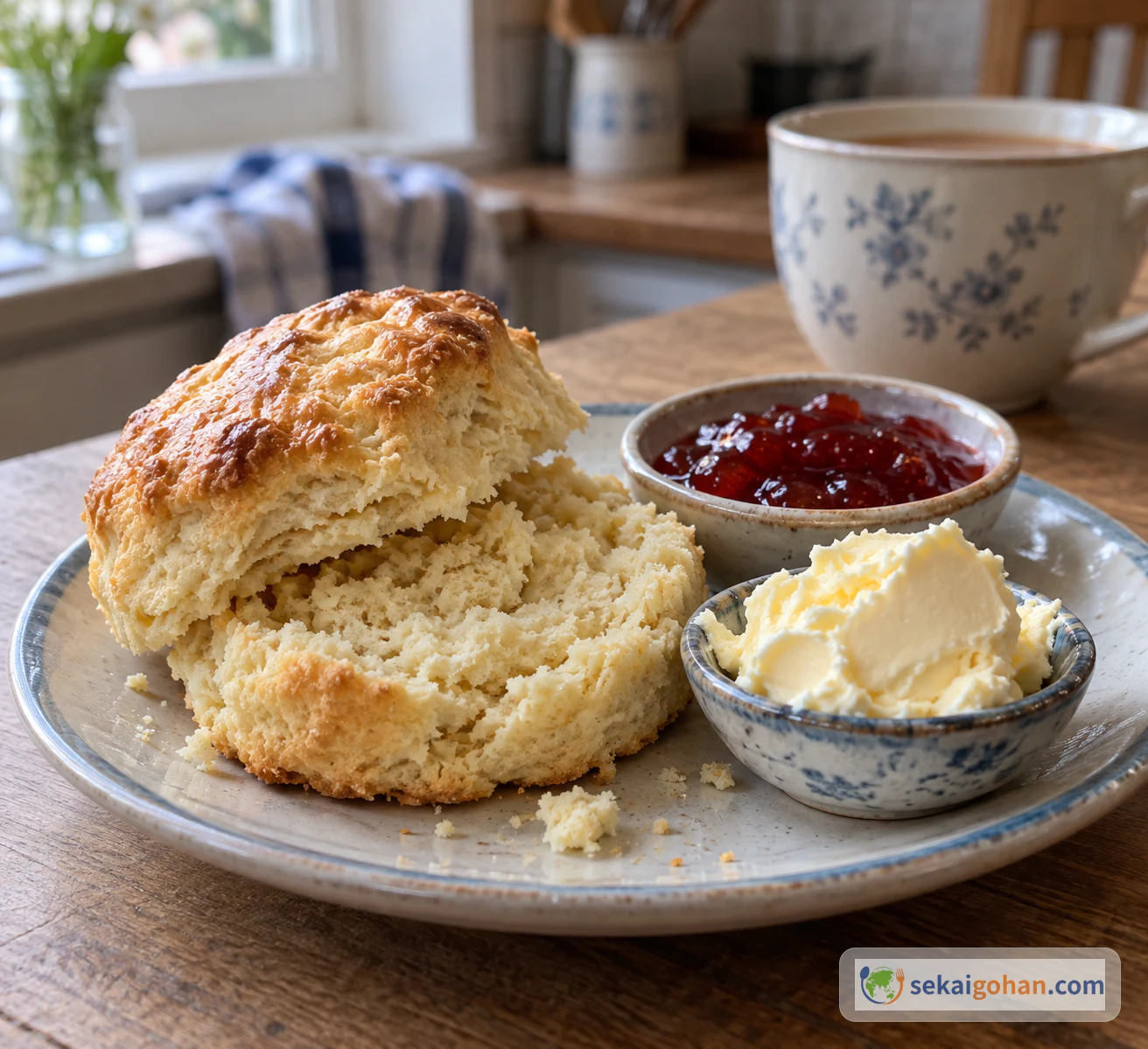
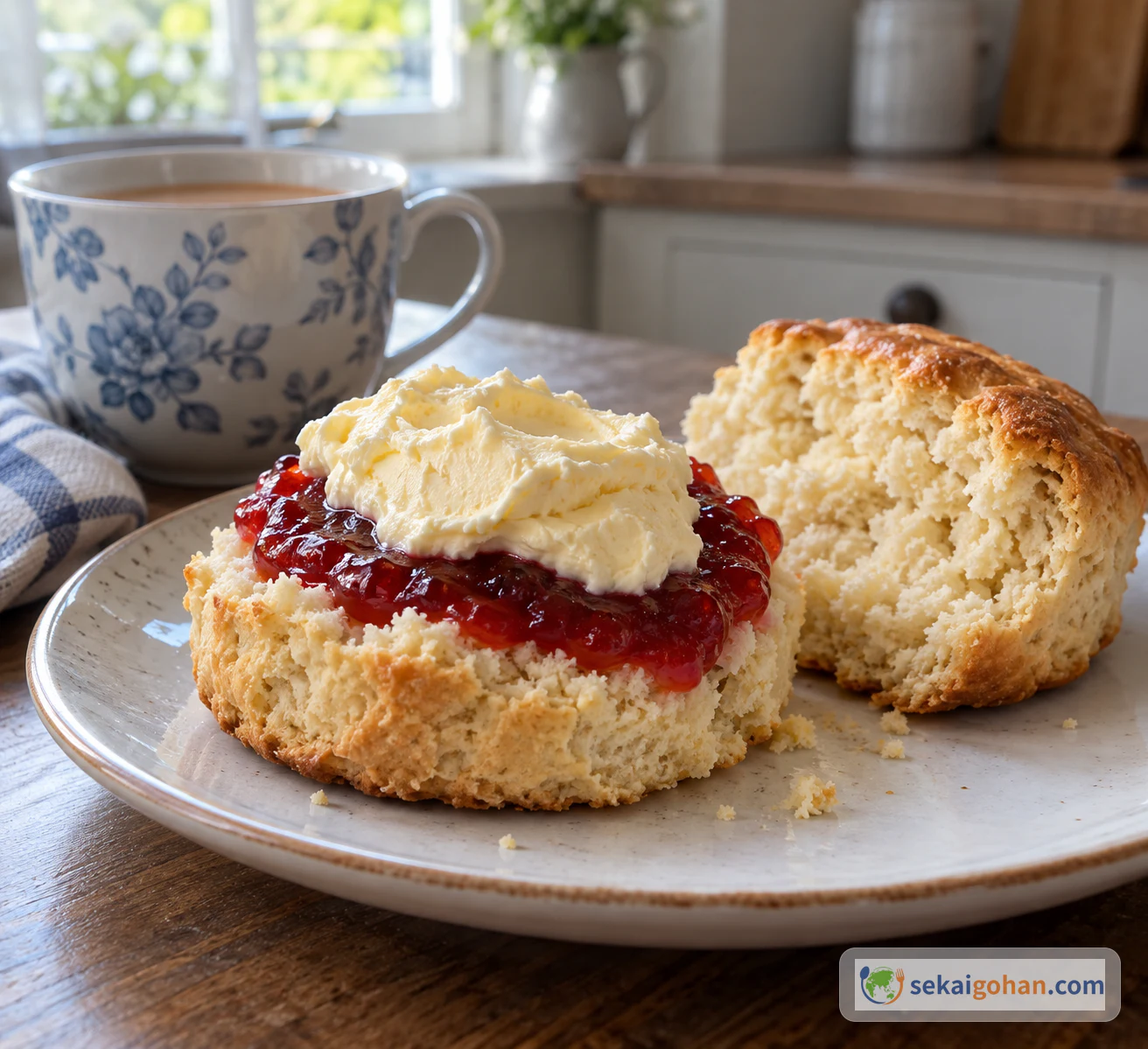
A British-style teatime: a split plain scone served with strawberry jam and clotted cream
Cuisine
British

How to make plain British scones with buttermilk and cold butter, following a recipe selected by Royal Chef Mark Flanagan. Covers the ingredients, rolling to 2 cm and cutting with a 5 cm cutter, glazing only the tops, baking at 220°C, and serving with strawberry jam and clotted cream the Cornish way.

Cooking flow

Cooking steps

STEP11 / 7

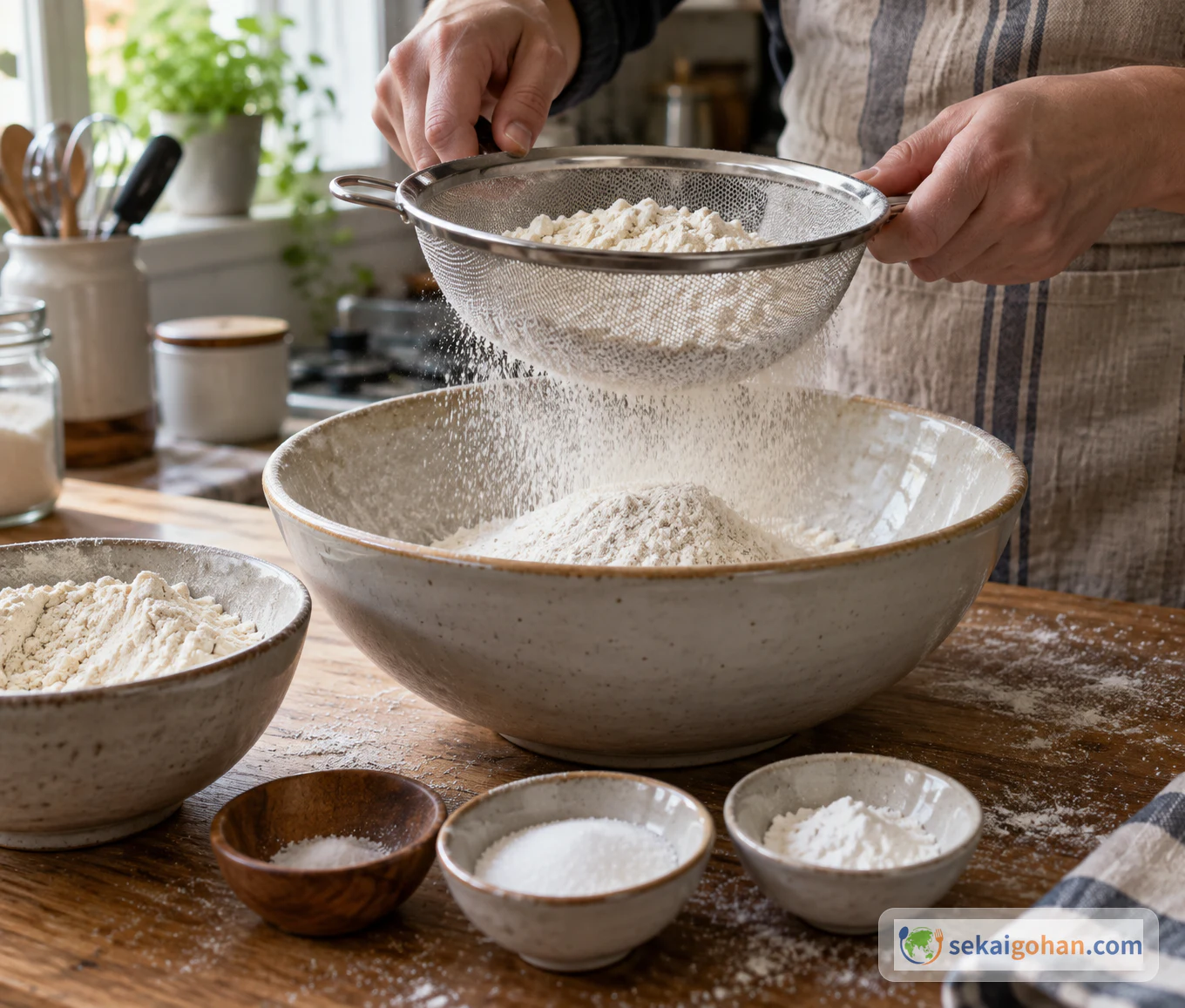
Preheat the oven and sift the dry ingredients

Sifting plain flour, the dough salt, sugar and baking powder into a bowl
The dry ingredients go in first, before any butter or liquid

Preheat the oven to 220°C (425°F / gas mark 7) on conventional heat, top and bottom. If you only have a fan setting, don't assume the same temperature gives the same result. Watch the color closely.

Sift the 9 oz (250 g) plain flour, the pinch of salt for the dough, the 1.5 oz (45 g) sugar and the 3 tsp baking powder together into a bowl.

STEP22 / 7

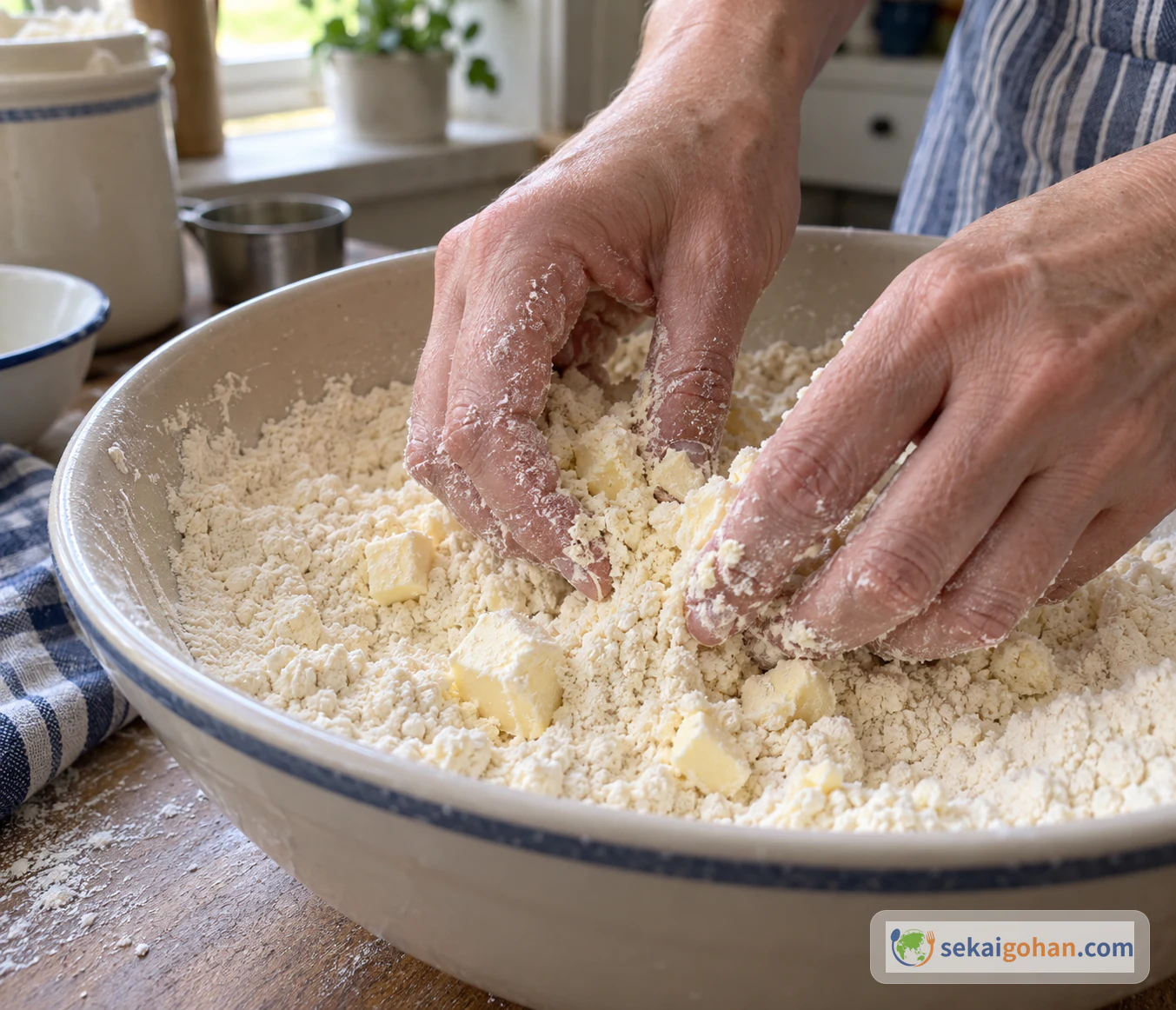
Rub in the cold butter

Rubbing cold cubes of butter into the flour with fingertips
Rub the cold butter into the flour with your fingertips; no egg or buttermilk yet

Add the 1.75 oz (50 g) chilled, cubed butter to the flour mixture and gently rub it in with your fingertips until it is incorporated. Use the butter straight from the fridge rather than softening it first, and work briskly so the warmth of your hands doesn't soften it too much.

STEP33 / 7

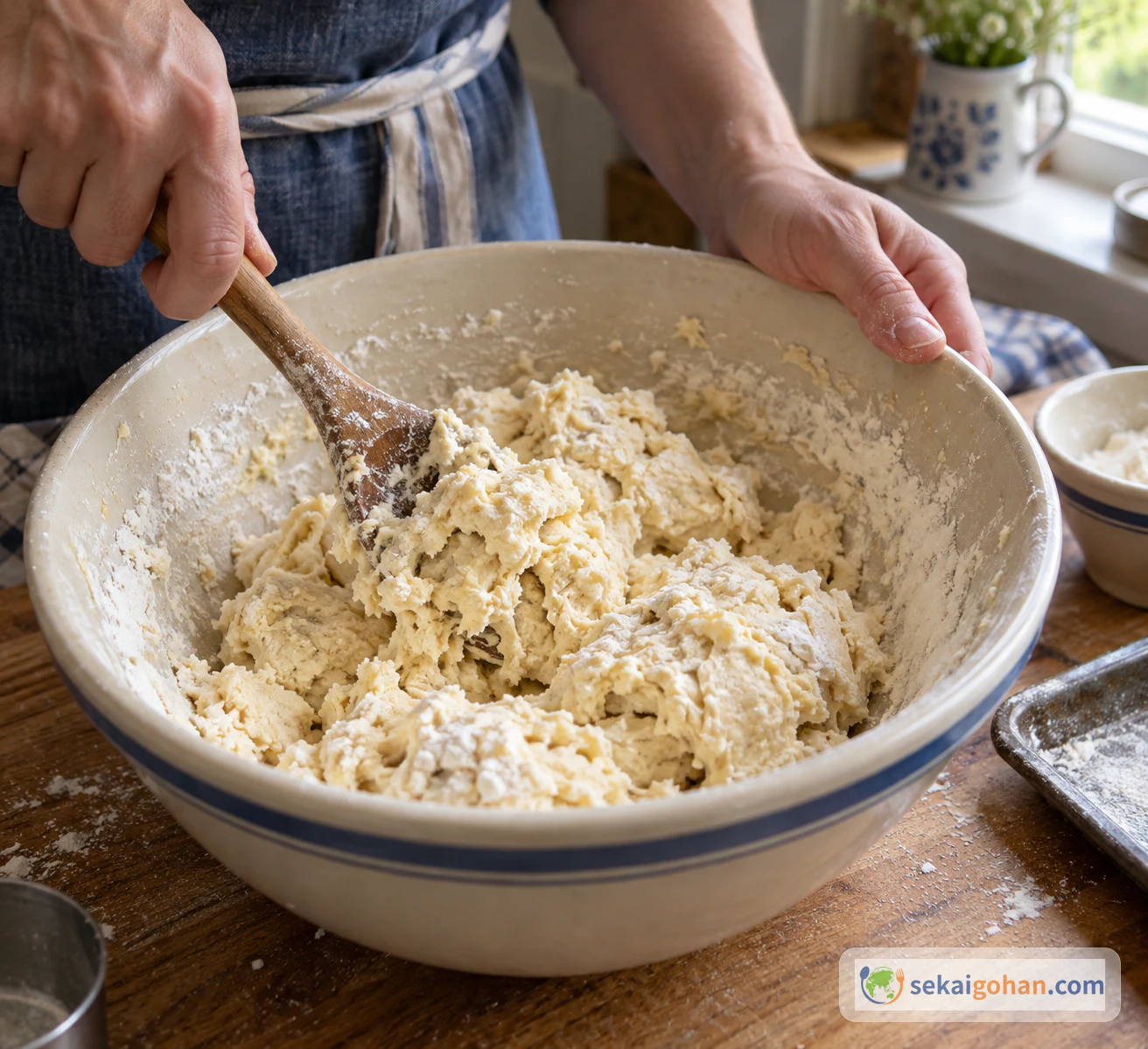
Add the egg and buttermilk

Bringing the dough together after adding the whole egg and buttermilk
Stop once it comes together into a soft, slightly sticky dough

Add the whole egg and the ¼ cup (70 ml) buttermilk, and bring everything together into a soft, slightly sticky dough. Don't overwork it. The dough is meant to be soft and a little sticky, so don't add extra flour or extra liquid to change it.

STEP44 / 7

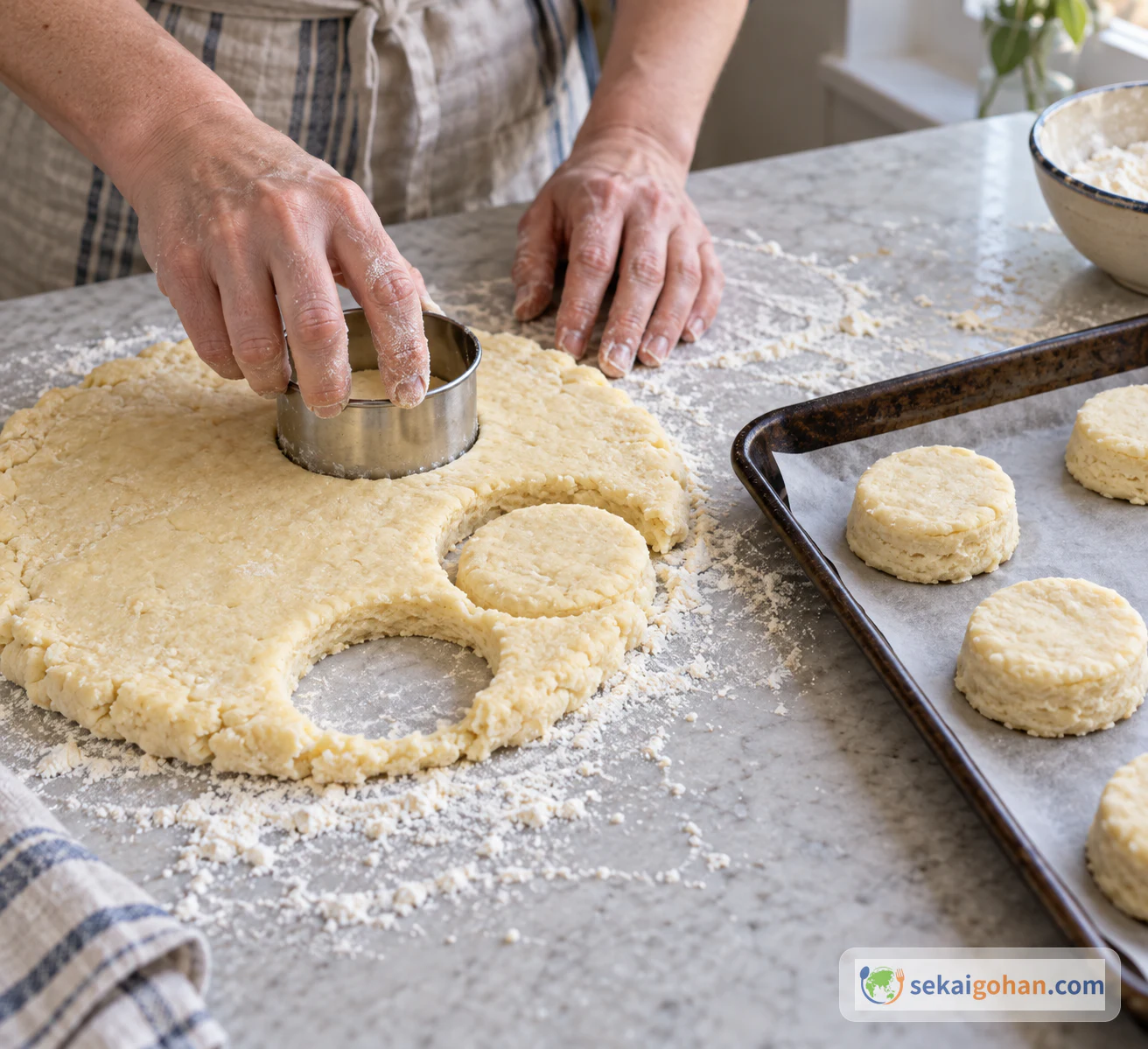
Roll to 1 inches (2 cm) and cut out

Rolling the dough to 2 cm thick and cutting rounds with a 5 cm cutter
Roll to an even 2 cm and cut with a floured 5 cm cutter

Lightly dust the worktop and rolling pin with flour. Handle the dough carefully and roll it out evenly to 1 inches (2 cm) thick. Dip the 2 inches (5 cm) cutter in flour and cut out rounds.

Place the cut scones upside down on the baking tray, evenly spaced. Turning them upside down helps them rise evenly.

STEP55 / 7

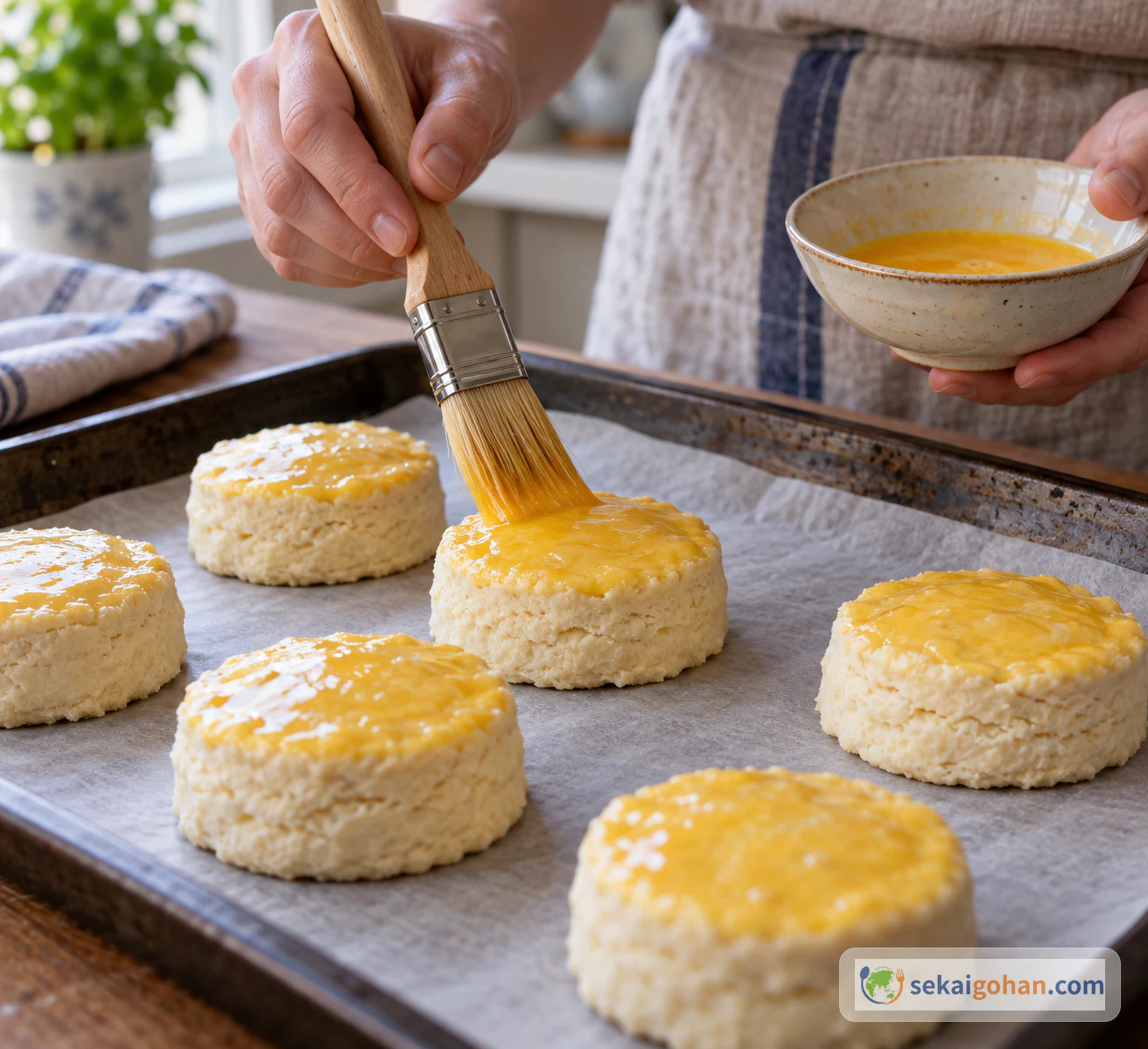
Brush the tops with egg yolk

Brushing salted egg yolk onto the tops of the scones only
Glaze the tops only and leave the sides unbrushed

Mix the egg yolk with the separate pinch of salt for the glaze. Brush it only onto the tops of the scones, keeping the brush off the sides.

STEP66 / 7

Bake and cool

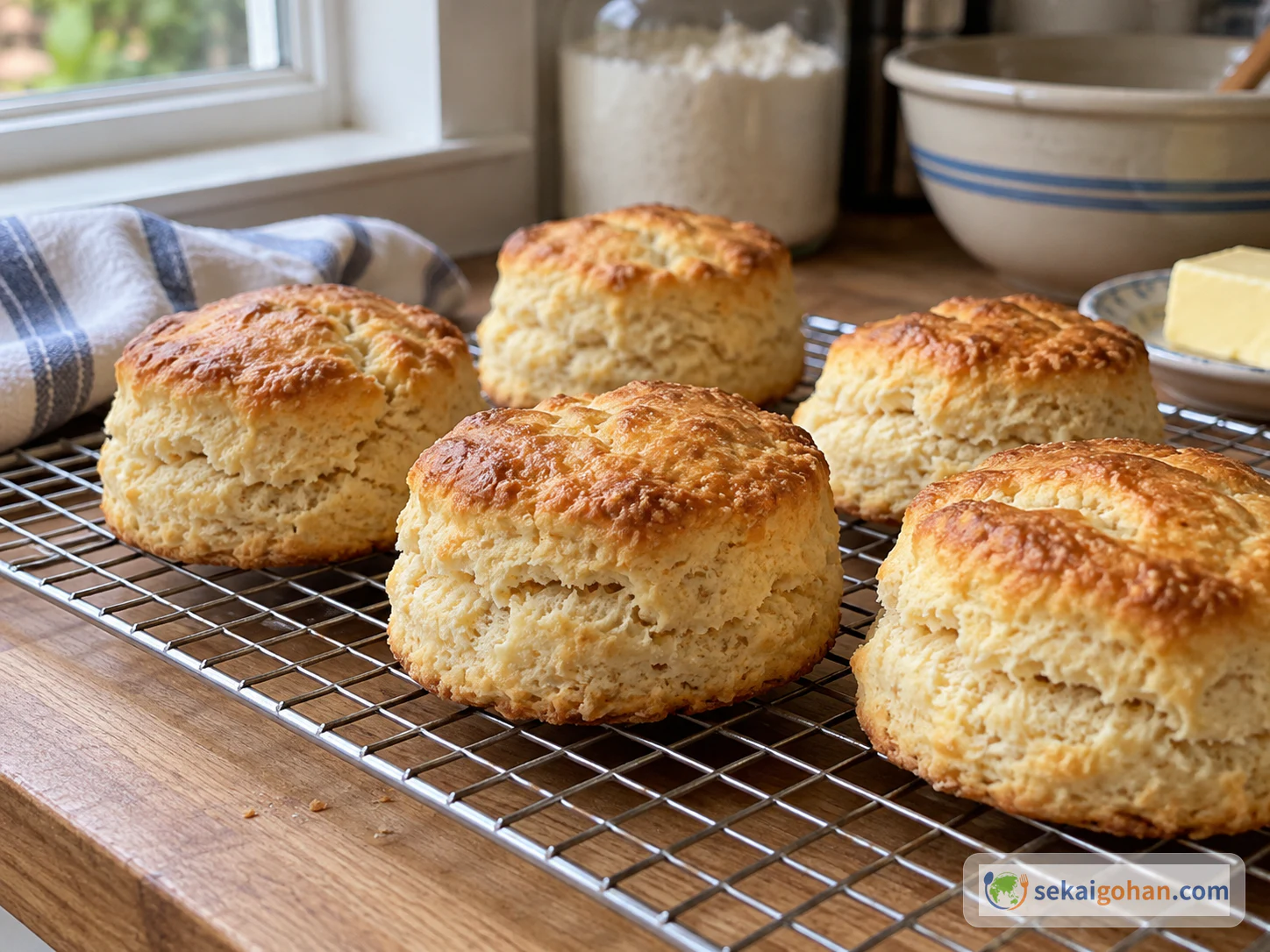
Golden scones cooling on a wire rack
Bake until the tops are golden, then move to a wire rack

Bake on the middle shelf of the preheated oven for about 10 minutes, or until golden. Home ovens differ, so use the color of the tops as well as the clock. Cool the scones on a wire rack.

STEP77 / 7

Serve with jam and clotted cream

A scone spread with strawberry jam and topped with clotted cream, Cornish style
Cornwall style: jam on first, clotted cream on top

Split the scones and serve with jam and clotted cream. In Cornwall, spread the jam first, then top it with clotted cream.

0 / 0
Ingredients

Ingredients

1 / 1

Ingredients

Ingredient Amount Role
Plain flour (plain flour) 9 oz (250 g) The body of the dough. Flour with no raising agent added, not self-raising flour
Baking powder 3 tsp Makes the scones rise. Do not replace with baking soda
Unrefined caster sugar 1.5 oz (45 g) Light sweetness. Caster sugar is a fine-grained sugar
Unsalted butter, chilled and cubed 1.75 oz (50 g) Rubbed into the flour while still cold
Free-range egg 1 For the dough. Use the whole egg
Buttermilk ¼ cup (70 ml) The liquid that brings the dough together; a cultured dairy product with some acidity
Salt (for the dough) a pinch Sifted with the dry ingredients
Egg yolk (for the glaze) 1 Separate from the egg in the dough
Salt (for the glaze) a pinch Mixed into the yolk; a separate pinch, not taken from the dough salt
Plain flour (for dusting) as needed For the worktop, rolling pin and cutter; separate from the 9 oz (250 g)
Jam and clotted cream to taste For serving. Homemade jam works well
0 / 0

A warm scone, fresh from the oven, gets pulled apart by hand. Strawberry jam goes on first, then a thick spoonful of clotted cream, with a cup of tea beside the plate. That's a Cornish cream tea, and this plain buttermilk scone sits at the center of it: tender, lightly sweet, and made for jam and cream. For more dishes from Britain, see the United Kingdom page.

The British Scone at Teatime

This scone is a plain, oven-baked dough with no fruit or filling, cut into rounds and glazed on top. A drop scone is a different thing: it's cooked like a small pancake. Fruit scones are different too, with extras mixed into the dough.

Scone recipes vary in what goes into the dough and how the crumb turns out. A classic British version uses self-raising flour, butter, caster sugar and milk, and is served warm with jam and clotted cream. This one takes another route: plain flour with baking powder, a little sugar, cold unsalted butter, a whole egg and buttermilk. In Cornwall the scones arrive with Cornish clotted cream, strawberry jam and a pot of tea.

Ingredients for One Batch
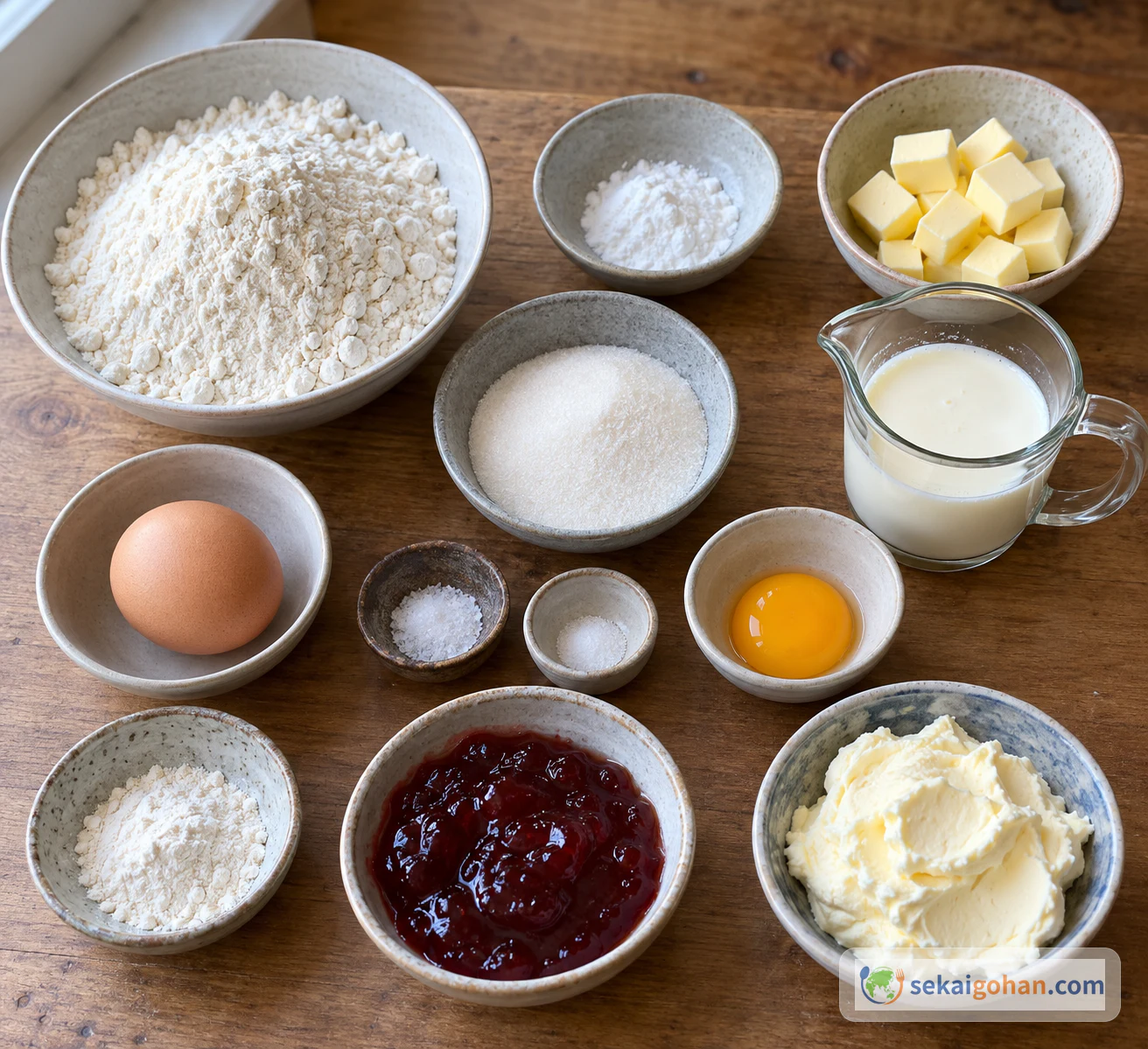
Flour, baking powder, sugar, cold butter, an egg, buttermilk and other scone ingredients
Two separate pinches of salt, a separate egg yolk for glazing and extra flour for dusting are set out apart from the dough ingredients

Here are the amounts for one batch. Cut as many scones as you can from the dough.

If you are buying eggs in the shell, have 2 eggs ready: one whole egg for the dough, and the yolk of the second for the glaze. The white of the second egg is not used in this batch.

Measure ¼ cup (70 ml) of buttermilk. Weigh the flour, sugar and butter in grams. The baking powder is measured with a standard teaspoon (5 ml).

Make a pot of tea to serve alongside, if you like.

Allergens

This recipe contains wheat, egg and milk. Keep any leftover raw egg yolk covered in the fridge, and don't leave it out.

Equipment

  • 5 cm (2 inch) round cutter, preferably with smooth sides
  • Rolling pin
  • Sieve
  • Mixing bowl
  • Baking tray
  • Pastry brush
  • Wire rack

Choosing Flour, Sugar, Buttermilk and Cream for Scones

Flour. Use plain flour, which is wheat flour with no raising agent. Flour from different countries doesn't always behave the same, so a local soft wheat flour without raising agent counts as a substitution, and the texture may differ. Self-raising flour belongs to a different recipe. Never combine it with the 3 tsp of baking powder used here.

Sugar. Caster sugar is fine-grained, and this recipe uses an unrefined one. Ordinary granulated sugar can stand in, though it won't carry the same flavor or color.

Buttermilk. Check the label when you buy it. Buttermilk is part of what makes this recipe work, and plain milk would give you a different scone.

Clotted cream. Clotted cream can be hard to find outside Britain, and other creams have a different taste and fat content. If you can't get it, serve the scones with jam alone or with another cream on the side. It's a different experience, but still a good teatime plate.

How to Make British Scones

Before you start

Bake for about 10 minutes. There are no set times for mixing or shaping, so judge the dough by how it looks and feels, and the bake by the color of the tops.

Scone Problems and Fixes

What this batch should keep

Keep the butter cold, stop mixing once the dough is soft and slightly sticky, and brush the egg yolk only on the tops.

If something goes wrong, start with these points.

What you see What to check What to do
The dough feels too sticky to handle The dough should be soft and slightly sticky Lightly dust the worktop, pin and cutter instead of working more flour into the dough
The butter turned greasy while rubbing in Whether the butter went in cold and the rubbing in was quick Keep the cubed butter chilled until it goes in, and work briskly
The scones rose unevenly Whether the dough was rolled to an even 1 inches (2 cm), the rounds were turned upside down, and the glaze stayed off the sides Roll evenly, place the cut rounds upside down, and brush only the tops
Still pale after about 10 minutes Oven differences and oven mode Keep baking until golden, going by color rather than the clock alone
Too golden on top Oven differences Check earlier next time

Frequently Asked Questions

How many scones does this make?

There's no fixed number, even with a 2 inches (5 cm) cutter. The count depends on how you roll and handle the dough, so cut as many as you can.

Jam or cream first?

In Cornwall the custom is jam first, then clotted cream. The order varies by region and personal taste, and there's no single correct British rule. Try it the Cornish way, then decide for yourself.

Can I use a fan oven?

The recipe bakes at 425°F (220°C) on conventional heat, top and bottom. A fan oven may behave differently at that setting, so judge by the golden color.

How long do scones keep?

Once they've cooled, store the scones covered and eat them soon.
Sources

  • Royal Collection Trust, "Royal recipe: Scones." The main source for this recipe, selected by Royal Chef Mark Flanagan for a book of royal teas: ingredients, amounts and equipment; the 220°C oven, 2 cm thickness and 5 cm cutter; turning the cut scones upside down; glazing only the tops; baking for about 10 minutes or until golden; cooling on a rack; and serving with jam and clotted cream. https://www.rct.uk/resources/royal-recipe-scones
  • Visit Cornwall, "Cornwall's Food & Drink Heritage." The Cornish cream tea of freshly baked scones, Cornish clotted cream, strawberry jam and tea, and the Cornwall custom of jam first, then clotted cream. A regional source, not a rule for all of Britain. https://www.visitcornwall.com/things-to-do/food-and-drink/cornwall-s-food-and-drink-heritage
  • BBC Good Food, "Classic scones with jam & clotted cream." A separate British scone recipe using self-raising flour, butter, caster sugar and milk, served warm with jam and clotted cream. Used as context only; not mixed into this recipe. https://www.bbcgoodfood.com/recipes/classic-scones-jam-clotted-cream
  • King Arthur Baking, "Scone Baking." General baking guidance noting that scone dough composition and texture vary across recipe traditions. Not used for this recipe's amounts. https://www.kingarthurbaking.com/learn/guides/scone