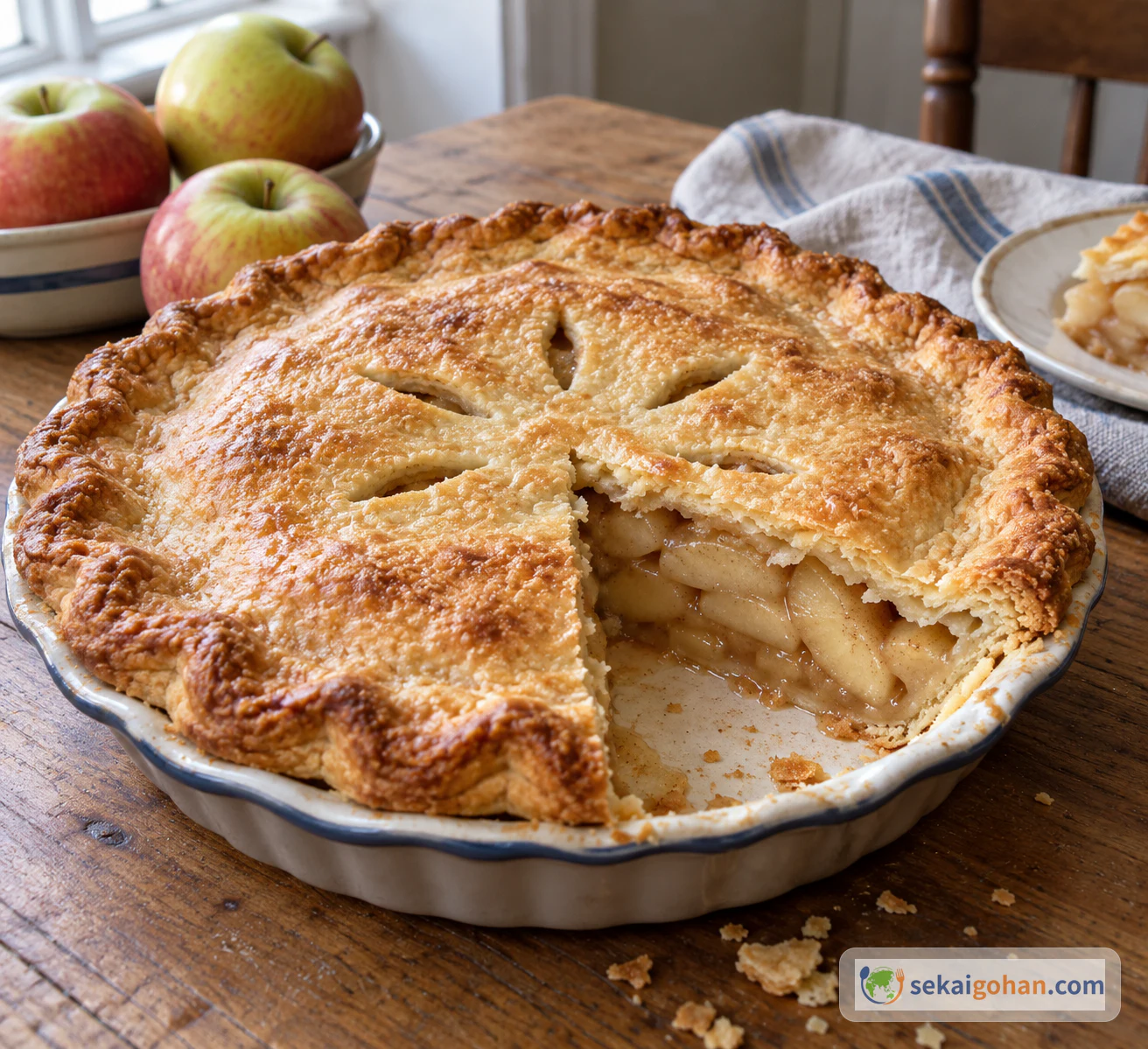
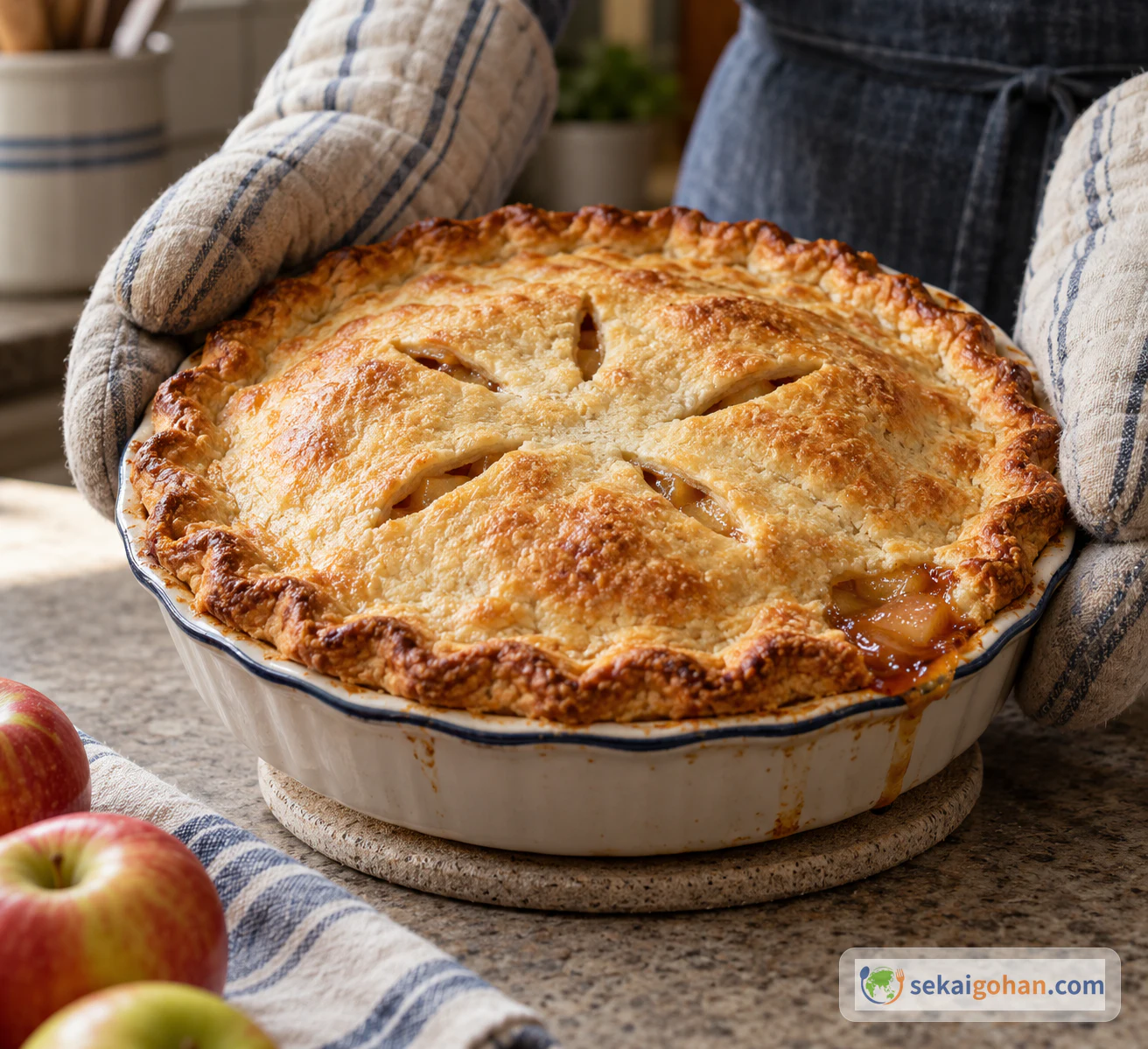
The pie has just come out of the oven. The lid is golden, and a little juice is still bubbling at the edge. Let it sit on the counter for 5–10 minutes before you slice, so the hot filling can settle and the first piece comes away with its layers of apple intact, then bring it to the table warm with a spoonful of softly whipped cream.
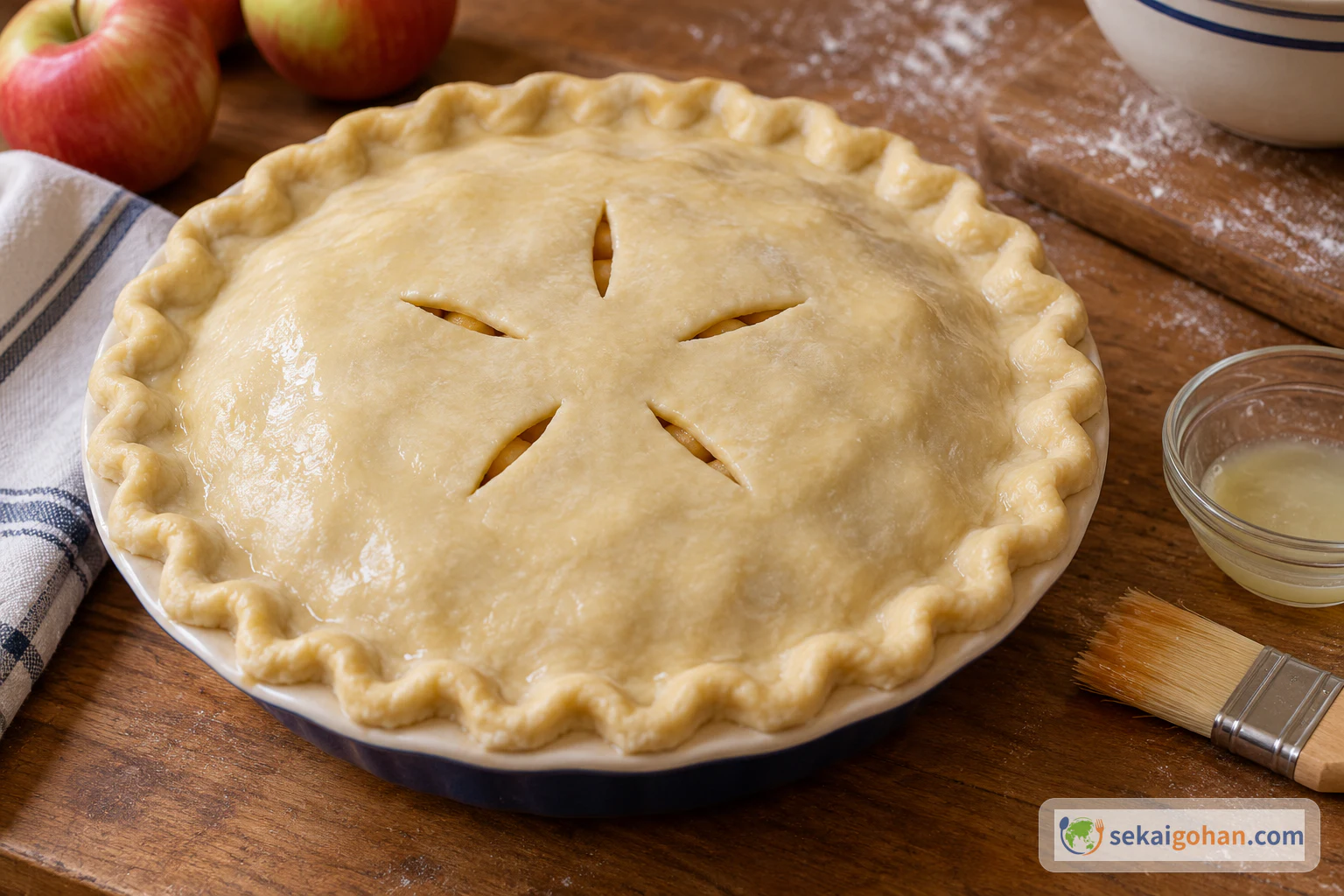
This is a modern British home apple pie: sharp Bramley cooking apples between two layers of short, egg-enriched pastry, with steam vents cut into the lid. The apples soften in the oven but keep their tartness. The method comes down to a few habits: dry the apples, keep the pastry cool, and wait a few minutes before you cut.
Apple Pie in Britain and the Bramley
A Long, Shared History
Apple pie has no single shape and no single origin. A medieval recipe from about 1390, linked to the court of Richard II, is called "Tartys in Applis." It is a baked fruit tart of apples, spices, figs, raisins and pears, coloured with saffron. That is a different dish from a different era, and it doesn't show where the first apple pie was made.
Food historians also trace a line between apple pies on both sides of the Atlantic. The typical American apple pie descends from fifteenth-century English forms, and by the late sixteenth century English recipes were already fairly close to the modern type. Crusts, sweeteners, spices and fruit have varied by period and place, and the dish belongs to both countries.
The Bramley's Seedling
The apple at the centre of this pie has its own history. Bramley's Seedling was raised by Mary Ann Brailsford in Southwell, Nottinghamshire, at some point between about 1809 and 1813, from a tree she had planted. Nurseryman Henry Merryweather later propagated it and named it after Bramley, who by then owned the property. The apple was shown to a horticultural society in 1876, after its commercial introduction in 1865, and it has become a widely grown cooking apple in Britain.
British markets have long sold eating apples and cooking apples separately. Bramley is prized among the cooking apples because its flavour and texture hold up well to heat, and its high malic acid and low sugar keep it sharp after cooking. A traditional Bramley apple pie filling is built mainly on Bramley pieces, sugar and water, with purée, cornflour and lemon juice as options.
Ingredients: 8 Servings, Filling and Pastry Kept Separate
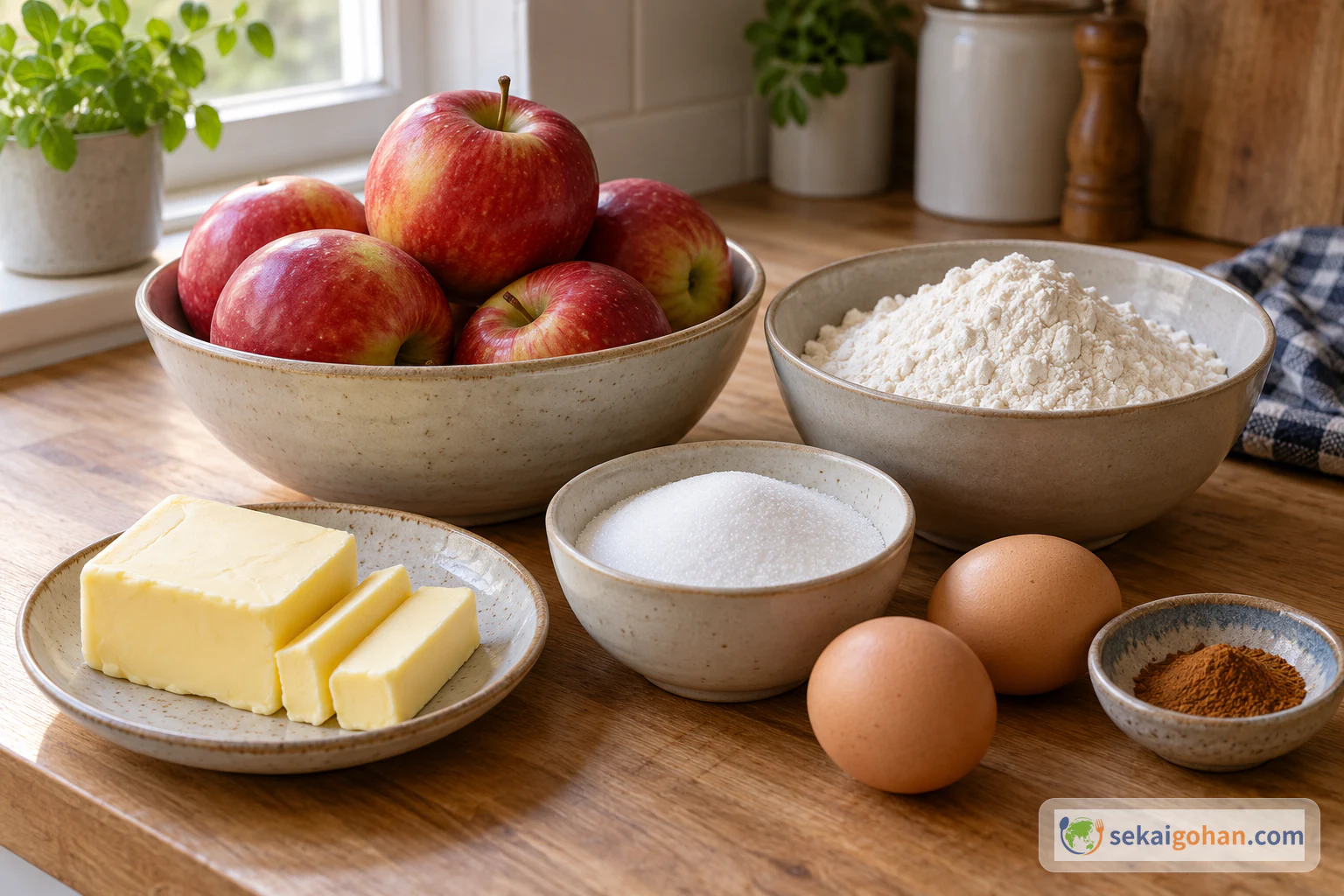
Sugar and flour appear in both the filling and the pastry, so each part has its own amounts.
US conversions: 1kg is about 2¼ lb, 140g about 5 oz, 225g about 8 oz, 50g about 1¾ oz and 350g about 12⅓ oz.
Equipment: a round pie dish about 8–8.5 inches (20–22cm) across and 1.5 inches (4cm) deep, a rolling pin, kitchen paper, and a pastry brush.
Time: about 2 hours 30 minutes in total, including a 45-minute chill for the pastry and 40–45 minutes in the oven.
Choosing apples
The recipe is built on the Bramley, a British cooking apple. It is sharp, and it softens as it cooks. Its tartness comes from relatively high malic acid and low sugar. If you can find Bramleys, use them; the rest of the recipe assumes them.
If you can't find Bramleys, try Kogyoku, a Japanese apple that balances sweetness and acidity, has a good aroma and holds its shape after cooking. Expect the juiciness, sweetness and baked texture to differ from Bramley's. Keep the recipe quantities as written.
Shopping list
- Apples: Bramley apples, 2.25 lb (1kg). If you need them, search for "Bramley cooking apples."
- Golden caster sugar: 6.5 oz (190g) in total (5 oz (140g) for the filling, 1.75 oz (50g) for the pastry).
- Plain flour: 12.5 oz (350g) for the pastry plus 3 tbsp for the filling.
- Butter: 8 oz (225g).
- Eggs: 2.
- Ground cinnamon: 1/2 tsp.
- Cream for whipping: enough to serve.
- Pie dish: a deep round dish, about 8–8.5 inches (20–22cm) across and about 1.5 inches (4cm) deep. The depth lets you pile the apples high and still close the lid over them.
"Golden caster sugar" and "plain flour" are the names the recipe uses. If you buy a local product, check that it is the same type before you start.
This recipe contains wheat, eggs and dairy (butter and cream).
Choosing Apples for British Apple Pie
The sugar amount is written for Bramleys, and the sweetness and texture of the filling depend on the apple you use. If you can't find Bramleys, try Kogyoku. It balances sweetness and acidity and holds its shape after cooking. Keep the recipe quantities as written, but expect the juiciness, sweetness and texture to differ a little.
Akane is harvested earlier than Kogyoku and can stand in for baking when Kogyoku isn't available, so check the variety label when you shop. For more texture, mix some firm eating apples in with the Bramleys. Fuji, sweet with a crisp bite, is one option; the filling will come out sweeter and firmer.
Method: Wrapping the Apples and Baking the Pie
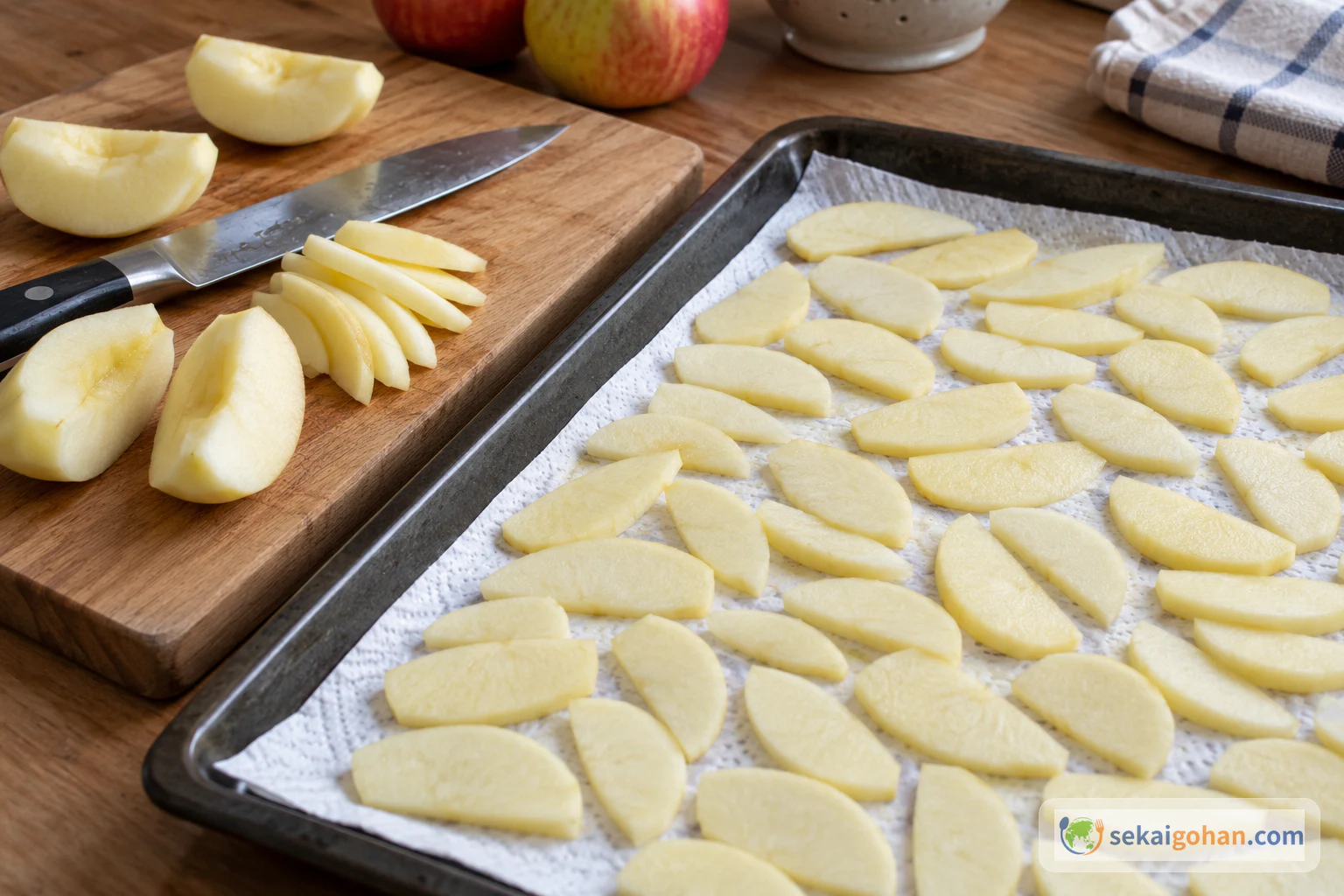
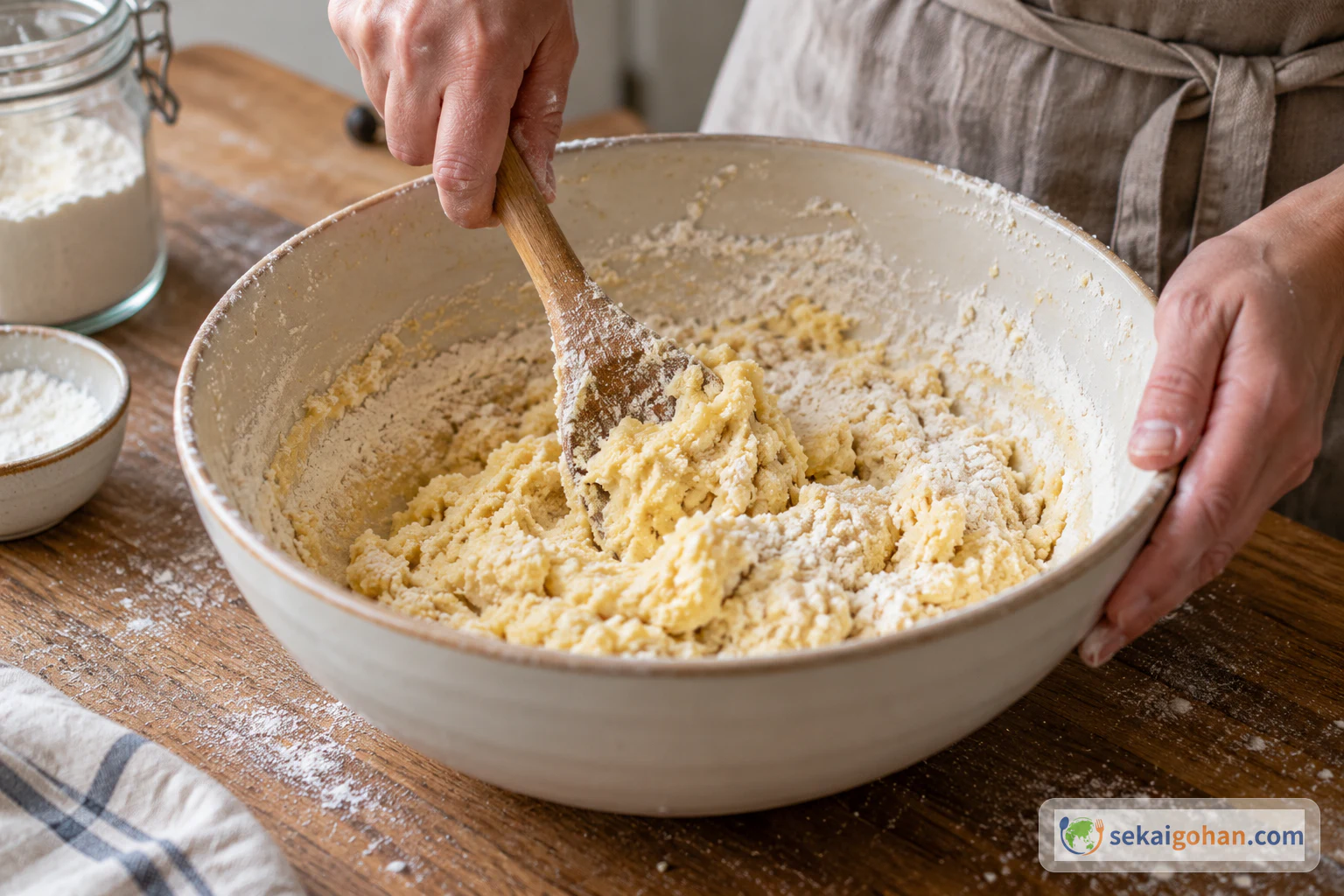
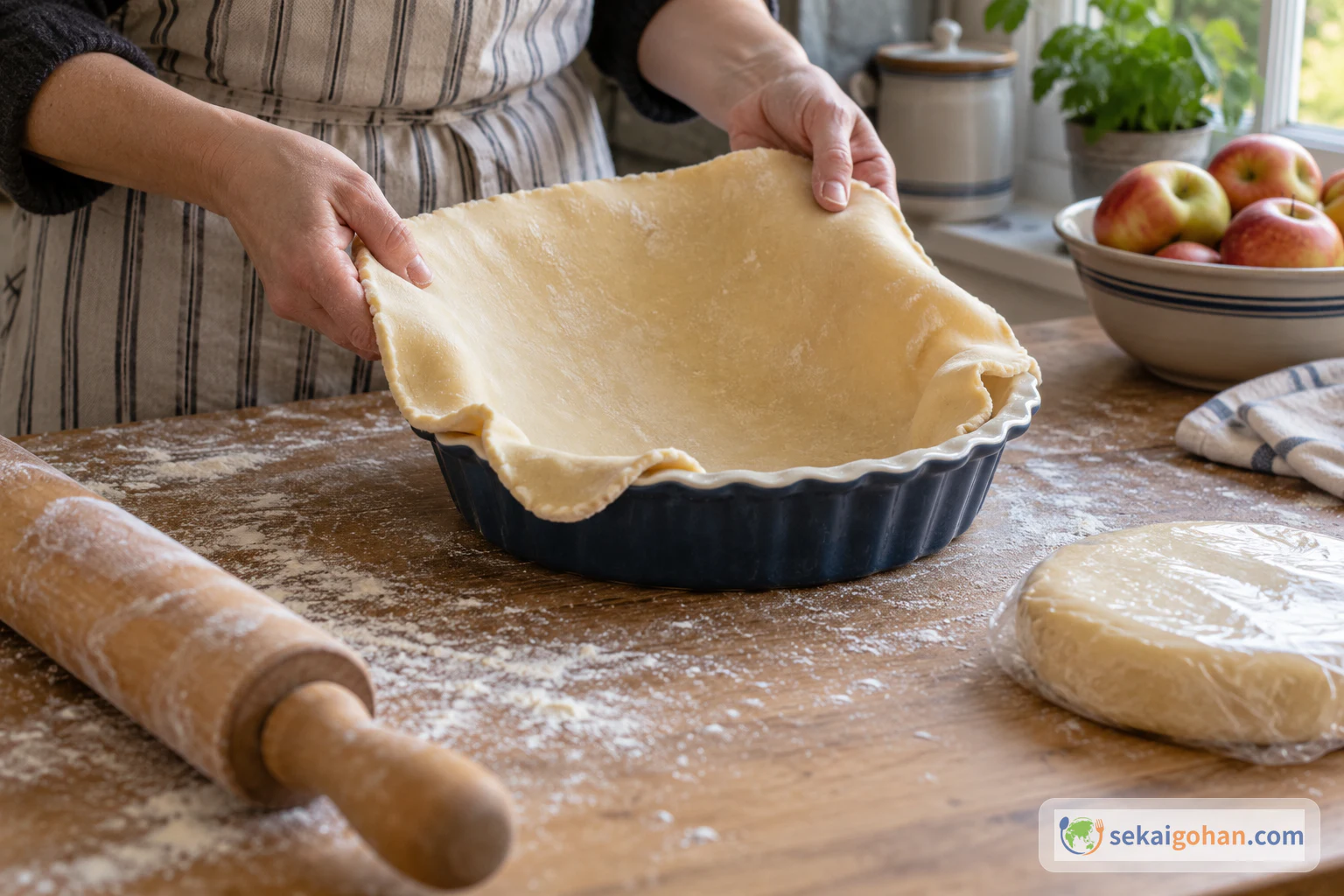
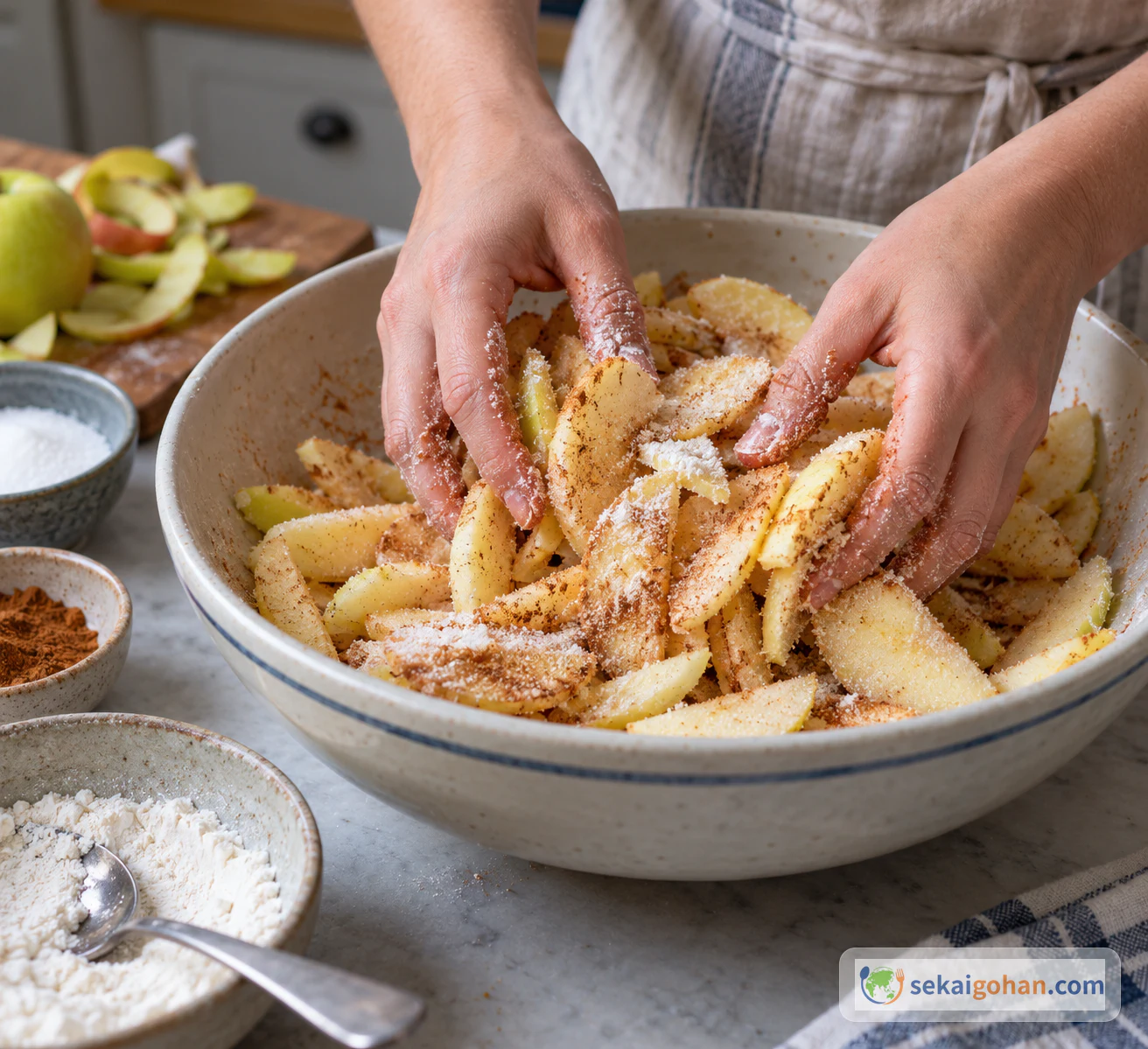
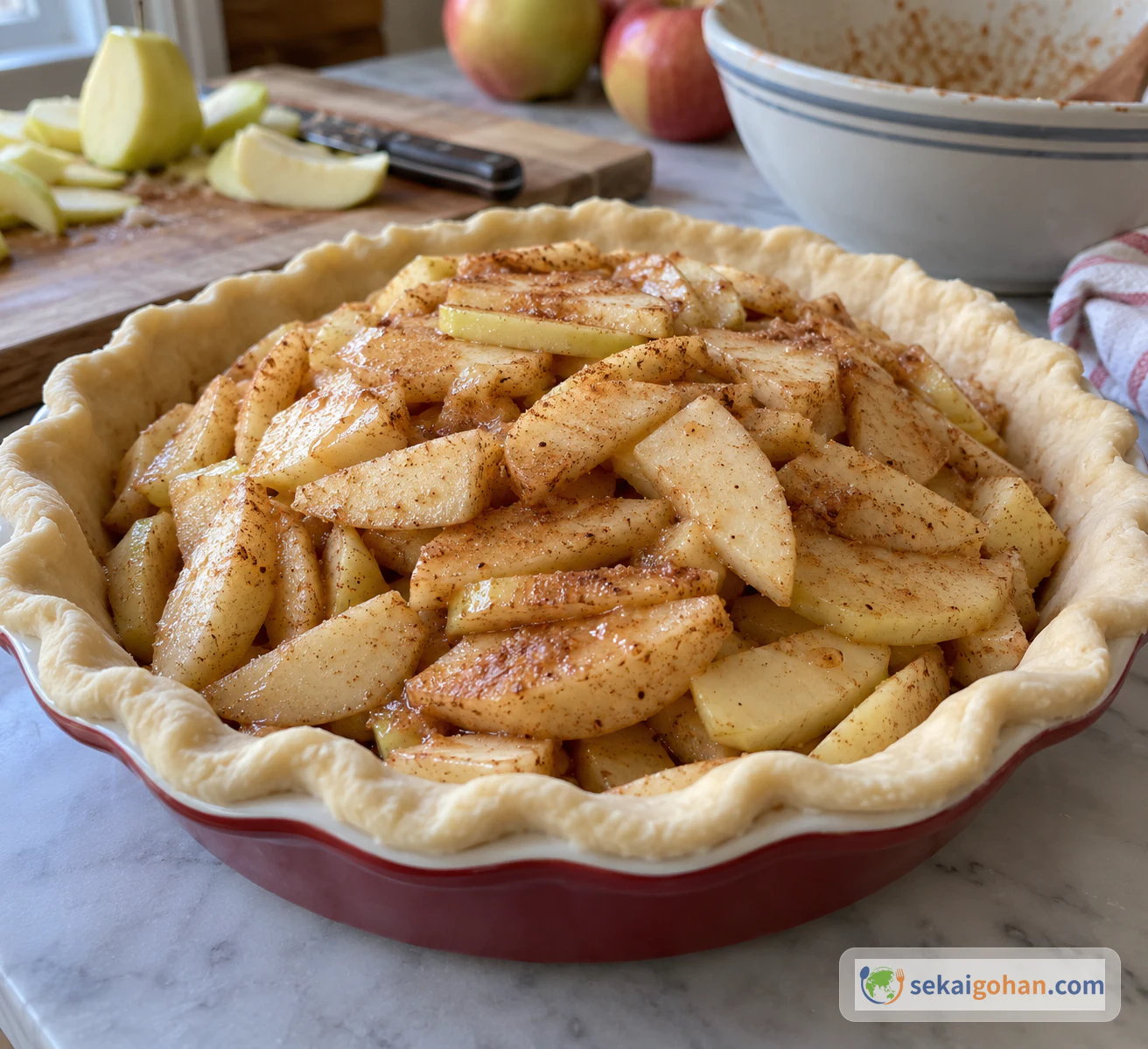
The apples are sliced and dried first, the pastry chills, and the apples are seasoned only just before they go into the dish. The filling goes in raw. There is no pre-cooking step.
Troubleshooting British Apple Pie
Most problems come down to two things: how much juice reaches the pastry, and how warm the pastry gets while you handle it.
| Problem | Likely reason | What to do |
|---|---|---|
| The bottom crust is soggy | Wet apple slices, or pooled juice poured into the base | Dry the slices well on paper (step 1), toss them with sugar only at the last minute (step 4), and leave loose juice in the bowl (step 5). Don't put a hot or pre-cooked filling on the pastry |
| The pastry is too soft to roll or lift | The dough has warmed up | Return it to the fridge until it firms a little, then carry on |
| The lid isn't golden yet at 40 minutes | Ovens differ | Keep baking within the recipe's 40–45 minutes and judge by colour |
| The slice collapses and the juice runs | Cut too soon | Let the pie rest fully before slicing |
| The filling tastes sweeter or firmer than expected | A different apple was used | The sugar amount is written for Bramleys; other apples change the result |
A golden lid in the oven and juices that have settled after resting tell you the pie is ready. Watch for both rather than relying on the clock alone.
Serving British Apple Pie and Other Versions
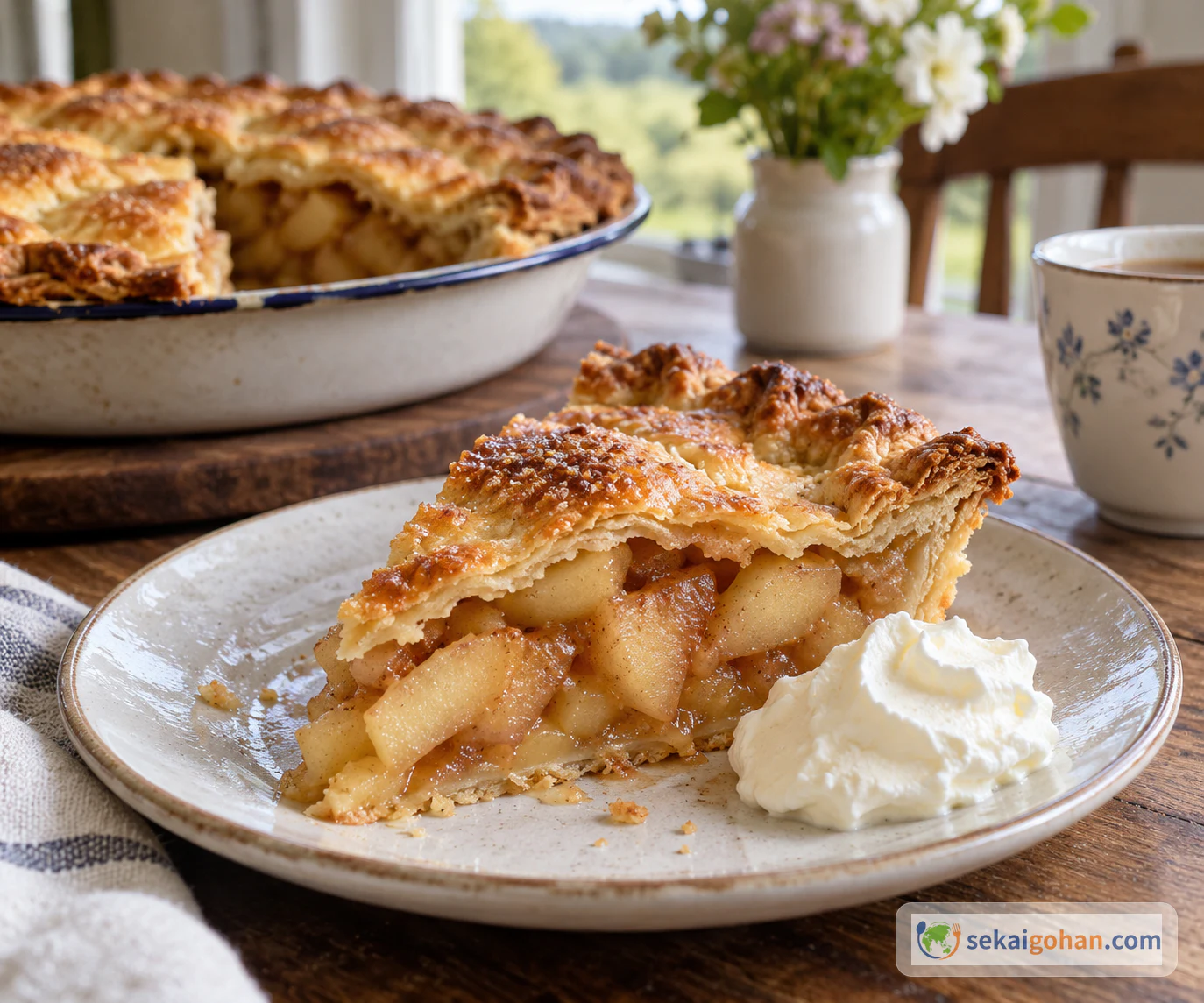
Serve the pie warm with softly whipped cream; custard and ice cream are good with it too. Other British versions take different routes. One combines Bramley and Braeburn apples, uses a spelt pastry and finishes the top with a lattice, served with custard or ice cream.
For more dishes from the same country, see recipes from the United Kingdom.
Frequently Asked Questions
Can I make it without wheat, eggs or dairy?
Not as written. This recipe contains all three.
What size dish do I need?
A round pie dish about 8–8.5 inches (20–22cm) across and 1.5 inches (4cm) deep. The lid is rolled to about 11 inches (28cm) to cover the mounded apples.
How should I handle leftover pie?
Treat it like any cooked leftover:
- Don't leave the pie at room temperature for long.
- Handle it with clean utensils.
- Cool it quickly; dividing it into shallow containers helps.
- Seal it in an airtight container or wrap, refrigerate it promptly, and eat it soon.
- Throw it away if too much time has passed.
- If you reheat it, heat it thoroughly to 75°C (167°F) or higher.