
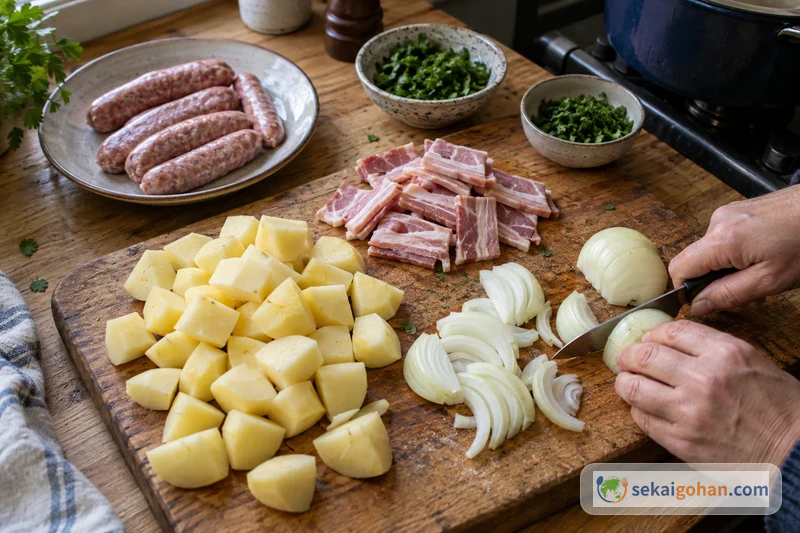

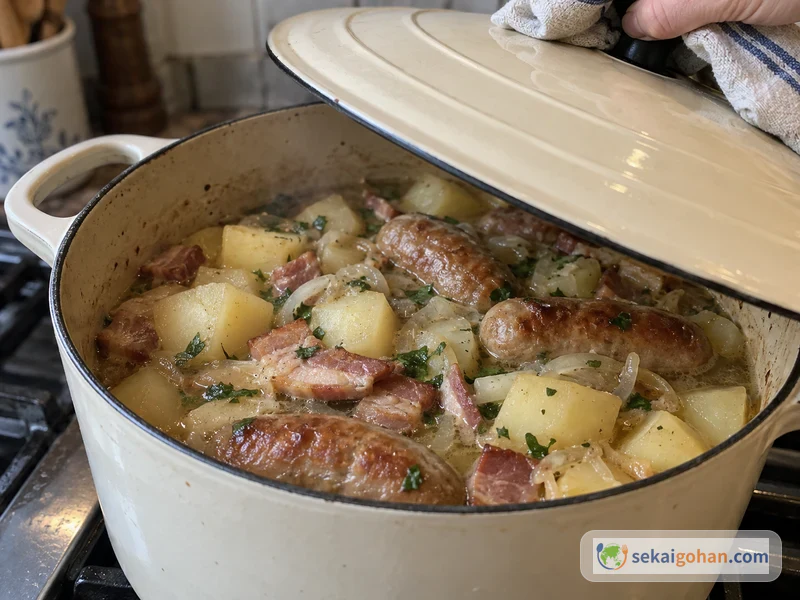
Morning in a Dublin kitchen often meant a pot going on the heat, left to simmer, and then warmed again when the household sat down to eat. Inside were sausages, bacon (what Ireland calls rashers), potatoes, and onions, layered and barely covered with liquid. That's a one-pot of layered ingredients, gently simmered: Dublin coddle. It tastes of what went into it, with salty, fatty pork and sweet onion softening into a pale, savory broth that you'll want to mop up to the last drop.
Dublin coddle and where it comes from
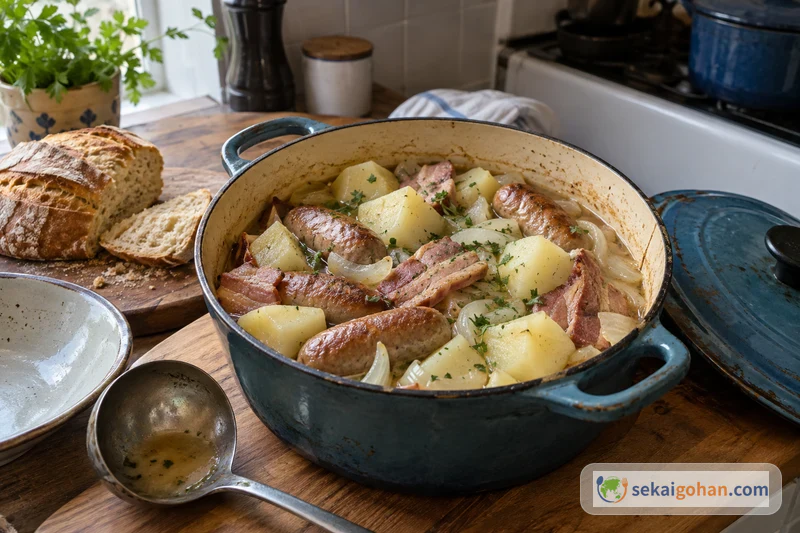
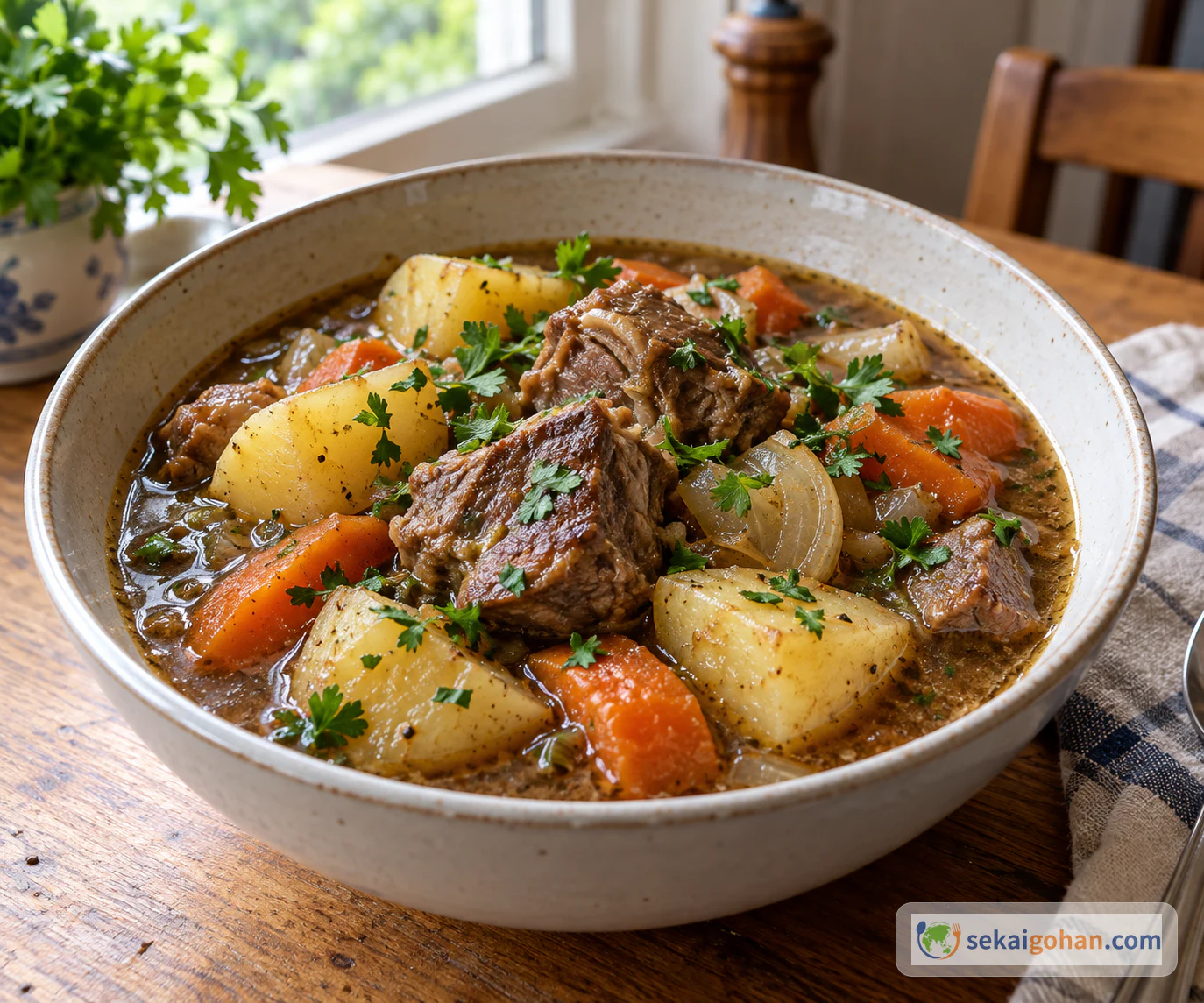
Coddle is a dish of Dublin's working class, built from leftovers, so every household mixes its sausages, rashers, potatoes, and onion a little differently and there is no single right version. It's a different dish from the Irish stew eaten across Ireland, which is made with mutton or lamb. The recipe below is a simple home version for four.
The name "coddle" comes from the French caudle and means to simmer gently or to parboil. The name itself shows how it cooks in the pot.
Its origin is linked to the famine of 1740–41, and the story goes that it began as a way to use up meat left over on Thursday. That part is handed down as tradition. It's also worth remembering that for many workers of the time, grain, especially oats, was a more important food than potatoes.
Ingredients (serves 4)

Mild pork sausages and easy-to-buy bacon are a practical swap. They will not taste exactly like Irish pork sausages or rashers. Bacon saltiness varies widely by product, so do not add salt at the start. Taste after simmering, then add salt after checking the saltiness of the bacon. You can make it in the pot you normally use. Grind whole peppercorns coarsely in a spice mill, or use store-bought coarse-ground black pepper.
For the sausages, choose a mild plain type with a gentle pork flavor rather than a strongly spiced one. It will not taste exactly like the Irish version.
Water or stock for coddle
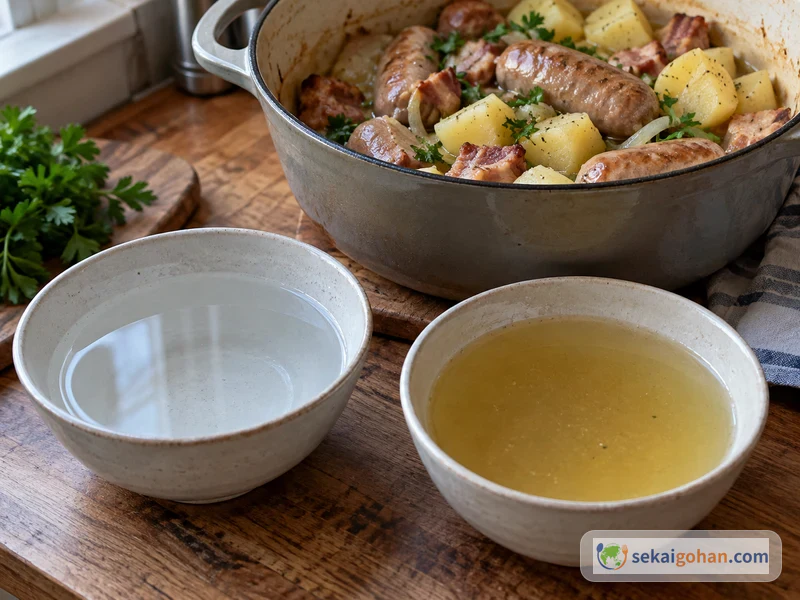
The traditional cooking liquid is water. This recipe uses chicken stock as the base, but the same amount of water works just as well. Simmered in water, the fat and saltiness of the sausages and bacon and the sweetness of the onion become the flavor of the broth. With water it is rustic; with chicken stock the savoriness comes forward, so pick the taste you're after.
How to make coddle
Prep takes about 15 minutes: about 10 minutes for the vegetables and other items, and about 5 minutes for layering. If you brown the sausages, add 1 to 2 minutes to the cooking time. Simmering takes about 2 hours, so with browning the cooking time is about 2 hours 1–2 minutes and the total about 2 hours 16–17 minutes. Without browning, cooking time is about 2 hours and the total about 2 hours 15 minutes.
Cook ground meat and sausage until the center reaches 160°F (71°C). Color and simmering time alone are not reliable, so always measure the center with a thermometer.
For doneness, check that a skewer goes into the potatoes easily, with not everything having broken down into soup. Add boiling water only when the bottom of the pot is about to dry out, and only in small amounts. Do not stir the whole pot vigorously.
Serving Dublin coddle
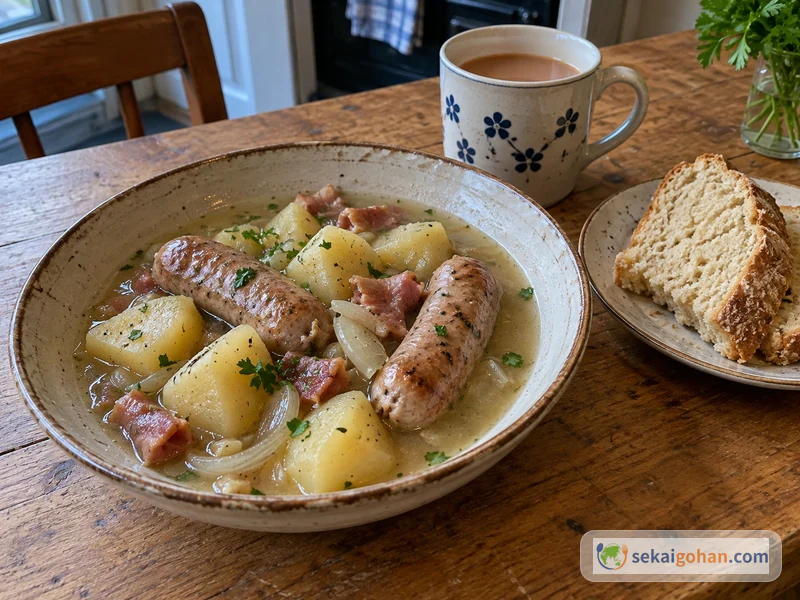
Put sausages and potatoes in a deep dish and ladle plenty of the cooking liquid over them. Then wipe up what's left on the plate with soda bread or everyday table bread, or eat it with tea and bread. Let the bread soak up the liquid: that simple way of plating suits it well.
If you like layered stews, compare it with Norway's fårikål, which layers mutton and cabbage.
Frequently asked questions

Do I have to brown the sausages first?
No. Browning is done for appearance. Either way, cook until the center of the sausage reaches at least 160°F (71°C).
Can I add carrots?
Traditional coddle does not use carrots. If you add them, it becomes a home variation.