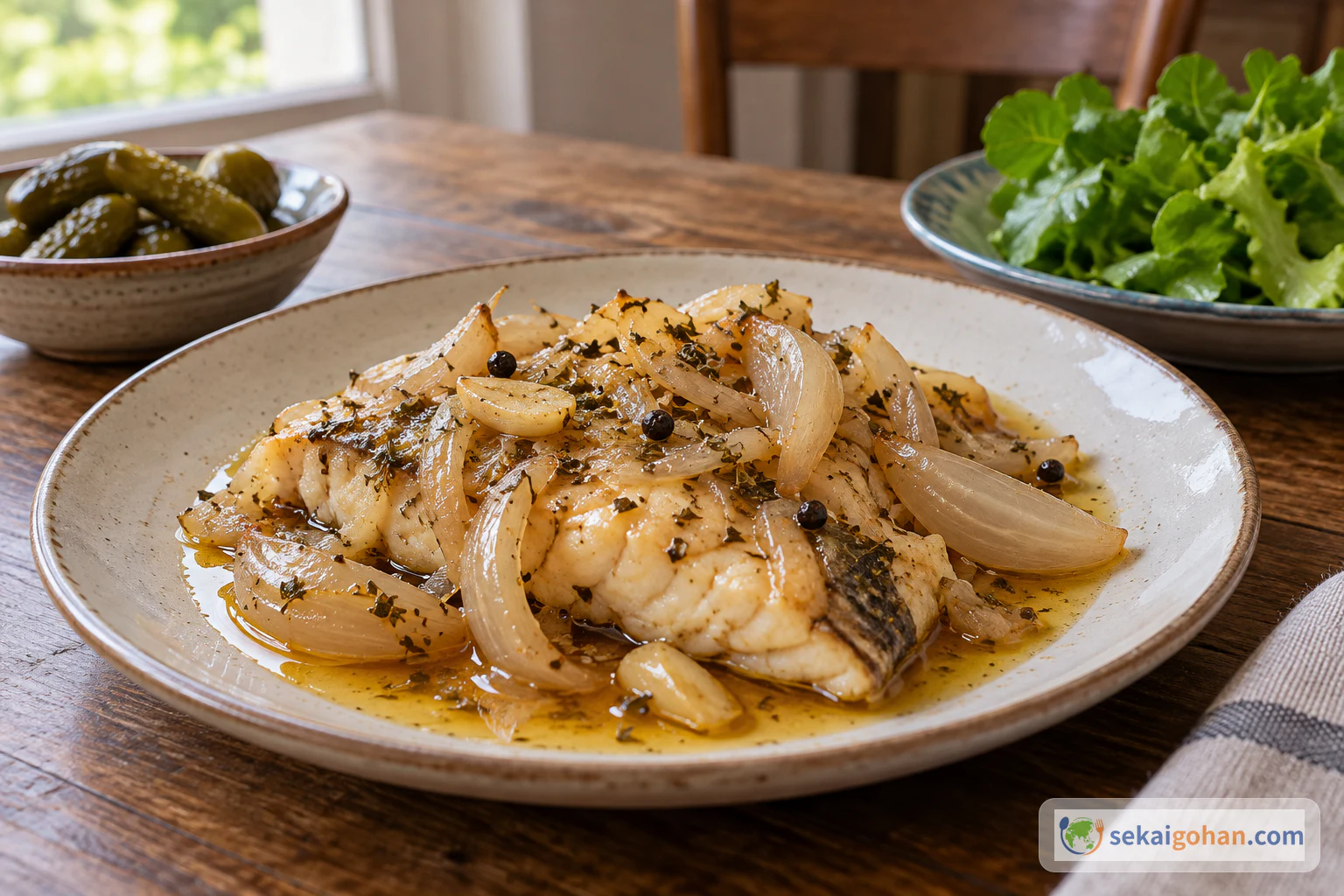
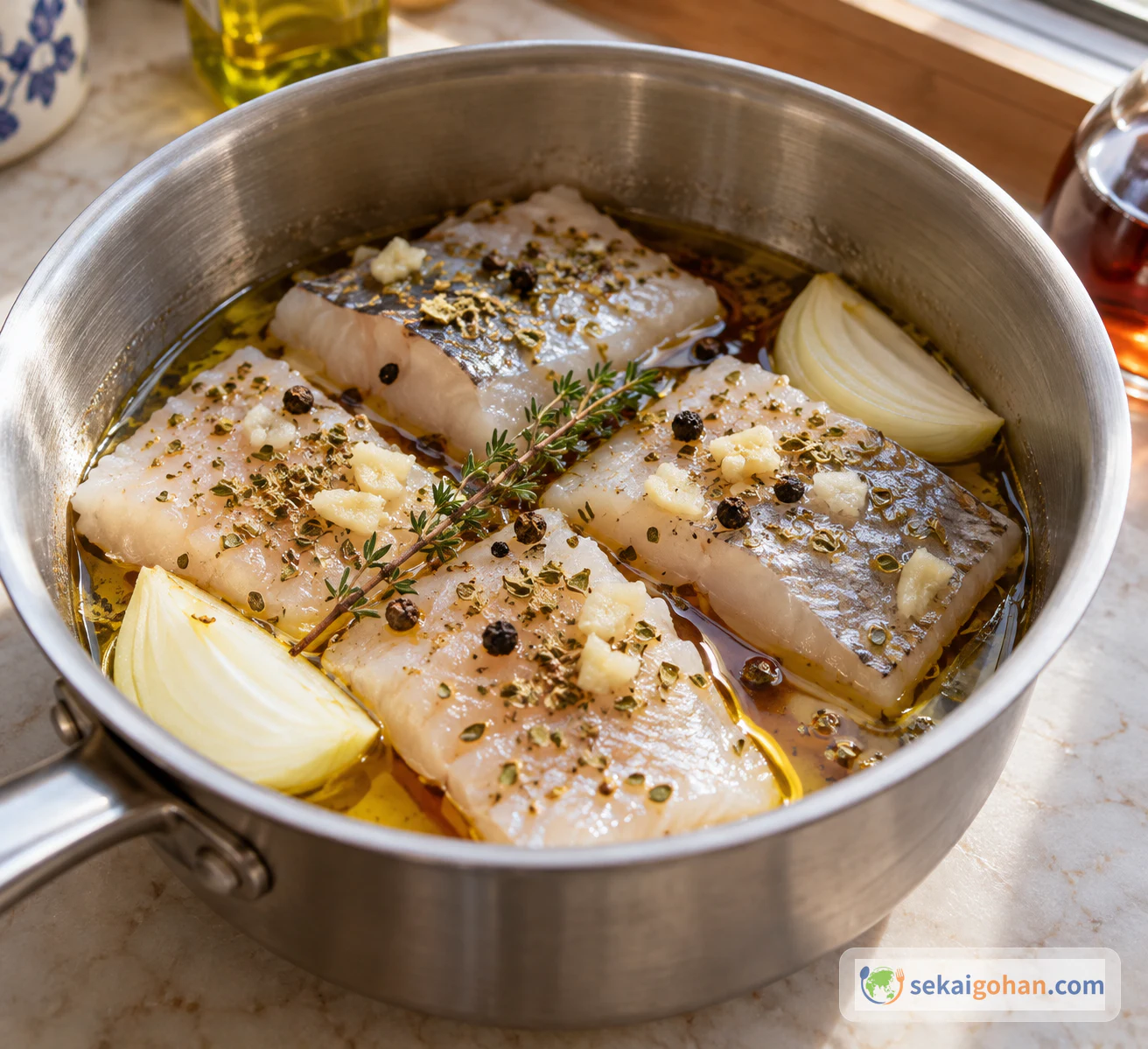
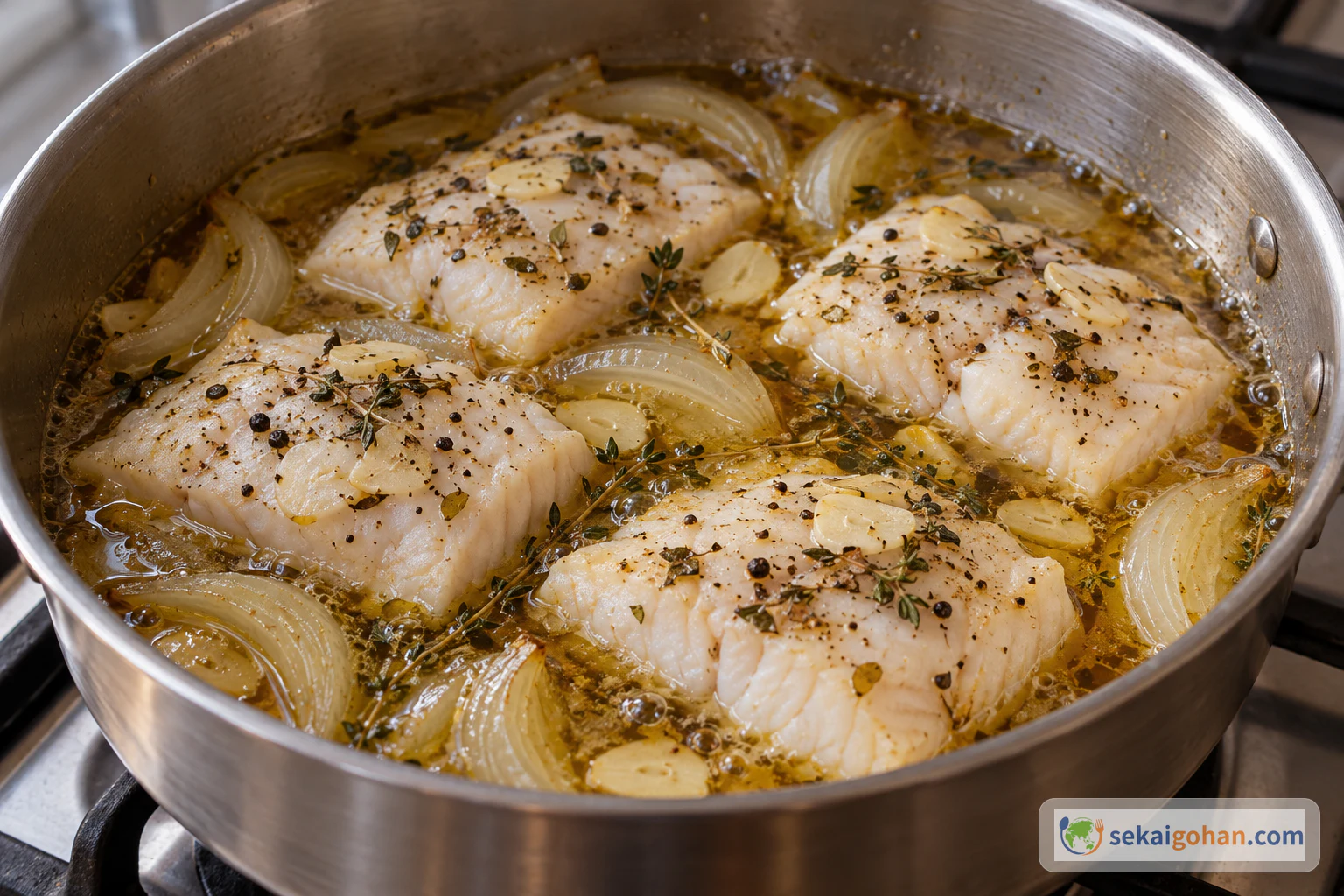
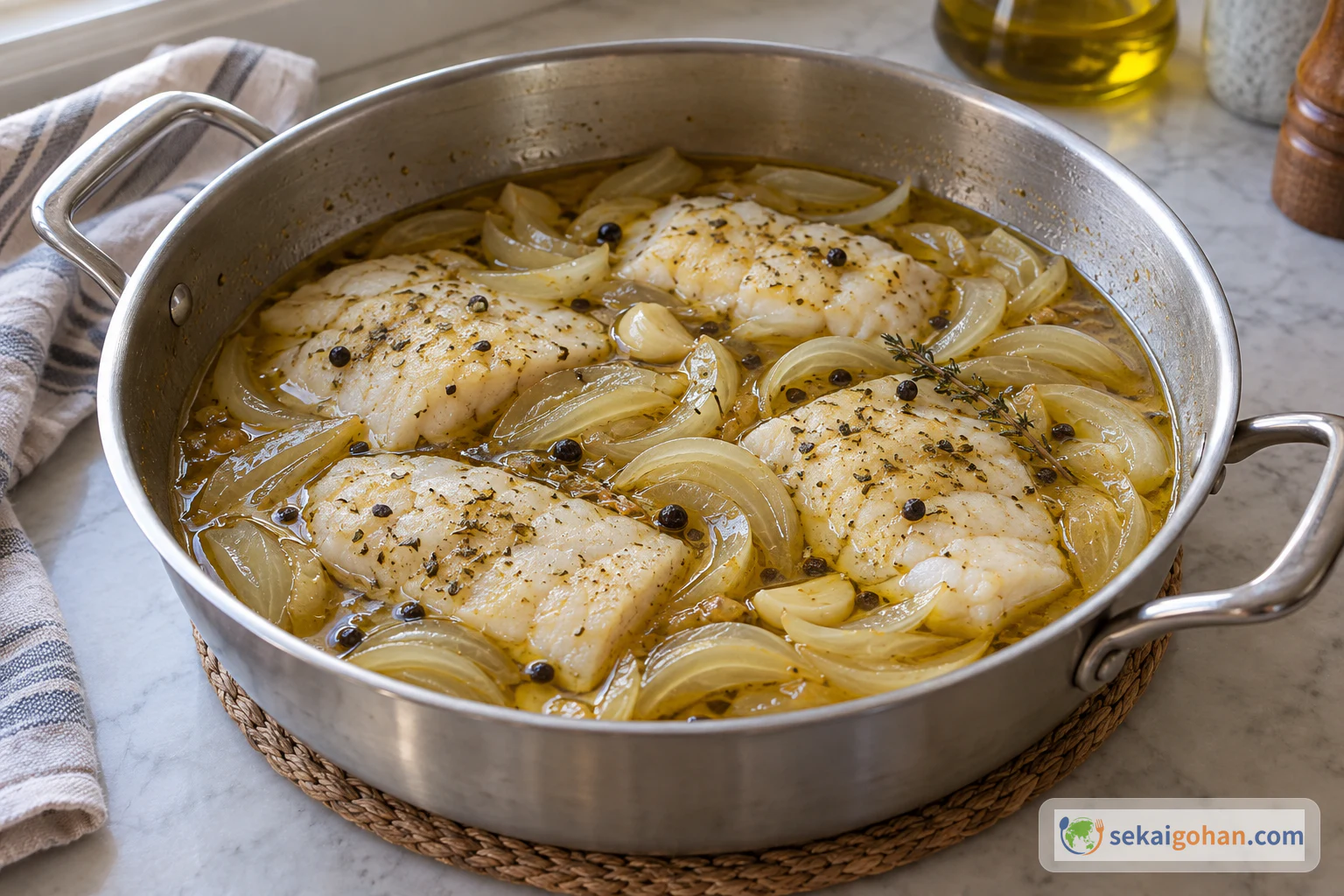
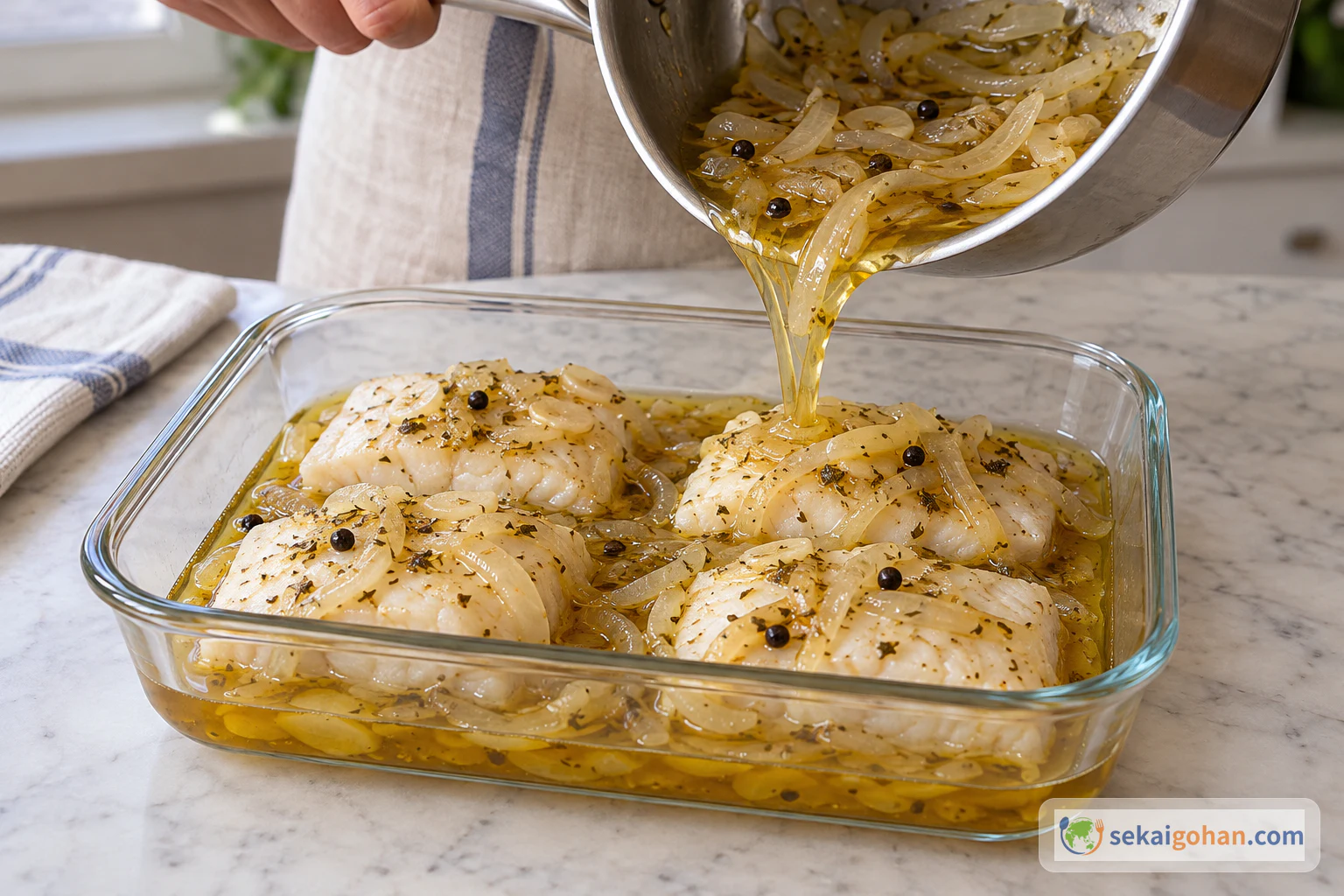
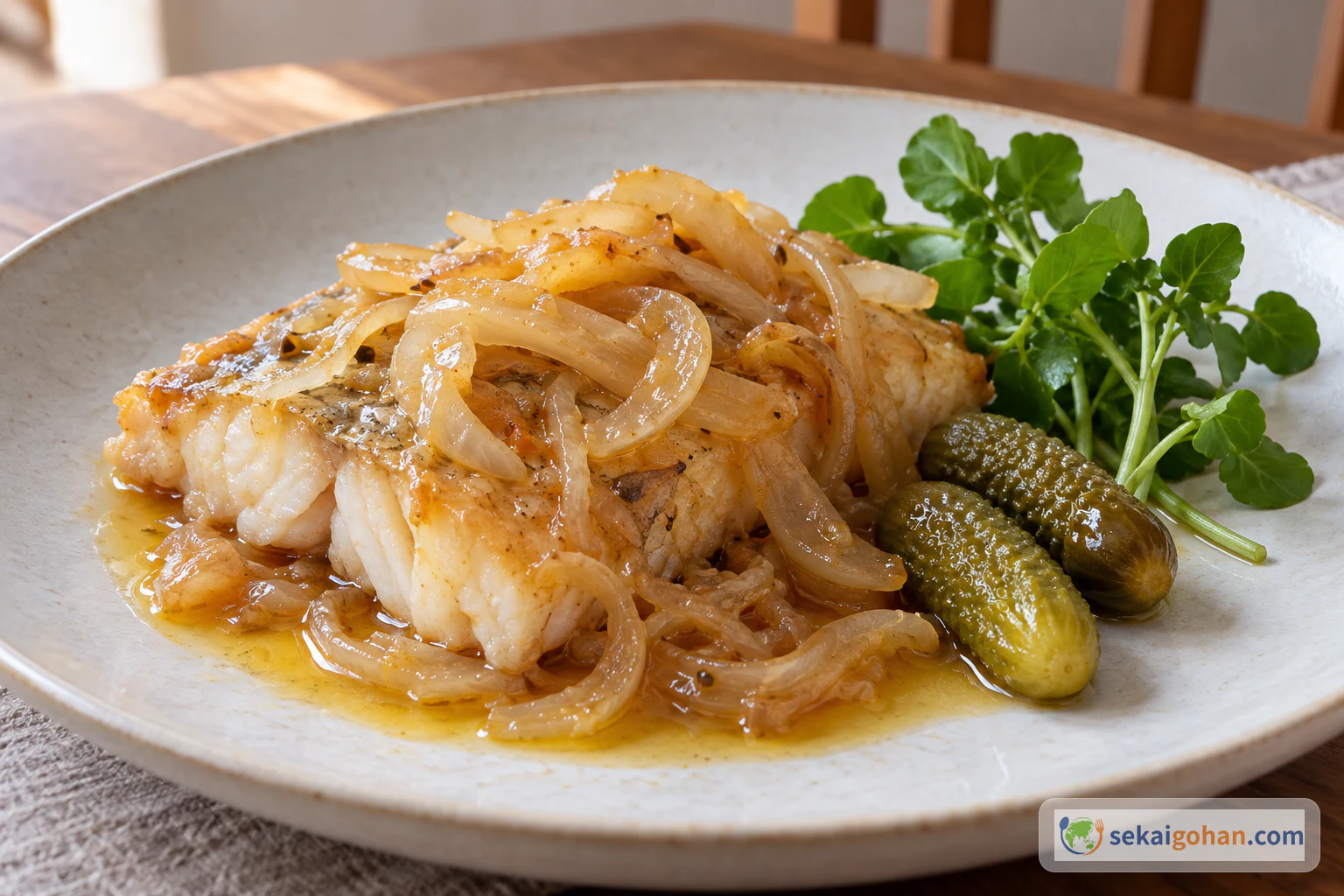
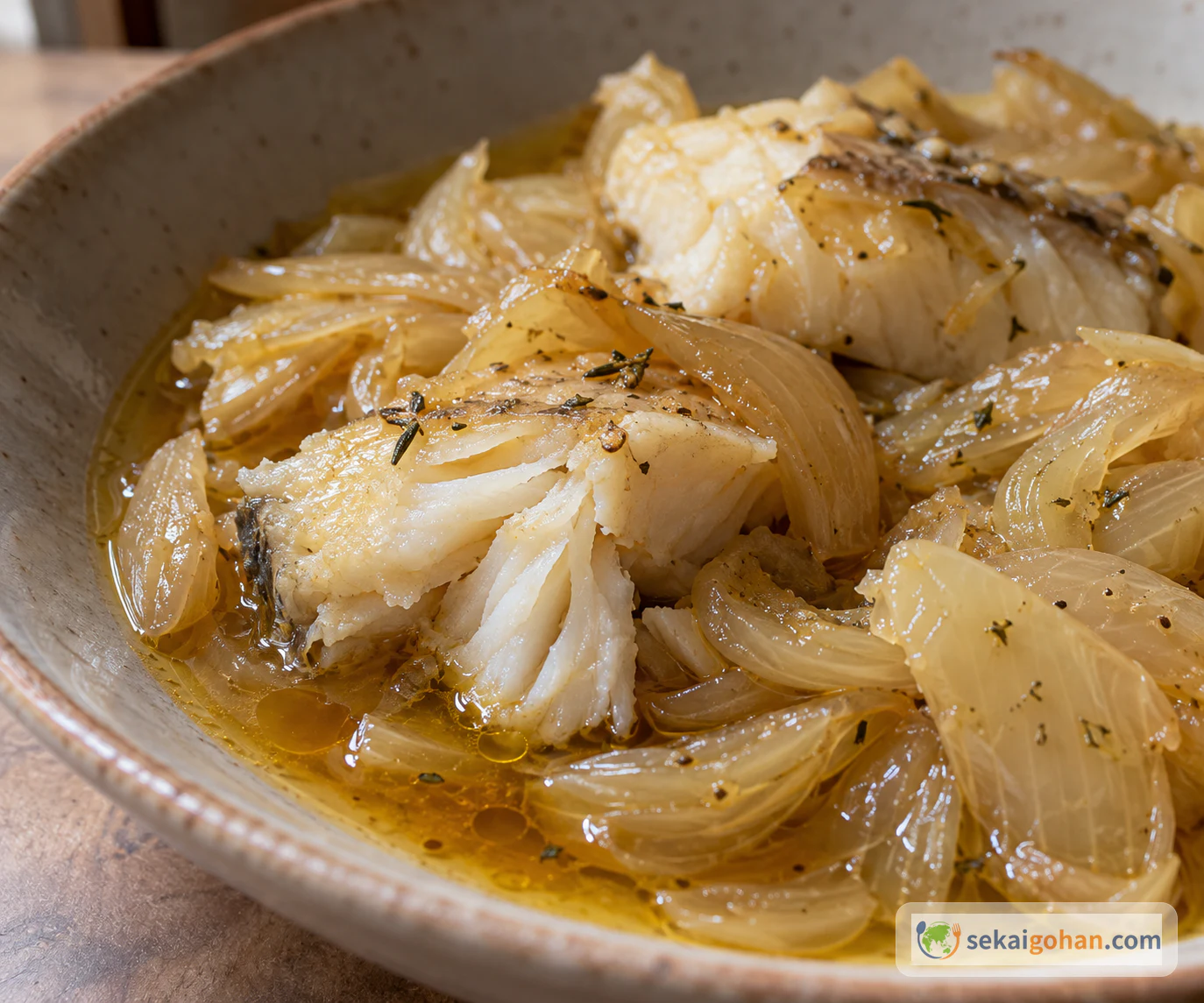
A pan of fish sits over low heat, the smell of wine vinegar and olive oil rising around wedges of onion. In Madrid, fish escabeche was once sold from barrels and earthenware basins and eaten as an easy meal or a tapa, everyday food served straight from the pan. This version, escabechados castellanos, comes from Castilla y León: fish cooked gently with onion, garlic and herbs in olive oil and wine vinegar until it flakes, then served with its sharp, fragrant liquid.
Escabeche in Castilla y León and Beyond
Escabeche is a family of preparations rather than one fixed formula. In Spain the method goes beyond fish to poultry and game, and it spread through the Castillas onto inland tables. Several explanations exist for the word, including an Arabic or Persian origin. Religious dietary rules and limited access to fish inland both played a part in its spread, though no single cause explains it. For more of the country's cooking, see our page on Spain.
A recipe from the Valle del Huecha shows how far the method can travel. It names bonito as especially suitable: the fish is dried, cut into rounds, fried and cooled before it meets a liquid of vinegar, oil and water in a 1:1:2 ratio by volume, with lemon, bay leaf, garlic, clove and black pepper. That is a long way from the low simmer in oil and vinegar used here. A contemporary take uses fresh mackerel with vegetables and peach, built around sherry vinegar, oil and white wine.
The name also turns up far from Spain. The escabeche of the Philippines and escabeche de pollo in Peru share it, but they are distinct dishes.
Ingredients for 4 Servings
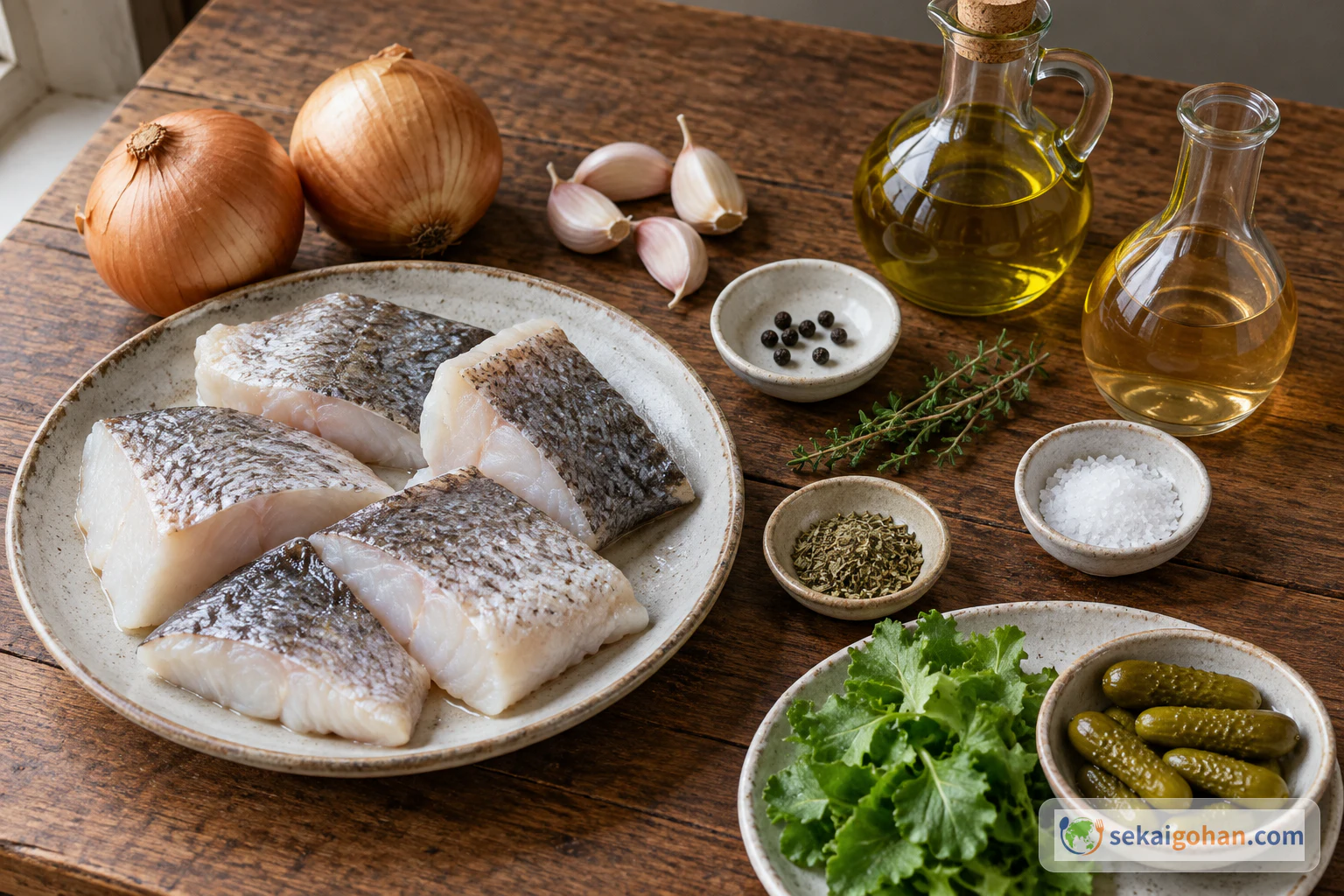
Equipment
- A narrow, snug saucepan that holds the fish and onion close together
- A cutting board and knife
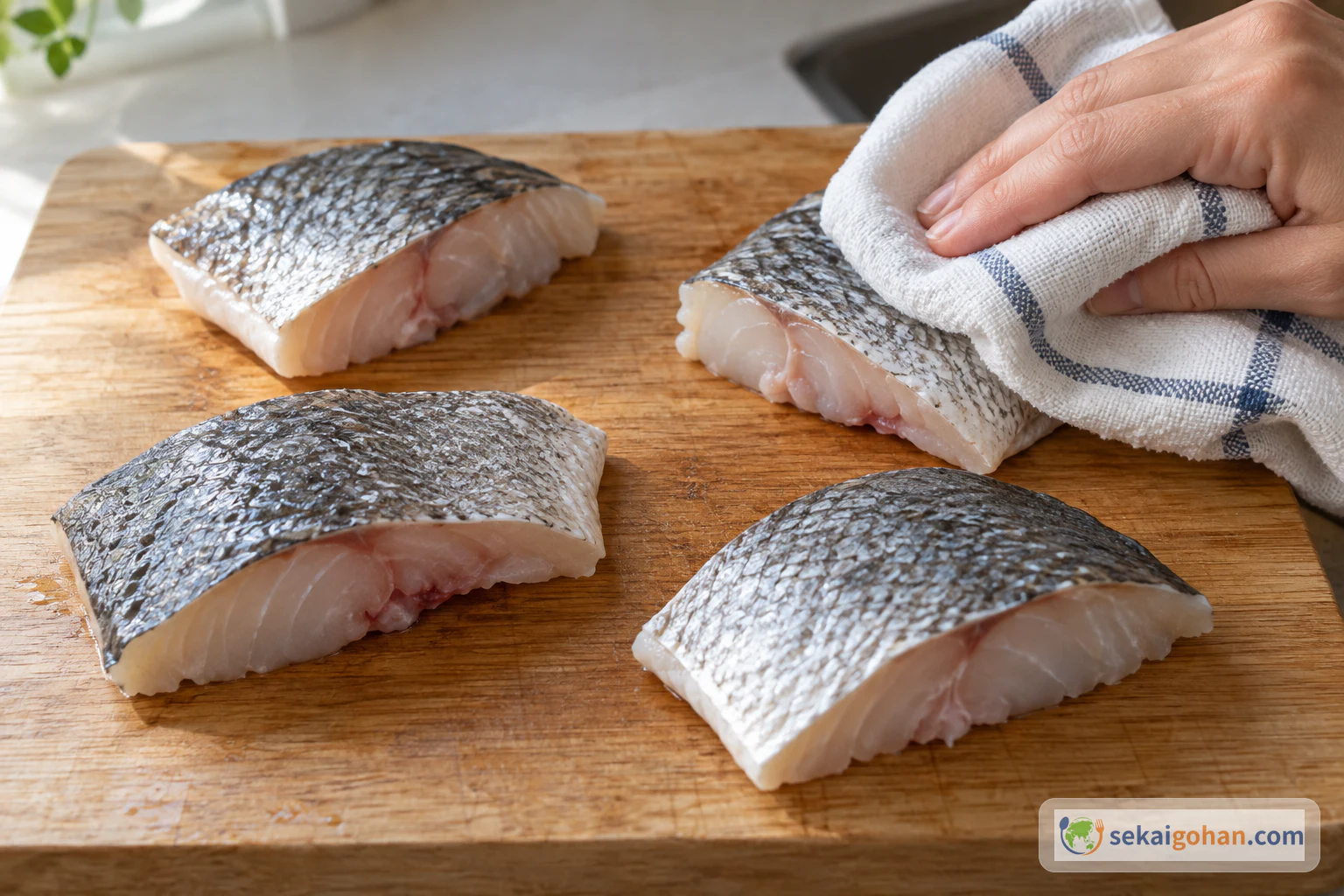
- A clean cloth for drying the fish
- A mortar and pestle, or another way to crush the garlic and spices
- A fork, plus a food thermometer if you have one
- A clean ceramic or glass container
Choosing Fish, Vinegar and Greens for Escabeche
Fish: No species is named, so choose fresh, firm fish that you can cut into even, boneless pieces. Even pieces make doneness much easier to judge. Different species cook at different speeds, so check each one as you go.
Vinegar: Use wine vinegar, in the amount listed alongside the oil. Grain vinegar changes both the aroma and the acidity, so it isn't an equal swap, and neither is any other acid.
Pickles and greens: Gherkins pickled in vinegar taste different from other cucumber pickles. For the greens, use watercress or escarole, whichever you can find.
Seasoning: Salt and oregano have no set amounts. Season both to taste, and go cautiously.
This dish contains fish. Some wine vinegars contain sulfites, so check the label on any you buy.
Fixing Problems with Fish Escabeche
| Condition | What to consider | What to do |
|---|---|---|
| The fish is still translucent at 15 minutes | Piece thickness and pan heat vary | Keep cooking over low heat and recheck the thickest part until it reaches 145°F (about 63°C), or is opaque and flakes easily |
| The fish is falling apart | It has had enough heat to break down | Check smaller pieces earlier next time, keep the simmer quiet, and lift the pieces out gently |
| The ingredients are spread out in the pan | The pan is too wide | Use a narrower pan rather than changing the amounts |
| The salt or oregano is overdone | Both are left to taste | Season cautiously next time; too much is hard to correct |
| The fish has been out past the time limit | It has exceeded 2 hours, or 1 hour above 90°F | Vinegar and oil won't make it safe. The safest choice is not to eat it |
Serving, Storing and Varying Fish Escabeche
Storing Escabeche Safely
Let the fish cool only until the worst of the heat is gone, then get it into the refrigerator. Store it with its liquid and aromatics in a clean ceramic or glass container, and eat it soon.
- Refrigerate the fish within 2 hours of cooking, or within 1 hour if the air temperature is above 90°F.
- Keep the refrigerator at 40°F (about 4°C) or below.
Don't keep it at room temperature. Treat it as cooked fish, and don't rely on the vinegar and oil to preserve it.
Variations
Some changes are simple serving choices; others turn the dish into a different recipe with its own amounts.
| Change | What happens | How to treat it |
|---|---|---|
| Leave out the gherkins | Removes their sharp crunch | An optional serving choice |
| Bonito, fried first | Moves to the Valle del Huecha preparation | A separate recipe; its method doesn't mix with this one |
| Mackerel with vegetables and peach | Moves to a different, modern recipe | A separate recipe, not a swap for this one |
Frequently Asked Questions
Which fish should I use?
Any firm fish cut into even, boneless pieces. Mackerel works here too, but the amounts from the modern mackerel recipe don't transfer, and the bonito of the Valle del Huecha belongs to its own fried method.
Do I really need 3 cups (750 ml) of olive oil?
Yes, with 1 cup (250 ml) of wine vinegar. Keep the proportions as listed and use a narrow saucepan, which keeps the ingredients together in the liquid.
Is it safe to keep escabeche at room temperature?
No. Handle it as cooked fish and refrigerate it within the limits above.
Can I serve it cold?
Yes. The fish is already cooked, so it can go to the table cold. Just don't leave it out for long after taking it from the refrigerator.