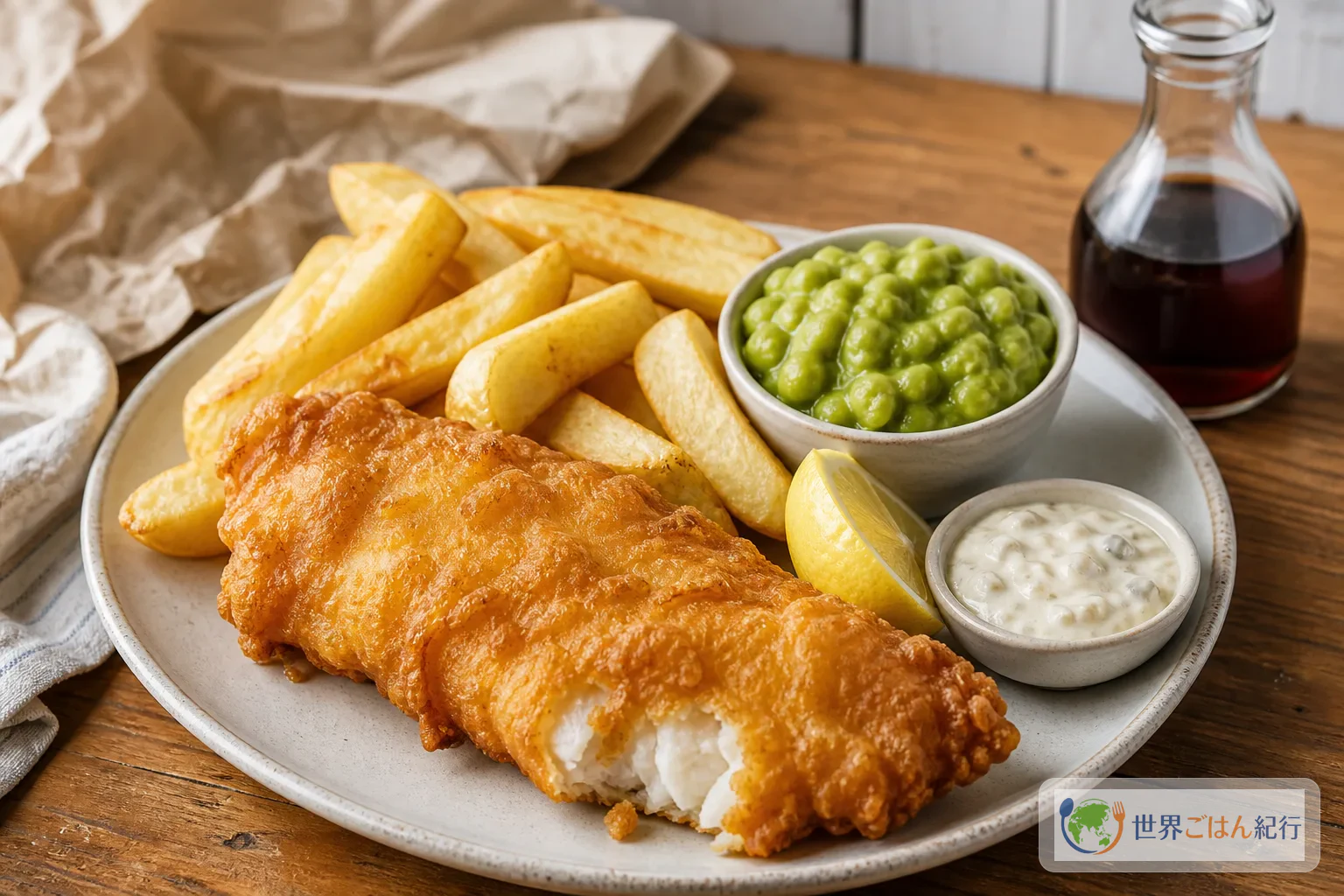
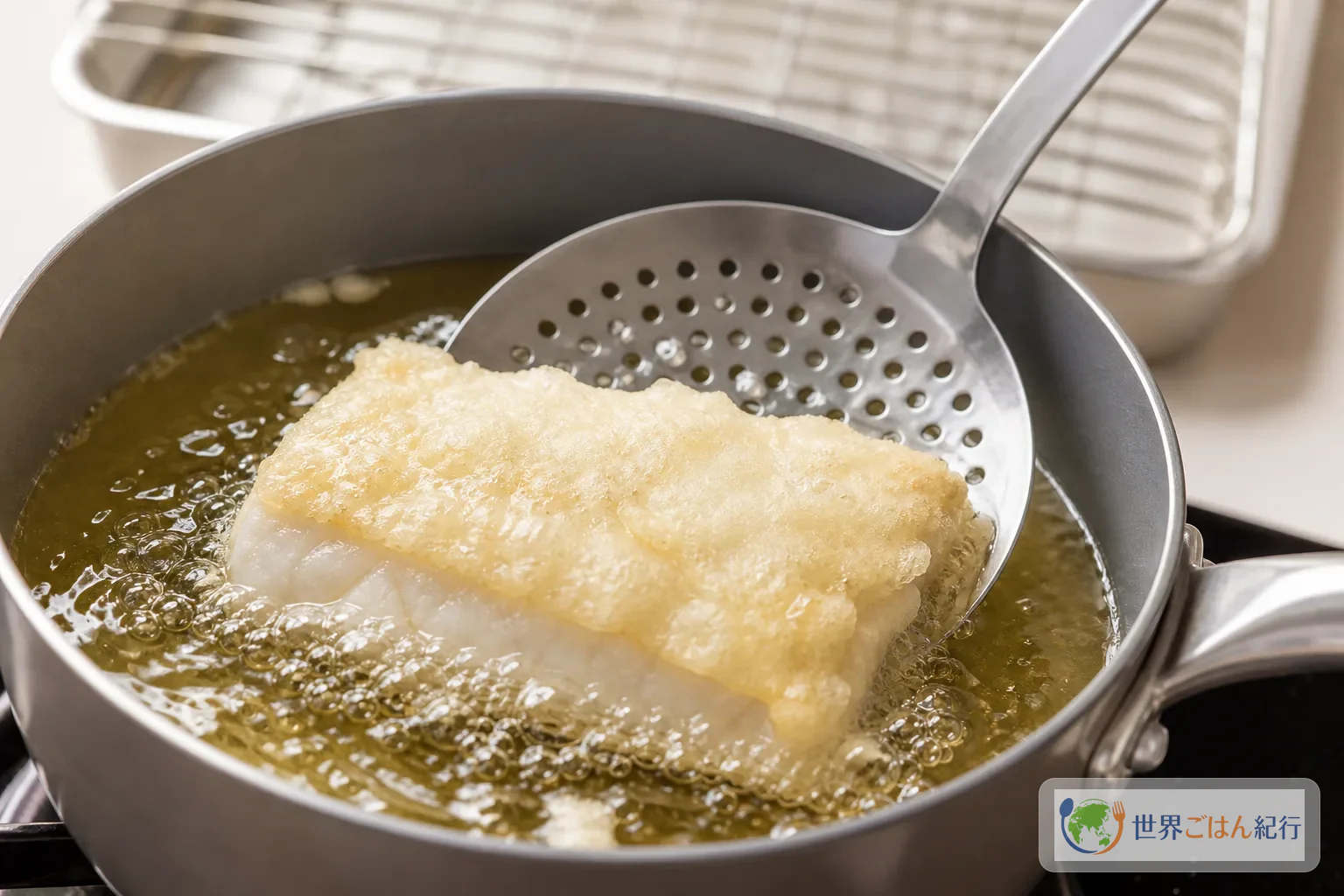
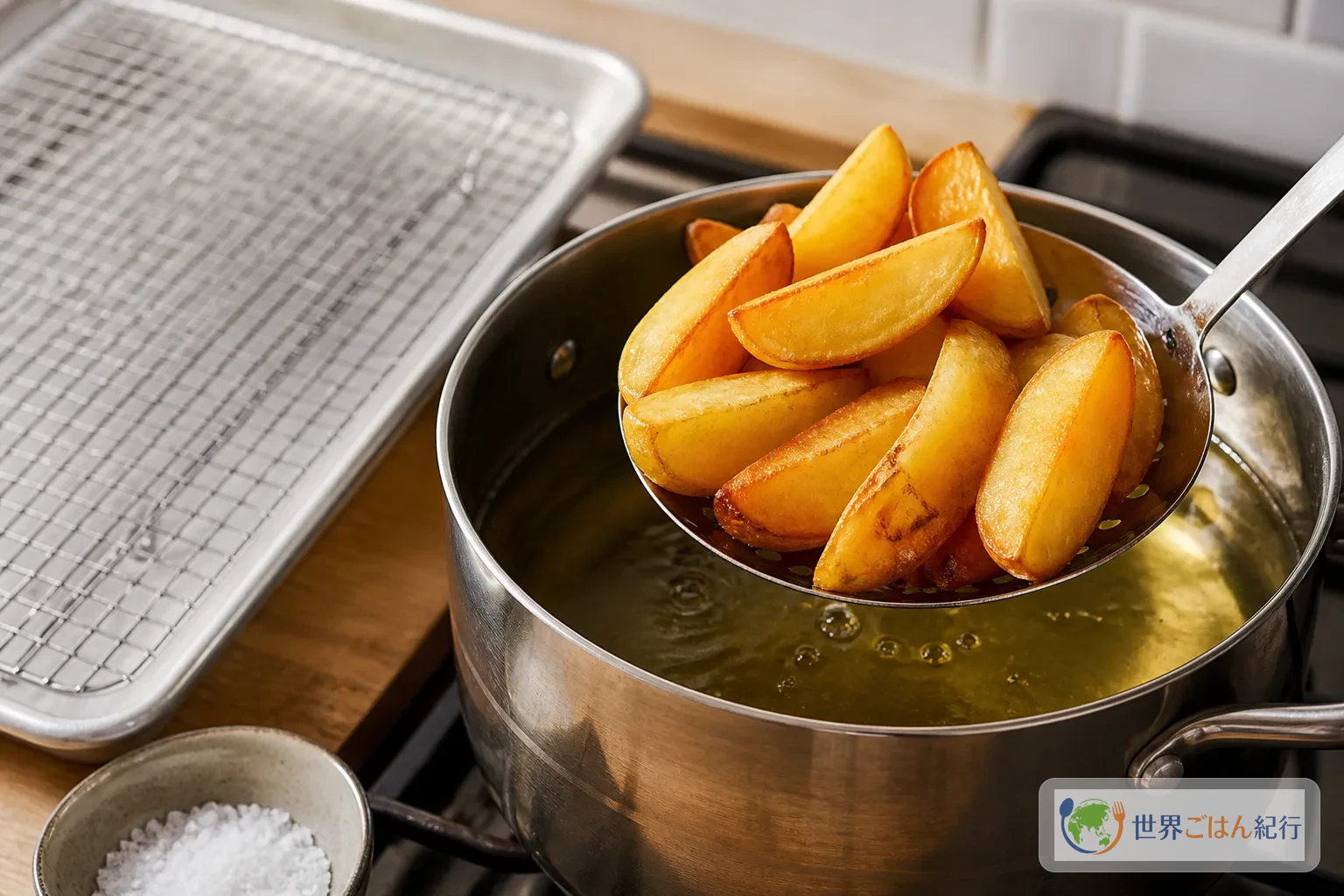
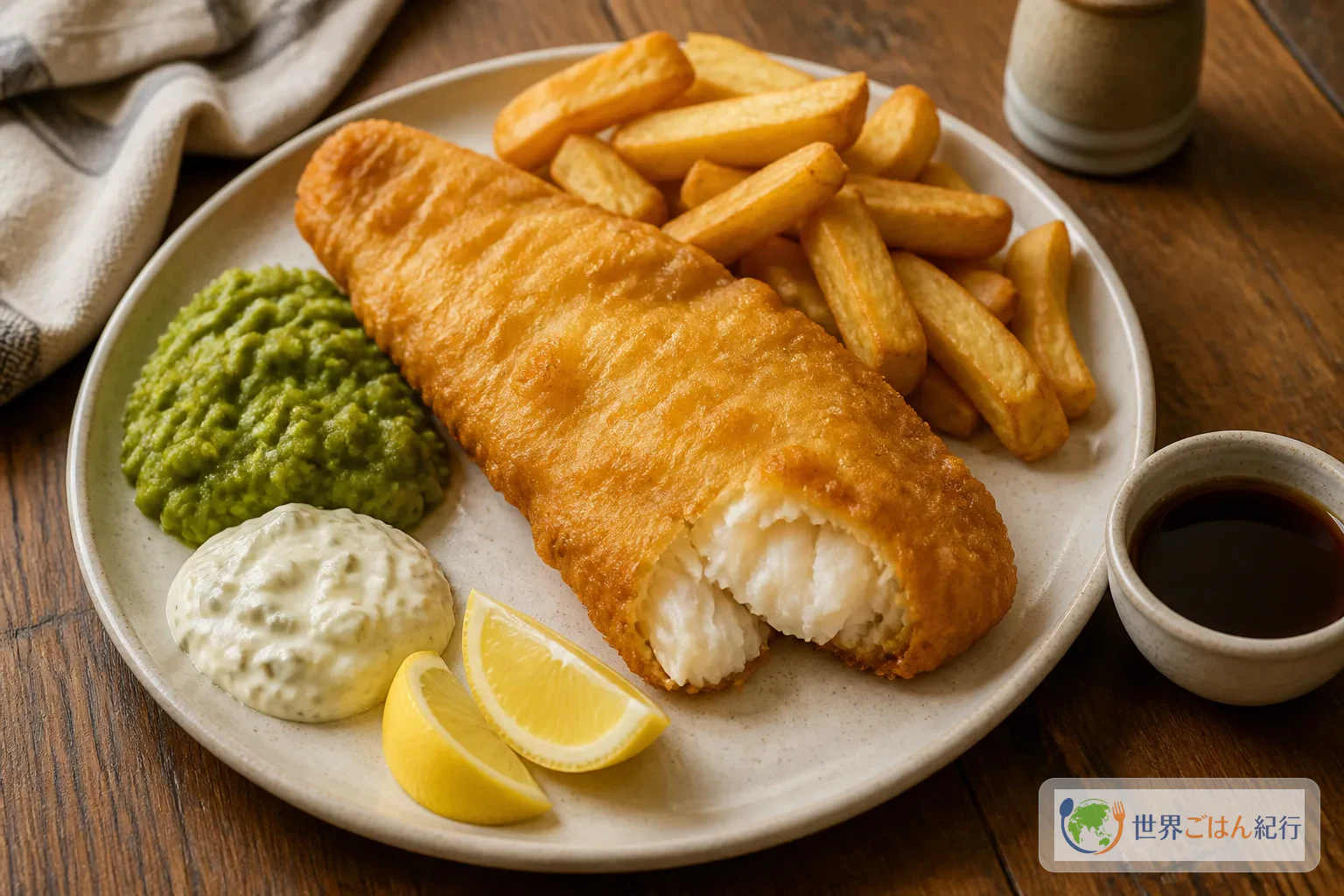
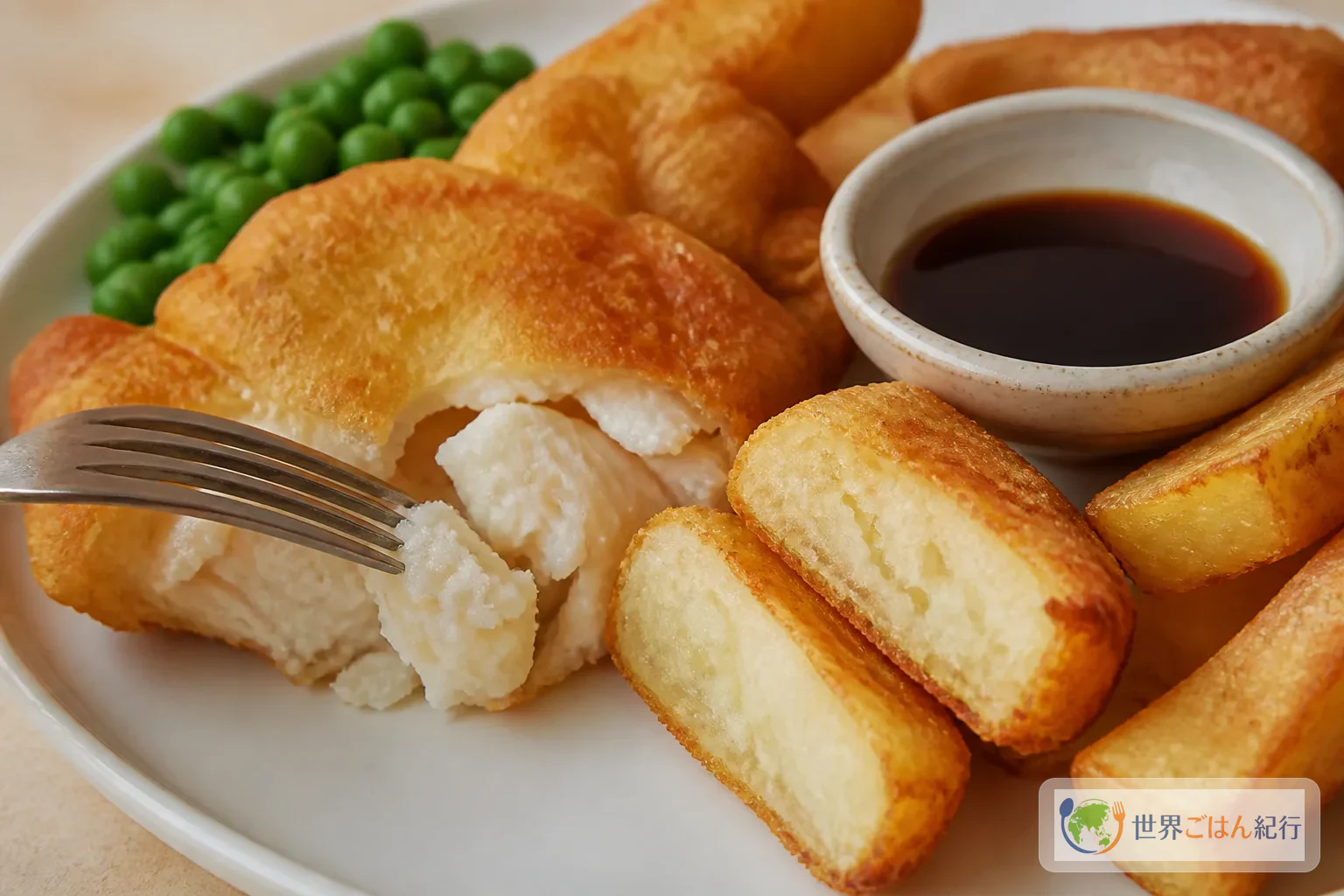
The batter hits the oil and fine bubbles wrap around the fish. A few minutes later you lift it onto a rack, pale gold now, and steam rises from the white flesh when the knife goes in. Beside it sits a pile of thick chips, crisp only on the outside, and the smell of salt and vinegar drifts up. This is fish and chips, Britain's great takeaway: plump fish, a light batter and chips that stay fluffy inside. The fun of making it at home is cooking those three textures at their own temperatures and bringing them together just before you eat. Even without a dedicated fryer, cold sparkling water, well-dried potatoes and careful oil temperature will get you there.
The History of Fish and Chips
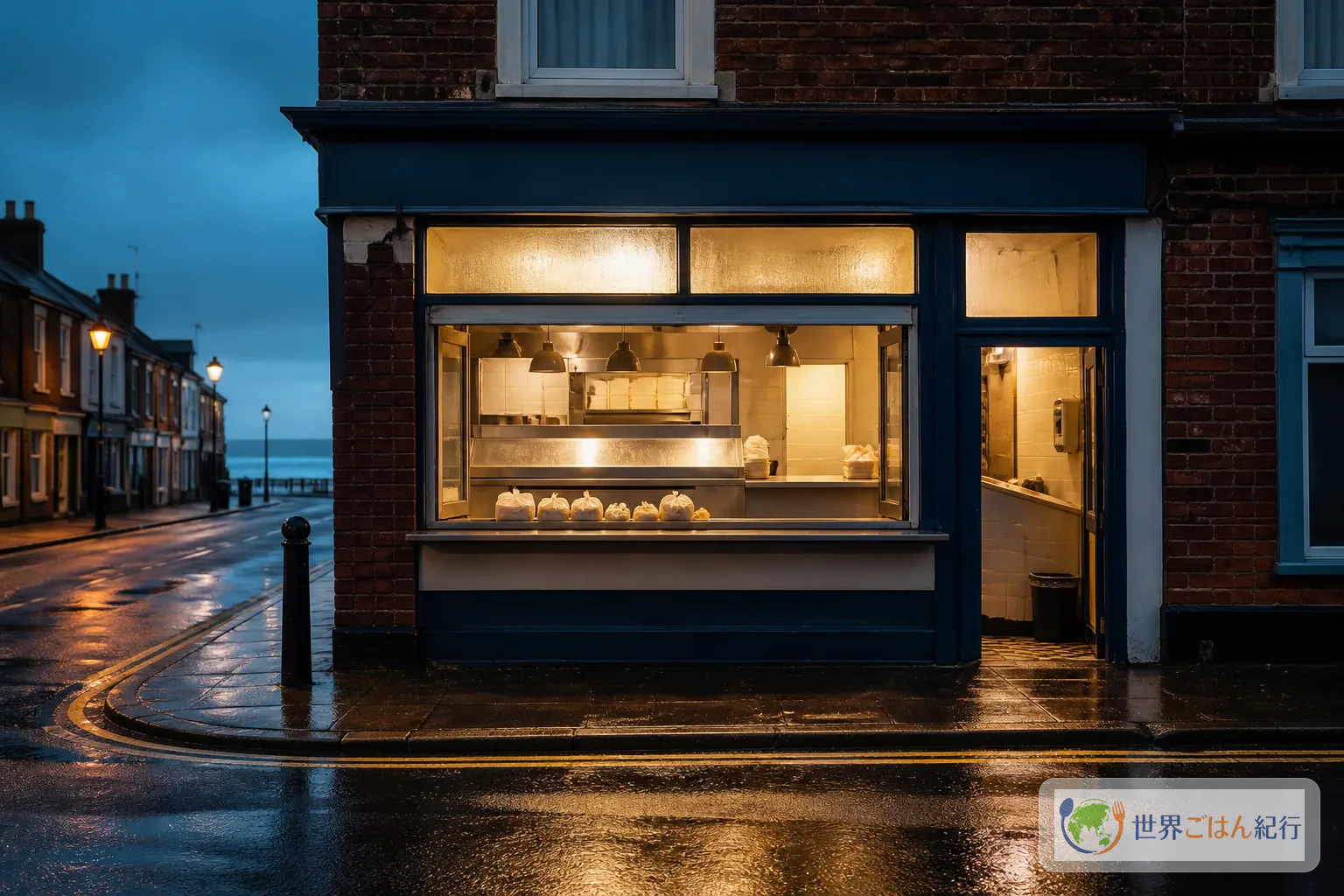
Two food cultures that met in the city
Battered fried fish is linked to the cooking of Sephardic Jews who came from Portugal and Spain in the 16th century. They fried white fish ahead of time to eat on Friday evenings, and the habit became part of London's food culture. Meanwhile, frying and selling potatoes cut into strips caught on in the north of England.
Joseph Malin opened a shop in Bethnal Green, London, in 1860, and another early shop started up in the north. No single shop invented the pairing. It spread quickly as workers' food in 19th-century cities, where fish, potatoes, oil and cheap takeaway meals came together. Trawling and refrigeration carried fish further across the country, and Billingsgate Market opened in 1850. So for all its seaside image, fish and chips began as city food, linking markets, ports, factories and neighborhoods. It became everyday fare and was not rationed in either world war.
Plenty of dishes use fried potatoes as a base. Canada's poutine piles on cheese curds and gravy, while here the potatoes are cut thick, set beside the fish and sharpened with vinegar.
Haddock in the north, cod in the south
Some shops simply write "white fish," but cod and haddock taste different. Haddock dominates in Scotland, parts of Yorkshire and the Midlands; cod is more common elsewhere. Cod has thick, mild flesh. Haddock is firmer, with a scent that can recall smoking.
Vinegar, peas and the paper wrap
Malt vinegar goes on the chips, and its malty aroma is something lemon alone can't give you. Mushy peas, soft but not fully crushed, take up the oil of the fish. Some shops put out tartar sauce; others serve curry sauce, gravy or scraps, the little bits of fried batter.
Vinegar soaking into the paper wrap and the heat of the parcel in your hand were part of the experience. Shops use food-grade packaging now, but the plate itself hasn't changed. Fry the fish first and the chips after, and add the acidity last. Keep to that order and a plate at home takes on the outline of a shop plate.
Ingredients (serves 4)
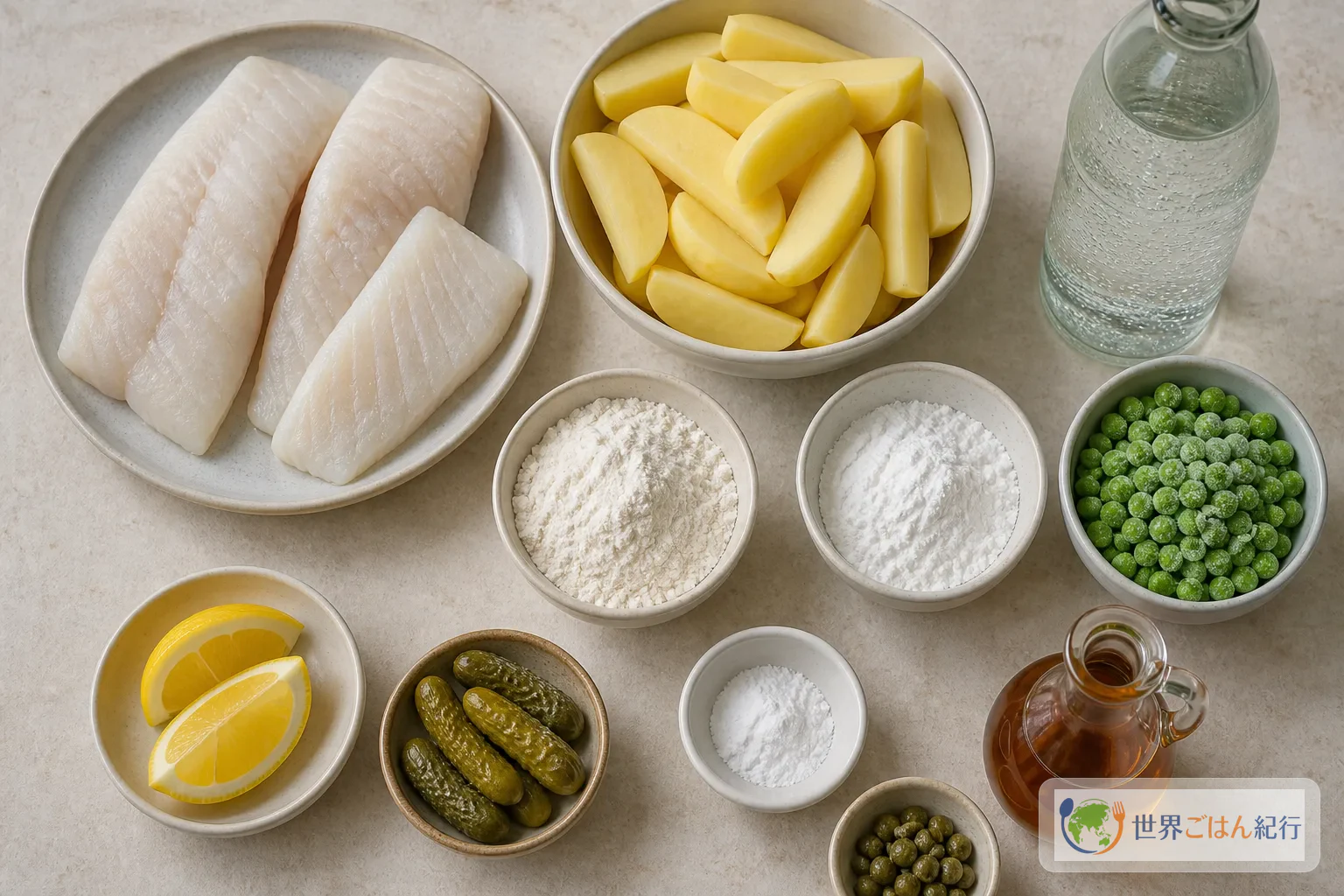
Choosing Vinegar Sets the Flavor
Malt vinegar is an ingredient that creates the British aroma, but because only 2 tbsp (30ml) is used, whether to buy it depends on whether you already use vinegar for fried food and dressings. If you put priority on the British aroma, look for malt vinegar at an import grocer; if you won't use it up on anything but chips, replace the acidity with white wine vinegar. Rice vinegar works, but its aroma is rounder and moves away from the malty direction.
If you use whatever vinegar is nearby, don't pour on the full amount from the start; try 1 tsp (5ml) at a time on the plate. If it is too sharp, adjust with salt alone, and if weak, add more; this keeps the fried batter from getting damp.
Thaw fish in the refrigerator, and wash the cutting board and knife you used with detergent before using them for other ingredients. If the oil starts to smoke, turn off the heat and let it cool without moving the pot. Adding water to oil, or dropping in wet fish as is, risks spattering and fire. Flour, fish, and mayonnaise contain common allergens, so check the labels.
Choosing Ingredients for Fish and Chips
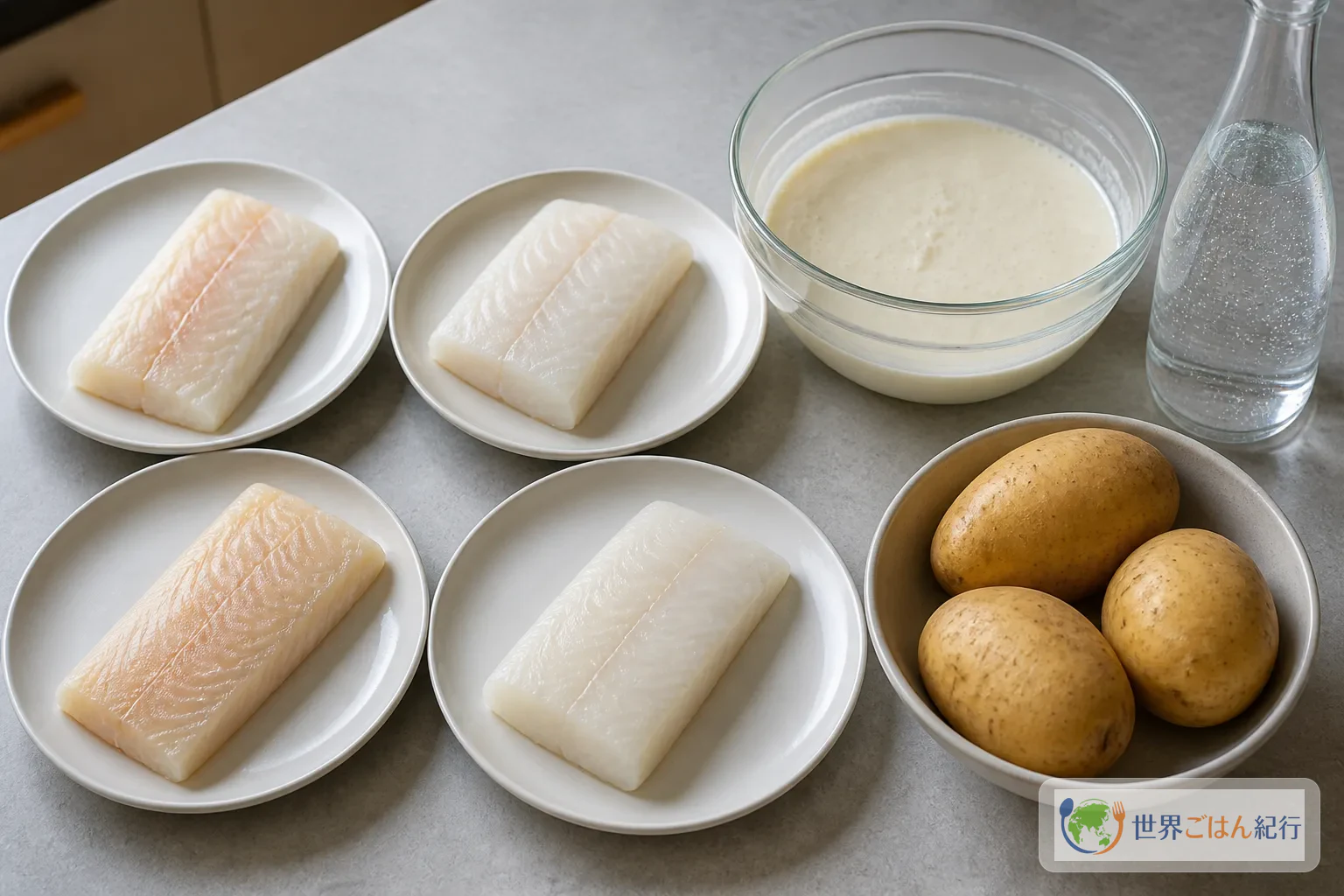
Cod, haddock and other white fish
British shops commonly sell cod, haddock, scampi and fishcakes, and hake, plaice, pollock and others turn up on menus too. Outside the UK, fresh cod, pollock, hoki or hake are good candidates. Choose by the thickness and moisture of the fillet, and give priority to boneless fillets of even thickness over the exact species.
| Regional or shop tendency | How the fish is chosen | Decision at home |
|---|---|---|
| Scotland | Haddock is the star | Choose firm fillets and keep the batter thin |
| Yorkshire and parts of the Midlands | Haddock stands out | Sprinkle a little salt first rather than strongly acidic vinegar |
| London and many other regions | Cod is the standard | A fillet about 1 inches (2.5 cm) thick makes it easy to see how it cooks |
| By menu at each shop | Pollock, hake, plaice also appear | Choose fish with the name stated and adjust time by thickness |
Check the sales label on any fillet. A restaurant that names a specific fish on its menu, such as cod or haddock, must serve that species. If your label says only "white fish," treat it as its own fish and watch how it cooks.
For thin fish, shorten the frying time; for thick fish, lower the oil to 170 to 175 degrees C before the batter gets dark. Thaw frozen fish slowly in the refrigerator and wipe off the liquid that comes out twice. Half-thawed fish colors the batter first and leaves the center cold.
Beer or sparkling water
Beer adds a malty aroma that ties in nicely with malt vinegar. Sparkling water skips the alcohol and tastes cleaner. Either way, use it cold and fry soon after it meets the flour. If children are eating, choose sparkling water, since alcohol isn't always completely gone even after heating.
Even if you run out of baking powder, you can make it with 5.5 oz (150g) all-purpose flour, 1.5 oz (40g) potato starch, 270 to 300ml cold sparkling water, and salt. The rise of the batter will be modest, but if you fry right after mixing and don't crowd the pot, it will form a thin shell. Substituting the same amount of baking soda alone tends to give bitterness and deep color, so if you use it, try a pinch first. To avoid gluten, switch the wheat flour to rice flour and use separate utensils and oil.
Method: Potatoes Twice, Fish at the Moment of Battering
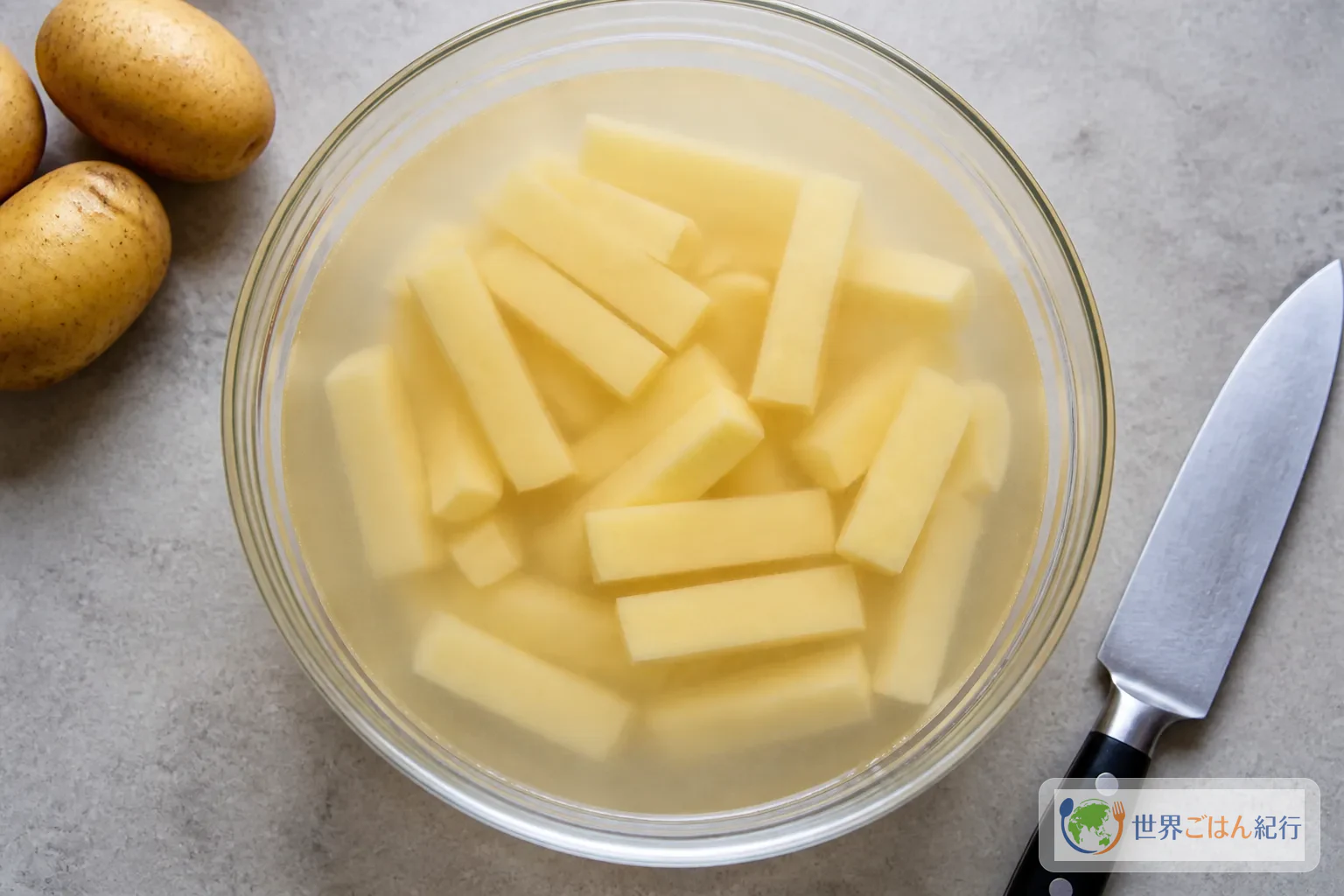
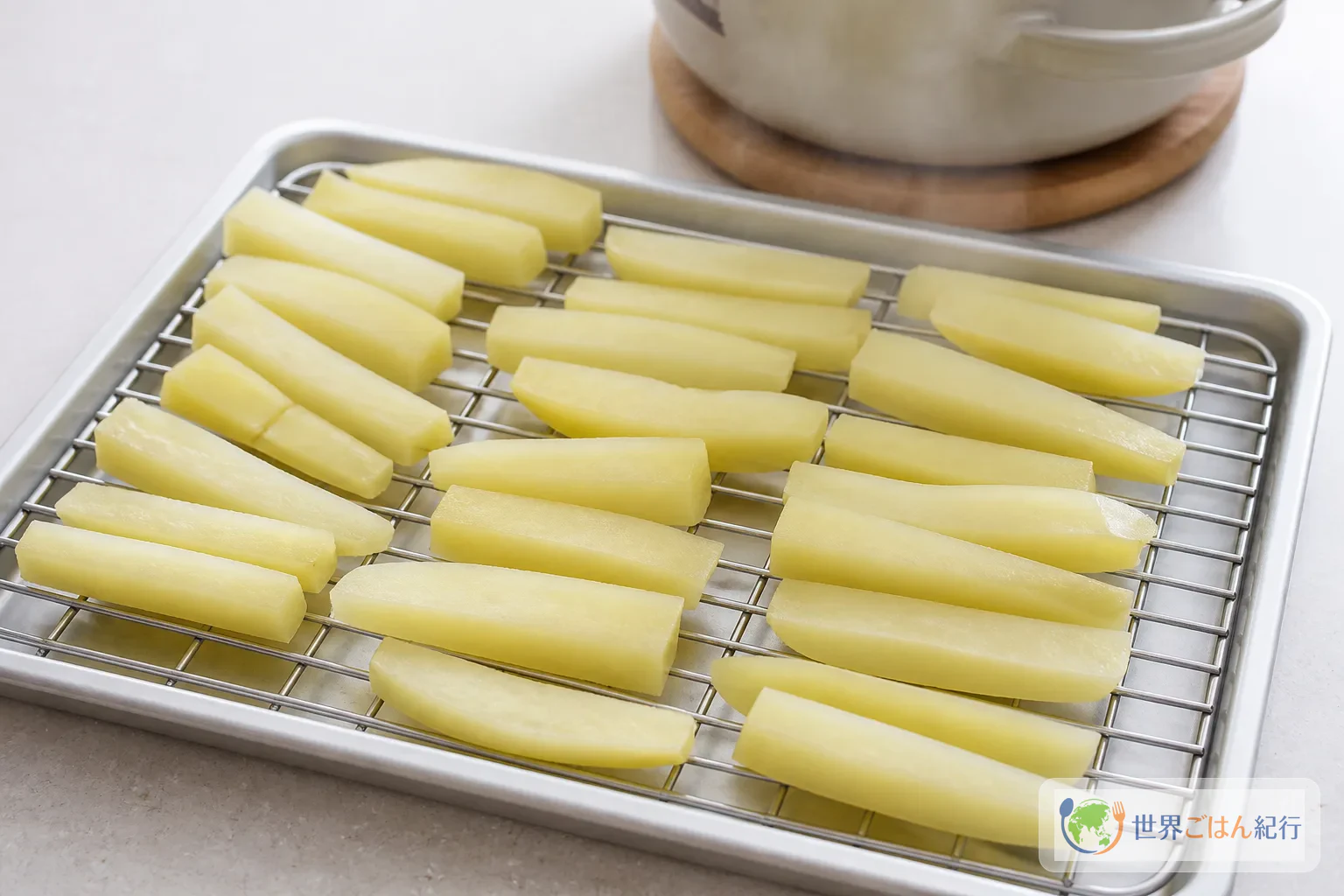
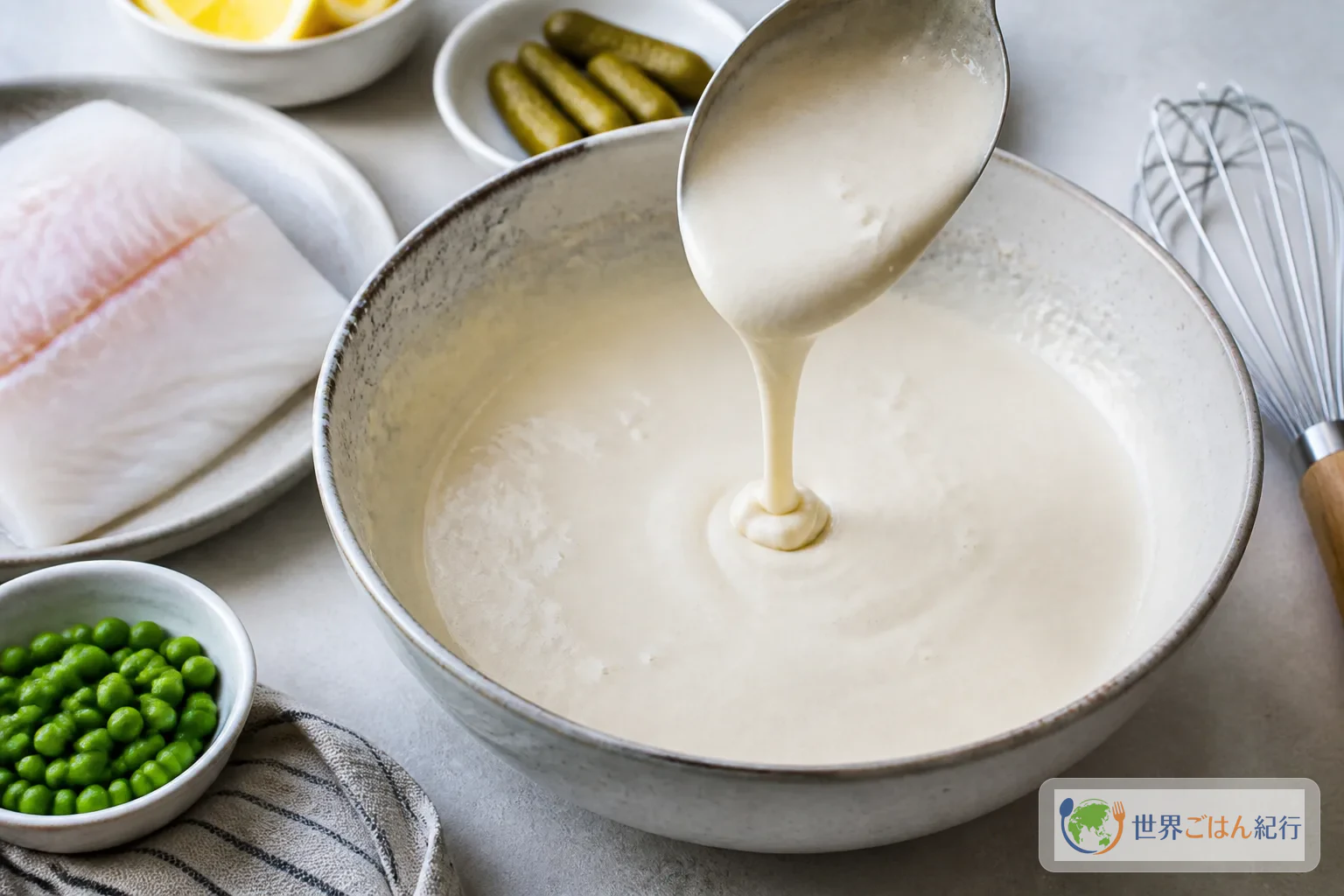
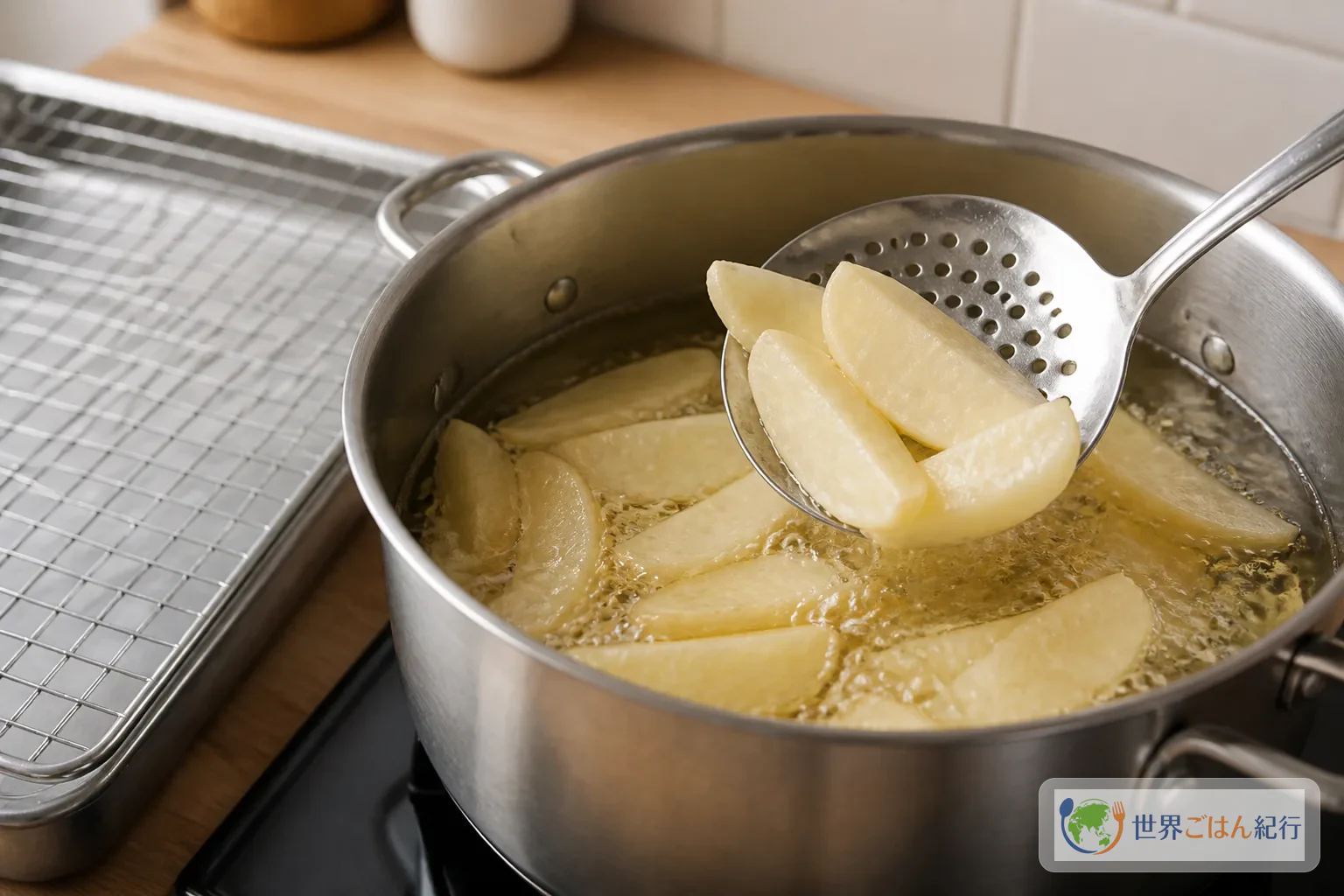
Frying is not a dish where you crowd everything into the same pot. The potatoes are softened in the center first, then dried on the surface and fried twice. For the fish, don't make the batter too far ahead; dip it just before it goes into the oil.
Preparation
Frying
Fixing Heavy Batter and Soggy Chips
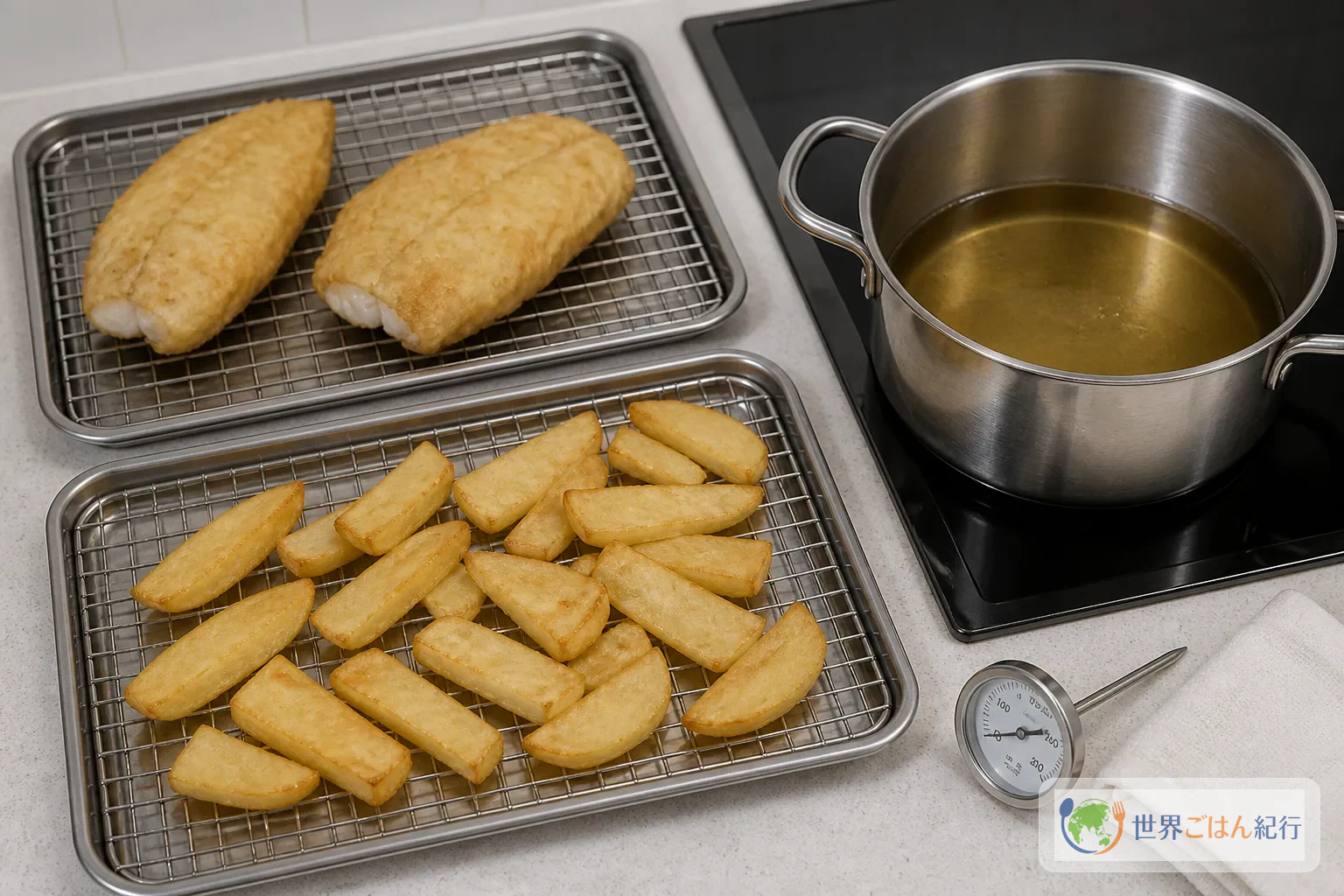
Before you change the batter formula, look at moisture and oil temperature. Most failures come from wet fish going into the oil, a crowded pot, or food steaming on a plate, far more often than from the type of flour.
| Condition | Main cause | What you can do on the spot |
|---|---|---|
| Chips are soft and oily | Moisture remained after parboiling, or too many went into the oil | Dry on a rack for 10 minutes and re-fry at 185 degrees C for only 1 to 2 minutes |
| Batter comes off the fish | The fish surface is wet, or the dredging flour is thick | Press off moisture with paper and brush the flour on thinly again |
| Dark outside and raw in the center | The fillet is thick, or the oil is too hot | Lower to 170 to 175 degrees C and add 1 to 2 minutes with weak bubbles |
| Batter is sticky | The sparkling water was warm, or it was overmixed | Chill the bowl and use only a little fresh batter for the next fish |
| Vinegar quickly dampens the batter | The whole amount was poured on before eating | Serve the vinegar separately and dip a bite at a time |
If you stack fish or chips on paper right after frying, they draw back the steam coming from the bottom. Place them in a single layer on a metal rack, fish with the battered side up. Move to a plate after 30 seconds to 1 minute, when the oil has drained and the surface feels crisp when lightly touched.
Serving, Storing and Varying Fish and Chips
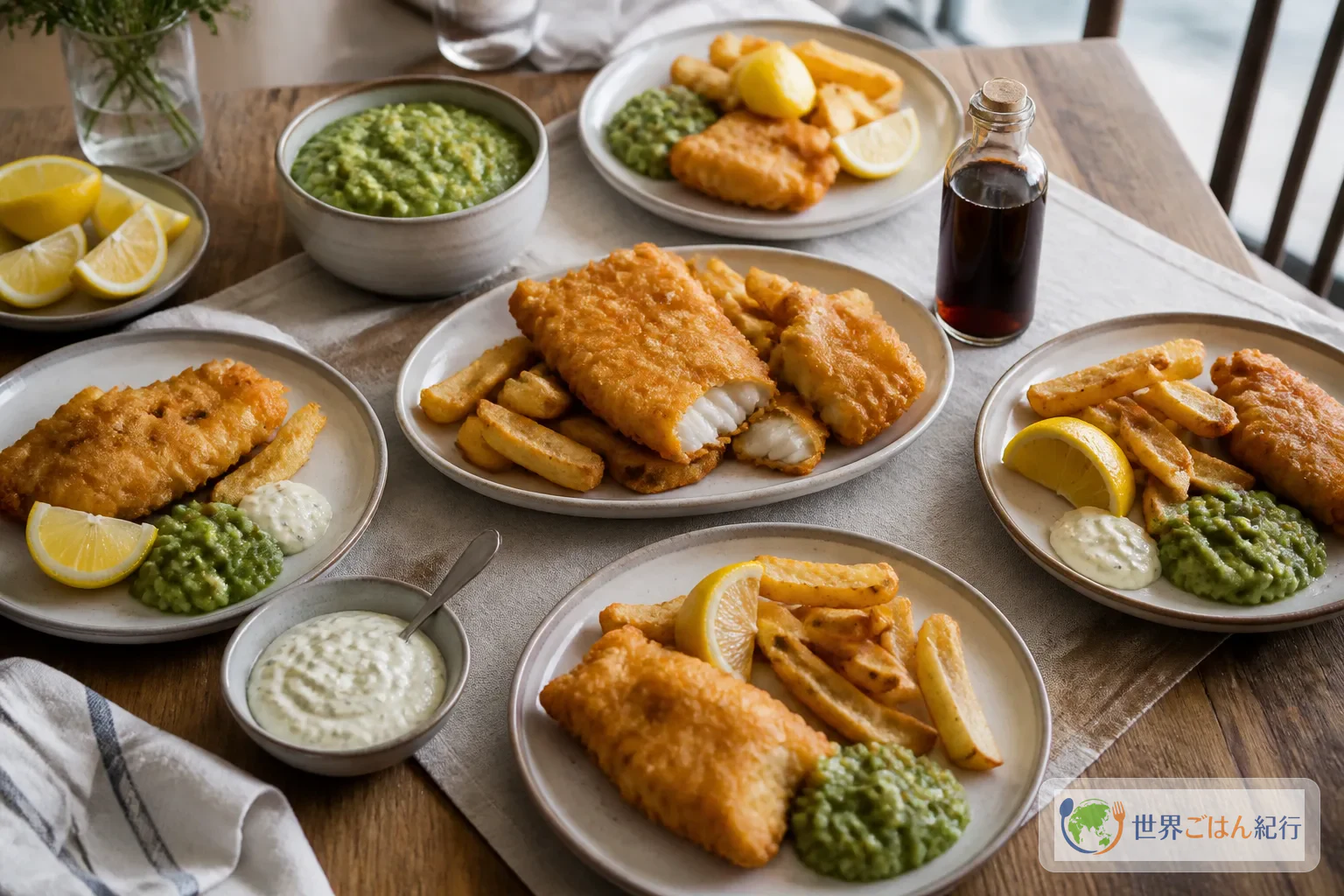
Mushy peas
Mushy peas come in two styles: a quick version of lightly crushed frozen green peas, or the shop taste of dried marrowfat peas soaked and simmered. For dried peas, soak them overnight as directed, boil until soft, then salt. Some recipes add baking soda, but too much erases the aroma of the peas, so the first time follow the label or leave it out.
Frozen green peas boiled 2 minutes and coarsely crushed make a fine partner for the batter. Leave about half the peas whole and they soak up the saltiness of the chips while keeping your mouth feeling light. A little mint freshens them, though for the British shop taste, start with just peas and salt.
Tartar sauce, curry sauce and gravy
Tartar sauce cuts the fat of the fish with acidity. Mix mayonnaise, pickles, capers and onion and rest it 15 minutes in the refrigerator so the onion mellows. Because it contains egg, serve it with a clean spoon kept apart from anything that touched the fish.
Curry sauce and gravy have their fans, but make your first bite just salt and vinegar so you taste the batter. Curry powder mixed into the batter is a fun home twist, though it drifts away from the pairing of fish and malt vinegar. With a crowd, put sauces on a separate plate and let everyone go their own way.
Oven and air fryer versions
You can bake the chips in an oven or air fryer and coat the fish in breadcrumbs. It uses less oil, but the texture is a different thing from batter puffing in deep oil, so think of it as its own dish for days you'd rather not fry. Still draw the moisture out of the potatoes, and check that the fish is opaque to the center.
Storage and reheating
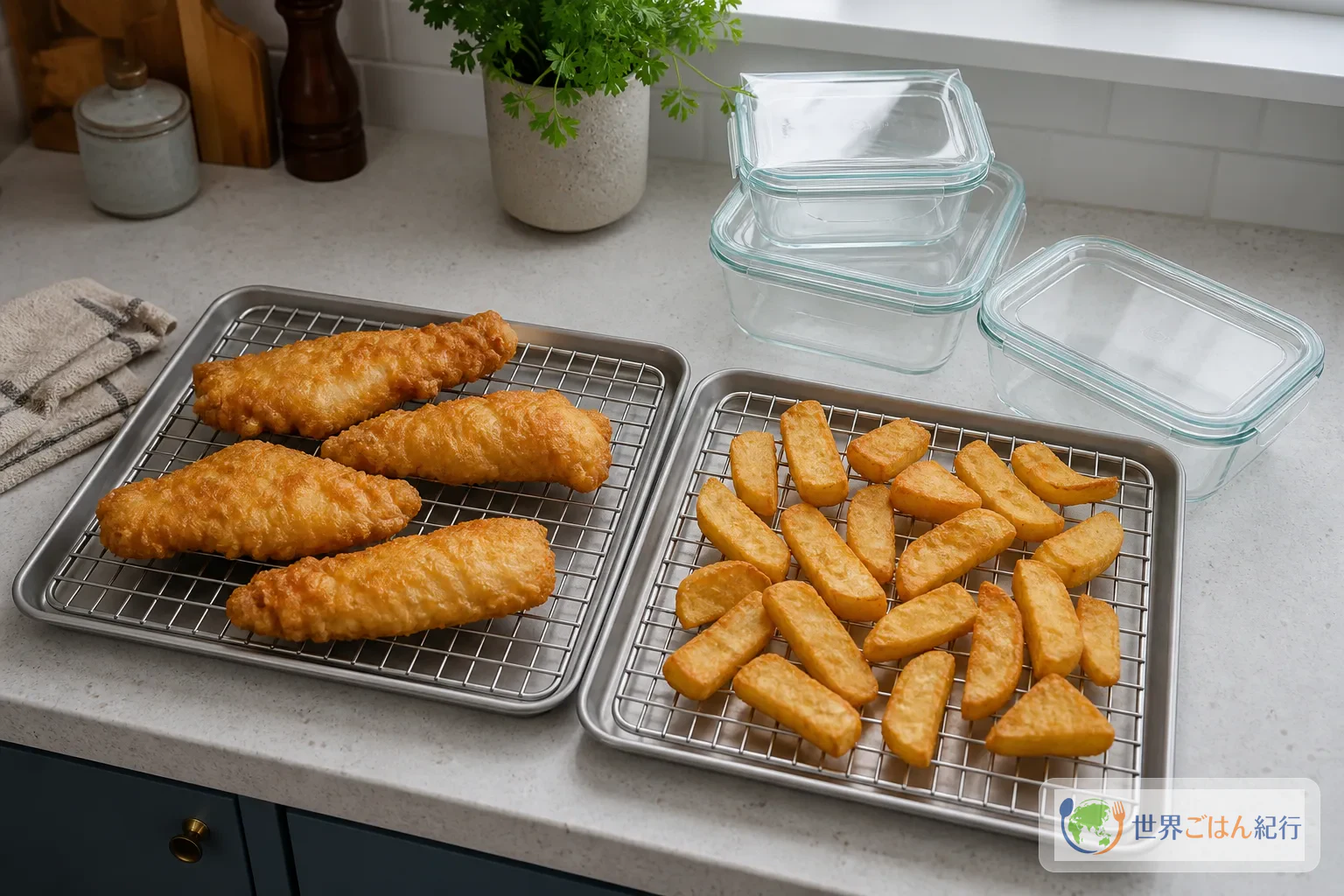
Fish and chips is best straight from the oil, and anything stored is a compromise. Separate leftover fish and chips, let the steam escape on a rack, then refrigerate in a shallow container. Don't leave them long at room temperature, and finish them by the next day. Keep tartar sauce and mushy peas in their own containers.
To reheat, put the fish on a rack in a 200 degrees C oven for 10 to 15 minutes, and warm the chips at the same temperature for 8 to 10 minutes. Adjust for the thickness of the fish, and check that the center is opaque and the flesh flakes with a fork. A microwave steams the batter soft, so use it only for a short pre-warm and finish in the oven or toaster oven to dry the surface.
Frequently Asked Questions
I don't have malt vinegar.
White wine vinegar works in small amounts. The sourness comes close, but you lose the malty aroma. Rice vinegar is rounder still, so start with only 1 tsp (5ml) and try salt and lemon on the side. Adding it a little at a time keeps the batter crisp.
Can I freeze leftovers?
Freezing tends to dull the texture of the batter and chips, so refrigerating and eating by the next day comes first. If you must freeze, separate the fish and chips completely and wrap them once cool. Reheat in the oven without thawing, and check that the center is hot and the fish has gone opaque. Avoid refreezing.