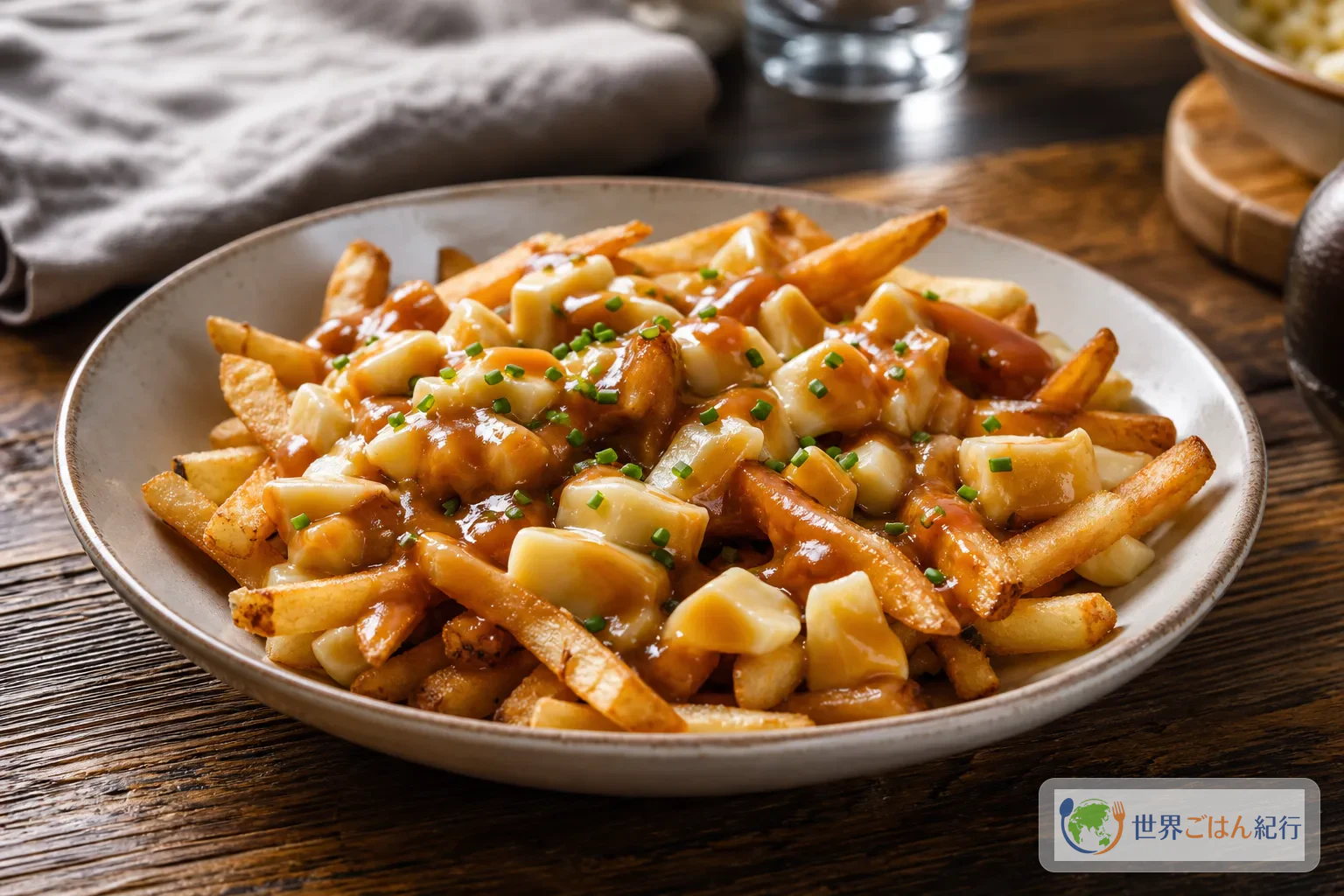
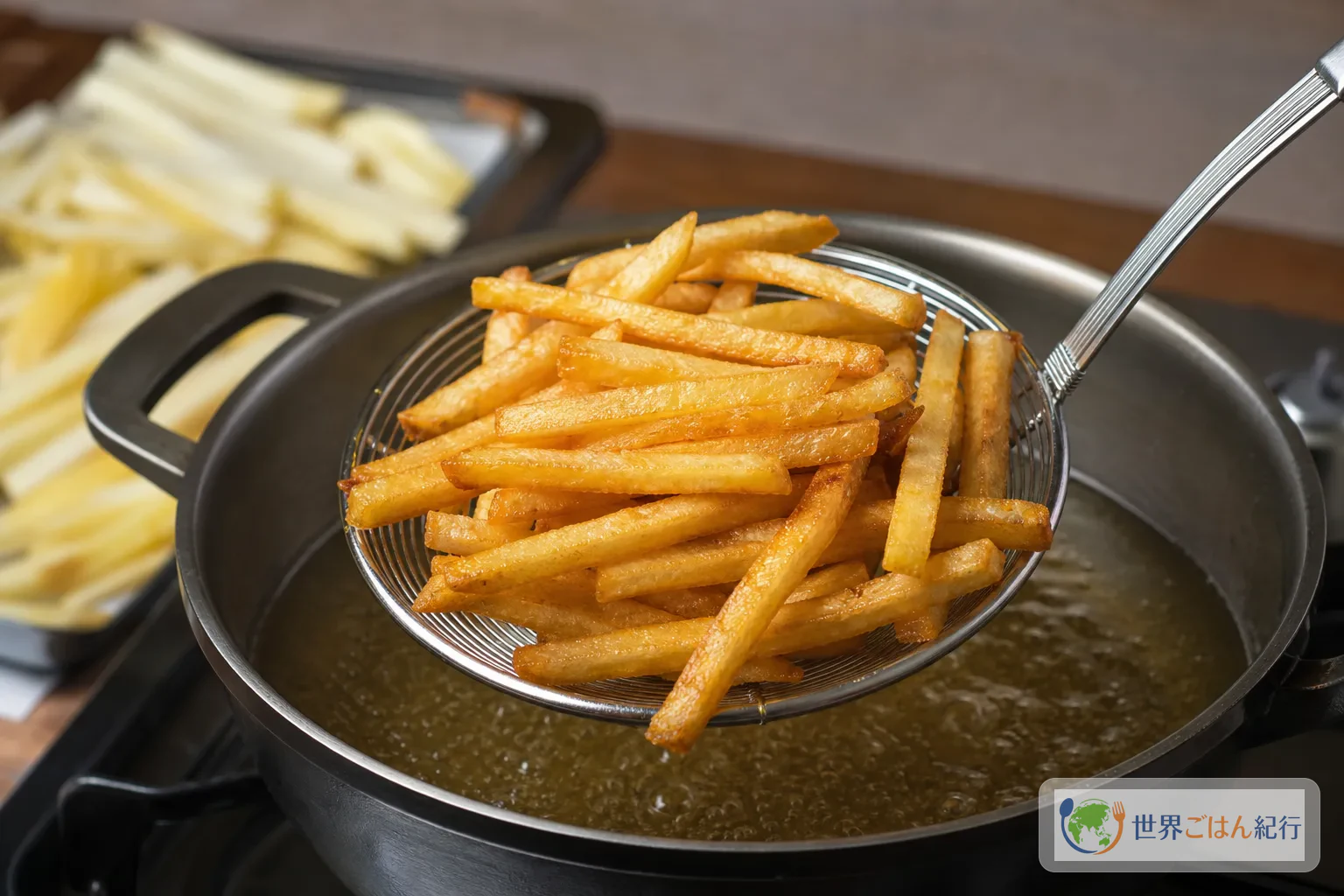
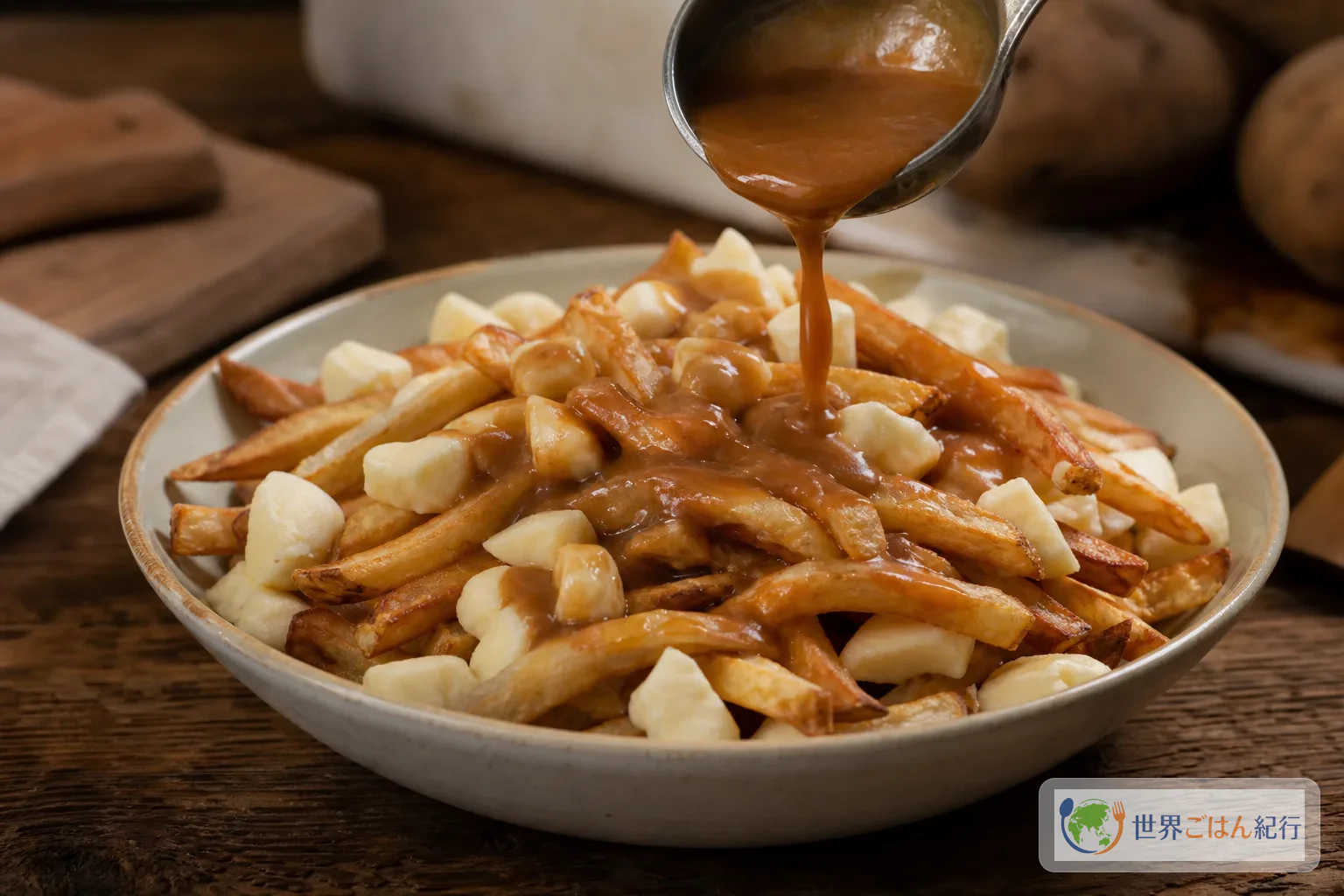
On the plate, the first thing you hear is the frying oil. Then come cheese curds straight from the refrigerator, and last, hot gravy poured over in a thin stream. It sizzles, and the curds soften slightly at the corners. Pick up a fry and the thin outer shell cracks, with steam still inside.
This is poutine, the snack-bar favorite of Quebec, Canada: french fries, cheese curds and brown gravy. The list looks simple, but you finish the three parts separately and stack them just before eating. Most of what makes a home version work comes down to the shape and temperature of the cheese and the thickness of the gravy.
What poutine is and where it comes from
In Quebec snack bars, poutine means french fries topped with cheese curds and gravy. Curds are the small lumps that form as cheese sets. Sliced cheese melts thin, but curds squeak when you bite them and stay springy. Because of that, hot sauce doesn't turn the plate into one cheese-sauce flavor. In a single bite you get the salty potato, then the savory gravy, then the dairy.
No one can say for certain where it started. One story puts it in Warwick, Quebec, around 1957, when a customer asked for french fries and cheese curds mixed together in a paper bag. Another record credits a snack bar in Drummondville, known for thick sauce that clings to the potatoes, with popularizing the version topped with gravy. Both stories are part of poutine's history, and picking one winner would erase the many versions that homes and shops already had.
At the snack bar, the fries were fried to order, the curds came out cold and in lumps, and the sauce was ladled from a big pot. Each part was a slightly different temperature and texture, and the faster you ate, the more clearly each came through. The dish spread through food trucks and local snack shops. At home, people copied how the shops plated it and made their own sauce, and no single fixed recipe took hold. Abroad it became known as Canadian food, though it's more accurate to see it as a Quebec eatery dish that picked up different ways of eating as it traveled. For another dish whose history follows eateries and travel, read about the pasty.
Ingredients (serves 4): prepare potatoes, curds and sauce separately
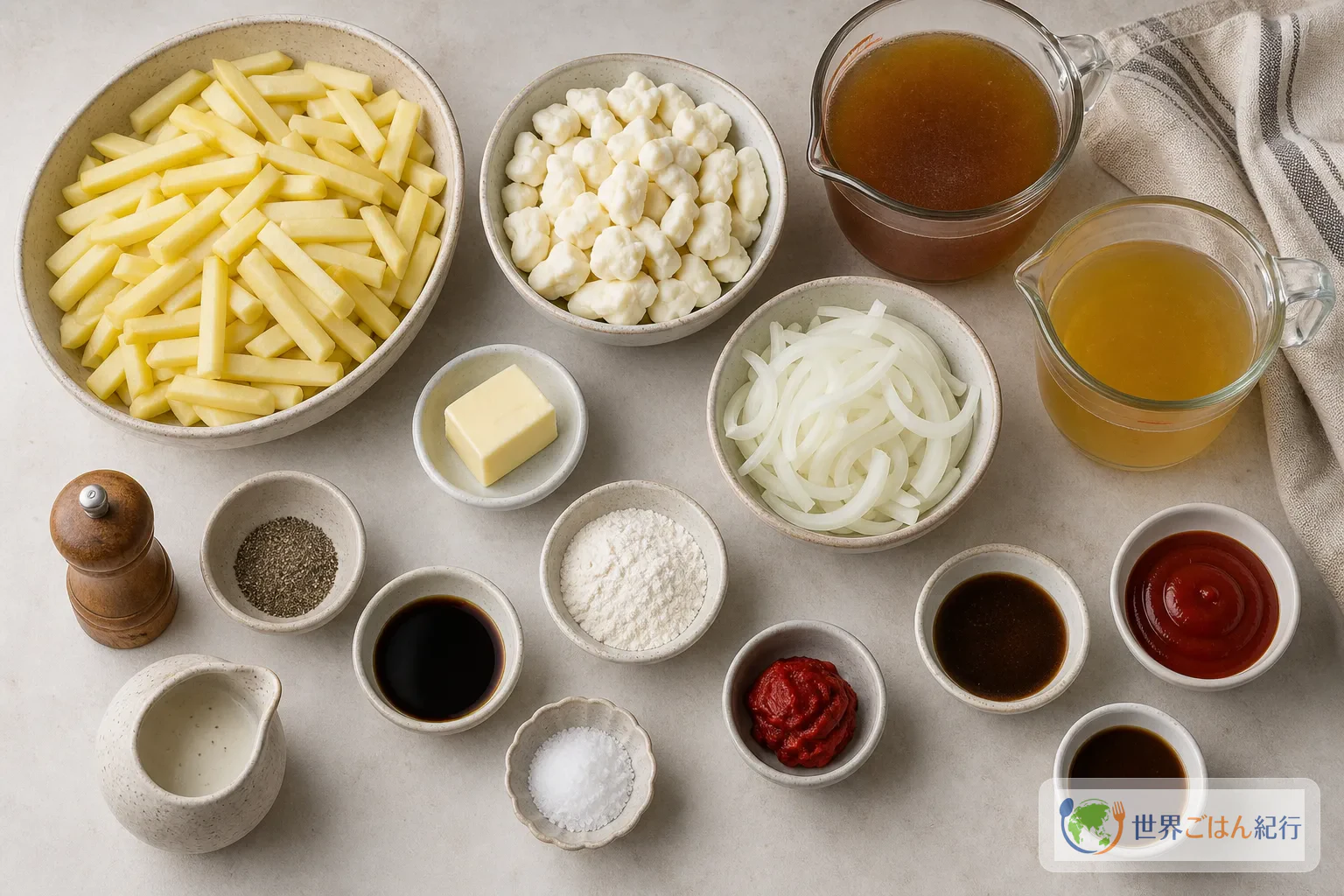
Nutrition figures are per serving and include the curds and gravy. Sodium depends on your broth and cheese, and the oil the potatoes absorb changes the fat, so for sodium, check the product labels.
Cheese curds contain milk. Broth, HP sauce, Worcestershire sauce and soy sauce can contain wheat, soy, fish or shellfish, or celery. Check the ingredient labels. If you avoid dairy, the texture that is the core of this dish changes, so build it as a different dish. If you share frying oil, watch for allergen contamination.
Choosing poutine ingredients and substitutes
Cheese curds
Shop for the curds first, because they matter more than anything else. Look for white to pale yellow lumps that spring back a little when pressed. Those hold their shape even under hot gravy. Used straight from the refrigerator, they stay cold in the center and clash with the hot potatoes. Open the bag 20 to 25 minutes before eating and lay them out somewhere they won't dry out.
Cheese curds are sold as "fresh cheese curds" or simply "cheese curds." Don't go by the name alone. Make sure they come in lumps, and check the ingredients and storage instructions before cooking.
If you can't find curds, cut fresh mozzarella into 0.5 to 1 inches (1 to 2 cm) cubes. Press high-moisture mozzarella lightly with paper towels, and if the cheese is salty, use less finishing salt. Mozzarella melts faster and has less bite, so it's a substitute, not the same thing. Shredded, processed and sliced cheese melt into the gravy and lose the springy bite completely. For real curds, check the refrigerated case at a specialty cheese shop or import grocer.
Broth, onion and equipment
The broth sets the flavor of the gravy. With concentrated bouillon, dilute it as directed to make 3¼ cups (800 ml) for 4 servings. If you won't finish a whole package, use the broth you already have and put the effort into finding curds instead. A knife is all you need to slice the onion. A food processor chops it more evenly, which only helps if you make gravy often.
For an oven version for 6 or more, use a shallow 12 inches (30 cm) pan so the potatoes lie flat without overlapping. It's meant for oven batches and reheating, not deep-frying. A baking sheet is enough to cook for 4, so buy the pan only if you cook often for potlucks or large groups.
What to keep, what to swap
| Element | If you want to get close | If making without buying extra | Difference in the result |
|---|---|---|---|
| Cheese curds | 1 lb (450 g) refrigerated fresh curds | Cubed fresh mozzarella | Less spring, melts faster |
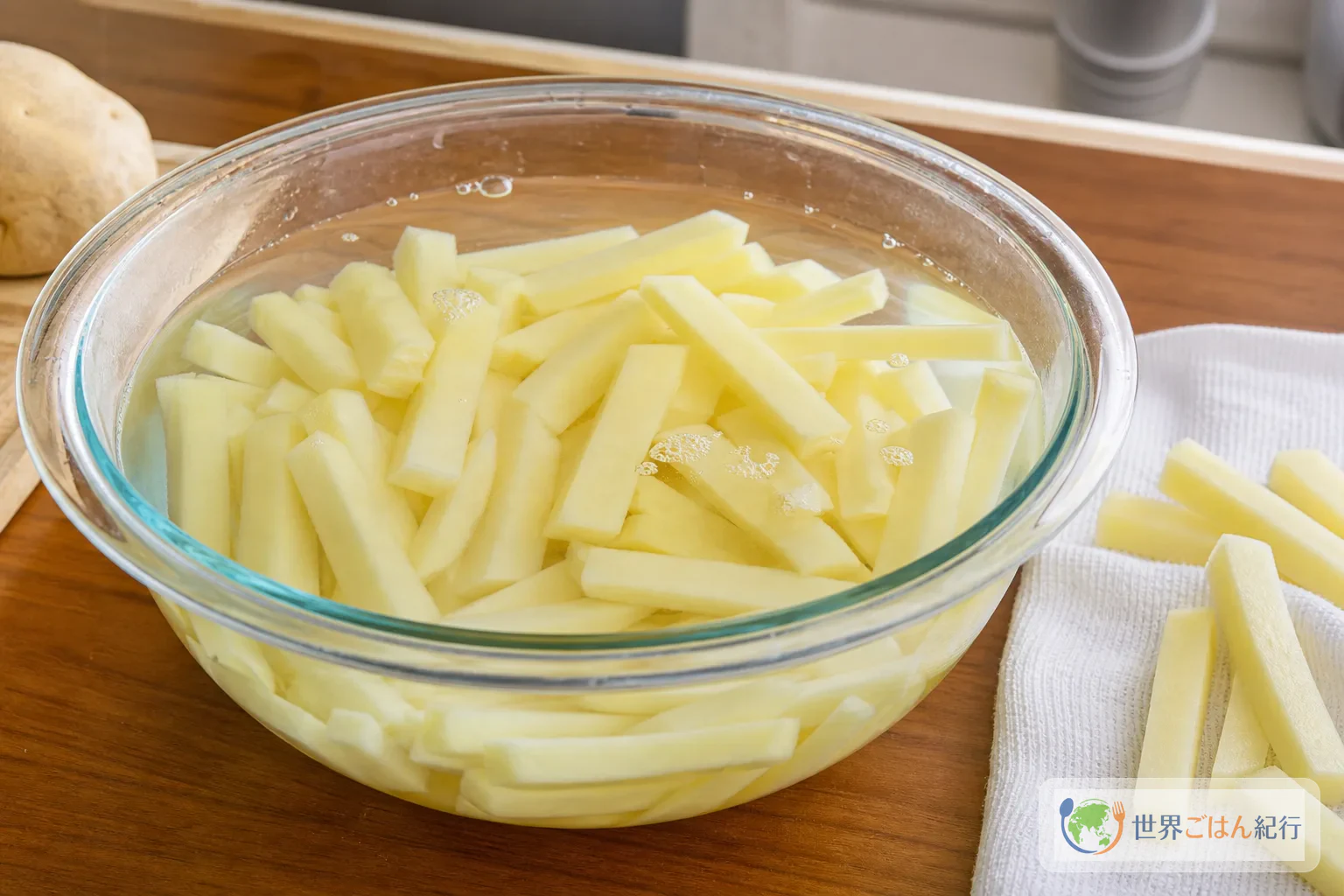
| Potatoes | Raw starchy potatoes, double-fried | Frozen french fries cooked as directed | Easier, but harder to adjust thickness and saltiness |
| Gravy | Beef and chicken broth combined | Store-bought brown gravy, diluted | Harder to adjust aromatics and saltiness |
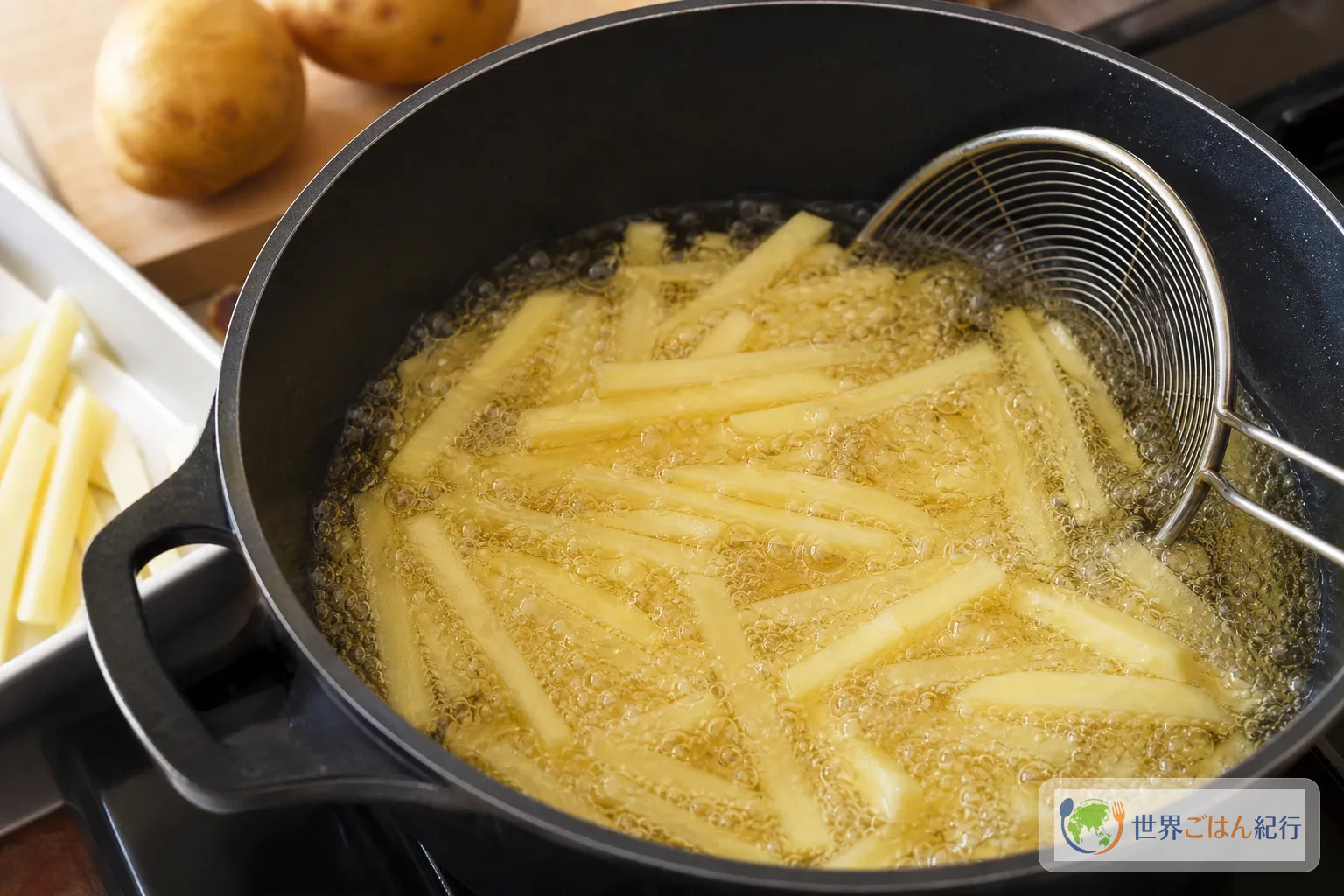
| Frying | Double fry from 325°F (160°C) to over 350°F (180°C) | Oven or air fryer | Less toasty oil aroma and surface crackle |
| Toppings | Eat with the three elements only | Add bacon, egg, mushrooms and the like | Becomes a derivative dish |
Rather than worrying about authenticity, decide what you want to keep. If texture matters most, find the curds. If time matters most, use frozen potatoes. Real curds over potatoes with gravy from a pouch is a perfectly reasonable plate. Homemade gravy over fully melted shredded cheese is a different dish altogether. If you swap something, just say so.
Method: finish the cold potatoes and the hot sauce separately
Because you use oil, choose a deep pot. Keep the oil to no more than half the pot, and don't put in wet potatoes. Make the gravy ahead if you like, and keep it where you can rewarm it over low heat so it's hot at plating.
Don't pour the gravy and then wait; the potatoes keep soaking it up. Concentrate the plating into the last 3 minutes, which makes the difference in taste in this dish. To warm the plates, fill them with hot water, wipe them dry, and do it just before you put down the potatoes.
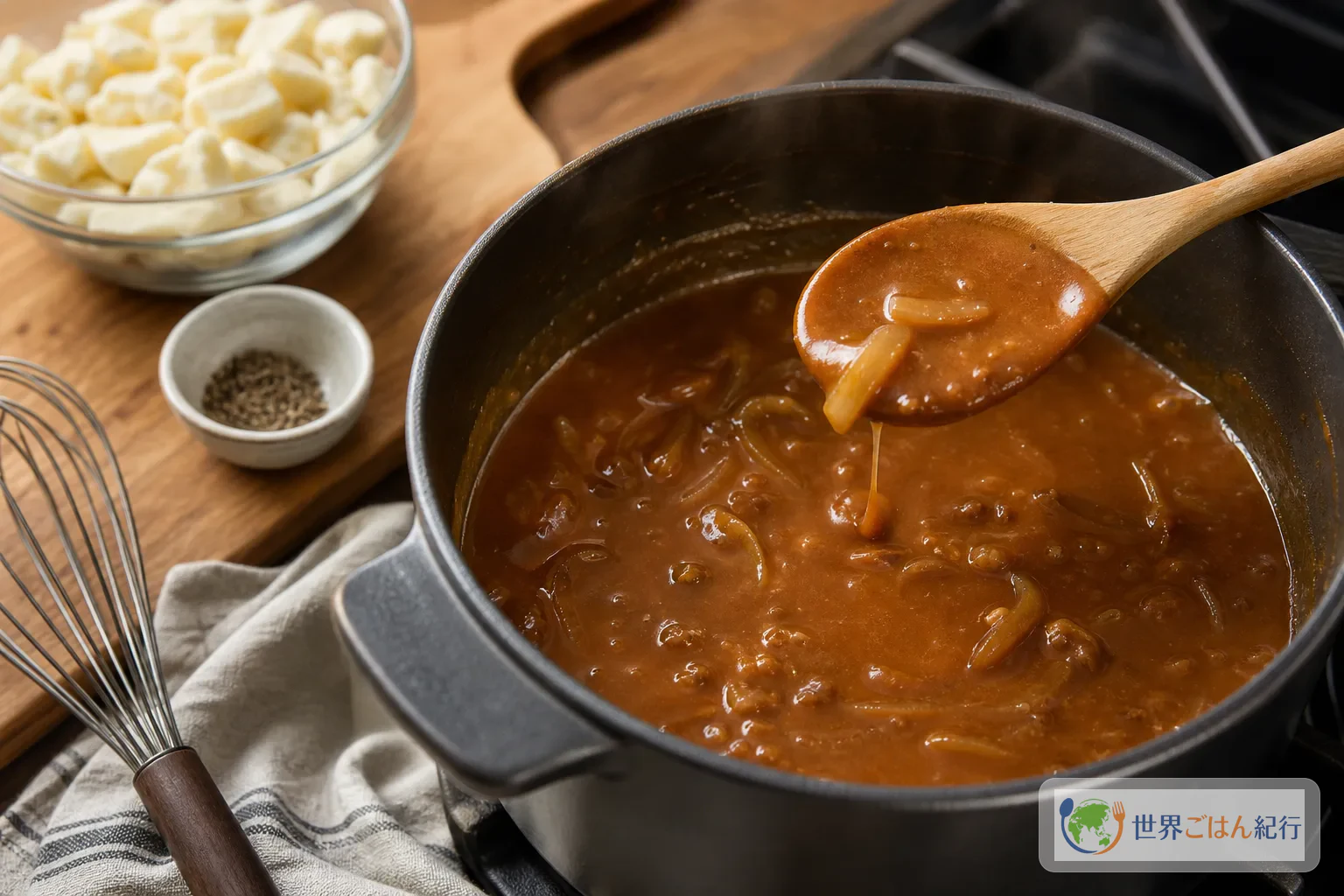
For the gravy, use a pot with a thick bottom, which doesn't heat up suddenly over low heat. For one batch for 4, a deep saucepan you already have is enough. Keep the deep pot for frying separate from the gravy pot, so you can rewarm the sauce before plating.
Poutine problems and fixes
Greasy potatoes
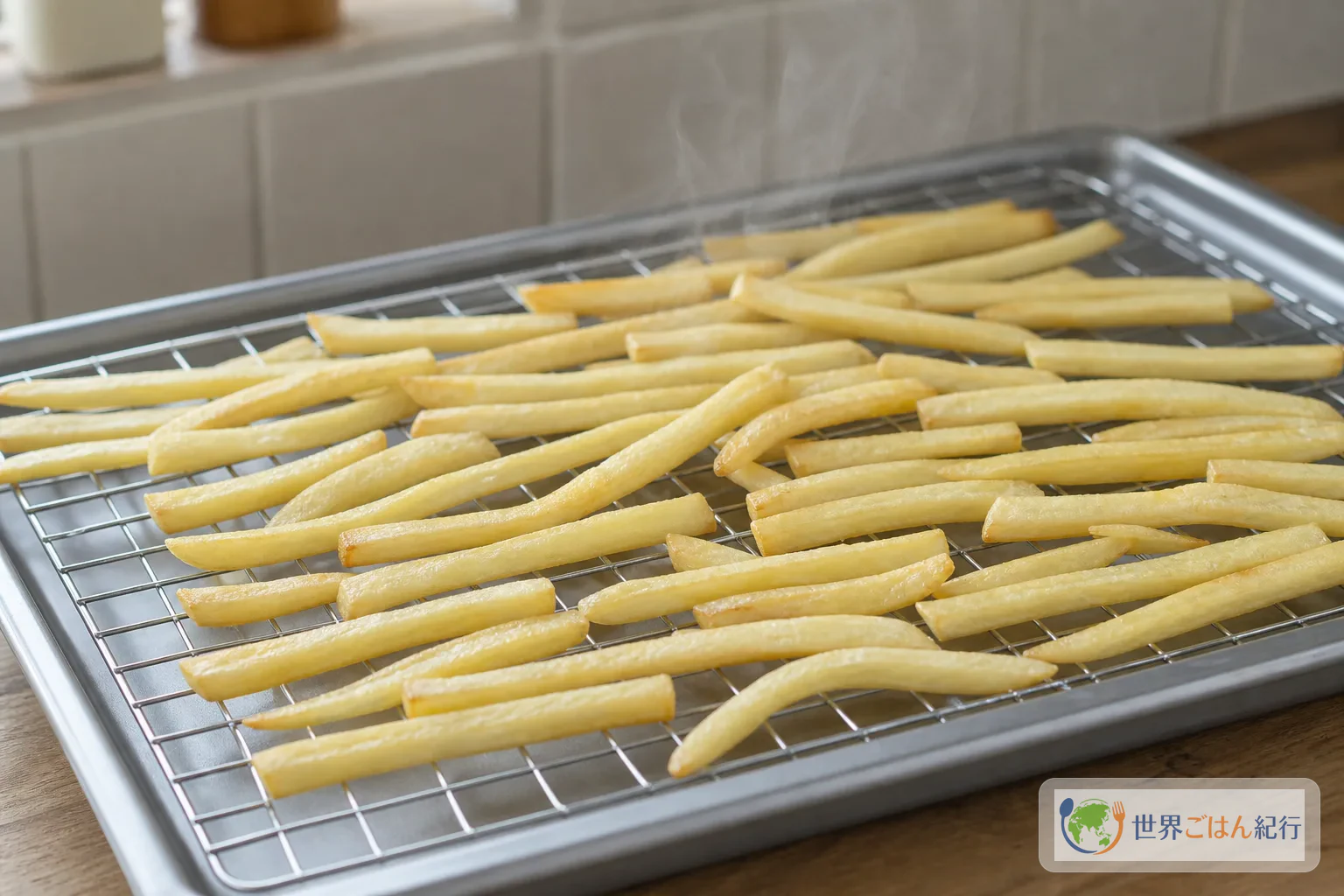
If you add the next batch before the oil comes back to temperature, the surface doesn't set and the potatoes soak up oil. Rest them on the rack, then fry them briefly in hotter oil the second time to fix it.
Thin gravy
If the gravy runs straight off the back of a spoon, reduce it over low heat 2 minutes at a time until it coats the spoon thinly. If it's still thin, sauté 5 g flour in 5 g butter in a separate pan, loosen it with a little gravy and stir it back into the pot. Potato starch makes a translucent, glossy sauce with a different mouthfeel from classic brown gravy. Add salt last.
Gravy that has set
It's normal for a skin to form as the gravy cools. Set it over low heat, add broth or water 1 tbsp at a time and whisk it back to smooth. If lumps remain, strain it through a fine strainer while it warms.
Firm cheese curds
Curds straight from the refrigerator need to come to room temperature first. Pour a little hot gravy over the curds, wait 30 seconds, then pour the rest over the potatoes. The outside softens and the center keeps its bite, which is exactly what you want.
Avoiding burns
Stay with the pot while the oil heats, and dry the potatoes well before they go in. If the oil starts to smoke, turn off the heat and let it cool where it is. Never pour water on hot oil or fried potatoes, never pour hot oil down the sink, and never carry the pot against your body.
Storing poutine and making variations
Storage and reheating
Poutine is best right after plating. To make it ahead, store the potatoes, gravy and curds separately. Cool the potatoes completely before sealing them, let the gravy cool a little before refrigerating it, and keep the curds chilled as the package label says. Once the gravy is on, the potatoes absorb it and the curds keep melting, and reheating won't bring either back. For a potluck, carry warm gravy in an insulated container and the potatoes and curds in separate containers.
The next day, spread the potatoes on a baking sheet without overlapping and warm them 5 to 8 minutes in a 400°F (200°C) oven. Heat the gravy in a small pot over low heat, adding water or broth 1 tbsp at a time to bring back its thickness. Let the curds sit out about 20 minutes and add them last. The microwave makes potatoes soggy, so if you have to use it, warm them briefly and then crisp them in a skillet.
Oven-baked potatoes
Coat 0.5 inches (1 cm) square potato sticks lightly with oil and bake 25 to 30 minutes in a 425°F (220°C) oven, turning once, until deep gold. They won't crackle like fried potatoes. Serve the gravy on the side so you can control how wet the plate gets.
Frozen potatoes for a weeknight
Heat frozen shoestring or steak-cut fries as the bag directs. Skip the salt at first and taste after adding the gravy and curds. It's a different snack from double-fried raw potatoes, but very doable on a weeknight.
Mushroom gravy
Replace the beef broth with vegetable broth and sauté 5.5 oz (150 g) thinly sliced mushrooms with the onion. Add the flour once the mushrooms' liquid has cooked off. The gravy is meatless, but the dish still has dairy, so check the ingredients of the curds.
Breakfast plate or smoked meat
For a breakfast plate, top with a soft-fried egg and black pepper. The yolk mixes into the gravy, so make the sauce a little thinner from the start. For a meatier plate, add 1.75 oz to 2.75 oz (50 g to 80 g) of pulled pork or smoked meat per serving, and cut the salt and soy sauce in the gravy by half. Taste the meat first so the plate doesn't end up too salty. Modern Quebec has meat, mushroom and smoked-meat versions too, but every addition means adjusting the fries and the amount of sauce. Make your first plate with just the three classic elements, so you can tell what each change does.
FAQ
Can I make it vegetarian?
Yes. Make the gravy with vegetable broth and mushrooms instead of beef broth. Check the labels for chicken broth and Worcestershire sauce, and check the coagulant used in the cheese, since these vary by brand. If you avoid all animal ingredients, check the substitute cheese as well.
Can I make poutine ahead?
You can if you keep the three parts separate and assemble just before eating. Gravy poured over the potatoes ahead of time soaks in, and the curds keep melting.