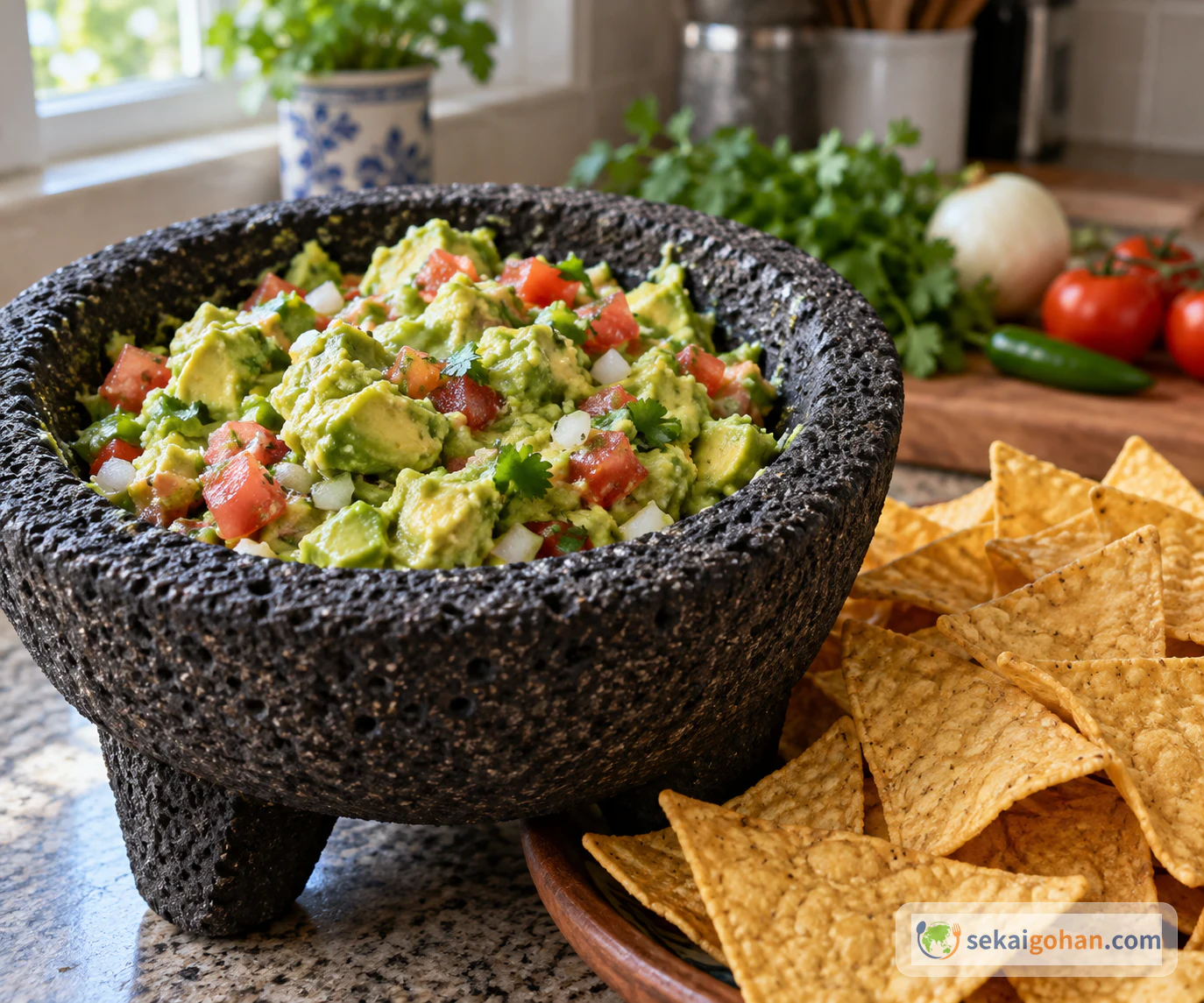
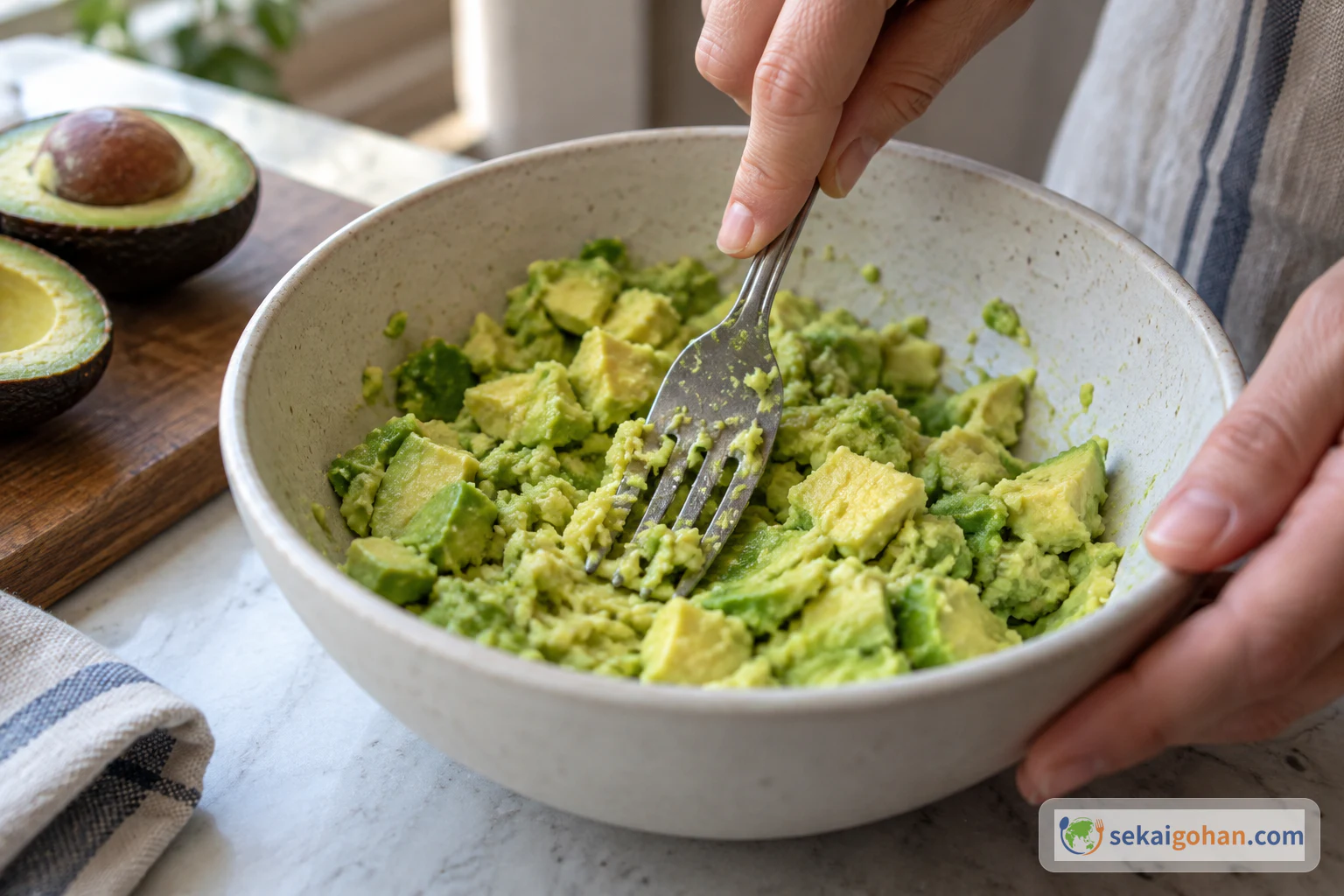
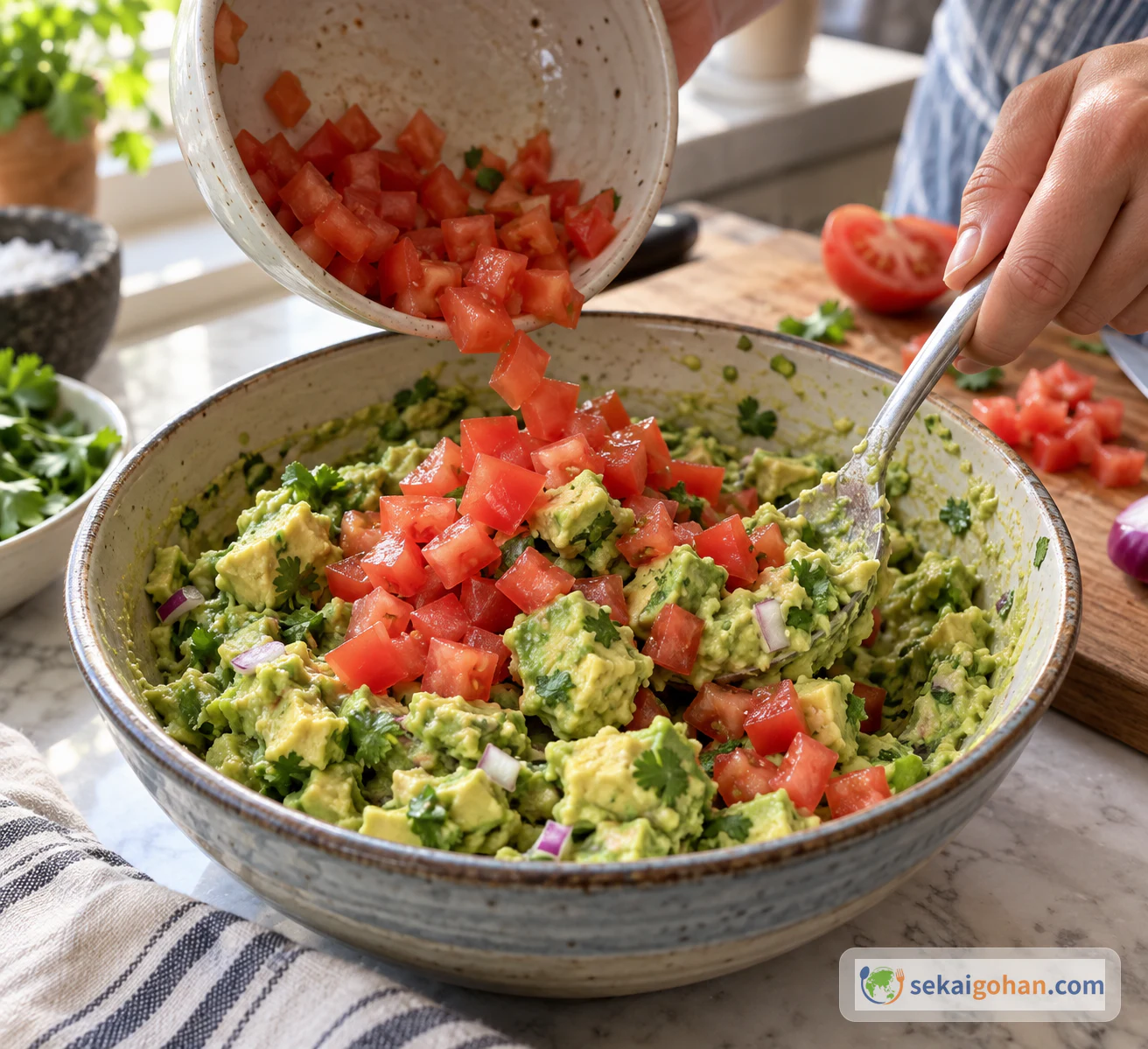
White onion, serrano chile, cilantro and salt go into a stone molcajete and are ground until they turn into a moist, green-flecked paste. Then ripe avocado goes in, worked just until it breaks into rough pieces, and the tomato is folded through at the very end. Guacamole is an everyday dish in home kitchens across Mexico: creamy avocado, salt to wake it up, green heat from the serrano, and the sharp aroma of onion and cilantro. Cooks disagree about tomato and about lime or lemon. This version keeps the tomato, leaves out citrus, and is just as good mashed with a fork in an ordinary bowl.
Ingredients: Serves 4 as a Side
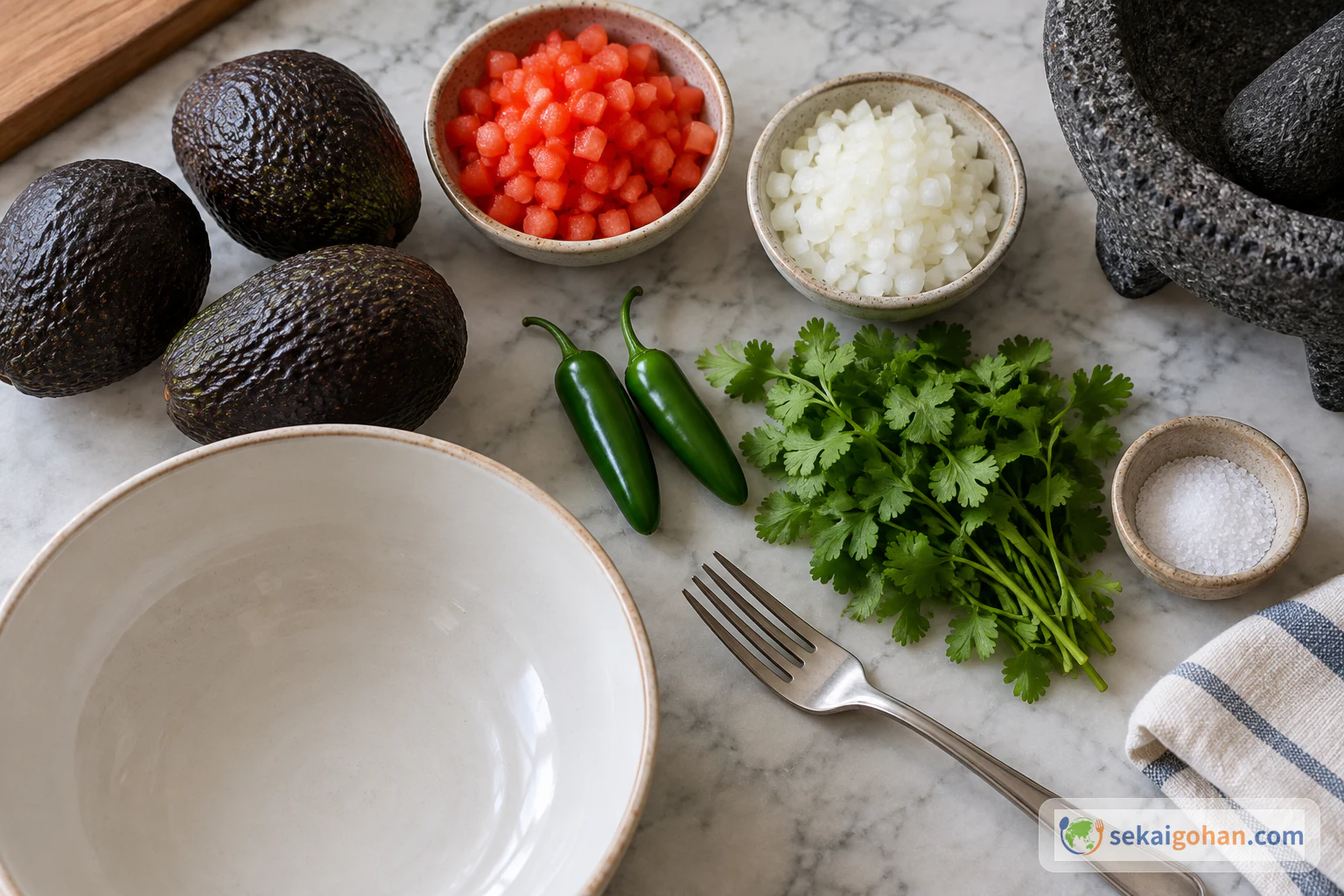
Measures are in cups and spoons. Avocados and tomatoes vary in size, so taste as you go instead of measuring by weight.
Equipment
- Cutting board and knife
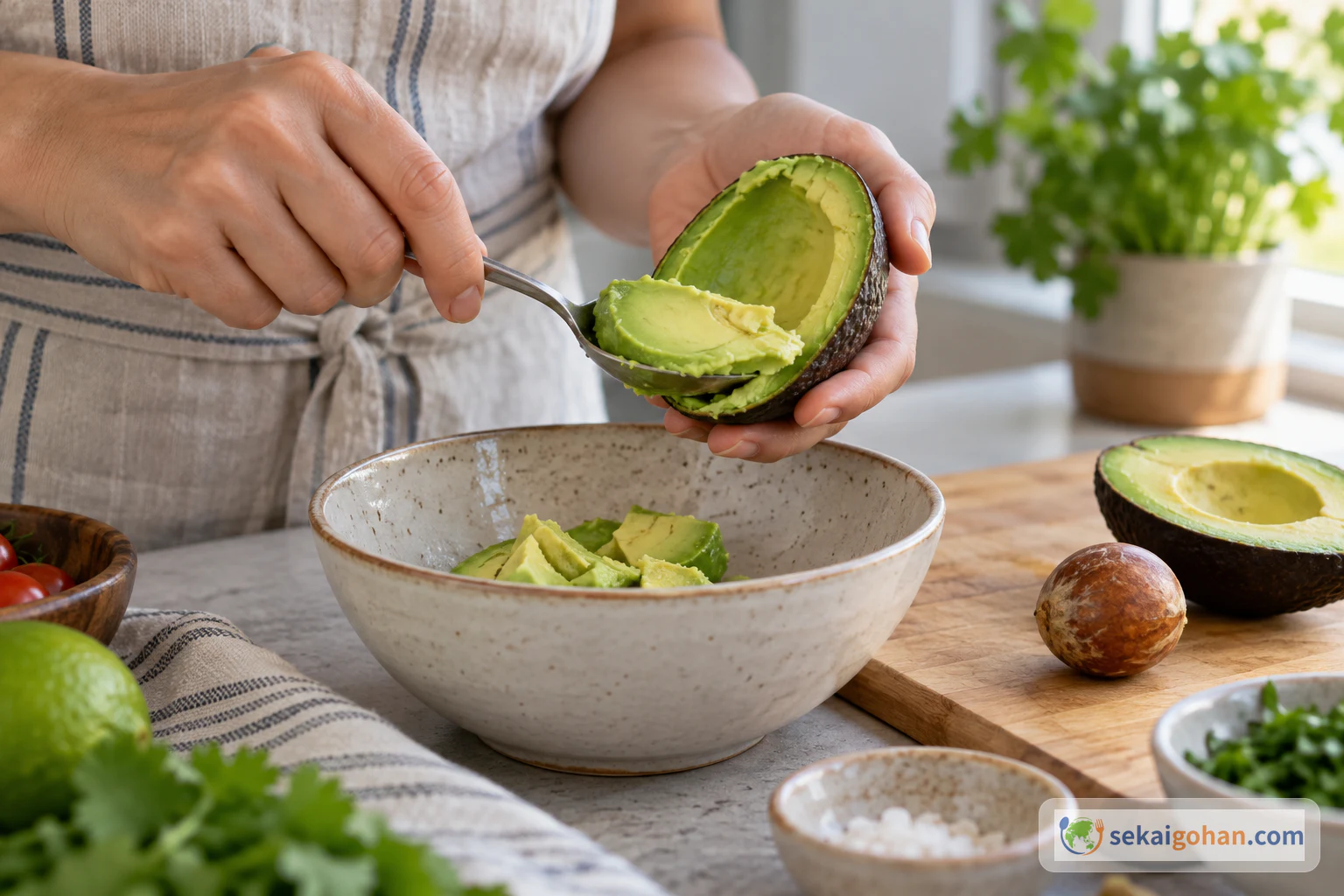
- Spoon, for scooping out the avocado flesh
- Bowl and a sturdy fork
- Optional: a molcajete and tejolote (stone mortar and pestle), if you want to use the molcajete method
You do not need to buy anything special. The bowl-and-fork method is the traditional way, not a shortcut.
Choosing Ingredients for Guacamole
Avocados. Pick avocados that yield slightly when you press them gently but don't feel overly soft. Touch them lightly so you don't bruise the fruit. Firm avocados are hard to mash and can leave a grassy, unripe taste.
Chiles. If you can't find serrano, use a small amount of another fresh green chile or jalapeño, starting with a little. Expect a different heat and a different green aroma.
Onion. An ordinary onion works in place of white onion; use a modest amount. If its bite is strong, soak the chopped onion briefly in water and drain it well.
Tomato. If Roma tomatoes aren't available, choose a firm fresh tomato. Removing the watery part around the seeds keeps the guacamole from turning wet.
Cilantro. You can leave it out, though you lose a layer of aroma. Parsley tastes quite different, so it won't fill the gap.
Lime or lemon. The base mix contains no citrus. If you want acidity, add a little lime or lemon juice after tasting.
The main ingredients are avocado, cilantro, onion, chile and tomato. If you or your guests have allergies or sensitivities to any of these, check before making or serving.
Method: Keep It Coarse, Fork or Molcajete
This is the bowl-and-fork method: mash the avocado, then mix in the other ingredients. If you'd rather use a molcajete, follow the separate method in the next section instead. Don't combine the two.
Guacamole is a raw, cold dish, so start with clean hands, a clean board and clean tools, and make it close to the time you plan to eat.
Fixing Common Guacamole Problems
Most problems come down to water, salt or heat. When you adjust, change one thing at a time so you can tell what made the difference.
| Problem | Likely cause | What to do |
|---|---|---|
| Watery | Wet tomato, avocado mashed too much, tomato added early | Remove the watery seed area of the tomato, mash the avocado less, and fold the tomato in last |
| Flat-tasting | Not enough salt | Add a little salt first and taste again before touching heat or acidity |
| Too spicy | Too much chile, seeds or ribs left in | Next time start with 1 serrano and remove the seeds and ribs. Keep the remaining chile whole on the side and add it only after tasting |
| Browning | Left standing after making | Make it close to serving time and serve immediately |
Serving and Variations
Serving Guacamole
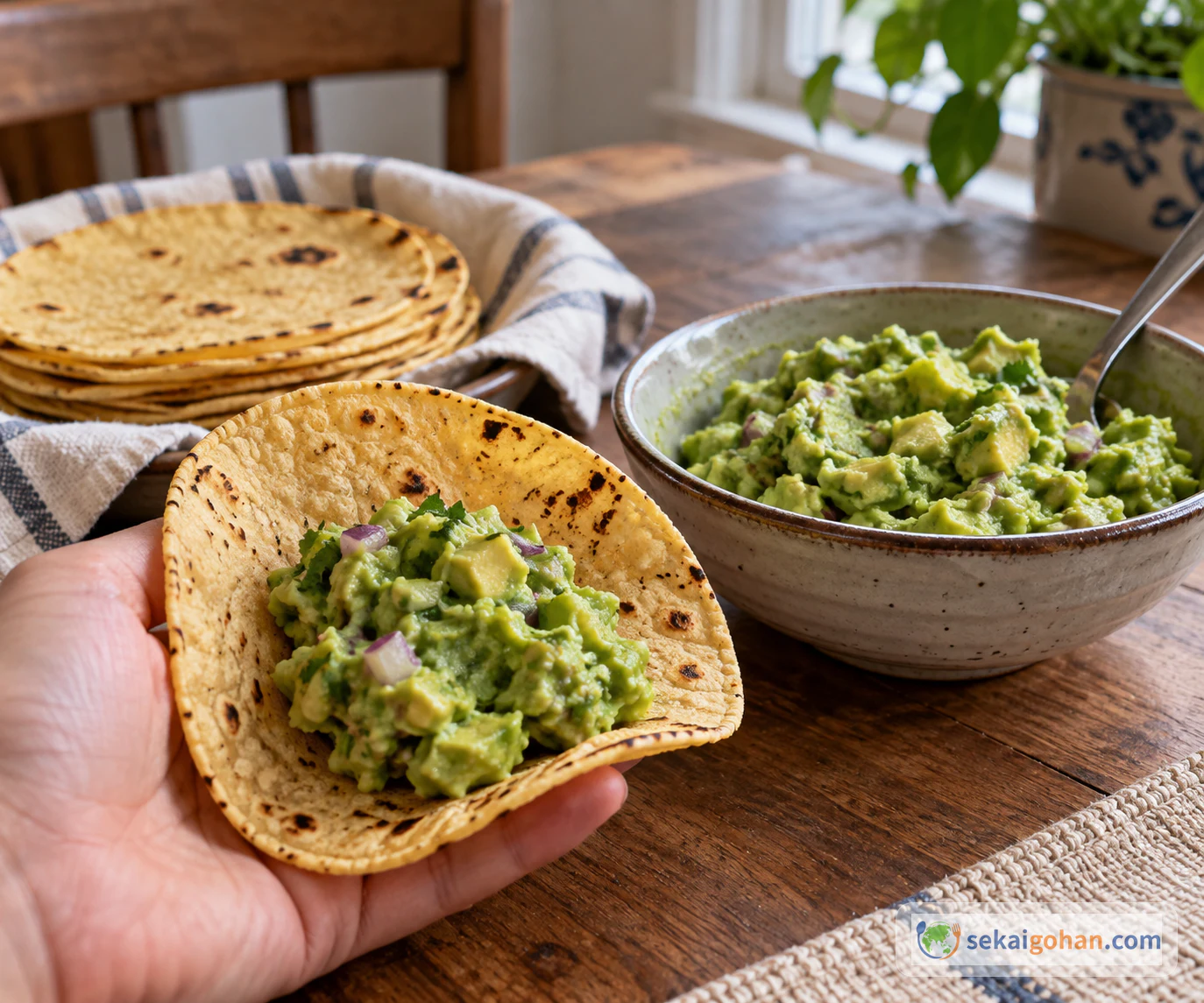
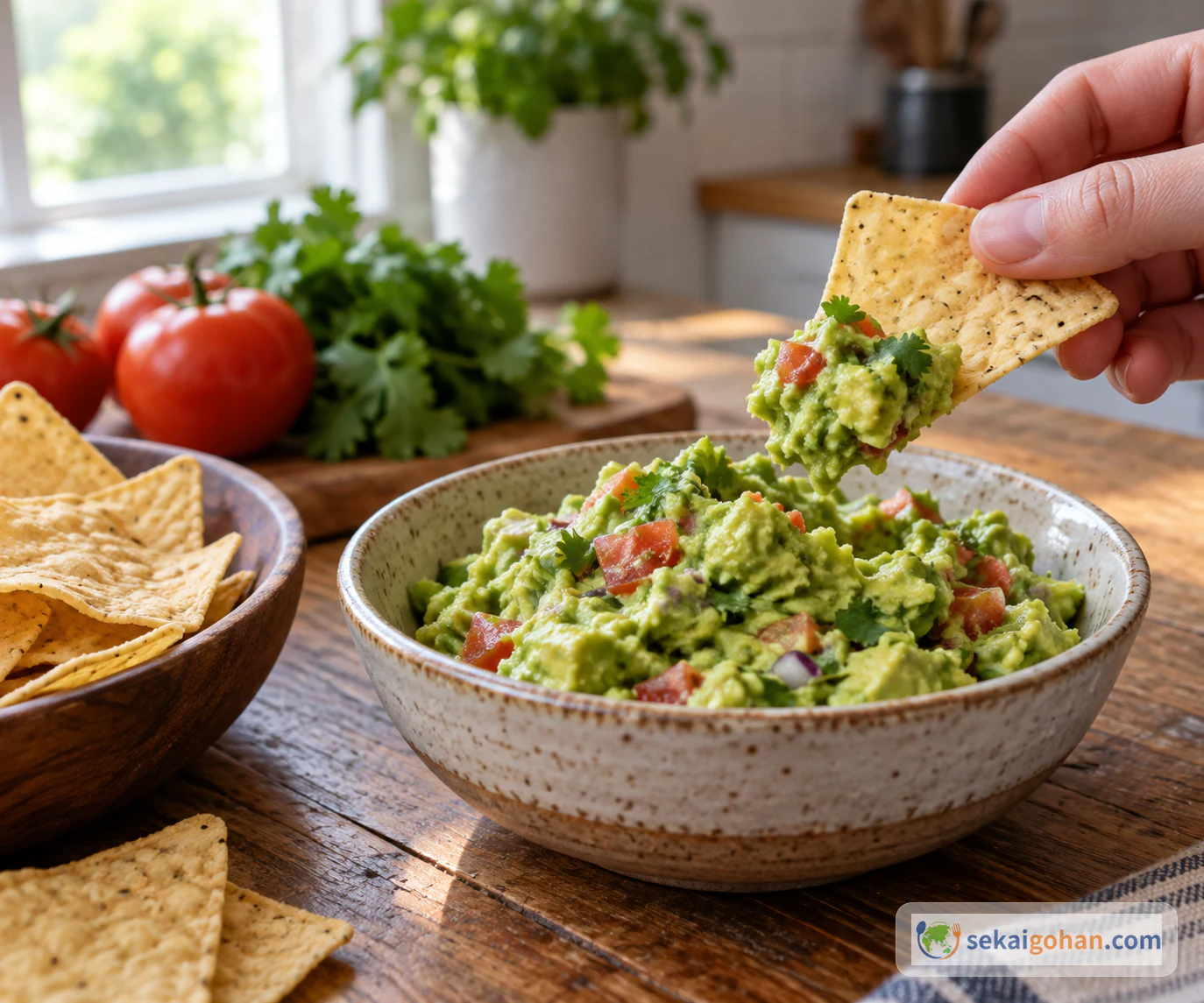
Serve guacamole with corn tortilla chips, warm corn tortillas, or alongside grilled meat such as carne asada. Spoon a little onto a warm tortilla and it becomes a simple bite of its own. On a bigger spread it sits well next to tacos; for a table that compares sauces, add mole poblano, and for another Mexican dish built on green chiles, try enchiladas verdes.
Variations
Each of these changes one thing from the base, so try them one at a time.
| Variation | What changes | How it differs from the base |
|---|---|---|
| Mild | Leave out the serrano; offer chile at the table | Each person adds their own heat |
| No tomato | Omit the tomato | Puts the avocado and aromatics at the center |
| With lime | Add a little lime juice | Brighter acidity and citrus aroma |
| Molcajete | Grind the aromatics first | The aromatics coat the avocado more evenly |
| By use | Coarser for chips, a little smoother for spreading on tortillas | The same mix with a different texture |
Another version uses 5 avocados. It mashes the flesh first with salt and lemon juice, then adds the other ingredients, and yields 2 cups.
Guacamole in a Molcajete
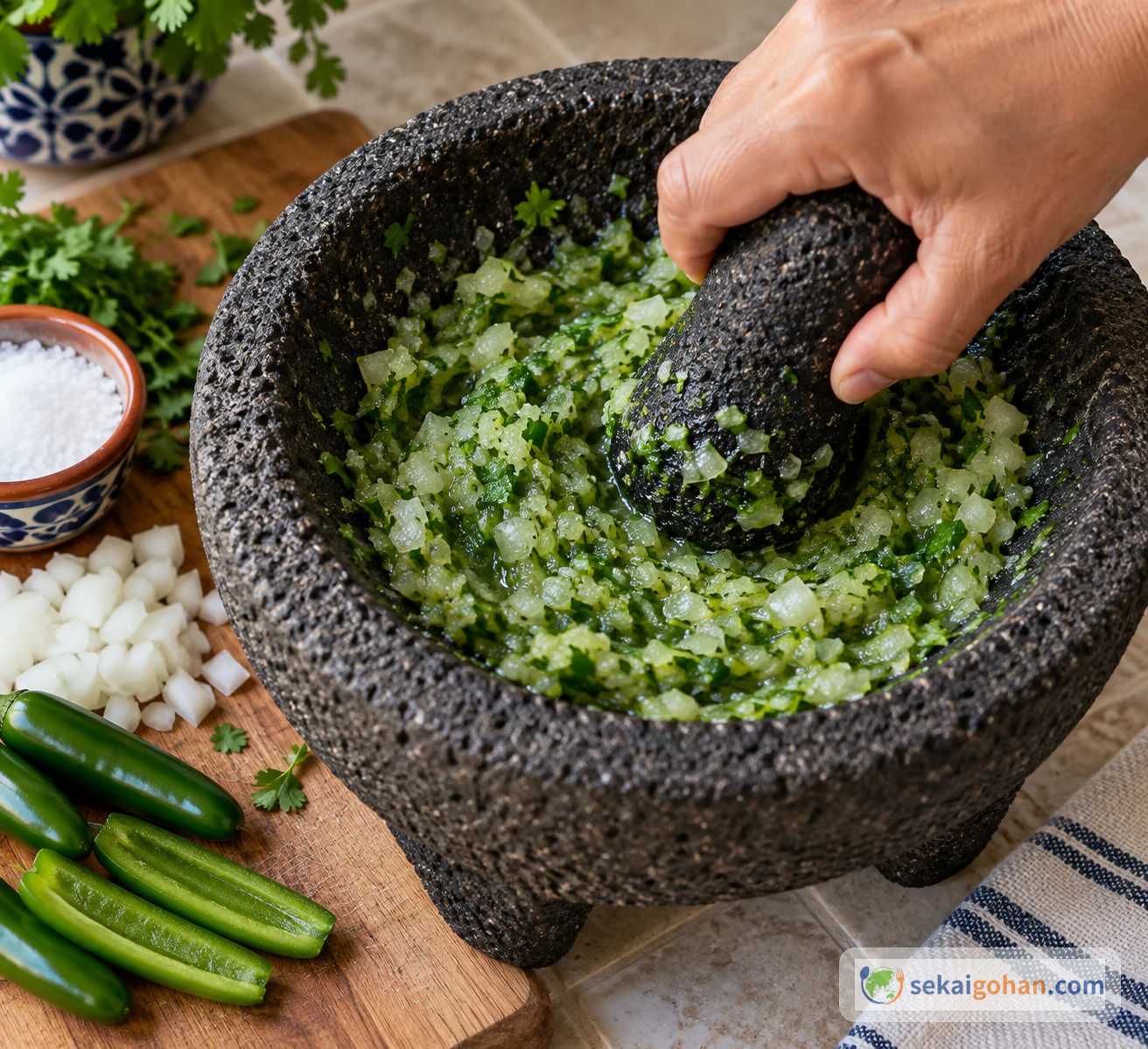
The molcajete and its stone pestle, the tejolote, are the traditional tools, and they change the order of work:
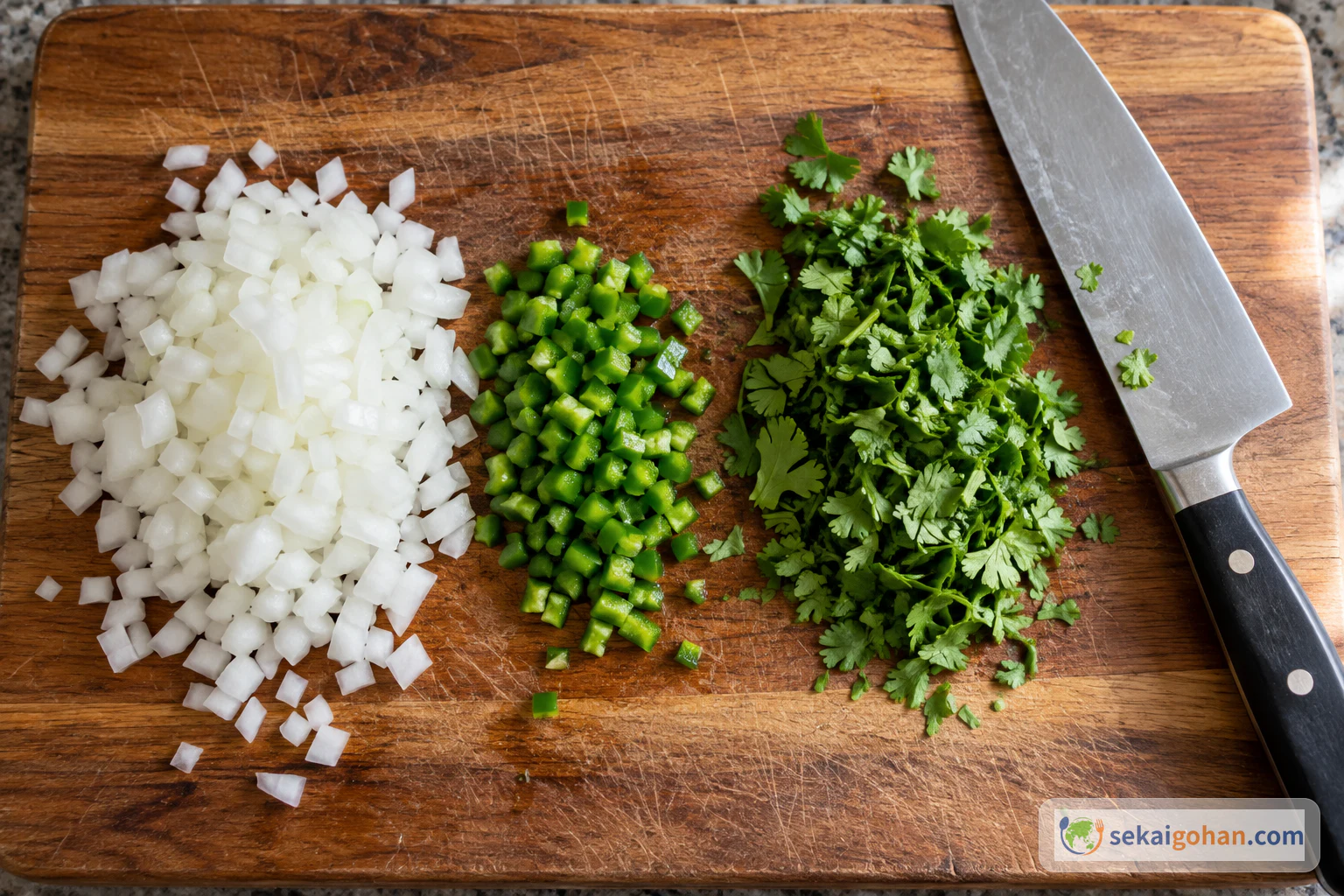
- Put the chopped onion, serrano, cilantro and salt into the molcajete and grind them into a paste.
- Add the avocado flesh and mash it coarsely into the paste, leaving chunks.
- Add the tomato last and stir it in without crushing it.
Use this sequence in place of steps 3 to 5 above. Grinding the aromatics first spreads their flavor all through the avocado. If you'd like to buy one, search for "molcajete" or "Mexican stone mortar."
Frequently Asked Questions
Do I need a molcajete?
No. The bowl-and-fork method makes good guacamole on its own. A molcajete changes how the aromatics are worked in.
How long does guacamole keep?
Not long. It browns quickly, so eat it right after making it. The easiest way to get ahead is to prepare the aromatics and tomato in advance, then cut and mash the avocado just before serving.