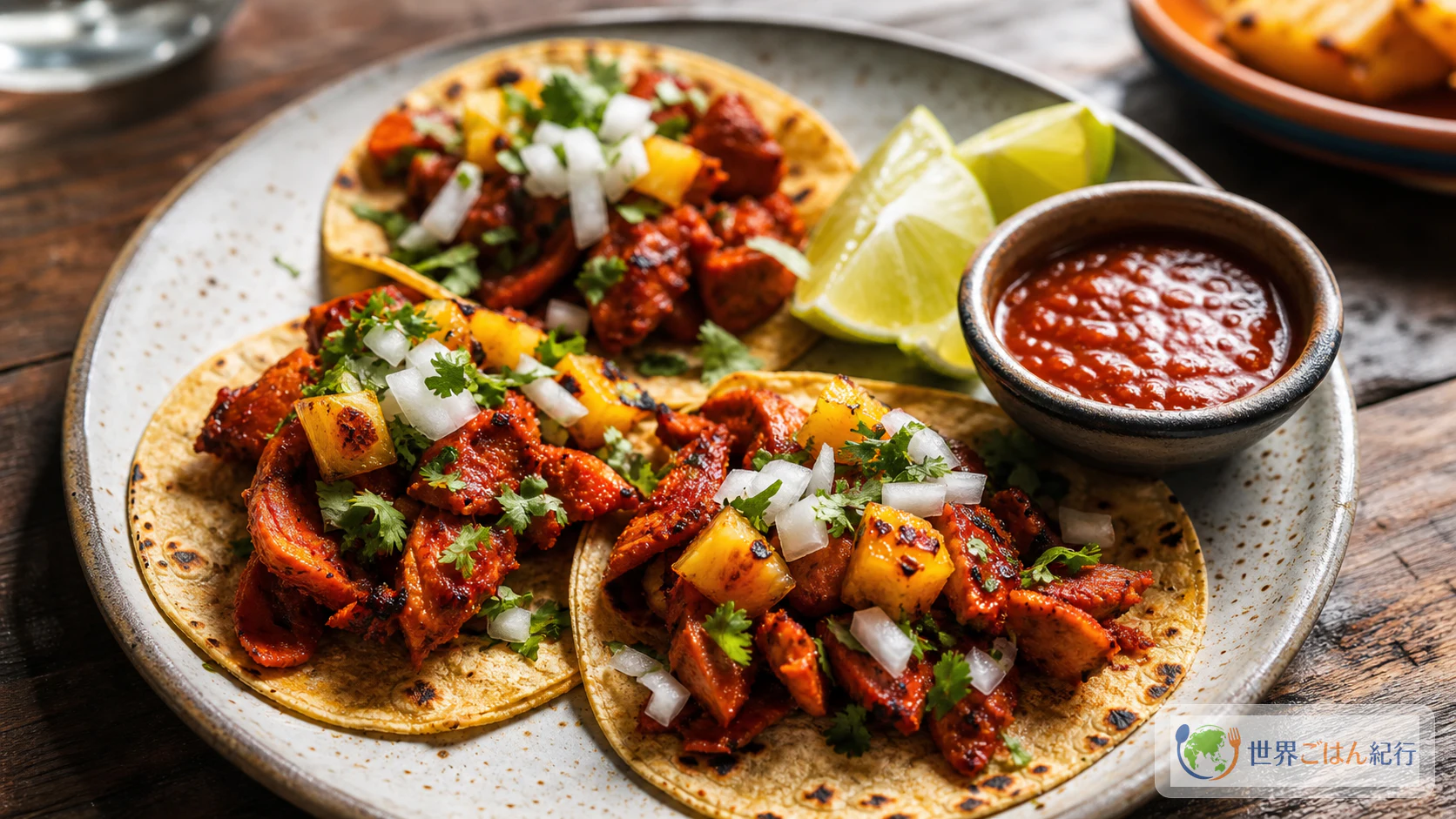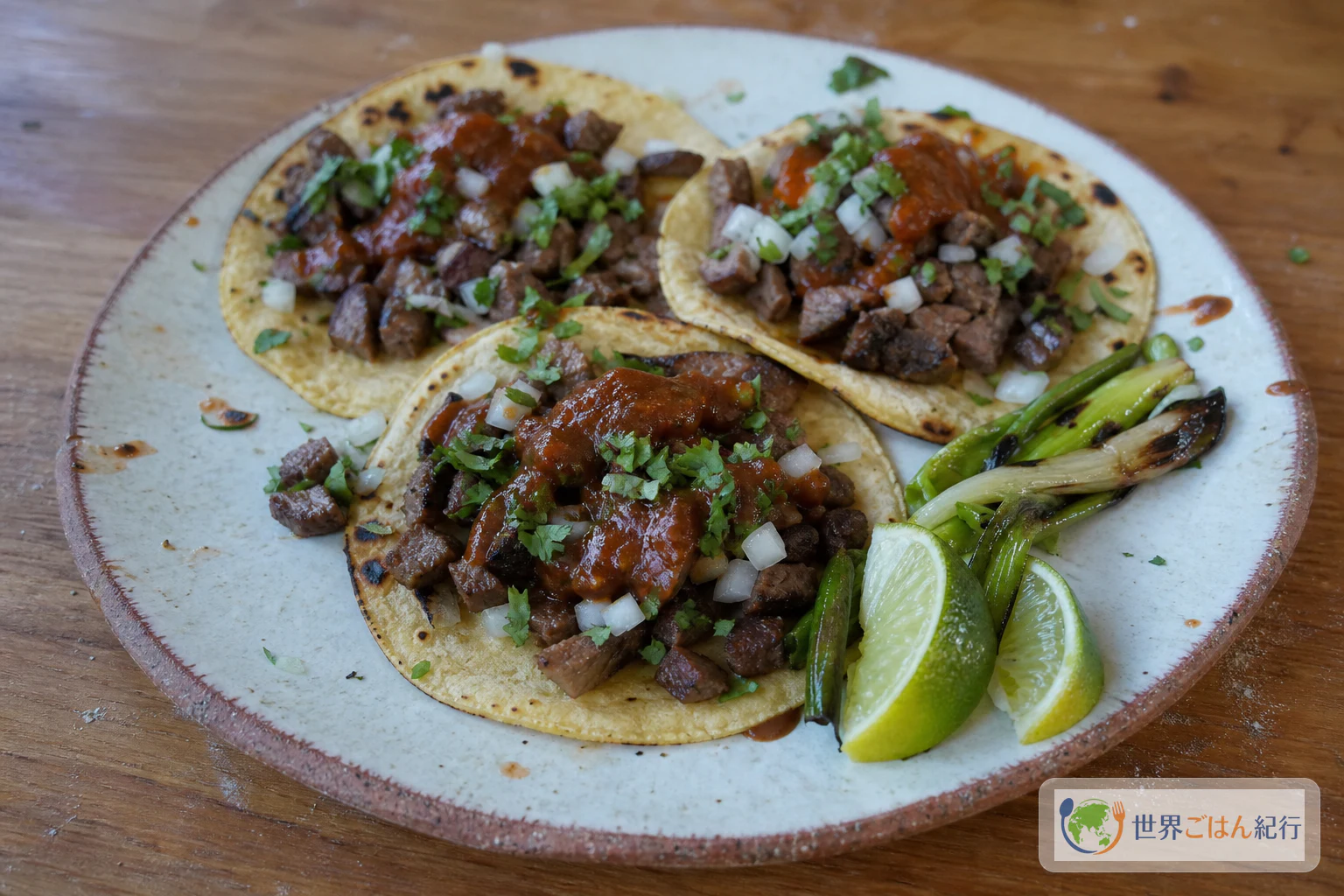
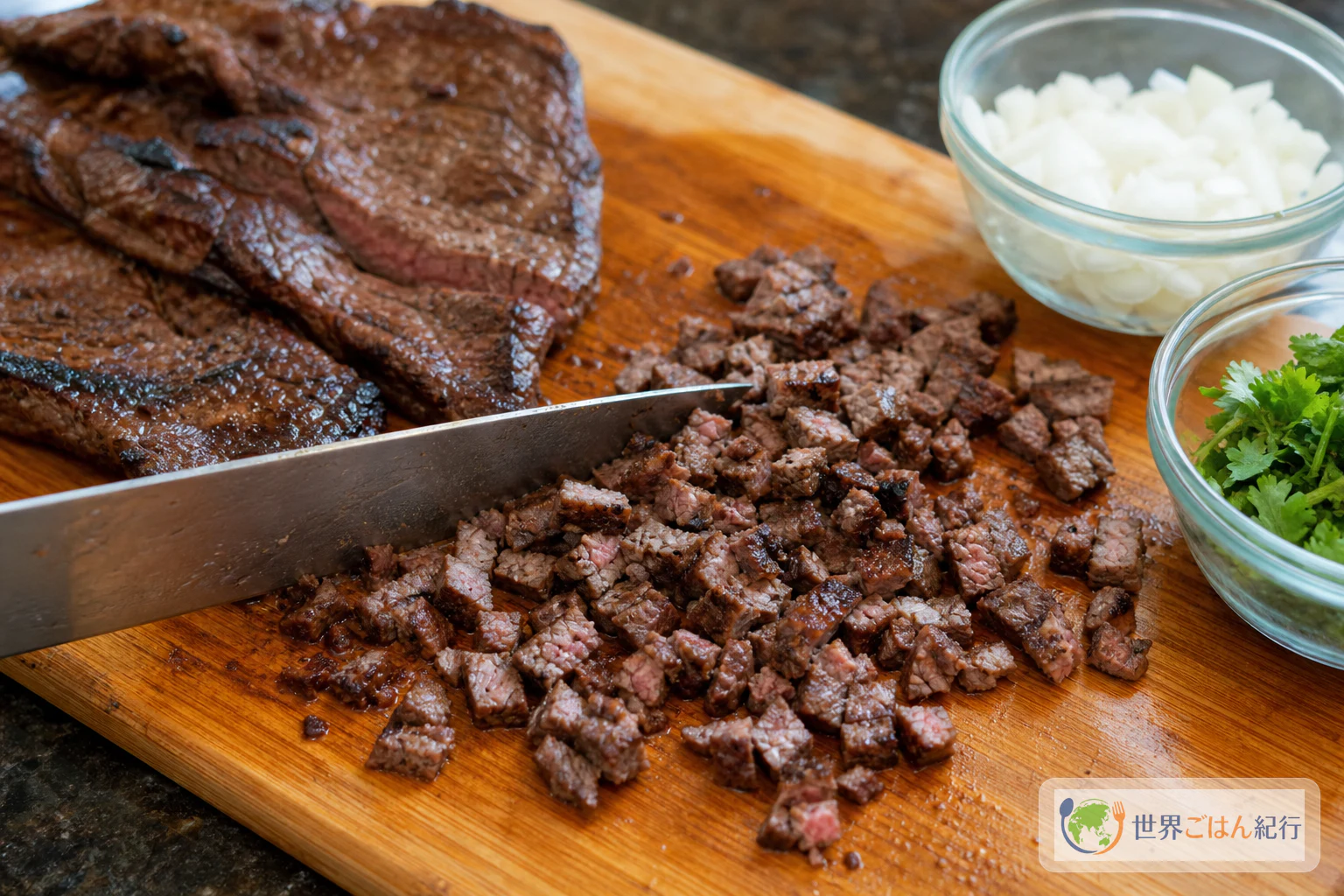
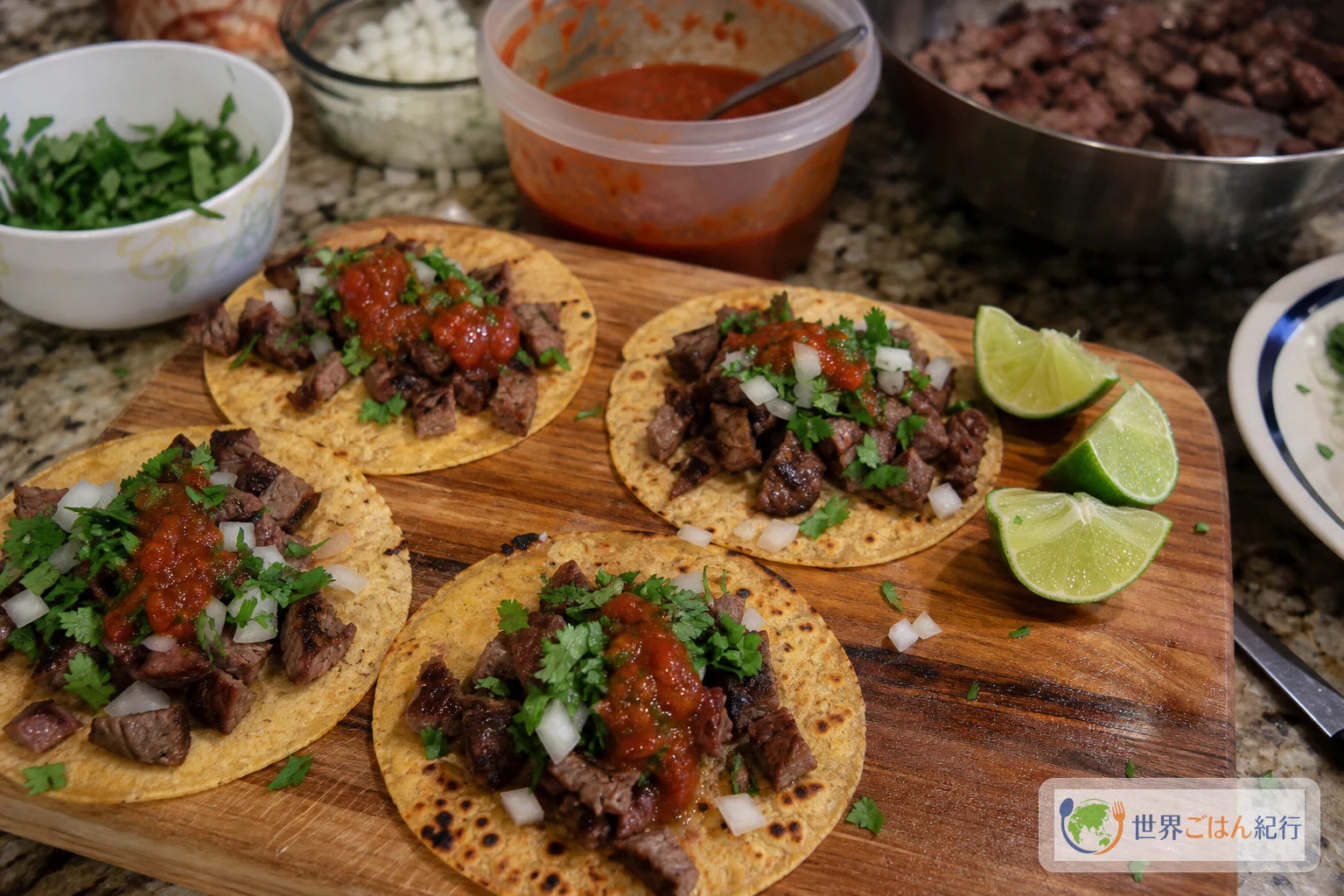
On taco night, the mood at the table shifts a little. Nothing gets arranged on a platter: you take a hot tortilla from the towel, add meat, scatter onion, squeeze lime and eat right away, so each taco is finished in the hands of whoever is eating it. Carne asada tacos, tacos de carne asada in Spanish, are the street-stand version that's easiest to pull off at home. The beef is seared hard, topped with a chunky salsa and folded while everything is still warm, and char and acidity carry the flavor.
Carne asada tacos and the Mexican taco stand
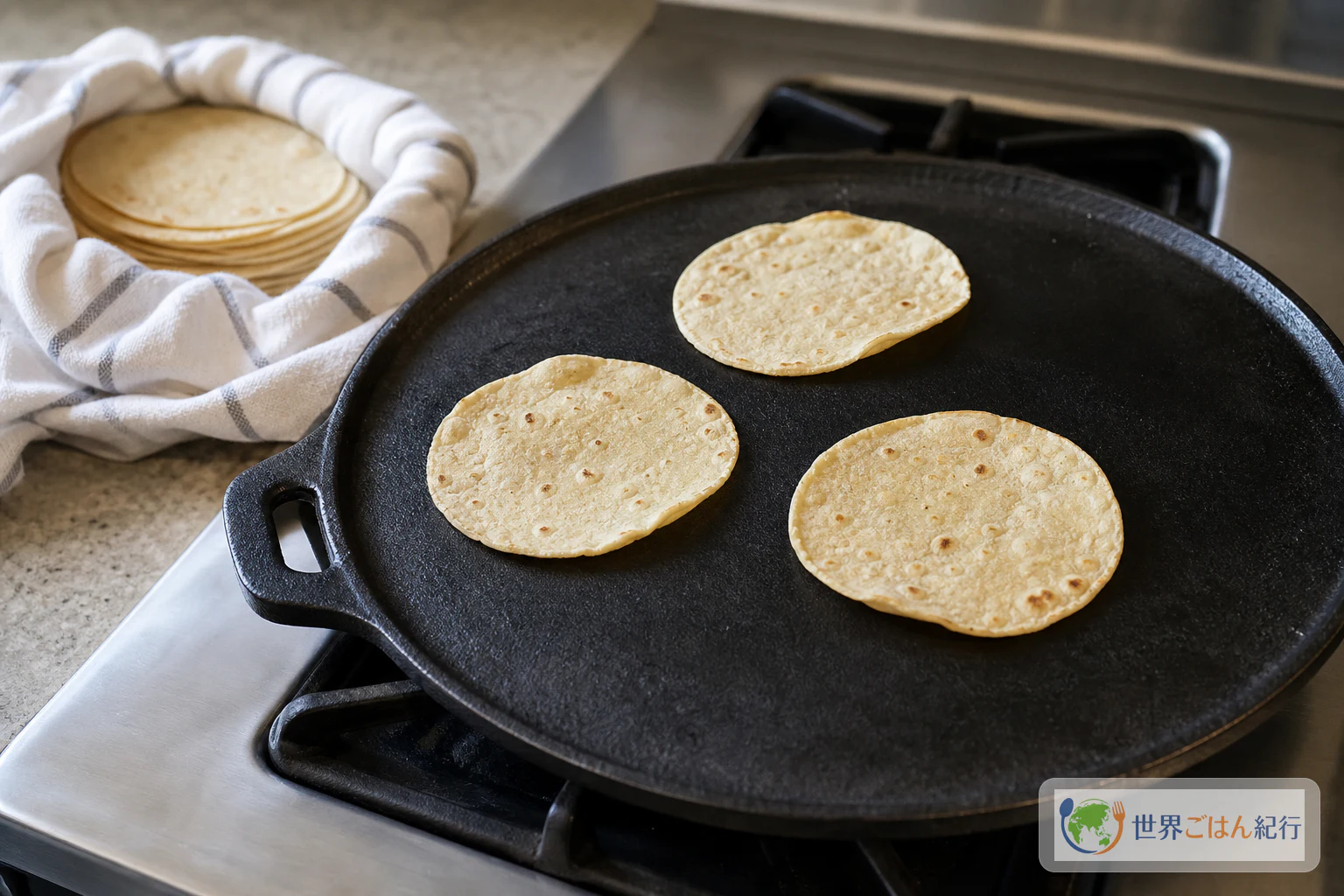
In Mexico, a taco is a way of eating more than a particular filling: a tortilla holding whatever goes inside, from meat and fish to beans, stews and fried things. Many people outside Mexico picture ground beef, lettuce and cheese in a hard shell. That's one branch of the family, but a Mexican taco stand starts with warm small corn tortillas. Cold ones crack easily and have no aroma, while a warm tortilla catches the meat juices and salsa, so even a modest amount of filling is satisfying.
Carne asada belongs to the charcoal-grilled family known as taco al carbón, a relatively recent type in the history of the taco: beef steak or ribs, or pork chops, grilled and sold at taquerías. In the northern state of Sonora, beef grilled with little more than salt and wrapped in large flour tortillas is a well-known way to eat it. This recipe uses the small corn tortillas common in central Mexico, but switch to flour tortillas and you move toward the Sonoran style.
In Spanish, the singular is taco and the plural tacos. Around Guadalajara in Jalisco, street-stand tacos of grilled beef on small tortillas are also a familiar format.
The toppings stay simple: chunky salsa, chopped white onion, cilantro and lime, with the cheese and sour cream left off. Cutting the fat with acidity and fresh aromatics gives the lightness of a street stand. Compared with other tacos, this one is a sprint. Tacos al pastor are red pork with achiote and pineapple, birria de res is stewed beef with its consommé, and tinga de pollo is chicken stewed with chipotle.
| Dish | How it's eaten | Focus at home | Related on this site |
|---|---|---|---|
| Tacos | Filling on a warm tortilla, folded | Warm the tortillas; don't overfill | This recipe |
| Tacos al pastor | Red pork, pineapple, onion | Get char without a trompo | Tacos al pastor |
| Sopes | Thick masa base with a raised rim, topped | Masa thickness and reheating | Sopes |
| Taquitos | Rolled and fried | Keep the filling dry so they don't burst | Taquitos |
| Tamales | Masa and filling wrapped in leaves and steamed | Masa moisture and steaming time | Tamales |
Ingredients (serves 4)
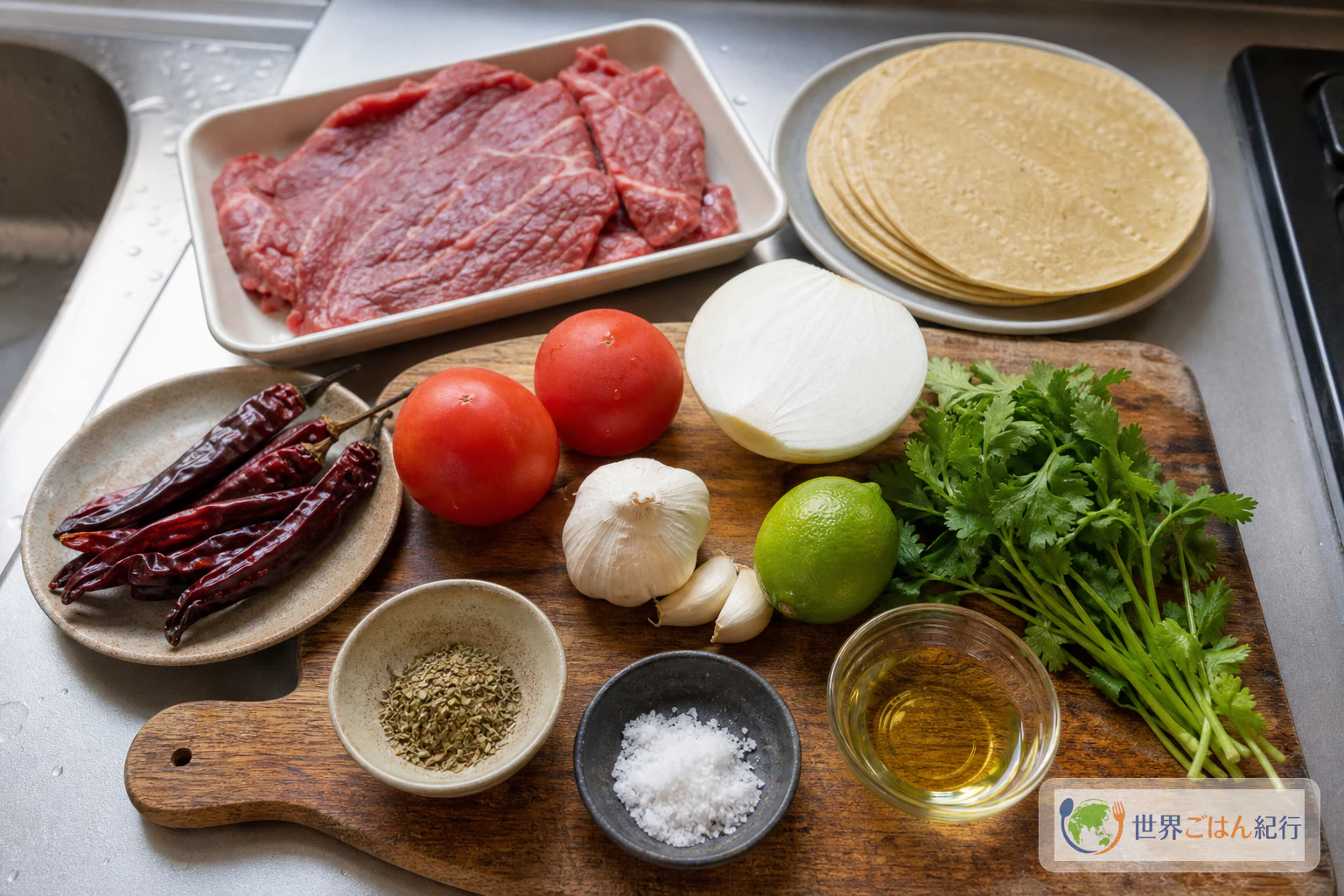
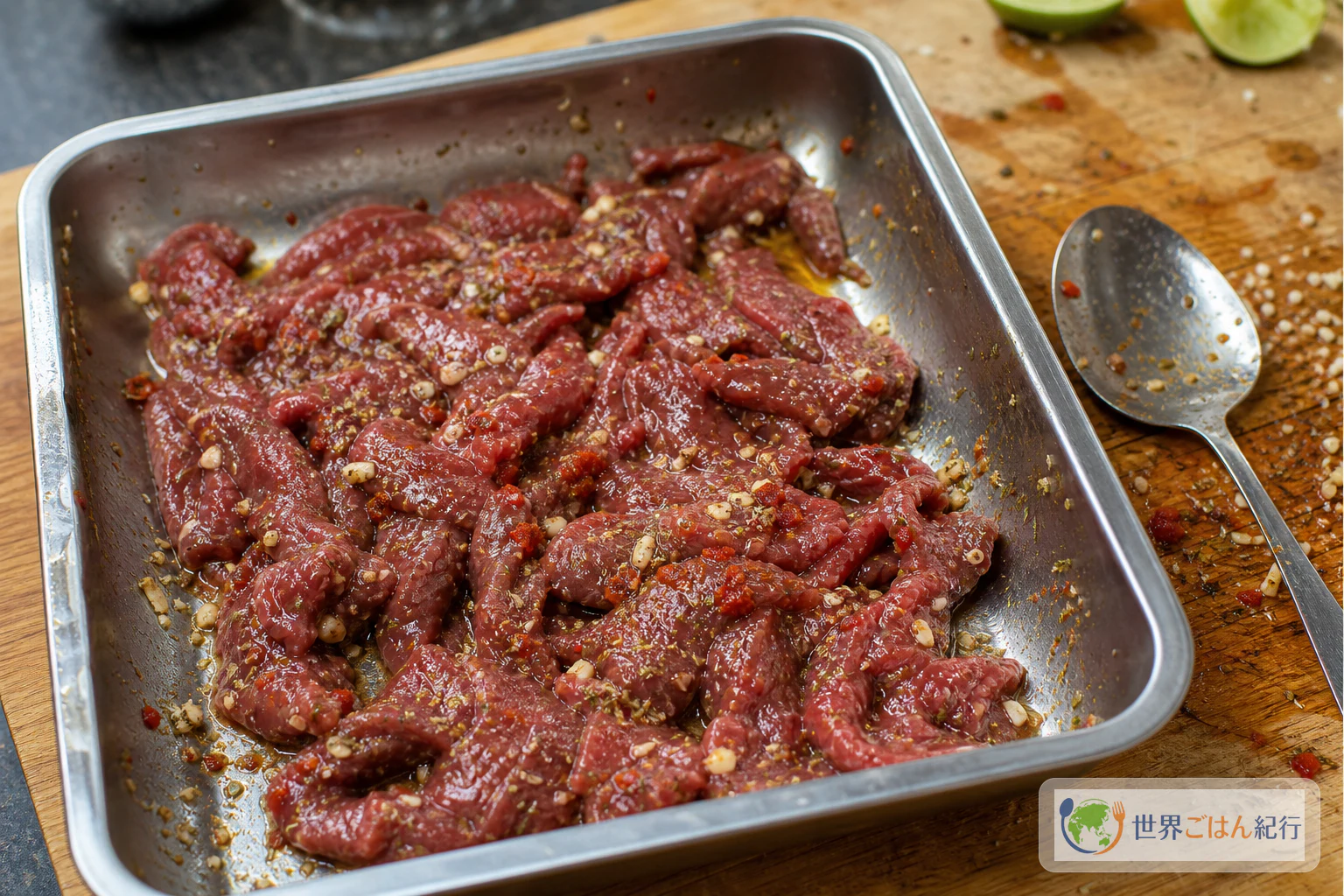
This makes 12 small tacos, a main course for 4. For the beef, skirt steak, hanger steak, rump or chuck roll cut for grilling are easy to work with. If you have a large steak, slice it 0.5 inches (1 cm) thick across the grain before marinating so the flavor gets in quickly.
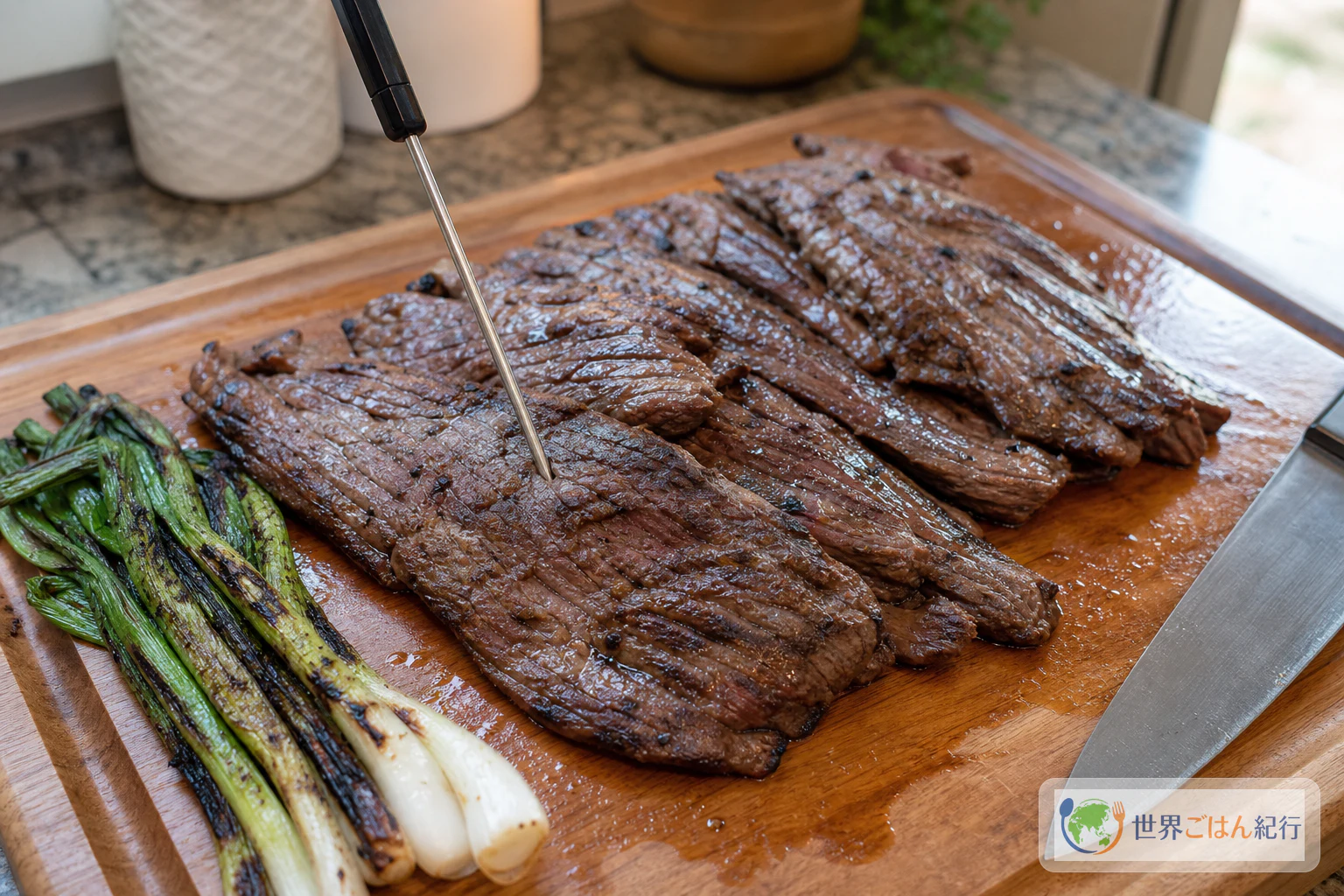
Watch for beef, corn, tortillas containing wheat, and cilantro. Don't reuse trays, cutting boards or tongs that have touched raw meat for the garnishes or the warmed tortillas; wash them with dish soap first. For beef steak, aim for an internal temperature of at least 63°C (145°F), and rest the meat for at least 3 minutes after cooking; that covers both safety and letting the juices settle.
Choosing beef and tools for carne asada tacos
Tacos aren't a dish you fix by buying fancier beef. Meat and vegetables from your local supermarket are fine. What makes the difference is technique: searing instead of steaming, keeping the salsa from turning watery, and getting the center hot without overcooking.
Skirt steak is the classic cut, but it can be pricey some days, and rump or chuck roll work well. Thin-sliced beef scraps tend to release liquid instead of browning and lose the texture of a taco. If that's what you have, cook it in small amounts over high heat until the moisture is driven off, and skip coating it in starch.
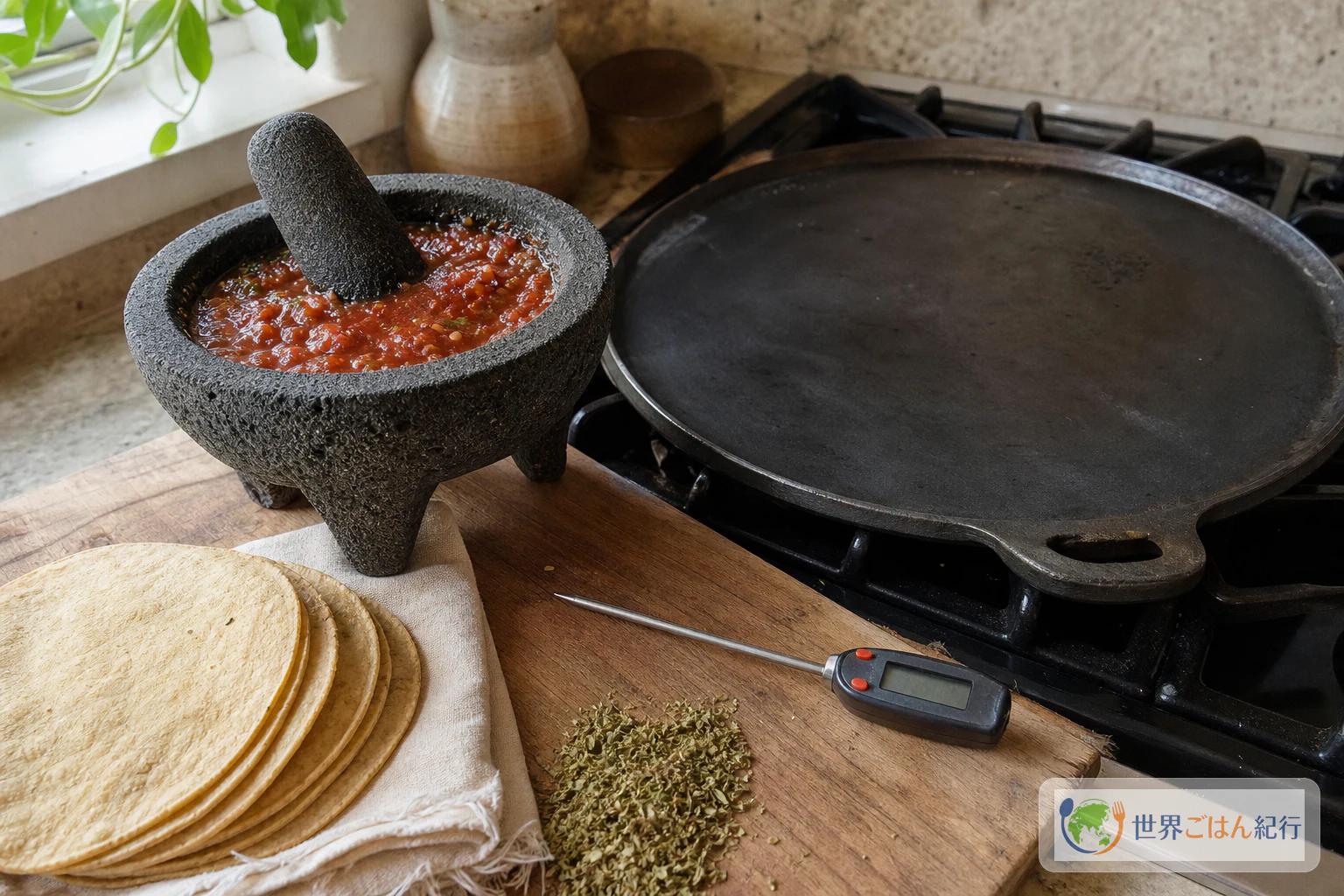
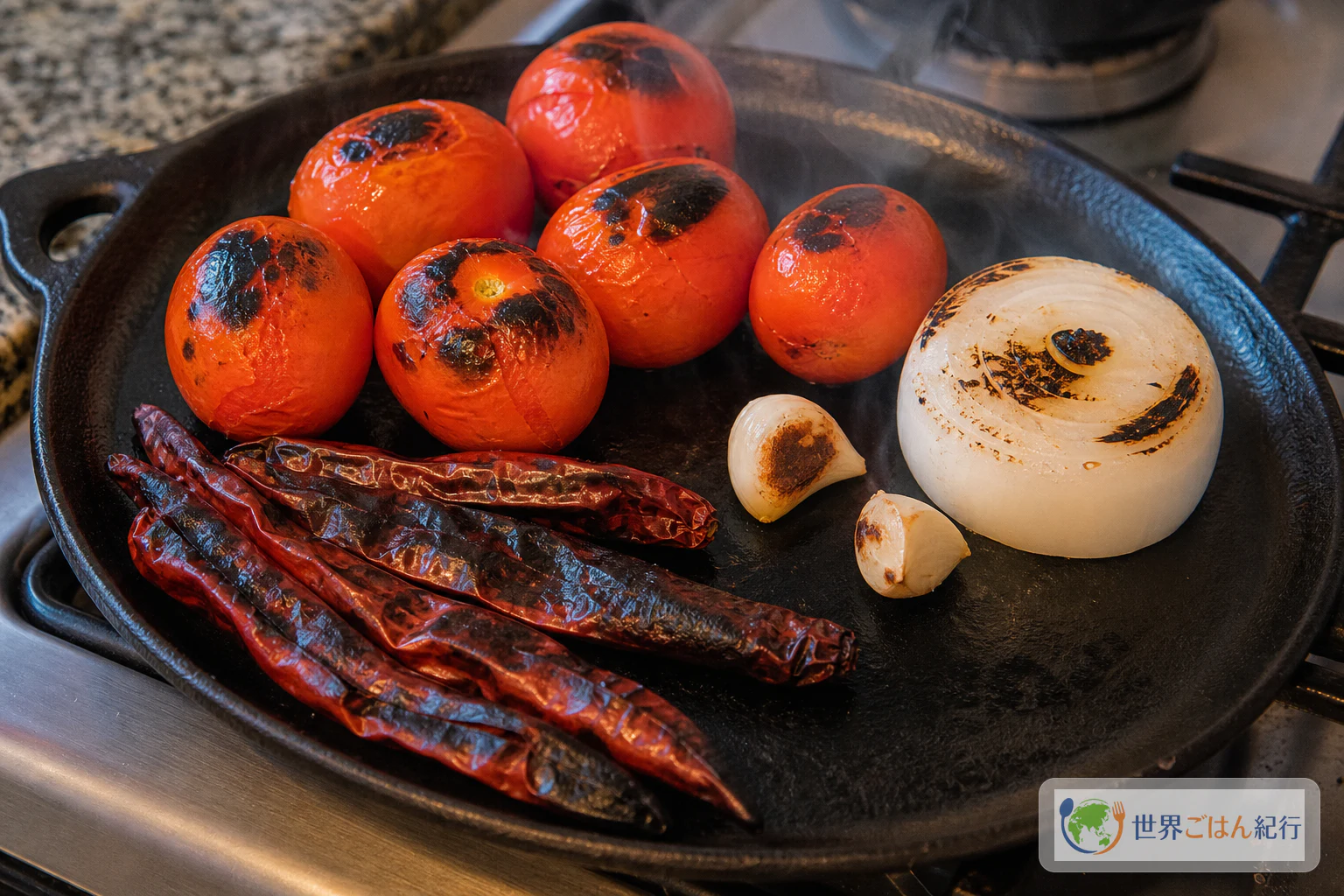
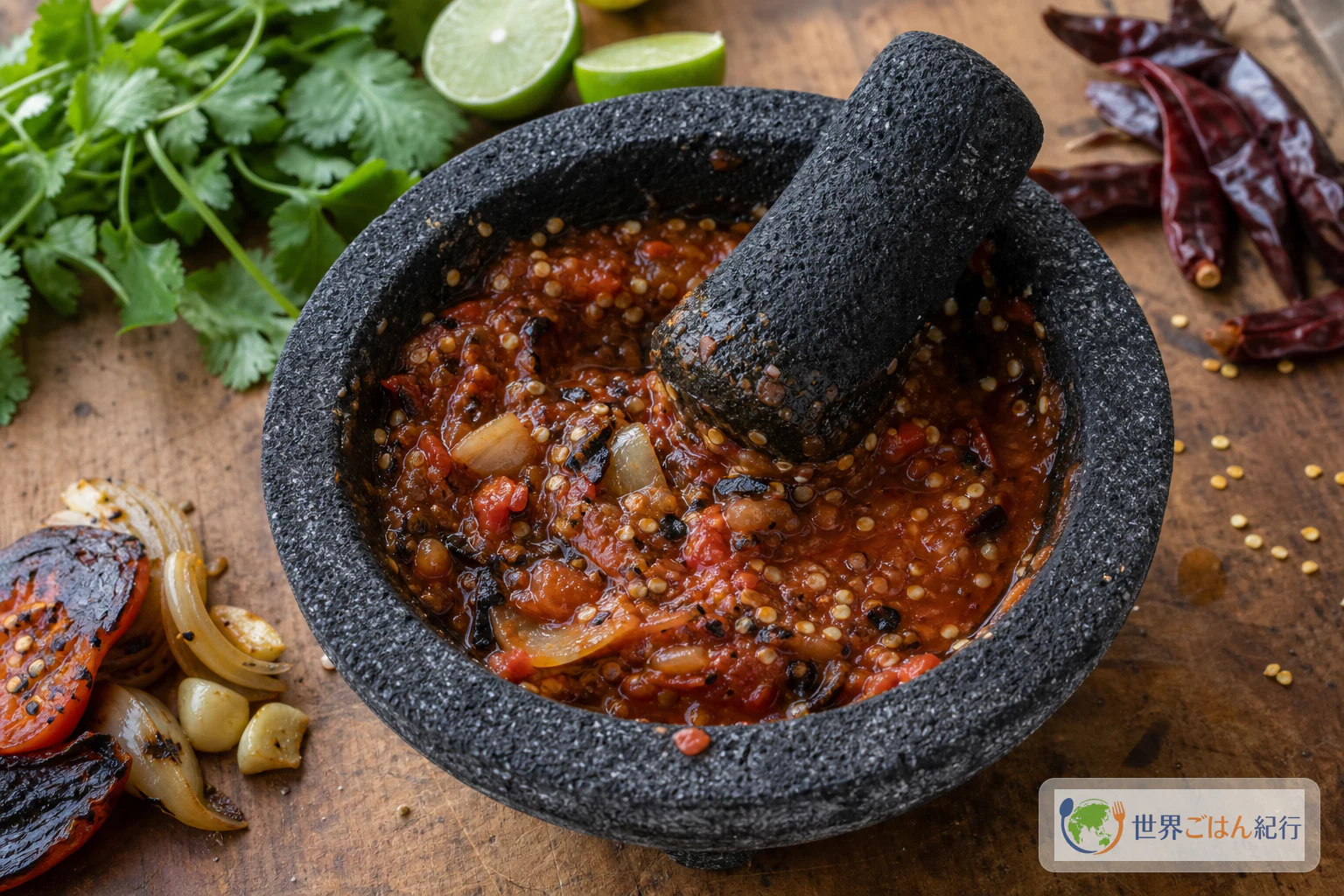
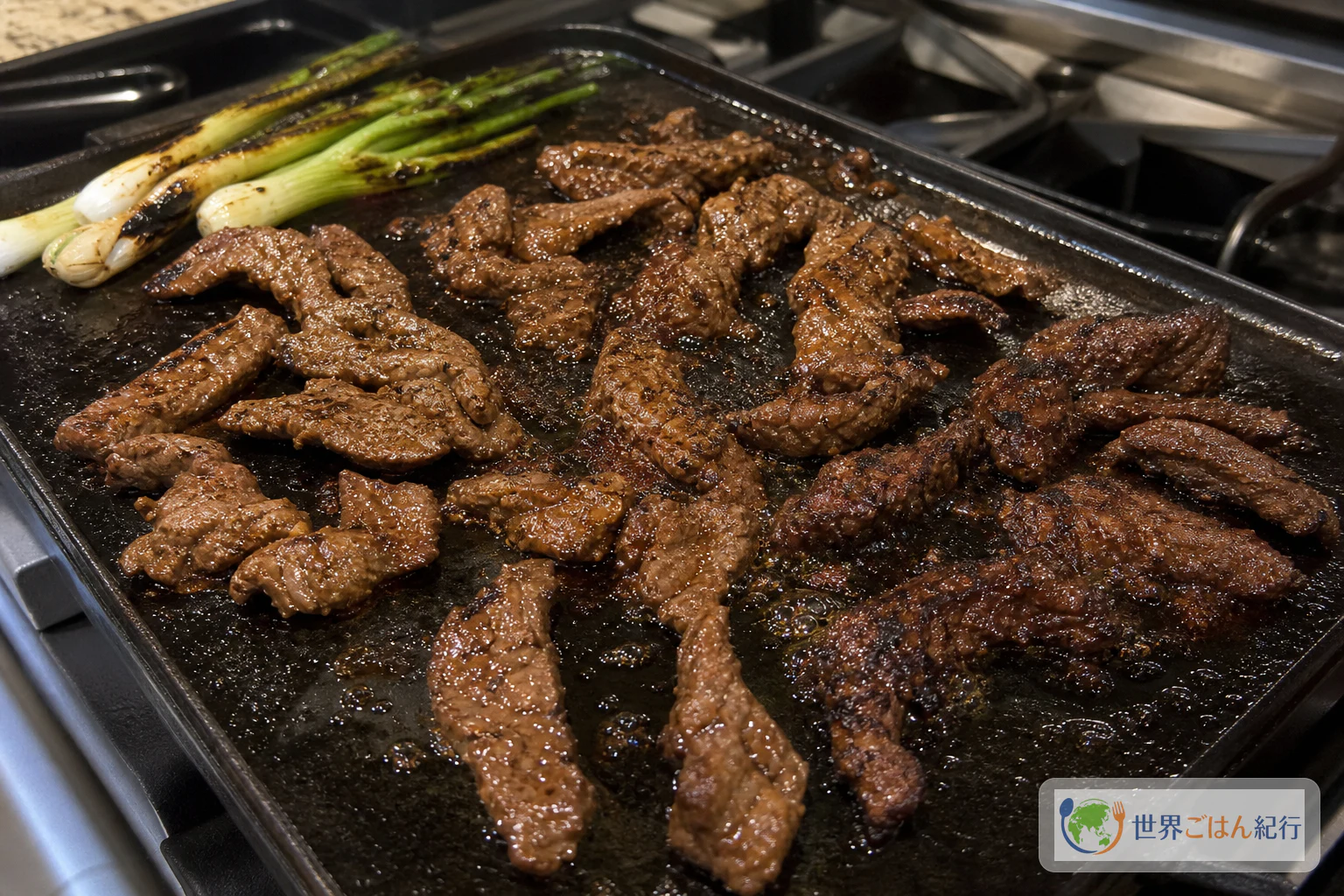
A few tools make results repeatable. A steel plate or heavy griddle holds its heat when the meat goes on, so a sear builds quickly; a nonstick skillet works too, as long as you cook in small batches. A mortar is optional, but crushing the charred tomatoes and chiles coarsely gives a texture a blender struggles to match, so the salsa eats like part of the filling rather than a sauce. An instant-read thermometer is good insurance when the meat is a little thick, guarding against both a cold center and meat that's tough from overcooking out of worry.
If you pile meat onto the griddle, the temperature drops and juices come out before any browning happens. For 4 servings, cook in 2 or 3 batches, leaving a finger's width between pieces. Spread the cooked meat out to rest rather than stacking it.
Common carne asada taco mistakes
With so few ingredients, small decisions show up in the flavor. Crowd the pan with meat and you get juices instead of a sear. Cold tortillas crack, and overfilled ones won't fold and fall apart on the plate.
| Problem | Why it happens | Fix |
|---|---|---|
| Watery meat | Meat piled in the pan, so the temperature drops | Cook half as much at a time, and set the surface first over medium-high heat |
| Tough meat | Very thin meat cooked too long, or cut along the grain | Cook 0.5-inch (1 cm) thick pieces briefly, rest, then chop across the grain |
| Salsa too spicy | Chile de árbol seeds left in | Remove the seeds and add 3.5 oz (100 g) more tomato to stretch it with acidity and moisture |
| Tortillas crack | Cold or dried out | Warm both sides over medium heat and wrap in a towel to let steam soften them |
| Tacos fall apart when eaten | Too much meat and salsa | Cap it at 45 to 50 g meat and 1 tbsp salsa |
Serving and storing carne asada tacos
For a menu, carne asada tacos pair well with stewed beans, grilled corn, and dishes that use salsa, such as chilaquiles. If you're in the mood for a rich stew, follow up with pozole rojo; for something light and fried, taquitos.
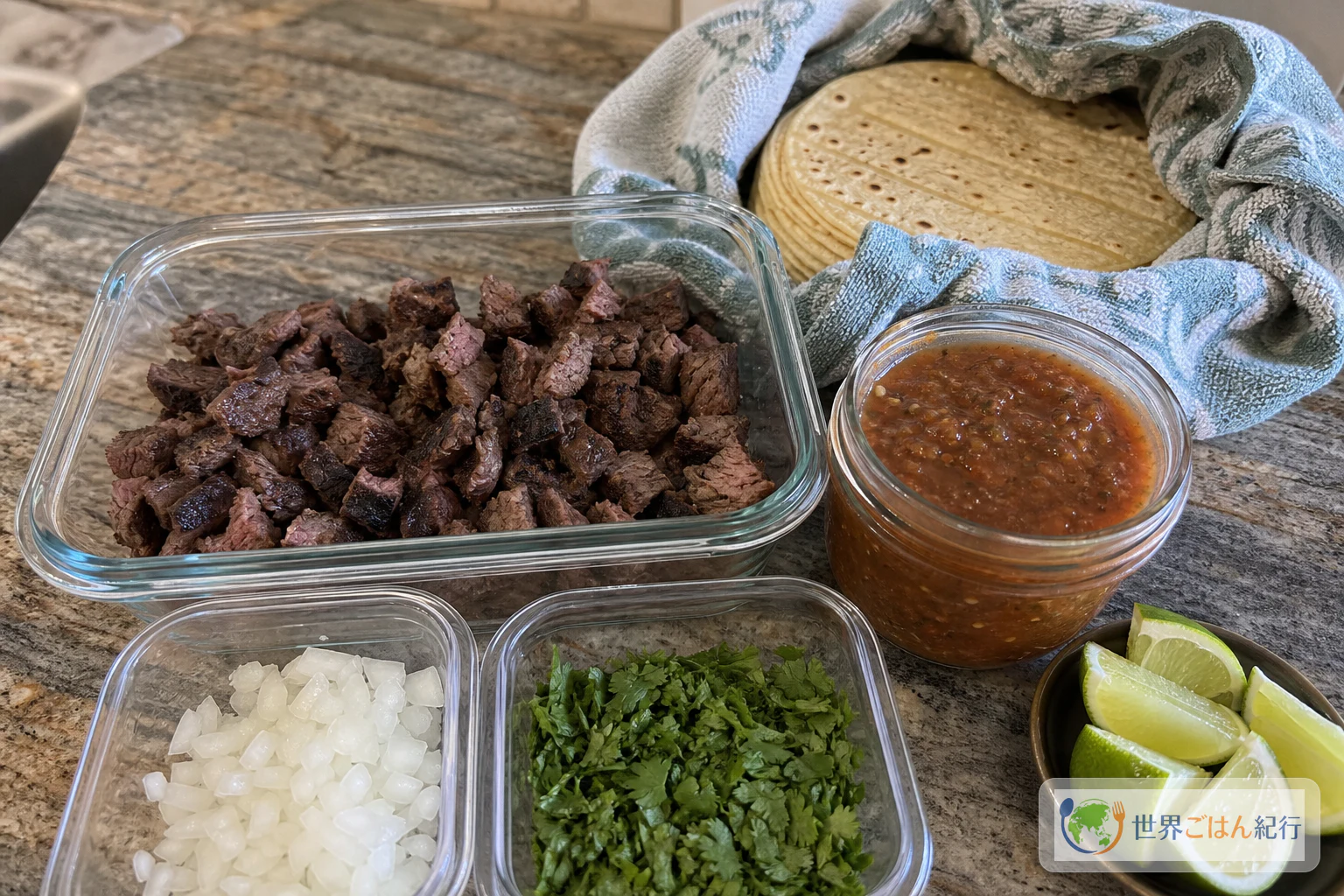
Assembled tacos turn soggy and the tortillas tear, so keep the meat, salsa, onion, cilantro and tortillas separate. The meat and salsa each keep 2 days in the refrigerator; chopped onion and cilantro are best used the same day.
To reheat, warm just the meat in a skillet over medium heat for 1 1/2 to 2 minutes, and turn off the heat once some of the juices return. A microwave works at 600 W for 40 to 60 seconds, though the seared aroma fades. Warm the tortillas separately over medium heat and assemble at the end.
Frequently asked questions
What if I can't get corn tortillas?
Flour tortillas work too, though the aroma and lightness change. They soak up moisture easily, so use a little less than 1 tbsp salsa and eat as soon as they're filled.
Can I use pork or chicken instead of beef?
Yes, but the dish takes on a different character. With pork, it comes together more easily if you lean toward the red marinade of tacos al pastor. With chicken, cut thighs into 1.5 cm (5/8 in) cubes and cook over medium heat. Color is an unreliable guide to doneness, so insert an instant-read thermometer into the thickest part and make sure the center has been held at 75°C (167°F) for at least 1 minute.
Can I use store-bought salsa?
For a first try, yes. To bring back the roasted aroma and texture, char 1 tomato in a dry skillet, chop it and stir it into 5.5 oz (150 g) store-bought salsa. If the salsa is sweet, add 2 tsp lime juice.
Someone in my family doesn't like cilantro
Make them with 25 g scallions and 3.5 oz (100 g) white onion. The cilantro aroma is gone, but plenty of lime still cuts the fat. Shiso pushes the tacos toward Japanese flavors, so scallions are the more natural swap if you want to stay close to Mexican flavors.