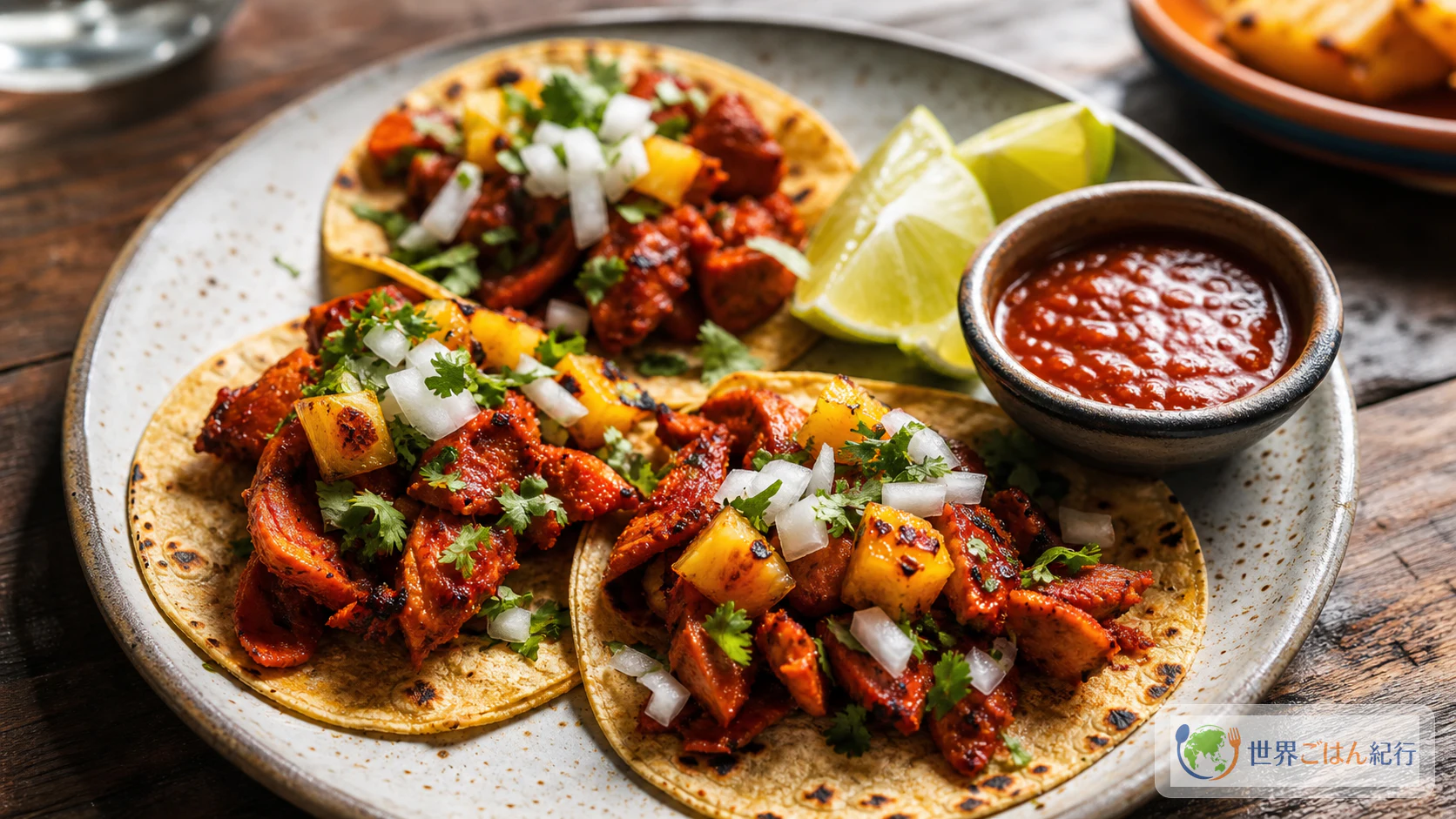
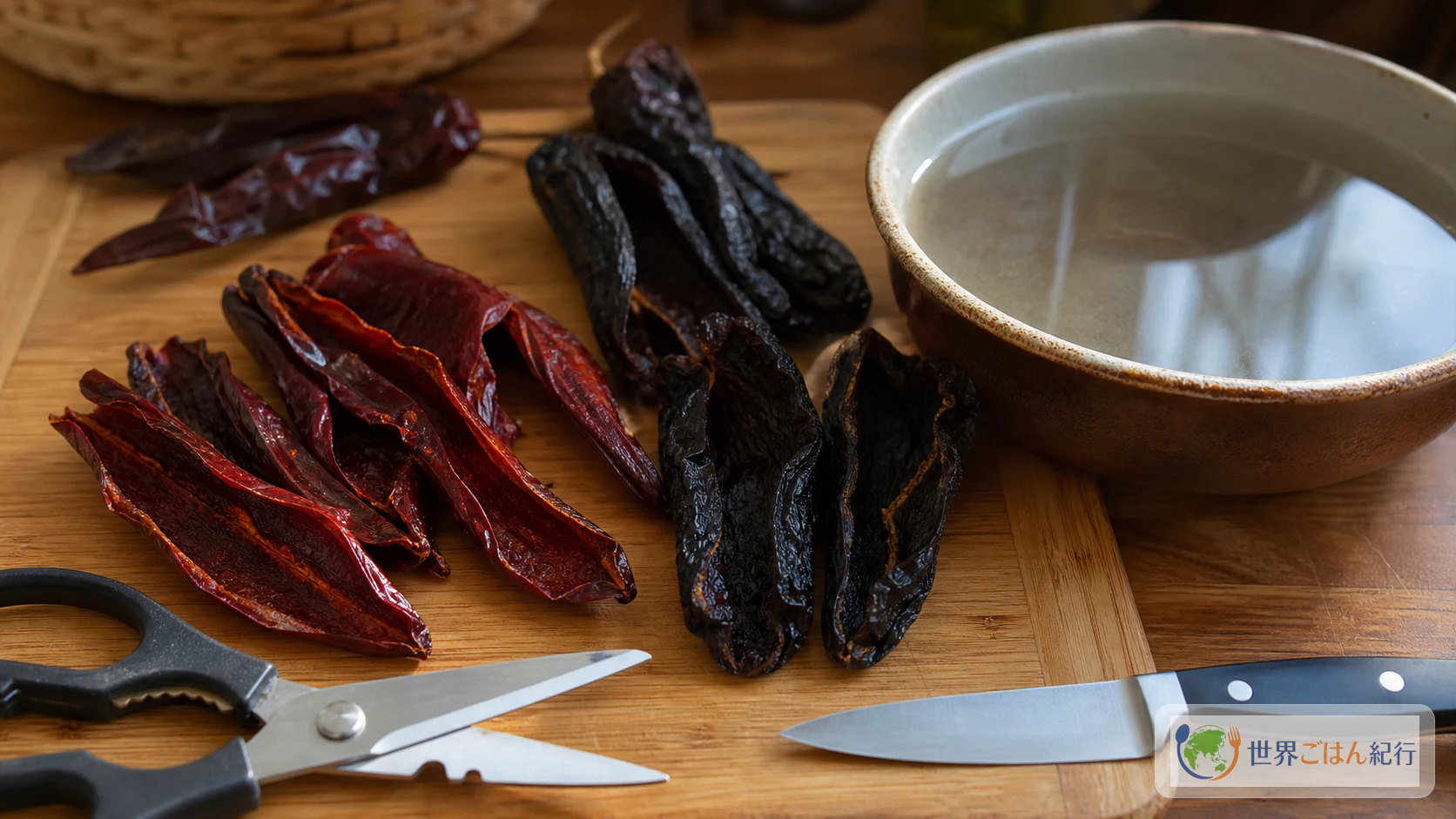
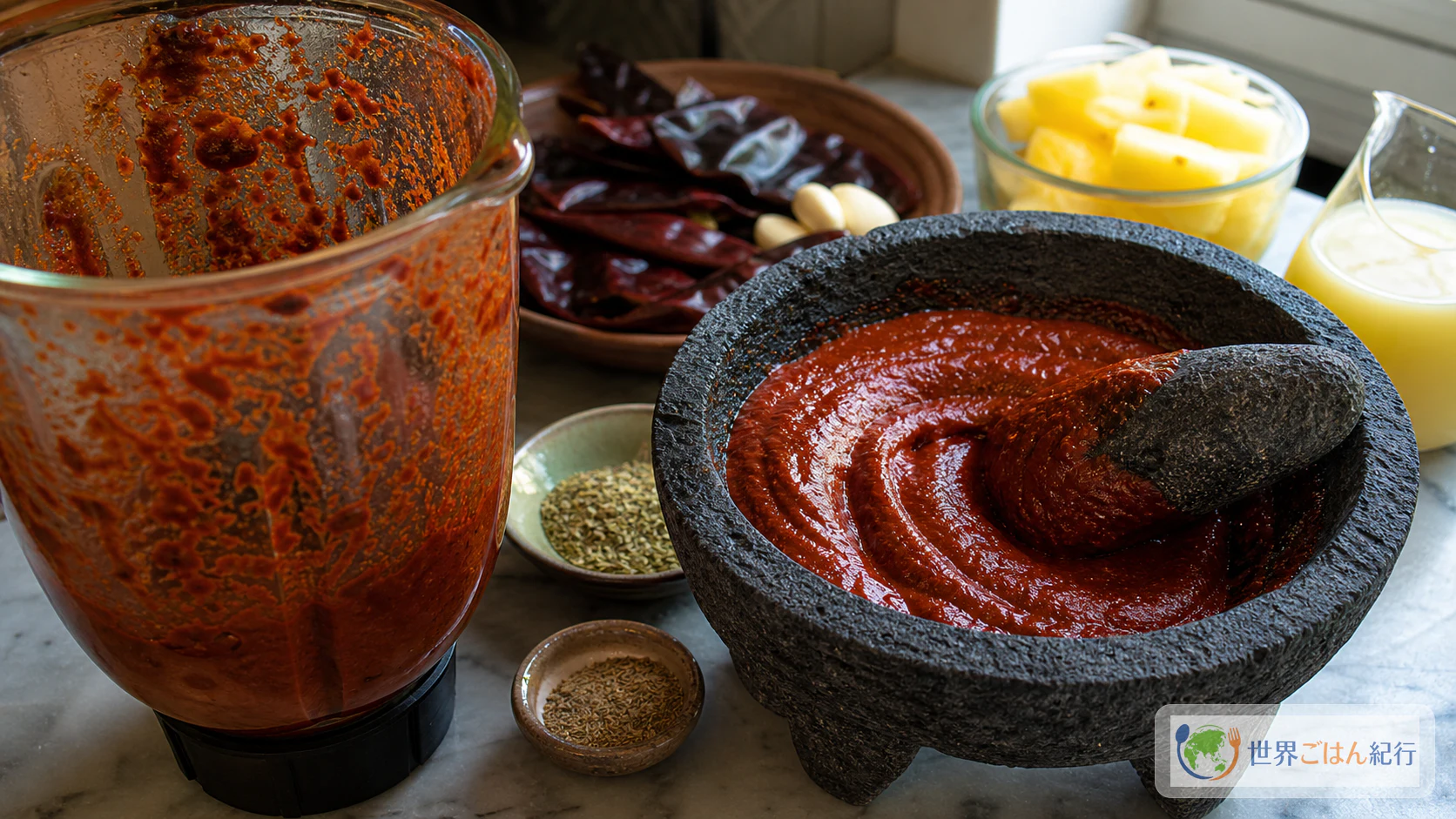
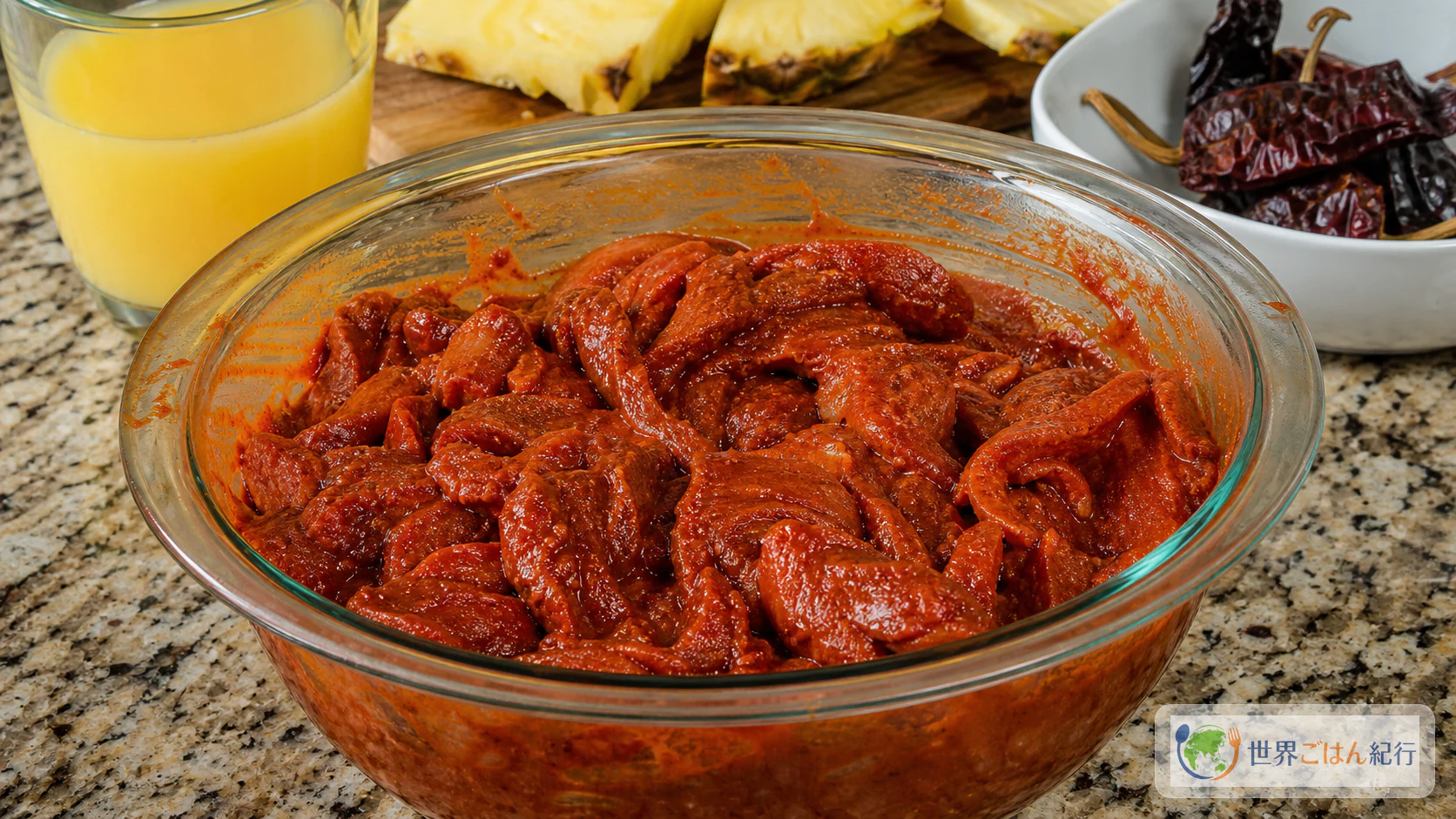
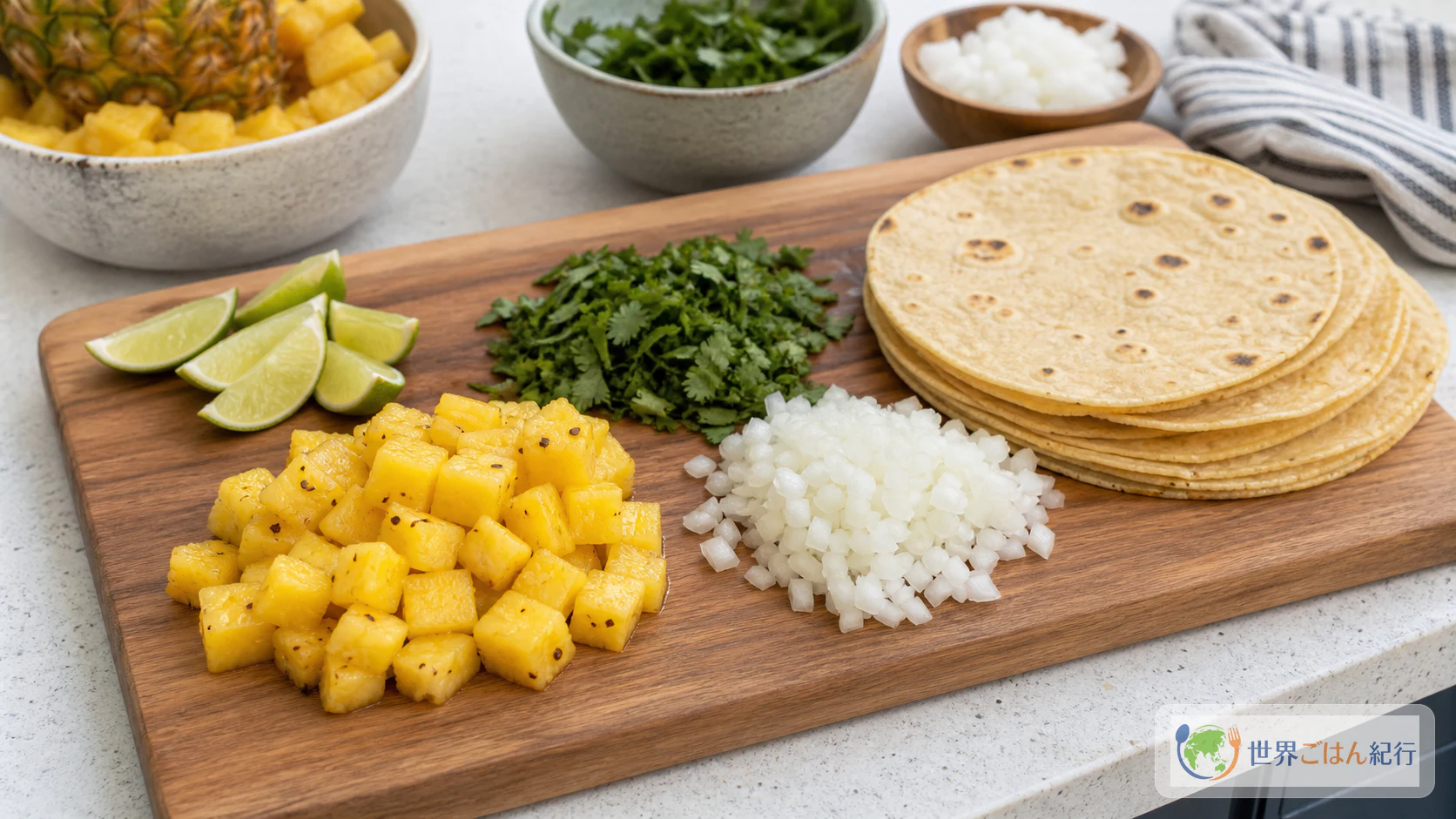
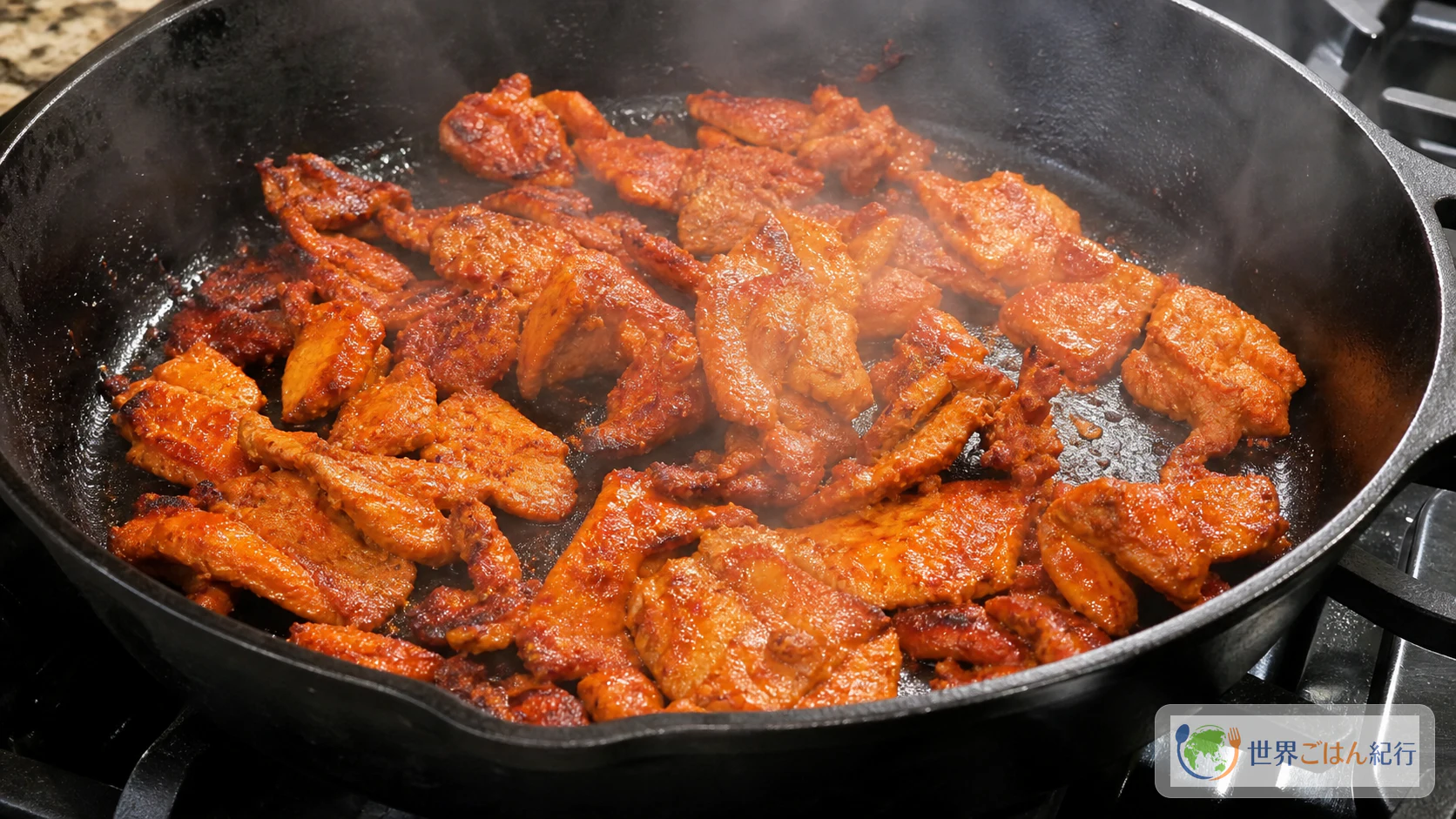
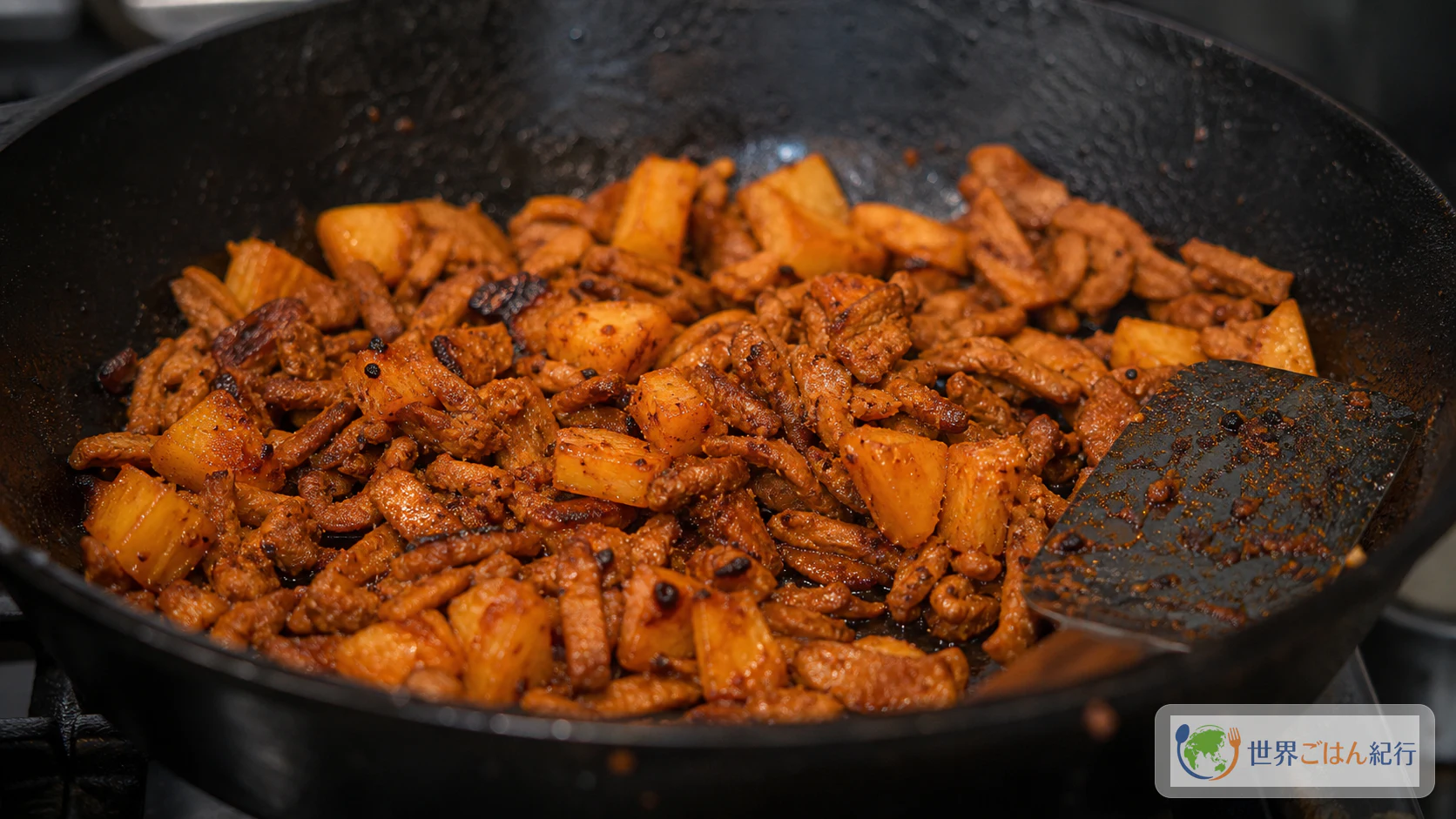
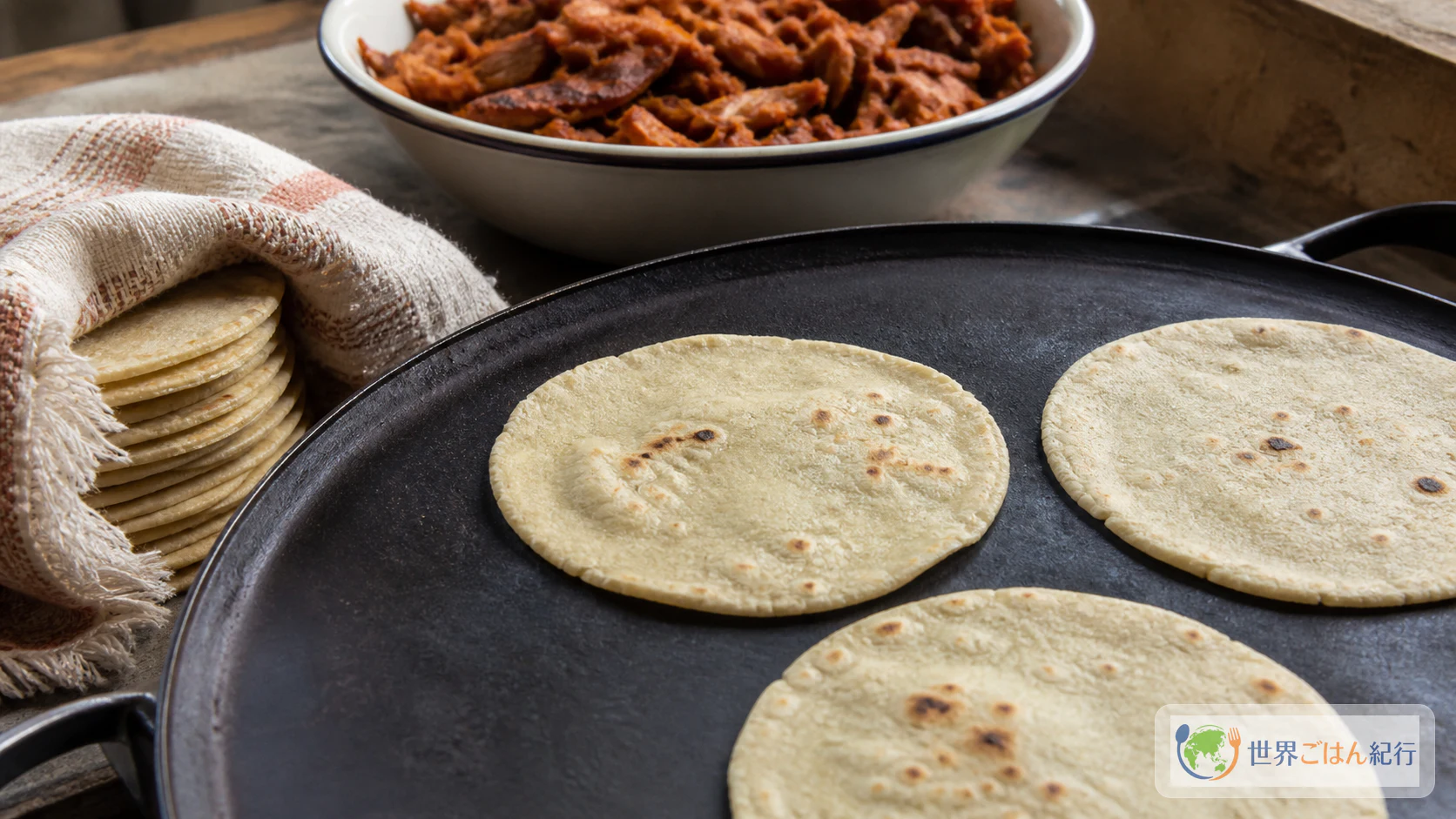
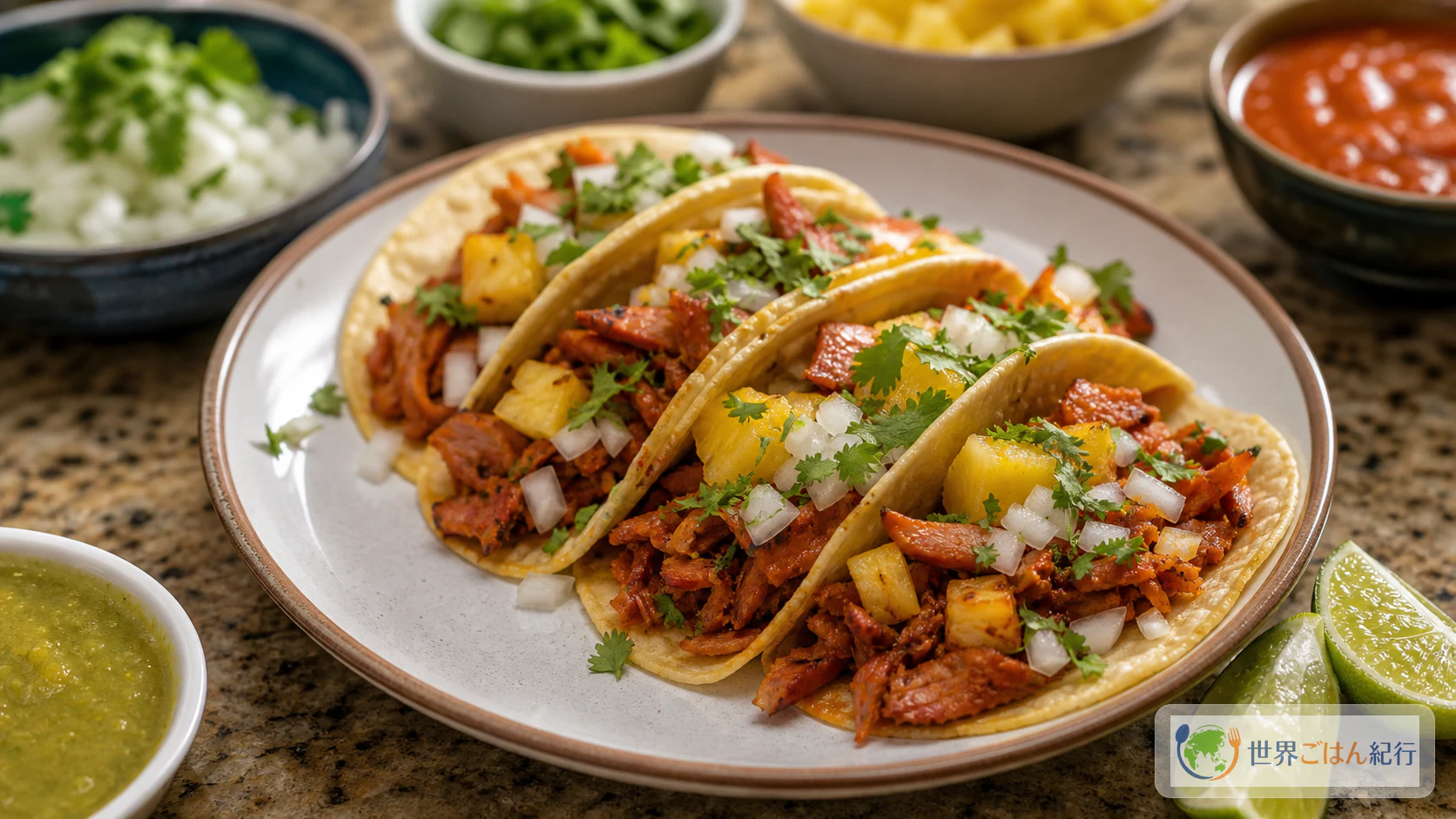
In the early-evening kitchen, dried chiles soften in hot water and release a smell that's less spicy than it is like dried fruit and an old wooden crate. Blend them with achiote, vinegar, garlic and pineapple, and the red color moves straight into the pork. When it hits the skillet, sweet-sour steam and the smell of sizzling fat rise, and suddenly the table feels a lot closer to a taco stand. That's tacos al pastor, Mexico's red, pineapple-bright street taco, made here in an ordinary kitchen without a vertical spit.
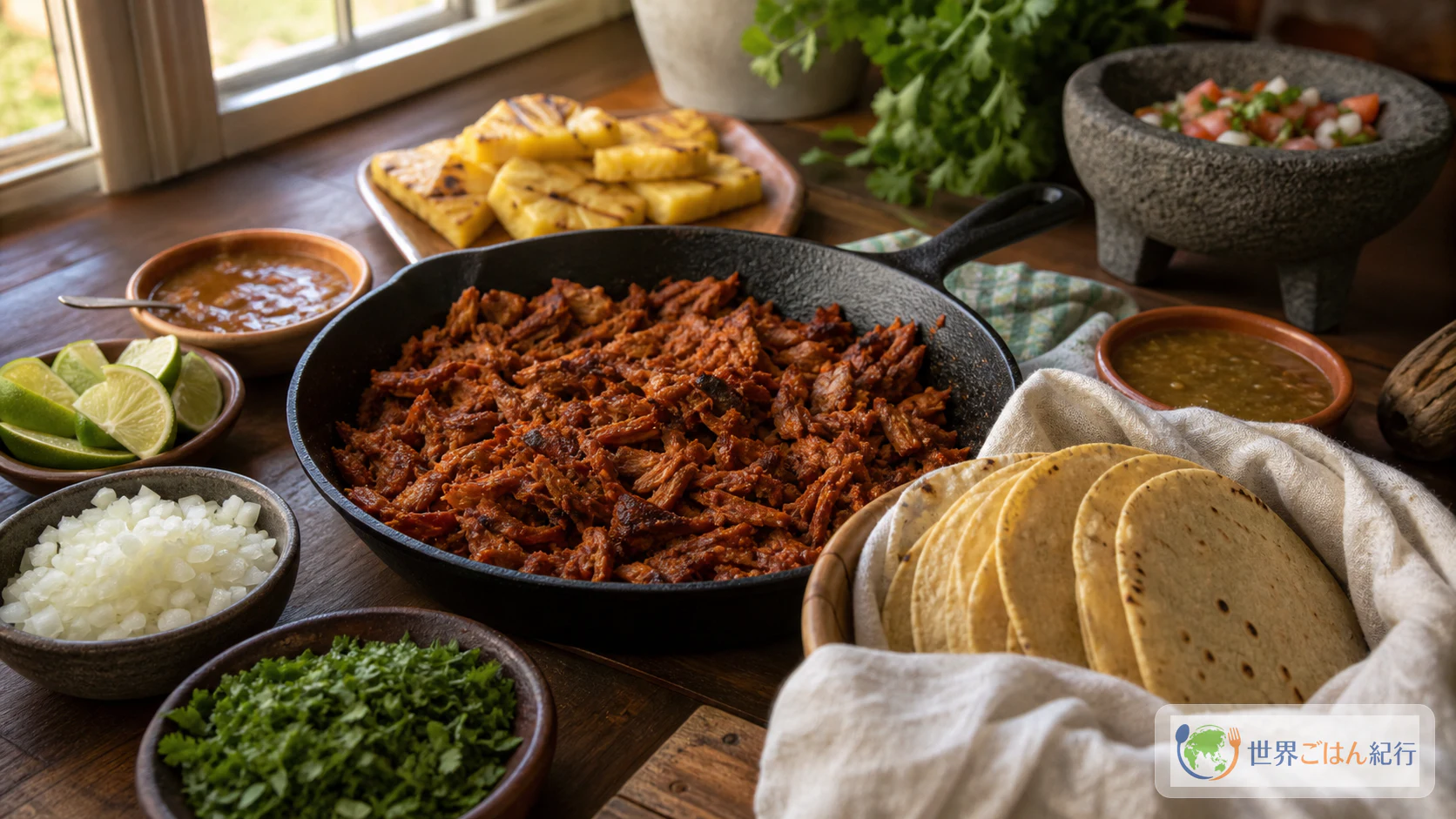
About tacos al pastor
At the stand, adobo-marinated pork is stacked on a vertical rotating spit called a trompo, roasted, shaved off in thin slices and piled onto corn tortillas. The name al pastor translates as "shepherd style," but today's taco stands use mostly pork. The dish brings together the vertical-spit tradition that Lebanese immigrants brought to Mexico with Mexican chiles, achiote and tortillas.
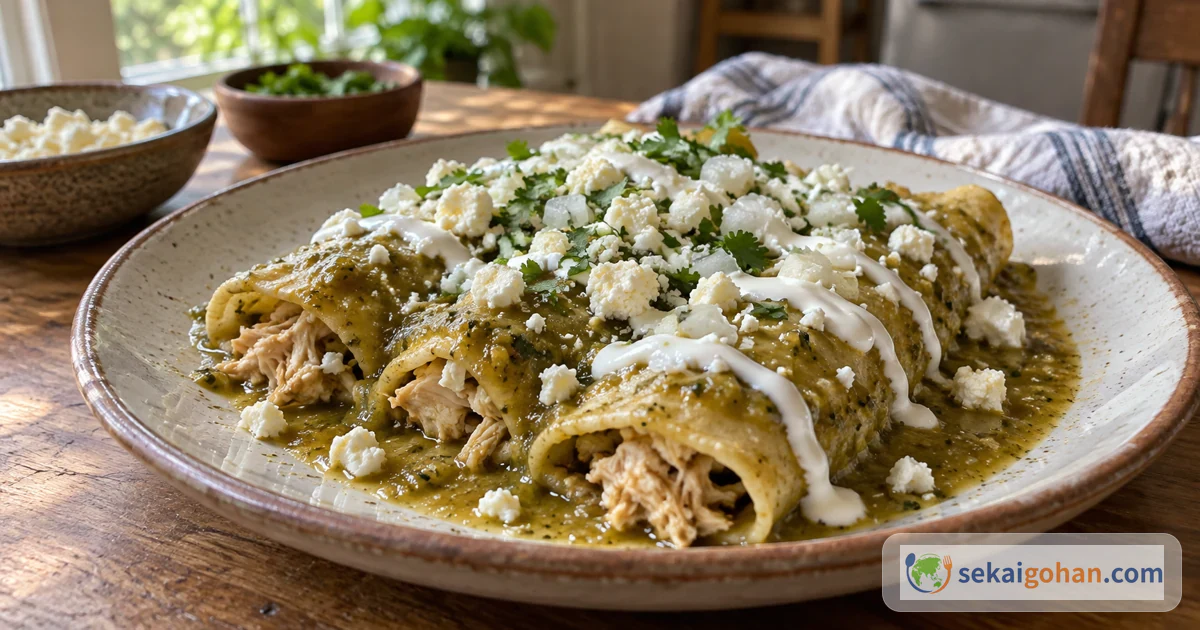
Mexico has plenty of relatives at the table. Basic tacos are a quick build of grilled beef, chunky salsa and warm tortillas, birria de res is a red beef stew with consomé, tinga de pollo is chicken simmered with chipotle, and pozole rojo is a big pot of hominy soup. For breakfast or brunch, chilaquiles, fried tortillas briefly simmered in salsa, are a very Mexican way to use up leftover tortillas.
Al pastor has more of the street stand's lightness than any of them: you cook it and eat it right away. Stack two small tortillas, top them with meat, pineapple, white onion, cilantro and lime, and every bite switches between fat and acidity.
Al pastor without a trompo
You can't stack a big mass of meat on a vertical spit at home, so this recipe works differently. Thinly sliced pork shoulder goes into the red marinade, then gets seared in a thin layer over fairly high heat, chopped, and seared again with pineapple. Sear rather than stir-fry, and the final chop gives you more char. That keeps the stand's red aroma, char, acidity and sweet juice. The pineapple does more than sweeten, too; it cuts through the fat as you eat.
| Element at the stand | Its role at the stand | Home version | Watch out for |
|---|---|---|---|
| Trompo | Meat stacked vertically, outside shaved off | Spread thin slices to sear, then chop and sear again | Stir-frying thick meat all at once turns it into a braise |
| Adobo | Chiles, achiote and vinegar create the red aroma | Blend or pound into a smooth paste in a blender or mortar | A coarse paste scorches easily and stays gritty |
| Pineapple | Roasts on top of the meat and adds sweet-sour notes | Use some in the marinade and some for finishing | Too much makes the meat overly soft |
| Corn tortillas | Hold the fat and acidity of the meat | Small store-bought corn tortillas | They crack easily when cold |
| White onion and cilantro | Fresh, raw aromas that lighten the fat | Onion, cilantro, scallions | Scallions alone shift the flavor toward East Asia |
A broiler or the top element of an oven adds more char, but a skillet makes the heat easier to judge the first time. Spread the meat out to sear, don't stir too much, and save high heat for the final sear. Keep to those three and you'll get a good home-style taco.
Ingredients (serves 4)
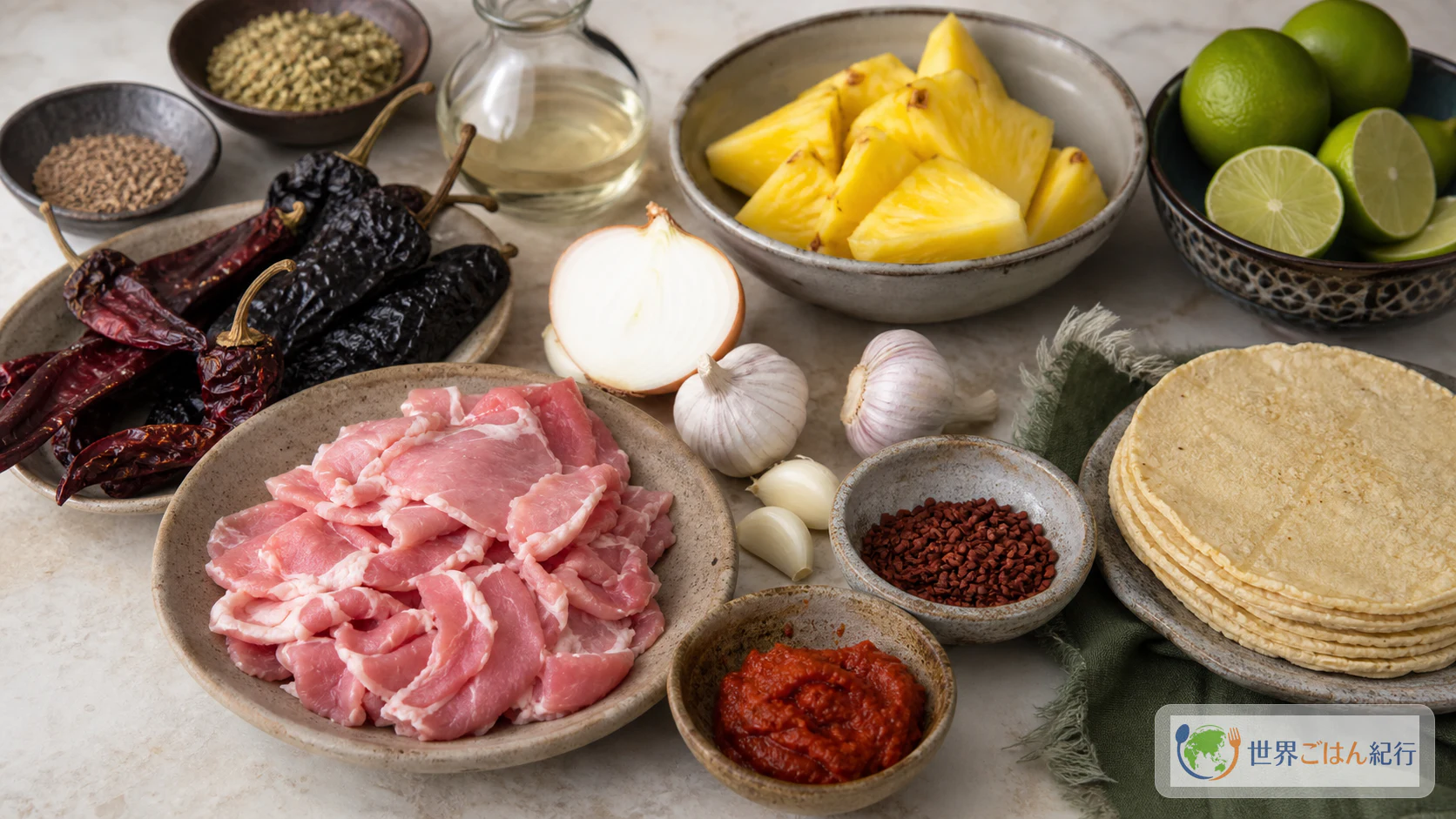
This makes about 12 small tacos, or a main course for 4. Rather than ultra-thin slices meant for hot pot, use 0.125 inch (3–4 mm) slices for grilling, or partially freeze a piece of pork shoulder and slice it thinly yourself; that gives you both char and a meaty bite.
This dish involves pork, corn and, depending on the product, tortillas that contain wheat. Pineapple and garlic can irritate some people's mouths. Don't use marinade that has touched raw meat as a sauce as it is, and wash utensils with detergent before handling the garnishes or tortillas.
Achiote gives the red color and a light earthiness. It is hard to find in regular supermarkets, so if you plan to make al pastor more than once, track it down first. Latin American grocers and online spice shops usually carry the paste or the seeds (annatto). Paprika alone can make the meat red, but achiote brings the orange hue typical of Mexican cooking.
Even a small amount of oregano ties together the sharp edges of the chiles and vinegar. If the jar at home is old and has lost its aroma, the marinade tastes only red and spicy. If you cook Mexican food often, buy a fresh jar.
A mortar and pestle is not essential, but it helps even out the aroma when you use annatto seeds or grind garlic, oregano and cumin with a little vinegar. It lets small amounts of spice work better than a blender alone.
Because the pork is thin, it dries out quickly if overcooked. When serving children or older family members, check the center of a thicker piece with a thermometer to make sure it is hot. Don't judge by color alone; a meat thermometer is a useful tool.
Choosing ingredients for tacos al pastor
Al pastor is not a fiery dish. The red color looks spicy, but the core is the fruitiness of dried chiles, the color of achiote, the acidity of vinegar and pineapple, and the fat of seared pork. Pile on heat alone and it drifts away from a street taco toward a painfully hot chile stir-fry.
If you're unsure what to shop for, start with pork shoulder, corn tortillas, pineapple and achiote. You can make it without every dried chile, but even one kind changes the aroma.
| Ingredient or issue | Role in Mexico | Substitute | Watch out for |
|---|---|---|---|
| Achiote | Red-orange color, light earthiness | Annatto seeds, a little paprika | Paprika helps the color; the aroma is different |
| Guajillo | Red color, fruitiness, slight astringency | Paprika with a little ground red chile | Ground chile alone puts heat first |
| Ancho | Sweetness like dried fruit | 2 tsp raisins | Too much makes the sauce sweet |
| Pineapple | Acidity, sweetness, slightly tenderizes the meat | Canned pineapple, a little orange juice | Long marinating makes the meat fall apart |
| Pork shoulder | Balance of fat and meatiness | Mix in a little pork belly or pork leg | Leg alone dries out easily |
| Corn tortillas | Aroma and a base for the filling | Flour tortillas | Delicious over rice as a different dish, but the taco character changes |
Method
The work splits into two parts: making the marinade, then quick searing. While the pork marinates, prepare the garnishes and tortillas so you can bring everything to the table hot.
After chopping the skillet-seared meat, you can also spread it on a foil-lined tray and broil it on medium for 3–4 minutes. Take it out when the surface is dry and lightly charred, then combine with the pineapple. You get more char, but it dries out fast if left alone, so finishing in the skillet is more reliable the first time.
Common problems with tacos al pastor
Most trouble comes from crowding the pan, too much sweetness, or cold tortillas, and nearly all of it can be rescued.
| Problem | Why it happens | How to fix it |
|---|---|---|
| Bitter | The dried chiles burned, or the adobo is coarse | Discard burnt chiles. For slight bitterness, serve with extra pineapple and lime |
| Watery | Too much meat in the pan, or wet pineapple | Take the meat out, dry the pan over high heat, then sear again |
| Tough meat | Meat that was too thin was cooked too long, or left on high heat | Use 0.125 inch (3–4 mm) slices and keep the second sear short |
| Too sweet | Too much pineapple juice and canned pineapple | Add acidity with lime, onion and salsa. Halve the juice next time |
| Tacos crack | Tortillas are cold or dry | Warm them over medium heat and keep them wrapped in a cloth |
Pineapple tenderizes meat, but marinating too long makes the surface break down and release more water when seared. Marinate for 2 hours, and sear the meat within 8 hours at most.
Serving and storing tacos al pastor
Serving
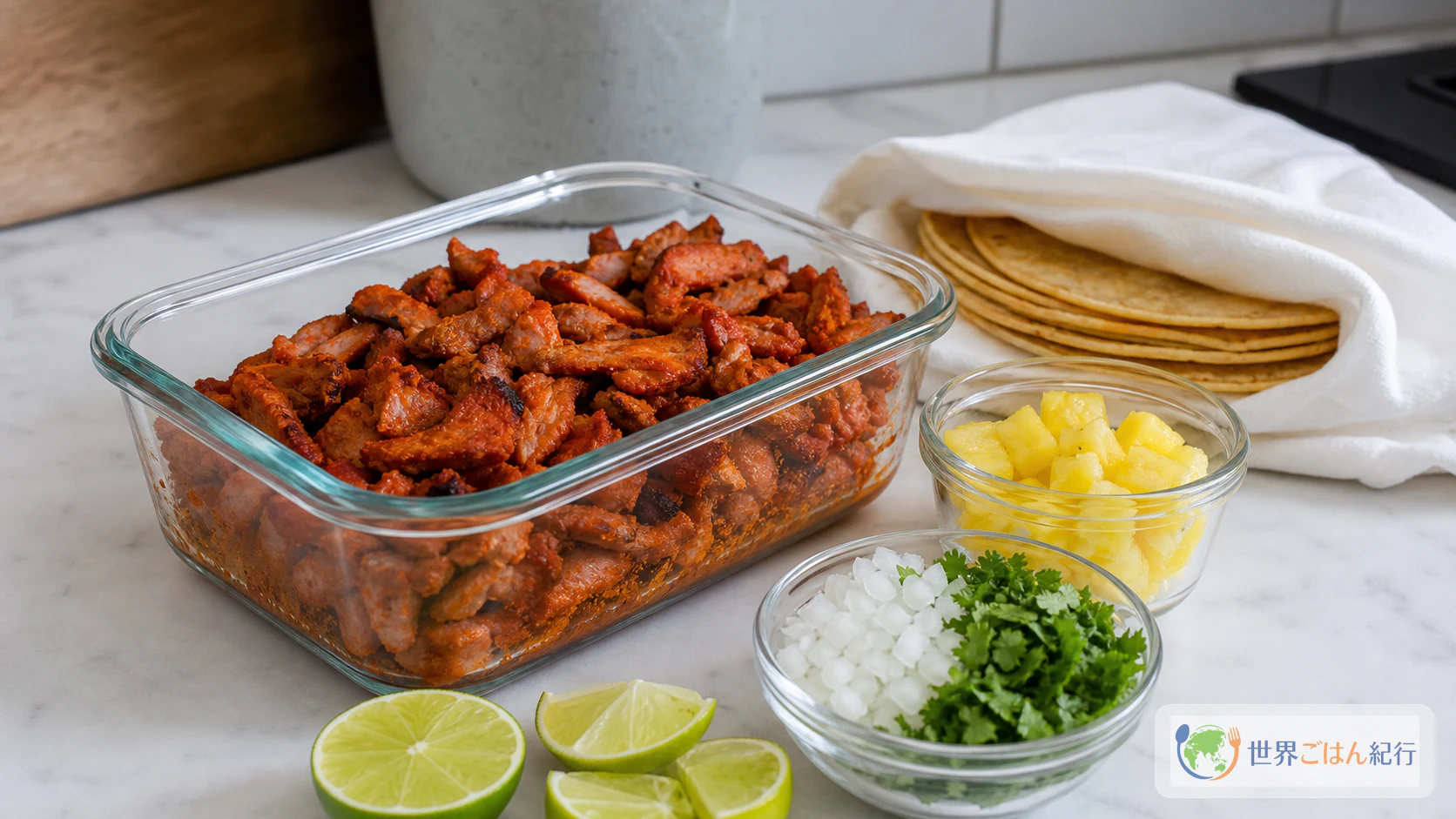
Several small bowls on the table feel more like al pastor than a single platter of meat. Set out white onion, cilantro, lime and salsa separately so anyone who doesn't like heat can build their own bites, and pile them on while the meat is still hot. Rewarm the tortillas 6 at a time rather than all at once; they'll stay supple through the meal and hold the fat better.
| Occasion | How to serve | Dishes to pair |
|---|---|---|
| Weeknight dinner | Meat on a platter, garnishes in small bowls, tortillas wrapped in a cloth | Start with a little pozole rojo for a more filling meal |
| Weekend lunch | Set out 2 kinds of salsa and let everyone roll their own small tacos | Serve alongside tinga de pollo to taste the difference between chicken and pork |
| Next-day lunch box | Meat, a fried egg and seared pineapple over rice | Pack the lime separately and squeeze it just before eating |
| Snacks for guests | Cut small tortillas in half and top each with a little meat | Put mole poblano on a separate plate to compare a rich sauce |
Leftovers and variations
When you tire of tacos, leftovers take other shapes easily. Spoon the meat over warm rice with a fried egg and salsa for a quick lunch, or sandwich it with cheese in flour tortillas for something quesadilla-style. Set it next to birria de res and you can taste the difference between stewed and seared within the same taco family. For a bigger spread, serve a small bowl of pozole rojo first and bring out the al pastor as the main course, the way a Mexican table might flow.
Storage
Put only the cooked meat into a clean container, let it cool slightly, and keep it refrigerated for about 2 days. To freeze, flatten it in single-serving portions and use within 2–3 weeks. Keep the onion, cilantro, pineapple and tortillas separate; stored together, the tortillas go soggy by the next day and the cilantro smells heavy.
A skillet reheats better than the microwave. Heat it over medium for 1 minute, add the refrigerated meat and cook 2–3 minutes until hot throughout and the edges dry out a little; thaw frozen meat in the fridge first. If it seems dry, add 1 tsp of water, then cook off the moisture over high heat for about 20 seconds at the end.
FAQ
Can I make it without achiote?
Yes, but the color and aroma change. 1 tbsp paprika, a little ground red chile and 2 tsp raisins add redness and sweetness, but you won't get achiote's distinctive orange or its light earthiness. If you like the dish, pick up achiote or annatto seeds for next time.
Can I use canned pineapple?
Yes. The juice works in the marinade and the fruit can go into the finish. Pineapple in syrup is quite sweet, though, so start with 3.5 tbsp (50 ml) of juice instead of ¼ cup (80 ml). Pat the fruit well dry and hit it with high heat during the second sear so the sweetness doesn't turn heavy.
Can I use only pork belly?
You can, but it will be fatty. Transfer the seared meat to paper towels to blot off some fat before chopping and searing again. The easiest mix to eat at home is 1 lb (500 g) shoulder with 7 oz (200 g) belly.
Can I make it mild for children?
Yes. Skip hot chiles such as chile de árbol and stick mainly to guajillo and ancho, or paprika. Serve the salsa on the side, and use less lime and onion for the children's portions. Garlic and acidity define the dish, so halve them rather than leaving them out.
What if I can't get tortillas?
Flour tortillas are the closest, followed by thin pitas or small flatbreads. The meat is also good over rice or on sandwich bread, though at that point it's al pastor-style meat rather than tacos.
Can I make it in the oven?
Yes. Set a rack on a baking sheet, spread the marinated meat without overlapping, and roast at 230°C (450°F) for 8 minutes. Flip and roast another 5–7 minutes; when the edges char, take it out, chop it, and sear it again with the pineapple in a skillet for 2 minutes. That skillet finish drives off moisture and makes the meat easier to tuck into tacos.