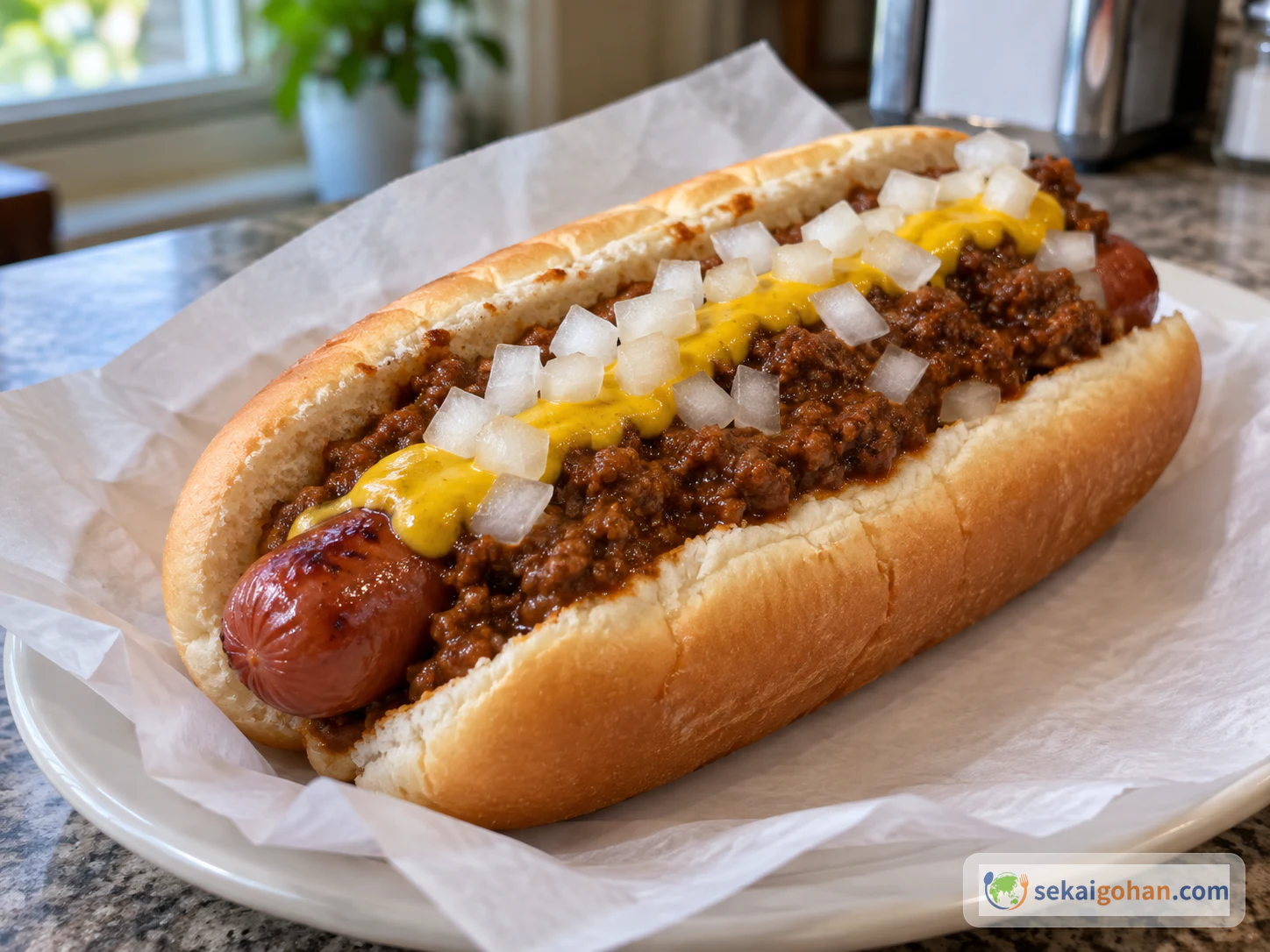
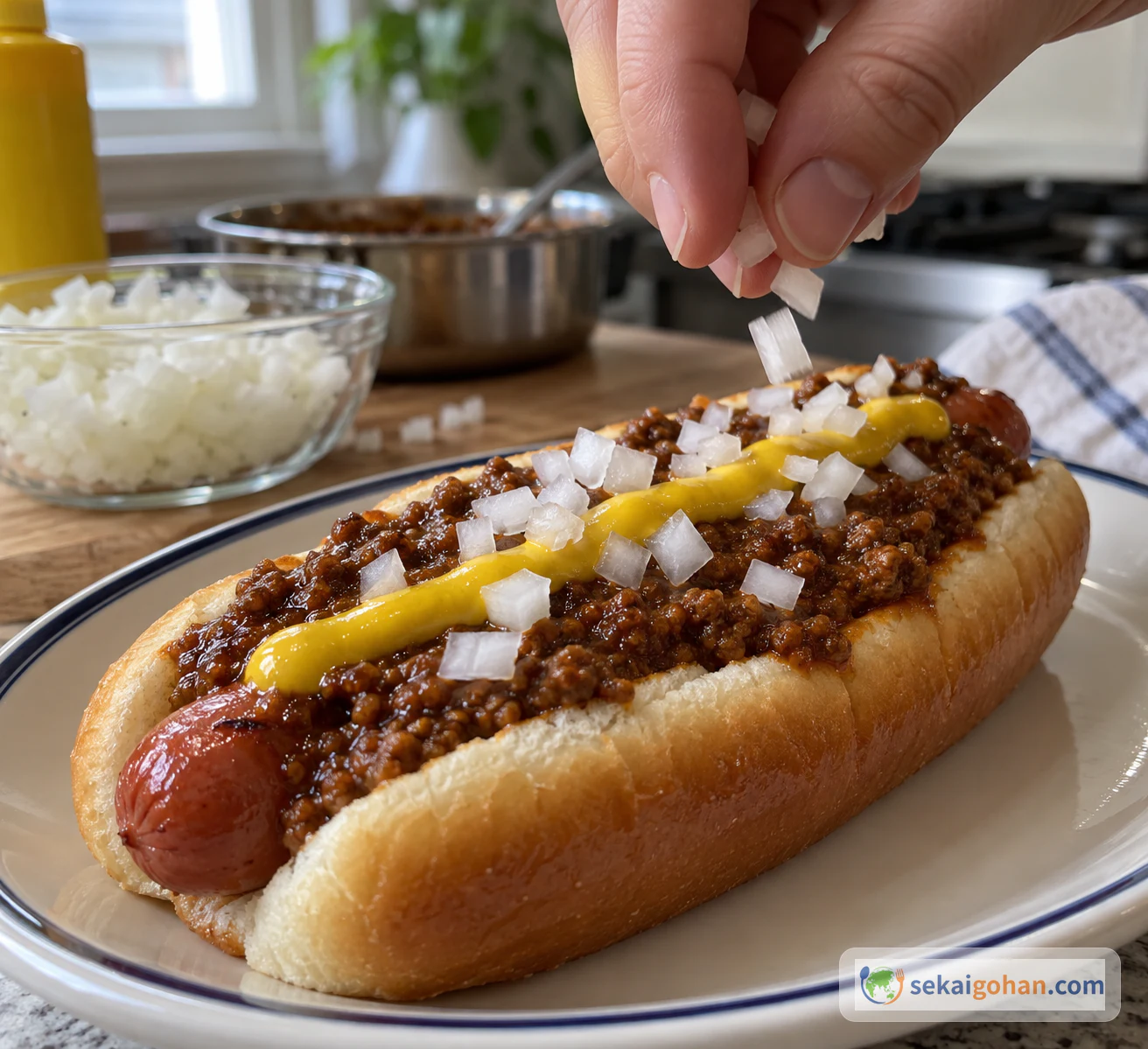
Picture a narrow diner counter in Detroit. A hot frankfurter sits in a soft bun under a reddish-brown meat sauce, a stripe of yellow mustard and a scatter of chopped white onion, and whatever spills over the edge of the paper plate gets chased down with a fork. This is the Detroit-style Coney dog. The beef sauce is fine and beanless, the hot dog has a snap, and the raw onion and mustard keep every bite sharp.
The Detroit Coney Dog and Its History
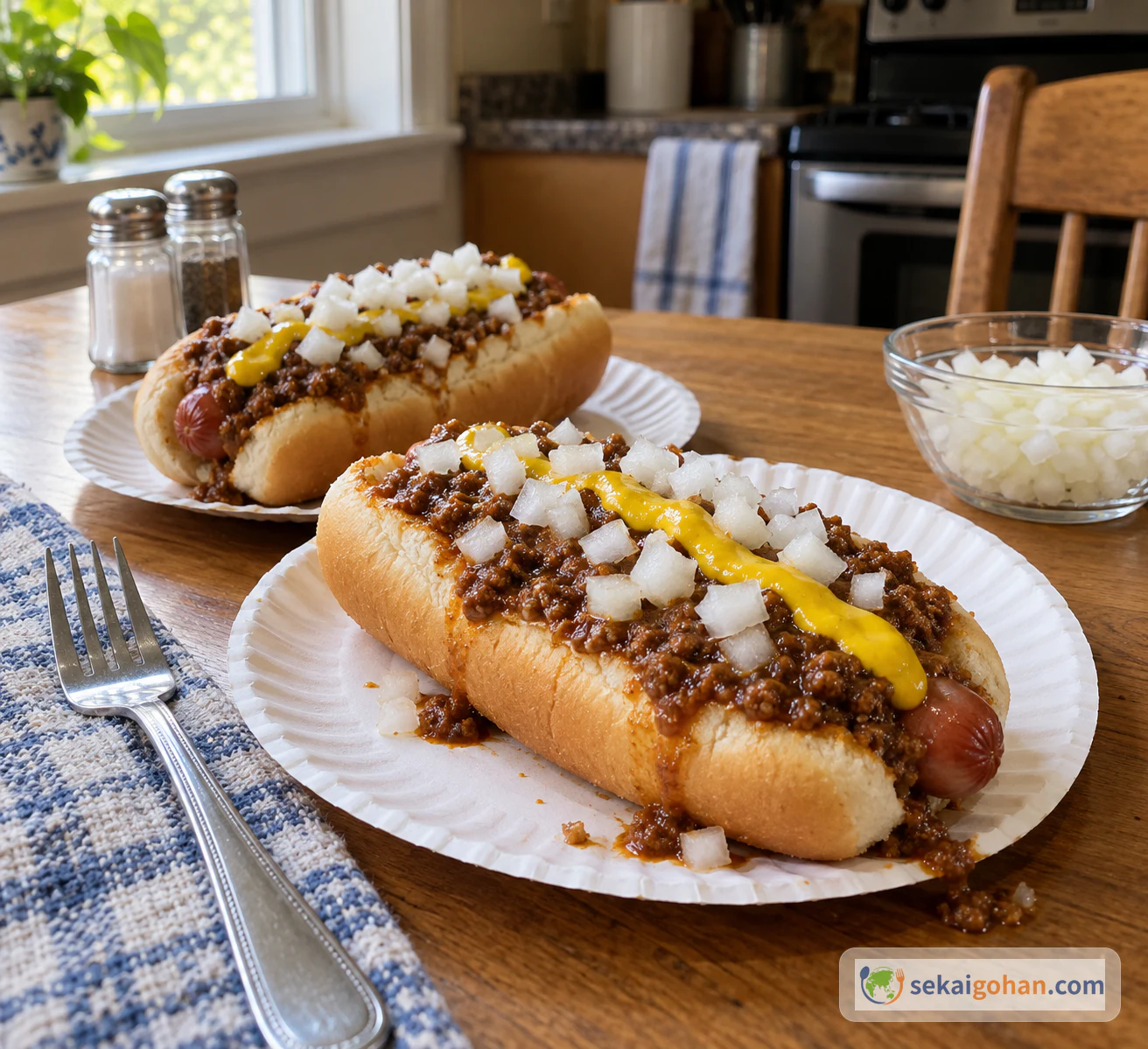
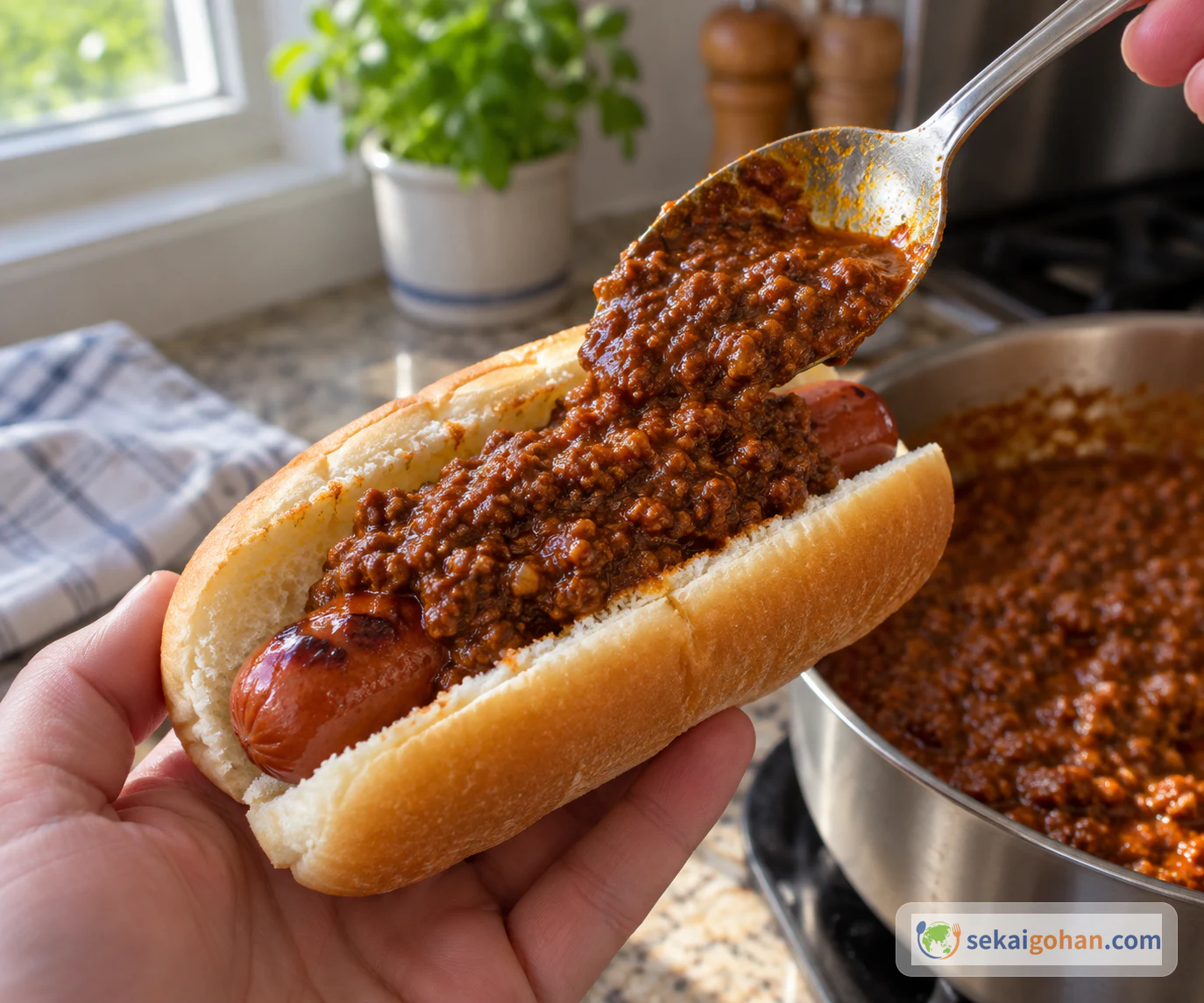
In Detroit, a Coney dog is a frankfurter in a steamed soft bun, topped with beanless meat chili, diced onion and yellow mustard. The name trips people up. In New York, a Coney Island hot dog is a plain affair from Brooklyn's Coney Island. In Michigan and elsewhere in the Midwest, a "Coney" means a hot dog with meat sauce, and the Detroit version didn't start in Brooklyn. Flint, also in Michigan, has its own drier, more crumbly sauce, and Cincinnati's chili is a different tradition again.
If you're coming from a bowl of chili con carne, it helps to think of Coney sauce as a topping for a sausage rather than a stew you'd eat with a spoon.
Greek and Macedonian roots
The Coney's spread through the Midwest is linked to Greek and Macedonian immigrants. The sauce resembles saltsa kima, a Greek meat sauce, though that's a comparison, not a proven origin. No single inventor is agreed on. Early claims include Greek immigrant Gust Keros and American Coney Island in Detroit, and Todoroff's in Jackson, Michigan, and none of them settles who was first.
A Detroit institution
The Coney grew up with the city's working life, a quick meal for auto-industry workers in restaurants where regulars and families kept coming back. American Coney Island and Lafayette Coney Island stand side by side, and regulars go back and forth between the two rivals for the late-night meals they remember there. Each restaurant keeps its sauce recipe secret, because in Detroit the sauce is a large part of a restaurant's identity.
Ingredients: Coney Sauce and Assembly for 4
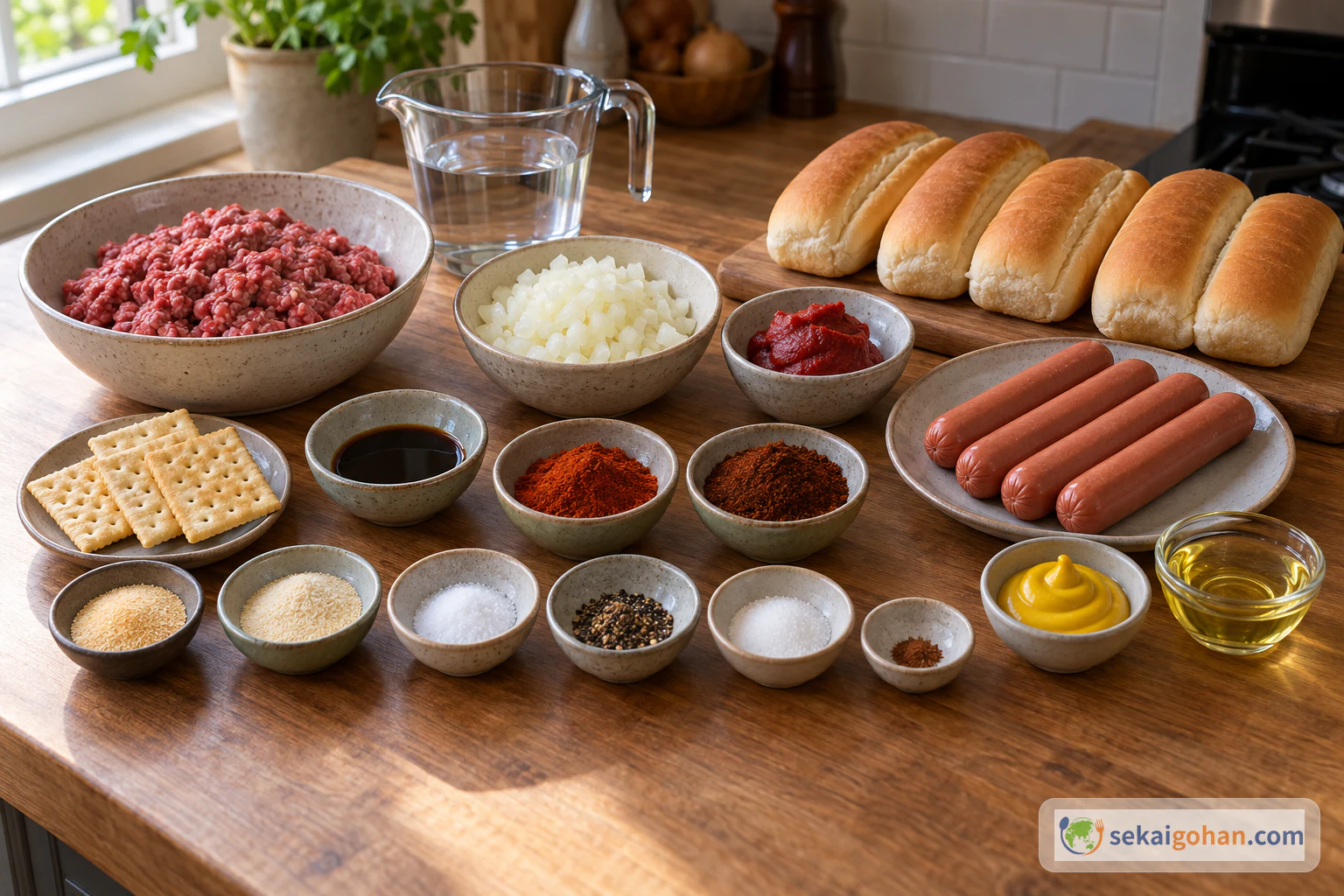
Cups here are about 1 cup (240 ml).
Check the labels on the hot dogs, buns, saltines and Worcestershire sauce for wheat, milk, egg, soy and other allergens. For a gluten-free version, choose suitable buns and crackers, and check the production-line statements too.
Choosing Ingredients for Coney Dogs
For the sauce
Ground beef. Ordinary ground beef is all you need. A beef-and-pork mix works too, but the pork adds sweetness and softens the beef flavor.
Saltines. The crackers give the sauce its body. Plain or unsalted crackers can stand in; saltiness varies by product, so adjust the salt at the end.
Tomato paste. Stick with paste. Ketchup makes the sauce sweeter and more sour.
Worcestershire sauce. Brands differ. Some, like Japanese-style versions, are sweeter and more vegetable-forward, so the same amount gives a different flavor.
Chili powder. American chili powder is a spice blend, not pure ground chile. If you use a hotter pure chile powder, start with less and adjust aroma and heat separately.
Granulated garlic and onion powder. The powders spread aroma evenly through the sauce. Fresh garlic or onion changes both the moisture and the flavor.
Allspice. If you don't have it, leave it out rather than swapping in cinnamon or another spice one-for-one.
For assembling
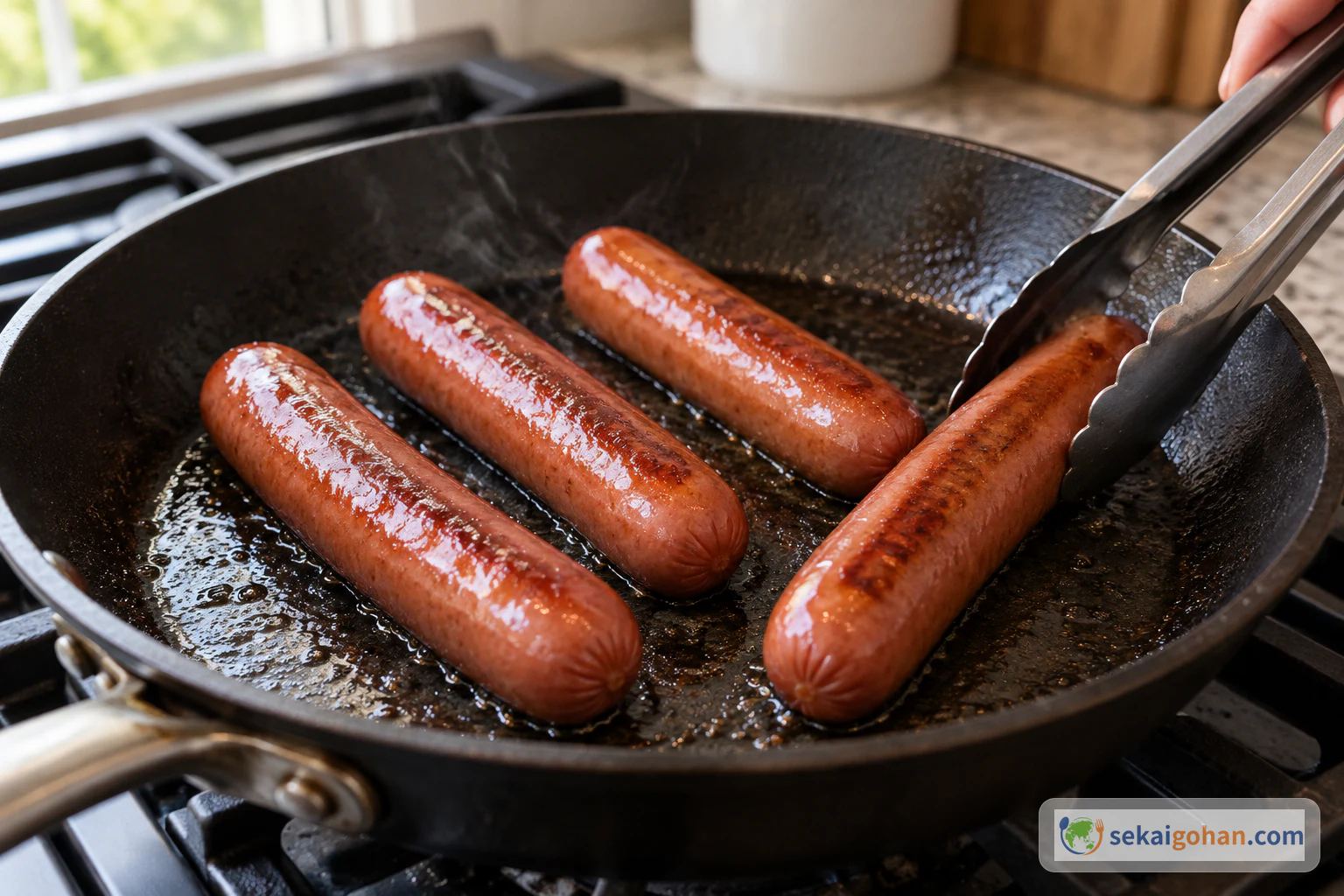
Hot dogs. Beef-and-pork hot dogs with natural casings are best. Coarse-ground sausages will do, but you won't get the snap of a natural casing or the flavor of Michigan-made hot dogs. Follow the package for whether the sausage is pre-cooked or raw and how to heat it.
Buns. Small soft rolls can substitute, though sweetness and crust thickness will differ.
Mustard. Look for American-style yellow mustard. Hot Japanese mustard (karashi) or wholegrain mustard pulls the dish away from its usual finish.
Raw onion. Chop it and use it soon. Keep the topping onion in its own container, away from anything that has touched raw meat.
Equipment
- Small saucepan (a heavy-bottomed one helps against scorching, but any small pan works if you stir along the bottom)
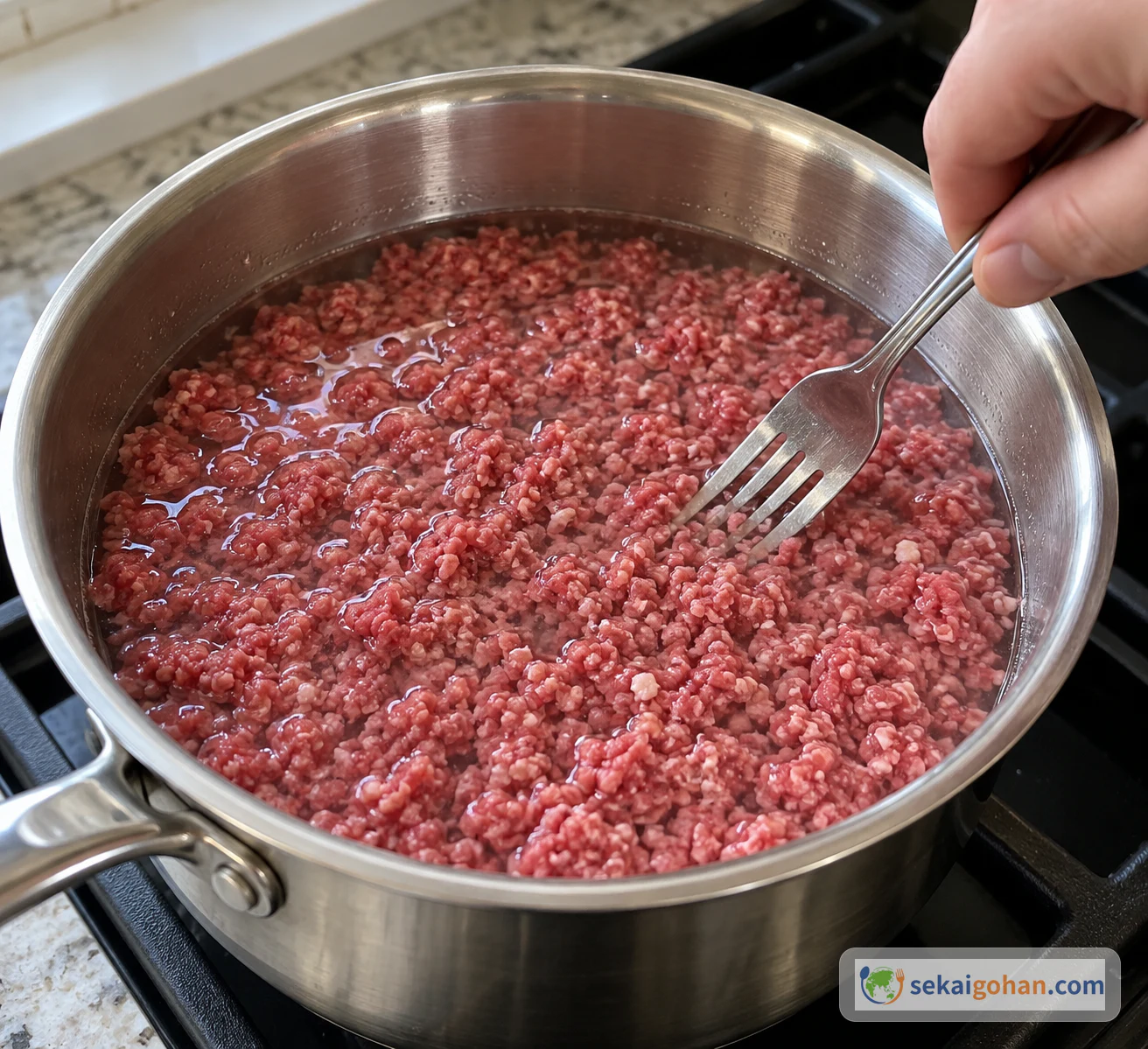
- Fork for breaking up the raw beef
- Wooden spoon or spatula for stirring the sauce
- Skillet for the hot dogs and buns
- Food thermometer for checking the sauce
- Separate small container for the raw topping onion
- Paper plates and forks for serving
The fork you use to break up the raw beef should not go on to touch the raw onion, the buns or the finished dogs. Wash it, or use separate utensils, and keep the topping onion in a separate container.
Method: From Fine Beef Sauce to the Finished Dog
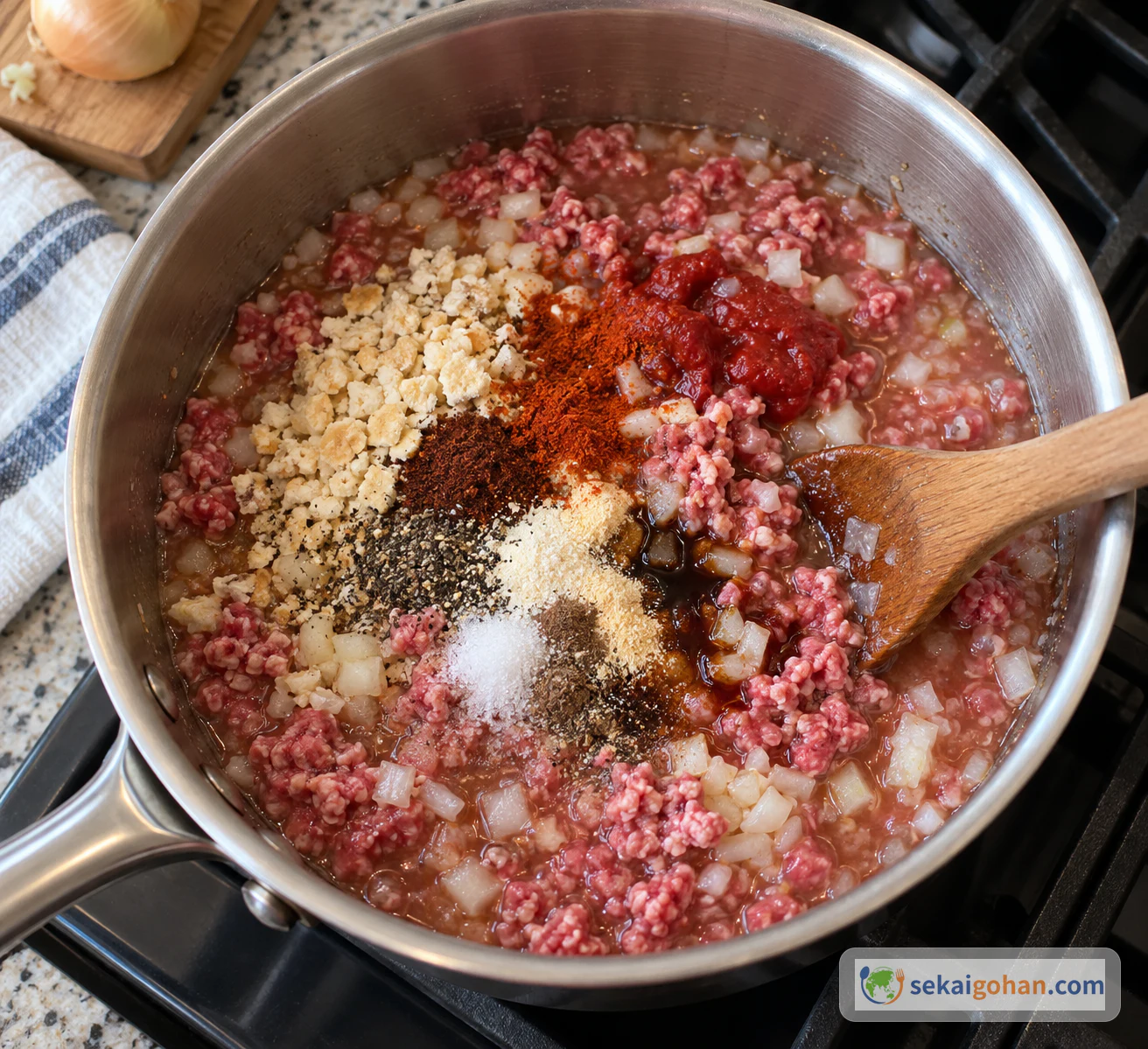
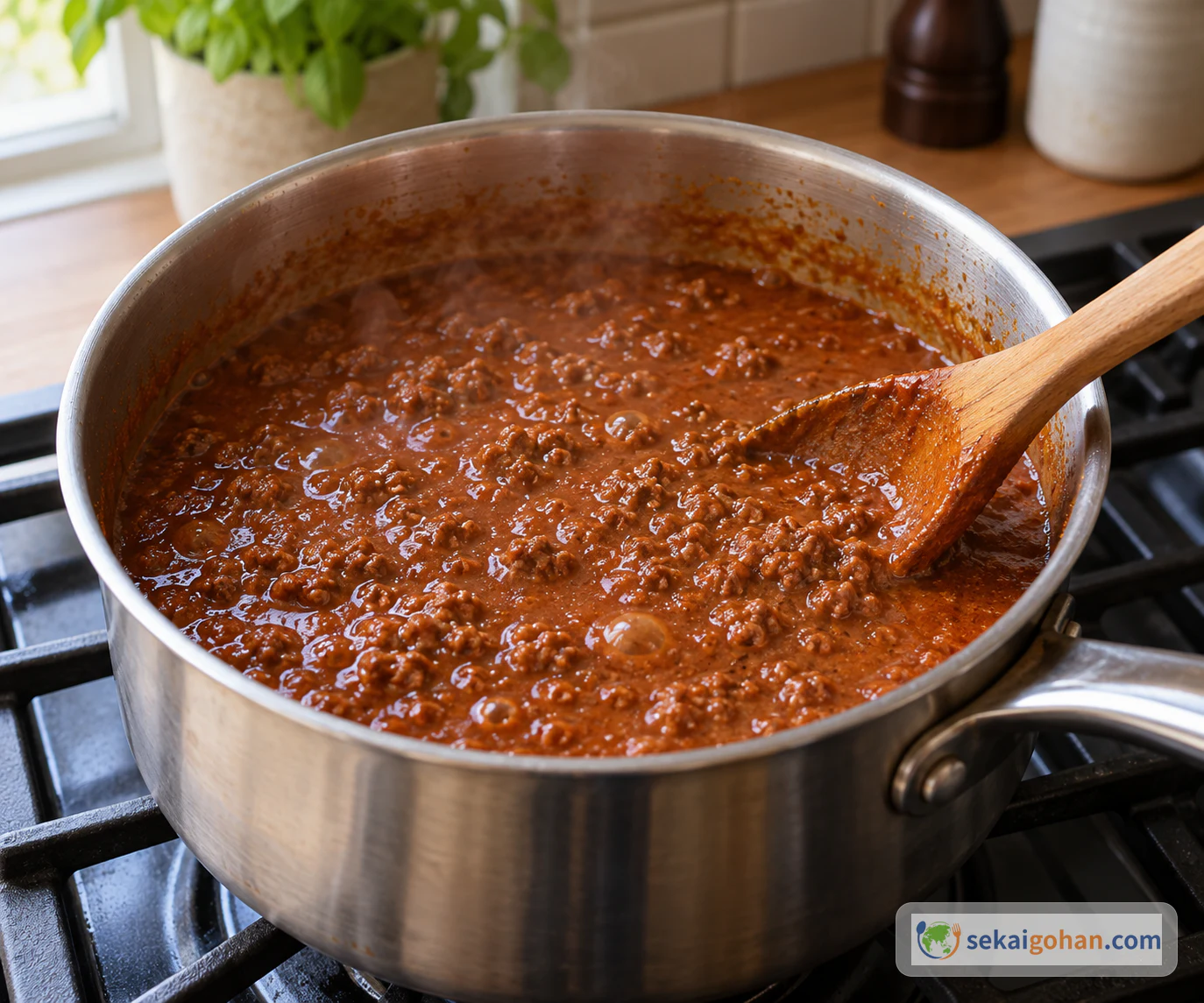
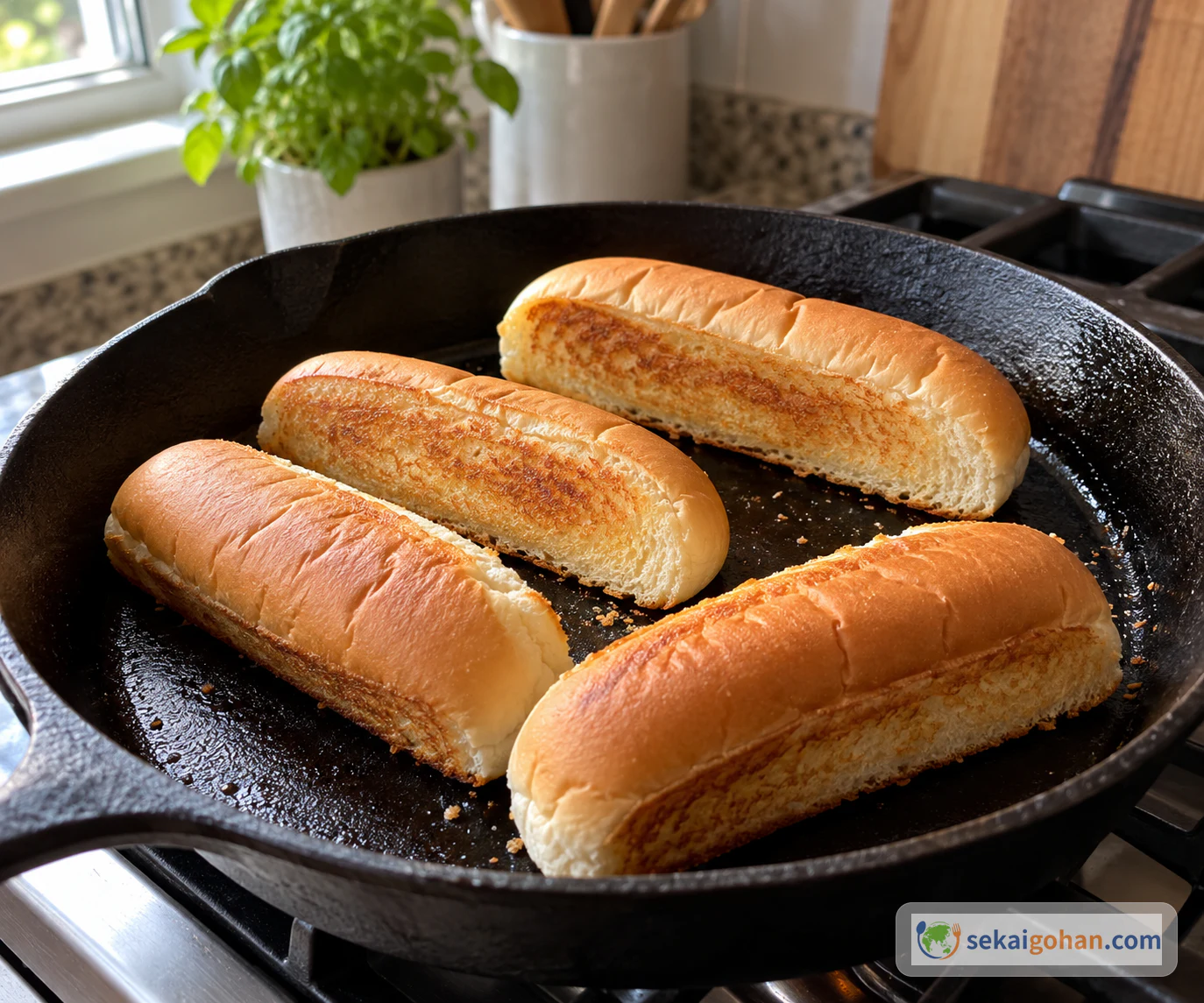
The sauce is made first: the beef goes into water and is broken up before any heat. While the sauce simmers, brown the hot dogs and toast the buns, then assemble while everything is warm.
Coney Sauce Troubleshooting
| Problem | Likely cause | What to do |
|---|---|---|
| The meat forms big crumbles | Not broken up enough in the water before heating | Break it up thoroughly in water before the heat goes on, and stir from the bottom a few times while it simmers |
| The sauce is soupy | Not cooked down enough | Keep it uncovered at a gentle boil and cook a few minutes more at a time |
| The sauce is stiff and packed | Cooked down too far | Add water back a little at a time so the sauce still holds together |
| The sauce scorches | High heat; bottom not stirred | Stir along the bottom regularly and lower the heat if it starts to stick |
| The bun falls apart | Untoasted bun, or left standing after topping | Lightly toast the cut side, and eat soon after assembling |
| The flavor feels flat | Mustard or raw onion left off | Add the yellow mustard and raw onion. For more heat, adjust in small amounts rather than piling on chile |
Storing Coney Sauce and Variations
The sauce keeps in the refrigerator for up to 3 days, or in the freezer for up to 1 month. Move it into a clean, shallow container soon after cooking and refrigerate it, and thaw frozen sauce in the refrigerator. Store the sauce, hot dogs and buns separately and assemble just before eating; finished dogs don't hold.
Reheat the sauce in a saucepan over medium-low heat. If the fat separates, stir in water 1 tbsp at a time until it comes back together. Heat it through with the same check as when cooking: 75°C (167°F) at the center for at least 1 minute. For the hot dogs, follow the package's heating instructions.
For a home table, a few changes shift the flavor in clear ways:
| Variation | What changes |
|---|---|
| All-beef hot dogs | Meatier sausage, with less of the sweetness pork brings |
| Beef-and-pork ground meat in the sauce | The beef richness becomes rounder and milder |
| Less chili powder | Lower heat, with paprika and allspice more to the front |
| Extra raw onion on the side | More raw sharpness and crunch; keep it in a separate container |
| Sauce served alongside | The bun stays drier, and everyone adds as much sauce as they like |
Making the sauce drier and more crumbly moves it toward the Flint style, a different regional type rather than an improvement on Detroit's. For more American regional dishes built around bread, try the po' boy.
Frequently Asked Questions
What's the difference between a Detroit Coney and a Flint Coney?
Detroit's sauce is looser and saucier, while Flint's is drier, with more meat texture. Restaurants differ even within each city.
Do Coney dogs have beans or ketchup?
Not in the Detroit style. The sauce is beanless, and the finish is yellow mustard and chopped onion. Ketchup isn't part of the standard topping.