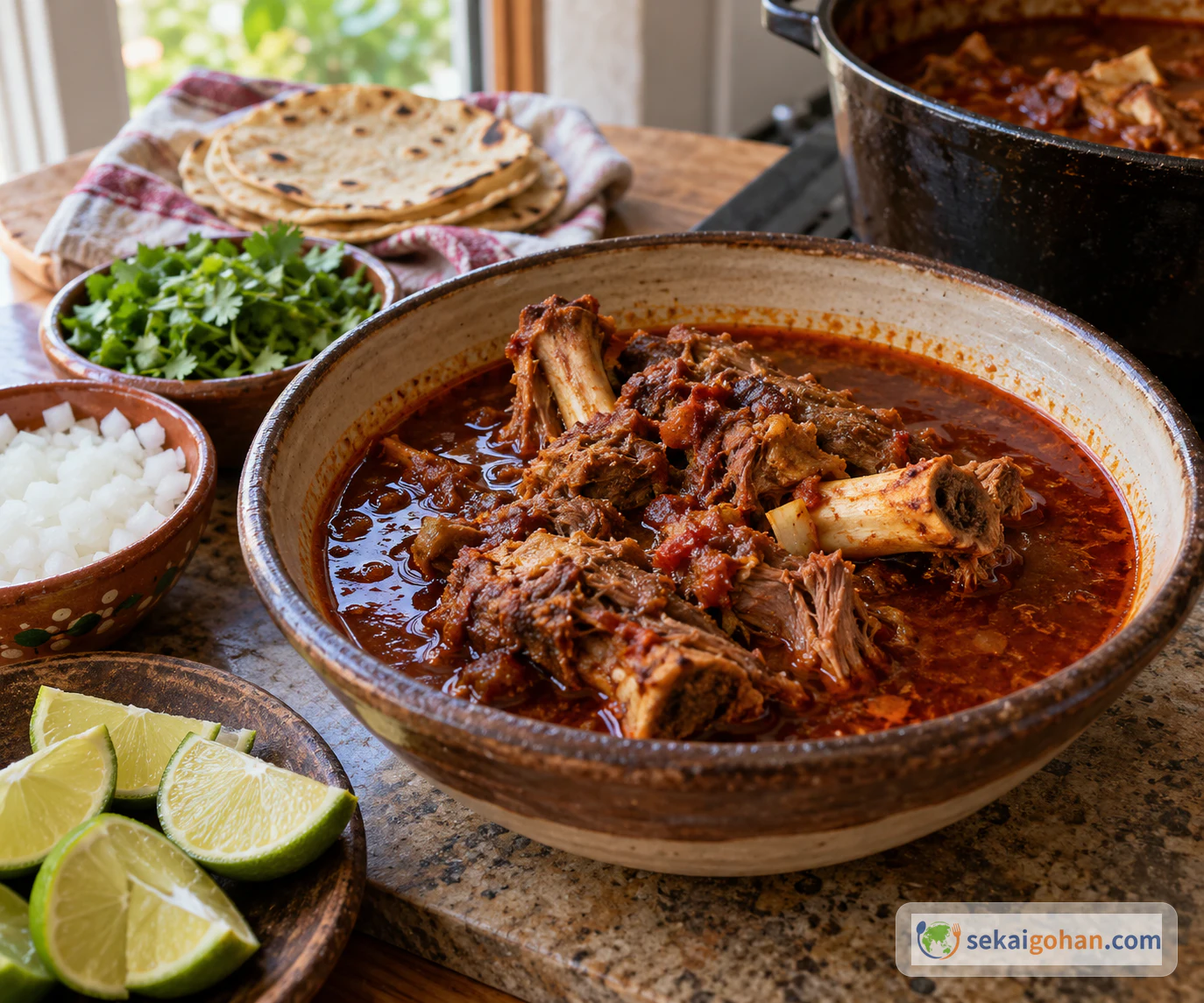
Chili con Carne: Texas-Style Beef Chili with Dried Chiles and Beans

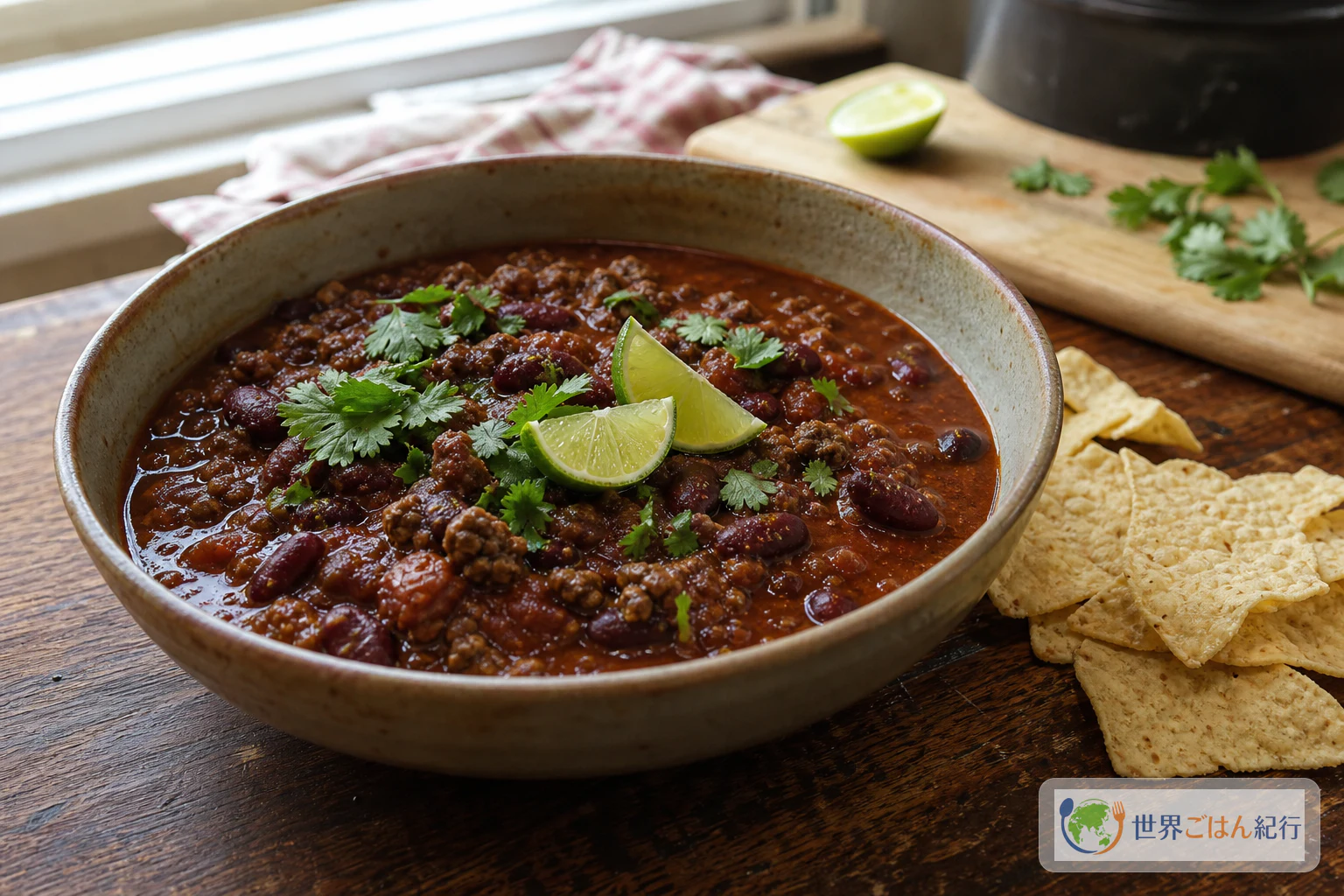
Chili con carne with ground beef and red kidney beans simmered in a red chile sauce
Prep
25 min
Cook
1 hr 30 min
Total
1 hr 55 min
Serves
4 servings
Level
Intermediate
Cuisine
Texan

How to make chili con carne from rehydrated dried chiles to the order of simmering ground beef and beans, with photos. Covers how it differs from beanless Texas red, substitutes for dried chiles, adjusting the heat, storage and reheating, and why smoked paprika and a heavy pot matter.

Cooking flow

Cooking steps

STEP11 / 6

Rehydrate the dried chiles

15 min

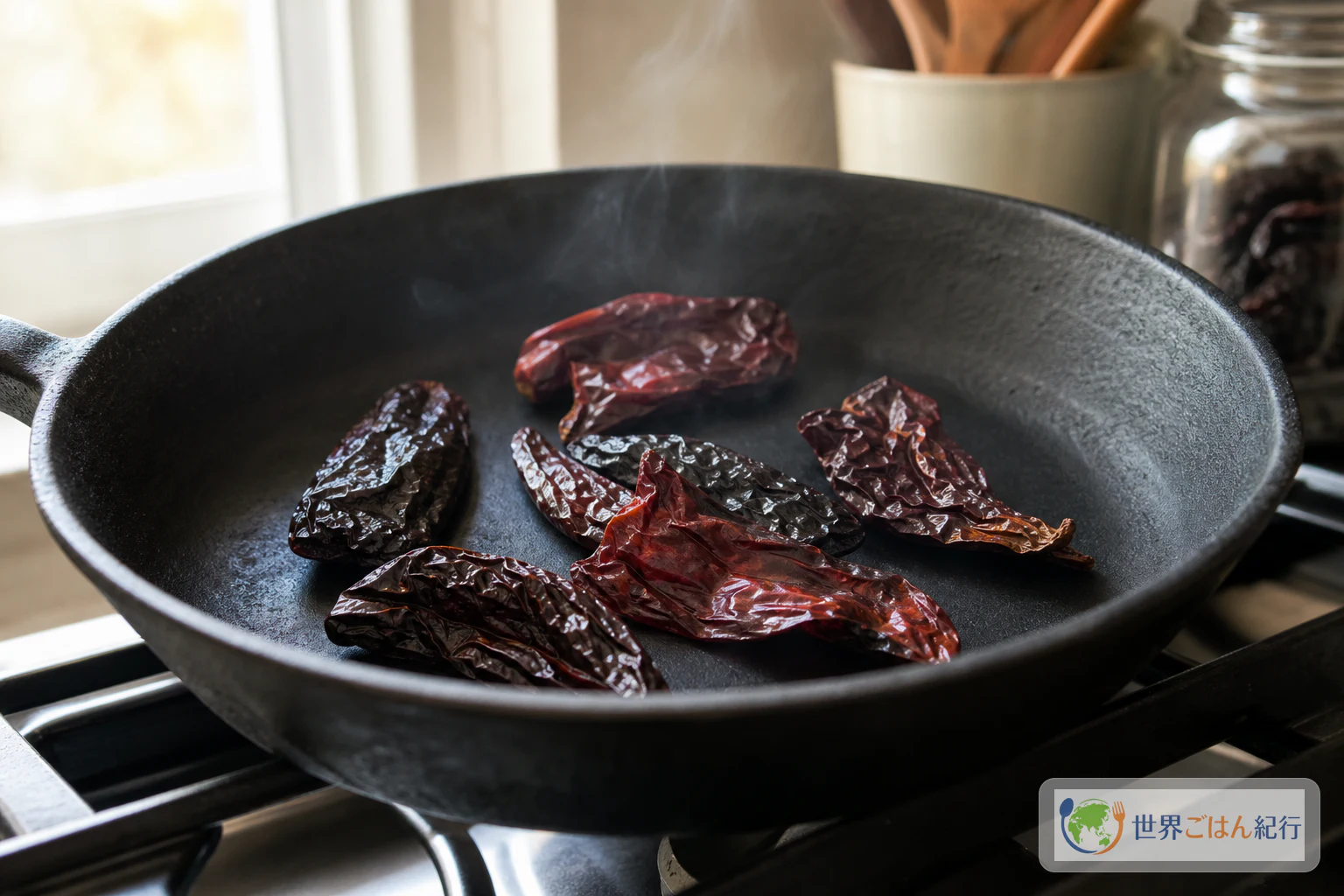
Seeded dried ancho and guajillo chiles soaking in hot water, their red color returning
Toast the dried chiles briefly without scorching, then soak in hot water until the skins turn supple

Remove the stems from the ancho and guajillo chiles, tear them lengthwise, and remove the seeds and white pith so you have strips about 0.5 inches (1 cm) wide. Set an empty heavy pot or skillet over medium-low heat and toast the chiles for 20–30 seconds per side. When the surface puffs slightly and gives off a raisin-like aroma, take them out right away. If you toast until black spots spread, bitterness remains.

Move the toasted chiles to a bowl and pour in 1 cup (250 ml) of just-boiled water. Press them down with a small plate so they don't float and leave for 15 minutes. They are ready when the skins turn supple and don't crack when you bend them with your fingers. Any tough parts left will leave small bits of skin in the next paste.

STEP22 / 6

Make the chile paste

5 min

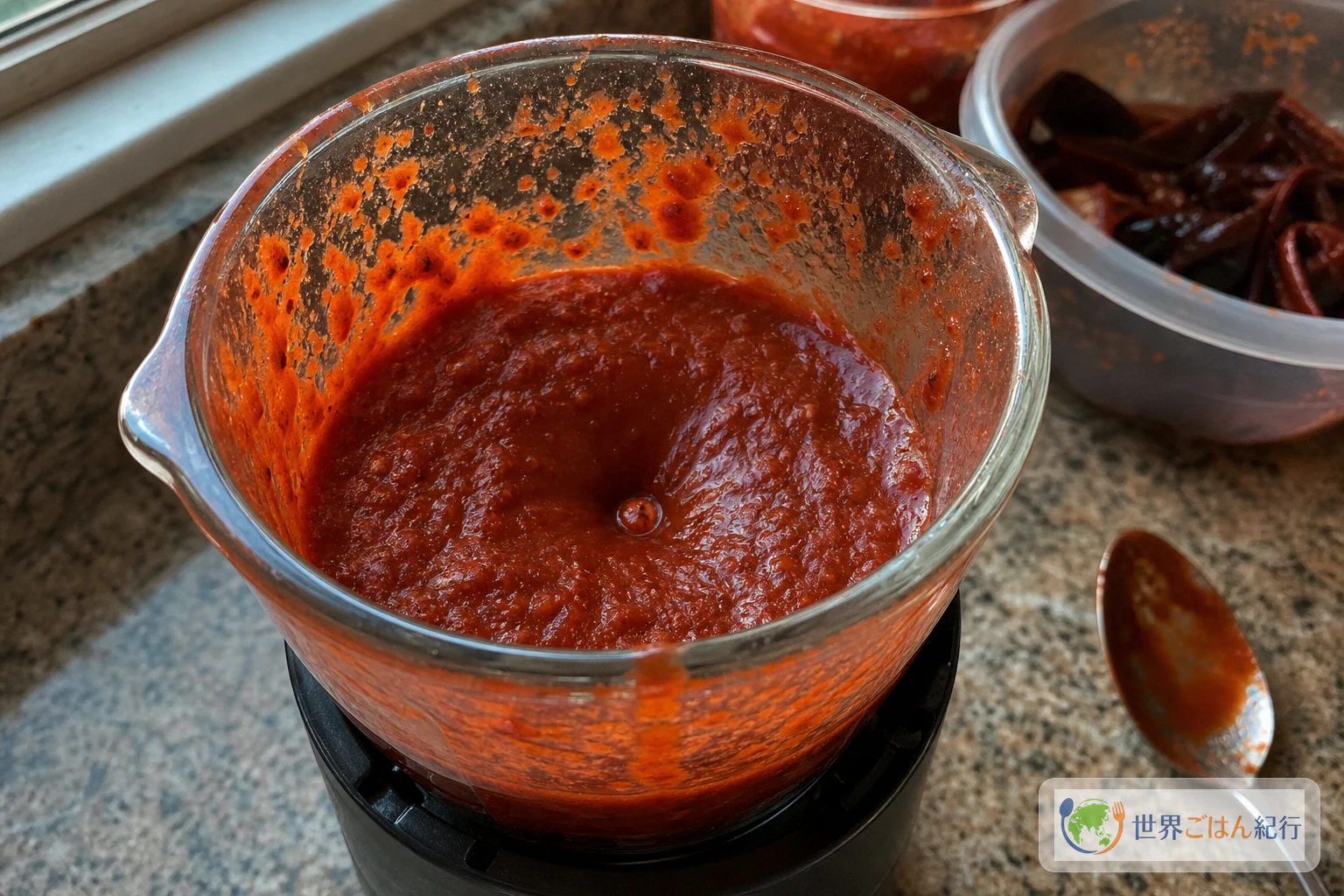
Soaked dried chiles and garlic blended into a smooth reddish-brown paste
The paste should be reddish brown with few lumps and fall slowly from a spoon

Lift out the soaked chiles and blend them with 1 clove of garlic and ½ cup (100 ml) of the liquid from the canned tomatoes, using a stick blender or blender, for 60–90 seconds. It is enough when the paste is an even reddish brown and falls slowly from a spoon. If the blades spin without catching, add the soaking liquid 2 tbsp (30 ml) at a time.

If you have no blender, chop the chiles finely with a knife and grate in the garlic. This leaves some texture, so the finished sauce is a little more rustic. If you want less heat, don't taste the paste again after soaking; add it to the next pot a little at a time instead. Wash your hands after working, and keep raw chile paste away from your eyes and mouth.

STEP33 / 6

Sear the beef

12 min

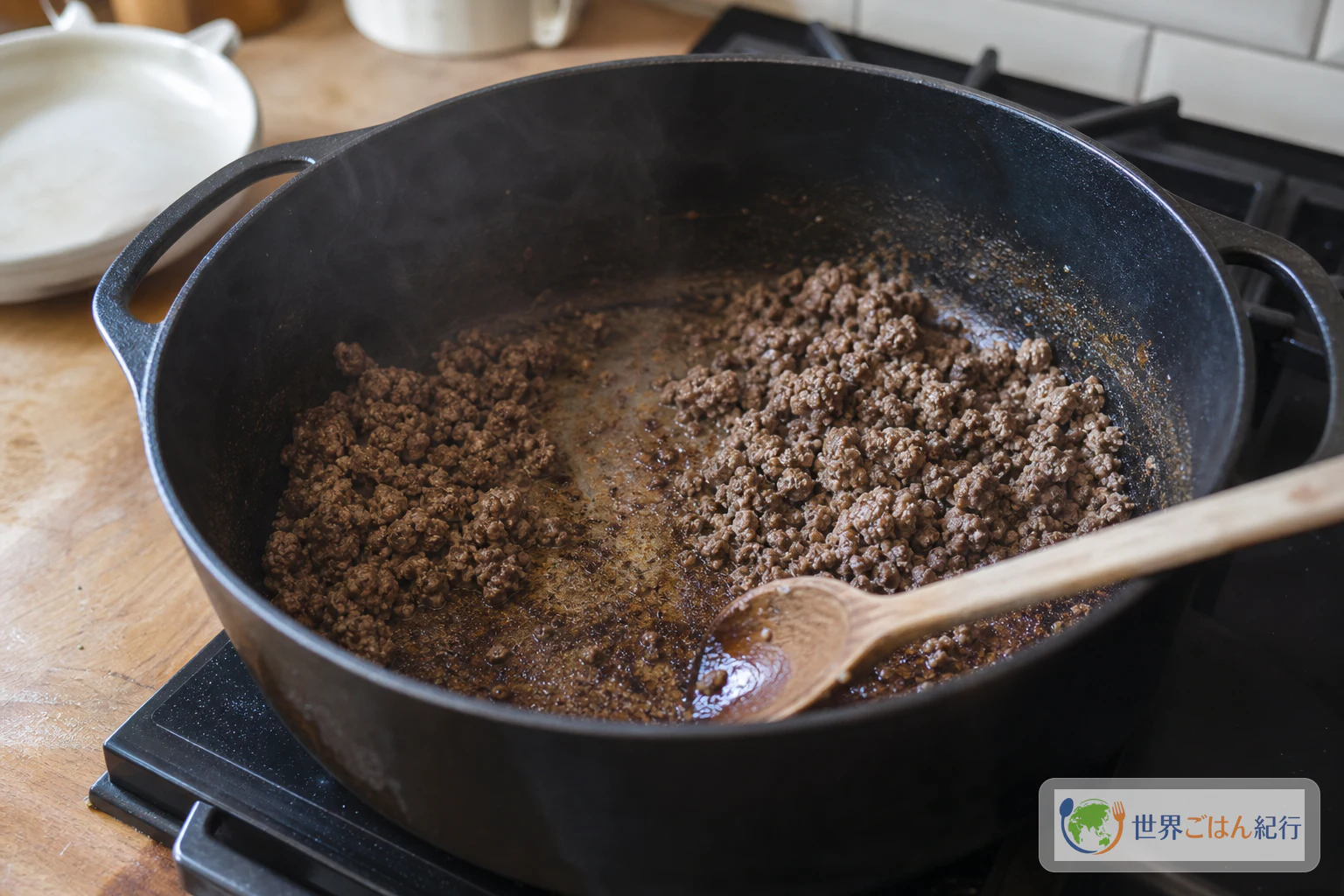
Ground beef spread in a heavy pot, building a brown crust and flavor on the bottom of the pot
Brown the beef in two batches, leaving brown flavor on the bottom of the pot

Put the vegetable oil in a heavy pot and heat over medium-high for 1 minute. Spread the ground beef in two batches of 9 oz (250 g) and leave it untouched for the first 2 minutes. When the meat releases liquid and the sizzle quiets, turn it in large pieces with a wooden spoon and cook 3–4 minutes more. When the surface is browned and no red remains, move it to a bowl.

Adding all the meat at once drops the pot's temperature and the meat steams. Brown bits left on the bottom of the pot mean success. If black, burnt bits increase, scoop out the meat, turn off the heat, let the pot cool a little, and scrape the bottom with 1 tbsp of water. Don't stir in the black burnt bits; discard that water and start again.

STEP44 / 6

Simmer the aromatics and chiles

35 min

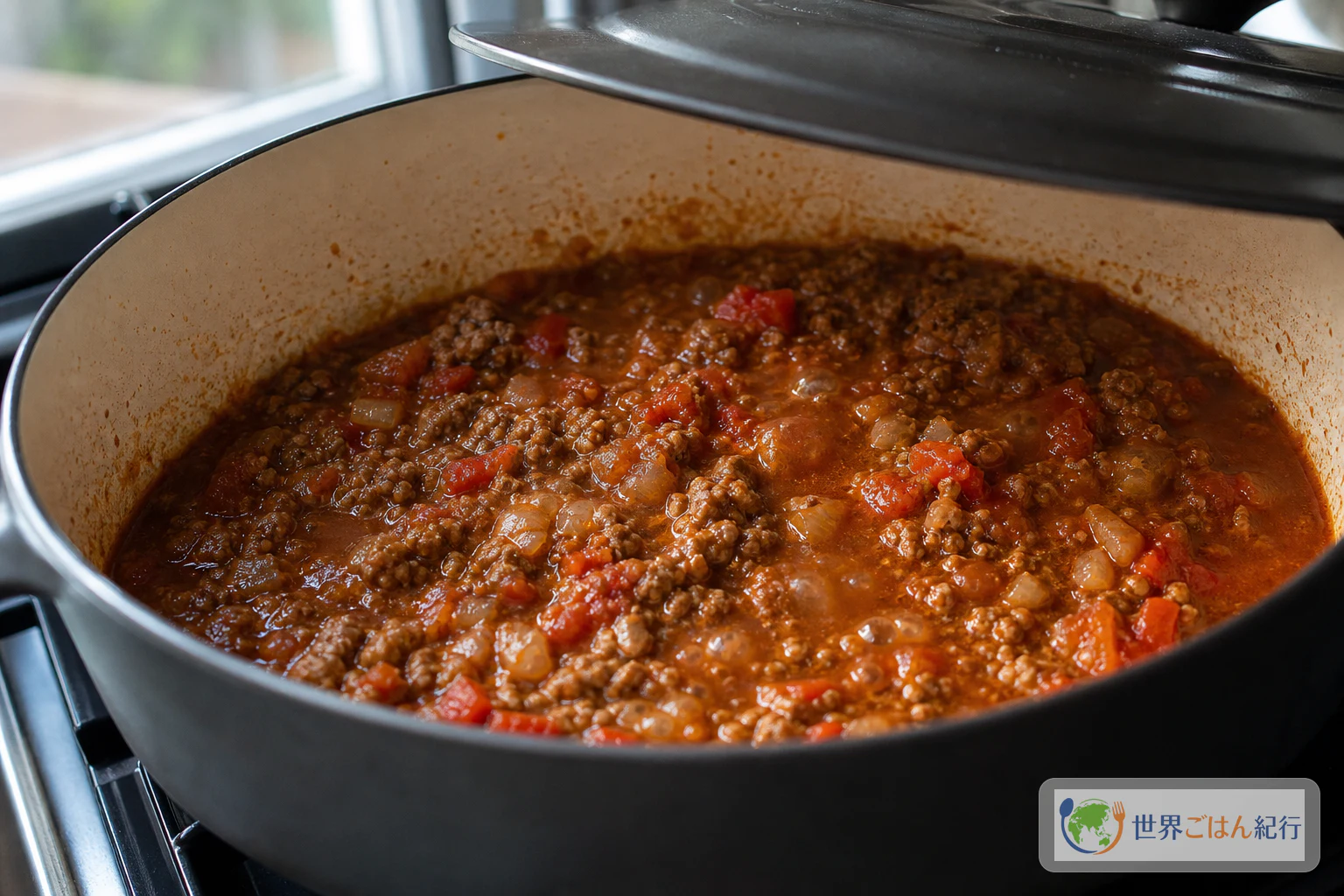
A pot of beef, tomatoes, chile paste and aromatics simmering quietly in red sauce
Keep a low heat and small bubbles to move the aroma of chiles and beef into the sauce

Return the heat to medium, add the onion and red bell pepper and cook for 5 minutes. When the edges of the onion turn translucent and the corners start to brown, add the remaining garlic and cook for 30 seconds. Add the cumin, smoked paprika, oregano and cocoa and stir for only 20 seconds. Before the spices blacken on the bottom of the pot, add the chile paste and let it blend in for 30 seconds.

Add the browned beef, the whole tomatoes and the water, scraping the bottom of the pot with the wooden spoon. Bring to a boil over medium-high heat, and when bubbles cover the surface, reduce to low. With the lid slightly ajar, simmer for 30 minutes, keeping the heat at a point where a small bubble rises at the edge of the pot once every 2–3 seconds. By the 25-minute mark, a line traced across the bottom should stay for a moment and the sauce should flow back right away. If the liquid drops suddenly during cooking, add water 2 tbsp (30 ml) at a time.

STEP55 / 6

Add the beans and bring it together

20 min

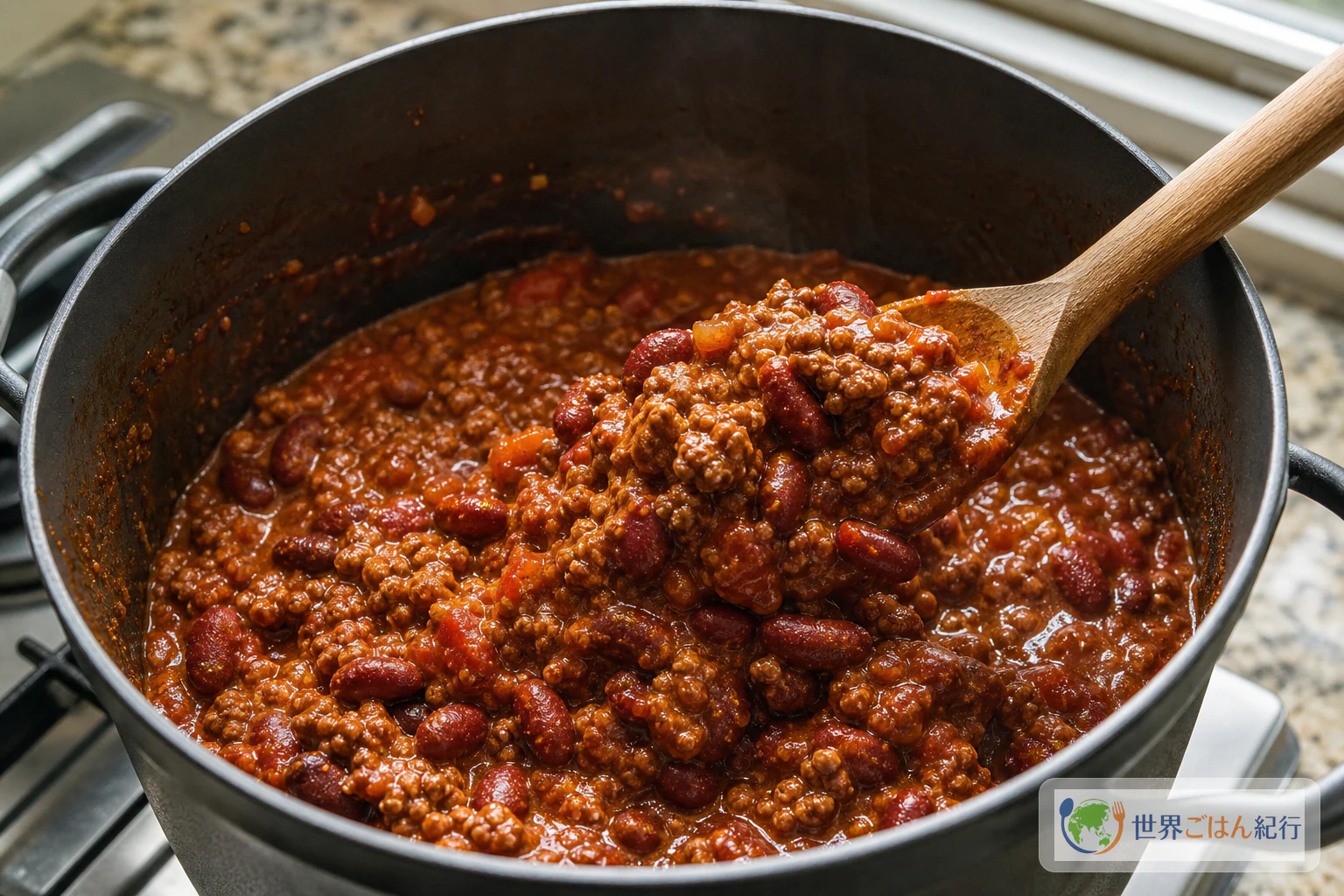
Red kidney beans added to the pot of red chile sauce and simmered gently, keeping their shape
Added late, the beans keep their skins intact and hold their shape while absorbing the beef and chile sauce

Thirty minutes after the simmer began, add the red kidney beans, drained and rinsed, which can go in as they are without breaking apart. Turn from the bottom once, in a large motion, and simmer over low heat for 15–20 minutes. If beans about 0.5 inches (1.5 cm) across keep their red skins and only the inside mashes soft when pressed with a spoon, the timing of adding them was right.

If beans go in from the start, the skins split during the long simmer and the sauce turns heavy and cloudy. If the sauce is still watery, remove the lid and reduce over low heat for 5 minutes. Aim for a consistency where a line drawn across the bottom with a wooden spoon stays for about 2 seconds and the contents slowly flow back.

STEP66 / 6

Finish with body and acidity

8 min

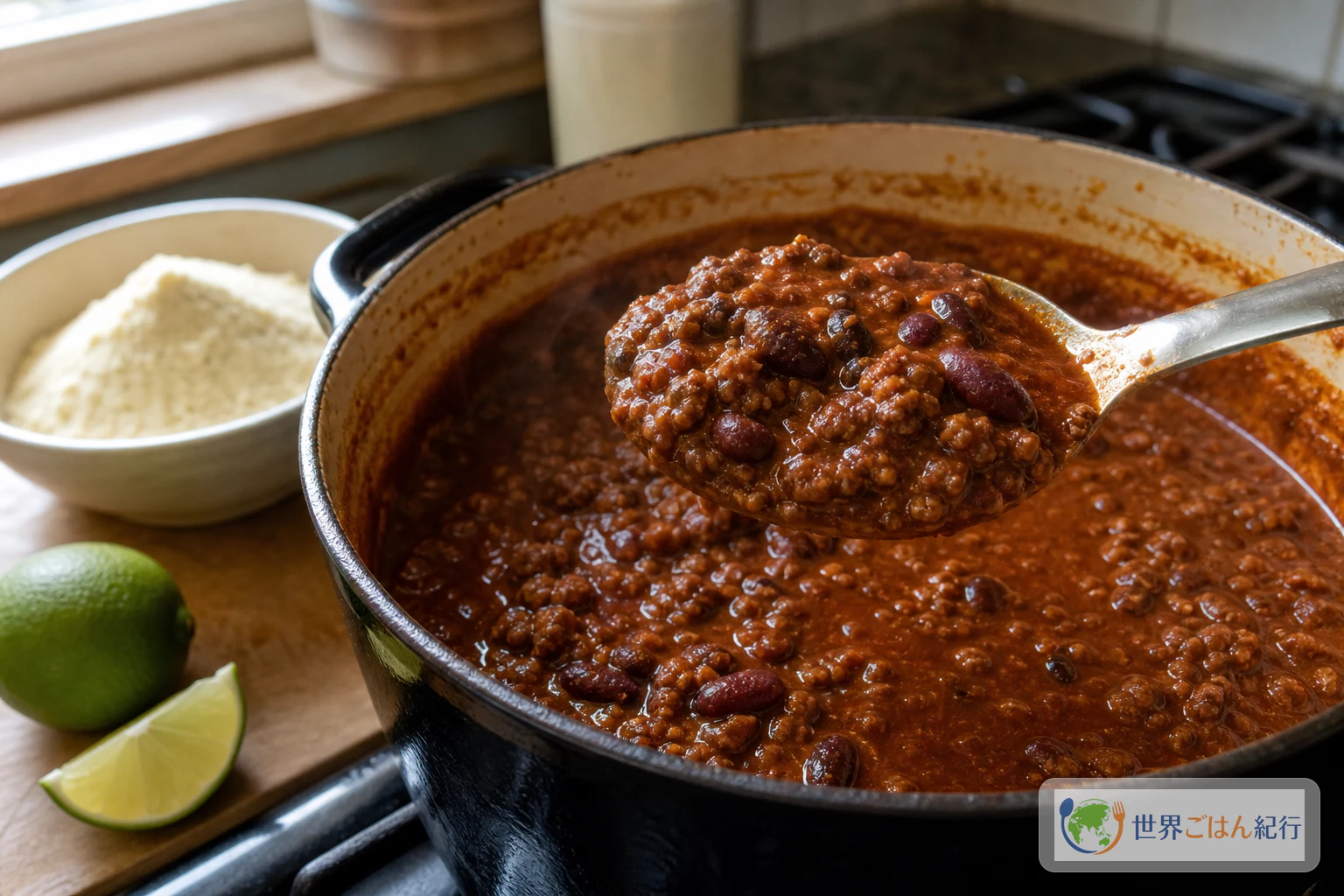
Thickened chili con carne served in a bowl with lime and cilantro
When the sauce coats the back of a spoon and the acidity has tightened the flavor, it is ready to serve

Dissolve the masa harina in 2 tbsp (30 ml) of water and add it to the pot in a thin stream. Stir over low heat for 5 minutes, until the floury taste is gone and the sauce thinly coats the back of a spoon. Add the salt, black pepper and cider vinegar, stir for 30 seconds and turn off the heat. Adding acidity last tightens the heaviness of beans and beef and makes the heat easier to read.

Check that the thickest part of the ground beef has come up to temperature, aiming for a core temperature of 75°C (167°F) held for at least 1 minute. If you can't measure the temperature, don't judge by the absence of red alone: after the whole pot has come to a full boil, simmer over low heat and break open a thick lump to make sure it is hot through to the center. Finish with a squeeze of lime and serve with cilantro and tortilla chips.

0 / 0
Ingredients

Ingredients

1 / 1

Ingredients

Ingredient Amount Substitutes & notes
Ground beef 1 lb (500 g) Very lean beef makes a thin-tasting stew, so add 1 tsp (5 ml) of oil if using lean meat only
Onion 1 (7 oz/200 g) Cut into 0.25 inch (7 mm) dice
Garlic 2 cloves (10 g) 1 clove goes into the chile paste, 1 into the pot
Red bell pepper 1 (5.5 oz/150 g) 0.25 inch (7 mm) dice. If you have none, add 1.75 oz (50 g) more onion
Canned red kidney beans 8.5 oz (240 g) net Drain the canning liquid and rinse once with water
Whole canned tomatoes 14 oz (400 g) Diced tomatoes also work
Dried ancho chiles 20 g If unavailable, use 5 g dried red chiles plus 10 g paprika
Dried guajillo chiles 15 g If unavailable, increase the dried red chiles to a total of 8 g
Smoked paprika 2 tsp (4 g) Adds the smoky note. Regular paprika also works
Ground cumin 2 tsp (4 g) Without ground cumin, lightly crush 6 g cumin seeds
Dried oregano 1 tsp (1 g) Mexican oregano or ordinary oregano
Unsweetened cocoa powder 1 tsp (2 g) Adds depth, not bitterness. Optional
Masa harina 1 tbsp (15 g) Cornmeal or 10 g all-purpose flour also works
Vegetable oil 1 tbsp (15 ml) Cut to 1 tsp (5 ml) if the beef is fatty
Water or unsalted bouillon 1¼ cups (300 ml) If the bouillon is salted, use less salt at the end
Salt 7 g Adjust at the end, taking the salt in the beans and bouillon into account
Apple cider vinegar 1 tbsp (15 ml) Lime juice also works
Black pepper 1 g Coarsely ground
Lime 1 Cut into wedges and serve at the table
Cilantro 10 g Chopped parsley if you don't like cilantro
Tortilla chips 2.75 oz (80 g) Tortillas or toasted bread also work
0 / 0

Set a dried chile in an empty pot some evening, and within a few dozen seconds a sweet, smoky aroma rises. The red skin puffs up, and the scent on the tip of your wooden spoon turns ordinary ground beef and canned tomatoes into a different dish. Chili con carne means "chili with meat." Its roots are in Texas, where the oldest versions use neither beans nor tomatoes. Many home cooks know it as a family dish with red kidney beans and tomatoes. This recipe sits between the two. It keeps the beef and dried chiles of Texas chili and adds beans so it's easy to put on the table. Three decisions shape the flavor: brown the meat, don't scorch the chiles, and add the beans late.

Chili con Carne in Texas and at Home

Texas red and bean chili

The first question about Texas chili is always whether beans belong in it. Old Texas-style chili con carne is built on beef and dried chiles alone. Texas red, made with competitions and tradition in mind, and a chili that stretches to feed a family carry the same name but serve different purposes. Beans were used to stretch the pot when meat was expensive or scarce, so the bean version grew out of household needs.

A classic Texas bowl is made with dried ancho chiles and eaten with cornbread and tortillas. Texas made chili its official state dish in 1977, and the dish still stirs up pride and argument.

The Chili Queens of San Antonio

From the 1870s to the 1930s, women known as the Chili Queens sold chili in the plazas of San Antonio. The aroma from their open-air pots showed travelers where to buy a bowl, and the plazas filled with conversation and music as well as meals. As railroads and tourism spread, San Antonio's chili became known far from home.
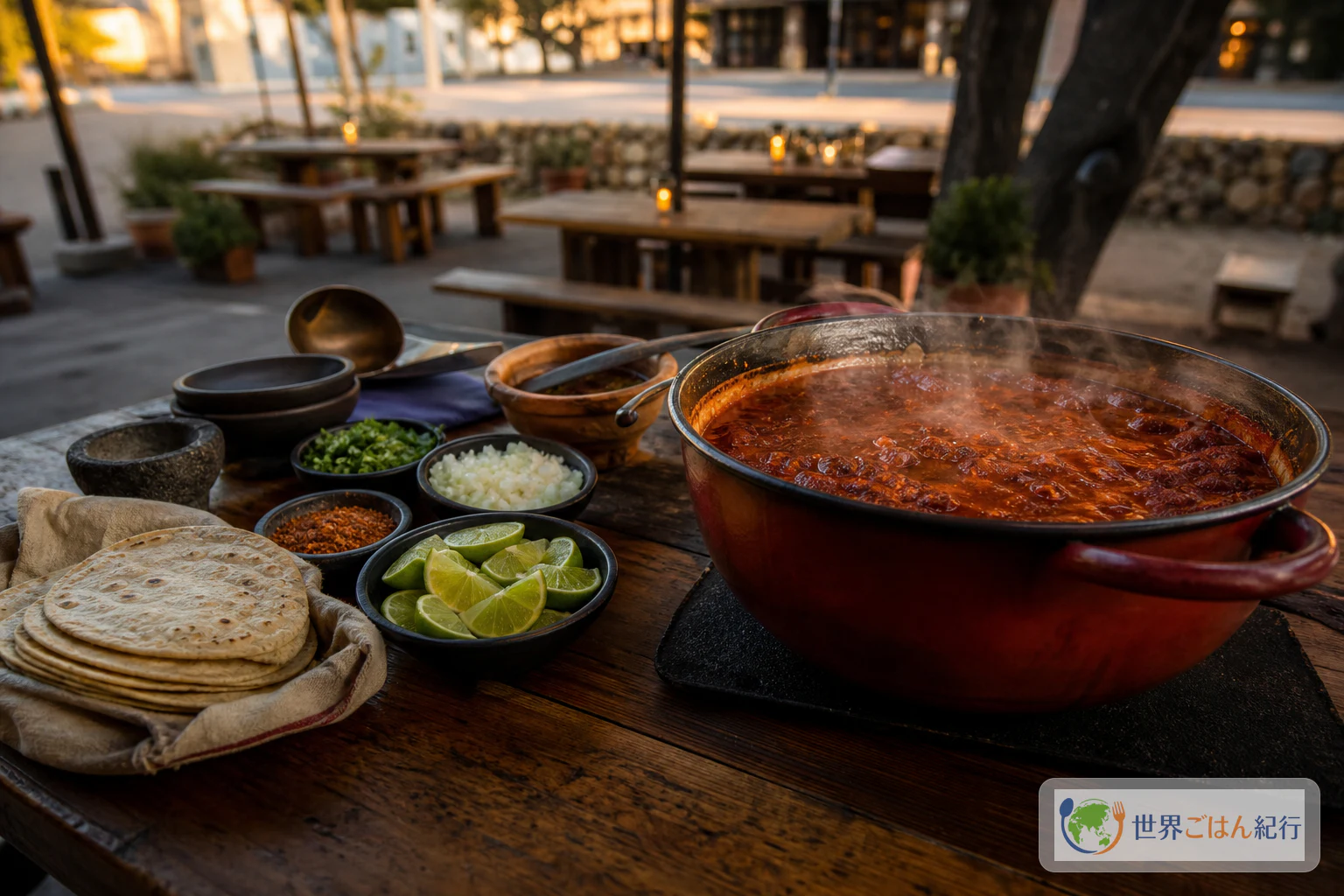
An outdoor table recalling a San Antonio plaza at night, with a pot of red stew and tortillas at the center of the food culture
A table scene for thinking about chili con carne not only inside the pot but through the plaza and the people passing through

What matters in a home pot

At home, beans matter less than the chiles. Rehydrate the dried chiles and blend them into a paste instead of just frying them. With the sweet aroma of the chiles, well-browned beef and a little acidity at the end, the pot leans toward Texas even with red kidney beans in it. Add more beans and keep pouring in water, though, and the aroma fades. Here the beans go in only after the meat and chile base is built. That way they keep their shape and the sauce thickens just a little.

Allergy and food-safety notes

This recipe uses beef, beans and tomatoes. If you add store-bought bouillon, chili sauce or hot sauce, check the labels for dairy, soy, wheat and shellfish or fish. Cook ground beef thoroughly until the thickest part reaches a core temperature of 75°C (167°F) and holds there for at least 1 minute. Wash utensils that touched raw meat separately from those used for serving.

Ingredients (serves 4)
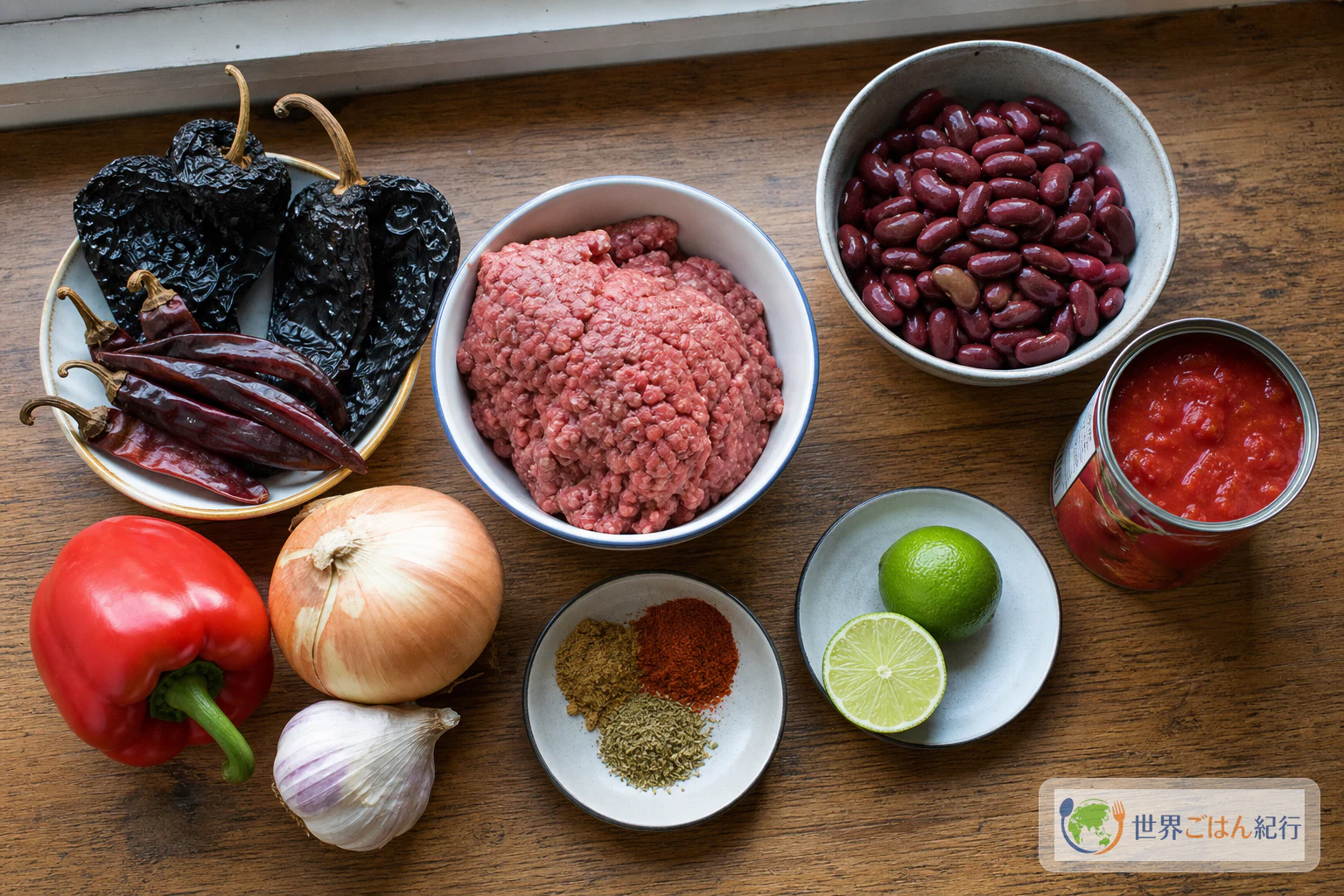
Dried ancho and guajillo chiles, ground beef, red kidney beans, canned tomatoes and smoked paprika laid out as the ingredients for chili con carne
Built around dried chiles and beans, with the rest from an ordinary grocery store

Dried anchos are large, dark red-black and smell of sweet raisins. Guajillos are long, slim and red, with a slightly tart aroma. If you can't find both, you can use dried red chiles and paprika, but the heat tends to push to the front. Removing the seeds and pith and keeping the smoked paprika helps hold the dish's direction.

Choosing Dried Chiles and Equipment for Chili con Carne

Dried chiles are worth hunting down because they add layers of aroma. Paprika from the pantry saves about 30 minutes and still works on a weeknight. To get the soaked chiles into a smooth paste, a stick blender or small food processor helps, since it makes them uniform in 60–90 seconds. It's worth buying only if you'll use it in everyday cooking too. If you don't mind a paste with some texture left, chop the chiles with a knife.

Method

Chili con carne is shaped less by making it hotter than by layering aroma in the right order. Don't scorch the dried chiles, set the meat against the bottom of the pot, and add the beans late.

Chili con Carne Cooking Tips and Fixes
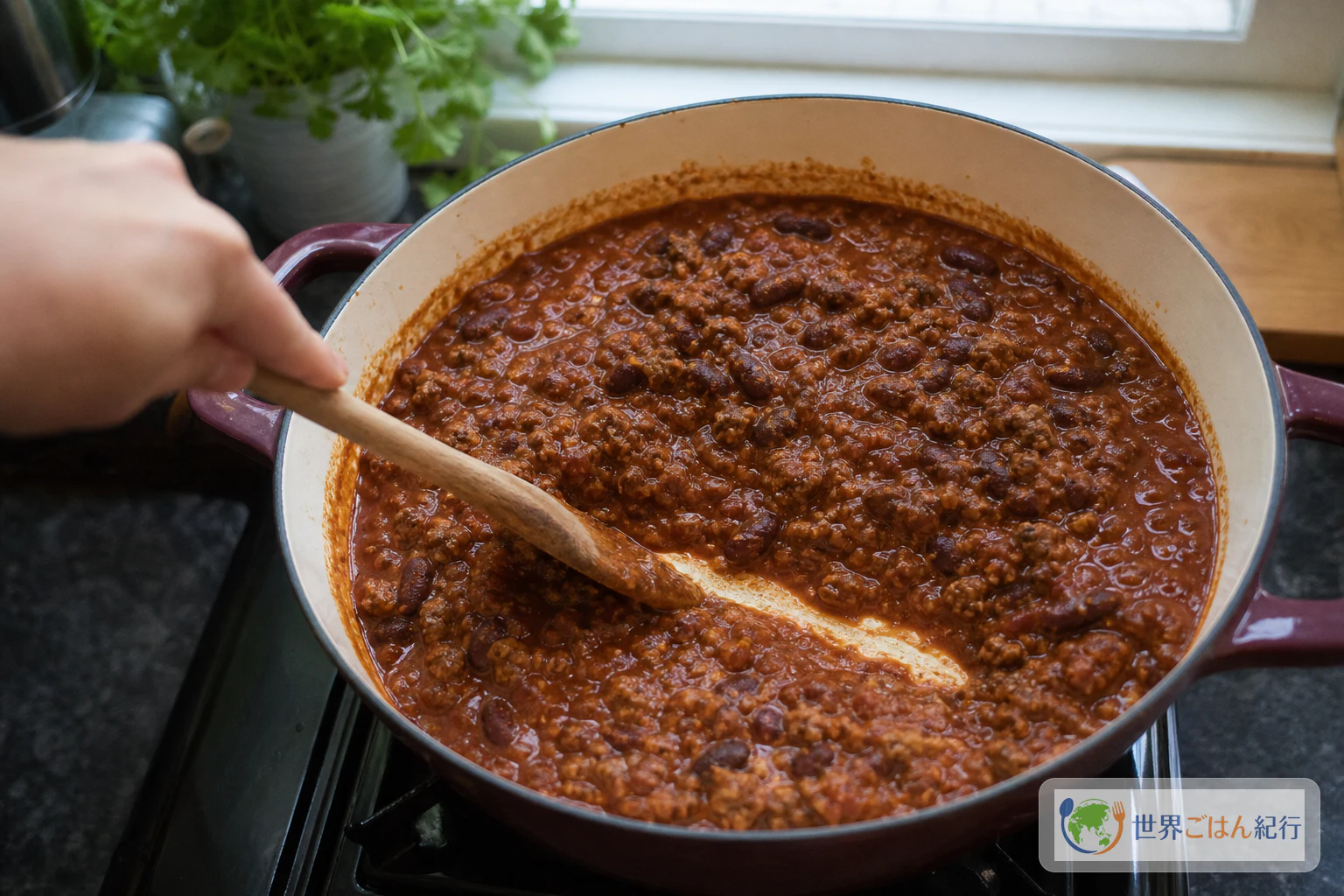
Tracing the bottom of a pot of chili con carne with a wooden spoon to check the thickness of the sauce and the shape of the beans
Check thickness by the line on the bottom, aroma by the sweet smoke of the chiles, and the beans by the tautness of their skins

The recipe is easier to repeat if you watch for three changes in the pot instead of memorizing when to lower the heat. The aroma shifts from sweet smoke to roasted meat. A line drawn through the sauce on the bottom of the pot stops vanishing at once and holds for 2 seconds. The bean skins stay taut while only the centers go soft.

Don't scorch the dried chiles

Dry-toast for 30 seconds per side at most. Take them out once the aroma rises and move them to hot water before they blacken. Even tomato or sugar can't hide the bitterness of scorched chiles, so guard that short first heating.

Add water a little at a time

Add 2 tbsp (30 ml) of water and scrape only when the bottom of the pot dries out and the sound turns hard. Extra water at the start loosens the sauce once the beans go in and makes the final reduction take longer. In a stew, evaporation concentrates aroma better than adding liquid does.

An ordinary heavy pot is fine. If the bubbles suddenly get large even on low heat, turn it down further and open the lid a bit more to let moisture escape. Watching the line on the pot bottom and the bean skins will help you more than any extra equipment.

Serving Chili con Carne and Variations
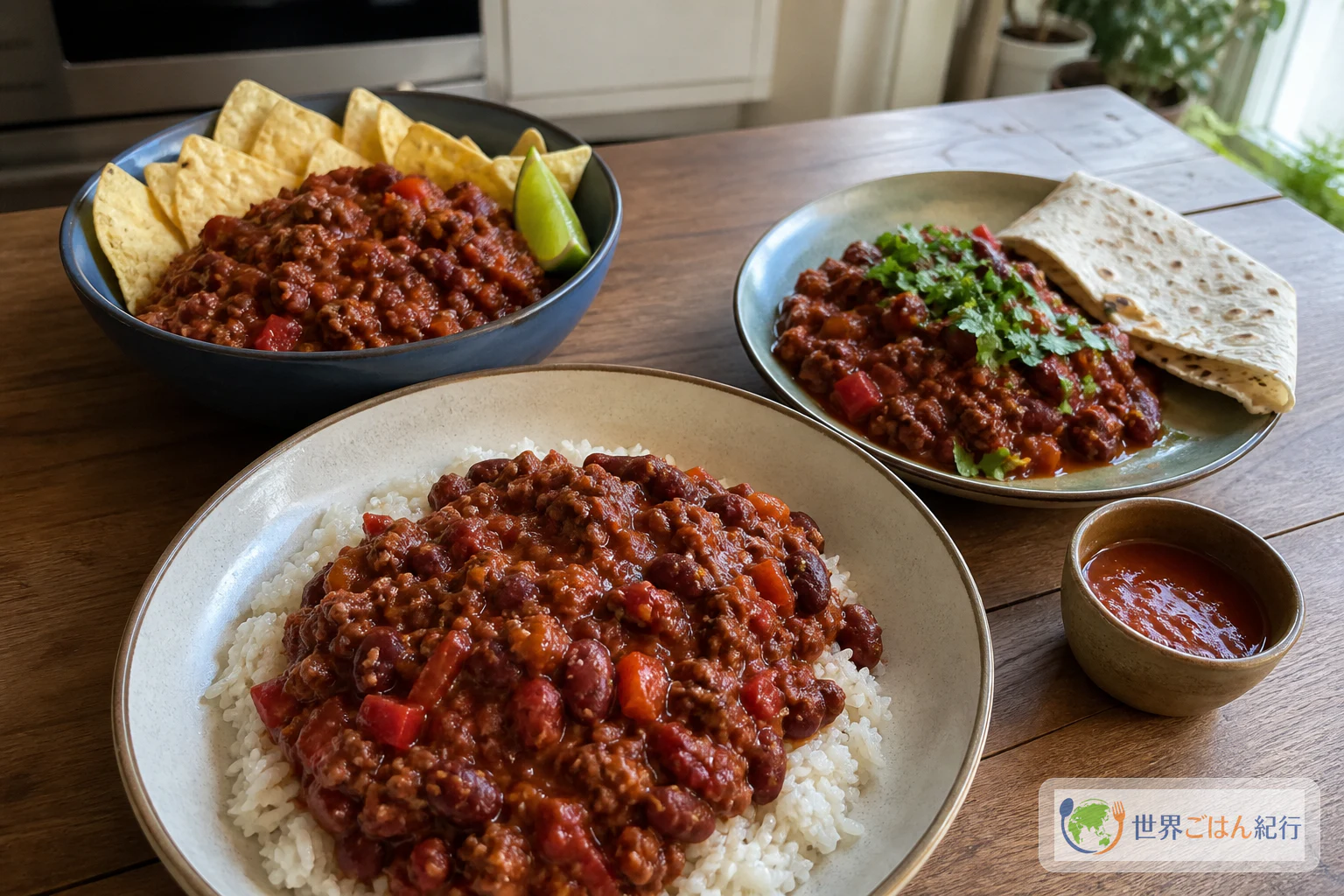
Chili con carne served three ways: over white rice, with tortillas and with corn chips
The same pot can become a weeknight dinner or a lighter table depending on the starch and acidity you serve with it

Change what you serve with the chili before you change what goes in the pot. Depending on the starch you pair with the red sauce, the same chili becomes lunch or a plate for a gathering.

Adjust the heat at the table

When family members have different heat tolerances, leave cayenne and hot sauce out of the pot and put lime, cilantro and hot sauce on the table. Everyone shares the chile aroma, each person adds their own heat, and the sweetness of the beans comes through.

  1. Lean toward beanless Texas style
    Leave out the kidney beans and increase the ground beef to 1.25 lb (600 g). The tomatoes stay, but the richness of the meat and chile comes forward.

  2. A milder weeknight version
    Leave out the guajillo and use 20 g ancho and 10 g paprika. Set aside a portion for children, then add hot sauce only to the adults' plates.

  3. Larger pieces of beef
    Replace half the ground beef with 0.5 inches (1.5 cm) cubes of beef chuck. Sear the chuck in step 3 and take it out, then return it in step 4 and simmer for 90 minutes until it pulls apart. Add 3.5 tbsp (50 ml) of liquid along the way, since the sauce reduces.

  4. Beans as the star, without meat
    Leave out the beef and use 8.5 oz (240 g) red kidney beans, 4 oz (120 g) black beans and 7 oz (200 g) mushrooms. Brown the mushrooms well first so the bottom of the pot still builds a savory crust.

  5. Serve it over rice
    Spoon it over rice and top with a soft-boiled egg and sliced scallions. If you use cheese, check the label for dairy first and add only a little. With corn chips and lime it also makes a light dinner or a dish to bring to a potluck.

Rice dishes in the American South also carry the savor of meat and beans into the rice. Next to a dish like jambalaya, where the rice soaks up the aroma, chili con carne brings its sauce to the starch in its own way.

Storage and FAQ
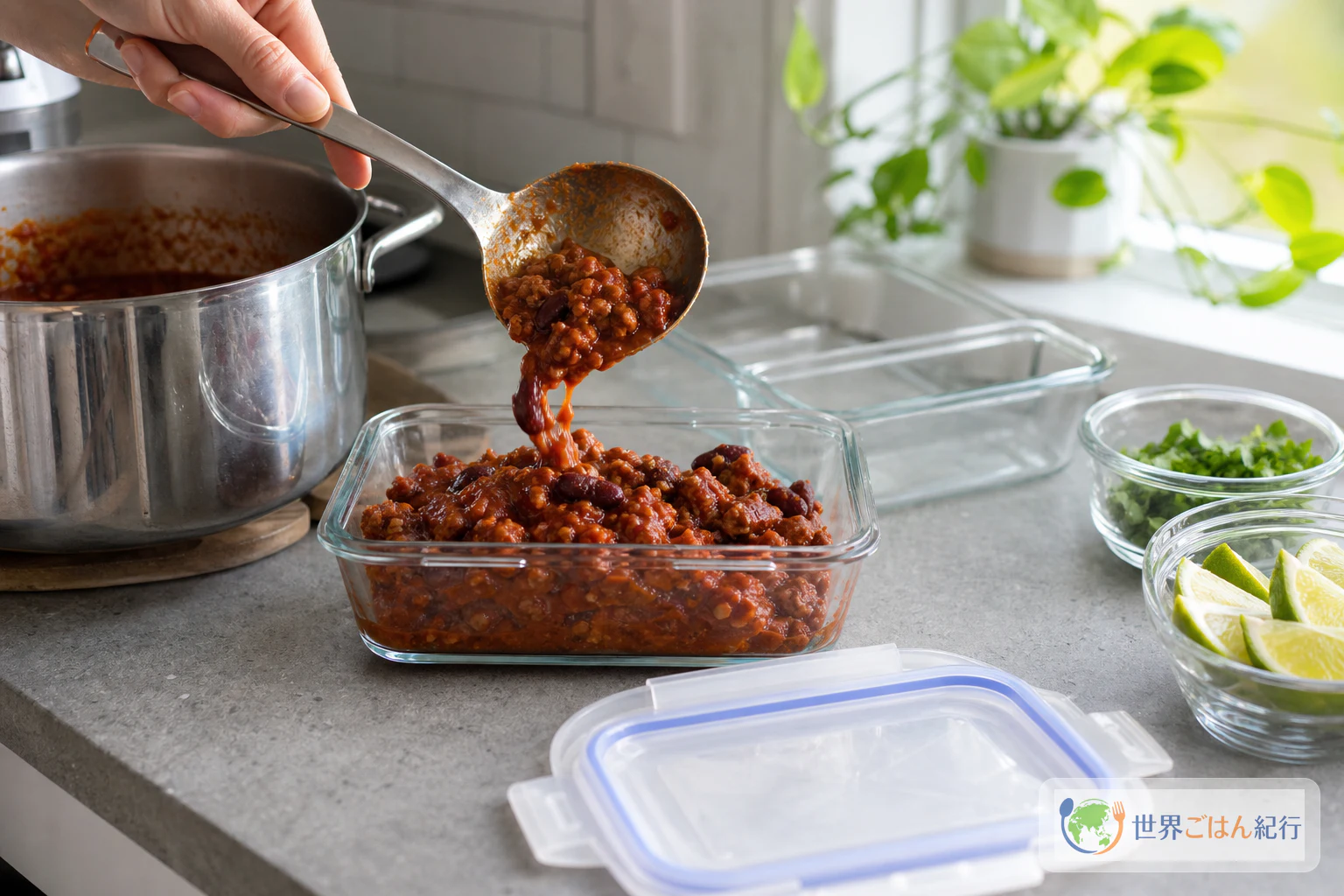
Chili con carne portioned into shallow storage containers, with lime and toppings kept separate for make-ahead
When storing, portion into shallow containers and chill them apart from the toppings

How long does it keep, and how do I reheat it?

Once it has cooled slightly, divide it into clean shallow containers, one serving each, so it cools quickly, and refrigerate. Finish it within 2 days, counting the day it was made. Don't eat anything kept longer or anything that smells or looks off. Reheat thoroughly to 75°C (167°F) or above.

To freeze, seal it one serving at a time without toppings and use within 2–3 weeks. Thaw in the refrigerator, move it to a pot, add 1 tbsp of water and stir over low heat until hot all the way through. Freezing makes the bean skins split more easily, so if texture matters most, eat the refrigerated portion first.

I can't find dried chiles

Use 8 g dried red chiles, 10 g paprika and 4 g smoked paprika instead. Heat varies with the kind of red chile, so remove the seeds at first, add only half the paste to the pot, and taste. Adding more heat is easy; taking it out is hard.

Is it a different dish without beans?

It's the same dish, with a regional difference and a different purpose. Without beans it leans toward Texas red, with meat and chile as the stars. With beans, the sauce stretches further and goes easily with a starch. Either way, don't scorch the chiles, and build a brown crust on the meat.

It won't thicken

Remove the lid and reduce over low heat in 5-minute stretches. If it's still watery, dissolve 1 tsp masa harina in 2 tsp water, stir it in and simmer for 3 minutes. Flour sprinkled in directly forms lumps, so always dissolve it first. If the chili has gone too stiff, add 2 tbsp (30 ml) of water, warm it over low heat, and adjust the salt and acidity at the end.

Can I lower the heat?

To soften the heat for everyone, serve lime juice, unsweetened yogurt or white rice alongside. Water alone thins the flavor. It works better to move some of the sauce to another pot and stretch it with tomatoes and beans. Next time, remove the seeds and pith from the dried chiles and pass hot sauce at the table.
Sources

  1. Serious Eats, "Real Texas Chile Con Carne": The Texas-style approach using dried chiles, the old form without beans and tomatoes, and the direction of the simmer. Accessed and checked 28 July 2026 (JST).
  2. Texas Standard / Texas Public Radio, "San Antonio's Chili Queens: The story behind their 60-year reign": The Chili Queens who sold chili in San Antonio's plazas, and the city's food culture. Accessed and checked 28 July 2026 (JST).
  3. Texas Historical Commission, "Chili Queens Workshop": The Chili Queens' open-air tables and their cultural legacy. Accessed and checked 28 July 2026 (JST).
  4. UTSA Institute of Texan Cultures, "Texas Chili": Dried ancho chiles, the background of adding beans, cornbread and tortillas, and chili's standing as a state dish. Accessed and checked 28 July 2026 (JST).
  5. 厚生労働省, "家庭での食中毒予防": Heating to a core temperature of 75°C for at least 1 minute, portioning into shallow containers, and reheating precautions. Accessed and checked 28 July 2026 (JST).
  6. Texas State Library and Archives Commission, "Lone Star Menu: Tastes of Texas: Surf and Turf: Beef": The Chili Queens' historical setting and chili as a Texas dish. Accessed and checked 28 July 2026 (JST).