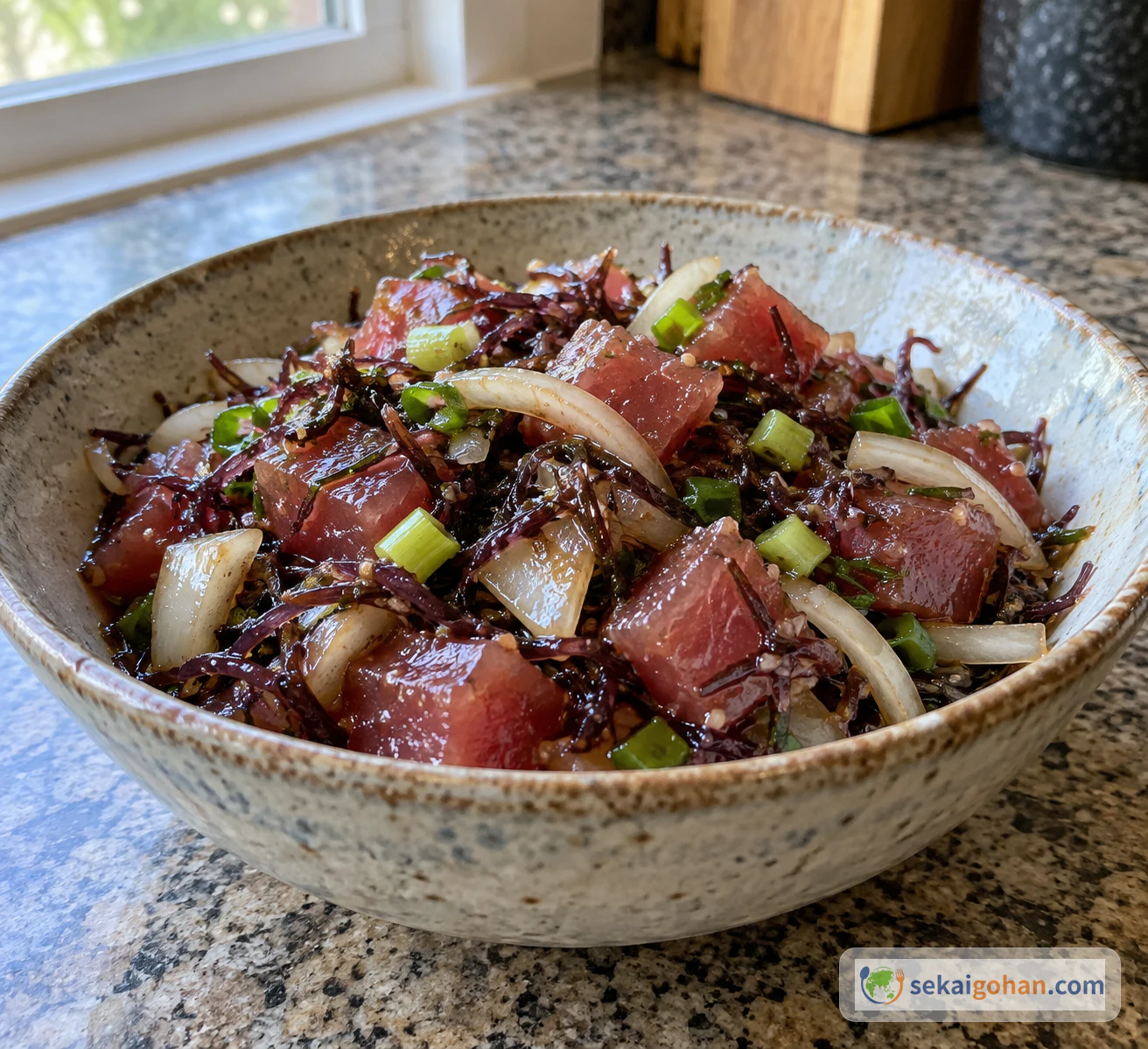
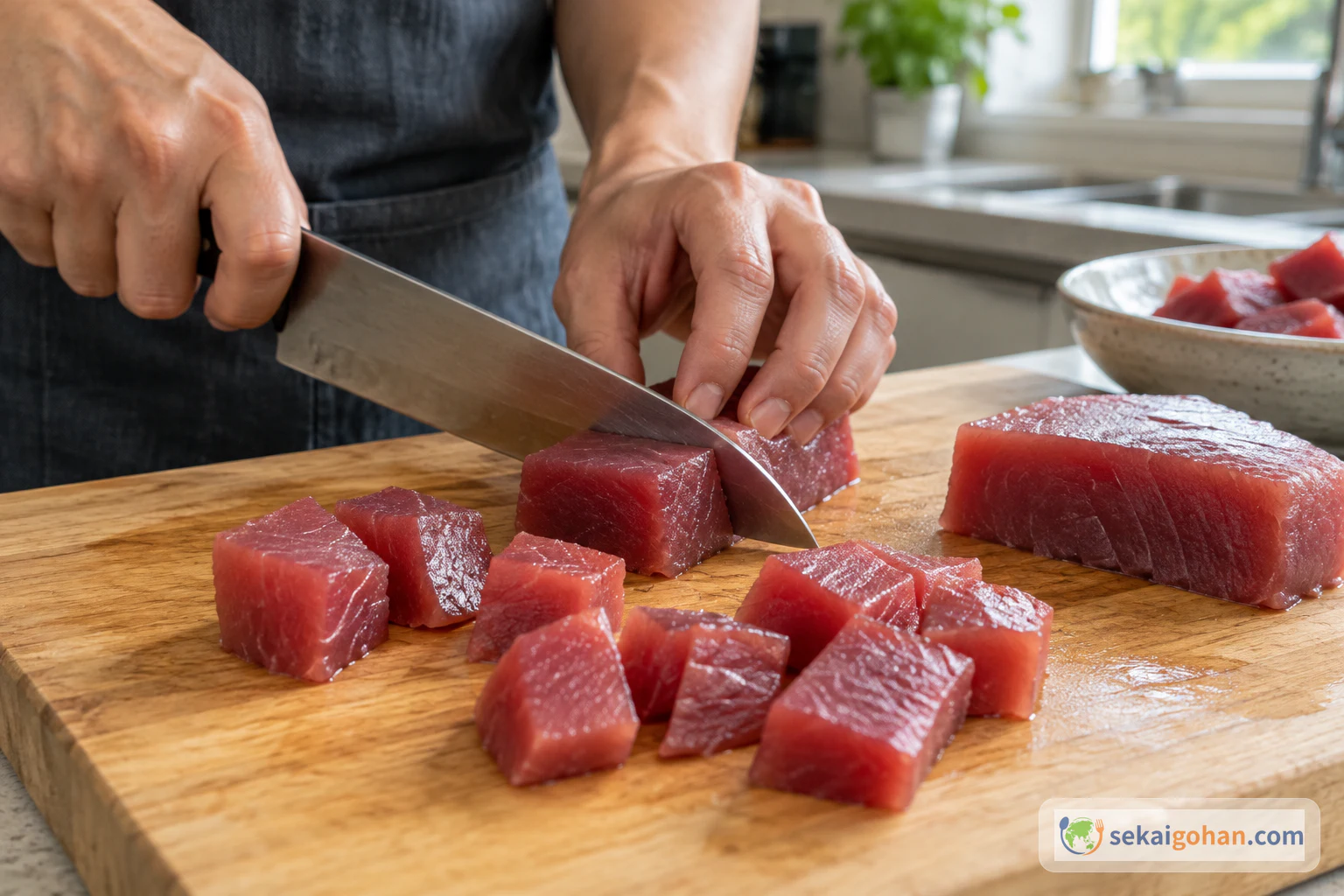
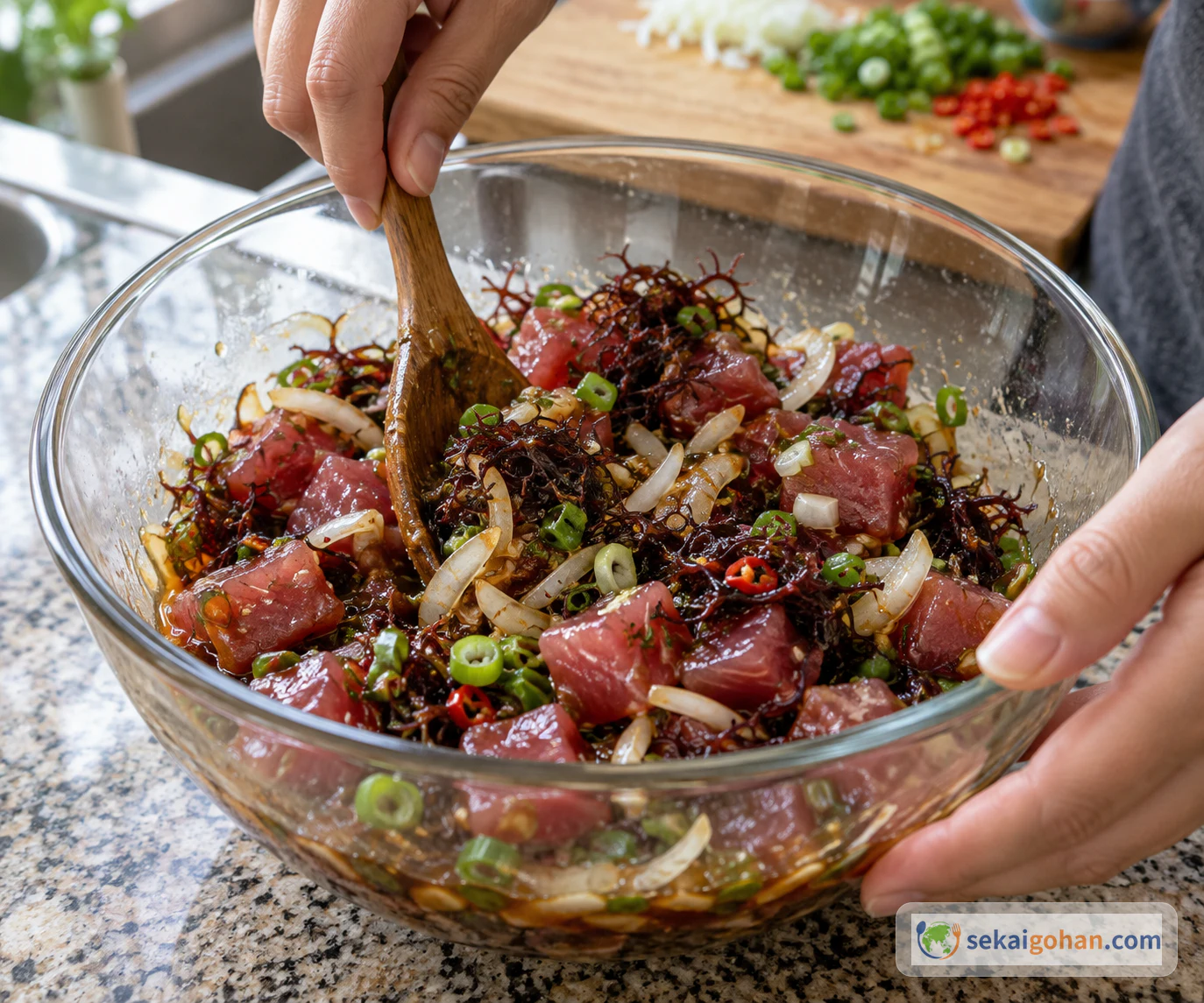
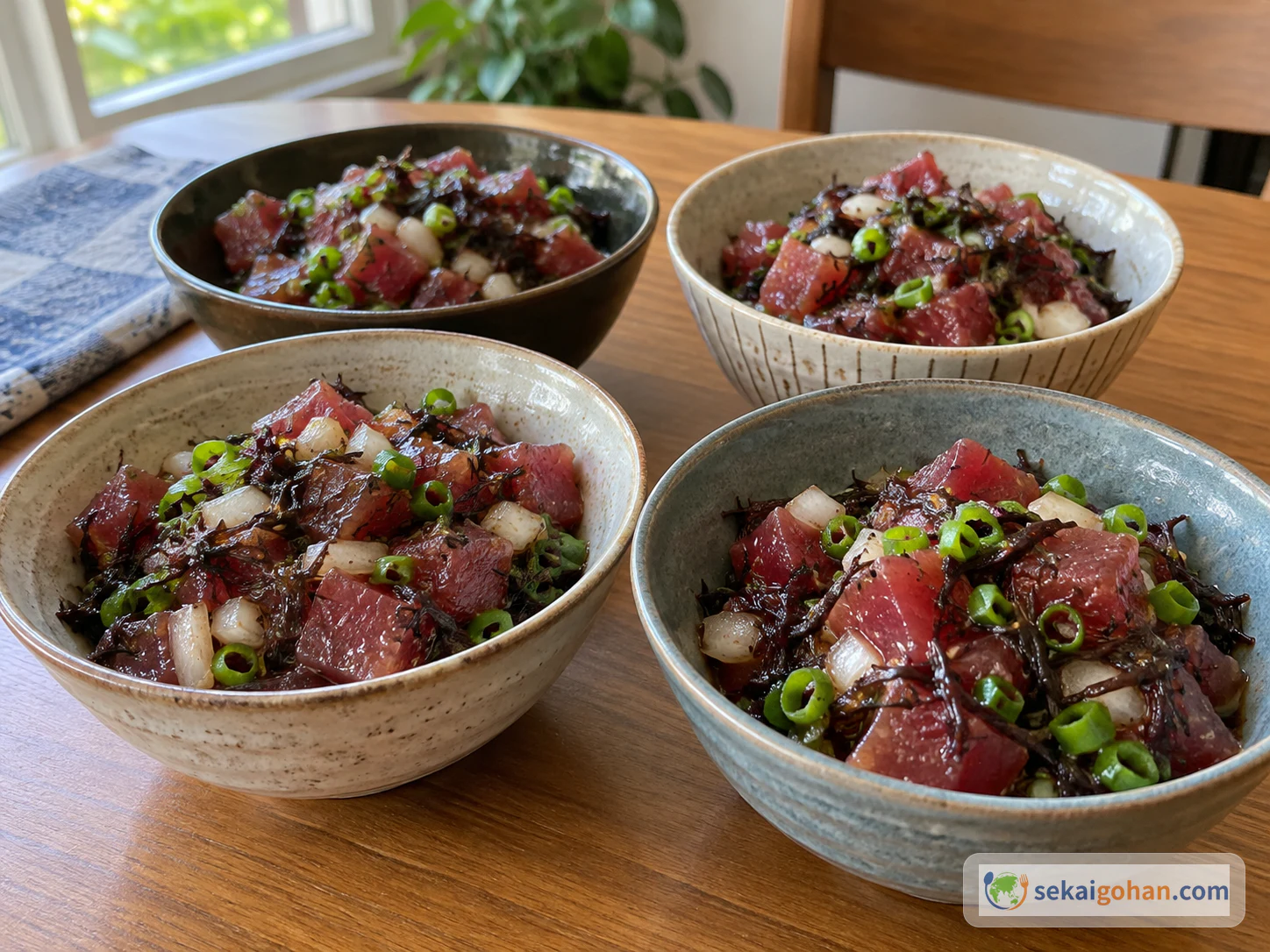
In 2016, the poke counter at a Foodland in Hawaiʻi held tray after tray of poke, and what was on offer changed from day to day. The word covers a lot of ground. This bowl is ahi poke: cubes of raw ʻahi (yellowfin tuna) tossed with limu (ogo seaweed), Hawaiian salt, shoyu, a little sesame oil, onion, green onion and red chili pepper. The fish is never cooked, so how you buy it and keep it cold matters as much as how you season it.
What Ahi Poke Is
At its simplest, poke means cutting fish into small pieces. That makes it different from lomi, where the fish is worked with the fingers. Fish was seasoned with paʻakai (sea salt) and served with ʻinamona and limu, a way of eating that lets the fresh flavor of the fish come through. Still, not every poke uses those ingredients, and poke has no single origin.
Modern poke uses many kinds of fish and borrows seasonings from elsewhere, including Japanese cooking. Shoyu came in with those later flavors. Today you'll find poke seasoned with kimchi, oyster sauce, wasabi and more, depending on the store, the region and the household. In Hawaiʻi, one common way to eat it is with rice.
By 2016, poke outside the islands had picked up ingredients such as quinoa and kale. People from Hawaiʻi care about how their tradition is represented. A poke counter in Hawaiʻi and a build-your-own bowl somewhere else share a name, but they are not the same thing. For more dishes from across the country, see recipes from the United States.
Handling Raw Fish for Poke
This dish is eaten raw. Read "Before You Start: Handling Raw Fish" below before you shop, including the list of people who should avoid it.
Avoid raw seafood, including sashimi, if you are pregnant, a child, an older adult, or have a weakened immune system. Do not give this dish to babies or young children. If you have health concerns, talk to a doctor first. If you develop severe abdominal pain or similar symptoms after eating, seek medical care.
Parasites and freezing
Look over the fish for Anisakis larvae and remove any you see. Seasoning does not kill parasites. Vinegar, salting, soy sauce and wasabi do not kill Anisakis larvae. Salting and pickling can lower the risk but can't get rid of it, so the salt and shoyu here are only for flavor.
Freezing conditions vary. The two sets of guidance below cover different things, and both are written with food businesses in mind.
| Target | Conditions |
|---|---|
| Anisakis, Japan | Freeze at -20°C for at least 24 hours, or heat to 158°F (70°C) or above, or 140°F (60°C) for 1 minute |
| Parasites, food business guidance (US) | -20°C or below for a total of 7 days; or frozen solid at -35°C or below and stored at -35°C or below for 15 hours; or frozen solid at -35°C or below and stored at -20°C or below for 24 hours. Not for fish thicker than 6 inches |
It's hard to confirm the temperature of a home freezer. Buy fish the seller labels for raw eating, or fish clearly stated to have been freeze-treated. If you freeze it yourself, make sure your freezer meets the conditions above. Freezing helps against parasites, but it doesn't kill all harmful germs. Thorough cooking is the safest choice, and the risk of eating raw fish never drops to zero.
Keeping it cold
- Keep the fish refrigerated or on ice from the moment you buy it until you use it.
- Do not leave perishable food out of the refrigerator for more than 2 hours, or more than 1 hour when the temperature is above 90°F (32°C).
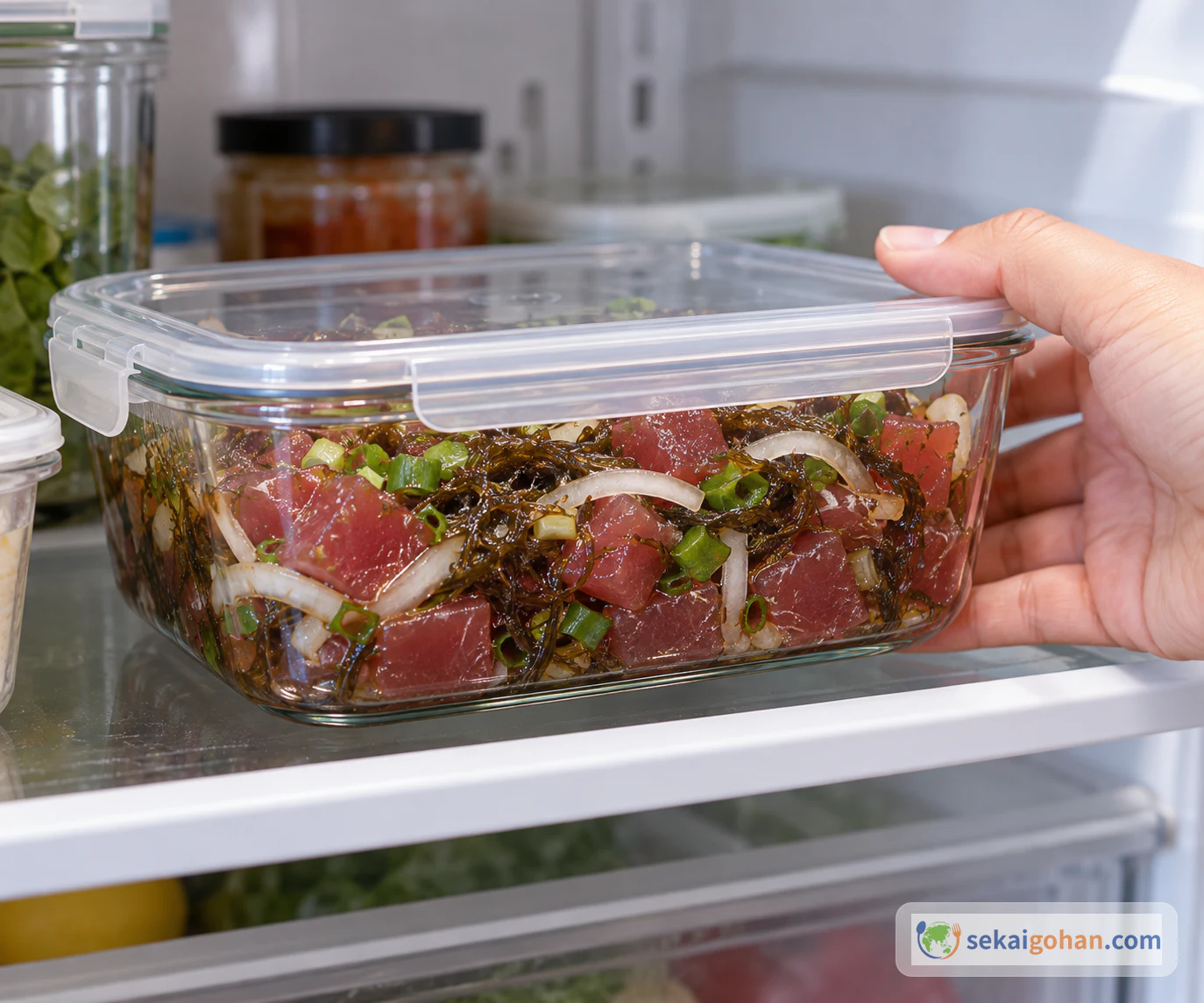
- Once the poke is mixed, chill it and eat it as soon as you can.
- If you are unsure about leftovers, do not eat them.
Keeping raw fish apart
- Give the raw fish its own cutting board, knife and bowl, away from the onion, green onion and other foods.
- While you handle raw food, wash cutting boards, dishes, utensils and counters with soap and hot water.
- After touching raw food, wash your hands with soap and warm water for at least 20 seconds.
- Wash used tools before using them for other ingredients.
Rinse the onion, green onion and fresh chili under running water. That cleans the vegetables, but it does nothing to make the fish safer.
Allergens
This dish contains fish, soy (shoyu) and sesame. Check product labels.
Ingredients (4 Servings)
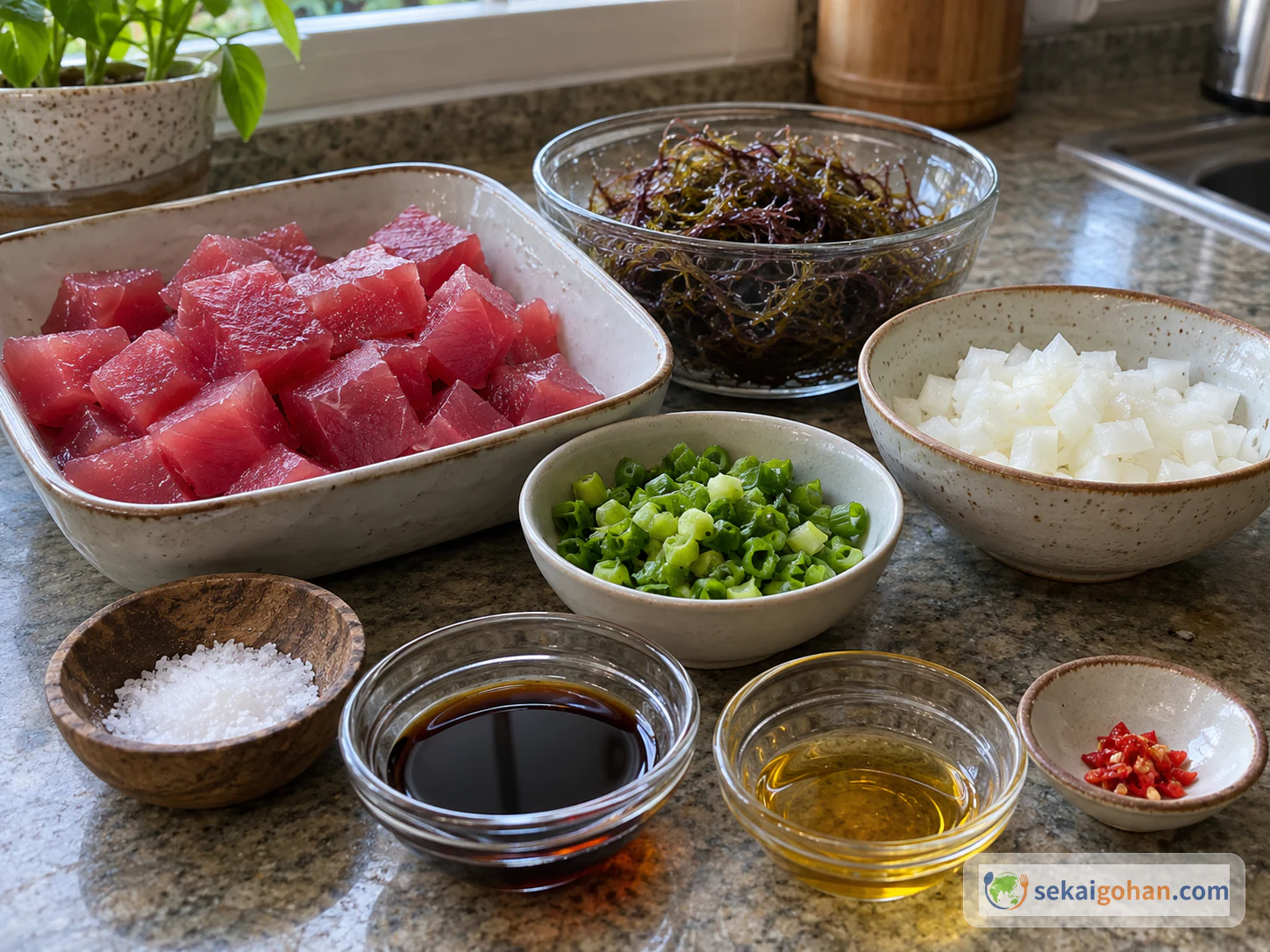
Rinse the onion, green onion and any fresh red chili pepper well under running water before using them. Keep the fish cold until you cut it.
Equipment
- Colander
- Medium bowl
- Cutting board and knife for the seaweed and vegetables
- Separate cutting board, knife and bowl for the raw fish
- Measuring cups and spoons
- Covered food-safe container
- Serving bowls
Choosing Tuna, Limu and Seasonings for Poke
- Tuna: Buy yellowfin tuna or ʻahi sold as "for raw consumption" or sashimi from a seller you trust. Check the species on the label and pick the freshest fish you can find. Fish sold for cooking, or fish you can't confirm is fit to eat raw, doesn't belong in this bowl. Color alone won't tell you how fresh it is.
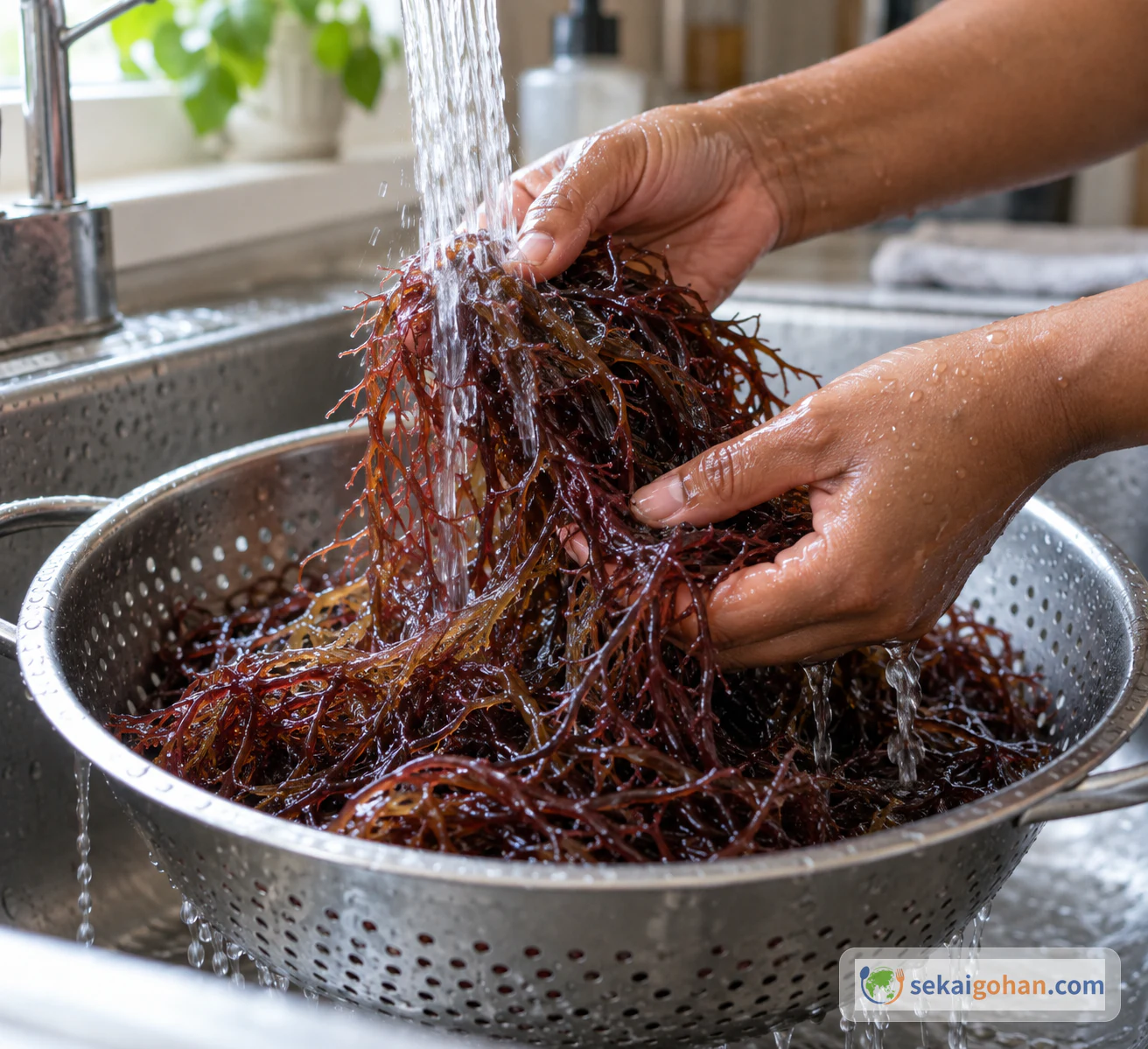
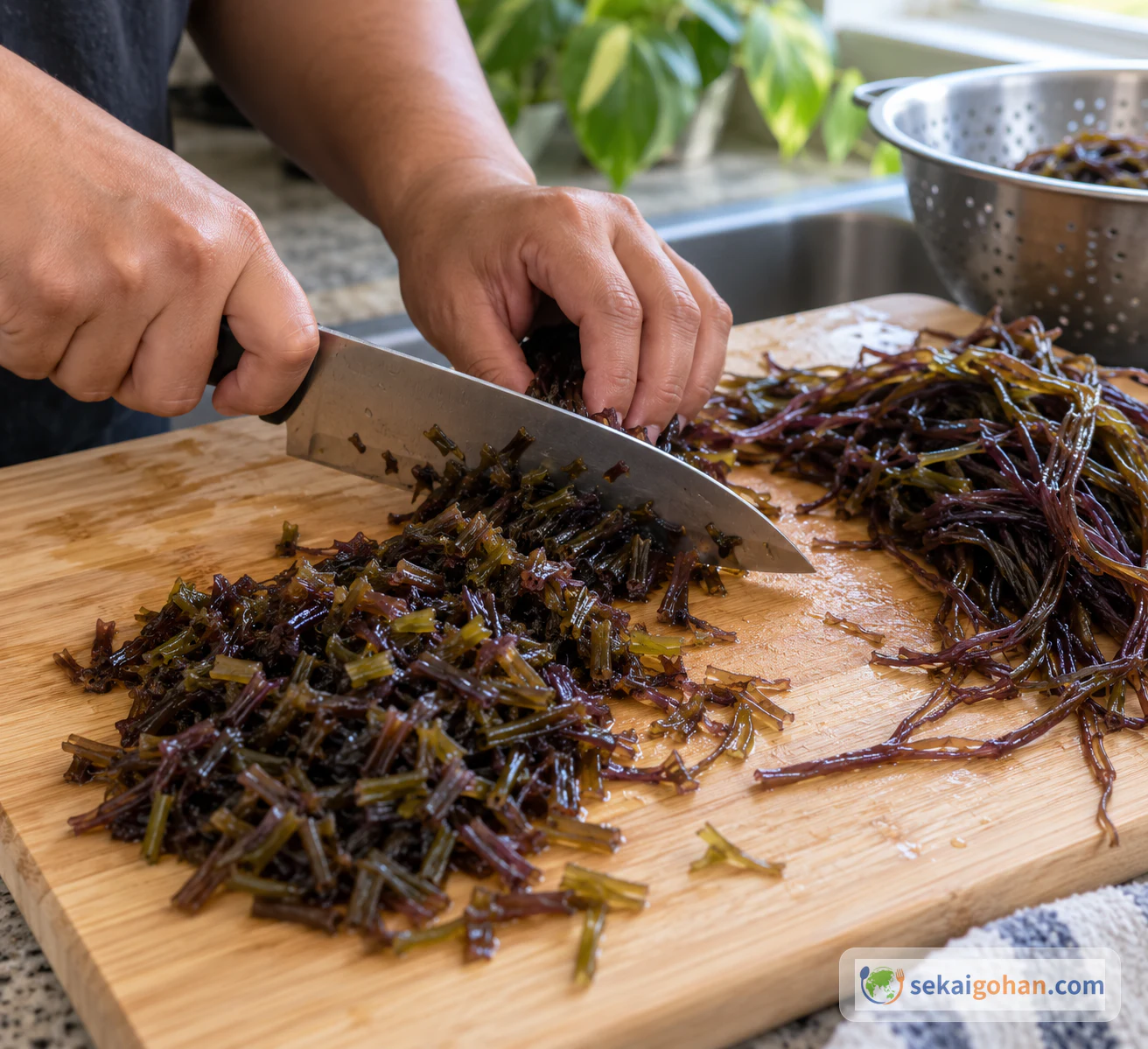
- Limu: Ogo can be hard to find. Other seaweeds differ in texture, saltiness and aroma, and dried or salted seaweed varies again in how it rehydrates and how salty it is. Instead of swapping in a full 1/2 cup, add a small amount and taste. Expect a bowl that tastes different from one made with ogo.
- Hawaiian salt: Grain size and saltiness vary, so there is no exact conversion to table salt. If you use another salt, add it little by little.
- Soy sauce: Ordinary soy sauce does much the same job as shoyu.
- Red chili pepper: Check what form you're buying. Ground and fresh chili are not the same.
Method: From Seaweed to Chilled Bowl
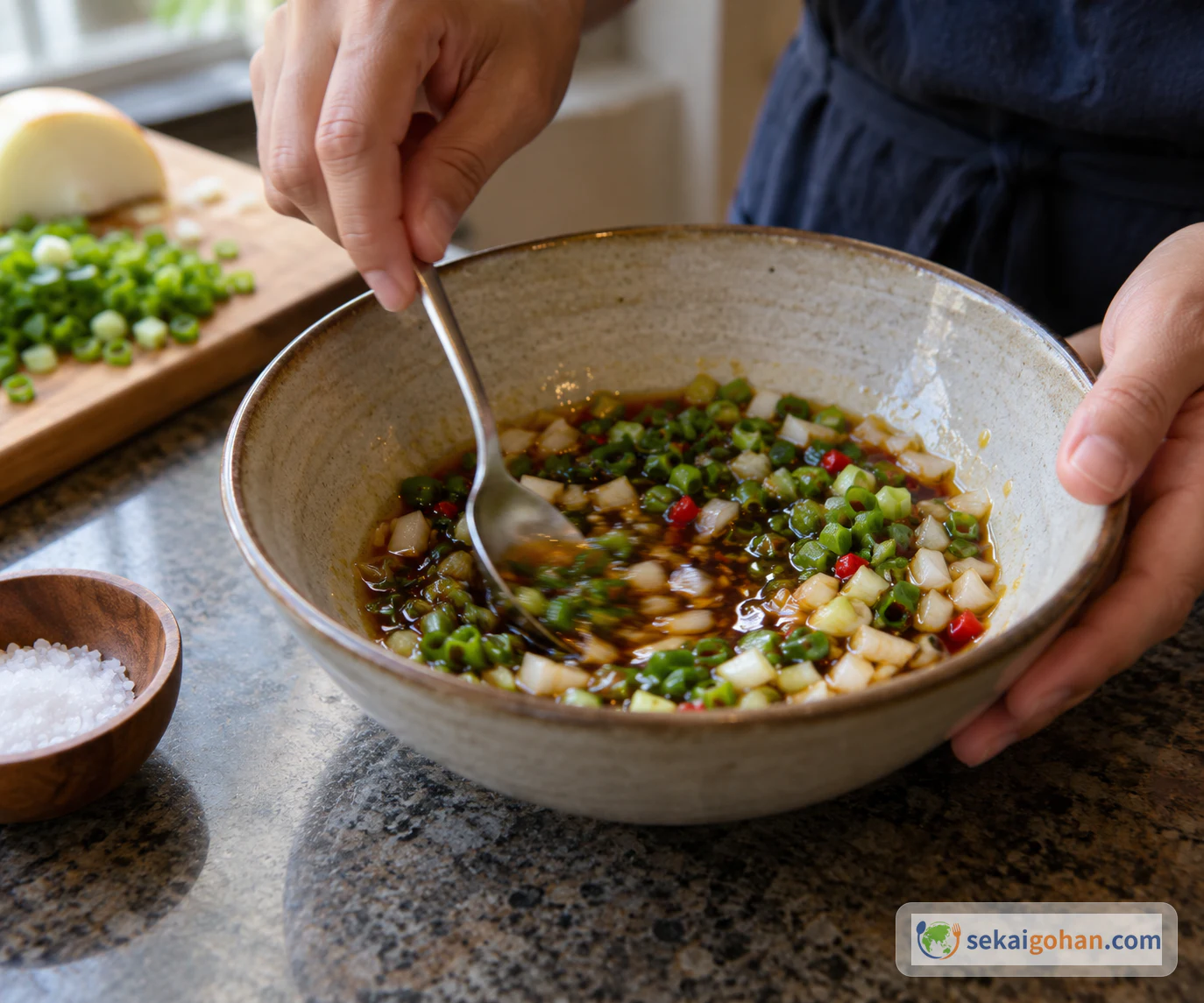
Prepare the limu and seasoning first, while the fish stays in the refrigerator. Cut the fish last, using its own board and knife.
Ahi Poke Troubleshooting
| Situation | What to do |
|---|---|
| You cannot tell whether the fish is suitable for raw eating | Do not use it for this dish. Buy fish sold for raw eating, or cook the fish as a different dish |
| You see what looks like a parasite in the fish | Remove it. If you have any doubt about the fish, do not eat it raw |
| The fish or finished poke has been out of the refrigerator too long | Past 2 hours (1 hour above 90°F/32°C), do not eat it |
| The fish cubes are breaking apart | Stop mixing. Fold gently rather than kneading |
| A substitute seaweed makes the bowl too salty or too strong | Use less next time, adding a little at a time and tasting |
| The raw fish touched a board or knife used for vegetables | Wash the tools with soap and hot water before using them again |
Serving and Varying Ahi Poke
Rice on the side is a natural partner, the way poke is often eaten in Hawaiʻi. Beyond that, the bowl can move in a few directions. Each one gives you a different poke:
- Without ogo: Use another seaweed as described above. The result is an adaptation.
- With ʻinamona: ʻInamona, roasted kukui nut with salt, is a traditional seasoning for poke. If you add it, work out your own amounts and check for allergens.
- Other seasonings: Kimchi, oyster sauce and wasabi all turn up in modern poke.
- Cooked fish: Cooking the fish is a sensible choice if you'd rather not eat it raw, but you'll end up with a different dish.
Frequently Asked Questions
Can I make it with salmon?
Many kinds of fish go into poke today, so salmon makes a reasonable variation, though it won't be ʻahi poke. The same rules apply: buy fish sold for raw eating, keep it cold, and know who should avoid raw fish.
Is this the same as banana poke?
No. Banana poke from the Cook Islands shares part of the name, but it's a banana dish made with ingredients such as coconut milk. Its ingredients and region have nothing to do with this raw fish dish.
Is the word spelled differently elsewhere?
Other languages, including Japanese, write the word in more than one way. The Hawaiian spelling is poke.