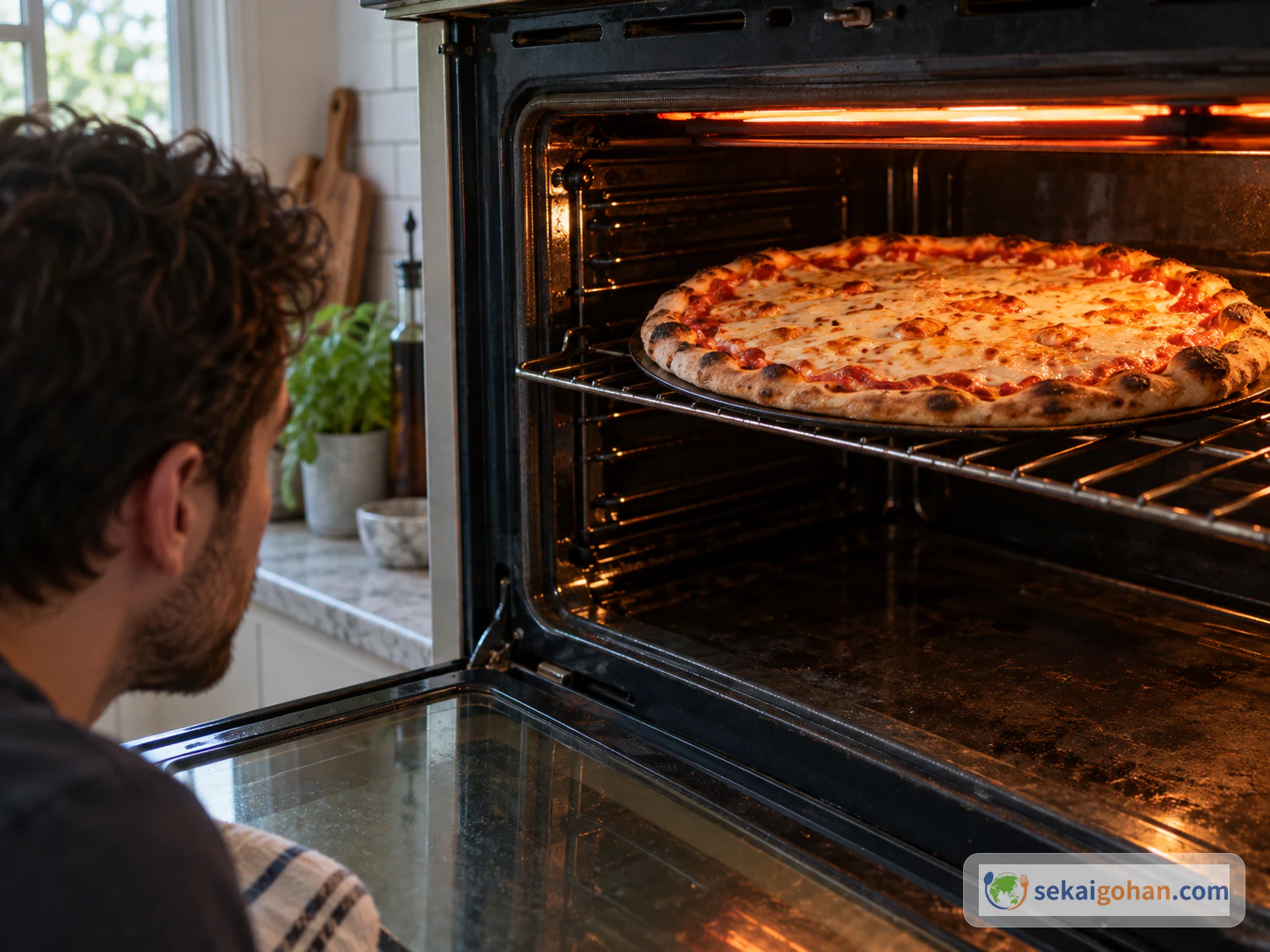
New York-Style Pizza: A Thin, Foldable Slice from a Home Oven

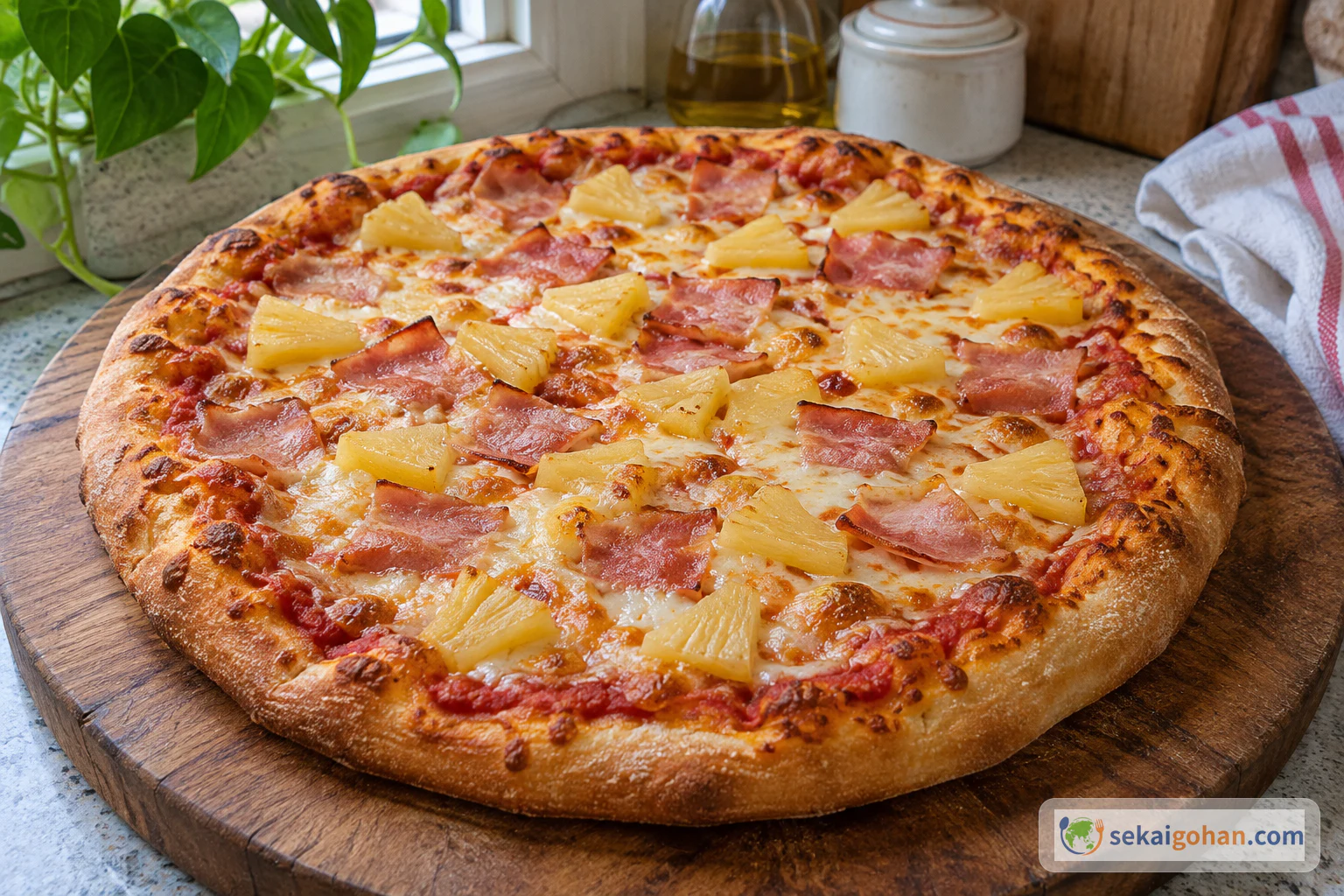
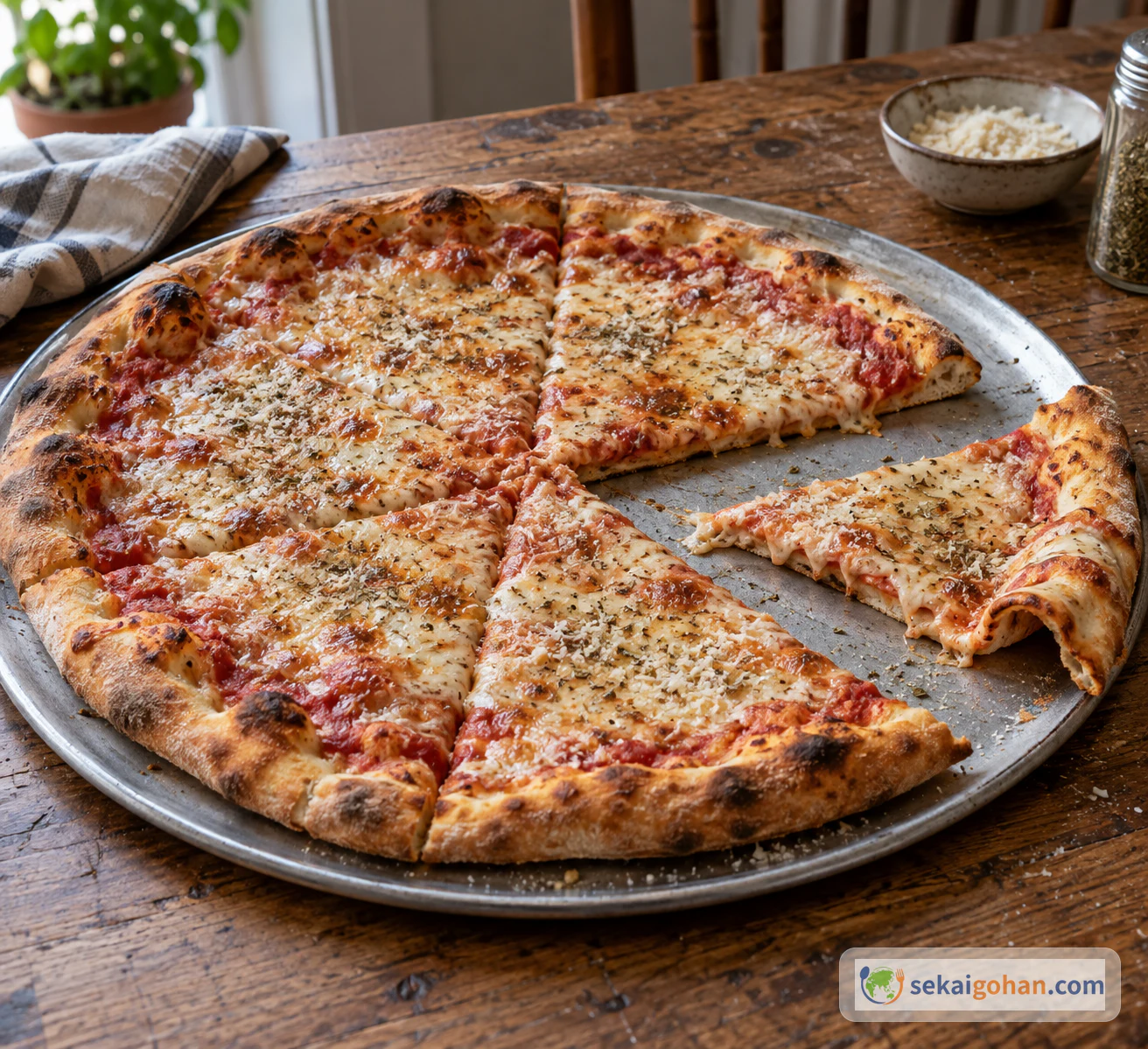
New York-style pizza with tomato sauce and low-moisture mozzarella baked on a thin crust
Serves
2 pizzas, 13 inches (about 33 cm) each
Cuisine
American

How to make New York-style pizza at home: a bread-flour dough given a long room-temperature rise, an uncooked tomato sauce and low-moisture mozzarella, baked on a preheated stone or steel and finished under the broiler. Two 13-inch pizzas by weight, with shaping, baking, troubleshooting, storage and the slice culture of New York City.

Cooking flow

Cooking steps

STEP11 / 12

Mix the dough

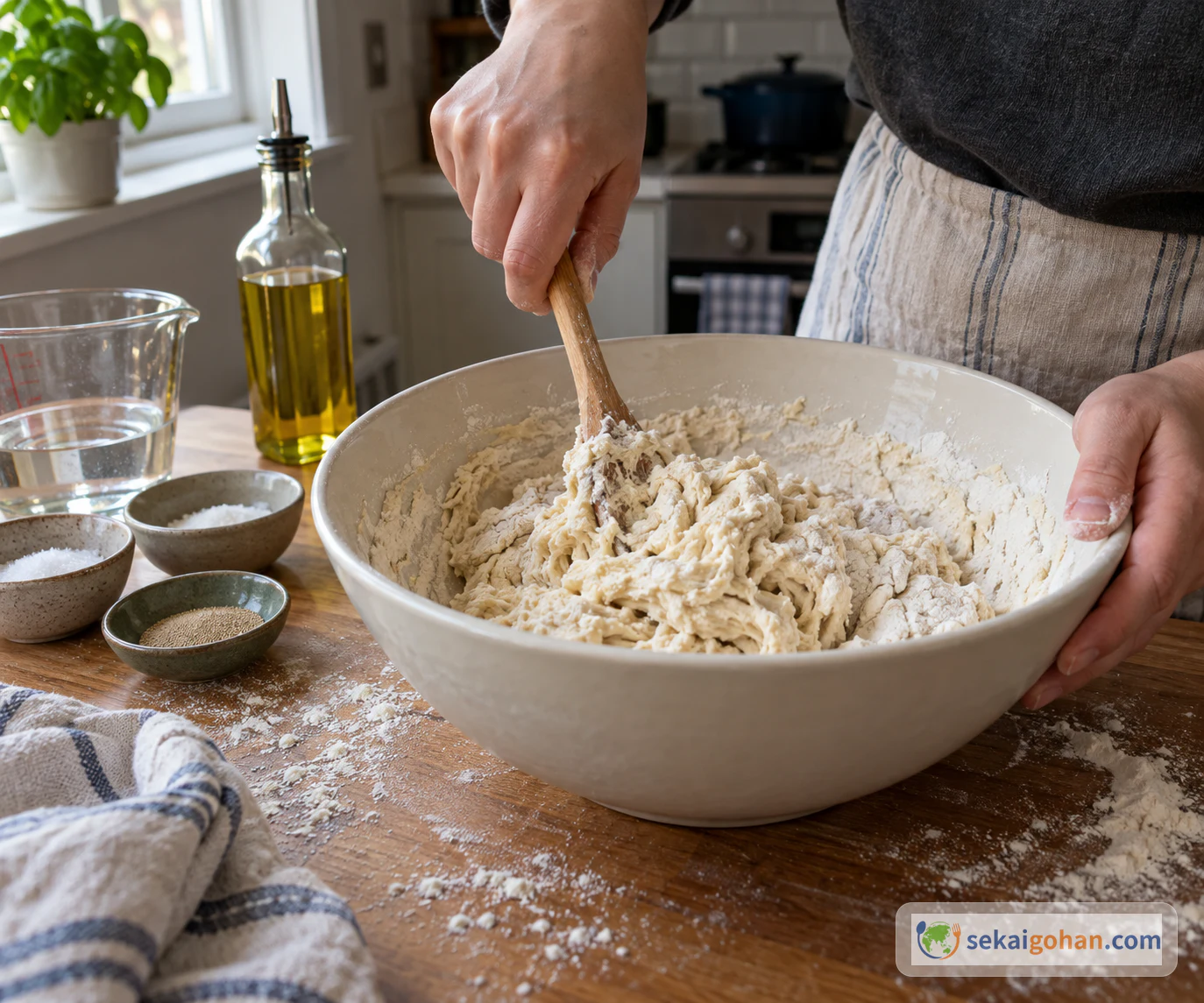
Water and vegetable oil added to the flour mixture, coming together into a rough pizza dough
At this stage the dough is still rough and uneven

In a large bowl, combine the bread flour, sugar, salt and instant yeast. Add the vegetable oil and the cool water and mix until you have a rough dough that holds together. Then knead it by hand. This dough provides the texture of the whole pizza, so keep to the formula.

STEP22 / 12

Rest, then divide and shape into balls

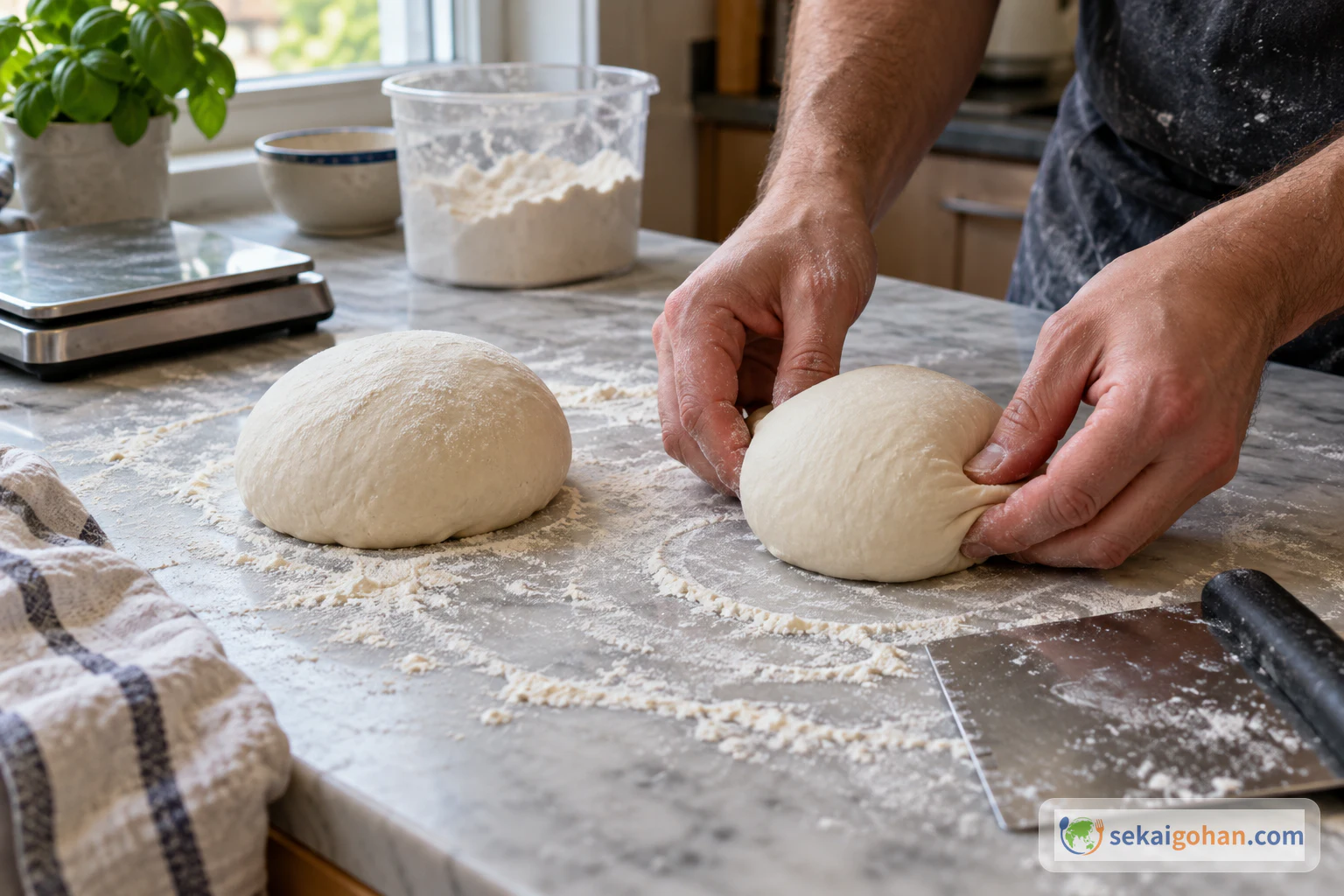
Dough divided into two equal pieces and shaped into taut balls
Tuck the edges under so the surface of each ball is taut

Cover the bowl and let the dough rest at room temperature for 1 hour. Keep it covered so the surface doesn't dry out.

Turn the dough out onto a lightly floured surface and divide it into two equal pieces, about 10.5 oz (300g) each. Shape each into a taut ball, tucking the edges underneath. Place them seam side down in a lightly oiled container.

STEP33 / 12

Let the dough rise at room temperature

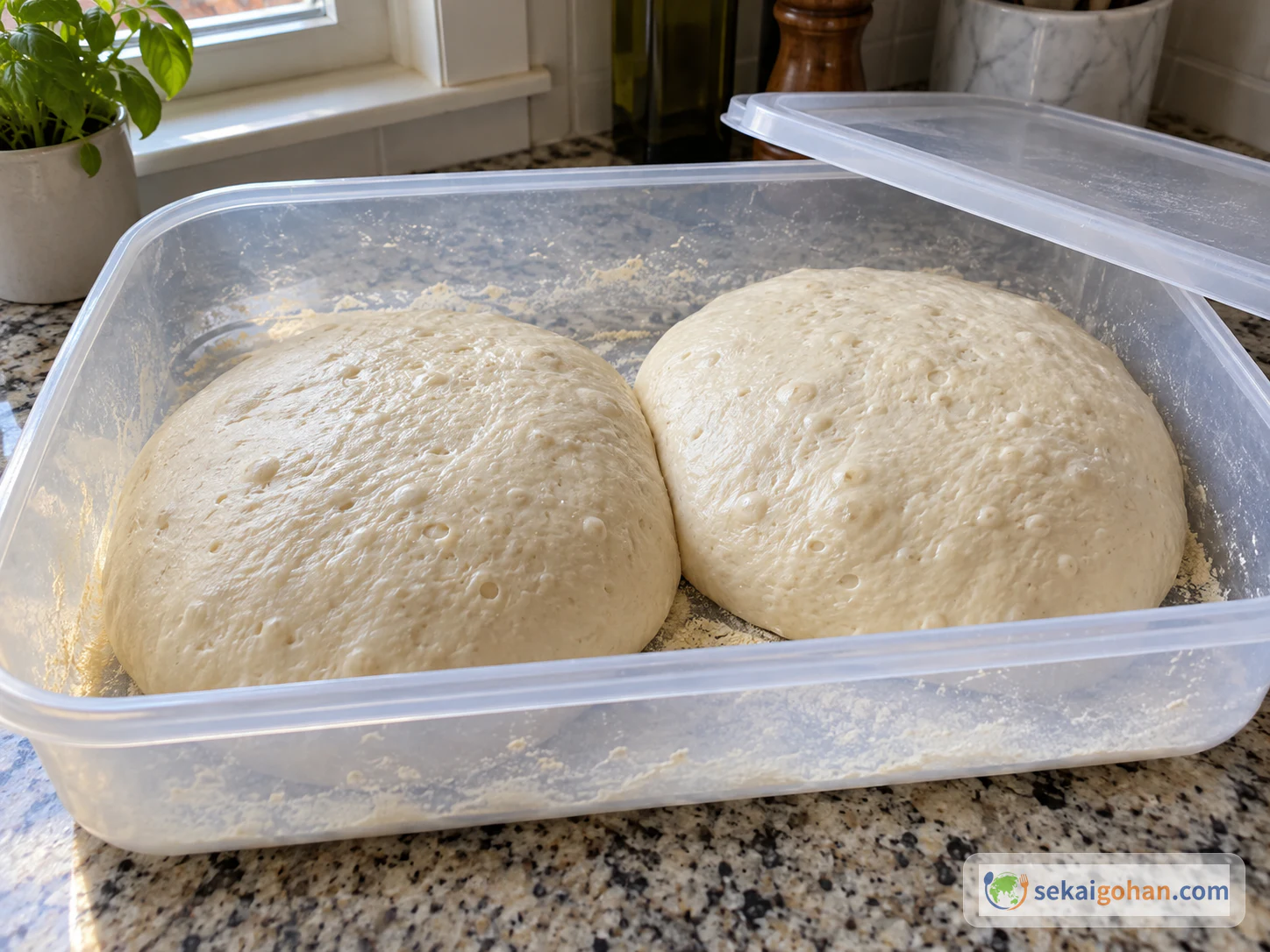
Pizza dough risen and relaxed in its container after the room-temperature rise
After 8 to 10 hours at room temperature, the balls are relaxed and slightly expanded

Cover the container airtight and leave the dough at room temperature for 8 to 10 hours. When the rise is done, the balls look relaxed and slightly expanded, not collapsed.

You can bake now. If you aren't baking right away, refrigerate the dough after this room-temperature rise for up to 3 days. Refrigeration doesn't replace the rise. Take refrigerated dough out while the oven preheats so it sits at room temperature for at least 1 hour.

STEP44 / 12

Preheat the oven with the stone or steel

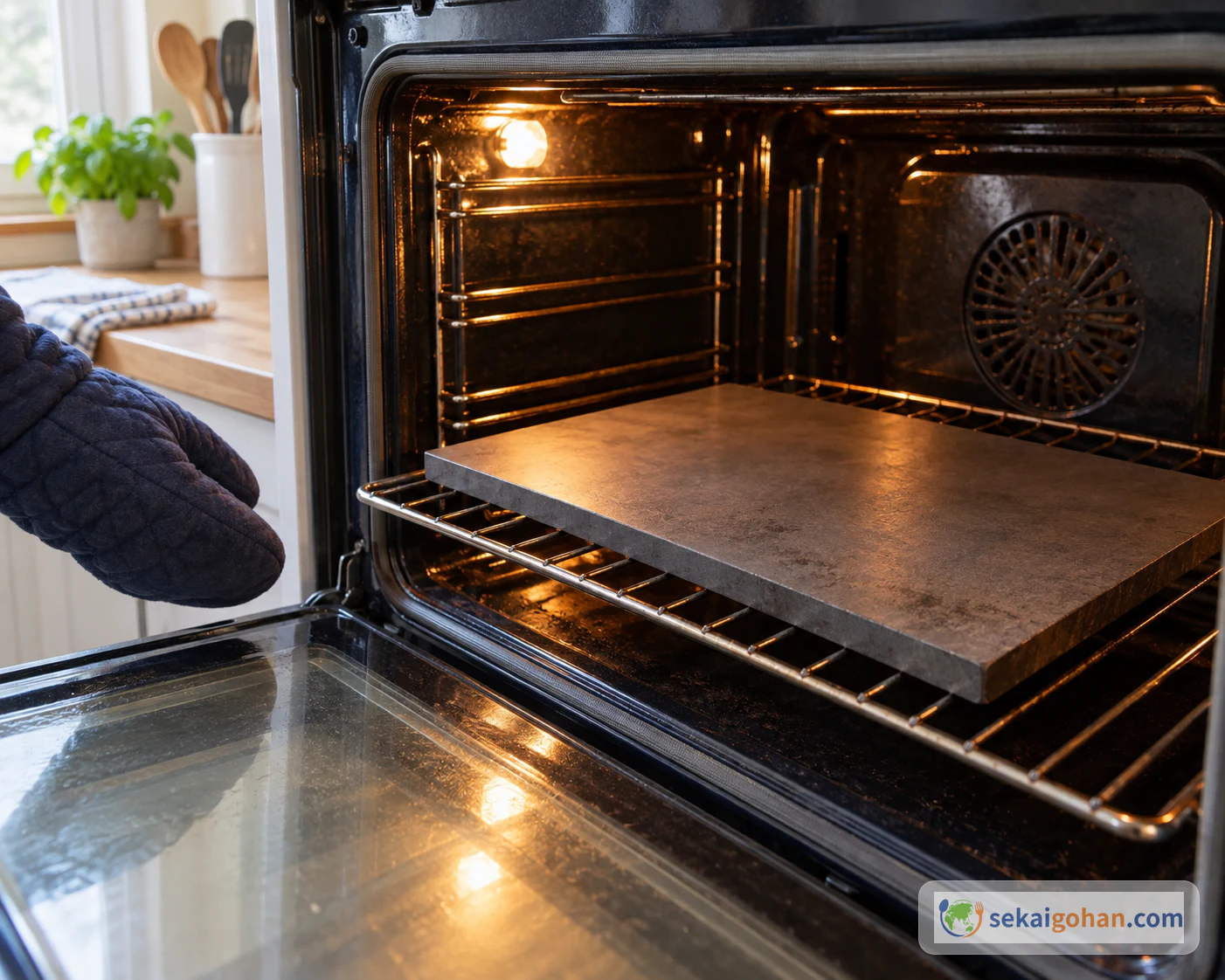
A pizza steel preheating on the lower rack of a home oven
The steel sits on the lower rack and heats through for at least an hour

Place the baking stone or steel on a lower oven rack and preheat to 500°F (about 260°C) for at least 1 hour. Don't go above the temperature your oven, stone or steel is rated for.

STEP55 / 12

Make the sauce

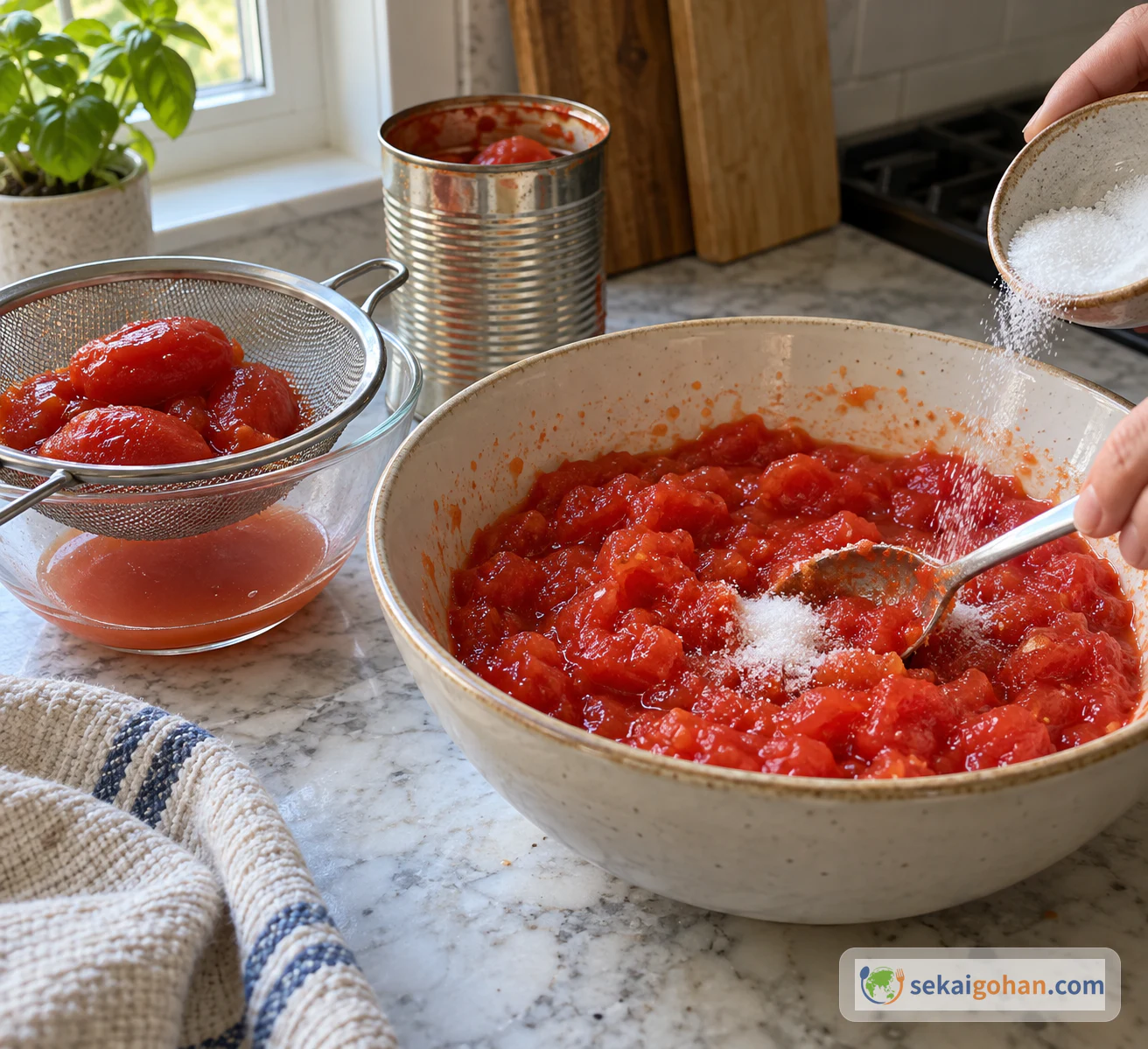
Drained whole tomatoes crushed coarsely and mixed with salt and sugar for pizza sauce
Leave the sauce chunky. No herbs or garlic go in

Drain the canned tomatoes in a strainer. Pulse them a few times in a food processor, leaving the sauce coarse and chunky. Stir in the 6g salt and 4g sugar, taste, and adjust with more if needed.

You'll use only 9 oz (260g) of this sauce, about 4.5 oz (130g) per pizza. About 11.5 oz (325g) will be left over. Set the extra aside for storage.

STEP66 / 12

Press out the center

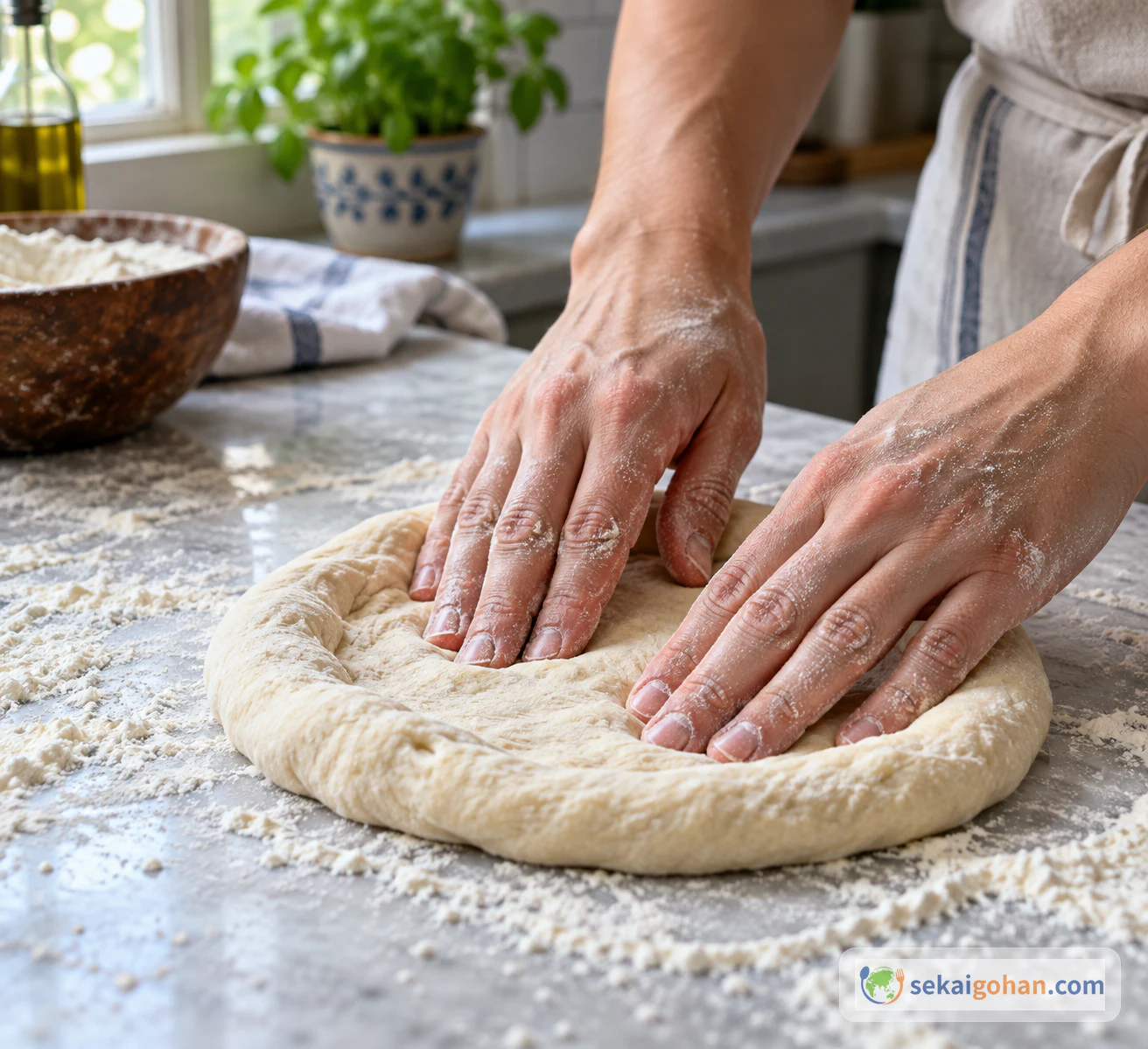
Fingertips pressing out the center of the risen dough, keeping a thicker rim
Press from the center out and leave the rim untouched

Work with one ball at a time. Dust it with flour. Press the center outward with your fingertips, pushing the gas out of the middle without flattening the outer edge. Spread it to about 8 inches (about 20 cm).

STEP77 / 12

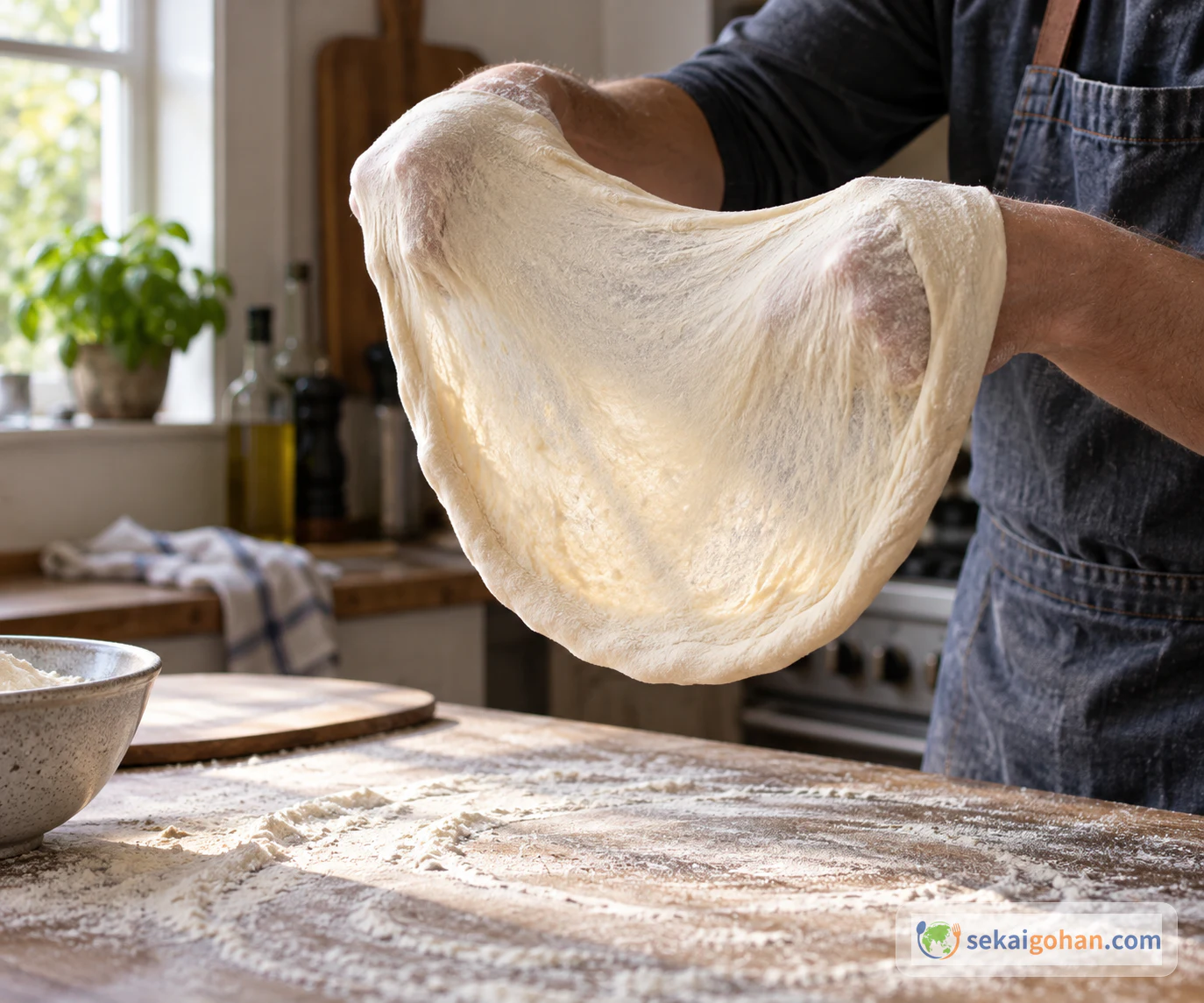
Stretch to 13 inches

Dough draped over the knuckles and turned as it stretches toward about 33 cm
Let gravity do the stretching, with the center thin and the rim thicker

Pull the dough gently east to west, rotate it, and repeat until it reaches about 10 inches (about 25 cm). Drape it over your fists and let gravity widen it to about 12 inches (about 30 cm), then finish at about 13 inches (about 33 cm). If the dough springs back and resists, let it rest for 5 to 10 minutes before you continue. Keep the rim.

STEP88 / 12

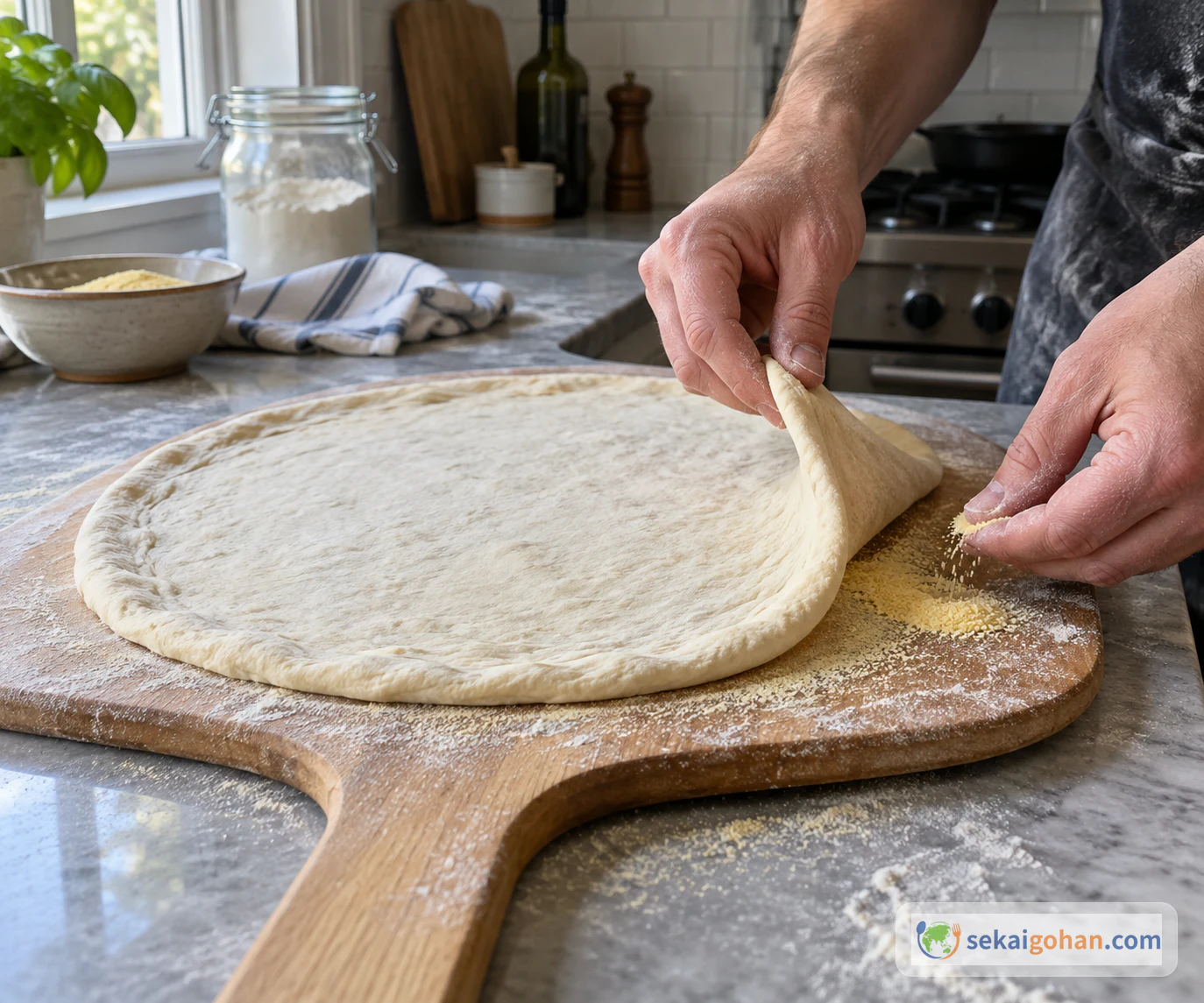
Move the dough to the peel and check that it slides

Stretched dough moved to a semolina-dusted peel, checked to see that it slides
Lift a stuck edge and add semolina underneath before topping

Sprinkle semolina or cornmeal on a pizza peel or an upside-down baking sheet. Lay the stretched dough on it and give it a shake to make sure it slides freely. If any part sticks, lift that edge and add a little more semolina underneath. Check this before the toppings go on.

STEP99 / 12

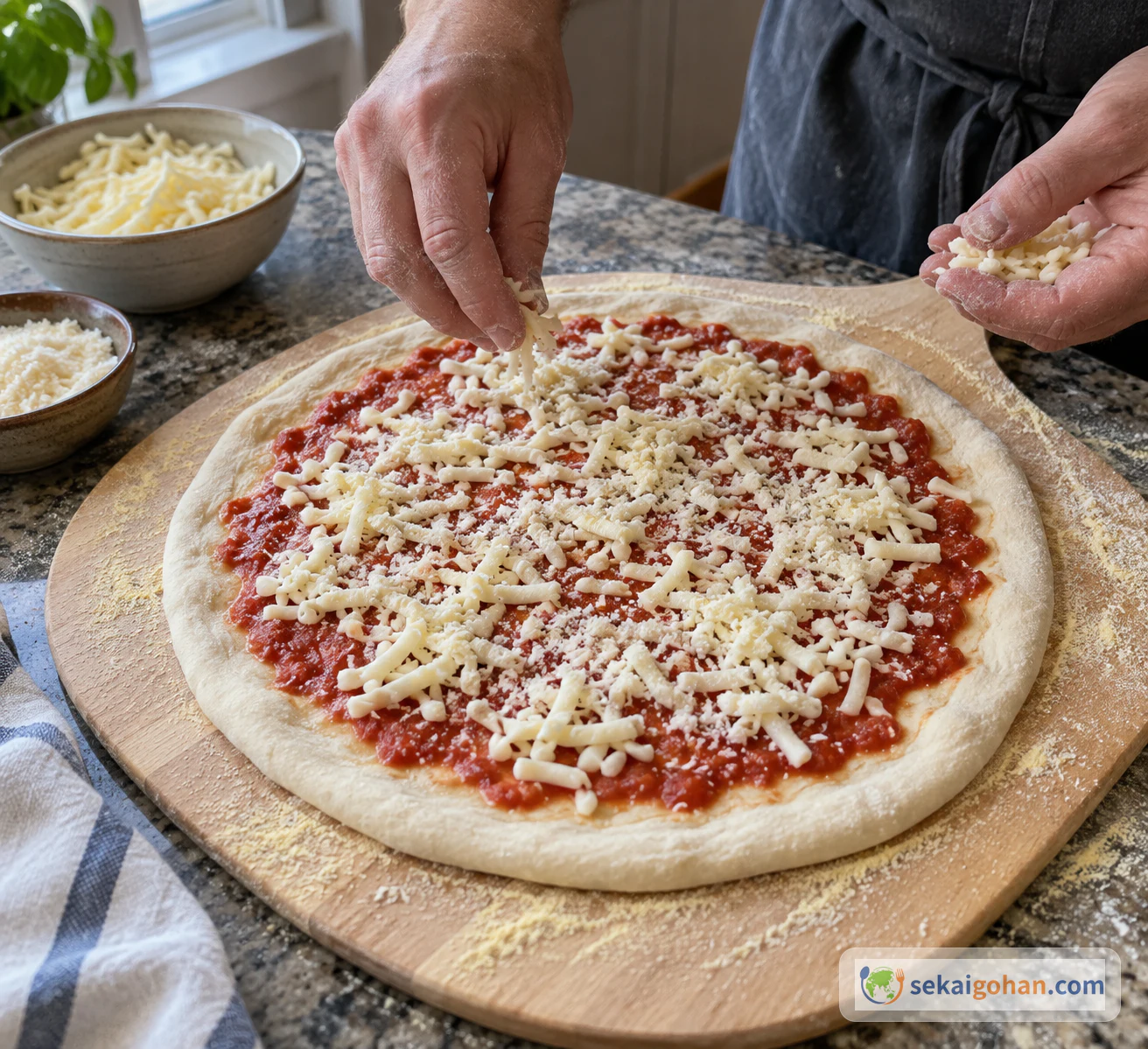
Add the sauce and cheese

Tomato sauce and low-moisture mozzarella scattered over the dough, leaving a border
A thin layer of sauce stopping short of the rim, with cheese scattered over it

Spread about 130g of sauce over the dough, leaving a 1/2-inch (about 1.3 cm) border. Scatter about 99g of mozzarella and about 6g of Parmigiano-Reggiano on top. Don't let the topped pizza sit on the peel for long.

STEP1010 / 12

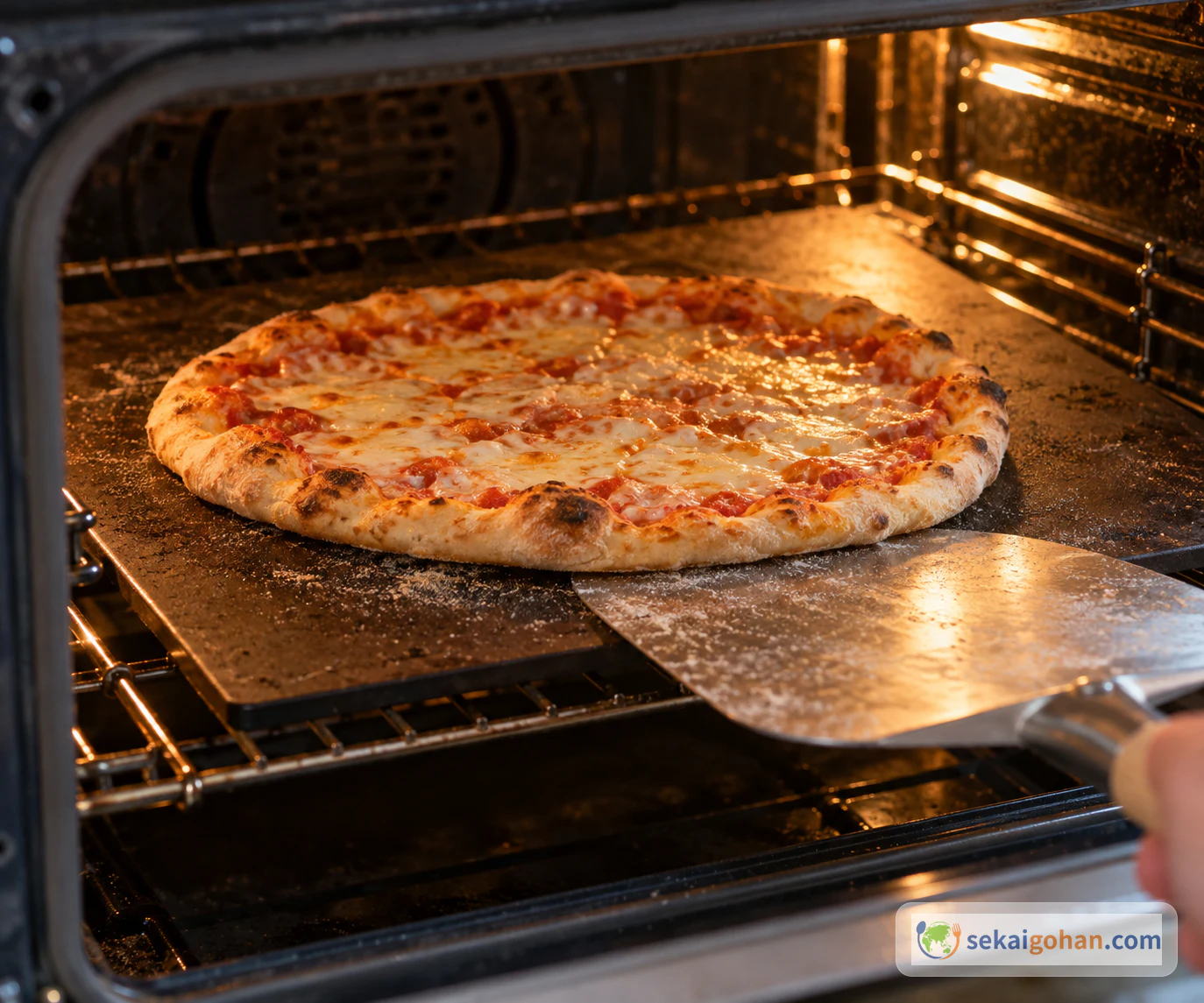
Bake the bottom on the stone or steel

A pizza on a hot steel with the bottom starting to brown
Check the bottom and the rim before moving on to the broiler

Slide the pizza onto the hot stone or steel and bake for 5 minutes. Check the bottom for spotty browning and look at the color of the rim. If they need more, bake for another 1 to 2 minutes. Home ovens vary, so go by how the crust looks.

STEP1111 / 12

Finish under the broiler

A pizza under the broiler with patches of browning on the cheese and rim
Watch closely under the broiler and pull the pizza once browned patches appear

Once the bottom has color, move the pizza to an upper rack and broil for 2 to 3 minutes, until the cheese and rim show patches of deep browning. The pizza can go from browned to burnt quickly, so stay at the oven. Use the broiler only if your oven allows it.

STEP1212 / 12

Cool briefly, finish and slice

STEP 12

Move the pizza to a cooling rack for a short rest. Finish with more Parmigiano-Reggiano, red pepper flakes and dried oregano to taste. Cut it into 6 slices, or into 2 large "super slices." Shape, top and bake the second ball the same way.

0 / 0
Ingredients

Ingredients

1 / 3

Dough

Ingredient Amount Role
Bread flour 360g (3 cups) Gives the crust its strength and chew
Granulated sugar 12g (scant 1 tbsp) Part of the dough formula
Table salt 12g (2 tsp) Flavor and dough structure
Instant yeast 1/4 tsp A small amount for a long rise
Vegetable oil 12g (scant 1 tbsp) Helps the dough stretch and bake
Cool water (60–70°F / about 16–21°C) 206g (3/4 cup + 2 1/2 tbsp) The dough's moisture
Flour for dusting As needed For the work surface while dividing and shaping
2 / 3

Sauce

Ingredient Amount Role
Whole peeled tomatoes, canned 794g (28 oz can) Can contents before draining. Drain, then pulse coarsely
Table salt 6g (1 tsp), plus to taste Seasons the sauce
Granulated sugar 4g (1 tsp), plus to taste Adjusts the tomato's balance. It isn't there to make the sauce sweet
3 / 3

Topping and finishing

Ingredient Amount Role
Sauce from above 260g (1 cup), about 130g per pizza Use only this amount. About 325g of sauce will be left over
Low-moisture mozzarella, whole milk preferred 198g (7 oz), about 99g per pizza The low-moisture type
Parmigiano-Reggiano, grated 12g (1/4 cup), about 6g per pizza, plus more to finish Scattered over the sauce
Semolina flour or yellow cornmeal As needed Keeps the dough from sticking to the peel
Red pepper flakes To taste Heat, added at the table
Dried oregano To taste Aroma, added at the table
0 / 0

When a New York slice is right, you can fold it lengthwise down the middle and the tip stays level instead of drooping toward your shirt. In the city, that broad triangle is cut from a big round pie and eaten on the move, on the street, on a park bench or on the couch at home. This home version gets its chew from bread flour and its thinness from a long rise at room temperature. It bakes on a stone or steel preheated for an hour, then finishes briefly under the broiler, and makes two 13-inch (about 33 cm) pizzas.

What these two pizzas should keep

A large, thin round with a chewy, flexible crust and spotty browning on the bottom. It should be thin enough to fold, and the tip of a folded slice should stay up instead of drooping.

New York-Style Pizza and Its Origins
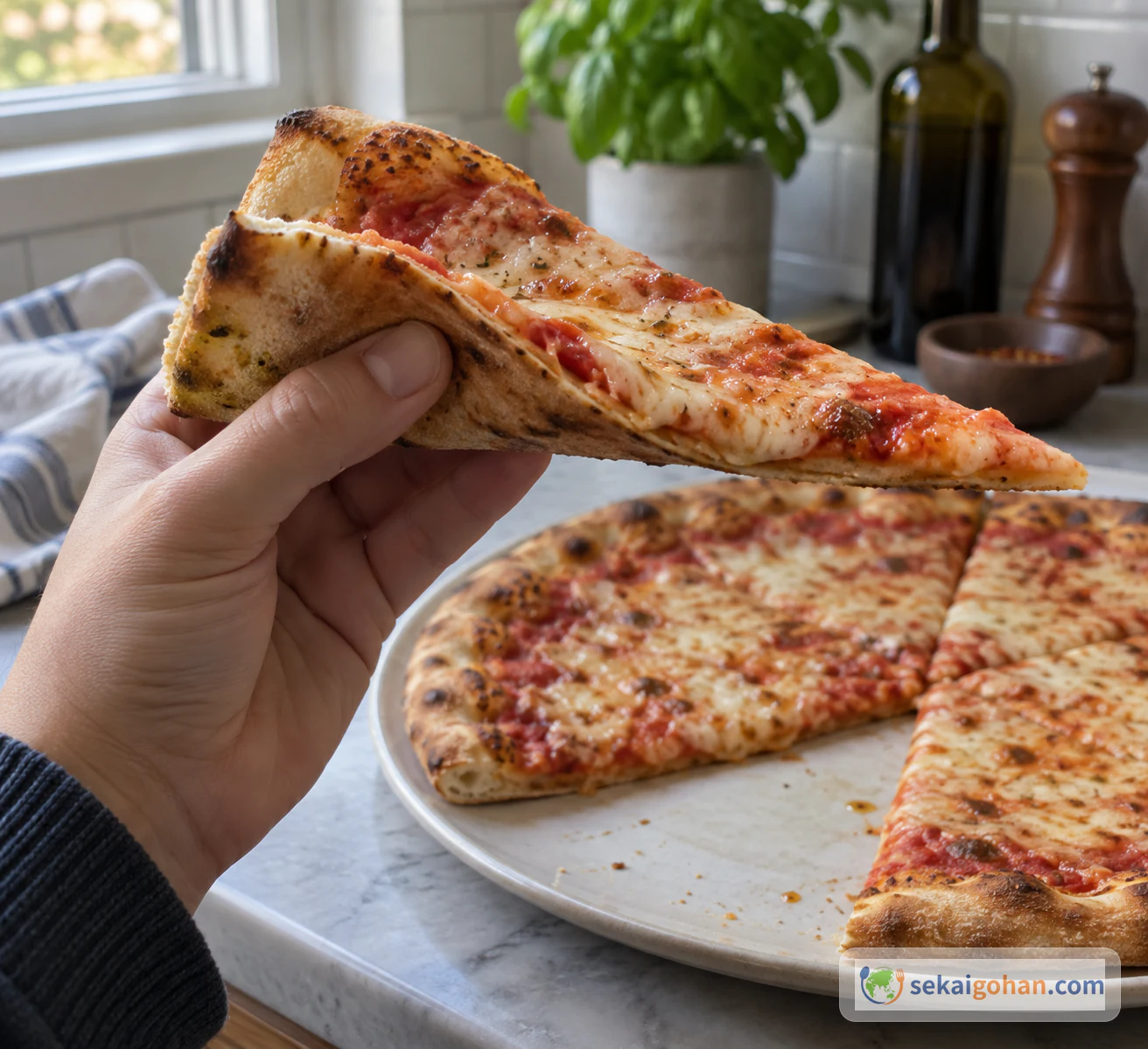
A large triangular New York slice held in one hand and folded slightly lengthwise
Fold the slice lengthwise so the thin crust holds its tip level

Modern pizza traces back to Naples. In the late 19th and early 20th centuries, Italian immigrants brought southern Italian pizza to New York in the United States, where it changed to fit the city's bread ovens and fuels. It grew into a large round that could be cut into slices.

The move from coal-fired to gas ovens changed it again. Oil went into the dough to slow drying during the longer bake, and the toppings shifted to suit that bake too.

Most people know New York pizza by its thin, wide round, the slice, and the fold that makes it easy to carry. Neapolitan pizza is a separate regional style, and setting the two side by side shows how one food took different forms in different ovens, sizes and ways of eating.

Ingredients for 2 Pizzas (13 inches / about 33 cm each)
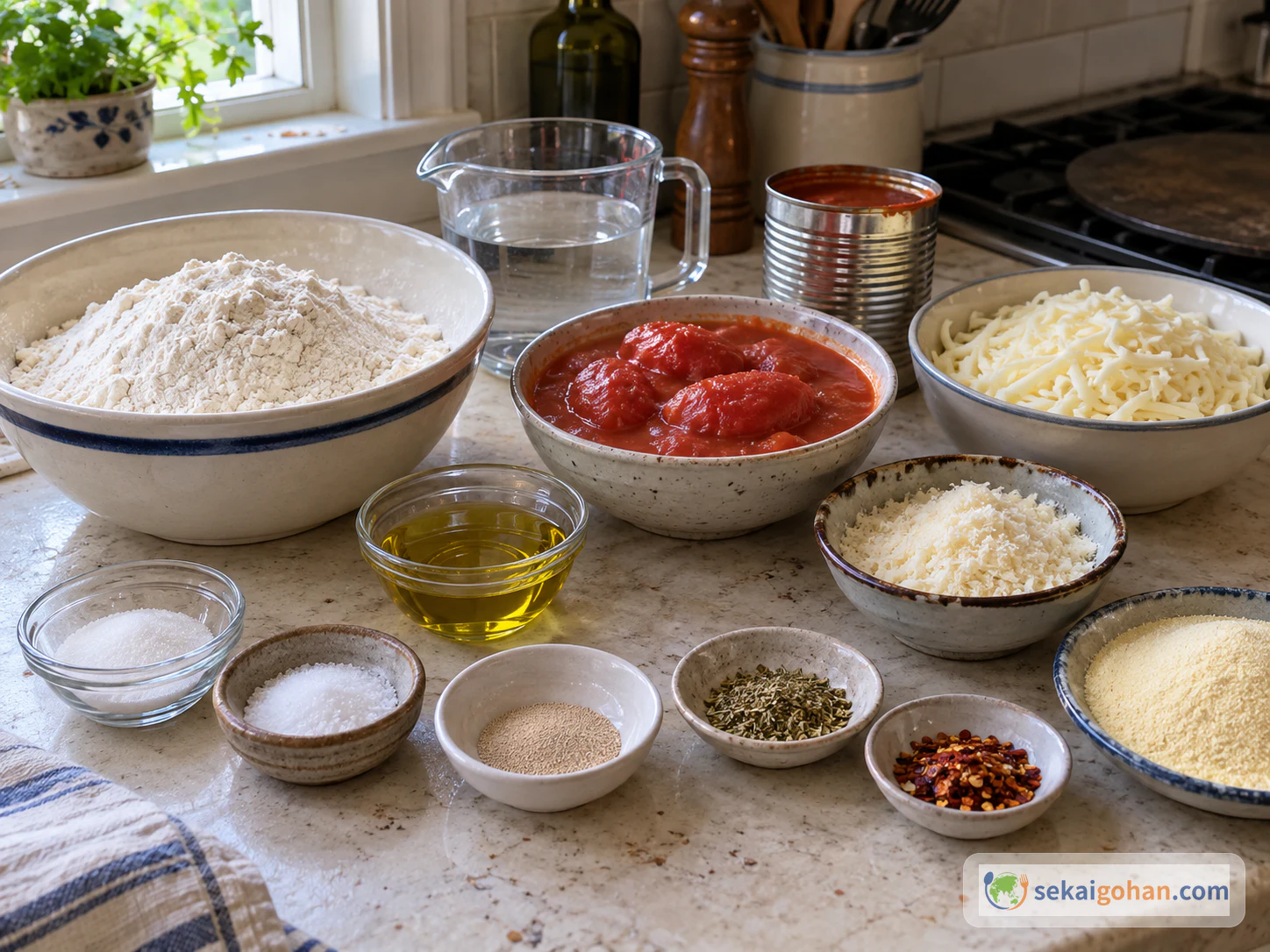
Bread flour, canned tomatoes, low-moisture mozzarella and other ingredients for two pizzas
Ingredients for two pizzas, with the dough, sauce and toppings laid out separately

Where a weight is given, use the weight. The sauce recipe makes more than two pizzas need: only part of it goes onto the pies.

Allergens

This pizza contains wheat (flour, semolina) and milk (mozzarella, Parmigiano-Reggiano). Check the labels on cheese, flour and cornmeal.

Equipment

  • Large mixing bowl
  • Lightly oiled container(s) with an airtight cover, for the dough balls
  • Strainer, for draining the tomatoes
  • Food processor, for pulsing the tomatoes coarsely
  • Baking stone or baking steel
  • Pizza peel, or an upside-down baking sheet
  • Cooling rack
  • Oven mitts
Check your oven and baking surface first

This recipe preheats to 500°F (about 260°C) for an hour, then uses the broiler. Read the manufacturer's instructions for your oven and your stone or steel, including the maximum temperature and broiler use. Never set the oven above what your equipment is rated for. A hot stone or steel stays dangerously hot long after the oven is off.

Choosing Ingredients for New York-Style Pizza

  • Bread flour: The recipe uses bread flour only. Other high-protein bread flours can stand in, but protein content and water absorption vary by product, so the dough may feel and stretch differently. Start with the original 7.5 oz (206g) of water. If the dough is sticky, add more dusting flour rather than cutting the water.
  • Low-moisture mozzarella: Use the drier block or shredded type, ideally whole milk. Lower-fat mozzarella melts differently and tastes less rich. Fresh mozzarella holds much more water and can make the surface watery, so don't swap it in at the same weight.
  • Canned tomatoes: Ordinary whole peeled tomatoes in a can are what you want. The 1.75 lb (794g) is the can weight before draining.
  • Semolina or cornmeal: Yellow cornmeal does the same anti-stick job as semolina, with a slightly different grit under the crust.

Method: From Dough to Folded Slice

Plan backward from baking time

After mixing, the dough rests for 1 hour, then rises at room temperature for 8 to 10 hours. The oven needs at least 1 hour of preheating on top of that. Refrigerating the dough comes only after the room-temperature rise, and it can wait there for up to 3 days.

Troubleshooting New York-Style Pizza

Problem Likely cause What to do
Dough shrinks back while stretching The gluten is tight Let it rest 5 to 10 minutes, then continue. Keep the rim
Dough sticks to the peel Not enough semolina, or topped before checking Check that it slides before topping. Lift the stuck edge and add semolina. Don't leave it sitting on the peel
Dough is sticky Flour brand differences Use more dusting flour. Don't cut the water without a reason
Bottom isn't browning Oven or surface differences Extend the first bake by 1 to 2 minutes. Never exceed your equipment's maximum temperature
Top burns The broiler works fast Even 2 to 3 minutes can burn it suddenly. Stay at the oven the whole time

Storing, Reheating and Varying New York-Style Pizza

Leftover sauce keeps covered in the refrigerator for up to 5 days, or in the freezer for longer. Refrigerate baked pizza within 2 hours, eat it within 4 days, and reheat it to 165°F (74°C). Rewarming slices on the stone or steel recrisps the bottom nicely.

Either a stone or a steel works for baking. They transfer heat differently, so the bake time may shift; go by the color of the bottom. How you cut the pie is up to you, too: 6 slices or 2 large super slices change how it's eaten, not the formula.

Frequently Asked Questions

How is this different from Neapolitan pizza?

This home version is a large, thinly stretched round meant to be cut and folded, with a formula built for a longer bake in a home oven. Neapolitan pizza is a separate regional style.

What if I don't have a pizza stone?

A baking steel works too. A cast-iron pan rated for the temperature is another option, but it heats differently, so the bake time will change. Go by the color of the bottom.

Can I make the dough the day before?

Yes. After shaping the balls and letting them rise at room temperature for 8 to 10 hours, refrigerate them for up to 3 days. Before baking, let the dough sit at room temperature for at least 1 hour while the oven preheats.

Sources