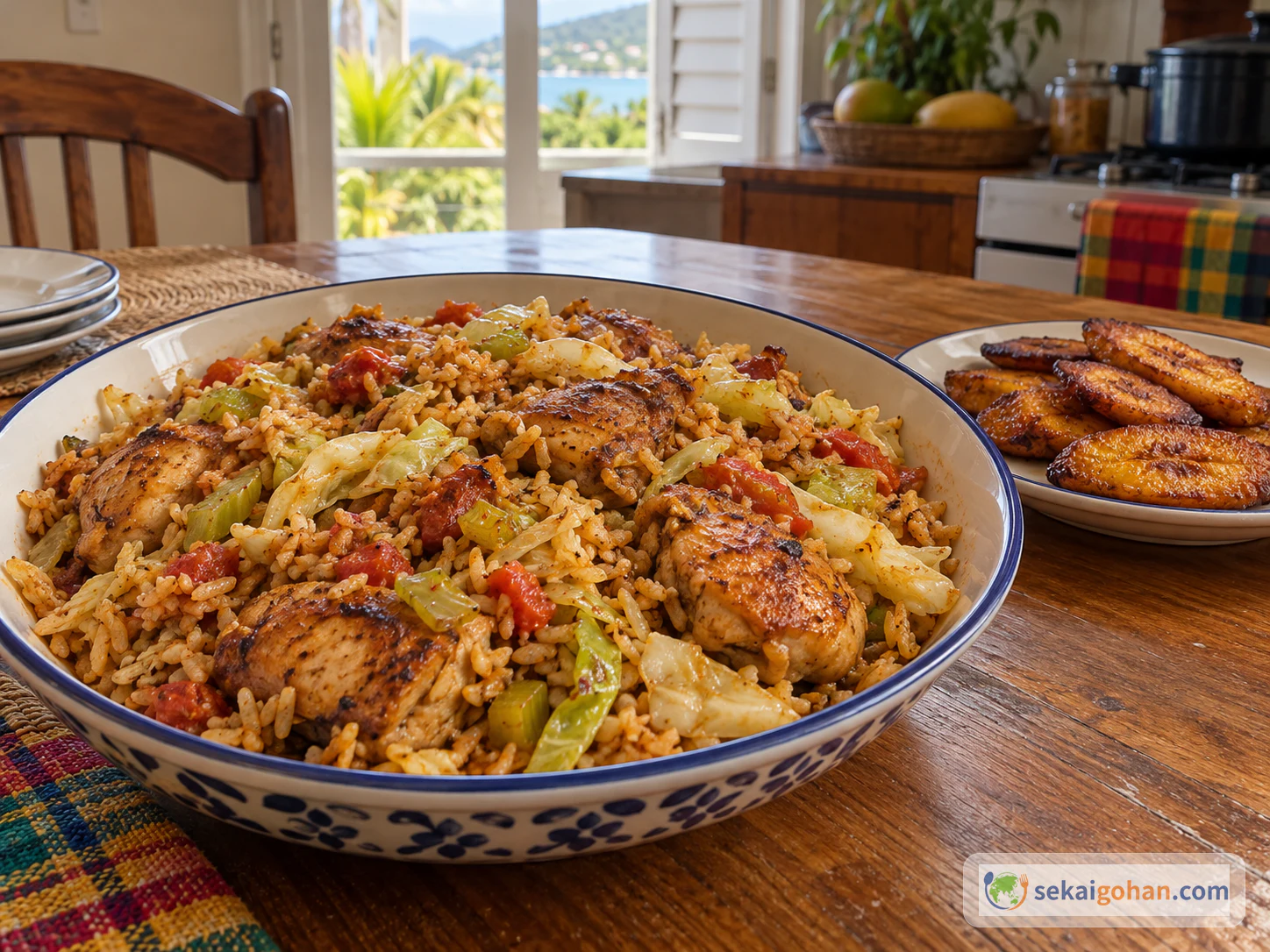
The moment you scrape the bottom of the pan with a wooden spoon, the toasty smell of fried ground meat and chicken livers rises, mixed with the sweet smell of onion, celery and bell pepper. That is dirty rice, an everyday dish from southern Louisiana, especially around New Orleans. The name sounds odd until you see the pan: the meat, liver, aromatics and spices stain the white rice brown. Each grain comes out savory, with an earthy depth from the liver and a little heat.
Dirty rice at the Louisiana table
Locally, dirty rice also goes by names like Cajun rice or rice dressing. It is a home dish rather than a showy feast. It uses scraps of meat, organ meats and aromatics so nothing goes to waste, and dresses plain white rice in savory depth.
At the Louisiana table, rice is the base under gumbo or étouffée, the thing that soaks up the meat gravy and gathers the savoriness of aromatics and organ meats. Dirty rice puts that rice in the lead: the pan juices, the iron-rich depth of liver and the trinity of onion, celery and bell pepper are thinly coated onto each grain. Unlike jambalaya, where the rice cooks in the pot, here the rice is cooked first and then combined with a rich meat base made in a separate pan. The key is letting the rice soak up the flavor without crushing the grains.
Versions differ from kitchen to kitchen. Some cooks puree the chicken livers, some mix a little ground beef into the ground pork, and some use beef stock instead of chicken stock for a deeper color. Some households call it rice dressing and serve it as a side with the Thanksgiving turkey, and some of those versions skip organ meats in favor of ground meat and aromatics. "Cajun rice" is the name you'll see on supermarket spice mixes and prepared foods, which lean toward sausage. Dirty rice itself uses organ meats such as liver and gizzards to brown the rice, and this recipe follows that, with a little liver for color and savoriness. Every version shares rice, meat, the trinity, heat and the brown savoriness at the bottom of the pan.
If red beans and rice is the Monday taste, with beans and rice meeting on one plate, dirty rice is the weekday taste, browned in a single pan. For a sandwich from the same part of Louisiana, there is the po'boy. Put it next to other rice dishes where the rice soaks up aromatics, such as jollof rice and pelau, and you can see how each region handles rice.
Ingredients (serves 4)

The amounts suit a frying pan about 10 inches (26 cm) in diameter or a shallow heavy pot. Long-grain rice is easier to handle: use jasmine, basmati or Calrose. You can use Japanese-style short-grain rice, but it gets sticky, so after cooking, spread it out and let the steam out before using.
This recipe uses chicken livers, pork and Worcestershire sauce. Check the Worcestershire label for wheat. Cook the chicken livers and ground meat through to the center. If you have a thermometer, check for 165°F (74°C). Wash the cutting board, knife and your hands after handling raw liver, before they touch the rice or the scallions.
Choosing ingredients for dirty rice

Ground meat, chicken livers, onion, celery and bell pepper all come from a nearby supermarket. What makes the difference is smoked paprika, which stands in for the aroma of smoked sausage or andouille; oregano, which cuts the heaviness of the meat; and a thermometer for checking how cooked the liver is. Fresh liver, celery that still has its aroma and well-chosen rice show in the result far more than expensive meat does.
| Common local element | At home |
|---|---|
| Chicken livers, gizzards, pork trimmings | Finely chop 4 oz (120 g) chicken liver, backed up by ground pork so it is easy to eat |
| Green bell pepper | 3 small green peppers; if strongly bitter, cook them longer over medium heat |
| The aroma of andouille or smoked meat | Smoked paprika and good searing of the ground pork |
| Long-grain rice | Jasmine rice or Calrose the first time; with short-grain rice, cook it firm and let the steam out |
| Hot sauce at the table | Keep the pot mild and let each person add on their plate |
Rice
Long-grain rice changes the result, so use it even the first time. Short-grain rice easily turns sticky the moment it meets the meat base and ends up heavy, neither fried rice nor mixed rice. If short-grain is what you have, cook it a little firm, spread it on a tray or plate, let the steam out for about 5 minutes, and then combine.
Chicken livers
The hard part at home is deciding whether to include the livers. Without them you still get an easy-to-eat meat and rice dish, but the earthy savoriness and color that define dirty rice fade. Keep the liver to a small amount, remove the blood with cold water, and wrap it in the aromatics and spices. That way, even someone who dislikes liver won't brace for the first bite.
For liver skeptics, reduce it to 2.75 oz (80 g), chop it finely, increase the ground meat by 1.5 oz (40 g), and strengthen the garlic and smoked paprika a little. That keeps much of the color and the outline of the dish. If you leave the liver out entirely, increase the ground pork to 11.5 oz (320 g), raise the smoked paprika to 1 1/2 tsp and add only 1 tsp more Worcestershire sauce.
Peppers and heat
Cut the bell pepper about 0.25 inch (7 mm). Cut too fine, it only releases water and its aroma weakens; at this size it keeps its presence in the rice.
Hot sauce belongs at the table rather than in the pot, which is closer to how it is eaten in Louisiana. A Tabasco-type with some acidity is mild, while a habanero type gets sharp in small amounts. Put only 2 tsp in the pot and adjust the rest on the plate.
Method
Cook the rice in a pot and the meat base in a frying pan, separately. Make the rice a little firm and reduce the meat base thick, with the liquid cooked down. Combine them at the end, turning broadly and quickly, so the rice grains don't crush and take on the brown savoriness.
Dirty rice troubleshooting

Problems with dirty rice show up in the rice more than in the flavor. Add the rice while the meat base is still watery and it turns heavy; reduce the base too far and the rice gets dry and crumbly. Check the thickness of the base before the rice goes in, and most problems are easy to fix.
| State | Cause | How to fix |
|---|---|---|
| The rice is mushy | The stock was not fully reduced, or Japanese-style rice was cooked soft | Remove the lid and spread over low heat for 2–3 minutes; next time cook the rice firm |
| Strong liver smell | Blood clots and moisture remained, or not enough browning | Next time soak 10 minutes in cold water, wipe dry, and sear first over medium-high heat |
| The color is pale | Too little liver, or the meat was not seared | Cook undisturbed 2 minutes and add 1/2 tsp smoked paprika |
| Salty overall | The salt in the stock and Worcestershire was not considered | Add 3.5 oz (100 g) unsalted rice, and use hot sauce on the plate |
| The rice is dry | The base was over-reduced, or it was not rested | Add 1 tbsp chicken stock, cover and rest 3 minutes |
With Japanese-style rice, a little stickiness is natural. A rich meat base and a brief mix once the rice is in hold it together better than forceful stir-frying. Even long-grain rice breaks if you work it hard right after cooking, so loosen it with a fork and let it cool slightly before it goes into the pan.
Serving and storing dirty rice
Serving
Hot sauce, lemon, cucumber pickles and coleslaw all go well at the table. Meat and rice are filling on their own, so something acidic and green makes the plate easier to eat than adding anything fried. If you cook it the same week as red beans and rice, you can use up the leftover celery, bell pepper and scallions. It also takes less time than jambalaya, which makes it a good way to bring Louisiana cooking into a weekday menu.
Storage and reheating

Dirty rice smells best freshly cooked. Because it contains chicken liver and ground meat, don't leave it at room temperature for long: spread leftovers in a shallow container to cool, seal, and refrigerate for up to 2 days. To freeze, wrap it flat in single portions and use within 3 weeks.
To reheat, sprinkle each serving with 2 tsp water, cover loosely with plastic wrap, and microwave at 600 W for 2 minutes 30 seconds. If it is not hot through to the center, stir and add 30 seconds at a time. In a frying pan, add 1 tbsp water and turn it broadly from the bottom over low heat for about 3 minutes. Chasing a char over high heat only dries out the rice and brings the liver smell forward.
The next day, the flavor is rounder but the aroma goes a little dull. A pinch of smoked paprika and extra scallions at the end of reheating freshen it up. If the saltiness stands out, cut it with lemon or pickles rather than more hot sauce, so the plate doesn't get heavy.
Frequently asked questions
How much water for Japanese-style rice?
Cook it a little firmer than the usual water level on your rice cooker. Spread it out to let the steam escape before it goes into the meat base, and with a very sticky rice, mix as few times as you can so the grains stay whole.
Is it a spicy dish?
It has aroma but isn't strongly hot. Start with 1/4 tsp cayenne and add hot sauce at the table. For children or anyone who dislikes spice, leave out the cayenne and adjust plate by plate.
Can I make it with just a rice cooker?
The rice cooker is fine for the rice. Make the meat base in a frying pan, though: with the meat, liver and vegetables all in the rice cooker, the liver smell gets trapped and nothing browns. The frying pan is the steadier method, especially your first time.
How far can I prepare the day before?
You can mince the vegetables, measure the spices and cook the rice. Chicken liver spoils easily, so cook it the same day you prepare it. If you finish the whole dish the day before, spread it in a shallow container to cool quickly, and reheat it the next day until hot through to the center.