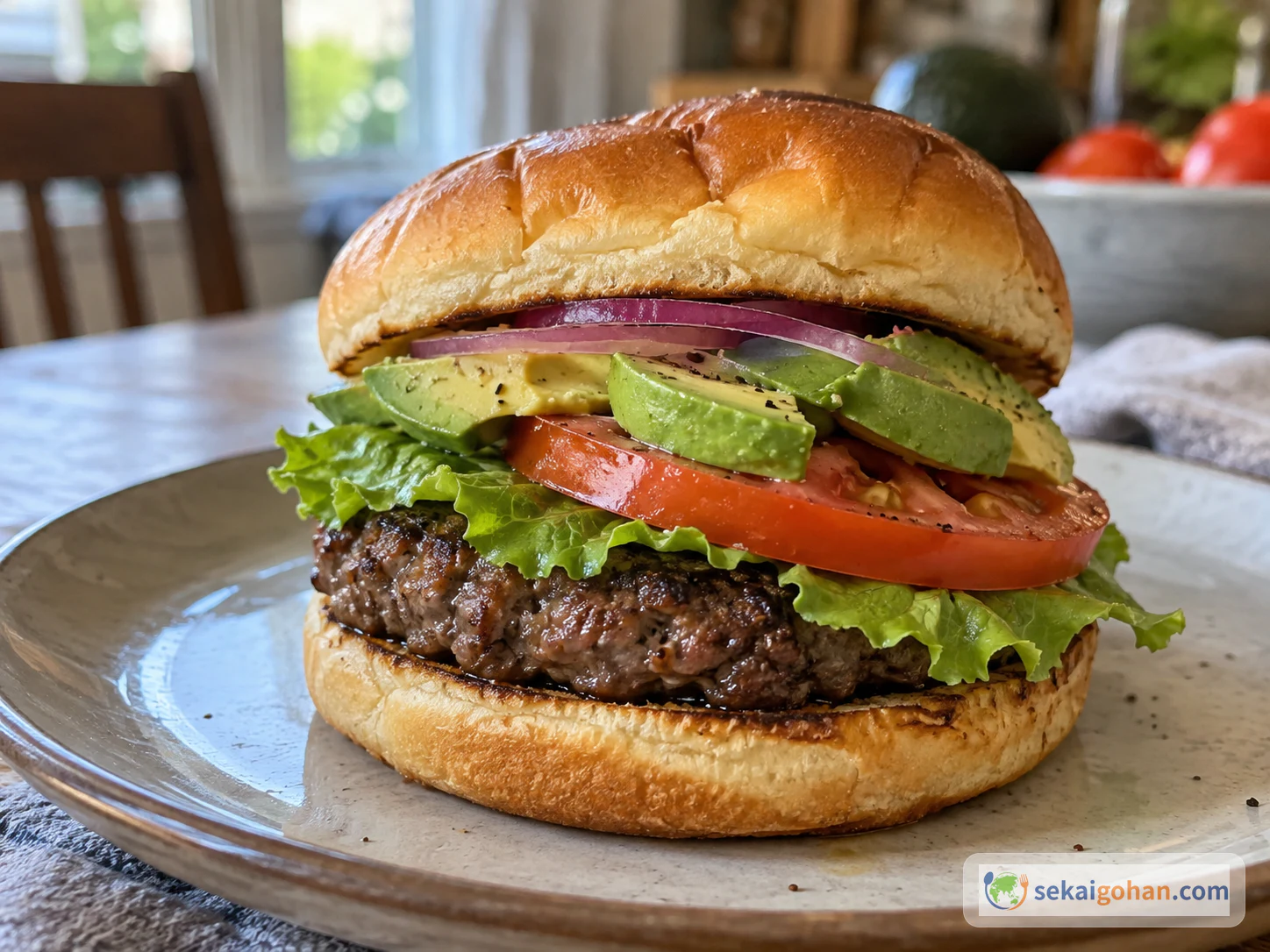
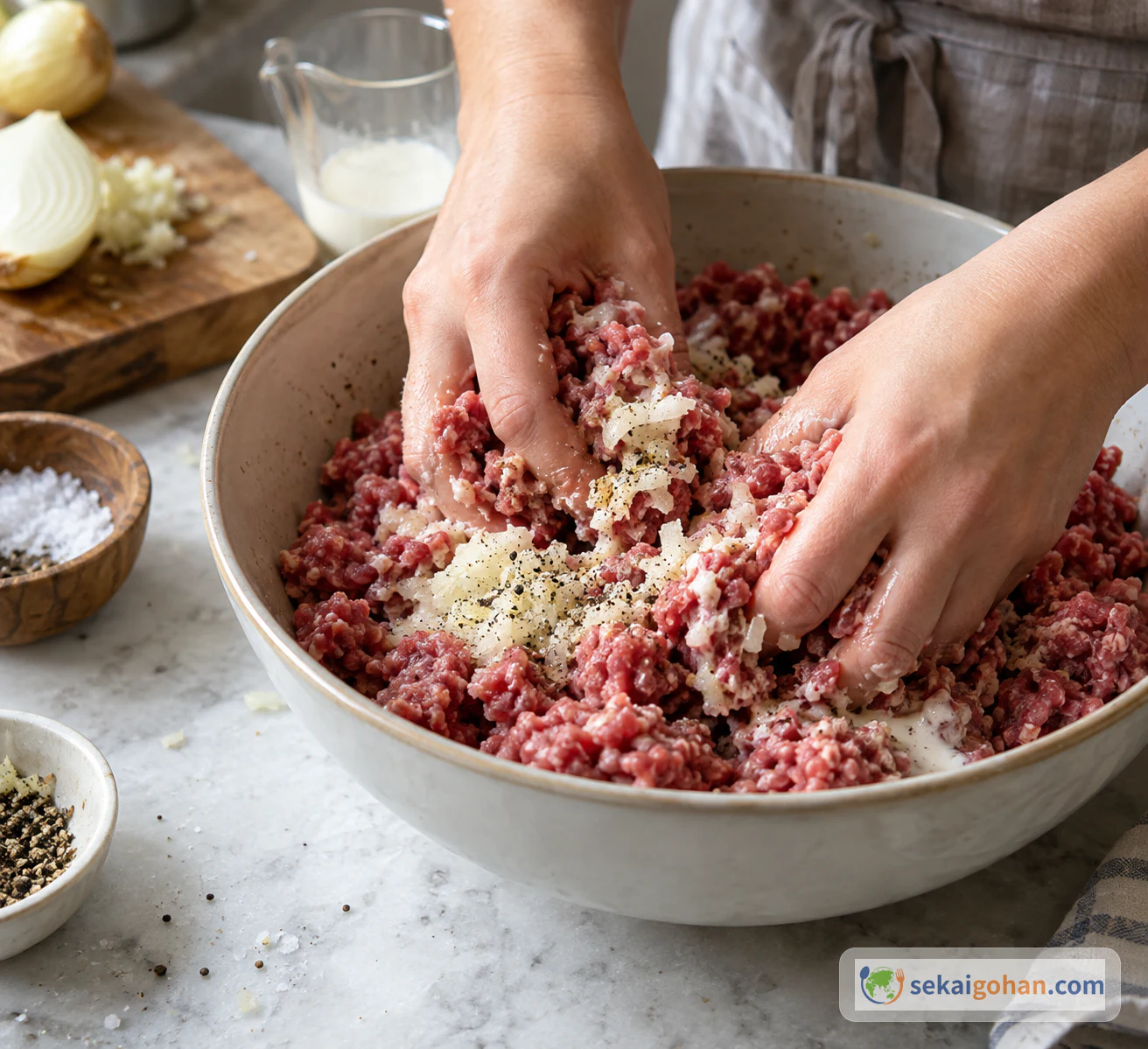
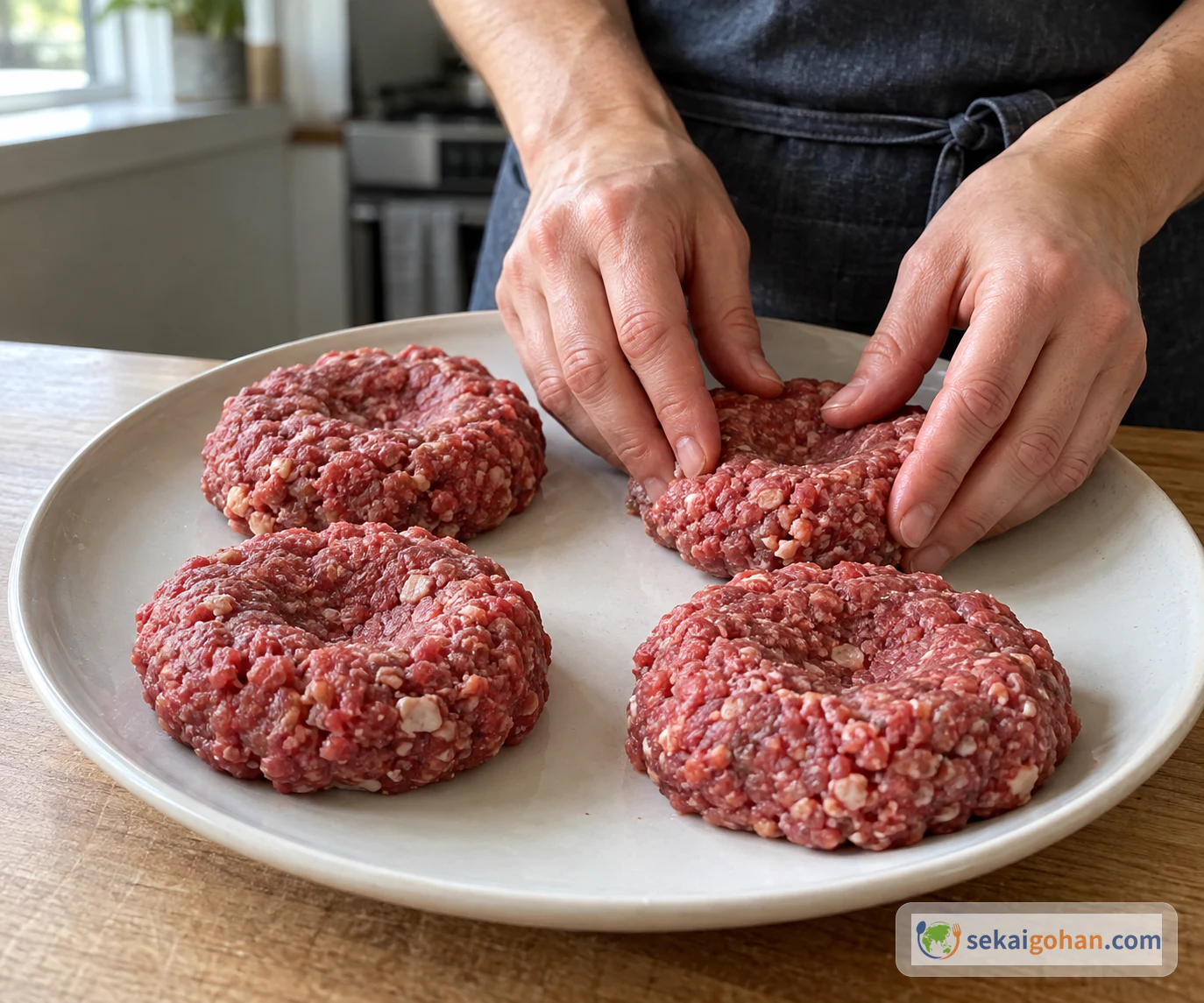
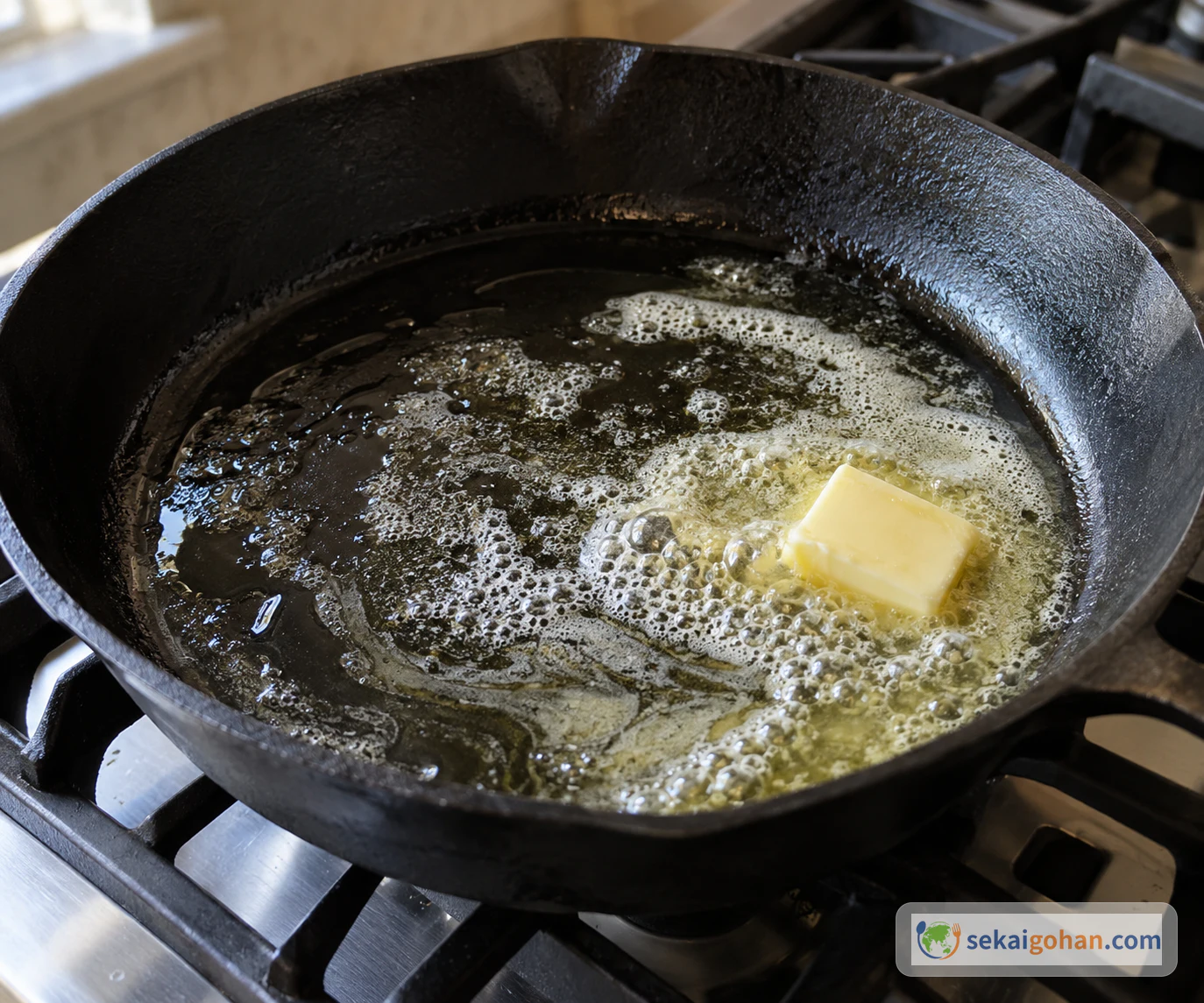
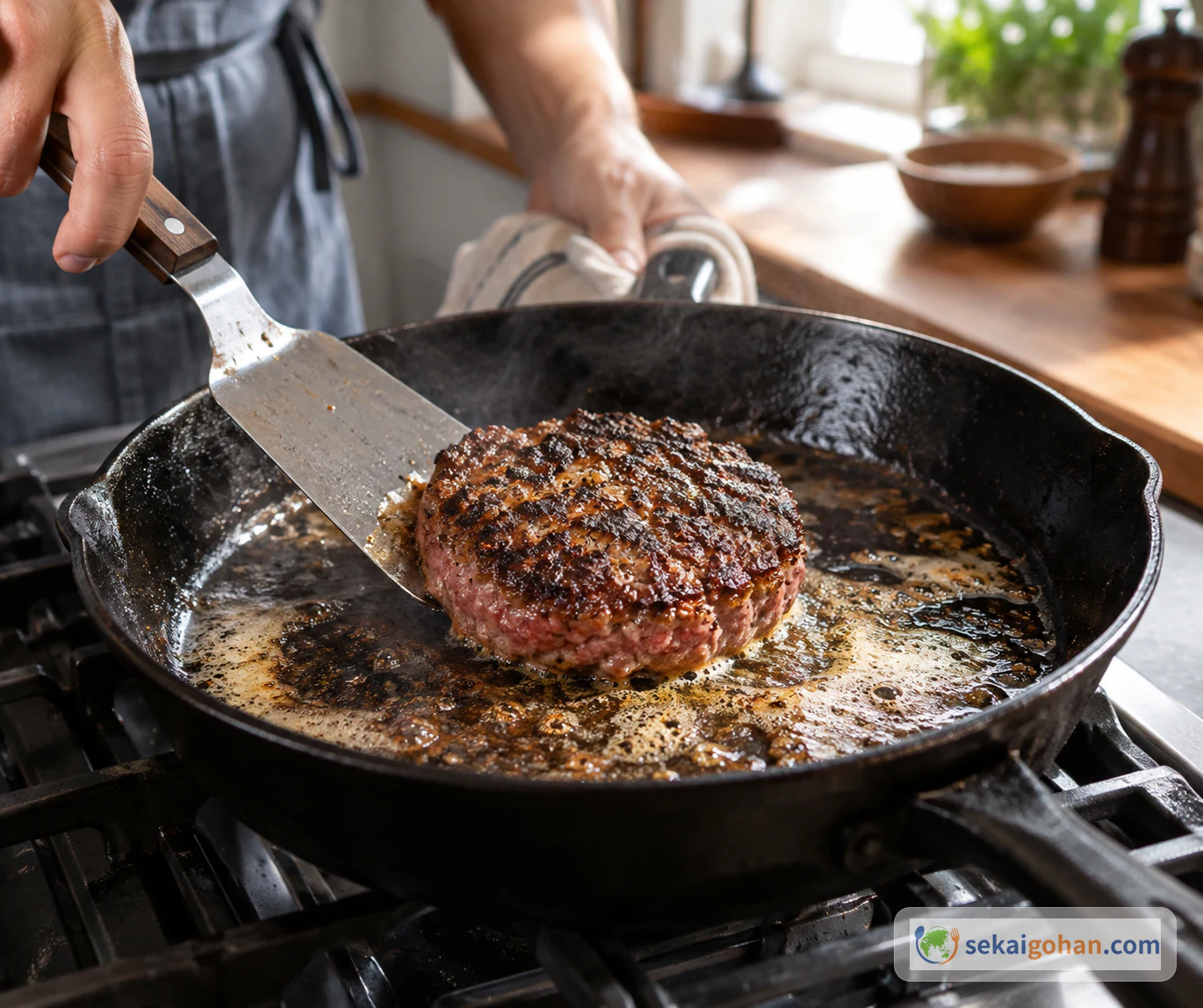
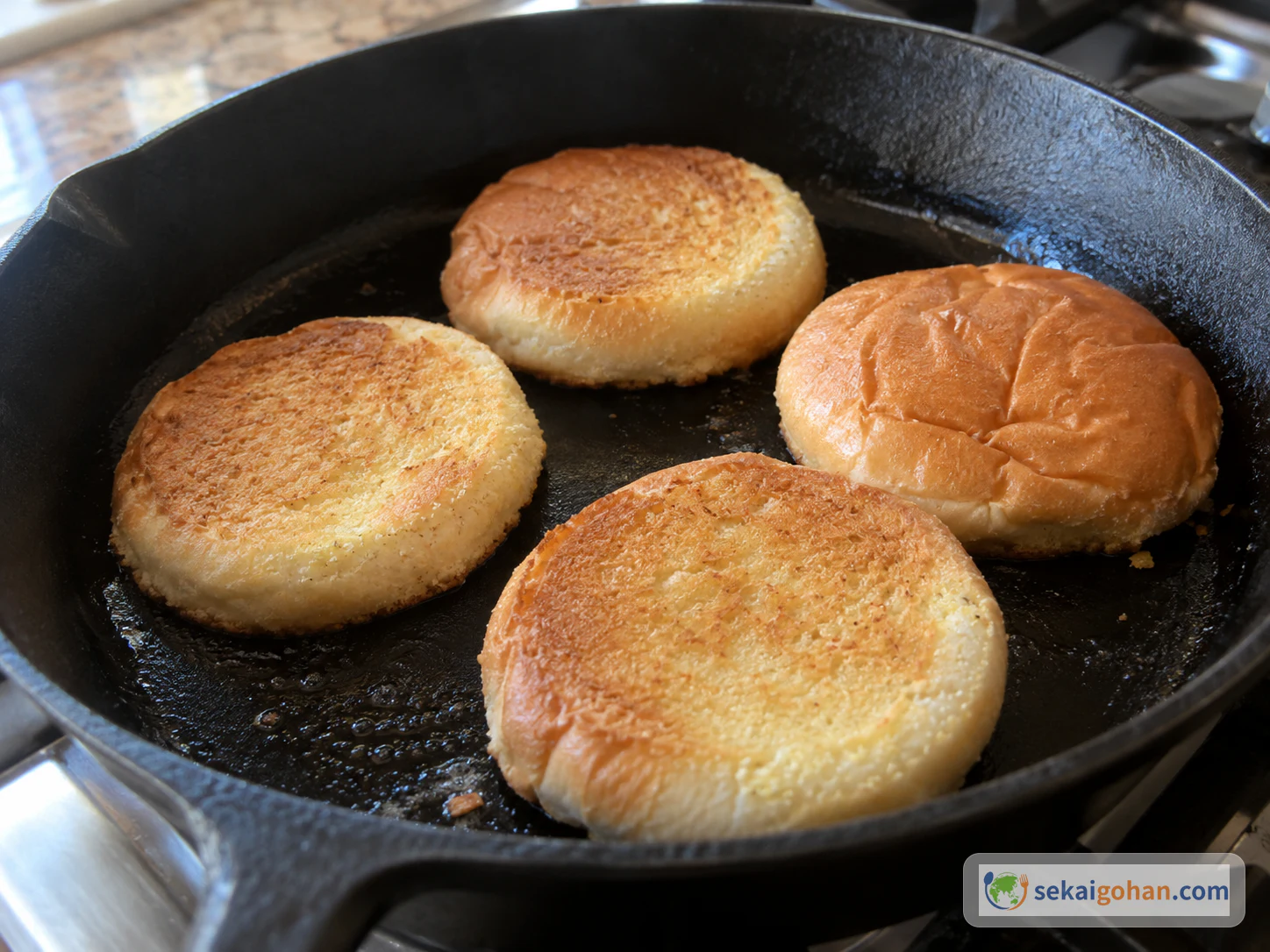
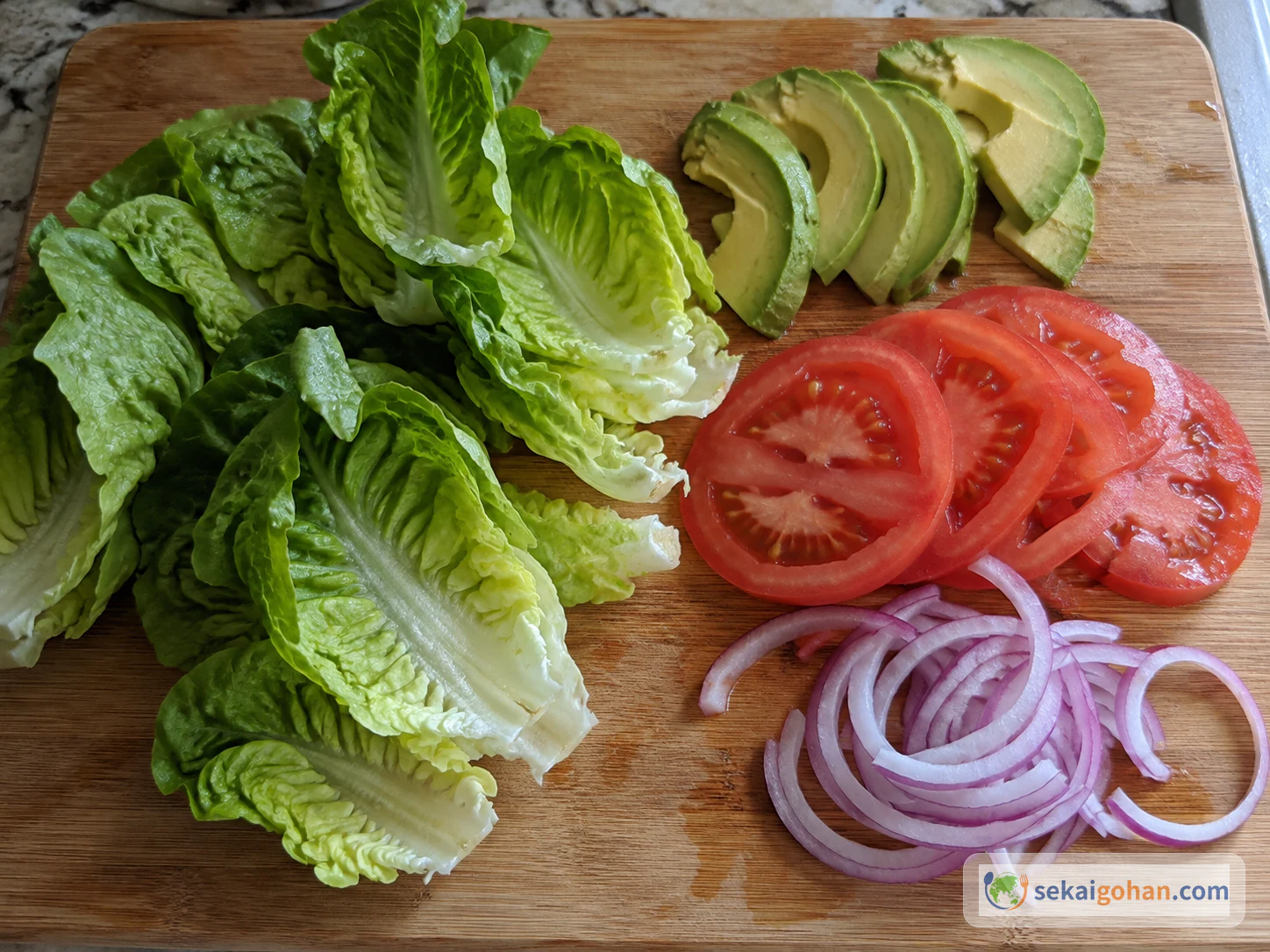
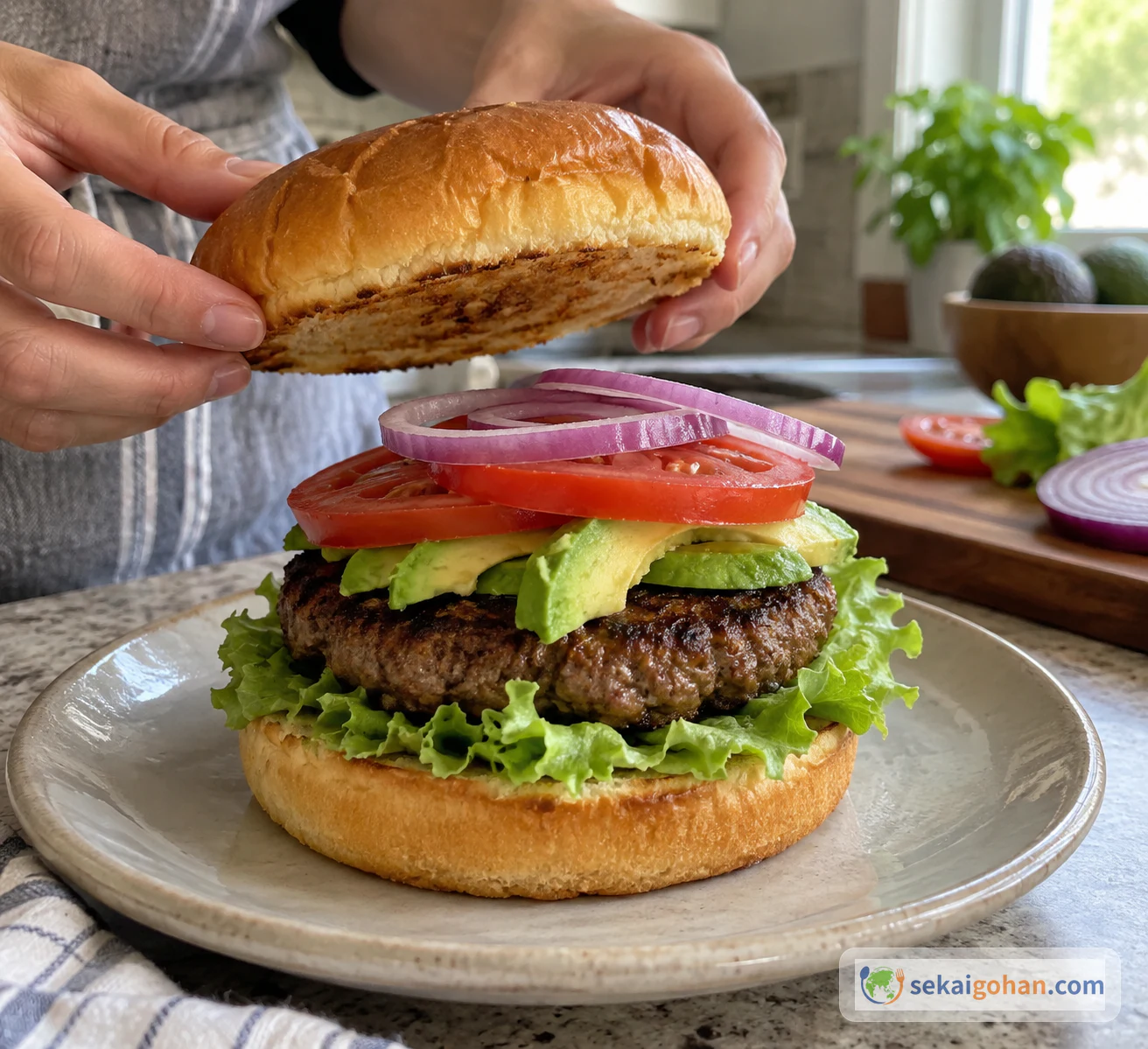
Picture a weekend table: a skillet of browned patties just moved to a plate, soft rolls toasted on the cut side, and a board of lettuce, avocado, tomato and red onion waiting nearby. Everyone builds their own. The hamburger, a beef patty in a bun, has become one of the most familiar meals in the United States. This version has a small twist in the meat itself: grated onion and a spoonful of heavy cream are folded into lean ground beef before shaping. The patties are browned in vegetable oil and salted butter, then served on potato rolls with little gem lettuce, avocado, beefsteak tomato and red onion.
The Hamburger in the United States
A hamburger is a beef patty served in a bun, the modern sandwich that took hold in the United States. The name points toward Hamburg, and the dish is linked to "Hamburg-style" chopped steak and German immigrants. A chopped-beef steak eaten on a plate is a different dish, though, and so is the German Rundstück warm.
Who first put the patty in bread, and where, has never been settled. Several people and places have been put forward, and none has been confirmed. What is clear is that in the late 19th century the beef moved from plate to bun at lunch wagons, fair stands and roadside restaurants. Food you could hold in one hand, sold quickly at a counter or stand, suited the way people were eating.
The hamburger became widely known around the 1904 World's Fair in St. Louis. From 1921, Walter Anderson and Billy Ingram of White Castle helped turn it into a mass-market food and push it toward chain restaurants.
Today there is no single "correct" American burger. Thin patties pressed on a flat griddle, thick patties over a grill, and different stacks of cheese, pickles, onion and more all turn up across American kitchens. This one, with its onion-and-cream patty and fresh vegetables, is a clear, home-friendly example.
Ingredients: Serves 4
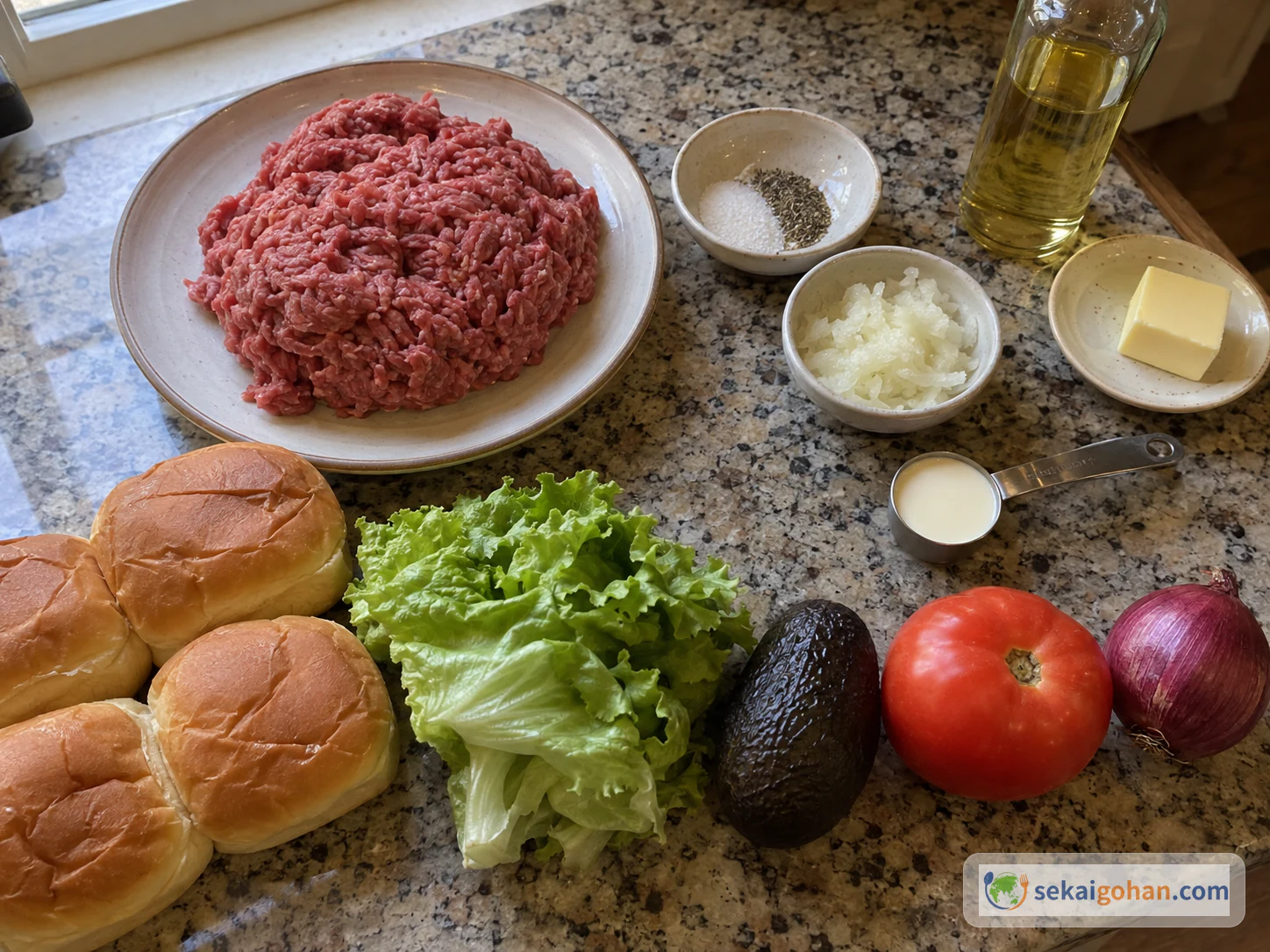
These amounts make 4 servings.
This recipe contains beef, and milk in the heavy cream and butter. Buns usually contain wheat, so check the label for milk, egg or other allergens, since ingredients differ by product.
Choosing Beef, Buns and Vegetables for Hamburgers
Beef. "93% lean" is a fat-percentage label used in the United States. Outside the US, ground beef is often labeled differently, so look for a lean ground beef that matches this blend. A fattier mix, or a beef-and-pork blend, changes the flavor and texture enough that it's really a different recipe.
Salt. Kosher salt has a larger grain than fine table salt, so a teaspoon of each delivers different saltiness. If you use another salt, season with that in mind.
Cream and butter. Use heavy cream; milk has a different fat and water content and won't give the same result. Salted butter is the choice here. Unsalted works, but the overall saltiness will shift.
Buns and vegetables. Potato rolls are soft and slightly sweet. Supermarket hamburger buns can stand in, with a difference in softness and sweetness. Any leaf lettuce can replace little gem, and any large slicing tomato can replace beefsteak.
Equipment
- Large mixing bowl
- Large heavy skillet
- Wide spatula
- Instant-read food thermometer with a thin probe
- Clean plates (one for raw patties, a separate clean one for cooked patties)
- Cutting board and knife
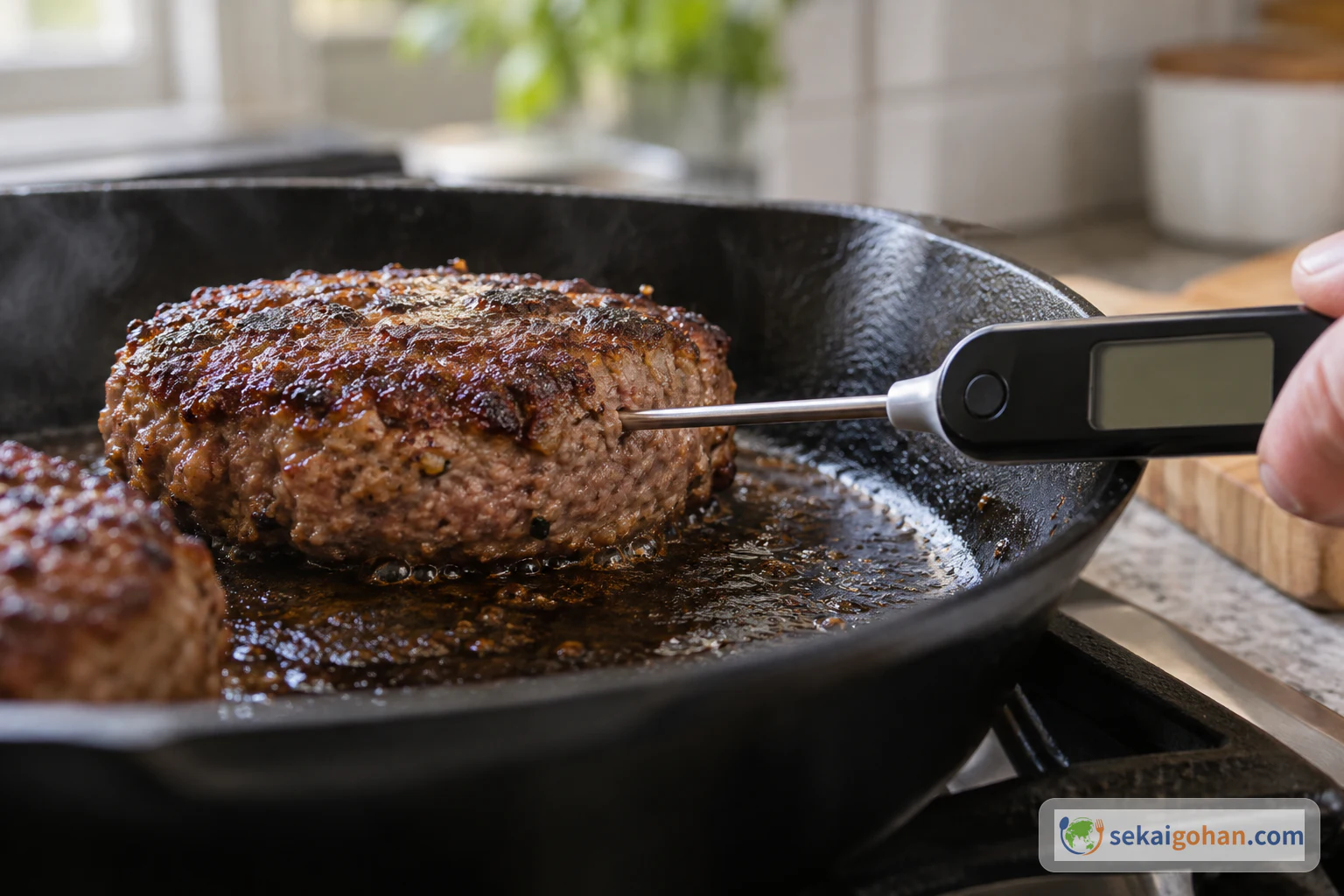
A thin-probe digital thermometer makes it easier to find the center of a patty, and a heavy skillet holds its heat well when the meat goes in.
Method: Mix Lightly, Brown Well, Measure the Center
Stop mixing as soon as the seasoning is evenly distributed, and judge doneness by the thermometer reading, not by how brown the outside looks or how much time has passed.
Hamburger Troubleshooting
Cooking time changes with patty thickness, heat and pan, so check every patty with a thermometer rather than trusting the clock or the color.
| Problem | What to look at | What to do |
|---|---|---|
| The patty is dense or tough | Too much mixing | Next time, stop mixing once the seasoning is even |
| The patty cracked or broke | Mixing, shaping and turning | Mix less, shape the patties neatly and chill them before cooking. Turn only once |
| The outside is brown but the center isn't up to temperature | Thickness, heat and pan all change cooking time | Keep cooking and check again until the center reads at least 71°C (160°F) |
| The patty is thin and hard to measure | The probe tip misses the center | Insert the probe from the side, or at an angle, so the tip sits in the middle |
| The meat is still pink inside | Color is not a doneness test | Go by the thermometer reading |
Keep the ground beef refrigerated until you mix it. Don't put cooked patties back on the plate that held raw meat, and wash your hands after shaping the patties. Put any leftovers in the refrigerator promptly.
Serving Hamburgers and Variations
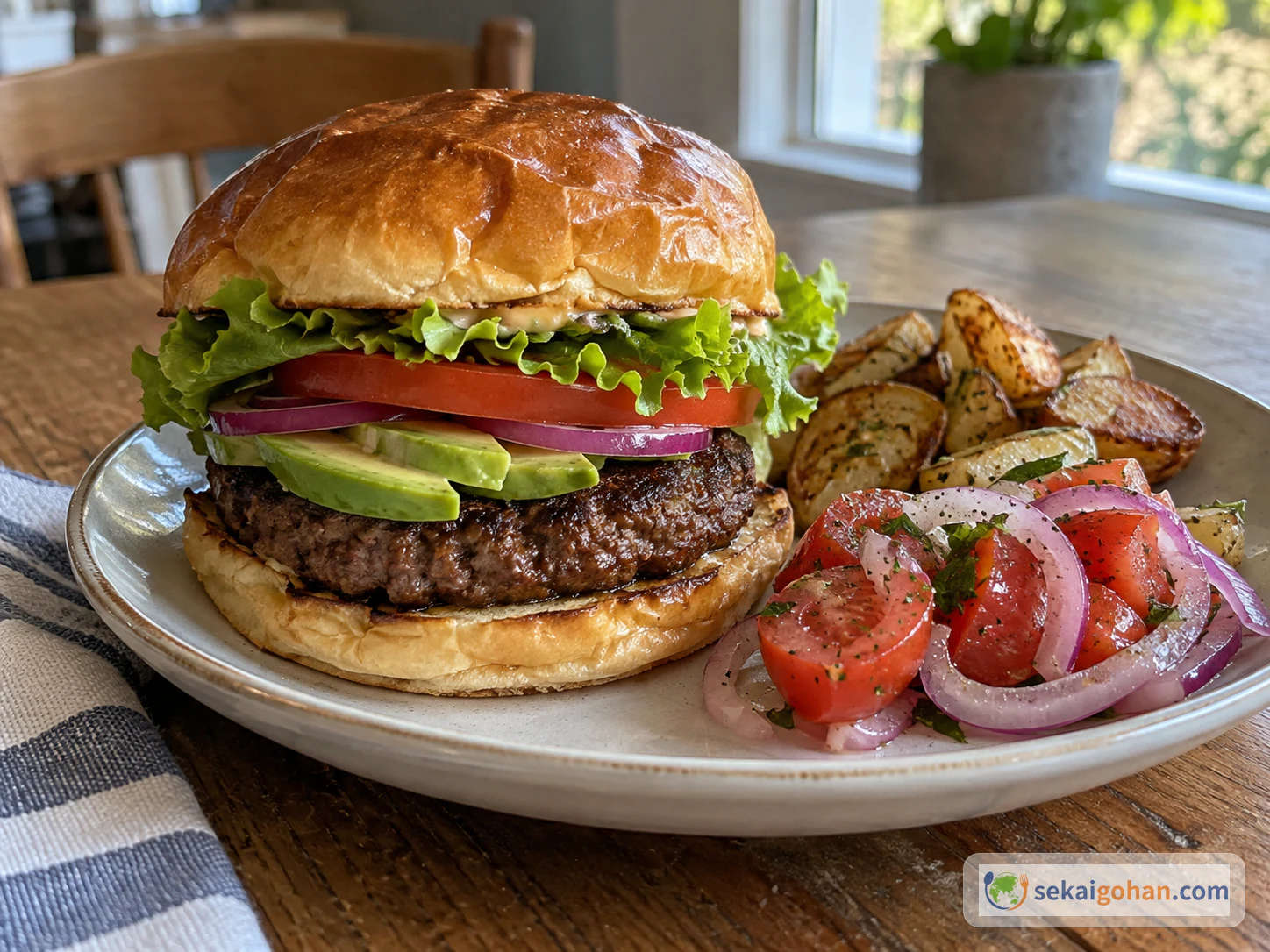
Burgers suit a table where everyone assembles their own, with the toppings laid out on a board. A simple potato side or a tomato and red onion salad rounds out the meal easily. If you're planning more American home cooking around ground beef, chili con carne is a natural next dish, and for another hand-held meal, try the pasty.
A few changes are worth trying once you know the base recipe:
- Soak the red onion slices in water. This softens their bite. Dry them well, though, since water clinging to the onion makes the burger soggy.
- Skip the avocado. Lettuce, tomato and onion alone make a simpler burger with easy-to-find ingredients.
- Use regular hamburger buns. They're easier to buy in many places, if a little different in feel from potato rolls.
- Cook on a grill instead of a skillet. Heat varies, so timing changes, but the center still needs to reach at least 71°C (160°F).
- Use a fattier beef blend. The juices and fat will behave differently, so don't expect it to match the original proportions.
Frequently Asked Questions
How do I keep the patties tender?
Don't overmix. Stop as soon as the salt, pepper, grated onion and cream are evenly spread, then divide the meat into 4 and keep the patties the same thickness.
Is it OK if the inside is still pink?
Color won't tell you. Measure the center of the thickest part with a thermometer and make sure it reaches at least 71°C (160°F).
Can I cook the patties rare?
Rare is a matter of taste, at about 5 minutes per side. This recipe does not recommend undercooked ground beef, so cook until the center reaches at least 71°C (160°F).