New England-Style Clam Chowder: Clams and Potatoes in a Creamy White Broth

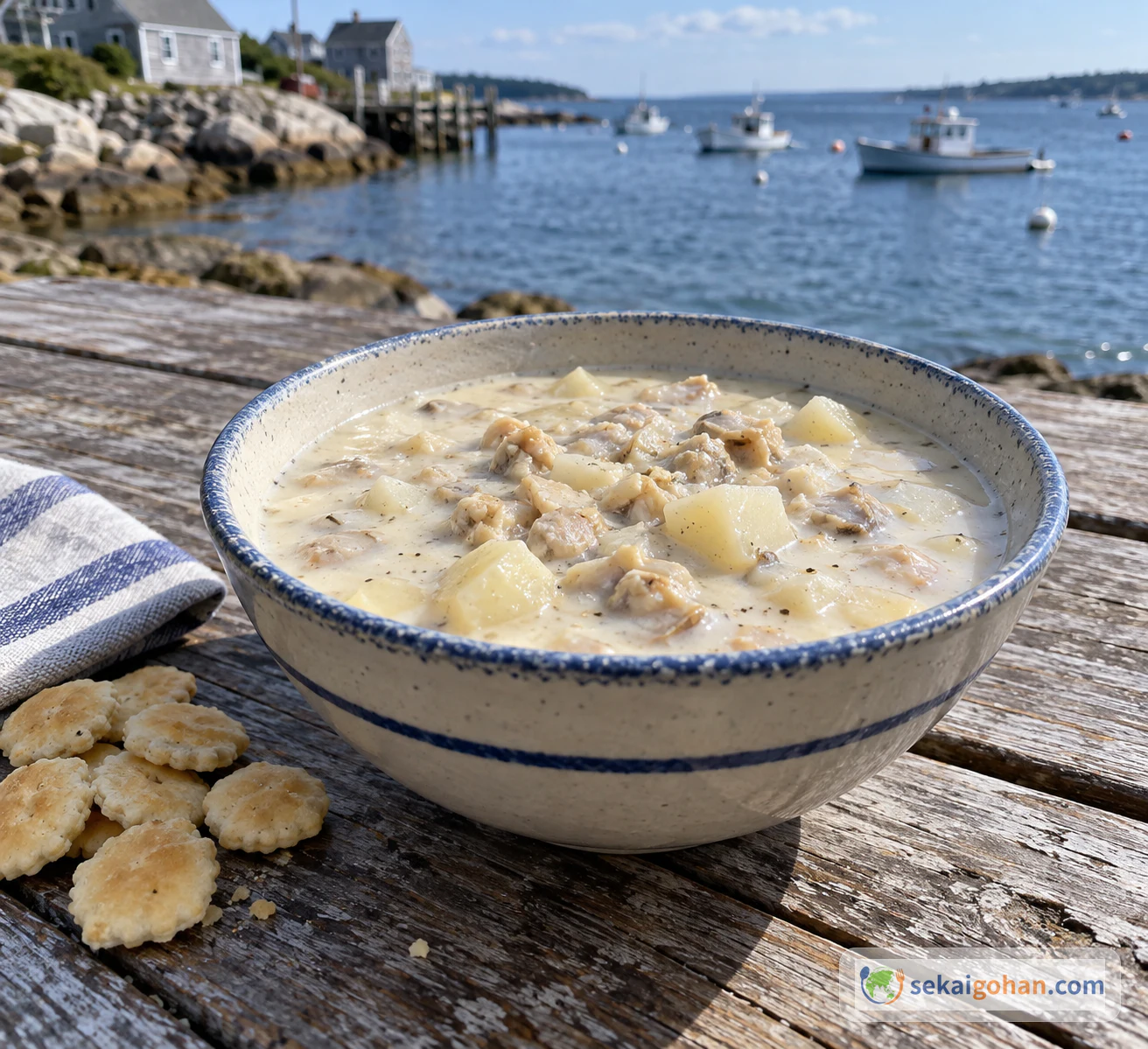
Creamy New England-style clam chowder with chopped clams and diced potatoes in a white bowl
Serves
8–10 servings
Cuisine
American (New England)

How to make New England-style clam chowder from the Chatham Pier Fish Market recipe: bacon fat, onion, potatoes, chopped clams, bottled clam juice and light cream. Covers building a smooth roux, a clam-heating check before the cream goes in, how to judge substitutions for clam juice, cream and bacon, and how the creamy style differs from clear Connecticut-style and tomato chowders.

Cooking flow

Cooking steps

STEP11 / 7

Render the bacon over medium-low heat

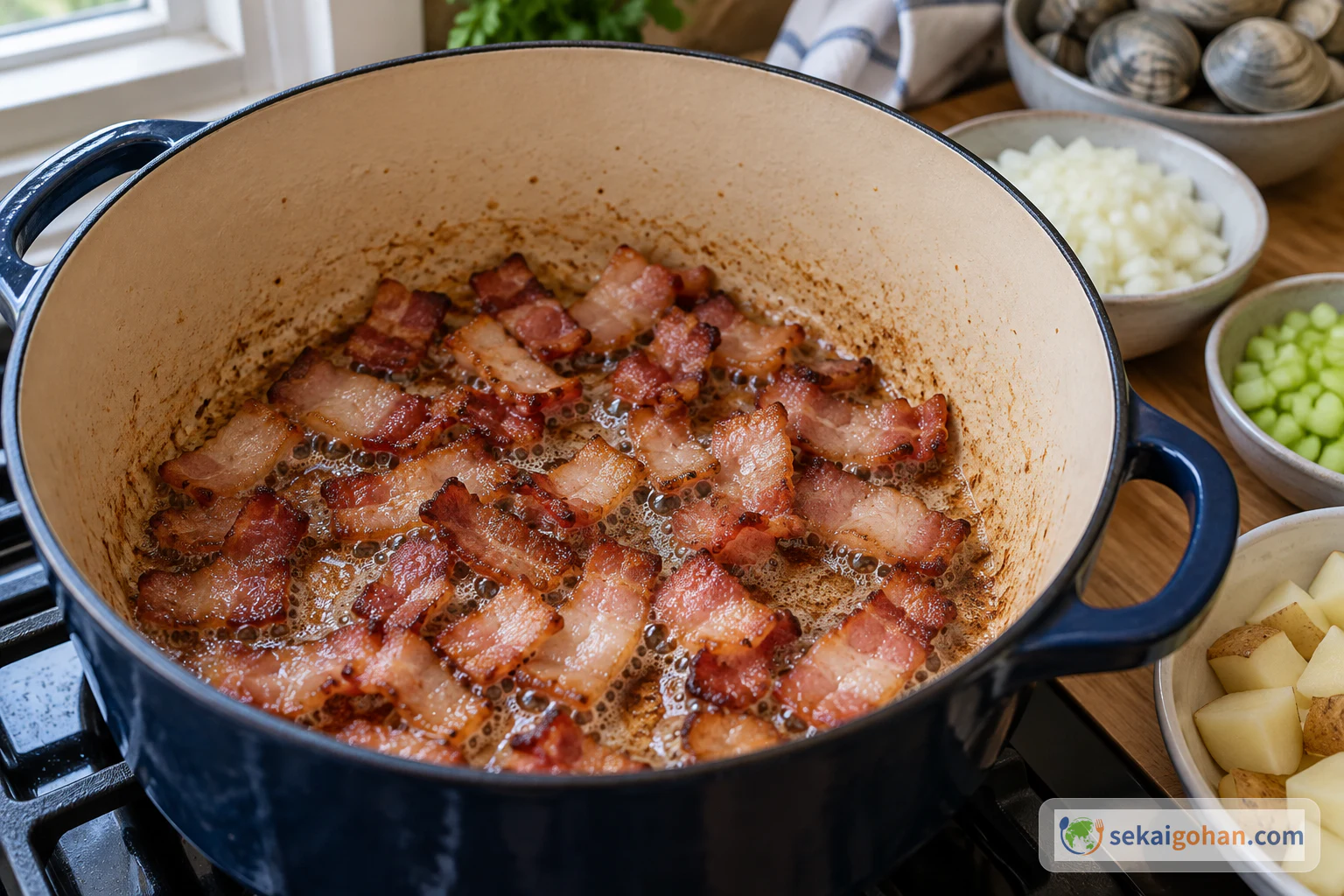
Thick-cut bacon cooking in a heavy pot, with rendered fat visible
Cook the bacon slowly, then lift it out and keep the fat in the pot

Set a 4–6 quart pot over medium-low heat and add the 3 strips of thick-cut bacon. Cook for 10–12 minutes, turning occasionally, until crisp. Lift the bacon out and leave the fat in the pot, then crumble the bacon and set it aside. Keep the heat at medium-low; higher heat will scorch the bacon before the fat has rendered.

STEP22 / 7

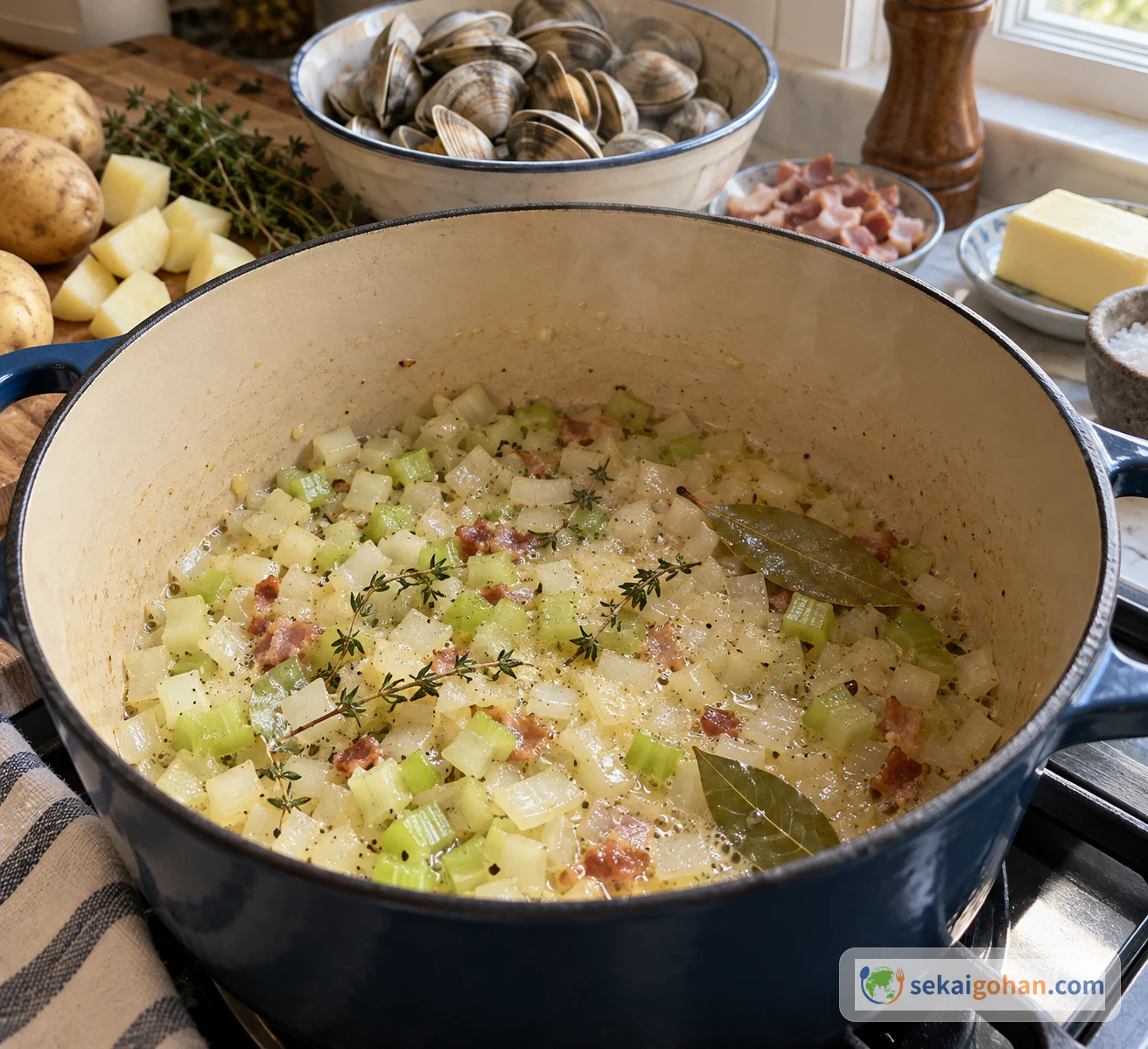
Soften the onion and aromatics without browning

Onion, celery, thyme and bay leaves softening in bacon fat and butter
Stir the aromatics until the onion turns translucent, keeping them pale

Add the butter to the bacon fat, then the onion and, if using, the celery, thyme and bay leaves. Cook for 6–8 minutes, stirring well, until the onion is translucent and soft. You want softness and sweetness, not color, so do not let the onion brown. Return the crumbled bacon to the pot.

STEP33 / 7

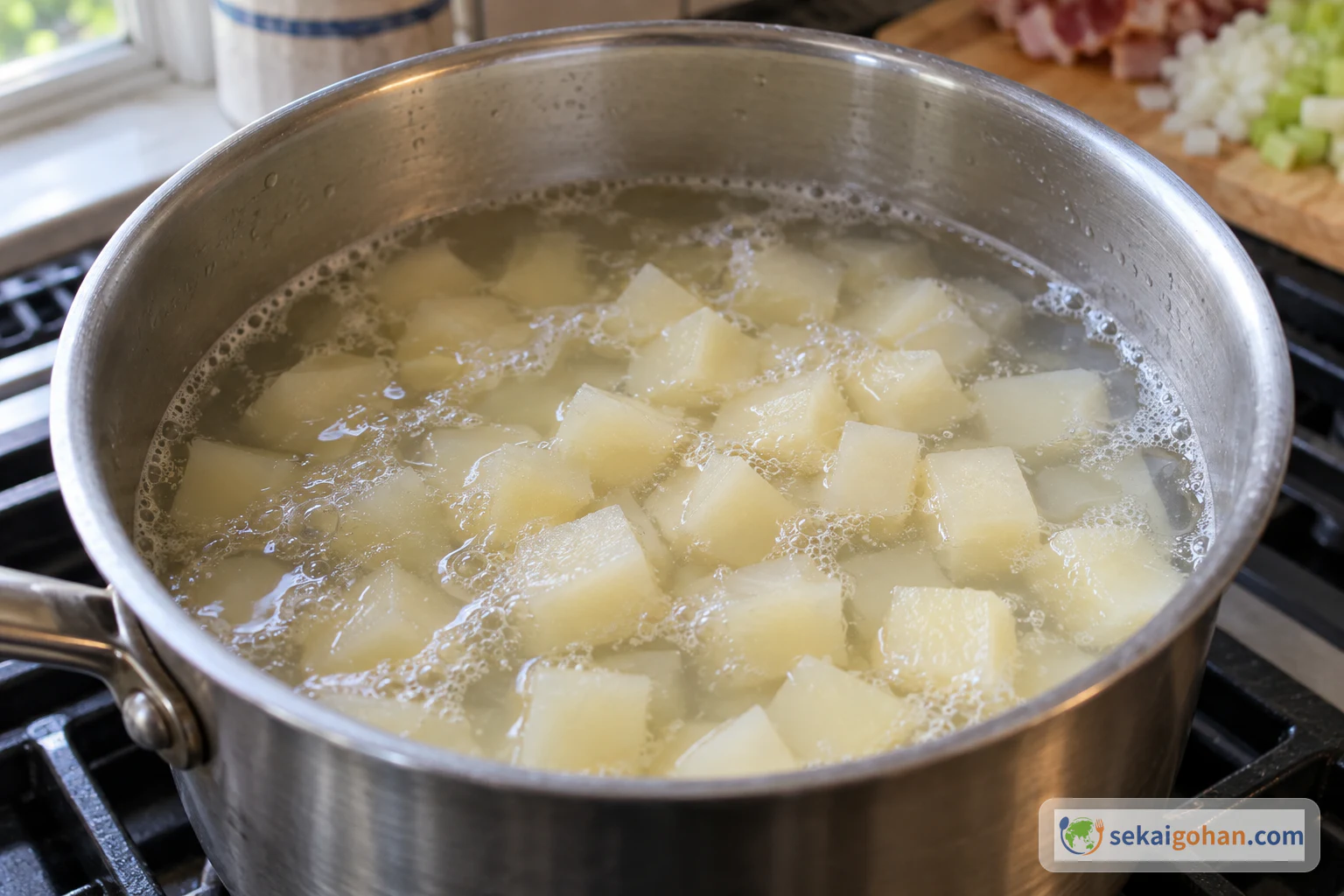
Boil the potatoes in a separate pot

Small cubes of white potato boiling in salted water in a separate saucepan
Boil the diced potatoes in their own pot until just tender, then drain

While the onion cooks, put the diced potatoes in a separate saucepan of salted water. Bring to a boil over high heat and cook for 5–8 minutes, until tender. Drain them. The potatoes are cooked apart from the chowder in this recipe, so the cooking water does not go into the soup.

STEP44 / 7

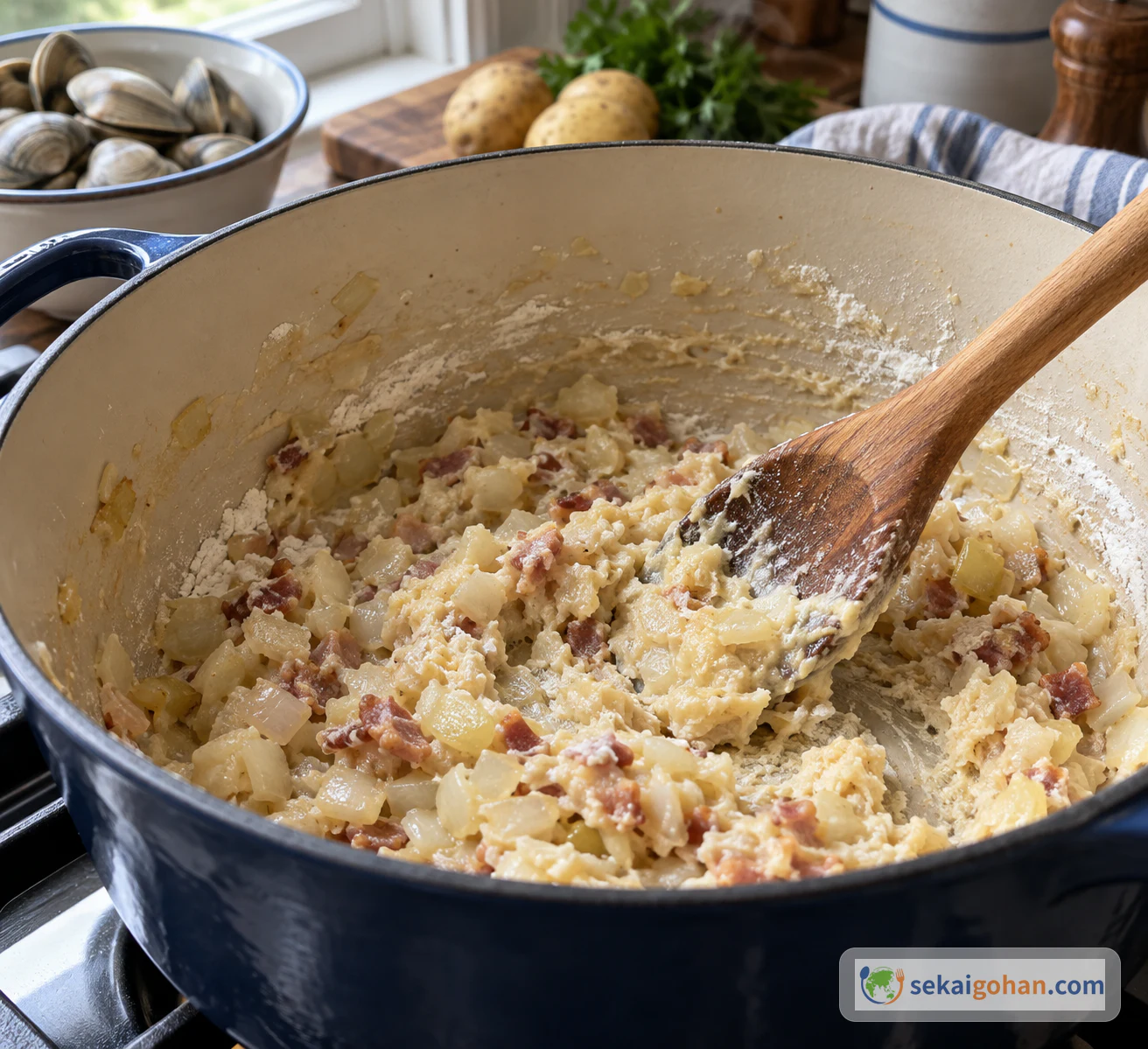
Cook the flour into a thick paste

Flour stirred into the onion and bacon mixture to form a thick, pale paste
Stir the flour into the aromatics over low heat until it becomes a thick paste

Turn the heat under the onion pot down to low. Add the ½ cup of flour a little at a time, stirring constantly, until it forms a thick paste. Keep stirring and cook it for 3 minutes. This takes away the raw flour taste; keep the heat low so the roux stays pale and does not scorch.

STEP55 / 7

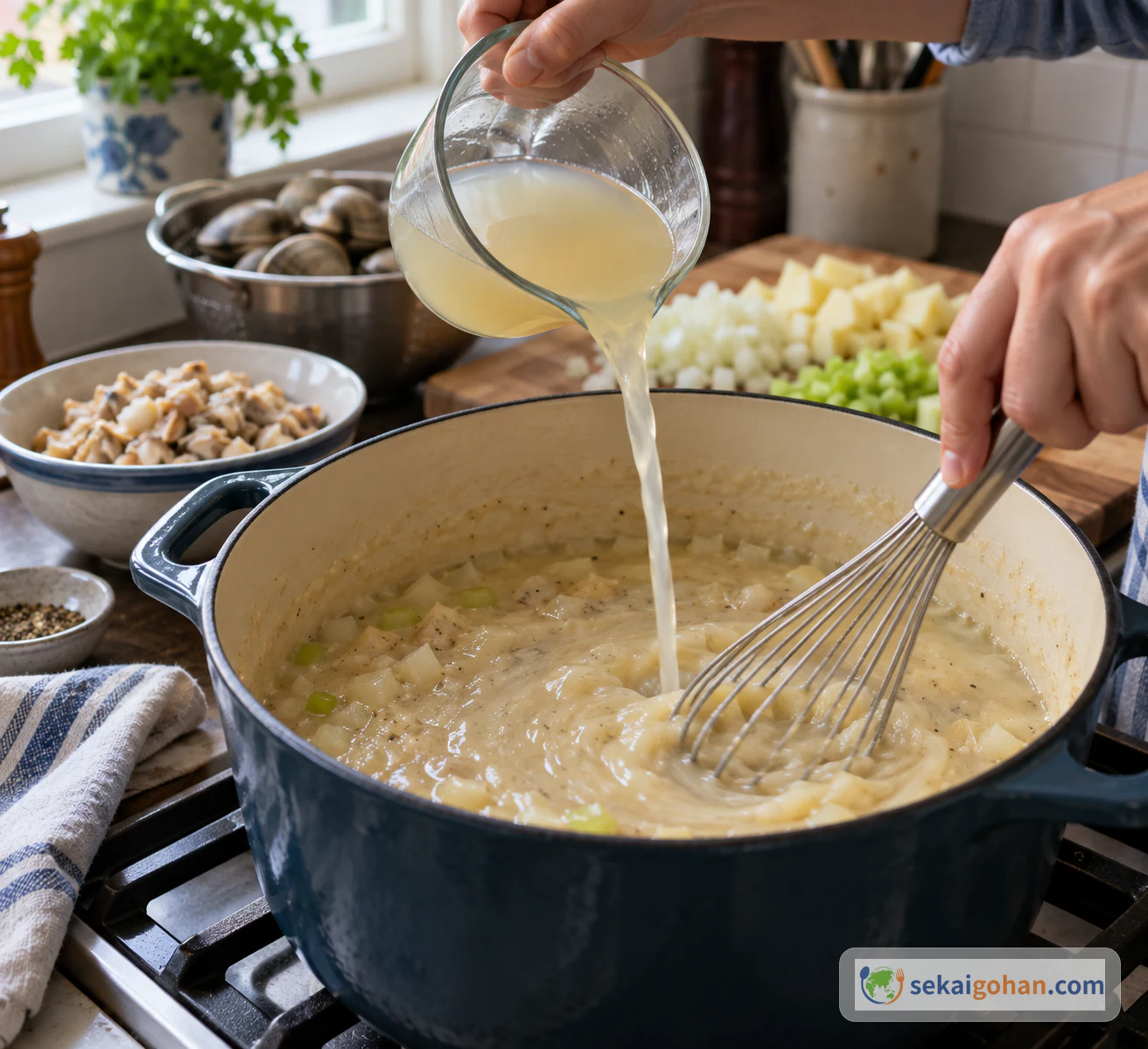
Add the clam juice one cup at a time

Clam juice being whisked into the roux, forming a smooth pale broth
Add the clam juice gradually so the roux loosens into a smooth broth

Raise the heat to medium. Pour in 1 cup of the clam juice and stir well until it is fully incorporated, then add the next cup. Continue until all 4 cups are in. If lumps form, add the liquid in smaller amounts and work them out before adding more.

STEP66 / 7

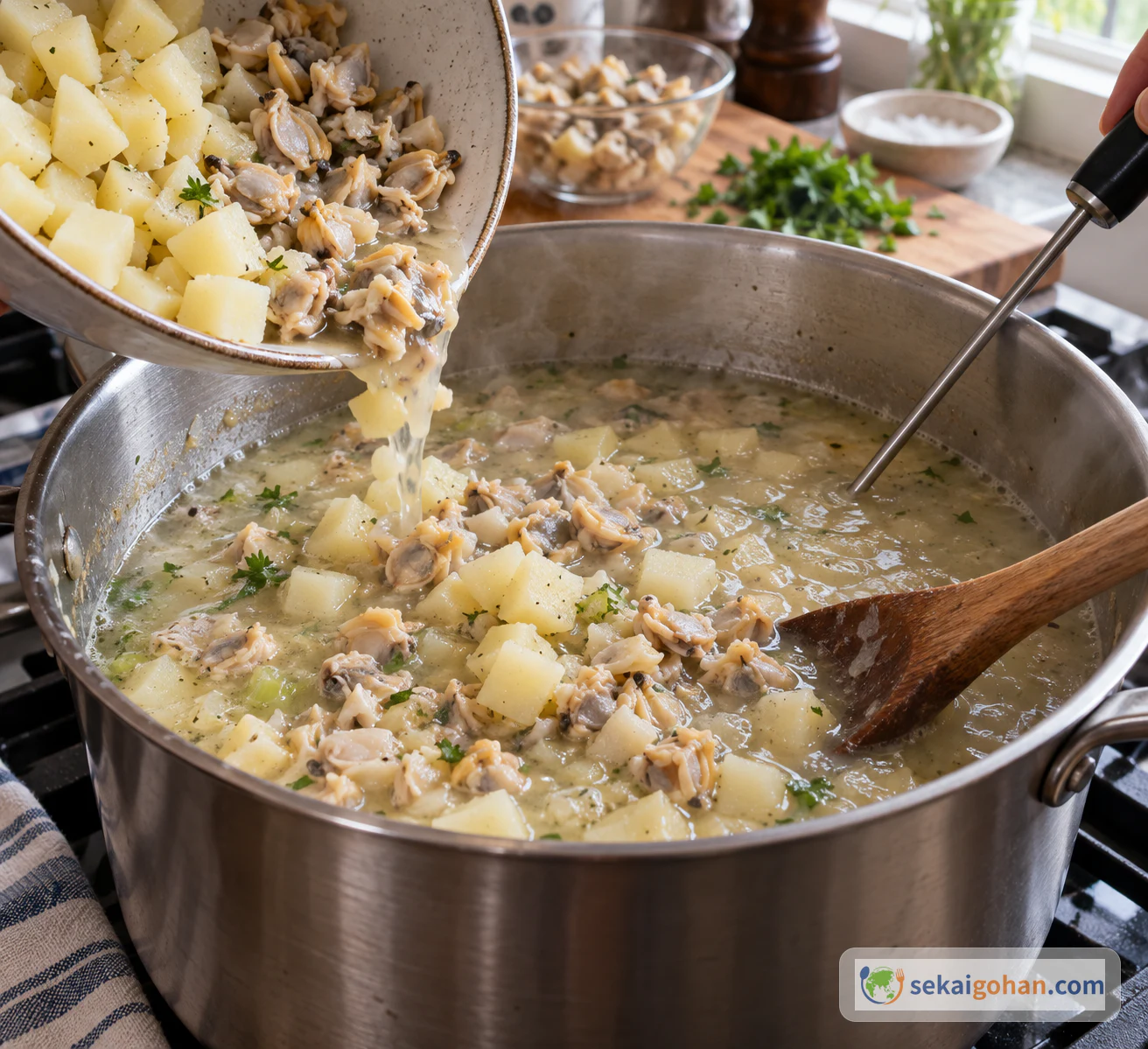
Add the potatoes and clams, and check that the clams are hot enough

Potatoes and chopped clams folded into the broth, with a probe thermometer checking the temperature
Heat the clams and potatoes in the broth and check the temperature before adding cream

Add the drained potatoes and the chopped clam meat with all its juices. Turn the heat to medium-high and cook for 5 minutes, stirring constantly.

Don't rely on the 5 minutes alone. Before moving on, check the clams with a food thermometer. Clams can carry norovirus, so heat them until the center reaches 85–90°C for at least 90 seconds. If they have not reached that point, keep heating and stirring until they have, and only then add the cream.

STEP77 / 7

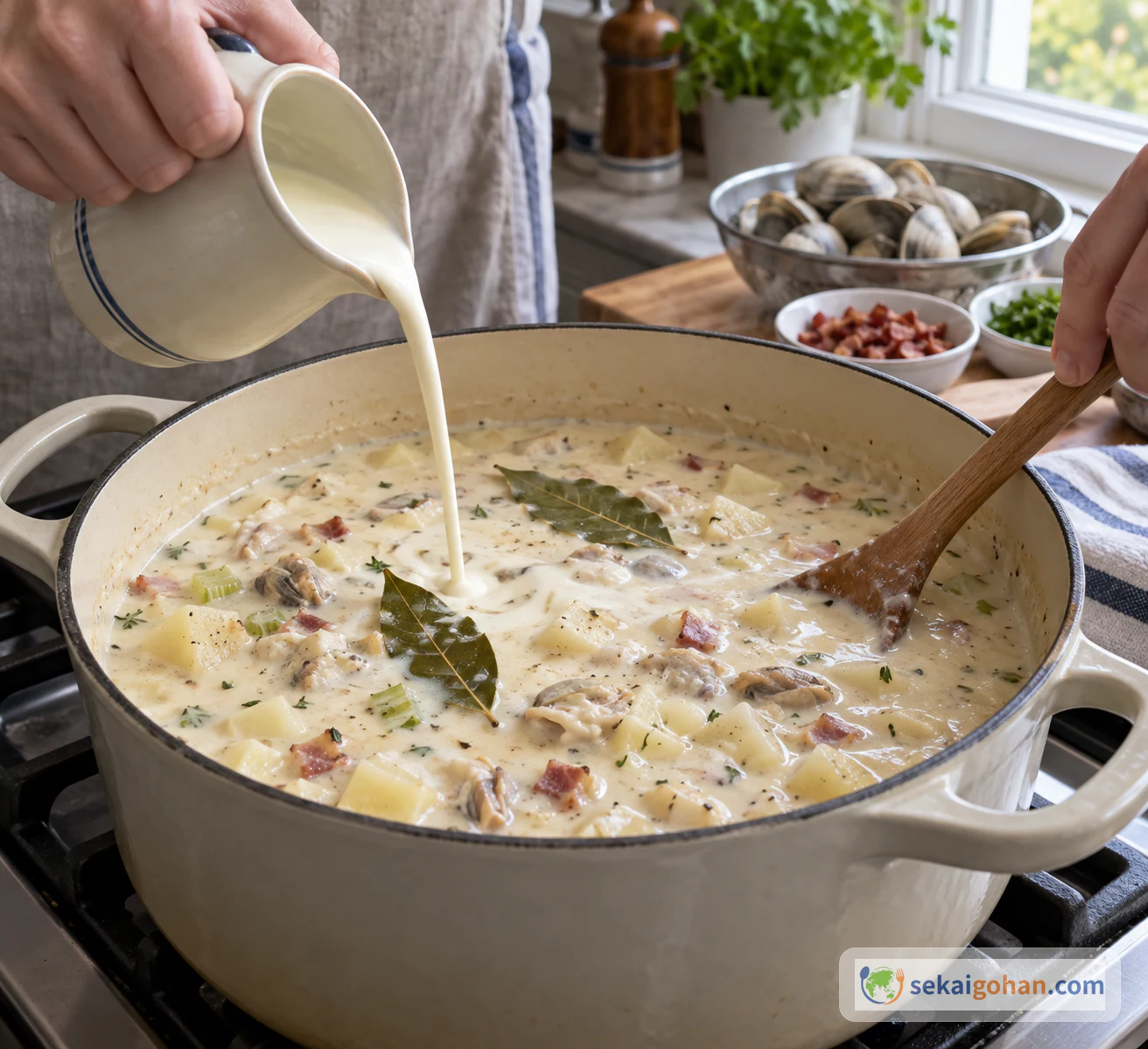
Stir in the cream and white pepper, and serve hot

Light cream stirred into the chowder, with bay leaves about to be removed
Add the cream at the end, take out the bay leaves and serve while hot

Pour in the 3 cups of light cream slowly, stirring, then add the white pepper. Remove the bay leaves, taste, and season with kosher salt. Serve hot, with oyster crackers alongside if you like.

Once the cream is in, warm the chowder gently rather than letting it boil hard.

0 / 0
Ingredients

Ingredients

1 / 2

For the chowder

Ingredient Amount Role and preparation
Thick-cut bacon 3 strips Fat and salty depth for the base. Crumbled after cooking
Unsalted butter ¼ cup (½ stick) Fat for the aromatics and the roux
Onion 1 large Sweetness. ¼-inch dice
Celery (optional) 1 rib Aroma. ¼-inch dice
Fresh thyme leaves (optional) 1 tsp Aroma
Bay leaves (optional) 2 Aroma. Removed before serving
White potatoes 2 medium Body and texture. Peeled, ¼-inch dice
All-purpose flour ½ cup Thickens the chowder as a roux
Bottled clam juice 4 cups The broth. Added 1 cup at a time
Chopped fresh clam meat, with juices 1 pound The heart of the chowder. Keep all the juices
Light cream 3 cups Richness and the white color
White pepper 1 tsp Gentle heat without dark specks
Kosher salt To taste For seasoning at the end; also salt the potato water
2 / 2

To serve (optional)

Ingredient Amount Note
Oyster crackers As you like A serving suggestion
0 / 0

At Chatham Pier Fish Market on Cape Cod in the United States, chowder is ladled straight from the pot into pint and quart containers. People carry it to the picnic tables nearby and eat it looking out at the water. This version is white and thick: thick-cut bacon, butter, onion, potatoes, chopped clams, bottled clam juice and light cream, pulled together with a flour roux. The method is straightforward. The harder parts for a home cook are finding bottled clam juice and chopped clam meat, and getting the thickness right as the juice goes into the roux.

New England Clam Chowder and Its Neighbors

New England-style clam chowder is the creamy, dairy-based member of a wider chowder family. Even within New England there is no single fixed form, and cooks across the region make it in many different ways. Salt pork is traditionally the defining ingredient, and it leads in many New England versions. This recipe uses bacon and a flour roux instead.

Head a little further south and west, and the broth itself changes. Chowder from Connecticut, Rhode Island and southern New England has a clear broth, with potatoes giving it body. Tomato chowder, often linked with the name Manhattan, is red, with a different flavor and a different regional name. Each of these is its own dish, not a variation of the white one.
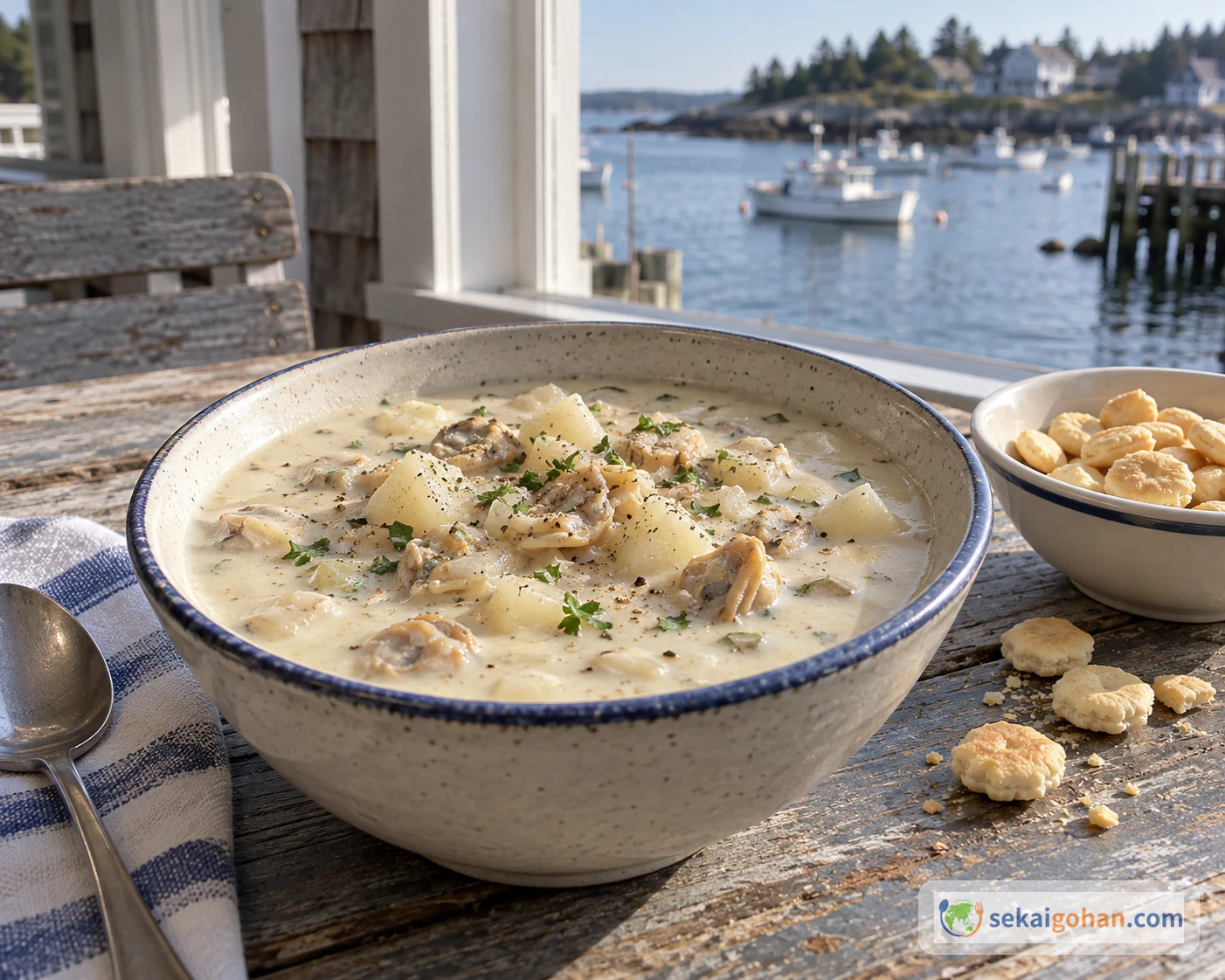
A bowl of clam chowder with oyster crackers on a seaside picnic table
Chowder carried out from a fish market counter and eaten at a table by the sea

Eating seafood by the water has deep roots on this coast. Indigenous peoples harvested shellfish along the Connecticut shore, and the colonists who came later ate seafood as well. From the early twentieth century, seafood shacks appeared along the shore, and they are still part of the coast today. For more seafood cooking from North America, try shrimp creole from the American South, étouffée from Louisiana, or fricot, a Canadian soup from another tradition altogether.

Ingredients: The Chatham Pier Recipe for 8–10 Servings
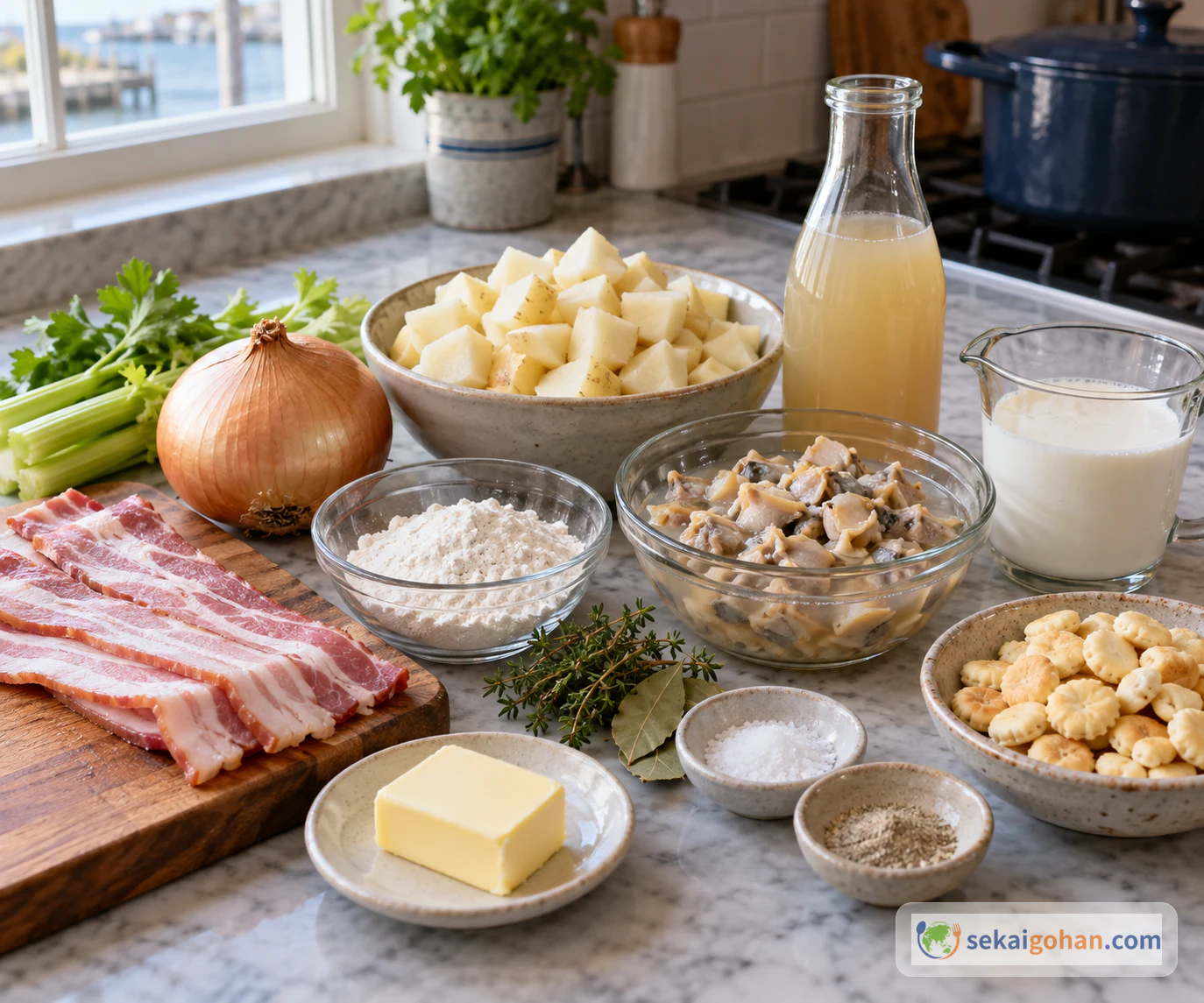
Bacon, onion, potatoes, chopped clams, clam juice, light cream and the other ingredients laid out separately
Everything for the Chatham Pier recipe, with the optional crackers in a separate dish

Celery, thyme and bay leaves are optional, and the chowder holds together without them. The oyster crackers at the end are a serving suggestion.

Allergens and clam safety

This chowder contains shellfish, milk and wheat. Bottled clam juice is made from clams too, so it is not suitable for anyone avoiding shellfish. When buying fresh or frozen clam meat, follow the storage and handling instructions on the product label. Clams can carry norovirus, so heat them until the center reaches 85–90°C for at least 90 seconds; step 6 includes that check. Keep raw clams apart from other foods: clean boards, knives and spoons that touched raw clams before using them for anything else.

Equipment

  • A heavy soup pot of 4–6 quarts, to cook the base and hold all 8–10 servings
  • A separate saucepan for boiling the potatoes
  • A sharp knife, to cut the onion, celery and potatoes into even ¼-inch dice
  • A wooden spoon and a whisk, for the roux and the clam juice
  • A food thermometer with a probe, to check the clams in step 6

Choosing Ingredients for Clam Chowder

The amounts are in US units, so measure with US cups and spoons.

Chopped clam meat. The recipe calls for chopped fresh clam meat with its juices. Frozen chopped clam meat in 1-pound containers is a convenient option, and it spares you from opening shells; check your local fish counter or freezer aisle. Canned clams differ in liquid, salt and how much water the meat holds, so they aren't an equal swap by weight.

Bottled clam juice. This clam broth sold for cooking supplies most of the liquid. If you can't find it, the liquid from steaming clams can stand in, but its saltiness and strength won't match a bottled product, so add it gradually and adjust as you go. Plain water with a little clam stock gives a noticeably thinner flavor.

Bacon. Use thick-cut bacon. Salt pork has a different flavor and saltiness, so the two aren't interchangeable here.

Light cream. Creams labeled in different countries vary in milk fat, so check the fat percentage on the label before you buy. Swapping in a much richer or much thinner cream cup for cup will change how thick and rich the finished chowder is.

Potatoes. The recipe asks for white potatoes. Floury potatoes break down more readily than firm, waxy ones, so the variety affects how well the cubes hold their shape and how much they thicken the broth.

Flour, thyme, salt and pepper. Use all-purpose flour; other plain wheat flours behave similarly but aren't the same product. The recipe gives fresh thyme only, so if you use dried, add it cautiously by taste. Kosher salt differs in grain and saltiness by volume from fine table salt, one more reason to season only at the end. White pepper keeps the soup pale; black pepper works but leaves visible specks.

Method: Building a Smooth White Chowder

Before you start

Dice the onion, celery and potatoes to an even ¼ inch before the bacon goes in, and keep the clam juice measured by the stove. Once the roux is made, the steps follow one another quickly.

Clam Chowder Problems and Fixes

Four points to watch

Render the bacon gently, cook the roux without letting it color, add the clam juice one cup at a time, and make sure the clams are properly heated before the cream goes in.

Problem Likely cause What to do
The roux has turned into lumps Too much clam juice went in at once Go back to adding liquid in small amounts and stir until smooth before adding more. Next time, keep to 1 cup at a time
The chowder tastes of raw flour The roux was not cooked long enough Give the roux its full 3 minutes over low heat, stirring constantly
The bacon or roux has darkened The heat was too high Keep the bacon at medium-low and the roux at low. A scorched base cannot be lightened, so watch these two stages closely
The clams are tough Long cooking after they were done Complete the temperature check in step 6, then move on to the cream rather than simmering on
Too salty Clam juice, clam meat and bacon each bring their own salt Hold back on salt until the very end and season only after tasting

Saltiness and thickness depend on your clam juice and clam meat, which is why the recipe seasons to taste. Taste once more just before serving.

Serving and Varying Clam Chowder

Oyster crackers are the simple, classic thing to scatter over a hot bowl. Celery, thyme and bay leaves are all optional in this recipe; leave them out and the bacon, onion and clams come forward more plainly.

Frequently Asked Questions

Can I use frozen clam meat?

Yes. 1-pound containers of frozen chopped clam meat are a convenient option. Follow the package instructions for thawing and handling, keep the juices, and do the temperature check in step 6 as usual.

Why not boil the chowder after adding the cream?

Warm it gently instead of boiling hard, then serve it hot. The important heating, the check on the clams, happens in step 6 before the cream goes in.

How long does it keep, and how should I reheat it?

Cool the chowder promptly, refrigerate it, and reheat it gently until hot all the way through.

Sources

  • Yankee Magazine / Chatham Pier Fish Market, "Classic New England Clam Chowder." The recipe followed here: ingredients, amounts, method, 8–10 servings and timing; the market's takeaway pints and quarts and the nearby picnic tables; the note on salt pork and the use of bacon and a roux; and the use of frozen chopped clam meat. This is one market's version, not the only correct form for every household or region. https://newengland.com/food/fish-seafood/massachusetts-new-england-clam-chowder/
  • Emily Dunnack, "Lobsters and Oysters and Clams: A Short History of Seafood in Connecticut," Connecticut History / Connecticut Humanities. Shellfish use by Indigenous peoples and colonists on the Connecticut coast, the seafood shacks that appeared in the twentieth century and continue today, and the difference between Connecticut / Rhode Island / southern New England chowder and the milky and tomato styles. A history of Connecticut, not of the whole region, and not used to state an origin. https://connecticuthistory.org/lobsters-and-oysters-and-clams-a-short-history-of-seafood-in-connecticut/
  • James Beard Foundation, "Clam Chowder." James Beard's Oregon chowder, which he himself distinguished from the traditional New England style. Consulted for comparison only; none of its ingredients, amounts or steps are used in this recipe. https://www.jamesbeard.org/recipes/clam-chowder
  • Yankee Magazine, "New England Clam Chowder." A separate recipe built on salt pork, and the magazine's note that New England cooks make chowder in many ways. Used for comparison only, not mixed into this recipe. https://newengland.com/food/soups-stews-chowders/new-england-clam-chowder/
  • Ministry of Health, Labour and Welfare (Japan), "Q&A on Norovirus" (ノロウイルスに関するQ&A). Q15: heating bivalves that may be contaminated with norovirus until the center reaches 85–90°C for at least 90 seconds. Q17: preventing cross-contamination from utensils used for bivalves. It does not confirm that the recipe's 5 minutes meet this condition and is not used for storage times. https://www.mhlw.go.jp/stf/seisakunitsuite/bunya/kenkou_iryou/shokuhin/syokuchu/kanren/yobou/040204-1.html