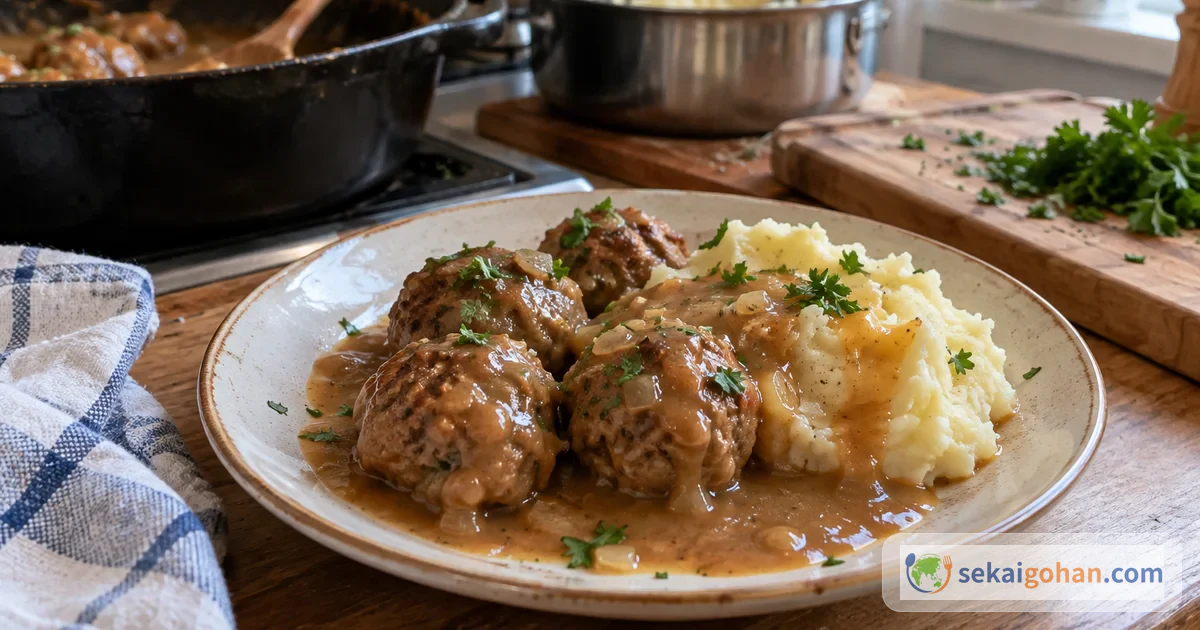
December in Quebec, with snow on the ground. When the family comes home from midnight Mass and gathers in the kitchen, a pot that has stayed warm all night is waiting on the stove. Lift the lid and the sweet scent of cinnamon and cloves spreads through the room, with round meatballs tumbling in brown sauce. Homemade ketchup and pickled beets are already on the table. This is ragoût de boulettes, the stew that cannot be missing from Quebec's Christmas and New Year table.
Ragoût de boulettes on the Quebec holiday table
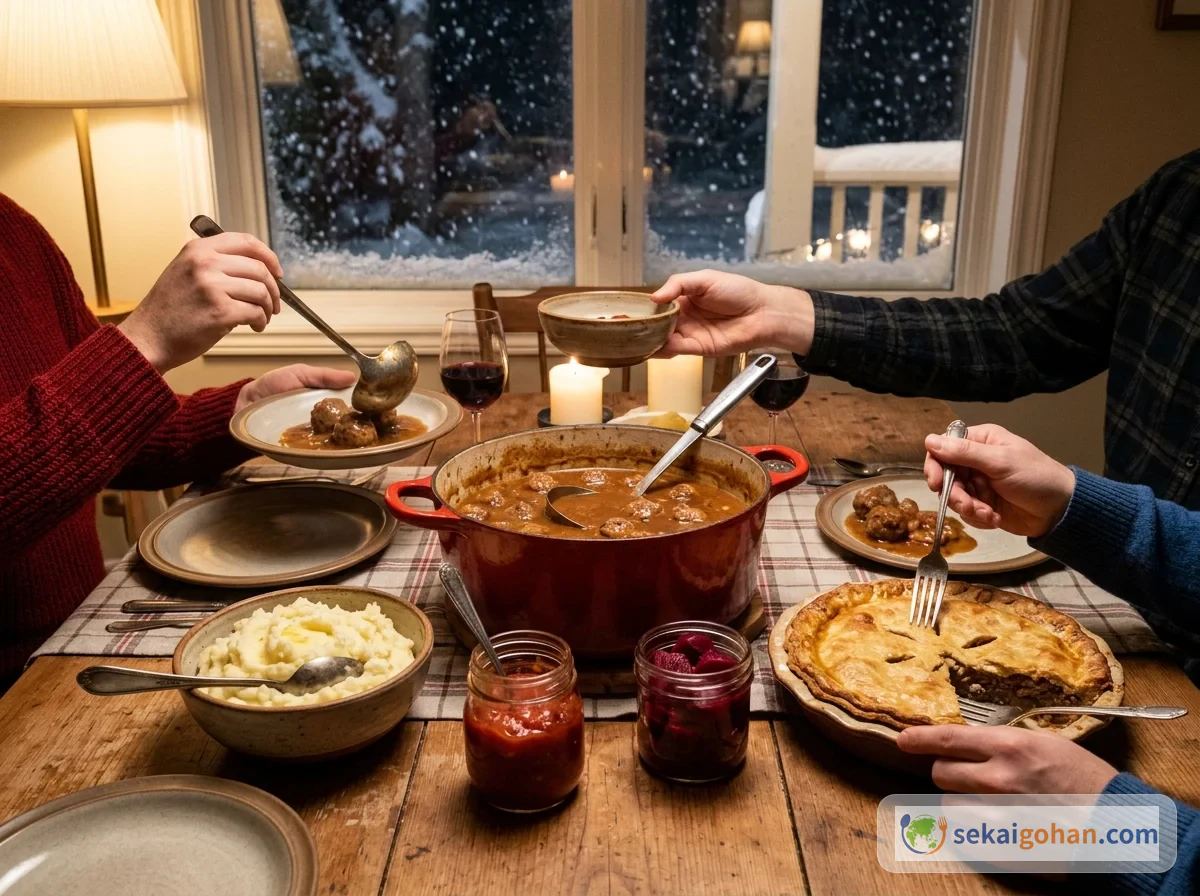
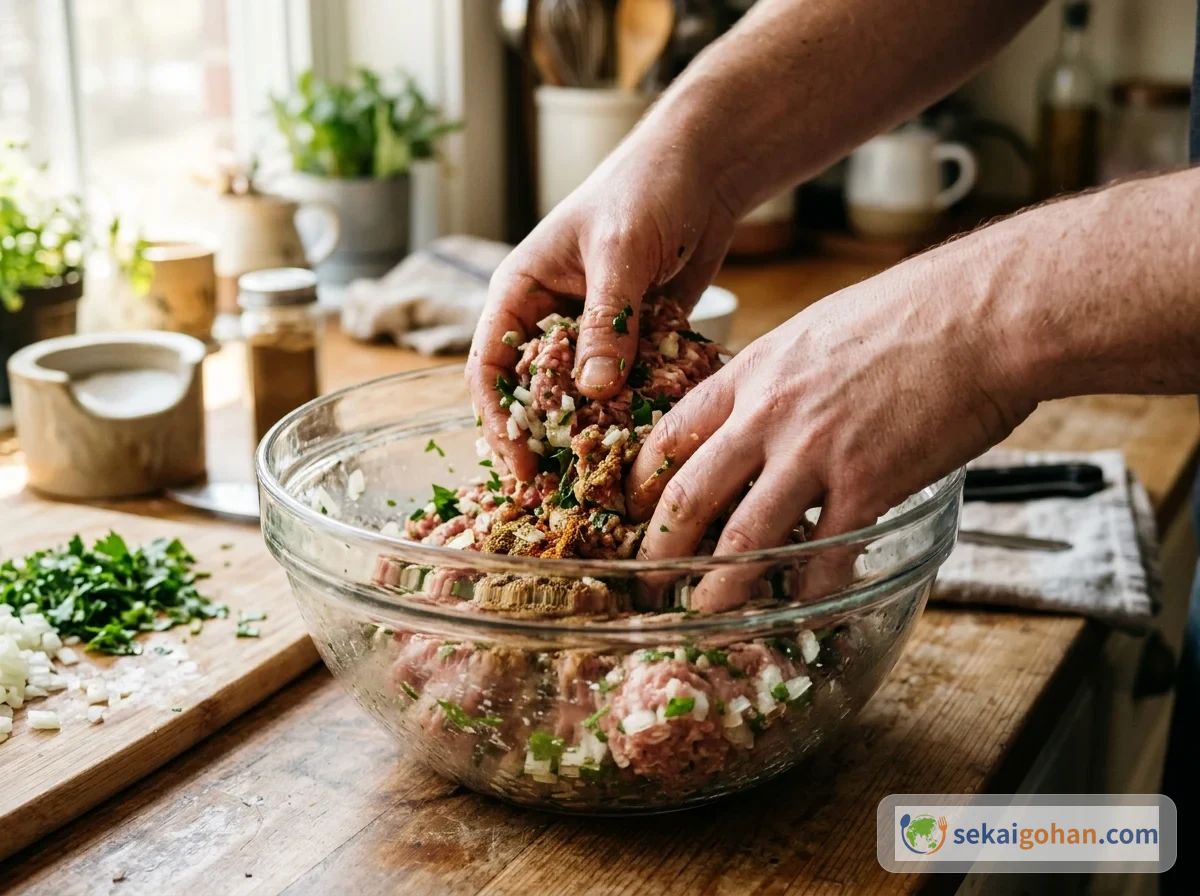
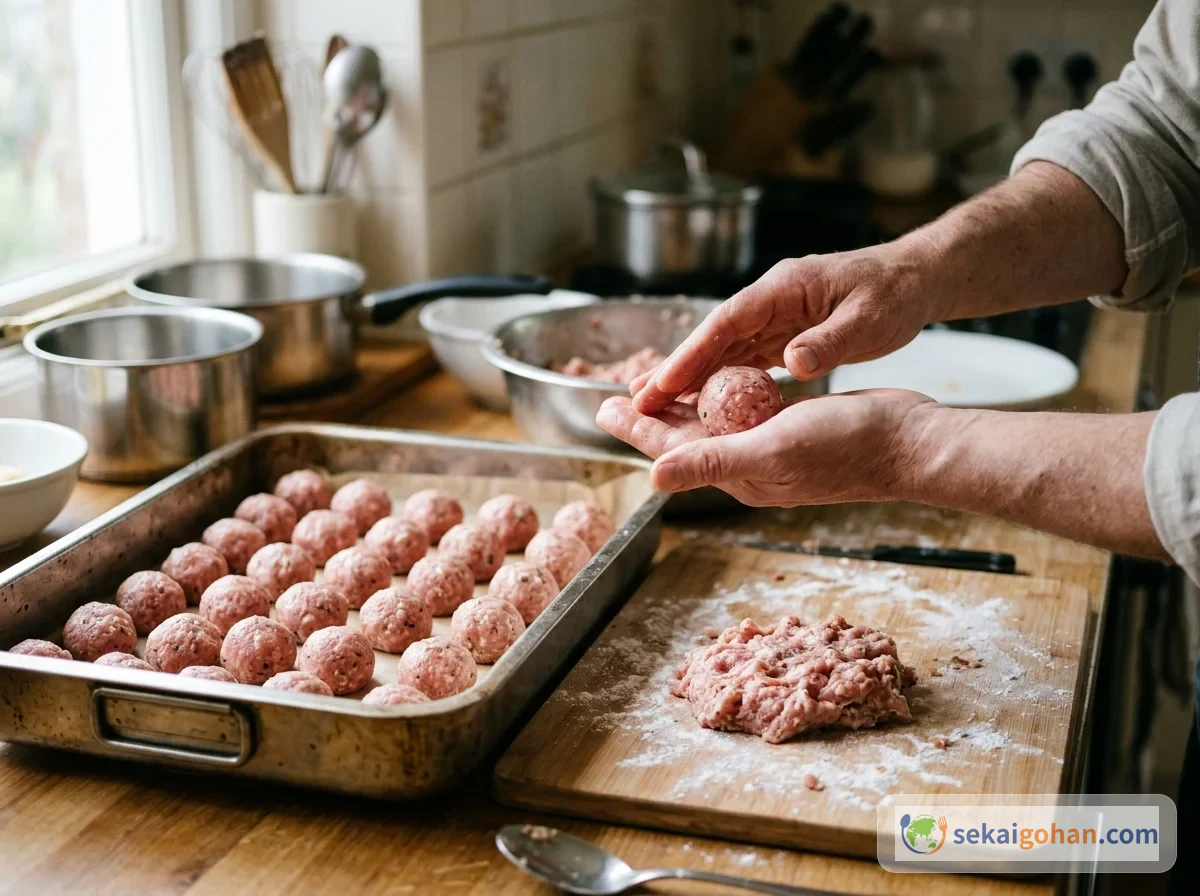
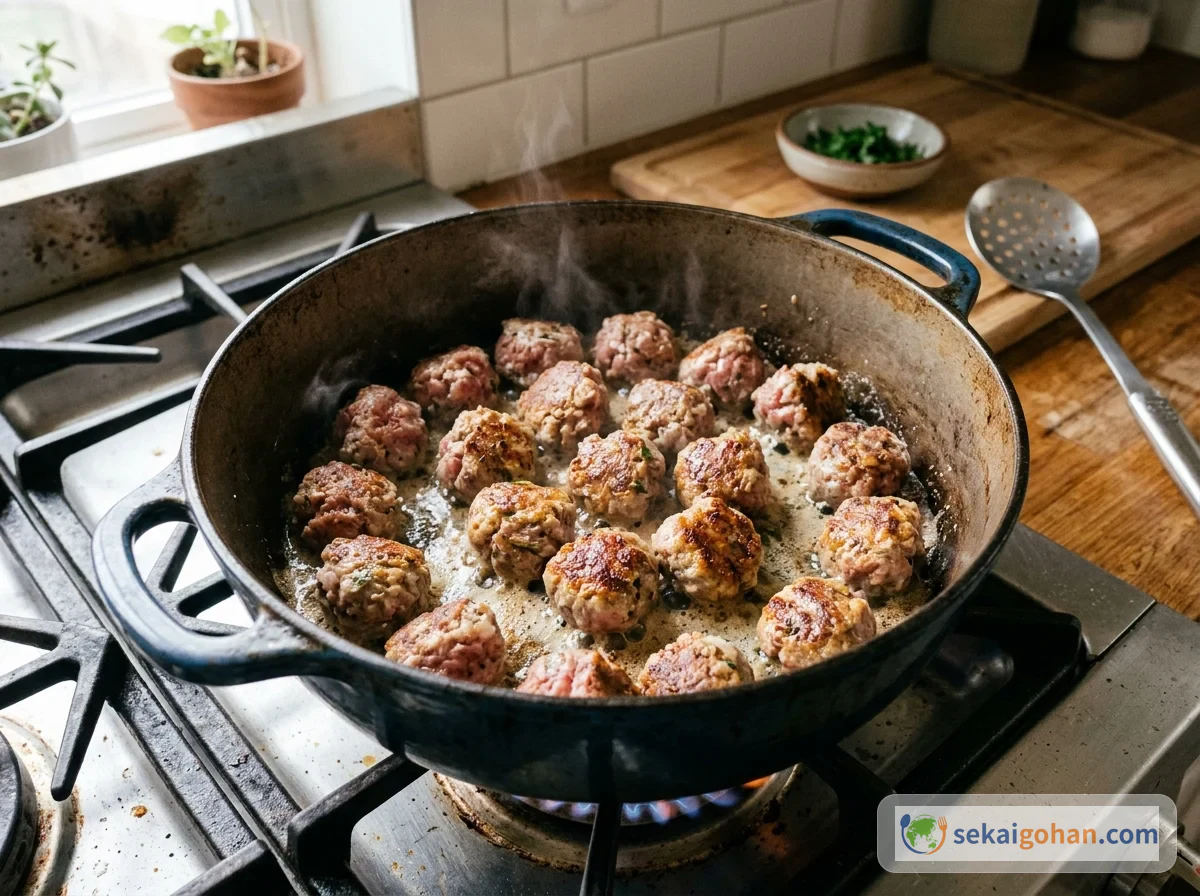
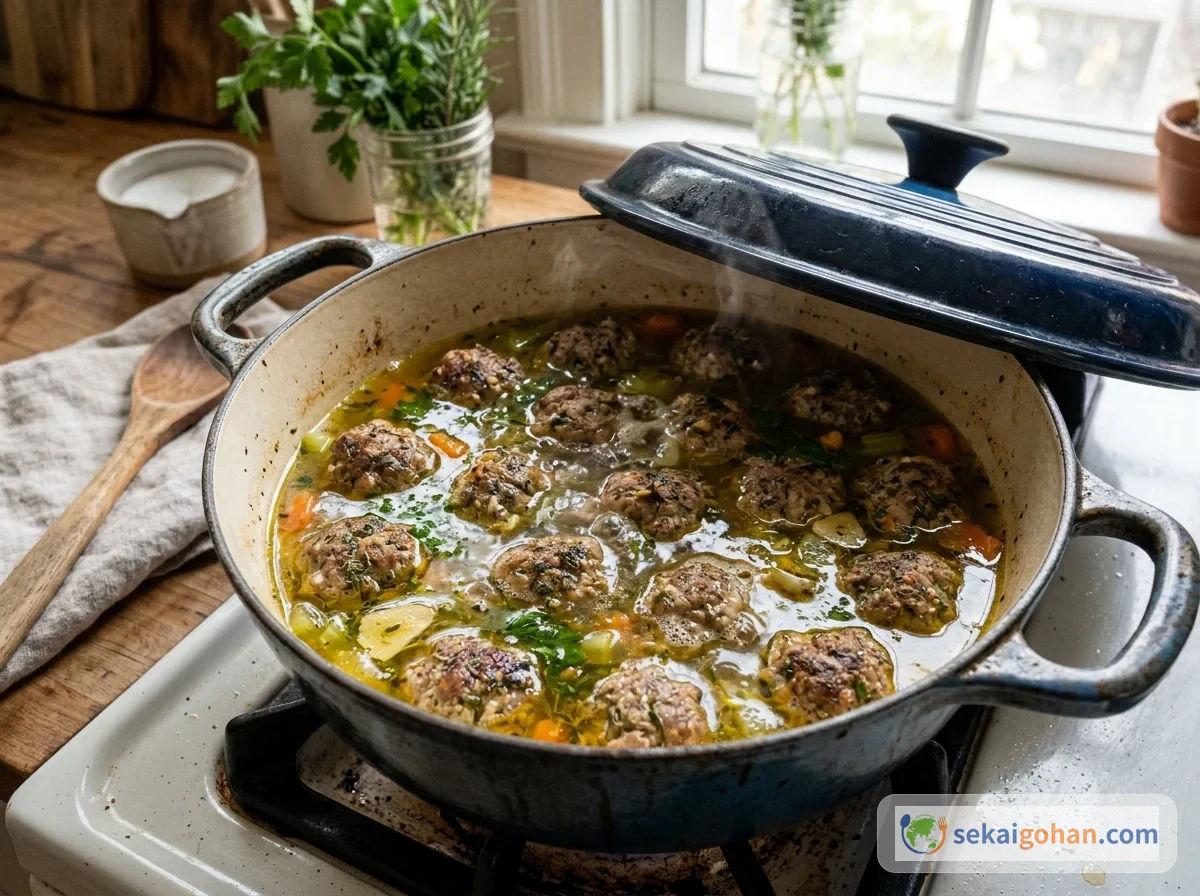
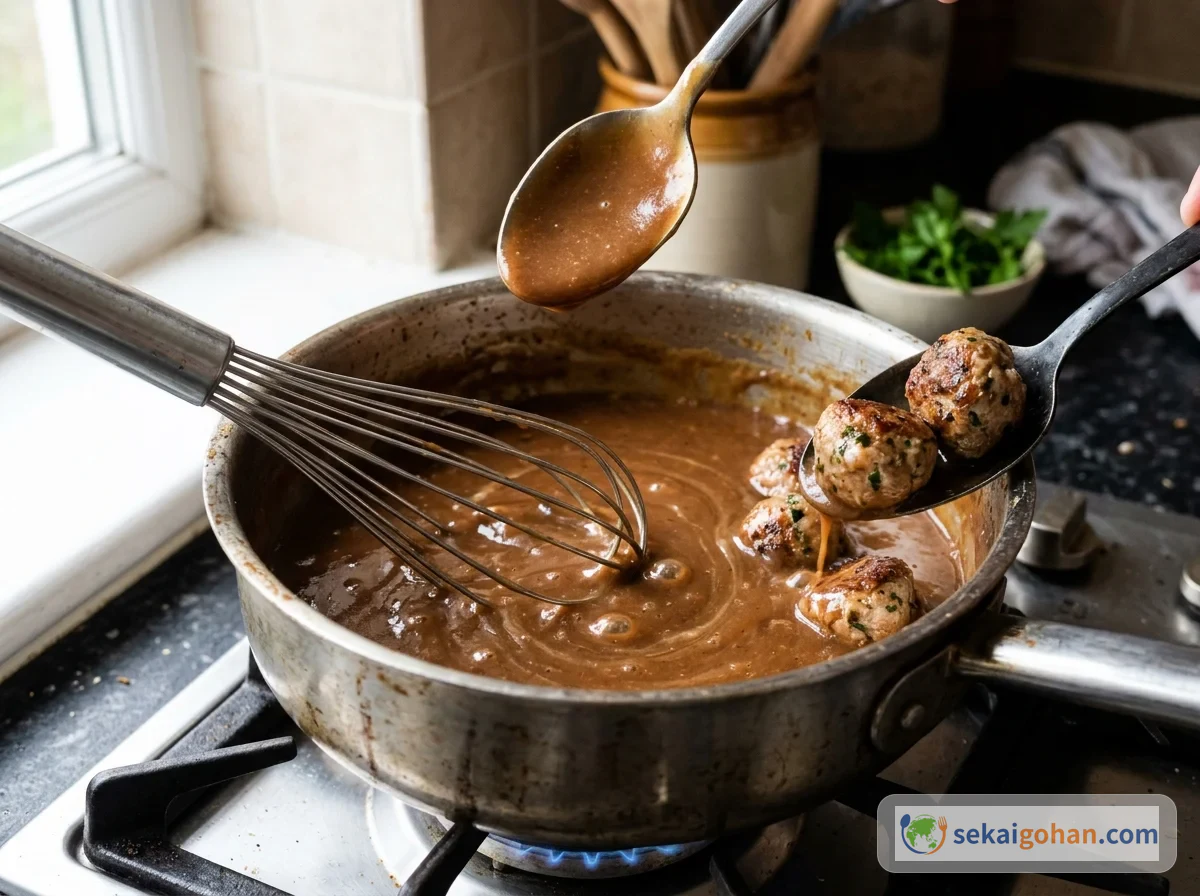
In French the name simply means "meatball stew." You mix spices into ground pork, roll it into balls, simmer them in broth, and thicken the sauce at the end with browned flour. Most of the ingredients are at any supermarket, and the only real effort is making the browned flour.
Nobody knows exactly where the dish comes from. The earliest recipe on record was published in Quebec in 1840. It was a stew of pig's feet, ragoût de pattes de cochon, and meatballs were often added to it, so pig's-foot stew and meatballs have shared the same pot for a long time. Quebec still often cooks the two together as "ragoût de boulettes et de pattes," and no Quebec réveillon (the festive meal on Christmas Eve or New Year's Eve) is complete without it.
Alongside ragoût de boulettes on the holiday table you'll find the pig's-foot stew, simmered for hours in a clove-scented broth, and cipaille, meat and potatoes layered with pastry and baked.
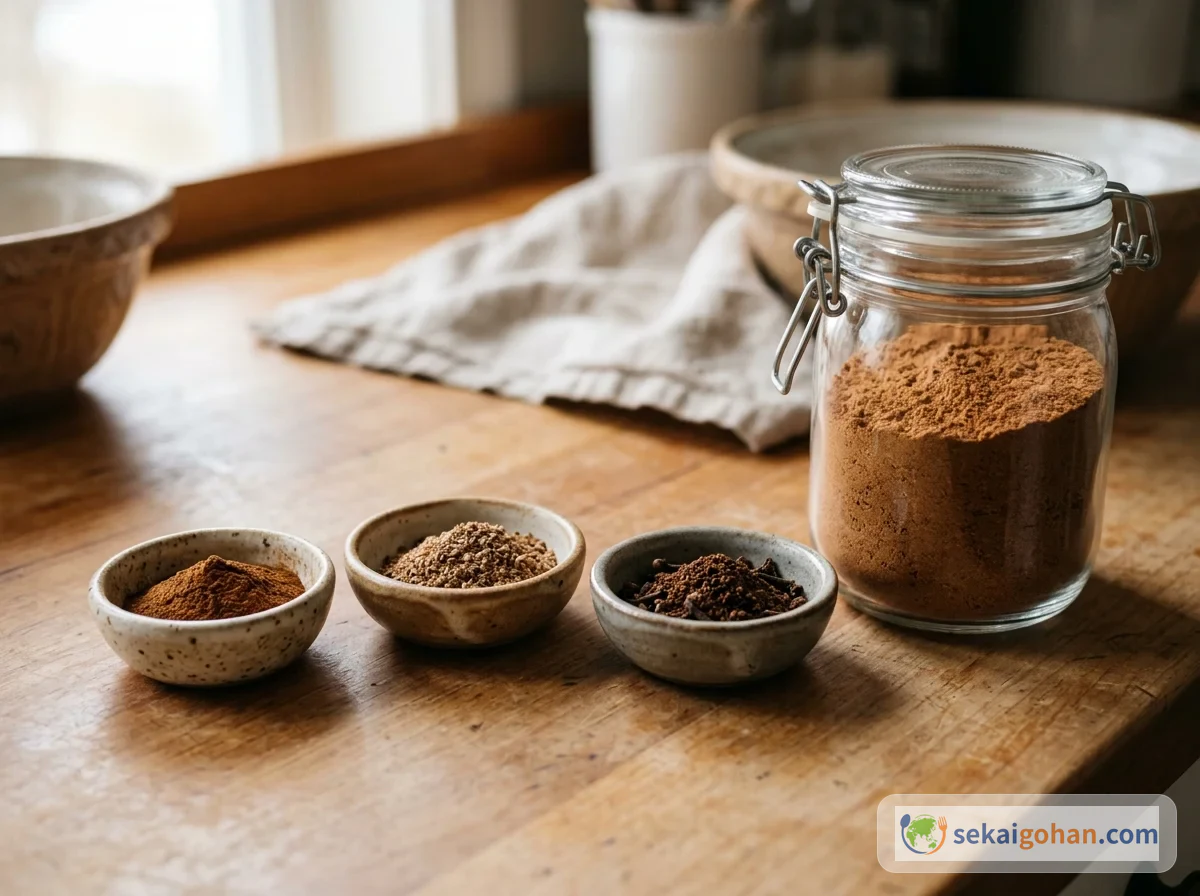
The stew's character comes from using cinnamon and cloves in a meat dish. In Japan these spices mostly go into sweets, but in French-Canadian home cooking they are a standard pairing with meat. They tame the gaminess and add a warmth that suits winter. The seasoning is épices mélangées, a traditional Quebec blend of savory, sage, thyme, cinnamon, cloves and nutmeg.
Ingredients (serves 6)
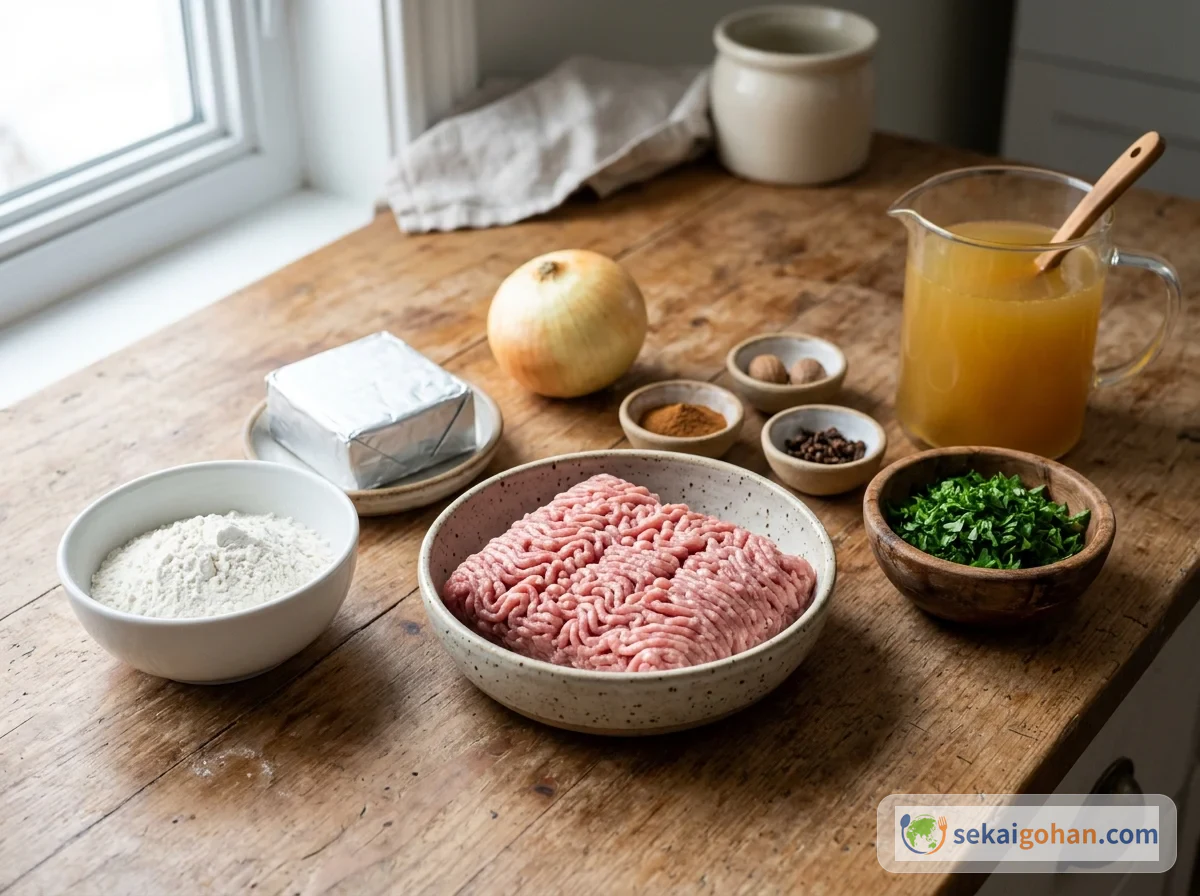
Use ground cinnamon, nutmeg and cloves, all of them. If you only have whole cloves, grind them in a spice mill, or instead of putting them in the meatballs, drop 2 to 3 into the cooking liquid to pass on the aroma. A very small amount of cloves is enough to scent it.
How to make ragoût de boulettes
Allow about 40 minutes for the browned flour and meatball prep, and about 60 minutes for simmering and thickening. If you make the browned flour the day before, the day's work gets much easier.
Cook ground pork thoroughly to the center. Ground meat should reach 71°C (160°F) or above at the core, so this recipe aims for 75°C to leave a margin. Color alone can mislead, so check the temperature at the center of a larger meatball.
Browned flour and thickening tips
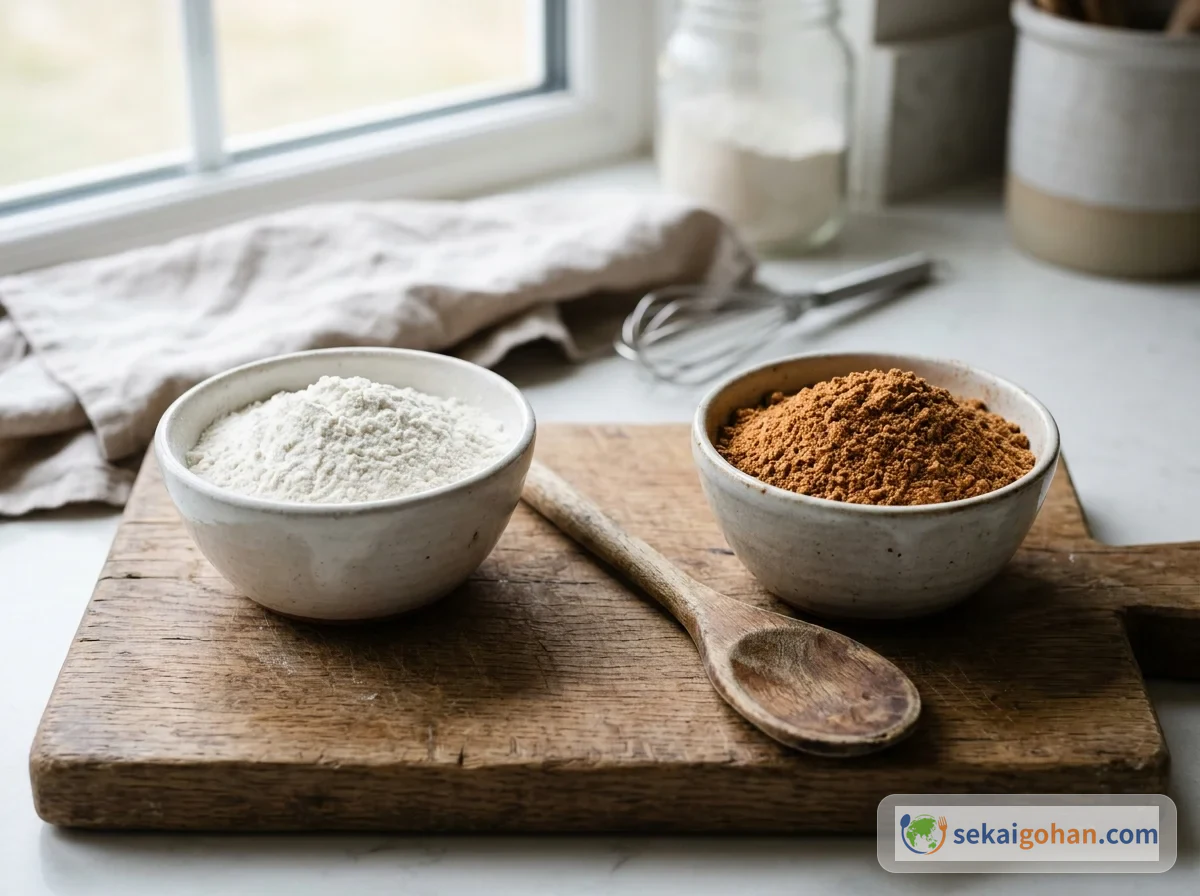
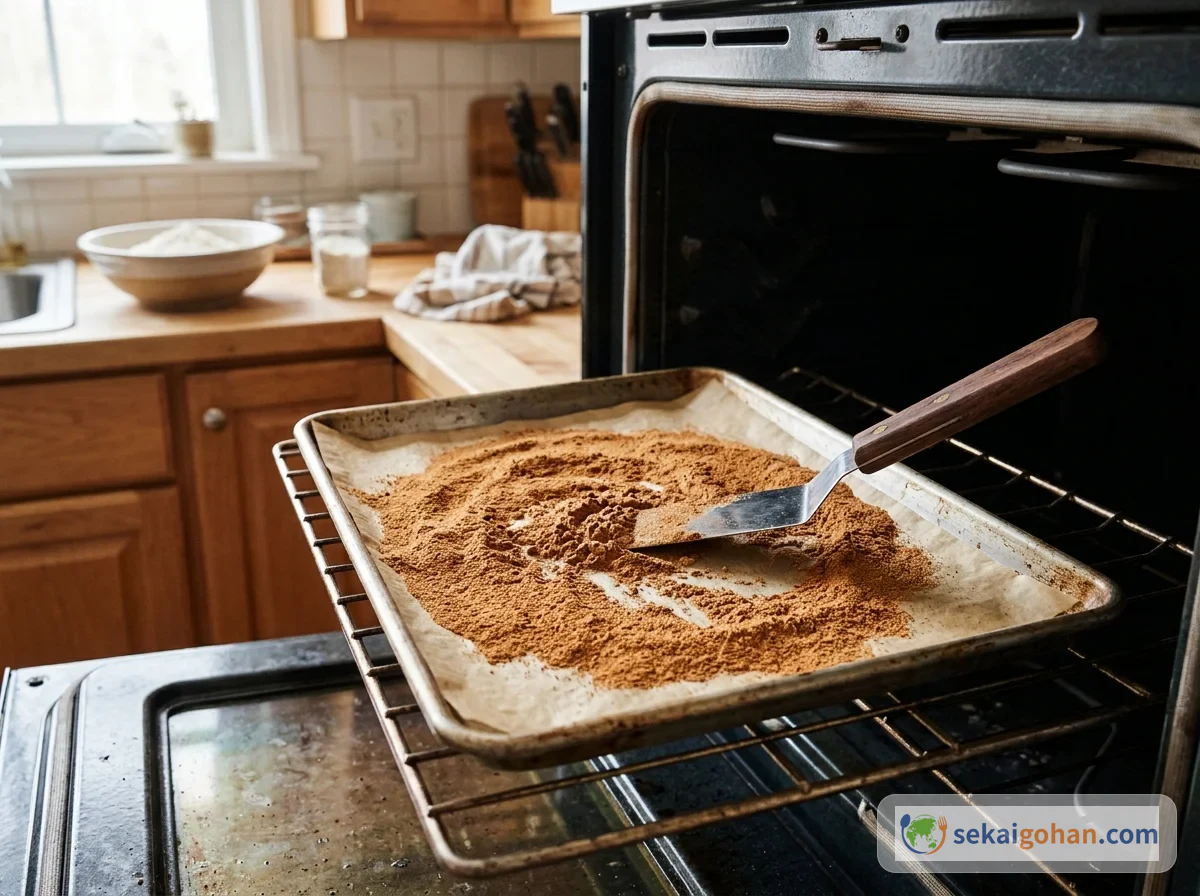
The brown color of the sauce comes from the browned flour, not from meat juices. Toasting the flour thickens the sauce and also gives it a nutty toastiness. If you thicken with white flour instead, you get a pale sauce that tastes quite different.
You can also make browned flour in a heavy skillet. Put the flour in with no oil over low heat, stir constantly with a wooden spatula, and toast it until it turns the same copper color you'd get in the oven. It scorches all at once if you look away, so stay at the stove.
Browned flour absorbs water less readily than raw flour, so it thickens less strongly. If 4 tbsp seems loose, add more browned flour dissolved in cold water, 1 tbsp at a time. Cooled browned flour keeps in an airtight container, ready for your next gravy or stew.
Serving and variations
How to eat it
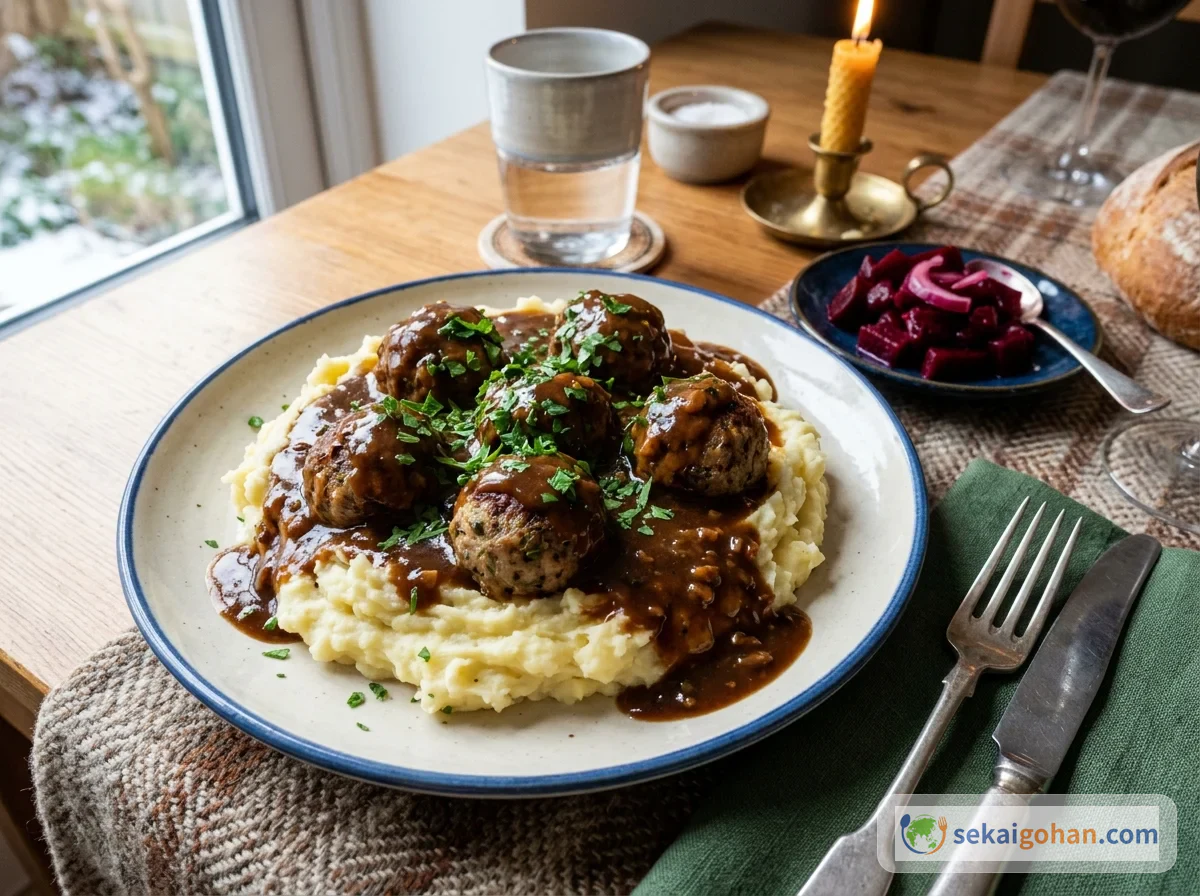
Put boiled or mashed potatoes on the plate, spoon plenty of meatballs and sauce over them, and scatter some parsley on top. At a Quebec table, homemade tomato ketchup and pickled beets or cucumbers are the usual accompaniments. A sour side goes well with a sauce scented with sweet spices.
If you want to cook one more Quebec Christmas dish, try the tourtière, spiced ground meat wrapped in pastry and baked. It uses the same cinnamon and clove combination, and with both on the table you can really smell a Quebec winter. For something sweet afterward, there's the butter tart.
The traditional version with pig's feet
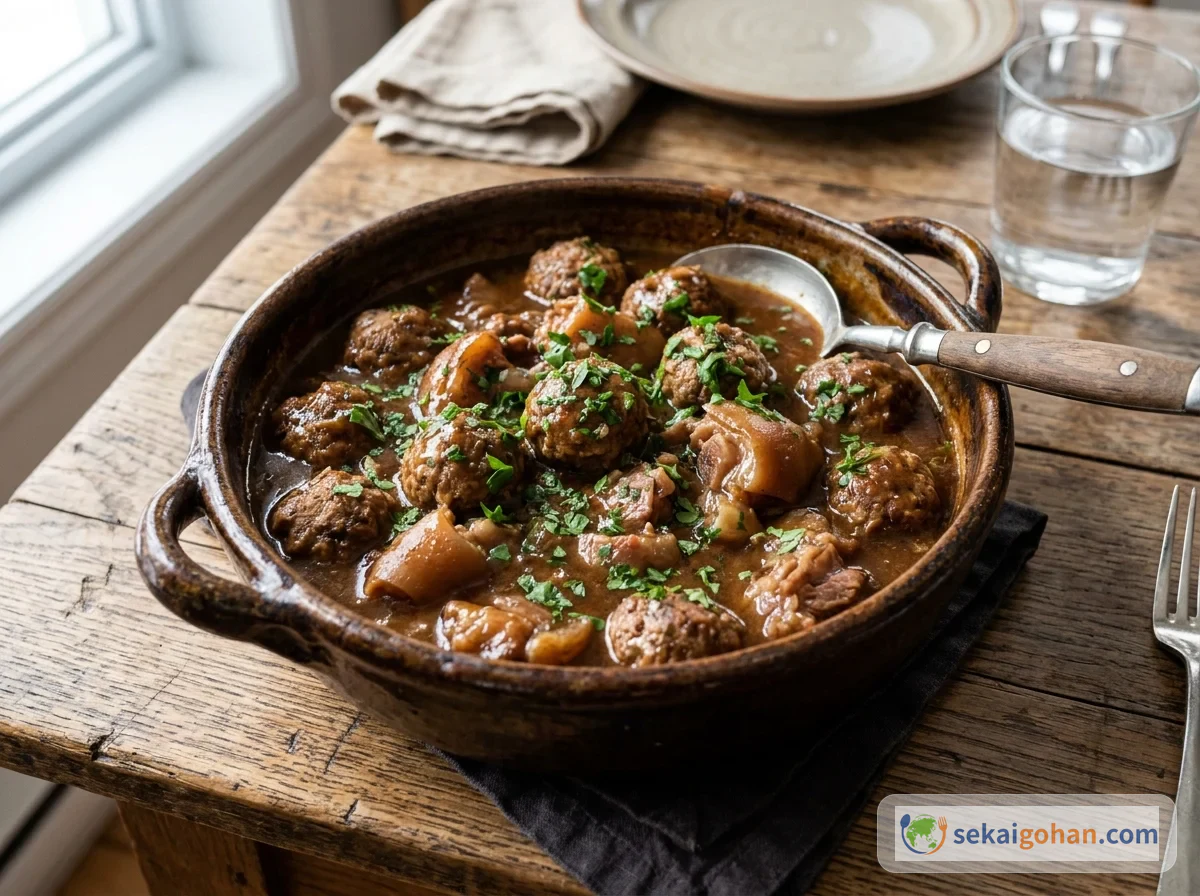
For a more festive pot, make ragoût de boulettes et de pattes. Start the pig's feet in cold water with parsley, bay leaf, carrot, celery and onion and simmer for 2 to 3 hours, until the cartilage is soft and the meat is about to fall off the bone. Strain the liquid, chill it, lift off the fat, and use it to cook the meatballs. The gelatin from the pig's feet dissolves into the sauce and makes it much richer in the mouth.
You can play with the spices too. Small amounts of dried savory, sage and thyme added to the mix give a more herbal aroma, and some recipes add Worcestershire sauce, ginger or mustard.
FAQ
Can I make it with ground beef?
Yes. Ground beef alone firms up a little hard, though, so a half-and-half mix of beef and pork gives meatballs that are easier to eat.
Can I make it ahead?
Yes. The sauce stiffens as it cools, so add a little hot water and reheat over low heat until the meatballs are hot to the center. Keep it in the refrigerator and eat it soon.
Is there a way to skip making the browned flour?
A store-bought brown roux or gravy mix works in a pinch, but it lacks the toastiness of browned flour. Browned flour keeps well, so it's worth making a batch once and keeping it on hand.
Which ingredients should I watch for allergies?
The browned flour contains wheat, and the butter used to brown the meatballs contains milk. Vegetable oil can replace the butter. To avoid wheat, bake rice flour in the oven the same way as browned flour and use it to thicken the sauce.