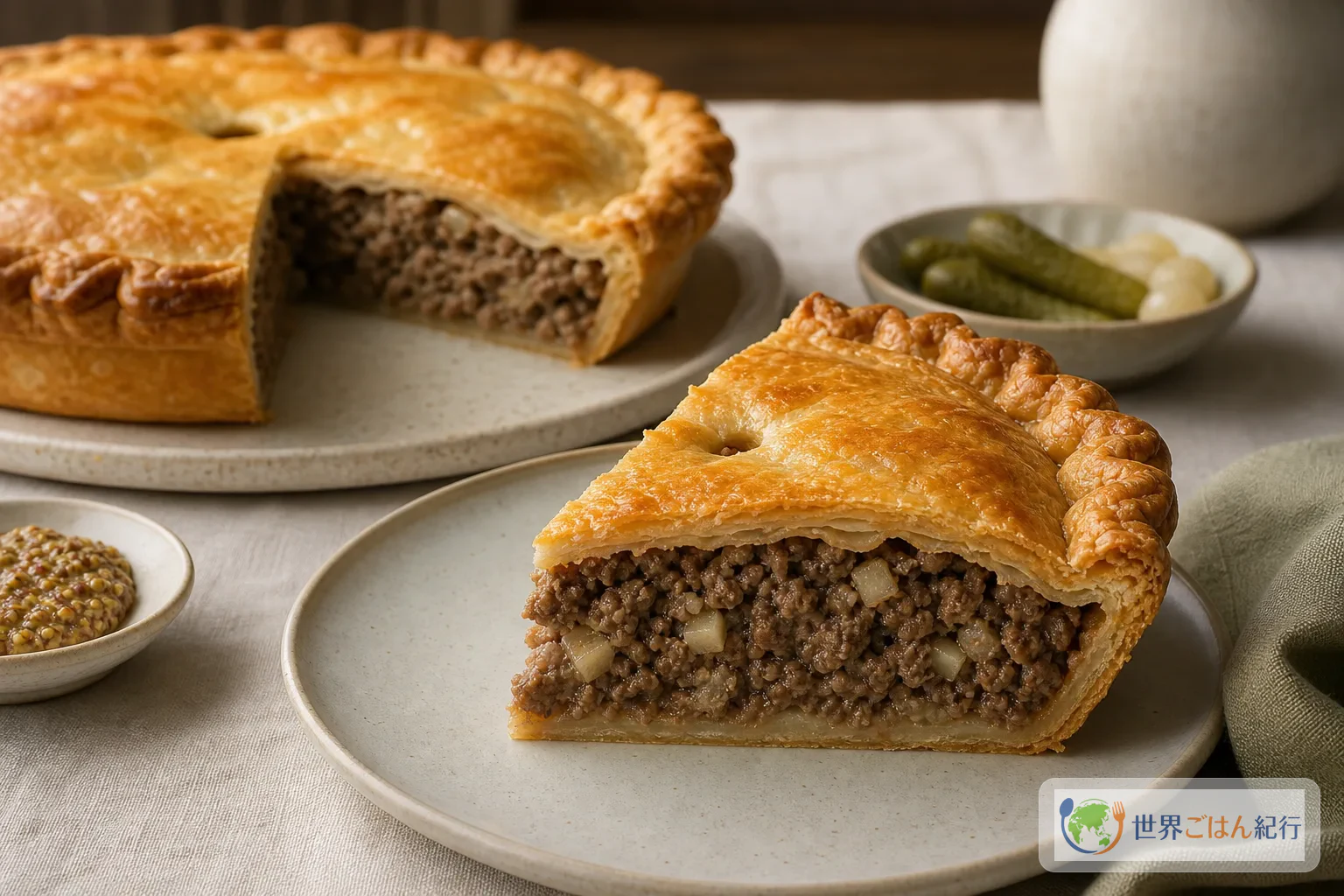
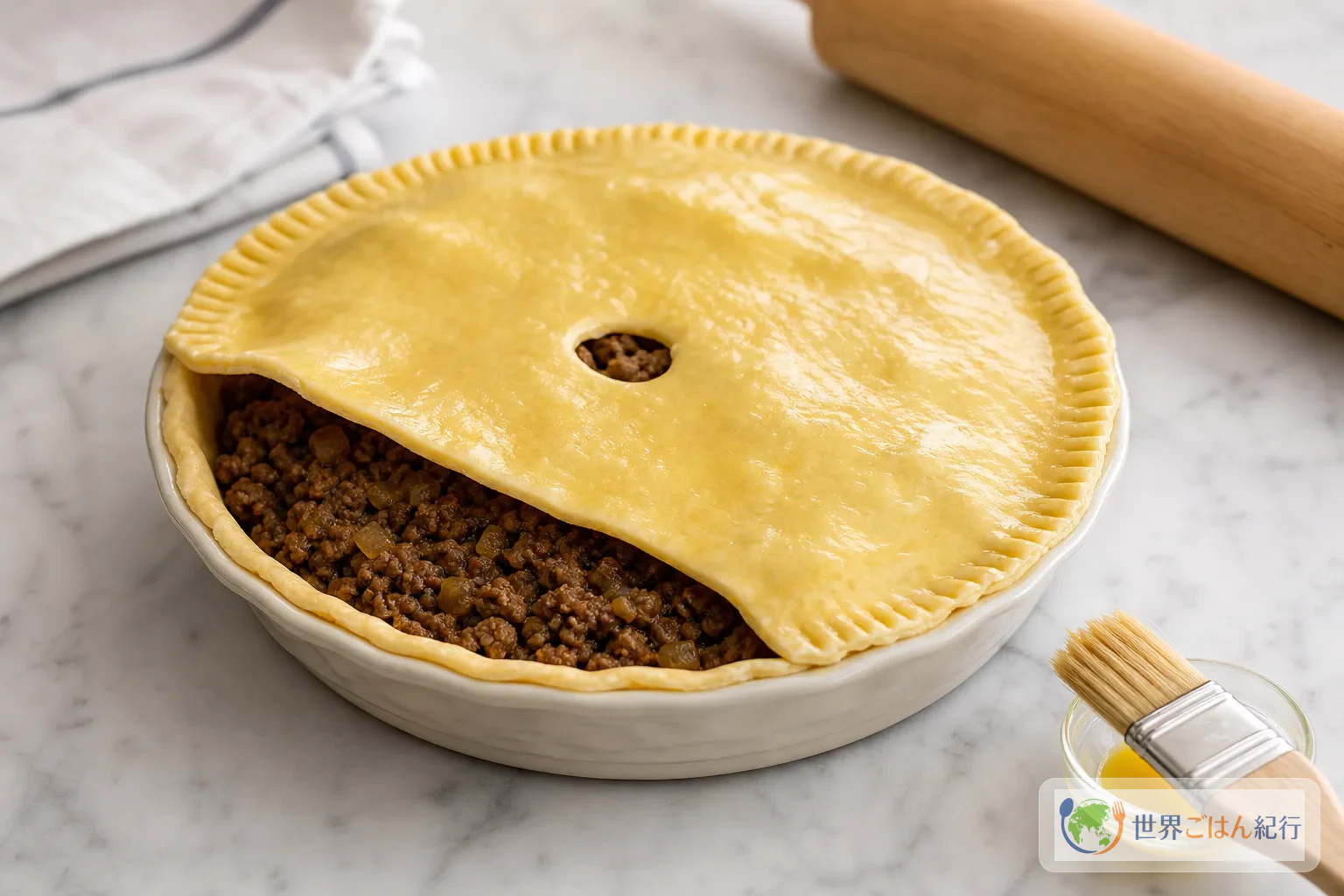
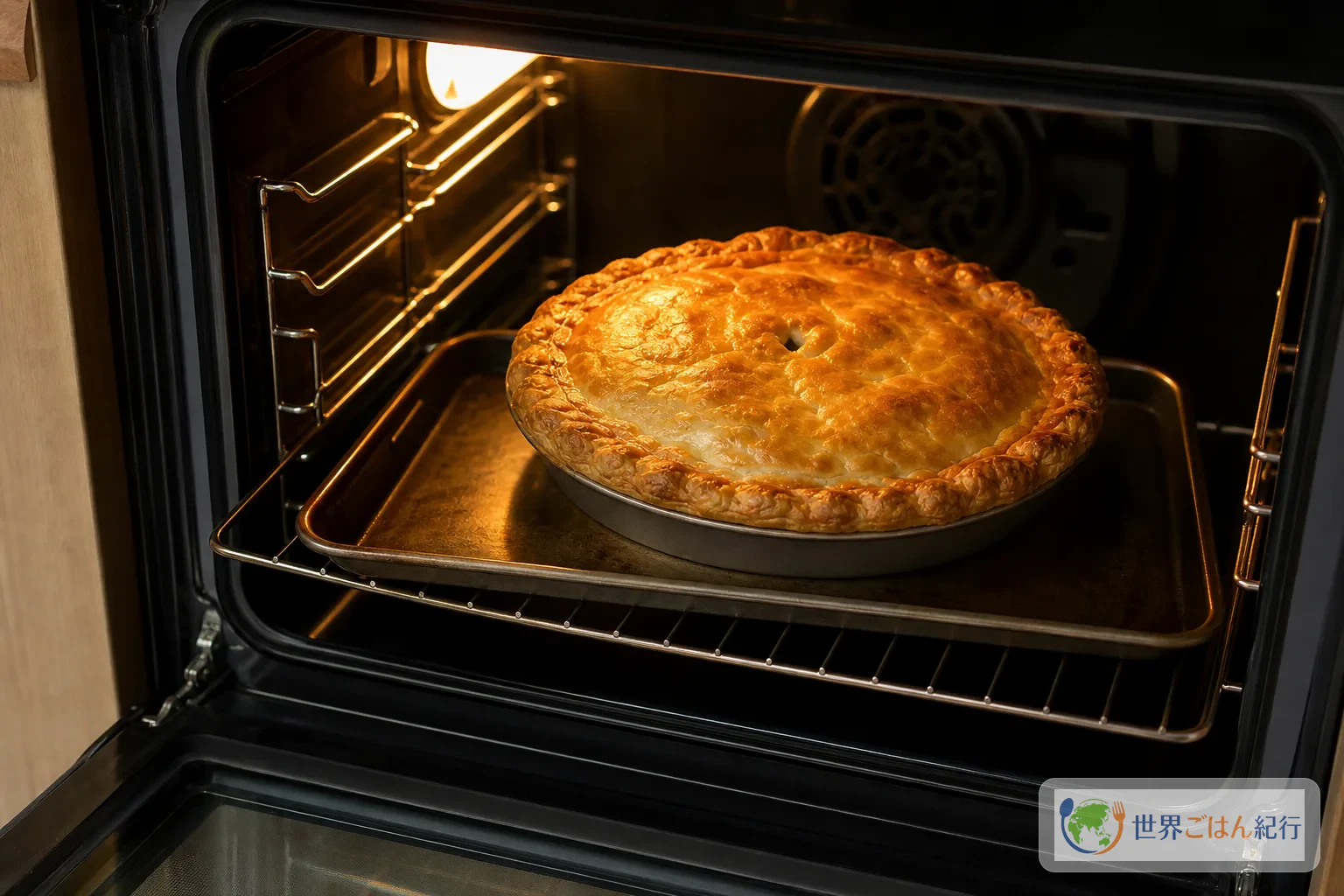
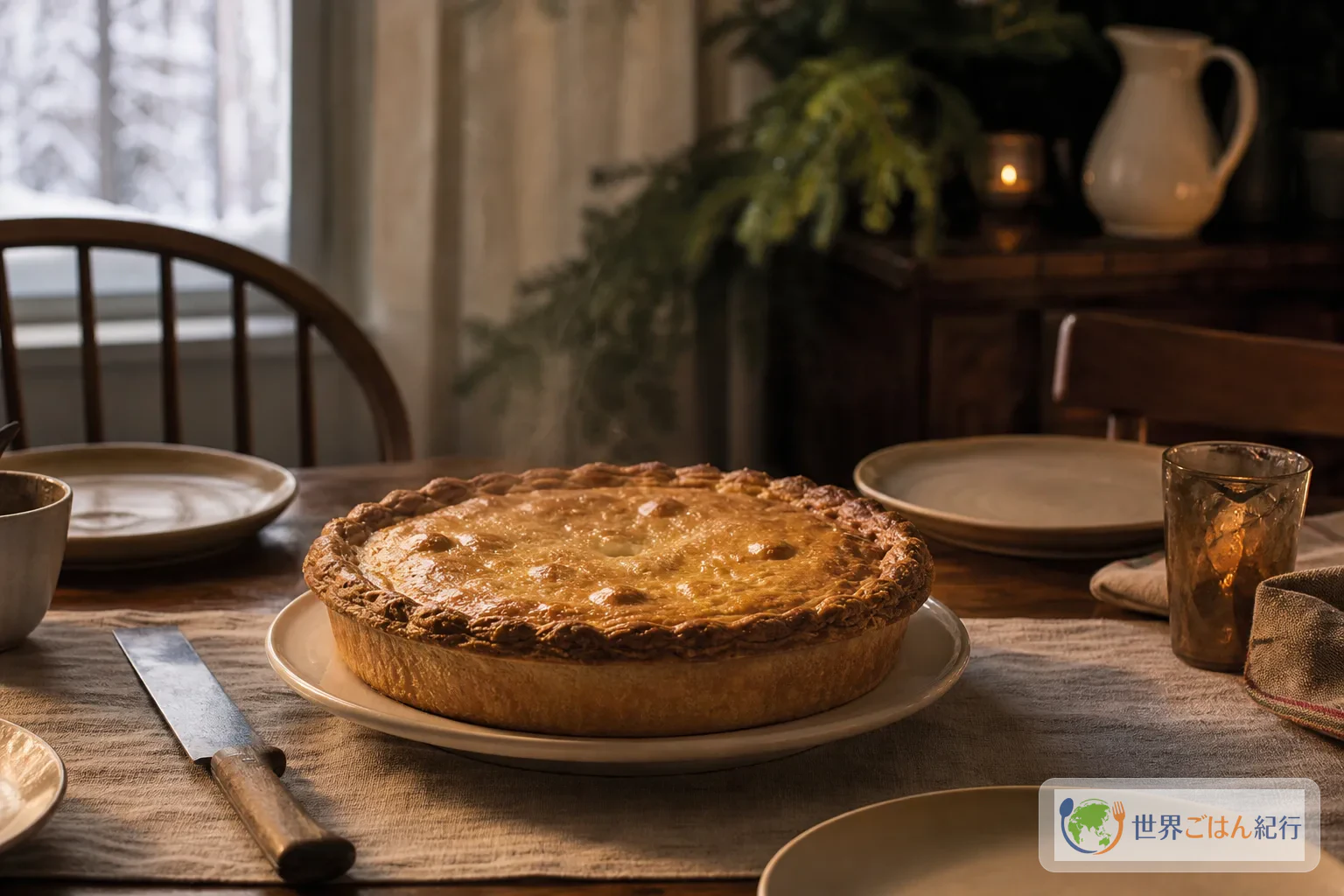
Put a knife into a freshly baked tourtière and the thin crust cracks. Steam rises from the pork and beef underneath, and the first thing you smell isn't the meat. It's the sweet, warm scent of allspice. This meat pie belongs to Quebec, and above all to the Réveillon, the festive meal that runs from Christmas into the new year. Every family has its own spices and its own mix of meats.
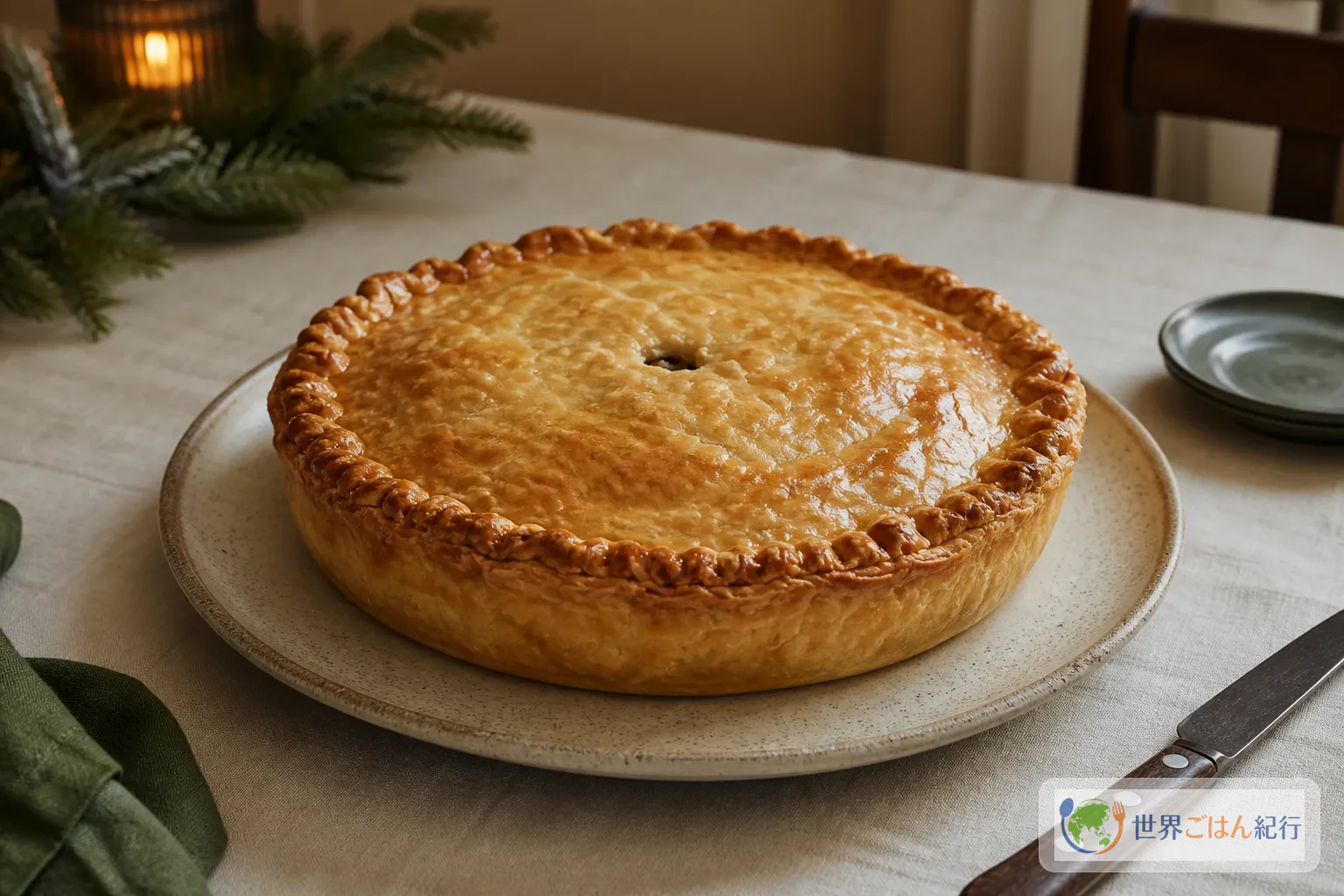
Tourtière in Quebec
Montreal style and Lac-Saint-Jean style
In Quebec, tourtière can be made with beef, pork, chicken, game and other meats, either ground or cubed, and the mix changes by region and by family. The style best known around Montreal simmers ground pork or beef with onion and spices, then wraps it in a top and bottom crust in a shallow pie. The "tourtière du Lac-Saint-Jean" is a much bigger pie: cubed meat and potatoes go in layers into a deep dish and bake for a long time under the crust.
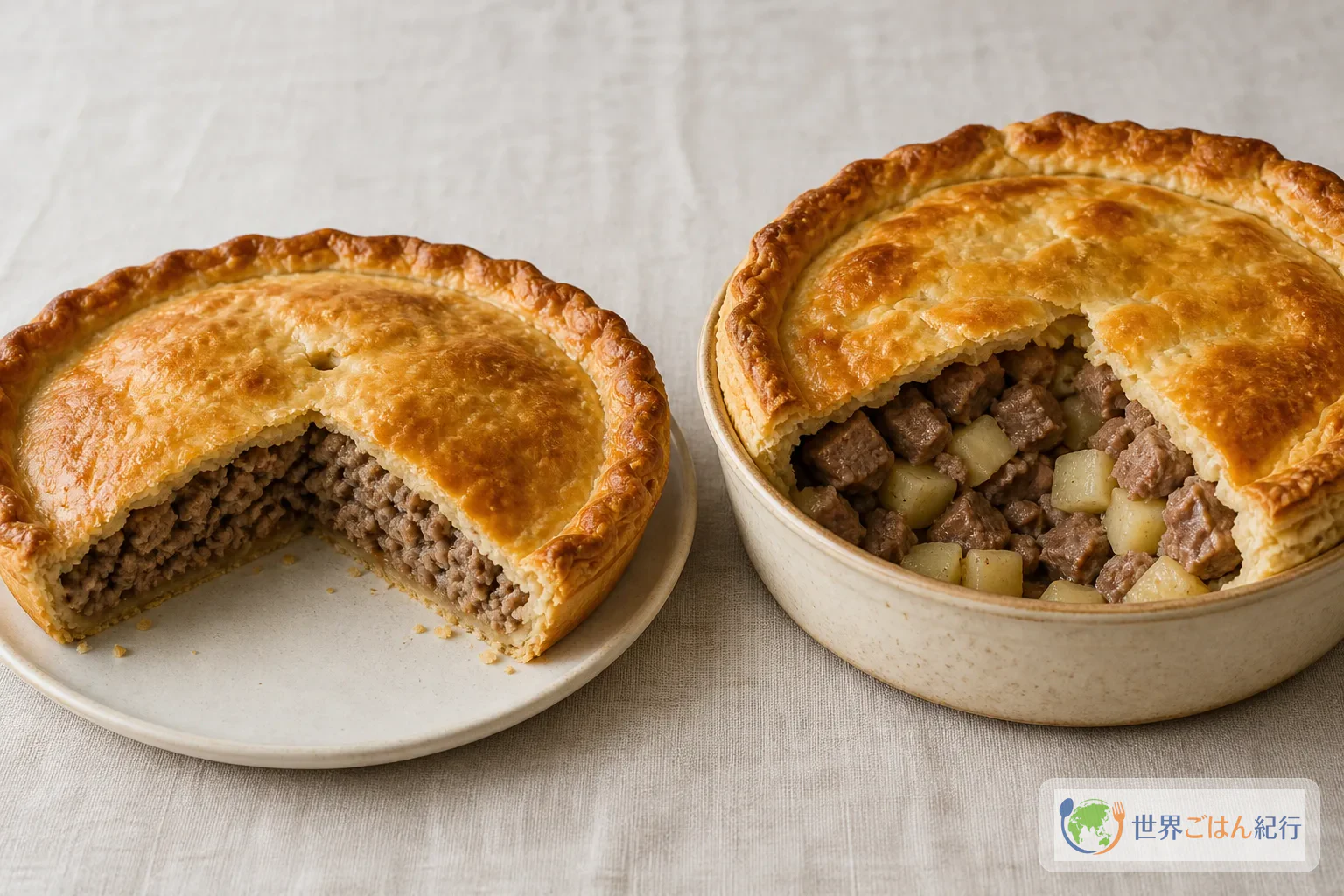
Neither version is the right one. The same name simply took on the meat each place had, the size of its families and the size of its baking dishes. The pie here is the Montreal-style ground-meat version, which cooks through easily in a home oven. Ground pork, ground beef, potato and allspice go into a shallow 8 inches (20 cm) pie dish. The filling is cooked first and cooled, which keeps the bottom crust drier, and even a first-timer can tell when it's done.
Where tourtière comes from
There are several explanations of where tourtière comes from. Some point to records of meat pies in 17th-century Quebec. Others say the name came from a pie made with birds, or from a cooking vessel. Most likely, French settlers' cooking, meat that kept well through winter and the habit of wrapping grains and root vegetables in dough all came together and split into regional forms.
Tourtière at the Quebec holiday table
At the Quebec table, the recipe isn't meant to come out the same every time. Families bake a big pie for Christmas and new-year gatherings and pass down their spice blend and their way of cutting the meat as part of family memory. That's why some households make it heavy on cinnamon while others lean on thyme.
Ingredients (one 8 inches (20 cm) pie, serves 6)
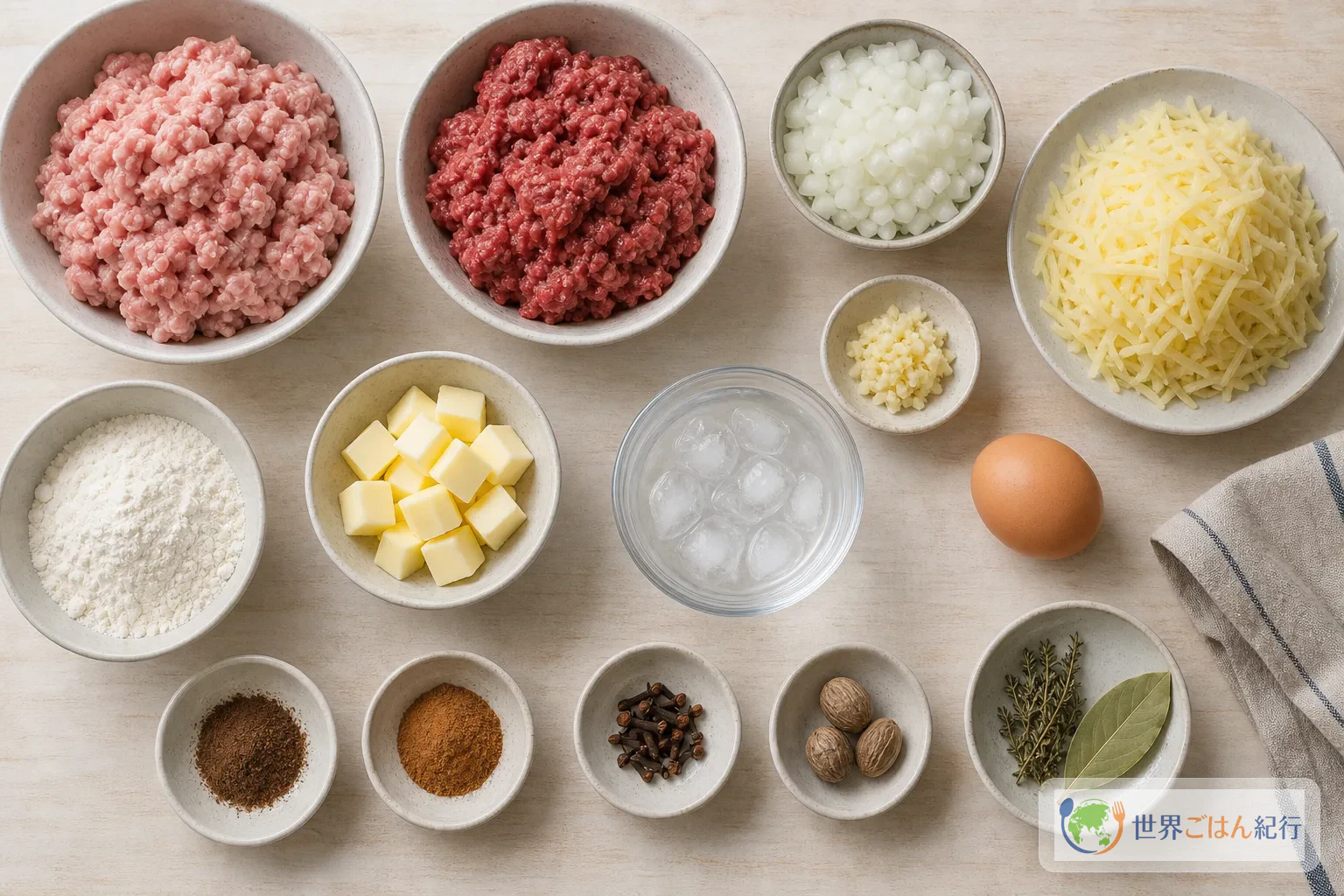
The aroma of tourtière is decided less by the meat itself than by the outline that a small amount of spice draws.
Cinnamon and cloves alone would still make a meat pie, but adding allspice gives a round depth, as if you were tasting cinnamon, cloves and nutmeg at once.
Choose ground allspice made from single berries, not a "mixed spice" blend. If you only need the 1/2 tsp here, use the jar you already have. Buy extra only if you often use it in meat dishes and baking and want the aroma to stay consistent.
This amount is for a 8 inches (20 cm) dish, with the filling mounded in the middle and about 0.5 inches (1 cm) of crust edge showing.
It uses meat, wheat, dairy and egg, so if you have a wheat, milk or egg allergy, check the ingredient labels.
Some commercial broths contain milk ingredients, wheat or celery. Check the labels.
Choosing spices, meat and tools for tourtière
Allspice and spice blends
A little allspice goes a long way: even 1/2 tsp brings out the sweetness of the meat. If you already have a spice blend with cinnamon and cloves in it, start with a small amount and don't add extra cloves.
Swapping the meat
If you change the meat, think about moisture first. To replace the pork with chicken thigh, use 9 oz (250 g) skinless ground chicken and cut the broth to ½ cup (120 ml). Chicken breast is low in fat, so add 2 tsp olive oil. For an all-beef pie, avoid very lean ground meat and check after simmering that the filling hasn't dried out.
Lean game such as venison needs its own handling. Don't just use the recipe as written; follow your meat supplier's instructions for safe handling and cooking.
Do you need a food processor?
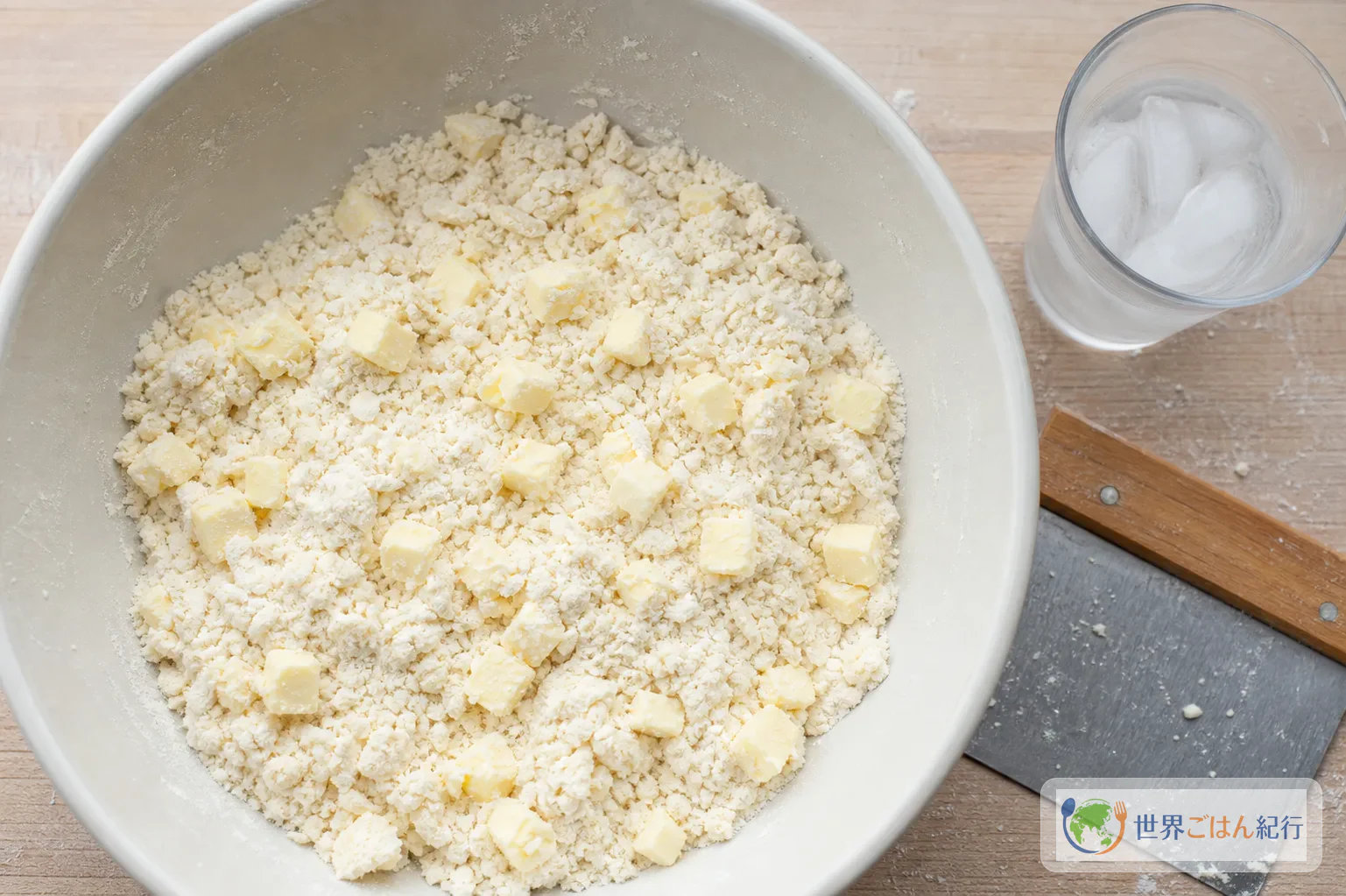
A food processor is good at cutting cold butter fine and bringing dough together quickly. For a single 8 inches (20 cm) pie, though, your fingertips are perfectly sufficient, with no pastry cutter needed. A machine with a 3.75 quarts (3.6 L) bowl makes sense if you bake pies and tarts several times a month, tend to melt the butter with warm hands, or make two pies at once. If tourtière is a once-a-year pie, you can skip it and keep the storage space.
Because ground meat is used, don't judge doneness by color alone. Wash utensils and cutting boards that touched the raw meat with detergent, and check for a core temperature of 165°F (74°C) when the pie is done. Even without a thermometer, cook the filling completely first and eat it hot all the way through.
Fixing common tourtière problems
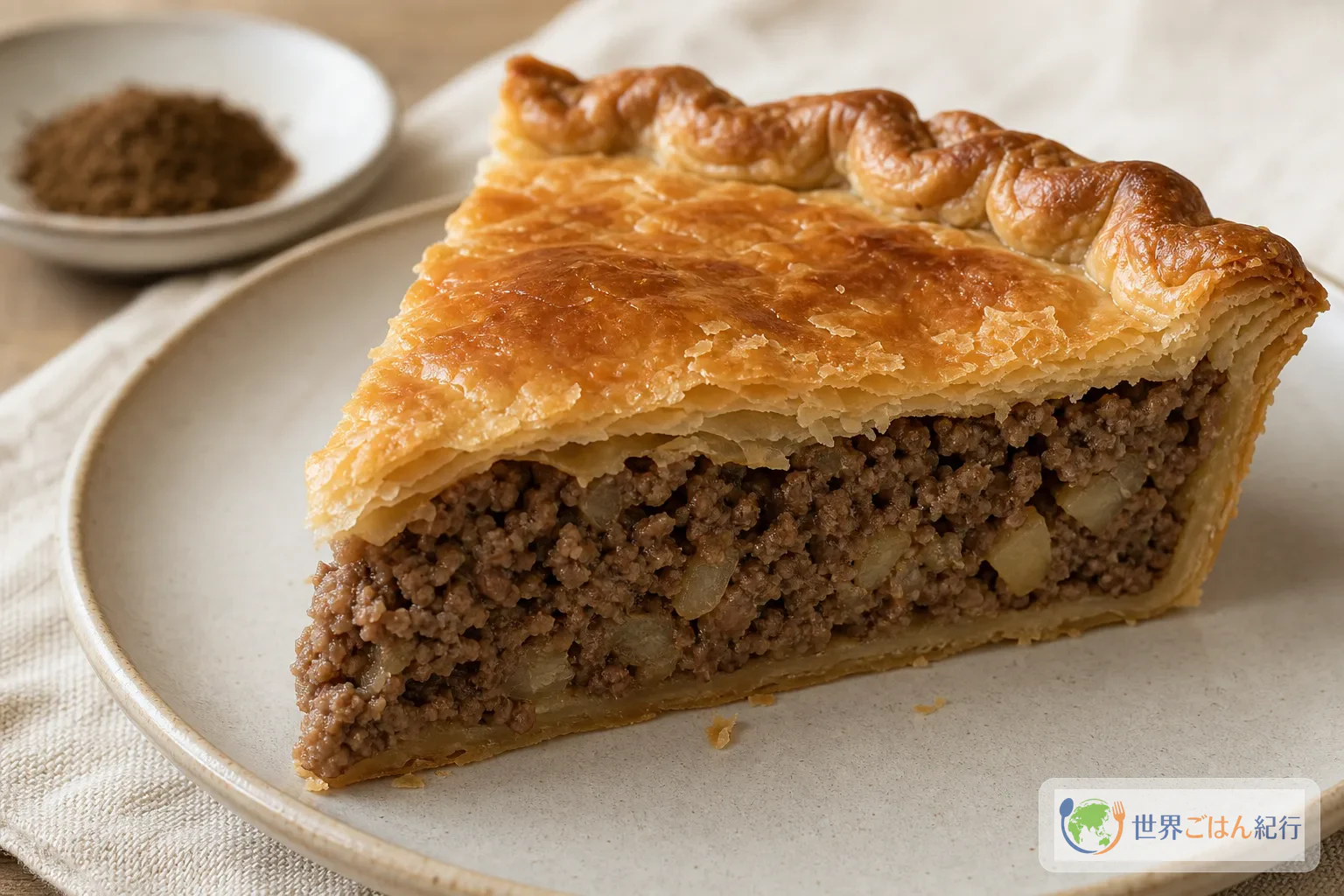
Getting the allspice timing right
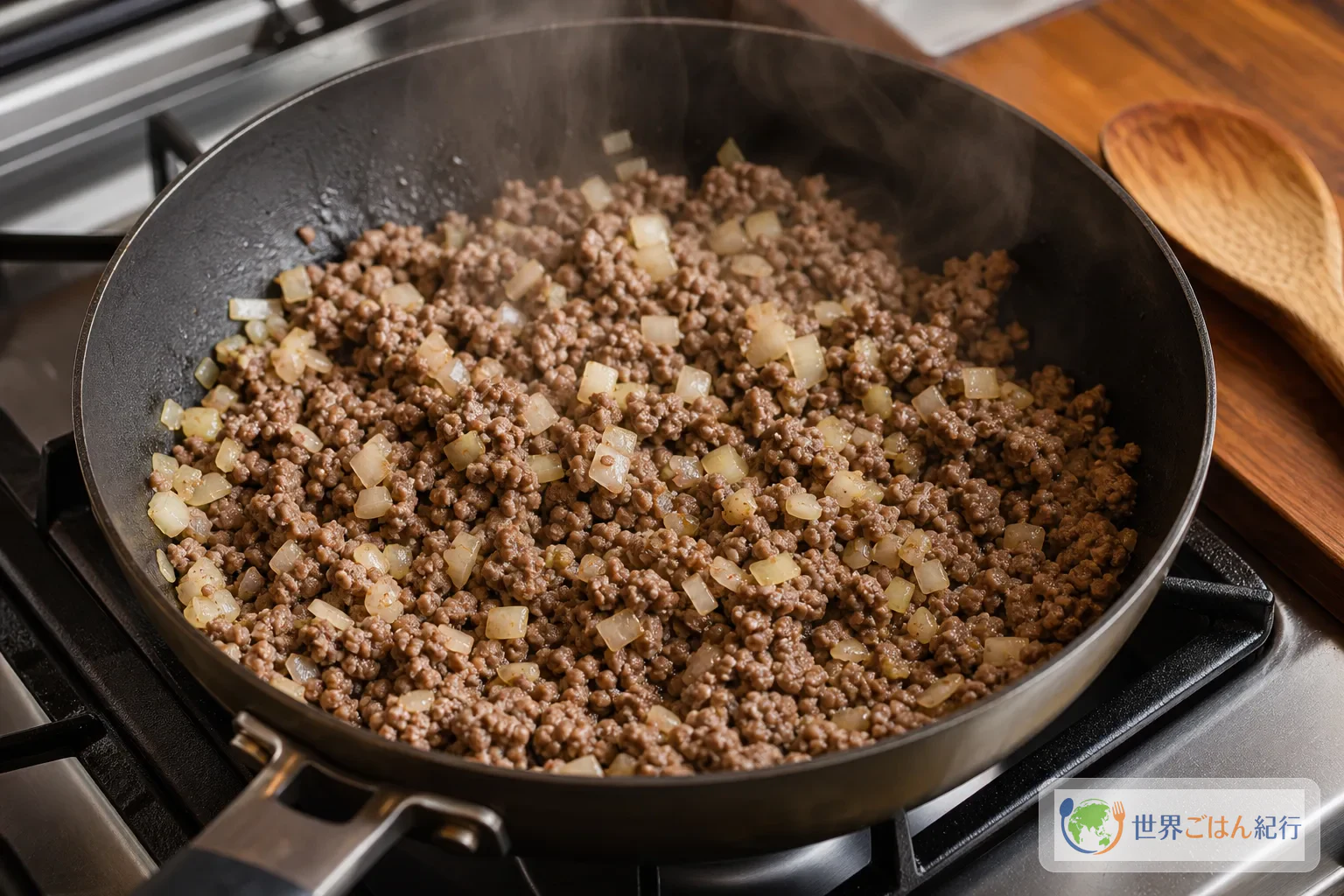
Timing matters more than quantity. Add allspice before the meat has browned and the moisture from the onion dulls it. Add a lot at the end and it tastes powdery. The best moment is right after the red has gone from the meat: let it sit in the oil for just 30 seconds to bring up the aroma, then loosen everything with broth before it can scorch.
Watery filling and a soggy bottom
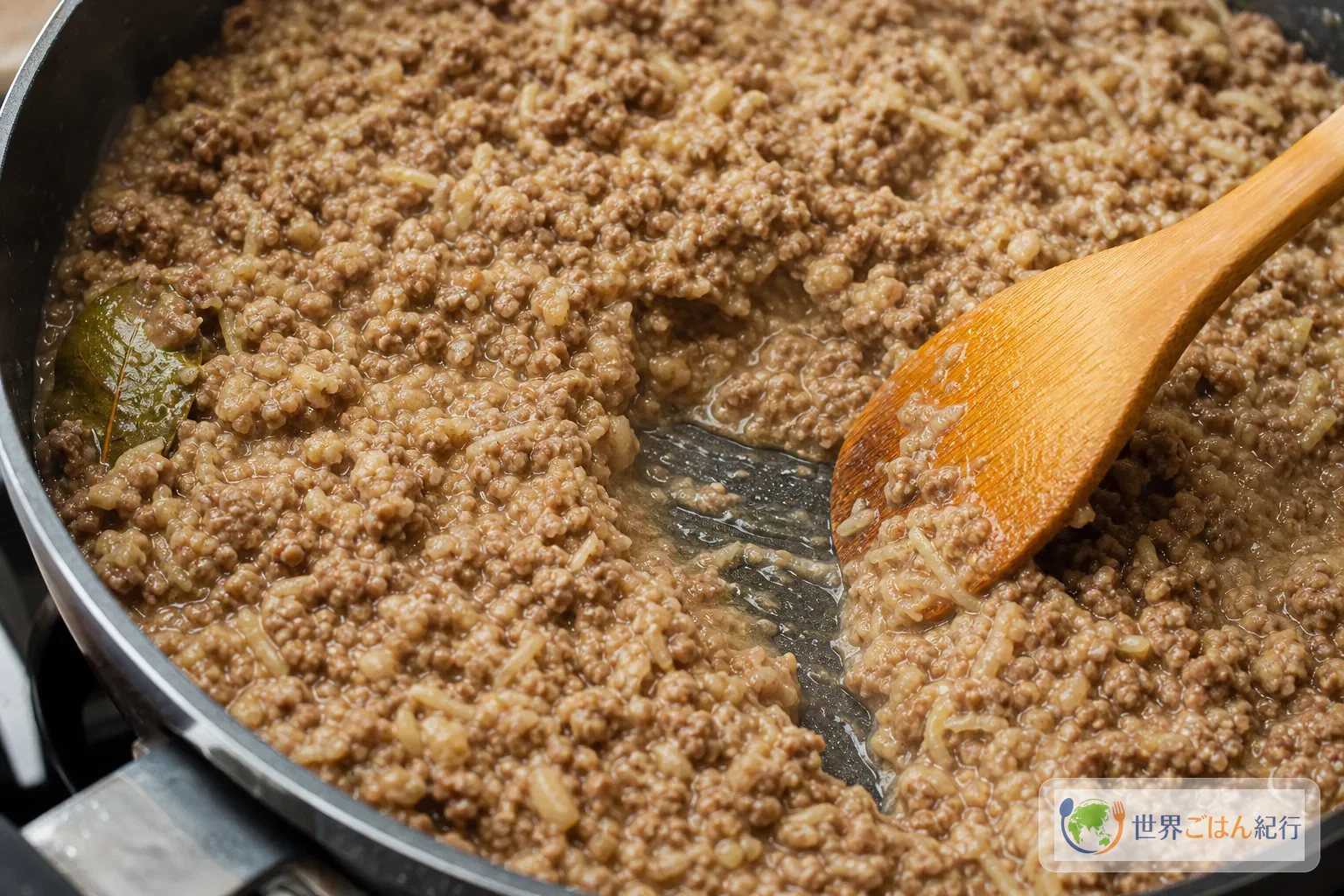
Grated potato soaks up the cooking liquid and binds the filling. If you cool the filling while it's still wet, liquid will pool at the bottom even once it's cold, and the bottom crust turns soft. Reduce it until a spatula leaves a trail that lasts about 2 seconds and a spoonful doesn't send liquid running. If it's still loose, give it 3 more minutes at a time over low heat.
If you go too far and it dries out, add broth back 1 tbsp at a time until the filling holds together when pressed. If liquid seeps out after baking, next time don't squeeze the grated potato, and use 2 tbsp less broth from the start.
Serving, storing and variations
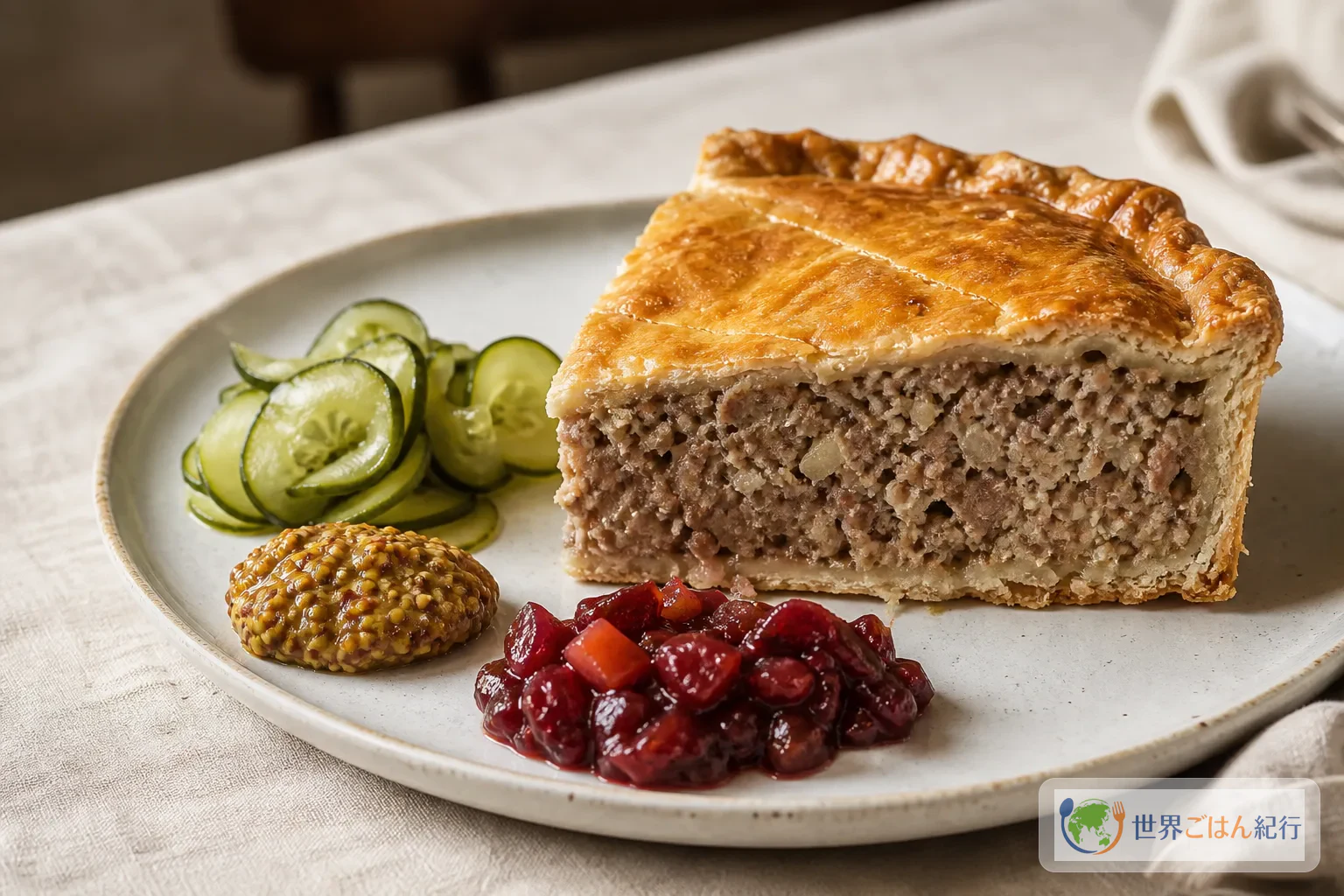
What to serve with tourtière
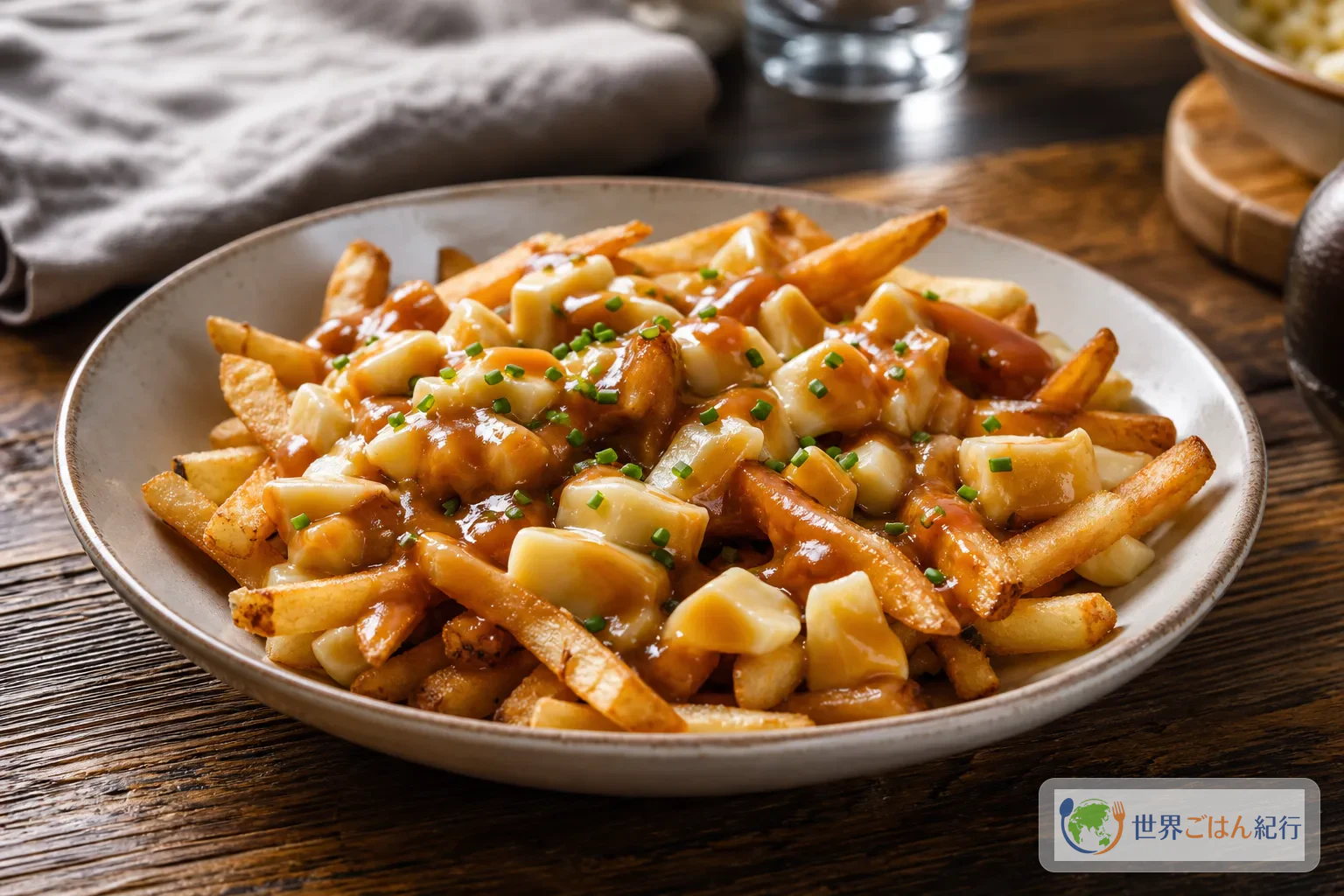
A freshly baked slice already balances the sweetness of the meat against the salt of the crust. Add something sour and the fattiness fades faster, so the next bite doesn't feel heavy. A little tomato ketchup, whole-grain mustard or a few cucumber pickles will do it. A sweet-tart apple or cranberry sauce makes the cloves stand out. For a fuller North American spread, poutine, a casual Canadian dish, goes well alongside. Bake the pie first, and you only have to make the sides just before eating.
Lac-Saint-Jean-style variation
To lean toward the Lac-Saint-Jean style, use 7 oz (200 g) each of beef and pork, 5.5 oz (150 g) chicken thigh or venison, and 9 oz (250 g) potato. Cut the meat into 0.25 inch to 0.5 inches (5 mm to 1 cm) cubes and increase the broth to 1 cups (250 ml). Line a baking dish about 3 inches (7 cm) deep with the bottom crust, layer in the filling, cut a large steam hole in the top crust, and bake at 350°F (180°C) for 90 to 120 minutes. It's closer to a different dish, so it helps to learn what the aroma and moisture should be like with the ground-meat version first.
Storing and reheating
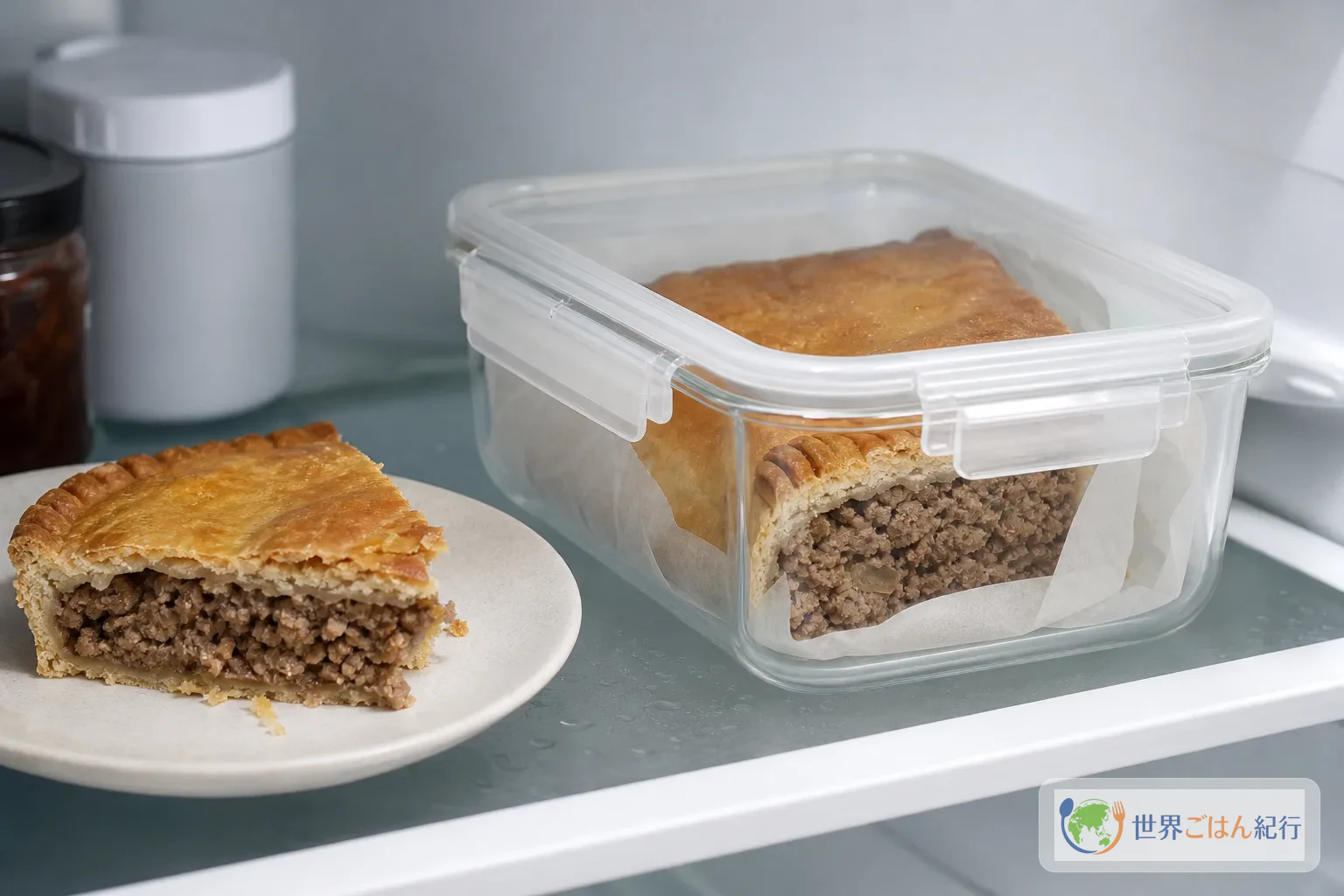
Cool leftover pie completely, wrap each slice in plastic wrap, and eat it within 2 days from the refrigerator. It's better warm than cold: heat it in a 350°F (180°C) oven for 15 to 20 minutes until it's hot in the center. A microwave alone makes the crust soft, but you can microwave for 40 to 60 seconds and then finish in a toaster oven for 3 minutes.
To freeze, cool the baked pie completely, wrap it by the slice, and use it within 2 weeks. Thaw overnight in the refrigerator and reheat at 350°F (180°C) for 20 to 25 minutes, checking that the center reaches 165°F (74°C) or above. However long it has been stored, don't eat it if it smells or looks off.
FAQ
I have no allspice. Can I make it with cinnamon alone?
You can, but the aroma will be flatter. For something closer, try 1/2 tsp cinnamon, 1/4 tsp nutmeg and a pinch of cloves. Cloves easily overpower everything else, so start with less.
What if I have no pie dish?
Use a round ovenproof dish 8 inches (20 cm) across and 4 to 5 cm deep. A metal pan browns the bottom easily, while glass or ceramic needs about 5 more minutes. Since the material changes how the heat moves, go by the crust color and the core temperature.
Can I use all pork for the ground meat?
Yes, use 1.25 lb (550 g) ground pork. You lose the stronger flavor of the beef, and raising the thyme to 2/3 tsp gives a milder, more rounded result than raising the black pepper to 3/4 tsp. With fattier ground meat, skim off up to 1 tbsp of the fat that rises after simmering.