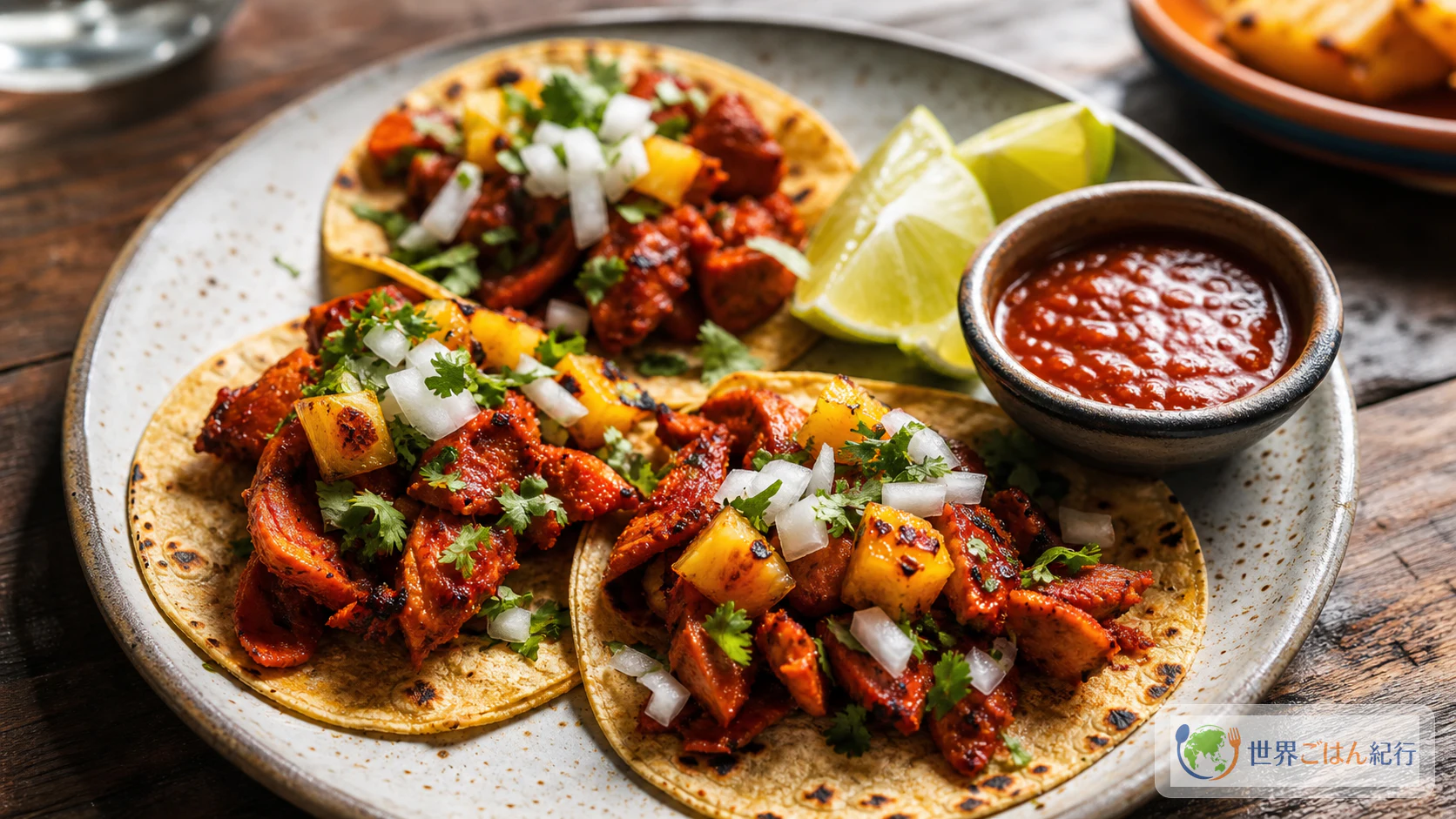
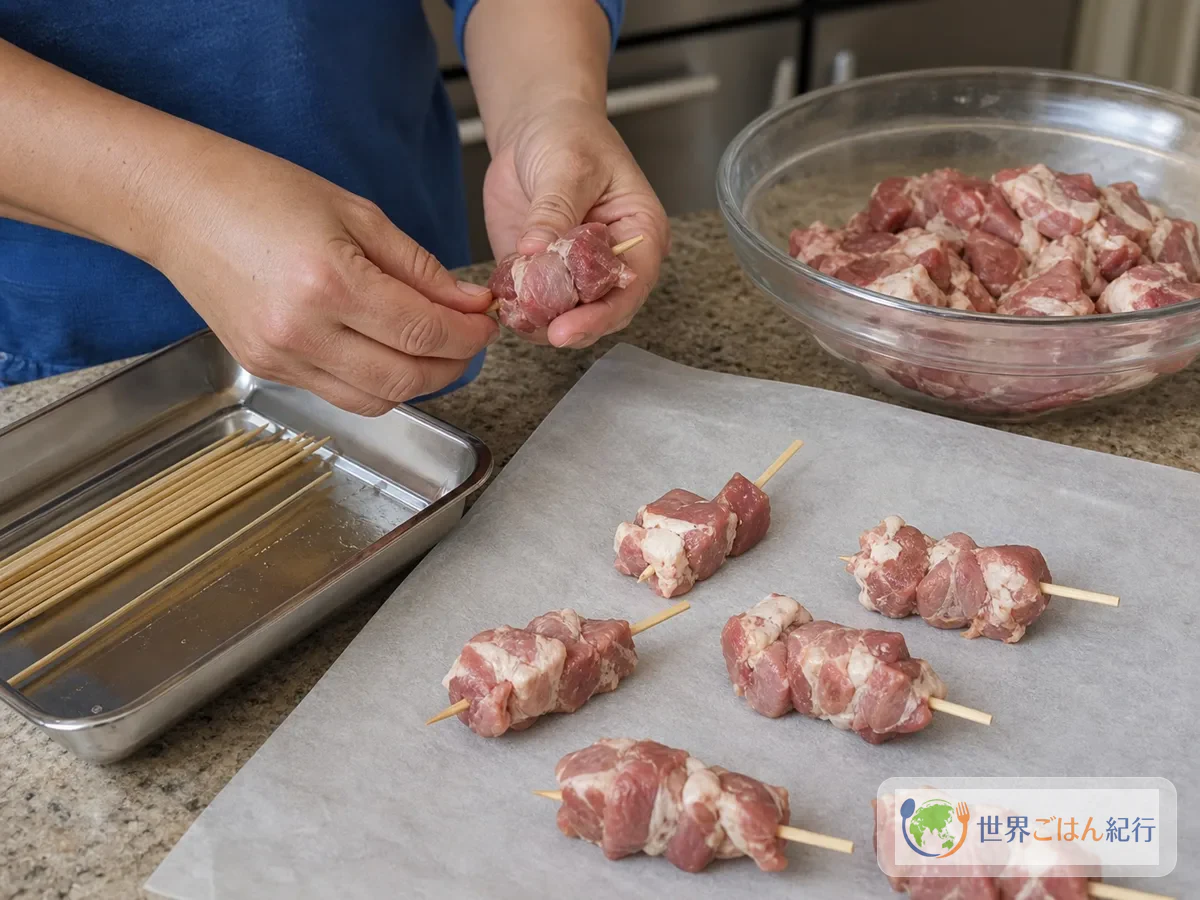
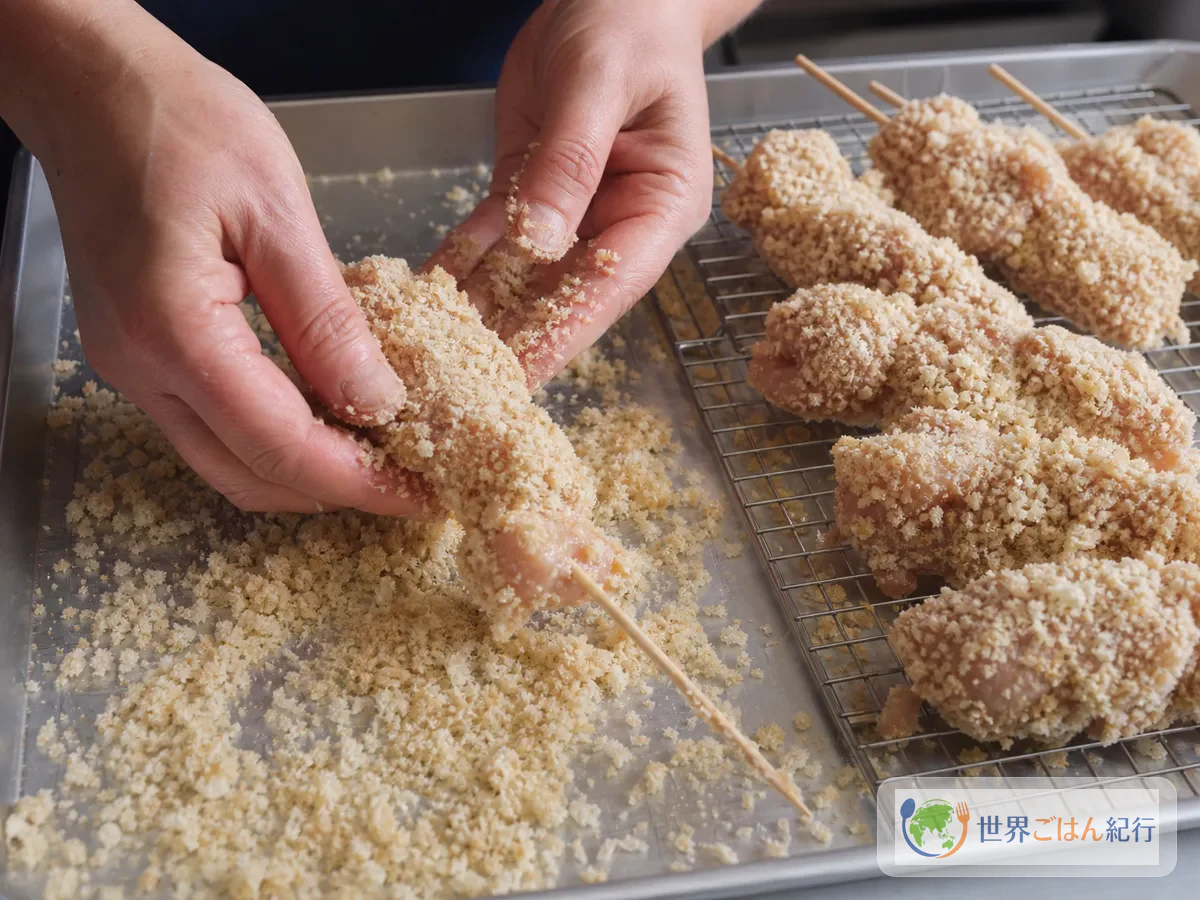
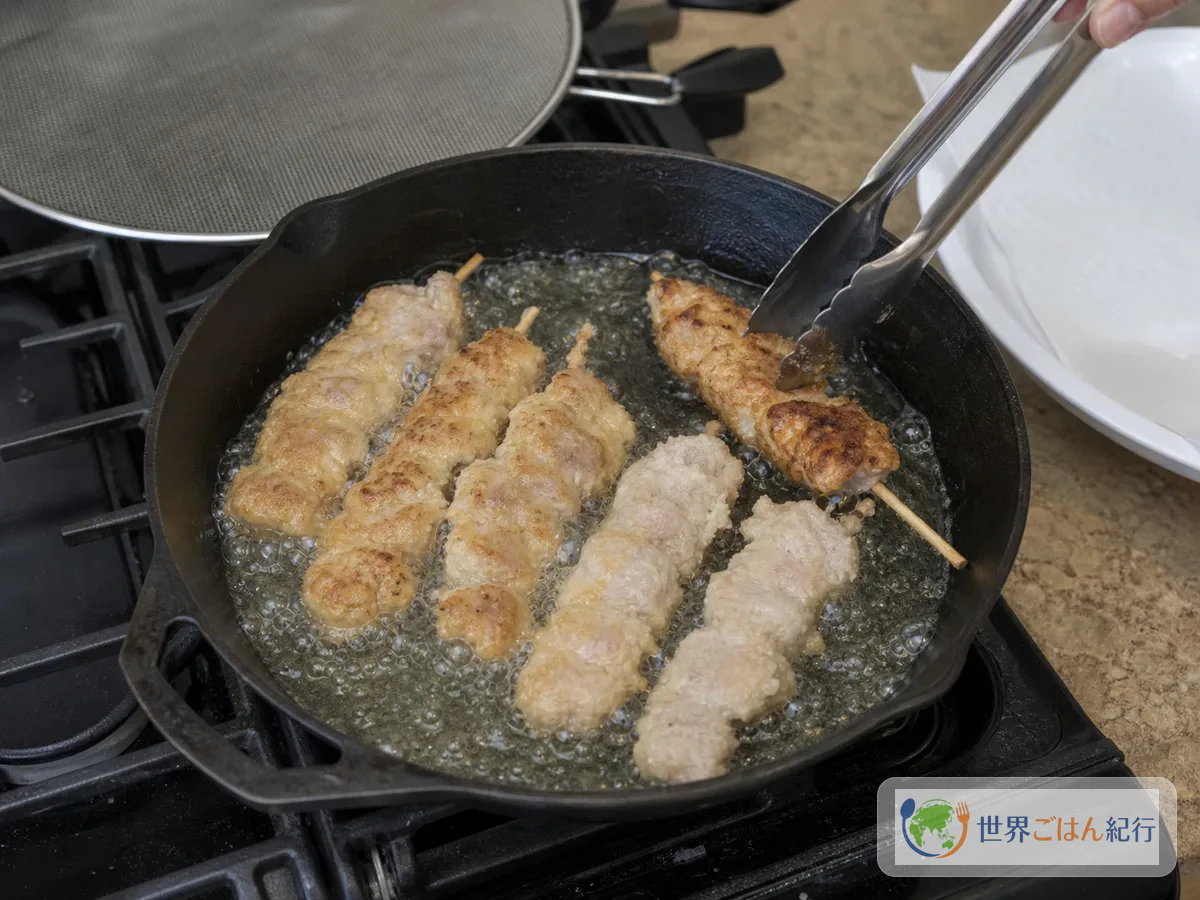
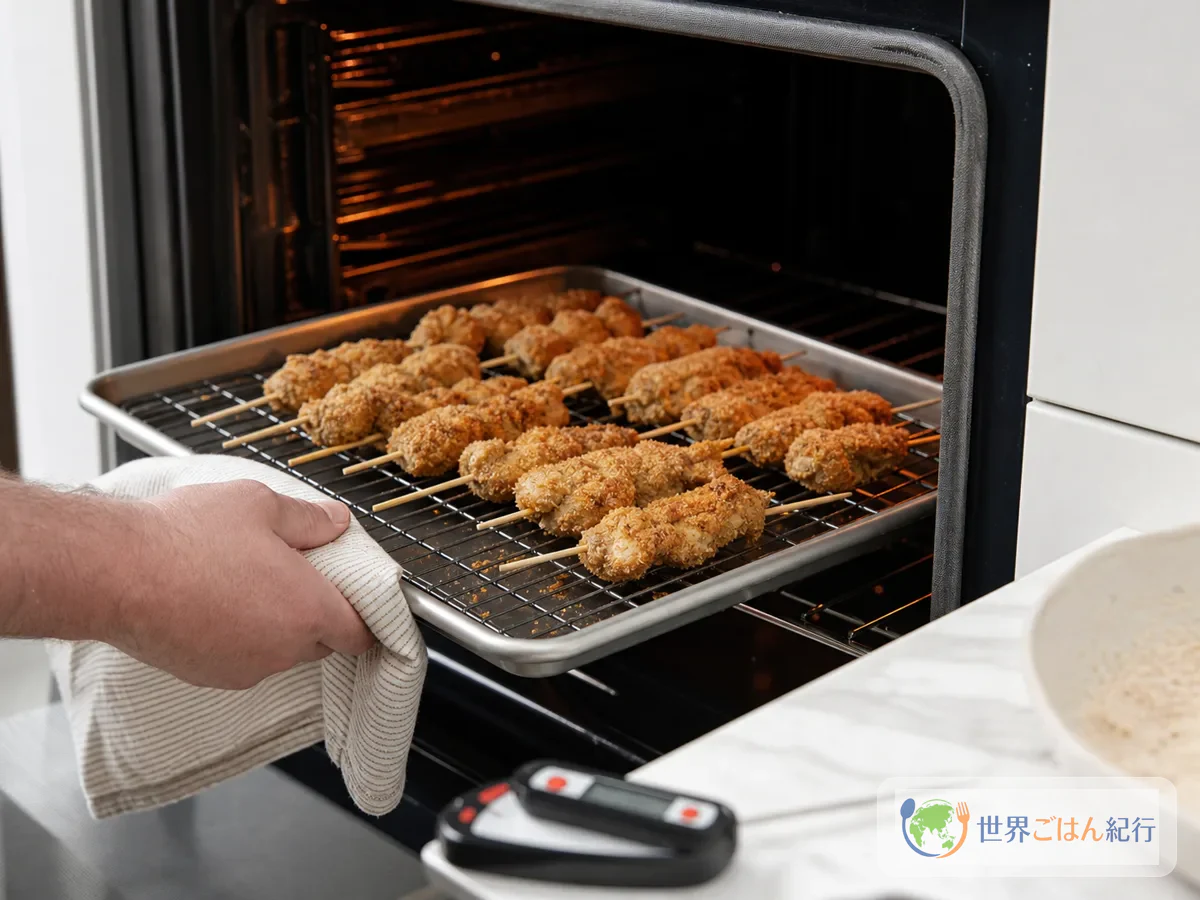
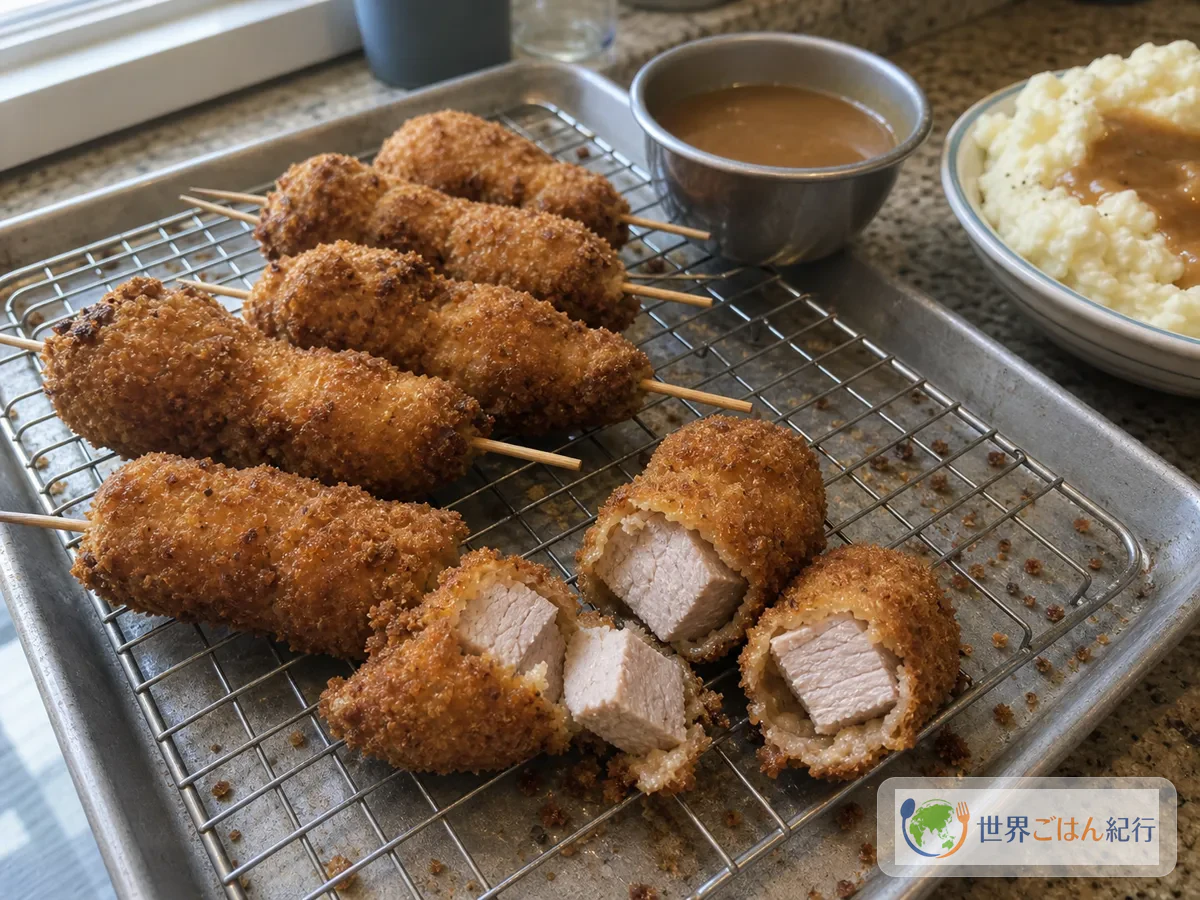
Press breadcrumbs onto skewered pork and lay it in a shallow pan of oil, and you'd swear you were making a small skewered cutlet. Around Pittsburgh and across the American Midwest, though, this is city chicken, and there's no chicken in it at all. Cubes of pork or veal go onto a skewer, shaped to look like a bone-in chicken drumstick. They're browned, finished in the oven until cooked through, and served with gravy made from the drippings and browned bits. You get toasty crumbs, smooth mashed potatoes and salty brown gravy on one plate: solid American home cooking.
City chicken: the name and its history
The name comes from the way cities ate in the early twentieth century. Chicken feels cheap today, but in earlier America it was expensive. It made more sense to gather pork or veal trimmings on a skewer and make "something like chicken." For immigrant families working in the city, that was how dinner got a little dressier. Coat the skewers, brown them and pour brown gravy over them, and cheap trimmings become the Sunday main.
Immigrant home cooking, skewers sold at butcher shops and church potlucks all mixed together, and city chicken stayed in home kitchens in Cleveland, Detroit, Pittsburgh, Ohio and Michigan. Unlike New Orleans gumbo, it isn't tied to one place name. It passed back and forth between butcher counters, potluck tables and home kitchens, so it never settled into one version.
City chicken is also called mock chicken or mock drumsticks. It is often associated with Polish, Ukrainian, and Slovak immigrant families, and recipes vary: pork only or with veal, with gravy or without tomato sauce, and so on.
Regional differences
Recipes vary by region and by household. Some cooks use pork only, while others alternate pork and veal on the skewer to make it more tender. Some only bread and fry the skewers, some shallow-fry and then finish them in the oven, and some simmer the baked skewers briefly in gravy. Every version threads the meat onto a skewer so it looks like bone-in chicken.
How it compares with other American dishes
Jambalaya and gumbo are Louisiana pot dishes. The po' boy is a New Orleans sandwich with fillings in French bread, and red beans and rice is a Monday pot of beans and rice. City chicken belongs to the tables around the Great Lakes. There are no showy spices. It turns cubed meat from the butcher shop into a festive dinner using supermarket meat, breadcrumbs, eggs and mashed potatoes, and that's the whole appeal.
Ingredients: cubed pork shaped like a drumstick, and skewers
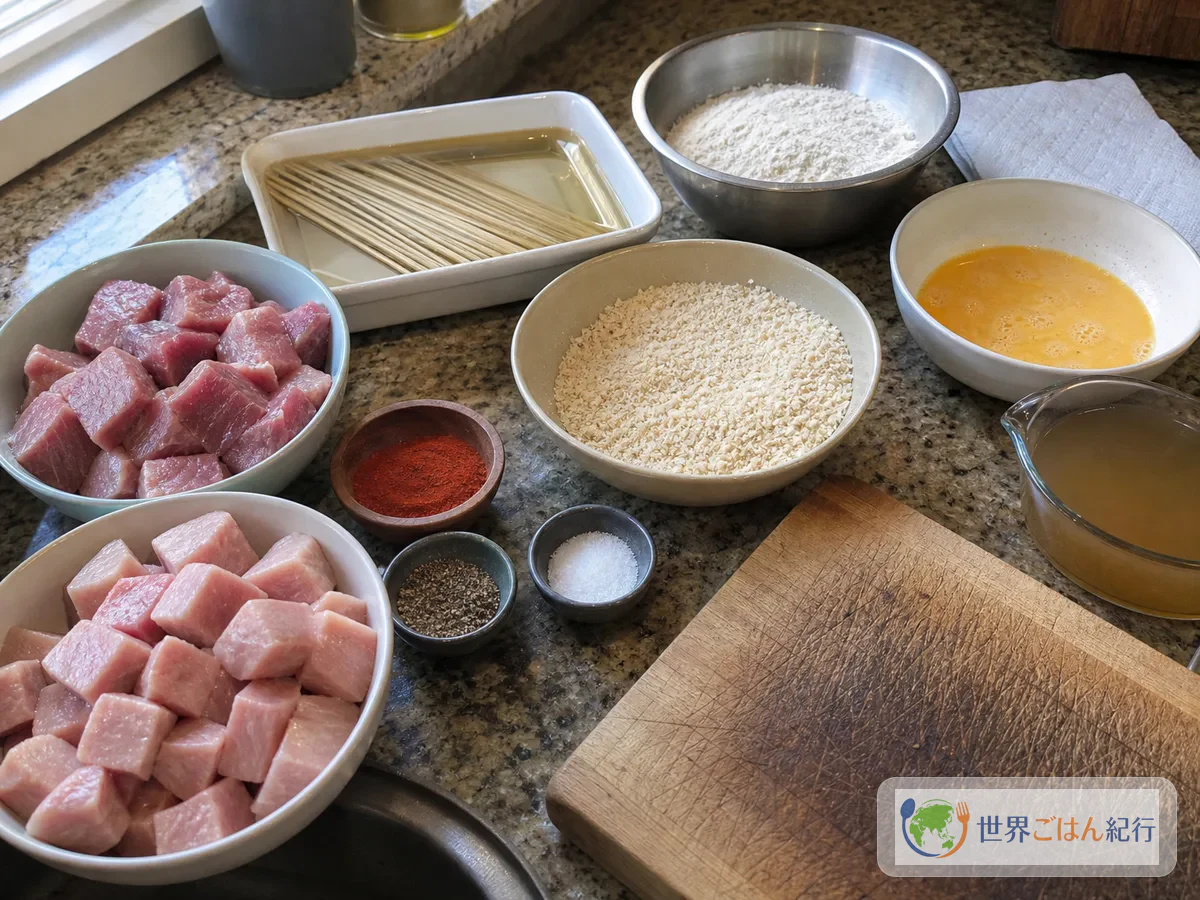
Serves 4, with 2 skewers per person. Pork shoulder alone is juicy, but too much fat makes the coating peel off easily. Pork leg alone tightens up, so for a first time, use half shoulder and half leg.
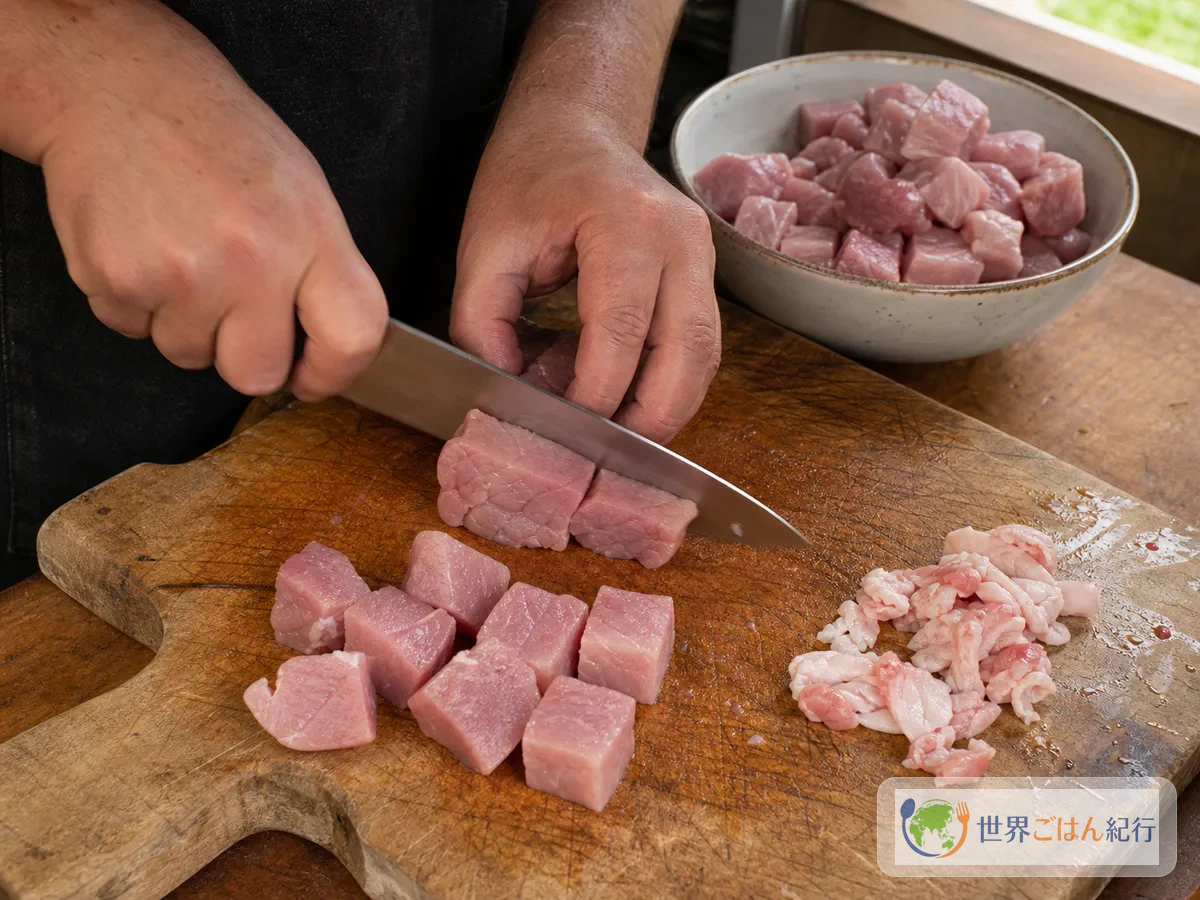
When shopping, choose block meat, not the thin slices labeled for frying. If the shop will cube it for you, ask for about 1 inches (2.5 cm); the work at home gets much easier. The more evenly the meat faces line up on the skewer, the more even the thickness of flour, egg, and crumbs, and the steadier the browning.
Judging the meat at the counter
| What to look at | How suitable | Why |
|---|---|---|
| Pork shoulder, block | High | Good balance of fat and lean; stays moist when skewered |
| Pork leg, block | High | Holds its shape and balances the fat of the shoulder |
| Thick-cut pork for cutlets | Medium | Works if thick enough to cut into 1 inches (2.5 cm) cubes. Pre-tenderized cuts can fall apart |
| Pork scraps, thin slices | Low | The skewer shape collapses and core temperature is hard to check |
| Chicken thigh | Fine as a dish | Outside the context of the name. If used, check that the center reaches 165°F (74°C) or higher |
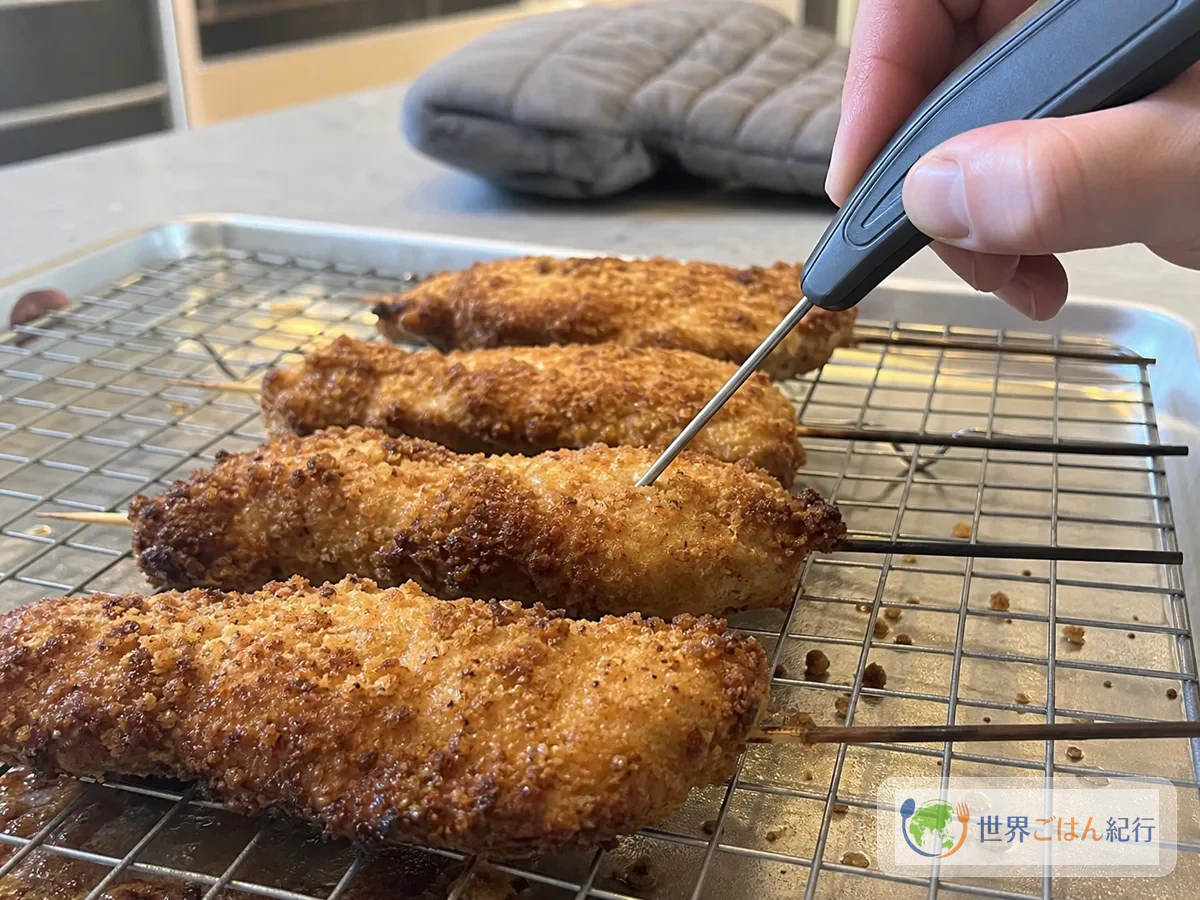
This dish contains pork, wheat, eggs, and dairy. Cook pork through to the center, and don't leave the finished dish at room temperature for long. Confirm the core reaches 145°F (63°C) or higher, then rest at least 3 minutes. Cubes stacked on a skewer are layered, so check the thickest part with a thermometer.
What to gather for this dish
For city chicken, buy three extras: bamboo skewers, paprika, and a thermometer. The pork, eggs, and breadcrumbs come from a regular supermarket. The skewer gives the shape, paprika adds color and aroma to the coating, and the thermometer takes the guesswork out of the middle, even when the outside already looks fried.
Skewers that are too long won't fit in the skillet, so use 7 inches (18 cm) to 9.5 inches (24 cm) skewers at home. If you use 12 inches (30 cm) skewers, push the meat toward the center so you can hold both short ends.
Paprika is used not to make it spicy but to add a warm red tint and sweet aroma to the coating. If you have smoked paprika, replacing only half gives a toasty note typical of American shallow-fried dishes.
A thermometer is most useful for dishes that finish in the oven. The coating can be brown while the center is not yet done, so check at least the first time on the thickest skewer.
Choosing meat for city chicken
How you buy the meat matters more than anything else. Buy block meat and cut it into 1 inches (2.5 cm) cubes, the way a butcher would for skewers. Thin slices or scraps pressed into a ball are uneven in shape and come apart on the skewer. They also have more surface area, so flour and egg work their way in, and it gets hard to tell when the center is cooked. If thin slices are all you have, use them for a different dish of meat wrapped around a skewer.
The cut changes the texture. Pork shoulder alone has fat that can lift the coating, and pork leg alone tightens up as it cooks. For your first batch, use half of each. This one small choice heads off a lot of kitchen failures.
How to make it: shallow-fry, then finish in the oven
Skewered, city chicken is a stack of meat pieces. If you try to brown it in the skillet alone, the outside goes dark while the inside stays uncertain. Brown it first, then finish it in the oven. That steadies both the coating and the doneness.
City chicken tips and fixes
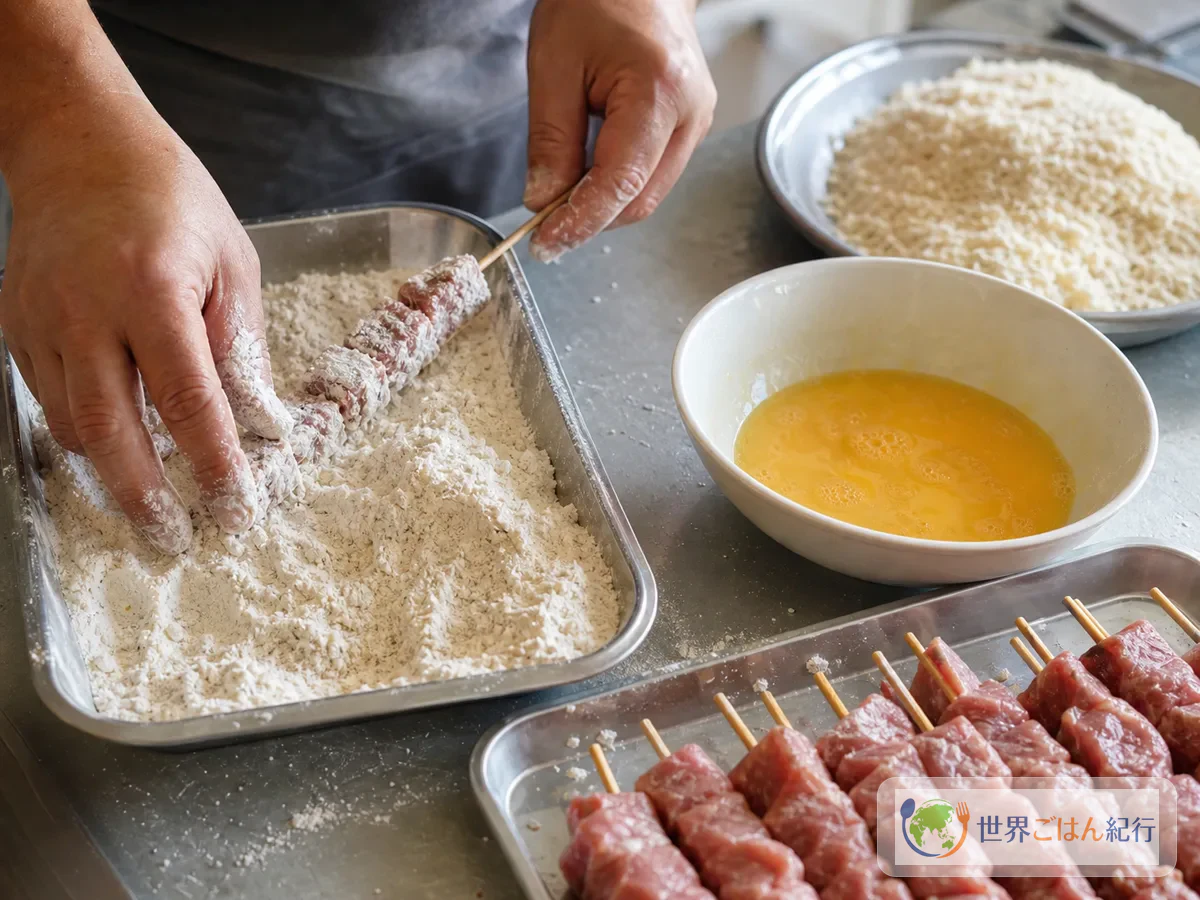
The coating peels for three reasons: moisture in the meat, too much flour and no resting time. If the surface is wet after skewering, press it dry with a paper towel. Dust the flour on lightly, then let the skewers rest 5 minutes after the egg and crumbs. That short wait helps the coating hold in the skillet.
Options for a home kitchen
| Point of doubt | Recommended for a first time | Range you can change |
|---|---|---|
| Meat | 10.5 oz (300 g) pork shoulder, 10.5 oz (300 g) pork leg | Shoulder alone is more tender; leg alone is lighter |
| Coating | Flour, egg, breadcrumbs | Fine crumbs are refined; coarse crumbs are crunchy |
| Finish | Bake at 350°F (180°C) after shallow-frying | Without an oven, cover and cook on low heat for 8 minutes, though the coating gets a bit damp |
| Sauce | Brown gravy | Store-bought gravy, or a simple version with bouillon and butter |
| Sides | Mashed potatoes, green beans | Corn, pickles, and dinner rolls also go well |
Serving and storing city chicken
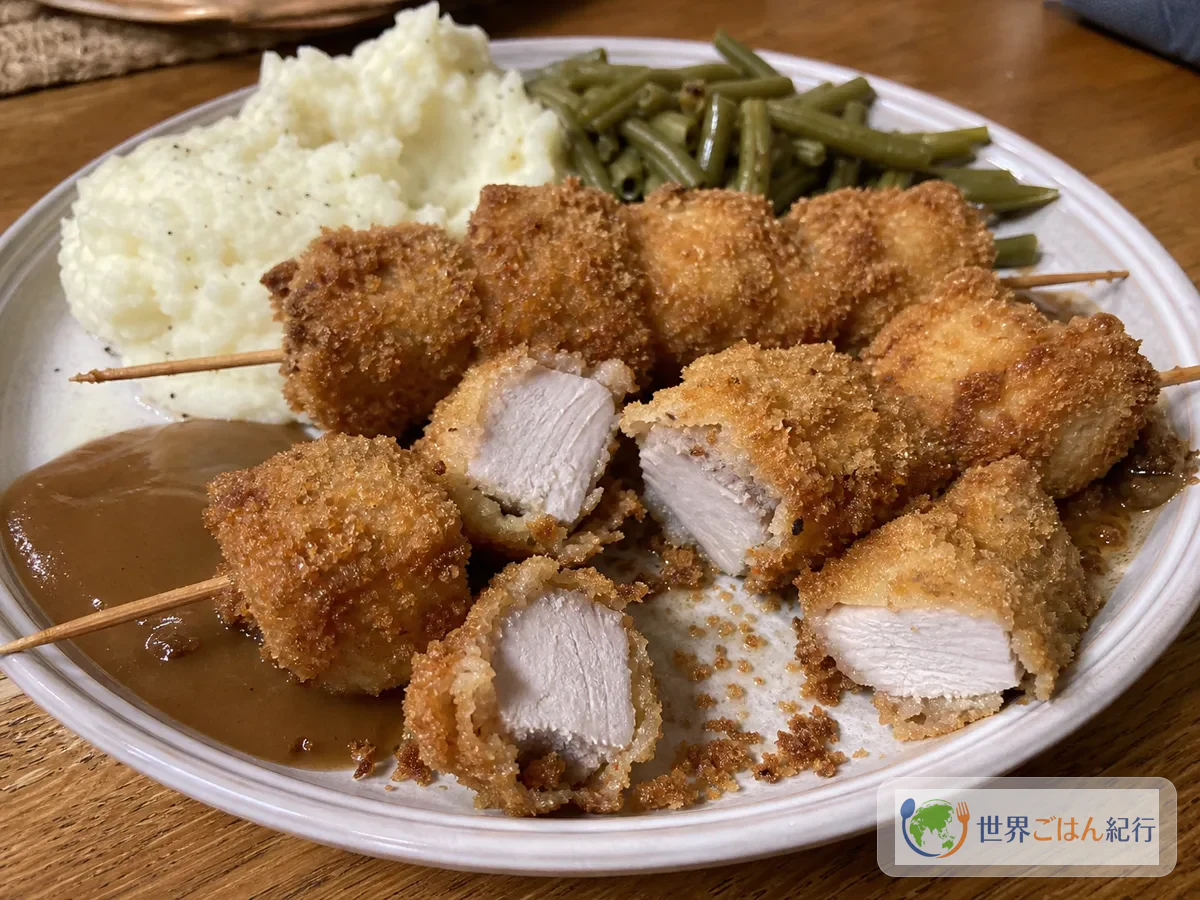
Serve city chicken as a dinner plate, not as a light fried snack. Spread mashed potatoes on the plate, set a skewer on top and spoon on a little gravy. Put a sour pickle, salt-boiled green beans or corn beside it instead of shredded cabbage, and serve potatoes rather than rice.
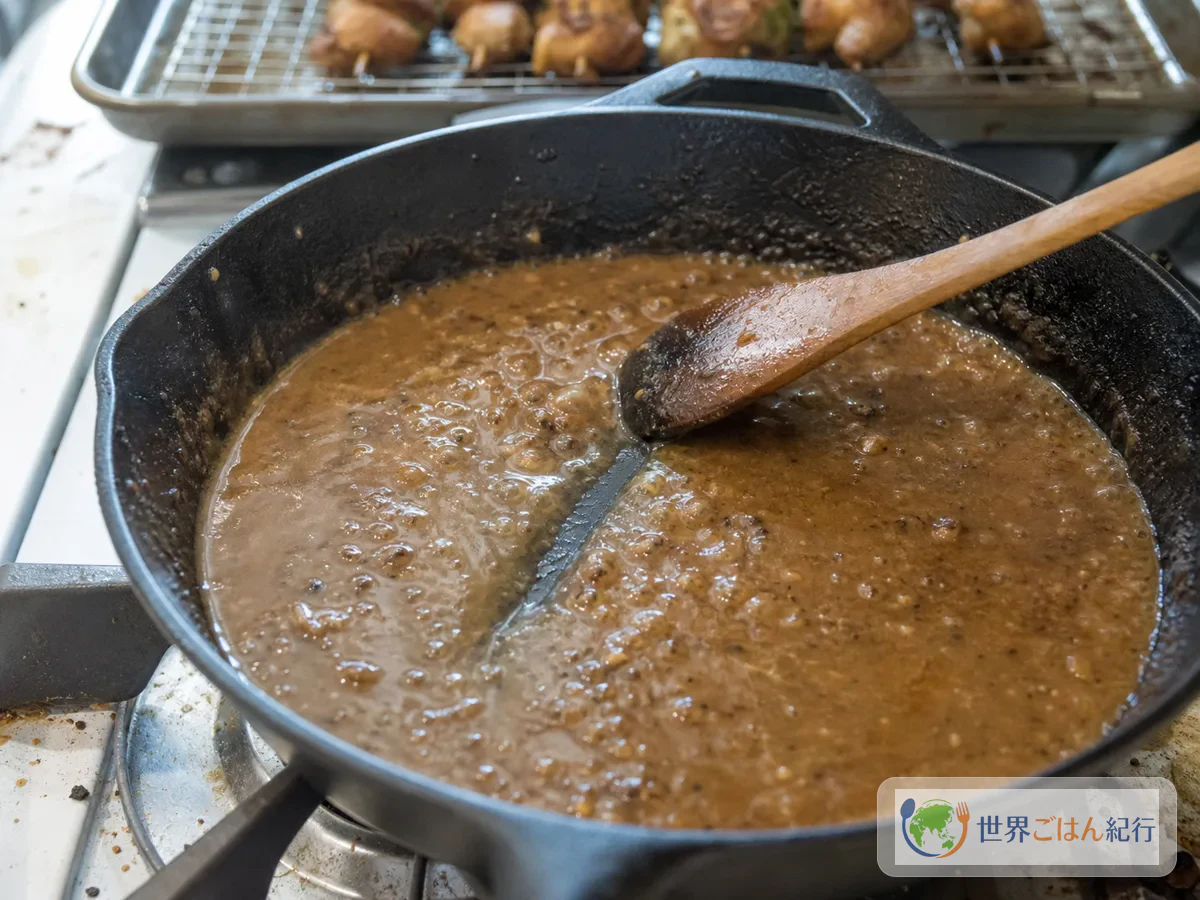
Make gravy, even a simple one, rather than reaching for a dipping sauce. The browned bits from the meat, butter, flour and broth are all you need. With a dipping sauce it tastes very close to a skewered cutlet, and you lose what sets the dish apart: toasty crumbs, smooth potatoes and salty gravy together.
Storage and reheating
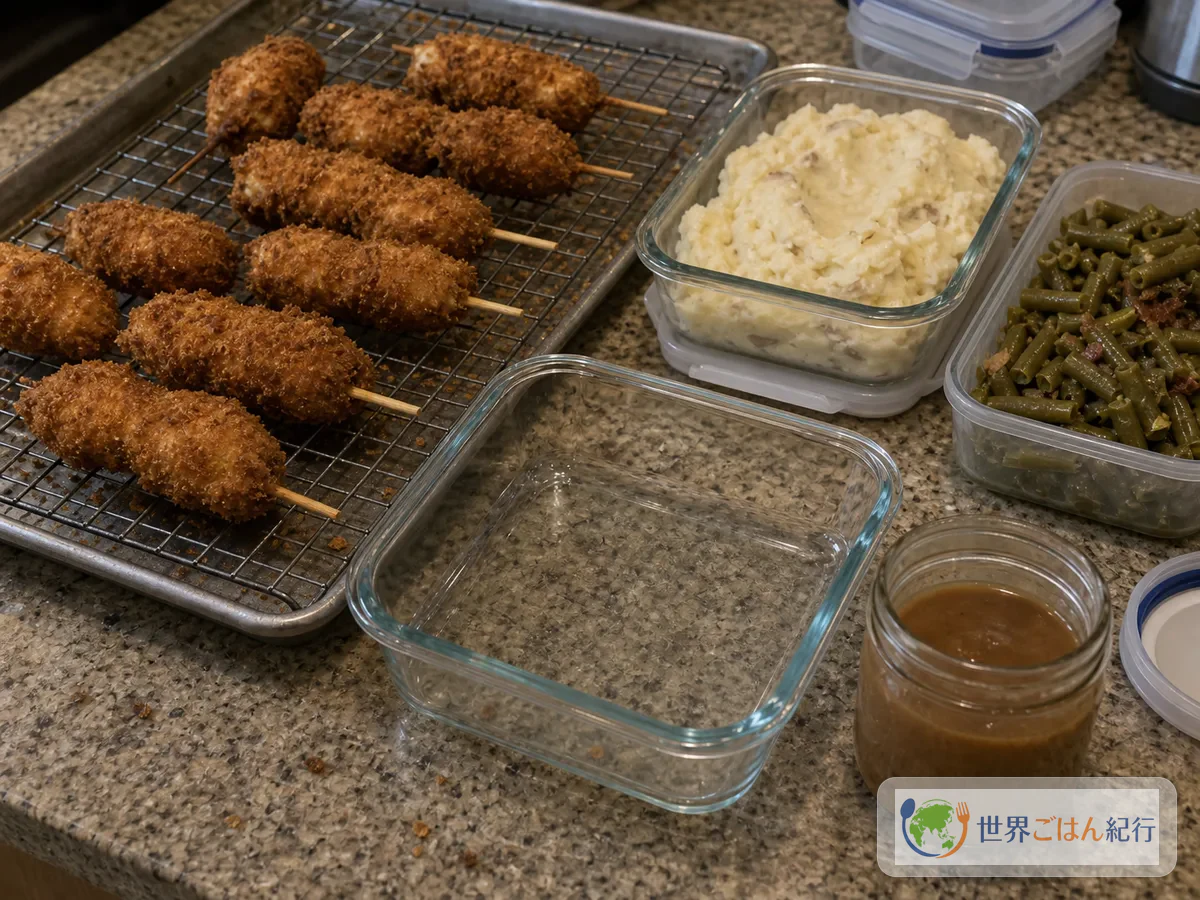
City chicken is best fresh. If you have leftovers, store the meat and the gravy separately, because the coating turns soft and heavy if it sits in gravy in the refrigerator. Warm the skewers just before serving and pour the gravy on at the end to bring back a little of the crumbs' toastiness.
| What you store | How long | Reheating |
|---|---|---|
| City chicken itself | 2 days refrigerated | 8 minutes in a toaster oven or oven at 325°F (160°C) |
| Frozen city chicken | 3 weeks | Thaw in the refrigerator, then 10 minutes at 325°F (160°C) |
| Gravy | 2 days refrigerated | Small pot over low heat; if stiff, add water 1 tbsp at a time |
| Mashed potatoes | 2 days refrigerated | Warm in the microwave and loosen with a little milk |
For a lunchbox, reheat the skewers thoroughly in the morning and pack them only after they have cooled completely, with the gravy in a separate container. This dish shouldn't sit at room temperature for long, so in summer pack an ice pack and eat it by lunchtime.
Frequently asked questions
Can I make it with chicken?
You can, though the joke in the name fades a little. City chicken makes other meat look like chicken, so pork or veal suits it better. If you use chicken, cube chicken breast, follow the same steps and cook to a core temperature of 165°F (74°C) or higher.
Can I make it without an oven?
Yes. After browning the skewers in the skillet, wipe out the excess oil, cover and cook over low heat for 8 to 10 minutes. The bottom of the coating will be a little damp, so take the lid off and cook 1 more minute to bring back some crispness.
Does using only pork shoulder make it heavy?
It can. Juice and fat from a fatty cut collect inside the coating, and the bottom turns a little heavy. If you use shoulder alone, trim off the large pieces of white fat. After shallow-frying, set the skewers on a rack to drain the excess oil before they go into the oven.
Is fresh breadcrumb OK?
Yes. Fresh breadcrumbs are crunchy and delicious, but they soak up oil easily. For a lighter finish, crush dry breadcrumbs slightly by hand, or mix coarse and fine crumbs half and half.