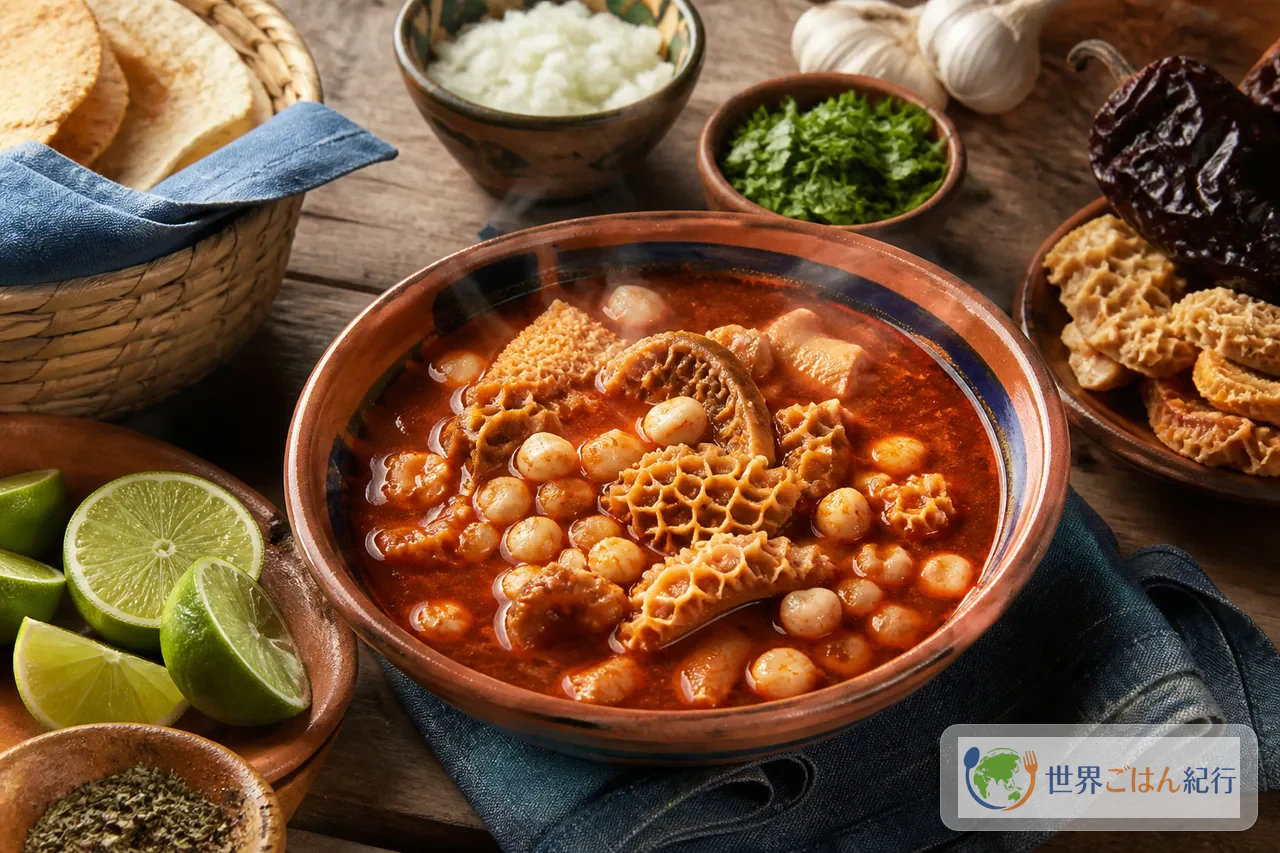
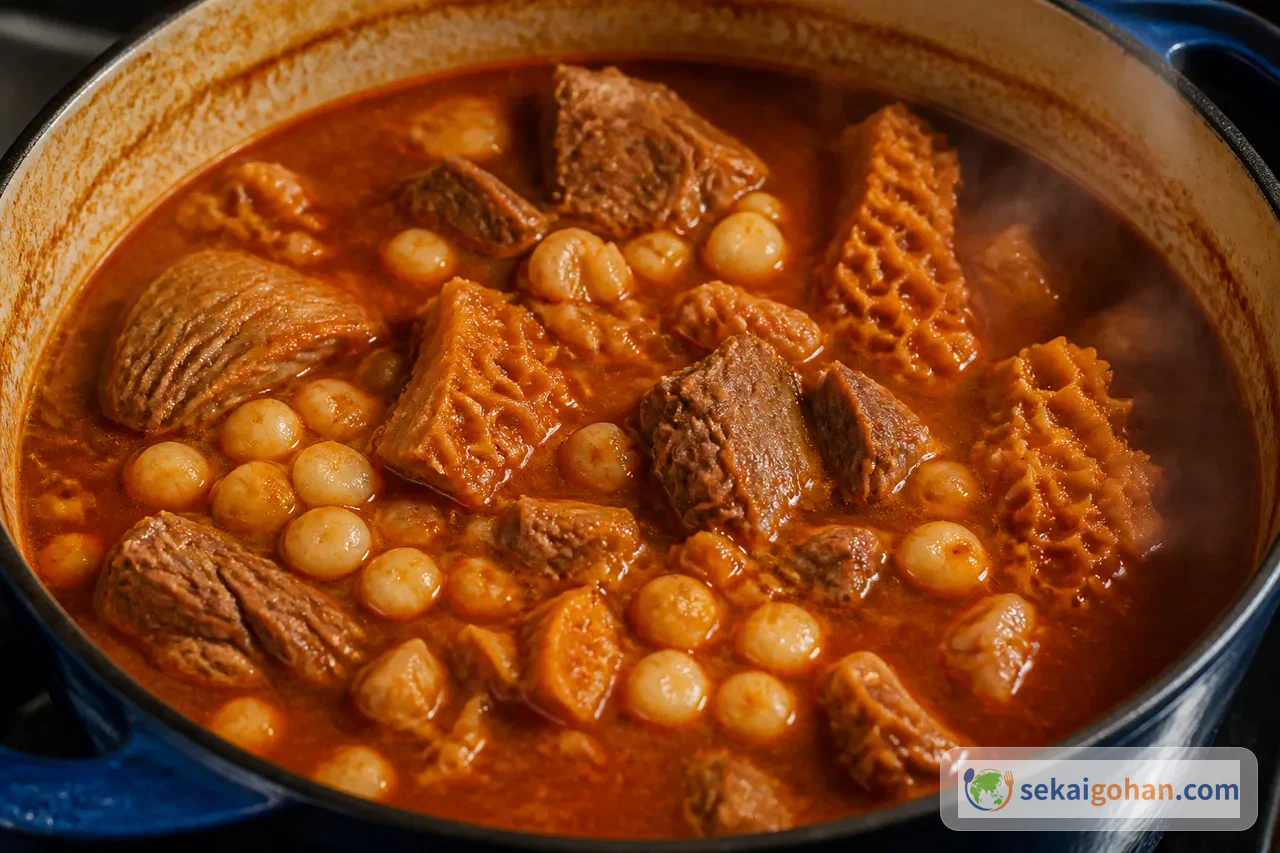
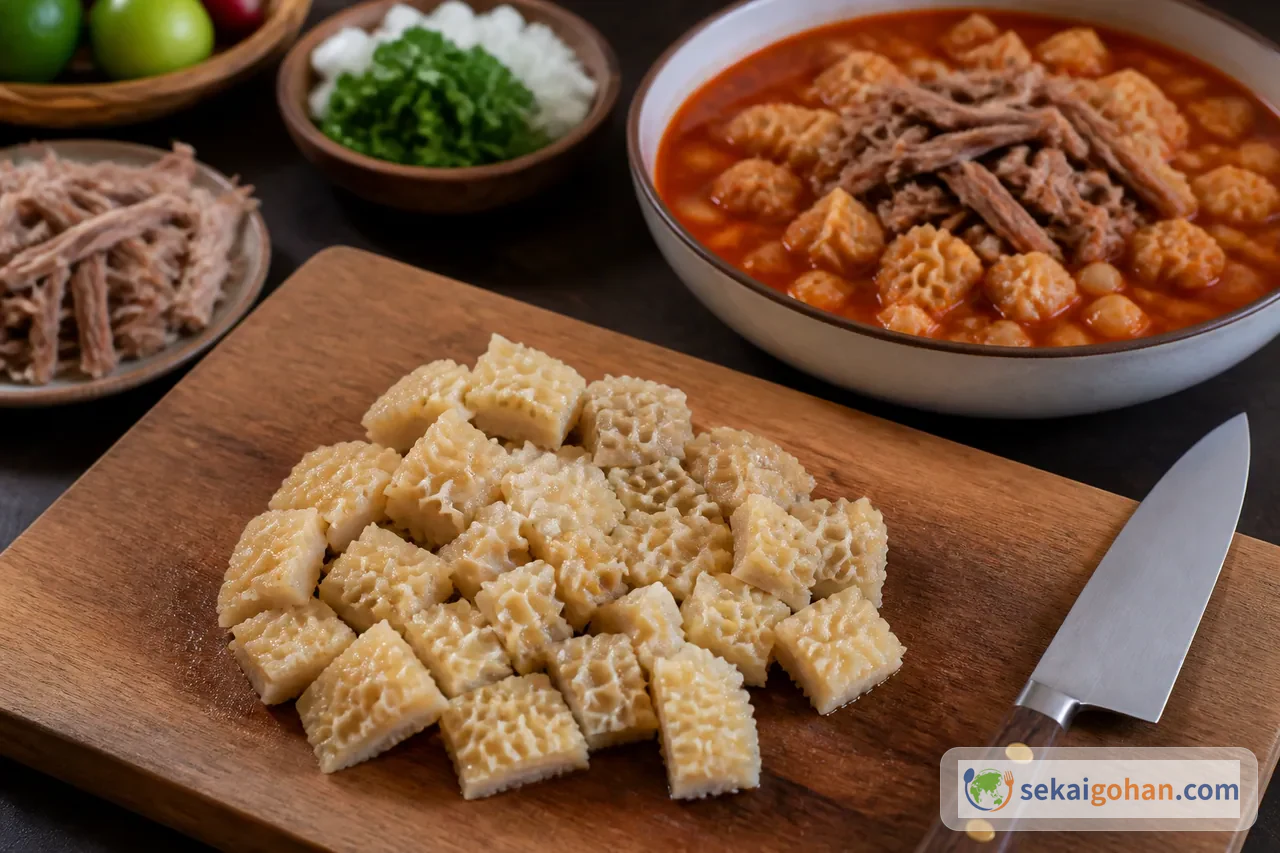
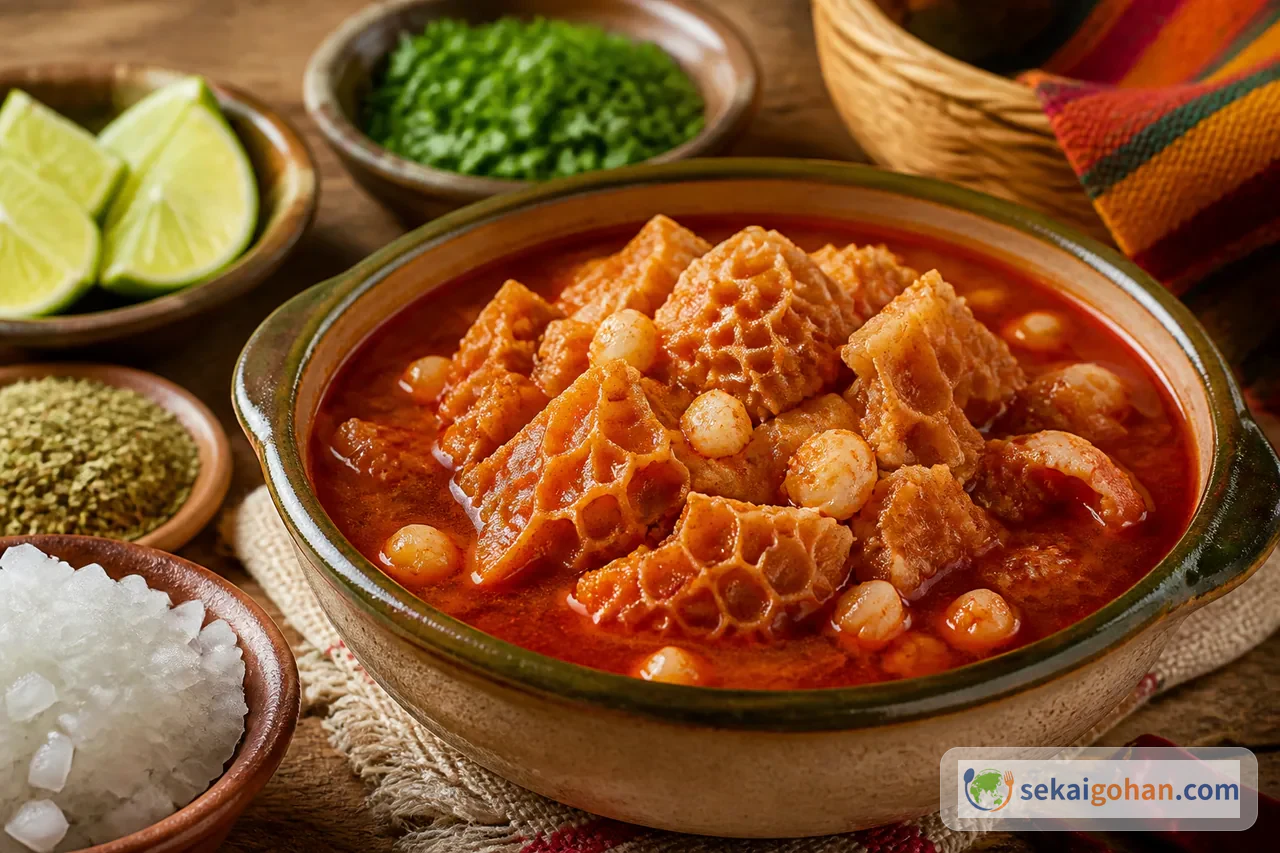
Menudo reaches the table only half finished. Into the red broth, with its tripe and hominy, each person adds chopped onion, lime, oregano and as much heat as they like, a little at a time, until the bowl tastes right to them. The tripe doesn't shred like thin slices of meat: the broth settles into its honeycomb surface, and a little spring stays inside the tenderness. This Mexican soup of beef stomach is cooked slowly in an aromatic broth. The classic red version gets its color from guajillo and is finished with onion, oregano, lime and chile de árbol.
Menudo rojo and its regional styles
In Mexico, the dish goes by menudo, pancita or mondongo, depending on the region and the style. Red menudo is best known as a dish of the north. In the northwestern states of Sonora and Sinaloa, white menudo, a clear broth made without red chiles, is the familiar one. Pancita in central Mexico often leaves out the hominy and puts the tripe first. In the south and on the Yucatán Peninsula, mondongo can include potatoes, carrots, herbs, achiote or sour orange. For a taste of the Yucatán's tartness and achiote, try cochinita pibil, a braise from the same region. Next to it, a dried-chile red menudo tastes clearly different.
This recipe is a home version of menudo rojo, with the aroma of dried chiles and big kernels of corn in the same bowl. The hominy makes it look a lot like pozole rojo. Pozole is built around the cooked corn, though, and in this pot the tripe is what you make tender first. Keep the bite of the honeycomb tripe and use large-kernel hominy, and the two dishes stay distinct.
Menudo is more a pot you spend time watching than a quick weeknight dish. Small eateries, specialty restaurants, homes and street stalls serve it on weekends, and it's tied to celebrations. In the border region, relatives gather to eat it after a wedding. Everyone adds their own hot broth, lime, onion and heat, so one pot suits a table of different numbers and tastes.
Serves 4. Allow about 1 hour to parboil the tripe and prepare the chile sauce and about 3 hours of simmering, roughly 4 hours in total. The finished tripe is tender enough to cut with a chopstick, yet still has a light spring in each bite. Most of the heat goes on at the table: everyone adjusts it with chile de árbol.
Ingredients (serves 4)
Even cleaned tripe varies in thickness and moisture. Start with a little extra water for simmering, and at the end, after the red sauce and hominy go in, adjust the broth so it's concentrated enough while still covering everything.
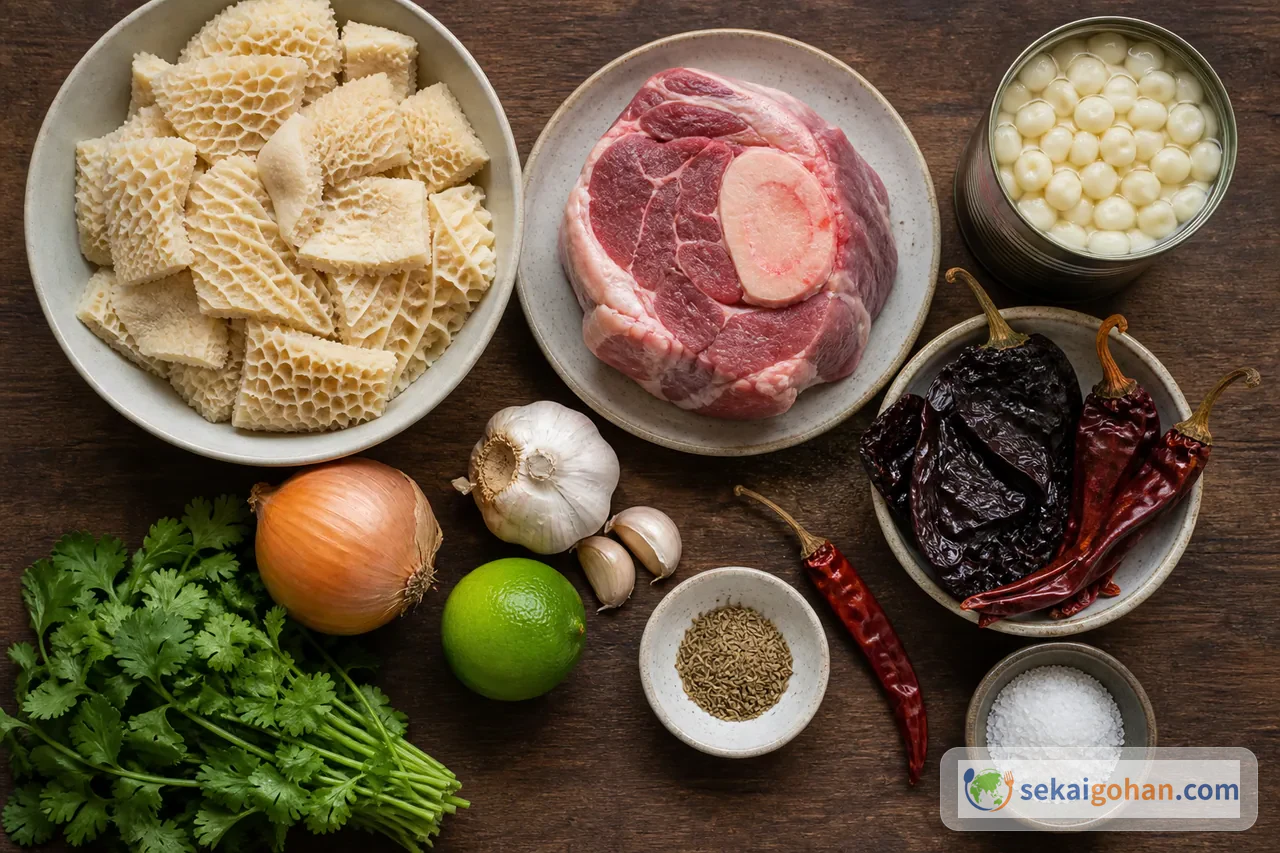
You don't need to buy everything in one trip. Get the beef, onion, garlic and limes from your usual store first, then look only for the dried chiles and hominy at a Latin grocer or online; that keeps your substitution decisions steady.
Honeycomb tripe is offal, so prioritize a for-cooking label and proper storage. Canned hominy, tortillas, tostadas and dried spices can contain wheat, soy, dairy and other allergens depending on the product. If you have allergies, rely on the ingredient labels of what you buy rather than this list, and wash any tools that touched raw tripe before using them for the onion or limes you'll serve.
Choosing ingredients for menudo
Dried chiles for the red sauce
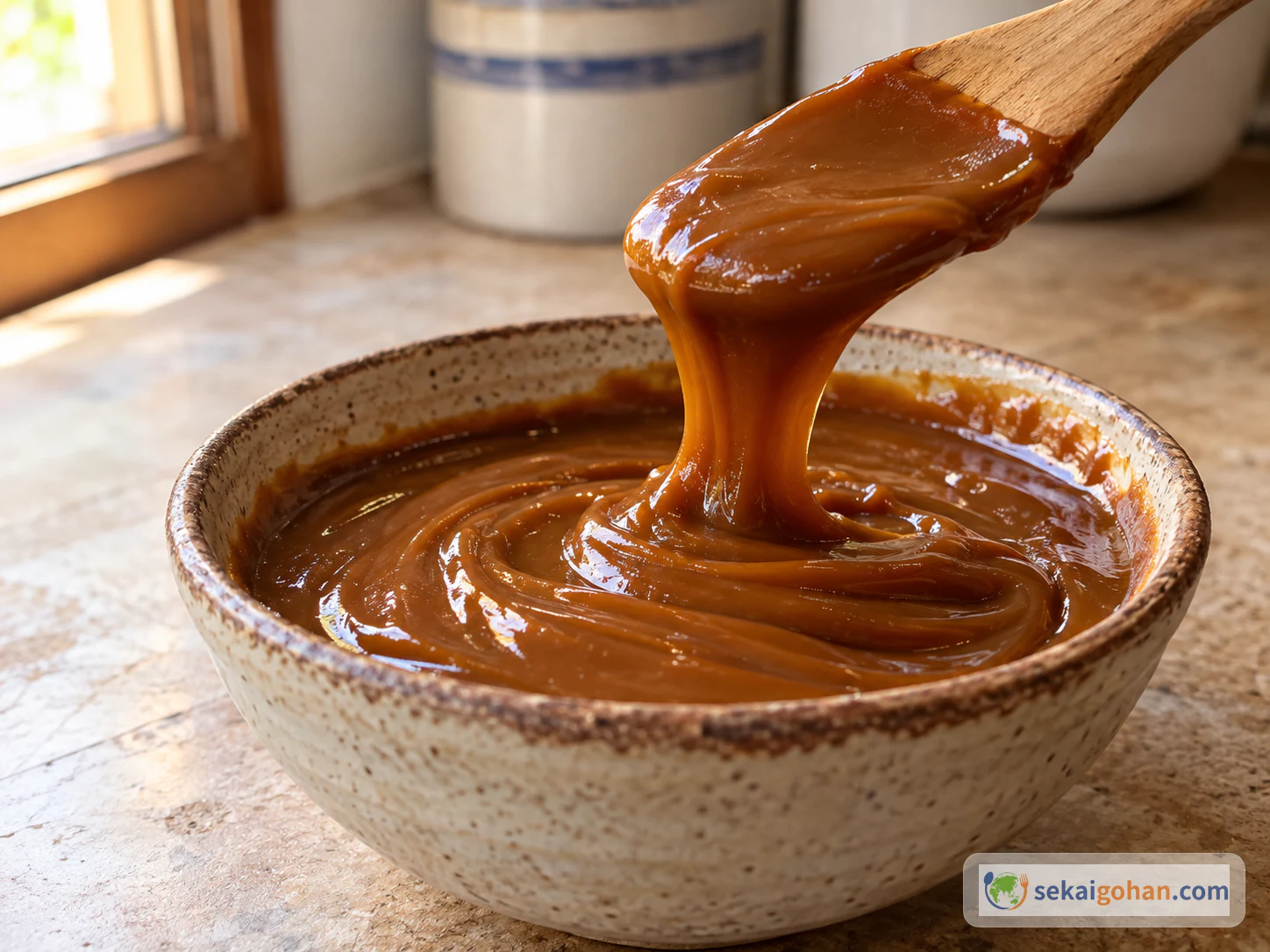
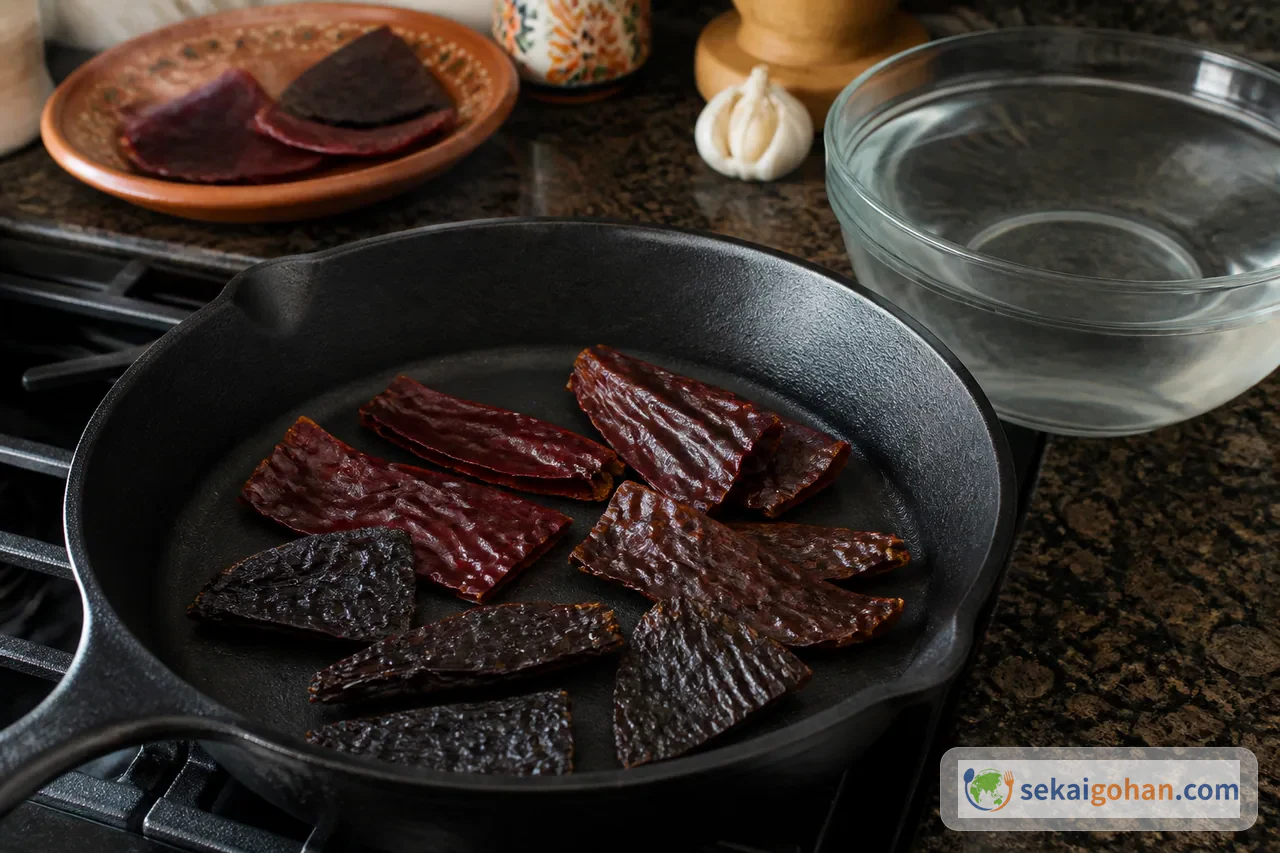
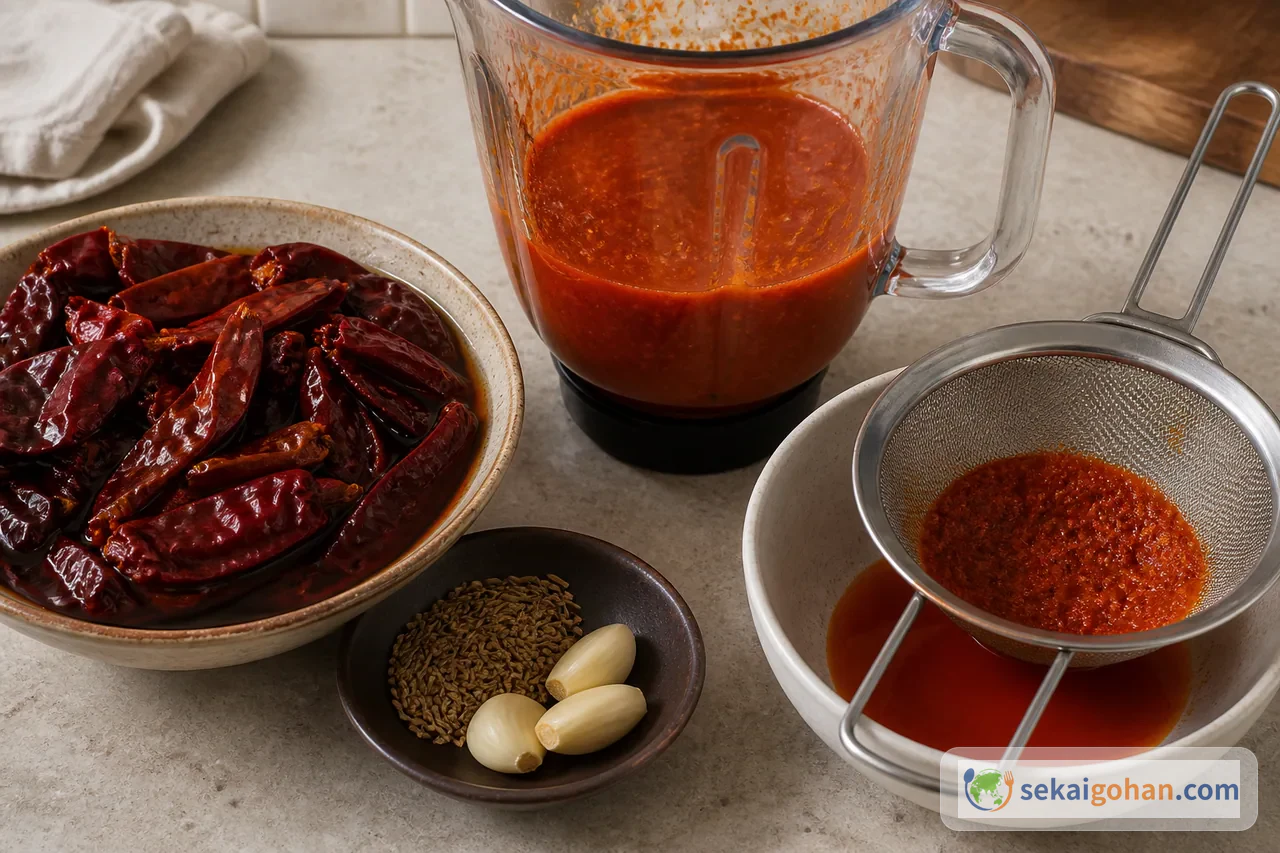
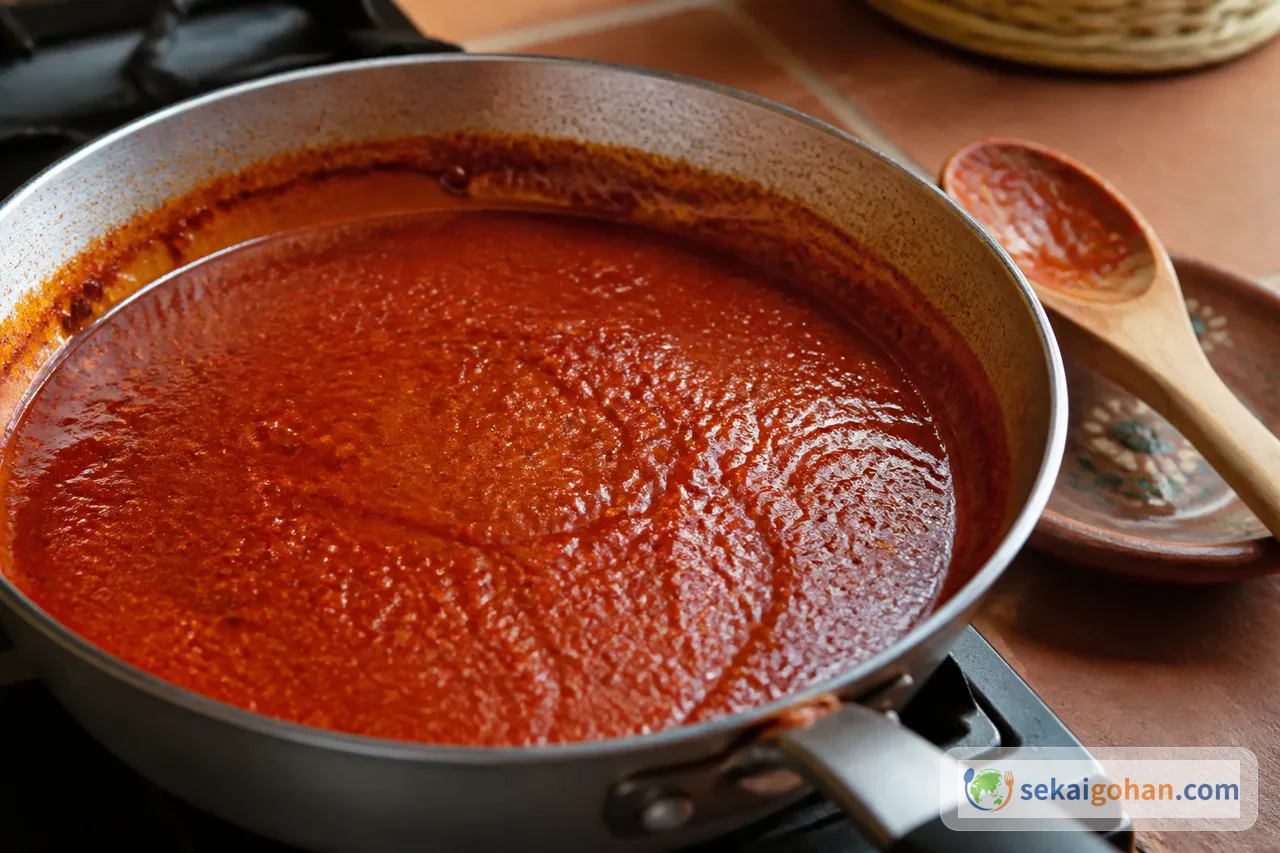
Menudo turns red from a sauce of rehydrated dried guajillo and ancho chiles. Guajillo brings red color and a dried-fruit aroma, ancho adds a rounded sweetness, and a small amount of chile de árbol supplies the heat. To get aroma before heat, toast the chiles without scorching them. Then blend the sauce smooth and strain it instead of using all the soaking liquid. Mole poblano also layers dried chiles for sweetness and bitterness, but menudo holds back on spices and lets the tripe and broth lead.
Tripe, hominy and substitutes
| What to keep | Traditional ingredient or method | Practical choice | What changes |
|---|---|---|---|
| Springy tripe | Honeycomb tripe simmered for hours | Cleaned, ready-to-cook honeycomb tripe | Beef tendon alone gives a delicious broth, but the texture is no longer menudo |
| Large-kernel corn | Hominy, omitted in some regions | Canned white hominy | Sweet corn is sweeter, with smaller kernels; chickpeas lose the texture of corn |
| Red aroma | Guajillo and ancho | Dried chiles from Latin grocers or online | Paprika alone has too little fruity aroma, and heat alone won't make a red sauce |
| Green herbal note | Mexican oregano | Dried oregano | Mediterranean oregano works, but its aroma is a little flatter |
| Tartness and crunch | Lime, white onion, herbs | Lemon, onion, scallions or cilantro | Lemon is sharper, and the green fragrance of lime fades |
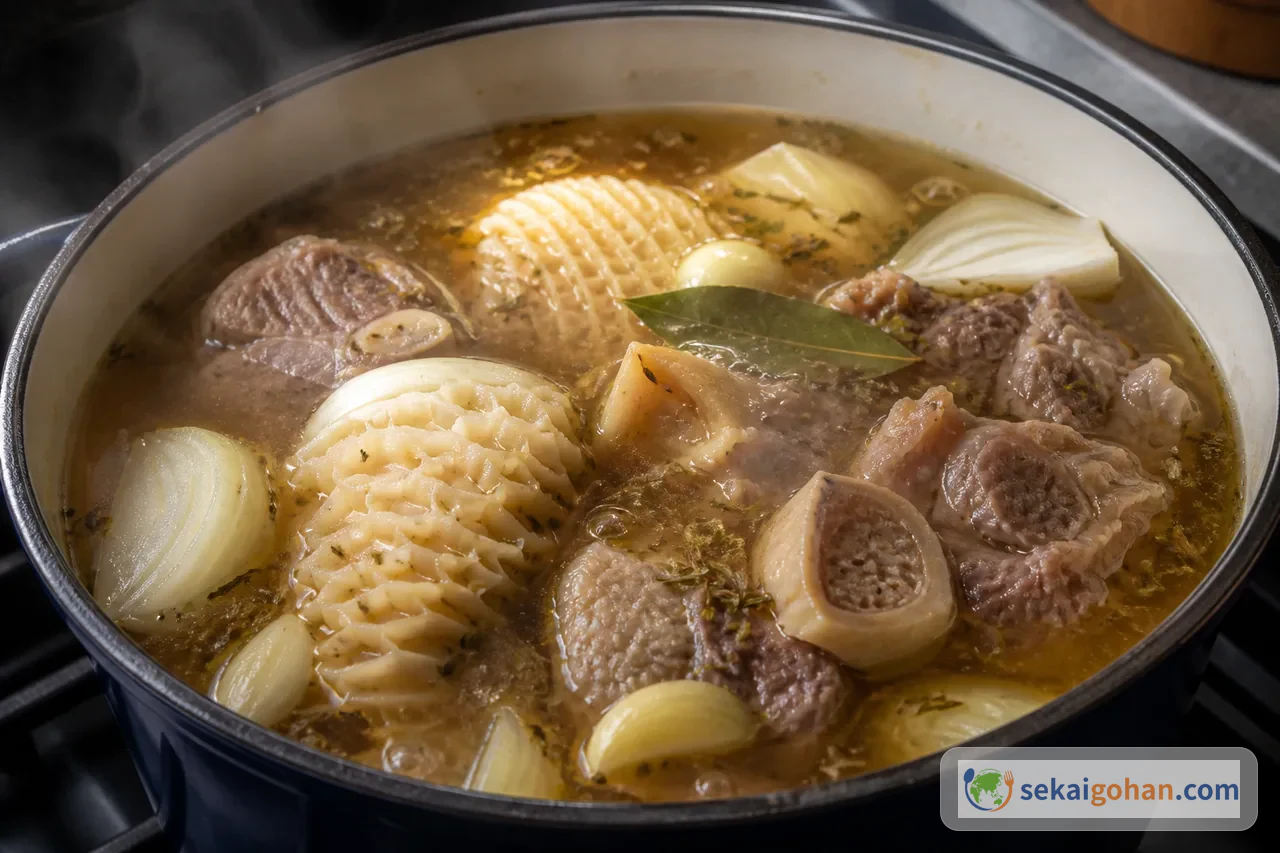
Honeycomb tripe is easier to find at butchers that handle offal, or at Latin and Asian markets, than in the regular beef case. Choose tripe labeled as cleaned honeycomb for cooking. Never treat raw, uncleaned stomach yourself with cleaning agents or lime (calcium hydroxide). Each part of the beef stomach has its own name and texture, and some places add cow's feet. Cleaned honeycomb tripe and beef shank are easier to shop for and to control over the heat, and they keep the springy element separate from the broth. If you want cow's feet, replace 3.5 oz (100 g) of the 9 oz (250 g) beef shank with them and skim off the extra fat as it simmers.
If you can't find white hominy, leave it out and move closer to central Mexico's pancita. That way the flavor of tripe and red broth stays intact. A pot without hominy is simply moving to another region's style depending on what you make the star.
Ordinary dried oregano still gives the dish its herbal backbone, and it's an easy substitute to keep on hand. Use whole-leaf oregano if you can, and rub it between your fingers to release more fragrance.
Equipment
The red sauce needs a blender, and for a single pot of menudo that's enough. A stone mortar makes it easy to mash soaked chiles in small batches or crumble the finishing oregano. If you'll keep cooking with dried chiles, whole peppercorns and cumin, a granite mortar is handy.
Method: tenderize the tripe, then layer in the red sauce
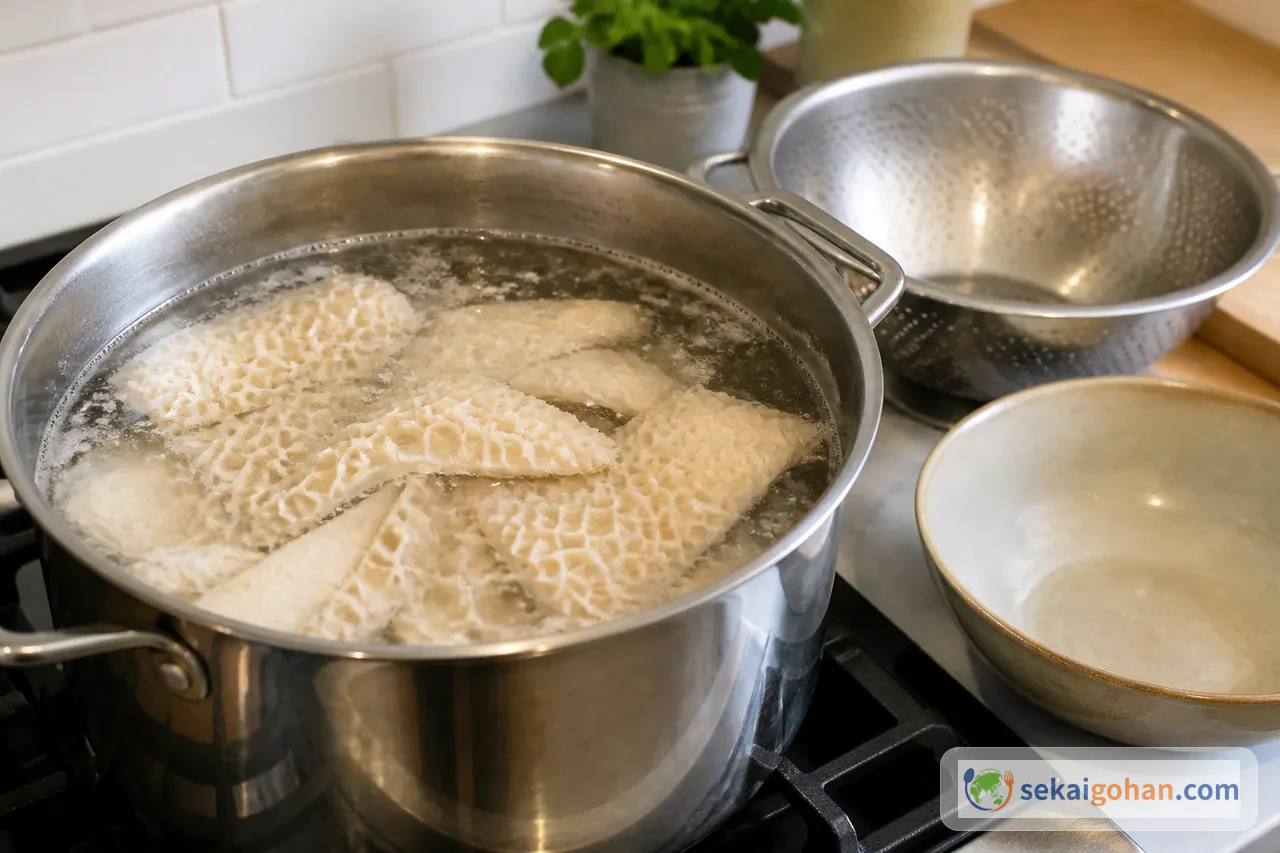
Parboiling and simmering the tripe aren't only about getting rid of odor. The first water removes surface scum and excess fat; the next pot infuses it with aromatics while you cook it until the honeycomb is tender but still springy.
Parboil the tripe first to remove the scum and excess fat, then simmer it with the aromatics. Splitting it into two stages keeps odors from lingering and keeps the broth from turning cloudy.
Common menudo problems and fixes
What really decides the result is the tenderness of the tripe, the bitterness of the chiles and the concentration of the broth. Find the stage where it went off and fix that one thing.
| Problem | What's happening | How to fix it |
|---|---|---|
| The tripe still smells | The parboil was too short, or the tripe was uncleaned and strong-smelling | Parboil once more, discard the water and simmer in fresh broth. More spices won't cover it |
| The tripe is tough | Not enough time at low heat, or the liquid reduced | Add ½ cup (100 ml) boiling water, cover and extend in 10-minute increments. Keep the heat low |
| The sauce is bitter | The dried chiles were toasted black, or burned bits were scraped from the pan | Transfer only the unburned sauce to another pan. If the bitterness has spread through, make the chile sauce again |
| The broth is thin | Too much broth, or liquid from the hominy | Uncover and reduce over low heat in 10-minute increments; adjust salt at the end |
| It's too spicy | The chile de árbol went into the pot too | Add boiling water or unsalted broth ½ cup (100 ml) at a time, and serve the finishing heat on the side |
| The hominy is sweet | Canned sweet corn was used | Sweetness can't be undone; choose white hominy next time and enjoy this pot as tripe in red broth |
| It's greasy | The beef shank or tripe was fatty | Skim the surface while simmering, or chill it overnight and remove the solidified fat |
Variations, storage and nutrition
Leave out the hominy and you get a red tripe soup close to central Mexico's pancita. Leave out the dried chiles and you move toward white menudo. Add potatoes, carrots and achiote and the mondongo elements grow stronger. One pot can't be all of these, so decide first which style you're making today.
Eating menudo the next day
As menudo cools, fat solidifies on the surface and the broth's flavor settles. Once it has cooled slightly, divide what you won't finish into shallow airtight containers and refrigerate. It keeps 3–4 days in the refrigerator and can also be frozen. Keep the onion, herbs, lime and tostadas separate so nothing turns soggy. Reheat only the portion you'll eat in a pot until it's hot all the way through, then add fresh garnishes. Throw out anything left at room temperature for long, or anything that smells or looks off, however few days it's been.
Nutrition (per serving, 1 of 4)
These are estimates. The fat on the tripe, the cut of beef shank, the drained weight of the hominy and how much broth you drink all change the numbers.
| Nutrient | Approx. |
|---|---|
| Energy | about 510 kcal |
| Protein | about 1.5 oz (39 g) |
| Fat | about 22 g |
| Carbohydrates | about 1.25 oz (35 g) |
| Dietary fiber | about 6 g |
| Salt equivalent | about 3.8 g |
FAQ
If I can't find honeycomb tripe, can I use beef tendon?
You can, but beef tendon is rich in gelatin and lacks the fine spring of honeycomb tripe. Enjoy it as a red chile stew of beef tendon and hominy, and look for cleaned honeycomb tripe next time. Other stomach cuts such as rumen or omasum also differ in thickness and texture, so make your first pot with honeycomb.
Can I make a menudo that isn't spicy?
Leave out the chile de árbol and carefully remove the seeds and veins from the guajillo and ancho. You keep the red aroma with much less heat. If it's still too spicy, dilute with unsalted broth ½ cup (100 ml) at a time, and serve lime and extra chile on the side.
Can I shorten the time with a pressure cooker?
Yes, though pressure times vary with the size and model of the cooker, and this recipe is written for a standard pot. Pressure-cook only the tripe first and release the pressure. Then add the red sauce and hominy and finish uncovered over low heat so the flavors meld. Follow your manual's guidance on offal and maximum fill, and stay under the limit once the hominy and sauce are in.
Does menudo cure a hangover?
It's known as a morning-after dish, and some people believe it eases a hangover, but that's no reason to treat it as a remedy. If you eat it after drinking, drink water too. If you feel unwell, don't force yourself to eat, and see a doctor if necessary.