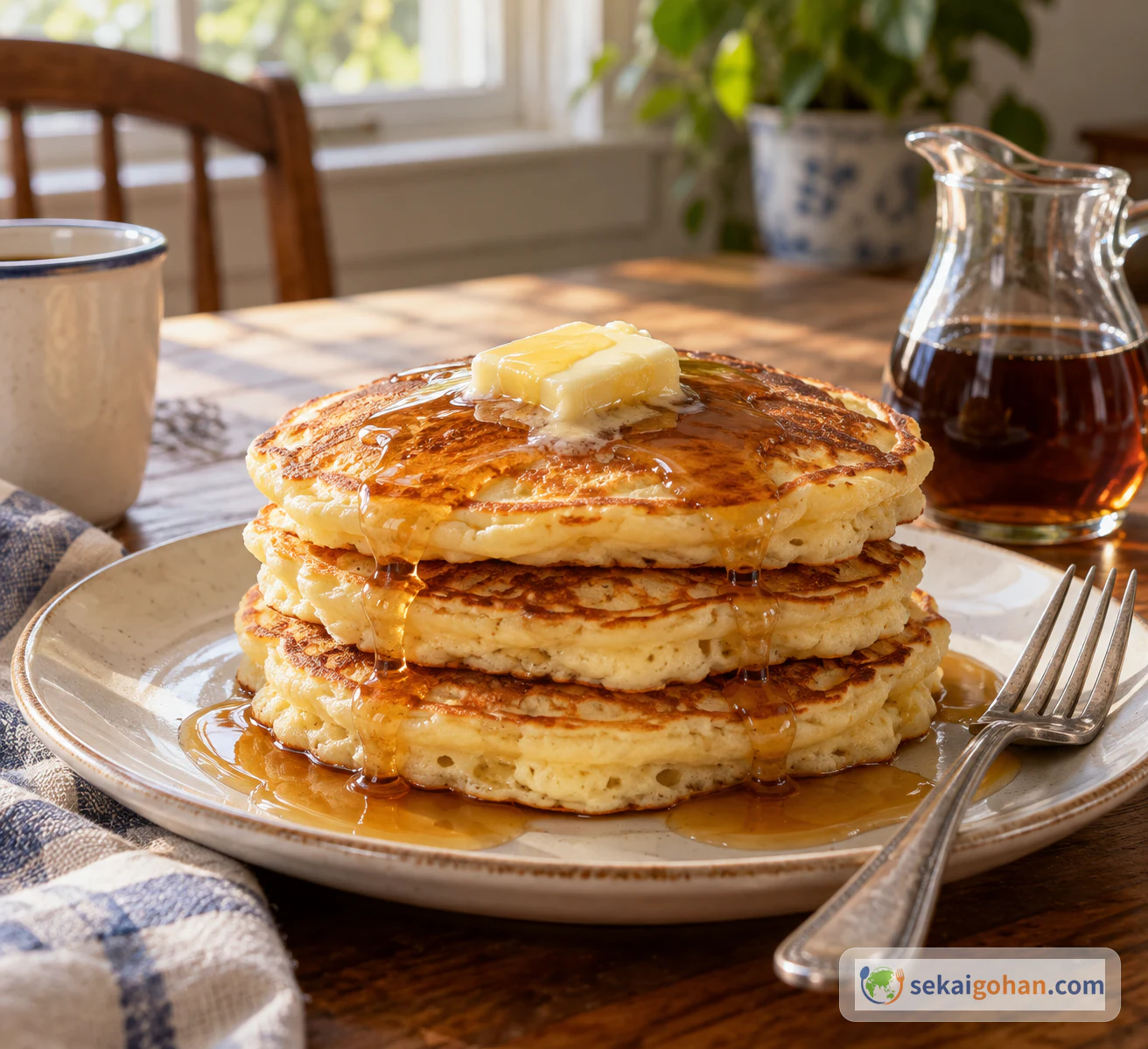
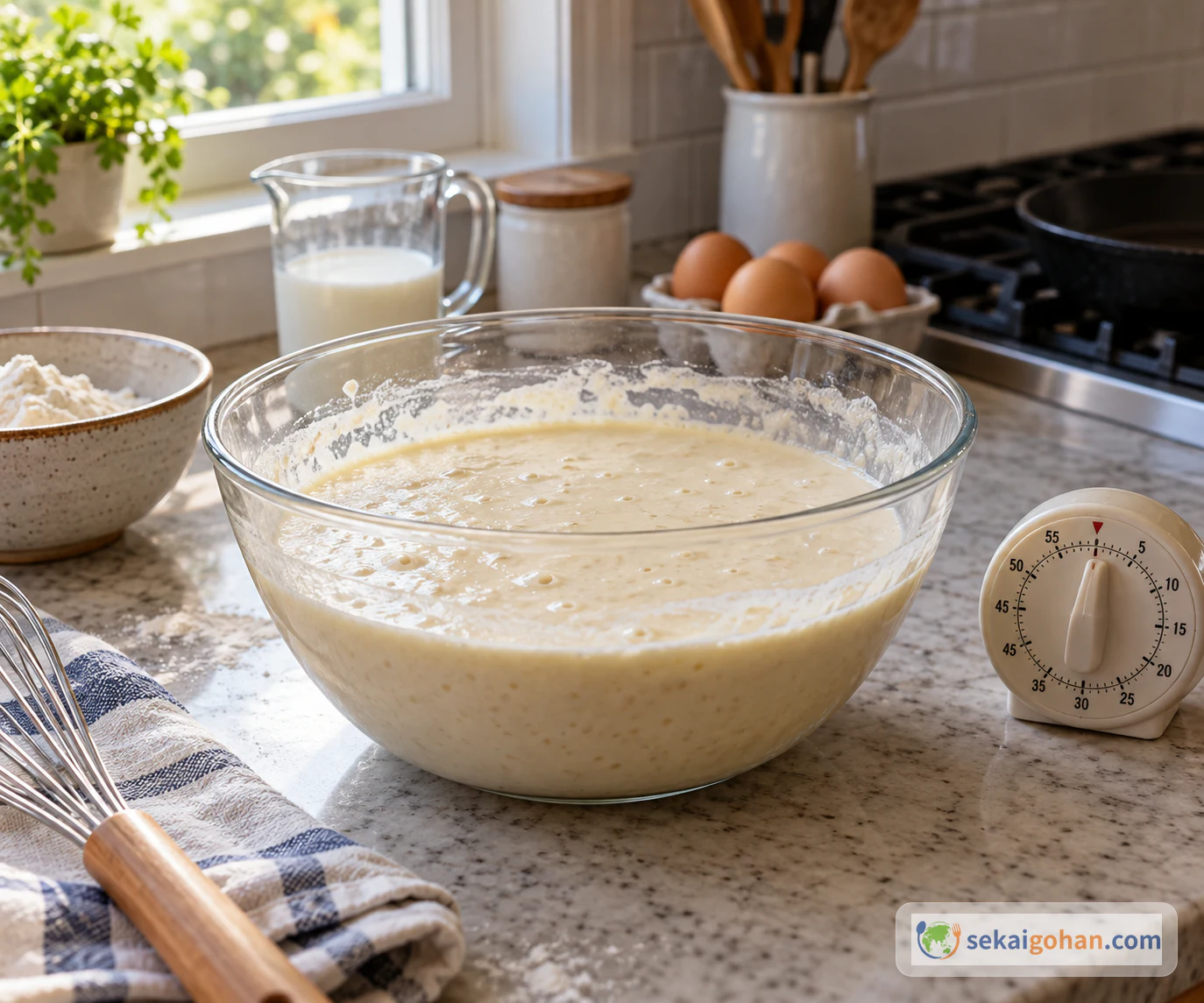
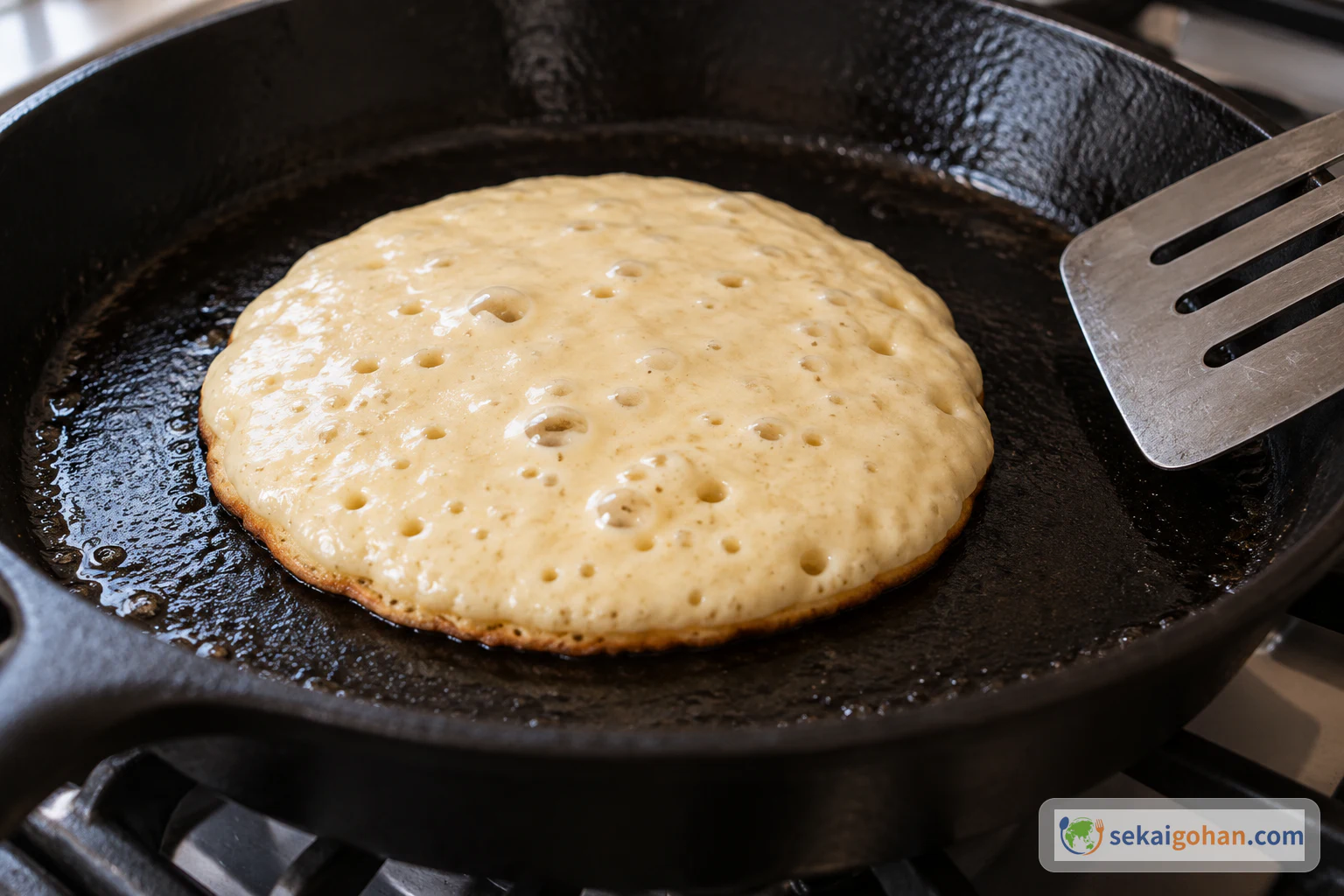
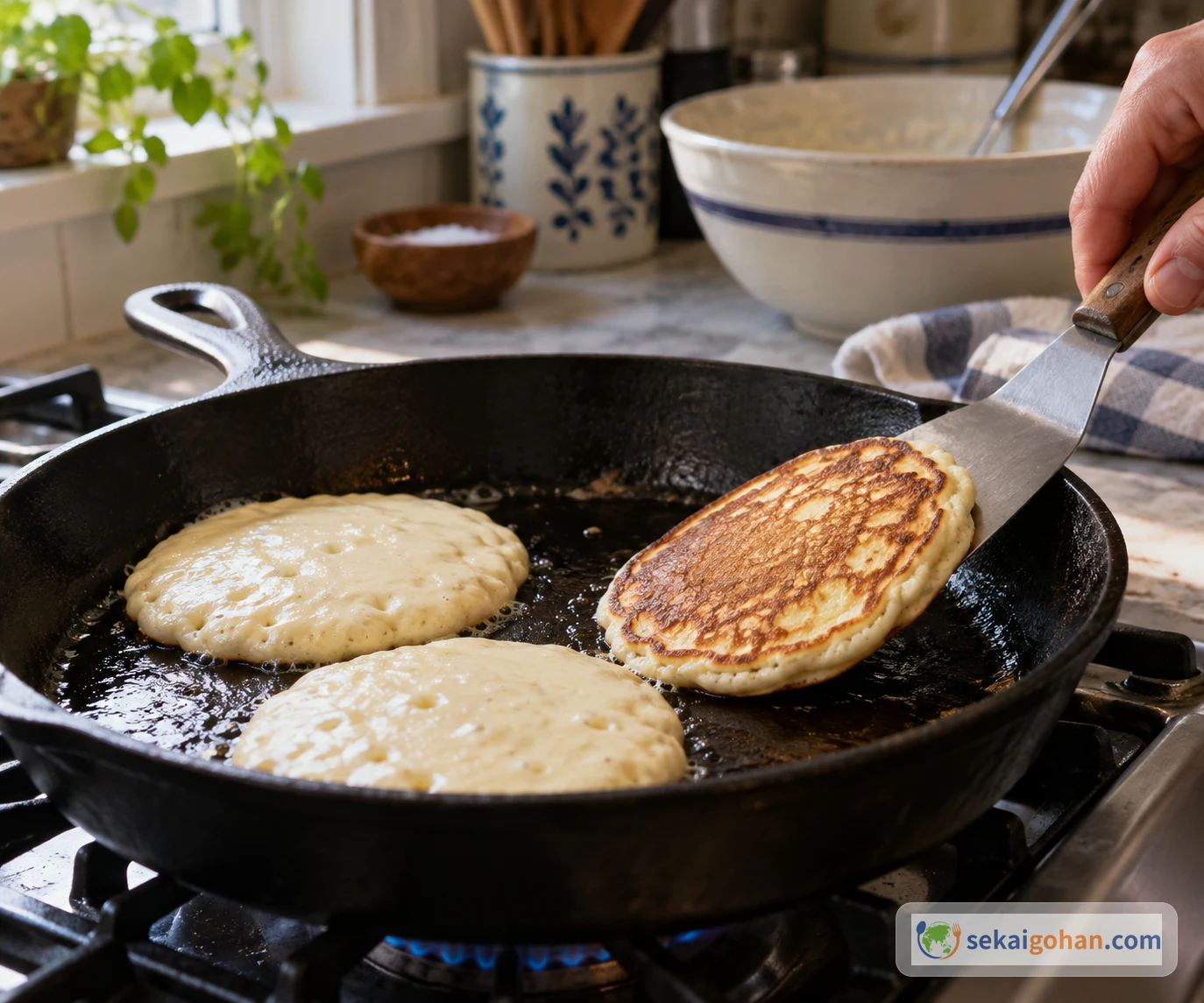
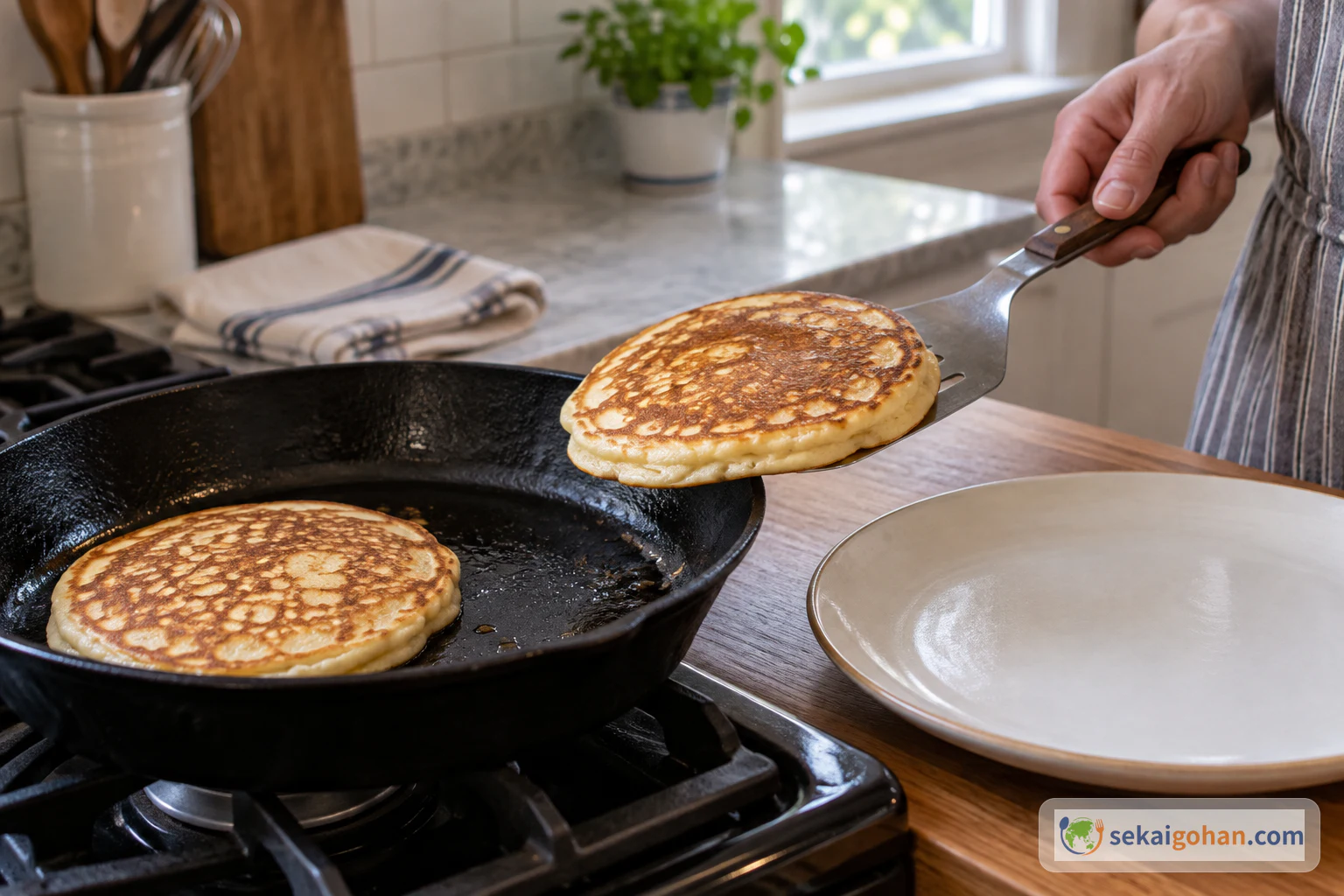
A small stack of pancakes, each about the size of a palm, sits on a breakfast plate. A pat of butter softens on the top layer, and maple syrup runs down the sides and pools on the plate. For many people this is the American pancake: thick, tender rounds with a gentle tang, served with butter and maple syrup. The height comes from the batter itself. Buttermilk works with both baking powder and baking soda, and the batter rests briefly before it meets the griddle. After that, three things matter more than any topping: a batter mixed only until fairly smooth, a griddle that is hot but not scorching, and a flip timed by the bubbles on top and the color underneath.
The American Buttermilk Pancake
Many cuisines have a dish called a "pancake" in English, and each uses its own flour, liquid and leavener. There's the thin crêpe, Korean hotteok filled and made from a yeasted dough, Moroccan baghrir with its many holes from a semolina batter, and Somali canjeero, a thin fermented pancake eaten with meals. Nigerian sinasir is made from fermented rice batter. Each belongs to its own kitchen.
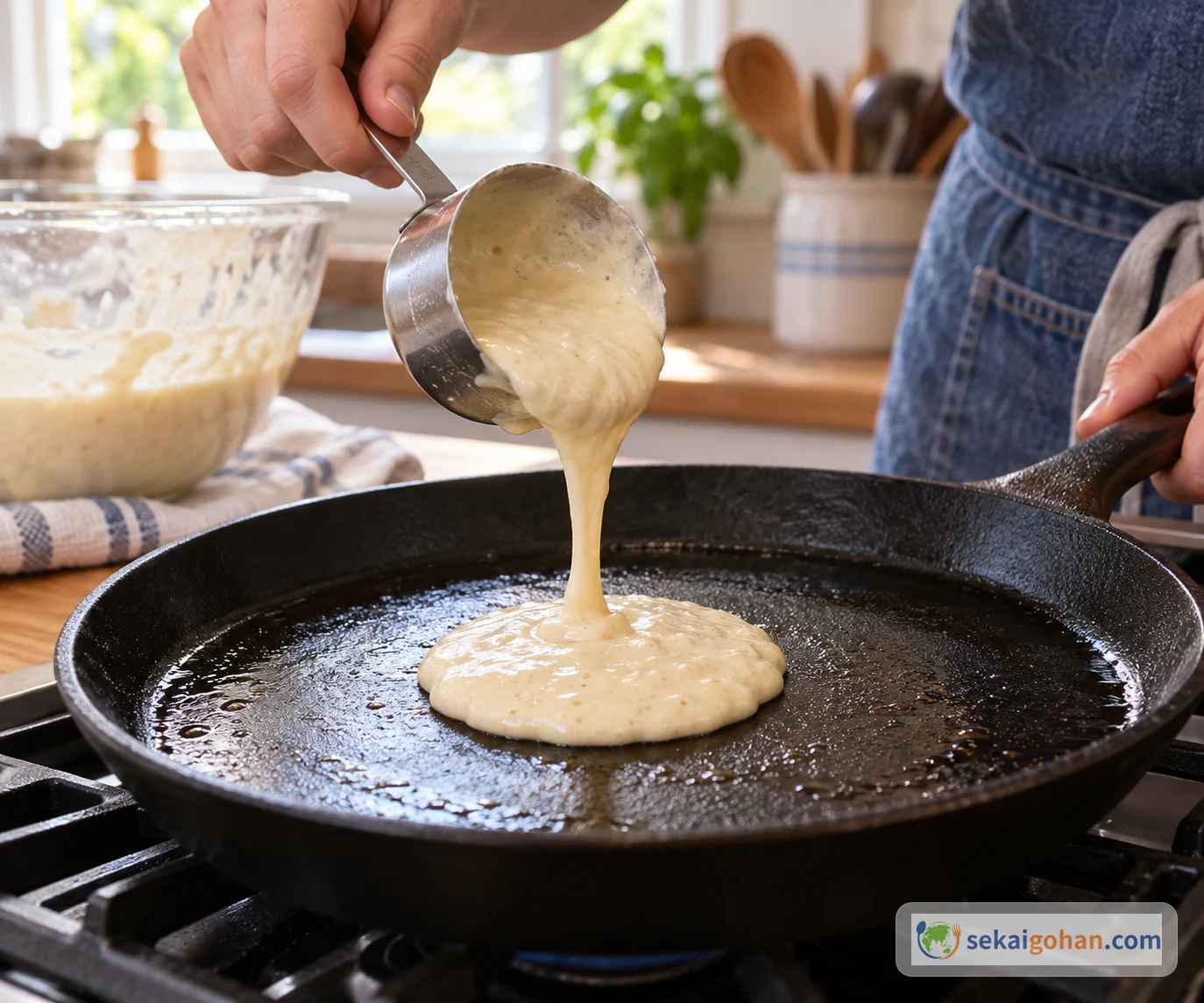
This one is an American buttermilk griddle pancake. It is leavened with baking powder and baking soda and poured a quarter cup at a time, which gives rounds of about 4 inches (about 10 cm). The acidity of buttermilk gives the crumb a gentle tang, and its reaction with the baking soda helps the pancakes rise.
Pancakes have a long history around the world, and the English word "pancake" dates to the Middle English period. What makes this version American is the flavor: a slightly tangy buttermilk crumb finished with butter and maple syrup. It also suits an ordinary weekday morning. The batter is simple, a flat round cooks through quickly, and each pancake spends only a few minutes on the heat. For more of the country's cooking, see the United States country page.
Ingredients
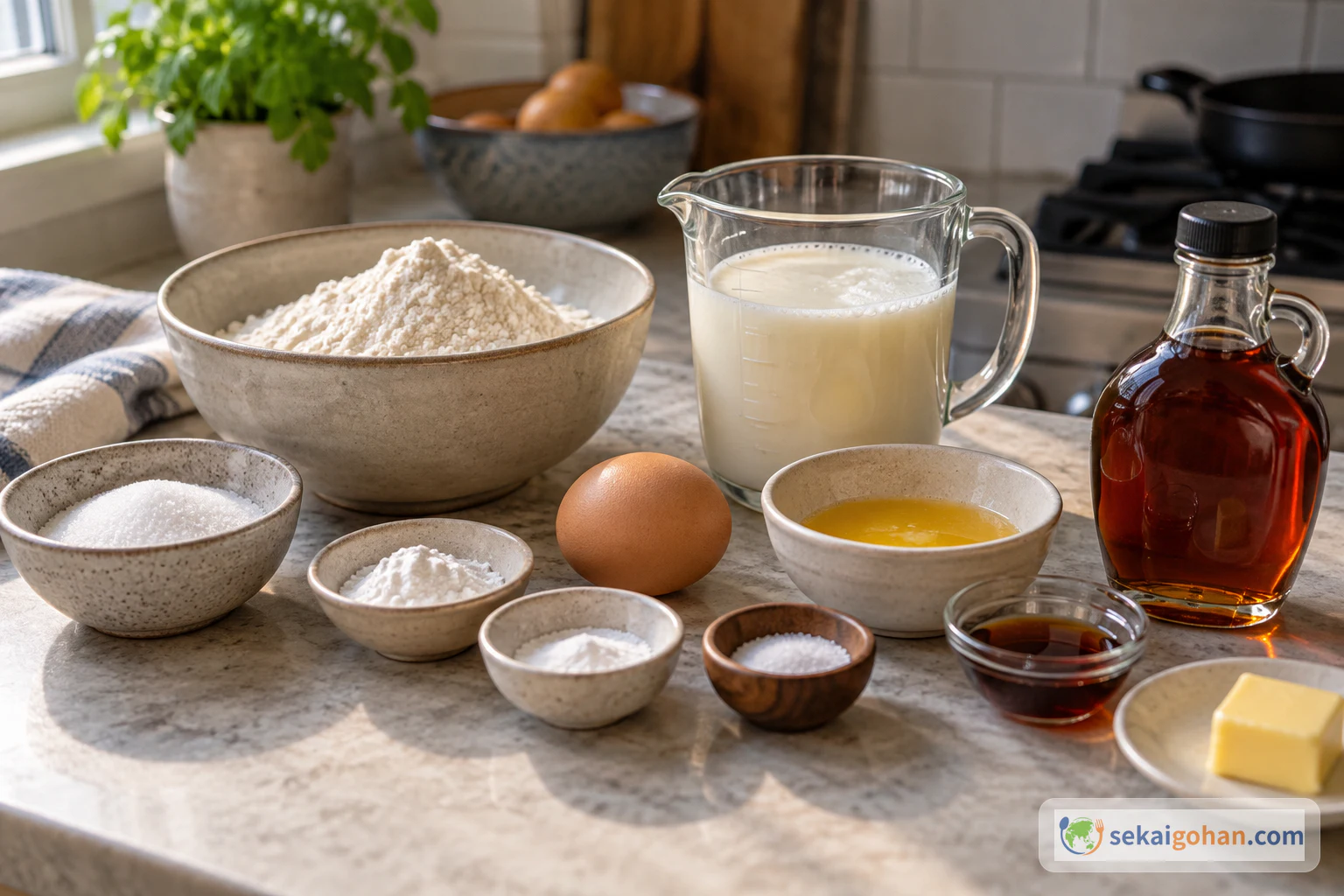
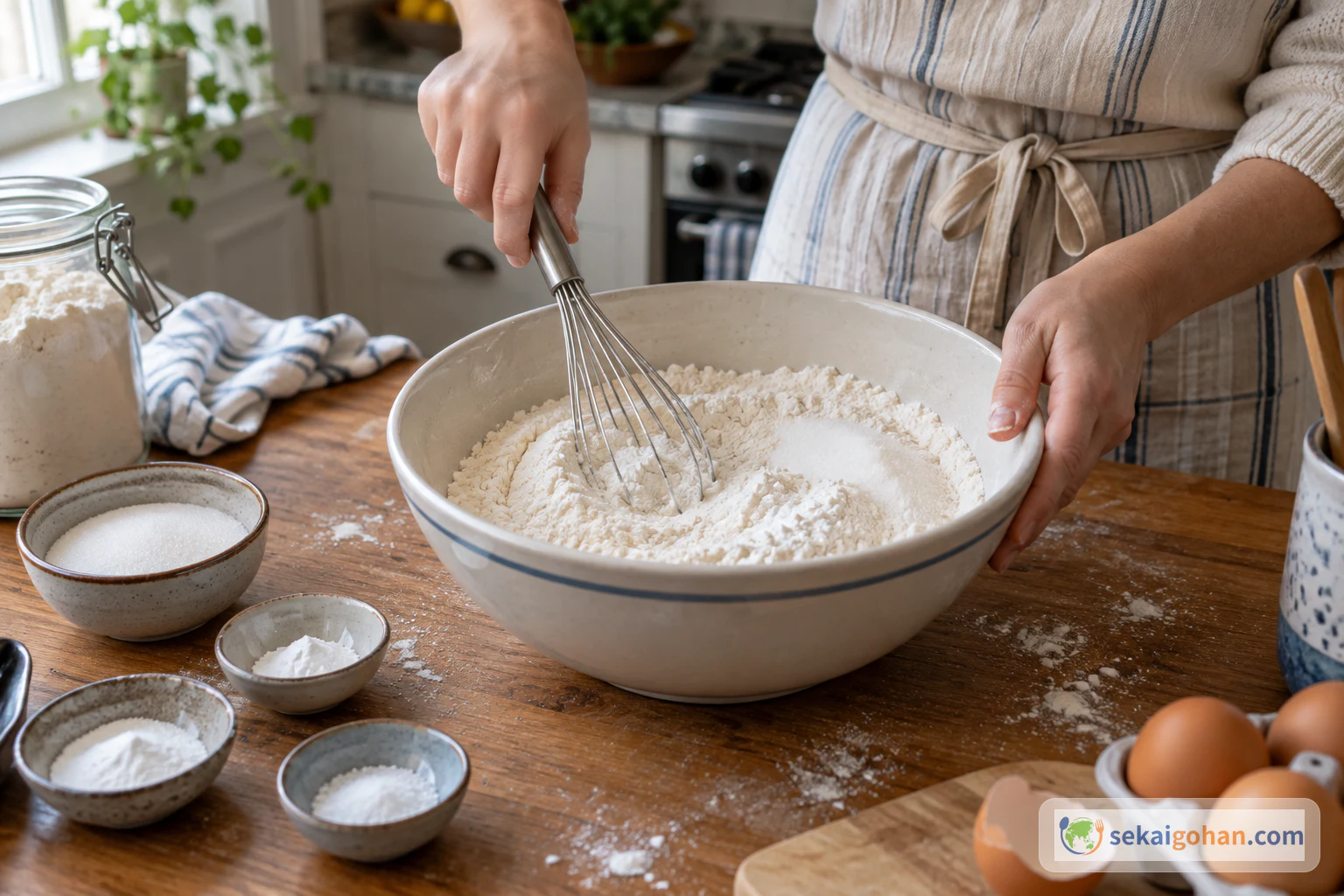
Use the gram weights where given. In volume, the same quantities are 2 cups flour, 3 tbsp sugar, 2 cups buttermilk, and 2 tbsp melted butter or vegetable oil. Measure the leaveners, salt and vanilla with spoons.
Allow about 10 minutes of hands-on time and 45 minutes in total.
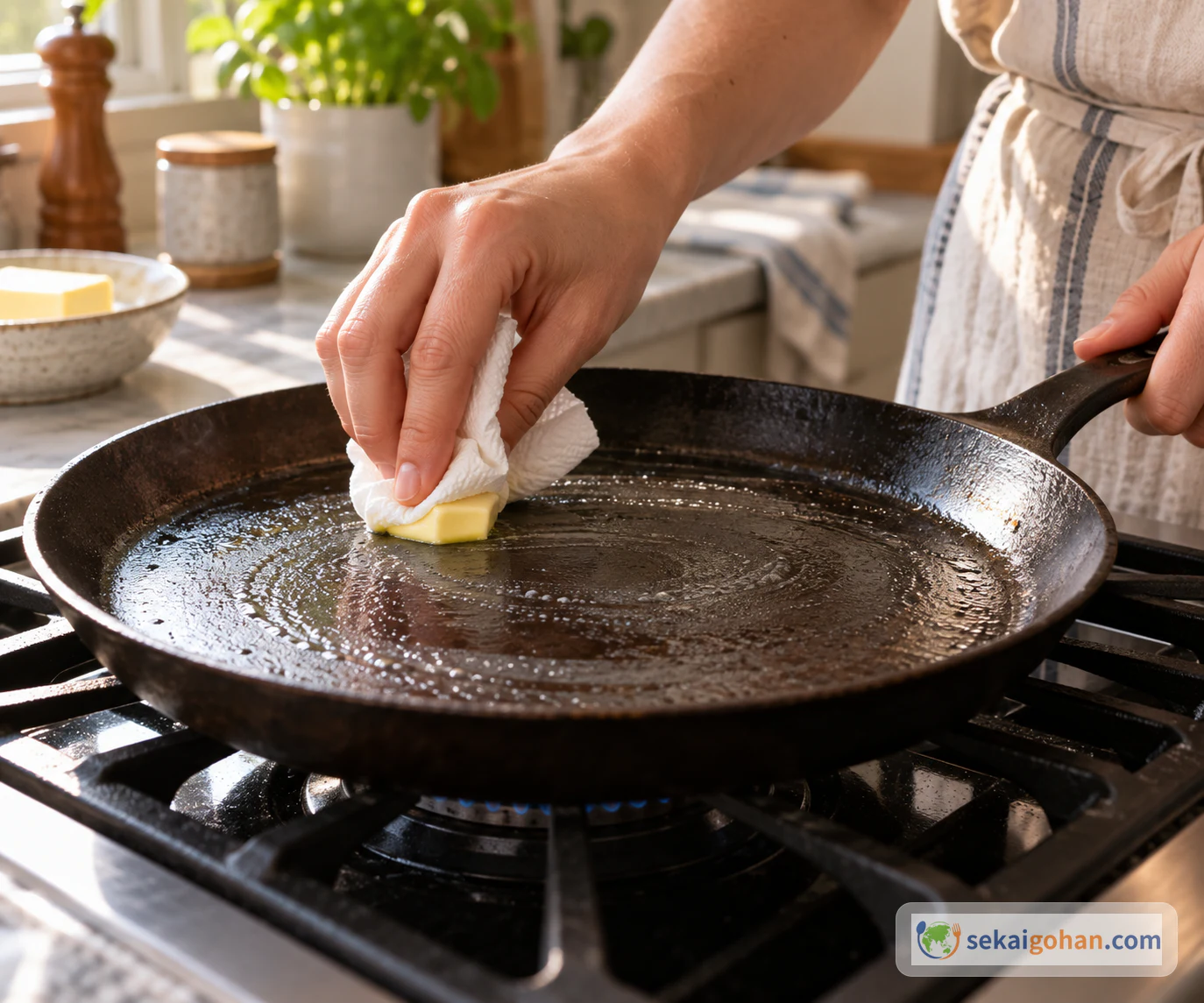
The butter appears three times in this recipe, and each has a different job: 1 oz (28 g) melted into the batter, a thin film on the pan, and a pat on the finished stack. The pictured version uses butter in the batter; vegetable oil is an alternative, used in its place rather than alongside it.
To replace the 2 cups of buttermilk, use plain Greek yogurt, 2/3 cup, plus milk, 1 1/3 cups. Keep these as volume measures. Expect a different flavor and thickness from cultured buttermilk. Ordinary, thinner plain yogurt is not the same as Greek yogurt, so don't use it at the same ratio and expect the same batter. Plain milk on its own lacks the acidity the baking soda needs, so it is not a straight replacement.
This recipe contains wheat, egg and milk. It is not an allergy-friendly recipe, and the substitutes above do not make it one. Do not taste the raw batter, which contains raw egg and uncooked flour.
Equipment
- A large mixing bowl for the dry ingredients
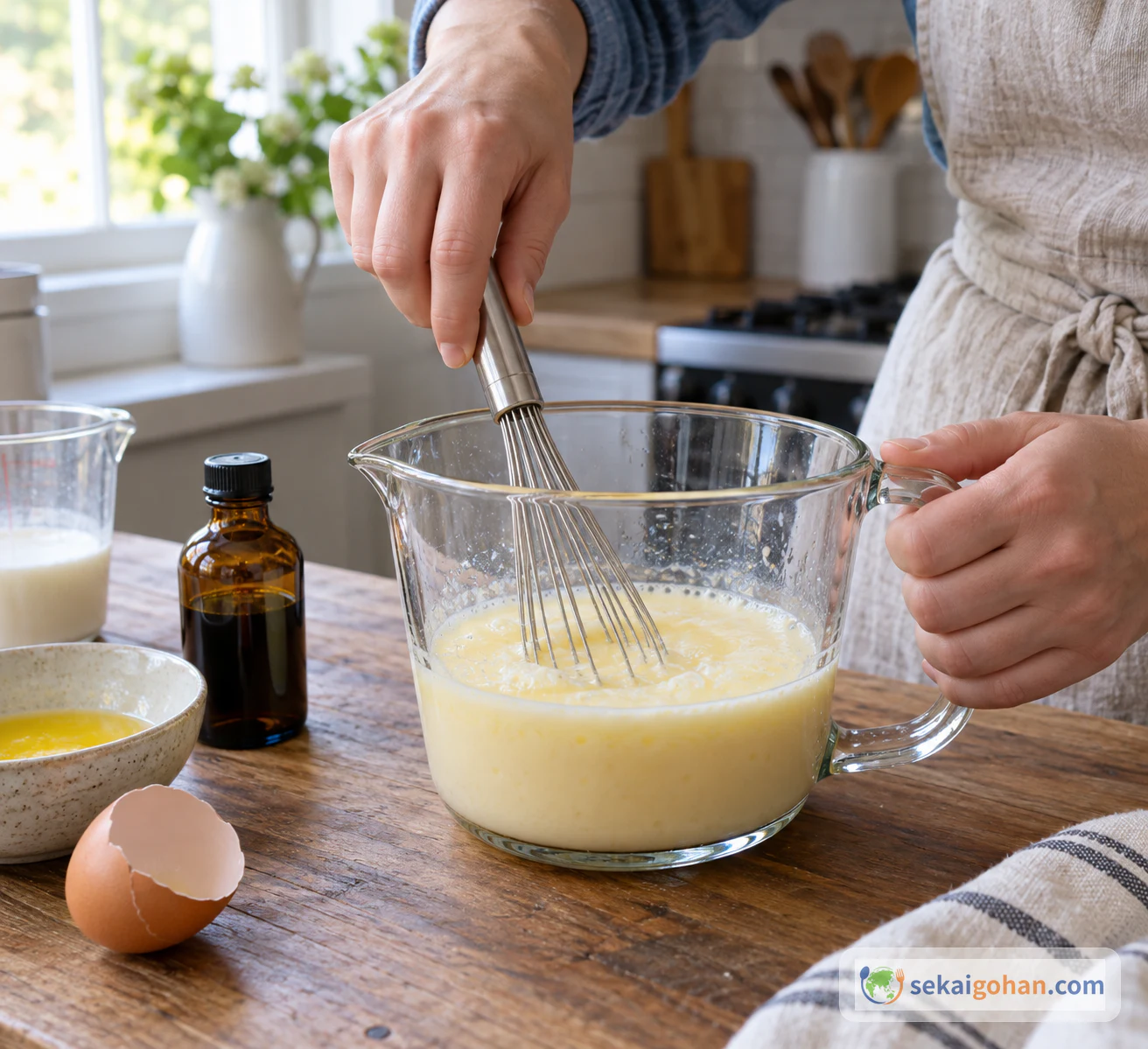
- A separate bowl or measuring jug for the wet ingredients
- A whisk and a spatula
- A 1/4 cup measure for portioning
- A griddle or flat skillet, and a thin turner
A temperature-controlled electric griddle makes it easier to cook batch after batch at a steady surface temperature, but it is not required; an ordinary skillet over medium heat works.
Buttermilk Pancake Ingredients and Substitutes
Most of what goes into these pancakes is everyday supermarket stock: flour, sugar, baking powder, baking soda, salt, eggs, butter and milk. Buttermilk is the one thing worth looking for. If you find it, use it as written, because it supplies both the tang and the right amount of liquid. If you can't, the Greek yogurt and milk mixture from the tip above works, though the flavor and thickness will be a little different.
Read the label on the syrup, too. Pure maple syrup and pancake syrup blends are different products, so buy pure maple syrup if you want the flavor this pairing is known for. An ordinary skillet is all you need, but an electric griddle helps if you make pancakes often.
How to Make American Buttermilk Pancakes
Cook at 350°F, about 1–2 minutes per side. Home skillets heat unevenly, so let the first pancake tell you whether to adjust the heat.
Fixing Flat, Scorched or Broken Pancakes
Most problems come down to one of three things: how the batter was handled, how hot the pan was, or when the pancake was flipped.
| Problem | Likely cause | What to do |
|---|---|---|
| Flat or dense | Batter overmixed; leaveners mismeasured or old; pan not preheated | Mix only until fairly smooth, measure the baking powder and baking soda carefully, and let the pan heat during the rest. Don't add extra leavener to compensate |
| Dark outside, raw inside | Heat too high | Start at medium and adjust using the color of the first pancake |
| Pale and slow to color | Heat too low | Raise the heat slightly and test again with the next pancake |
| Breaks or tears when flipped | Moved before bubbles formed and the underside colored | Wait for the visual signals before sliding the turner under |
| Pancakes run together | Too little space in the pan | Pour fewer at a time and keep each to 1/4 cup |
Serving Pancakes with Butter and Maple Syrup
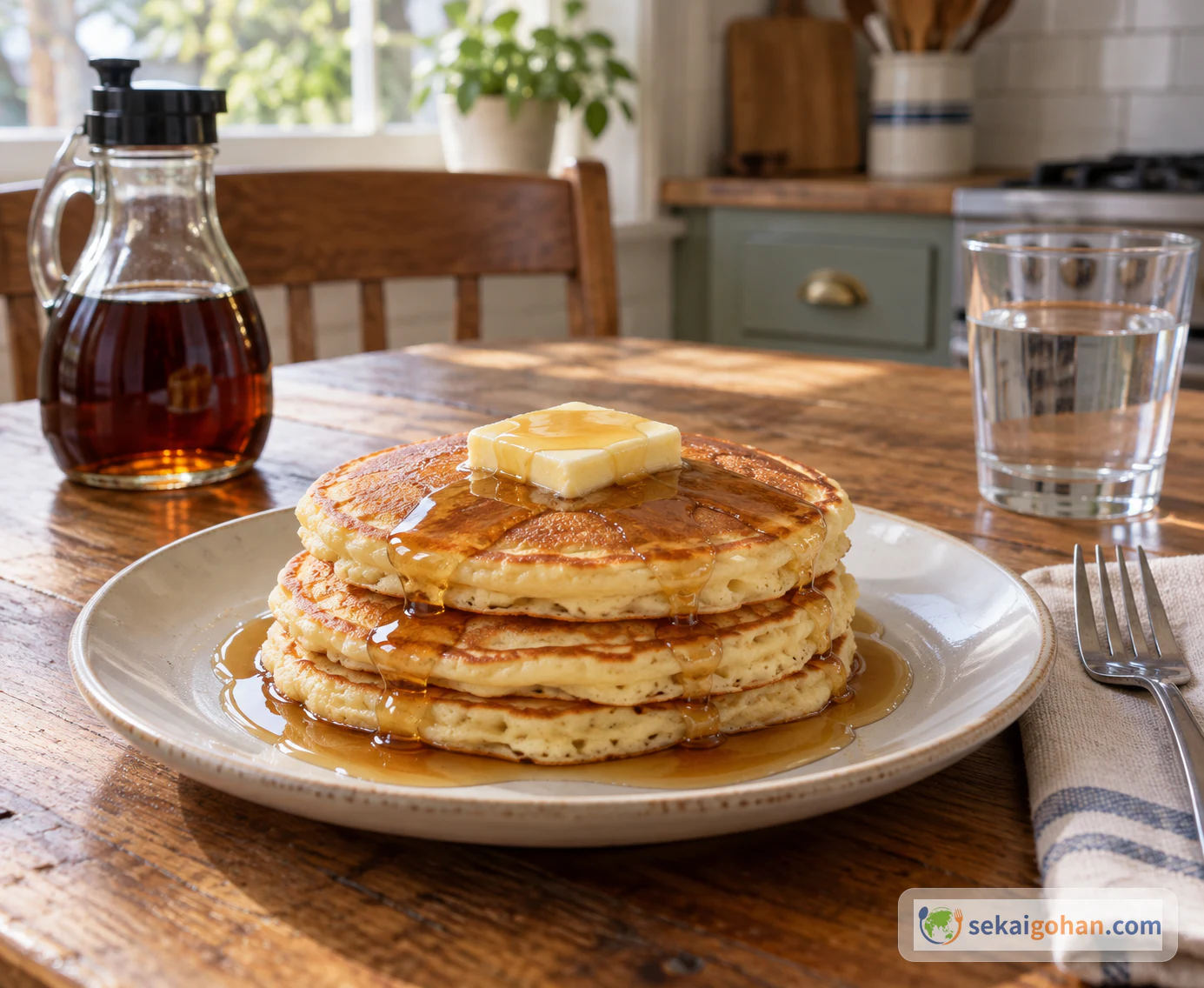
The classic finish is the simple one: stack the pancakes, put a pat of butter on top, and pour the maple syrup at the table. The batter is only lightly sweetened, so the syrup carries most of the sweetness and everyone can choose how much to use.
- Butter and pure maple syrup: the basic, and the best way to taste the buttermilk batter as written.
- Blueberries on the side: spoon them over the cooked pancakes so the batter and cooking stay the same.
- Blueberries in the batter: berries can change how the pancakes cook and color, so expect a little trial and error.
- Sliced banana: a familiar modern topping at home.
- Yogurt and fruit: lets you use less syrup and balances the sweetness.
Frequently Asked Questions
Can I just use regular milk instead of buttermilk?
Plain milk on its own loses the tang of buttermilk and the acidity the baking soda reacts with. Use plain Greek yogurt, 2/3 cup, plus milk, 1 1/3 cups, instead. The flavor and thickness will be somewhat different from buttermilk.
Should I whisk out the small lumps?
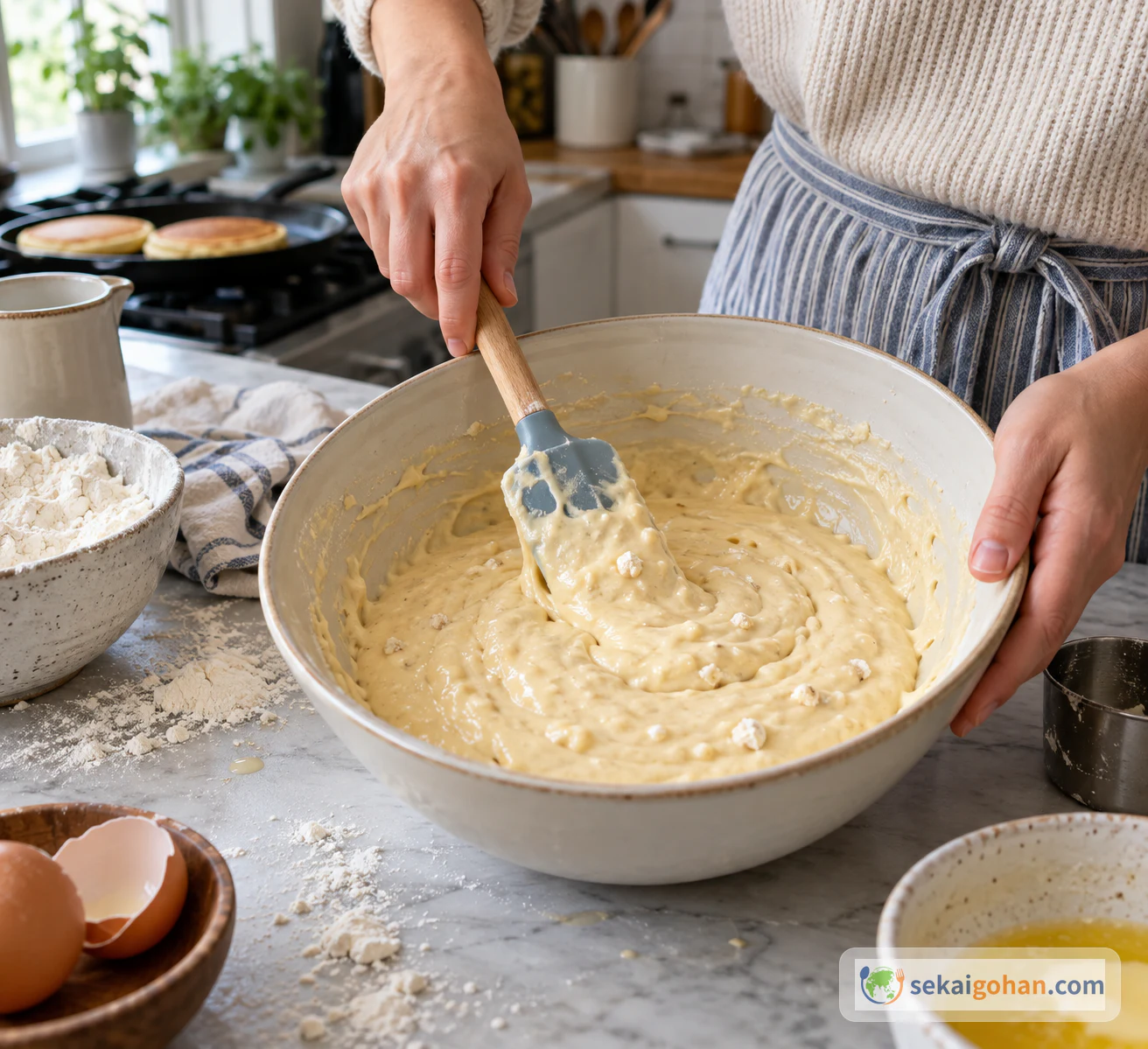
No, small lumps can stay. Mix until the batter is fairly smooth with no large dry pockets, then stop. Mixing longer makes the pancakes less tender.
Can I freeze leftover pancakes?
Yes. Freeze them on the day you cook them, then reheat them in a 250°F oven.