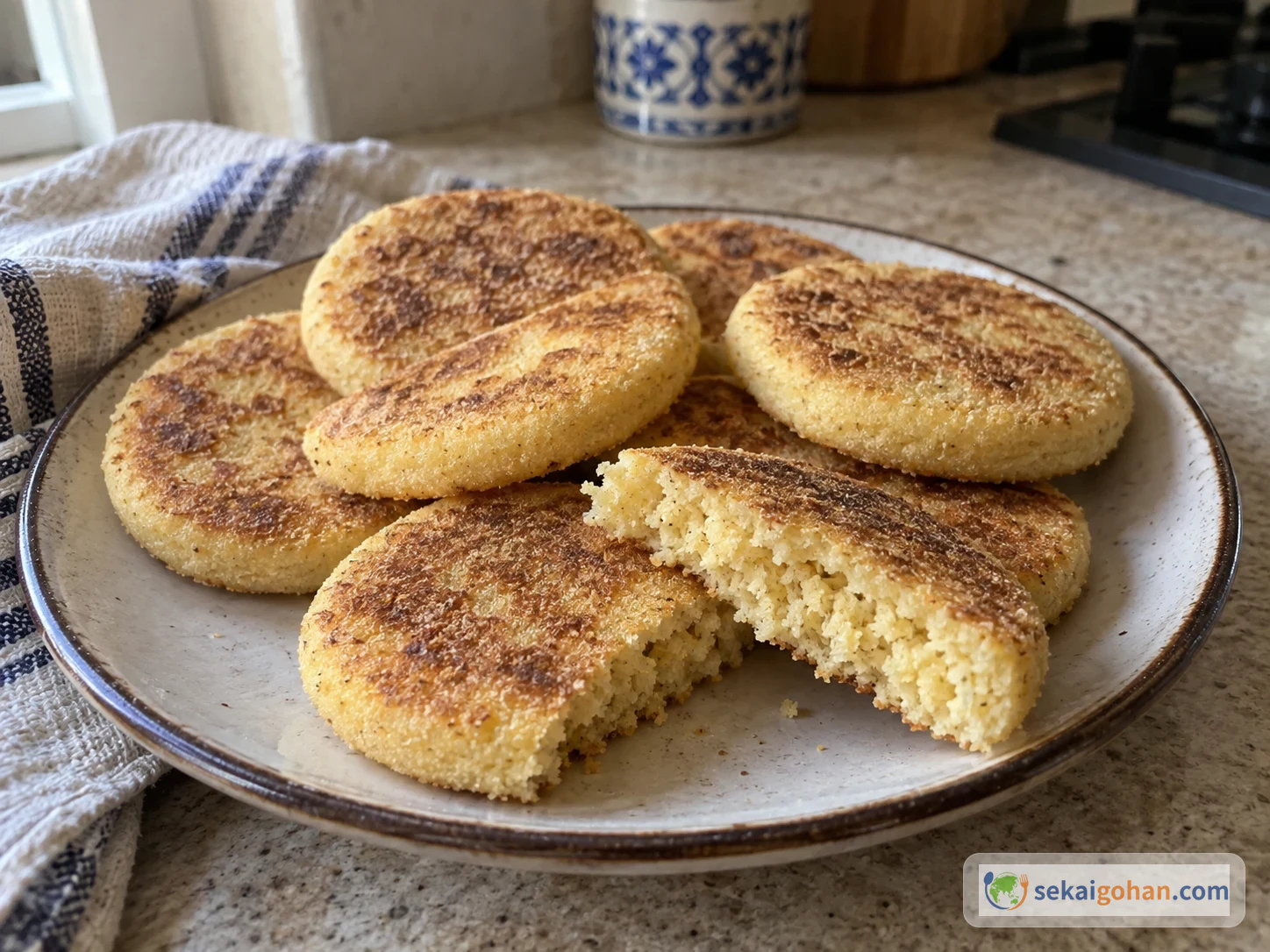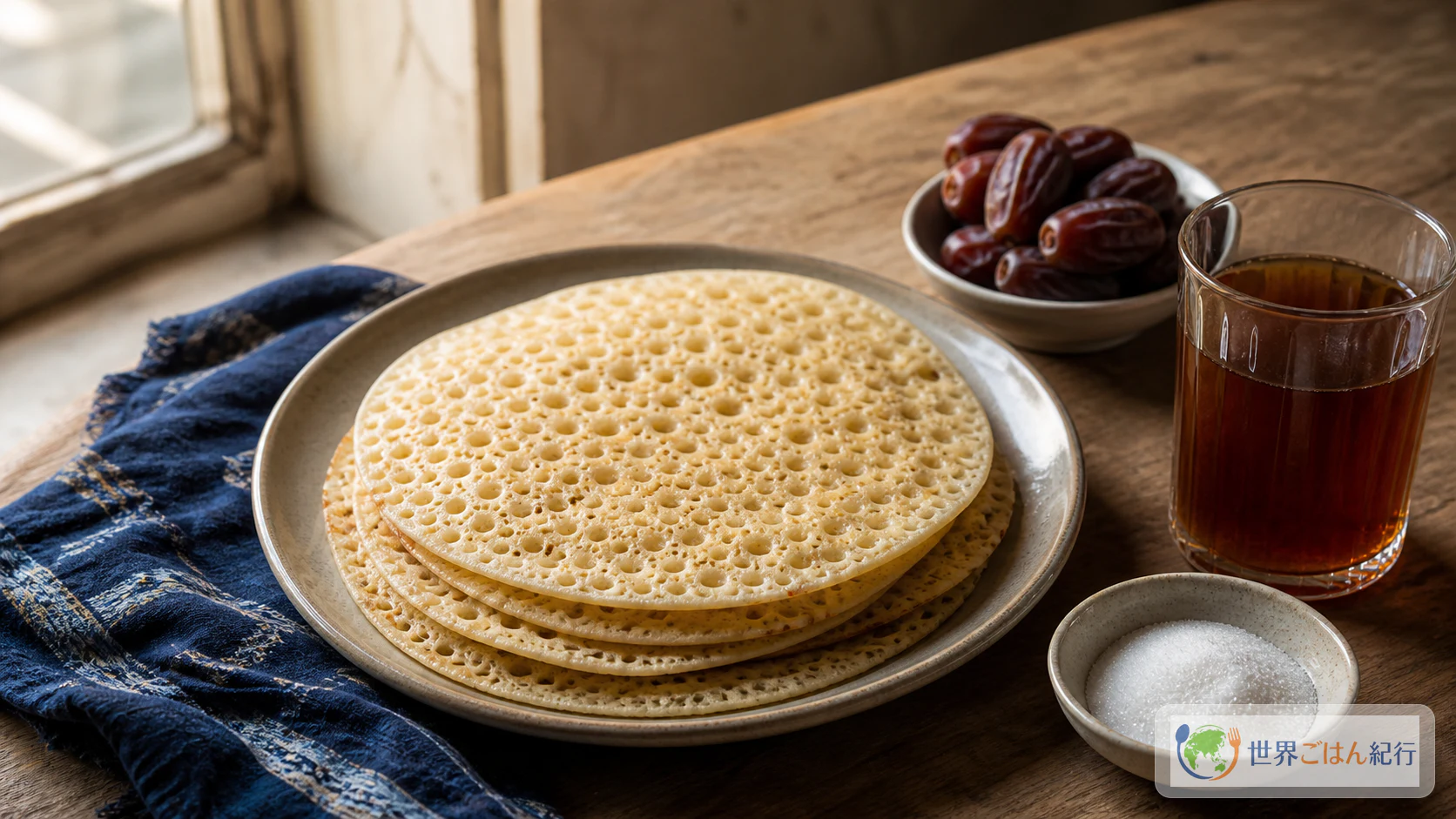
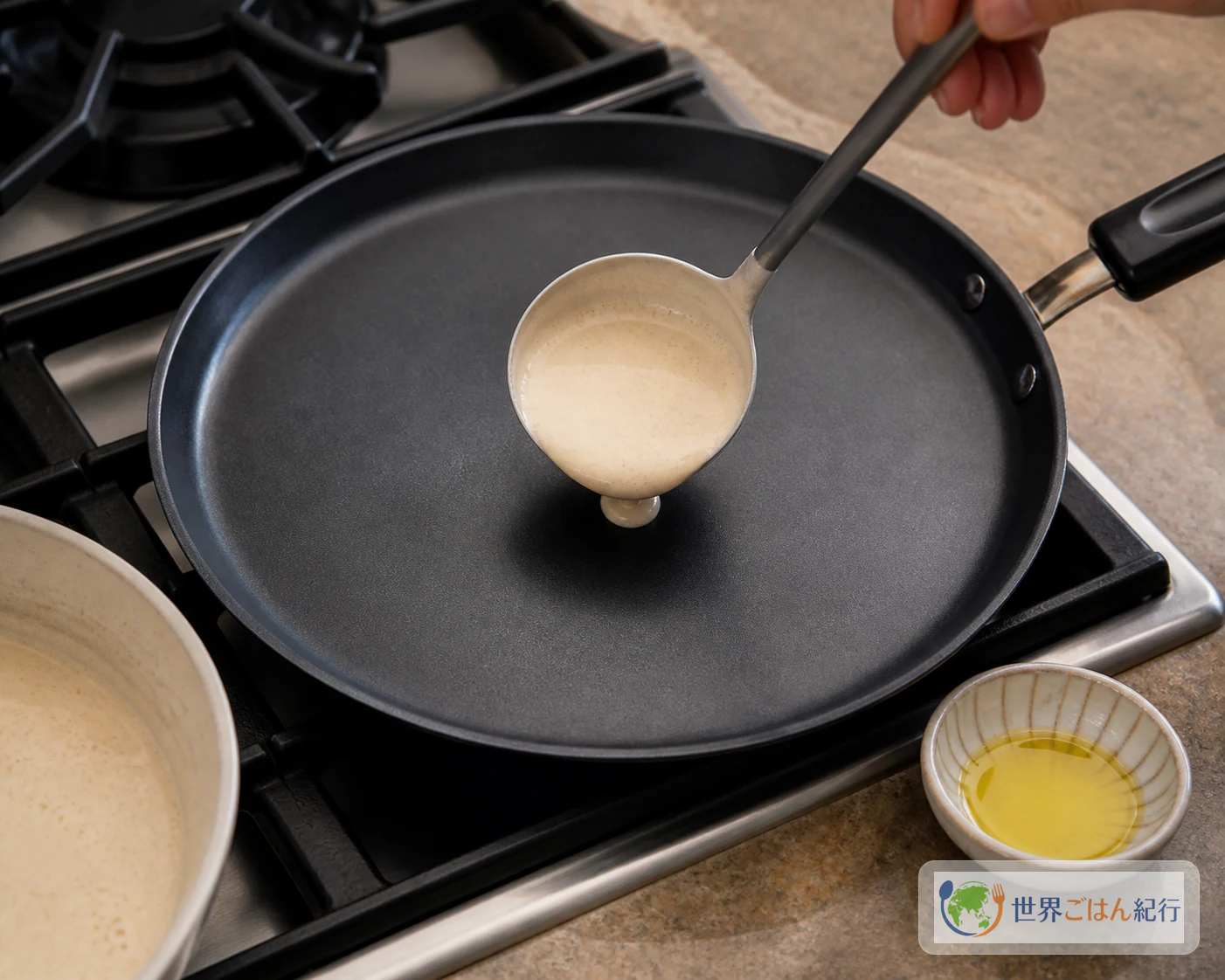
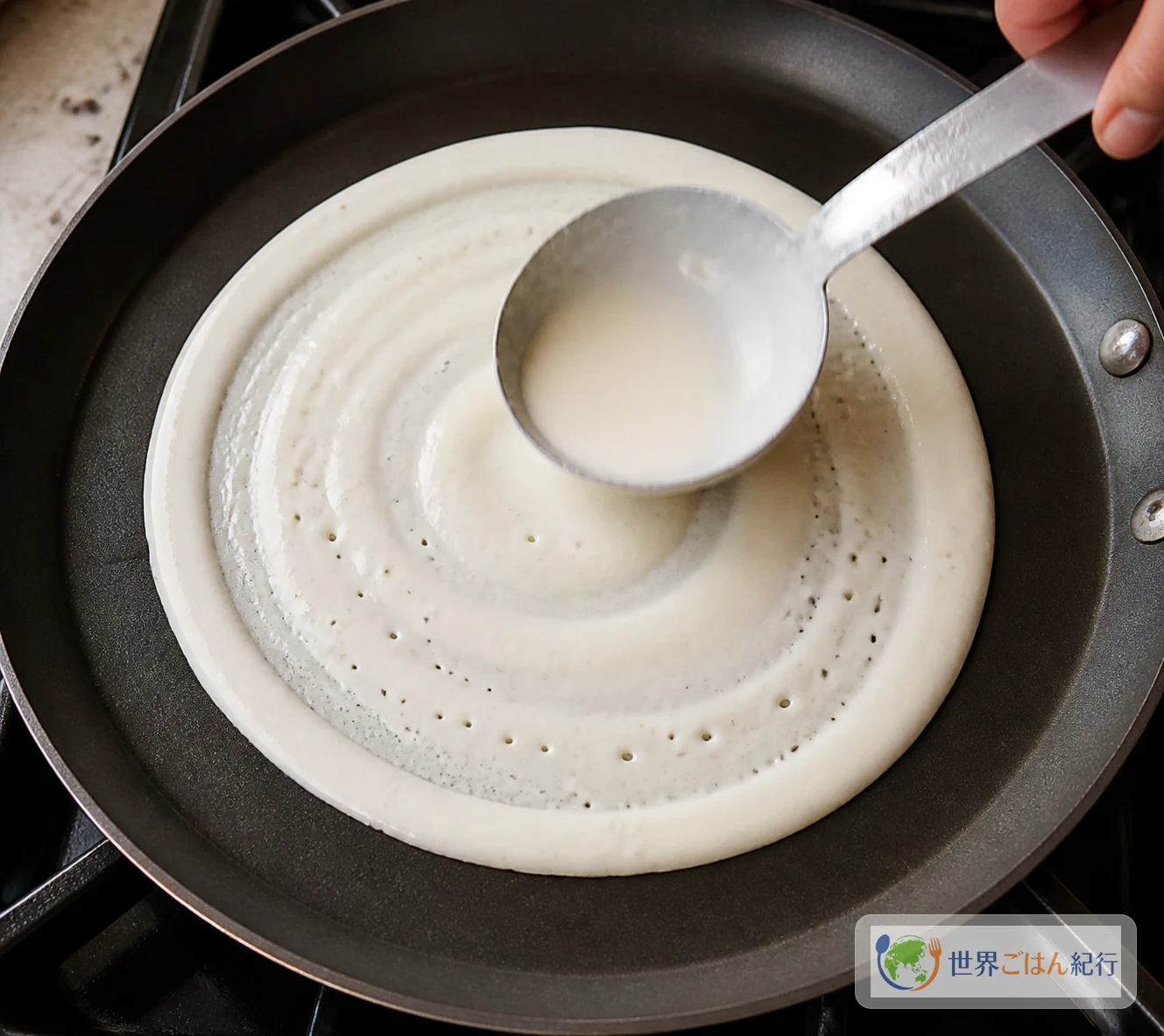
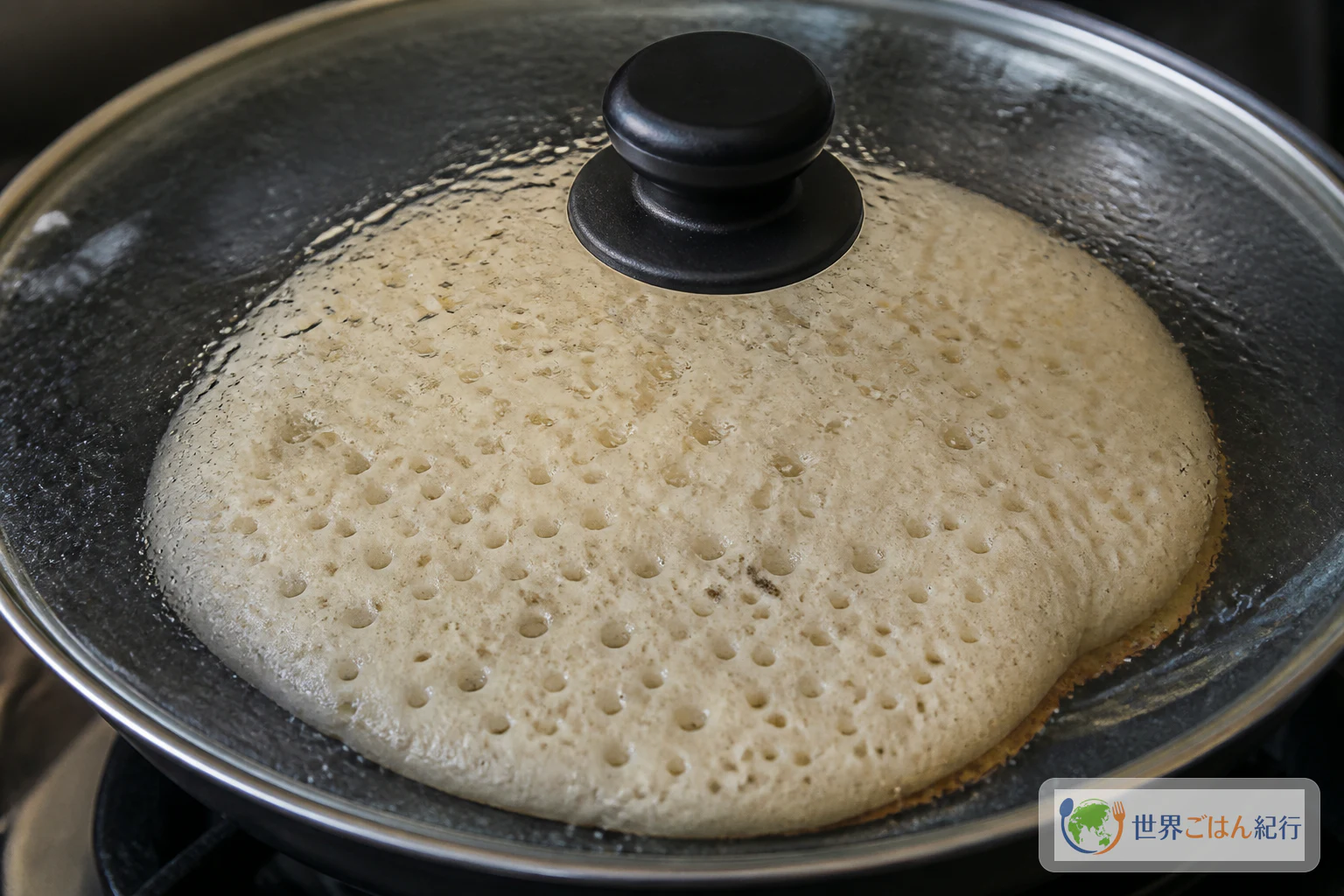
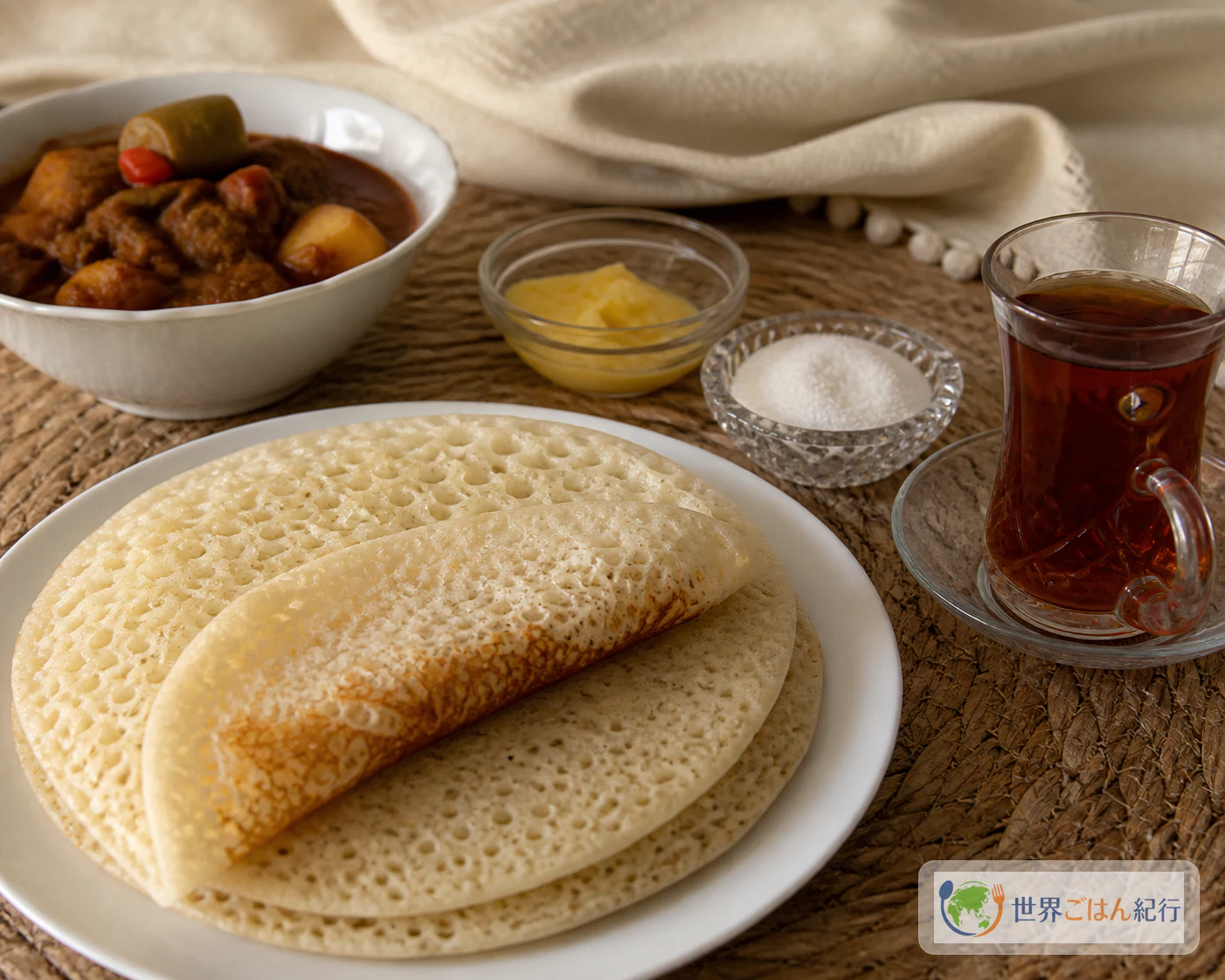
Pour the batter into the center of the pan, give the bottom of the ladle a light turn, and the pale liquid spreads into a thin circle. Small holes soon open across the surface as the steam-filled batter puffs up, and by the time you lift the lid only the underside has turned a pale golden brown. Canjeero is never flipped; it goes onto the plate holey side up, stacked with the others. This fermented flatbread is Somalia's breakfast staple, with a faint tang and a soft, sponge-like way of holding moisture. All those little holes keep oil and the juices of a stew on the surface, so it suits a sweet breakfast just as well as a savory dish.
Canjeero and Laxoox Across the Somali Region
One bread, many names and grains
Across Somalia, Somaliland, and the Somali State of Ethiopia, the bread was called "canjeero" in southern Somalia and "laxoox" in northern Somaliland in 2022. In Djibouti, Yemen, and elsewhere on the Arabian Peninsula you'll hear close names such as anjero, lahoh, and laxoox. Even where the names match, the grain ratios, fermentation methods, and bread sizes vary.
Wheat is almost universal: 95% of cooks used it, and 70% combined several grains. Sorghum appeared in 55% of batters, maize in 32%, barley in 18%, teff in 7%, and cowpea in 7%. Wheat-only batters were relatively common in southern Somalia, while more cooks in Somaliland and the Somali State of Ethiopia used two or more grains.
Mixed in the evening, eaten with tea in the morning
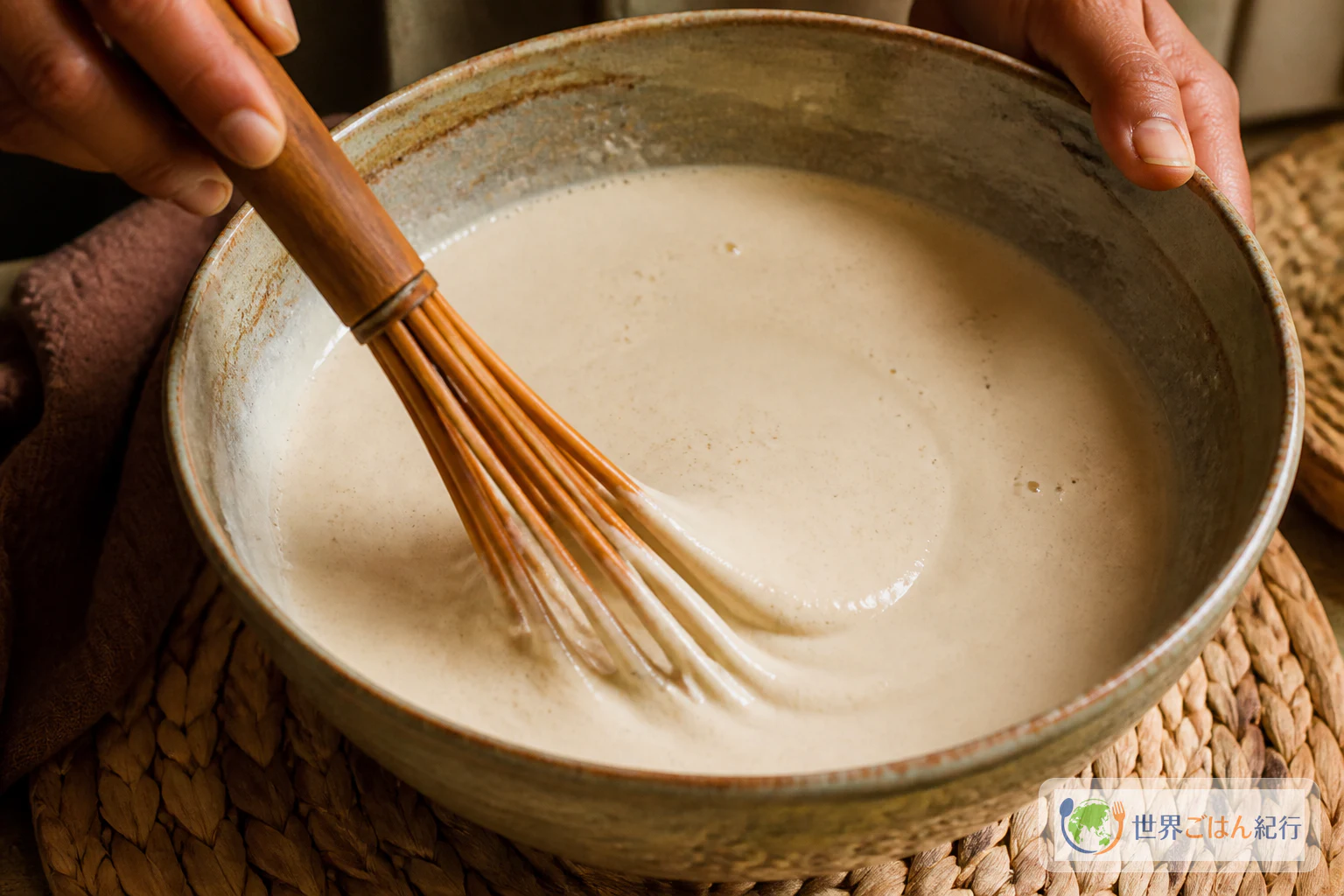
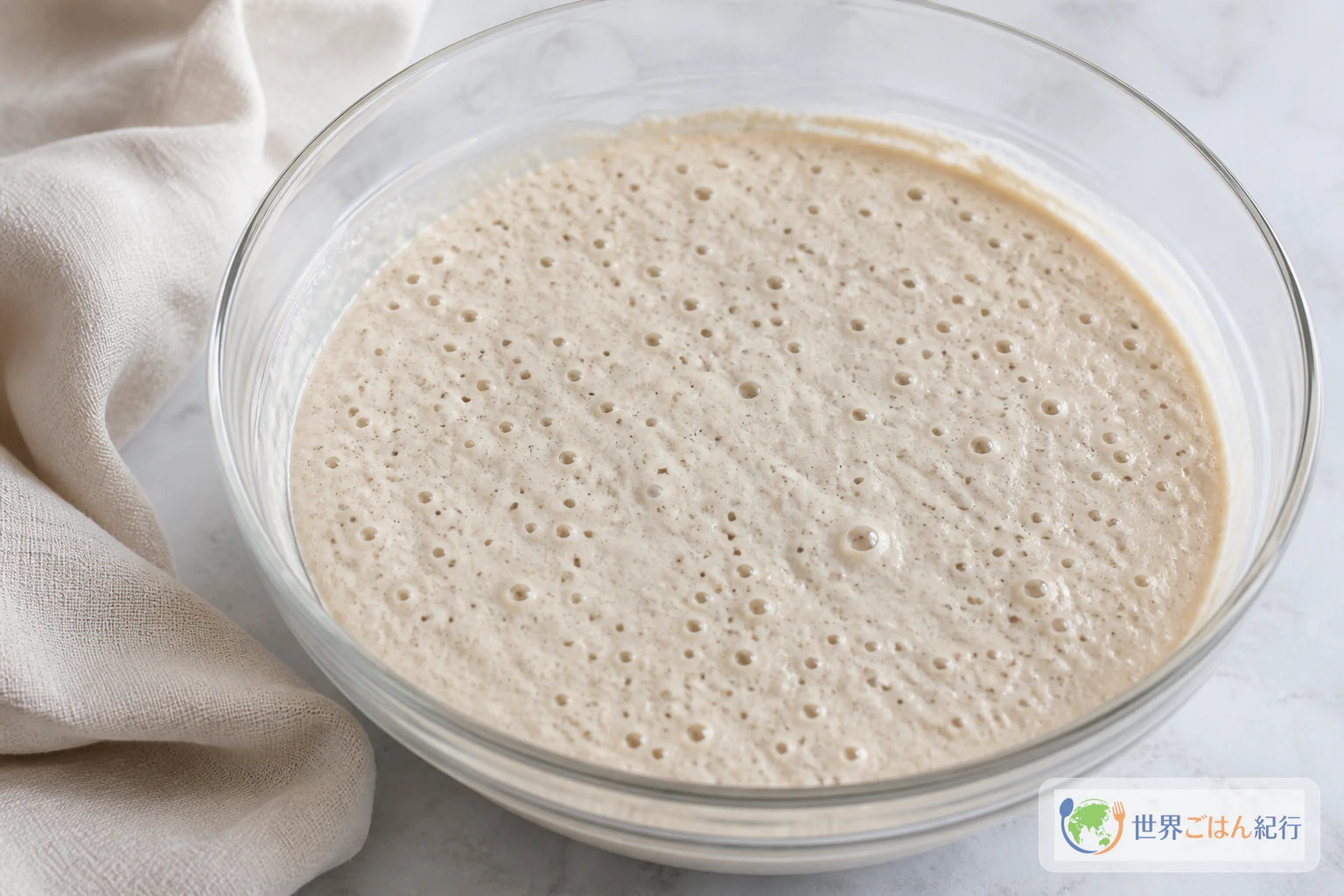
At home, the usual pattern is to mix the batter by hand the evening before and cook it in the morning. Most cooks (77%) relied on natural fermentation and 23% used a starter called dhananis; none regularly used commercial yeast. Bubbles on the surface and a sour smell are the signal to start cooking. In the south, some cooks make cajiin, adding hot water to part of the flour first to gelatinize it, which helps bind low-gluten flours and makes the cooked bread softer.
The classic Somali breakfast pairs canjeero with sweet tea, oil or ghee, and sugar. Add suqaar (small pieces of stewed meat), a brothy maraq, liver, or eggs, and the same bread becomes a midday or evening meal. Nearly everyone ate it at breakfast, but some also ate it at lunch, at dinner, and at the Ramadan iftar.
What goes alongside has long followed regional livelihoods, as records from 2002 and 2005 show: milk is easier to come by in pastoral areas, beans and vegetables in farming areas, and fish on the coast. Canjeero sits at the center of a morning table and takes up whatever staple and side dishes are at hand that day.
Ingredients (serves 4, 10–12 pieces)
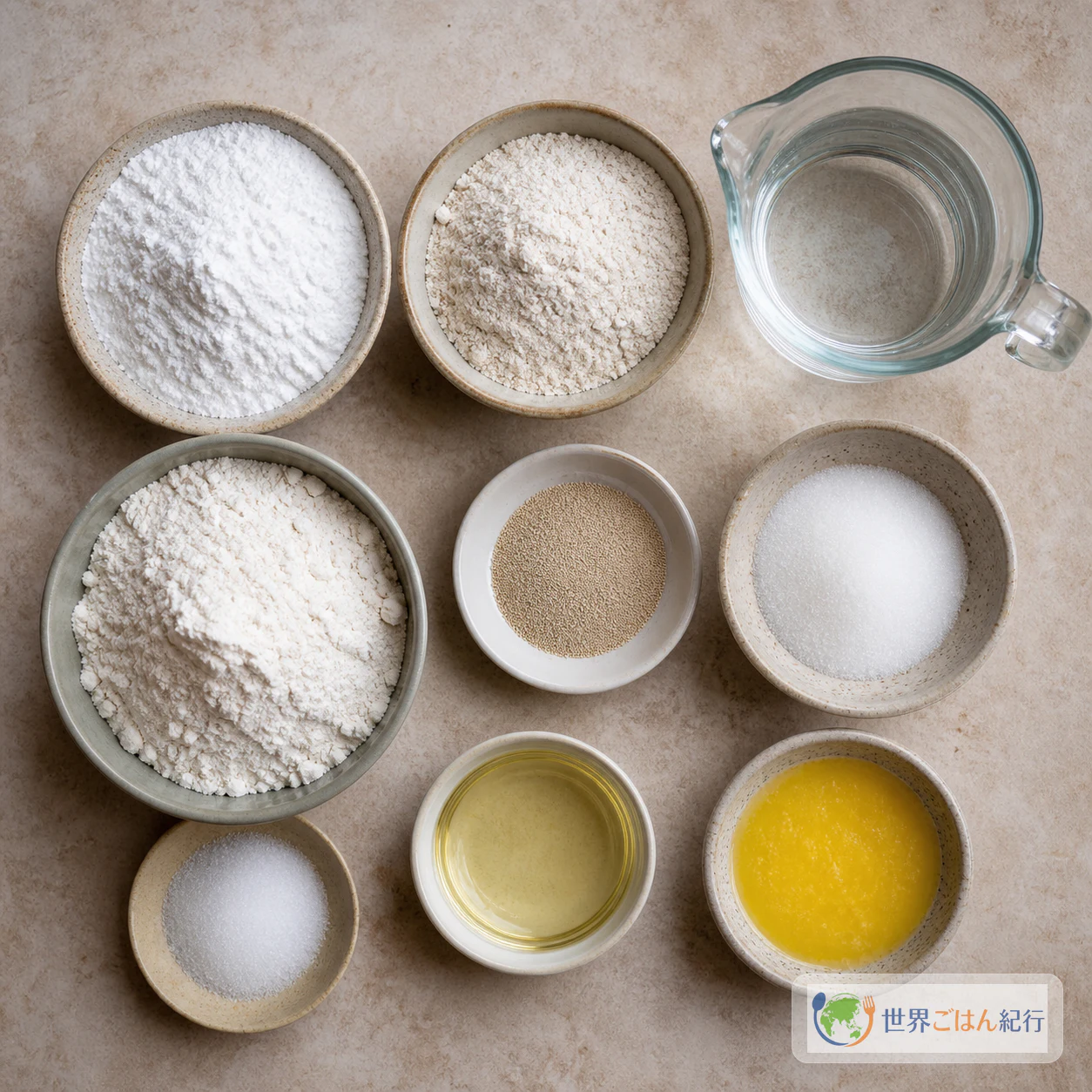
Somali batter cannot simply be treated as a gluten-free dish. Sorghum flour and corn flour do not contain gluten, but this recipe includes wheat flour. If you have a wheat allergy or celiac disease, do not replace only some of the ingredients; consider a separate, dedicated gluten-free formula.
If after fermenting you see blue, green, pink, or black mold, smell rot or a strong solvent-like odor, or find the batter stringy or otherwise unlike normal, do not cook it; discard all of it. Do not taste batter that contains wheat flour before cooking.
Choosing Flours and a Pan for Canjeero
Flours and substitutes
At home, sorghum flour and fine white corn flour are combined with wheat flour. For a first plate, it matters more to build a batter you can cook on one side by watching its fermentation than to copy local flours in exactly the same ratio. The more sorghum flour you add, the more aroma and graininess you get, but the harder the batter is to spread.
White corn flour is a different product from yellow, coarsely ground cornmeal and from white cornstarch. A flour that feels strongly gritty between your fingers makes a batter that tears easily even after fermenting, and the holes come out uneven. Look for a finely ground flour whose grind and ingredients are clear on the label. Fine yellow corn flour works too, giving more color and a toastier flavor, but coarse cornmeal leaves grains even after sifting and won't give the same holey texture.
White sorghum flour gives a brighter color when mixed with wheat flour and makes the holes easier to see. A small bag is plenty if you don't cook with sorghum often; check the ingredients, net weight, and storage instructions, and keep the rest sealed in a cool, dark place.
If you can't find sorghum flour, replace the 2.75 oz (80 g) with the same weight of cake flour. The batter spreads more easily, and the sourness and grain aroma become weaker. Mix with about 3 cups (700 ml) of water first and add the rest only if needed. Rice flour on its own lacks the stickiness of wheat, so the same water and cooking time won't carry over.
The cooking surface
Canjeero is traditionally cooked on a flat iron plate, but for a first batch a lidded 8-inch (18–20 cm) frying pan is enough. A flat griddle earns its place if your only pan is a deep one that makes it hard to swirl the batter outward, or if you're cooking for a crowd in the morning.
For canjeero at 7.5 inches (15–19 cm), pour the batter into the middle of a wide surface and make just one turn. Before buying a griddle, check the size, which heat sources it works with, where you'll store it, and whether it has a handle or a lid. If you already own a shallow frying pan, cook the first piece in it before adding another tool.
Canjeero Fermentation, Doneness, and Fixes
Reading the batter and the pan
The tricky part at home is knowing when a fermented batter is ready to cook. Timing shifts with the flours and the room temperature, but you can go by the bubbles on the surface, a yogurt-like sourness, and how thickly the batter pours. A small amount of dry yeast makes the first attempt easier to get right.
| What to look at | When it is going well | Signs to wait or fix |
|---|---|---|
| 1 hour after step 1 | Fine bubbles on the surface and it flows slowly | If there are no bubbles and the room is cold, extend by 30 minutes |
| After overnight fermentation | Bubbles have spread and there is a mild sourness | If it smells only of flour, extend 1–2 hours in a warm place |
| Just after the first pour | It spreads 7.5 inches (15–19 cm) from the center outward | If it stops at 4.5 inches (12 cm), add water 1 tbsp at a time |
| 2–3 minutes after covering | The shine is gone and the bottoms of the holes are dry | If liquid remains, steam for 30–60 seconds |
| After stacking on the plate | The outside is pliable and the holey side catches oil or juices | If stiff, cover with a cloth and rest for 5 minutes |
Fermentation bubbles alone won't guarantee holes after cooking. You'll also lose holes if the batter is too thick, the pan is too hot, or you keep touching the batter after pouring. Stir the fermented batter once from the bottom, use the first piece to dial in moisture and heat, and correct from the second one on.
Troubleshooting
| Problem | Likely cause | How to fix |
|---|---|---|
| No bubbles after 8–12 hours | Room too cold, yeast not working | Move to 82°F (25–28°C) and wait 1–2 hours. If nothing changes, dissolve 1 g yeast in 1 tsp lukewarm water, mix it in, and leave for 2 hours |
| Over-fermented and too sour | Left too long in a warm place | If there is no off smell, make a small fresh batch just before cooking, mix in about one third, and rest for 30 minutes. If it smells rotten, do not use it |
| Batter does not flow and is thick | The flour absorbed a lot of water, or the sorghum flour is coarse | Add water 1 tbsp at a time until the trace of lifting disappears in a few seconds |
| Thick edge, sticky center | Too small a swirl, too much batter | Reduce by 2 tsp (10 ml) from the next piece and turn only two or three times from the center outward |
| Black bottom, raw top | Heat too high | Lower to medium-low and steam under the lid. Do not start on high heat |
| Sticks to the pan | Poured before the surface was hot, oil uneven | Heat the pan fully over medium heat and spread the oil thinly and evenly. Do not move the batter before it sets |
| Few holes, flat | Under-fermented, baking powder not mixed in, gap under the lid | Check the bubbles in the batter, stir once from the bottom, and seat the lid tightly |
If a piece sticks, leave the spatula alone until the batter has set. Scraping hard damages the cooking surface and makes the next piece harder to release. Instead, pour in a little hot water to soften it, wash the pan without scratching it, and start again.
Serving, Storing, and Varying Canjeero
A sweet breakfast
The holes in canjeero soak up sugar and fat. Put a little unsalted butter or vegetable oil on a fresh piece and sprinkle sugar over it, and the smell of the flour and the tang round out nicely. With sweet tea alongside, a bit of leftover sourness from fermentation is easy to enjoy. Dates, banana, or honey are good too; add them on the plate rather than into the batter to keep the texture.
Meat, eggs, and stews
Beyond breakfast, set suqaar (onion and meat stir-fried), maraq made with tomato and spices, liver, or eggs beside it. Catch the juices on the folded surface instead of tearing pieces to scoop; the holey bread holds together better that way. A sauce of finely stewed tomato and onion, beans, or greens makes it a good fit for an evening meal at home, too.
Trying the cajiin method
To try the southern cajiin method, set aside 1 oz (30 g) of the sorghum flour, knead it with 3 tbsp (45 ml) boiling water, and let it cool completely. Add it to the batter in step 1, reduce the first water by 3 tbsp (45 ml), and ferment as usual. The batter turns slightly sticky, and the underside tends to stay moist when cooked. If it feels thick, add water 1 tbsp at a time in step 2.
Storage and reheating
Cool cooked canjeero to room temperature, separate the pieces with parchment paper or a clean cloth, and seal. They keep about 2 days in the refrigerator. To serve, warm them over low heat in a lidded frying pan for 30–40 seconds per side, or wrap one piece in lightly dampened paper towel and microwave at 500–600 W, checking every 20 seconds. Overheating drives the moisture out of the holes and hardens the bread from the edges.
Fermented batter can wait until the next morning, covered, in the refrigerator. Let it stand at room temperature for 20–30 minutes before cooking and stir once from the bottom; if the sourness is mild and the surface bubbles come back, it's good to use. Batter left out for a long time at room temperature needs more than a glance: check it for off smells and mold.
Nutrition (approximate, per serving)
For canjeero made with the listed ingredients, not counting finishing fat or sugar.
| Energy | Protein | Fat | Carbohydrate | Fiber | Salt equivalent |
|---|---|---|---|---|---|
| About 330 kcal | About 9 g | About 8 g | About 2 oz (54 g) | About 4 g | About 1.2 g |
Frequently Asked Questions
How is it different from injera?
Both are made from fermented grain batters, but injera is baked into a large round that serves as the staple for stews, while canjeero is smaller and mostly stacked for breakfast. Many canjeero formulas finish with a mild sourness after about one night of fermentation, and the flours, fermentation period, and cooking size all differ from injera.
What if I cannot wait overnight for fermentation?
If the room is warm enough and bubbles have appeared, you can cook after 8 hours. Adding more yeast to shorten fermentation changes the balance of sourness and aroma. For a morning bake, the steadiest routine is to mix the night before and check the surface bubbles and smell when you wake up.
Can I cook it in a pan without a lid?
A lid makes it easier, because the steam sets the surface. Without one, cover loosely with aluminum foil you have confirmed is heat-safe, leaving a small gap for steam to escape. Do not use a plate or glassware as a lid over heat. If you buy a lid for your heat source, measure the diameter of the pan first.
If sorghum flour is gluten-free, can I make it without wheat flour?
Not with this formula as it stands. The wheat flour helps the batter spread and keeps the one-sided bread from tearing. Going wheat-free would mean designing and testing the gluten-free flours, thickener, moisture, and fermentation time separately. If you have a food allergy, keep in mind that one gluten-free flour does not make the whole recipe gluten-free.