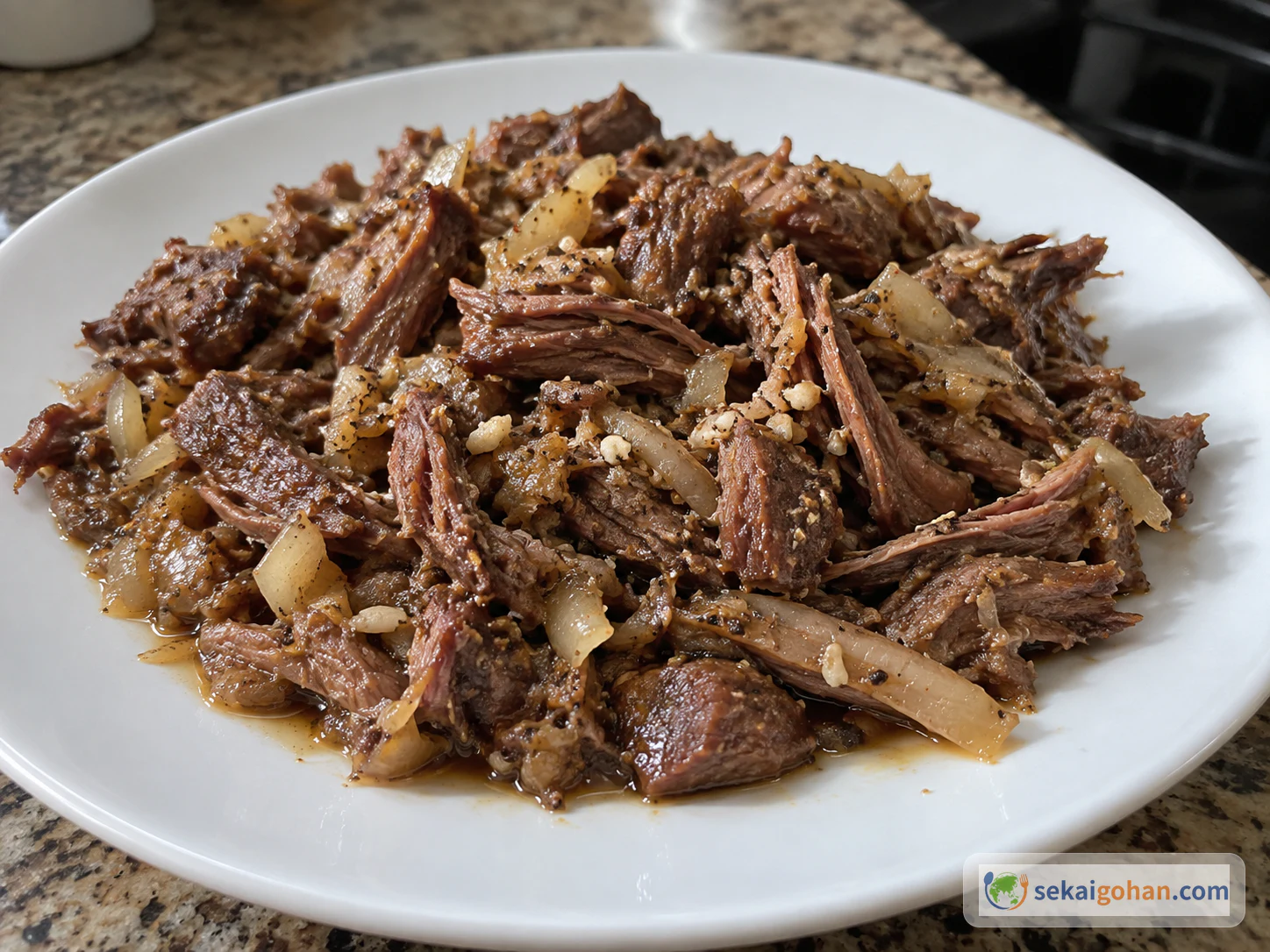
Brush the red achiote marinade over a pork shoulder and the kitchen suddenly looks a little like Yucatán. The smell of sour citrus layers over an earthy, seedy aroma, and before anything has touched the heat you can already picture the finished meat. Cochinita pibil is the Yucatecan way with pork: marinated in achiote and sour orange, wrapped in banana leaves, and cooked slowly until it falls apart. Made in a home oven, it still tastes like itself as long as you get three things right: acidity, a good wrap, and the patience to wait.
Cochinita pibil and Yucatán's pit roasting
The pib and the name
"Pibil" isn't a spice. It names a cooking method. Calling the dish "Mexican pulled pork" describes how it's eaten but misses the point. In Yucatán the method itself survives in the name: season the meat, wrap it in leaves, and cook it slowly in an underground pib.

"Pibil" comes from the Maya pib, meaning to steam-roast in an underground oven (the pib). In Yucatán it is still an essential dish for Sunday family meals and celebrations.
The technique is older than the pork. The Spanish brought pigs to the region, but the Maya practice of wrapping food and cooking it in a pit was already there, along with seasoning based on achiote and citrus. Cochinita grew out of those older ways and is still bound up with regional rituals and foodways.
How it's eaten in Yucatán
At a local table the meat never arrives alone. Warm tortillas, pickled red onions and habanero go out alongside it so everyone builds their own. Beyond the plate, people turn it into tacos and tortas (sandwiches).
Every Yucatecan home has its own version. How much red recado to use, how to add fat, which cut, how to layer the leaves: all of it changes with the cook. What they share is pork shoulder marinated in sour orange and achiote, then cooked in a leaf-lined pot until tender. Set it beside the black recado in relleno negro or the red marinade in tacos al pastor, and you'll see where each one puts its sourness.
Ingredients (serves 4)

Using annatto seeds gives you not only the red color but a dry aroma that recalls earth and tree bark. Ground annatto or a store-bought paste is quicker, but making it from the seeds shows you that achiote is not "red like food coloring"; it's an aroma that ties the fat of the meat to the acidity.
If you buy seeds, look for whole annatto seeds rather than a ground blend or a seasoning with added coloring. If you go with achiote paste, you don't need the seeds at all.
You can grind the seeds in a coffee grinder. A grinder you can't dedicate to spices tends to hold onto smells, though, and for crushing a small amount a mortar is easier to clean. Coarsely crushing the annatto, cumin, allspice and oregano in one vessel and dissolving them into the acidic liquid keeps each tool's job clear.
Choosing ingredients for cochinita pibil
Here is how the traditional method translates to a home kitchen:
| What to look at | Traditional Yucatecan method | In a home kitchen |
|---|---|---|
| How it cooks | Leaf-wrapped meat cooked for hours in an underground pib | A heavy lidded pot in a 170°C (340°F) oven |
| Wrapping | Banana leaves | Use leaves if you have them; otherwise seal with parchment and foil |
| Acidity | Sour orange | Combine orange juice, lime and vinegar |
| Meat | Large pieces or a whole pig | 1 kg pork shoulder, a piece with a moderate amount of fat |
| Accompaniments | Pickled red onions, habanero, tortillas | Serve the sour and spicy elements on the side so each person adjusts |
If you can find sour orange, use its juice. If not, add lime and a little vinegar to sweet orange juice. Lemon alone makes the aroma thin, and vinegar alone loses the fruit's roundness. With all three you get a peel-like bitterness running through the sourness.
Banana leaves are what you buy for aroma. They also help hold in steam, but parchment and foil can do that job. What they can't give you is the green, steamy smell that rises when you open the leaves. If you find frozen leaves, two 12-inch (30 cm) squares are plenty for 4 servings. If they're hard to get, or you'd only use them once, skip the search. Make a careful wrap, take care with the achiote, and let the tang of the pickled red onions make up the difference.
Achiote smells different as seeds, powder or paste. Seeds give the widest range of aroma but need crushing. Powder is quick. Store-bought paste saves the most time, and some pastes already contain salt or vinegar, so hold back some of the salt at the start and taste as you go. Aim for a marinade strong enough that the acidity reaches the fat of the meat. A deeper red won't improve the flavor.
Any heavy pot with a lid that can go into the oven will do. If you're spending money, you'll taste more of a difference from good achiote and banana leaves than from a new Dutch oven.
How to make it: dissolve achiote into acidity
Finish the marinade the night before, and on cooking day all you have to do is wrap and wait. Don't leave the pork out at room temperature for long; after marinating, keep it at 4°C (40°F) or below.
Cochinita pibil doneness and common problems
Signs that it's done
Start with the color. As the meat cooks, the red of the achiote settles from red-orange toward a slightly browner shade. If it turns dull and blackish, the paste on the bottom of the pot is scorching. Move just the meat to another pot without scraping the bottom.
The fibers may look white and shrunken, but if they split sideways easily when you push in a fork, the meat is close. If the center is hot and the meat still pushes back, it needs more time. Rather than adding water, put the lid back on and extend by 20 minutes.
Finally, taste for acidity. Meat that tastes a little heavy on its own will be just right with the red onion. Too much vinegar in the marinade pushes acidity into the meat and tightens the surface, so make the final adjustment with the onion.
Troubleshooting
| Problem | Likely cause | Fix |
|---|---|---|
| Meat is tough | Not cooked long enough | Add 3 tbsp juices, cover and extend at 350°F (170°C) in 20-minute increments |
| Meat is dry | Used leg, or reduced the juices too much | Add leftover juices or water 2 tbsp at a time |
| Tastes heavy | Weak acidity, too much fat | Add more red onion and serve lime juice 1 tsp at a time on the side |
| Bitter | Annatto or spices scorched | Don't stir the burnt bottom; move just the meat and liquid on top to another pot |
| Not red enough | Too little annatto, thin paste | Dissolve 1 tsp achiote paste in 2 tbsp juices and stir back in |
Serving, leftovers and storage
Leftovers
Cochinita pibil settles into its flavor by the next day, so leftovers are a gift. Tacos straight from the pot are only the start:
| How to eat it | Amount and additions | Notes |
|---|---|---|
| Tacos | 2 tbsp meat, red onion, habanero | The easiest way to taste the aroma and acidity |
| Torta | 2.75 oz (80 g) meat, bread, onion, avocado | Good the next day when the meat is a little dry |
| Over rice | 2.5 oz (70 g) meat, juices, fried egg | Save 1 tbsp of the juices |
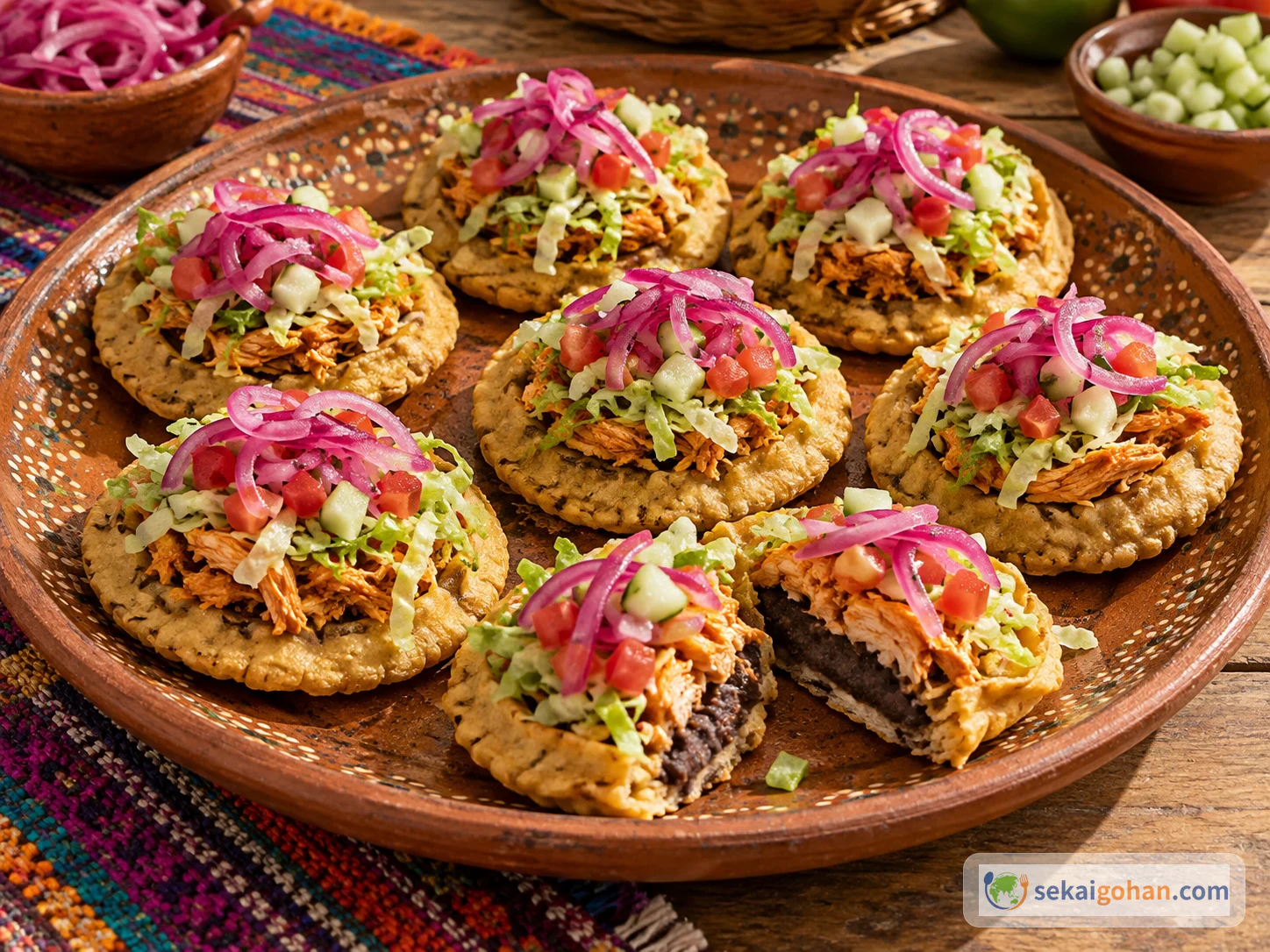
| Panucho-style | Toasted tortilla, mashed beans, meat | A home plate inspired by the Yucatecan table |
| Cheese tortilla | 1.75 oz (50 g) meat, cheese, red onion | Add the tangy onion last |
The last two are home plays on the Yucatecan habit of pairing the meat with tortillas and bread. They're a good way to finish up the meat, so feel free to improvise.
Storage
After cooking, don't let it sit in the pot. Transfer it to shallow containers, let it cool slightly and refrigerate within 2 hours. Use cooked pork within 3 to 4 days in the refrigerator. Don't eat it if it smells sour, feels slimy on the surface or was left out at room temperature.
To freeze, divide the meat and juices into single portions. Thaw them in the refrigerator and reheat in a pot. Keep the tortillas and red onion separate, because onion frozen with the meat won't get its crunch back.
Frequently asked questions
Do I have to use annatto seeds?
No. You can substitute 2 oz (60 g) store-bought achiote paste. Making it from seeds lets you tune the aroma, but for a first try, paste is less likely to go wrong. Buying seeds makes the most sense if you also plan to use them for tamales or mole poblano.
Can I use thinly sliced pork instead of pork shoulder?
You can, but the cooking time must be much shorter. Thinly sliced pork dries out if braised for three and a half hours, so use a whole cut for this recipe. If you switch to a piece of pork leg, increase the water to ½ cup (150 ml) and check it once at the 3-hour mark.
How much habanero should I use?
If you want heat, put 1/2 into the onion pickling liquid and serve it on the side at the table. Once it's mixed into the meat, the heat can't be dialed back. Children and anyone who doesn't like spice can enjoy the acidity on its own.
How far can I get the day before?
The day before, you can finish the marinade and pickle the red onion, then refrigerate both. If you're serving cooked meat the next day, cool it in shallow containers before refrigerating, and reheat only what you'll eat, together with some juices. Don't reheat the whole pot again and again.