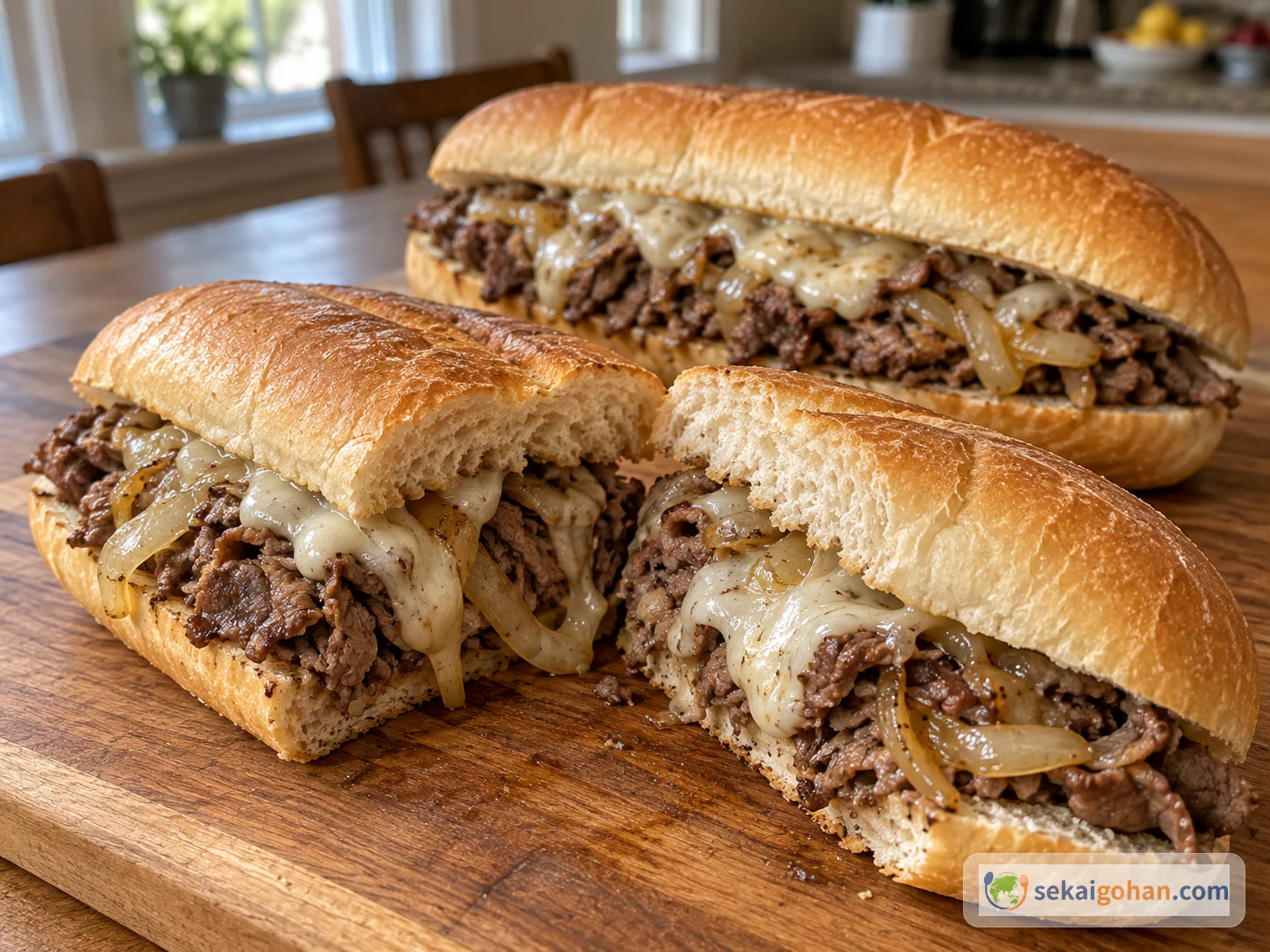
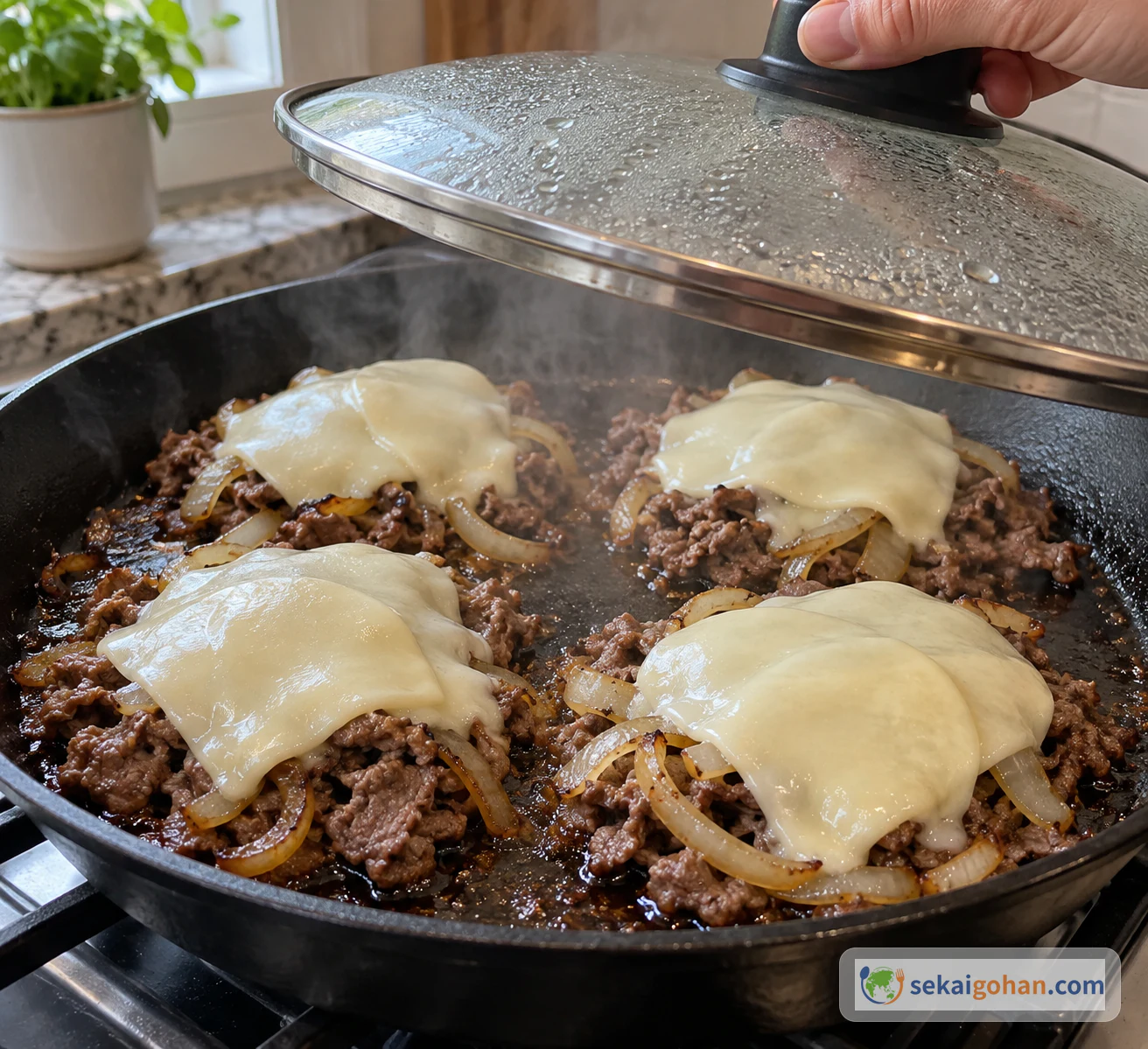
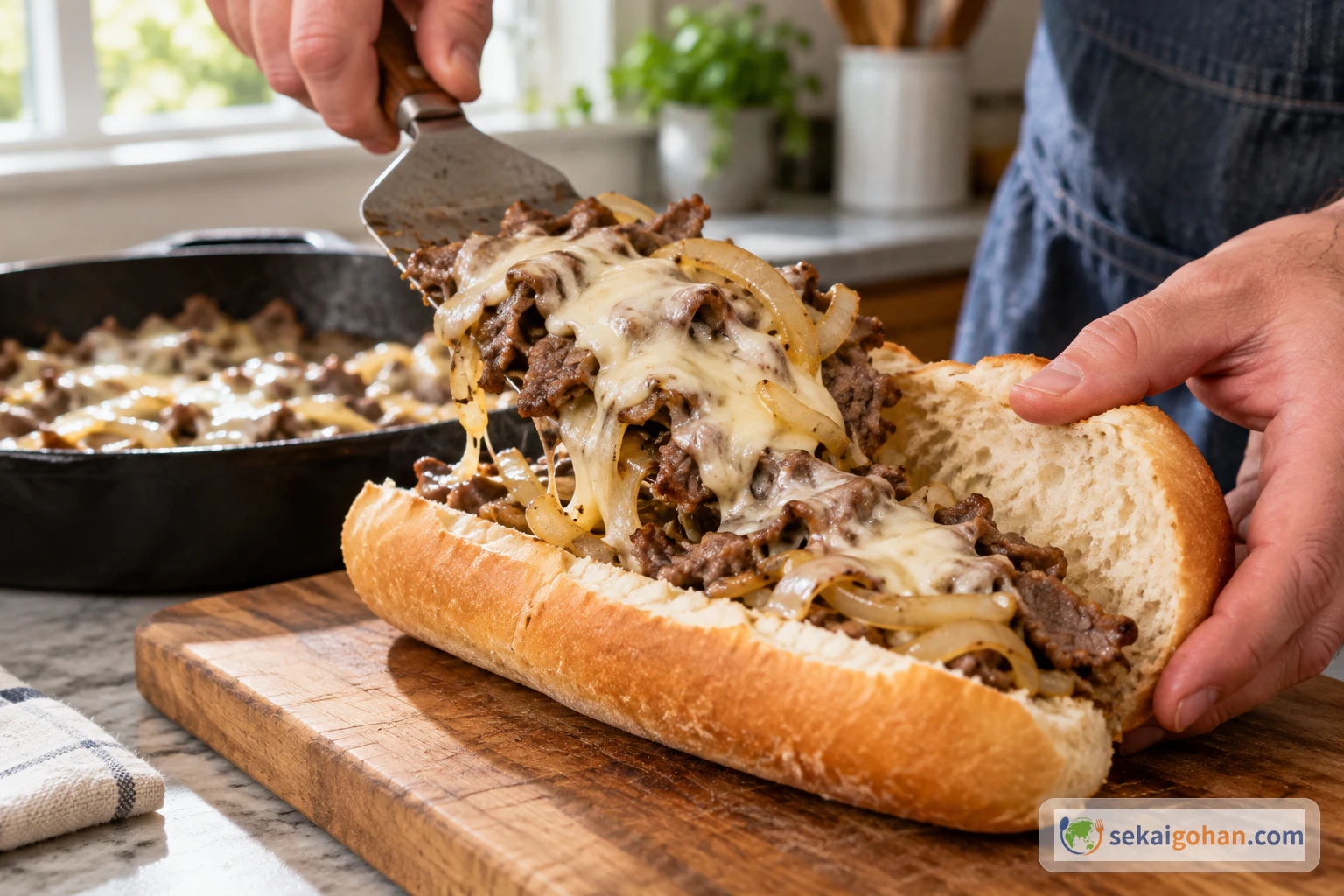
Thin-sliced beef spreads across a hot pan and starts to brown at the edges. Sautéed onion goes back in, cheese softens over the top, and the whole hot portion slides into a long roll. That's a Philadelphia cheesesteak: thinly sliced or chopped beef, melted cheese, onions if you want them, and a roll that's soft inside. At home, it comes down to two things, how thin the beef is and which bread you use, and this version for four is built around both.
The Philadelphia Cheesesteak
"Cheesesteak" is written as one word, and you'll also see it called a "Philly cheesesteak," which marks it as the Philadelphia style. Today it's a city emblem for visitors and, for locals, an everyday, casual meal eaten on the spot or taken away. The common build is thinly sliced or chopped ribeye, melted cheese, optional fried onions and a long roll. Beyond that, how finely the meat is chopped and which bread and cheese go on it vary from shop to shop, and personal preference matters as much as any rule.
A cheesesteak does not get more "authentic" the more you put in it. What counts is thin beef cooked quickly on a hot surface, cheese melted so it clings to the meat, onion folded through rather than piled on like a sauce, and a soft long roll. Those four things matter more than any extra topping. They also set it apart from other long-bread sandwiches: the American steak sandwich built around a sliced steak, the New York deli sub stacked with cold fillings, and the New Orleans po' boy.
Where the Cheesesteak Began
The cheesesteak began in 1930 at a hot dog stand, where Pat Olivieri grilled beef and served it on an Italian roll with onions. Brothers Harry and Pat Olivieri are both named as the people behind it. Cheese came later, and who first added it, and when, isn't settled, so that part is best read as local tradition rather than fixed history.
From there the sandwich grew into a city specialty through its shops. Each one chops the meat, picks the bread and melts the cheese a little differently, and those differences feed local preferences and neighborhood pride. That's also why a home version doesn't have to copy any single shop. Explore more American recipes.
Ordering "Wit" or "Witout"
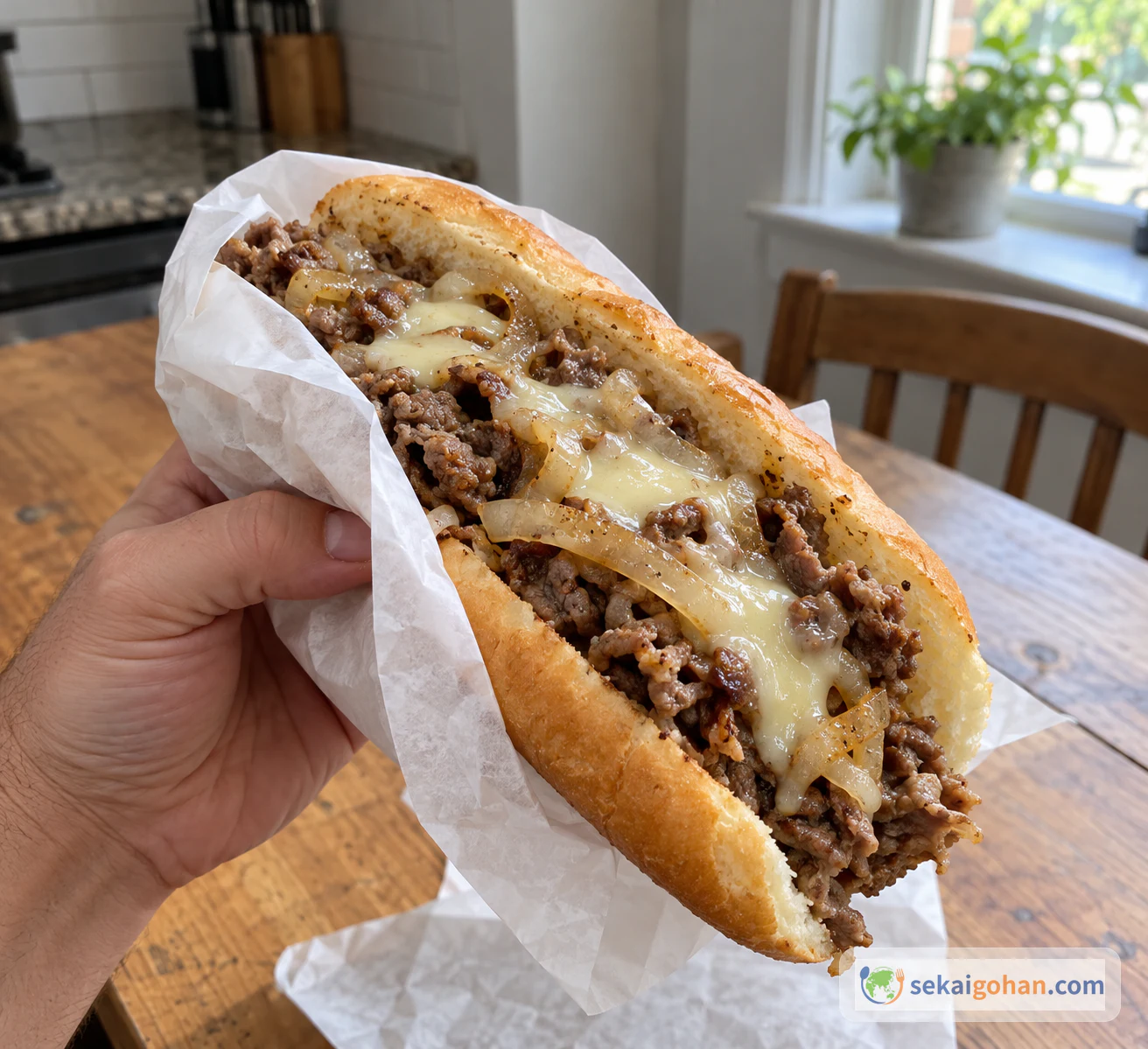
In Philadelphia the order is short. You name the cheese first, then say whether you want onions: "wit" means with onions and "witout" means without, so "Whiz wit" is Cheez Whiz with onions. This way of ordering is as much a part of the local food culture as the sandwich itself.
Ingredients for 4 Sandwiches: Beef and Onion, Plus Starting Amounts for the Rest
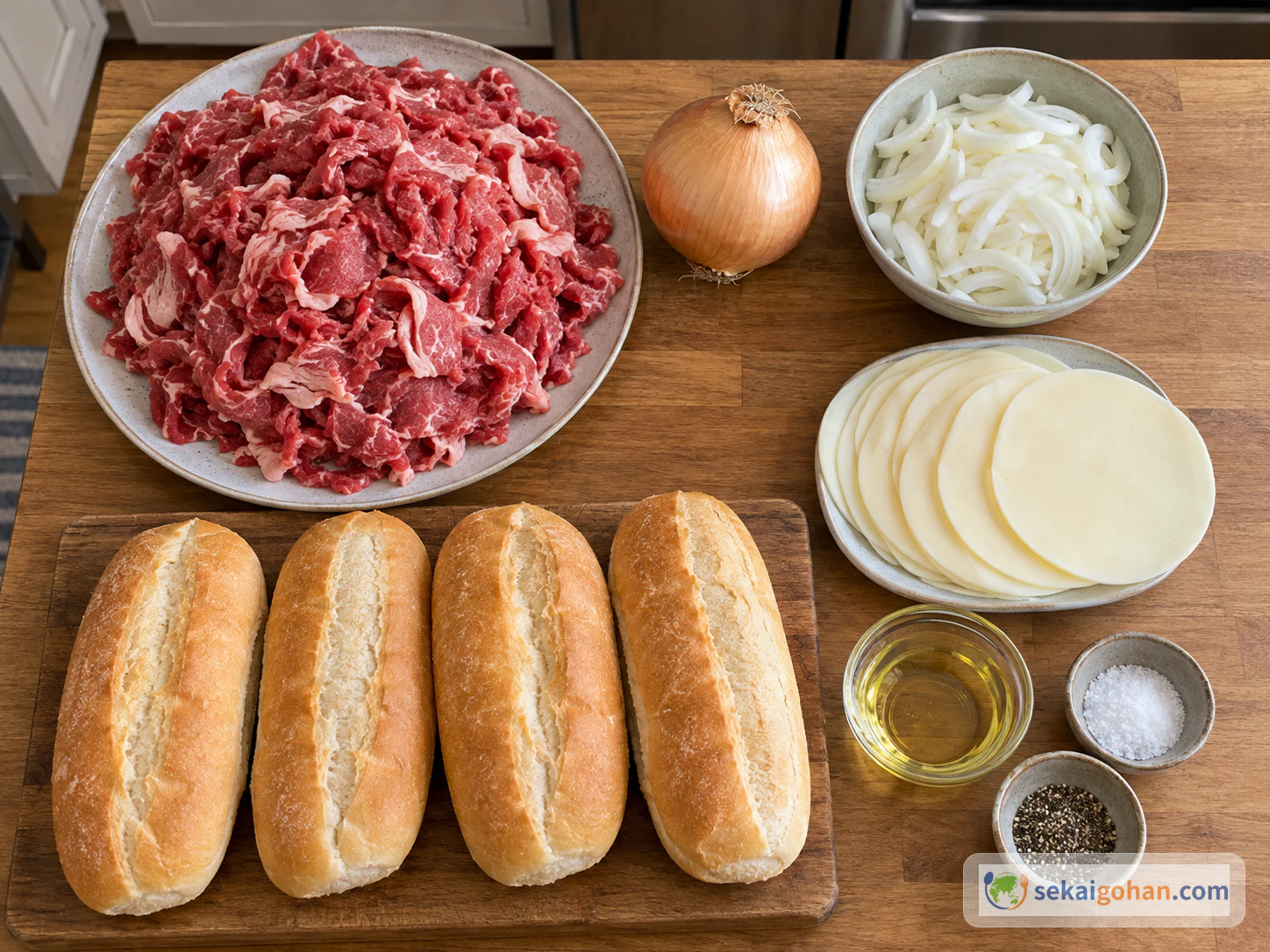
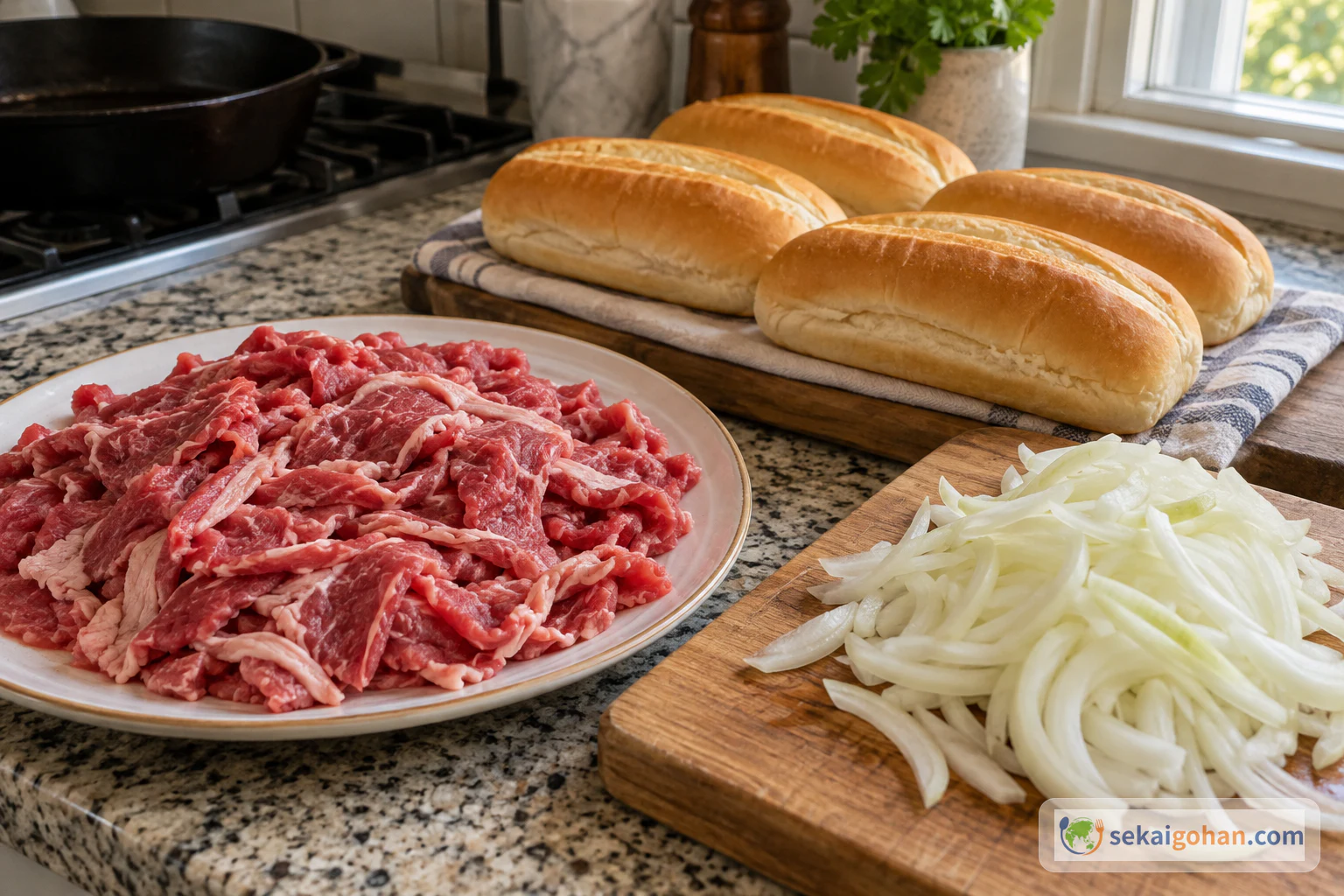
How to read these amounts: the recipe makes four sandwiches from 24 oz of rib eye, one large onion and four rolls. The meat is divided into four equal portions.
The oil, salt, pepper and cheese amounts are starting values for a home kitchen. Start with less than 6 tablespoons of oil, which is a lot for a home skillet, and add more only as needed, watching the fat that comes out of the meat. Use cheese as you like.
Cheese contains milk; check the labels of rolls, processed cheese and cheese sauce for wheat, milk and other allergens. Keep the plate, board and tools used for raw beef separate from those used for bread and cooked filling. Don't rely on the color change of raw meat alone: cook thin-sliced beef thoroughly all the way through. For a home check, heat until the center reaches 167°F (75°C) and holds for at least 1 minute. Browning is not a substitute for checking temperature.
Equipment
- A wide skillet or frying pan
- A lid that fits the pan (a glass lid lets you watch the cheese)
- A metal spatula, plus a wide spatula for moving portions into the rolls
- A knife and a cutting board for the onion and bread, kept separate from anything that touches raw beef
- A plate for raw beef and a separate plate for the cooked onion
- A food thermometer for checking the center temperature
- Plain paper for wrapping (optional)
Choosing Beef, Cheese and Bread for a Cheesesteak
Ribeye brings flavor and fat, and eye roll works too. The easiest route is to ask a butcher to slice it thin. Very thin pre-sliced beef sold for hot pot or shabu-shabu also works, though it can be thin enough to tear, so stack the slices and chop them roughly. If you slice a block of beef yourself, chill it only until the knife goes in steadily, and don't force a knife through fully frozen meat.
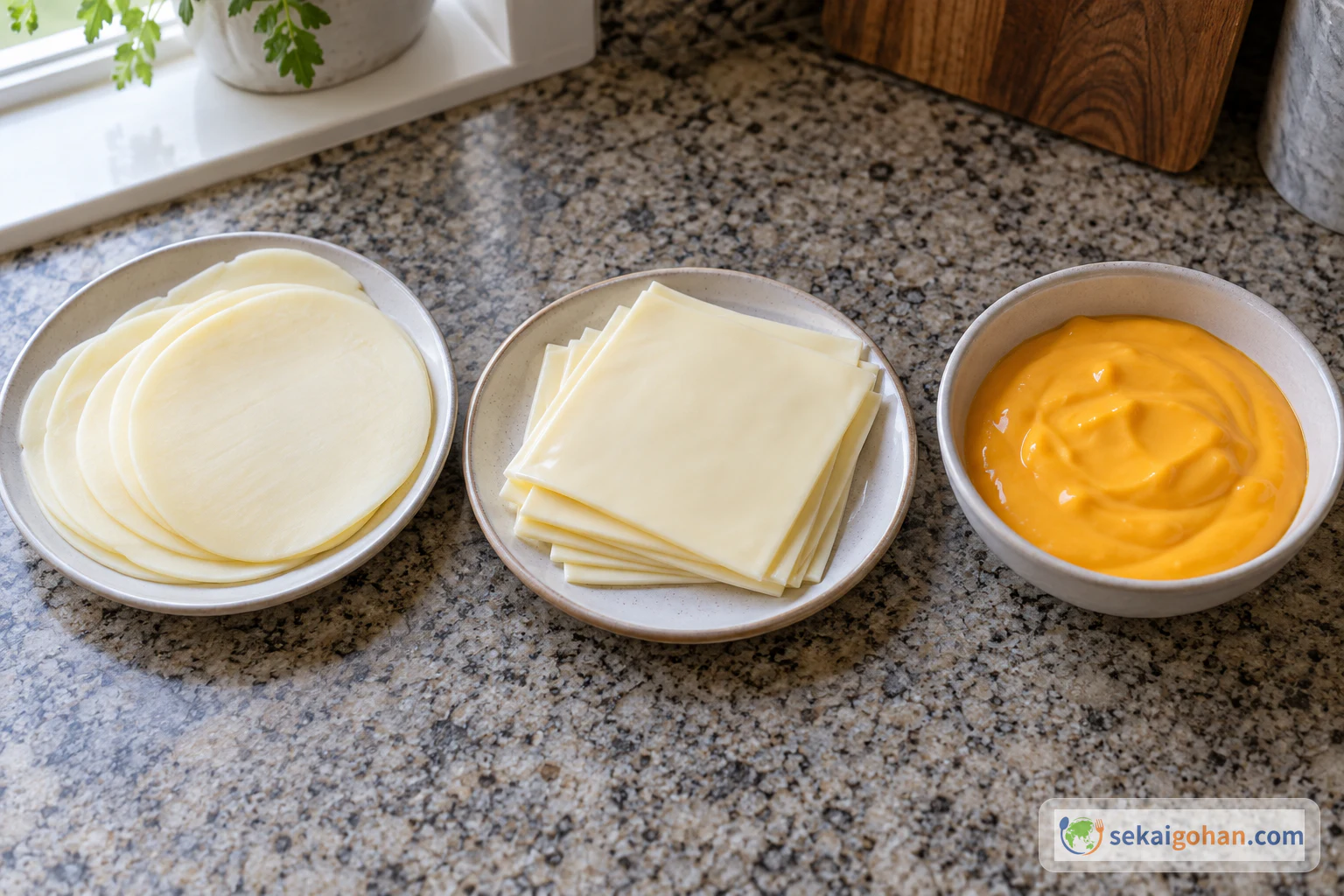
Cheez Whiz, white American cheese and Provolone are the representative cheeses in Philadelphia, and each changes the sandwich:
| Cheese | How it comes across | When to choose it |
|---|---|---|
| Provolone | Melts and binds the meat; mild | The base version in this recipe |
| White American cheese | Easy to find and melts readily; saltiness and dairy flavor differ | When you want quick, even melting |
| Cheez Whiz | A local standard choice | A cheddar-style sauce is the nearby stand-in, but not the same taste |
For bread, pick a long sandwich roll or Italian roll with a light crust and a soft inside. A hard baguette is tough on the jaw and tends to push the filling out as you bite.
Method: Onion First, Then Beef Cooked Quickly
The times below are starting values for a home pan. Decide when to move on by the state of the onion and meat, and by checking that the meat is heated through.
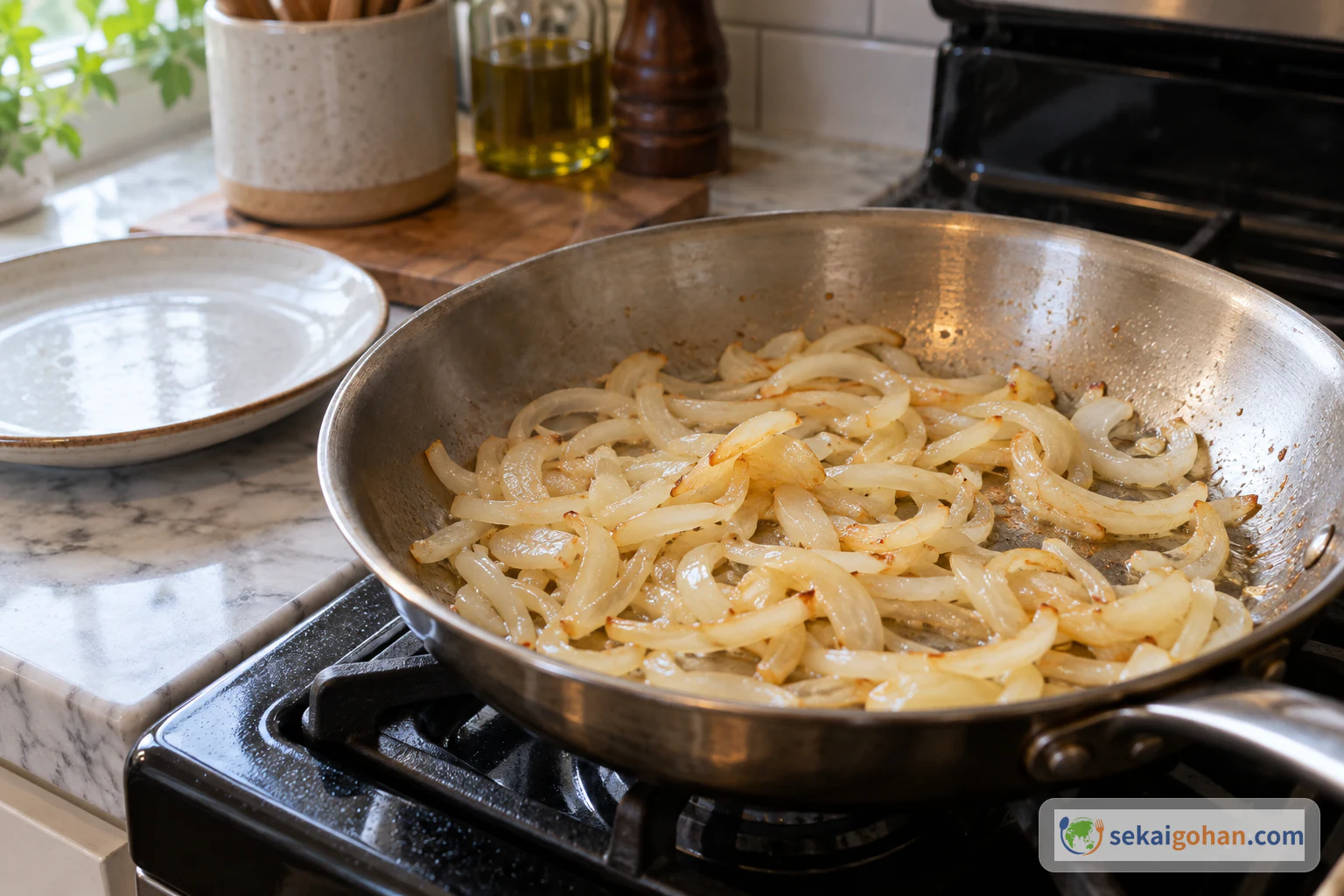
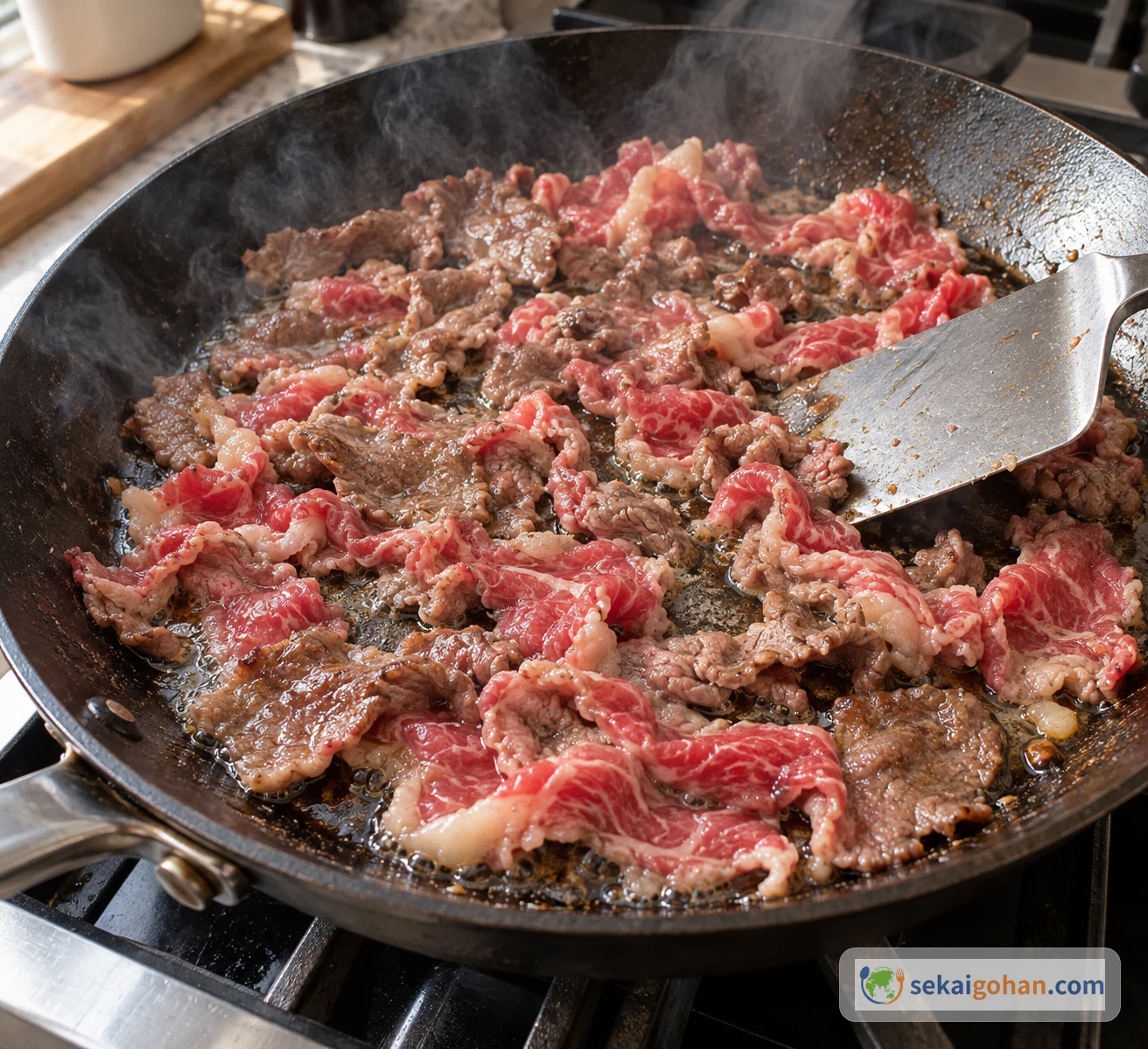
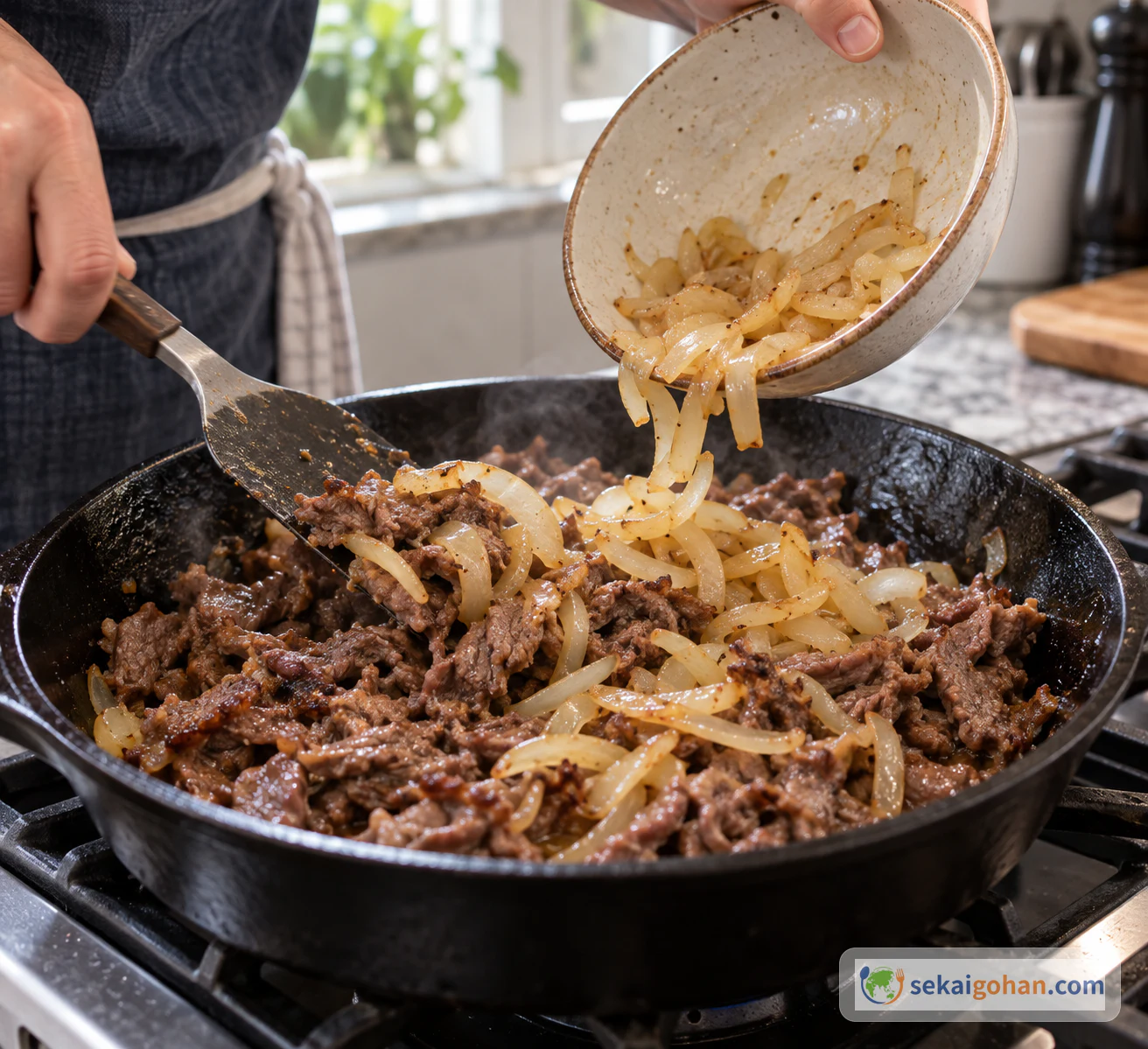
This is not cooked like a thick steak. The onion goes first and comes out of the pan; the thin beef cooks in a quick spread layer; then everything comes back together under the cheese.
Cheesesteak Problems and Fixes
Tough meat usually means it was cooked like a thick steak instead of spread out and cooked quickly. However short the cooking, though, make sure the meat is heated through.
| Problem | Likely cause | What to do |
|---|---|---|
| The meat is tough or dry | Too much meat in the pan at once so it steamed, or it was cooked too long | Next time, spread it in several batches and bring the onion back as soon as it is cooked through. Steaming it again with a little water won't fully restore its juiciness |
| The meat is watery | Moisture from thawed frozen meat, or too much meat in the pan at once | Pat the meat dry, heat the pan well, and cook small amounts at a time |
| The bread is hard | A hard baguette was used | Choose a long soft roll and just warm the cut side lightly. Don't toast it hard |
| The cheese won't melt | Thick cheese, or not enough steam | Use thin slices, or cover briefly with the lid. Too much water makes the bread soggy, so add 1 tsp at a time |
| The onion is burning | Heat too high, too little oil | Lower to medium or below and add a little oil. Remove blackened pieces, which cause bitterness |
Cheesesteak Variations and Leftovers
Variations
The base sandwich here has onions, with no bell peppers or mushrooms. Peppers, mushrooms and ketchup are common additions that shops and customers choose, so none of the versions below is the one true form.
| Variation | How to make it | What changes |
|---|---|---|
| Whiz-style | Spoon a cheddar-style cheese sauce over the filling in place of slices | Closer to the "Whiz" order; not identical to Cheez Whiz |
| Provolone | The recipe as written | Mild cheese that binds the meat |
| White American | Swap the Provolone slices for white American slices | Melts easily; salt and dairy flavor differ |
| With peppers | Sauté peppers separately and add them alongside | Moves away from the base form; keeps the onion and beef distinct |
| With mushrooms | Add sautéed mushrooms | A shop-and-customer addition, not the base |
Leave out the onions for a "witout" sandwich and the beef and cheese carry it alone.
Leftovers and Reheating
A cheesesteak is best eaten the moment it's made, so cook only what you'll eat. If you do have filling left over, divide it into shallow containers, cool it quickly and refrigerate it, and don't plan to keep it long. Store the bread separately rather than as filled sandwiches so the roll doesn't go soggy, and reheat the filling thoroughly all the way through to the center.
Frequently Asked Questions
Can I make it with a cut other than ribeye?
Yes. A cut like chuck eye works, but the fat and chew change. Whatever the cut, slicing it thin is what makes the sandwich work.
Can I make it ahead?
It's best made and eaten right away. Extra filling can be refrigerated and reheated thoroughly, then spooned into fresh rolls.