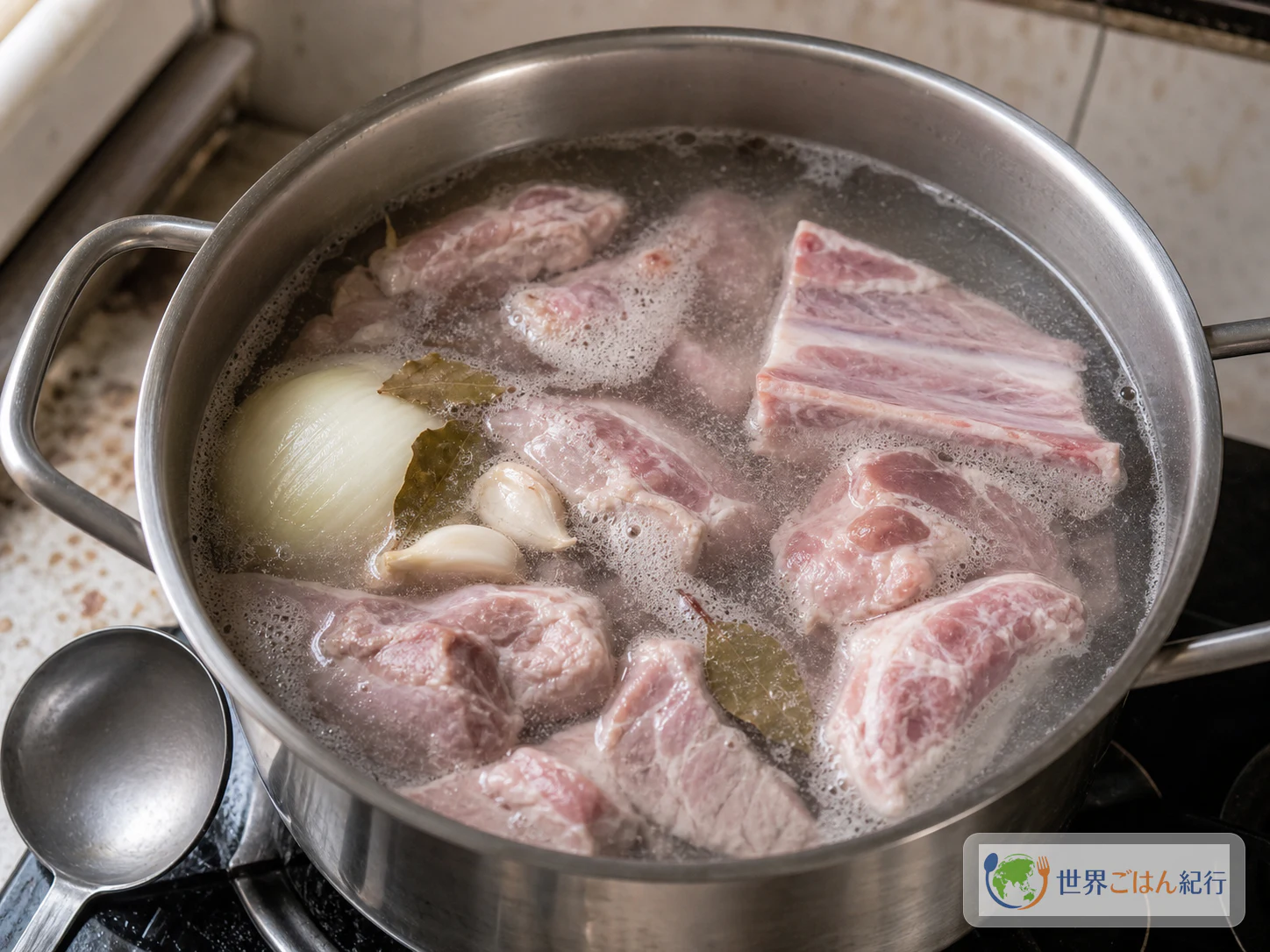
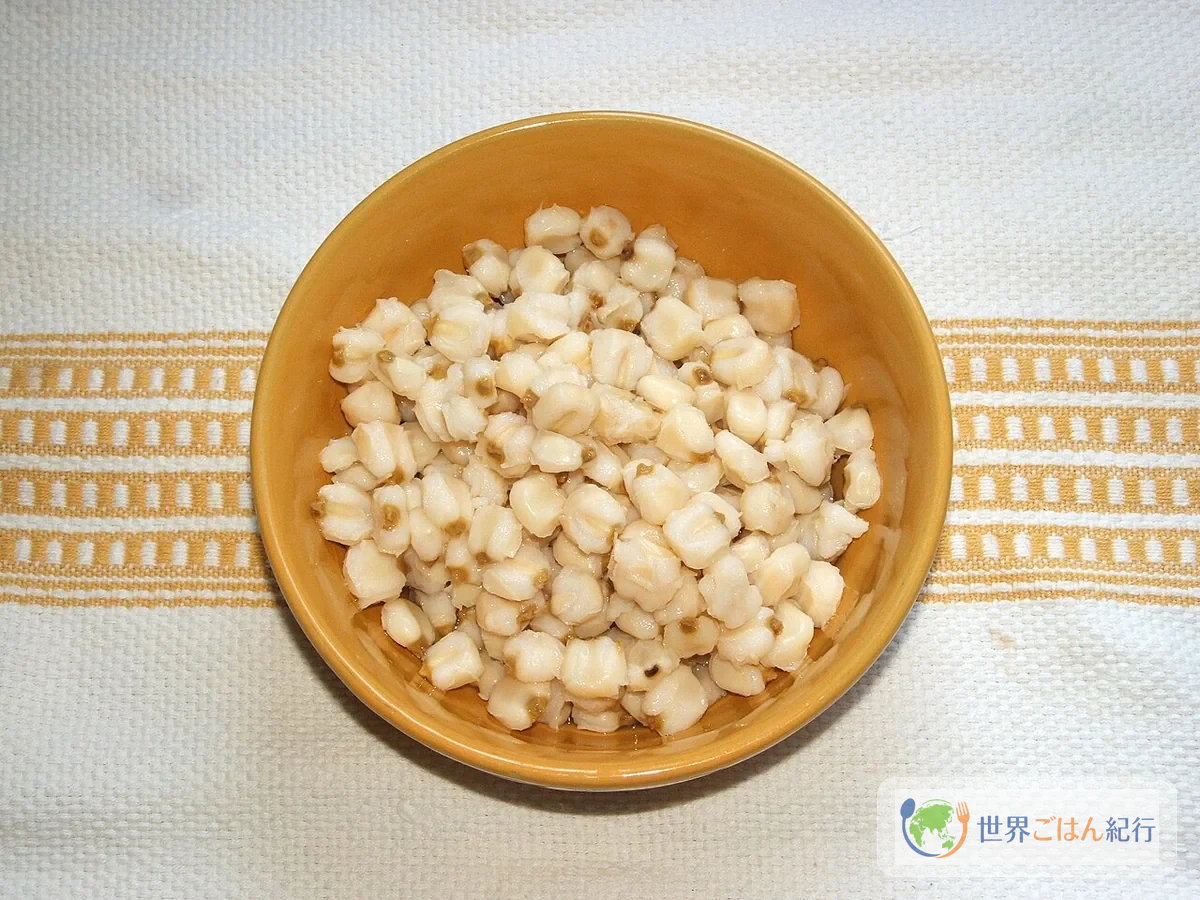
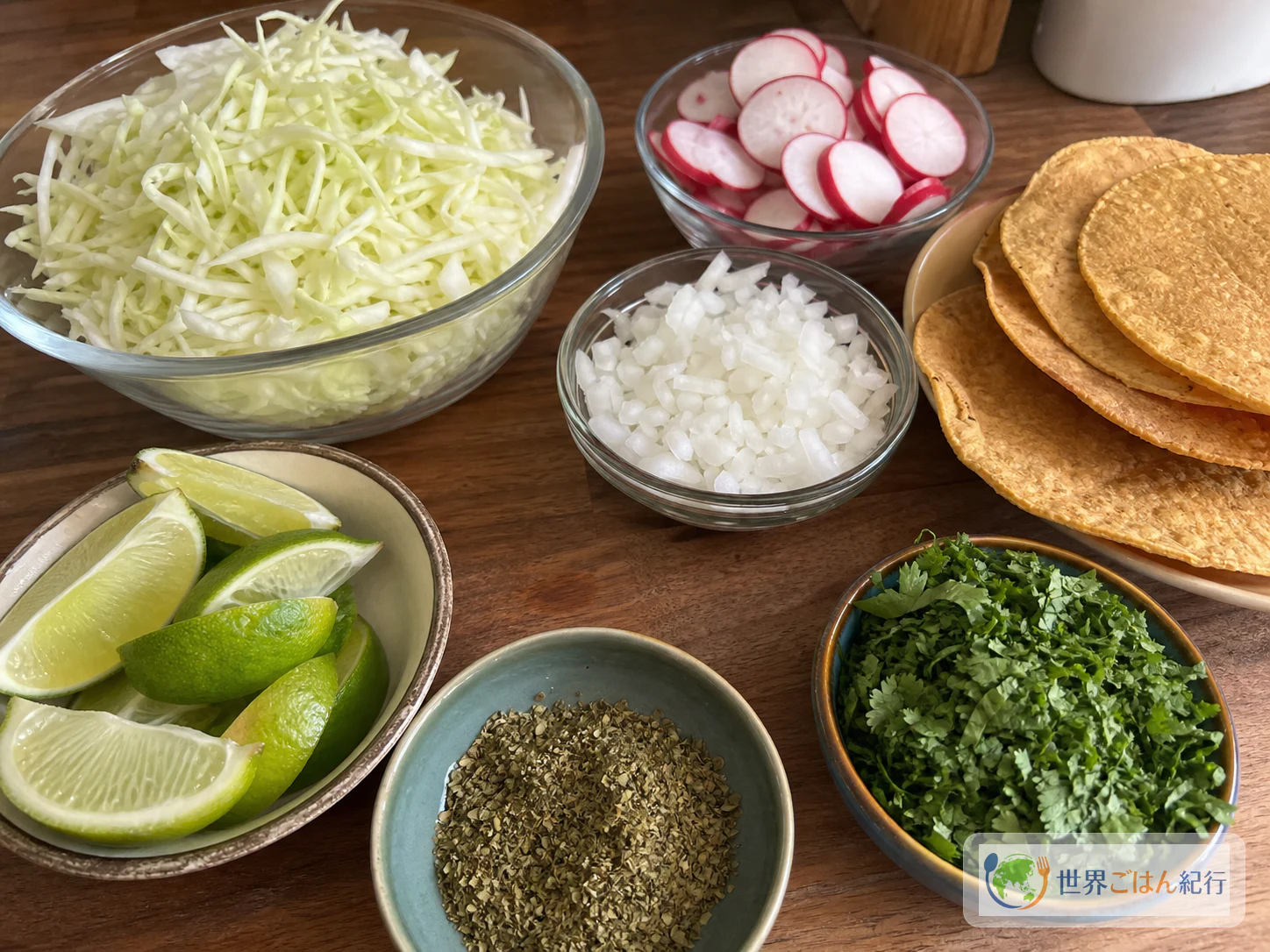
The kitchen fills slowly as the pork comes up to a boil from cold water: first the sweet smell of onion and garlic, then the deeper steam of bone-in meat. The white hominy goes in later. These kernels are larger than edamame, and when you bite them they give way with a chewy softness. Pozole blanco is the Mexican big-pot soup with no red chile sauce and no green tomatillo sauce in the pot, only clear pork broth and hominy. The heat, the acid and the crunch all come later, in each person's bowl.
Pozole blanco and its place at the table
The name pozole comes from pozolli, a word from an Indigenous language, and for a long time the dish has been a way to eat swollen corn in meat broth. Homes and restaurants today serve three kinds: red (pozole rojo), made with dried chiles; green (pozole verde), made with green chiles; and white, with no chile added. Regional differences are large too. The cut of pork, whether chicken is used, whether cabbage or lettuce goes in, and the heat at the table all change from place to place.
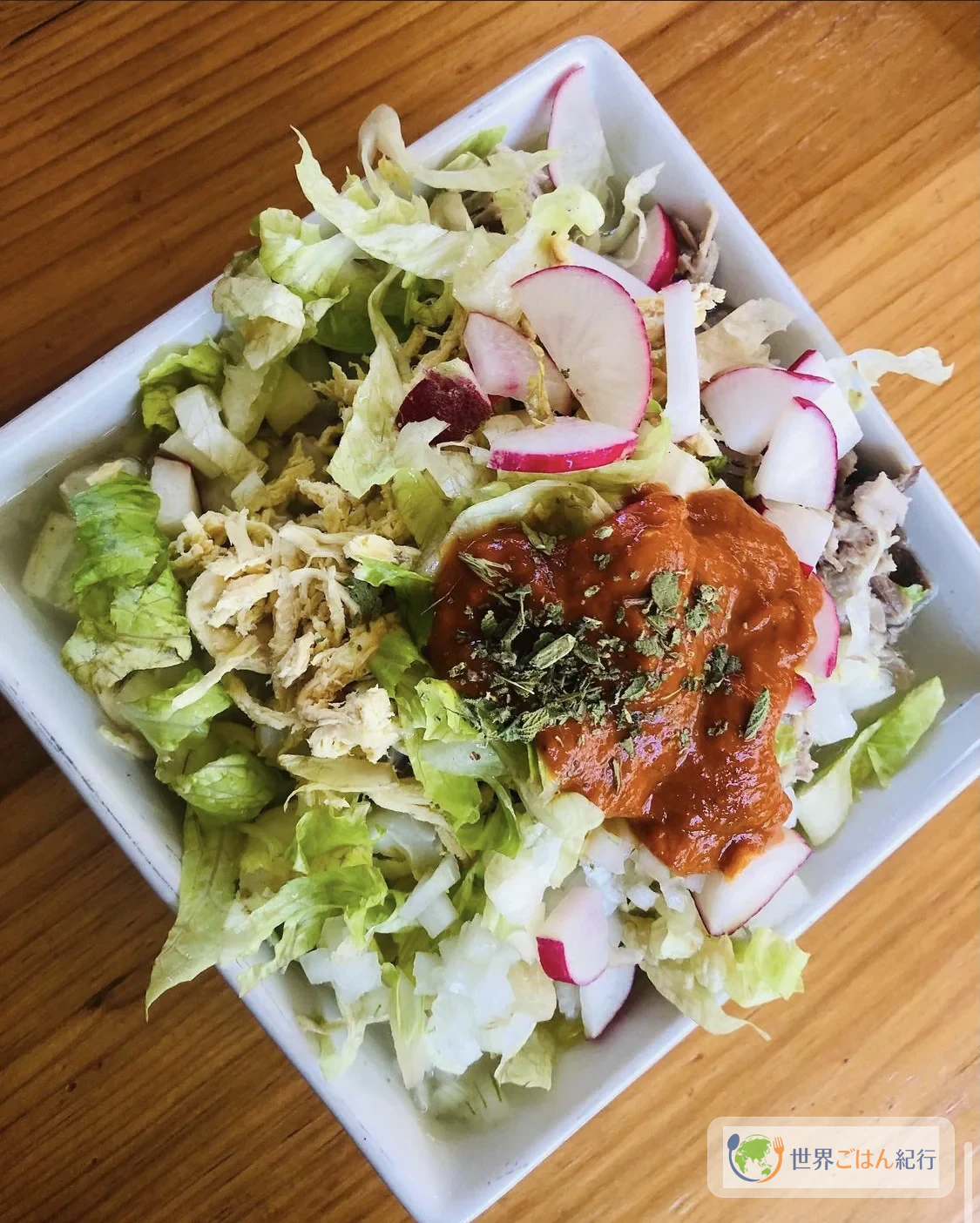
If you know red pozole well, blanco can feel strange at first, because there's no color or heat in the pot to carry it. What you get instead is the clarity of the pork broth and the aroma of the hominy, with the toppings standing out on top. Blanco simply moves the color to the bowl, and each person finishes it with red salsa, oregano and lime. That makes it easy to cook for a family with different tolerances for spice.
At a Mexican table, pozole rarely arrives as a finished portion for each person. The pot and the small dishes come out together, and at the same table you'll see people who pile on radish, people who squeeze lime hard, and people who add crushed chile little by little. Preferences are strong, by region and by household. Keeping the pot mild and leaving the rest to the bowl comes closer to how it is eaten in Mexico.
This is the opposite of hot pot, where the flavor is set with miso or soy sauce before the pot reaches the table. It's also a different dish from tinga de pollo, where the meat is coated in red sauce, or birria de res, a braise prized for its red fat. With pozole blanco, the white pot goes in the middle of the table, and family and guests choose their own cabbage, radish, lime, oregano and heat. From the same pot you can serve a spicy bowl, a mild bowl for children, and a portion to reheat the next morning.
Ingredients and shopping: choosing without clouding the white broth
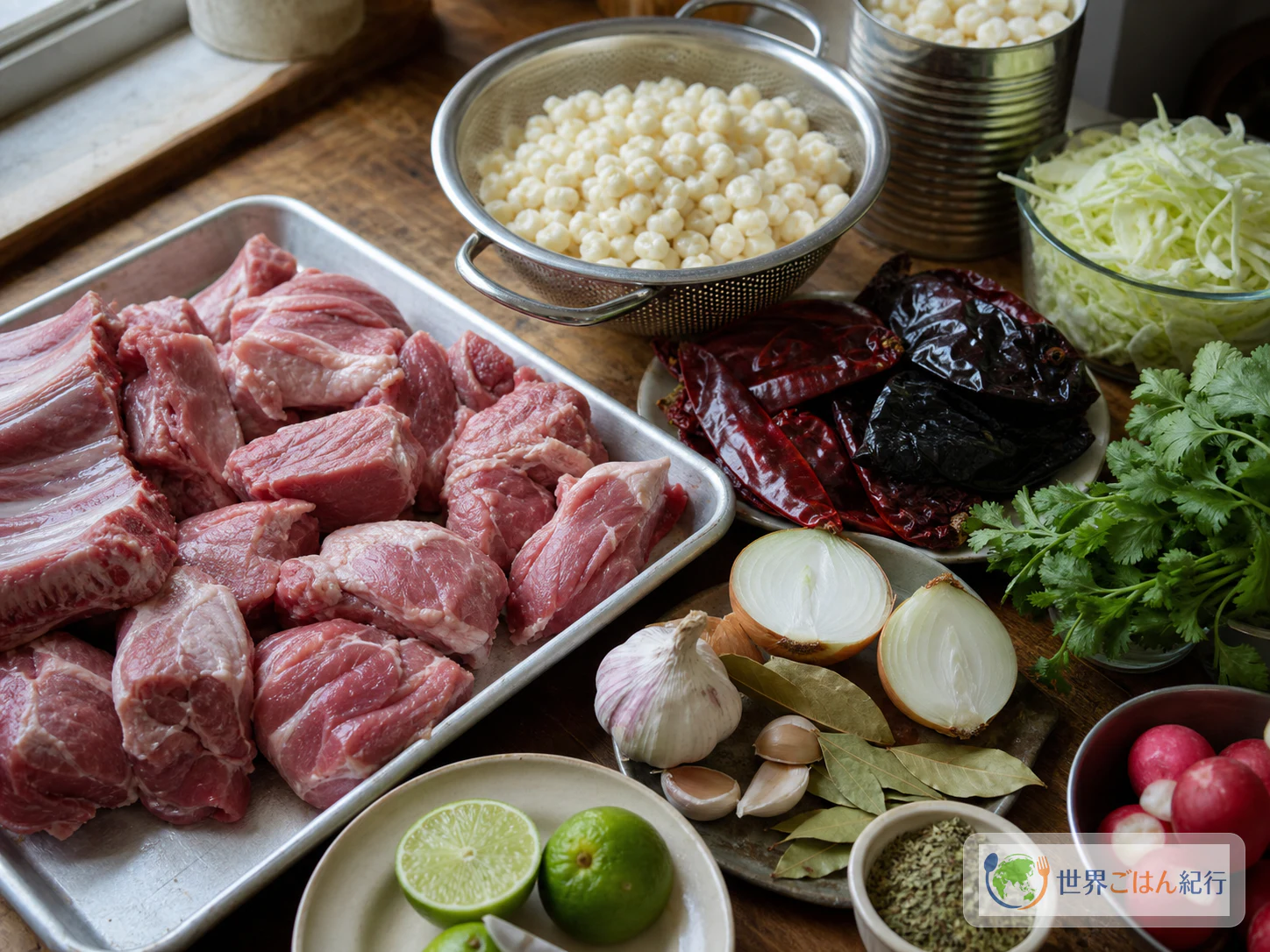
Serves 4. It is a big amount for a soup; with tostadas or warm tortillas, it makes a dinner main. Drained canned hominy weight varies by brand, so plan on about 800 g to 2 lb (900 g) from 2 cans.
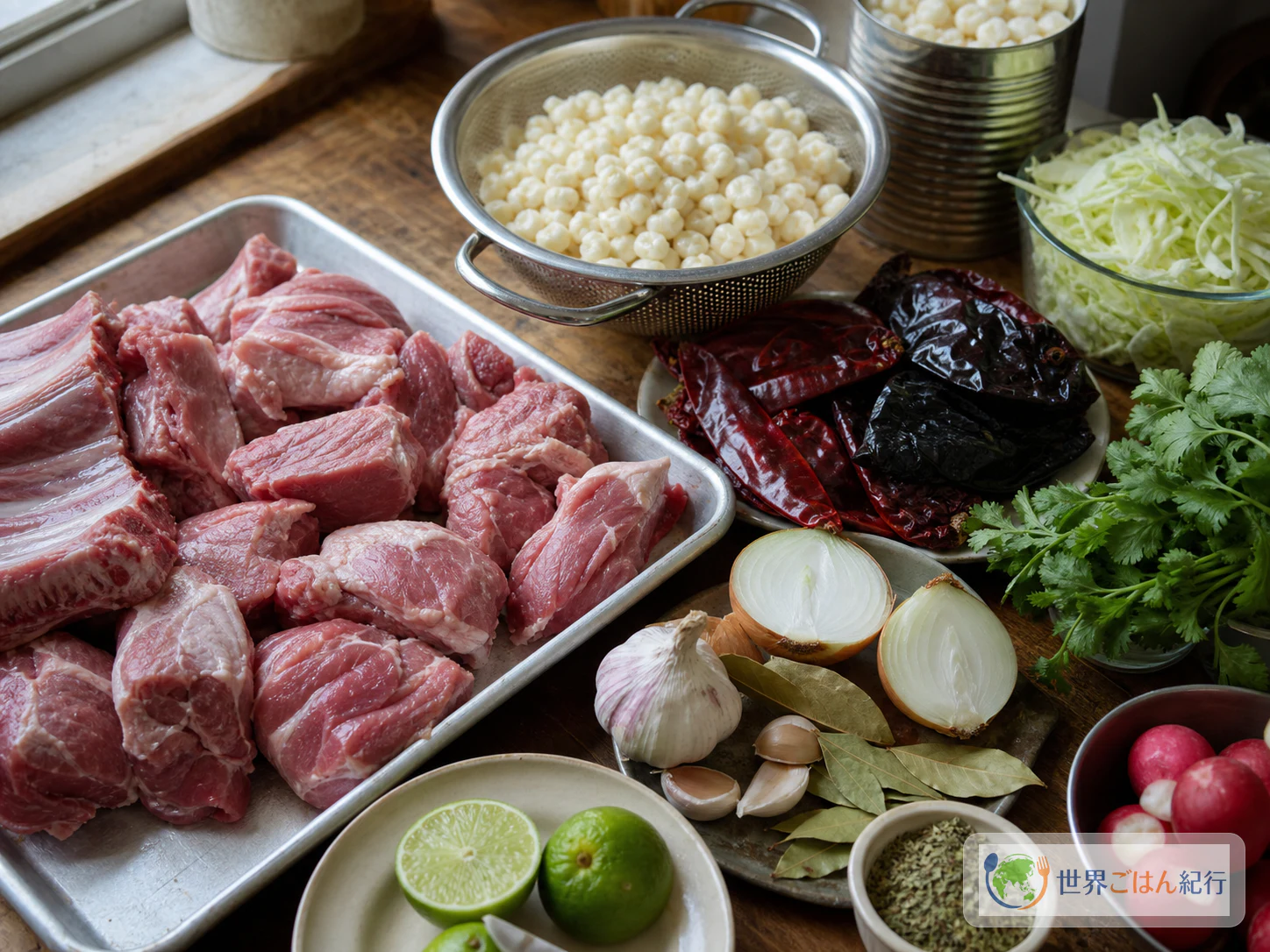
The list looks long, but each item has a clear job. The pot gets only pork, hominy, onion, garlic, bay leaves, water, and salt. The table gets cabbage, radish, white onion, cilantro, lime, oregano, and heat. Simmer everything from the start, and the soup clouds and the toppings lose their crunch.
If you are unsure what to buy, get the hominy first. You can adjust the pork among shoulder, shoulder meat, and spare ribs, but swapping in ordinary sweet corn changes the core of the dish. If you cannot find canned hominy nearby, order the kernels online ahead of time and buy the meat locally.
| What you judge | Why to keep it | Limit of substitution |
|---|---|---|
| White hominy | The chewy, split-open kernel texture is the core of pozole | Canned corn is sweet and the kernels are small |
| Bone-in pork | Gives body to the white soup | Shoulder alone works, but the broth is lighter |
| Cabbage and radish | Add a cool crunch to a hot bowl | Thinly sliced daikon is close, but the aroma is milder |
| Dried oregano | Cuts the pork broth's fat with a dry aroma | Basil or parsley goes in another direction |
This dish contains pork. Check labels: canned hominy, tostadas, and crackers can contain wheat, soy, or dairy, depending on the brand. Cook the pork all the way through, do not leave the finished dish at room temperature for long, and cool any portion to be stored quickly in a shallow container.
The hominy is harder to find than the meat when shopping for pozole blanco. If your supermarket does not have it, look for 'white hominy,' 'mote blanco,' or 'pozole corn' on the label. Products with polenta flour or corn meal in the name are flour and will not give the kernel texture. Oregano is for the finishing aroma: crush it between your fingertips in the bowl, not in the pot.
Chile alone turns sharp quickly, even in small amounts. To soften the heat and add a little red color, mix just 1/2 teaspoon paprika into the salsa. Keep it out of the pot; add it to the bowls of those who want heat.
A little oregano changes the whole bowl. Mexican oregano is ideal, but regular dried oregano works the first time.
With bone-in meat or large pieces, check the center temperature even after long simmering. When reheating leftovers, check the center too; do not rely only on the pot coming back to a boil.
Choosing pork, hominy and toppings for pozole blanco
Pork shoulder and spare ribs are both easy to find at an ordinary supermarket. Use them with canned hominy. Big pots in Mexico sometimes use pig's feet or neck bones, but those are hard to get every time at home. A little bone-in meat is enough to give the broth body.
Hominy is what makes the dish. It is large-kernel corn that has been nixtamalized, and it has a chewy bite that regular corn lacks. For your first time, use canned white hominy.
The toppings each do a job, and most have an easy stand-in:
| What you decide at the table | Role in blanco | Practical answer in a home kitchen |
|---|---|---|
| Heat | Keeps the pot from turning red and lets each eater change the strength | A little chile de árbol, paprika, or crushed red pepper |
| Acidity | Cuts the weight of the pork broth and hominy | Lime is ideal. If not, lemon, a little less |
| Aroma | Gives the white soup an outline | Crush dried oregano between your fingertips in the bowl |
| Texture | Keeps the hot soup light to the end | Cabbage, radish, thinly sliced daikon |
How to make it: keep the clear pork broth and the hominy separate
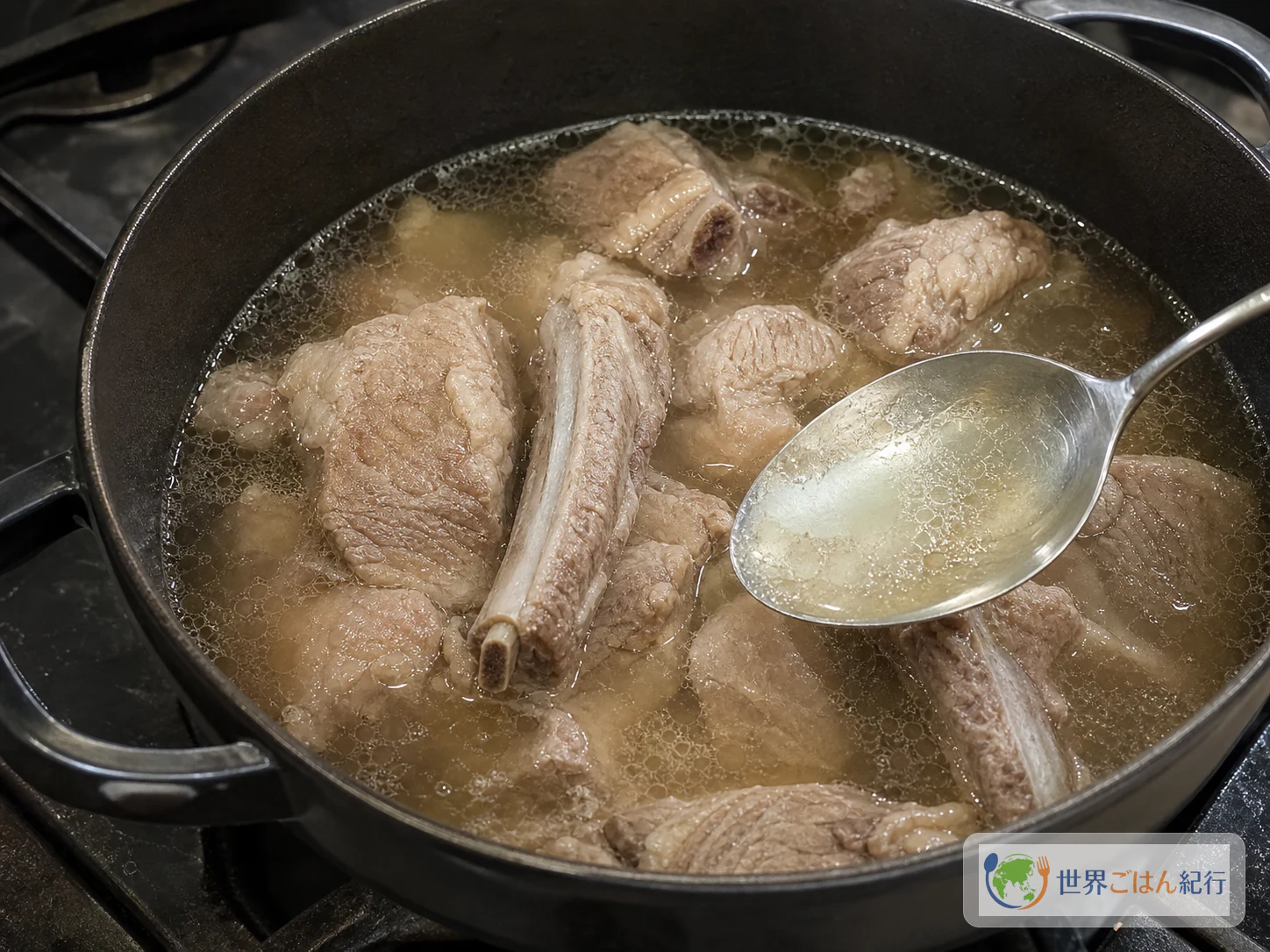
For pozole blanco, do not throw everything in at once. Skim the scum from the pork first, simmer over low heat to clarify the broth, and add the hominy later for a cleaner flavor. Keep the spicy salsa out of the pot; add it in the bowl.
Pozole blanco problems and fixes
The biggest cause of a cloudy white soup is keeping it at a hard boil. The strong heat at the start is needed to bring up the scum. If the whole pot keeps rolling afterward, though, the fat scatters finely and clouds the soup, and the surface of the hominy breaks down. Once you drop to low heat, bubbles rising quietly from the edge of the pot are enough.
If the flavor tastes blurry, check the acid before you reach for the salt. With no chile sauce in the pot, blanco gets its outline from the lime squeezed into the bowl. Add a lime wedge, a pinch of oregano and a little onion to a ladled bowl, then taste for salt.
A white pot shouldn't be an excuse for a bland one. Season the broth and set the salt properly at the end, but keep heat and acid out of the pot. If you make the whole pot strong, it will taste too salty when you reheat it the next day.
Serving and storing pozole blanco
Serving the soup unfinished makes sense the moment you add the toppings. Cabbage dropped into the hot white soup wilts only at the edges, and the core stays crisp. Radish brings a cool crunch rather than heat, and a squeeze of lime suddenly lightens the fat of the pork broth. If you want something spicy on the table, serve chilaquiles or a red salsa in a separate dish and leave the pot clear.
To store it, cool just the soup and meat, without the toppings, in a shallow container. Keep it 2 days in the refrigerator or 3 weeks in the freezer. The next day, skim the fat, leaving about 1 tablespoon of the white fat on the surface, and warm the pot over low heat. Heat until the center reaches 75 degrees or above, or the whole pot bubbles and steam rises firmly, then cut fresh toppings. If the hominy has soaked up the soup and turned heavy, add ½ cup (100 ml) of water or unsalted chicken stock to loosen it.
Leftover meat wrapped the next morning in small tortillas makes light tacos. And because there's no chile in the pot, it's easy to set aside portions for children and anyone who dislikes spice.
Frequently asked questions
Can I use canned corn instead of canned hominy?
You can, but the result is closer to sweet corn soup than pozole. The chewy bite of hominy is what gives the dish its character.
Can I use chicken instead of pork?
Use chicken thigh and drumettes. Shorten the simmer to about 60 minutes and make the broth from the drumette bones. Chicken is lighter than pork, so use a little more oregano and lime to keep the bowl from tasting thin.
What sides go with it?
Tostadas, warm corn tortillas, avocado, and simple stewed beans go well with it. For a Mexican menu, choose lighter salads or roasted vegetables with little oil. They sit more lightly beside the big pot than sope or chilaquiles.