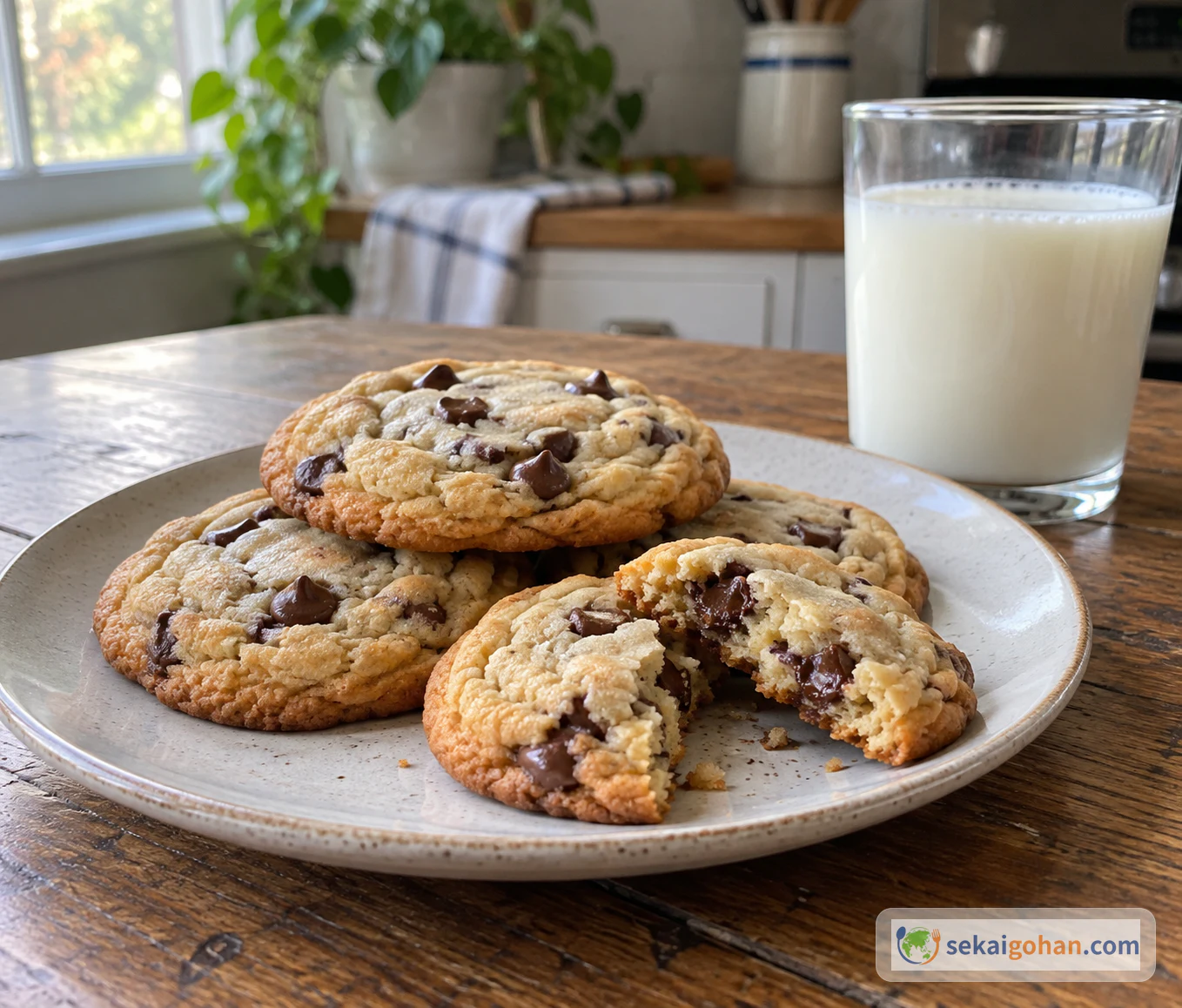
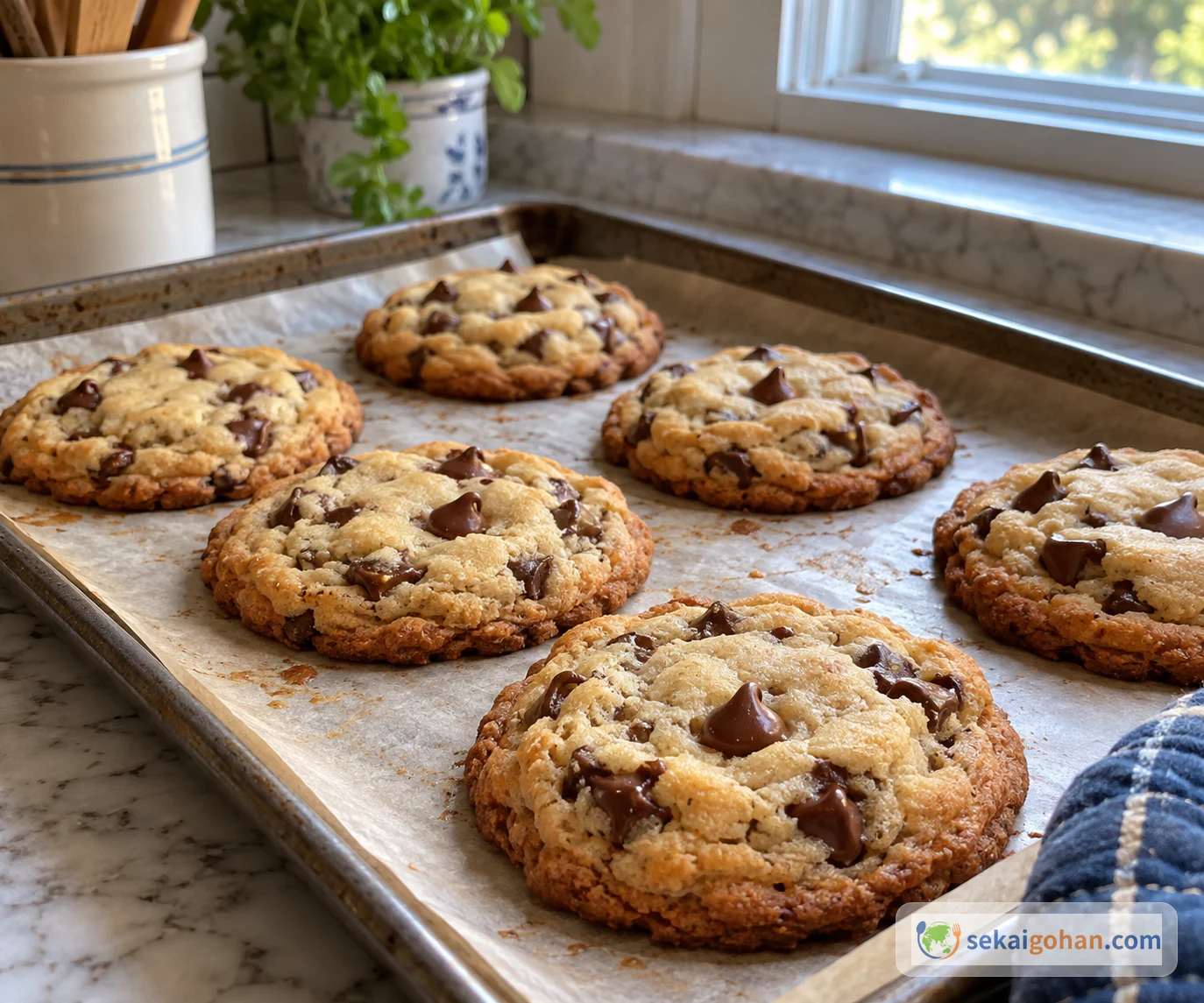
When a sheet of chocolate chip cookies comes out of a 375°F oven, the color tells you most of what you need to know. The rims have turned a deep chestnut brown, the tops are only lightly golden, and the centers still look a little soft. That contrast between a toasty edge and a tender middle is what makes this American classic so good, and it's exactly what this recipe aims for. It's a half batch of 18 cookies, rich with butter and studded with semisweet chocolate chips.
Chocolate Chip Cookie History and How Americans Eat Them
From the Toll House Inn to Home Kitchens
The chocolate chip cookie is linked to the Toll House Inn in Whitman, Massachusetts, which Ruth Wakefield and her husband opened in 1930. Wakefield's 1938 cookbook included the recipe under the name Chocolate Crunch Cookie. The 1940 edition calls for butter, two sugars, eggs, baking soda dissolved in hot water, flour, salt, semisweet chocolate bars chopped into small pieces, vanilla and nuts, baked at 375°F for 10–12 minutes, and makes about 100 small cookies. Many of the ingredient names overlap with today's chip-based recipe, but the formula is different.
The cookie is often described as an accident, born when chocolate failed to melt into the dough. Accounts disagree, though. One biography of Wakefield tells the accidental version, while Wakefield herself later said she created the cookie on purpose, so the lucky-mistake story can't be confirmed.
The recipe became popular and was printed on Nestlé packaging by agreement. Nestlé had introduced scored chocolate bars by 1940 and later sold semisweet morsels. Through cookbooks and packaging, a dessert served at one inn became something people baked at home. That's also why "Toll House" is now a commercial name as well as part of the cookie's history.
Chocolate Chip Cookies Today
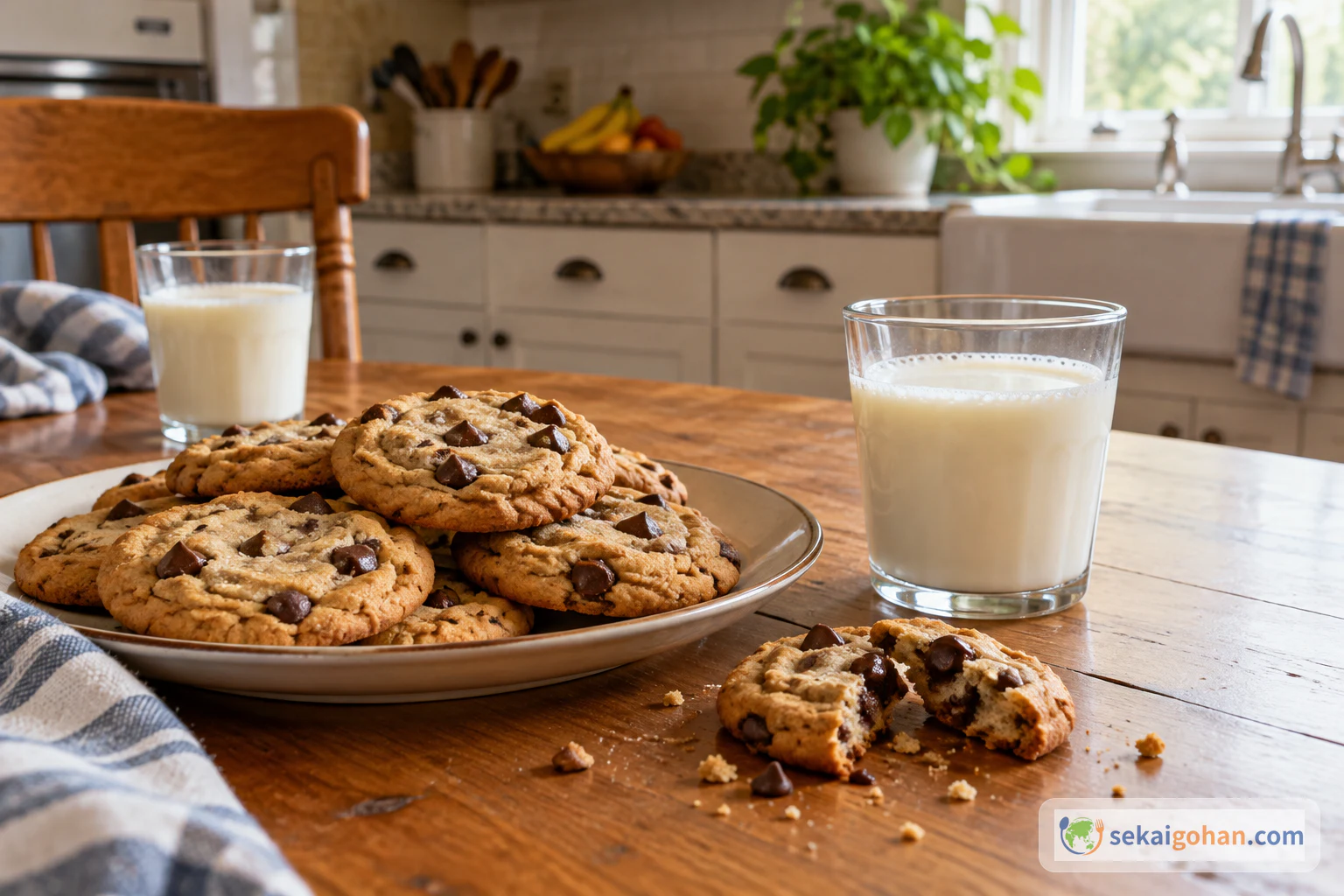
Today chocolate chip cookies are an everyday American bake, made as a home snack or for sharing. Some bakers spread them thin for a crisp snap, others chill the dough to keep them thick and chewy, and the type of chocolate and how it's chopped vary too. A glass of milk on the side is the classic pairing. For more dishes from the same country, see More recipes from the United States.
Ingredients: A Half Batch of a Classic Formula
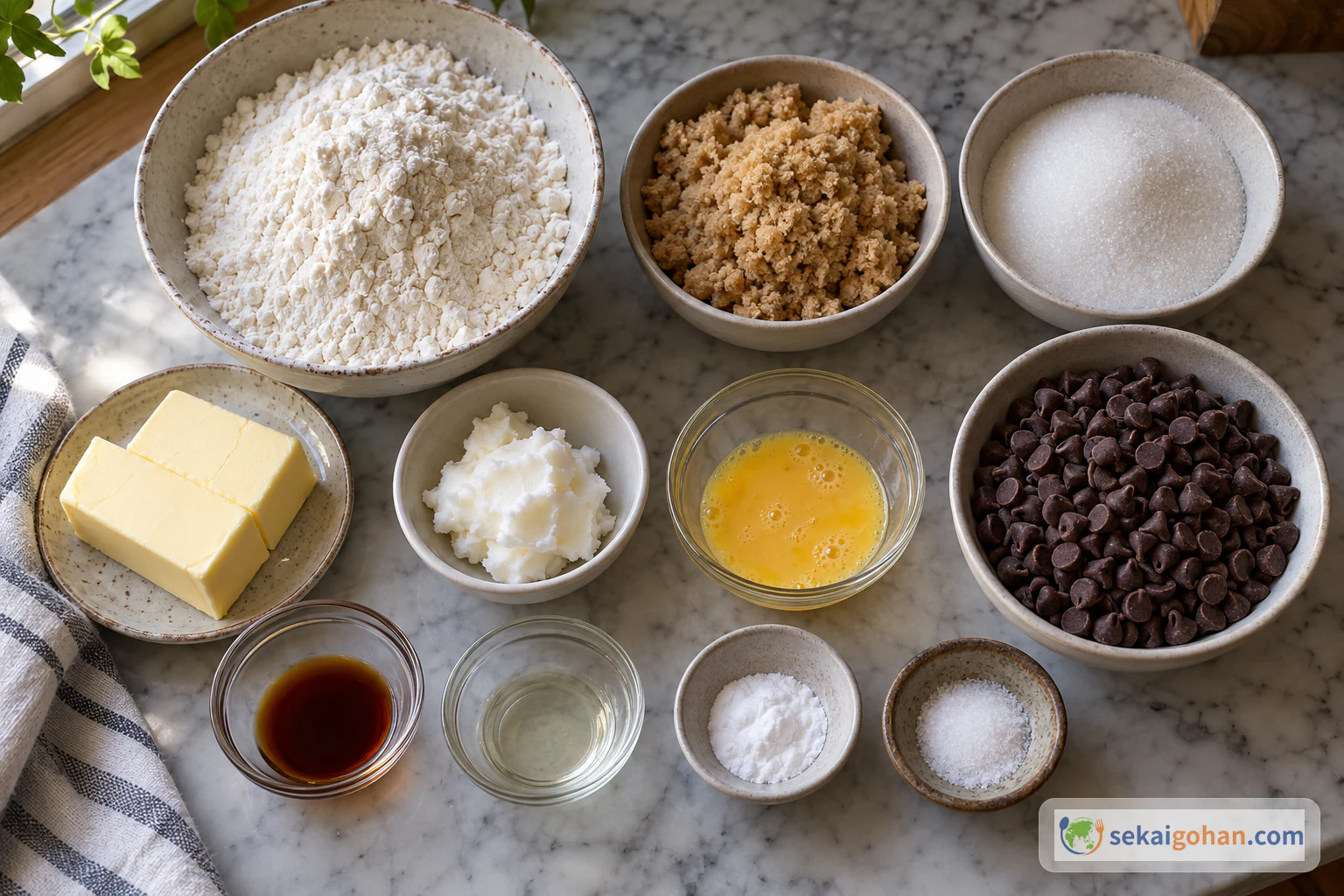
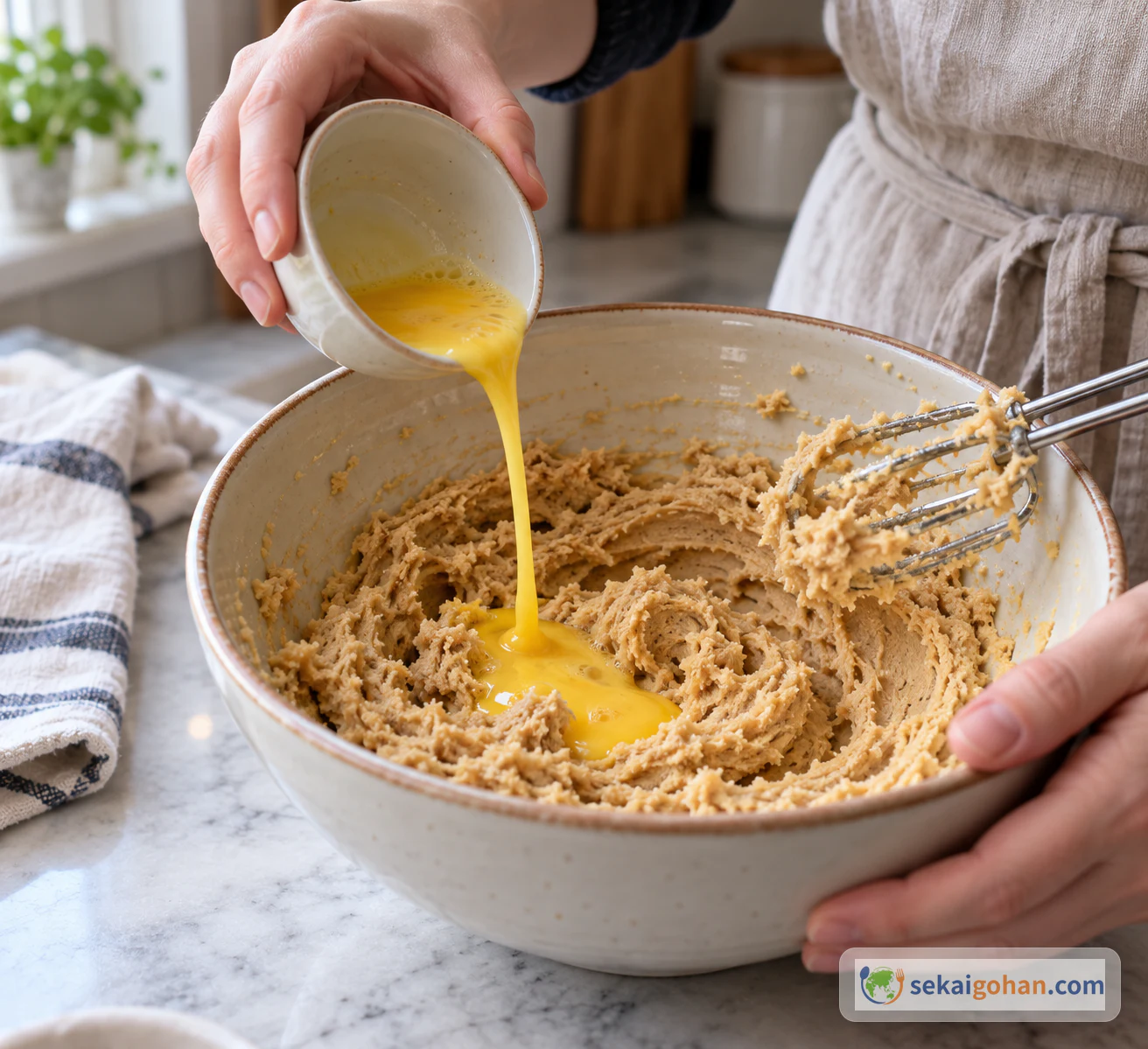
All amounts are half of the full recipe. Weigh the gram amounts. Teaspoon amounts stay in teaspoons. For the egg, beat one large egg and measure out half, about 25g.
There are no nuts in this base recipe. The historical 1940 recipe included them, and leaving them out keeps the two recipes clearly separate.
Equipment
| Item | Why it helps |
|---|---|
| Digital kitchen scale | Lets you measure a half batch accurately, especially the egg and flour |
| Baking sheet | You bake one sheet at a time |
| Parchment paper | Makes the cookies easier to lift and helps prevent sticking |
| Mixing bowl and hand mixer | For creaming the fats and sugars |
| Rubber spatula | For scraping the bowl and folding in the flour and chips |
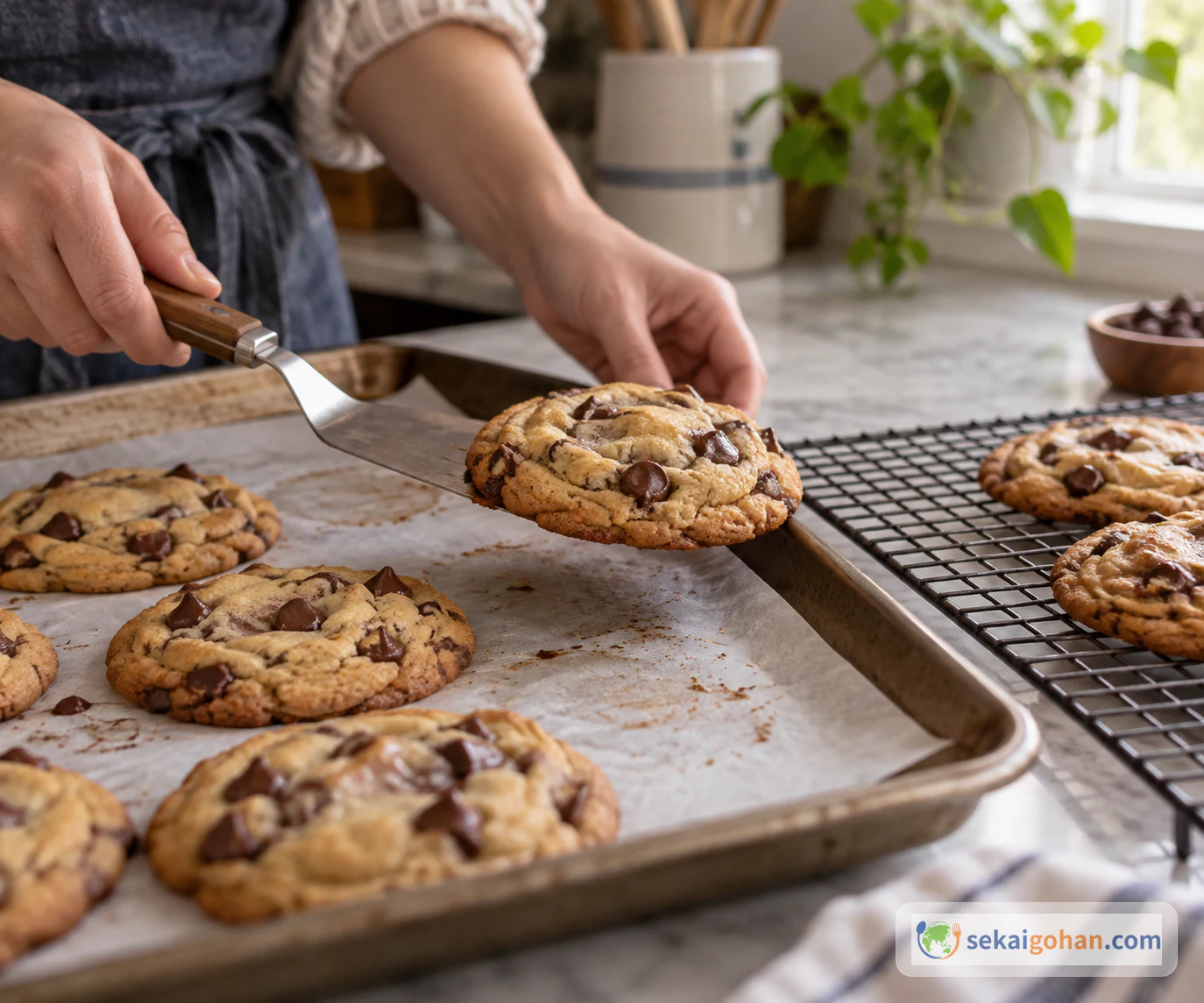
| Thin spatula and wire rack | For moving the cookies once they have set |
This recipe contains egg, wheat and milk. Chocolate chips can also contain milk, soy or other allergens, so check the label of the product you buy. Do not eat the raw dough. A soft center after baking is part of the intended texture. It does not mean the unbaked dough is safe to eat.
Choosing Ingredients for Chocolate Chip Cookies
Each fat has its own job here. Butter brings the flavor, and vegetable shortening helps the cookies hold their shape. The two sugars balance each other: granulated sugar encourages spread and crispness, while light brown sugar keeps the cookies moist and chewy. Semisweet chocolate chips hold their shape in the oven, so you get distinct pockets of chocolate rather than wide pools.
Method: Cream, Add Egg, Fold, Portion, Bake, Cool
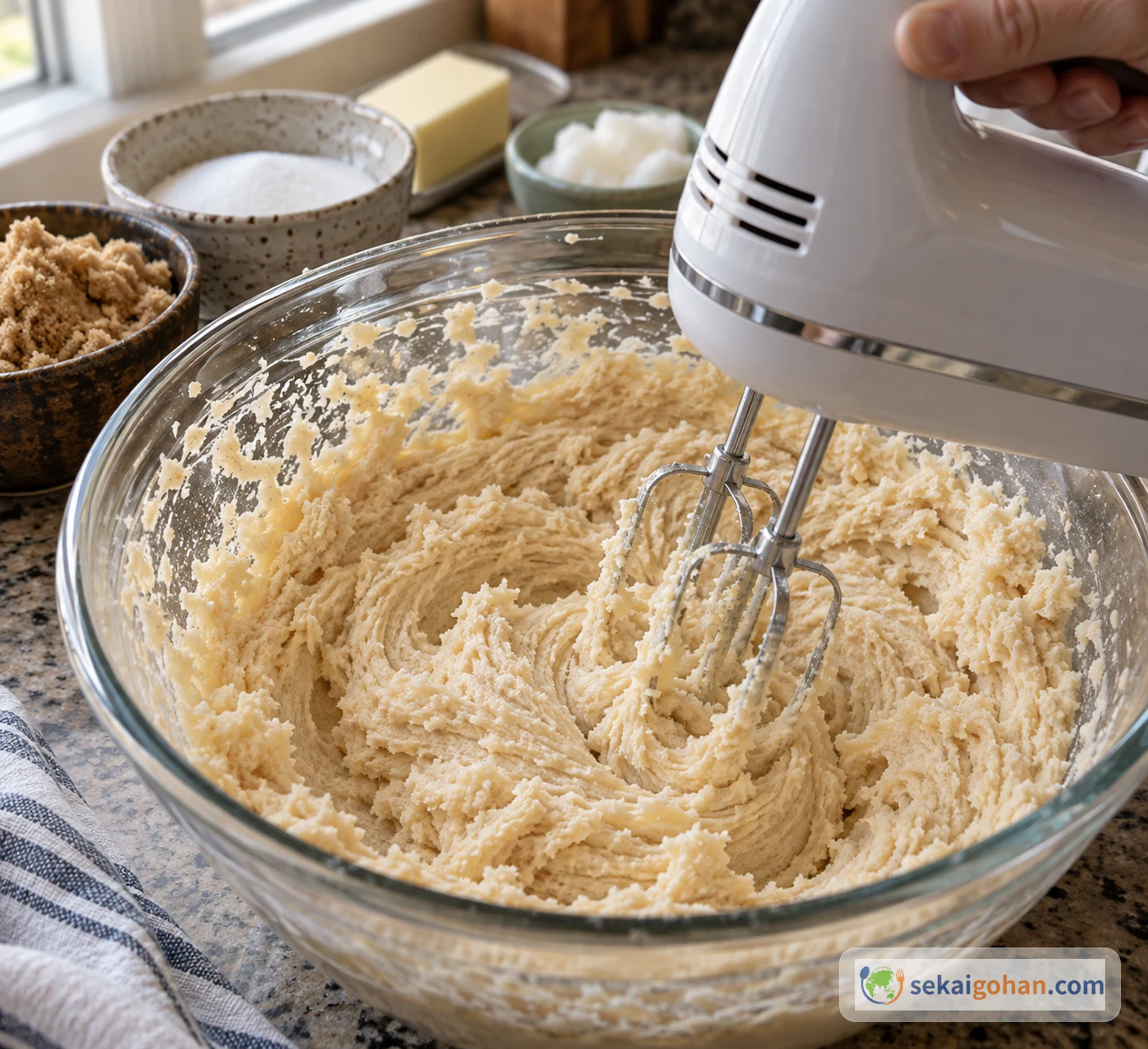
Before you start mixing, preheat the oven to 375°F (about 190°C) and line a baking sheet with parchment paper. Give the oven time to heat fully while you make the dough.
Chocolate Chip Cookie Troubleshooting
The most important call is when to pull the sheet. Take the cookies out when the edges are chestnut brown and the tops are still light golden, then let them finish setting on the warm baking sheet before you move them. Most other problems come down to the butter, the flour or the oven.
| Problem | Likely cause | What to do |
|---|---|---|
| Cookies spread too much | Butter melted during creaming, or the flour was under-measured | Keep the butter soft but not melted, and weigh the flour. Chilling the shaped dough briefly also helps |
| Cookies turn out hard | Baked until fully browned | Take them out while the tops are still light golden. A soft center firms up as the cookies rest on the sheet |
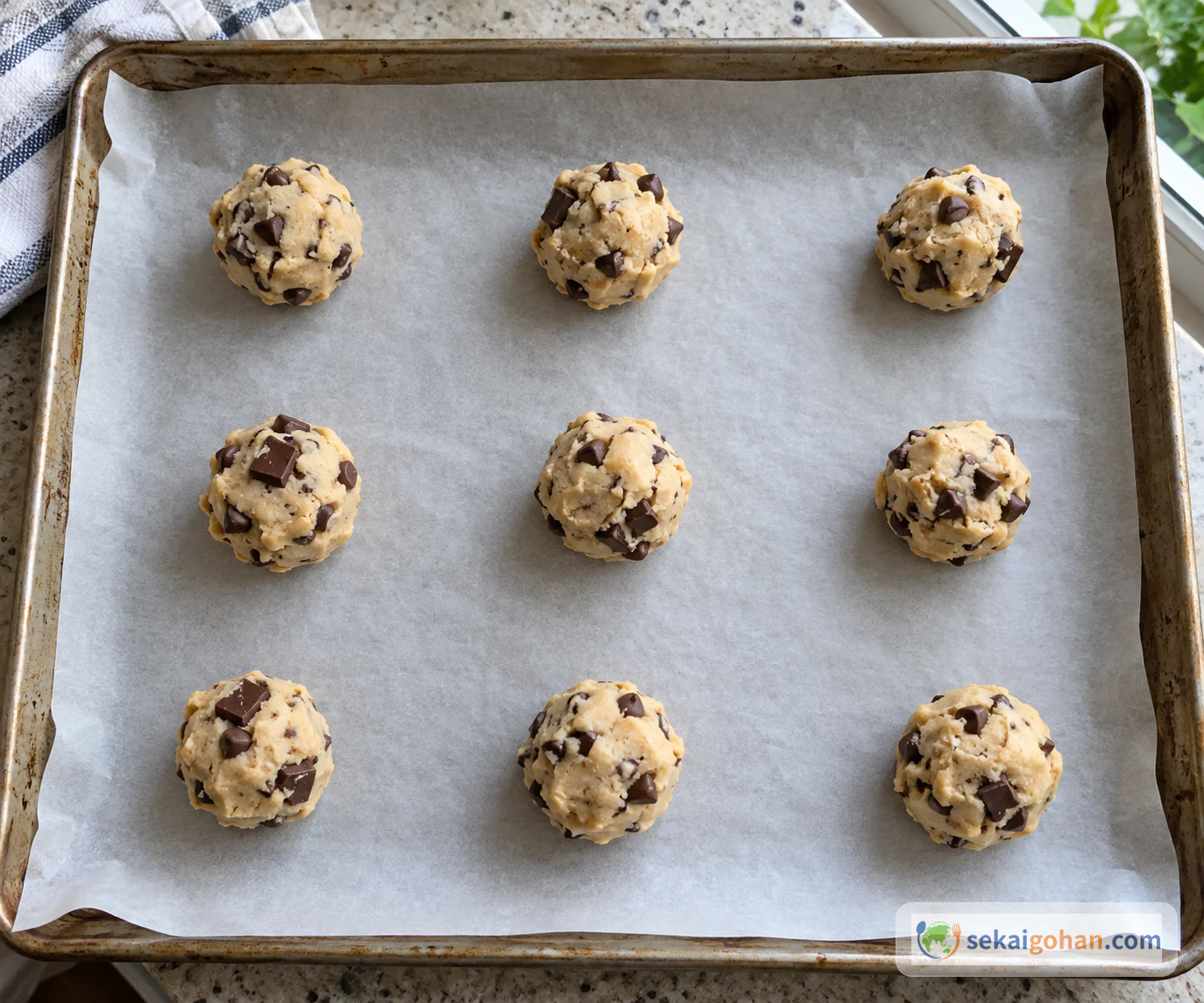
| Chocolate looks sparse on top | Chips sank into the dough | Press a few chips from the measured amount into the surface of each ball before baking, rather than adding extra |
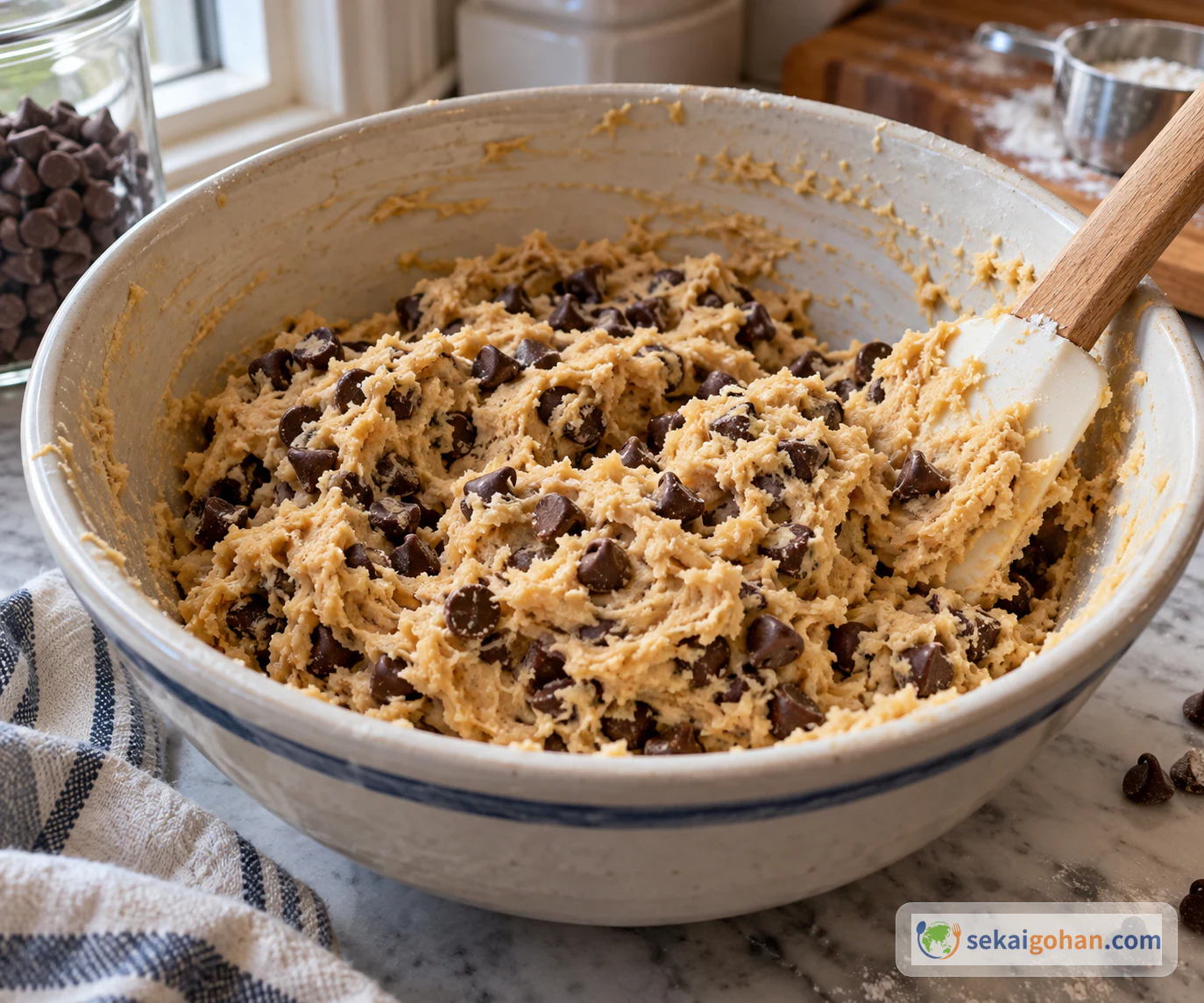
| Greasy streaks after adding egg | Not mixed long enough | Keep mixing and scrape the bowl until the base looks uniform |
| First sheet browned too fast or too slow | Dark sheet or oven variation | Adjust the time for the next sheet, judging by edge and top color |
Chocolate Chip Cookie Variations and Storage
Once you've baked the base recipe, small changes to the formula can push your second batch crisper, chewier or more cake-like.
- Long chill for deeper flavor. Cover the dough and refrigerate it for 24–48 hours to deepen the toffee and caramel notes. Chilling also helps if the dough is very soft.
- Thinner and crisper. Increase the granulated sugar slightly.
- Moister and chewier. Increase the share of brown sugar.
- Melted pools of chocolate. Replace some of the chips with chopped bar chocolate. It melts into wider patches, so the cookies look and eat a little differently.
- A salty contrast. Scatter a little sea salt over the dough just before baking.
Keep the cookies in an airtight container at room temperature for up to 5 days, or freeze them for longer storage. Heat, humidity and a loose seal all shorten their life, so in hot or humid weather, eat them sooner.
Frequently Asked Questions
Can I replace the shortening with butter?
You can, but you'll get a different cookie. The flavor and spread change, so the baking time and final shape will differ from this recipe. Treat it as a separate formula rather than a direct swap.
Is it okay to take them out while the centers look soft?
Yes. Judge by the color of the edges and tops, then let the cookies rest on the sheet so the remaining heat sets the centers. This is about the texture of baked cookies; it doesn't mean the raw dough is safe to eat.
Why use only half an egg?
The classic recipe uses one large egg for 36 cookies. Halving the recipe means half a beaten egg, about 25g.