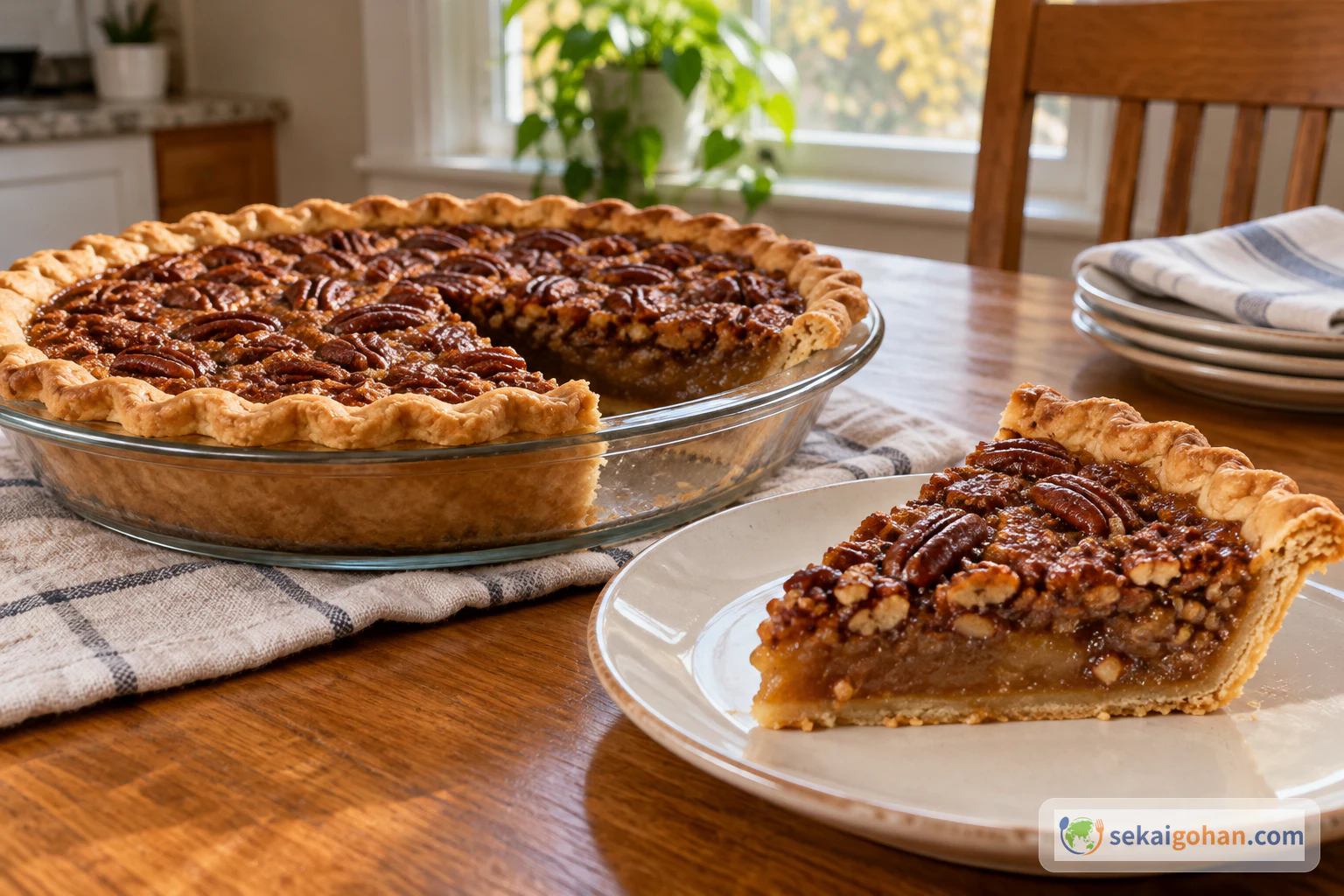
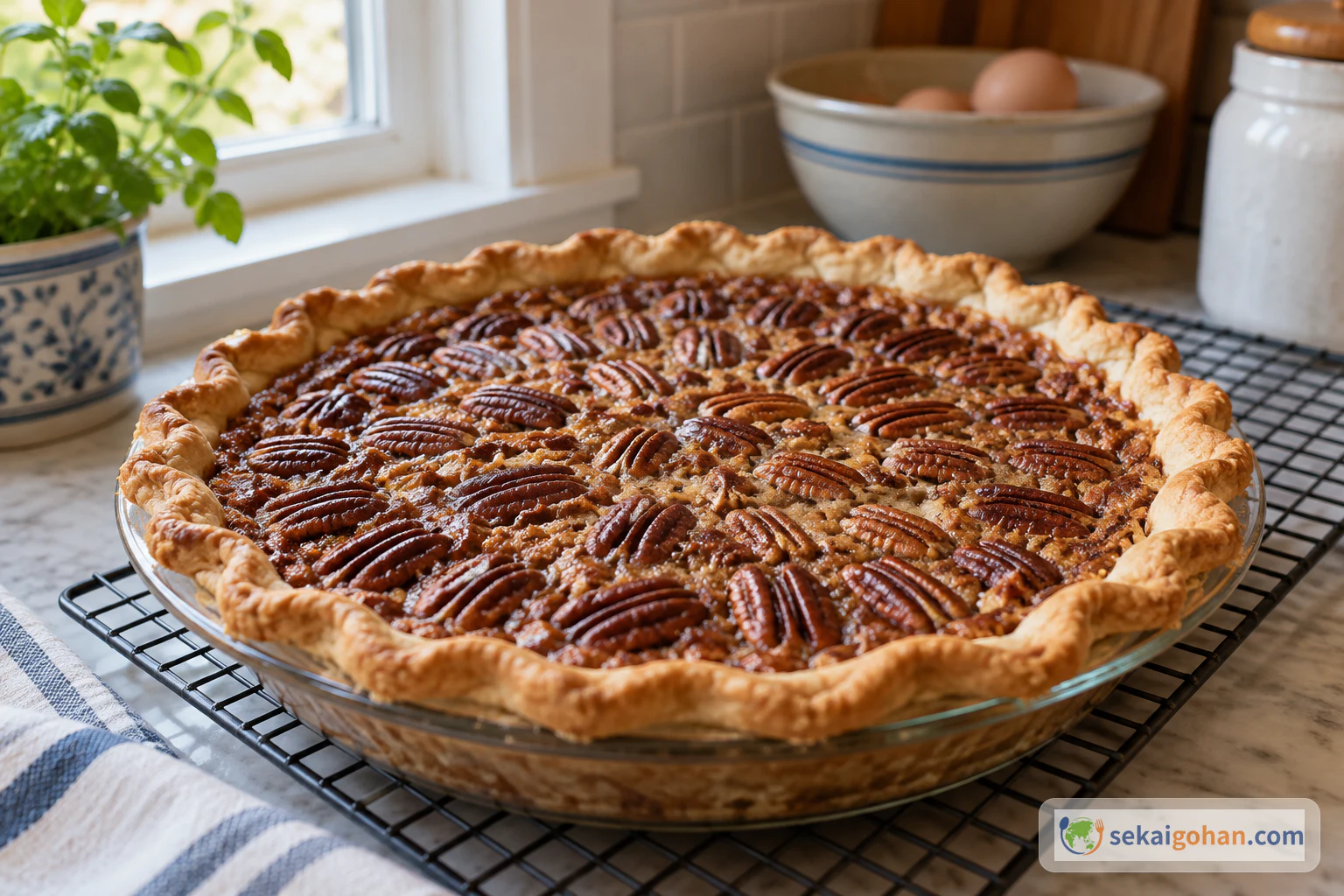
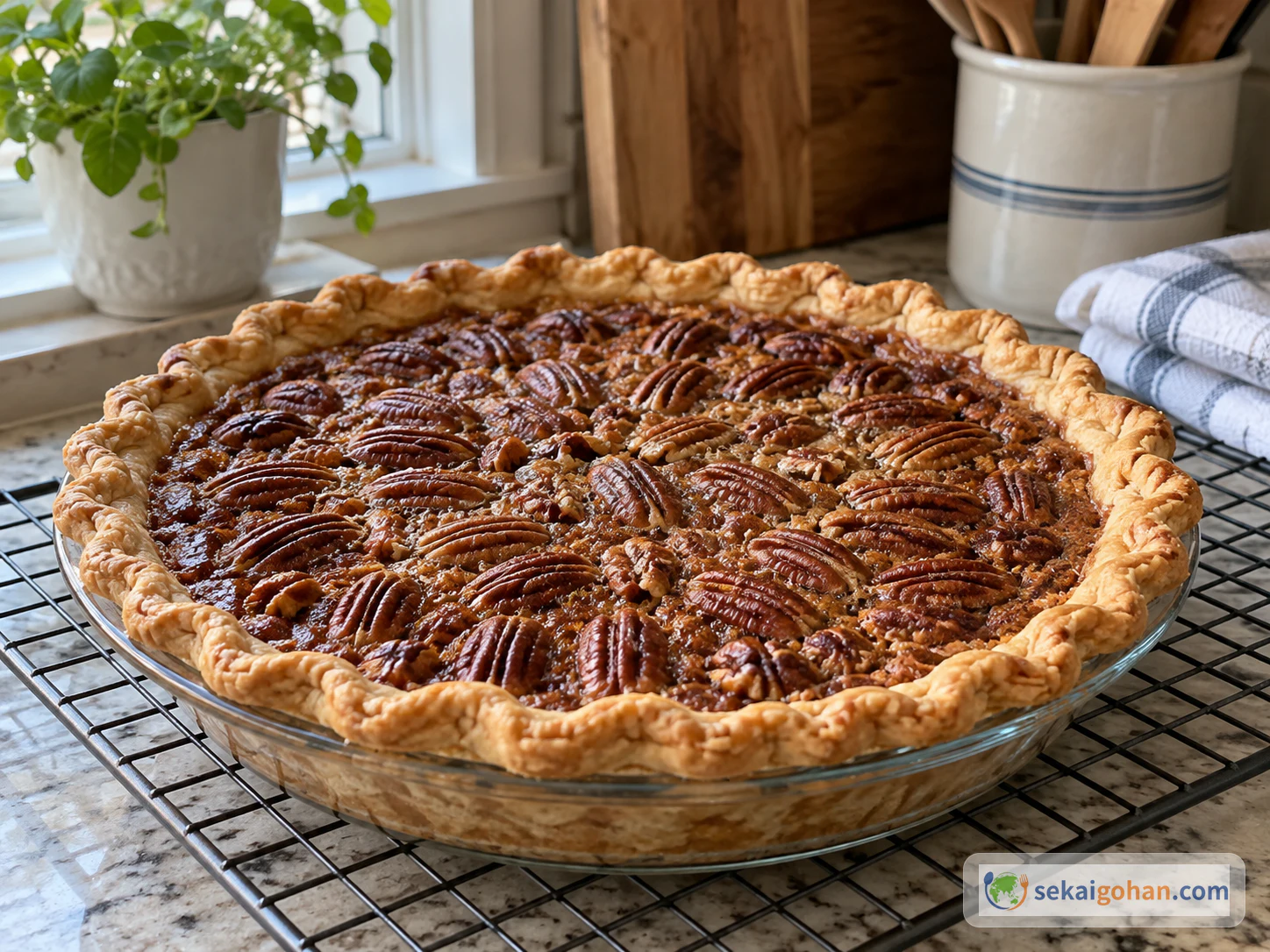
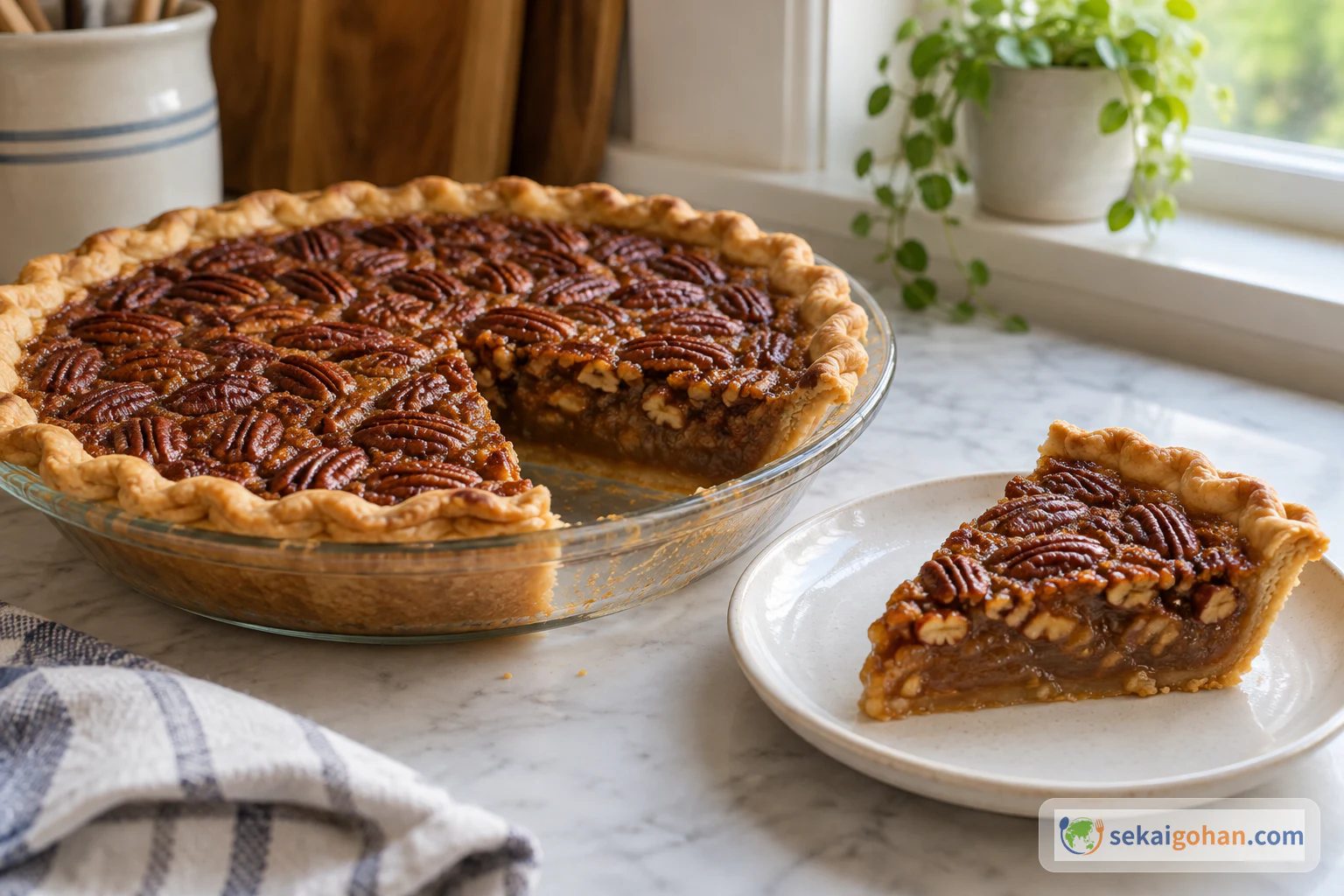
The best part of pecan pie comes well after it leaves the oven. Once the pie has cooled and a knife goes in, the amber filling holds its shape and the pecan halves show in the cross-section. The toasty smell of the nuts meets a deep, almost molasses-like sweetness. That slice is whole pecan halves folded into a glossy filling of butter, light corn syrup, brown sugar, vanilla and eggs. The pie is closely tied to the food of the American South, and today it's eaten across the United States, often on fall and winter tables.
Pecan Pie and Its History
The classic pie
In the classic pecan pie, the pecans are folded into the filling rather than arranged on top. The eggs bind everything together, so a cooled slice stands clean on the plate. There is no single recipe handed down intact, though. The pie took shape over time, as pecan growing changed, home cooks experimented and new sweeteners became widely available.
From orchards to corn syrup
In the late nineteenth century, better cultivation helped bring pecans into home baking. So did the commercial growing of the paper-shell pecan, a type with a large nut and a shell that cracks easily. A pecan pie recipe was recorded in 1886, and corn syrup versions appear in recipes from the 1920s. The corn syrup pie most people picture today came later.
The popular story that the Karo company invented pecan pie is an oversimplification. Karo's advertising helped spread corn syrup versions, but earlier recipes exist. Pecan pie also turns up often in Mississippi community cookbooks. Postwar supply and prices help explain how it became a Thanksgiving staple.
Texas has its own claim on the nut. The pecan is the Texas state tree, and pecan sweets like pies and pralines are a big part of the state's food memory.
Ingredients: One 9-inch Pie, 10 Servings
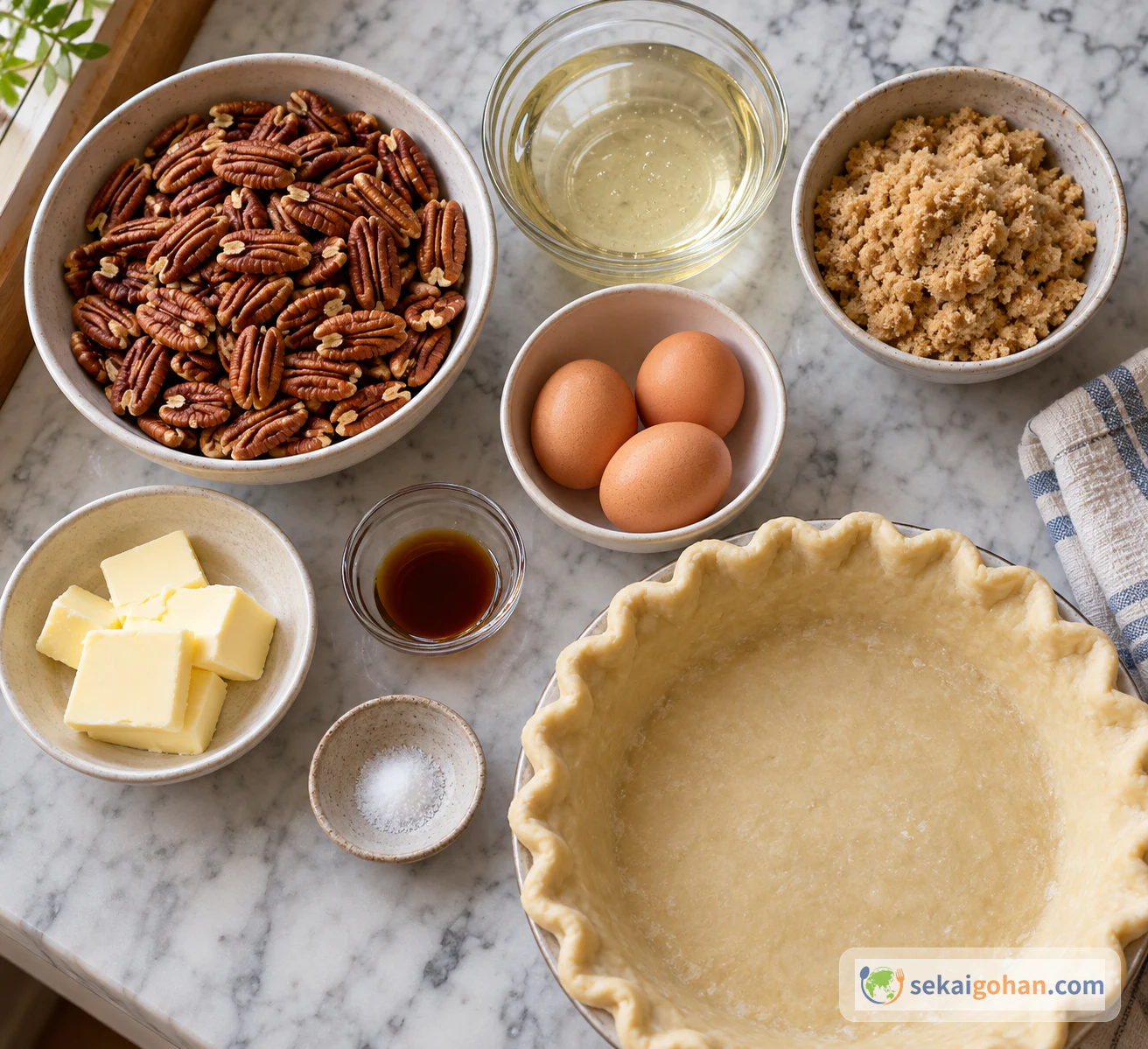
This pie contains milk (butter), eggs, wheat (pie dough) and tree nuts (pecans). If you use store-bought dough, check its label for allergens as well.
Equipment
- 9-inch (about 23 cm) pie pan
- Baking sheet (preheated in the oven)
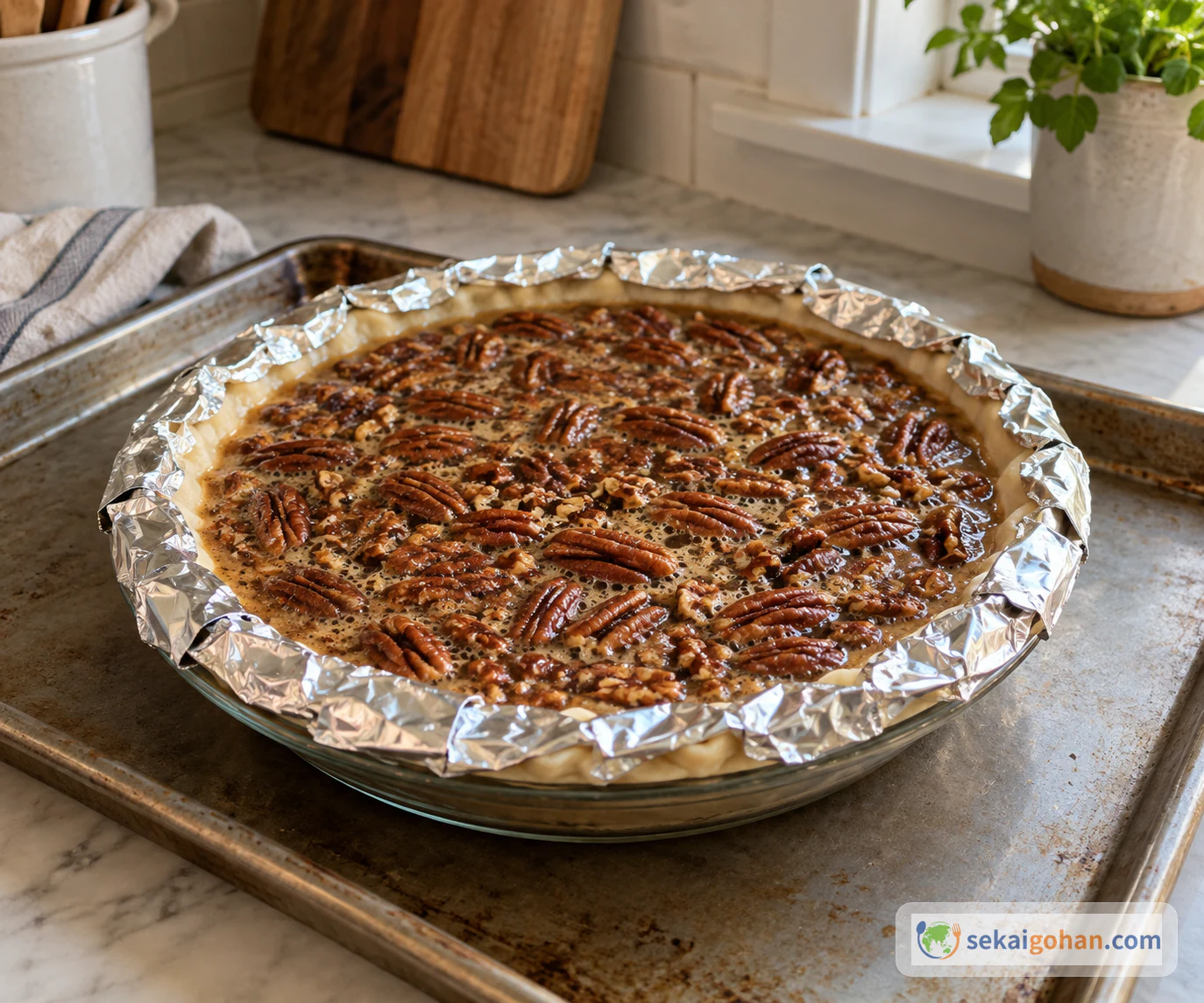
- Aluminum foil, for covering the crust edge
- Mixing bowl
- Whisk and spatula
- A place for the pie to cool undisturbed
Choosing Pecans, Corn Syrup and the Crust
Pecans: Buy shelled, unsalted, raw pecan halves. Pecans that are already roasted toast further in the oven and turn bitter more easily. Leave them whole so they fold into the filling as halves.
Light corn syrup: This gives the filling its sweetness, body and cohesion, so stick with it. Other syrups make a different pie. Mizuame (Japanese starch syrup), for example, has a different thickness, sweetness and aroma.
Light brown sugar: Dark brown sugar changes the flavor (see the variations below).
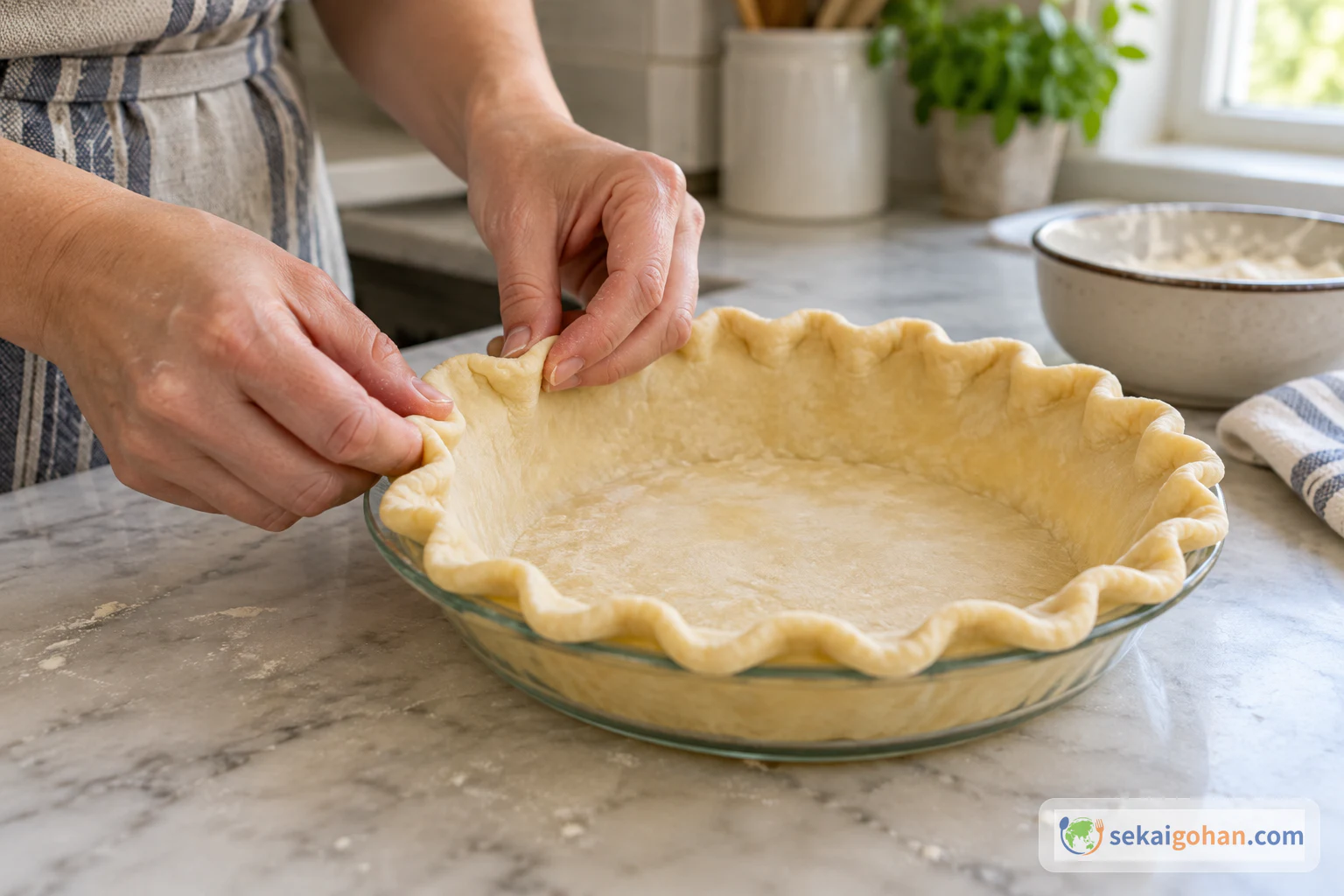
Pie dough: If you buy a ready-made crust, check its diameter and its depth. A crust of a different size changes the height of the filling and how it bakes.
Method: Mix, Fill, Bake, Then Let It Set
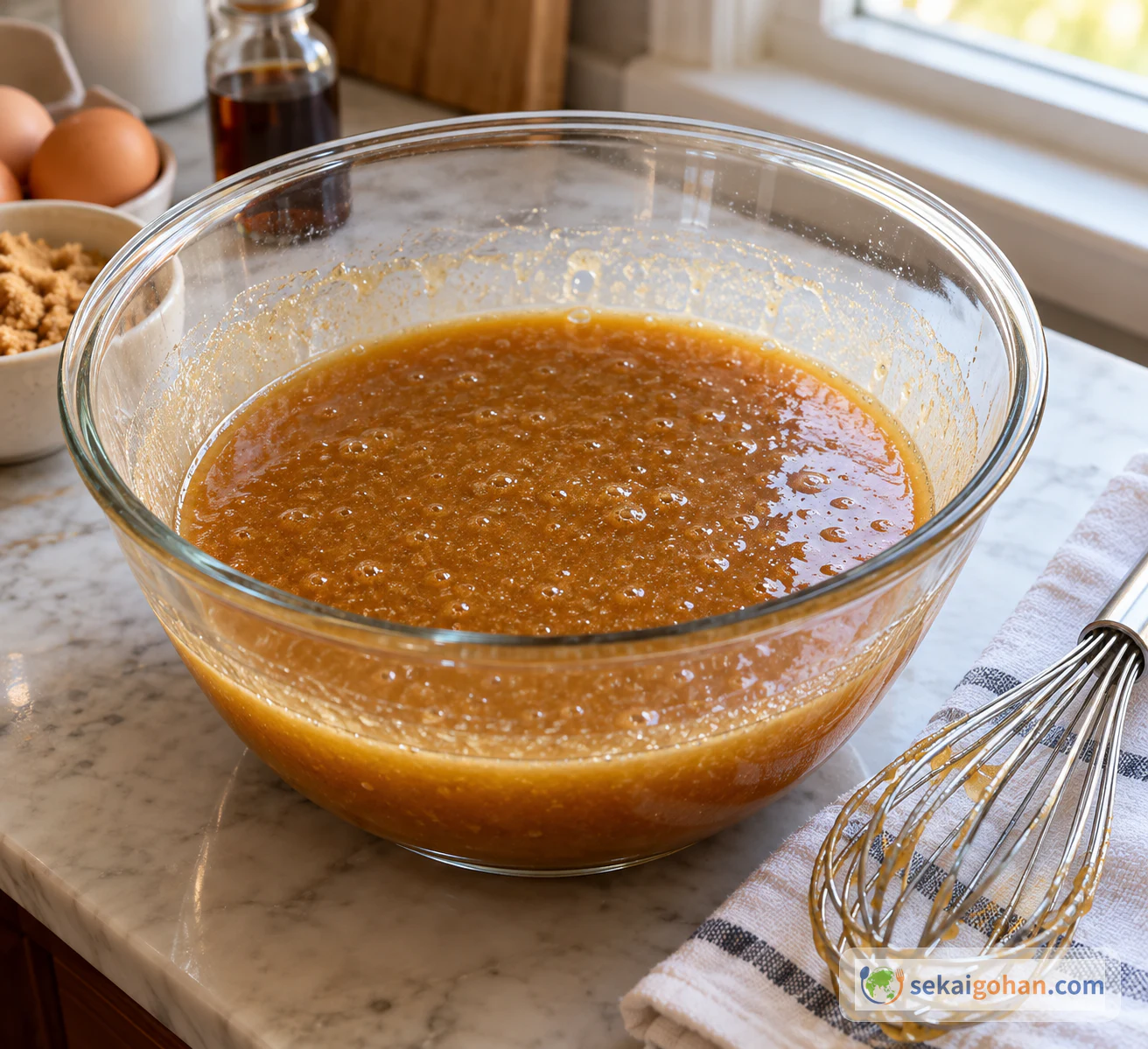
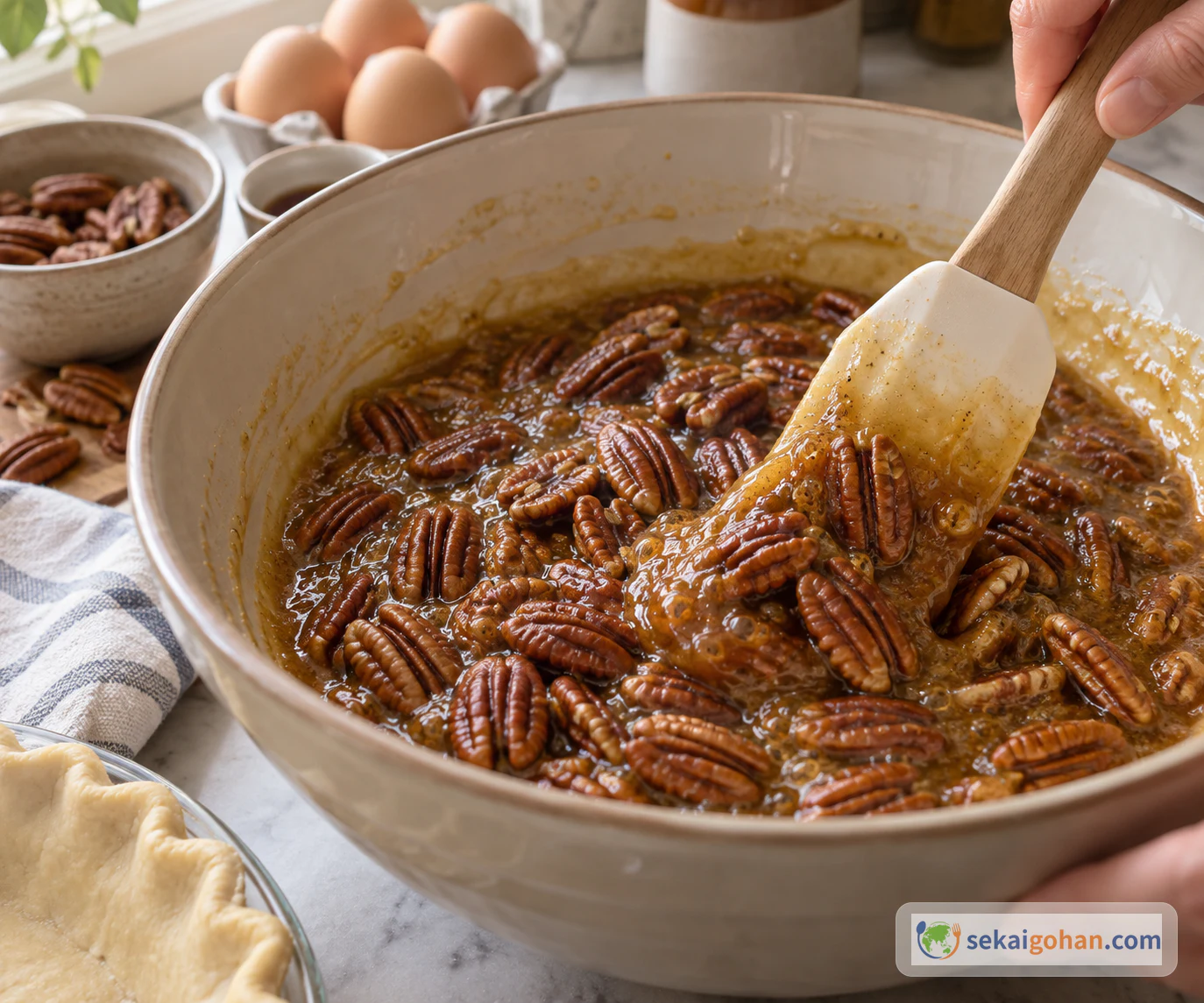
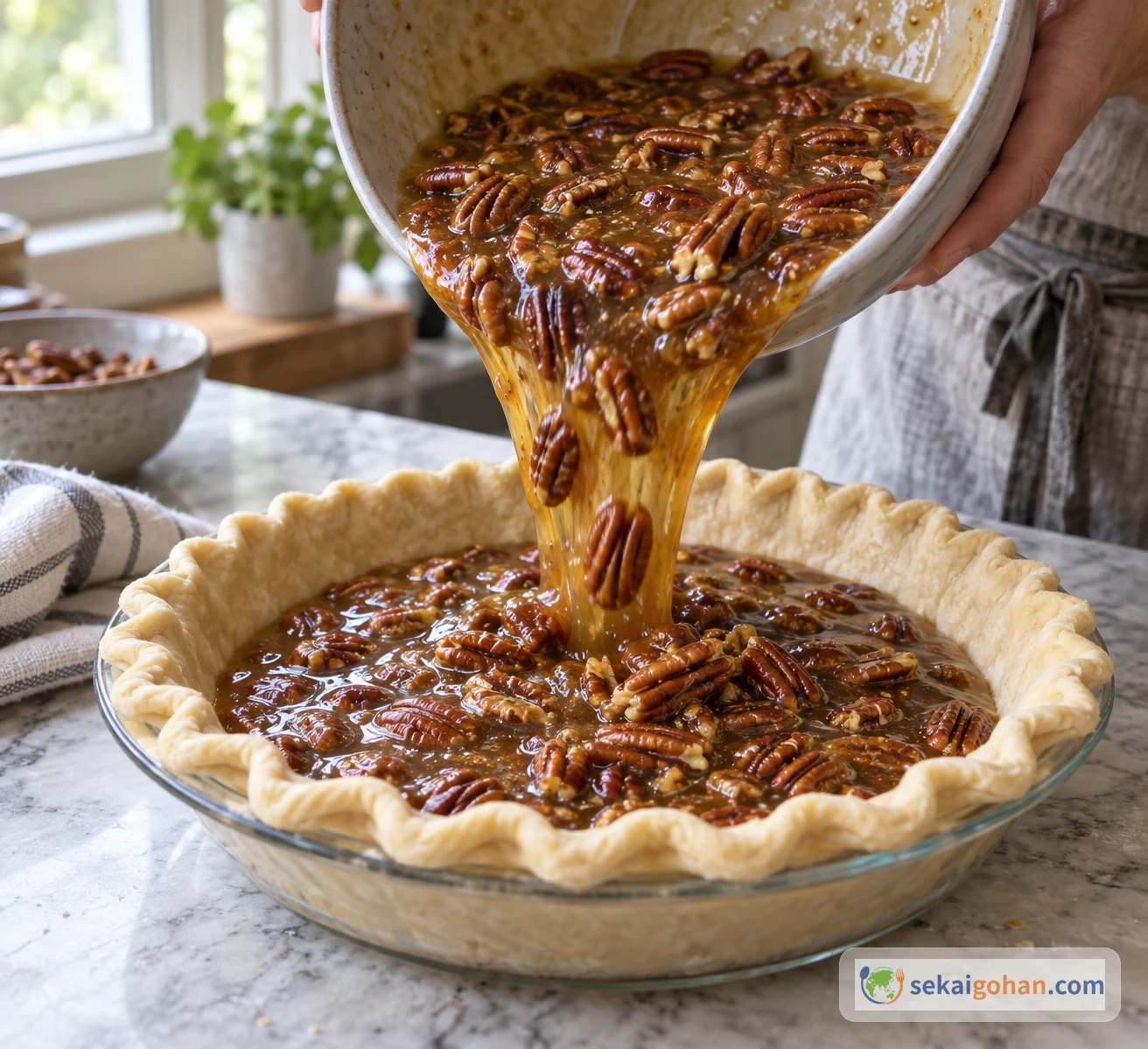
Mix the butter, syrup, sugar and vanilla first, then the eggs and salt, then fold in the pecans. Bake until the center is set, and cool completely before slicing.
The oven time is a guide, not the finish line. Ovens differ, so judge doneness by whether the center of the pie has set.
Pecan Pie Problems and Fixes
| Condition | Likely cause | What to do |
|---|---|---|
| The center is still liquid at 60 minutes | Ovens vary | Keep baking until the center is set. Treat 60–70 minutes as a guide. |
| The crust edge is darkening quickly | The rim is exposed to direct heat | Cover the edge with foil, as in step 5 |
| The filling runs when cut | The pie was sliced while still warm | Wait until it has cooled completely before cutting |
| The nuts taste bitter | Pre-roasted pecans were used | Next time, use raw, unsalted pecan halves |
| The filling won't set the same way | A different syrup was swapped in | Return to light corn syrup; other syrups behave differently |
Serving, Storing and Varying Pecan Pie
For a Southern-style menu, serve pecan pie after a pot of gumbo or jambalaya, or a plate of shrimp and grits.
You can make the pie a day ahead and keep it in the refrigerator. Bring it to room temperature before serving, but don't leave it out for long.
Variations
Each of these changes the result, so expect a slightly different pie. Keep the base amounts unless noted.
| Change | What happens |
|---|---|
| Chop half the pecans finely | More even texture, but less of the bite of whole halves |
| Use lightly roasted pecans instead of raw | More toasty aroma; watch that they don't over-brown in the oven |
| Replace pecans with walnuts | Easier to find in some places, but the flavor changes and walnuts bring more bitterness and astringency |
| Use dark brown sugar | Keep the same 1 cup; the molasses note gets stronger |
| Cut smaller slices | The base recipe serves 10; smaller slices serve more people |
Frequently Asked Questions
Where does pecan pie come from?
It has no single inventor or birthplace. Pecans matter greatly to Texas, but that doesn't make Texas the one place the pie began.
How do I know when it's done?
Bake at 350°F (about 177°C) and watch for a set center. Use the 60–70 minutes as a guide, and the set center as the sign it's done.