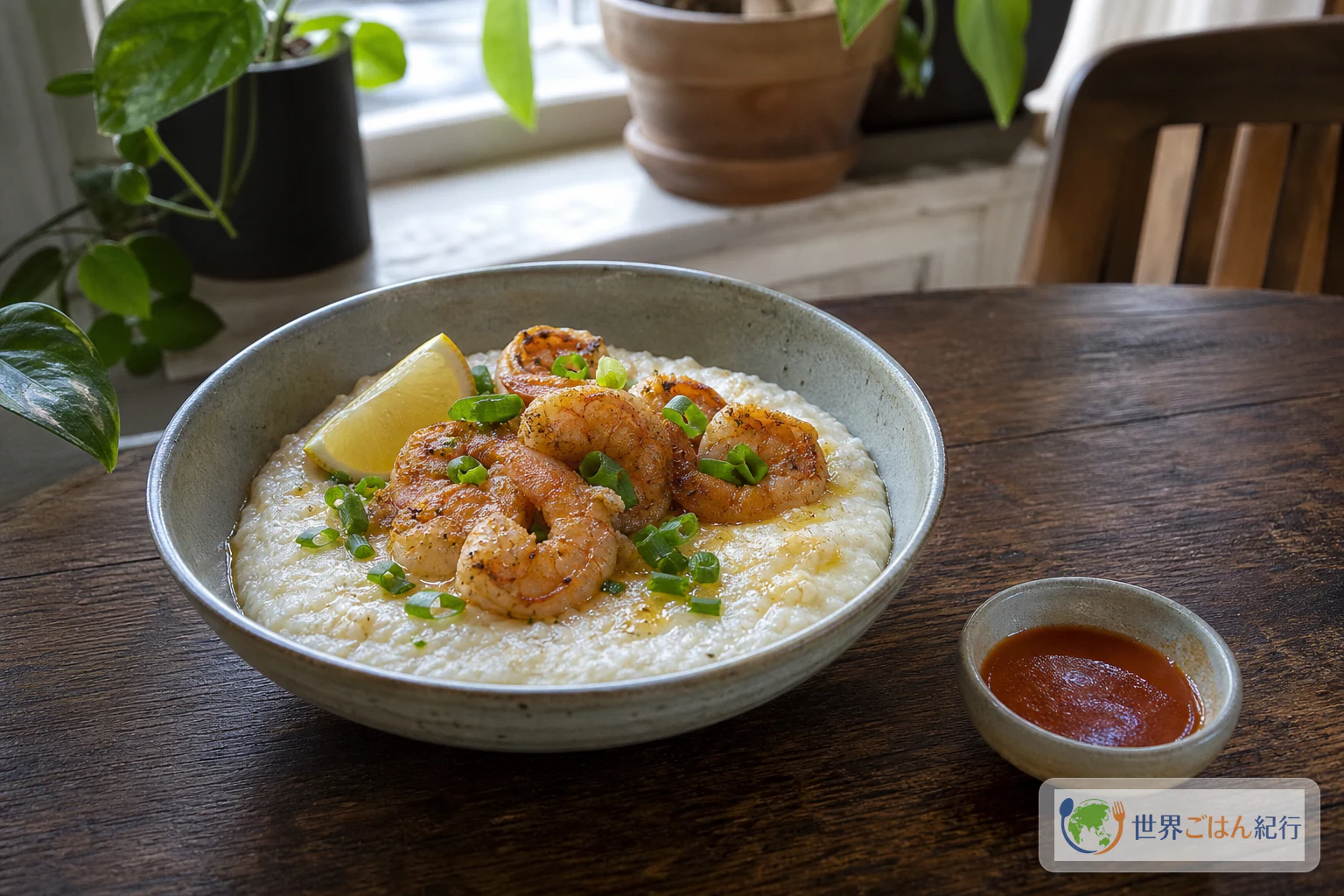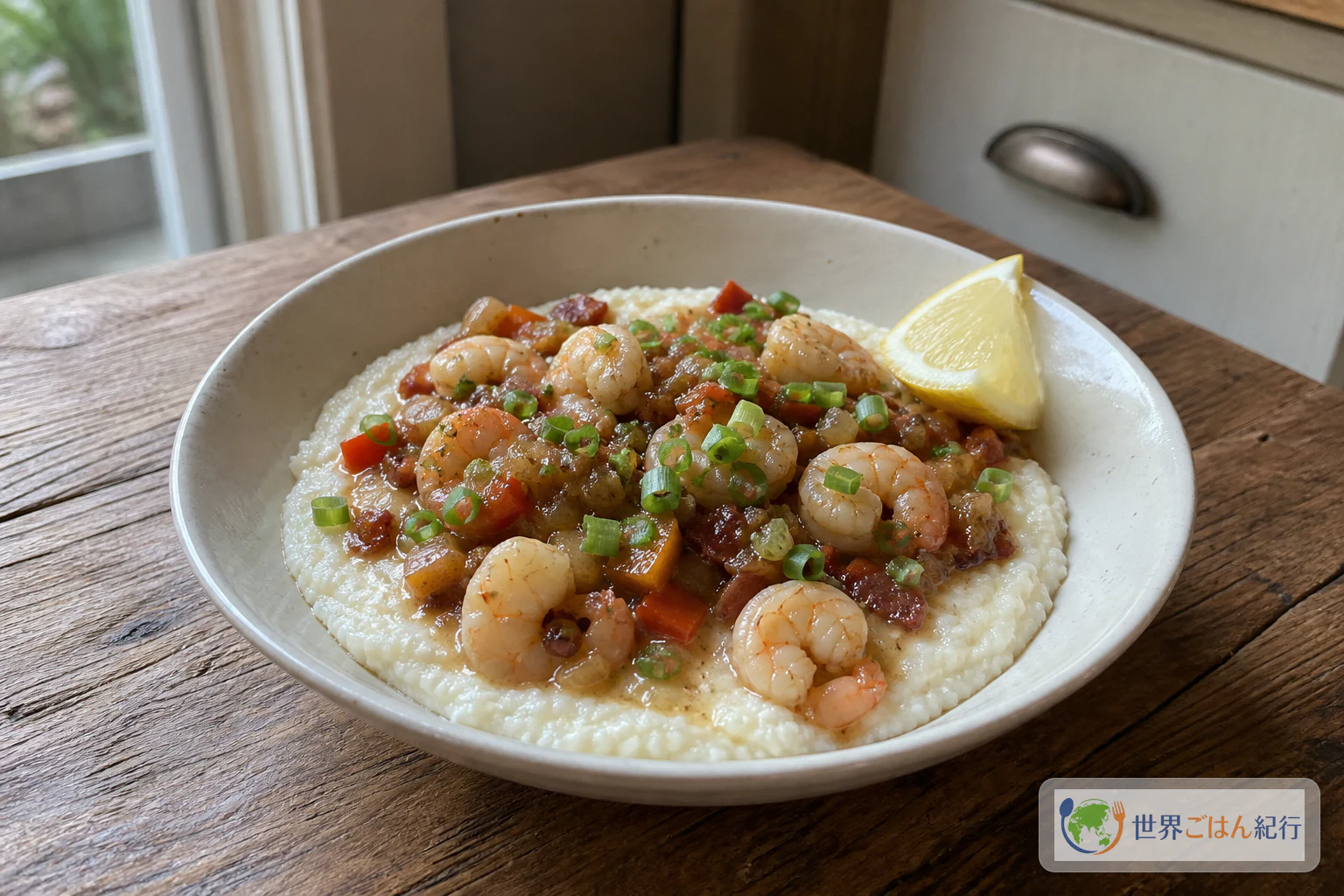
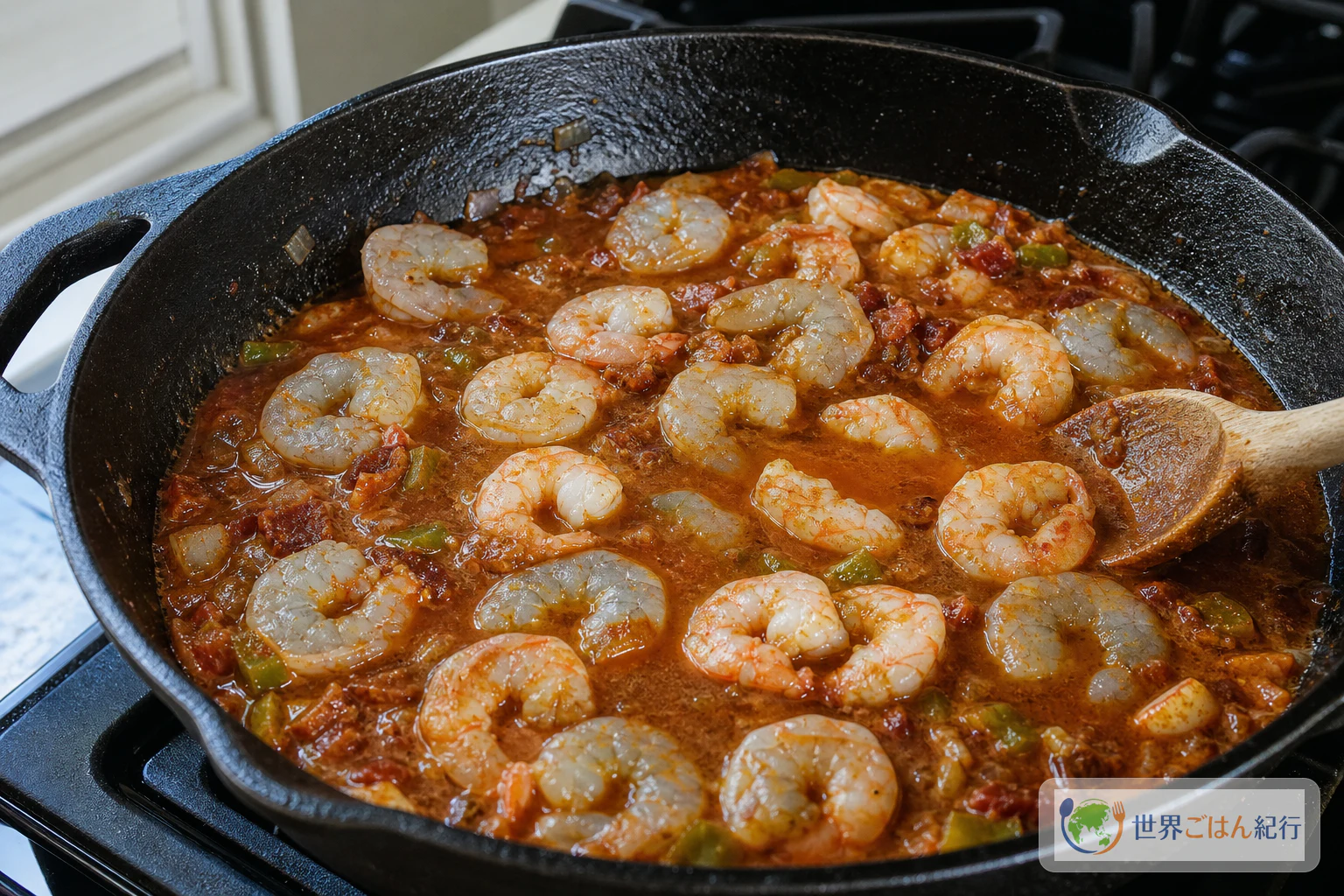
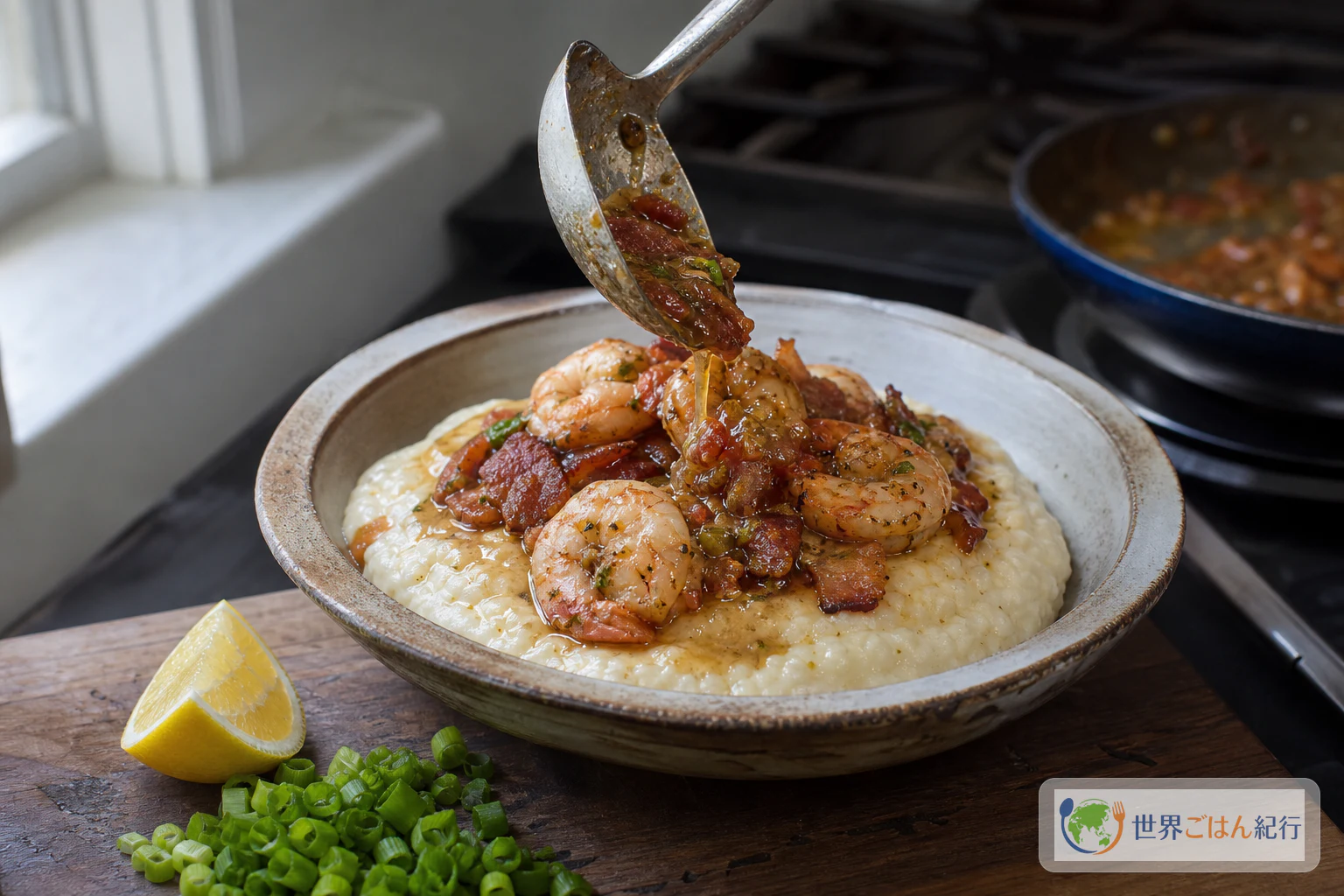
Shrimp straight from the freezer curl up as soon as heat touches them, making red and white rings in the pan. Beneath them waits a bowl of hot grits, looser than rice porridge, with corn grains that stay on the tongue. Push in a spoon and the porridge parts slowly, and one shrimp, glossy with bacon fat, slides out ahead of the rest. This is the Lowcountry favorite of South Carolina: rich cheese first, then a drop of acidity, then a seaside saltiness coming back. The method comes down to one rule. Simmer the grits slowly first, and finish the shrimp briefly at the end in a separate pan.
Shrimp and grits in the Lowcountry
What grits are
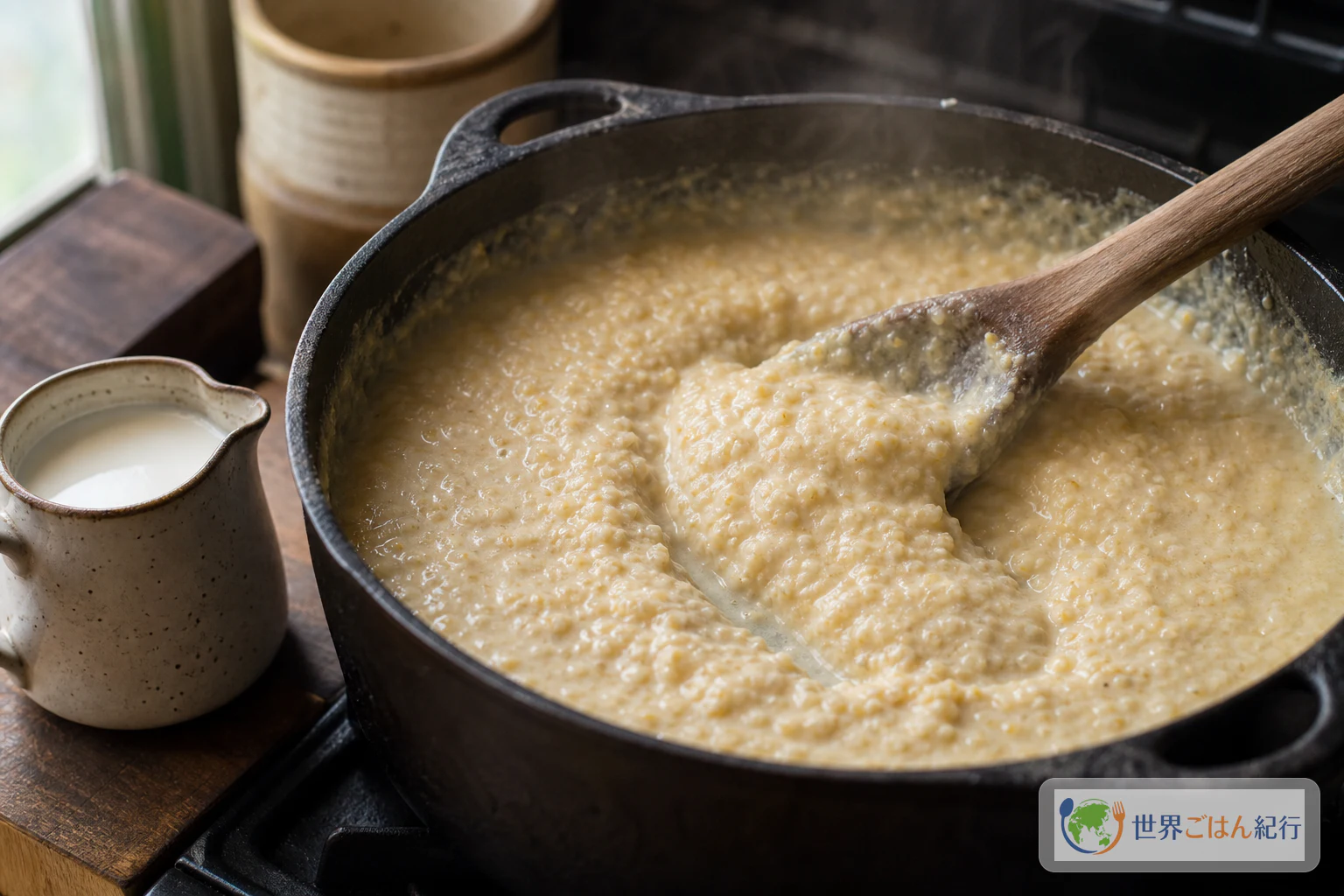
Grits are dried corn that has been ground, from coarse to fine depending on how they are milled. They take on flavors the way rice or bread does. In South Carolina, some people eat them with only salt and butter, and others serve them with ham gravy or shrimp.
Shrimp and grits sometimes uses aromatics similar to those in Louisiana's shrimp étouffée or jambalaya. Those dishes put rice or roux in the lead. Here the grits, with the corn grains left in, take that role.
Where the dish comes from
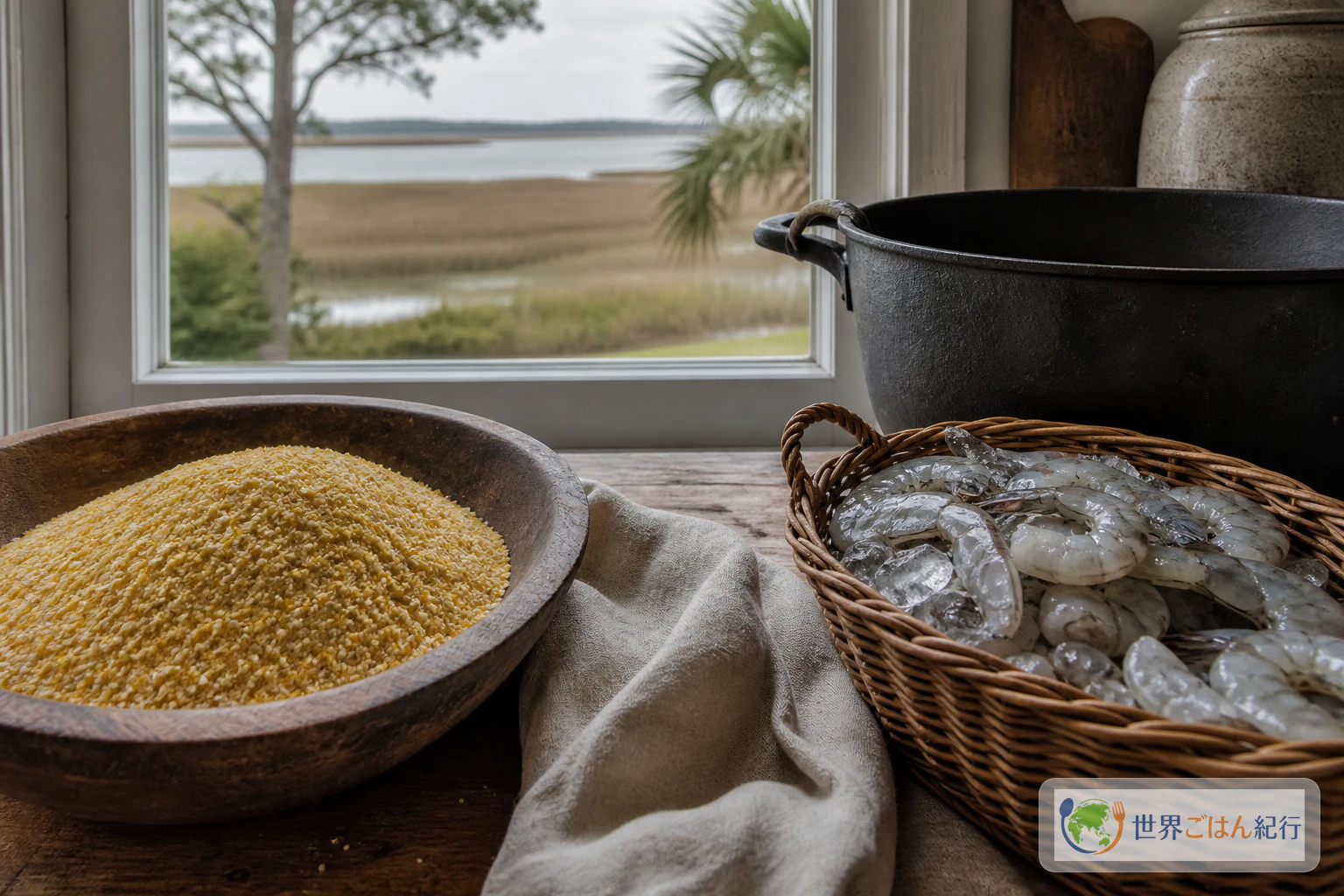
The Lowcountry is the coastal plain of South Carolina and Georgia, a run of tidal inlets and islands with shrimp from the sea and corn and rice from the land. With the ingredients that close together, it made sense to set seafood on a soft bed of cooked grain.
No single cook or restaurant can claim the dish. Gullah Geechee cooking, Indigenous corn and European eating habits all overlap in its background, and the first kitchen cannot be identified. Gullah Geechee foodways carry knowledge from West and Central Africa, combined with the seafood and crops of the coast.
Shrimp and grits began as a plain breakfast and spread as a dinner main course in the 1980s, and a 1985 article pushed its fame nationwide. South Carolina made grits its official state food in 1976, a sign of how deeply the dish is rooted in everyday life there.
Regional versions
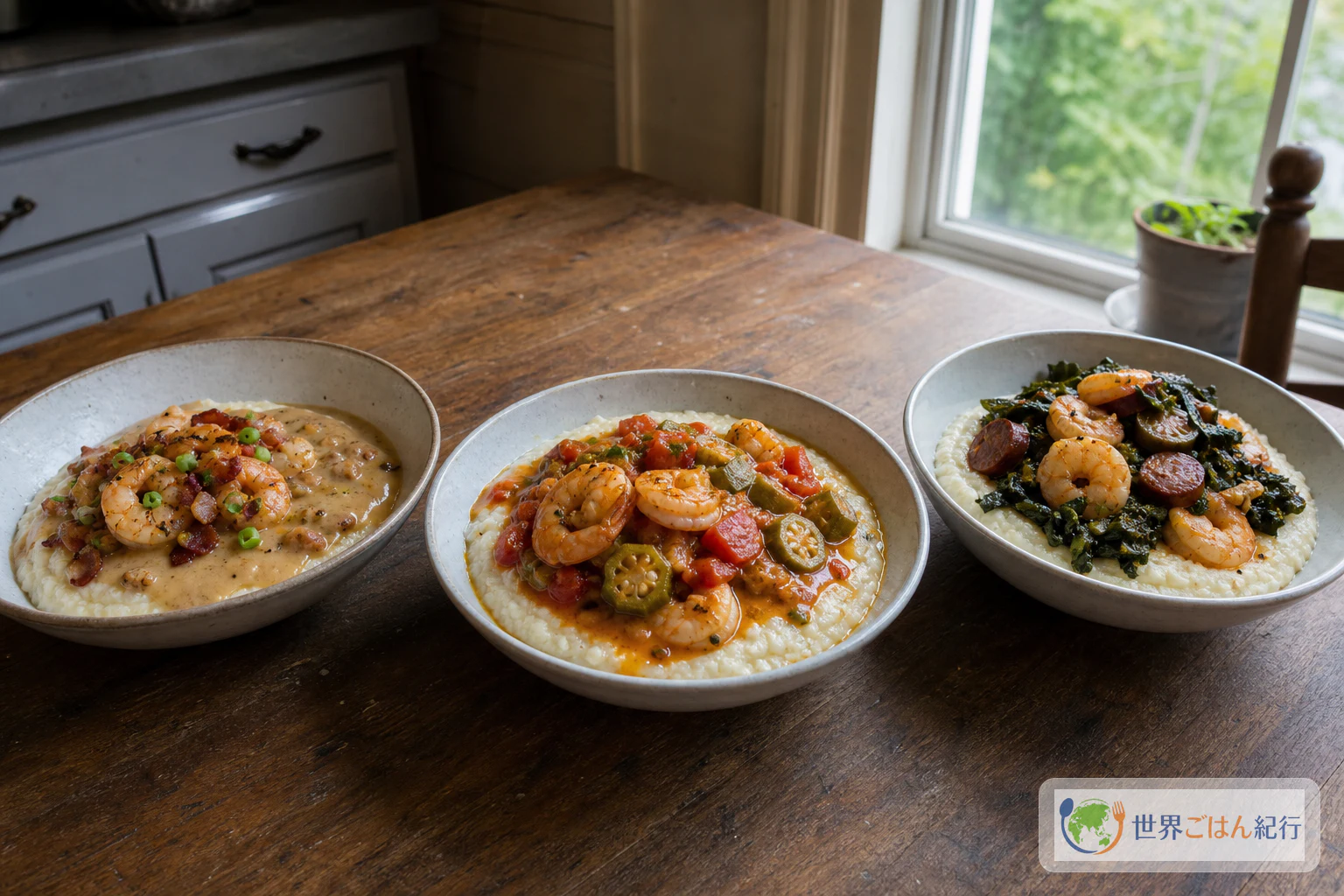
Across South Carolina, the skeleton is shrimp and stone-ground grits, and what gets added changes by restaurant and household. You'll find white grits with melted cheese, gravy sharpened by ham or bacon, versions with tomato or greens, and versions with spicy sausage. Restaurant plates bring in okra, kale, tomato, ham and chorizo.
Because the origin can't be pinned down, these differences are part of the dish's history. A household that eats it as a simple coastal breakfast and a restaurant that layers cheese and gravy on it for dinner make the same name taste different at the tip of the spoon. That is how the dish has always traveled, so making it with the dairy and frozen shrimp you have at home fits right in.
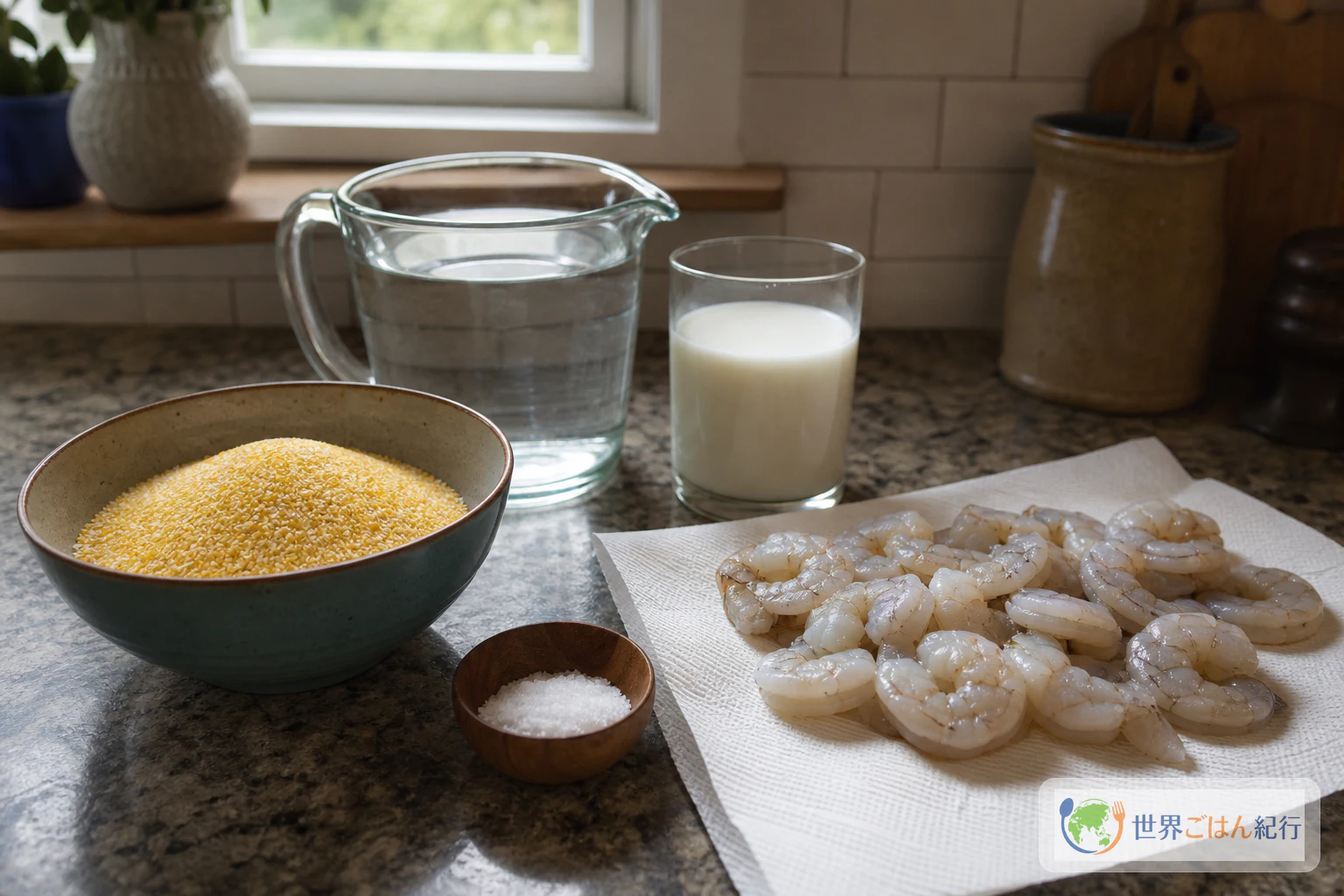
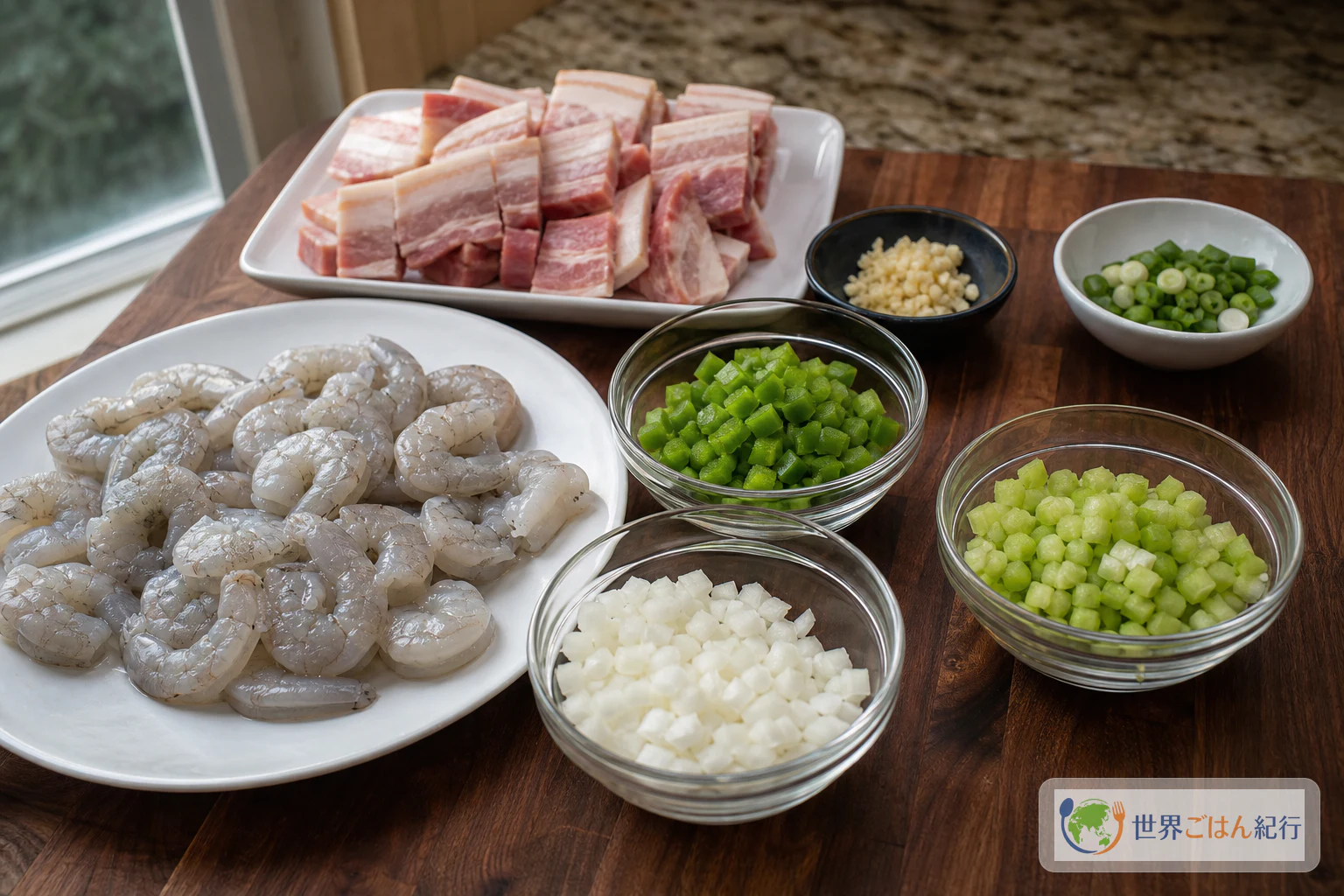
Ingredients (serves 4)
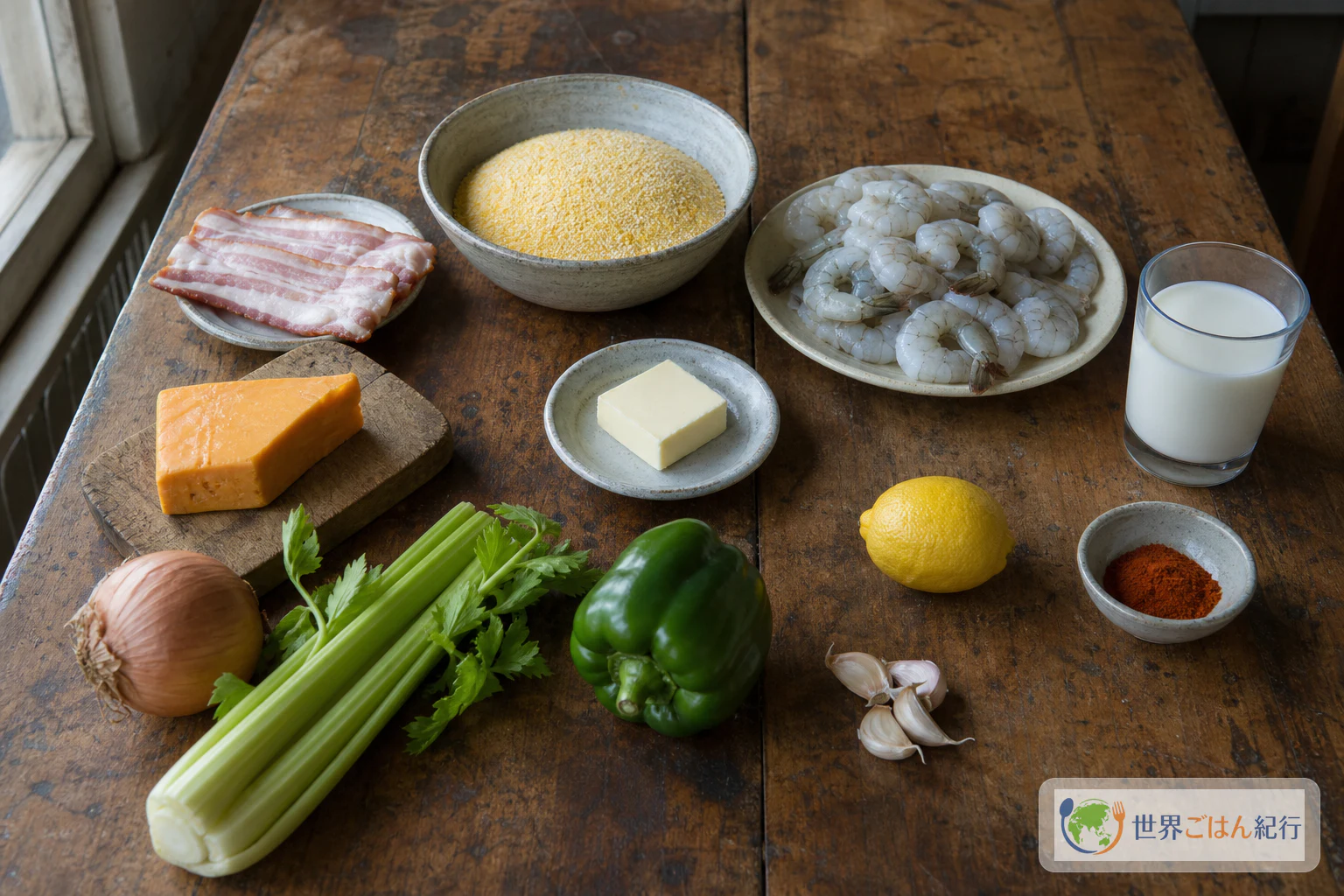
This uses shrimp, dairy and wheat. Stock, bacon, cheese and hot sauce differ by product in their labeling for wheat, soy, egg, seafood and so on, so check the labels when buying if you need to avoid any of them. Wash the cutting board and plate that handled raw shrimp separately from those for serving. Cook the shrimp until the flesh goes from pearly to white and opaque, and check 145°F (63°C) at the center with a thermometer.
Choosing grits, shrimp and paprika
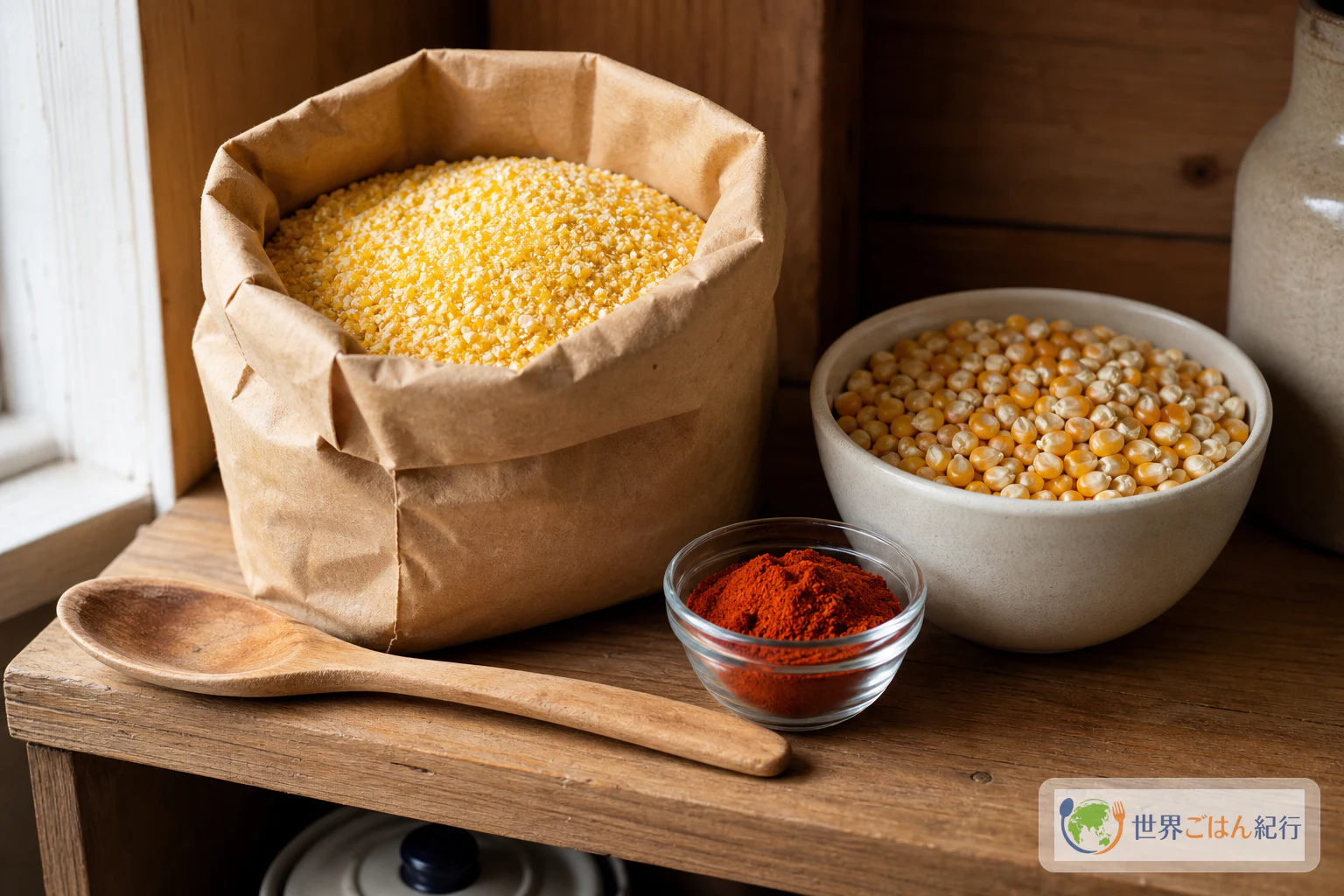
Grits
Grits and cornmeal are easy to mix up in stores. You want a coarse grind where the grains are visible. A fine meal labeled "corn flour" also works, but it thickens quickly, the texture turns smooth, and you lose the bite of the corn grains; cooked with the same water and time as coarse meal, it turns heavy. In that case, start with 2¾ cups (650 ml) water from the beginning, cook for 15–20 minutes, and stir so the meal does not sink to the bottom.
Yellow meal brings out aroma and color, while white meal blends with the color of the dairy. Either works under the shrimp sauce. For coarse stone-ground grits like the local ones, check the coarseness at an import grocery or online.
Shrimp
Use raw shrimp. Thaw frozen shrimp slowly in the refrigerator and wipe off the surface water before cooking. Straight from the freezer, they lower the temperature of the pan, the sauce turns watery, and the center of the shrimp cooks late. If you're in a hurry, thaw them in the bag under running water, and still be sure to remove the moisture.
Paprika and pan
The paprika isn't there for heat; it adds a red-orange color and a dry, sweet aroma to the shrimp. If you have sweet paprika at home, use it. If you buy some, check that it is sweet paprika powder, not hot paprika or chili powder, and keep the heat separate in the hot sauce. A new jar is only worth it if you'll use it often in stews. The coarseness of the meal and the moisture of the shrimp decide the flavor far more than the brand of paprika.
To spread 14 oz (400 g) of shrimp in one layer, use a pan wider than a typical 8 inches (20 cm) frying pan, and check that it suits your stove if you cook all 4 servings at once. With an ordinary frying pan, cook in batches.
Get the grain, the shrimp's moisture and the heat right, and even white grits, or bell pepper swapped for paprika, keep the structure of the Lowcountry plate: something from the sea on a grain.
Shrimp and grits problems and fixes
What trips people up is less the seasoning than trying to finish two cooking jobs at the same time. Grits take a long time for the grains to loosen, while shrimp turn tough after just a few minutes too long in the pan. Cooking them separately keeps the texture of the coarse meal and the outline of the plate sharp, even with frozen shrimp.
| State | How to fix it on the spot | What to revisit next time |
|---|---|---|
| The grits are hard, with a core in the grains | Add 3.5 tbsp (50 ml) boiling water and cook over low heat for 5 minutes, until the spoon's trail slowly fills back in | Don't shorten the time with high heat; allow up to 35 minutes for coarse meal |
| The grits are watery | Remove the lid and cook over low heat 3–5 minutes. Take the shrimp out first before assembling | If the meal is fine, don't start with 2¾ cups (650 ml) water |
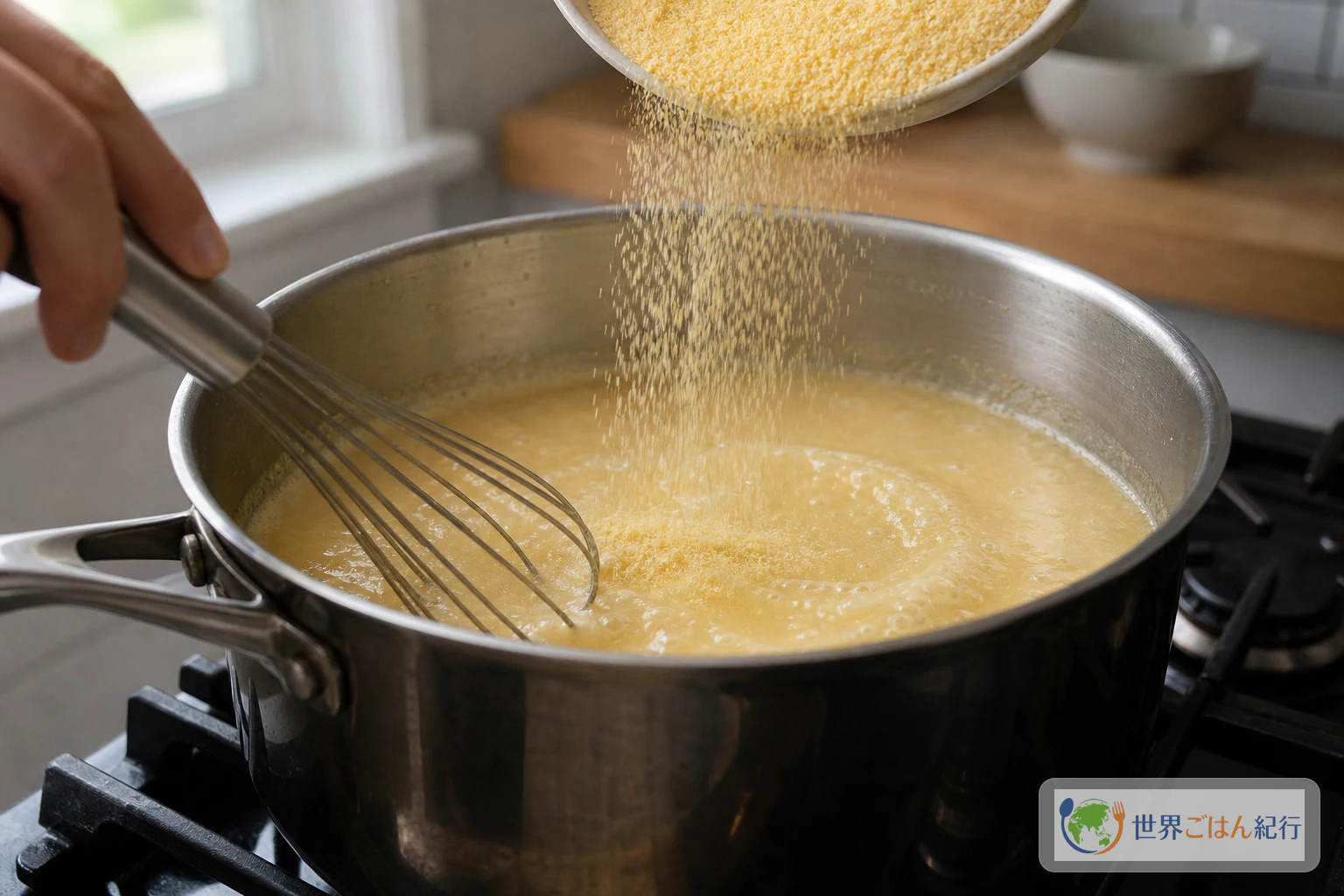
| Lumps remain | Turn off the heat, add 2 tbsp boiling water and loosen from the bottom of the pot with a whisk | Don't drop the meal into the boiling liquid all at once |
| The shrimp are tough | They won't fully regain their springiness. Cut them small and mix with the remaining sauce and grits | Arrange them in one layer and check from 1 minute 30 seconds per side |
| The sauce is too salty | Make a small amount of unsalted grits and mix the salty sauce into it; water alone just thins it | Check the salt in the order of bacon, stock, cheese |
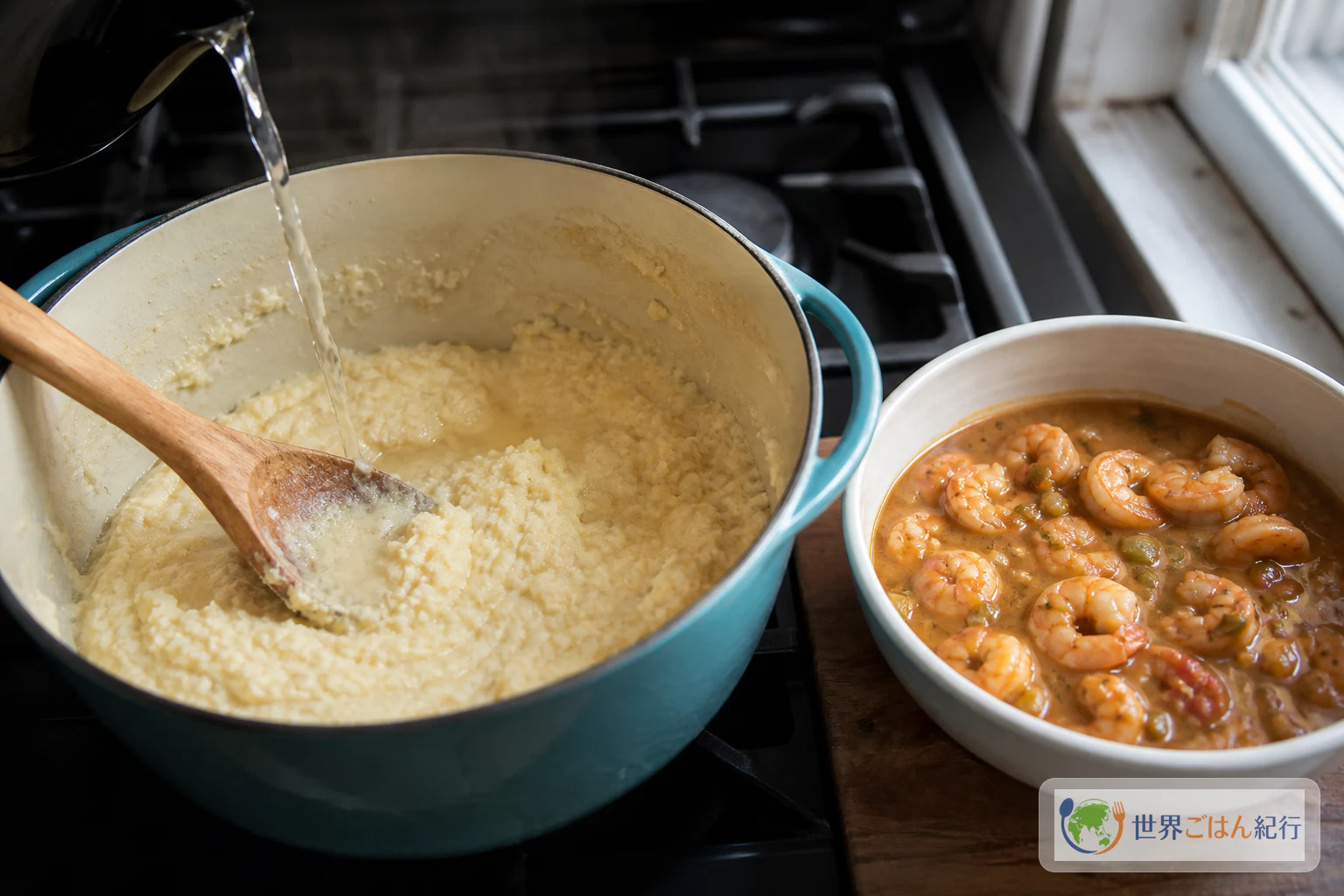
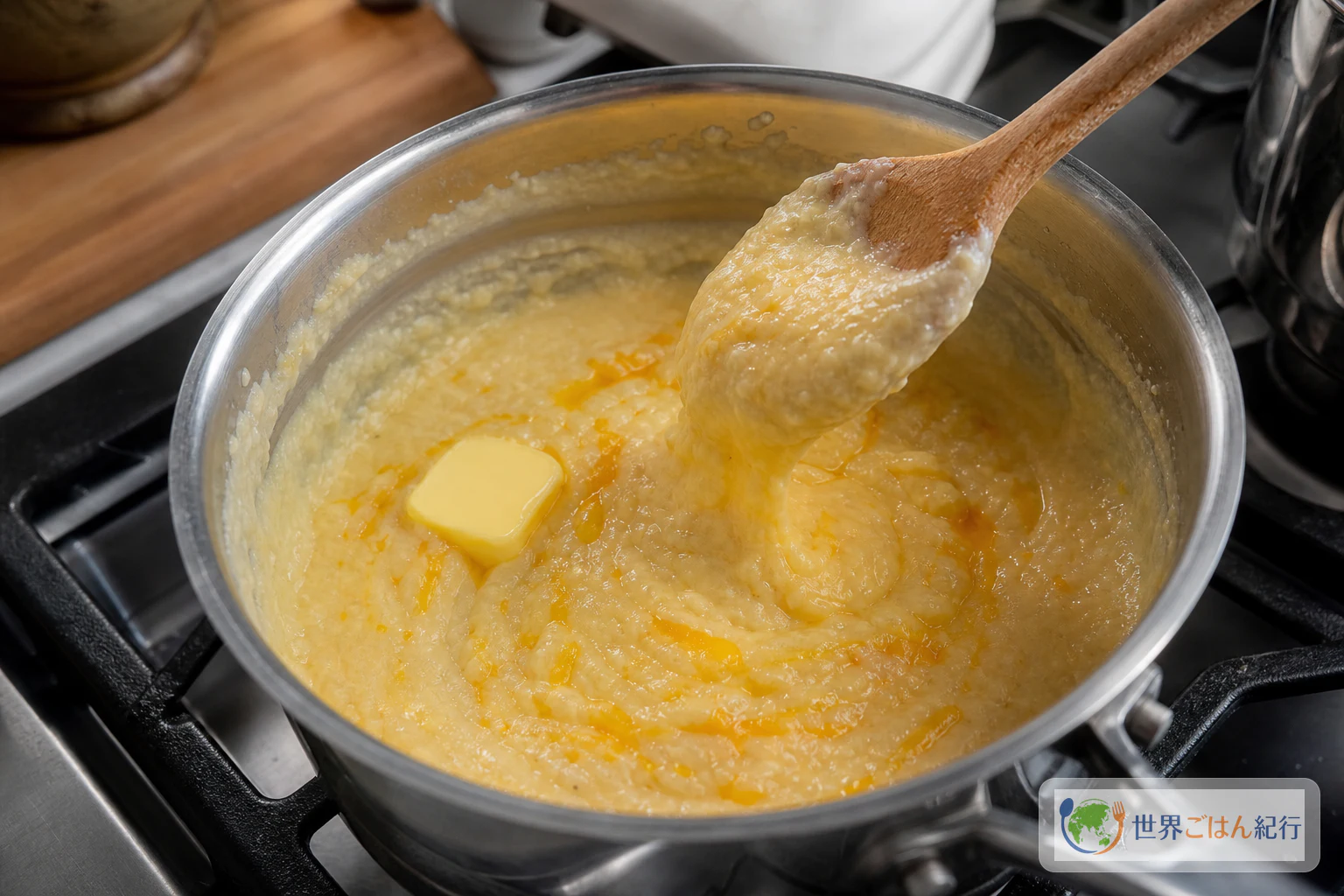
Grits firm up suddenly as they cool, so a pot that looks a little loose is just right once it reaches the plate. The shrimp sauce goes the other way: reduce it just before serving until it thinly coats the back of a spoon.
Shrimp and grits variations, storage and nutrition
Variations
Piling on more ingredients doesn't improve this dish. Change just one thing, the base porridge, the saltiness of the shrimp or the final acidity, and the same steps give you a different plate.
- Salt-and-butter grits: Leave out the cheddar and increase the butter to 1.5 oz (40 g). This lets the stock of the shrimp and the aroma of bacon come through directly.
- Rich cheese dinner version: Increase the cheddar to 3.25 oz (90 g) and the finishing lemon to 1.5 tbsp (20 ml). This plate can take a rich sauce.
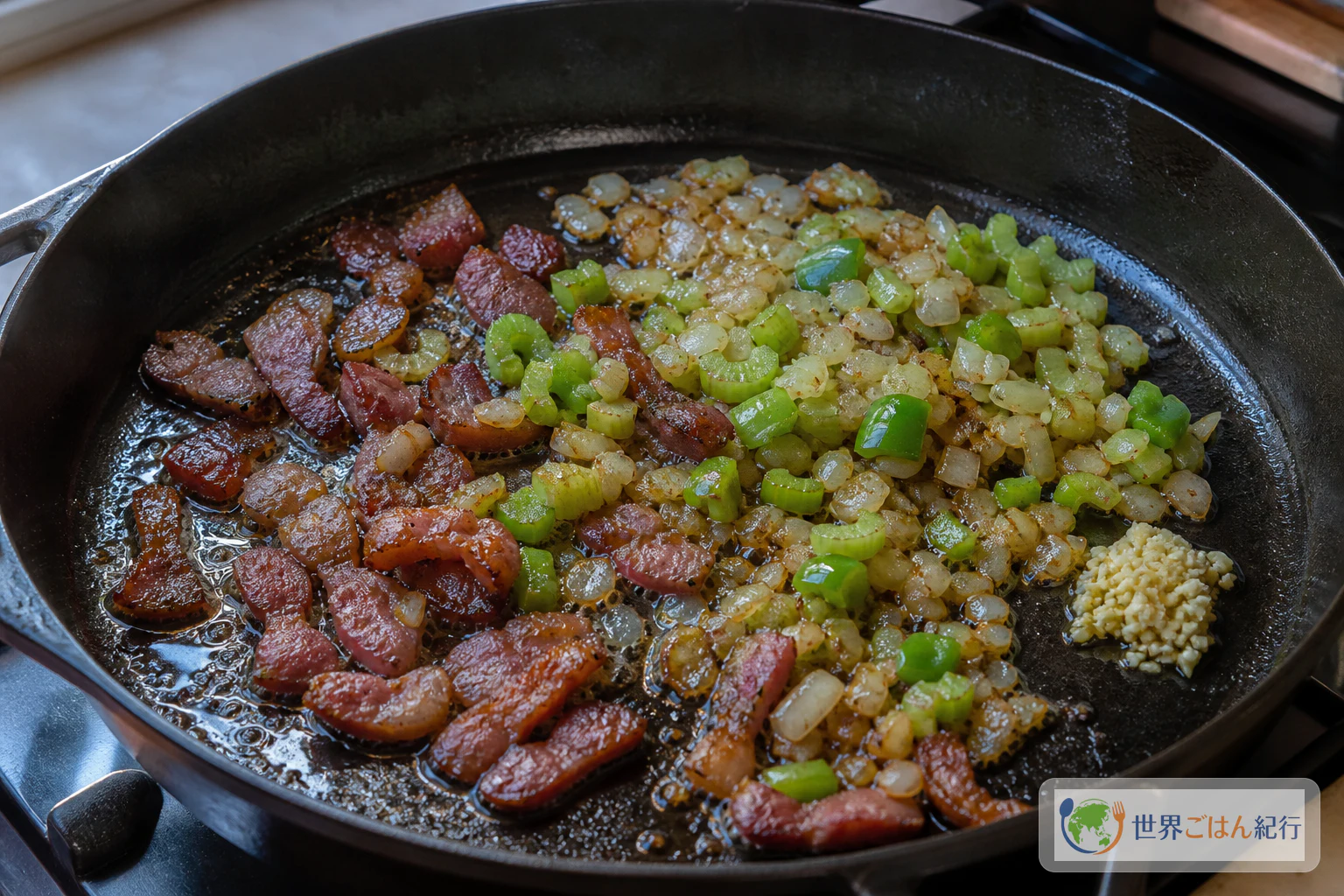
- Coastal style with tomato and okra: After cooking the aromatics, add 5.5 oz (150 g) diced tomatoes and 2.75 oz (80 g) sliced okra, and reduce the stock to ½ cup (150 ml). Simmer 5 minutes to cook off the extra moisture before adding the shrimp.
- Dividing heat plate by plate: Use sweet paprika, leave the cayenne out of the pot, and add hot sauce at the table, only to the plates that want it. The sweetness of the shrimp and the mellowness of the cheese stay intact for everyone.
- Smoky sausage: Replace the bacon with 4 oz (120 g) andouille or smoked sausage, and start with 1 g of salt. If the sausage is low in fat, add just 1 tsp oil.
- A different seafood: With 14 oz (400 g) scallops, even out the thickness and sear 2 minutes per side. With white fish, cut into 1 inches (2 cm) cubes and add them last to the sauce so they don't fall apart. The texture changes, but it's a good way to use what's in your refrigerator.
Storage
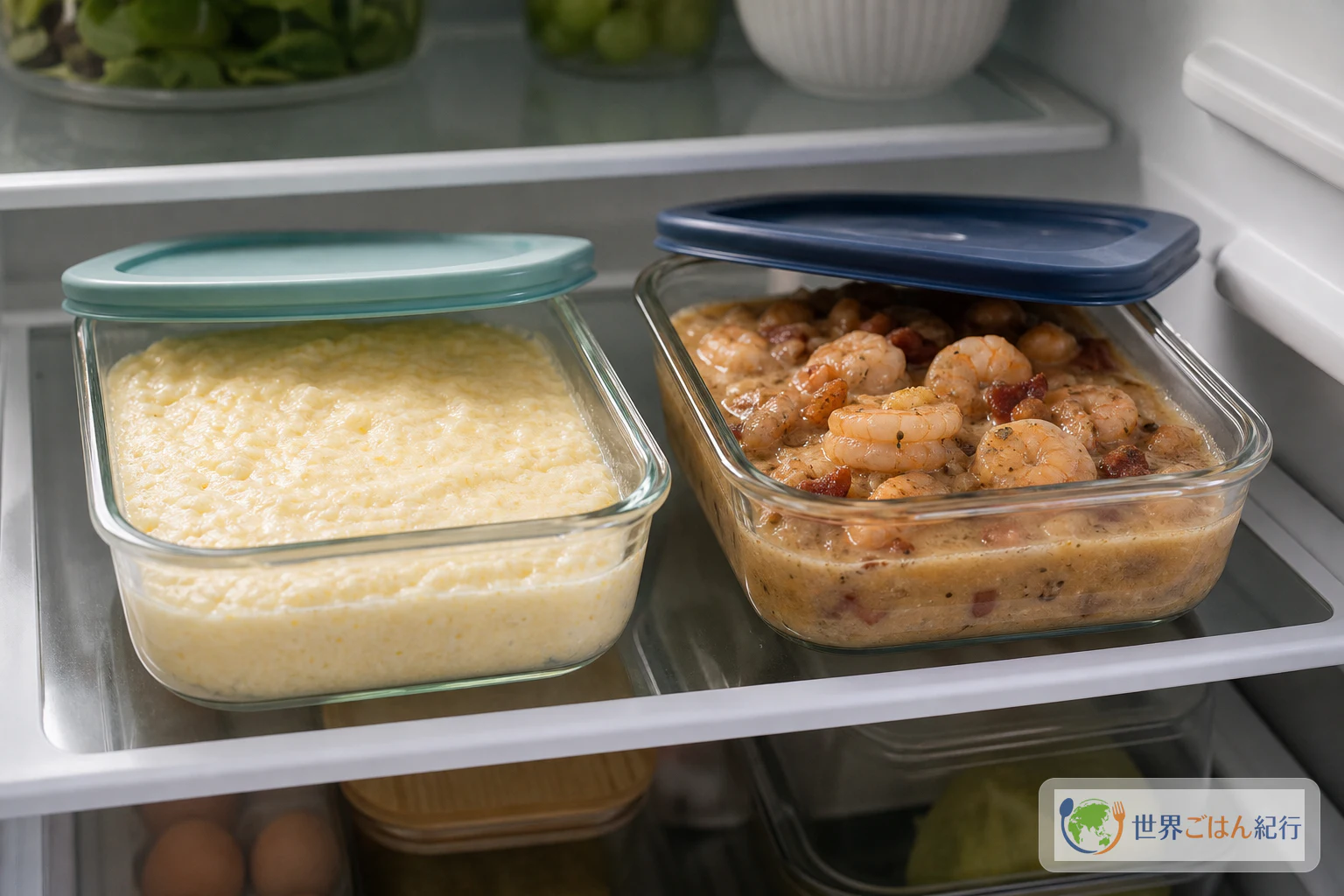
Store leftover grits and shrimp sauce in separate shallow containers. Mixed together like a rice dish, the moisture of the shrimp loosens the grits, and they tend to separate when reheated.
Refrigerate within 2 hours of cooking, or within 1 hour if the room temperature is above 90°F (32°C). To reheat, add 1–2 tbsp water or milk to the grits and warm them slowly over low heat. Warm the shrimp sauce in a separate pot without letting it boil, so the shrimp don't toughen. Refrigerated, the dish keeps safely for up to 4 days, but the texture is best the next day.
Grits alone can be frozen flat in single portions. After thawing, loosen them with milk and butter, or sear them into grits cakes. Don't freeze the shrimp with them; they tend to toughen when thawed.
Nutrition (approximate, per serving)
| Item | Approx. |
|---|---|
| Energy | about 735 kcal |
| Protein | about 1.25 oz (34 g) |
| Fat | about 1.5 oz (39 g) |
| Carbohydrates | about 2.25 oz (63 g) |
| Dietary fiber | about 4 g |
| Salt equivalent | about 3.3 g |
The figures change with the bacon, cheese, stock and shrimp size you use. To reduce salt, use unsalted stock, cut the bacon to 2 oz (60 g), and make up the flavor with lemon and black pepper.
Frequently asked questions
Are grits and polenta the same?
Both are made by grinding and cooking corn, but the raw material, the grind and the regional names differ. For this dish, look for "coarsely ground" rather than a particular product name. Fine polenta works with the adjustment for fine meal above, though the grains will have less texture.
Can I make it without bacon?
Yes. Sauté the onion and celery in 2 tsp olive oil and switch to seafood stock for a lighter taste. To bring back the outline the smokiness gave, use smoked paprika, or add a little more black pepper at the end.
Can I prepare it the day before for breakfast?
Only the grits. They firm up in the refrigerator, so the next morning add 2 tbsp milk or water at a time and bring them back to a porridge consistency over low heat. Make the shrimp sauce right before eating, so the shrimp stay tender.