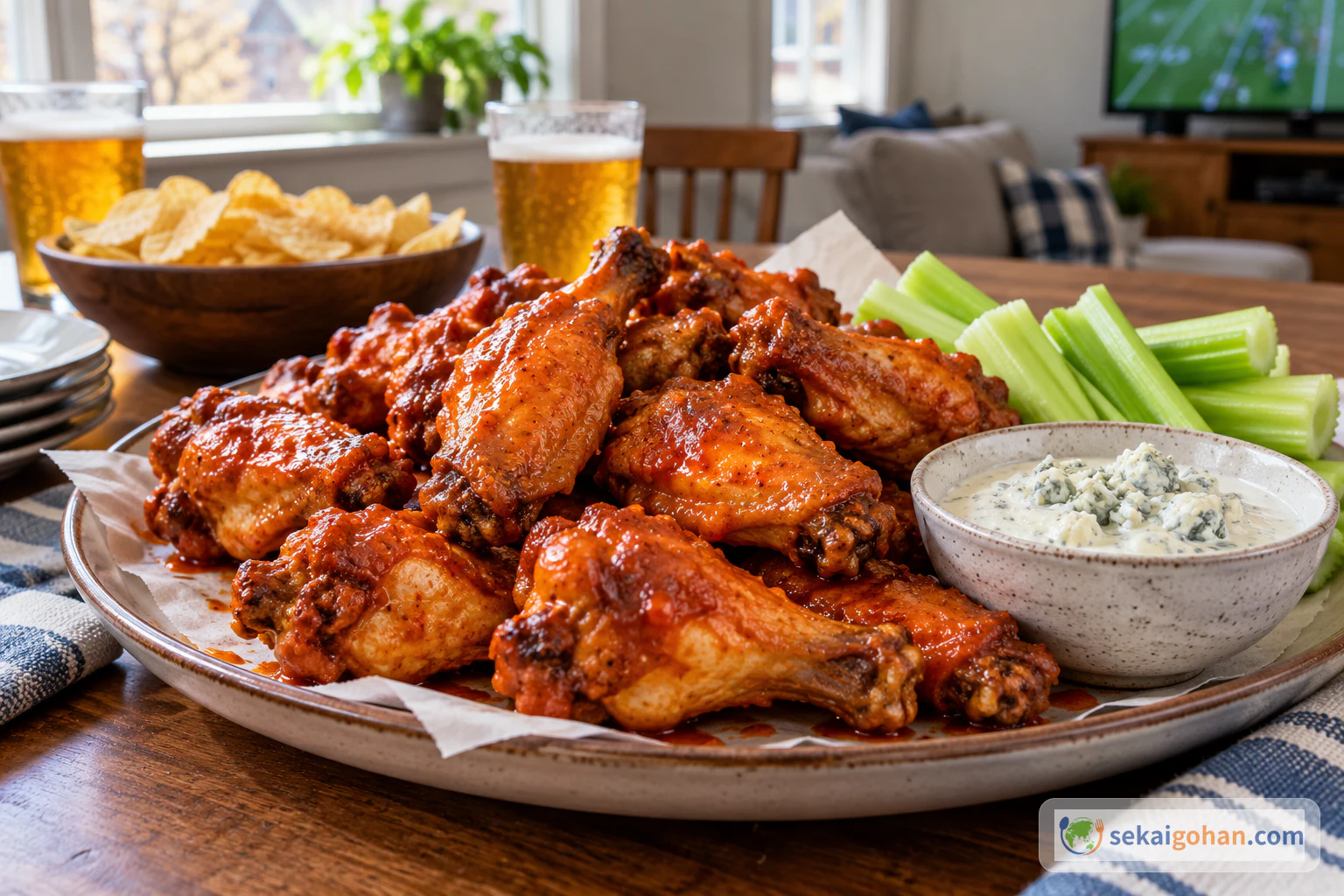
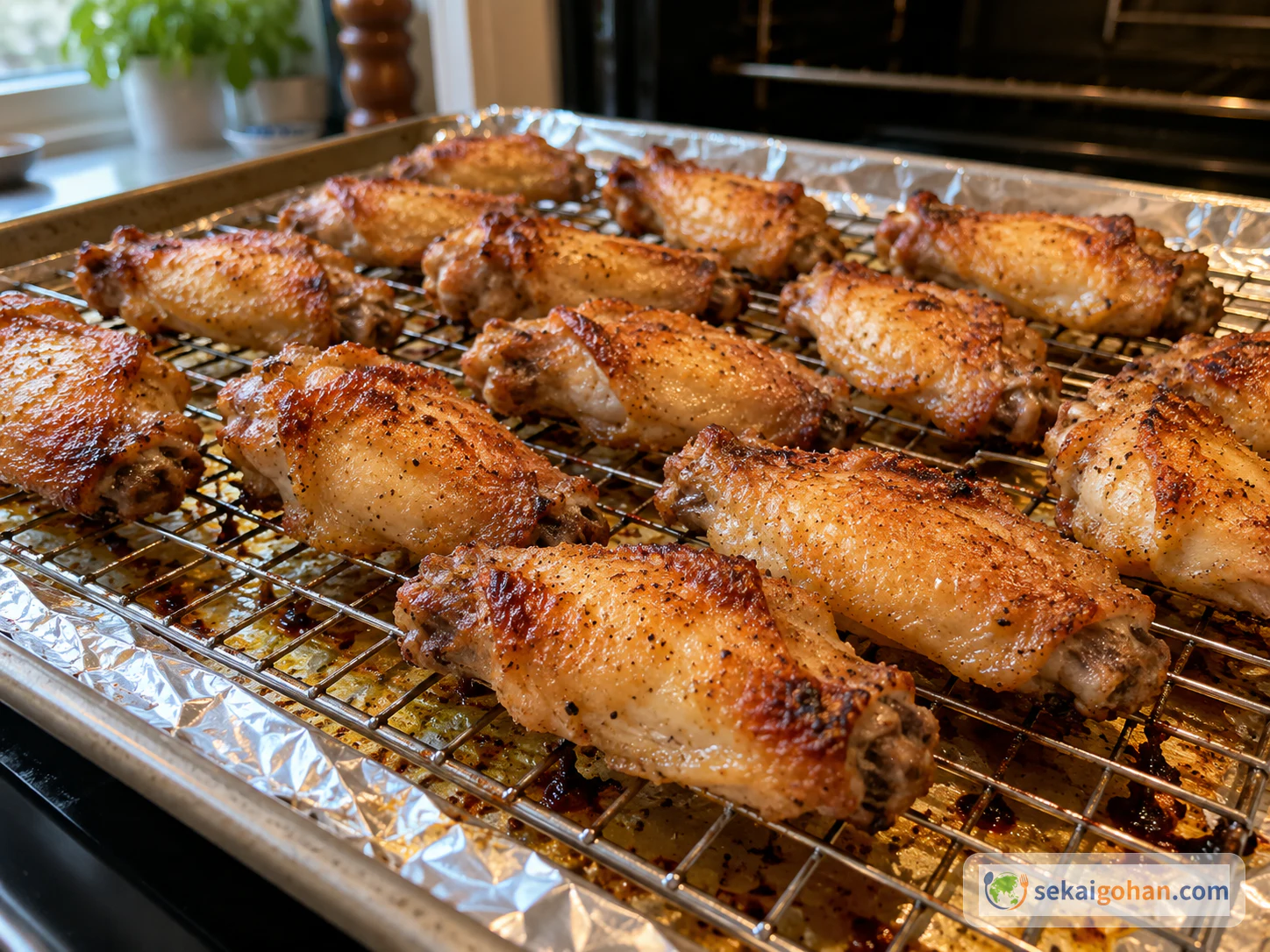
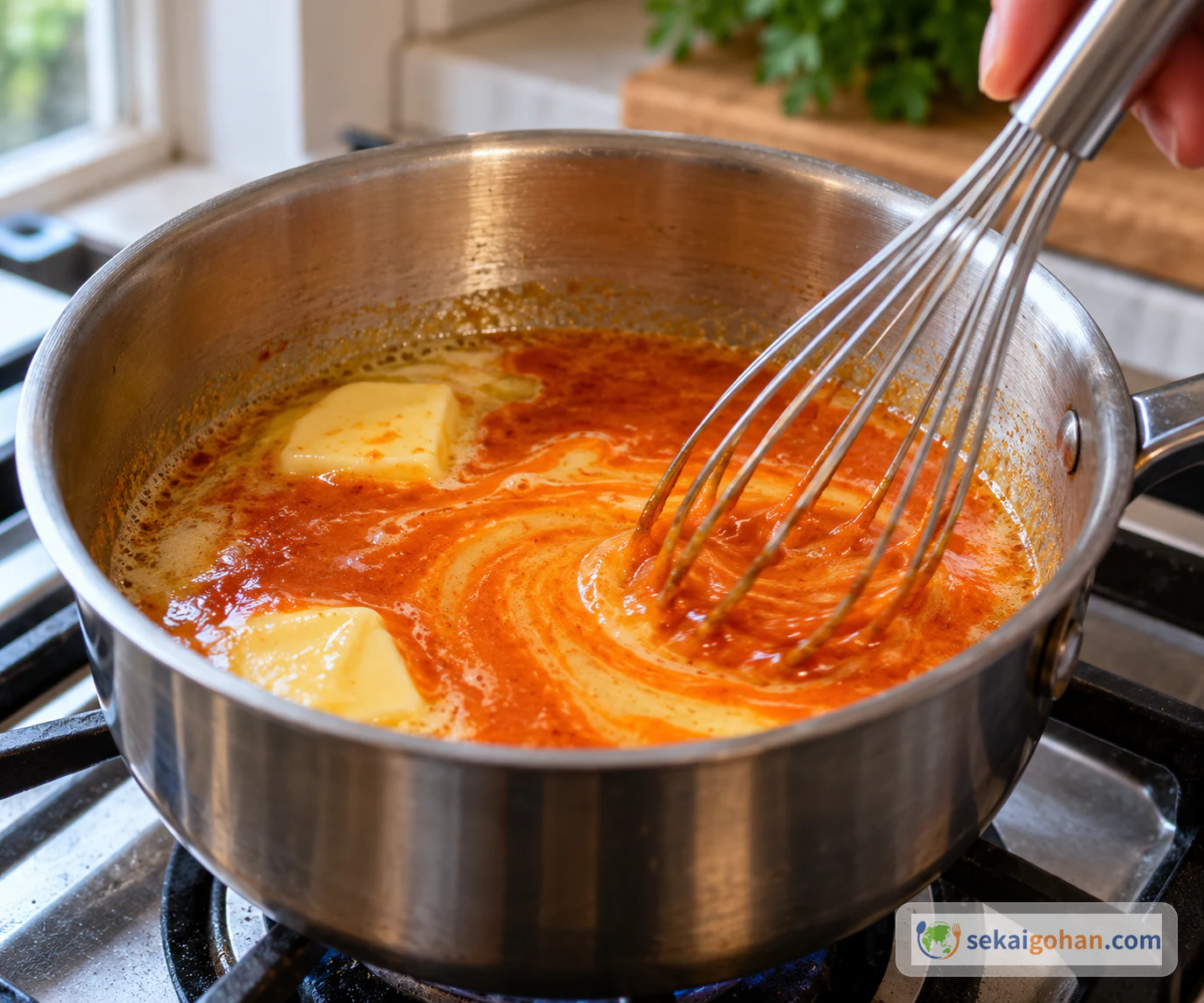
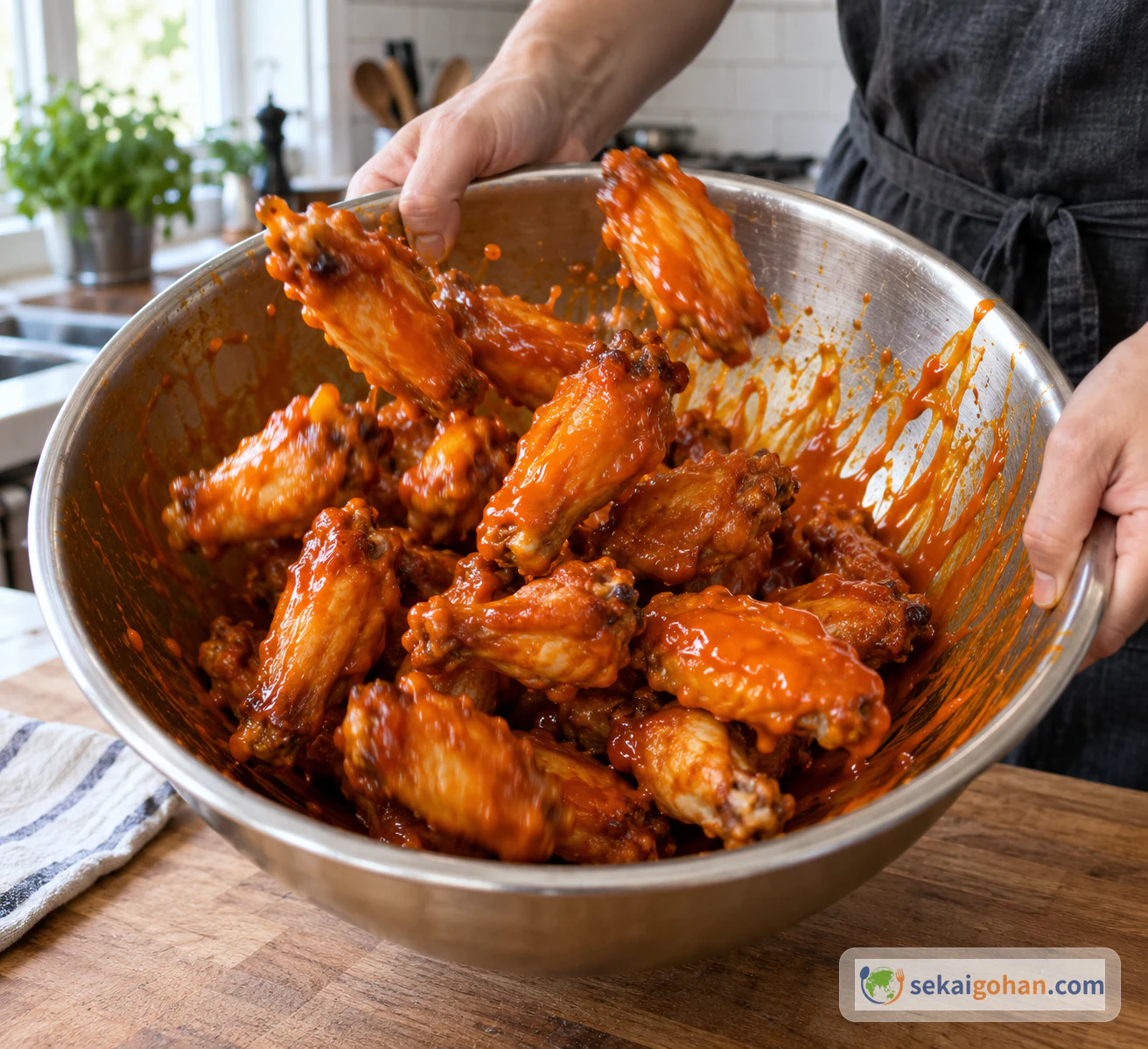
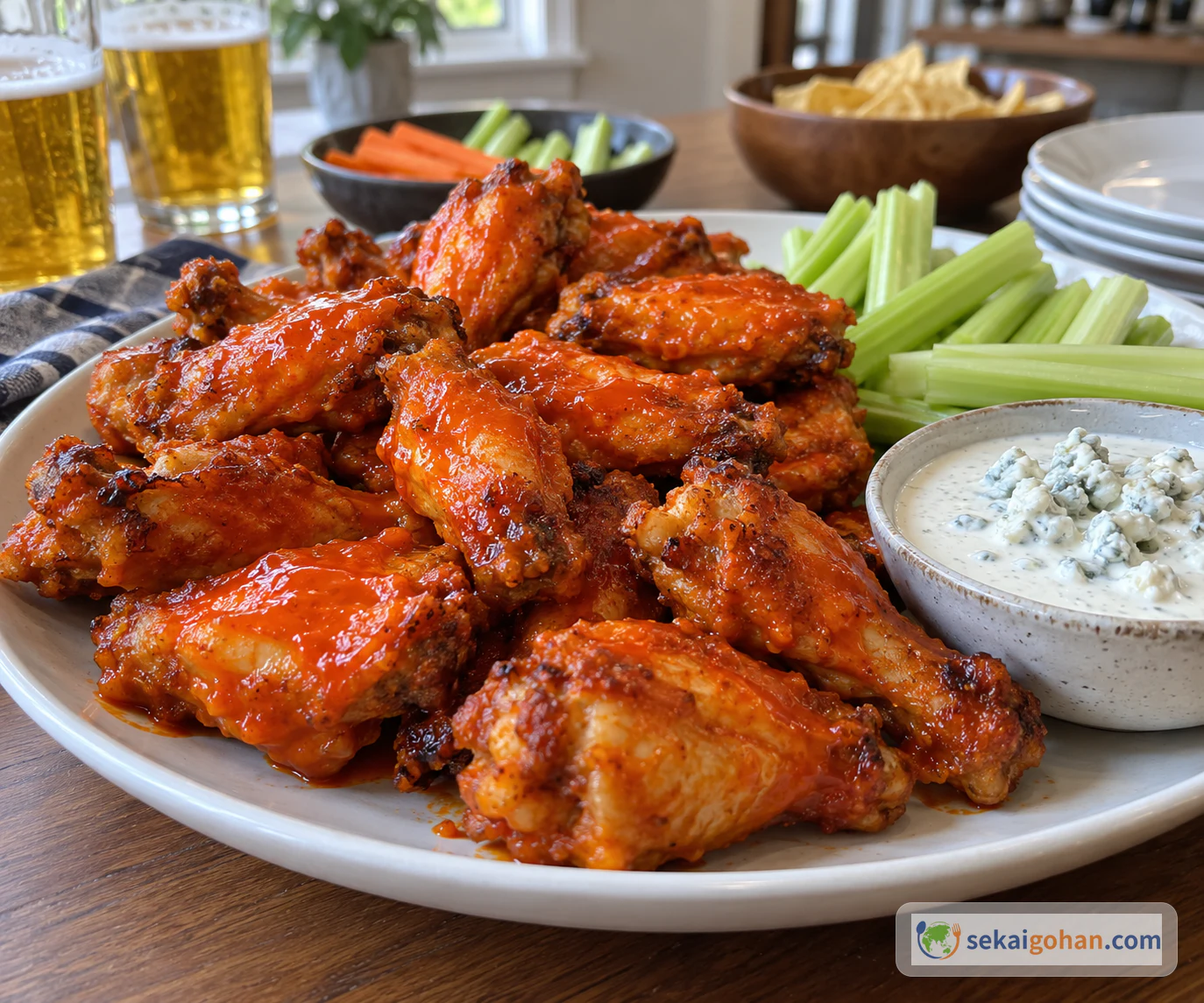
The wings come out of the oven browned and blistered, and only then, just before anyone eats, do they go into a bowl with a red sauce of butter and cayenne hot sauce. They land on a shared platter beside celery sticks and a small bowl of blue cheese dressing. Everyone eats with their fingers, going back and forth between the hot, tangy wings and the cold dip. The dish comes from Buffalo, New York, and the pleasure is in the contrasts: toasty skin, chile heat and vinegar tang, the roundness of butter, and the cool crunch of celery.
About Buffalo Wings
The Name and the Dish
Buffalo is a city in New York State, and the dish has nothing to do with buffalo meat. Buffalo-style wings are chicken wings split into two sections, fried or baked, and tossed in cayenne hot sauce and butter. Boneless chicken products and the sweet-and-spicy wings found elsewhere are made differently and belong to different occasions.
Oven or Fryer
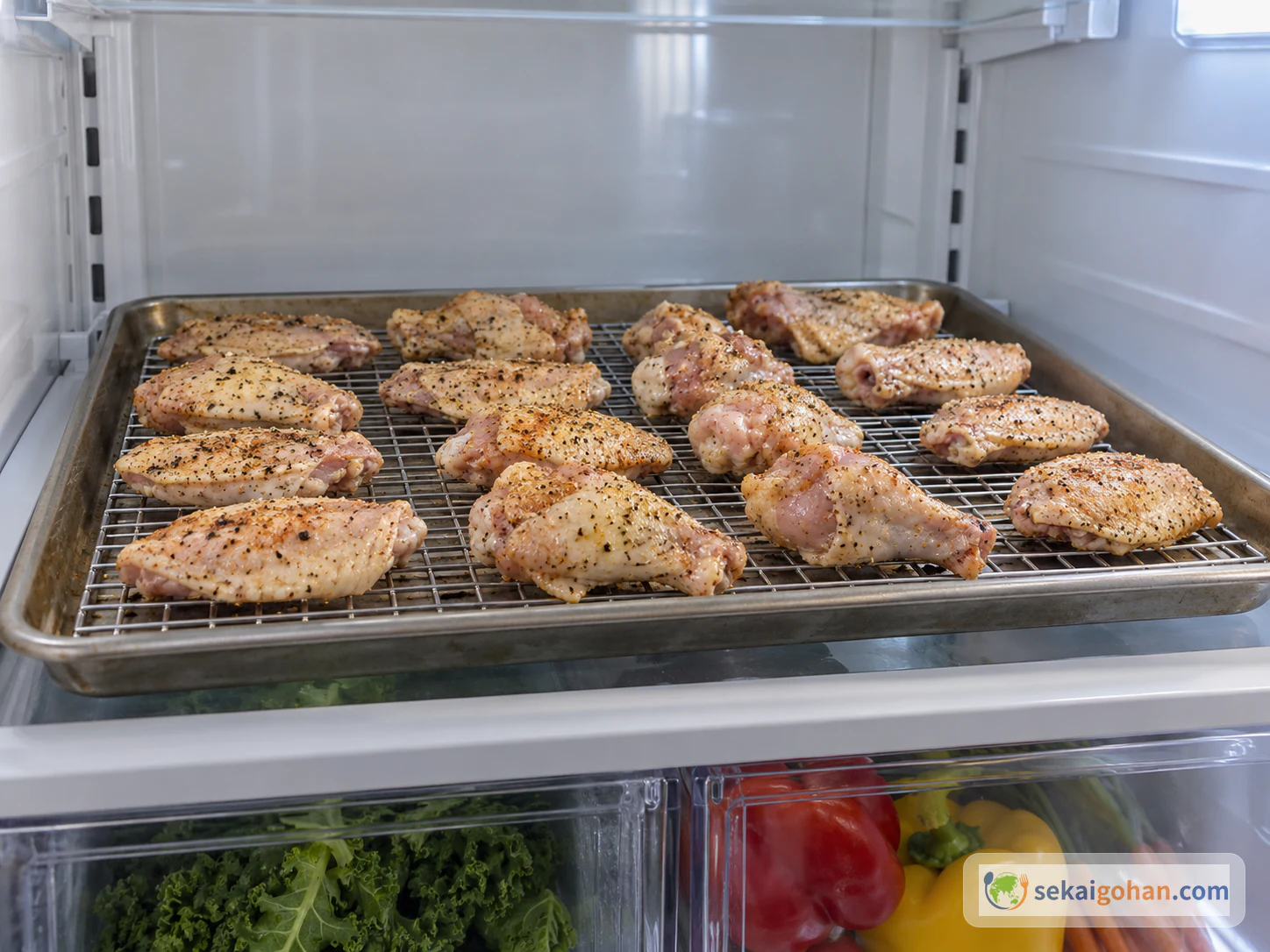
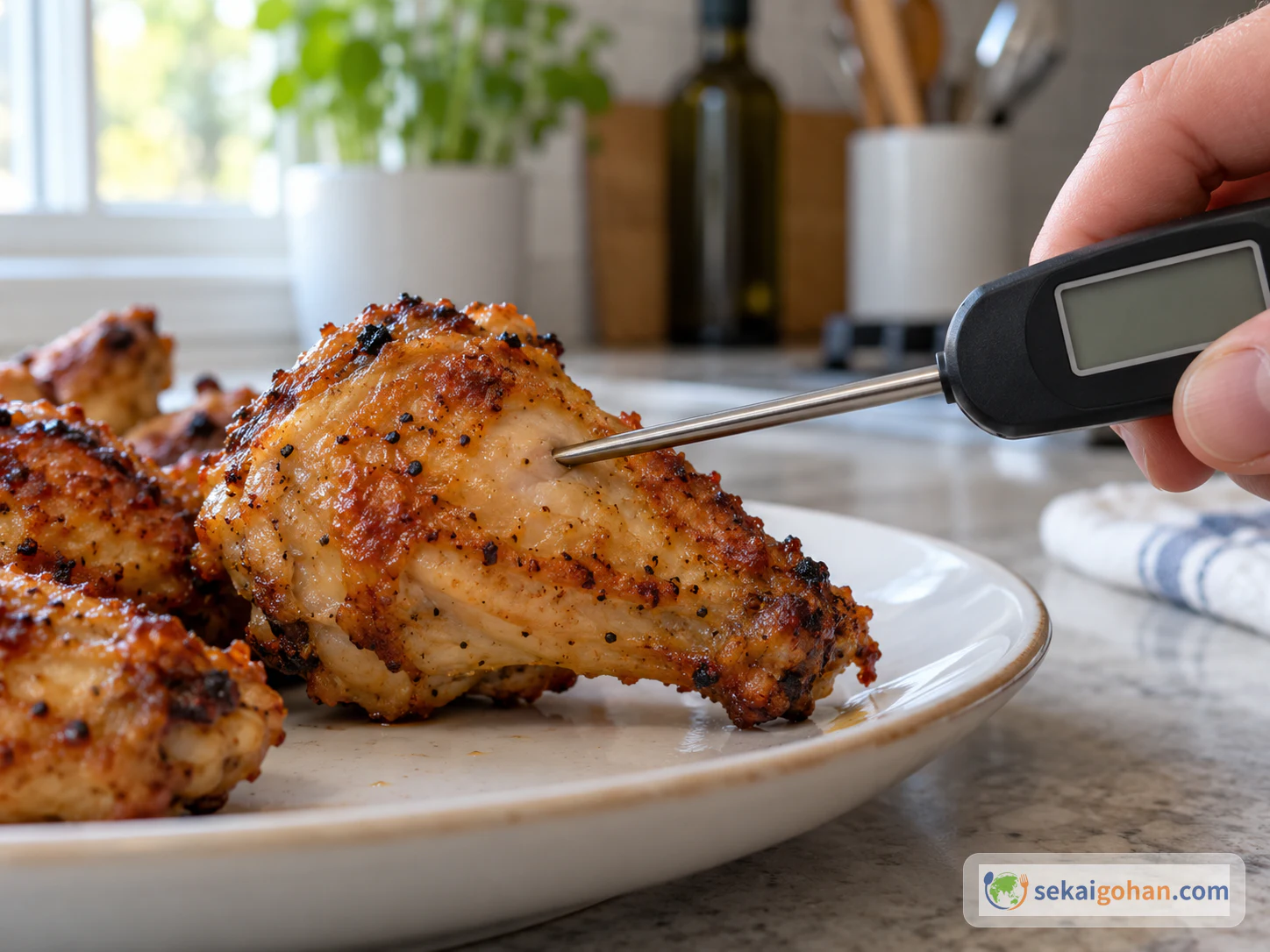
The classic form is deep-fried at 350°F (about 177°C) for 12–15 minutes. This version swaps the pot of oil for refrigerator drying and a long, hot bake, which means less cleanup but more lead time: the wings dry uncovered in the refrigerator for at least 8 hours before baking. Uncovered drying and baking powder help the surface crisp, and dry skin holds sauce better. Check doneness with the thermometer in step 5 rather than by the clock.
Where Buffalo Wings Began
The best-known story places the first Buffalo wings at the Anchor Bar in 1964, though the details are disputed. In one account, the bar made use of a mistaken delivery of wings; in another, the wings were a late-night snack for regulars. Both link Teressa Bellissimo to the core of the dish: wings split, deep-fried, sauced, and served with celery and blue cheese dressing.
Fried wings themselves are older in Buffalo. The Clarendon Hotel menu from 1857 lists "Chicken Wings, fried," which shows they were served in the city long before the 1960s, though not as the modern sauce-coated dish.
The city has another wing story, too. In 1966, John M. Young promoted uncut breaded wings with a tomato-based Mambo Sauce at Wings & Things. That is a separate line of Buffalo wing culture rather than a rival version of the same dish.
Wings in Buffalo Today
In Buffalo, they were often simply called "wings." Today they belong to home gatherings, game days and shared plates at bars, and they became a fixture at sports bars and during football because they are easy to share and comparatively inexpensive. To explore more of the country's cooking, see our United States dishes.
Ingredients: About 4 Snack Servings
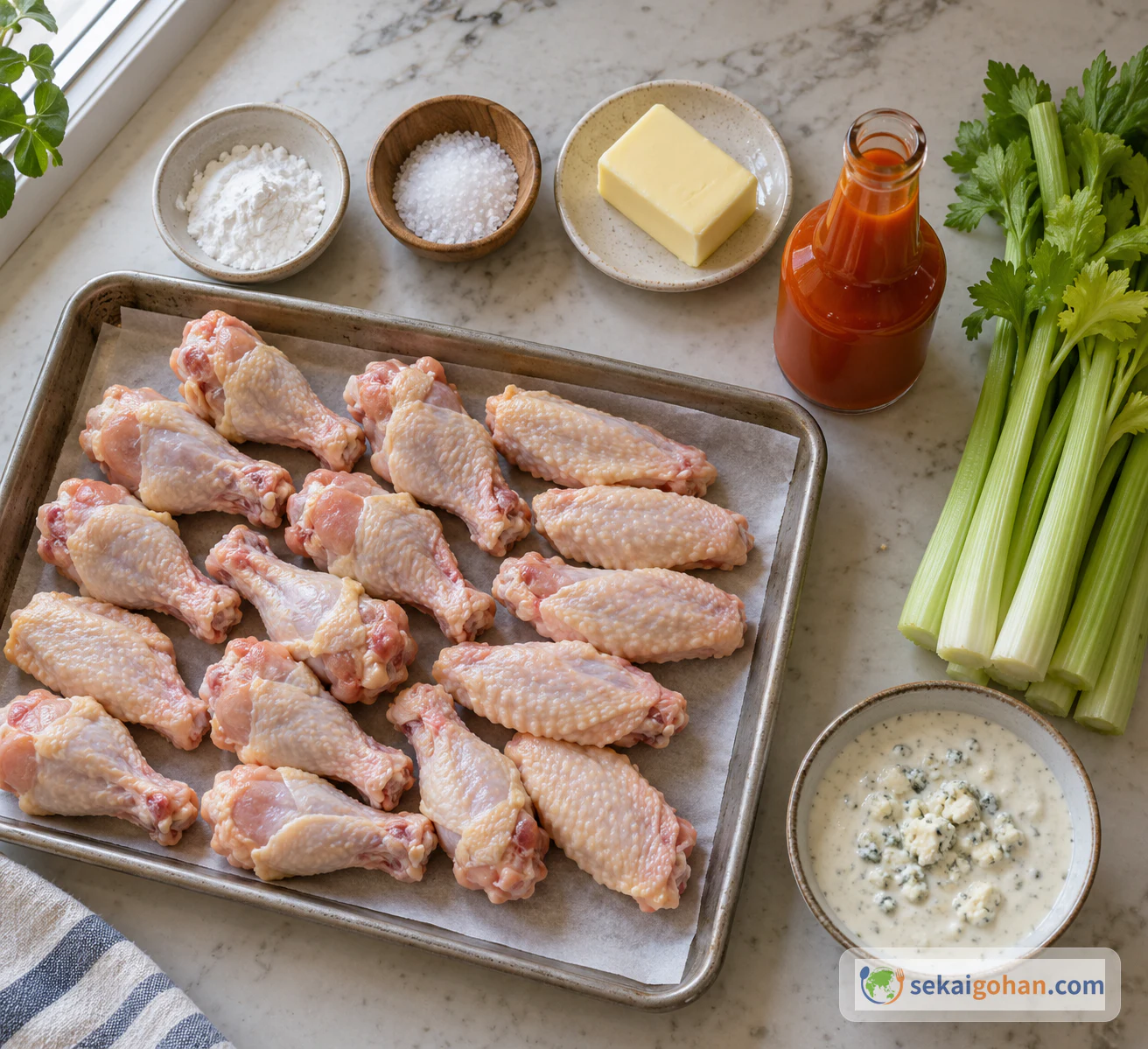
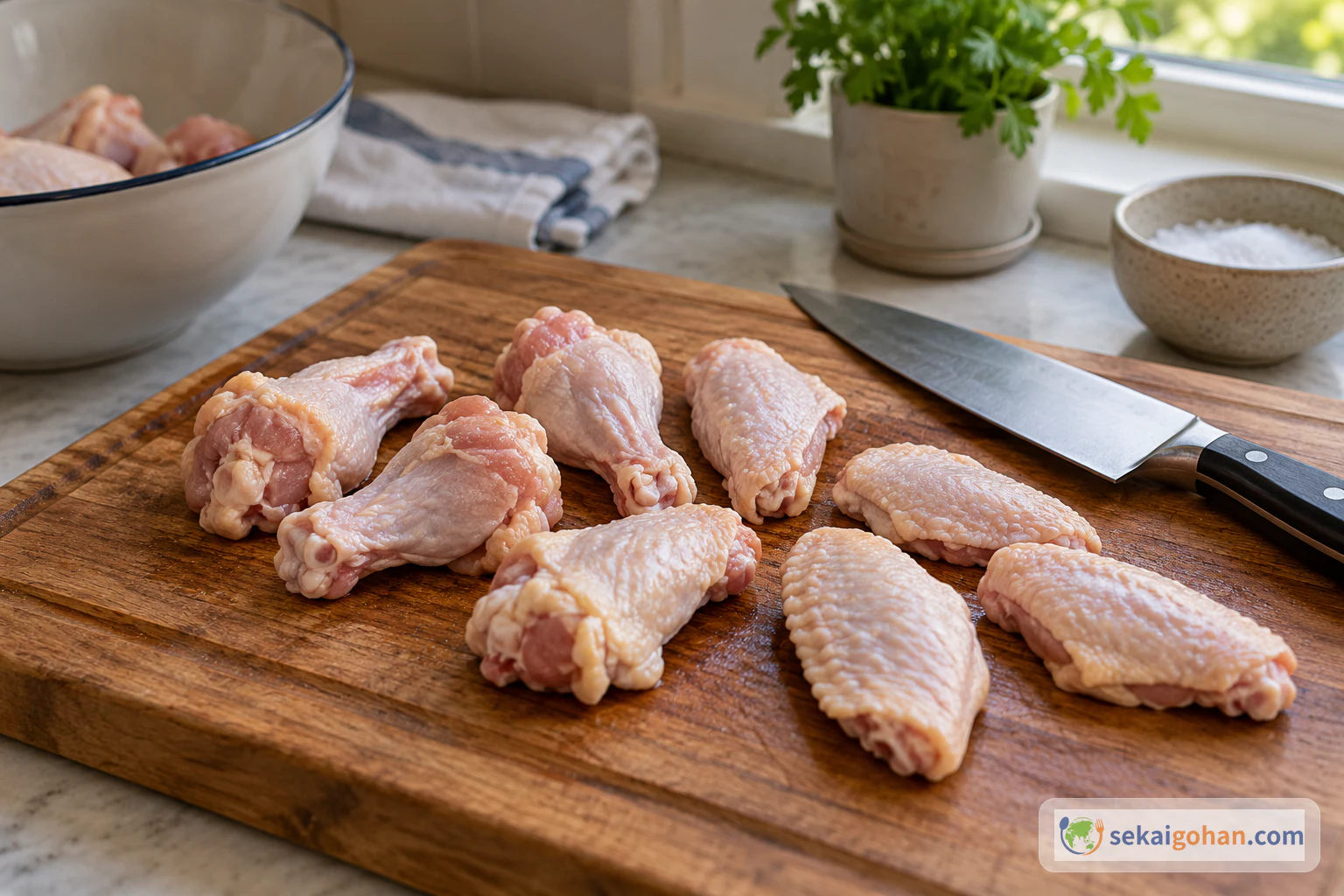
Think of this as about 4 servings for snacking, not a main course. Use only the flats and drumettes. Wing tips are not part of this dish, but you can save them for stock.
Equipment
- Oven
- Rimmed baking sheet
- Wire rack that fits inside the baking sheet
- Knife and cutting board for raw chicken (if your wings are not already split)
- Paper towels
- Large bowl for the raw wings, and a separate clean one for the cooked wings
- Tongs
- Small saucepan
- Food thermometer
Choosing Ingredients for Buffalo Wings
Wings. Pre-split flats and drumettes save time; if you buy whole wings, cut them at the joints. Boneless thigh meat is not an equal substitute, since both the texture and the way you eat it change.
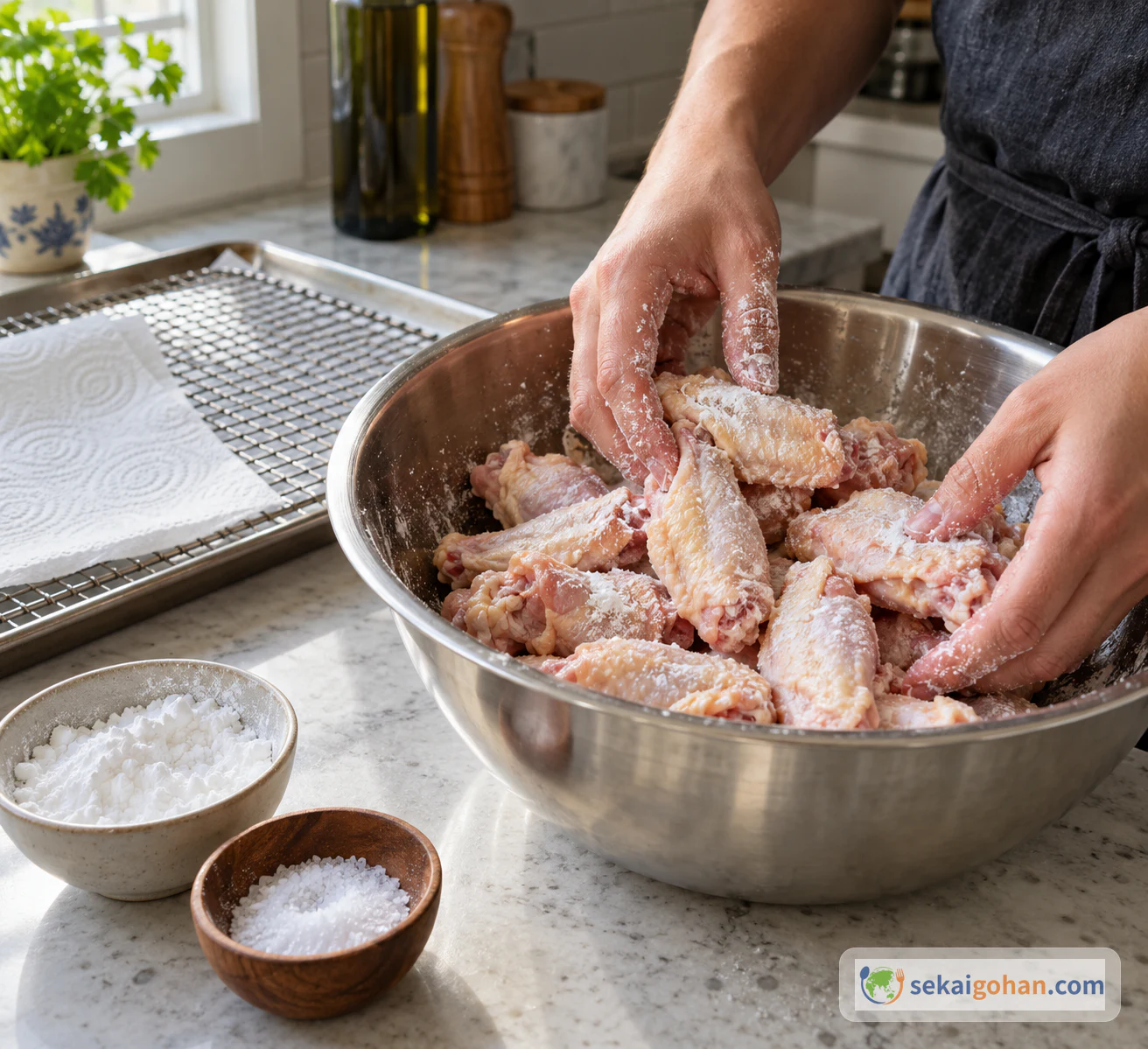
Baking powder. Stick with baking powder. Baking soda can leave a metallic bitterness, and cornstarch and similar starches won't do the same job.
Butter. Salted butter makes the finished wings saltier, and vegetable oil changes the flavor and richness of the sauce.
Hot sauce. The sauce shapes the whole dish. Tabasco-style sauces differ in acidity, heat and thickness, so the same amount will taste different. If you can't find a cayenne sauce like Frank's RedHot, add another a little at a time and expect something other than the Buffalo taste.
Blue cheese dressing. Store-bought is fine. Cayenne sauce and blue cheese dressing are easier to find at import food shops or online. Ranch is a popular choice across the United States, but blue cheese is the Buffalo-style pairing, so start there.
The butter and blue cheese dressing contain milk. Check the ingredient labels on your sauce and dressing, because some products contain wheat or other allergens.
Method: Dry the Skin, Bake, Check, Then Sauce
The wings need 8–24 hours uncovered in the refrigerator before baking. Sauce them only when you are ready to eat.
Fixing Common Buffalo Wing Problems
| Problem | What to check | What to do |
|---|---|---|
| Soft skin | Surface moisture, drying time, whether you used a rack, crowding, time since saucing | Dry thoroughly, give the wings space on the rack, and sauce just before eating |
| Weak browning | Preheating, crowding, too little drying | Fully preheat, spread the wings out, and dry for at least 8 hours. Skip the baking soda |
| Bitter or metallic taste | Baking soda used in place of baking powder | Use baking powder next time |
| Browned but not cooked through | Internal temperature, shelf position, wing size | Go by the thermometer, not the color. Keep cooking any wing under 165°F (74°C), and rethink the shelf position next time |
| Separated sauce | Butter heated too hard | Keep it below a boil, mix quickly while warm, and add it to the wings a little at a time. The flavor still works even if it doesn't fully combine |
| Too hot or too mild | Ratio of butter to hot sauce | Add more butter for less heat and tang; raise the share of hot sauce for more heat |
Serving, Storing and Varying Buffalo Wings
Buffalo orders commonly come in mild, medium and hot, so shifting the balance of butter and hot sauce is well within the spirit of the dish. Whatever the heat level, sauce the wings at the last moment and serve them with celery and the cold dip.
Do not leave cooked wings out for long, and never leave them on the table for 2 hours or more. Cool leftovers, give them quick refrigeration, and eat them soon.
Leftovers should be reheated until hot all the way through; check with a thermometer. The skin tends to lose its crispness and won't always fully recover, so warm the wings on a rack in an oven or toaster oven and add any sauce just before eating.
Frequently Asked Questions
Which parts of the wing are used?
Mainly the flat (wingette) and the drumette. Use split wings, with the tips removed.
Can I leave out the baking powder or use baking soda?
Without it, you lose its help in drying and blistering the skin. Baking soda is no replacement, since it can leave a metallic bitterness.
What temperature makes the wings safe to eat?
Cook all poultry to 165°F (73.9°C). For these wings, make sure the thickest part of every wing reaches at least 74°C, measured with a food thermometer away from the bone. Rely on the thermometer rather than appearance or clear juices.