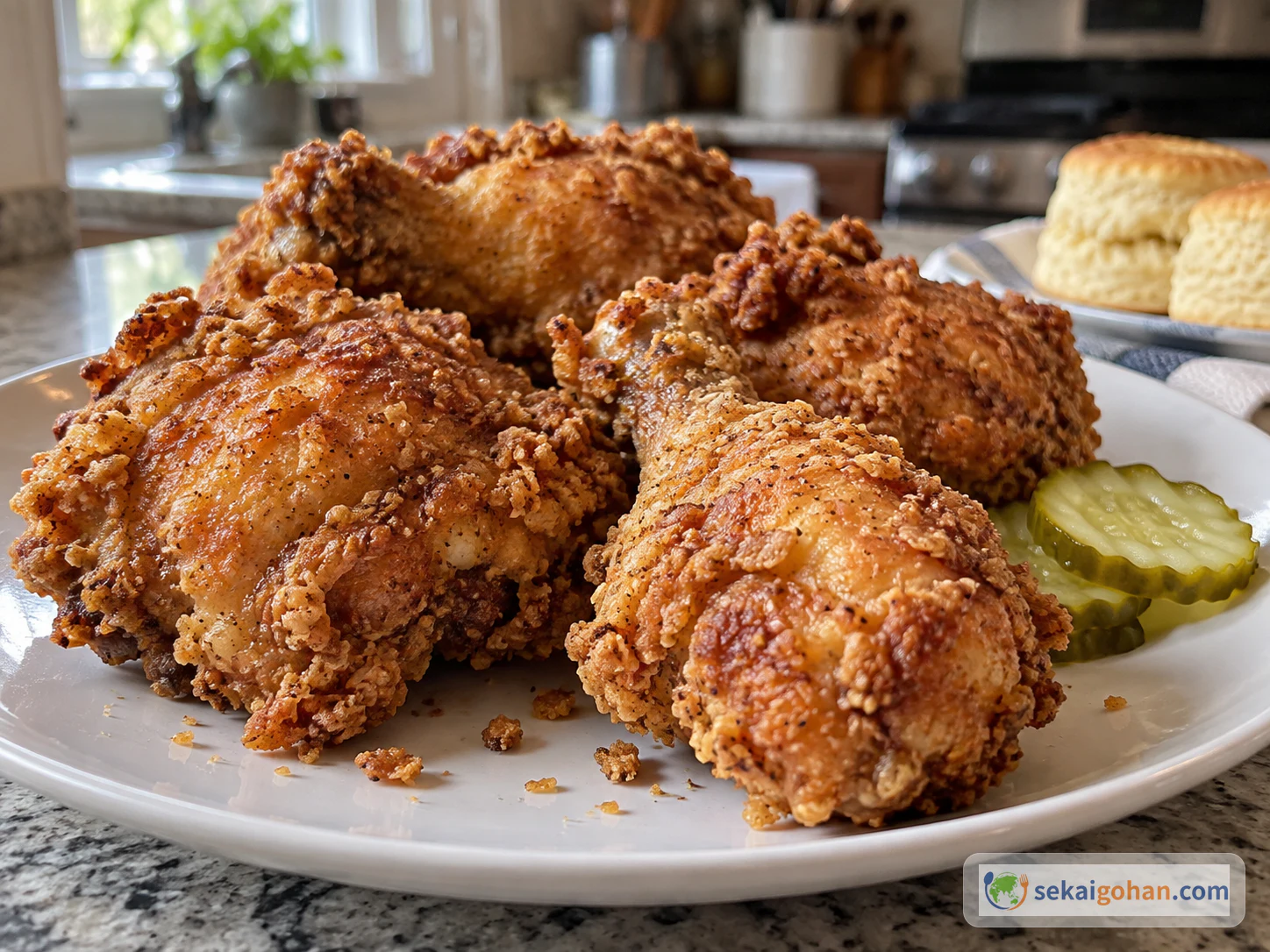
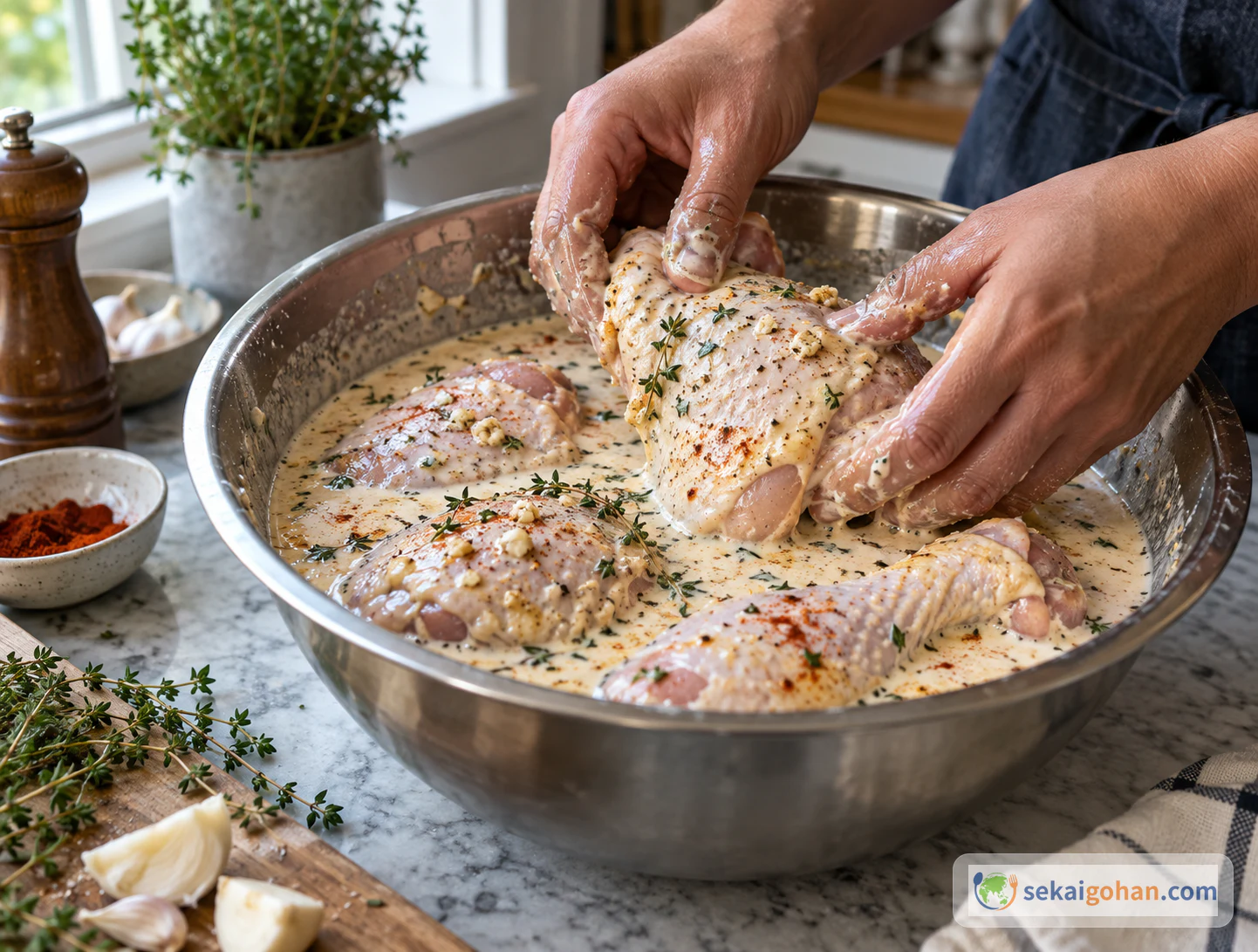
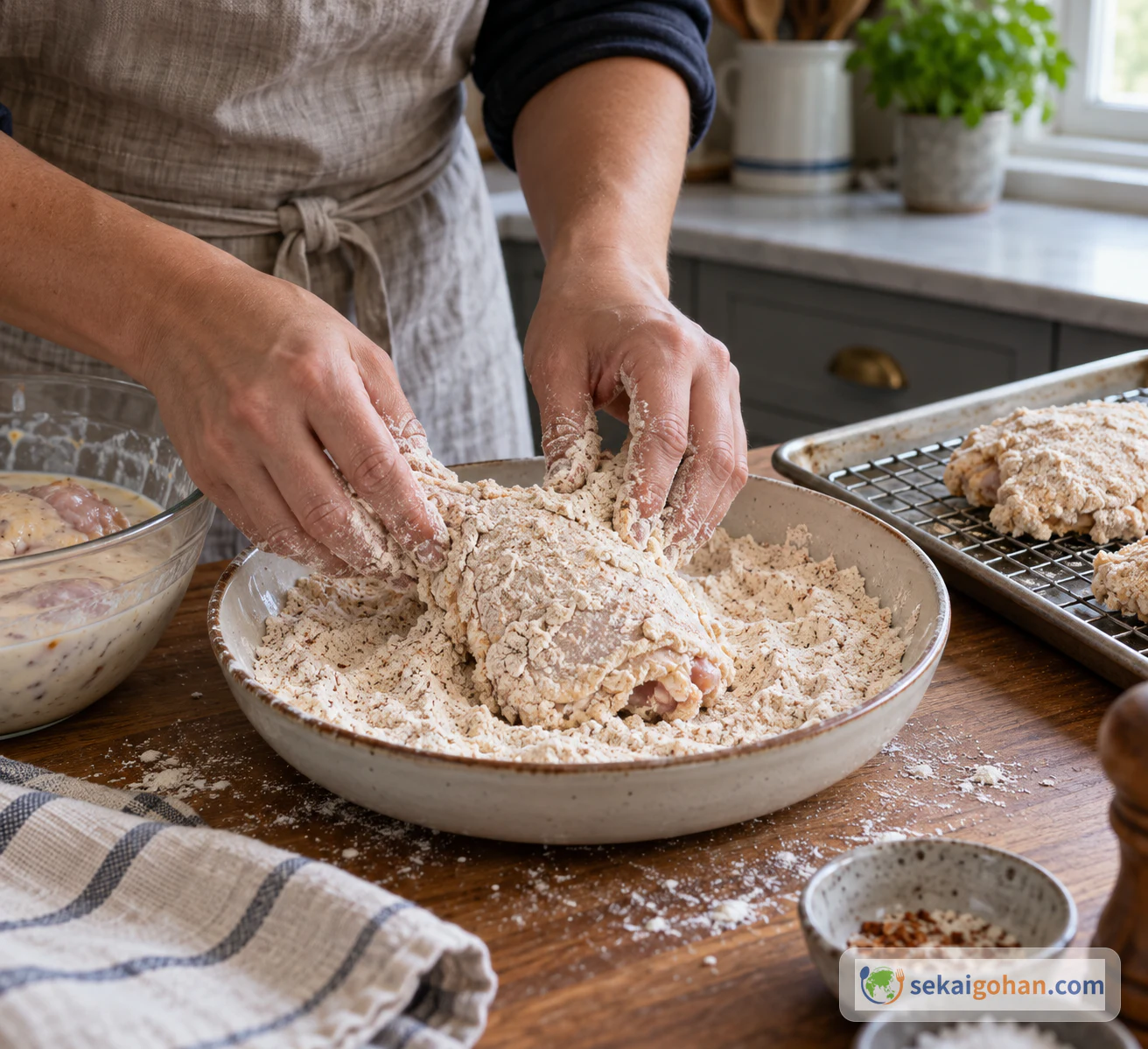
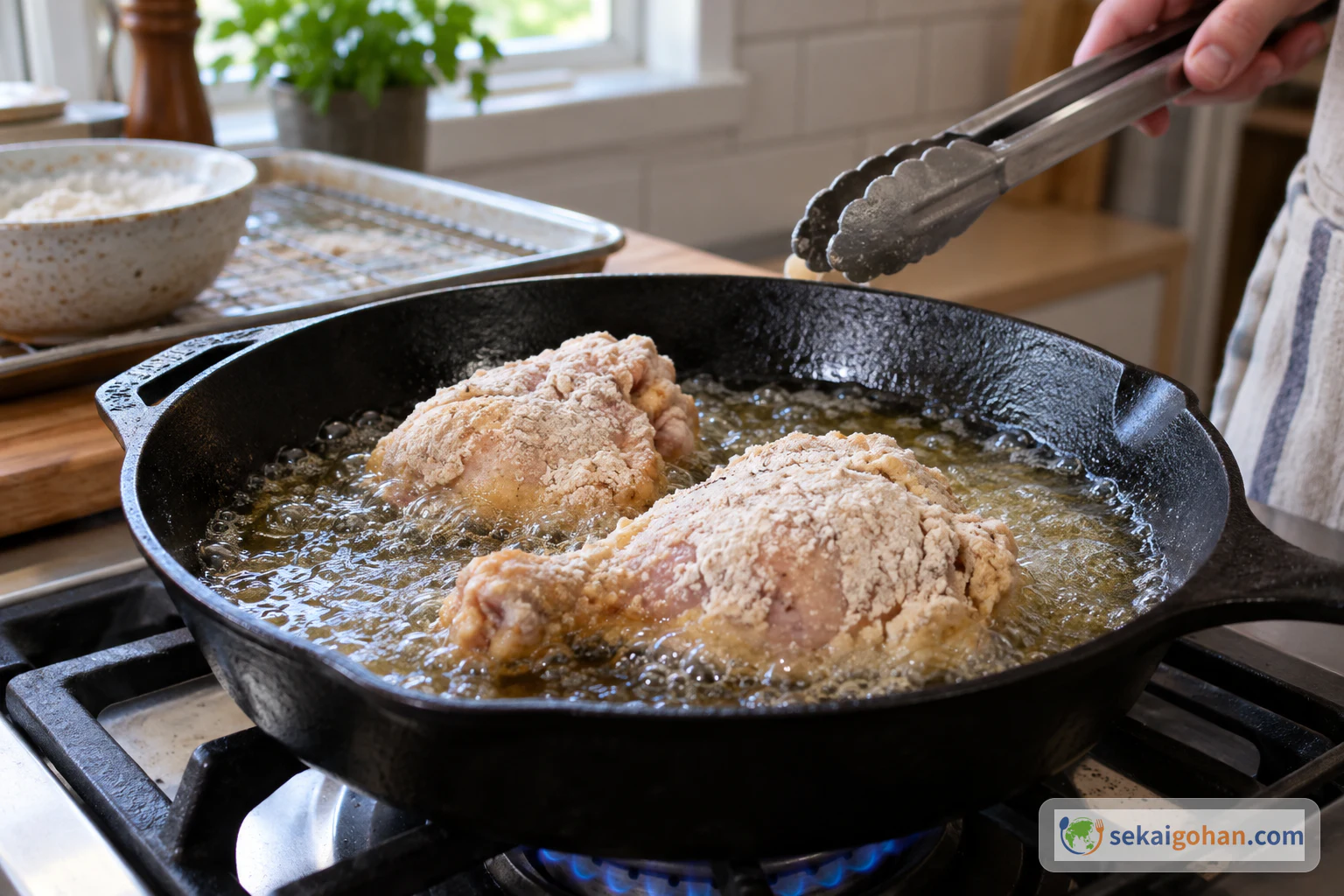
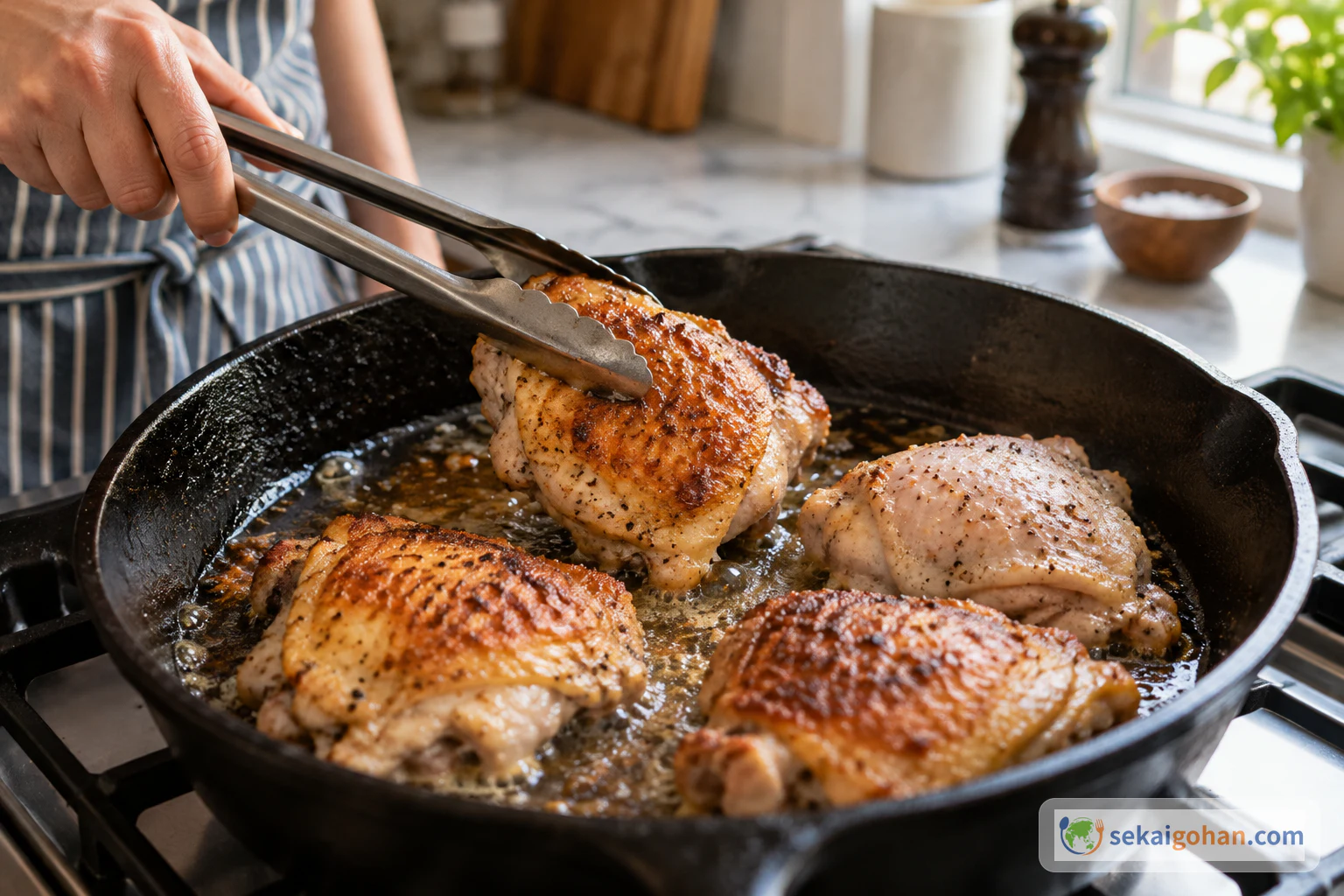
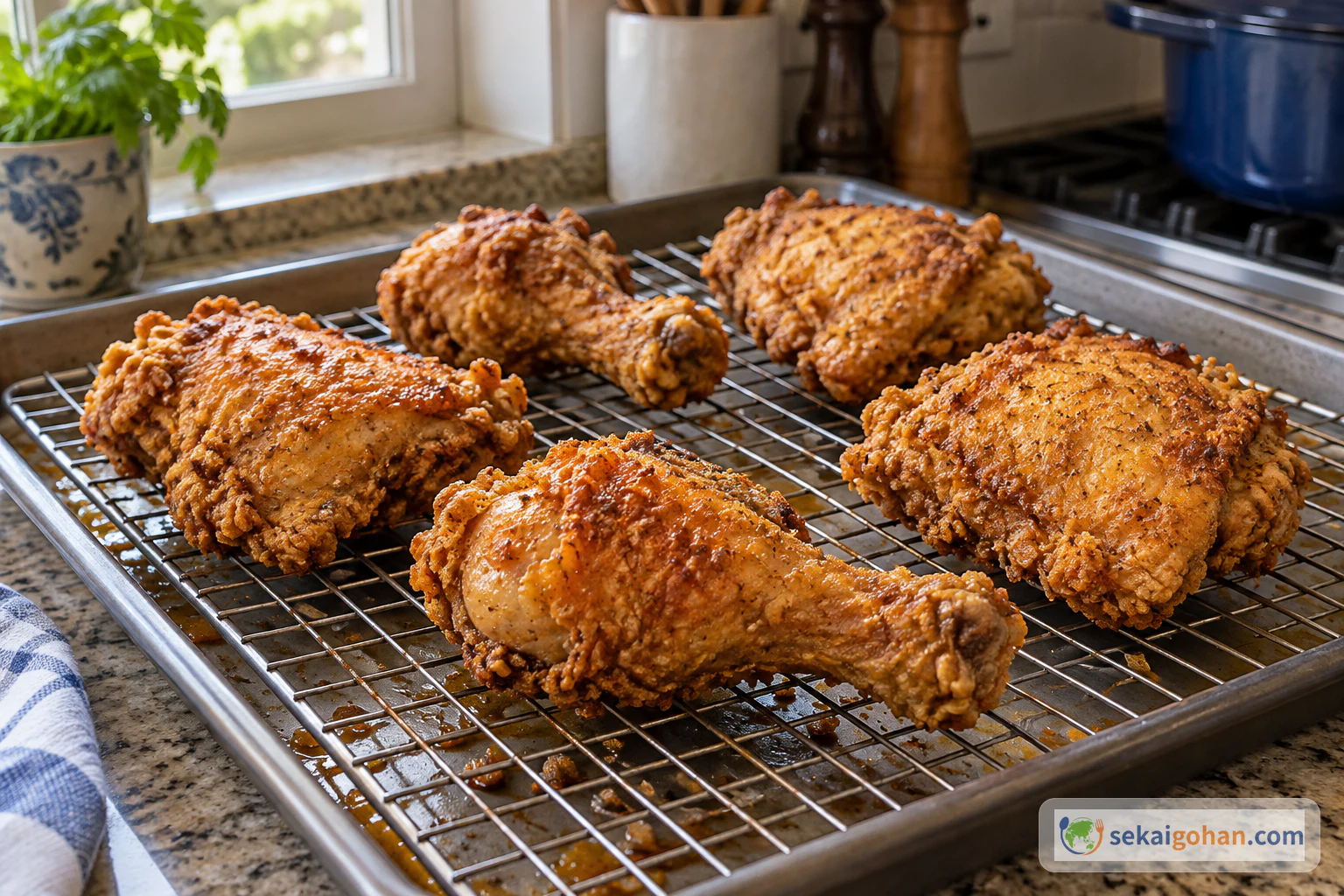
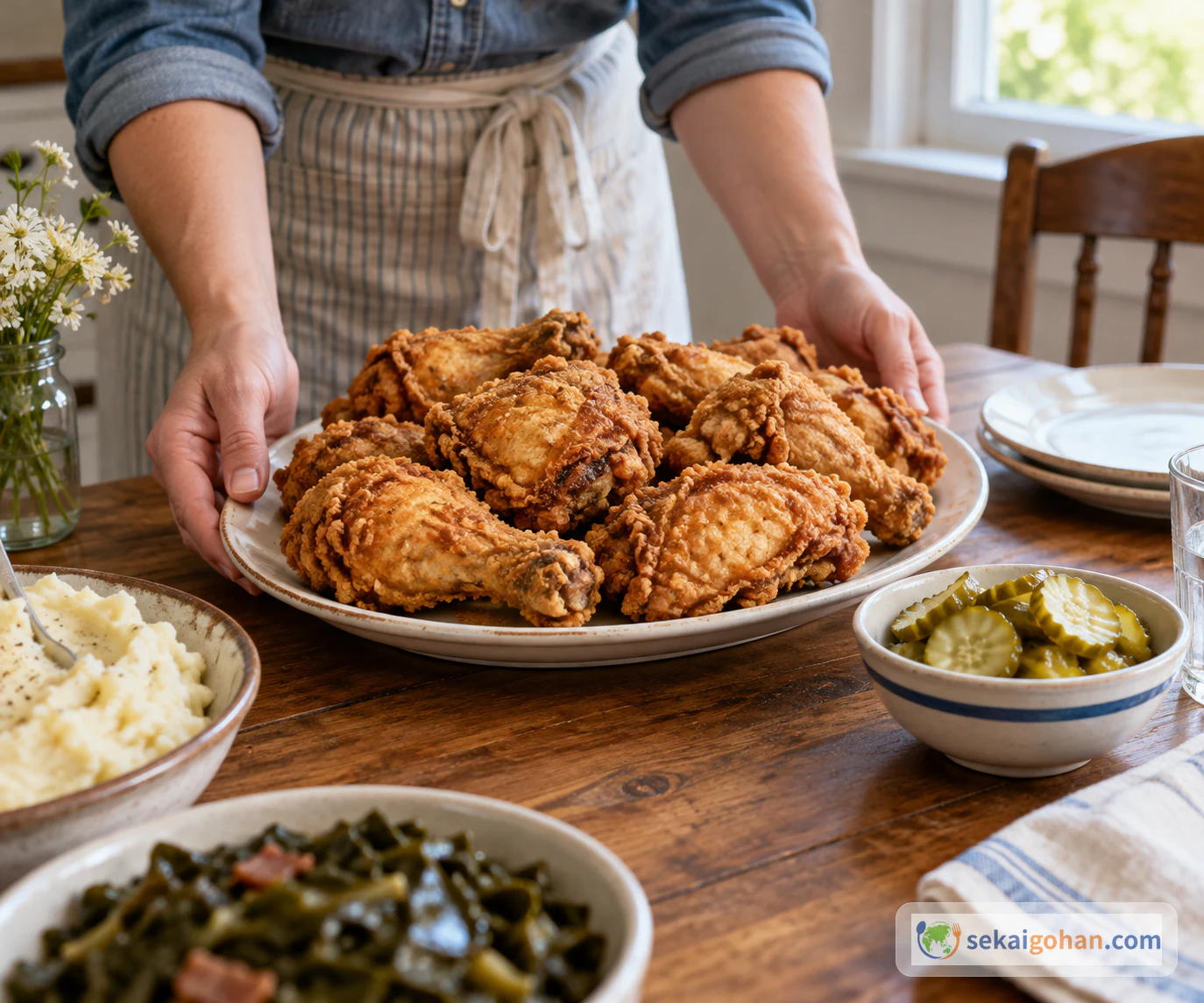
Bone-in pieces come out of the oil onto a wire rack, the crust still crackling, its ridges and crags a deep gold. At the table you pull them apart by hand: a crisp, seasoned shell on the outside, moist meat on the bone inside. This is Southern-style buttermilk fried chicken, one of the many versions found across the United States. Bone-in, skin-on chicken soaks in seasoned buttermilk, gets a coat of seasoned flour and fries in a heavy skillet.
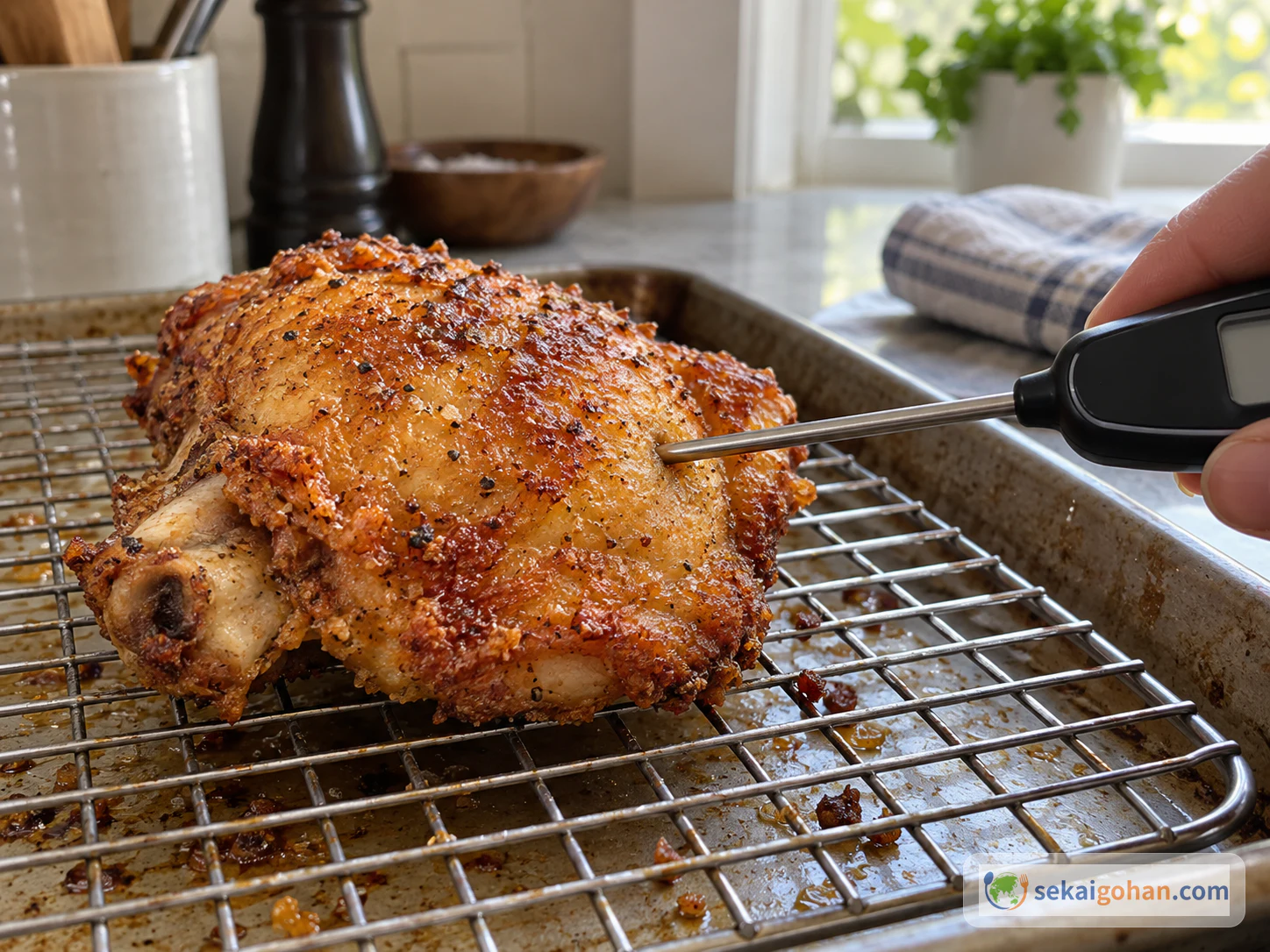
A buttermilk marinade for the meat, one firmly pressed coat of seasoned flour, oil held near 177°C (350°F), and a thermometer reading of 74°C (165°F) in the thickest meat. Color tells you how the crust is doing; only the thermometer tells you the chicken is cooked.
Southern Fried Chicken and Its History
Fried chicken in the United States takes many forms: bone-in or boneless, with or without a buttermilk marinade, and with all sorts of coatings, spices and frying methods. This one sticks to bone-in chicken, buttermilk, seasoned flour and a heavy cast-iron skillet. Other versions use boneless breasts pounded to an even thickness, a double coating and baking powder, though they also marinate in buttermilk and fry at 350°F.
After slavery, Black women in Gordonsville, Virginia sold fried chicken at the train station, earning income and a measure of economic independence within the narrow options open to them. During the Great Migration, families leaving the South for the North and West packed fried chicken in shoeboxes to carry on the journey. Later it became a staple of soul food restaurants. Through Black women's work and Black families' migration, a home dish reached tables across the country.
One name to watch out for: despite what it sounds like, city chicken is a Midwestern skewered dish that stands pork in for chicken, and has nothing to do with this recipe.
Ingredients: Bone-In Thighs and Drumsticks, Fried in Batches
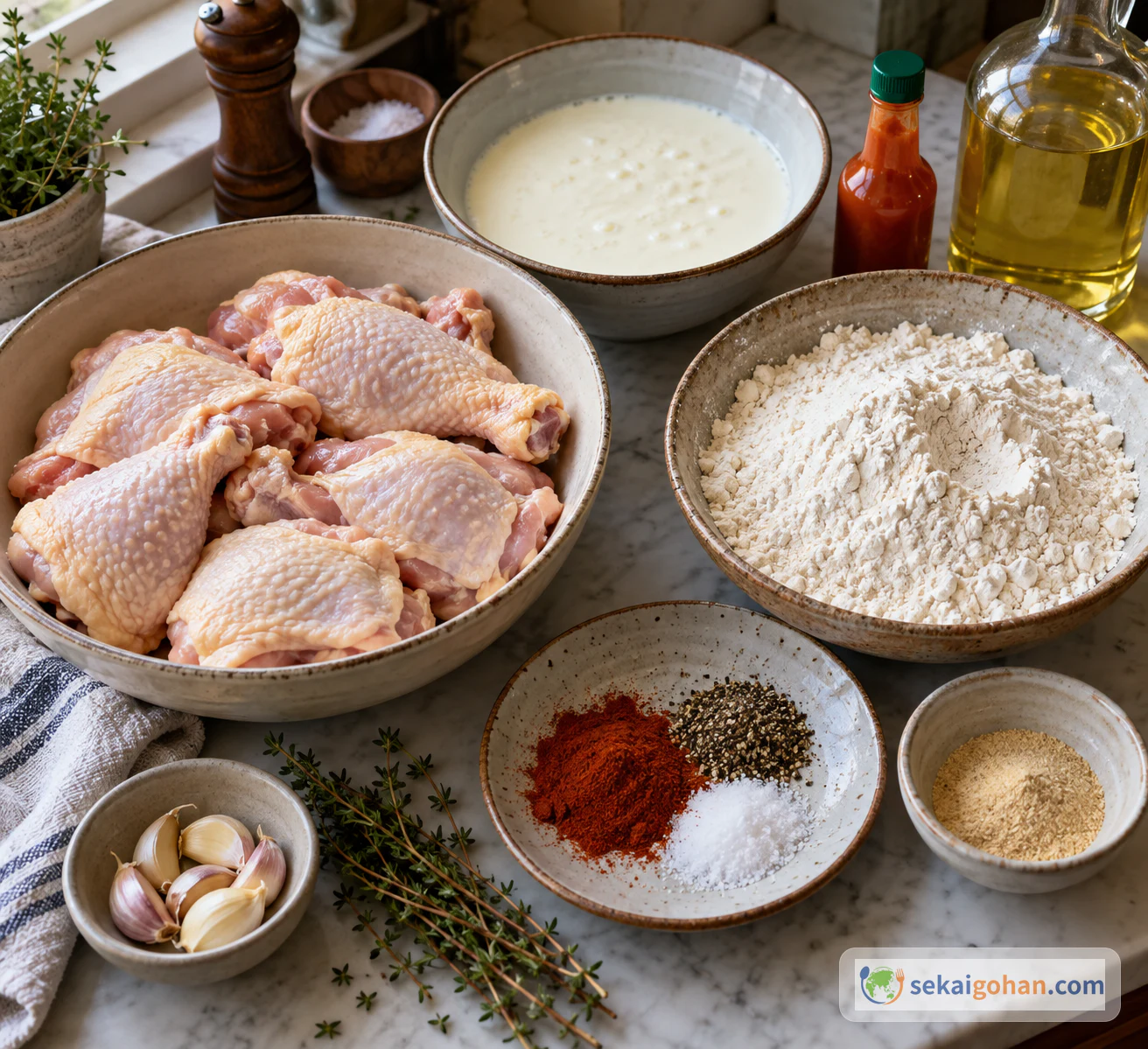
The marinade uses the ingredients below, and the coating amounts are set for this recipe. Do not fry everything at once; work in several batches.
Equipment
- Deep, heavy skillet or pot (deep cast iron or another thick-bottomed pan)
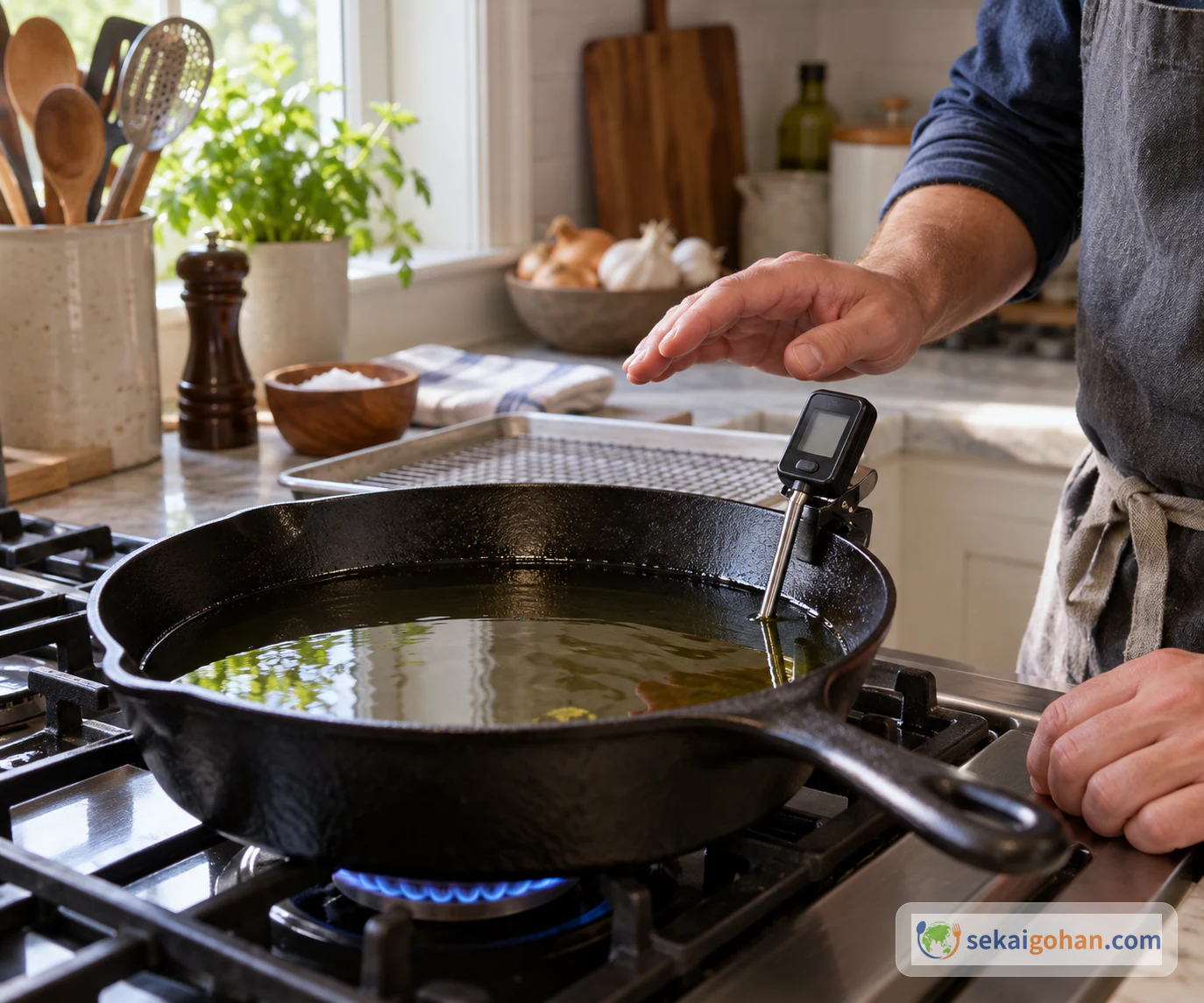
- Clip-on deep-fry thermometer, for holding the oil temperature
- Instant-read meat thermometer, for checking the center of the chicken
- Long tongs
- A bowl with a lid (or covered container) for marinating
- A shallow dish for the seasoned flour
- Wire rack set over a rimmed tray
The two thermometers do different jobs. One tells you how hot the oil is; the other tells you whether the meat is safe. Neither replaces the other.
Choosing Chicken, Buttermilk, Flour and Oil
Chicken. The recipe is built on bone-in thighs and drumsticks of similar size, which keeps the cooking even. Boneless breast is a different recipe with different cooking times; see the FAQ.
Buttermilk. Buttermilk seasons the meat and gives the flour something to stick to. If you can't find it, use a mix of milk and plain yogurt. Its acidity and thickness differ, so expect a change in flavor and in how the coating clings.
Thyme and paprika. If you can't get fresh thyme sprigs, use dried, starting with a small pinch since its aroma is a different strength. Swapping the sweet paprika for smoked paprika adds a smoky note.
Flour and oil. All-purpose flour is the base; a softer, lower-protein flour works, but the crust's texture will differ. Peanut oil adds its own flavor, and corn oil or canola oil can stand in for it. A cast-iron skillet is the traditional pan.
This recipe contains wheat, milk and chicken. Check the labels of hot sauce and other prepared products for allergens too.
Method: Marinate the Day Ahead, Then Fry by Thermometer
The chicken marinates in the refrigerator for 4–8 hours, so start earlier in the day or the day before. When the chicken is done is decided by the meat thermometer, not the clock.
Do not wash the chicken. Keep raw chicken, and anything it touches, away from foods that are ready to eat, and wash utensils, bowls and surfaces after contact. Never use marinade or flour that has touched raw chicken in any dish that will not be cooked.
Fixing Common Fried Chicken Problems
| Problem | Likely cause | What to do |
|---|---|---|
| The crust falls off | Too much marinade left on, flour not pressed on, pieces moved too early | Let the marinade drip off, press the flour on firmly, and leave the pieces alone at the start of frying |
| Dark crust, raw inside | Heat too high for the size of the pieces | Lower the heat and fry fewer pieces at a time. If the crust darkens too fast, go by the thermometer rather than the clock, and match piece sizes next time |
| Greasy crust | Too many pieces at once, oil temperature dropped sharply | Add fewer pieces per batch, let the oil recover between batches, and drain on a rack |
| Too salty | Salt too strong for the weight of the pieces or the marinating time | Next time, reduce the salt in the marinade. Judge saltiness only on a fully cooked piece, never on raw flour |
| Some pieces undercooked | Uneven piece sizes | Choose pieces of similar size, and check the thickest spot on several pieces. Keep the probe off the bone |
Serving, Storing and Variations
At home, pickles or biscuits make good company for the chicken, and chicken with waffles is another classic pairing. If you want to keep exploring Southern tables, try red beans and rice, shrimp and grits or gumbo.
Refrigerate or freeze leftovers within 2 hours. To reheat, set the chicken on a rack in an oven or toaster oven, which brings the crust back, and make sure it's hot all the way through.
Some cooks skip the buttermilk entirely and season the meat with a brine instead, a different approach from the one here.
Frequently Asked Questions
Can I use boneless chicken?
You can, but it's a different recipe with different frying times. That version uses boneless breasts pounded to an even thickness. Don't apply its times to bone-in pieces, or this recipe's to boneless.
What temperature should the oil be?
Aim for 177°C (350°F) before the chicken goes in, and don't crowd the pan, so the temperature doesn't drop sharply. Keep it at 170–180°C while frying. The chicken is done when the thickest meat reads 74°C (165°F) or higher.
Can I fry in a skillet with less oil?
The shape of the pan and the depth of the oil change how the chicken cooks, so the frying-time guide won't hold. Check every piece with the meat thermometer.
Is it spicy?
The heat comes mainly from the hot sauce in the marinade. Use less, or leave it out for a milder result.