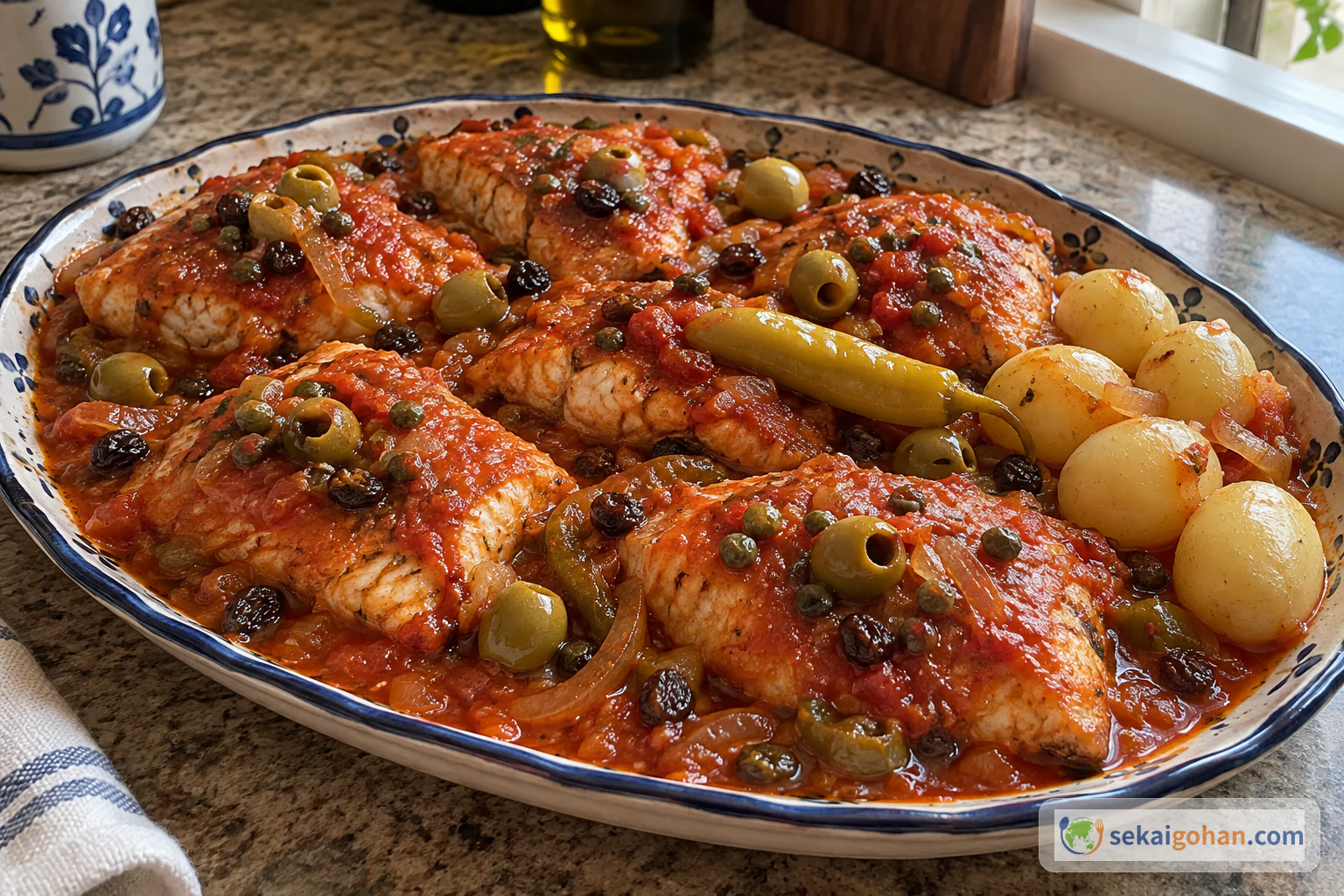
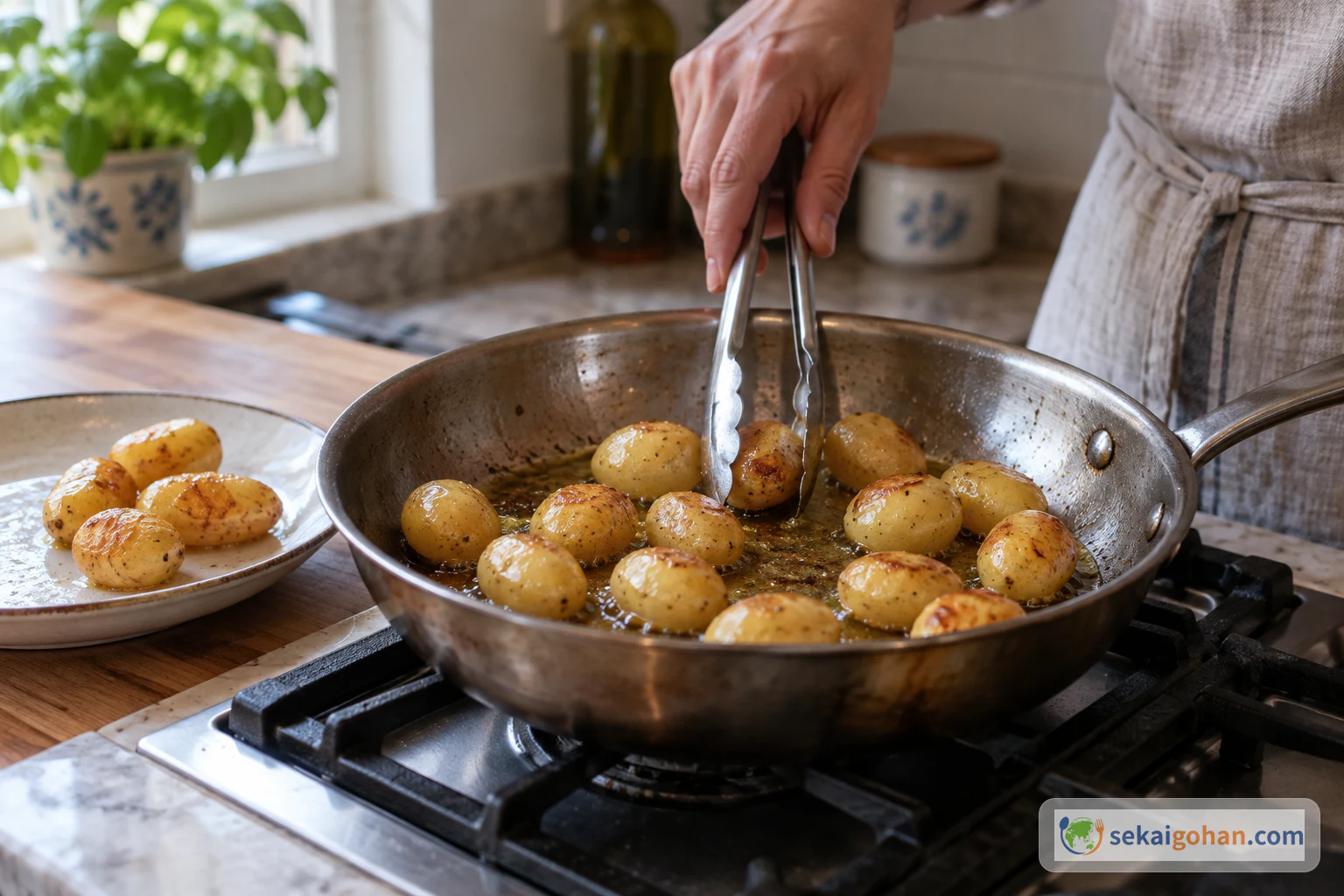
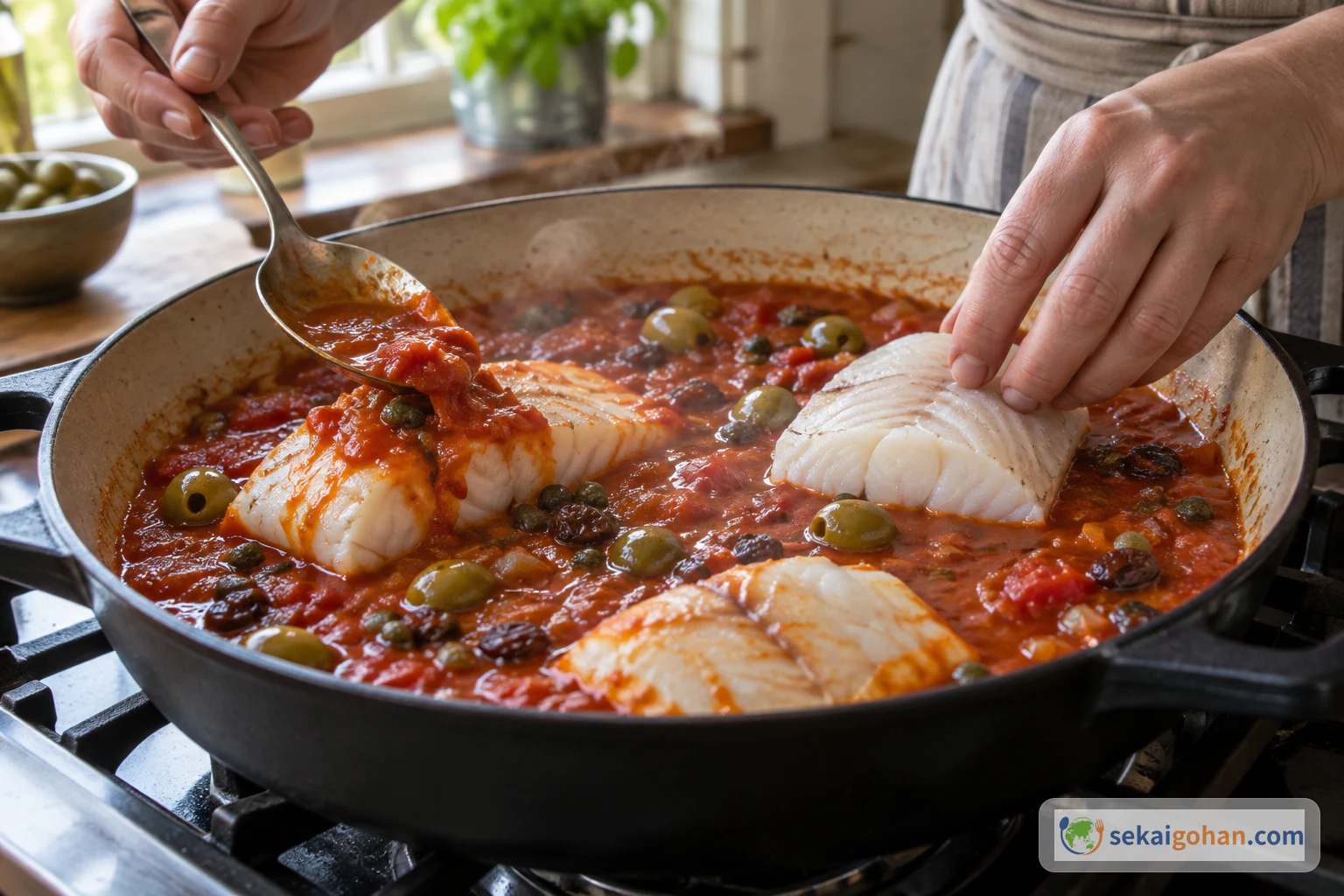
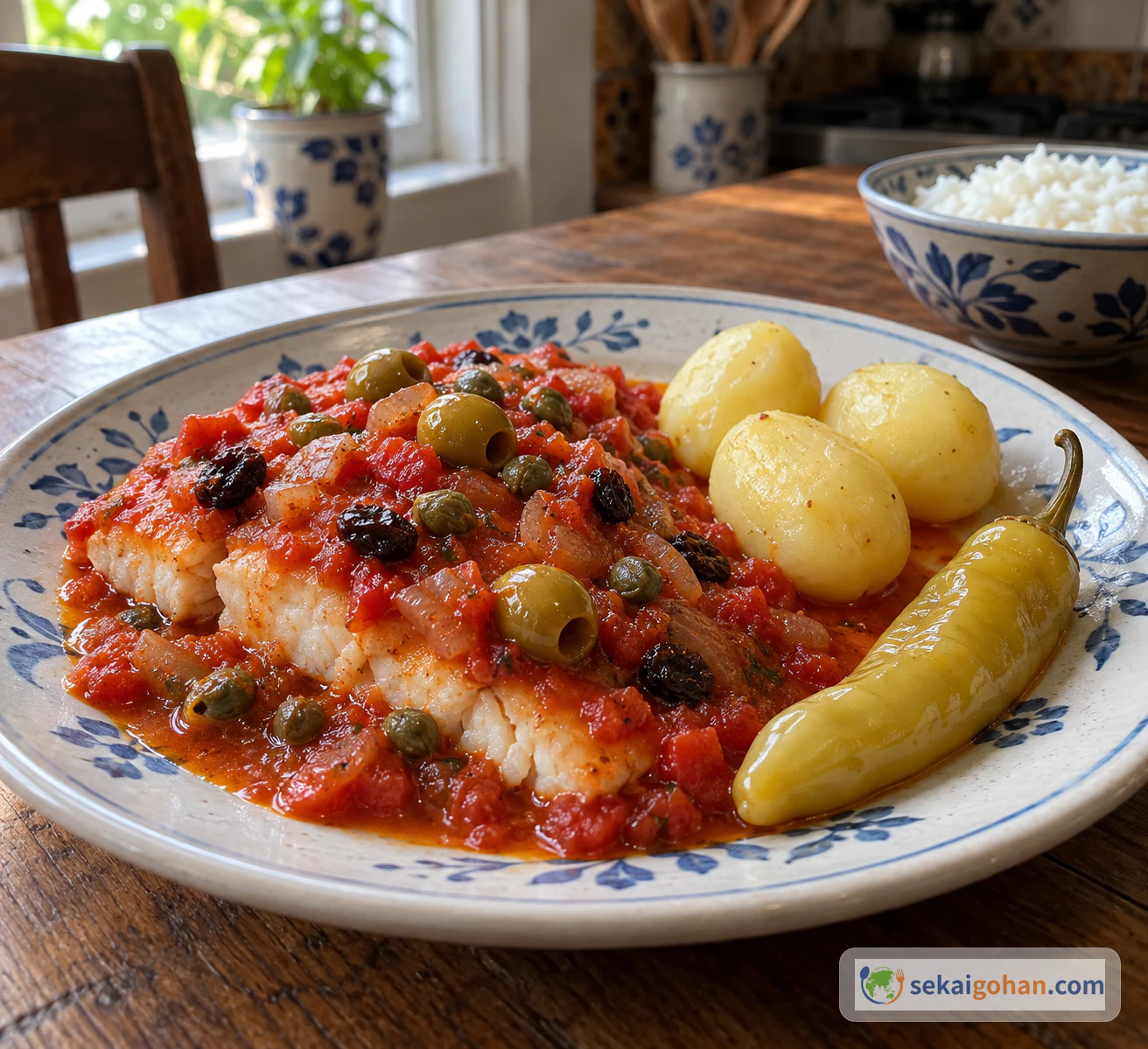
Fish simmering in red sauce is a sight you'll remember: a wide pan of deep red tomato sauce, with whole green olives, capers, a few dark raisins and the sharp edge of pickled chiles. Thick pieces of fish go in and cook right there, without being moved much, until they flake. The mild fish takes on salt and acidity from the sauce, and the sauce takes on the flavor of the fish. This is Huachinango a la Veracruzana, named after Veracruz on Mexico's Gulf coast, and each plate goes out with small peeled potatoes and one pickled güero chile on the side.
Huachinango a la Veracruzana and Its Sauce
One dish, two names
Huachinango is a fish name, translated as red snapper, so Huachinango a la Veracruzana tells you which fish goes in the pan. Pescado a la Veracruzana, "Veracruz-style fish," is the broader name and leaves the fish open. The two overlap but aren't quite the same. Cooks and cookbooks present the dish as part of Veracruz's regional cooking, but no well-supported story explains how it began in the port or how each ingredient got there.
A 1952 recipe for Pescado a la Veracruzana cooks pieces of fish in one pot with tomato, olives, capers, pickled jalapeños and spices, and the book's preface describes bringing European cooking into Mexican customs. It shows how the dish was written down and how it has shifted over time. It is one version, not the recipe for all of Veracruz. You'll find more dishes from Mexico on Sekai Gohan.
Sweet-tart tomato, salty olives and capers
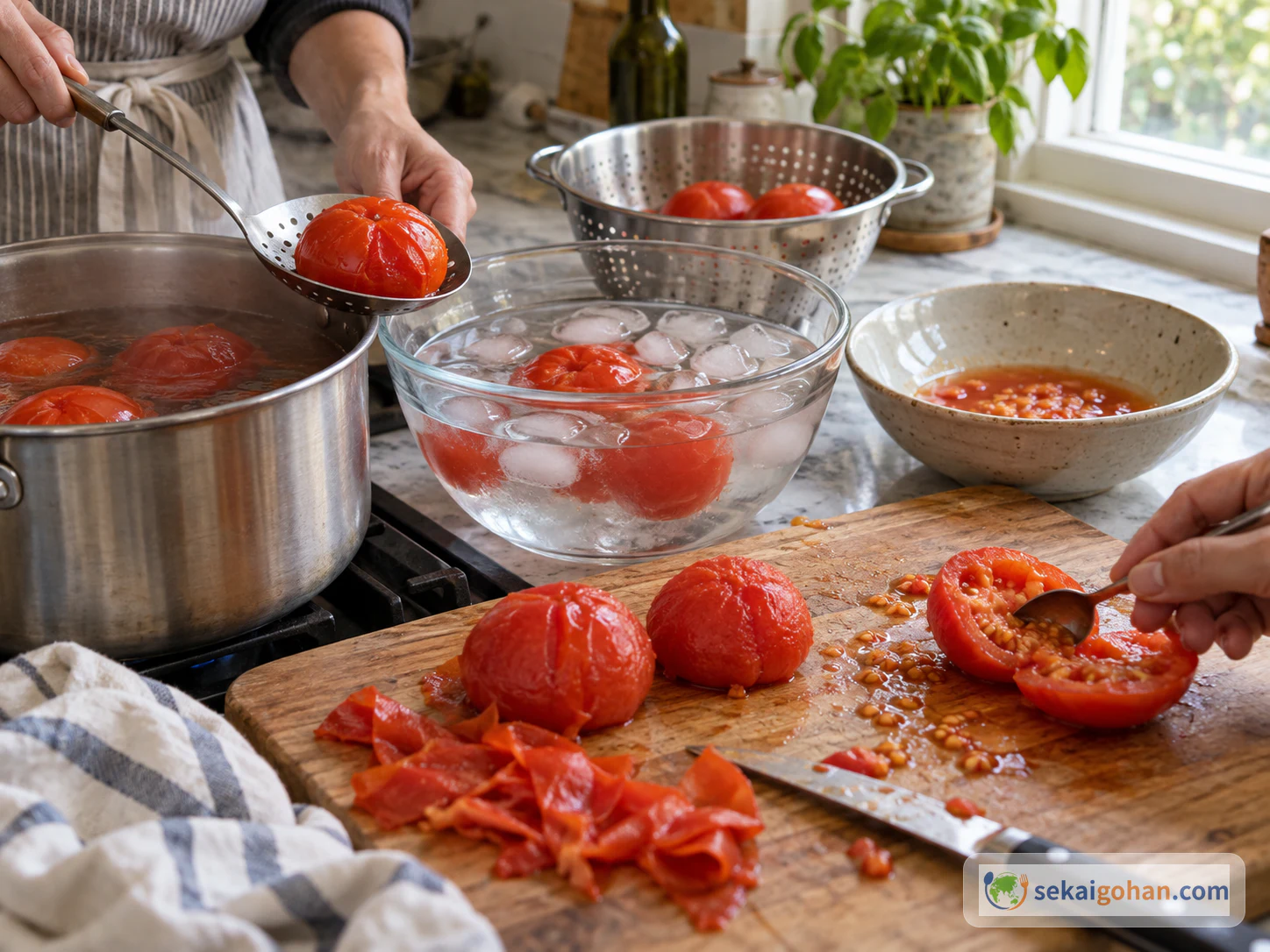
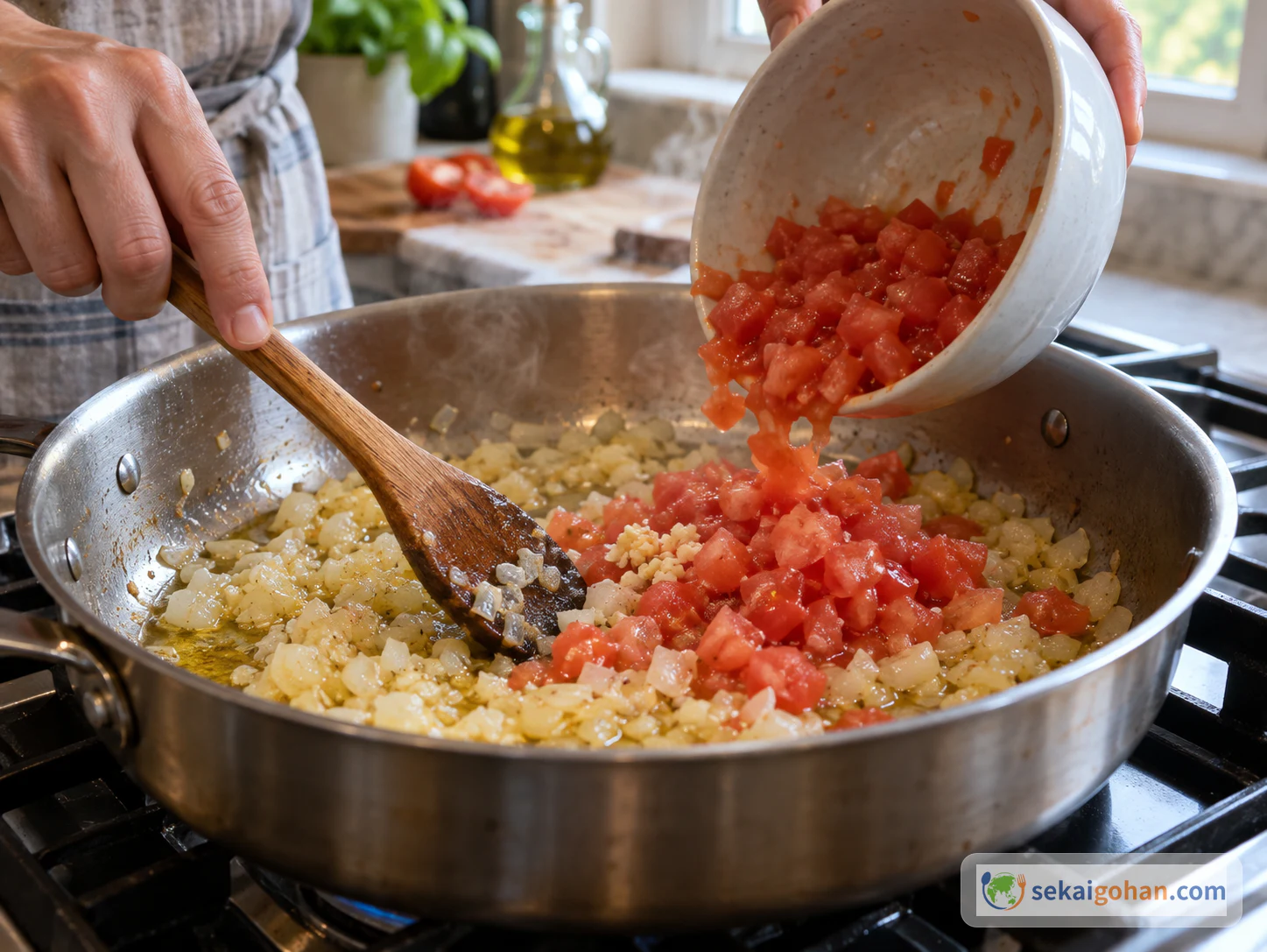
The sauce is a home dish built from many ingredients, and it's often flattened into a plain tomato sauce. It starts with ripe tomatoes, skinned and seeded, with the juice from the seeds kept apart from the finely chopped flesh. The pulp cooks with onion and garlic until its raw taste is gone, and only then does the juice go back in, so the flesh gets to cook down before the extra liquid returns.
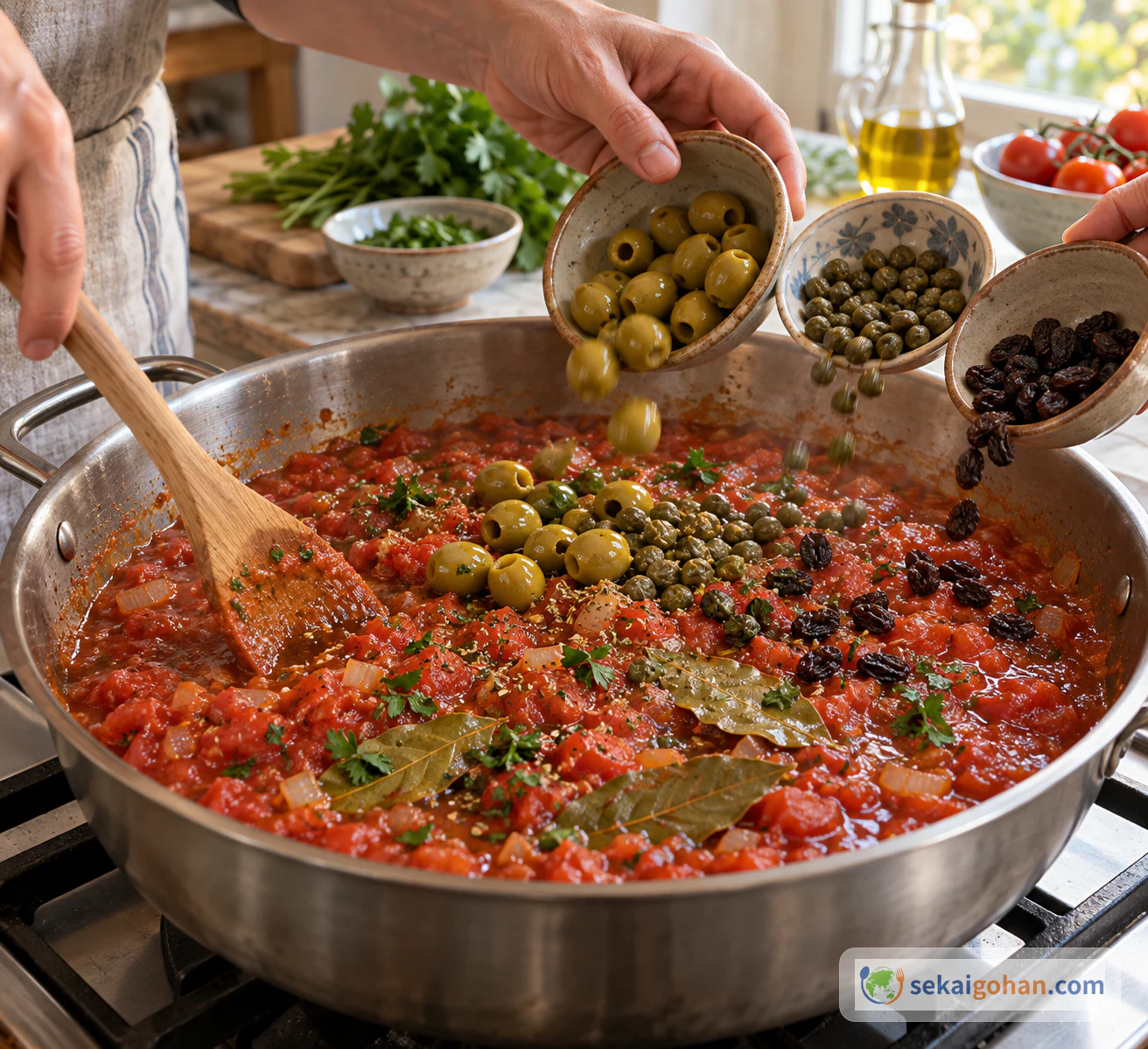
Then come the salty and sour notes. Green olives and capers bring salt, pickled güero chiles bring vinegar, aroma and some heat, and black raisins add small pockets of sweetness against all of it. Every one of them earns its place.
Ingredients for 6 Servings
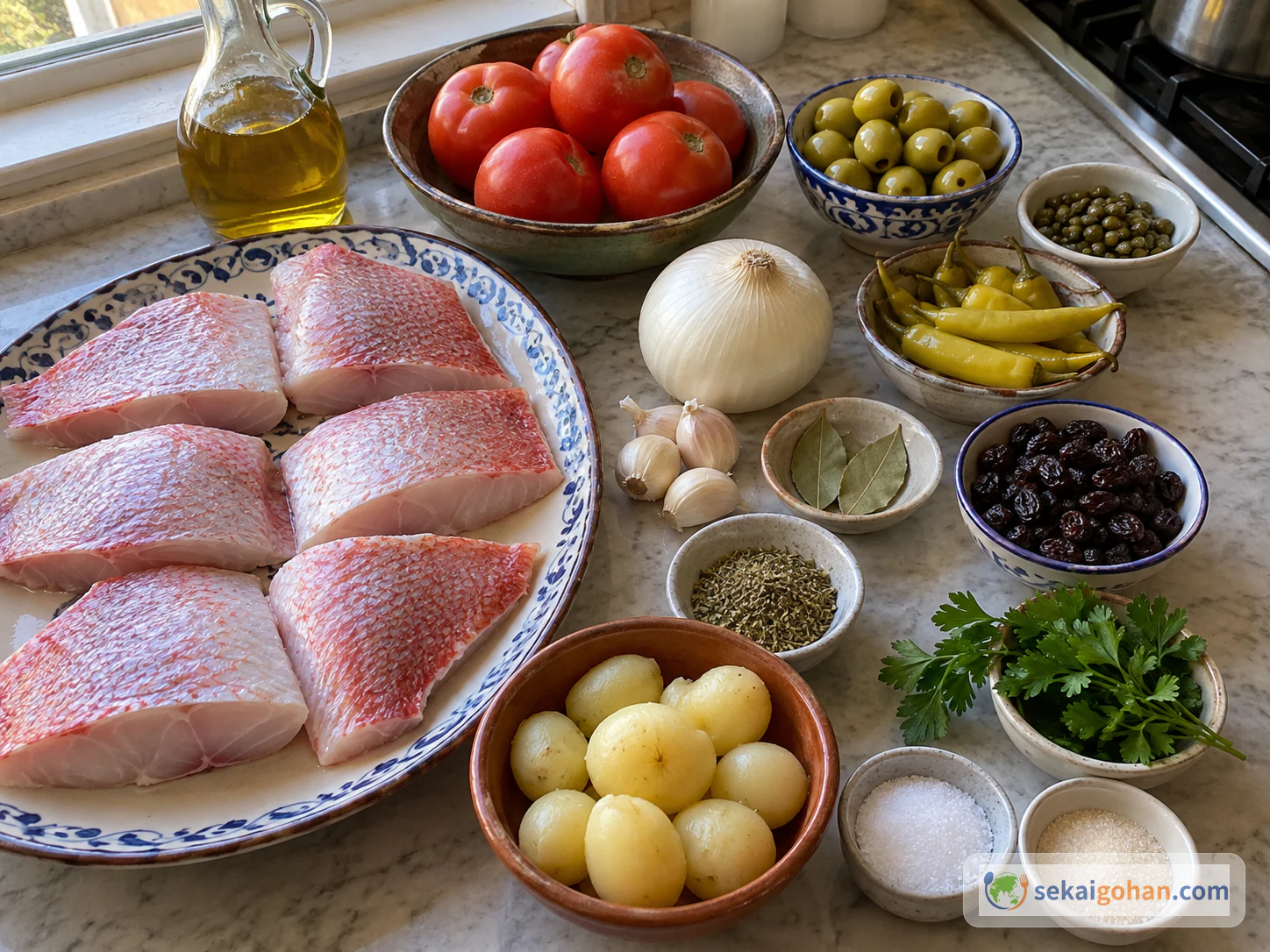
There are two separate salt amounts: the first is for the fish, and the second goes into the sauce only if tasting says it needs it.
You'll also need 2–3 L of boiling water for skinning the tomatoes, plus a bowl of ice water. That water is for preparation only and isn't part of the ingredient amounts. Plain white rice is an optional side, served on its own plate.
Equipment
- A wide pan or saucepan large enough to hold the fillets in the sauce
- A large pot for the 2–3 L of boiling water used to skin the tomatoes
- A bowl of ice water
- A colander or strainer
- A bowl to catch the tomato juice and seeds
- A shallow nonreactive dish with a cover, for salting and refrigerating the fish
- Tongs or a spoon for turning the potatoes and spooning sauce over the fish
- An instant-read thermometer for the thickest part of the fish (optional but helpful), and a fork
Choosing Fish, Chiles, Olives and Tomatoes
The fish. Use thick fillets of huachinango, at least 0.5 inches (1 cm) thick, or one whole fish. Thin fillets fall apart in the sauce. Other fish that work include pargo, cabrilla, chucumite, robalo, escolar, bruja and rock fish. These are local market names, so ask your fishmonger which fish each one is. If you can't find red snapper, a firm white fish fillet such as Japanese red sea bream (madai) is a practical choice, though as a different species it will change the fat, flavor and texture of the finished dish.
The chiles. Pickled güero or carricillo chiles give the dish acidity, aroma and color as well as heat, and the heat varies from product to product. Another pickled chile will change the heat, sourness and pickling aroma; some versions use pickled jalapeños. If you want less heat, look for a milder pickled chile, keeping in mind that fewer chiles also means less of their vinegar and aroma.
Olives, capers and oregano. Pitted green olives and capers carry salt from their brine, so rinse and drain them, and taste the sauce before adding any salt. The recipe just says oregano, and Mexican and Mediterranean oregano taste different, so your choice will show.
The tomatoes. Choose fully ripe jitomate bola or ripe guajillo tomatoes. Other varieties change the sauce's acidity and water content. Ripe tomatoes come first; the optional sugar is a backup.
This dish contains fish. Check the labels on the olives, capers and pickled chiles for allergens and any cross-contact statements. If you serve rice, it goes on a separate plate.
Method: Cooking the Fish in Tomato Sauce
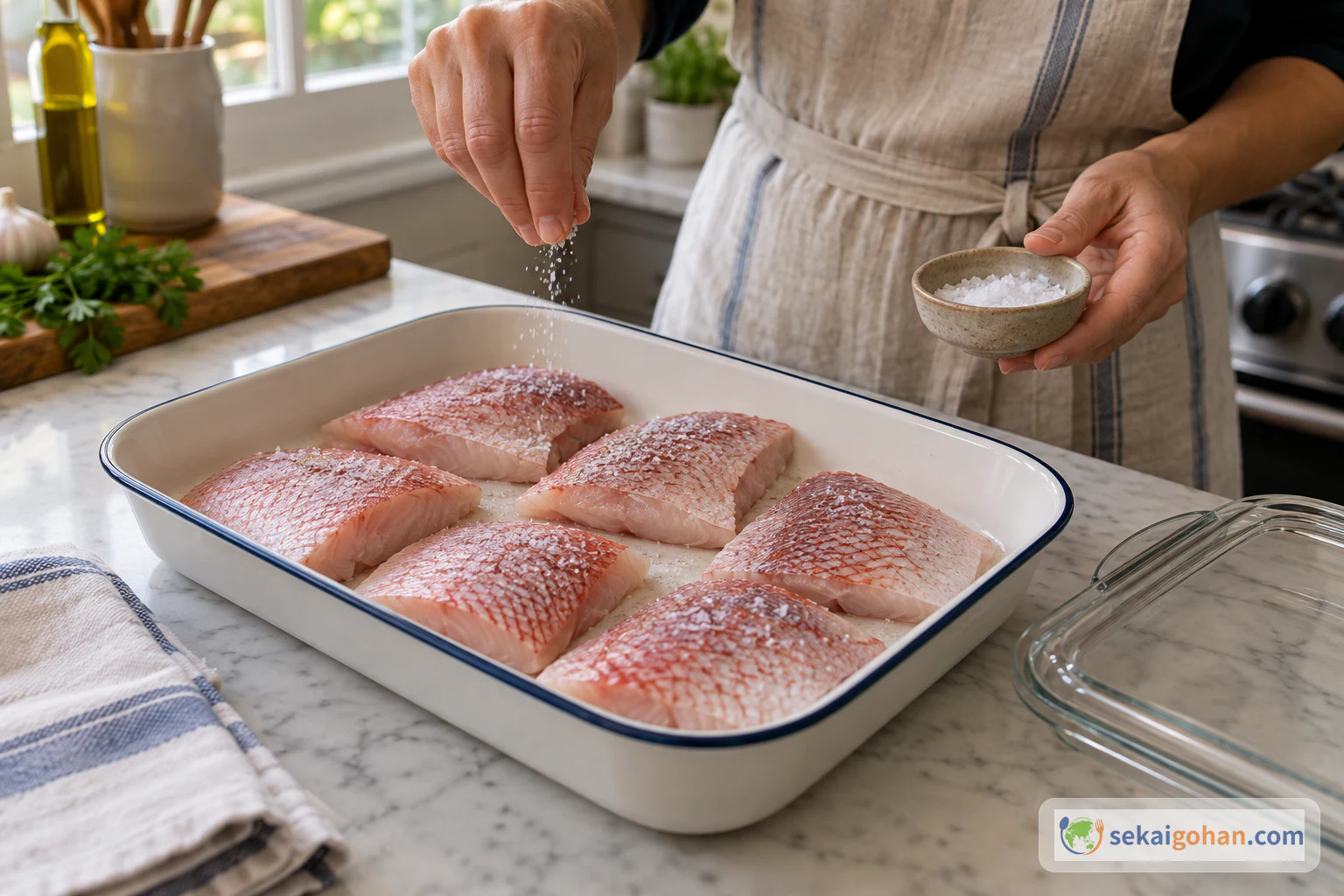
First the fish is salted and goes into the refrigerator. While it rests, you build the sauce: tomatoes, potatoes, aromatics, herbs, then the olives, capers and raisins. The fish goes in last and cooks right in the sauce.
Keeping the Fish Whole and the Sauce in Balance
Stoves run differently, so use the cues in each step as well as the clock.
Choose thick fillets, taste the sauce before adding any more salt, and confirm the fish is done at its thickest part instead of trusting the timer alone.
| Problem | Likely cause | What to do |
|---|---|---|
| The fish falls apart | The fillets are too thin, or they were moved around in the pan | Use fillets at least 0.5 inches (1 cm) thick. Once they're in the sauce, spoon sauce over them instead of stirring |
| The sauce tastes flat and sour | The juice went in before the pulp had cooked, or the tomatoes weren't ripe | Cook the pulp until its raw taste is gone before adding the juice. Use the optional sugar only if the tomatoes are truly acidic. Next time, start with riper tomatoes |
| The sauce is too salty | The olives and capers weren't rinsed, or the extra salt went in before tasting | Rinse and drain the olives and capers. The extra 1 tsp of salt is optional, so add it only after tasting |
| The fish is still translucent after 5–7 minutes | The fillets are thick or the fish was very cold | Cook a little longer and check again for 145°F (63°C) or flesh that is opaque and flakes with a fork |
| The heat is stronger or milder than expected | Pickled chiles vary by product | Taste a chile before serving. Serving the chiles on the side lets each person decide |
Serving, Leftovers and Variations
The plating is simple: one fillet, three potatoes, plenty of sauce and one pickled chile per person. A separate bowl of plain white rice is a nice optional side. Refrigerate any leftovers promptly; the doneness check in the method applies to the first cooking, not to reheating.
The traditional pot cooks the fish, whole or in large pieces, right in the sauce, which carries the fish's flavor into it. Restaurants often cook the fish separately and pour the sauce over. That keeps the pieces intact more easily and the sauce's color clearer, though you'll have to work out the timing yourself. Another version marinates the fish in lime juice, uses tomato, olives, capers, raisins, pickled jalapeños and potatoes, and finishes in the oven, with separate instructions for whole fish and fillets. If you try it, follow that version in full rather than mixing its amounts or times into this one.
Frequently Asked Questions
My sauce tastes sour. Should I add sugar?
The recipe includes 2 tbsp of sugar as an option for when the tomatoes are very acidic. First make sure the tomato pulp has cooked until its raw taste is gone, and next time start with fully ripe tomatoes. Sugar isn't a default.
How do I know the fish is cooked?
Thickness and your pan change the 5–7 minutes in the sauce. Check that the thickest part reaches 145°F (63°C), or that the flesh is no longer translucent and separates easily with a fork.