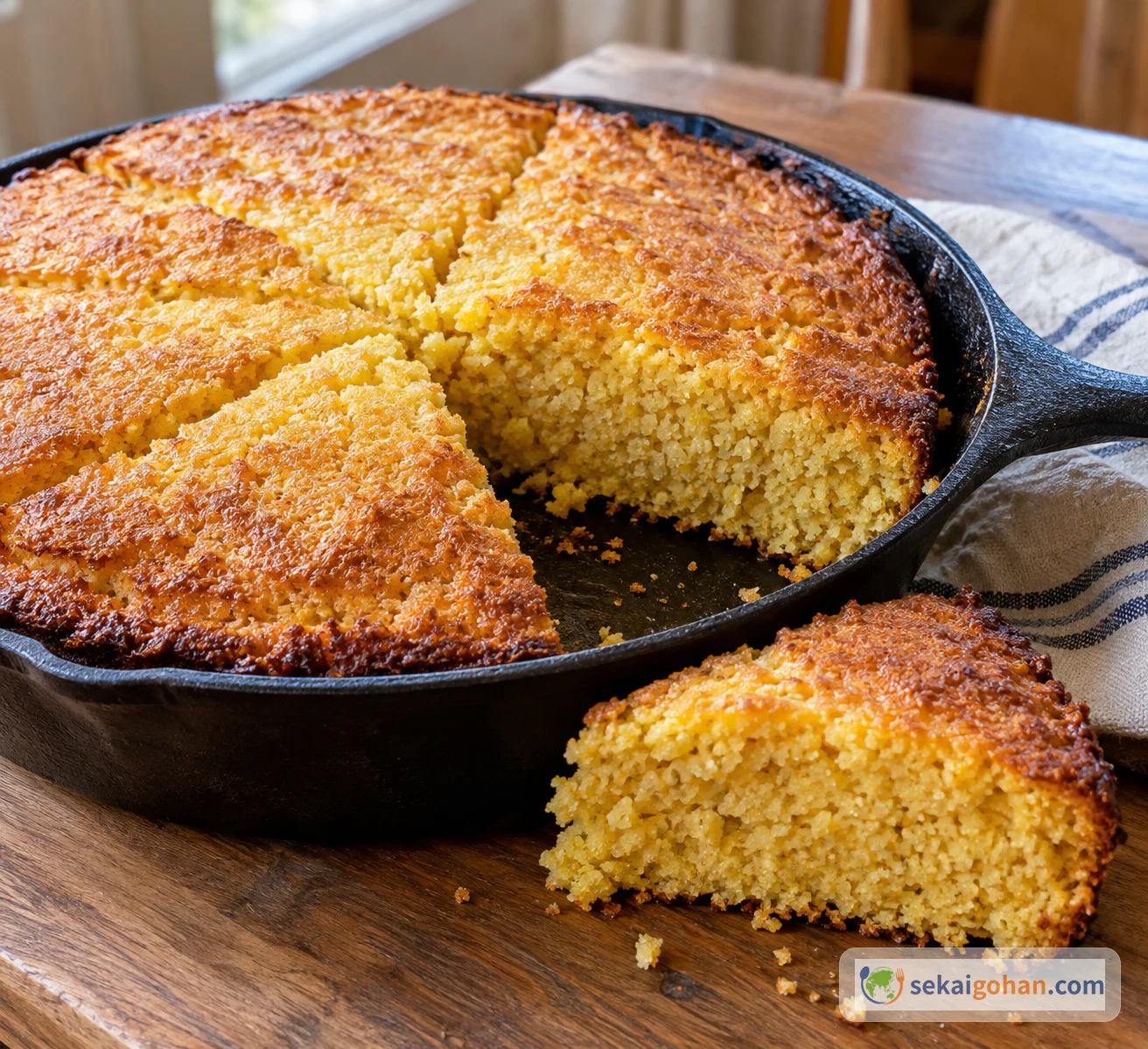
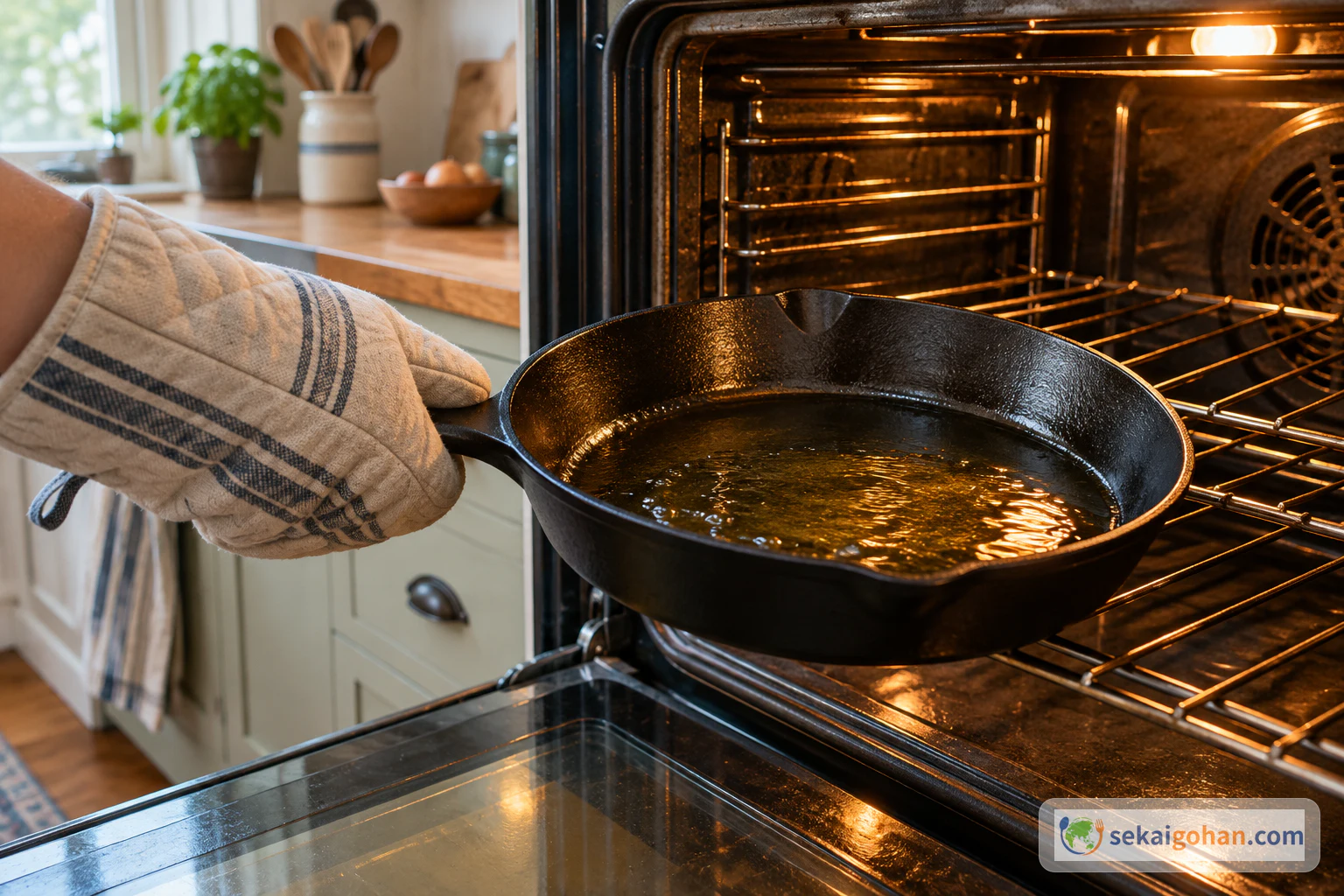
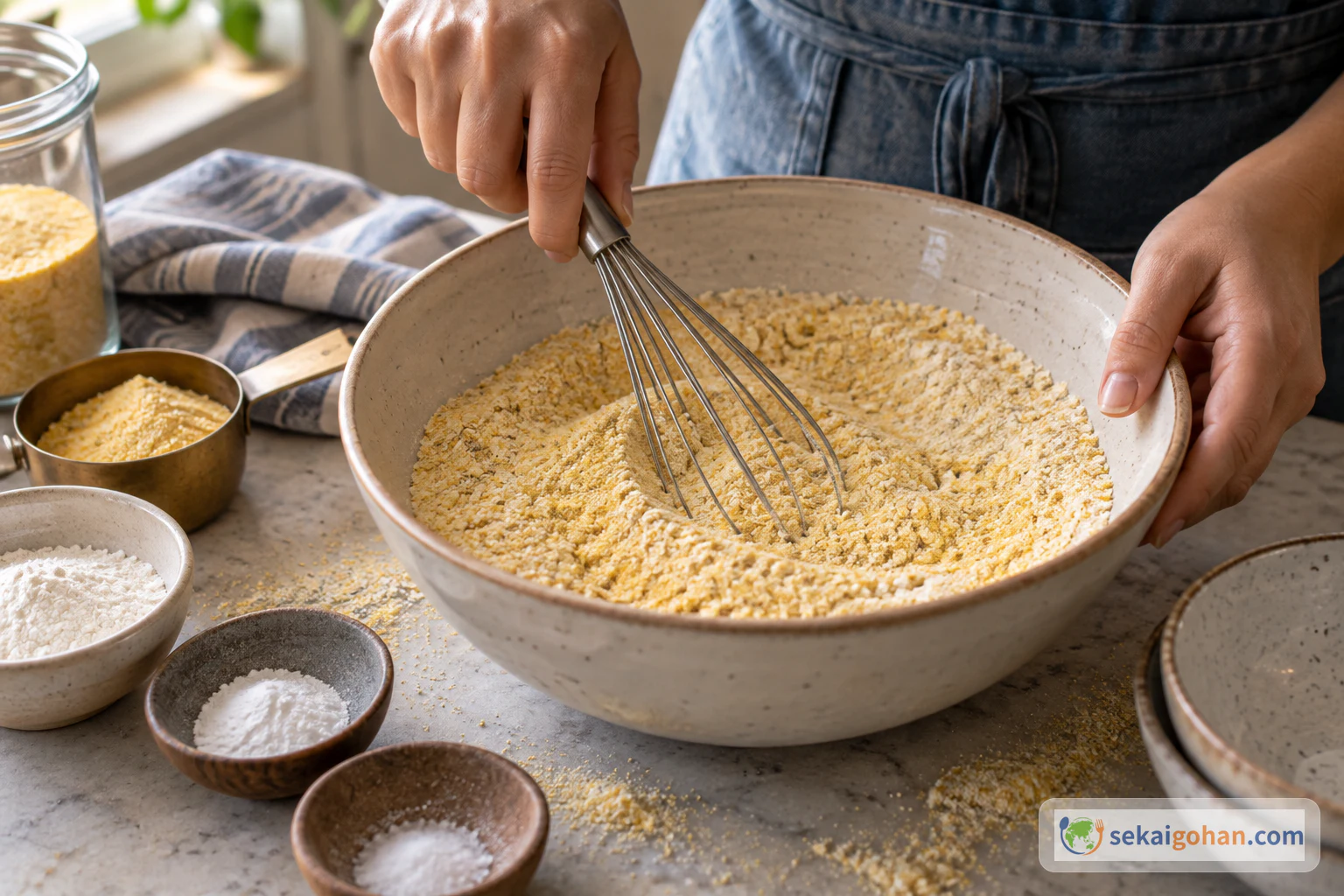
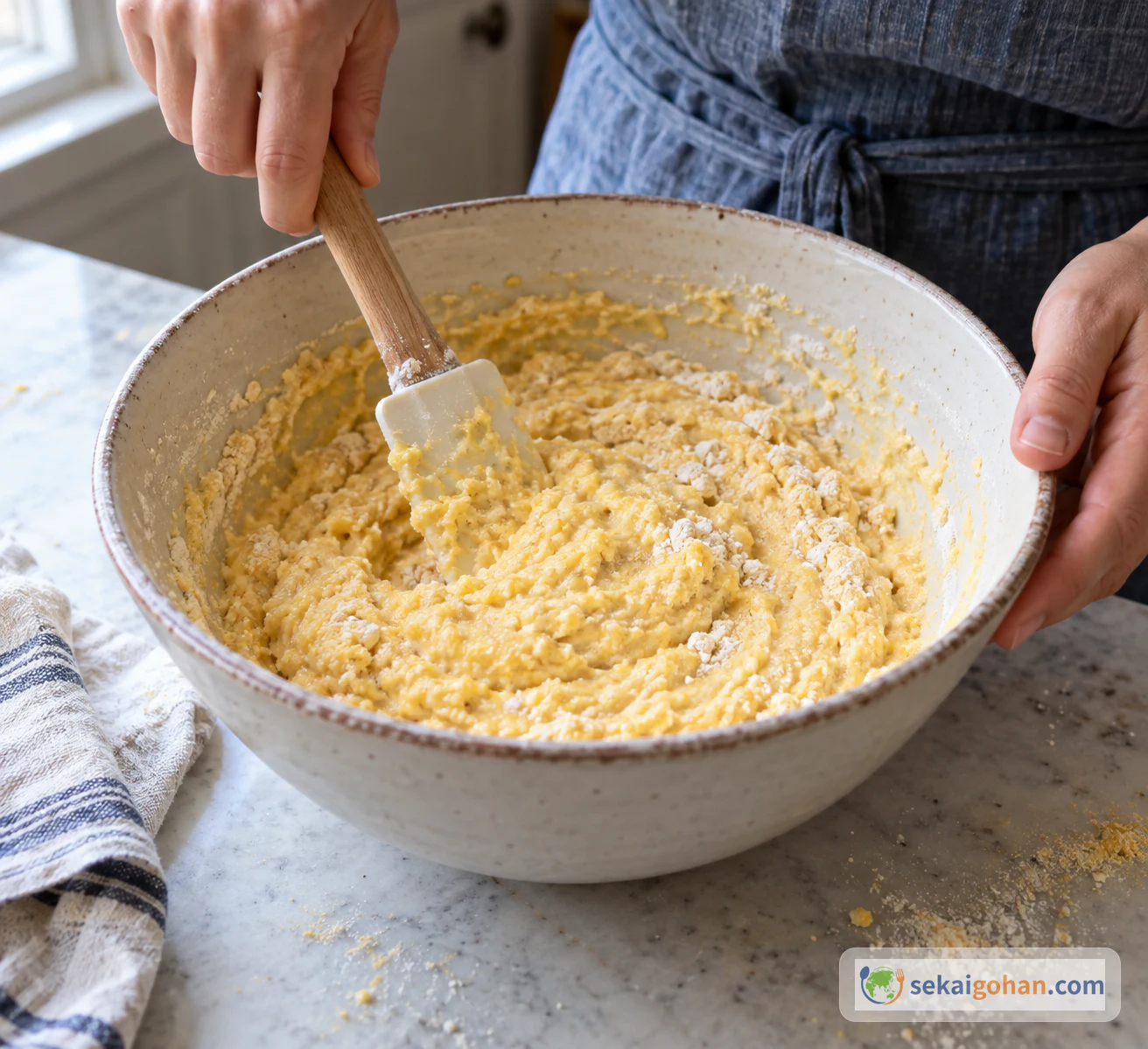
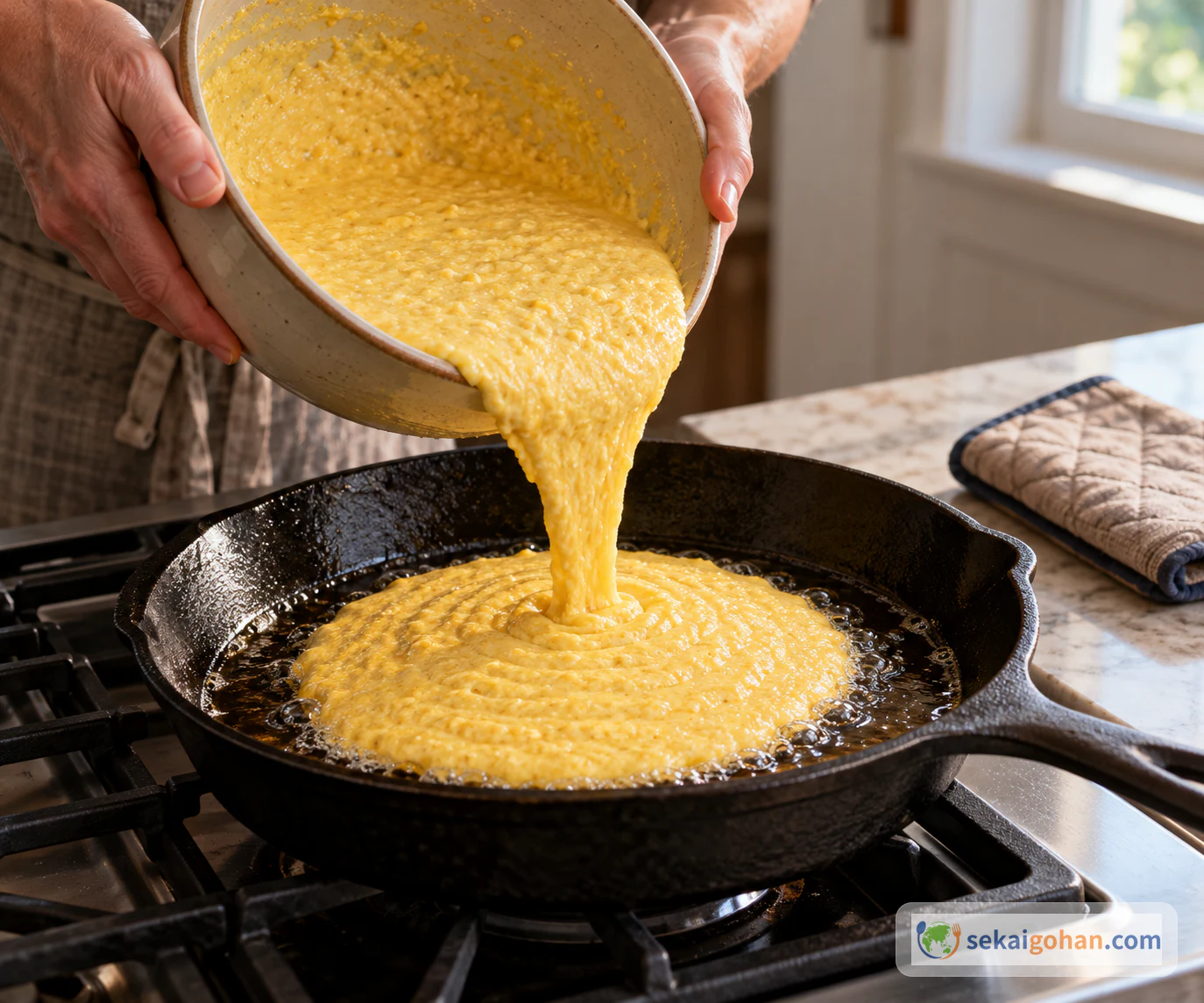
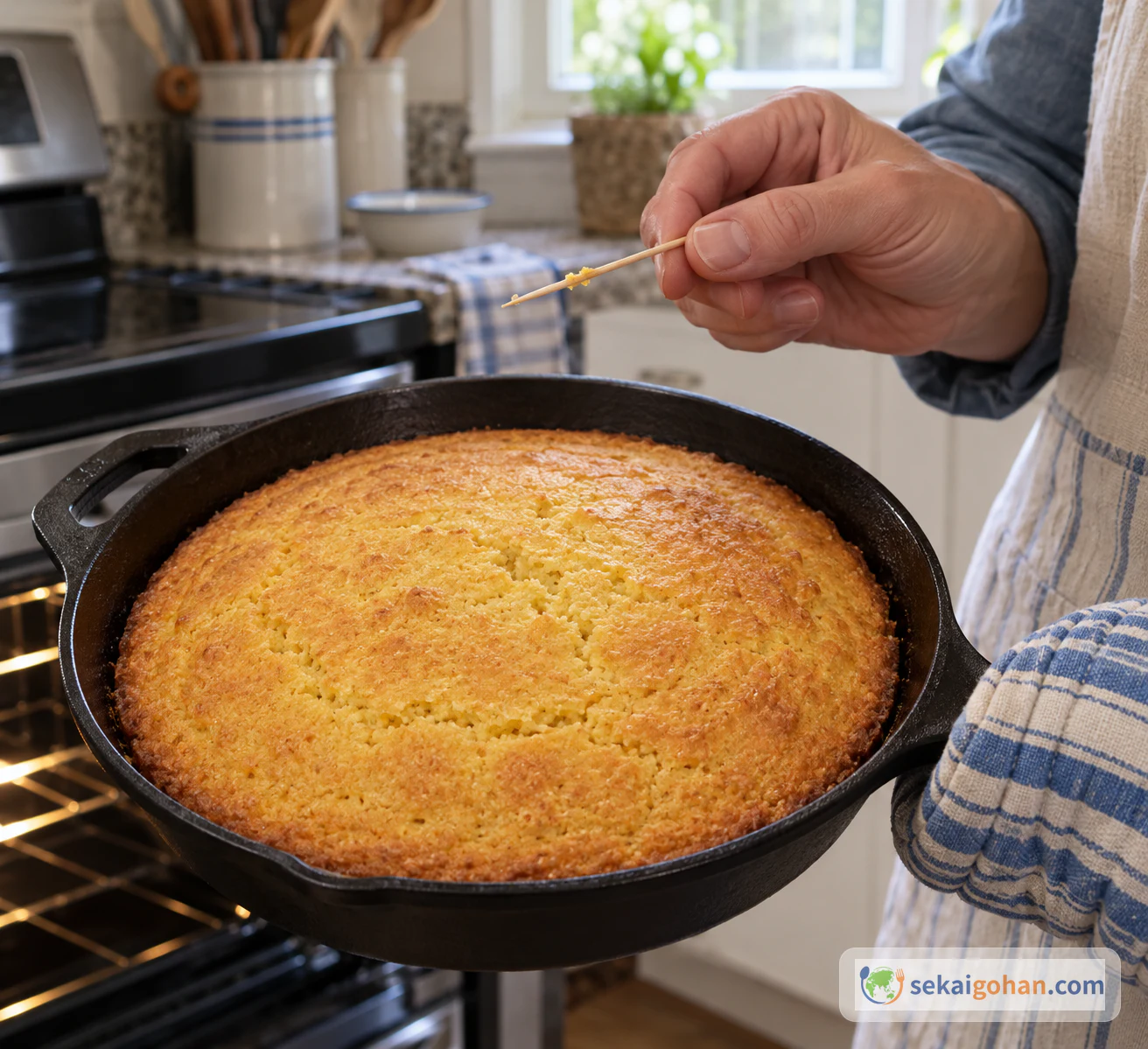
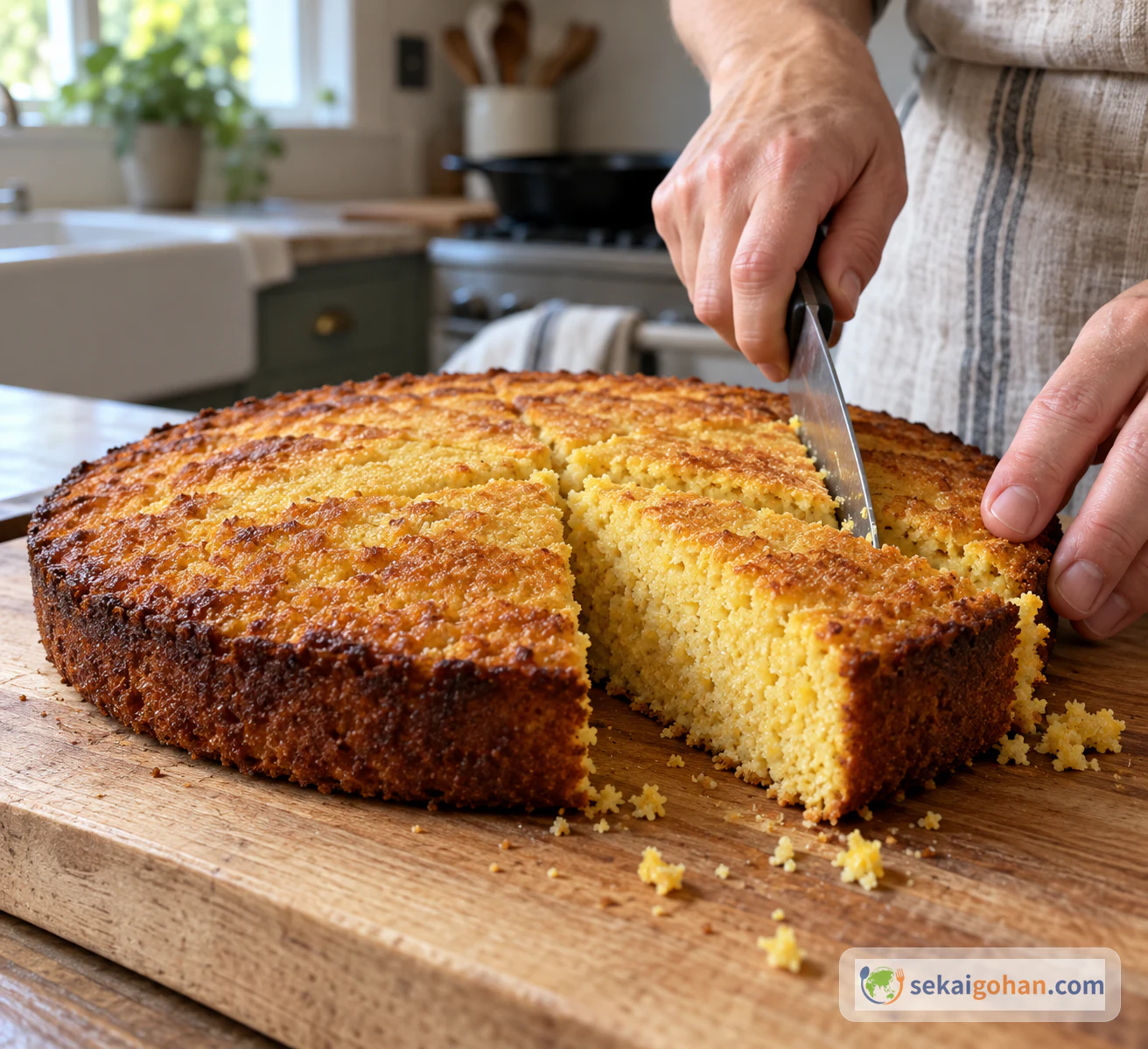
The batter hits the hot fat in the skillet, and the edges sizzle at once. In the oven, that fat browns the bottom and sides into a crisp crust. Cut the bread and you'll find a coarse yellow crumb where you can feel every bit of the cornmeal. This is Southern-style skillet cornbread with no sugar. It's made from whole-grain cornmeal, a little wheat flour, buttermilk and bacon fat, and it's meant to sit beside savory food.
Southern Skillet Cornbread and Its Relatives
People eat cornmeal breads all across the southern United States, and they come in many styles. Recipes differ in sugar, grind and pan, and even in whether the bread is baked or fried. More flour makes a lighter bread, and more cornmeal makes it more crumbly. Hot ovens are common. This unsweetened skillet bread with bacon fat is one style in that range, not the definition of Southern cornbread.
Here, each ingredient has its own job. Whole-grain yellow cornmeal brings the aroma and texture, and a small amount of all-purpose flour helps the coarse meal hold together. Buttermilk adds tang and reacts with the baking soda. The fat, heated in a cast-iron skillet before the batter goes in, makes the crust. Once you know what each one does, it's easier to see what changes when you substitute.
The name covers fried breads too. Hot-water cornbread is made from fine white stone-ground cornmeal. The meal is softened with boiling water, shaped into patties and shallow-fried, so the outside is crisp and the center soft. It's a separate dish that shares the name, and its method doesn't mix with this oven-baked one. Sweetness, shape and technique are matters of taste and of what's on the table.
Ingredients
The recipe makes one skillet of cornbread. For a side dish, cut it into about 6 wedges. Most ingredients are weighed; the leaveners and salt use spoon measures.
The substitutions above trade one flavor for another; they don't reproduce the same bread.
Equipment
| Item | Notes |
|---|---|
| Cast-iron skillet, 9–10 inches (about 23–25cm) | An oven-safe, heavy metal pan of similar size also works, though the bottom browns differently |
| Two mixing bowls | One for dry ingredients, one for the egg and buttermilk |
| Whisk and spatula | Whisk for the dry mix; spatula for brief folding |
| Dry oven mitts or thick, dry towels | The skillet and fat are very hot |
| Wooden skewer or cake tester | To check the center |
| Oven thermometer (optional) | Useful if your oven runs hot or cold |
If you use something other than cast iron, check the manufacturer's guidance: the fat heats to a high temperature during preheating, so pans with plastic parts or glassware not rated for this use are not suitable.
This bread contains egg, wheat, and milk (buttermilk). If you replace the bacon fat with butter, that adds more dairy. For severe allergies, check labels, including shared equipment and production lines. The batter contains raw egg and raw flour, so do not taste or eat it raw; bake the bread until the center is set.
Choosing Cornmeal, Flour, Buttermilk, and Fat
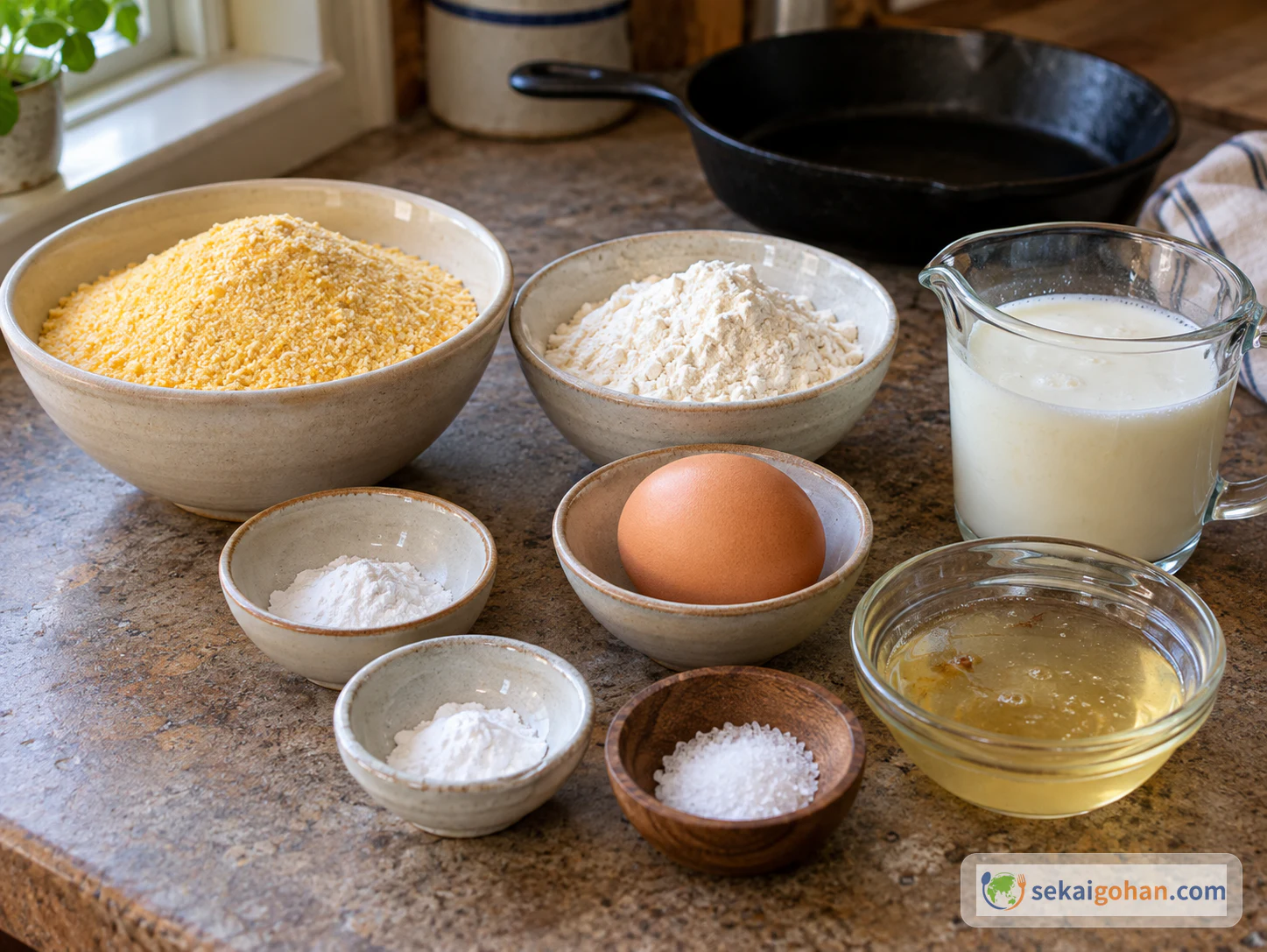
Cornmeal is not cornstarch. Cornmeal is ground dried corn with a grain you can see. Cornstarch is a fine, refined starch that behaves completely differently in baking, so it can't replace cornmeal. Look for "yellow cornmeal" on the label, and for this recipe, choose whole-grain. The grind matters too: finer cornmeal gives a more even, tender crumb, and coarser cornmeal gives more bite.
The balance of cornmeal and flour sets the texture. The flour is kept to a small amount on purpose. Adding a lot more would make a lighter, less crumbly bread, a different one from this. Use all-purpose flour, not bread flour.
Buttermilk and baking soda work as a pair. Baking soda needs an acid like buttermilk to react. Baking powder is a separate leavener, so keep both as listed. Quick-bread leaveners start working soon after the wet and dry ingredients meet, which is why the batter goes into the oven without delay.
Bacon fat brings smoke and saltiness. If you can't get it, use the same amount of unsalted butter or a neutral oil and heat it in the skillet the same way. Butter tastes of dairy and browns more readily. Oil tastes lighter.
Method
The skillet and fat must be hot before the batter is ready, and the batter should go into the pan as soon as it's mixed. Get the oven and pan going first, then mix.
The order matters more than speed: heat the pan and fat, mix the dry ingredients, mix the wet ingredients and combine briefly, pour into the hot fat, bake, then rest and cut.
Fixing Crumbly, Heavy, or Flat Cornbread
Before changing the formula, look at grind, leaveners, mixing, pan, and oven in turn. Changing several things at once makes it hard to know what helped.
| Problem | Likely causes | What to try |
|---|---|---|
| Dry and falling apart | Coarse cornmeal, overbaking, a batter on the thin side | Keep the same cornmeal and first check the bake time and how thick the buttermilk batter is. Overbaking dries quick breads. Adding a lot of flour changes the bread's character |
| Heavy, damp center | Oven not fully preheated, a pan smaller than 9–10 inches making the batter thicker, underbaking | Confirm the oven is at temperature, use a pan of the stated size, and bake until the center is set. If the top darkens before the center sets, check your oven with a thermometer and reconsider your pan size |
| Weak rise | Old baking powder, baking soda without enough acid, batter left standing before baking | Use fresh leaveners and real cultured buttermilk, and get the batter into the hot pan as soon as it's mixed |
| Heavy, uneven crumb | Overmixing | Stop stirring when the batter just comes together, with a few dry flecks remaining |
| Burnt bottom or spattering fat | Fat heated until smoking, a very hot pan or oven | Heat the fat without letting it smoke. Cast iron holds a lot of heat and ovens differ, so adjust next time. Always use dry mitts to move the hot pan |
| Not as sweet as you expected | This version has no sugar | That is by design. For a sweeter bread, see Variations |
Serving, Storing, and Varying Skillet Cornbread
Serving
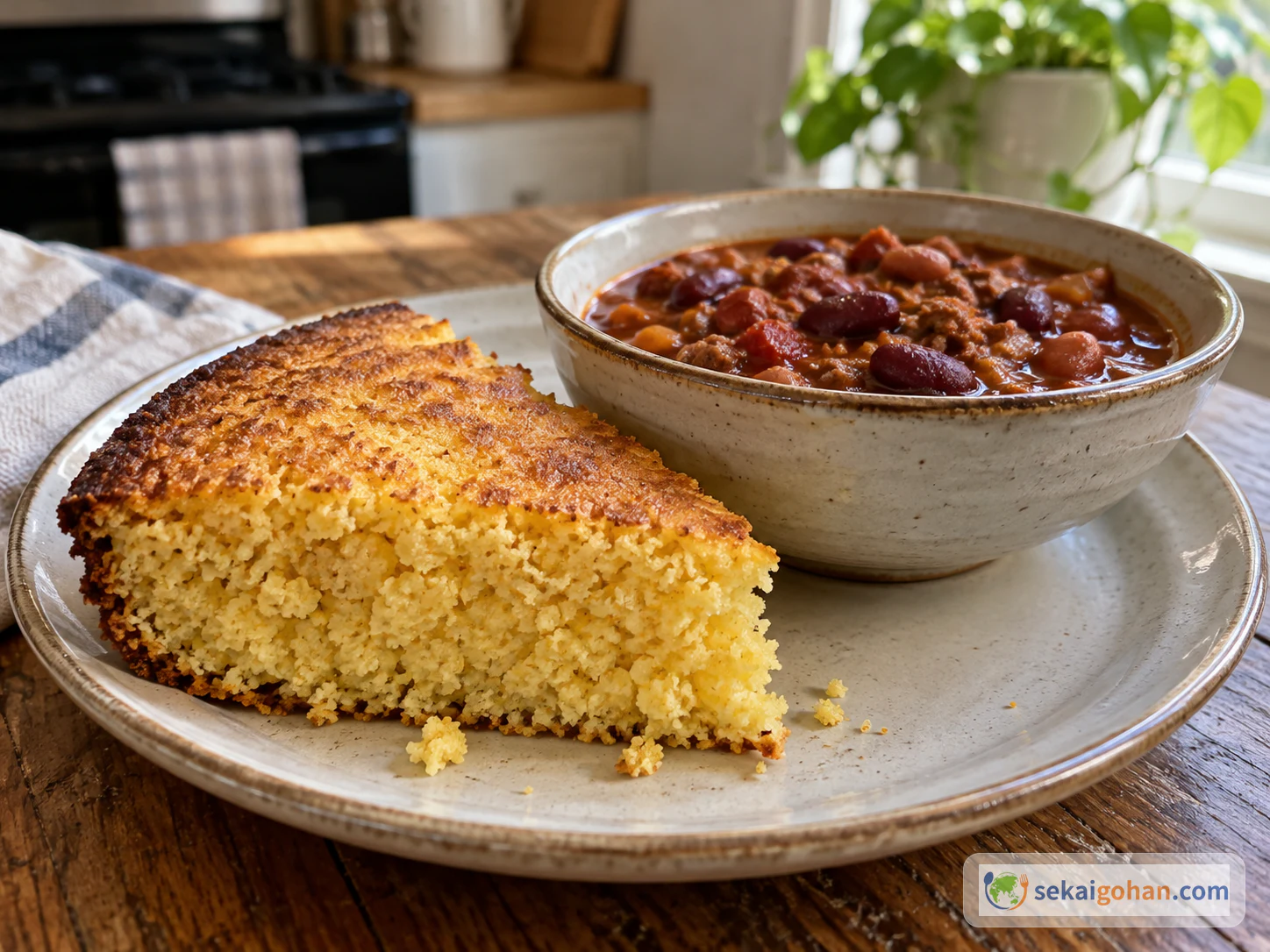
A warm wedge of this cornbread goes well with a plate of beans, chili or greens. Tear it apart while it's still hot. With butter or honey it leans toward breakfast or a snack. If you like add-ins, serve them on the side and keep the basic batter plain. For more dishes from the same country, see More recipes from the United States.
Storing and Reheating
Let the cornbread cool completely, then wrap it airtight. Don't leave it at room temperature for long. Refrigerate it and eat it soon, though the fridge tends to dry it out. For longer storage, freeze it.
To reheat, wrap a piece and warm it in a toaster oven or microwave until it's hot in the center. Then crisp the surface briefly, uncovered, in the toaster oven. The crust will be softer than on baking day.
Variations
Bake each of these as its own batch, so you can taste what one change does.
- Grind. Keep the proportions and compare a finer cornmeal (more even, tender crumb) with a coarser one (more bite).
- Sweetness. Many cornbread recipes include sugar. If you like a sweeter bread, start with a small amount.
- Fat. Bacon fat gives smoke and saltiness, unsalted butter a dairy aroma, and a neutral oil a lighter flavor. Heat the pan just as hot with each, and watch butter closely, because it scorches more readily.
- Pan. Cast iron holds heat and browns the bottom well. A heavy metal pan is easier to handle. A thinner pan changes the bake time.
Frequently Asked Questions
Do I need a cast-iron skillet?
This recipe uses one, and cast iron gives the bottom a deep, even brown. An oven-safe, heavy metal pan of 9–10 inches (about 23–25cm) also works, but browning and bake time will differ. Check that your pan is rated for the heat.
What if I can't find buttermilk?
Buttermilk gives both flavor and the acid the baking soda needs. One idea is to thin plain unsweetened yogurt with milk until it pours, adjusting by how the batter looks. The tang, thickness and rise will not exactly match buttermilk.