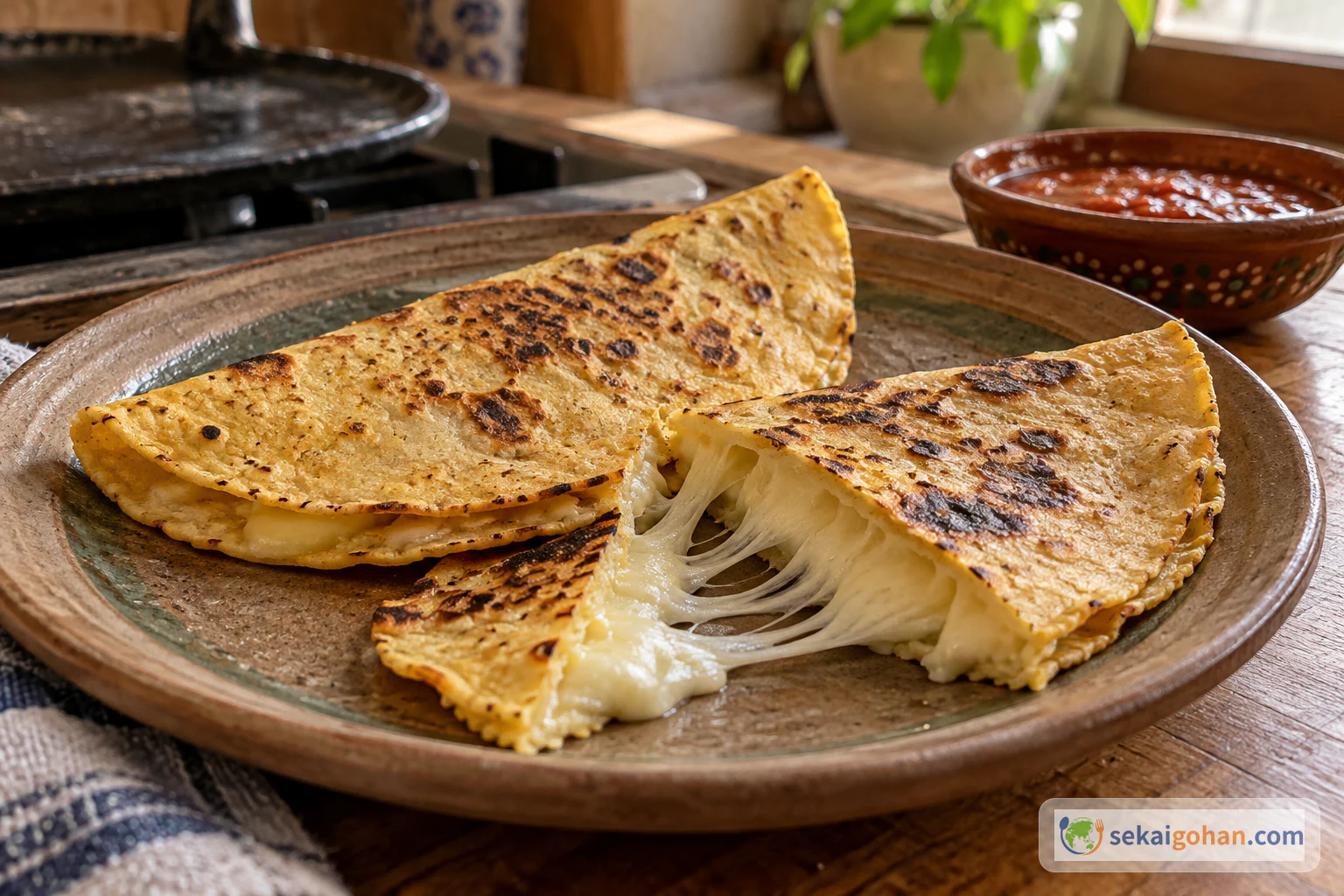
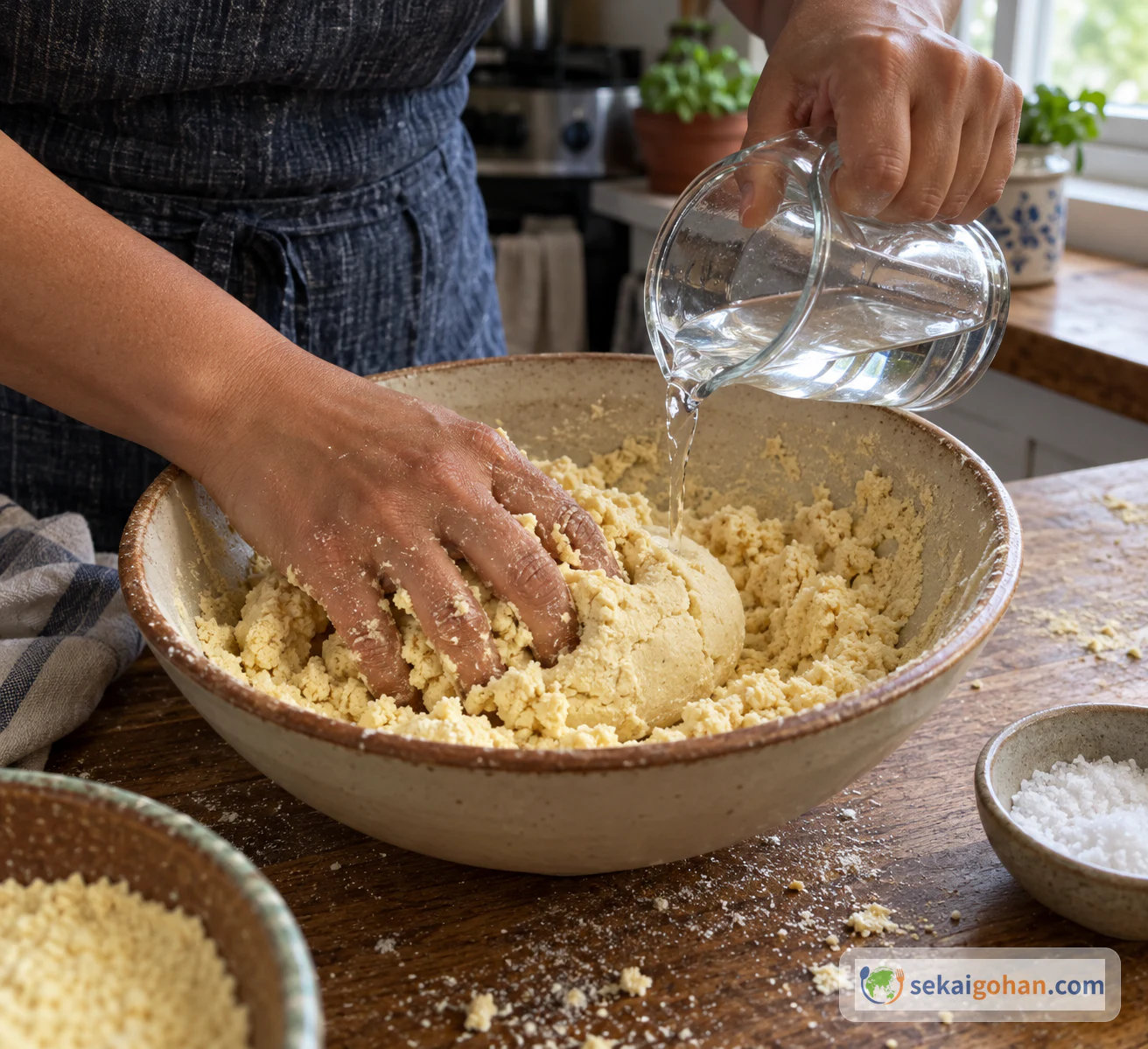
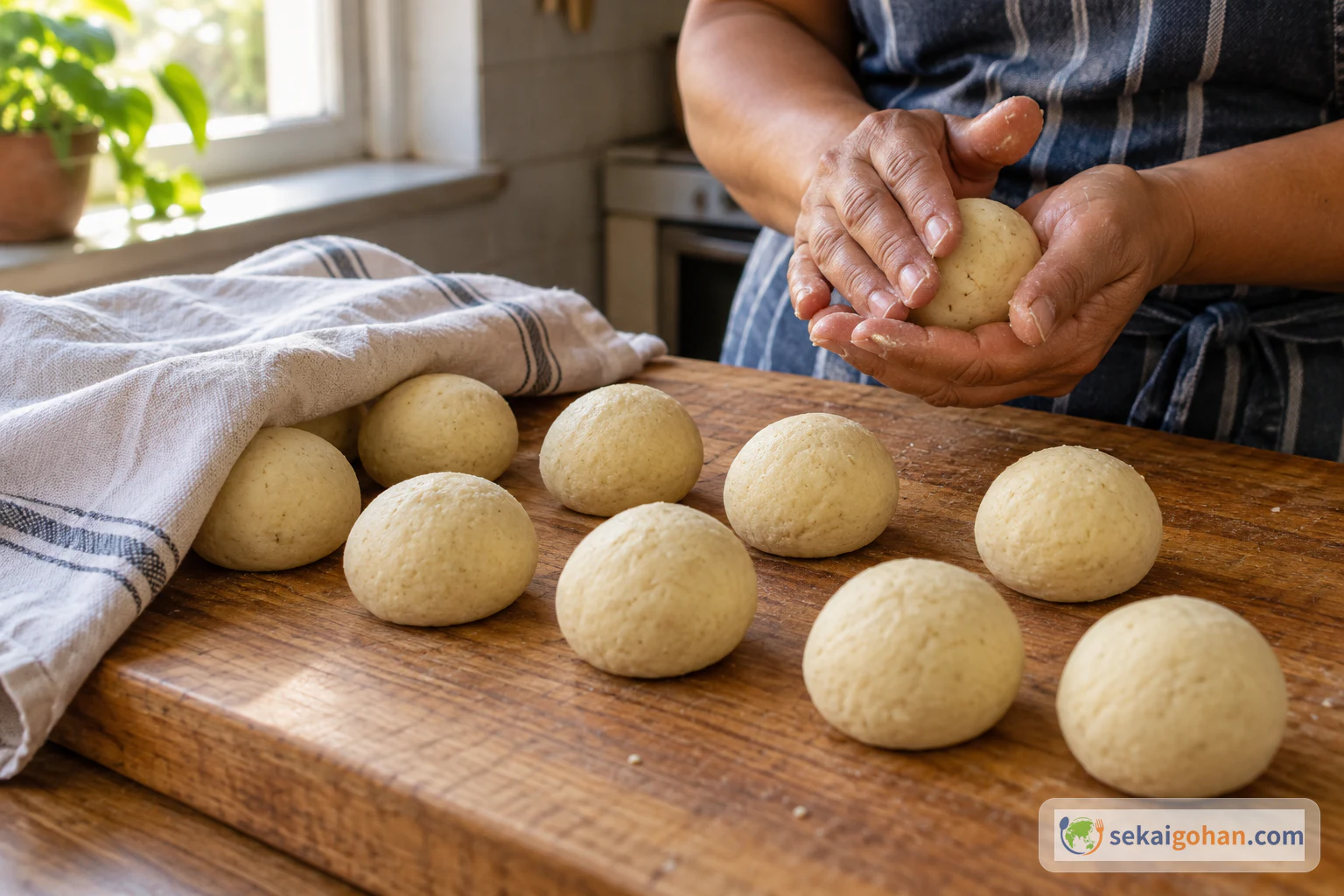
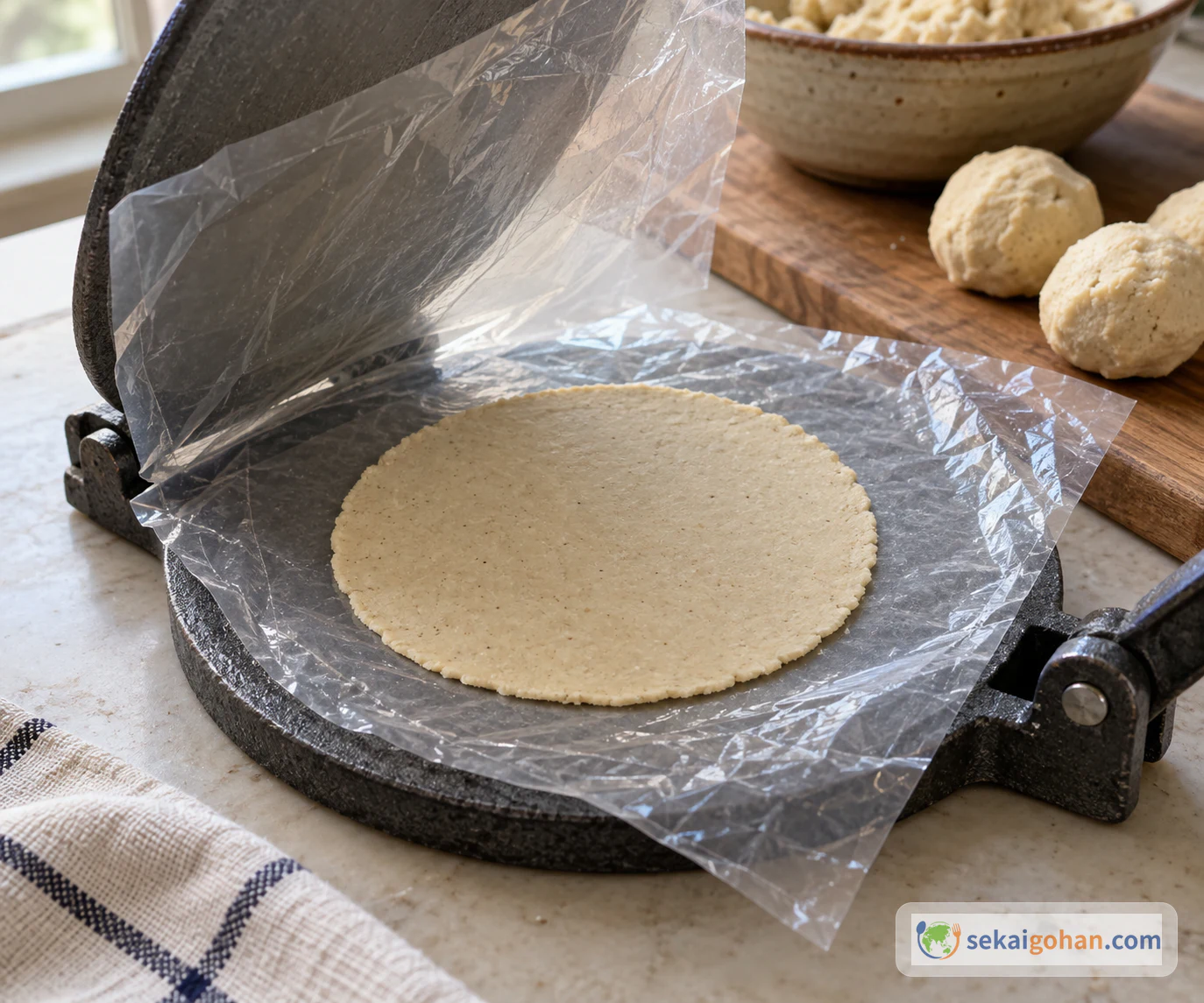
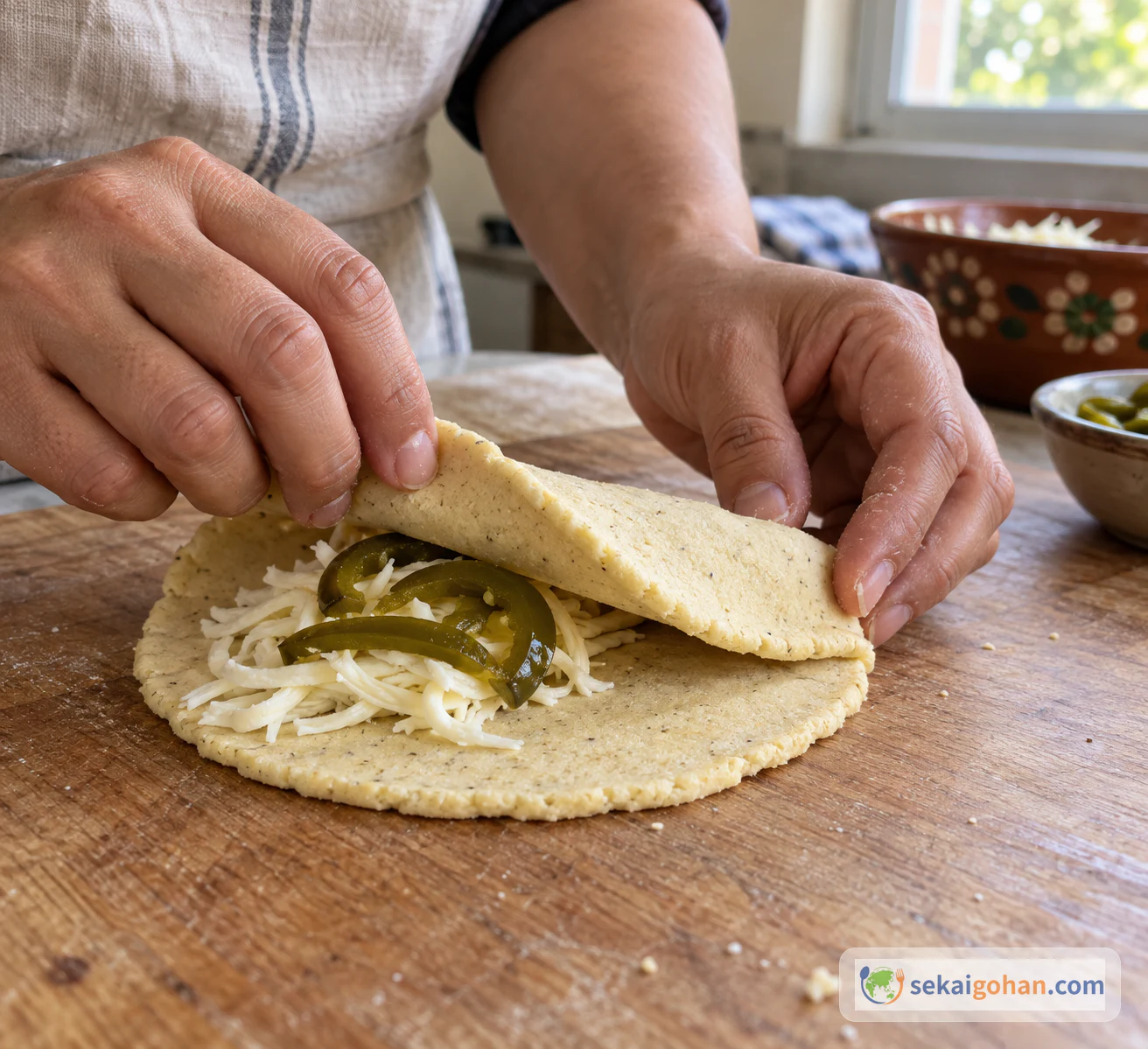
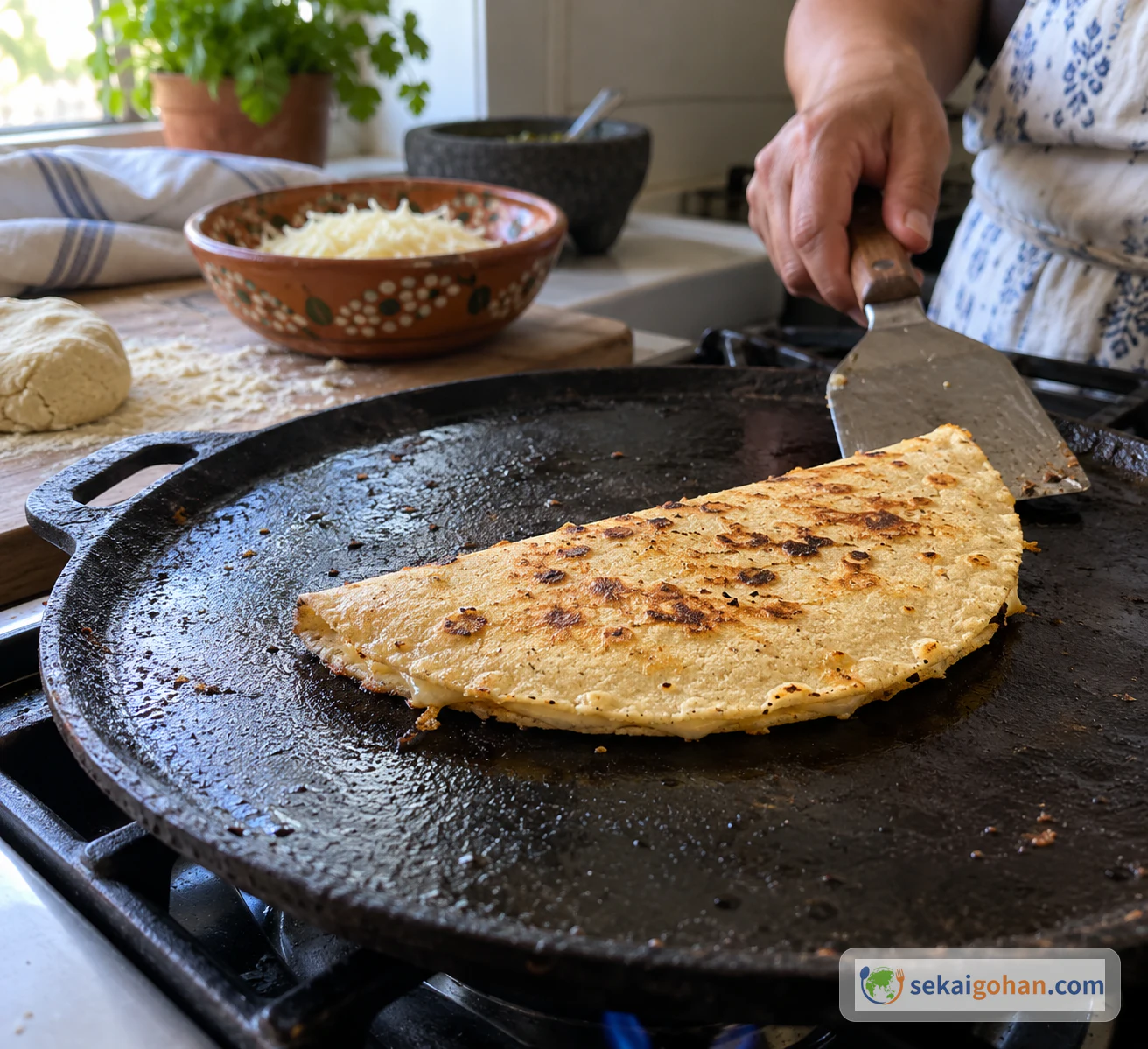
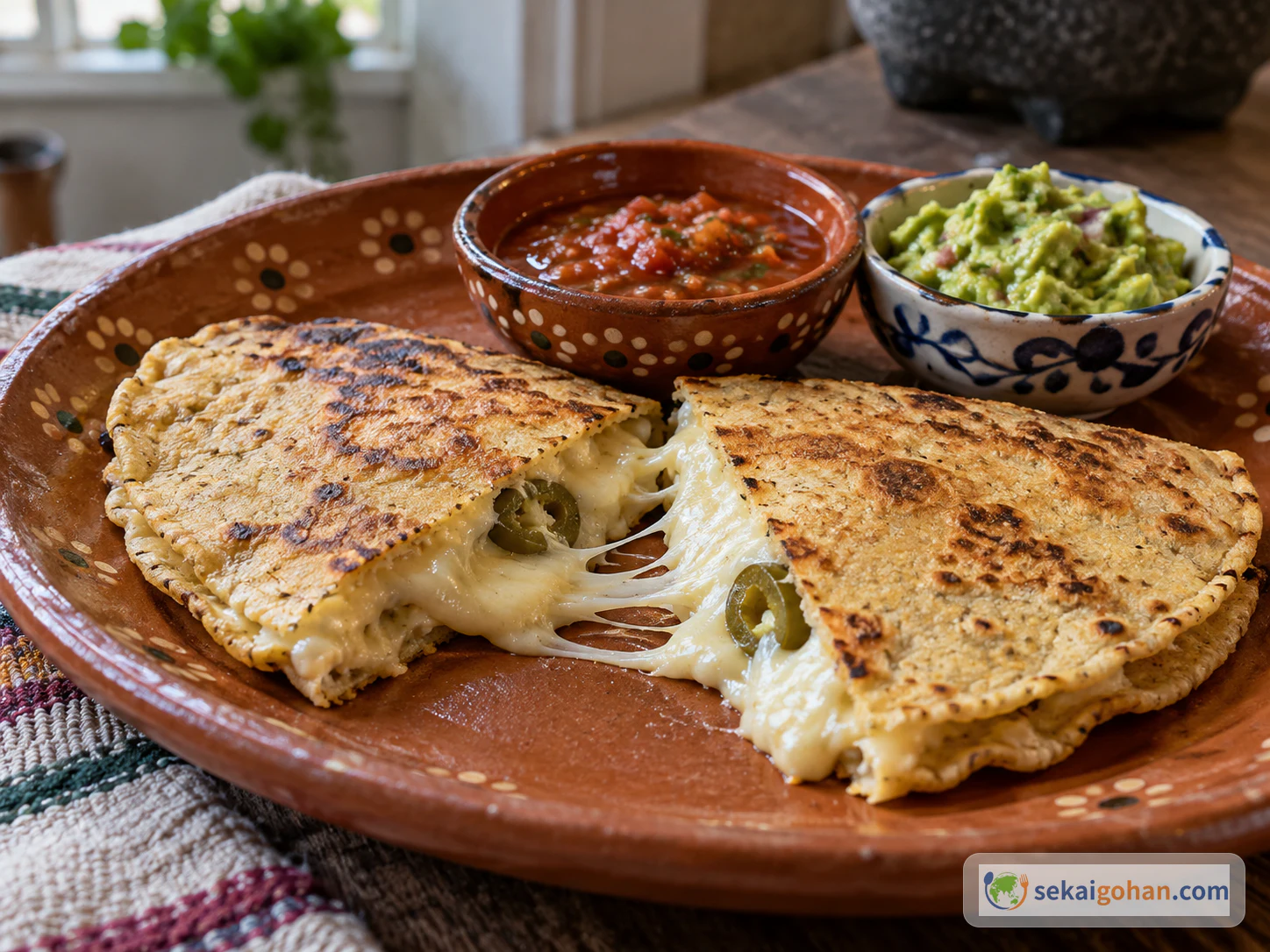
At Quesadillas Elenita, a street stall in the Roma Norte neighborhood of Mexico City, Mexico, masa is rolled into balls, flattened in a metal press and carried to the hot griddle while customers call out what they want inside: flowers, cheese, red salsa. The owner has kept the stall running through earthquakes and a changing neighborhood. What comes off the comal is simple and hands-on. You get the toasty smell of cooked corn dough, a half-moon that holds its filling, and the salt and stretch of melted cheese. This version keeps to that: fresh masa folded around Oaxaca cheese and cooked until the cheese gives way.
Quesadillas Across Mexico
A quesadilla here starts with a dough of masa harina, salt and water, pressed into small rounds. While the dough is still raw, you fill it with Oaxaca cheese (quesillo), fold it into a half-moon and cook it on a lightly oiled comal. The dough and the cheese cook together, so the shell comes out soft and toasty rather than crisp and layered.
What counts as a quesadilla depends on where you are. In Mexico City, quesadillas are cooked on the comal or fried, and they're filled with meats, mushrooms, flowers, beans and more. In the Jalisco area, people expect a quesadilla to contain cheese. In Mexico City and the State of Mexico the filling takes the lead, and you often have to ask for "with cheese" by name. Quesillo is the cheese you'll commonly find in central Mexico.
Cheese was the original main filling, and many others have joined it since. Corn and wheat tortillas both appear, and so do fried and comal-cooked styles. Regional styles such as those of Oaxaca add still more variety. The origin of the name is still debated.
Quesadilla, plural quesadillas. The cheese is queso Oaxaca, also called quesillo. A comal is the flat griddle used for cooking tortillas, and quesadillas belong to the broad family of Mexican snacks called antojitos.
Ingredients for 12 Quesadillas
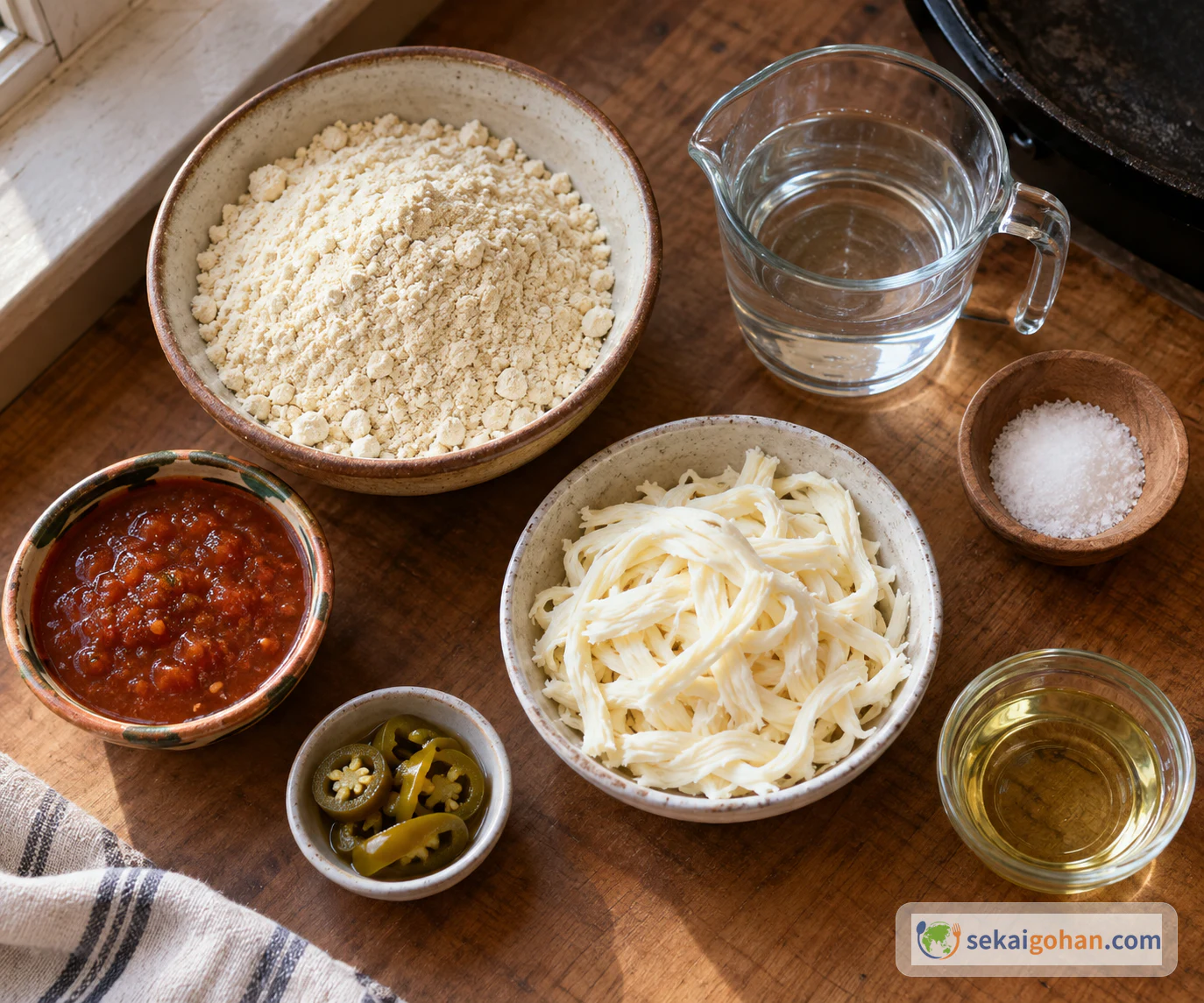
The recipe makes 12 quesadillas, each pressed to a 4½-inch round, and takes about 30 minutes in total, 15 of them for preparation. How long it takes at home depends on how many quesadillas fit in your pan at once. Amounts are in US units. Measure masa harina and water by the cup, not by weight, since the two don't weigh the same.
Equipment
- Mixing bowl
- Tortilla press, or a flat-bottomed pan plus two sheets of food-safe plastic
- Clean cloth, dampened
- Comal, griddle or cast-iron skillet
A tortilla press is convenient but not required: you can also press the dough with the flat bottom of a pan.
Choosing Masa Harina and Cheese for Quesadillas
Masa harina is made from corn that has been nixtamalized, and that is what lets it form a pliable dough. Cornmeal, polenta and plain ground corn behave differently, so look for "masa harina" on the label.
Oaxaca cheese (quesillo) pulls apart into strands and melts with a soft stretch, so tear it into strands to get the most out of it. Quesadilla cheese also works. Failing both, use low-moisture mozzarella. It melts in a similar way and is easier to find, though its saltiness, stretch and flavor differ from quesillo's.
This recipe contains milk (cheese) and corn. Check the labels of your masa harina, pickled jalapeños and salsa individually for allergens and other ingredients.
Method: Fill the Dough While It Is Still Raw
The time of about 6 minutes on the comal is for each quesadilla or each panful, both sides together. It is not the time for all 12. Judge doneness by the color on both sides and by the cheese softening inside.
Troubleshooting Quesadillas
Make any adjustment a little at a time. Large additions change the dough.
| Problem | Likely cause | What to do |
|---|---|---|
| Dough cracks when pressed or folded | Dough too dry | Work in water a very little at a time, and keep the balls under a damp cloth |
| Dough sticks to hands or the press | Dough too wet | Knead in a very small amount of masa harina |
| Round tears when folding | Pressed too thin | Press a little less so the edge can be lifted without splitting |
| Cheese leaks out | Too much filling, or filling near the edge | Use less cheese and keep the edges clear before sealing |
| Outside burns while the inside is still cool | Heat too high | Lower the heat and cook a little longer than about 6 minutes, judging by color and how soft the cheese is |
Serving, Storing and Variations
Quesadillas are best eaten fresh, so cook only as many as you'll eat. If you do have leftovers, follow the labeling on your cheese and other products and your usual refrigeration practice. Warm them in a dry skillet to bring back the surface. The texture won't be quite the same as fresh off the comal, but it comes close.
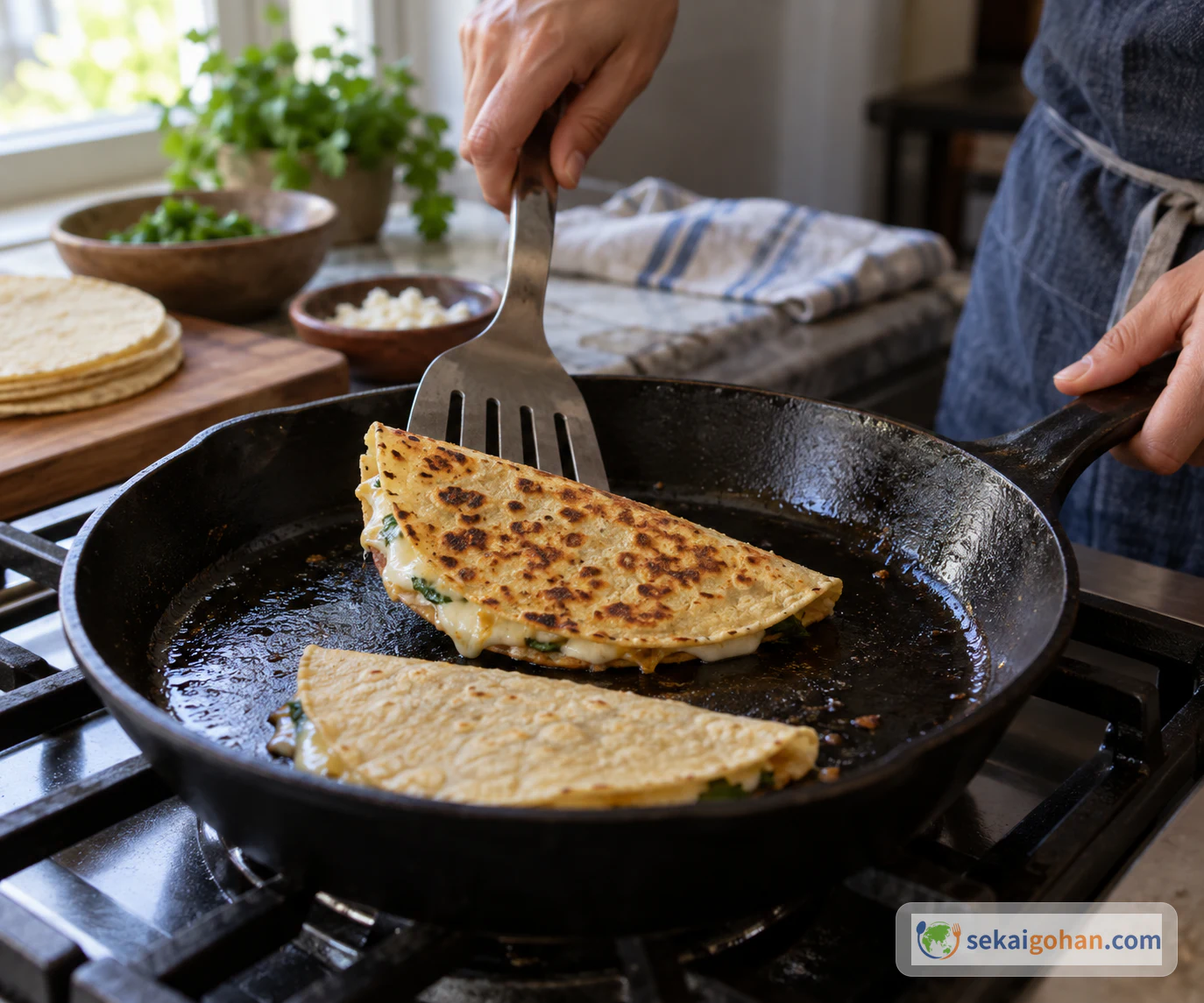
The jalapeños are optional. Leave them out and the cheese carries the flavor on its own, or add pickled jalapeños for heat and a vinegar tang. Short on time? You can fill and griddle store-bought corn tortillas instead, which is a different process with a different texture from the fresh-masa version.
Frequently Asked Questions
Does a quesadilla have to contain cheese?
No. It depends on the region and on the stall or household. Many quesadillas are filled with other things, and in some places "with cheese" is something you ask for.
Can I make it with flour tortillas?
You can, but that's a different style. This recipe is the corn-masa version, where raw dough is filled, folded and cooked.
Do I need a tortilla press?
No. Press the dough between sheets of plastic with the flat bottom of a pan.